Showing posts with label tekken 7. Show all posts

Monday, August 5, 2019

The new wave of Black fighting game protagonists

I am very excited following on the footsteps of EVO 2019. A lot of great tournament action went down and there were several great reveals by the game studios. I'm going to talk a little bit about a theme that went through two of the most recent announcements. Arc System Works has been cranking out some fantastic titles over the past few years, including Guilty Gear, BlazBlue, and Melty Blood. They teased that there would be a new character introduced into the world of Guilty Gear. He didn't have a name (as of August 5 as I write this) but he stood out from the crowd. He was a strong Black man with decidedly futuristic samurai armor. The crowd in Las Vegas, as well as online, went crazy by his reveal. It stood to reason because strong, positive Black characters and Japanese designers haven't always been on the same page.


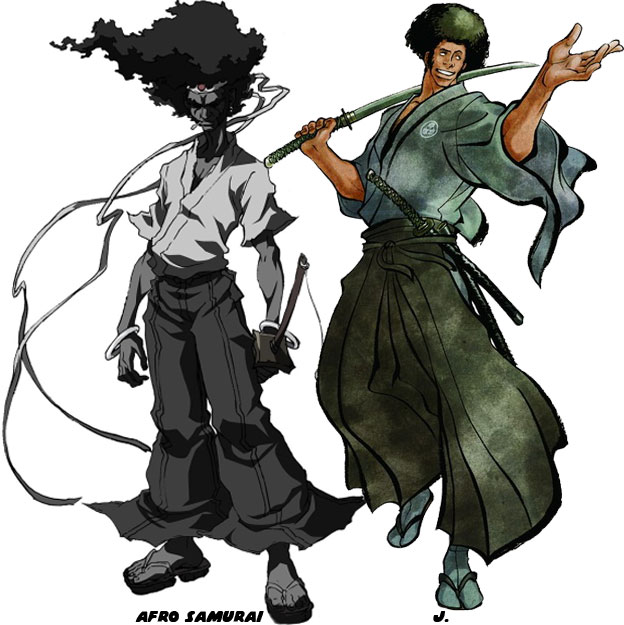
I was wondering if this new character might be based on Yasuke. The only black samurai in recorded history. I talked a little bit about this character while dissecting black stereotypes in fighting games. The animé character Afro Samurai, and Samurai Showdown character J were loosely inspired by this historical figure. Sadly, the black character in many fighting games often wore a large afro and a silly costume. The only alternate for the black characters seemed to be showing up as a boxer.

 
Representation went a long way in fighting game character designs and especially in the community. I have already argued that age and gender helped make the Street Fighter series unique. And I also argued that even body type, like fat characters, had a proper way to be introduced into the genre. Minority characters were something that I felt Capcom and the other studios could do better at presenting. I have a feeling that the growth of e-sports, especially the spectacle of of the EVO tournament has made Japan keenly aware as to how popular, and important, fighting games are to the western market. The impact of powerful minority characters is even more important to the minority community. Because of that it was wise of Arc System Works to include a new black character in Guilty Gear. But almost as important is Namco introducing a new character into the Tekken series.


The name Leroy Smith is a little too generic, almost too stereotypical for my tastes, but I think his inclusion serves many purposes. First let's talk about his look. The character is older and a master of the kung-fu arts. He is seen practicing with a classic wing-chun wooden dummy. He then takes on Marshall Law and Lei Wulong in his teaser trailer. Marshall is modeled after Bruce Lee and Lei after Jackie Chan. He defeats both soundly with his smooth minimal strikes.


After this he takes on Feng Wei, a master of Chinese Kempo and probably the most pure wuxia villain in the Tekken series. He defeats Wei as well. His strikes and form are very reminiscent of Wang Jinrei, an elderly master of Xin Yi Quan. The character was a friend of Jinpachi Mishima, the founder of the Mishima Zaibatsu. Wang passed away in the series. Sadly for many fans of Tekken this also meant that his style of fighting went with him. I have a feeling that Leroy was introduced in part to bring back this classic form.


The appearance of Leroy might be strongly attributed to the character of Ezekiel from the Walking Dead television series. The older black character sported large dreadlocks and commanded respect in the series. He was often referred to as King Ezekiel in the graphic novel and television show. Negan, the main villain from the Walking Dead was introduced in Tekken 7. It's not hard to think that the designers appreciated the character of Ezekiel and wanted to include their own version without having to pay AMC or the actor to use his likeness. What if I were to tell you that the character of Leroy and his importance in the series, and with the fighting game community went much deeper than that?


The kids from Generation X grew up with heroes like Bruce Lee, Ron Van Clief, and Jim Kelly. The non-white heroes spoke to minority kids in every city and town from coast-to-coast. Finally there were heroes we could identify with. They did not play sidekick, or act subservient to any other character. That generation was raised on a steady diet of Shaw Bros kung-fu movies. When they got older that passion for the marital arts never faded. In fact the love of kung-fu built a cult following. The rap group Wu-Tang Clan out of New York were obsessed with classic martial arts films and even named their debut album after the iconic film The 36th Chamber of Shaolin aka Master Killer.


The group did more than pay lip service to the genre. They paid to have a collection of classic films get restored, dubbed, subtitled and transferred to DVD for an entirely new generation. Not only that but the defacto spokesman for the Wu-Tang Clan, the RZA, wrote, produced and starred in his own martial arts film. In the era where Hollywood wouldn't greenlight any classic style martial arts movies the RZA put up his own money and reputation to get the movie off the ground. He also appeared as a villain in the Protector 2, aka Tom Yun Goong 2, against Tony Jaa.


The RZA, and many more Hip Hop performers, including Lupe Fiasco were vocal about their love of fighting films and games. They were living proof that an entire generation was shaped by Asian culture. It was something that Capcom, Namco, Sega and the other Japanese developers seemed oblivious to. If you travel backwards through time you begin to see that kids in the inner-city had been clamoring for the Leroy Smith archetype for ages. The 1985 film the Last Dragon featured Tiamak Guarrello as Bruce Leroy Green. He was a mixed-race kid that modeled his life after Bruce Lee. The film was filled with an almost cringe-worthy fetishization of Chinese and Japanese culture. The villain was as over-the-top as any fighting game boss. Julius John Carry played Sho'nuff the Shogun of Harlem. I'm kind of surprised that none of the Japanese studios picked up on this earlier, considering how much they poached from US cinema.


To be completely honest, the first US-produced film that glorified inner-city gang fighting culture was the Warriors. Yes, there were earlier gang films that turned white protagonists into the anti-heroes. See James Dean in the 1955 film Rebel Without a Cause. What made the 1979 film the Warriors stand out was the idea of mixed race gangs. Each gang had their own look and costumes. Recreated faithfully by Rockstar in the 2005 game by the same name. The title gang was out of Coney Island. It was founded and run by a black man named Cleon. His lieutenant was a white guy named Swan.


In the story the largest gang in New York was the Gramercy Riffs. Their warlord was known as Cyrus. He was trying to unite all of the gangs so that they could take over the city. He was assassinated by Luther, the leader of The Rogues, a gang from Hells Kitchen. This triggers an inter-gang war where all of the gangs mistakenly go after the Warriors. The Riffs are controlled by the former lieutenant named Masai, who becomes the new warlord of New York. With his dark sunglasses, and no-nonsense attitude, he is as imposing a villain as ever there was one.


So here is where things lead back to Leroy and Tekken 7. In the official story of the game Leroy was caught in a gang conflict in New York 50 years ago and disappeared. He is returning as a martial arts master in order to seek revenge. There are two bits of trivia that I feel you should know. The Tekken series is set in the near-future. It's not hard to argue that the game is set at least 10 years from now. Also, the Warriors battled in 1979, exactly 40 years ago.


If a young man like Masai had lost his leader he might have escaped to become a better fighter. Let's assume he was 18 when the events of the Warriors happened. He would now be pushing 70. Technically he would still be the elderly kung-fu master but, still have enough gas in the tank to be a formidable fighter. I have a feeling that the developers with Tekken liked the surface appearance of Ezekiel, however wanted someone grounded in the era and experience of New York during its peak gang life. What they ended up with may be the most unique fighter in the past few years. At least Arc System Works and Namco are validating the colored community with the inclusion of these new characters. At best they are forever changing the landscape of Japanese fighting game designs. What do you think?


If you would like to sponsor me please visit my Patreon page and consider donating each month, even as little as $1 would help make better blogs and even podcasts!
follow the Street Writer on Patreon!

Monday, May 8, 2017

Teasing the next Street Fighter EX and Fighting Layer, part 3

ARIKA gave fighting game fans many reasons to celebrate on April 1, 2017. They had not given up on fighting game development as many had assumed. They wanted a follow up to their cult favorites Street Fighter EX and Fighting Layer almost as much as their fans did. They went to the trouble of putting together a technical demo using current hardware just as they had done on previous April fools days. What really stuck out to me was how much the footage of Fighting EX Layer reflected the current aesthetic featured in the genre. The graphics had gone from bright and colorful, previously animé inspired, to something much darker and grittier. It happened with the characters featured and it happened with the stages they were showing off.

 It was uncanny how a studio that had not released a fighting game in 17 years was able to fall right in and match the pace, style and presentation of the new fighting games. It stood to reason. Most of the team had created Street Fighter II. They set the precedence for modern fighting games. Yet go back and look at the video. Look at the stage design. Look at the character models. Look at the level of detail applied to their skin and costumes. Look at the moves they were assigned. Look at how special attacks were animated. Look at the effects applied to super moves. The world that ARIKA presented was much more visceral than anything they had previously done. It was much darker than the grim tournament presented in Fighting Layer. This was clearly a conscious decision. The studio looked at the trends and made sure that they were able to replicate what was going on in the industry. If audiences wanted dark and gritty then they were going to deliver. If they wanted to be immersed in worlds with tremendous atmosphere, evolving stages, including weather effects, then they were going to deliver on that as well.
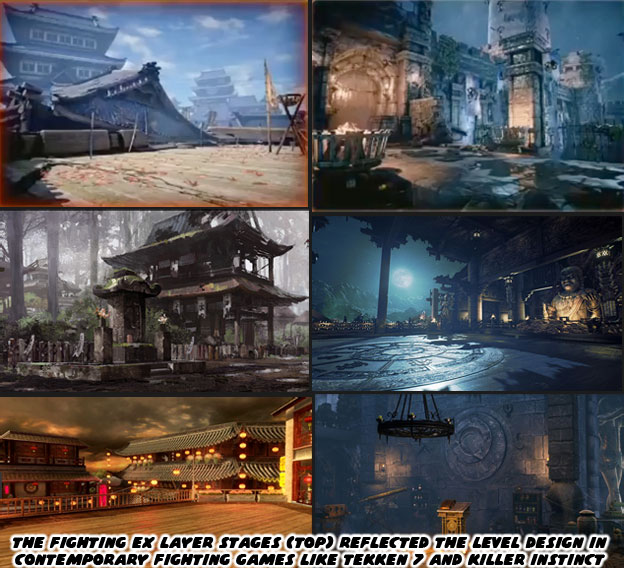
 

The game that ARIKA had demonstrated was a number of shades much darker than I had expected. It certainly hit the mark of the current crop of fighting games. But was that necessarily a good thing? Consider how many of the games today looked similar. The graphics engine, the moves, the effects and stages had become homogenized in less than 10 years. There was a reason for this when you look at the developers themselves. Street Fighter IV used the Taito Type X2 engine, it had been the backbone of a number of fighting games including Battle Fantasia, BlazBlue, The King of Fighters XII and XIII. A number of studios, including DIMPS and SNK were familiar with the hardware and what it was capable of. A few things changed in 2008 with the release of Street Fighter IV. Capcom had given up on the franchise until Yoshinori Ono pushed the company to develop a new game. Capcom didn’t want to risk it being a commercial success, especially in North America where a good chunk of their consumer base was. So the lead artist on this project, Daigo Ikeno, wanted to make the characters more appealing to American players. He looked at Western games, comics and movies. He saw how hyper-muscular they were. How gritty our graphics tended to be and began beefing up the Street Fighter characters because of this. Many fans the world over noticed how swollen the World Warriors had become. They weren’t as attractive in 3D but the game itself played like a traditional 2D title and that was good enough. Street Fighter IV was a smash hit and it relaunched interest in the genre. Other studios began developing their own fighting games, some even brought back long-extinct IP.
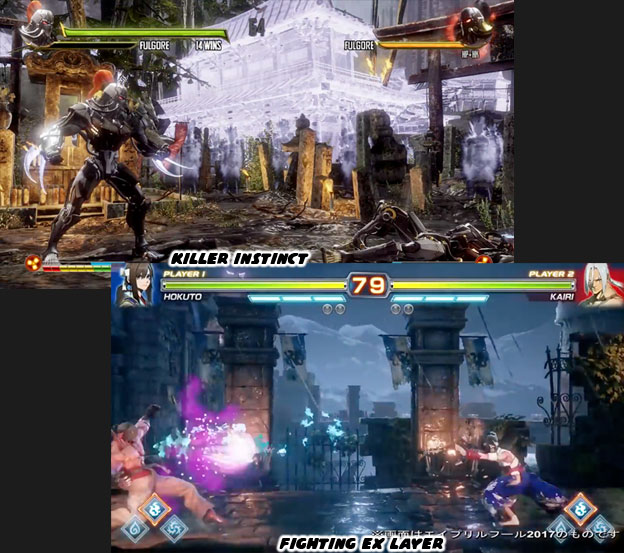
   

Fighting games were now being developed in Japan, China, North America and Europe. Despite the different regions and tastes the graphics for each game started to look eerily similar. Part of the reason for this was because many games were using identical graphics engines. The Unreal Engine 3 was used in the Western-produced Injustice: Gods Among Us (2013) and Mortal Kombat X (2015). The Unreal Engine 4 was the backbone for Tekken 7 (2015), Tekken 7: Fated Retribution (2017) and Street Fighter V (2016). Street Fighter X Tekken was a console exclusive and built on Playstation 3 and Microsoft 360 development kits, which used and adapted engine from Street Fighter IV. Microsoft purchased the rights to Killer Instinct, a title that was popular at the peak of the fighting game boom of the ‘90s. They resurrected the title in 2013 with the help of Double Helix Games. The game itself was built on the HEX engine. Regardless of who developed the games and on what engine, they all started to look eerily similar.
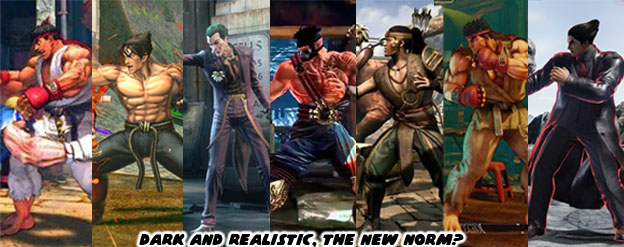
   

Within seven years the biggest franchise titles, Street Fighter, Tekken, Mortal Kombat and Killer Instinct had nearly identical graphics. Only the King of Fighter, Samurai Spirits / Showdown and Guilty Gear titles seemed immune to this homogenized design. When ARIKA showed off Fighting EX Layer they pretty much reflected this reality. I wondered if company boss Akira Nishitani was actually calling out how gritty realism and flashy graphics effects did nothing to make a game better. Balance, control, animation and character design were the cornerstones of great fighting games. Graphics evolved but no matter how pretty a game looked if it did not play well then it was doomed to fail. This was a distinction that I think many players cannot make. A good number of video game developers look to their fans via forums, surveys, and market research to shape their next games. When they ask a game player how important graphics are their audience might rank it first. This makes the studio think that building a game on a powerful graphics engine, like the Unreal 4 engine, would help insure a hit. I think what many audiences mean to say are the Aesthetics, the Style of the game is really the most important thing. This is not a new argument. Many writers and artists have written about it, some have even produced videos explaining the differences.
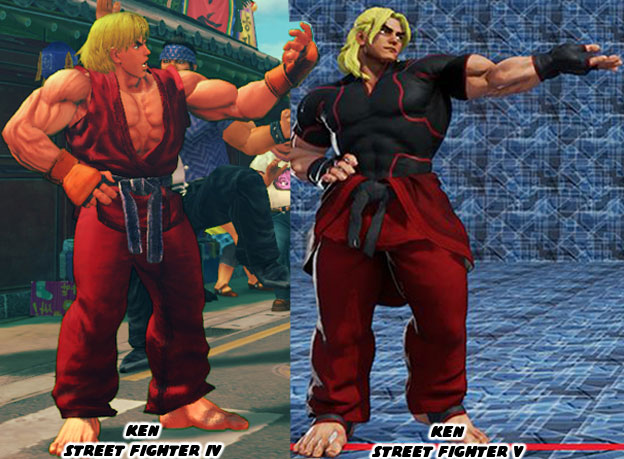
   

Street Fighter IV worked very hard to try and preserve the aesthetics of Street Fighter II. The exact cut of Ken and Ryu’s gi for example. Most people overlooked this detail but Ken actually had a gi where his sleeves and pant cuffs were hemmed. Ryu’s were torn by comparison in the official character art. This was a subtle difference that told audiences a little bit about the personality of each fighter. Street Fighter IV reproduced all of these tiny details yet placed them on 3D models that were far more swollen than they were ever drawn by the original Japanese artists. It was a bit of a mixed message for long-time fans. Here’s everything you remember and don’t. In Street Fighter V the graphics stayed similar but the studio modified the aesthetics. It was subtle for some characters and more obvious for others. Ken for example had a different top. His trademark gi was tied around his waist and he wore a black rash guard instead. His hair went from long and flowing to what many would call lumps of Play Doh. This wouldn’t be the first time the studio had changed the aesthetic for the characters. Every game in the series had a different lead artist. These people were responsible for setting the tone of the art. The size and proportions of each character were standardized. For the most part the characters kept their trademark appearance. Ken kept his hair and costume and for the most part even his stance. Different artists, like Shoei, Akin and Kinu left different fingerprints on how the cast appeared.
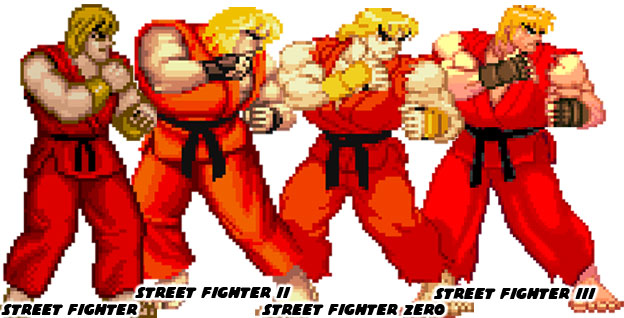
   

One of the most influential of these artists was Bengus. He had designed the characters for Street Fighter Alpha / Zero. These fighters were meant to be younger versions of the original World Warriors. He changed a few details on each person to make them stand out. He exaggerated the muscles, the size of the hands and feet so they were easier to track and draw. These exaggerations made the characters look lanky, like older teens that were on the verge of adulthood. Even tiny details like the size and shapes of the eyes and eyebrows were not overlooked. They looked more cartoonish but couldn’t necessarily be tied to any one anime or manga style. It was Bengus’ own unique style that audiences loved. His use of shape, proportion and presentation really took the industry by storm. No fighting game before had ever used an aesthetic so effectively. Bengus didn’t only change the approach that Capcom had to sprite creation, he influenced all the other developers as well. These changes didn’t happen overnight but instead little by little. A cartoon here, a comic book there, a fighting game down the road. Other artists and creators could not ignore his unique aesthetic and how audiences were attracted to them. Street Fighter Zero (SFZ) was released in 1995, the ripples of the Bengus style made it to SNK when they released Garou: Mark of the Wolves (MoTW) in 1999.
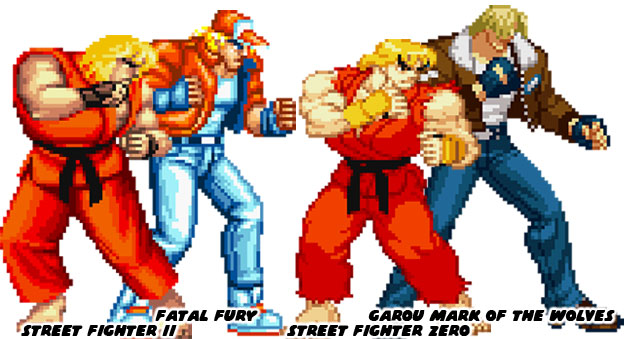
   

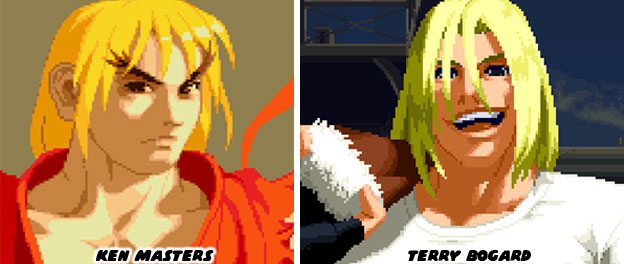
The proportions used on the SNK characters were not as pronounced but they were there. It was apparent when you compared how much the designs had changed from game to game. The sprites in both Street Fighter II and the original Fatal Fury were very comparable. Possibly because the director of Fatal Fury, Takashi Nishiyama, had designed the original Street Fighter. In the early days of fighting game development the artists focused on recreating easily identifiable fighters and their respective styles. A karate person, a kung fu person, a boxer and a wrestler. They were easy to plan for, create and animate. The first batch of fighters following Street Fighter II in 1991 looked very homogenized. Their styles, moves and appearance were very much like Capcom’s World Warriors. Eventually studios began experimenting with different styles to set their cast apart. When Street Fighter Zero debuted it created another paradigm for designers. The other studios began shaping their cast after Bengus. It wasn’t heavy-handed poaching either. Simple things like the way the art team at SNK drew eyes, faces and even hair had changed. For example, Bengus captured the shape of a hairline but he didn’t bother to put too much detail into it. Instead haircuts were represented by a few solid shapes. It worked well in 2D. Look carefully at the character profiles in both SFZ and MoTW. When Capcom tried to stylize the heads of the models in 3D then we ended up with the lumpy Play-doh hair.
 

Capcom had learned how difficult it was to set their cast apart in the sea of sameness. It looked as if every studio was using the same engine. The aesthetic was universal. Everything was dark and gritty, it didn’t matter if we were looking at Superman, Necalli, Jago or Scorpion. They could have all fit in the same game. Even Fighting EX Layer had the sameness of the current batch of fighters. The question (which was actually a challenge) to the developers was what were they doing to distinguish their game from the rest? How could they convince players that they had something new when the graphics all looked the same? It was not impossible to create a 3D model that actually looked like the artist concept. It might have been difficult but not impossible to preserve a certain aesthetic. The best example I could give you of this was how Ken appeared In the South Korean fighting MMO Perfect K.O. Ken and Chun-Li were licensed from Capcom. The developers at Thingsoft arguably did a better job at preserving the Street Fighter III aesthetic, designed by Kinu Nishimura, than Capcom did in Street Fighter IV. Study the model they created carefully. Ken was muscular but not swollen. His proportions were not greatly exaggerated. Kinu scaled things back slightly from the Bengus school of design. The face, hair and features she designed were actually captured on this new model.
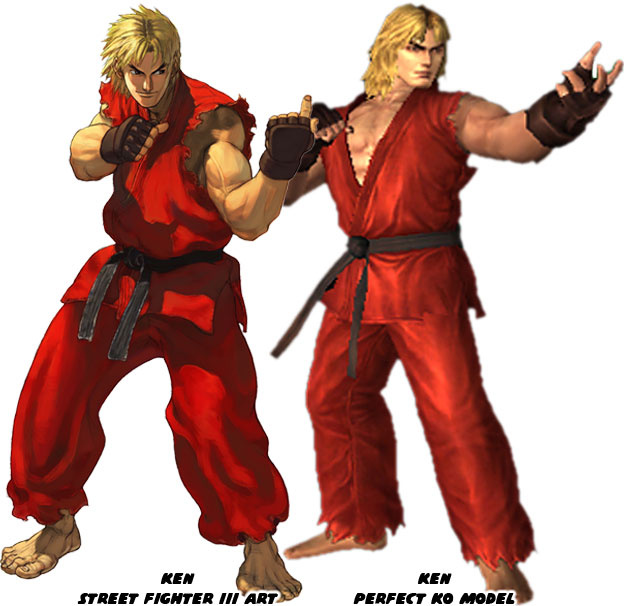
 

I do not think that North American fans would have been put off if the models In SF IV looked more like the Perfect K.O. ones. As long as the control, animation, balance and mechanics were preserved then it would have been just as successful if not more so. Yet the people at Capcom seemed to lack faith in their designs. They wanted to pander to Americans by making the cast swollen as the figures were in comic books and Western-produced titles. I think that is a shame for two reasons. Many US players became fans of Street Fighter because it was aesthetically different than any Western title before it. They loved the “Japanese graphics” when what they meant to say was they liked the Japanese style. It was also a shame that Capcom was choosing to follow the industry rather than set its pace. If all the studio did was follow trends then at some point they might make the next Street Fighter appeal to the South Korean or the Chinese market because of how fast they were growing. They would look at Chinese manhua or South Korean manhwa comic book artists and try to copy what they were doing. In essence they would be copying a country that was trying to copy the Japanese aesthetic. It was redundant and simply bad for business.
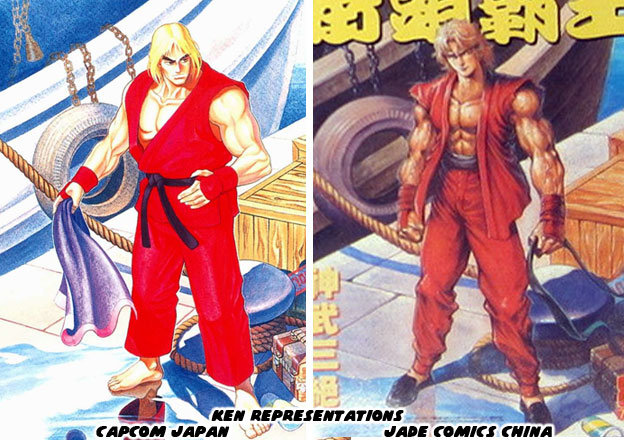
 

This issue was so important from a design standpoint that I would have to explore It a little further on the next entry. As always if you enjoyed this blog and would like to sponsor me please visit my Patreon page and consider donating each month, even as little as $1 would help make better blogs and even podcasts!

 follow the Street Writer on Patreon!

Tuesday, May 24, 2016

The Street Writer Blogcast, Episode 3

Every time I release a new Podcast I will release the text version for my hearing-impaired friends. I don't want them to miss anything that I cover. Also you are welcome to leave comments and questions for this podcast as well as future podcasts on this blog.


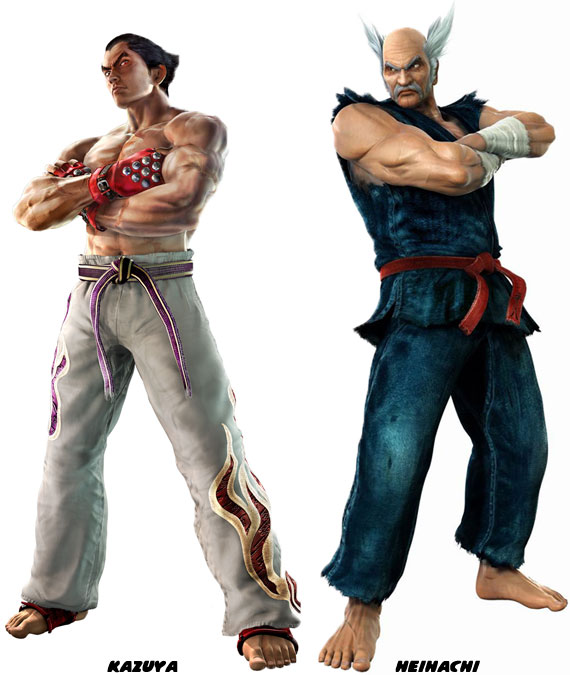
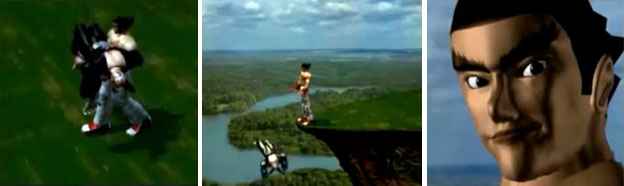
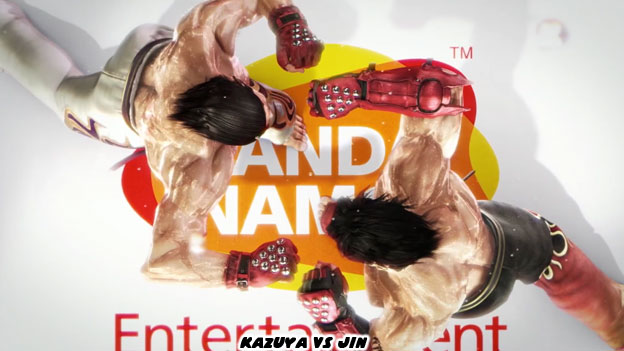
We are still looking at the great rivalries in fighting games. Up until now most of the rivals were strangers. Terry Bogard knew that Geese Howard had killed his father but that was about all he knew about the man. Ryu knew even less about Sagat before the two fought. Was it possible to create a rivalry out of two people that knew each other, or more important, two people that were related? How would that be presented and would it make a fighting game series interesting? Many games featured "friendly" rivalries. Ken and Ryu were best friends and fought from time to time in canon. Ryu did not always come out on top which lent credibility to Ken being the greatest fighter in the Street Fighter universe. Other games also featured friendly rivals and some even had siblings that fought with and against each other. The most dramatic of all rivalries however was between father and son. This was the basis for the Tekken series by Namco. There was actually an inter-generational rivalry happening in the franchise. The founder of the Mishima Zaibatsu, a powerful multinational private army and weapons supplier, was Jinpachi Mishima. He had a son named Heihachi whom he despised almost immediately. The feeling was mutual and when Heihachi came of age he took over the family company and had his father imprisoned. Well imprisoned is a kind way of saying he chained Jinpachi to a rock and buried him alive. Heihachi had a son named Kazuya. When Kazuya became powerful enough he dethroned his father. Well dethroned is a kind way of saying he threw his old man off of a cliff. Kazuya had a son named Jin, care to guess what happened when Jin came of age? The heart of the rivalries really began with Heihachi and Kazuya. The two debuted in Tekken, released by Namco in 1994, and had appeared in every sequel.


Kazuya was the star of the original game and Heihachi was the original boss. As was tradition the boss had started a tournament to find the greatest fighters. This tournament was called Tekken: the King of the Iron Fist. At first audiences did not know that Kazuya and Heihachi were related. They also did not know that Kazuya was just as bad as the boss. Up until that point every fighting game had been about good versus evil. This was the first series that broke from tradition. The main character and boss were both evil. I'm not talking about anti-heroes versus villains either, I mean both of these men were really the bad guys. Series producer Katsuhiro Harada had a very different approach to his fighting game. Tekken was one of the early titles to be completely in 3D. The graphics immediately grabbed the attention of players. Once hooked Mr. Harada wanted to hold their attention. He challenged convention at every turn. He placed robots, cyborgs, assassins and monsters in the lineup against the human characters. The plot involving a father and son rivalry was icing on the cake. Mr. Harada showed audiences how extremely dysfunctional one family was. This game was as far from Street Fighter and Fatal Fury as could be.


The rivalry between Kazuya and Heihachi started at a young age. Jinpachi warned Heihachi that having a son would make him weak. Heihachi wanted to prove his father wrong. When Kazuya was five years old he threw him off of a cliff. He said if he was the true heir to the Mishima Zaibatsu then he would climb out and return a powerful man. Kazuya survived the fall and did return many years later during the events of the first Tekken tournament. Kazuya was covered in scars, built from a lifetime of fighting man and beast. At the end of the tournament he returned the favor and took his father to the edge of the same cliff and threw him over. Audiences were not prepared for this. They thought that he was going to take his father to get help, or at the very least give him a proper burial. Instead he dropped him and turned to the camera and smiled. It was one of the more shocking moments in game history. Proving ever resourceful, and taking a page from the Fatal Fury playbook, Heihachi survived the fall.


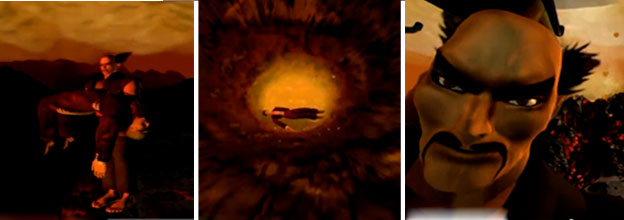
By the time of Tekken 2 Kazuya had taken over the family business and Heihachi had to enter the tournament to try an extract his revenge. As with all great rivalries the two were evenly matched. Unlike Sagat and Ryu where they had two different martial arts forms, or with Geese Howard and Terry Bogard where they had clashing styles, the techniques used by Heihachi and Kazuya were almost mirror images. Each fighter focused on different strikes in order to gain an advantage in battle. What it all boiled down to was technique and experience. Heihachi was able to gain the upper hand and went back to where it all started in his ending scene. This time he dropped Kazuya in the heart of an active volcano and flew away on a helicopter. The ending movie was beat-for-beat the same as Kazuya's original ending. Mr. Harada knew that a little dark comedy went a long way in the series. Audiences were eating up this bitter rivalry.


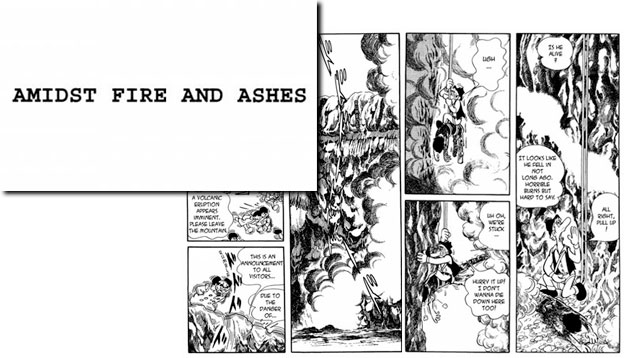
What many failed to realize was that the rivalry was an homage to a classic manga. Osamu Tezuka was considered the godfather of manga and anime. He was a pioneering artist from Japan that created hundreds of original characters and some of the most beloved stories of all time. One of his heroes was a doctor named Kuro Hazama aka Black Jack. The comic debuted in 1973 and the original run went on for a decade. During this time Mr. Harada and the Tekken team were growing up and were more than likely influenced by many of Tezuka's stories. Kuro was caught in a land mine explosion as a kid, it killed his mother and left him barely alive. He had required reconstructive surgery and skin grafts. When the doctor working on him asked the parents of his classmates if their children would be willing to donate skin they all turned him down, all except his friend Takashi, who was half-black half-Japanese. The skin was applied to Kuro's arms, shoulders and face. This left Kuro with contrasting patches that gave him a unique look. People were often put off by his appearance because he looked monstrous to them. This discoloration was actually featured on the fighting game characters Preston Ajax and Charlie Nash. Kuro dedicated his life to becoming a doctor and honoring the memory of his friend. He practiced outside of the system because he saw there was terrible corruption in the medical field, where only the richest could afford treatment. He had a private practice far away from any town. He would treat mobsters and regular people alike for the right price. He didn't have many friends but made contacts along the way of people that he trusted. One of these contacts had reached out to him because he was afraid of his father. This was where the seeds of Tekken were planted.


In an issue of Black Jack titled "Amidst Fire and Ashes" the doctor was introduced to a cruel tycoon. The issue opened with a volcano, Mt. Roar, that was erupting near a research center. There was a man in a suit looking down into the volcano but quickly walked away as people got closer. A park ranger spotted a charred body in the crater and lowered himself down to rescue the man. The body was badly burned but the person was still alive. The body was taken to a visitor's center. The man in the suit sprung forward and announced himself as the father of Ryohei, the burn victim. He seemed distressed that his son was dying. Black Jack offered his services but for some ungodly high rates. He knew full well that the man was the CEO of Nippachi Trading and could easily afford the ¥20 million bill to save his son. The man reluctantly agreed but only after Black Jack produced a note from the son, saying that he was going to have a meeting with his father and something may happen to him. He wanted the brilliant surgeon there just in case. Ryohei had a suspicion that his father may do something drastic and his hunch was right. Despite the lack of witnesses placing the father and son together at the time of the accident the CEO felt the pressure to save Ryohei. He agreed to Black Jack's demands and let him operate.


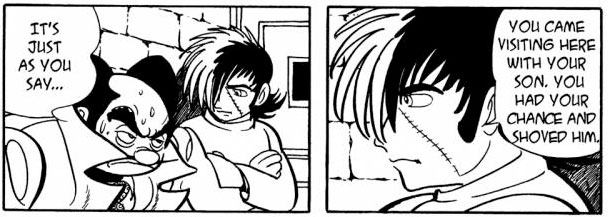
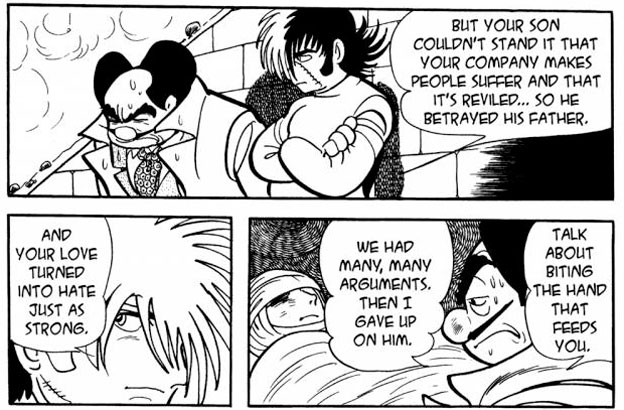
Mt. Roar continued erupting and the visitors were evacuated. Unfortunately Ryohei was in no condition to travel and only Black Jack and the CEO were left behind. The CEO actually tried to leave with the crowd until he was called out by the doctor. After operating on Ryohei the father was still eager to kill his son. He tried wheeling out the body on a stretcher towards the volcano. The doctor punched him out and said he would never allow any harm to the man he had just saved. It didn't take too much prodding from Black Jack to get a confession. It turned out that Ryohei did not want to inherit the company. It had dealings that he found unsavory. His first action would have been to dissolve the corporation. His father would not let that happen to the company that he had built himself. He wanted his son to be strong, in the business world people had to be as cutthroat as he was. His son didn't have a mean bone in his body. The name Ryohei could be translated to "good boy," despite his father's actions he still loved and forgave him. This made the betrayal sting harder for readers. Eventually the CEO came to terms with this and was willing to stay with his son and make sure that he recovered.


The volcano had become too dangerous and Black Jack was ordered to evacuate. The CEO swore that he would stay with his son. The two died on the mountain when it exploded. When rescuers found the bodies they said their hands were clasped tightly together. It was a heartbreaking ending. Then again most of the Black Jack stories were melancholy. The seeds for the evil corporate archetype had been planted in that adventure. The CEO was without a doubt the basis for Heihachi Mishima. In addition to being extremely wealthy and enjoying throwing his kid into a volcano the physical traits were more obvious. Nobody else had the same haircut and mustache. The template would return in manga form years later. Daikenjuro Kanzuki, the father of Karin Kanzuki from the Street Fighter Zero / Alpha series, was another dead-ringer for the CEO. He was not in the game series but instead the manga based on the game. He shared the same physical appearance of the Nippachi Trading CEO. Daikenjuro was similar to Heihachi in that the two had amassed a fortune that could only exist in a fictional world. I'm talking about Scrooge McDuck levels of wealth. They both had private armies at their command, corporate offices in every corner of the globe, residences that stretched over several hundred acres of prime real estate and politicians in their back pocket. They both seemed untouchable. Of course both also had family members who were eager to dethrone them. This made for an interesting dynamic in the game and manga titles.


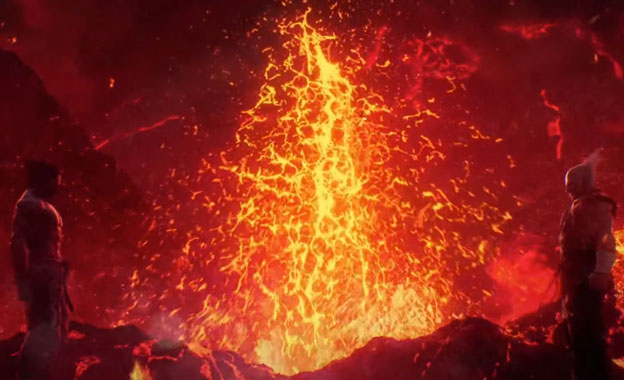
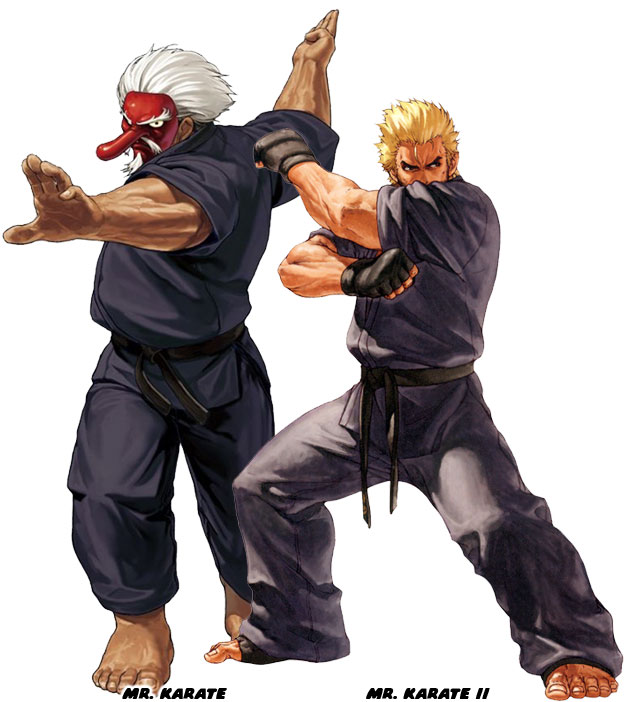
A volcano would appear in the backdrop of other fighting games but few stages were actually set inside of a volcano. This location certainly meant something in the Tekken series. Mr. Harada had meant for it to be the final resting place for both Heihachi and Kazuya. He had talked about finishing the Mishima Saga in Tekken 7. This was why he framed key scenes in the story mode and actual stages inside the cauldron. Unlike the reconciliation in Black Jack this father and son duo were willing to drag each other into hell. It was a bitter rivalry to say the least. You would be hard pressed to find two characters in any series that hated each other more. Yet even with their extreme distrust of each other they had been known to team up, especially during the Tekken Tag Tournaments. Of course each person had their own reason for entering and would betray their partner as soon as they reached the end. Not every legacy character was filled with as much hate even when there was just cause to hold a grudge. Some of the rivals could not bring themselves to hate. This was the case between Takuma Sakazaki and his son Ryo. Ryo did not know that Mr. Karate was his father until the end of the original Art of Fighting. Yuri Sakazaki had been kidnapped and once she was rescued she begged her brother to stop fighting. She revealed that Takuma was behind the mask. It was one of the best twist endings in a fighting game.


Takuma would keep the mask around for when other fighters needed to be taught a lesson. He eventually retired the name and his son took over. At the peak of his abilities Ryo entered tournaments under the name Mr. Karate II. This version of the character ditched the bright orange gi that he wore in the Art of Fighting and King of Fighters series. He went with a solid black one in honor of his father. This version of the character debuted in the Buriki-One tournament. But I digress... Tekken was a series filled with many memorable rivalries. None were as intense as the ones between the Mishima family members. Writers and artists putting together their own stories would do well to remember that family could create the most passionate feuds.


One of the greatest rivalries in fighting game history was also one of the shortest-lived ones. The next part in this series will travel across time and space to resurrect an often overlooked title. Until then please leave a comment or tell me what one of your most favorite rivalries was. As always if you would like to sponsor me please visit my Patreon page and consider donating each month, even as little as $1 would help...

 follow the Street Writer on Patreon!

Monday, December 14, 2015

The Tekken 7 reveal, superb fighting game storytelling...

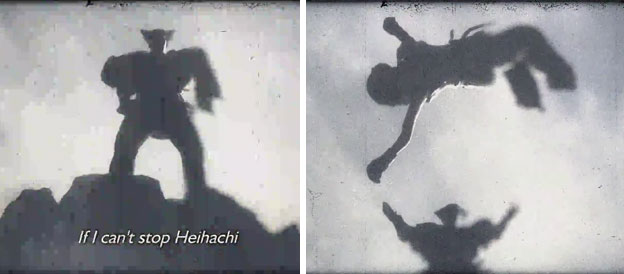
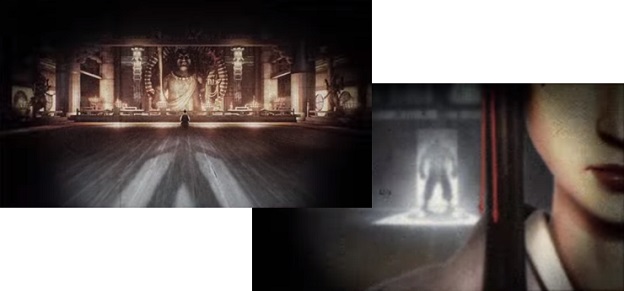
The Tekken 7 trailer released last year was one of the greatest video game trailers of all time. It turned out to be only half of the story that was planned for the game. There were things spoken of in the original trailer that explained a lot about the main characters, Heihachi and his son Kazuya. It also introduced us to Kazumi, the mother of Kazuya. She narrated the trailer and we could see that was leaving a message to someone. Thanks to some well placed edits the audience assumed that the mysterious person in the background was Heihachi Mishima. When he opened the door to the dojo viewers assumed that this was the night that Heihachi had had killed his wife. It was great framing, we could sense the tension as if Kazumi were trapped in some sort of domestic hell.

Through every version of Tekken the audience knew that the father and son hated each other. Heihachi was afraid that his son would turn on him and take over the family business. Heihachi had done that to his own father after all. There was reason to be afraid of Kazuya but it was more than just a jealousy that caused this. Kazuya had a "Devil Gene" which allowed him to turn into a powerful monster. Audiences assumed that this was a gene that skipped a generation. It turned out however that Kazumi was the one that passed the "Devil Gene" down to Kazuya.

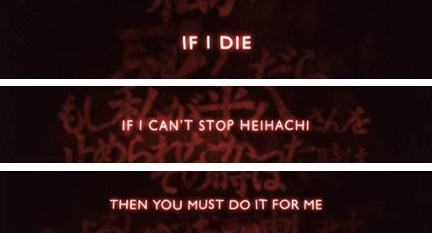
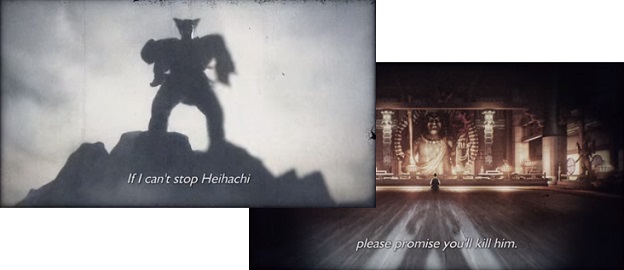
Kazumi had actually planned on killing the leader of the Mishima clan herself. However she also left some specific instructions, if she could not stop Heihachi then she was leaving the task to someone else. The trailer immediately cut to Kazuya and Heihachi staring at each other from within an erupting volcano. Audiences assumed that she was leaving instructions for Kazuya. They assumed that some day he would be strong enough to avenge her death.

Father versus son, a wife betrayed, a mother assassinated. This was something right out of a Shakespeare play! Even the setting featured in the trailer was important. The volcano was used again and again throughout the history of Tekken. Both Heihachi and Kazuya had taken turns trying to kill each other over the past 20 years by throwing each other into an active volcano. I had actually talked about the volcano and the origins of the characters on an earlier blog. If this were indeed the last battle then it had to be one for the history books!

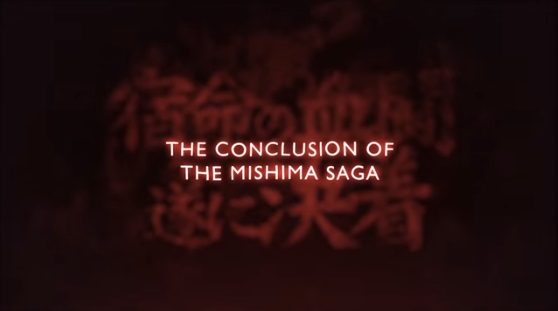
The ending of the trailer, where Kazumi revealed that despite everything she loved Heihachi and he loved her was one of the most powerful moments of any game cinema. The team at Namco wanted to make sure that audiences were paying attention. All of the loose ends created in every sequel would be tied up and they even promised that this would be the end of the Mishima Saga. Kazuya would kill Heihachi or the other way around and the story would be concluded. Those that hadn't seen trailer could watch it below. 


It turned out that Tekken series producer Katsuhiro Harada had something even greater in mind for the game. The second half of the story arc was unveiled on the heels of the Capcom Cup and EVO fighting game tournaments. Tekken 7: Fated Retribution would be the name of the new expansion. The trailer for the game completely blew away everything that fans of the series thought they knew.

It began very similarly to the previous trailer and we could hear Kazumi leaving instructions. Except that this time it was obvious that she was telling someone they had to kill Heihachi, but Kazuya was only a child at this point. So she was talking to someone else.

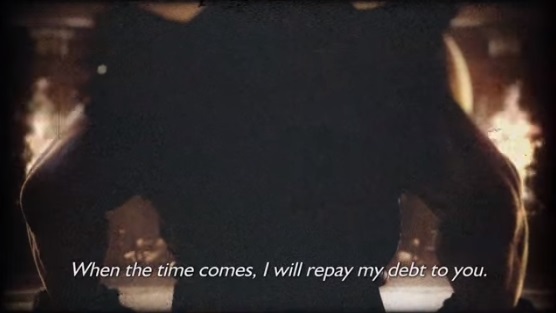
The mysterious figure in the doorway spoke. It wasn't Heihachi as many gamers had assumed. Instead it was the person tasked to kill him. As soon as he spoke the long-time Street Fighter fans had a reason to freak out. The baddest character in all fighting game history had returned. This character was absent in all known footage of Street Fighter V. He was indebted to Kazumi, how would certainly have to be explained!

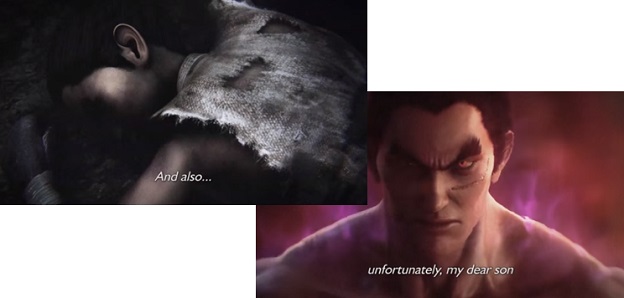
This martial arts assassin had killed his master and brother in canon. If Kazumi could not kill her husband then rest assured that the mysterious figure would. But this reveal was not enough for the producer of the series. At the end of the trailer Kazumi left a very specific instruction. After killing Heihachi he would be tasked with killing her son.

It now made sense that the Mishima Saga would really be concluded. An outside fighting game character universally recognized as powerful enough to actually be able to kill both Kazuya and Heihachi was brought in. It was possibly the only way that Tekken fans would have believed the outcome.


Katsuhiro Harada pretty much dropped the mic on the critics with this reveal. The new trailer was pretty much a knockout punch to everyone that wasn't already on board with the game. He hid in plain sight one of the greatest fighting game villains of all time and tied this character masterfully into the series. It was something that Street Fighter IV and V producer Yoshinori Ono seemed incapable of doing. It demonstrated a certain level of planning and design that required both patience and maturity. These were things that I cannot say Ono possessed. But don't take my word for it, watch the first and then second trailers and tell me what you think. Did the trailers for Street Fighter IV or V give you the same level of anticipation? Do you think that this approach is something that Capcom is lacking? Or will Street Fighter be fine without the heavy-handed drama? Let me know in the comments section. I’d like to hear about it on the comments section. As always if you would like to sponsor me please visit my Patreon page and consider donating each month, even as little as $1 would help make better blogs and even podcasts!
follow the Street Writer on Patreon!

Sunday, May 10, 2015

Introducing Gigas, an original idea or more of the same? Let's take a look!

Fighting game fans were in for a shock when the fighters for Tekken 7 were unveiled. Familiar faces had returned along with a new young girl and handsome man which were part of the long-running Namco themes. What caught fans off guard was a massive bruiser that looked completely unlike anything featured previously in the series. The massive red humanoid, known only as Gigas, seemingly came out of nowhere and was poised to topple the most powerful fighters in the series.


Fans from the west were certain that the Japanese developers were catering to Western tastes. It seemed that many heroes and villains from Western video games, comics and movies were massive, muscle-bound monsters. It didn't take long for the comparisons between Gigas and his influences were being pointed out in online forums. An obvious similarity between Gigas and US designs could be seen with the Red Hulk, a villain from the popular Marvel Hulk comics and the mysterious Big Daddy from the BioShock series.


Yet there was several design cues that came from a different property also from the West. The Batman: Arkham series of games has featured several versions of the character known as Bane. The one featured specifically in Arkham Origins seemed the one directly responsible for the appearance of Gigas. There was the massive torso, large arms and tubes connected to the various major muscle groups on both characters. Yet there was much more to Bane than simply being a genetically-enhanced monster. When the character was introduced decades ago he was created to be the ultimate rival of the Batman. The man was a former prisoner-turned-assassin. He was subjected to various surgeries and treatments which enhanced his natural abilities. Batman was considered to be the supreme human physical specimen in DC comics. He was the perfect fighter and Bane was trained to match him in every mental and physical arena. The advantage that Bane had over Batman would be a drug called Venom which gave him a temporary increase in muscle mass, speed and dexterity. He used this to defeat Batman in unarmed combat and even break his back.


Sadly for Bane the writers and artists working at DC could not find a way to improve the character so they began changing his purpose as a worthy rival to the Bat. The character became over-reliant on Venom and in just about every subsequent appearance Batman would either cut off Bane's supply of Venom or cause him to overdose on it. Bane went from a cold, calculating villain to a musclebound stooge over a matter of years. The Joker would return to prominence as the main rival to Batman and Bane would be a supporting character in comic story arcs. The changes for the character were easy to see in animated form. When he first appeared in the Batman Animated Series he was very much rooted in his original comic book design. When he returned a few years later in the new Batman shows he would become more and more exaggerated and dark in his designs. One of his last designs made the character look more alien than human. Part of the reason for that was because the team of artists working on the character designs had previously worked on the Ben10 animated series. Ben10 if you may know was based on a kid that could change from a human into an alien host. The muscle on the new Bane were far larger than ever before, his strength increased tenfold and ability to withstand punishment increased. His skin had even been turned red. If these were not the roots of Gigas then I don't know what else to tell you.


The changes in the appearance of Bane were only part of the equation. Over the past few years many artists had been experimenting with how far they could push the designs of fan-favorite characters. The Joker had been a staple in the Batman comics for decades. His look had changed only slightly over the years but DC shook the community with a recent redesign. The character had cut off his own face and wore it as a mask to add a certain level of grotesque to his already macabre appearance. Many of the Batman villains received the same make-over. In order to give Bane a new look the artists working at DC and even at video game publisher Rocksteady had to push the envelope. As with any design the question remained; how far could the character be pushed and still retain the core elements? How would this character be identified by fans? It seemed that Bane could be made very grotesque and audiences would still recognize the character.


Yet even Bane was not an original idea. The man-becoming-a-monster was a staple of classical storytelling. It was not always a physical transformation to show a person becoming man, such as with Ahab in the story of Moby Dick. Other times a monster represented the mistakes of man, such as the creature created by Dr. Frankenstein. More than a century before Bane was created there was a character called Mr. Hyde. Robert Louis Stevenson (author of Treasure Island) wrote a novel on a scientist named Dr. Henry Jeckyll that used a chemical mixture to become a powerful monster known as Edward Hyde. The monster was more beast than man and terrorized the citizens of Victorian England. The characters of Jeckyll and Hyde would become synonymous with extreme personality changes and not necessarily physical changes.


The Hyde character would be revisited by Alan Moore in his graphic novel the League of Extraordinary Gentlemen. The story would be turned to film and Hyde would get yet another on-screen interpretation. In order to create a monster even more terrifying than Hyde the movie introduced Dante, a soldier that overdosed on the secret formula. The end result was an extremely grotesque and disproportionate man. He hardly looked human at all and could be considered one of the first 3D representations of the extreme comic book proportions that artists were placing on their figures. Yet to say that Hyde begat Bane begat Gigas in Tekken would be an insult to the Japanese designers.

Game designers in Japan as well as artists and illustrators had been creating monstrous characters for decades. They had been working on absurdly disproportionate muscled figures for as long, if not longer, than Western artists had. In fighting games there were many presidencies set by Japanese studios before Gigas had even been dreamed of. Capcom, SNK, Arc System works and various developers had been pushing the envelope on the "strong man" character trope. To help the characters stand out the artists often gave them large shoulders and thick arms while keeping their legs thin and heads small. This visual made many of the bruisers memorable.


The proportions featured on Gigas were not as extreme as they were on characters like Potemkin or Abubo but they were close. What Gigas had going in his favor was that he was one of the few Japanese characters designed in 3D with the exaggerated aesthetic. Because Bane had been presented in 3D previously most audiences simply assumed that the designers at Namco had simply poached the style. This was far from the truth. Both 2D and 3D fighting games from Japan had characters like Gigas for decades. Monsters and demons of the Gigas scale had already prepared audiences for what was to come. One of the first 3D monsters that predated Gigas was also from Japanese designers. Gandara appeared in Samurai Showdown / Samurai Spirits 64. The title from 1997 was not well received by audiences. It lacked polished control and featured crude graphics. Something that was well done however were the character designs, especially the demonic Gandara.


Gandara lacked the tubes and mad science theme of Bane, but was still bound in service. It was not technology but rather magic that kept Gandara enslaved. The tortured appearance was a bold artistic statement and made Gandara one of the most memorable fighting game designs of all time. Shifting the focus back on Gigas though we should note that Namco had actually set a precedence for massive fighters ever since the very first Tekken was released in 1994. The "strong" type fighter in the original game was a cyborg named Jack. The character looked like an army soldier, with a square blonde mohawk and a massive torso. As the series evolved so too did the designs for Jack. The skin would be replaced by metal and even hexagonal armor. Although the character developed a personality the Jack models would become disposable within the canon of the Tekken series. The character was bound in servitude to the Mishima Zaibatsu. The private military conglomerate run by Heihachi Mishima. Any version of Jack that demonstrated self consciousness would be destroyed by the company. It made Jack a likable cyborg especially as he became a pacifist. There was an earlier build of Jack that was also in the original Tekken tournament, known as P-Jack or Prototype Jack. This all-metal version of Jack wore sunglasses and was absolutely loyal to his programming. It made the character more dangerous in canon.


The robots of Tekken continuity were considered some of the strongest fighters in the series. The proportions of each version of Jack were similar to those of Gigas. But there was a missing-link of sorts. An MMA brute named Craig Marduk was introduced in Tekken 4. The seven-foot Australian was a champion fighter and an absolute genetic freak. He could out-muscle his opponents easily but was also a well-rounded technician in the ring. He was as close to being a Bane-type character minus the Venom. Marduk could go toe-to-toe with the Jack robots and just about any other character in the series. I would argue that Gigas was a mix in between Jack and Marduk. Whomever invented this fighter wanted the best of the physical abilities of Marduk but with the programmable loyalty of P-Jack. I believe Gigas is an entirely new weapon being developed by the Mishima Zaibatsu. The company has undoubtedly learned from their genetic experimentations. Many of the Tekken Tournaments are a front for the company. The plot of the games involve genetic manipulation, stolen DNA and cybernetic enhancements to soldiers and assassins. The characters Yoshimitsu, Anna and Nina Williams and Brian Fury have a mix of genetic manipulation if not all-out cybernetic enhancements. These figures were created to lead robots into battle, if not to act as a fail-safe in shutting down the machines. As impressive as Jack and P-Jack are they are far from being the biggest robot bruisers in the series. That honor would belong to NANCY-MI847J, a robot as large as a trailer truck.


Gigas could be deployed where the Robot NANCY would be a target to missile launchers. With the ability of some reasoning Gigas could also replace the faulty logic of the Jack models. It is the science-fiction that the Tekken series adheres to that I find most interesting. The teams working at Namco are intimately aware of how each game connects to a bigger storyline. They also know that the continuity of one series often marries into the canon of a different title. The Ridge Racer racing game, Tekken fighting game and Ace Combat fighter jet titles are all part of the same universe. The technology developed by one fictional conglomerate in the universe will turn up again and again and even become refined in different games. One of the more interesting features of Gigas is the helmet.


Cybernetic eyes and helmets had been featured in the design of the cyborg ninja Yoshimitsu. The multiple cameras where the eyes should be act almost like spider-eyes. They allow Yoshimitsu and in this case Gigas to have a greater view range than regular human eyes. The helmet worn by Gigas is a bit different than the ninja however. The hexagonal series of cameras are reminiscent of the COFFIN interface from the Ace Combat series. In the most advanced fighter jets in the series the pilot can see a full 360 degrees around the plane without ever having to turn their head. Cameras replace the open canopy of traditional fighter jets and feed the visuals directly to the mind of the pilot. In the case of Gigas he can see above, to the side and even almost all the way behind without having to turn his head. This makes the genetic creation impossible to sneak up on and even more dangerous in unarmed combat. Tekken is an amazing series from a design standpoint because it has humans fighting robots, but it doesn't end there. Monsters and even Angels and Devils could be seen as genetic anomalies rather than supernatural creatures thanks to the science in the series. I can't wait to see how Gigas develops and what his role will be in the greater scheme of things. What do you think about his design? If you would like to sponsor me please visit my Patreon page and consider donating each month, even as little as $1 would help make better blogs and even podcasts!
follow the Street Writer on Patreon!