Showing posts with label jinpachi. Show all posts

Monday, May 15, 2017

The aesthetic versus graphics debate, part 3...

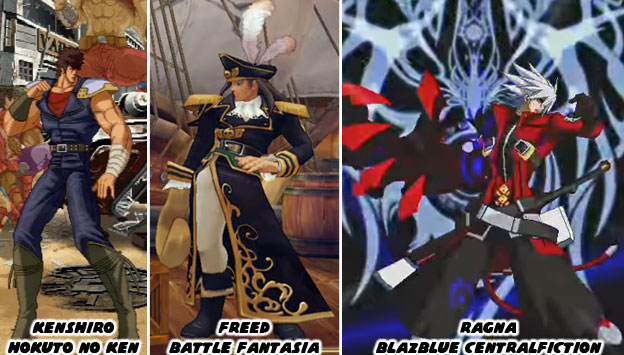
When it came to creating innovative fighting games with a strong aesthetic style you didn’t have to look any further than Arc System Works. Known best for creating Guilty Gear in 1998, the studio had released some very innovative titles over the past three decades. Some of the games were licensed and some were original titles. Each one had its own unique visual style. I had mentioned one of their gems previously, Battle Fantasia, a sleeper from 2007. Some of their other unique releases were Hokuto No Ken (Fist of the North Star) in 2005 and BlazBlue Centralfiction in 2015. Hokuto No Ken recreated the style of the classic 1980’s animé. The manga was drawn by Tetsuo Hara but the anime series was directed by Toyoo Ashida. Mr. Ashida was a character designer and animator that had started working in the ‘60s. By the time he worked on Hokuto No Ken he had studied under multiple different artists. It was this experience that allowed him to capture the essence of the violent comics while retaining the designs that Mr. Hara was known for. The team at Arc System Works did their homework and were able to capture the Hara and Ashida influences in the game.


Battle Fantasia had a much softer feel to it. It was designed to look like a storybook painting come to life. The director Emiko Iwasaki was one of the lead artists on Guilty Gear. When she helmed her own title she wanted to present a visual language that was different than what fighting game fans were used to. She succeeded and showed that 3D games could retain a strong 2D aesthetic. Not only that but female directors were just as innovative as their male peers. The BlazBlue series was a sort of complimentary game to the Guilty Gear franchise. The co-directors Toshimichi Mori and Yūki Katō wanted to create a world that was heavily influenced by bright, colorful anime shows and lay into it heavy doses of the supernatural. Guilty Gear was rooted more in animé-meets-heavy metal. Perhaps it was their work on the Persona 4 fighting game that sparked the interest in humans and demons? 

When Arc System Works (ASW) was founded in 1988 they developed their games and adaptations using the same technology and the same techniques as their peers. As the industry changed they also evolved. In the late ‘90s they saw that fighting games were starting to become stagnant. Sprites were being reused in games by Capcom and SNK. This made a lot of the sequels to the Street Fighter Zero, King of Fighters and Vampire games look redundant. They decided to create a whole new game but using high resolution sprites. This way they could create characters with a lot of style and fidelity. It would be as if an animé show had come to life as a fighting game. Guilty Gear was a treat to the eyes. Players hadn’t seen that level of style in a fighting game in a long while. Arc System Works did not stop there. As 3D technology became more powerful, and started appearing in home consoles, the studio knew that they would have to leave sprites behind as well. They didn’t give up on sprites right away but slowly weaned themselves off. Every game, fighter or not, that they developed gave them more experience in 3D. It forced the studio to see how the change in graphics formats would affect their fighting library. Battle Fantasia and Hokuto No Ken were proving grounds. They were showing that they could use 3D graphics to reproduce 2D aesthetics. Their biggest advancement happened when they created an entirely new engine for Guilty Gear Xrd - SIGN (2014) and REVELATOR (2015).
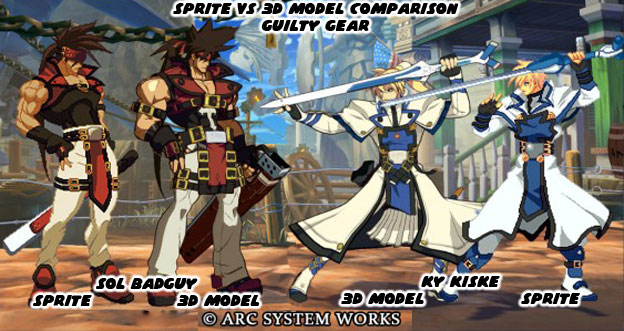
   

Many games prior to the Xrd title had used a technique called cel-shading to make their graphics appear more hand-drawn. What cel-shading did was filter the colors and shadows into a bold contrast and create an outline on the figures. It was a way to visually flatten out 3D objects and preserve a strong 2D aesthetic. One of the earliest games to popularize the format was the Jet Set Radio series by Sega. What ASW did was study what worked and what didn’t over the past decade and to reconstruct the graphical approach. They weren’t stingy with their findings either but freely gave a presentation at the Game Developer's Conference on the Guilty Gear Xrd graphics format. The studio demonstrated how they bridged the 2D/3D divide and shared those with the industry. They hoped to inspire other developers to create graphics that stood out. The company knew that no matter how well sprites looked in HD, the budgets for most companies would no longer allow them to develop hand-drawn graphics. These companies would have to find ways of preserving the hand-drawn style without betraying the visual style that audiences were used to. This also applied to the way the game moved and played. Everything from frame-skipping to hit box data would now be written using new software.

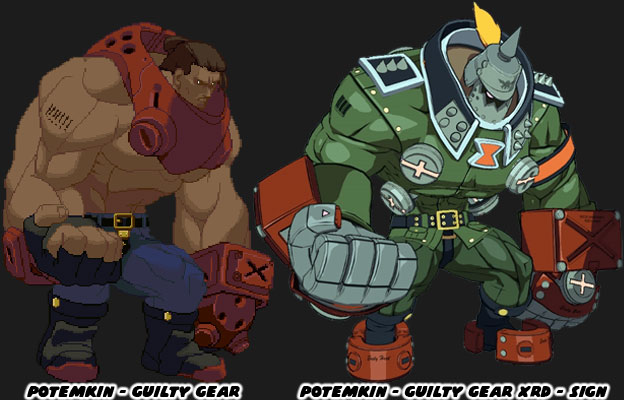
 The studio showed off examples of how character designs evolved for the new technology. Some of the changes were subtle, the length of a coat, the shape of a hairline, other things were more profound, like the redesign of the massive Potemkin. In every example the game managed to retain its unique aesthetic. They could stay on budget, develop innovative titles and appease their fans. The challenge was laid out to other studios. They could keep doing what they were doing. Using the Unreal Engine 3 or 4 their games could all look the same. Or, they could approach graphics from a different angle and give audiences a new experience. It took some effort and fine-tuning in order to achieve the desired results but ASW was not hiding anything from the industry. They learned from their mistakes and wanted to show other companies what they did. The question was whether or not Namco, Microsoft, Capcom, SNK or the other publishers would take these lessons to heart.
   

Some people might not think there was much of a difference between graphical styles. After all, as long as a fighting game has good balance, control and animation then what do the graphics matter? Well the graphics matter because the industry thinks that the graphics matter. It is often the first thing that audiences and reviewers talk about. It is the thing that draws our eyes to the screen. It is what makes a game visualy appealing. Yet as we know is what they mean to say is that they are attracted to the the aesthetics of the game. The style is more important than the technical numbers powering the graphics engine. The best example of how much of a difference it is to have a 3D game with similar aesthetics could be seen in Guilty Gear Xrd and its contemporaries. Take a close look at the character Kum Haehyun. She was a master of the martial arts and knew how to harness the power of chi / ki. She could use her powers to heal or strengthen not only herself but other people. She could have been introduced into the lineup with an arsenal of moves that fit within the series. In the game she actually pilots a robot body that looks like an elder fighting master called Kum Jonryoku.
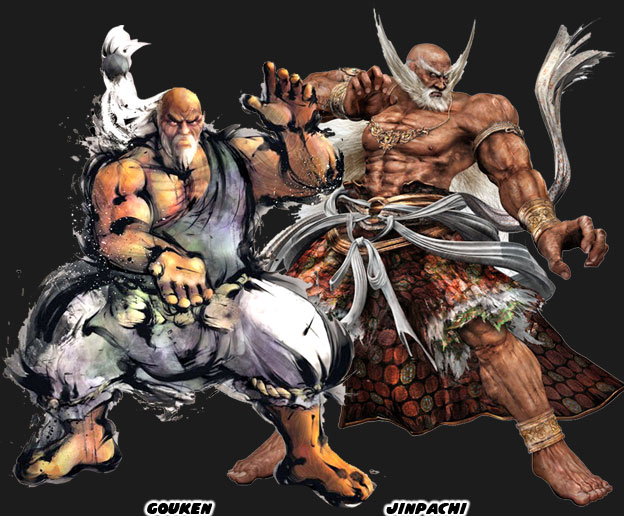
   

Arc Systems Work introduced Jonryoku as a jab at the recent trend of putting overly-muscular, aged, masters in their games. Specifically the robot was a parody of Gouken, the master of Ken and Ryu, from Street Fighter IV, and Jinpachi Mishima, the father of Heihachi Mishima from Tekken 5. In each of those games a character had literally returned from the dead even stronger and more massive than they ever were in life. They were presented among the biggest and strongest characters in their respective series. They made audiences wonder how people so big and powerful could have ever been killed in the first place. They also made people wonder why it was that they were big and strong while the other elderly martial arts masters looked old and feeble. Jonryoku was the culmination of both Gouken and Jinpachi’s school of design. He sported a long white beard, and ponytail. He had enormous chains instead of a belt and fought against weapons with his bare hands. He was both absurd and awe-inspiring as the previous characters were. The funny thing however that underneath the facade was a girl doing all the actual fighting.
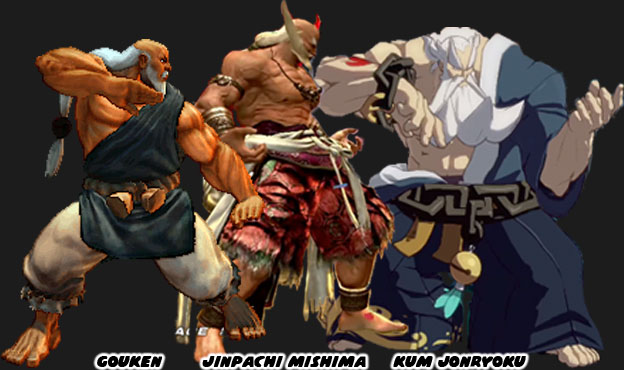
   

When you looked at the characters side-by-side there wasn’t much of a difference between Gouken and Jinpachi. But when you compared them to Jonryoku the choice of aesthetics was striking. All three games used 3D graphics. All three games kept the majority of the game play on a 2D plane. But only one game managed to recreate the exact aesthetic that the lead designer and director wanted. In a sea of similar-looking fighting games why blend in when you could stand out? These were the things that the best studios did to set themselves apart in the’90s. It was something that the industry forgot how to do following the success of Street Fighter IV. Hopefully other studios would rediscover the importance of aesthetics and try harder in the next round of fighting games. At least I hope that they do. What about you, what were some of your favorite fighting games and why? I’d like to hear about it in the comments section. As always if you enjoyed this blog and would like to sponsor me please visit my Patreon page and consider donating each month, even as little as $1 would help make better blogs and even podcasts!
 follow the Street Writer on Patreon!

Tuesday, May 24, 2016

The Street Writer Blogcast, Episode 3

Every time I release a new Podcast I will release the text version for my hearing-impaired friends. I don't want them to miss anything that I cover. Also you are welcome to leave comments and questions for this podcast as well as future podcasts on this blog.


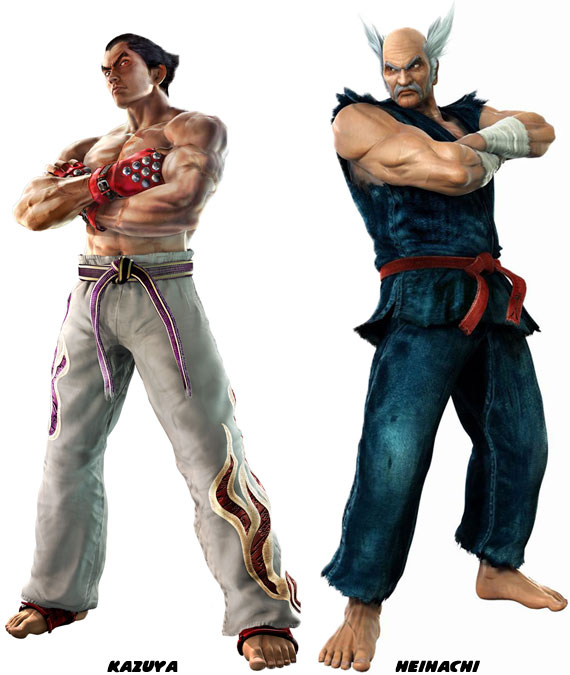
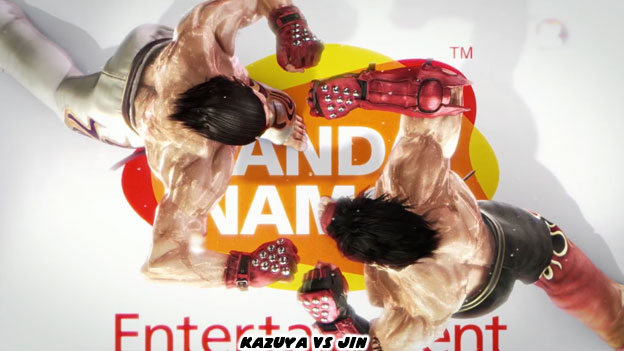
We are still looking at the great rivalries in fighting games. Up until now most of the rivals were strangers. Terry Bogard knew that Geese Howard had killed his father but that was about all he knew about the man. Ryu knew even less about Sagat before the two fought. Was it possible to create a rivalry out of two people that knew each other, or more important, two people that were related? How would that be presented and would it make a fighting game series interesting? Many games featured "friendly" rivalries. Ken and Ryu were best friends and fought from time to time in canon. Ryu did not always come out on top which lent credibility to Ken being the greatest fighter in the Street Fighter universe. Other games also featured friendly rivals and some even had siblings that fought with and against each other. The most dramatic of all rivalries however was between father and son. This was the basis for the Tekken series by Namco. There was actually an inter-generational rivalry happening in the franchise. The founder of the Mishima Zaibatsu, a powerful multinational private army and weapons supplier, was Jinpachi Mishima. He had a son named Heihachi whom he despised almost immediately. The feeling was mutual and when Heihachi came of age he took over the family company and had his father imprisoned. Well imprisoned is a kind way of saying he chained Jinpachi to a rock and buried him alive. Heihachi had a son named Kazuya. When Kazuya became powerful enough he dethroned his father. Well dethroned is a kind way of saying he threw his old man off of a cliff. Kazuya had a son named Jin, care to guess what happened when Jin came of age? The heart of the rivalries really began with Heihachi and Kazuya. The two debuted in Tekken, released by Namco in 1994, and had appeared in every sequel.


Kazuya was the star of the original game and Heihachi was the original boss. As was tradition the boss had started a tournament to find the greatest fighters. This tournament was called Tekken: the King of the Iron Fist. At first audiences did not know that Kazuya and Heihachi were related. They also did not know that Kazuya was just as bad as the boss. Up until that point every fighting game had been about good versus evil. This was the first series that broke from tradition. The main character and boss were both evil. I'm not talking about anti-heroes versus villains either, I mean both of these men were really the bad guys. Series producer Katsuhiro Harada had a very different approach to his fighting game. Tekken was one of the early titles to be completely in 3D. The graphics immediately grabbed the attention of players. Once hooked Mr. Harada wanted to hold their attention. He challenged convention at every turn. He placed robots, cyborgs, assassins and monsters in the lineup against the human characters. The plot involving a father and son rivalry was icing on the cake. Mr. Harada showed audiences how extremely dysfunctional one family was. This game was as far from Street Fighter and Fatal Fury as could be.


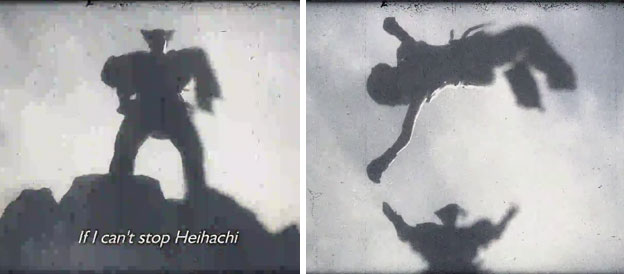
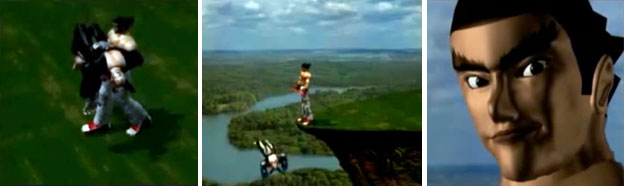
The rivalry between Kazuya and Heihachi started at a young age. Jinpachi warned Heihachi that having a son would make him weak. Heihachi wanted to prove his father wrong. When Kazuya was five years old he threw him off of a cliff. He said if he was the true heir to the Mishima Zaibatsu then he would climb out and return a powerful man. Kazuya survived the fall and did return many years later during the events of the first Tekken tournament. Kazuya was covered in scars, built from a lifetime of fighting man and beast. At the end of the tournament he returned the favor and took his father to the edge of the same cliff and threw him over. Audiences were not prepared for this. They thought that he was going to take his father to get help, or at the very least give him a proper burial. Instead he dropped him and turned to the camera and smiled. It was one of the more shocking moments in game history. Proving ever resourceful, and taking a page from the Fatal Fury playbook, Heihachi survived the fall.


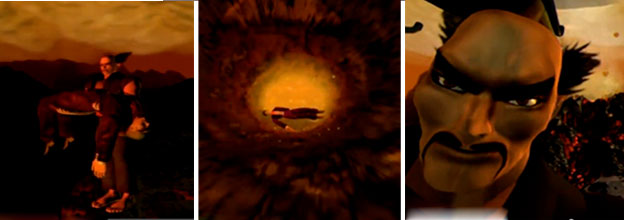
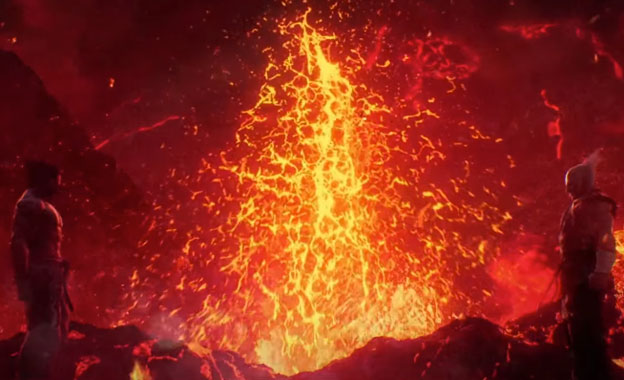
By the time of Tekken 2 Kazuya had taken over the family business and Heihachi had to enter the tournament to try an extract his revenge. As with all great rivalries the two were evenly matched. Unlike Sagat and Ryu where they had two different martial arts forms, or with Geese Howard and Terry Bogard where they had clashing styles, the techniques used by Heihachi and Kazuya were almost mirror images. Each fighter focused on different strikes in order to gain an advantage in battle. What it all boiled down to was technique and experience. Heihachi was able to gain the upper hand and went back to where it all started in his ending scene. This time he dropped Kazuya in the heart of an active volcano and flew away on a helicopter. The ending movie was beat-for-beat the same as Kazuya's original ending. Mr. Harada knew that a little dark comedy went a long way in the series. Audiences were eating up this bitter rivalry.


What many failed to realize was that the rivalry was an homage to a classic manga. Osamu Tezuka was considered the godfather of manga and anime. He was a pioneering artist from Japan that created hundreds of original characters and some of the most beloved stories of all time. One of his heroes was a doctor named Kuro Hazama aka Black Jack. The comic debuted in 1973 and the original run went on for a decade. During this time Mr. Harada and the Tekken team were growing up and were more than likely influenced by many of Tezuka's stories. Kuro was caught in a land mine explosion as a kid, it killed his mother and left him barely alive. He had required reconstructive surgery and skin grafts. When the doctor working on him asked the parents of his classmates if their children would be willing to donate skin they all turned him down, all except his friend Takashi, who was half-black half-Japanese. The skin was applied to Kuro's arms, shoulders and face. This left Kuro with contrasting patches that gave him a unique look. People were often put off by his appearance because he looked monstrous to them. This discoloration was actually featured on the fighting game characters Preston Ajax and Charlie Nash. Kuro dedicated his life to becoming a doctor and honoring the memory of his friend. He practiced outside of the system because he saw there was terrible corruption in the medical field, where only the richest could afford treatment. He had a private practice far away from any town. He would treat mobsters and regular people alike for the right price. He didn't have many friends but made contacts along the way of people that he trusted. One of these contacts had reached out to him because he was afraid of his father. This was where the seeds of Tekken were planted.


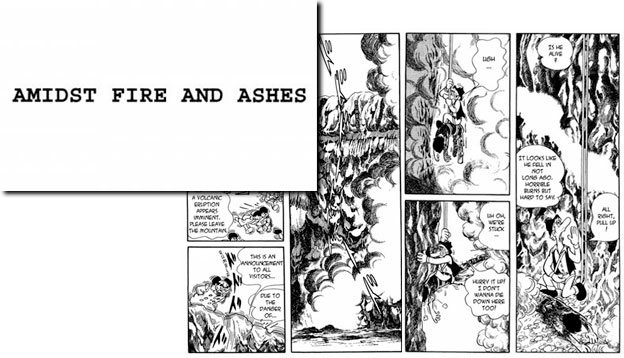
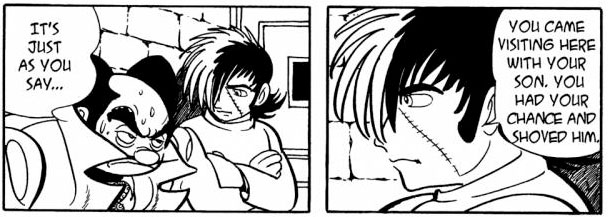
In an issue of Black Jack titled "Amidst Fire and Ashes" the doctor was introduced to a cruel tycoon. The issue opened with a volcano, Mt. Roar, that was erupting near a research center. There was a man in a suit looking down into the volcano but quickly walked away as people got closer. A park ranger spotted a charred body in the crater and lowered himself down to rescue the man. The body was badly burned but the person was still alive. The body was taken to a visitor's center. The man in the suit sprung forward and announced himself as the father of Ryohei, the burn victim. He seemed distressed that his son was dying. Black Jack offered his services but for some ungodly high rates. He knew full well that the man was the CEO of Nippachi Trading and could easily afford the ¥20 million bill to save his son. The man reluctantly agreed but only after Black Jack produced a note from the son, saying that he was going to have a meeting with his father and something may happen to him. He wanted the brilliant surgeon there just in case. Ryohei had a suspicion that his father may do something drastic and his hunch was right. Despite the lack of witnesses placing the father and son together at the time of the accident the CEO felt the pressure to save Ryohei. He agreed to Black Jack's demands and let him operate.


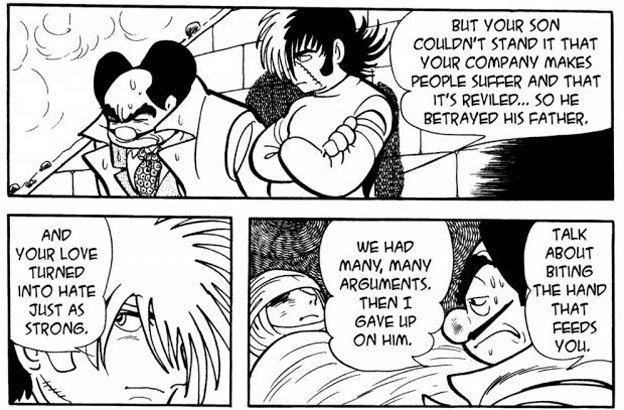
Mt. Roar continued erupting and the visitors were evacuated. Unfortunately Ryohei was in no condition to travel and only Black Jack and the CEO were left behind. The CEO actually tried to leave with the crowd until he was called out by the doctor. After operating on Ryohei the father was still eager to kill his son. He tried wheeling out the body on a stretcher towards the volcano. The doctor punched him out and said he would never allow any harm to the man he had just saved. It didn't take too much prodding from Black Jack to get a confession. It turned out that Ryohei did not want to inherit the company. It had dealings that he found unsavory. His first action would have been to dissolve the corporation. His father would not let that happen to the company that he had built himself. He wanted his son to be strong, in the business world people had to be as cutthroat as he was. His son didn't have a mean bone in his body. The name Ryohei could be translated to "good boy," despite his father's actions he still loved and forgave him. This made the betrayal sting harder for readers. Eventually the CEO came to terms with this and was willing to stay with his son and make sure that he recovered.


The volcano had become too dangerous and Black Jack was ordered to evacuate. The CEO swore that he would stay with his son. The two died on the mountain when it exploded. When rescuers found the bodies they said their hands were clasped tightly together. It was a heartbreaking ending. Then again most of the Black Jack stories were melancholy. The seeds for the evil corporate archetype had been planted in that adventure. The CEO was without a doubt the basis for Heihachi Mishima. In addition to being extremely wealthy and enjoying throwing his kid into a volcano the physical traits were more obvious. Nobody else had the same haircut and mustache. The template would return in manga form years later. Daikenjuro Kanzuki, the father of Karin Kanzuki from the Street Fighter Zero / Alpha series, was another dead-ringer for the CEO. He was not in the game series but instead the manga based on the game. He shared the same physical appearance of the Nippachi Trading CEO. Daikenjuro was similar to Heihachi in that the two had amassed a fortune that could only exist in a fictional world. I'm talking about Scrooge McDuck levels of wealth. They both had private armies at their command, corporate offices in every corner of the globe, residences that stretched over several hundred acres of prime real estate and politicians in their back pocket. They both seemed untouchable. Of course both also had family members who were eager to dethrone them. This made for an interesting dynamic in the game and manga titles.


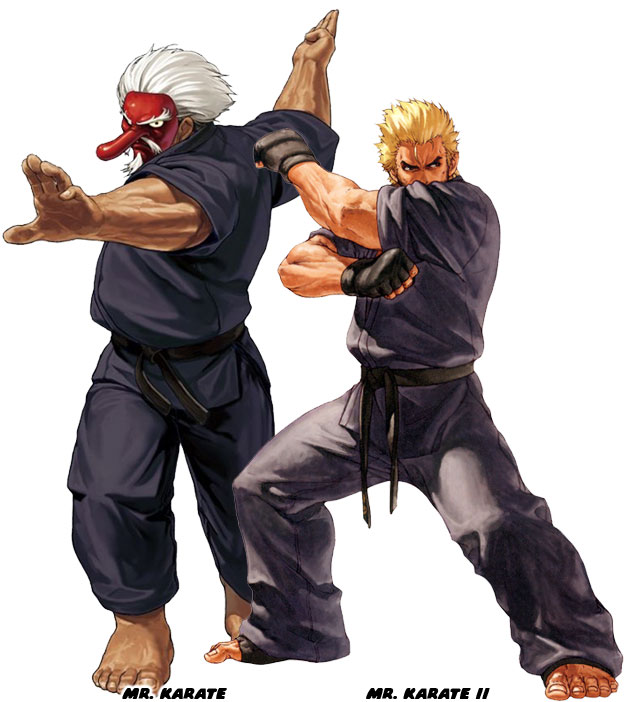
A volcano would appear in the backdrop of other fighting games but few stages were actually set inside of a volcano. This location certainly meant something in the Tekken series. Mr. Harada had meant for it to be the final resting place for both Heihachi and Kazuya. He had talked about finishing the Mishima Saga in Tekken 7. This was why he framed key scenes in the story mode and actual stages inside the cauldron. Unlike the reconciliation in Black Jack this father and son duo were willing to drag each other into hell. It was a bitter rivalry to say the least. You would be hard pressed to find two characters in any series that hated each other more. Yet even with their extreme distrust of each other they had been known to team up, especially during the Tekken Tag Tournaments. Of course each person had their own reason for entering and would betray their partner as soon as they reached the end. Not every legacy character was filled with as much hate even when there was just cause to hold a grudge. Some of the rivals could not bring themselves to hate. This was the case between Takuma Sakazaki and his son Ryo. Ryo did not know that Mr. Karate was his father until the end of the original Art of Fighting. Yuri Sakazaki had been kidnapped and once she was rescued she begged her brother to stop fighting. She revealed that Takuma was behind the mask. It was one of the best twist endings in a fighting game.


Takuma would keep the mask around for when other fighters needed to be taught a lesson. He eventually retired the name and his son took over. At the peak of his abilities Ryo entered tournaments under the name Mr. Karate II. This version of the character ditched the bright orange gi that he wore in the Art of Fighting and King of Fighters series. He went with a solid black one in honor of his father. This version of the character debuted in the Buriki-One tournament. But I digress... Tekken was a series filled with many memorable rivalries. None were as intense as the ones between the Mishima family members. Writers and artists putting together their own stories would do well to remember that family could create the most passionate feuds.


One of the greatest rivalries in fighting game history was also one of the shortest-lived ones. The next part in this series will travel across time and space to resurrect an often overlooked title. Until then please leave a comment or tell me what one of your most favorite rivalries was. As always if you would like to sponsor me please visit my Patreon page and consider donating each month, even as little as $1 would help...

 follow the Street Writer on Patreon!