The final game in our series of fantasy fighters debuted a decade ago. Battle Fantasia was created by Arc System Works. The studio had been in business since 1988. In the early days they were contract developers for Taito, Sega, Atari, Namco and Capcom. They learned a tremendous amount from the industry by working on many major console adaptations. They had experience in racing games, brawlers, platformers and sports titles. When it came time to create their own games they were always very imaginative. Their biggest hits came from the fighting game arena. It stood to reason to, their very first project was a Sega Master System adaptation of Double Dragon in 1988. Being one of the first studios to see the popularity of brawlers first hand certainly stuck with the company. Battle Fantasia was a tribute to everything they had learned over the generations. Many gamers unfortunately slept on the title when it debuted in 2007. Looking back at it we can’t help but appreciate how innovative it was.
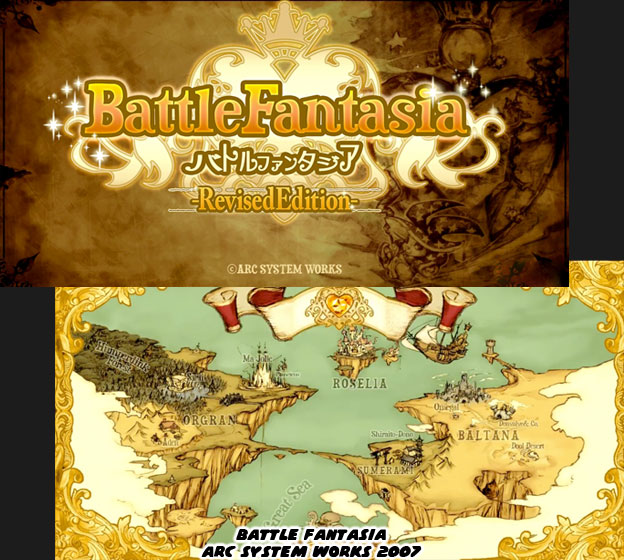
Battle Fantasia had all of the important elements that I had brought up over the course of the series. It was a Japanese take on a traditional western fantasy story. The setting, character classes, and mix of magic and medieval weaponry was something that most audiences would have expected. What no one could expect was how the Japanese were going to reinterpret the western tropes. As with other titles featured on the blog this game took us to a whole new world. This world had an origin, it had alliances, entire kingdoms, remote villages and uncharted territories. We were given a glimpse of the world in the loading screen. Each of the main characters came from a unique place on the map.
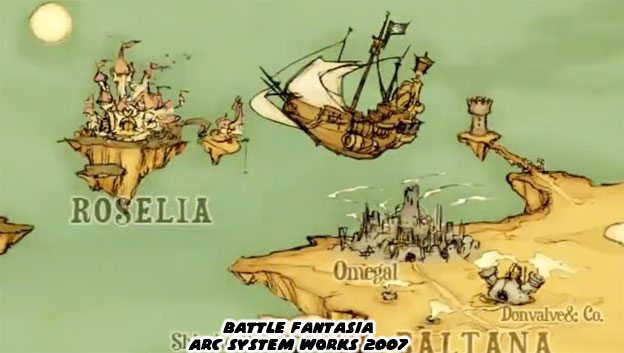
The game was meant to evoke images of classic fairy tales, as if you were looking at animated pages in a book. The soft colors, subdued lighting and animation style were very inviting, they were very family friendly. Arc System Works (ASW) tried very hard to make sure that each and every fighting game they created had its own unique style. When they worked on an IP owned by a different company they made sure that it was in the exact style of that publisher. For example the fighting game Persona 4 Arena maintained the look that Atlus director Katsura Hashino and designers Atsushi Watanabe and Azusa Kido had worked to create. When ASW developed Sengouku Basara X for Capcom they made sure that it carried the over-the-top sword-fighting mechanics that Koei had used in the original 3D brawler but with a new “Capcom-style” 2D aesthetic. When ASW developed Dragon Ball Z: Supersonic Warriors for the Game Boy Advance they maintained the look of the classic Akira Toriyama show and the familiar Super Nintendo adaptations. In many ways ASW was like a chameleon, able to adapt to the work of another studio without anyone noticing. However when they created their own IP things really stood out.
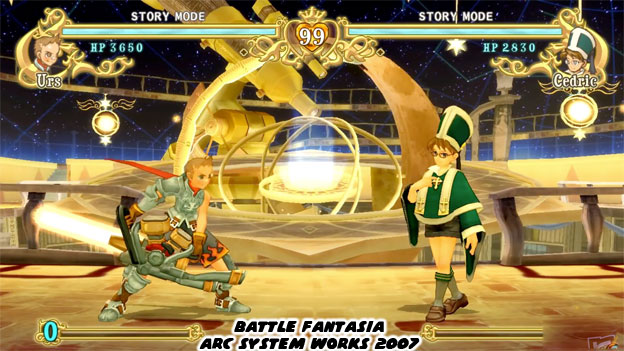
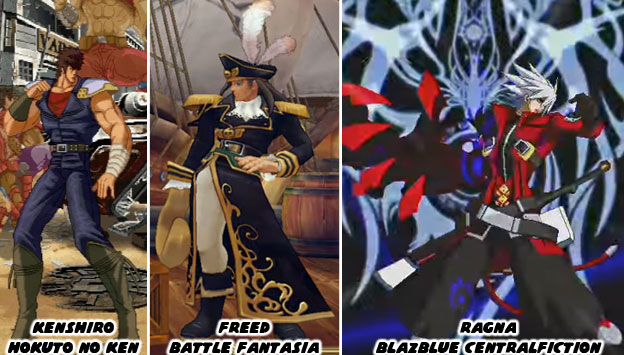
No other fighting game before or since looked like Battle Fantasia. The world created by ASW was perfect to get lost in. The characters were the types of heroes and villains we’d like to see return again and again. It was easy to fall in love with the game because of how unique this fantasy world was. It could never be mistaken for poaching the ideas of Games Workshop or any other western studio. I mean who else could have thought up of a knight carrying around a two-cylinder gas powered light saber? The title was directed by Emiko Iwasaki. She was one of the main artists behind Guilty Gear. If you know your fighting game history then you remember that in 1998 Guilty Gear was a breath of fresh air for the genre. It was completely unlike anything that SNK or Capcom had released, yet at the same time it honored their contributions to the format. Guilty Gear had the bold designs and weapons-based combat from SNK with the fluid animation and exaggerated proportions of a Capcom title. Guilty Gear and it’s spiritual successor BlazBlue were deeply rooted in an anime style but Battle Fantasia really stood apart for its storybook appearance.
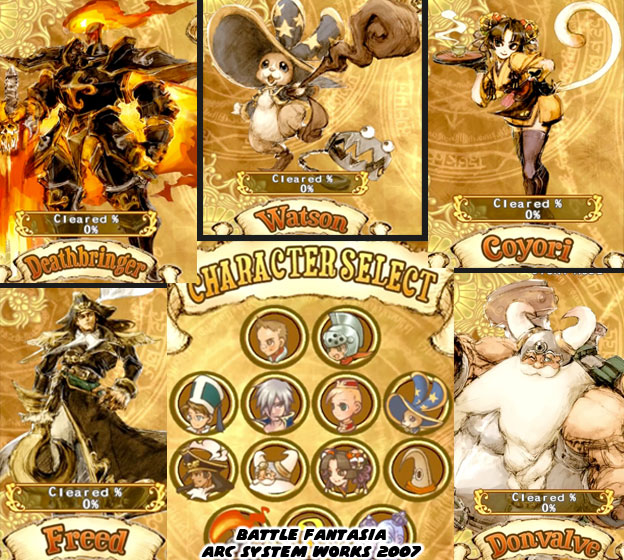
To be fair, the designs in Battle Fantasia did have a hint of the rockstar vibe that Guilty Gear was built on. Some of the men looked like feathery-haired models rather than the swollen barbarians you might expect from a western-produced RPG. Yet at the same time there were fear inducing monsters, covered in black armor occupying the same world. There were variations of the traditional classes of heroes and villains, knights, princesses, etc. Then there were maids, pirates, gunslingers and magical rabbits as well. Battle Fantasia covered a number of different classes and influences with a fresh perspective. The painted portraits on the character select screen captured the spirit that Emiko was going for.
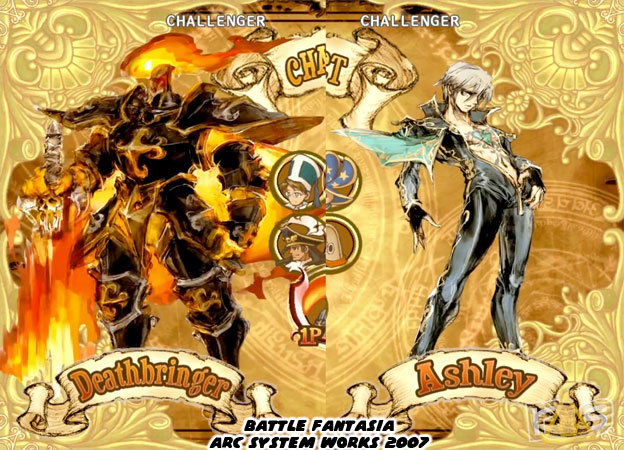
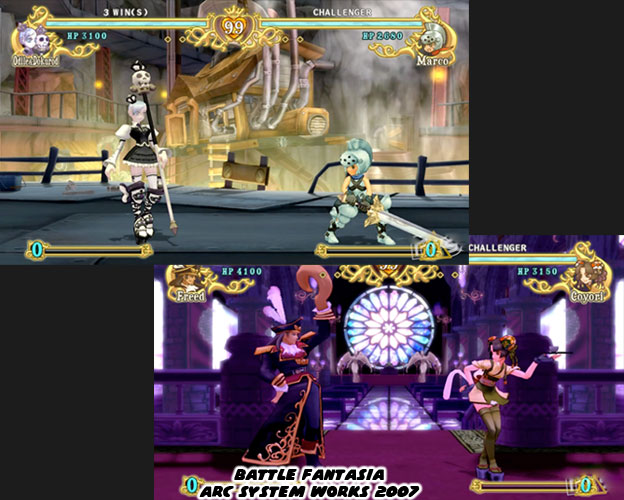
Battle Fantasia had multiple game modes as audiences had come to expect from a fighter. The story mode brought audiences in and allowed them to explore the different relationships in the game. It also allowed them to sink their teeth into a game that had more personality than most other titles. This game like several other ASW titles had a certain level of humor written into it. Characters could be sly or cheeky, their moves meant to reinforce their personality. Their in-game and cut scene animations showed a wide range of expressions. The young knight Urs carried a light sword that was equal parts magic and motor. He was brave but he could be a little bit clueless at times. Princess Olivia had a heart of gold but her daintiness did not stop her from being an exceptional fighter. Marco Van de Land, the younger brother of Urs, was among the smaller characters in the game yet deftly wielded a sword twice his size. There weren't many fighting games that I would ever call whimsical, Battle Fantasia was one of them.
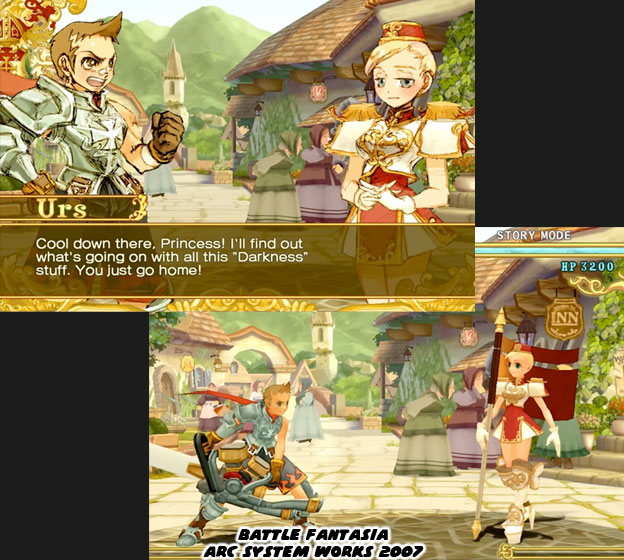
Arc System Works had been in the industry for a long while they knew the subtleties that every great fighting game needed. For example, every great fighting game had a cast of complimentary character designs. That is to say that there was
a lot of symmetry when the studio was building a cast. The main characters often had a rival, sometimes a friendly rival like Ken and Ryu in Street Fighter. Sometimes they were bitter enemies, like Sub-Zero and Scorpion in Mortal Kombat. These rivals often had some sort of visual design that was a balance to the main character. Not every major studio knew about this idea or used the concept. Some studios eventually discovered the value of having new characters balance out the established fighters. They would add these characters in a sequel. Such was the case of Iori Yagami introduced as
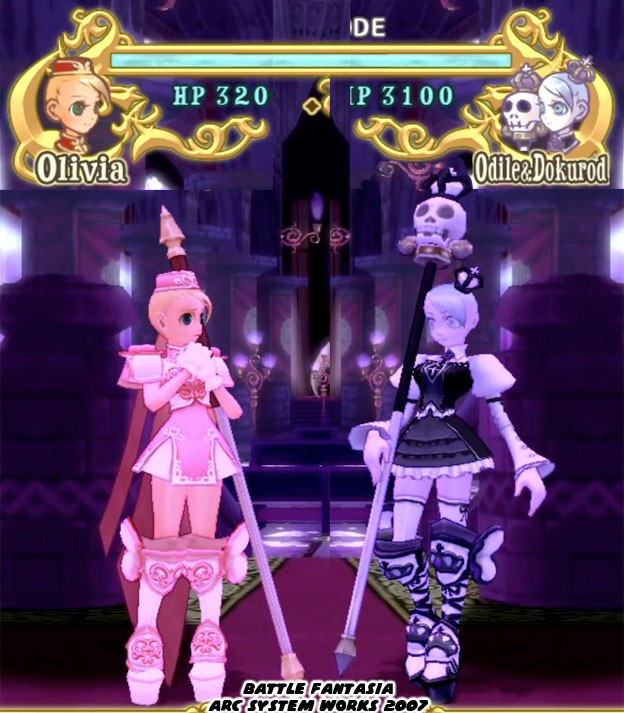
an evil rival for Kyo Kusanagi in the King of Fighters series. For Battle Fantasia it was the delicate Olivia getting balanced out with the chaotic Odile and her animated skeleton staff Dokurod. Olivia's design was rooted in "lolita" fashion rather than the traditional princess gowns in western games. Lolita clothing consisted of ruffled dresses, ornate petticoats and bright stockings worn by trendy Japanese girls. This fashion made its way overseas as did many things that young Japanese trendsetters did. Odile by comparison was clothed in "gothic lolita" fashion, substituting black and white for pastels and looking more grim in appearance.
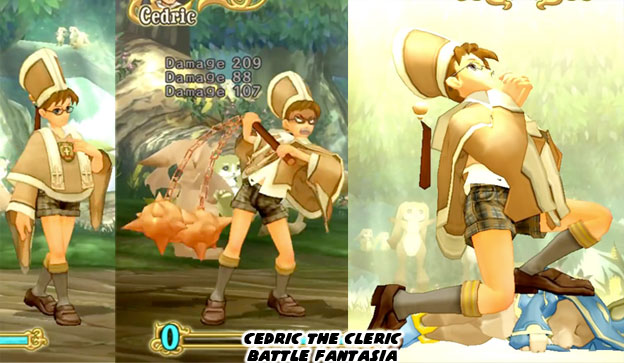
Arc System Works also knew enough about role playing game (RPG) tropes to include them in the game too. This game displayed hit points during attacks as they would have during a turn-based RPG. Each physical and magical attack did x-amount of damage. Characters that used healing spells would even recover x-amount of health. Most studios would simply whittle away at the opponents health or reward players points for long combo strings. The character classes that ASW introduced also revolved around the classic RPG tropes. Cedric for example was a cleric. He appeared bookish, sincere and very devout in his faith. He came across as a little bit snobbish and this rubbed Urs the wrong way. Yet beneath the charm of schoolboy-meets-healer was a vicious persona. When his faith was put to the test he fought with a spiked ball and chain and all manner of brutal techniques. His face twisted into an evil grimace as he flogged his opponents. Then to add insult to injury after each round he would kneel on top of his defeated opponent to offer a prayer. ASW was great at storytelling in every detail they added.
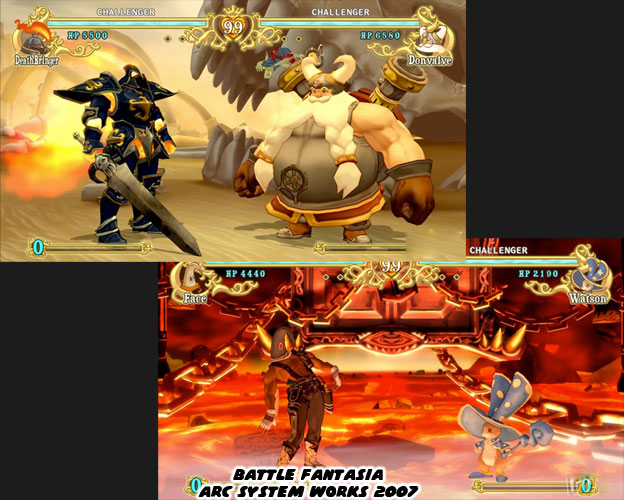
There were so many wonderful characters that I hadn't even mentioned. The cartoonish gun-toting outlaw Face, the massive inventor Donvalve, the magical rabbit Watson. These were the creative types of figures that first caught my eye. Sadly the game did not generate a lot of buzz. A reason for that had a lot to do with the decline of the arcade. There were few places to see, let alone play the game outside of Japan. Even then there were not a lot of new fighting games that would have brought in new crowd to try this out. Thankfully a year after it came out it was brought over to the Playstation 3 and Xbox 360. In 2009 it found its way onto PSN and in 2015 it was brought to Windows PCs with some additional balance. Each iteration helped shed more light onto this gem. While it did not achieve enough success to warrant a sequel it did have an impact on the development of future fighting games.
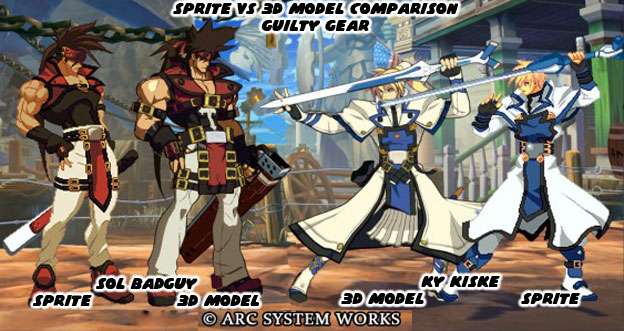
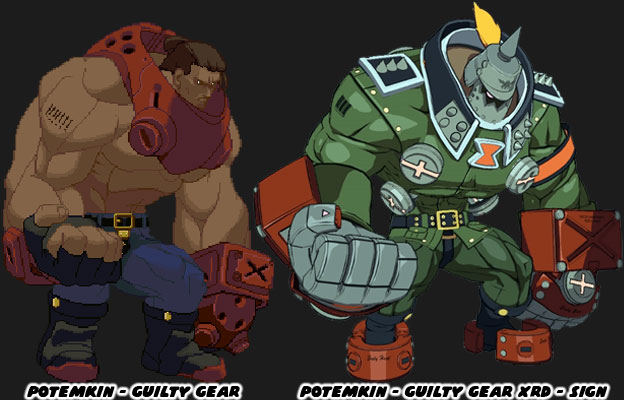
Arc System Works has always believed in the fighting game market. When many other publishers abandoned the genre they stayed with it. Through the years they demonstrated that a well designed fighting game could always generate a following. They did not always rely on licenses and established IP. They took chances and created new experiences along the way. Guilty Gear was an attempt at a new type of fighter. It was not set in any known time or place, but influenced by equal amounts hard rock and anime. Fans took notice of this game right away. Battle Fantasia was another grand experiment. Instead of using sprites, as they did with the original Guilty Gear, ASW was trying out 3D models on traditional 2D play mechanics. It was not the first but possibly most influential 2.5D fighter. They used textures, modeling and lighting effects to make the graphics appear like the concept paintings. They were able to have a game that played like a classic fighting game but with all new technology. This inspired Yoshinori Ono at Capcom to pursue development on Street Fighter IV. He revealed in a 2009 Gamasutra article that Battle Fantasia demonstrated that the formerly 2D character models wouldn't necessarily look weird in 3D. Battle Fantasia also served as a sort of introductory fighting game. It was not as difficult as some of the biggest titles had become. It was easy to pick up with no previous fighting game experience, yet with enough content to make it rewarding for veteran players.
I think that Battle Fantasia was just the start of something even greater. Arc System Works had big plans for this game just like the other fantasy fighting games I had talked about. Every studio I had mentioned was trying to build a franchise title. Those plans gave way to reality. The market was not ready, or not interested in what they were developing. This did not mean that the games were necessarily bad. Every studio big and small took a chance on a new type of fighter. They transported audiences to a new world. One which was far more interesting than the typical fighter. These worlds had histories, mythologies and heroes. These games put down a template that could be copied even today. The industry learned how magic, armor and leveling could work in a fighter. They saw how different technology would affect their graphics engines. They discovered that great storytelling could be applied even in the most action-oriented of genres. Battle Fantasia, like the games previously mentioned, deserved a second chance. I don't think of it as last great fantasy fighter, just the last one for a while. You never know where the next great fantasy fighter will come from. Soon enough a studio will decide that they are ready to tell a new story, to take another chance. Maybe it will be a free-to-play web game. Maybe it will be for a mobile device. In which ever shape or form it takes I will be eager to explore this new world. I hope that you will be willing to come along for the ride. Thank you for staying with me. Please leave a question or comment if you have enjoyed any entry in this series. As always if you enjoyed this blog and would like to sponsor me
please visit my Patreon page and consider donating each month, even as little as $1 would help make better blogs and even podcasts!