Showing posts with label fantasy. Show all posts

Friday, May 29, 2026

Warhammer drawings from my sketchbook

Hello friends, I hope that you are doing well. Today I’m posting again to help snap me out of my art block. I am sharing some art from the past. Like last time I would be looking at some fantasy, and sci-fi art. You could find all of these and more on my Warhammer & Warhammer 40,000 Gallery.

These were done when I was on an ink series while on my lunch break at work. There was something that I missed about working in an office, and that was having a break room with a drawing table. It allowed me the space to really explore my creativity. Here’s a dwarf and war pony. Also a Female Dwarf Warrior - I think there aren’t more female dwarf miniatures because the sculptors don’t want to create some glorious hair. This piece was dedicated to all the shorties fighting their fights.

I had an idea for a video game featuring this Skaven Warrior. I wanted to see Cyanide Studios, the creators of Styx: Master of Shadows to create a new stealth combat game featuring a Skaven hunting down vampires in the Warhammer Fantasy universe. I would replace one of his eyes (under the patch) with a warp stone shrapnel so that he could see in the dark, and detect magic. Would you play a game like that?

Nurgle had some of the best art, and miniatures in the Warhammer universe. I had to come up with my idea of a Nurgle Champion. This was part of my ink sketch series, starting in October (Inktober) 2016 and going on almost every weekday until March 2017. This was a very creative period where I drew mostly things that interested me. Lots of skateboarding, cars, games and people.

Noise Marine Terminator - I've got lots of ideas for Noise Marines. In the perfect world where time, and money were no object I would have an entire until made of of Noise Marines that I converted to have fantastic weapons, and armor. For example I want to see an organ-playing Noise Marine that wears the pipes on the back of his Terminator armor. I'm sure somebody could convert the organ on the Sister's of Battle Exorcist tank to get the needed parts.

Here was another example of a custom Noise Marine that I would love to do. The Noise Marine Dreadnought - How about a Dreadnought that looks like a walking mausoleum-meets-boom box? Complete with iron fencing.

The Titan Sketch was the largest Warhammer 40K illustration I ever made. I would sometimes write massive letters on 18x24-inch sketch paper. On one side I would write a letter to a friend, or family member, then on the back I would do a drawing. I wrote to Games Workshop one day, and did of the Imperator along with the internal workings. The letter went to game creator, and editor at White Dwarf Magazine Jervis Johnson. He replied to me, and said he appreciated the letter. He also added that creative director, and legendary artist John Blanche enjoyed the titan sketch. John Blanche was like if Alan Moore was a painter rather than a writer. As far as compliments went I couldn't ask for a greater endorsement. Did you have a favorite drawing, or idea that should be turned into a model? Tell me about it in the comments section. As always if you enjoyed this blog, and would like to sponsor me please visit my Patreon page and consider donating each month, even as little as $1 would help make better blogs and even podcasts!
follow the Street Writer on Patreon!

Friday, January 12, 2024

Korean fantasy fighting game Chosun Musa is not cancelled!

Friends in the fighting game community, I have wonderful news! If you are a fan of fantasy, historical or sword fighting games then you might remember I wrote about Chosun Musa previously. I had been keeping tabs on the Korean game since 2007, and couldn’t find any news on it recently. As it turns out the game was not cancelled. As it is a small independent studio working on it the game was simply delayed. But don’t take my word for it. Please read below from the game creator.

“Hello, I am Iron Witch, the person who created the fighting game Chosun Musa (2008) based on my fan project Mortal Kombat Zero in 2007. It's an honor that you still remember the game title I'm working on! 

To be brief, unlike the content of your article, I am still working on the Chosun Musa project. I recently revealed details on two characters that can be found in Chosun Musa (Refined) on ChosunMusa_US in 2022 for testing purposes. As stated in "The Document of Chosun Musa" on that Twitter page, Chosun Musa (Refined) is based on HD sprites, and the character accessories and weaponry will be pre-rendered as detailed 3D models. 

Also, I recently purchased the trademark Chosun Musa, and domain name (chosunmusa.com) for Chosun Musa in Korea. Although the development process will take a long time because the game's production direction is focused on high-resolution pixel art and quality, I have preemptively purchased the game's IP name and domain name to minimize disputes from others. 

Unfortunately, at present, I am working on a side project for Chosun Musa, a fan-created project called Darkstalkers Re-Creation. In this project, I aim to create two illustrations: the original costumes of the characters and alternative costumes that I created myself. I believe that Darkstalkers Re-Creation will have a positive impact on improving my creative skills as I am currently producing Chosun Musa.”

This is wonderful news for the fighting game community, both for the Chosun Musa, and also for Darkstalkers Re-Creation. I can’t wait to see more news as both get closer to publication. A big thank you to Iron Witch for reaching out, and letting us know that the game is still in development. If you are just getting into fantasy sword fighters I wrote a bit about them on the blog. Please check it out. Golden Axe the Duel Dragon's Heaven Warzard Asura Blade Sword of Dynasty Asura Buster Eternal Warriors Chaos Breaker - Dark Awake Battle Fantasia As always if you would like to sponsor me please visit my Patreon page and consider donating each month, even as little as $1 would help make better blogs and even podcasts!
follow the Street Writer on Patreon!

Friday, March 31, 2023

My favorite Games of All-Time #16: The Ocean Hunter - Originally published on 1UP - April 28, 2006

Before we explore the Ocean Hunter we have to set the stage. I'm going to go back in time, seven years ago, the beginning of the end. Back to a time when Sega was the undisputed king of the arcade! In 1998 Sega had developed a slew of games for the Model 3 board. Daytona USA 2, Dirt Devils, Emergency Call Ambulance, L.A. Machineguns (sequel to N.Y. Gunblade), Magical Truck Adventure, Ocean Hunter, Spike Out, Star Wars Trilogy and Sega Bass Fishing. Many of these titles are classics in their own right and I have even made mention of Spike Out and Daytona 2 a few blogs back. By far 1998 was one of Sega's most creative years.

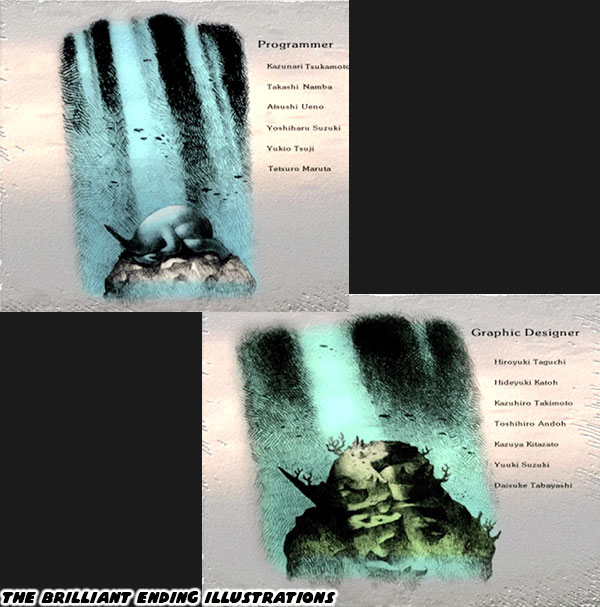
Sega had several arcade divisions back-in-the-day. The most famous being Yu Suzuki's AM2. Less known were Kazunori Tsukamoto and Rikiya Nakagawa of AM1. The team at AM1 crafted one of the most overlooked arcade gems ever, the Ocean Hunter! Ocean Hunter was a great game from a great company. It would even hold up well against the best of Yu Suzuki.

All arcade titles interest me, some more than others. The more creative and immersive the story behind the game the more likely I'll become a fan. I'm not fond of shooters like Virtua Cop or Gunblade N.Y. so it was odd that I would say Sega's best game in 98 was a shooter called the Ocean Hunter (OH).

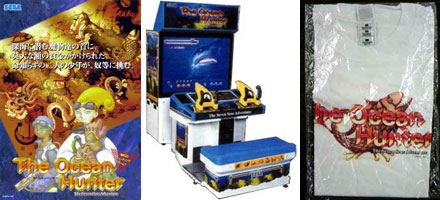
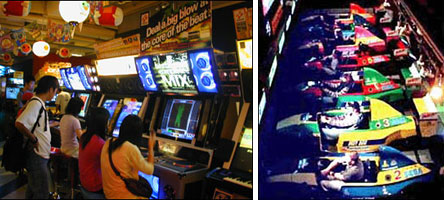
There are two types of cabinets for the OH, try to find the sit down cabinet with the giant display. Read the Boss FAQ if you want to know what you're getting into. Have a seat, make yourself comfortable, become familiar with the controller. Appreciate the time and effort that AM1 went into the design of just the cabinet itself. The Japanese are industrious people. OH is testament to AM1's commitment to detail.

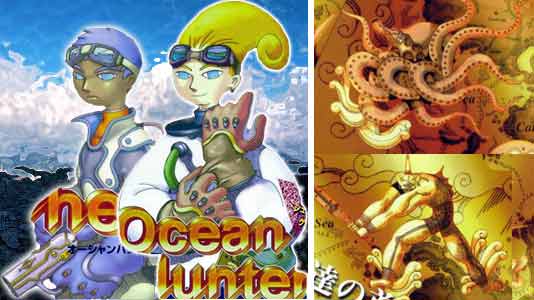
Many arcade games come with some backstory. "You are in a race" or "you are fighting for your life" or even "you are a pro wrestler." Like all forms of entertainment there is some suspension of disbelief, a chance for you to let yourself get caught up in the virtual world. The Ocean Hunter has one of the best plots I've ever read. Taken from the Japanese flyer for the game.

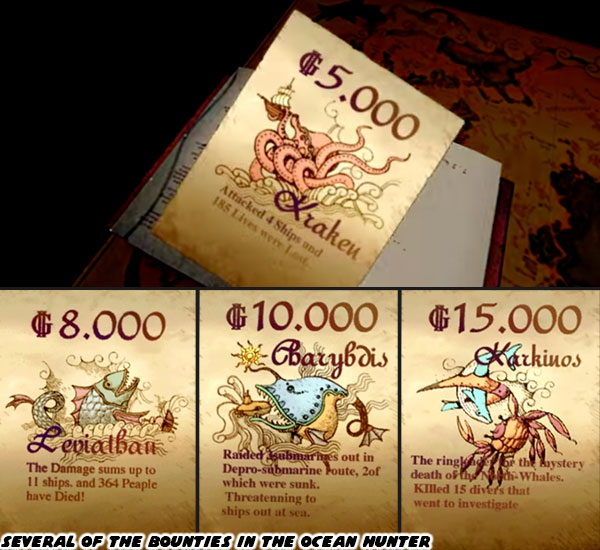
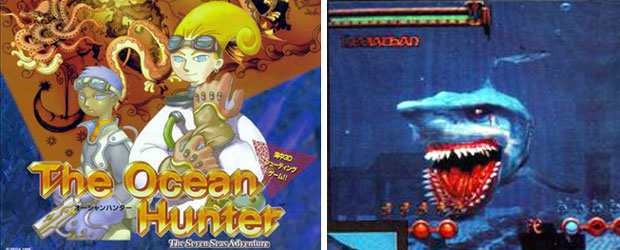
"In the Seven Seas of the planet, seven terrifying monsters lurk... a new civilization is flourishing, but in the oceans giant monsters attack both boats and harbors with increasing frequency. Frightened for their lives, people put a bounty for the monsters. This game is the story of two young people who head out to defeat the horrible creatures in the seven seas..."

Sounds straightforward right? At least it is a little more back story than is provided in the English flyer. Both flyers are at the Arcade Flyers Database. The story and art from the flyer are mirrored in the art and direction of the game itself.

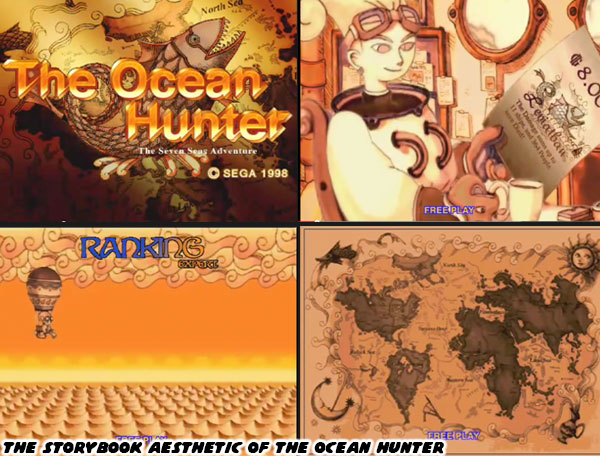
Visually the game is impressive. Graphics aside the game has a unique design. The world created is highly-stylized, somewhat storybook, and almost Victorian. The names used in the game like Poseidon, Leviathan, the Kraken are mythological and biblical. The ships, science and clothing are fantastic... along the art and fiction of writers like Jules Verne and Alan Moore. Some of you might know it better as a League of Extraordinary Gentlemen-type of world. I'd say OH is a watered-down (no pun intended) version of the LoEG world, scaled to focus on just the adventure.

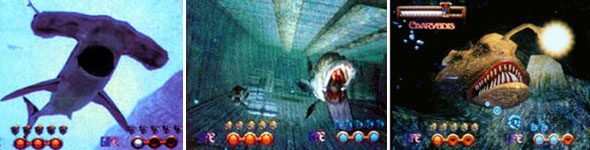
What sucks for me is that the only images available online are rather grainy and dark. The closest arcade to me that had the game was about 38 miles away, I'm not sure if they even have it any more as I write this. Most of my experiences with the game are from memory. So please bear with me and try to use your imagination as I bring the Ocean Hunter back to life.


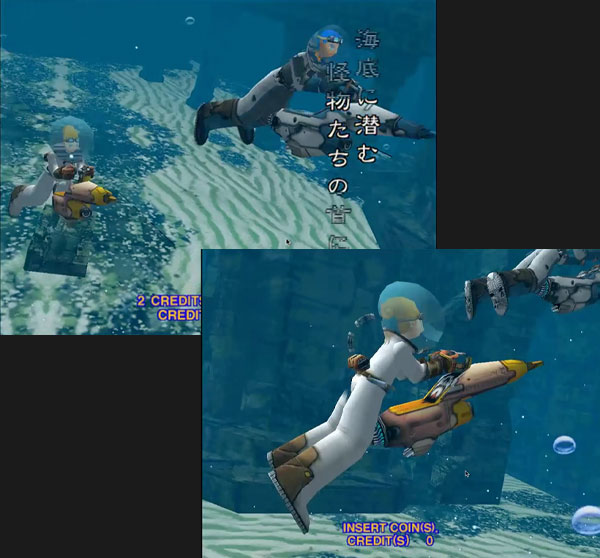
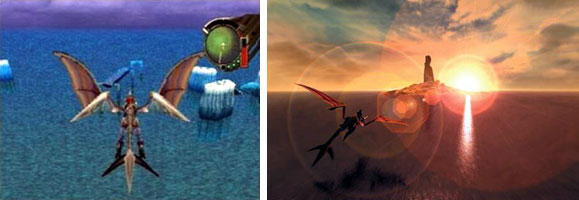
Most of the gameplay revolves around you shooting mini harpoons from your sea scooter. If you've ever played a shooter in the arcade then you know that you must face wave after wave of enemies. You are usually on an invisible rail dictating which direction you are going. In this case each level is filled with dangerous uniquely-named fish, shark, rays, jellyfish and eels. There is a mid-boss consisting of a larger fish and eventually an actual boss consisting of a massive creature. Most of the game is frenetic shooting but power-ups and health recharge items (hidden in the game) require a much more refined shot. The bosses can be defeated by finding and exploiting vital areas. None of that is new to arcade shooters. The total package is what sets the Ocean Hunter apart from the other shooters.

When you start the game you are given a cinematic featuring the same story on the flyer. You could skip the cinemas in the game by pressing the triggers on the controller. That would be taking away one of the most important components to the game. If you get a chance try and go through all the cinematics and enjoy the story.


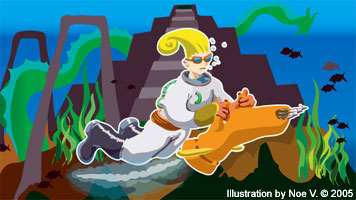
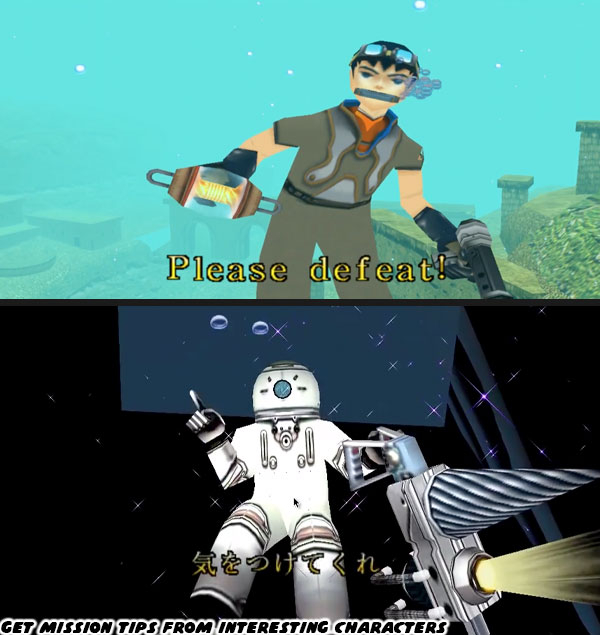
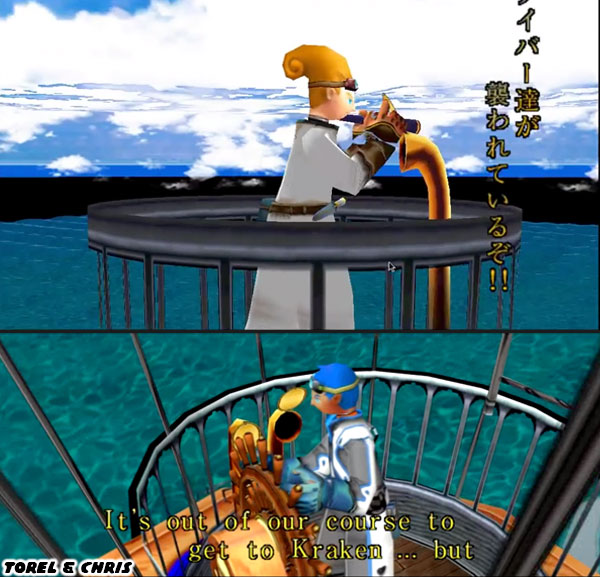
As one of the bounty hunters it is your job to stop the monsters of the ocean bent on destroying ships and sailors alike. The characters are unnamed, the one with the long hair is Player 1, the one with short blue hair is Player 2. I'm certain somebody at AM1 (eventually renamed Overworks and then Sega WOW) knows their true names. Your vehicle and weapon is a nifty, repeat-action harpoon gun and underwater scooter. You don't actually get to steer the scooter, only aim the harpoon.

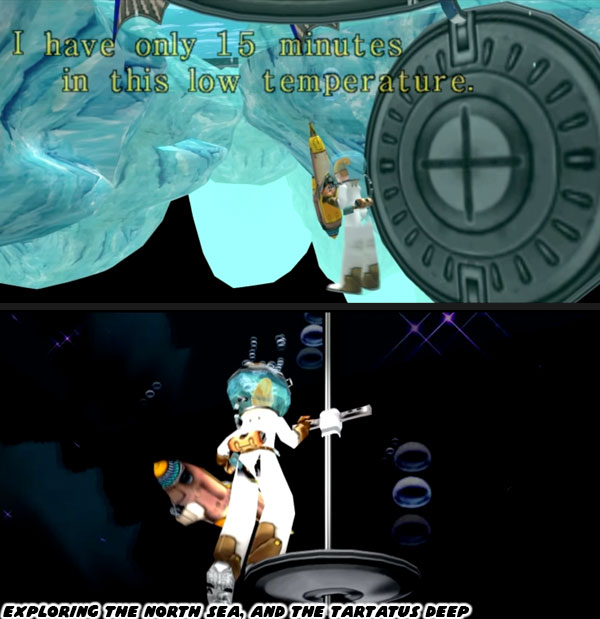
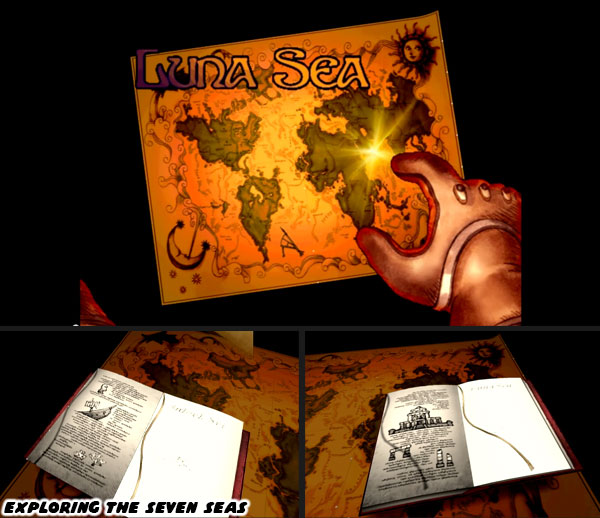
The "Seven Seas" in question are not based on our oceans. In this game the seas and the fish within are unique to each level. There is the Baroque Sea, the Luna Sea, the Tartarus Deep, Texcoco Great Lake, the North Sea, West Sea and Panthalassa: the Sea of Evil. Each environment is special. In one stage you fight within a great sunken ship. In tight spaces shooting quickly advancing eels and avoiding falling debris. In another level you will be taken to the arctic and end up fighting underneath icebergs where deep sea divers are pinned in by sharks.


The level designs are great and the detail is all there. Ahuizotl is the monster harassing the waters off Texcoco Great Lake. The lake has a sunken city, designed after Mayan or Aztec ruins. It is easy to get lost in the scenery. If you spend too much time looking at the details in the game you'll end up surrounded by piranha and other underwater nasties.


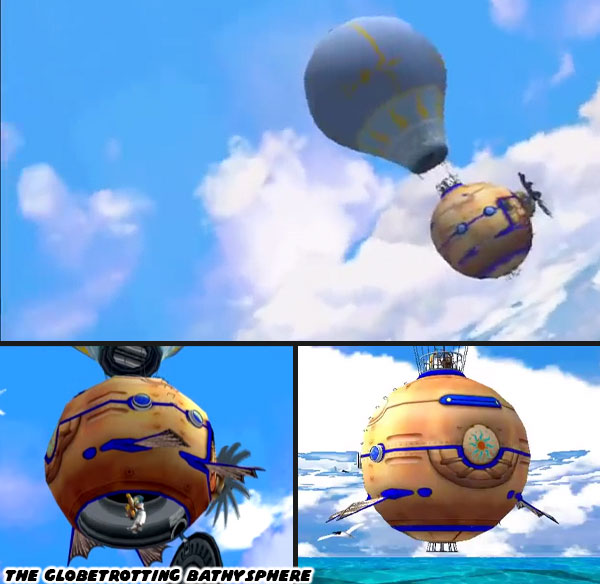
Your transportation between levels is pretty neat. Your base of operations is a mobile semi-submersible. A large bathysphere (Google it) attached to a balloon and driven by a propeller. A cable drops you into the ocean when you go deep sea diving (on later levels). One can assume it also pulls you up between levels. Still it's one hell of an invention that would make Da Vinci proud.


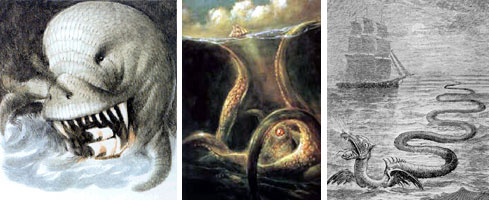
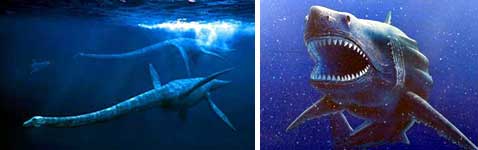
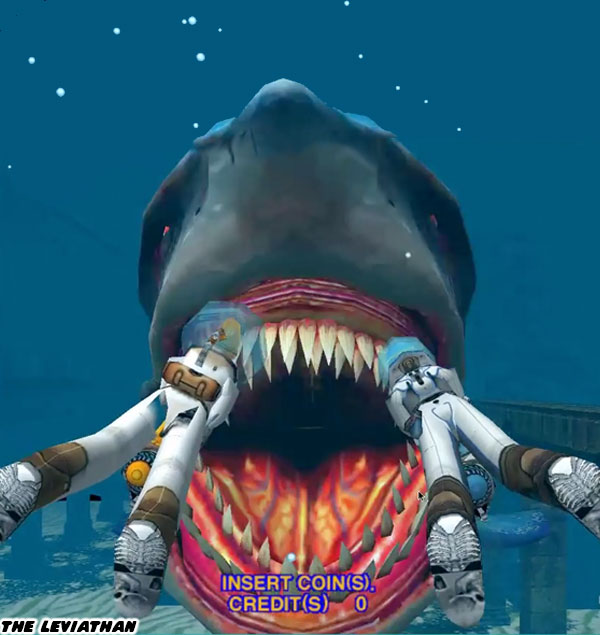
The bosses themselves are a sight to behold. Many of the creatures are based on myth and legend, a few of them are based on dinosaurs like the Plesiosaur and Megalodon.

It isn't enough that you have to fight giant bosses for money. A dinosaur would fight on instinct and run away when shot with a harpoon machine gun. The bosses in the Ocean Hunter are relentless. They chase you, cut you off and corner you. They are tougher than hell and require hundreds of shots to fell. You quickly learn why the bounties on each monster are so high.
 

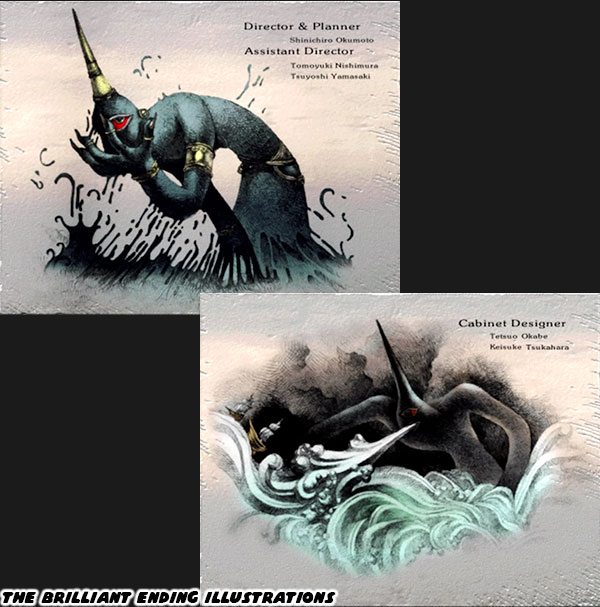
The last boss in the game is no joke. He, (it?) has several transformations. You know this wouldn't be any type of shooter if at least one boss didn't transform multiple times. The "Sea of Evil" is not as ominous as it sounds. Sure every monster that you have faced turns up there, but the water is not boiling blood (that would have been truly evil!). The boss Dagon is a giant frog-humanoid that hops around the ruins of what looks like Atlantis. After taking enough hits he transforms (rather stands up) into Poseidon. If you dish out enough damage to Poseidon he transforms a third time, his legs fuze into a tail (and even grows a third eye on his forehead) and is renamed Rahab, a gigantic merman.


Shoot with everything you have and make sure you have plenty of credits. This game, like all great shooters, can be a quarter cruncher. When you defeat Rahab you hit the big payday but you are also left with the final cinema before the credits.


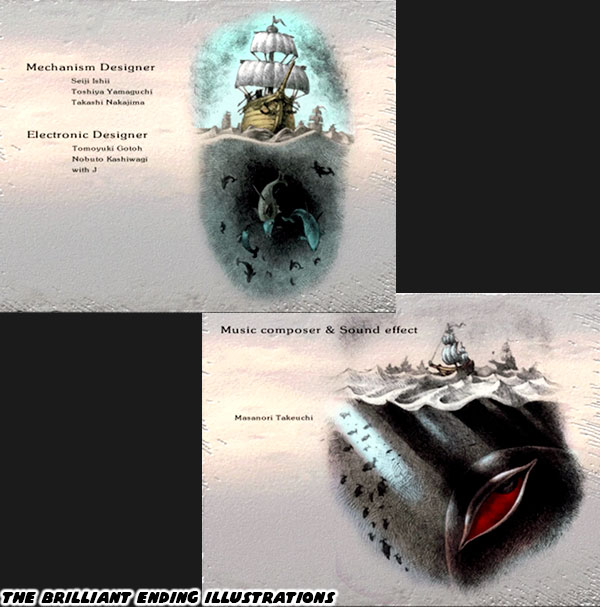
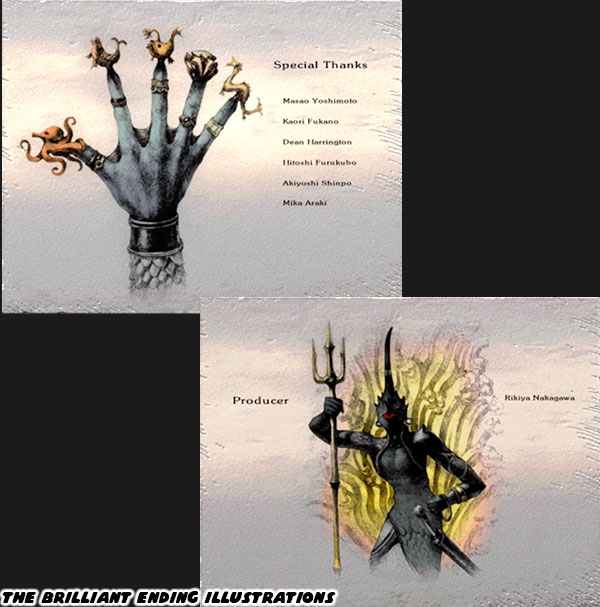
Rahab was angry at humanity for polluting his waters. It was then that he sent out his bosses (represented as the fingers on his hand) to reclaim the ocean. Although you started out protecting the ships in the end you have claimed the bounty for creatures, and gods that existed millennia before man. You have destroyed the only ones trying to protect the oceans.


The moral is a heavy pill but the adventure was well worth it. AM1 should be proud of their work and the fact that years later I am still thinking about the game. If only I had an arcade cabinet to call my own... If only Sega had taken that extra step with the IP they created... can you imagine?


The Ocean Hunter could have come out on consoles. It could have been a sister title to a game like Panzer Dragoon or perhaps it could have been like Phantasy Star.

Space may be the last great adventure but it means very little in a videogame. In terms of mechanics not much separates Final Fantasy from Phantasy Star. A turn-based fighting system, an epic plot, players can customize their character... none of that is new. Break that third dimension though. To be able to quest (with direct control) into the sky and underground as well as on land and we have something special. GTA is not a fantasy title but being able to steal and use cars and fighter jets is about a fantastic premise as I've ever heard.


For an RPG, riding, fighting and adventuring on horseback bends some of that reality. Riding on a dragon in all three dimensions opens up the possibilities of the game-playing experience. Fall off that dragon and gravity does us in. Water allows us to experience the same things and more. We can float, we can sink and we can swim in all three dimensions. We can glide on the surface of water or power through it. Very few people have ever seen the bottom of the ocean, who needs outer space when the most exotic and unique forms of life can be found in the big blue? The game also reminds me of an important part of gaming history that is lost for many people.

Arcades were the place for gamers to hang out and socialize. The best players became mini-celebs at the arcade, the social order from school did not apply there. There was no internet to hide behind, people could not be anonymous posters on a message board. If a player showed up to an arcade, and talked shit about the other visitors then they had two options, prove they were something amazing, or leave before they got a beat-down. The rule was the bigger the city the bigger the arcade. The best players drove, or took the bus. Going from arcade to arcade looking for competition. This competition caused beefs to build up between some audiences, with some rivalries stretching coast-to-coast. New visitors were however always welcome at the arcade. That sense of community among active gamers is not as strong today despite chat programs within MMORPG, Playstation, and Xbox Live games.


Before 60" HD Plasma Displays and 5.1 Dolby Surround Sound were in home entertainment centers there was only one place to enjoy games on an epic scale. The arcade was always the home to the biggest displays, flashiest marquees and even custom built cabinets. For 25 cents a gamer did not only play a game, they were treated to an experience. The arcade experience was akin to watching a movie in a theater, the home console just couldn't compete.

Arcade cabinets were a unique beast. Some cabinets were shaped like cars or motorcycles. Some surrounded the player and could flip and rotate a full 360 degrees. The control was not a pad but an actual joystick or steering wheel, the buttons firmer and more responsive than anything the console makers could invent. Some cabinets had players sitting, pedaling a bike, rowing a boat, firing a shotgun or balancing on skis. Can you imagine a God of War game that required you to actually swing blades of chaos at the screen? These were the experiences missing when arcade treasures were translated to the consoles. Many did a good job but none could ever capture the magic of the arcade.

Not many gamers today know or remember the golden era of arcades. The era when arcade games meant more to the game industry than consoles or PC titles. When the arcade crowd was a genuine community, gamers shared common experiences, competed, strategized and had fun all in the same place. The internet and booming console market soon took gamers out of circulation, took away that sense of community and just about destroyed the arcade. At least for today we will raise a glass to one of the last great arcade games.


The Ocean Hunter, like the best arcade games, was bigger than life. By sitting down at a deluxe cabinet players got a sense of scale, a sense of awe. This game was anything but ordinary. By watching the story unfold, reacting at every bump and turn in the game, studying the detail that went into every level, we could tell that the game was much deeper than the display showed. Sega had managed to capture a grand scale adventure, something meant for a movie screen, and compressed it into a few levels. It was something that we could enjoy in one sitting. On paper it all looked so simple. It was about hunting mythological sea creatures with a harpoon machine gun. The actual game transcended all of that. It became a symbol for one of the best experiences that I will ever have the honor to play.


The Ocean Hunter reminds us of what arcade greatness was. It was, and remains the game that I consider one of the best titles ever. It is a game that is long overdue for a second chance. I hope someone at Sega still remembers the legacy of AM1. Track it down if you can, or watch a long play on YouTube so you can get a glimpse of this fantastic experience. I’d like to hear your personal top-10, top-20, top fighting games, top sports games, or top games in any genre. Let me know in the comments section please. As always if you would like to sponsor me please visit my Patreon page and consider donating each month, even as little as $1 would help make better blogs and even podcasts!
follow the Street Writer on Patreon!

Monday, May 1, 2017

Battle Fantasia, the great fantasy fighting games, final part...

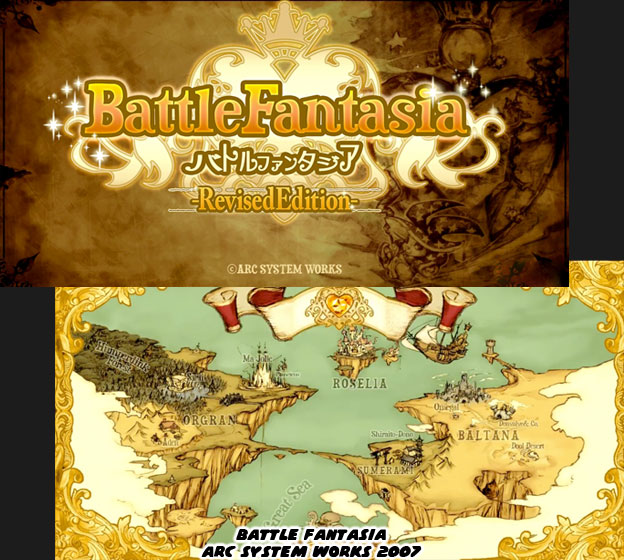
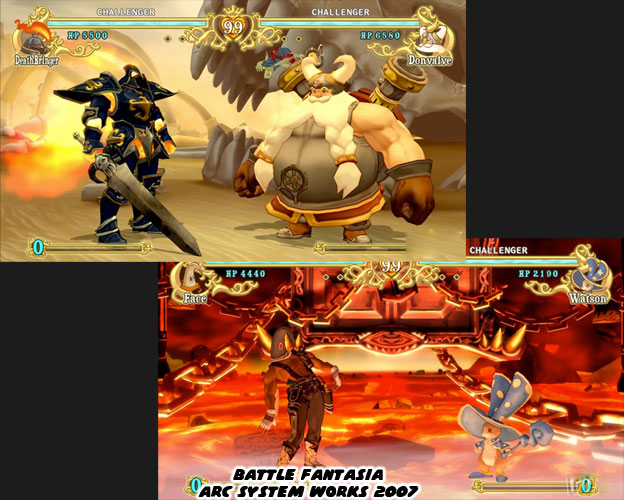
The final game in our series of fantasy fighters debuted a decade ago. Battle Fantasia was created by Arc System Works. The studio had been in business since 1988. In the early days they were contract developers for Taito, Sega, Atari, Namco and Capcom. They learned a tremendous amount from the industry by working on many major console adaptations. They had experience in racing games, brawlers, platformers and sports titles. When it came time to create their own games they were always very imaginative. Their biggest hits came from the fighting game arena. It stood to reason to, their very first project was a Sega Master System adaptation of Double Dragon in 1988. Being one of the first studios to see the popularity of brawlers first hand certainly stuck with the company. Battle Fantasia was a tribute to everything they had learned over the generations. Many gamers unfortunately slept on the title when it debuted in 2007. Looking back at it we can’t help but appreciate how innovative it was.


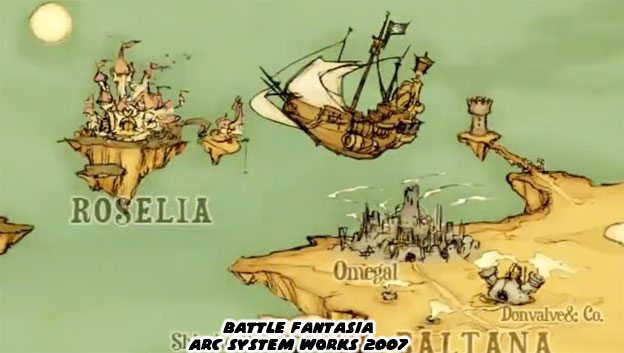
Battle Fantasia had all of the important elements that I had brought up over the course of the series. It was a Japanese take on a traditional western fantasy story. The setting, character classes, and mix of magic and medieval weaponry was something that most audiences would have expected. What no one could expect was how the Japanese were going to reinterpret the western tropes. As with other titles featured on the blog this game took us to a whole new world. This world had an origin, it had alliances, entire kingdoms, remote villages and uncharted territories. We were given a glimpse of the world in the loading screen. Each of the main characters came from a unique place on the map.


The game was meant to evoke images of classic fairy tales, as if you were looking at animated pages in a book. The soft colors, subdued lighting and animation style were very inviting, they were very family friendly. Arc System Works (ASW) tried very hard to make sure that each and every fighting game they created had its own unique style. When they worked on an IP owned by a different company they made sure that it was in the exact style of that publisher. For example the fighting game Persona 4 Arena maintained the look that Atlus director Katsura Hashino and designers Atsushi Watanabe and Azusa Kido had worked to create. When ASW developed Sengouku Basara X for Capcom they made sure that it carried the over-the-top sword-fighting mechanics that Koei had used in the original 3D brawler but with a new “Capcom-style” 2D aesthetic. When ASW developed Dragon Ball Z: Supersonic Warriors for the Game Boy Advance they maintained the look of the classic Akira Toriyama show and the familiar Super Nintendo adaptations. In many ways ASW was like a chameleon, able to adapt to the work of another studio without anyone noticing. However when they created their own IP things really stood out.


No other fighting game before or since looked like Battle Fantasia. The world created by ASW was perfect to get lost in. The characters were the types of heroes and villains we’d like to see return again and again. It was easy to fall in love with the game because of how unique this fantasy world was. It could never be mistaken for poaching the ideas of Games Workshop or any other western studio. I mean who else could have thought up of a knight carrying around a two-cylinder gas powered light saber? The title was directed by Emiko Iwasaki. She was one of the main artists behind Guilty Gear. If you know your fighting game history then you remember that in 1998 Guilty Gear was a breath of fresh air for the genre. It was completely unlike anything that SNK or Capcom had released, yet at the same time it honored their contributions to the format. Guilty Gear had the bold designs and weapons-based combat from SNK with the fluid animation and exaggerated proportions of a Capcom title. Guilty Gear and it’s spiritual successor BlazBlue were deeply rooted in an anime style but Battle Fantasia really stood apart for its storybook appearance.


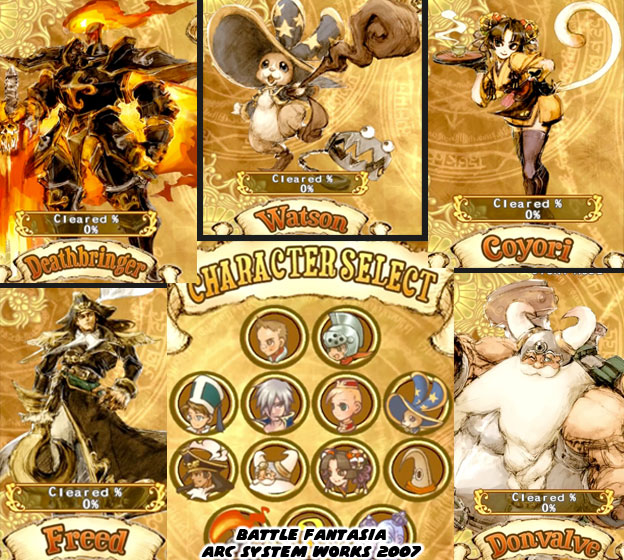
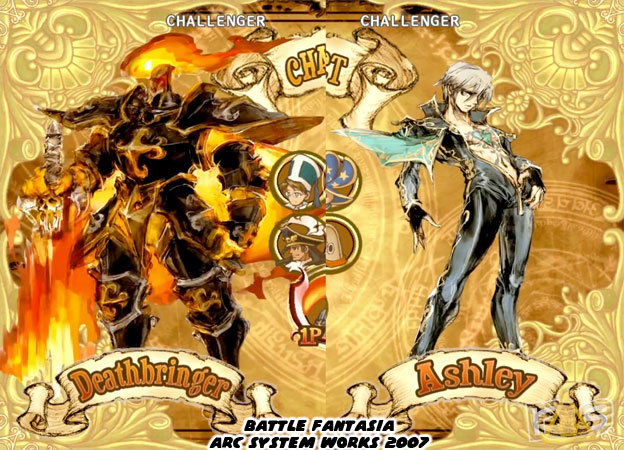
To be fair, the designs in Battle Fantasia did have a hint of the rockstar vibe that Guilty Gear was built on. Some of the men looked like feathery-haired models rather than the swollen barbarians you might expect from a western-produced RPG. Yet at the same time there were fear inducing monsters, covered in black armor occupying the same world. There were variations of the traditional classes of heroes and villains, knights, princesses, etc. Then there were maids, pirates, gunslingers and magical rabbits as well. Battle Fantasia covered a number of different classes and influences with a fresh perspective. The painted portraits on the character select screen captured the spirit that Emiko was going for.


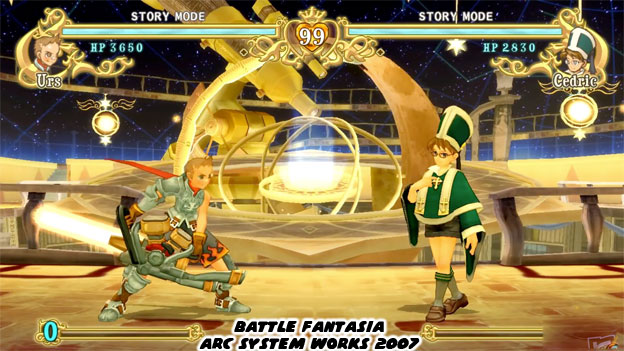
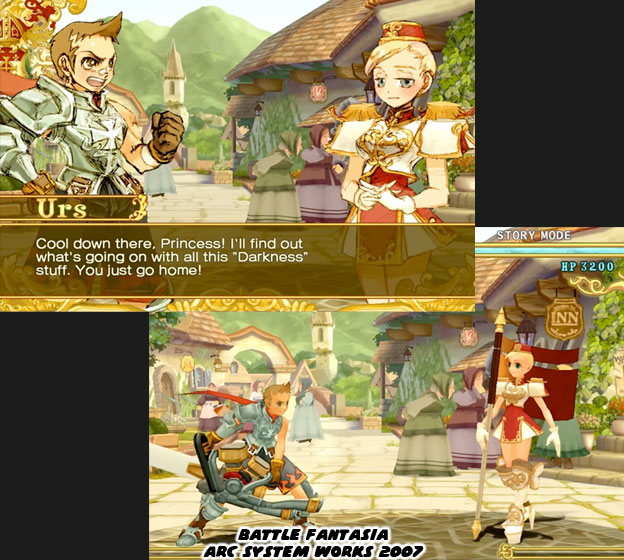
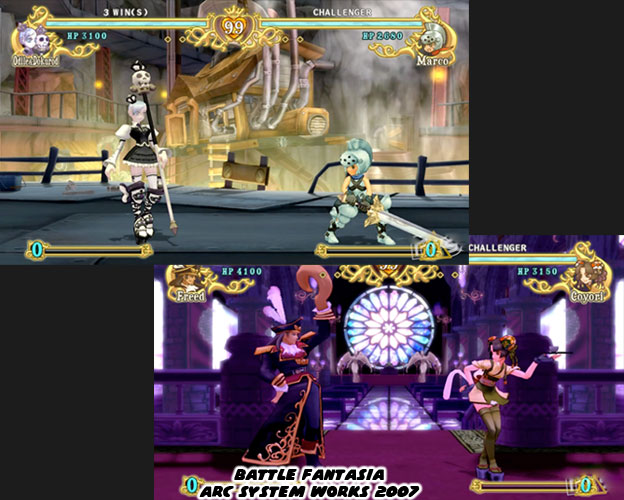
Battle Fantasia had multiple game modes as audiences had come to expect from a fighter. The story mode brought audiences in and allowed them to explore the different relationships in the game. It also allowed them to sink their teeth into a game that had more personality than most other titles. This game like several other ASW titles had a certain level of humor written into it. Characters could be sly or cheeky, their moves meant to reinforce their personality. Their in-game and cut scene animations showed a wide range of expressions. The young knight Urs carried a light sword that was equal parts magic and motor. He was brave but he could be a little bit clueless at times. Princess Olivia had a heart of gold but her daintiness did not stop her from being an exceptional fighter. Marco Van de Land, the younger brother of Urs, was among the smaller characters in the game yet deftly wielded a sword twice his size. There weren't many fighting games that I would ever call whimsical, Battle Fantasia was one of them.


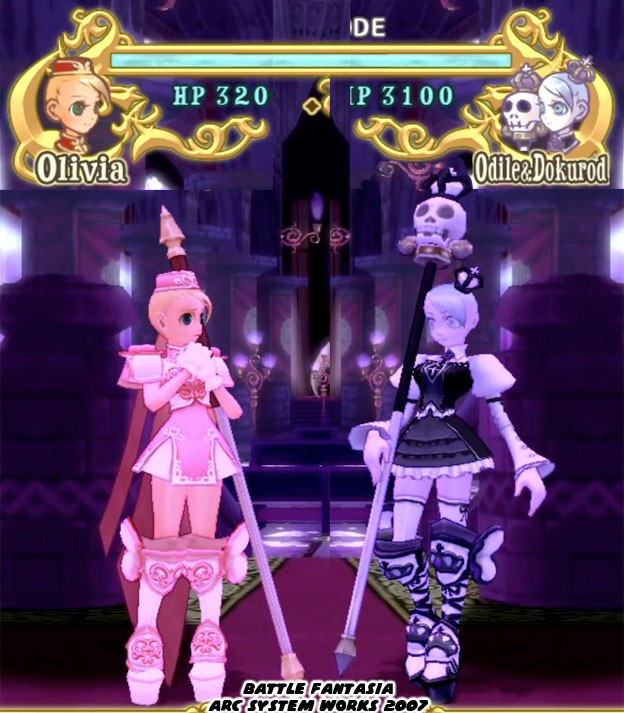
Arc System Works had been in the industry for a long while they knew the subtleties that every great fighting game needed. For example, every great fighting game had a cast of complimentary character designs. That is to say that there was a lot of symmetry when the studio was building a cast. The main characters often had a rival, sometimes a friendly rival like Ken and Ryu in Street Fighter. Sometimes they were bitter enemies, like Sub-Zero and Scorpion in Mortal Kombat. These rivals often had some sort of visual design that was a balance to the main character. Not every major studio knew about this idea or used the concept. Some studios eventually discovered the value of having new characters balance out the established fighters. They would add these characters in a sequel. Such was the case of Iori Yagami introduced as an evil rival for Kyo Kusanagi in the King of Fighters series. For Battle Fantasia it was the delicate Olivia getting balanced out with the chaotic Odile and her animated skeleton staff Dokurod. Olivia's design was rooted in "lolita" fashion rather than the traditional princess gowns in western games. Lolita clothing consisted of ruffled dresses, ornate petticoats and bright stockings worn by trendy Japanese girls. This fashion made its way overseas as did many things that young Japanese trendsetters did. Odile by comparison was clothed in "gothic lolita" fashion, substituting black and white for pastels and looking more grim in appearance.


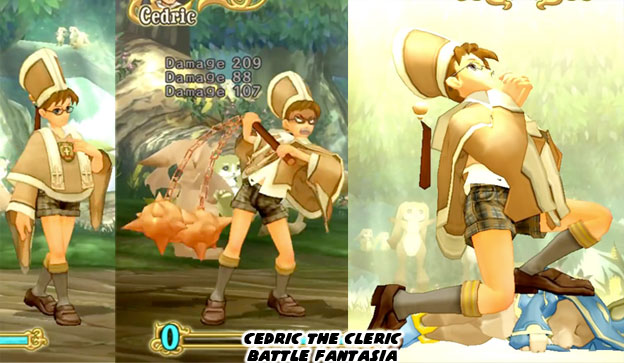
Arc System Works also knew enough about role playing game (RPG) tropes to include them in the game too. This game displayed hit points during attacks as they would have during a turn-based RPG. Each physical and magical attack did x-amount of damage. Characters that used healing spells would even recover x-amount of health. Most studios would simply whittle away at the opponents health or reward players points for long combo strings. The character classes that ASW introduced also revolved around the classic RPG tropes. Cedric for example was a cleric. He appeared bookish, sincere and very devout in his faith. He came across as a little bit snobbish and this rubbed Urs the wrong way. Yet beneath the charm of schoolboy-meets-healer was a vicious persona. When his faith was put to the test he fought with a spiked ball and chain and all manner of brutal techniques. His face twisted into an evil grimace as he flogged his opponents. Then to add insult to injury after each round he would kneel on top of his defeated opponent to offer a prayer. ASW was great at storytelling in every detail they added.


There were so many wonderful characters that I hadn't even mentioned. The cartoonish gun-toting outlaw Face, the massive inventor Donvalve, the magical rabbit Watson. These were the creative types of figures that first caught my eye. Sadly the game did not generate a lot of buzz. A reason for that had a lot to do with the decline of the arcade. There were few places to see, let alone play the game outside of Japan. Even then there were not a lot of new fighting games that would have brought in new crowd to try this out. Thankfully a year after it came out it was brought over to the Playstation 3 and Xbox 360. In 2009 it found its way onto PSN and in 2015 it was brought to Windows PCs with some additional balance. Each iteration helped shed more light onto this gem. While it did not achieve enough success to warrant a sequel it did have an impact on the development of future fighting games.


Arc System Works has always believed in the fighting game market. When many other publishers abandoned the genre they stayed with it. Through the years they demonstrated that a well designed fighting game could always generate a following. They did not always rely on licenses and established IP. They took chances and created new experiences along the way. Guilty Gear was an attempt at a new type of fighter. It was not set in any known time or place, but influenced by equal amounts hard rock and anime. Fans took notice of this game right away. Battle Fantasia was another grand experiment. Instead of using sprites, as they did with the original Guilty Gear, ASW was trying out 3D models on traditional 2D play mechanics. It was not the first but possibly most influential 2.5D fighter. They used textures, modeling and lighting effects to make the graphics appear like the concept paintings. They were able to have a game that played like a classic fighting game but with all new technology. This inspired Yoshinori Ono at Capcom to pursue development on Street Fighter IV. He revealed in a 2009 Gamasutra article that Battle Fantasia demonstrated that the formerly 2D character models wouldn't necessarily look weird in 3D. Battle Fantasia also served as a sort of introductory fighting game. It was not as difficult as some of the biggest titles had become. It was easy to pick up with no previous fighting game experience, yet with enough content to make it rewarding for veteran players.


I think that Battle Fantasia was just the start of something even greater. Arc System Works had big plans for this game just like the other fantasy fighting games I had talked about. Every studio I had mentioned was trying to build a franchise title. Those plans gave way to reality. The market was not ready, or not interested in what they were developing. This did not mean that the games were necessarily bad. Every studio big and small took a chance on a new type of fighter. They transported audiences to a new world. One which was far more interesting than the typical fighter. These worlds had histories, mythologies and heroes. These games put down a template that could be copied even today. The industry learned how magic, armor and leveling could work in a fighter. They saw how different technology would affect their graphics engines. They discovered that great storytelling could be applied even in the most action-oriented of genres. Battle Fantasia, like the games previously mentioned, deserved a second chance. I don't think of it as last great fantasy fighter, just the last one for a while. You never know where the next great fantasy fighter will come from. Soon enough a studio will decide that they are ready to tell a new story, to take another chance. Maybe it will be a free-to-play web game. Maybe it will be for a mobile device. In which ever shape or form it takes I will be eager to explore this new world. I hope that you will be willing to come along for the ride. Thank you for staying with me. Please leave a question or comment if you have enjoyed any entry in this series. As always if you enjoyed this blog and would like to sponsor me please visit my Patreon page and consider donating each month, even as little as $1 would help make better blogs and even podcasts!

 follow the Street Writer on Patreon!

Friday, April 28, 2017

Chaos Breaker - Dark Awake, the great fantasy fighting games part 6...

The market for fighting games was very thin at the start of the millennium. Arcades, the last true domain for the community, were just about nonexistent in the USA and had been scaled back elsewhere around the world. The console was king and big-budget, open world AAA titles were leading the industry. A handful of studios, including SNK, ARC System Works and DIMPS were still catering to the fighting community. Capcom was focused in the early '00s on Mega Man, Devil May Cry and a few other properties, not so much on Street Fighter. With the focus on other genres the developers really had to try different things in order to attract audiences. The ones working on fighting games had to work even harder to be noticed. They did this by experimenting with new technology, including a bigger focus on net play, through new forms of storytelling, advances in game play and control as well. One of the most interesting fighting games in a decade came out in 2004. Chaos Breaker / Dark Awake: The king has no name - was published by Taito.
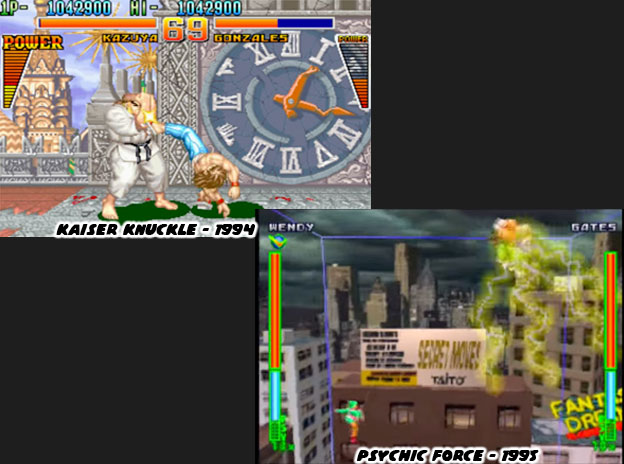

Taito was no stranger to the fighting genre. In fact the studio could be considered The Godfather of the brawler. It released Renegade in 1986 and Double Dragon in 1987, both of which had a profound influence on the industry, and especially Capcom. The studio had created a traditional sprite-based fighting game called Kaiser Knuckle in 1994. Yet their most revolutionary work came one year later with the released of Psychic Force. This new game featured a 3D engine and characters that could fly in all directions. and different formats and engines. A few years had passed since they had made a serious entry into the fighting game arena. What no one expected was a fantasy title with is much depth as Chaos Breaker.
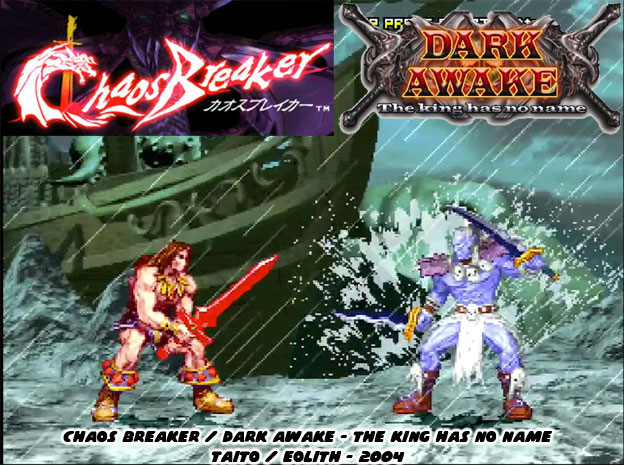

The game was actually developed by a South Korean studio called Eolith. The studio had experience with one of the biggest franchises of all time. They developed the King of Fighters 2001 and 2002 after SNK went bankrupt. The 3-vs-3 battle system of KOF was carried over into Chaos Breaker. As SNK restructured they needed help keeping their IP afloat. This was when they began talking in earnest with not only South Korean developers but also Chinese publishers. Chaos Breaker was the last game by Eolith before they were acquired by NetBrain. The game itself was the first fighting game to take advantage of the Taito Type-X board. A lot of different arcade titles were developed for that board including properties like Mobile Suit Gundam, Half-Life 2, and Pokémon. None of the games was remotely close to Chaos Breaker.
   

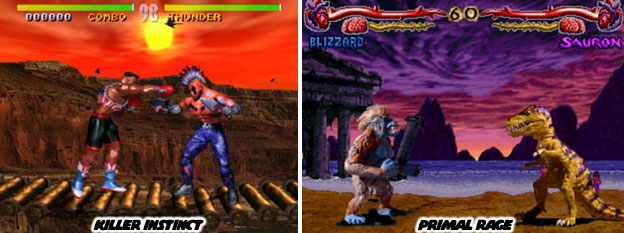
Part of the reason that Chaos Breaker stood out was because of its graphics. The visuals were similar to the graphics used in early ‘90s fighting games, including Killer Instinct, Primal Rage and even Mortal Combat. The reason for this was because Eolith used similar techniques I creating the sprites. In the early ‘90s there weren’t many 3D games, and especially not fighting games. The quality of 3D graphics that we have with titles like Street Fighter V and Tekken 7 was simply impossible to pull off almost 30 years prior. Studios did whatever they could to try to top the hand-drawn graphics featured in the most popular games. Midway experimented with video capture to create sprites out of human actors in Mortal Kombat in 1992. Atari used stop motion animation to create sprites out of clay and plastic dinosaurs that they molded for the 1994 hit Primal Rage. One of the most revolutionary games was Killer Instinct, also released in 1994. Developed by Rare the studio used high-end Silicon Graphics workstations to create highly polished 3D models and levels. In the early ‘90s there wasn’t any arcade hardware powerful enough to render 3D visuals, complete with textures and lighting effects in real time. So what they did was create sprites out of their models. The two-dimensional graphics did not require as much storage as their 3D counterparts and the engines of the day could animate them fairly quickly. The end result for these games were the illusion of 3D figures and stages. This technology was mostly used by Western studios, so that they really stood apart from the graphics that the Japanese were creating. Almost 10 years later to the day Eolith used the same techniques and rendered characters and levels using 3D hardware but then converted those graphics into sprites. Chaos Breaker had the look of a more polished version of a classic fighting game, yet there was much more to it than that.
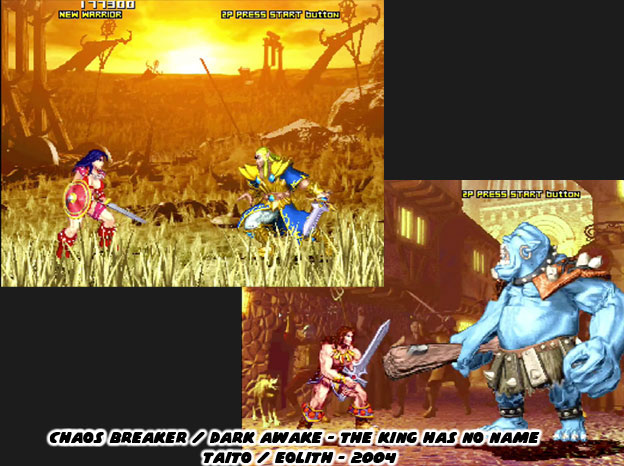
 

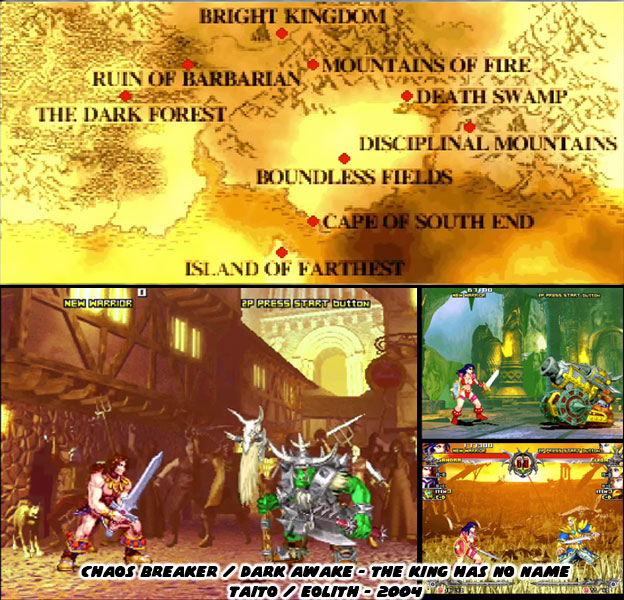
Eolith made sure to create levels that told a story. Each stage reflected the world that these fantasy warriors were trying to save or destroy. They had as much forethought as the highly detailed stages created by Sega in Golden Axe: The Duel and Capcom’s Warzard. Eolith had learned as much as they could about fantasy settings, not only in video games but also in popular culture. They made sure to apply these things in every stage of the game. If you have ever seen or played Chaos Breaker then you have probably noticed level settings, weapons, armor and character designs borrowed from animé shows like Berzerk and Record of Loduss War. Of course the publisher had not slept on the highly influential World of WarCraft, after all they were a South Korean studio. It was impossible to get into any sort of fantasy game development without drawing immediate comparisons to WoW. Eolith did not disappoint the fighting game community. They expected the major fantasy races in Chaos Breaker and they were all there. Sorcerers, barbarians, rangers, goblins, orc, elves, dark elves, necromancers and even vampires.
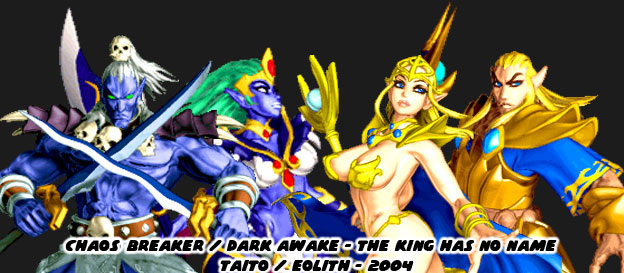

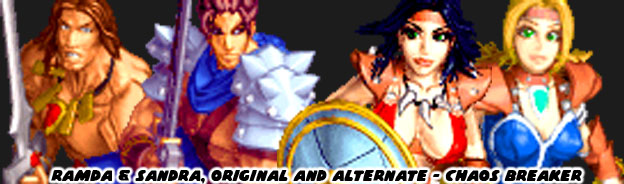
The character designs had a decidedly anime influence to them but they were not based on any one particular series. Instead they reflected the fantasy tropes that audiences were used to. Busty women that wore revealing armor, and muscular men with big swords. Villains were grotesque and clad in spiky dark costumes while heroes were handsome and wore bright colors. Eolith did more than use pallet swaps when designing alternate colors, or while porting the game to consoles. They actually created different models of the heroes and villains in different costumes to make them look truly unique. Ramda for example was a long-haired barbarian but his alternate costume gave him a haircut and had him in warrior armor.
 

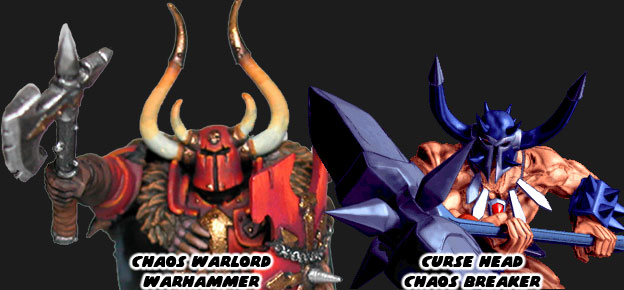
When it came to the design behind this game the most influential studio was not Japanese nor were they American. I’ve said it before and I’ll say it again and again the British studio Games Workshop was the design house most copied by video game developers. This was the company that Eolith was modeling most of their character classes after. To be completely honest Games Workshop did not invent all of the fantasy characters. They had existed much earlier in fairy tales, Arthurian legends and the works of Robert E. Howard, H.P. Lovecraft, J.R.R. Tolkien and C.S. Lewis. Games Workshop standardized the designs of many fantasy characters and made them popular. When audiences think of goblins and orcs they imagine certain green-skinned characters in crude armor. When they think of dwarfs they think of hefty armor and ingenious artillery. When audiences think of chaos warriors, they think of horned helmets and oversized weapons. Many of these looks were popularized in Warhammer Fantasy Battle from Games Workshop over 30 years ago.


Eolith did not outright rip-off any specific character from the Games Workshop (GW) library, nor did Blizzard for that matter, but they took enough elements to make the designs more than coincidence. The roots of the Chaos Breaker designs were even more obvious as they less subtly mixed-and-matched details from different Games Workshop characters. For example the Night Goblins in Warhammer were known for riding giant spiders. But there were many types of creatures that the goblins rode, from including spiders, wolves and even toothed fungi known as squigs. Not all goblins fought with swords, some instead knew crude magics and spells and were known as goblin shaman. The developers at Eolith took pieces of the various types of GW goblins when creating their own variant. Similar things could be said of just about the entire cast. the industrious and stubborn dwarfs had been a staple of GW for decades. Eolith had a few versions of the dwarfs that actually covered several different classes. Vargan fought with a ranged weapon, a multi-shot blunderbuss. Dorgan fought with a melee weapon, a large axe. And Gerhassen II fought with artillery, a cannon.
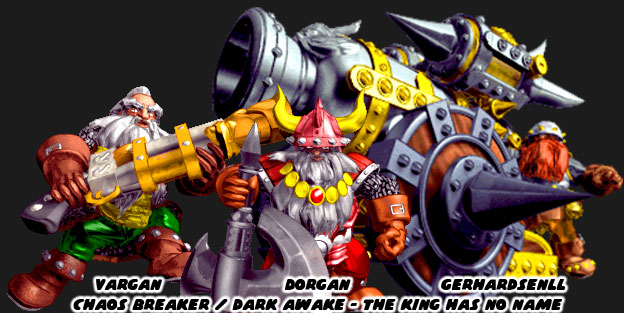
 

The ways in which Eolith used the characters was inspired design. Most fans of the format know they can expect a small, fast character, usually a woman. A large, slow character, usually some sort of musclebound giant. Then the hero of the game, often a guy, with equal parts speed and strength. There was a troll in Chaos Breaker that filled in the role of the giant. Yet he was not the only oversized character. For the good guys it was Gerhassen II. While his cannon took up nearly a quarter of the screen he could actually move it quickly and use it as an extension of himself. Not many studios had the imagination to turn a dwarf into the token “big” character. Just about everyone in the cast had this sort of planning behind them. The game also featured some unique boss designs. I don’t recall seeing a Manticore, part-lion/scorpion/bat that had looked as awe-inspiring as the sub-boss in Chaos Breaker.
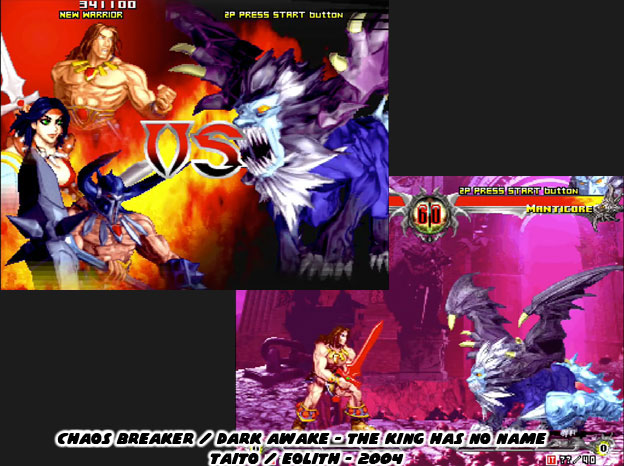

With it’s 3-vs-3 mechanics, weapons-based game play and unique characters there was still much more that Chaos Breaker had to offer. Eolith, just like every other developer that I have featured in this series, wanted audiences to fall in love with the world they had created. They hoped there was interest enough that they might turn it into a franchise. In order to do this they had to do things that few other fighting games had ever done. This title allowed players to unlock weapons, armor and other upgrades for their characters. These items acted just like their RPG counterparts. They would boost offense or defense, especially against certain types of classes and attacks. Warzard had something similar, and while leveling up did increase the health of a character or even grant them new abilities, it did not allow players to freely trade out weapons in between stages. Capcom did manage to capture a more RPG-centric experience with their Dungeons & Dragons arcade games, easily some of the best brawlers ever made, but for fantasy fighting games few could match the game play of Chaos Breaker.
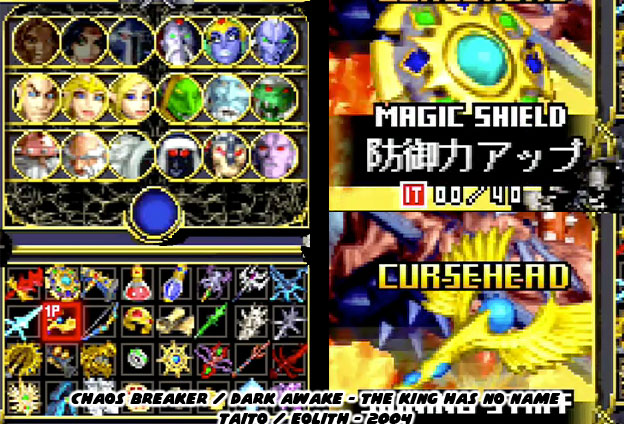
   

The differences between character classes and customizable weapons came in handy during the final two encounters in the game. The sub-boss aside from the Manticore was a Witch Queen named Thiele. She could cast spells from afar and do physical attacks with her giant golden claw. Her appearance was somewhere in between a Vampire Countess and Dark Elf Sorceress. She floated above the ground, similar to Valdoll from Warzard, and had an equally ominous presence. Her design was simply fantastic and something that even Games Workshop would have been proud of. She was well done but the final boss of the game, the King with no name, was possibly the largest sprite ever created for a fighting game. The dragon was several screens high and had more animated pieces than the giant characters in the Capcom vs games or in any SNK game. It made for a memorable but not impossible villain.
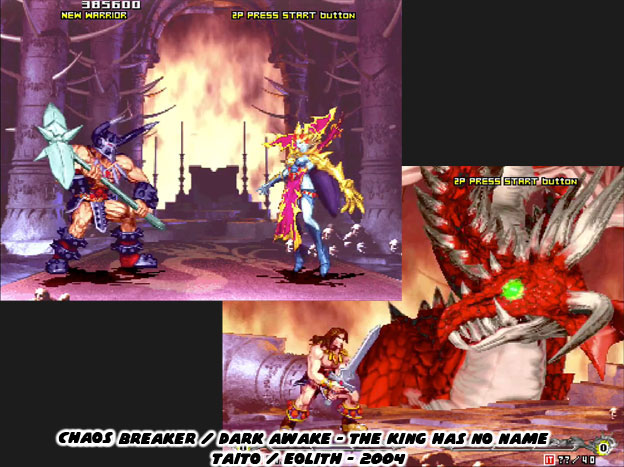

The game succeeded on many fronts, not the least of which was originality. Fantasy fighting games, especially well made ones were few and far between. The other thing that Chaos Breaker had going for it was the net-play ability. It was one of the first entries into net arcade fighting games from Taito. The things they learned in this game could be applied in other genres, from space shooters to robot sims. Audiences might not realize that many of the things we take for granted in console fighters today were pioneered in the arcade. Some of the things featured in Chaos Breaker were never duplicated in other fighting games. Although it never got a sequel it was published on PSN in 2010.
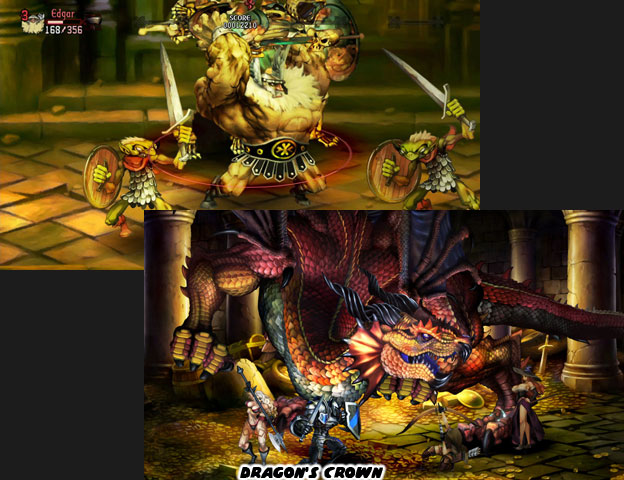

I would recommend audiences check it out if they are interested in broadening their fighting game experience. Eolith managed to capture the epic locations that had been a staple of many great RPGs and turned them into the backdrops for a memorable fighting game. Budding artists might learn a thing or two about character design by seeing how the South Korean developers had distilled the British designs and turned them into fighting archetypes. Those interested in another fantasy action game with western influences might want to check out Dragon’s Crown, developed by Vanillaware and published by Atlus in 2013. There was one more fantasy fighting game worth mentioning that was released after Chaos Breaker and Dragon’s Crown. We’ll look at this title in the next entry. I hope to see you back for that. As always if you enjoyed this blog and would like to sponsor me please visit my Patreon page and consider donating each month, even as little as $1 would help make better blogs and even podcasts!

 follow the Street Writer on Patreon!