Showing posts with label korean. Show all posts

Monday, March 25, 2024

Manhwa, Chinese and Korean comics take on Street Fighter - A 1UP classic from June 17, 2011

The previous blogs mentioned that SNK was developing MMO titles for Korea and China. What many in the west might not know is how much the players in both countries are fans of the genre. It extends beyond the arcades and the consoles as well. The characters and icons developed over the years are very much engrained in popular culture overseas. One way of checking the relevancy of the franchises is by seeing how they are represented in comics and graphic novels.
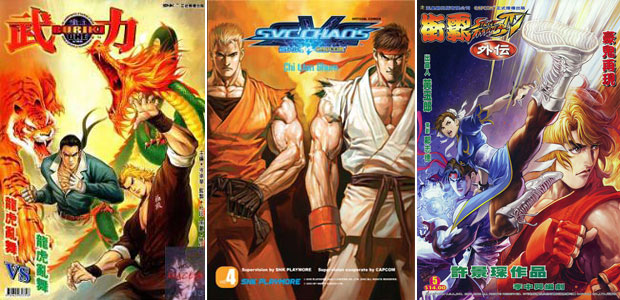
Chinese and Korean comics are called manhwa, or manhua depending on the pronunciation. The Japanese word for comics is manga, which has the basis in Chinese as well. Just about every major fighting game had a mahwa attached to it. The Art of Fighting, King of Fighters and Street Fighter series all had several licensed and unlicensed titles appear throughout Asia. There are noticeable differences between the Chinese Street Fighter manhwa and both Japanese manga as well as western comic books.
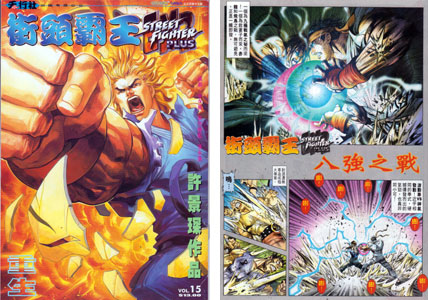
The first thing is the size of the volumes. Manhwa titles are in a larger format than comics or manga. They are almost magazine sized volumes. Manhwa are usually stand-alone titles like comic books. Most manga titles appear in a monthly series printed on newsprint or collected in an anthology. Japanese stories are also serialized and released in smaller format books. Manhwa titles are usually in color but aside from the glossy covers the pages are printed on cheaper newsprint.
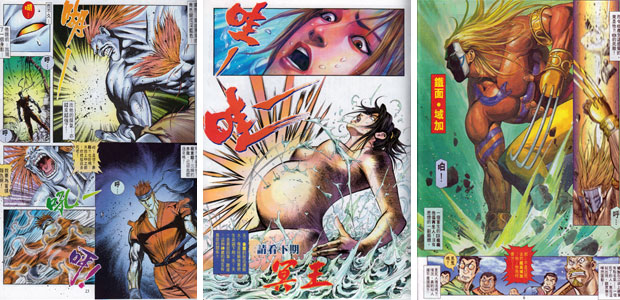
Mahwa based on fighting games are different from those featured in Japan or the USA for a number of reasons. In manhwa characters are all presented with the traditional costumes or uniforms yet later on in the series they are often presented in "player 2" colors as part of canon. These costume changes often signal a major plot point. In some instances the character that has been defeated or even killed is brought back much stronger and more dangerous. These Player 2 changes also signal a change in personality and in some instances abilities. The next major feature of manhwa are the non-canonical liberties that the writers and artists have with the characters. These titles introduce many new characters, plots and relationships that never appeared in game or in any other comic book. Chun-Li and Ryu for example often end up together in the stories, much to the delight of many fans. Sadly most of the characters and relationships in the series end in tragedy. Characters can actually get killed and they are not guaranteed to return.

The major artistic contribution that the format features is the inclusion of painted panels on several pages. The majority of the art is done with lightly inked panels but some of the strongest poses and frames are actually painted by the artist. Very few artists working in the manga or comic markets are able to do this, let alone on a consistent monthly basis. These painted panels are unique and refreshing to the graphic arts medium.
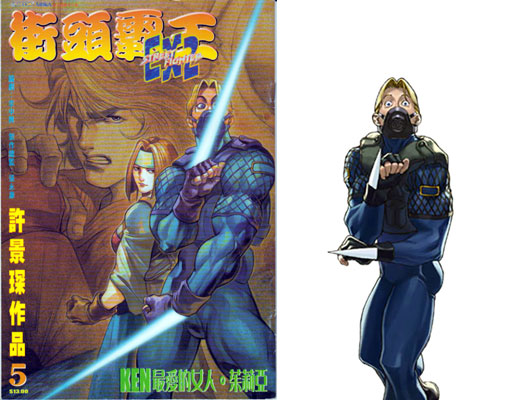
Unfortunately not all of the painted panels are original works. Many of the poses used for the figures and sequences in the books or the covers are lifted from official art. Even some of the sequences featured in the book can be based off the work from a Japanese manga like Masahiko Nakahira's Ryu Final series or from Udon's Street Fighter comics. The copies of art seem to be rampant in certain manhwa, as if the concept of intellectual property or even artistic integrity were lacking for some of the artists. But that is a cultural bias against the Chinese comics. As a whole there are some interesting takes on the canon and characters of the SF universe.
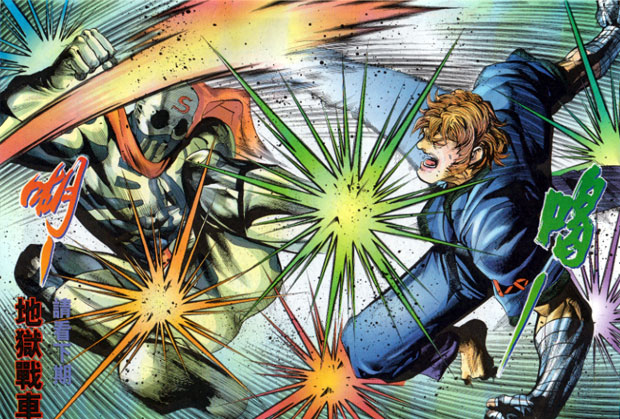
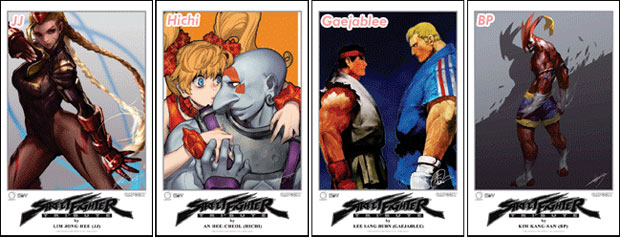
These comics show a completely different interpretation of the characters by some genuinely talented artist. They show that Japanese and North American artists are not the only ones that can do the Capcom icons justice. In fact many of the best manhwa artists working in Korea contributed to the SF Tribute book.
The hard part is getting access to these books. Not every town is fortunate enough to have a large Chinese community where these comics might turn up. I was lucky enough to find some on eBay and even Italian language versions of some SF books. There were a couple titles released in English a few years ago. One for the KOF series and the other for SNK vs Capcom Chaos. Those collections might still be available in local comic book stores. The only other way to see some of these interesting books would be to try one of the larger free manhwa sites online.

Perhaps someday these artists might get more exposure on the pages of western titles. It would be interesting to see a collaboration of manhwa designs and designers working on the next generation of SF characters, wouldn’t you think?

As always if you would like to sponsor me please visit my Patreon page and consider donating each month, even as little as $1 would help make better blogs and even podcasts!
follow the Street Writer on Patreon!

Friday, January 12, 2024

Korean fantasy fighting game Chosun Musa is not cancelled!

Friends in the fighting game community, I have wonderful news! If you are a fan of fantasy, historical or sword fighting games then you might remember I wrote about Chosun Musa previously. I had been keeping tabs on the Korean game since 2007, and couldn’t find any news on it recently. As it turns out the game was not cancelled. As it is a small independent studio working on it the game was simply delayed. But don’t take my word for it. Please read below from the game creator.

“Hello, I am Iron Witch, the person who created the fighting game Chosun Musa (2008) based on my fan project Mortal Kombat Zero in 2007. It's an honor that you still remember the game title I'm working on! 

To be brief, unlike the content of your article, I am still working on the Chosun Musa project. I recently revealed details on two characters that can be found in Chosun Musa (Refined) on ChosunMusa_US in 2022 for testing purposes. As stated in "The Document of Chosun Musa" on that Twitter page, Chosun Musa (Refined) is based on HD sprites, and the character accessories and weaponry will be pre-rendered as detailed 3D models. 

Also, I recently purchased the trademark Chosun Musa, and domain name (chosunmusa.com) for Chosun Musa in Korea. Although the development process will take a long time because the game's production direction is focused on high-resolution pixel art and quality, I have preemptively purchased the game's IP name and domain name to minimize disputes from others. 

Unfortunately, at present, I am working on a side project for Chosun Musa, a fan-created project called Darkstalkers Re-Creation. In this project, I aim to create two illustrations: the original costumes of the characters and alternative costumes that I created myself. I believe that Darkstalkers Re-Creation will have a positive impact on improving my creative skills as I am currently producing Chosun Musa.”

This is wonderful news for the fighting game community, both for the Chosun Musa, and also for Darkstalkers Re-Creation. I can’t wait to see more news as both get closer to publication. A big thank you to Iron Witch for reaching out, and letting us know that the game is still in development. If you are just getting into fantasy sword fighters I wrote a bit about them on the blog. Please check it out. Golden Axe the Duel Dragon's Heaven Warzard Asura Blade Sword of Dynasty Asura Buster Eternal Warriors Chaos Breaker - Dark Awake Battle Fantasia As always if you would like to sponsor me please visit my Patreon page and consider donating each month, even as little as $1 would help make better blogs and even podcasts!
follow the Street Writer on Patreon!

Wednesday, May 11, 2016

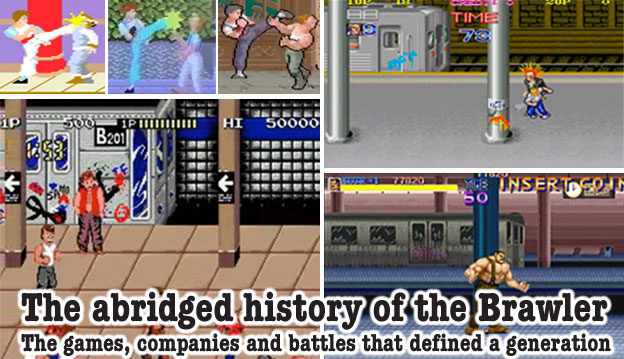
The Abridged History of the Brawler, part 18


Home consoles had been trying to get in on the brawling action through most of the 90's by the turn of the millennia they had found their rhythm. Unfortunately at that point the brawler had lost popularity. This blog will highlight the arcade influence on console versions of the brawler as well as independent brawlers inspired by arcade hits.


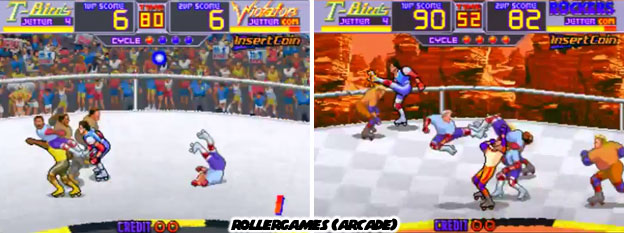
In 1990 Konami released RollerGames in the arcade as well as on the Nintendo Entertainment System. The game was licensed from the television show about an updated version of roller derby. The teams and players in the league were very over-the-top, not unlike pro wrestlers. It was great fun on TV and part of that spirit made it into the arcade. The game took place on one of several roller rinks located throughout the USA. Players actually could move all over the screen as they could in other brawling games while their characters automatically skated on the rink. The effect could be dizzying if players focused on the changing track instead of the approaching opponents. While fun the arcade version was a shameless quarter waster.


The player had to win a set amount of matches between the male and female teams. All the while the opponents were relentlessly dropping teammates and earning points. The battles were nonstop as teams seemed to have an unlimited supply of opponents right up until the clock ran out. Players that did not manage to throw, dropkick or punch out enough opponents could kiss their quarters goodbye.

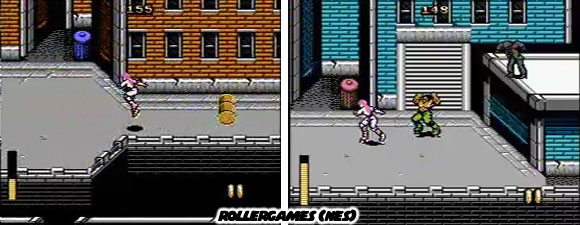
The experience changed completely when RollerGames was brought to the NES. The game became an adventure platformer featuring one playable character from each team. The character traveled from city to city, avoiding obstacles and pitfalls en route to defeating a boss, or manager from each team. At the end they fought through a corporate tower and defeated the big boss. It was nonsensical, just like many things that were popular in the 80's!


Very few brawling titles worked well on the 8-bit systems. The limit on sprite sizes, animations and colors made the brawler look like a minimalist genre. The next generation of hardware would be able to create experiences much closer to the arcade.

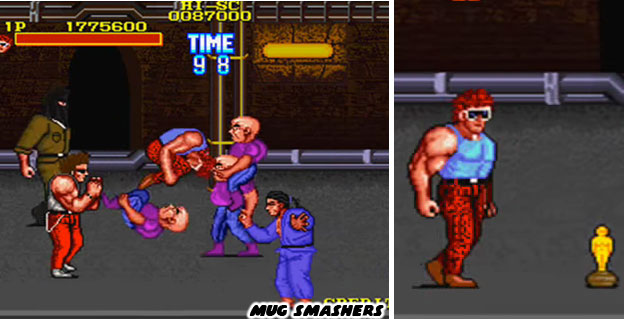
Of course there was always the PC, which promised to bring arcade-quality graphics home. For the most part they did. The gameplay, design and animation however were sorely lacking in many of the independently produced PC brawlers. One of the worst of the lot was by a British company called Electronic Devices. In 1990 they created a brawler set in San Francisco that was simply horrendous.


There were generic heroes and villains. Audiences could tell that they had poached various titles in order to recreate the genre. The control was bad, the villains were silly, there was one bad guy made up of three little people riding on each other's shoulders! The power ups made no sense, one even looked like an Academy Award! The prize for worst PC brawler was clearly won here.

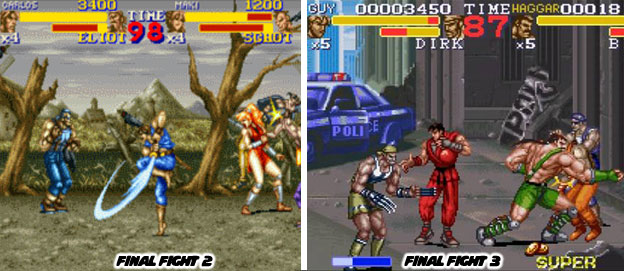
The consoles on the other hand had a lot of promise, especially once they transitioned to 16-bit systems. Capcom, as always, was one of the first to develop console titles based on their popular arcade games. Final Fight 2, released in 1993, was a Super Nintendo exclusive. The sequel to the arcade gem came out years after the original and featured new characters, locations and gameplay elements. It expanded the universe of Final Fight by taking Mike Haggar and his associates Maki and Carlos out of Metro City on a trip around the world.


Players learned that Mad Gear was a global crime syndicate that touched just about every continent. The bosses in this game were as memorable and diverse as they were in the original. The control was solid and Capcom had finally learned how to make a brawler that featured three characters. In the original Final Fight release for the SNES only Cody or Haggar were playable characters. A special edition featured Guy and cost more because of the memory costs associated with storing the information for one more sprite-based character.


In 1996 Final Fight 3 had returned to the streets of Metro City. Haggar returned to clean out the scourge of a new gang that had moved into town. The game introduced super attacks for the main characters. Dean and Lucia had replaced the other supporting characters in this story. A separate energy bar could be filled up and a screen-clearing super attack could be unleashed on bosses or groups of Skull Cross gang members alike.


It was a fun play mechanic that helped keep things fresh. The details in the sprites, animations and character designs did well to mirror the original title, however the sprite-based engine was beginning to show its age. Consoles were quickly moving to 3D experiences and players expected the genre to follow suit.


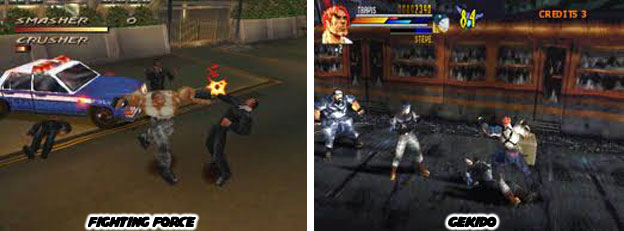
Fighting Force, released by Core Design in 1997, was originally pitched to Sega as Streets of Rage 4. Sega passed on the title so the title name was changed. The game was an early attempt at moving the brawling franchises to 3D. The polygon characters were large and animated slowly. The fighting mechanics lacked the speed or accuracy of 2D titles. The camera focused the attention of the player towards a particular direction and could not be changed. Core Design gave a clear example of how difficult it was to create the brawler in 3D using console hardware.


A few year later, in 2000, Naps Team tried to improve o the 3D brawler formula with Gekido. The animation was faster, camera improved, levels slightly more interactive and designs a bit more polished than Fighting Force. The console still lacked the raw 3D rendering power of most arcade cabinets but they were quickly catching up.


Very shortly the Playstation 2, Dreamcast and original Xbox would debut 3D brawling titles that were visually as impressive as anything released in arcades. Gekido could have been considered a forerunner to the Bouncer, which had been looked at in the previous blog.


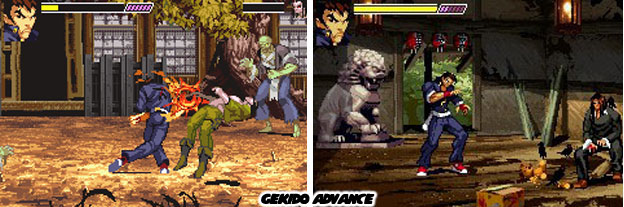
Naps Team had released a sequel on the GameBoy Advance in 2002. Gekido Advance; Kintaro's Revenge was a step back to traditional 2D, sprite-based gameplay. Which at this point was very unique. Most studios were struggling to bring 2D franchises into 3D. Naps Team made a sequel that convinced most gamers that the series was originally rooted in 2D. It was well done, well animated with solid character designs.


The game was decidedly Japanese animé influenced. The villains ranged from typical goons to monsters and mutants, a sort of Night Slashers meets the King of Fighters. The main character, Tetsuo, looked and moved similarly to Kyo from the KOF series. The game did well at recreating the classic feel of a brawler but kept things fresh by incorporating some fighting game mechanics and visuals.

The PC market in the west had a lackluster history with original brawlers however in the east things were different. In parts of Asia the PC market was often more popular than the console. The PC allowed DVD playback of course but also homebrew apps and small publishers could flourish. The PC's were of course online well before the consoles. Places like China and South Korea had a rapidly growing PC market. The studios in both countries were catching up with the trends in gaming. They were creating their own brawlers and fighting games less than a decade after they hit it big in the USA and Japan. That window of following the trends had grown shorter and shorter every year after 2000. The countries were able to develop and release their own mobile and MMO games a year or less after a popular title in the west had debuted. In other cases they were experimenting with the genres at a rapid pace.


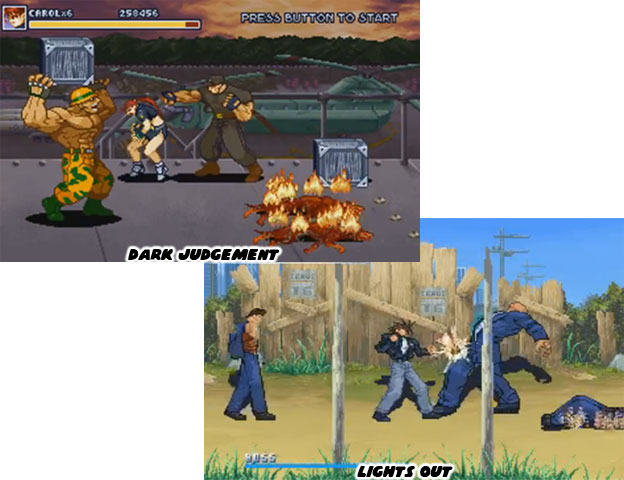
Two of the better brawlers released in South Korea were Dark Judgement: by SOHO Studio of Hong Kong and localized in Korean by Frankenstein Studio, the other was Eojjeonji Joheun Il-i Saenggil Geot Gateun Jeonyeok by TG Entertainment. The second game had a long title but it was based on the manhwa "Lights Out."  Comics in Korea were known as manhwa, comics in China were called manhua and you probably know that comics in Japan were manga. The two games came out in 1997 for Windows. Dark Judgement borrowed the aesthetic from the Capcom brawlers and mixed in some of the action of the Konami ones as well. It was created by a small team from Hong Kong and distributed by a Taiwanese Publisher. The SOHO Studio name was removed when it was released in South Korea. Thanks to the graphic artist, Lambonbon, who worked on the game for the bit of insight. Lights Out had a more distinct Korean style of animation and character design that was based on a bunch of high school tough guys fighting. Both of the games were well done and helped bring back a sense of the classic era of the brawler. There was something to be said about 2D graphics. They seemed to work better for the genre. In the arcade an indy developer would do similar things and release fantastic sprite-based titles within a sea of 3D releases. This game and more will be featured in the next blog. As always if you enjoyed this blog and would like to sponsor me please visit my Patreon page and consider donating each month, even as little as $1 would help make better blogs and even podcasts!

 follow the Street Writer on Patreon!