A blog about my interests, mainly the history of fighting games. I also talk about animation, comic books, car culture, and art. Co-host of the Pink Monorail Podcast. Contributor to MiceChat, and Jim Hill Media. Former blogger on the old 1UP community site, and Capcom-Unity as well.
When people think of great arcade racing experiences they can usually
name a handful studios that have contributed the lions share of the
memories. Sega, Namco, Atari and Midway are usually the studios at the
top. Nobody would have thought to rank Konami with those guys. Not
that Konami was a stranger to the arcade racer but their showings were
few and far between. The only other game I've mentioned from them so
far was the dizzying Chequered Flag. However my opinion of the
publisher changed in 1996. Their first memorable polygon racer came
out at the time when Sega Rally and Daytona USA were still hot in the
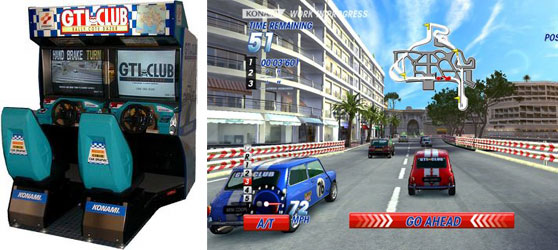
arcades. GTI Club Rally Côte d’Azur broke everything we
knew, or thought we knew about arcade racing. It was a rally game as
the name suggests, set in the lovely Côte d’Azur, better
known here as the French Riviera. It's the type of location most of us
wouldn't mind moving to and spending our time lazying away by the
coast. The rallying that goes on here features the compact yet still
sporty GTI (gran turismo injection) class of cars. The figurehead
being the ever-loving fiery little
powerhouse Mini Cooper.
The courses were all set in the same town. Konami rendered a
highly-detailed town, complete with tunnels, bridges, a coastline and
hill rather than make a few tracks like rival Sega. The courses were
more or less open so you could take the
shortest possible route to the checkpoints if you wanted. It was
my first exposure to sandbox racing and I was hooked! Up until then I
had been taught by other arcade games to follow the other racers, look
for an opening and pass them on a turn. This time around if you
spotted a line through some narrow streets, that ended up knocking
over a few tables, but managed to shave seconds off your time then go
for it! The tracks and their respective shortcuts took players all
over the little town, jumping like madmen in the tiny cars over hills
and down sidewalks. There were even train tracks crossing one of the
roads so making an attempt to cut off a speeding train in the middle
of the rally to save time became very tempting! The game was frenetic
and left little room for error. Given the size of the racers
themselves that was saying a lot!
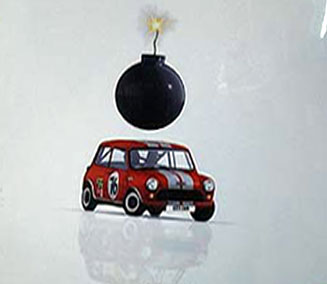
To help supplement the tracks the game also featured multiplayer
modes like Bomb Tag (last person with the bomb explodes) and car
soccer. Trust me, it was more fun than it sounded. I only played GTI
Club a handful of times because the only arcade that had it was far
from home. Those few times that I played it I learned a few things.
The game was more fun with a friend and it certainly wasn't an arcade
racer for everyone. The tight control and manic pace of the game would
break any casual gamer. This game wasn't even meant for most arcade
racers due to it's learning curve. It was meant for die-hard rally
nuts and those looking for something new.
Konami delivered on both fronts and continues to do so as an
exclusive download for the PS3. If you fancy yourself a good driver
and enjoy a good multiplayer experience then check it out. It was an
example of the unique contribution that Japan gave the racer. However
in the early days of arcade driving Japan was, wait for it, way off
course. Sorry, I couldn't resist. Next time we'll look at some of
Japan's more unique and one lamentable Konami entry to in the arcade.
Have you ever heard of this game? Are you a fan of quirky racing experiences? Let me know in the comments section please. As always if you would like to sponsor me please visit my Patreon page and consider donating each month, even as little as $1 would help make better blogs and even podcasts!
Konami falls apart in the arcade, and Capcom drops one of the greatest brawling games of all time in this episode.
If you would like to sponsor me please visit my Patreon page and consider donating each month, even as little as $1 would help make better blogs and even podcasts!
The start of the '90s changed quickly for the brawlers. Fighting games had exploded on the scene. Brawlers took a back seat, but innovated despite the market. Some studios went with more kid friendly options, and a few explored cultures other than the USA or Japan for their content.
If you would like to sponsor me please visit my Patreon page and consider donating each month, even as little as $1 would help make better blogs and even podcasts!
Sega and Konami released two high profile comic book licensed games in the same year. How many of you got a chance to play either of the titles featured in this episode?
If you would like to sponsor me please visit my Patreon page and consider donating each month, even as little as $1 would help make better blogs and even podcasts!
1991 was an amazing year for brawlers. SNK released some of the most unique games in the genre, and was poised to take on both Capcom and Konami thanks to their development teams.
If you would like to sponsor me please visit my Patreon page and consider donating each month, even as little as $1 would help make better blogs and even podcasts!
We end the '80s on a high note. Konami lays down the law and creates some of the best licensed brawling games of all time. Sega starts off slow but then shines when they enter the console arena. Find out more on this episode.
If you would like to sponsor me please visit my Patreon page and consider donating each month, even as little as $1 would help make better blogs and even podcasts!
As always if you enjoyed this podcast and would like to sponsor me please visit my Patreon page and consider donating each month, even as little as $1 would help make better entries!
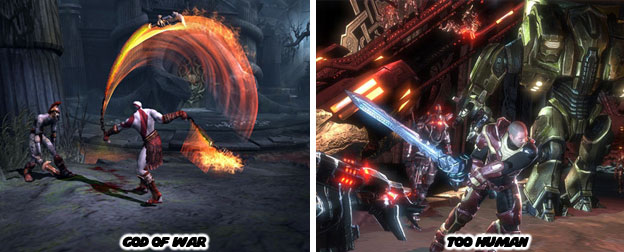
In 2005 Sony Santa Monica released the title God of War for the Playstation 2. The game was a phenomenal success. Earning accolades for the team and designer David Jaffe and his team made up of former Incog Inc. employees. The game was the culmination of the studio’s efforts and learning curve designing games outside of the mainstream. They first found success with Warhawk and Twisted Metal on the original Playstation. With the latter game they developed a dark cast that appealed to the maturing generation of game players. From War of the Monsters they learned combat systems and scaling combat between gigantic forces on the Playstation 2 hardware. From Downhill Domination they learned to create enormous environments and fantastic weather and particle effects. By the time Jaffe and company got to God of War they were well versed in hardware and software. What they did was develop an adventure which would be a response to the new breed of brawler from overseas.
The animations and control in God of War were amazing as Kratos, the hero, battled with unique weapons, the Blades of Chaos. The gameplay was not quite Dynasty Warriors and not quite Devil May Cry but somewhere in between. The hero was tough as nails, somebody that could have given Ken from Fist of the North Star a run for his money. In hand to hand or ranged combat the God of War lived up to his title. When Kratos was placed in breathtaking stages and puzzle environments that were as good as his dedicated fighting levels then the era of the single-player, Western produced, hack-and-slash had arrived.
Other western developers were eager to answer the challenge that Sony had laid out Unfortunately Microsoft’s Too Human by Silicon Knights failed to impress players or critics. The camera, control, story and gameplay were all lacking. Even worse, it misunderstood the brawling roots that inspired God of War. The one-against-the-world design of God of War was instead few-against-many within Too Human. The 2008 title seemed to be trying to cash in on a trend without fully understanding how Sony Santa Monica had gotten there.
The best games in any genre were not developed out of thin air. Nor were they the results of following a trend. Every great title pulled the influences from the team and shaped them into a gaming experience. Often times all the creative minds needed was a spark of an idea and off they went. Treasure for example found greatness was once they stopped working on licensed games for Konami. The industry would follow the trendsetters and find that time and technology shaped every game differently. Look at how far the brawler went from its humble origins. Instead of Kung-Fu Master I could have chosen to follow an even older genre, the Cowboy Western for example.
In 1982 Taito had released a game called Wild Western. It, like the early run-and-gun games was not far removed from the space shooter titles or shoot-em-ups. Yet US developer Exidy developed a game just two years later called Cheyenne which was a light gun game. Already the western genre had become broad based on the tastes and influences of designers. Players were just along for the ride.
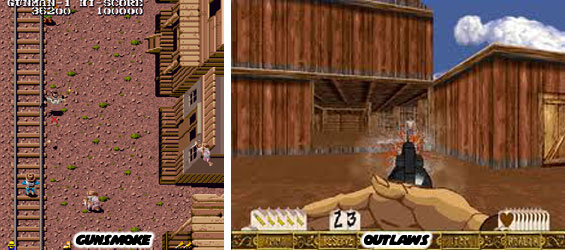
Capcom’s Gun Smoke from 1985 was not far removed from Commando. Players looked down on the hero from an overhead perspective as he cleaned up a western town. The important lesson here was that young players and future artists, designers and programmers were being influenced by these games, themes and heroes.
Outlaws was the first noteworthy FPS set in the wild west. The LucasArts title from 1997 predated Call of Juarez by years. It showed that a good story and emerging 3D technology could make for a great PC experience. The young developers that grew up on Japanese games were cutting their teeth programming PC titles like this.
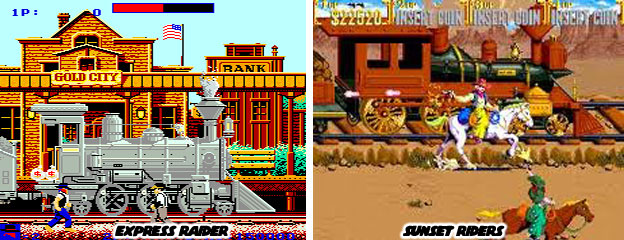
Next to Konami’s Iron Horse, Express Raider was the oldest western brawler. Nihoun Bussan developed the game and Data East published it in 1986. The game was a precursor to Bad Dudes and every other great side scrolling brawler that the studio produced. Players could fight opponents on top of a moving train and even shoot at lawmen from horseback. The game was ahead of its time. Allowing gamers to act as criminals a decade before GTA was even conceived.
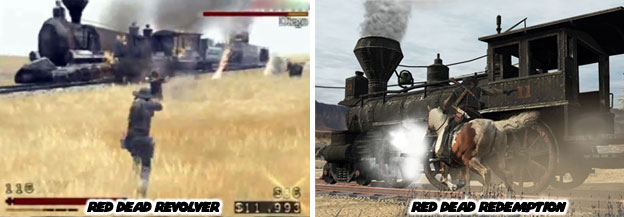
Capcom’s version of Red Dead Revolver was coming along with a slightly silly tone before Rockstar finished the project and made it more serious for its 2004 debut. The new millennia seemed to mark a changing of the guard. Designers from North America and Europe were now passing up Japan in terms of the scope and design of projects. Players could perform all of the things they had seen in a limited capacity in earlier Japanese cowboy games, including fighting on top of moving trains or shooting from horseback. This time they could do it in glorious 3D.
A few years later Rockstar developed a follow-up without the input from Capcom. The 2010 title Red Dead Redemption had shown how capable the US was at developing immersive playing experiences with a solid story, great controls and memorable designs as well.
What did Red Dead Redemption offer that none of the earlier console or arcade western titles could? It was the open world environment. Players were free to explore and interact with the world and make the game move along at their own pace. This sandbox environment would have meant nothing if players were unable to control the character easily. If they were not able to ride horses, have intuitive shoot outs or handle a surly stranger with the butt of a rifle, then players would have let the experience die. Rockstar had been building on the open game world through the Grand Theft Auto series and even The Warriors brawling games. They showed what was capable when players were allowed to experience a title at their own pace. As always if you enjoyed this blog and would like to sponsor me please visit my Patreon page and consider donating each month, even as little as $1 would help make better blogs and even podcasts!
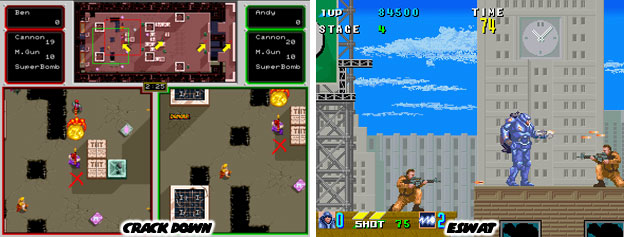
The previous blog mentioned the migration of the run-and-gun from the overhead to the side scrolling format. Several studios were experimenting with what could be accomplished with the different camera perspectives. Sega had a stealth style game called Crack Down in 1989. It allowed two players in the role of special agents to travel through maze-like factories and offices while planting bombs and sabotaging the plans of a mad scientist. The levels were presented on two half screens for each player with a shared map at the top of the display. This allowed both players to move independently from each other and meet up at the exit once the objectives had been reached. This independent gaming was something never tried before in brawlers or other genres in arcades.
A year later Sega returned to the super cop theme in the game ESWAT. The title ditched the espionage format from Crack Down and went with a side scrolling shooter. In that title players took a cop through the ranks from beat cop to ESWAT (Enhanced Special Weapons and Tactics) officer. They earned power armor to take down massive opponents like helicopters, robots, monster trucks and giant gorillas.
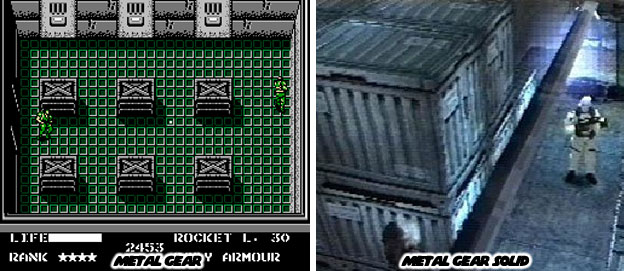
Through the 80’s and 90’s a solid theme always took advantage of the available technology. The original Metal Gear, released in 1987 by Konami was set in an overhead perspective and it allowed gamers to run, gun, sneak and spy. The game probably would not have been as successful if it were in a side scrolling format.
By 1998 when technology improved Hideo Kojima and company delivered a much richer experience in 3D through Metal Gear Solid. Hideo always fancied that the game would work in 3D and took every effort to make sure that players understood that his game was more about stealth, inventory management and logical puzzle solving rather than just running and gunning. Not every game was able to make the transition into 3D and find some level of success. One of the earliest hack-and-slash titles also included RPG elements of inventory management and magic.
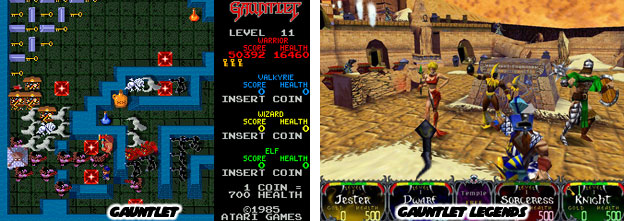
Gauntlet was released by Atari in 1985. It was a wildly popular arcade game that laid the foundation for every multi-player, arcade hack-and-slash title. Players could choose between a warrior, valkyrie, wizard and elf, each with close and ranged attacks. Gamers could not stop pouring quarters into the title through most of the 80’s. Without it making the fantasy genre accessible then there probably would not have ever been Capcom’s amazing Dungeons and Dragons or Treasure’s Guardian Heroes.
Unfortunately when Williams decided to dust off the license in 1998 and put it back in the arcades with updated character designs, mazes and 3D graphics the players did not really seem to notice. Gauntlet Legends was feature-for-feature a superior title but the gameplay lacked. Williams did not understand that because the title moved to 3D it did not mean the gameplay was able to make the transition as well. There was almost the same amount of time separating Metal Gear and Metal Gear Solid as there was between Gauntlet and Gauntlet Legends. Some games worked well in 3D but by and large not the brawling experience, or in this case the hack-and-slash. I had pointed out the nuances in control and gameplay that suffered in 3D when the brawler moved to that format in previous blogs.
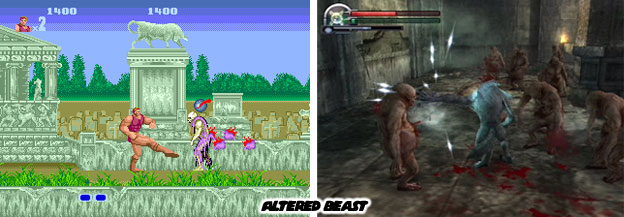
Sega found out the same thing for their side scrolling brawler Altered Beast. The 1988 title was a cult favorite. Players took on the role of a resurrected Greek hero as he fought through waves of undead creatures and monsters to save a princess. Along the way the character could power up and transform into a half man half creature including a werewolf, weretiger and werebear. Each creature had their own special attacks and could even be supported by a second player.
WOW Entertainment, a Sega in-house studio, decided to bring back Altered Beast in 2005. They expanded the library of creatures that the hero could transform into and even updated the story to make it contemporary. Science rather than magic caused the hero to mutate into different beasts. The title was panned by players and reviewers. The transition to 3D, updated story and loose controls could not hold a candle to the original brawler.
Other studios would find that working closely in the side scrolling format could be successful if they kept experimenting with gameplay elements and themes. The next blog will highlight games that combined elements of the run-and-gun with the side-scrolling brawler. Without these titles introducing new elements then modern brawlers like Double Dragon and Final Fight might never have existed. As always if you enjoyed this blog and would like to sponsor me please visit my Patreon page and consider donating each month, even as little as $1 would help make better blogs and even podcasts!
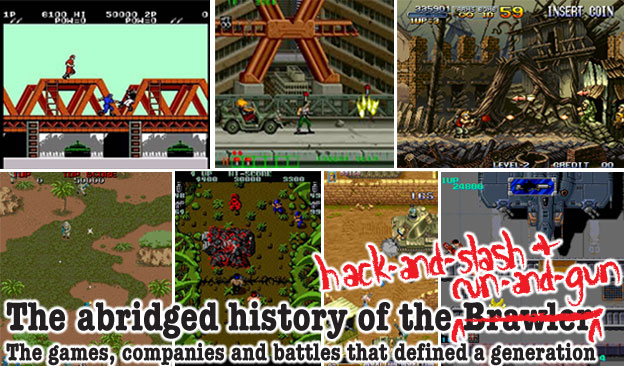
The mechanics of the brawler had been a part of the gaming history at least a decade before Double Dragon. Before arcade players could fight wave after wave of opponents with their bare hands they had to defeat wave after wave of aliens in a spaceships in titles like Space Invaders (Taito, 1978) and Galaxian (Namco, 1979). When those ships were replaced with humans, usually made up of a few pixels, the genre began to evolve. Starting with Kung-Fu master the "Beat-em-Up" was the earliest of the Brawler formats. A year later the "Run-and-Gun" and "Hack-and-Slash" formats were born. Really the only difference between the gameplay was that fists were usually replaced with either guns or swords. In some games players could use fists, guns and swords to combat opponents. What I would like to do in this series is highlight how the graphics, gameplay and genres were constantly evolving. How these titles borrowed elements from each other, explored different formats, visual styles and mechanics The first titles I would like to mention were among Konami's earliest arcade hits.
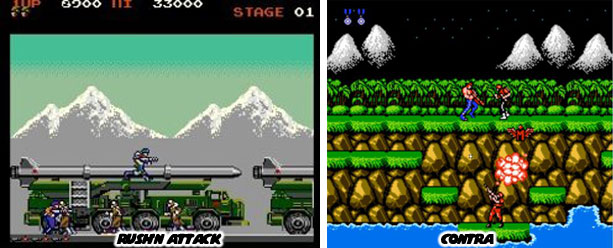
Largely forgotten by most arcade gamers, Rush'n Attack was the 1985 title that really established the side-scrolling run-and-gun action for Konami. In the game a special-forces agent could fight with his bare hands and take weapons from defeated opponents. From flame throwers to laser rifles, each weapon had its own advantage and ammo supply. This game laid the foundation for a more popular title and one which has received countless makeovers since its debut.
Contra became famous for the Konami code (up, up, down, down, left, right, left right, B, A) which allowed gamers to have scores of lives on the home console version of the game. The 1987 arcade gem featured two-player action which had improved on the Rush 'n Attack formula. Players could jump up or down on platforms and shoot in 8 directions now. In portions of the game players could even advance in a behind-the-back POV. The diversity of weapons and nonstop action made the title very popular in the arcades and at home.
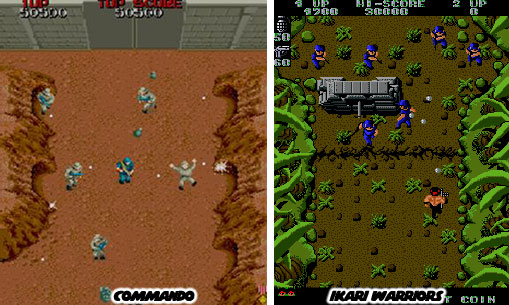
Before Contra had taken off in popularity the run-and-gun had been experimenting with different camera points of view. One of the earliest titles was Commando by Capcom. This 1985 title was set in an overhead perspective. For many developers this approach made sense. The formula had been used with great success previously. The only thing developers had to do was replace the spaceship with a soldier and space with a battlefield for them to advance on. Players could move around the screen in several directions and shoot at opponents but the screen mostly advanced up.
In 1986, before they developed their own arcade platform, or became heavily invested in fighting games, SNK had released the Ikari Warriors. The game allowed two players to control the mercenaries Ralf and Clark as they made their way through some unknown jungle. The game introduced a joystick with an octagonal handle that could be rotated to shoot in 8 different directions. With commando players could shoot forward and to the sides but not behind them. Ikari Warriors proved popular and like Contra several sequels were made. Today most players are familiar with the Ikari Warriors thanks to the King of Fighters series.
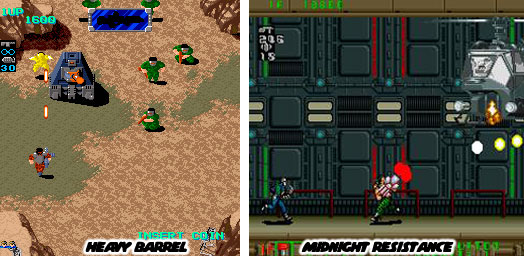
Through the 80’s most of the studios would try to see which format worked best for the run-n-gun shooter. Data East tried a variation of the overhead shooter first with Heavy Barrel in 1987. The game also made use of the octagonal handled joystick. The “Heavy Barrel” itself was a super rifle capable of mowing down the strongest opponents. It was a precursor to the BFG 9000 featured in Doom. Players had to piece it together by locating keys from fallen soldiers and corresponding chests scattered throughout the levels. My older brother had played the game so many times he had the locations of all the keys known by heart. He could speed run through the game before that concept was even invented.
A couple of years later Data East released a sequel. The 1989 game Midnight Resistance was presented in a side-scrolling format, similar to Contra. It kept the octagonal handle on the joystick and allowed players to assemble the mega-weapon from the original game as well. Little by little the side-scrolling format began to shift away from the overhead view. The genre seemed to work better for run-and-gun as well as beat-em-up brawling.
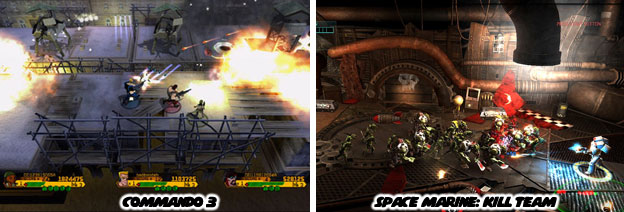
In recent years several major and independent studios had been using the overhead camera to create remake or classic-inspired run-and-gun games. Capcom found great success updating the graphics by preserving the classic gameplay in Bionic Commando for Xbox Live and they Playstation Network. They also released Commando 3: Wolf of the Battlefield for the downloadable services. Developed by Backbone Entertainment in 2008 the game actually borrowed the full name from the original 1985 arcade hit. The game preserved many of the classic run-and-gun mechanics over improved 3D visuals. Unlike the beat-em-up brawler which mostly suffered the migration to 3D the overhead shooting titles worked well with newer technologies.
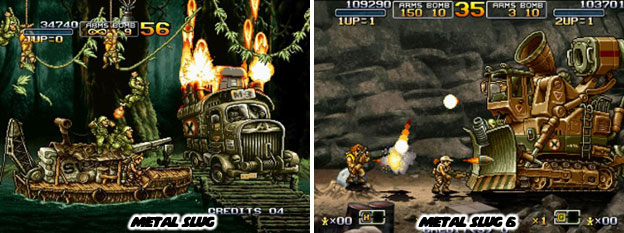
By using a fixed camera perspective several developers were able to create new gaming experiences with a moderate budget and release them across several platforms. Space Marine: Kill Team, released by THQ in 2011 showed that the gameplay could still be as entertaining as it was 26 years ago while the dedicated Space Marine console game used a third-person perspective and was designed for a more modern experience. The side scrolling format would still remain popular for many run-and-gun titles and the best of these would be the Metal Slug series, developed by Nazca and released on the SNK Neo Geo systems through the mid to late 1990's.
The Metal Slug games were a work of art, as difficult as the best side scrolling run-and-gun titles and more beloved than Contra, Ikari Warriors or any other long running title. The contributions of the game and team at Nazca to the run-and-gun genre were so profound that they deserved (and would get) a blog of their own someday… It turned out that side scrolling camera worked well for beat-em-up, run-and-gun and even hack-and-slash titles. We shall explore these transitional titles in the next blog. As always if you enjoyed this blog and would like to sponsor me please visit my Patreon page and consider donating each month, even as little as $1 would help make better blogs and even podcasts!
Home consoles had been trying to get in on the brawling action through most of the 90's by the turn of the millennia they had found their rhythm. Unfortunately at that point the brawler had lost popularity. This blog will highlight the arcade influence on console versions of the brawler as well as independent brawlers inspired by arcade hits.
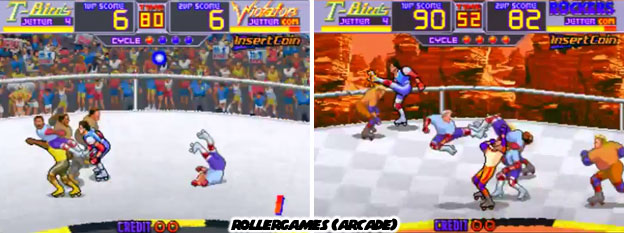
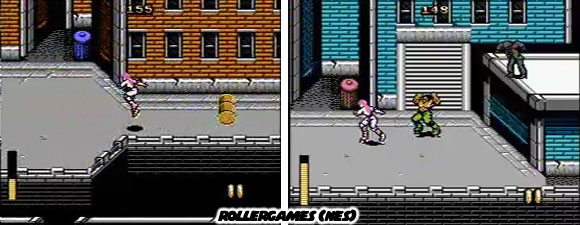
In 1990 Konami released RollerGames in the arcade as well as on the Nintendo Entertainment System. The game was licensed from the television show about an updated version of roller derby. The teams and players in the league were very over-the-top, not unlike pro wrestlers. It was great fun on TV and part of that spirit made it into the arcade. The game took place on one of several roller rinks located throughout the USA. Players actually could move all over the screen as they could in other brawling games while their characters automatically skated on the rink. The effect could be dizzying if players focused on the changing track instead of the approaching opponents. While fun the arcade version was a shameless quarter waster.
The player had to win a set amount of matches between the male and female teams. All the while the opponents were relentlessly dropping teammates and earning points. The battles were nonstop as teams seemed to have an unlimited supply of opponents right up until the clock ran out. Players that did not manage to throw, dropkick or punch out enough opponents could kiss their quarters goodbye.
The experience changed completely when RollerGames was brought to the NES. The game became an adventure platformer featuring one playable character from each team. The character traveled from city to city, avoiding obstacles and pitfalls en route to defeating a boss, or manager from each team. At the end they fought through a corporate tower and defeated the big boss. It was nonsensical, just like many things that were popular in the 80's!
Very few brawling titles worked well on the 8-bit systems. The limit on sprite sizes, animations and colors made the brawler look like a minimalist genre. The next generation of hardware would be able to create experiences much closer to the arcade.
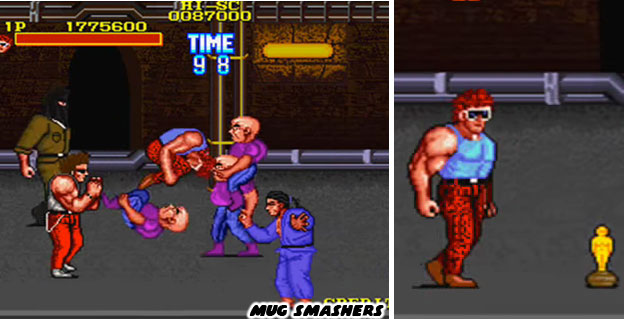
Of course there was always the PC, which promised to bring arcade-quality graphics home. For the most part they did. The gameplay, design and animation however were sorely lacking in many of the independently produced PC brawlers. One of the worst of the lot was by a British company called Electronic Devices. In 1990 they created a brawler set in San Francisco that was simply horrendous.
There were generic heroes and villains. Audiences could tell that they had poached various titles in order to recreate the genre. The control was bad, the villains were silly, there was one bad guy made up of three little people riding on each other's shoulders! The power ups made no sense, one even looked like an Academy Award! The prize for worst PC brawler was clearly won here.
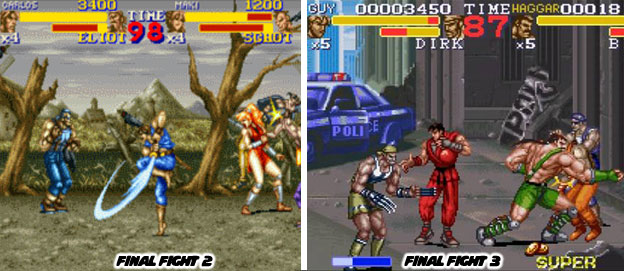
The consoles on the other hand had a lot of promise, especially once they transitioned to 16-bit systems. Capcom, as always, was one of the first to develop console titles based on their popular arcade games. Final Fight 2, released in 1993, was a Super Nintendo exclusive. The sequel to the arcade gem came out years after the original and featured new characters, locations and gameplay elements. It expanded the universe of Final Fight by taking Mike Haggar and his associates Maki and Carlos out of Metro City on a trip around the world.
Players learned that Mad Gear was a global crime syndicate that touched just about every continent. The bosses in this game were as memorable and diverse as they were in the original. The control was solid and Capcom had finally learned how to make a brawler that featured three characters. In the original Final Fight release for the SNES only Cody or Haggar were playable characters. A special edition featured Guy and cost more because of the memory costs associated with storing the information for one more sprite-based character.
In 1996 Final Fight 3 had returned to the streets of Metro City. Haggar returned to clean out the scourge of a new gang that had moved into town. The game introduced super attacks for the main characters. Dean and Lucia had replaced the other supporting characters in this story. A separate energy bar could be filled up and a screen-clearing super attack could be unleashed on bosses or groups of Skull Cross gang members alike.
It was a fun play mechanic that helped keep things fresh. The details in the sprites, animations and character designs did well to mirror the original title, however the sprite-based engine was beginning to show its age. Consoles were quickly moving to 3D experiences and players expected the genre to follow suit.
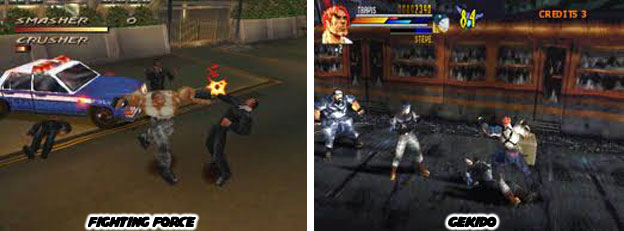
Fighting Force, released by Core Design in 1997, was originally pitched to Sega as Streets of Rage 4. Sega passed on the title so the title name was changed. The game was an early attempt at moving the brawling franchises to 3D. The polygon characters were large and animated slowly. The fighting mechanics lacked the speed or accuracy of 2D titles. The camera focused the attention of the player towards a particular direction and could not be changed. Core Design gave a clear example of how difficult it was to create the brawler in 3D using console hardware.
A few year later, in 2000, Naps Team tried to improve o the 3D brawler formula with Gekido. The animation was faster, camera improved, levels slightly more interactive and designs a bit more polished than Fighting Force. The console still lacked the raw 3D rendering power of most arcade cabinets but they were quickly catching up.
Very shortly the Playstation 2, Dreamcast and original Xbox would debut 3D brawling titles that were visually as impressive as anything released in arcades. Gekido could have been considered a forerunner to the Bouncer, which had been looked at in the previous blog.
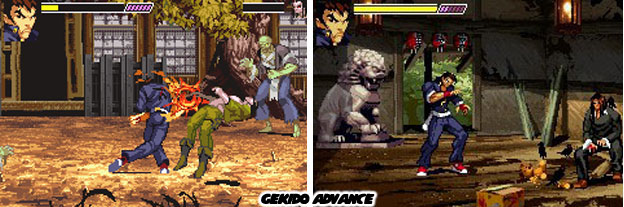
Naps Team had released a sequel on the GameBoy Advance in 2002. Gekido Advance; Kintaro's Revenge was a step back to traditional 2D, sprite-based gameplay. Which at this point was very unique. Most studios were struggling to bring 2D franchises into 3D. Naps Team made a sequel that convinced most gamers that the series was originally rooted in 2D. It was well done, well animated with solid character designs.
The game was decidedly Japanese animé influenced. The villains ranged from typical goons to monsters and mutants, a sort of Night Slashers meets the King of Fighters. The main character, Tetsuo, looked and moved similarly to Kyo from the KOF series. The game did well at recreating the classic feel of a brawler but kept things fresh by incorporating some fighting game mechanics and visuals.
The PC market in the west had a lackluster history with original brawlers however in the east things were different. In parts of Asia the PC market was often more popular than the console. The PC allowed DVD playback of course but also homebrew apps and small publishers could flourish. The PC's were of course online well before the consoles. Places like China and South Korea had a rapidly growing PC market. The studios in both countries were catching up with the trends in gaming. They were creating their own brawlers and fighting games less than a decade after they hit it big in the USA and Japan. That window of following the trends had grown shorter and shorter every year after 2000. The countries were able to develop and release their own mobile and MMO games a year or less after a popular title in the west had debuted. In other cases they were experimenting with the genres at a rapid pace.
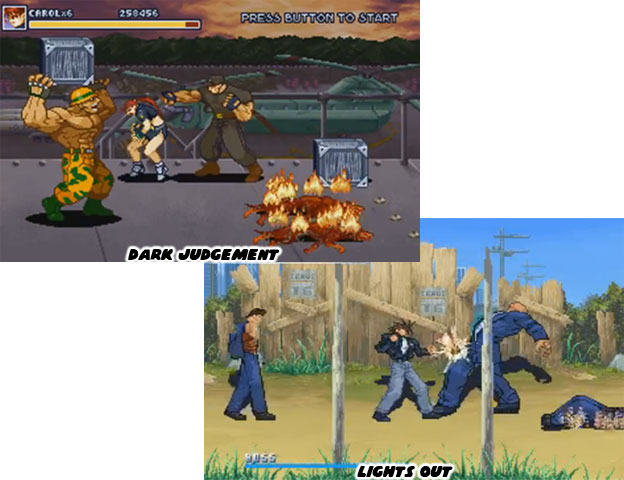
Two of the better brawlers released in South Korea were Dark Judgement: by SOHO Studio of Hong Kong and localized in Korean by Frankenstein Studio, the other was Eojjeonji Joheun Il-i Saenggil Geot Gateun Jeonyeok by TG Entertainment. The second game had a long title but it was based on the manhwa "Lights Out." Comics in Korea were known as manhwa, comics in China were called manhua and you probably know that comics in Japan were manga. The two games came out in 1997 for Windows. Dark Judgement borrowed the aesthetic from the Capcom brawlers and mixed in some of the action of the Konami ones as well. It was created by a small team from Hong Kong and distributed by a Taiwanese Publisher. The SOHO Studio name was removed when it was released in South Korea. Thanks to the graphic artist, Lambonbon, who worked on the game for the bit of insight. Lights Out had a more distinct Korean style of animation and character design that was based on a bunch of high school tough guys fighting. Both of the games were well done and helped bring back a sense of the classic era of the brawler. There was something to be said about 2D graphics. They seemed to work better for the genre. In the arcade an indy developer would do similar things and release fantastic sprite-based titles within a sea of 3D releases. This game and more will be featured in the next blog. As always if you enjoyed this blog and would like to sponsor me please visit my Patreon page and consider donating each month, even as little as $1 would help make better blogs and even podcasts!
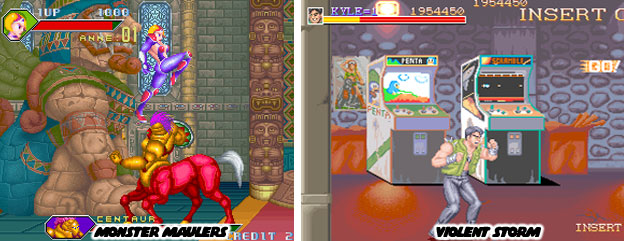
The year 1993 saw an increase in the number of brawlers released. Konami was in fine form as they continued to innovate and redefine what the genre meant. Monster Maulers was one of the first experiments between the brawler and the fighting game. The mechanics of the game were very much based on the traditional fighting game. The gameplay took plane on a 2D plane. Characters could not move into the foreground or background. Players could perform special moves on top of regular punch, kick and grapple attacks.
The only thing that made this game a brawler instead of a fighting game was in that up to two players could battle against the collection of monsters, aliens and mythological creatures on each stage. The designs were uniquely Japanese but nothing extraordinary.
Konami the turned around and released Violent Storm. It was one of the most random, poorly designed and executed brawlers they had ever released. It was hard to believe that the same people that had released the X-Men, Ninja Turtles and the Simpsons had developed this game. It was as formulaic as brawlers got with absolutely no redeeming factors.
The sprites were large, the animation rushed, the levels sparse, the opponents bland and the bosses insipid. Konami was going through the motions and releasing brawlers just because they could. The company that could previously do no wrong had a half-hearted effort wasted on arcade owners. Their hubris would cost them market share.
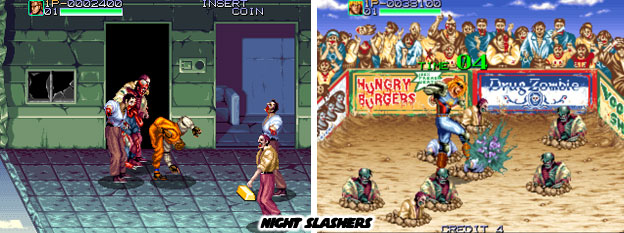
Even though they pioneered a lot of fight mechanics in 2D games and were responsible for inspiring the genre through Karate Champ, Data East did not have a strong history with brawlers, especially following after Captain America and the Avengers. Night Slashers made up for that. It was a dramatic, gross and violent brawler as ever there was one. It was exactly the type of game the genre lacked.
The designs were a bit over-the-top, with a suit-wearing British vampire hunter teaming up with an American rockstar-looking monster hunter with cybernetic arms and a Chinese martial artist. The premise was dramatic gold. Monsters, mutants and the undead had taken over the world, it was up to a trio of fighters to make things right. The characters had specials and super attacks at their disposal as they took on waves of zombies and other undead creatures. The gore, like the violence featured in brawlers was catering to the tastes of guy gamers.
What really set this game above the crop of brawlers were the bonus games. Players took turns playing things like zombie bowling, in which players threw zombies from 10 yards out and zombie whack-a-mole where players kicked the heads off of zombies as they popped up from holes in the sand. It was an absurd premise as audiences gathered around these zombie events, standing behind barricades emblazoned with sponsor logos like Zombie Burger and Drug Zombies. That dark humor was what Konami was missed in Violent Storm. Sadly of all the arcades I visited I only saw one dedicated cabinet. With the popularity of zombies then perhaps we might see this Data East gem come out on PSN or Xbox Live.
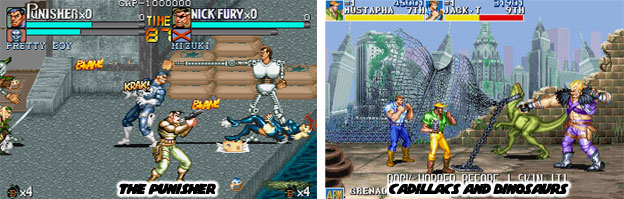
Capcom did not wait to see what Konami was up to next. They secured the rights to another Marvel character and released the violent Punisher title. The game was still a co-op brawler with Nick Fury filling in for player-2. Classic villains like the Kingpin were placed alongside modern villains including Jigsaw and Bushwacker.
The game retained the Capcom Japanese aesthetic rather than strict US comic book designs. The studio did, as they always had, place exaggerated muscles on their figures so they would appeal to western gamers. Other developers were often unsure of those proportions so they always went lean with their characters. The subject matter was a little more intense in order to reflect the Punisher comic books. The Punisher comics were often more mature and brutal than other superhero books. They predated the anti-heroes from the Wanted and Kick Ass graphic novels. The game itself was violent for brawler standards, when the Punisher pulled the trigger on his guns opponents went down hard.
Capcom kept the intensity up with their next comic-to-brawler. Cadillacs and Dinosaurs was an indy comic series with a small but dedicated following. The game was based more on the work from the short-lived animated series than from the comics.
The title featured the same impacting gun play from the Punisher with the great designs from the comics and animation. The best Capcom title of the year, and for that matter the best brawler of the year, was based on a license. It was neither the Punisher or Cadillacs and Dinosaurs but instead something that was previously considered the nerdiest of pursuits.
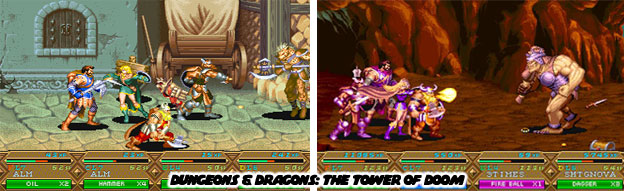
Dungeons and Dragons: Tower of Doom was based on the fantasy roleplaying system and brought over a lot of their mythology and design into the brawler. The older Capcom fantasy brawlers, including King of Dragons and Knights of the Round, seemed to have been building towards the D&D license. The oldest of the fantasy brawlers, Magic Sword was set in a castle tower as well, some 50-stories tall. It was a brutal but rewarding quarter grabber, the levels were filled with traps and monsters, it predated the Tower of Doom by years. The game did have plenty of different character classes and even a rich narrative, still it felt as if something were missing. The D&D license allowed Capcom to bring everything together.
The Tower of Doom featured a small group of character classes that player could build through collecting coins, equipment and potions from defeated opponents. Players could visit nearby towns and upgrade their equipment and restore health with recovered loot. Instead of starting with nothing on each play through the cabinet allowed players to save their progress locally.
The attention to detail, character designs, art and animation were superb to every other title released that year or any year before. The brawler with role-playing elements was a long time coming. Capcom waited to apply it into a genre that they had become exceptional at. They knew the ins and outs of the brawler, including the nuances of timing, the difficulty curve, problems with repetition and boss encounters. While the D&D subject matter was not appealing to all of the gamers, the lessons learned from its design were invaluable.
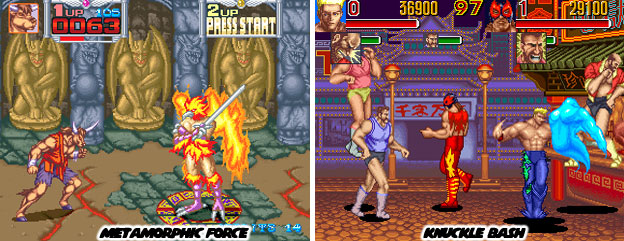
By comparison Konami was now going through the motions with each arcade release and losing more steam by the moment. It stood to reason why their best developers were starting to leave the studio and move into console development. Their last brawler of 1993 was Metamorphic Force. The game attempted to marry the fantasy elements of warriors set in a world of shape-shifting monsters. Any of the 4-players could transform into a were-animal, including were-tiger and were-bear. Unlike the clock on Sengoku the transformations here were not timed.
The concept was great. It was as if there was a brawling version of Sega's Altered Beast. It was the execution that was lacking. The quality of the designs, brightly colored levels and sparse gameplay elements felt unpolished. This title felt more lacking than even Violent Storm. It was not however the worst brawler released that year.
Atari had become aware of the popularity of the brawler. They had been losing a market share in arcades since the late 80’s to the Japanese. To try and turn things around they published their own brawler developed by a company called Toaplan. Knuckle Bash was unique in concept, introduced some new elements but ultimately had an abysmal execution.
The game was an attempt at making a narrative out wrestlers and the wrestling business. The story revolved around crooked wrestlers and crime lords tarnishing the good name of pro wrestling. The game began with one of three characters, a masked luchador, an Elvis-gimmick wrestler and a straight-shooting wrestler. Three more characters, which were at some point in the game were bosses, could be added to the lineup. The game allowed players to switch characters between levels. Adding bosses as playable characters and allowing the switch of characters between stages was a fantastic idea. Unfortunately the game was formulaic, nonsensical and had poorly designed characters and bosses. Despite the good ideas it was one of the worst brawlers ever released. 1993 was an interesting year but the brawler was steadily declining in popularity, less and less memorable titles would be released over the rest of the decade. Some of the best experiences were still to come. As always if you enjoyed this blog and would like to sponsor me please visit my Patreon page and consider donating each month, even as little as $1 would help make better blogs and even podcasts!
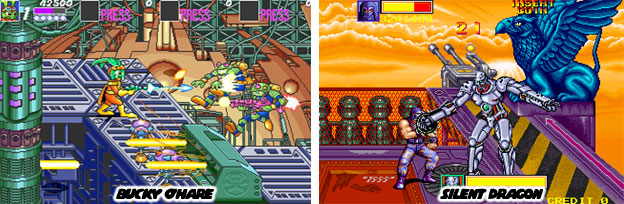
Konami made sure that 1992 got off to a good start with the X-Men game, their next title was also a licensed brawler. Bucky O'Hare was a popular animated series based on an independent comic. It featuring a crew of anthropomorphic alien / animals that were fighting for freedom out in the cosmos.
The game was lighthearted and followed the visual style of the cartoon, going so far as to include sound bytes from the voice actors from the TV series. The game was not very difficult for seasoned players, it was not meant to introduce new gameplay elements. The game was important however because it was designed for a new generation of gamer. The bright colors, smooth animation and clean level design could be seen as an attempt to make a kid-friendly brawler. Those players would be interested in trying out the other titles from Konami and help keep the industry going.
One of the other titles that could be described as player-friendly was Silent Dragon by Taito. It was a very formulaic 4-player brawler, capitalizing on the western fascination with ninjas, fights and random monsters. The large colorful sprites were very animated and the game never felt heavy-handed.
The game was about as simple and straightforward as a brawler could get. Taito did not develop a game as much as they picked characters, designs and themes from other studios and put them in a game. Taito had not done players any favors but was helping move the industry forward with a cross pollination of elements.
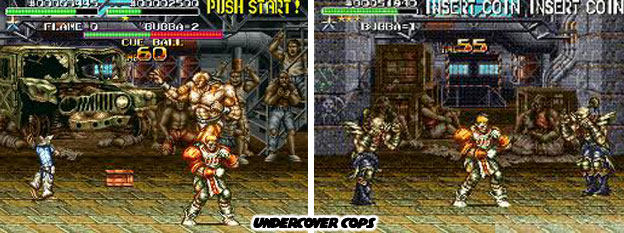
Irem did a better job with the brawler they introduced that year. Undercover Cops returned to the Japanese roots of pandering to the west while making some interesting design choices. In the far future (2015) crime had run amok. Different gangs, some bordering on cults, ruled the streets. Officials formed a team of "City Sweepers" to clear out the thugs, mutants and creeps. I think there was something lost in translation when the characters were created. The three playable characters were Claude the ex-karate master, Bubba the ex-pro football player and Flame ex-female vigilante. I always laughed wondering how somebody could be an ex-karate master, as if they got hit too many times in the head and forgot how to perform karate. Or Flame, who was a rip-off of Blaze from Streets of Rage. Flame was an ex-female vigilante... I thought Poison and Roxy from Final Fight were the only transgender brawlers… but I digress.
The game was unique in that it allowed all three players to choose the same character rather than being forced to use their partners. Characters also had special attacks and techniques that allowed them to knock leaping opponents out of the sky or strike opponents on the other side of the screen. The best brawling experiences were built around characters that weren't slightly better than opponents but had access to techniques and abilities that made fighting fun rather than redundant. The hard hitting heroes that young boys idolized were and should always be head and shoulders above the lowest goon and almost on par with boss characters.
This game was notable also in that the visuals were dark and detailed. Those were the trademarks of other Irem titles. Some of the artists that worked on Undercover Cops would be the same people drawing the insanely detailed pieces for GunForce II, In the Hunt and the iconic Metal Slug series.
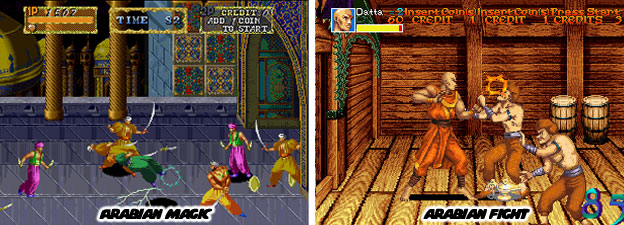
The last two great titles worth mentioning were both set in the Middle East. Sega returned with their System 32 engine and scalable sprites with Arabian Fight. The game featured some of the largest sprites ever in any brawling game. The engine would pan out to show more of the stage as players moved further and further away from each other. It was not until this game was released that the limitations of sprite-based combat in pseudo 3D environments became visible.
A sprite is an animated 2D image, it can be presented to gamers with a sense of weight and depth if artists and programmers remember to draw in shadows and highlights as well. The other visual elements in the game like the perspective and angles used to draw levels could help players visualize the sprite as moving in three-dimensions. Arabian Fight constantly scaled in and out, far more often than in the Spider-Man game. As the camera kept changing distance it became obvious to players that they were looking at 2D objects. The sprites appeared like animated hieroglyphs, flat characters from the walls of some ancient Egyptian tomb. Now if Sega had meant for the entire story to play out on the walls of a temple, or on the pages of a book, then the effect would have been revolutionary. Unfortunately the game was supposed to take place in 3D space and as often as the sprites scaled the game suffered. Players were not fans of the paper-thin sprites. They seemed to ignore the magic system from the game and even the exotic locations featured within as well. The game was Sega's second sleeper in a row. They would shy away from further arcade brawlers and concentrate instead on the home series with Streets of Rage sequels.
Despite the lackluster showing from Arabian Fight the genre was still in need new places to visit and explore. The use of exotic places and legendary characters to play as would help expand the universe. Taito answered the call through Arabian Magic. Like Arabian Fight it too featured multiple characters to play as and a magic system. The locations were even similar, including elaborate palaces, mysterious dungeons, flying carpets and pirate ships. The similarities ended there. Taito used a fixed camera that highlighted the small but detailed figures on elaborate backgrounds.
The game worked because it pandered to the fantastic legends that most gamers in the west had grown up with. Not necessarily from reading the adventures of Sinbad or the 1001 Arabian Nights of Scheherazade but instead from consuming those legends in moves. That was certainly the case for my brothers and I as we were raised on classics like the Thief of Bagdad and The Golden Voyage of Sinbad.
Many a Sunday afternoon was spent watching those movies on TV. Wondering how the Kali statue was brought to life or how the other special effects were accomplished before the aid of computers. The legends of Sinbad were always more appealing to me as a youngster. It was always easier to identify with a dark-skinned hero (even if it was only a tan) than the pasty white guys playing King Arthur and Robin Hood. Not to mention the love interest, a chesty Caroline Monro that sent my adolescent head spinning. Guinevere and Maid Marian could stay locked up in a tower for all I cared! Anyhow, my brothers and I loved the magic, fantasy and worlds that those movies exposed us to and we were eager to see how they would be adapted in a game. Prince of Persia, released by Broderbund gave us taste of that world in 1989. Still we longed for something a bit more epic.
Arabian Magic was the title we were hoping to see in arcades much earlier The sprites and opponents were a fraction of the size of those in Arabian Fight but the game was exponentially greater. The archetypes fought in exotic palaces, decorated in elaborate tiles and ornate rugs, many of them set with traps and pitfalls. Towering minarets of gold dotted the background. Players battled guards, assassins, skeleton warriors, sorcerers and magical creatures. The boss characters could be captured and placed in lamps if they were defeated. The magic system in the game was unlike those from other titles. Players had a finite number of djinn (genies) that they could capture and use. Each spell had its own effect and range. Once used the spirit was gone forever. This management of items was unique among all the brawlers. The locations and heroes from myth, including Sinbad, were icing on the cake. The game was imperfect for its minimal animations. Had a studio like Capcom developed this game then it would have easily made the list of the top 10 greatest brawlers of all-time. 1992 was a very quiet year for brawlers compared to the previous year. The handful of games released did have their own charm but would be forgotten as the industry pushed forward. As always if you enjoyed this blog and would like to sponsor me please visit my Patreon page and consider donating each month, even as little as $1 would help make better blogs and even podcasts!