
Showing posts with label nazca. Show all posts

Friday, August 16, 2024

D.A.S. the biggest video game bad guys you've probably never heard of

Hello friends, and visitors to the blog. The other day a random question popped into my head. What was my favorite evil organization in gaming history? Did I even have a favorite? Have you ever thought about the bad guys in your favorite video games? I didn’t mean the villains in game, but the evil organizations. The ones that returned more than once in a series? Evil groups had always appeared in the comics books, and cartoons. When I was a kid G.I. Joe fought against Cobra. The Autobots fought against the Decepticons. The Ninja Turtles fought against the Foot Clan. But could you think of a game series that had a recurring evil organization?

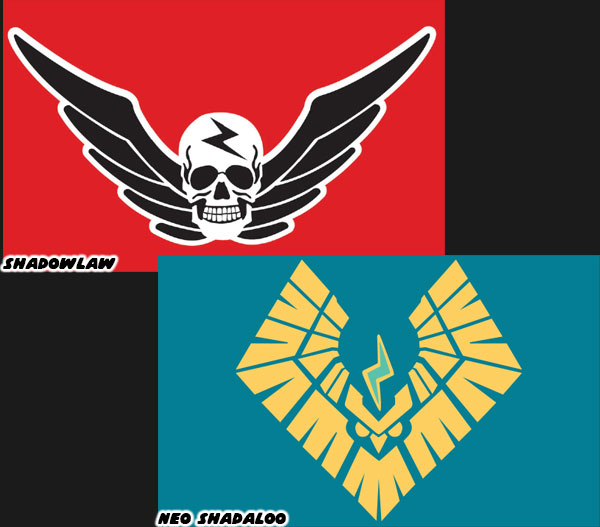
Since I wrote mostly on fighting games it might be Shadowlaw / Shadaloo. That organization got its start in 1991 with Street Fighter II. A dictator named Vega / M. Bison ran his own small nation near Thailand. This group, its soldiers, spies, and generals would pop up again, and again all throughout the series, and even some crossover games. Currently a rival group was introduced by the team at Capcom called Neo Shadaloo. Would they become major players in the franchise, or were they only going to be a part of Ed’s back story in Street Fighter V, and 6?

Shadowlaw had a great name, but I didn’t care to see them keep popping up in the SF franchise. Nor did I care about NESTS showing up in the King of Fighters franchise. I believed that fighting games were more unique when they focused on the fighters, their forms, and the challenge of facing the best. It was more interesting to me to see who could be the next great challenge rather than figure out a way to connect them all to a cartoonish villain again, and again.

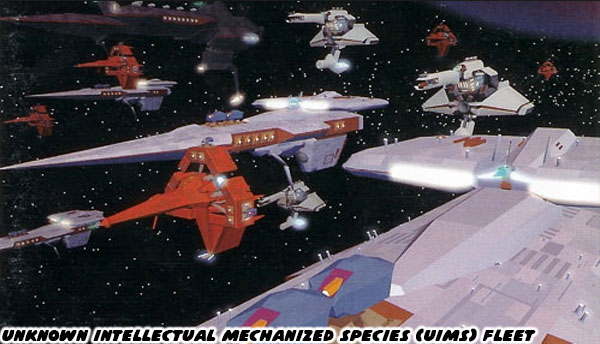
One of my favorite enemy groups might be the Unknown Intellectual Mechanized Species (UIMS). They were just one of the many alien species challenging humanity, and the United Galaxy Space Force (UGSF). The Bosconians, and Galagans were also memorable enemies across the various Namco franchises. As cool as those bad guys were I thought that one of the rarest groups ever featured in any game series deserved more love. The D.A.S. (Dark Anarchy Society) in the international releases, Destroy And Satsujin (Satsujin means murder in Japanese) was a recurring villainous force from Irem's Arcade games.

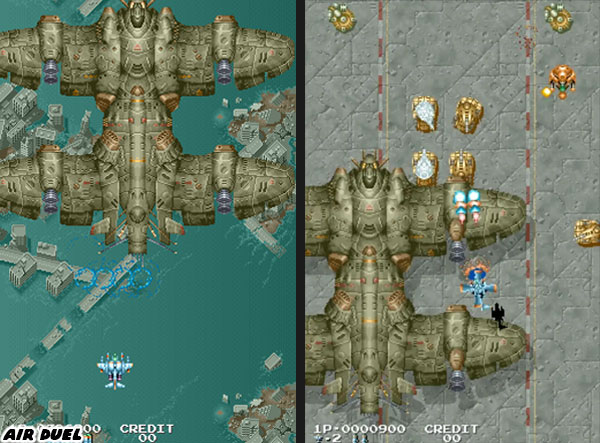
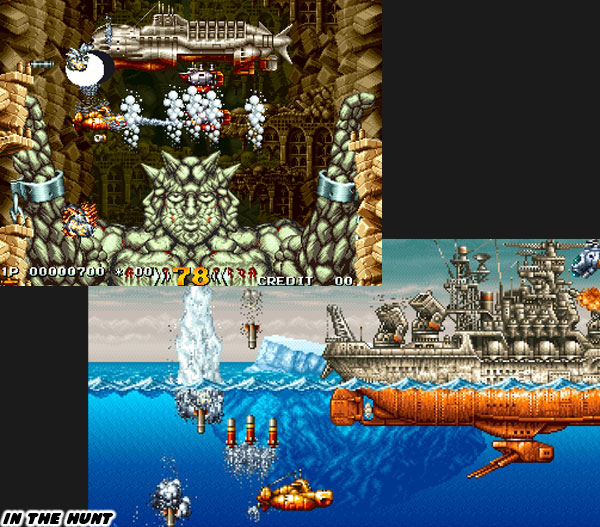
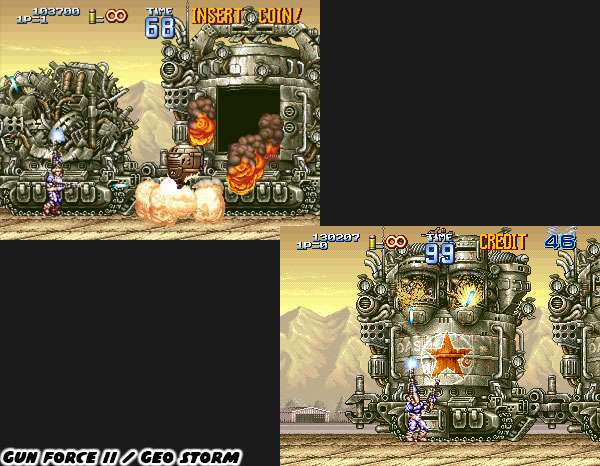
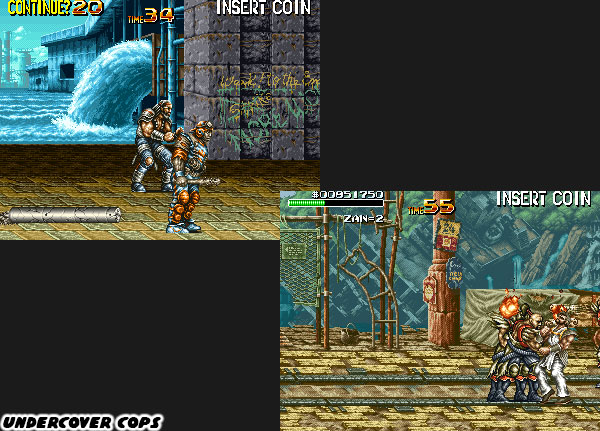
The group appeared as the main antagonists in several titles by Irem, they include In The Hunt, Gun Force II/Geo Storm and Undercover Cops. There were a few things that made the groups, and games they appeared in unique. Primarily that none of the games were in the same genre. Air Duel was a SHMUP, a shoot ‘em up or shooter featuring a jet, and attack helicopter. The game was set in a near post apocalyptic future. D.A.S. would try to take over the world, and it was up to the arcade players to see them destroyed. They would lay low for a few years, and then try to set up their totalitarian regime through violence. Each game mentioned above would be connected by the same group. Probably the closest that D.A.S. came to world domination was with In the Hunt aka Kaitei Daisensou (Great Undersea War) in Japan. The submarine shooter was set in a version of the Earth where the bad guys had just about conquered every nation. With the melting of the polar caps, and the major cities underwater it was easy for them to clear out opposition using their superior naval forces. The last ditch effort to destroy their ocean-based super weapon came with the creation of a super attack submarine called the Granvia. 

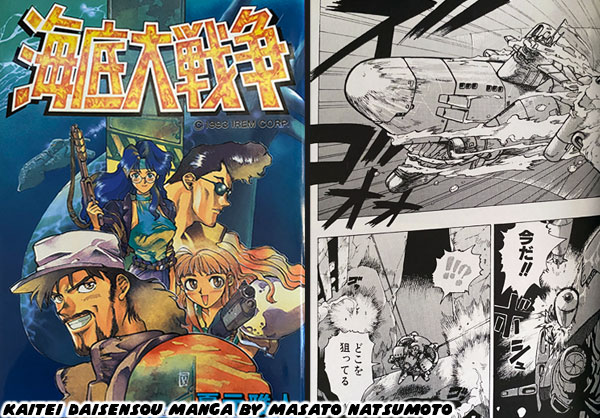
The submarine that players controlled could dance circles around its opposition. I had talked about In the Hunt, and Air Duel on the blog previously. This conflict was serialized in a Gamest Manga by Masato Natsumoto. His vehicle design, and presentation were influenced by Masamune Shirow. He was a perfect fit for the world created by Irem. The series explained that the reason the sub was such an amazing weapon because its design was based on stolen plans for a D.A.S. sub-orbital attack ship. The weapons, and unique magnetic propulsion system was repurposed technology that would liberate the worlds from the oppressive regime.

The manga featured the brave pilots Jin, and Rei against the D.A.S. captain Sharking. Every encounter in the game was recreated, and the adventure was greatly fleshed-out. It was a shame the series didn't get a follow-up. These games were important in the history of arcade gaming not only for their content, but for their style of presentation. Visually there were no other studios that crammed as many details on their sprites as this team did. To this day no other studio could claim to have created sprite-based titles with as high a level of detail, and animation. The studios that came close like IGS, and their game Demon Front still fell short of that high mark. The members of that team applied the same amount of detail to everything they worked on. The D.A.S. gunships, tanks, copters, drones, and bases oozed with style. Now that they had covered the air, and sea shooters, they decided to make things interesting with a side-scrolling shooter.

Geo Storm was their response to popular franchises like Konami’s Contra, and Data East’s Midnight Resistance. The challenge was getting even closer to D.A.S. vehicles, upping the amount of detail, and letting us see the individual soldiers. They hit it out of the park, and no other studio could even compare to the work that went into Geo Storm. This group would get tired of waiting for Irem to start new projects, so they left and formed a new company called Nazca. The next gem for the Neo Geo was called Metal Slug. They were the only company capable of topping themselves. Metal Slug, and the team at Nazca were part of a massive legacy in gaming. Before they left Irem the Nazca team flexed their muscle in yet another genre. I talked about Undercover Cops during my history of the brawler series, it was one of the more unique titles of 1992. The fact that they were able to apply the same amount of detail in a brawler, and add new features to the genre meant that this team were made up of critically underrated game designers. Other studios that bounced around different genres were rarely good at multiple ones. They instead specialized in one type of game. The Nazca staff could seemingly do it all.

I would like to think that they started with D.A.S., and then worked backwards to figure out who were the heroes that could stand up to this unstoppable evil force. In the oldest games we were looking at massive D.A.S. ships, planes, and tanks. As Nazca learned to make games we started getting closer to the bad guys. By the time they released Undercover Cops we were able to see the monsters, mutants, and villains in a one-on-one setting. No other company had given us the big picture, all the way down to the individual foot soldiers for the evil organization. The nearest thing to that type of world building could be seen with the Rebel Army in the Metal Slug series. It made me appreciate the bad guys that went into the creation of a great series. I’d like to know if there was ever any evil group that you admired in your favorite games. Were they from a well established universe like Star Wars? Or from a horror series like Resident Evil? I’d like to read about them in the comments section. As always if you would like to sponsor me please visit my Patreon page and consider donating each month, even as little as $1 would help make better blogs and even podcasts!
follow the Street Writer on Patreon!

Wednesday, March 20, 2024

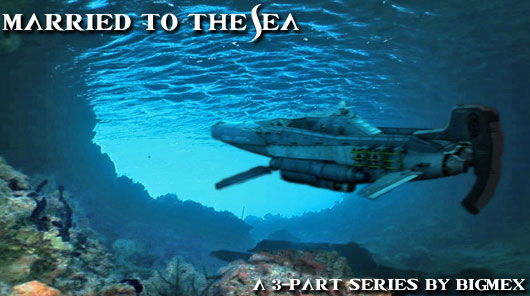
Married to the Sea, part 2 - A 1UP classic from February 7, 2008

Welcome back ye land lubbers. When we last left off I was speaking in general terms about my love of the sea and the boats and subs that inhabit it. What makes the sea so great is how much it can change. One minute it's calm and smooth like a sheet of glass, the next it's 70 foot waves and a dark tempest that could snatch away grow men like leaves in a strong wind. But just under the surface the ocean remains calm. Quite and interesting dynamic. Today we'll take a look at this mysterious world under the sea to some history-defining games. A good number of these titles are older than you, some are older than me but I've played almost all of them in the arcade or console as the case may be.

You can break down a sea adventure into one of three types, those with a submarine, those with an underwater personal watercraft and those based on the surface of the ocean. I won't talk about the third because few are adventure games and most are boat or jet ski racing games like Wave Race or Hydro Thunder. Those you should already be familiar with. The first two sea adventure genres have had a few sleeper hits in their time. I'll highlight the submarine ones today.

The submarine genre is one of the few that can claim to have a deep-rooted arcade legacy. One of the earliest electronic games was Sega's Periscope, released in 1968 and Midway's Sea Raider released in 1969. The gimmick for many of the submarine games has been a reliance on the periscope, a form of control unique to actual submarines.
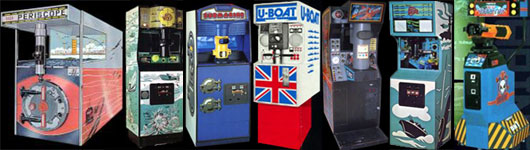
Unlike traditional arcade screen where everyone could see what you were playing, gamers on sub games could peer into their own screen which displayed a CRT or mini LCD. The player had the firing buttons at the thumbs of the periscope handle with some crosshairs on the display to help target enemies. While this gimmick worked in arcades for over 30 years it was not always the most popular format for players.
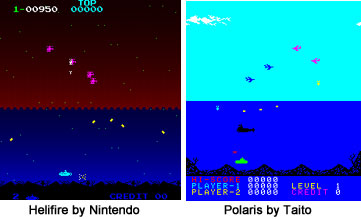
It didn't take too long for companies to begin applying the SHUMP (or shmups) formula to the submarine genre. While the flying ship in most SHUMPS can only fire forward the submarine was unique because it could fire torpedoes forward and missiles straight up. This allowed developers to come up with games that could be played like Space Invaders but with attackers from the side as well. Early adopters of this format included Midway's Submarine in 79, Taito's Polaris in 1980 and Helifire by Nintendo also in 1980. But it wasn't until 1981 when the side-scrolling aspect of the SHUMP was also applied to the submarine game.

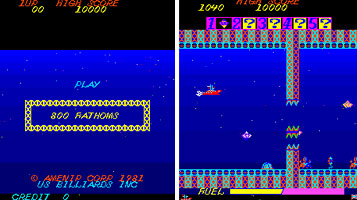
The Battle of Atlantis by Comsoft featured colorful underwater environments where ships and sharks would attack you. Amenip's Mariner game (aka 800 Fathoms) also came out in 1981. This game expanded on the the themes of exploration and diverse locations through which you had to pilot your sub while also taking on advancing enemies. While not as memorable as their sky and space contemporaries, the submarine SHUMP would survive for decades.
A fast-paced arcade FPS shooter using the periscope was released by Taito in 1989. It was called Battle Shark and was probably better remembered for having a main character that looked just like Charles Bronson.
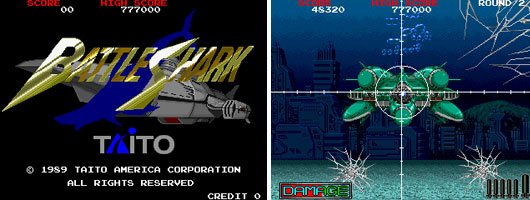
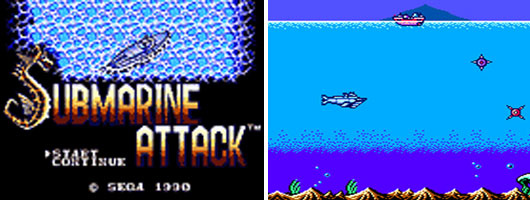
The designs in Battle Shark were all great, plenty of sci-fi subs battling it out over sunken cities. The only sticking point was the periscope. It was large and clumsy, it also felt dated. So the remaining classic sub games were all played with traiditonal joystick or game pad. The best of the early console adopters was Submarine Attack, released in 1990 by Sega for the Master System. It was a throwback to the classic arcade SHUMP and had a quiet following.
Over the next few years we would see all sorts of attack sub games for the Genesis, PC and Nintendo. Some console titles based on popular movies like the Hunt for Red October. One of the more original titles from recent years featured a mini sub that controlled like a combat fighter. The series was called Aquanox and it was set in the near-future so the tech was semi-believable. Plus it was a nice change of pace to be fighting in underwater cities rather than storming through the clouds or off in space.
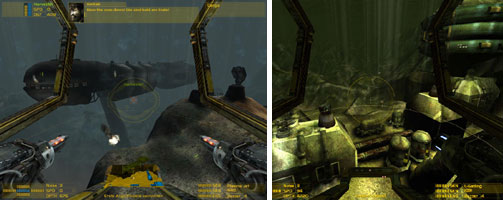
Of all the submarine SHUMPS ever made, my favorite by far has to be Irem's 1993 sleeper-hit In the Hunt aka Kaitei Daisensou. This game should look and feel very familiar to fans of the Metal Slug series because it was made by the same people.

Here is where I have to make an aside as to what makes In the Hunt and Metal Slug such a classic. It goes back to 1990, before the Irem and SNK designers joined forces and founded Nazca to develop the Metal Slug series. Most SHUMP developers are looking for a hook, a gimmick to make their game memorable. It's hard to come up with something memorable when Japan cranks out so many SHUMPS year after year. In some cases it is the design of the ship and enemies that stick with fans. The large grotesque monsters and falcon-like hero ship featured in R-Type helped put Irem on the map. Other developers rely on cartoony, anime-inspired designs with soft bubbly graphics like Cotton by Success.
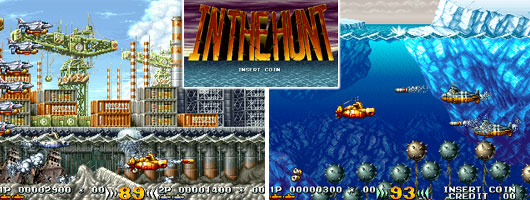
The people at Irem had been experimenting with a fusion of hyper-realistic designs and cartoon-like animation. The "style" that they were working on began to gel in the early 90's. Air Duel was a SHUMP that featured traditional air combat with hundreds of enemies and gigantic bosses, what set the visuals apart was the highly-detailed graphics on every plane and even in the backgrounds. The attention to detail was nothing short of maddening. For the next game they took this level of detail and then threw it in a blender with an artistic style that can only be called genius.

In the Hunt was the first title that Irem made featuring the fantastic, over-the-top vehicles and levels that eventually made Metal Slug so great. All of the obscene detail was in the game, every billboard, car, truck, railroad tie and sewer could be counted individually. On some levels if you looked closely you could even make out pedestrians running for their lives, they could not have been more than a few pixels in height! This unique style of presentation, superb animation combined with the classic submarine SHUMP formula and fantastic bosses made In the Hunt the best sub game ever made. Fans would clamor for a sequel but Irem had other plans.
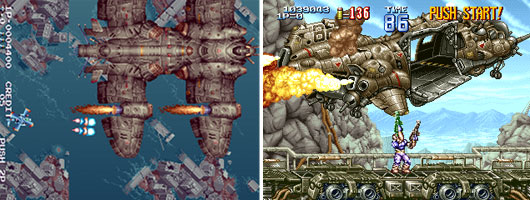
They took the stylized world featured in Air Duel and In the Hunt and applied them to a side-scrolling run and gun game in 94. The game is better known as Gun Force II / Geo Storm. While the designers still hadn't made the main characters completely cartoony, nobody can deny that the template for Metal Slug had been created between those two titles.
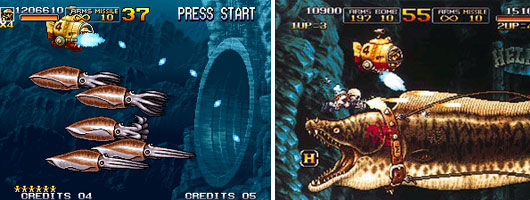
I am not a super fan of Metal Slug but I do like the designs. My favorite Metal Slug level takes place in Metal Slug 3 because it is the only time we are introduced to the Metal Sub, a nod to In the Hunt. What you might not notice is that the Metal Sub and scale of Metal Slug is much smaller than that of In the Hunt. The sprites featured in both games are relatively the same size, however proportionally they are different. The sub in In the Hunt is about five times bigger than the Metal Sub. It would be great if the next Metal Slug game could begin incorporating more scale in their series so that if a player jumped into a larger tank or a larger plane then the camera would pan back and allow us to see more of the world like In the Hunt. Of course even if the camera pans back you would still keep the same level of detail that Nazca is famous for.
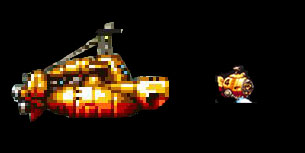
But that is just me thinking out loud again. Making a sprite-based game is a lost art and it seems that nobody has the dedication to keep the format alive. If Nazca wanted to have a complete meltdown then they would take my advice and feature a scalable world with infinite detail. They wouldn't get far before running out of time and money, but damn would it be a pretty game.

Let's end this aside and finish with In the Hunt is the best submarine SHUMP ever made. I hope that you have played it and if not go track down a copy online or in the arcade. You won't be sorry! If you think my blog on underwater-based videogames is over then you don't know me very well! Tune in tomorrow for the final part of this series.

As always if you would like to sponsor me please visit my Patreon page and consider donating each month, even as little as $1 would help make better blogs and even podcasts!
follow the Street Writer on Patreon!

Monday, May 23, 2016

The Abridged History of the Brawler, part 23


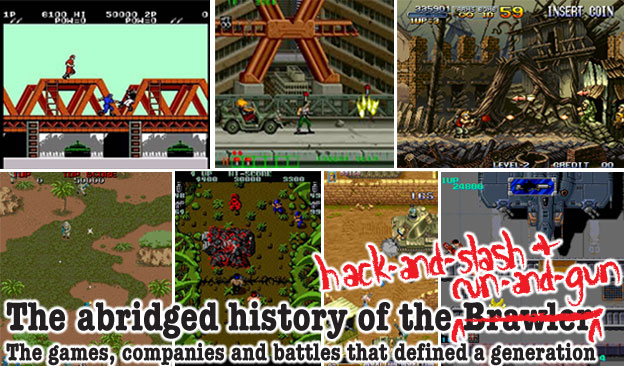
The mechanics of the brawler had been a part of the gaming history at least a decade before Double Dragon. Before arcade players could fight wave after wave of opponents with their bare hands they had to defeat wave after wave of aliens in a spaceships in titles like Space Invaders (Taito, 1978) and Galaxian (Namco, 1979). When those ships were replaced with humans, usually made up of a few pixels, the genre began to evolve. Starting with Kung-Fu master the "Beat-em-Up" was the earliest of the Brawler formats. A year later the "Run-and-Gun" and "Hack-and-Slash" formats were born. Really the only difference between the gameplay was that fists were usually replaced with either guns or swords. In some games players could use fists, guns and swords to combat opponents. What I would like to do in this series is highlight how the graphics, gameplay and genres were constantly evolving. How these titles borrowed elements from each other, explored different formats, visual styles and mechanics The first titles I would like to mention were among Konami's earliest arcade hits.


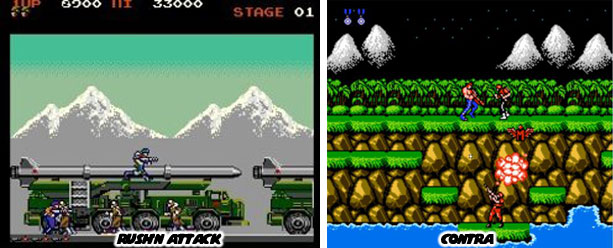
Largely forgotten by most arcade gamers, Rush'n Attack was the 1985 title that really established the side-scrolling run-and-gun action for Konami. In the game a special-forces agent could fight with his bare hands and take weapons from defeated opponents. From flame throwers to laser rifles, each weapon had its own advantage and ammo supply. This game laid the foundation for a more popular title and one which has received countless makeovers since its debut.


Contra became famous for the Konami code (up, up, down, down, left, right, left right, B, A) which allowed gamers to have scores of lives on the home console version of the game. The 1987 arcade gem featured two-player action which had improved on the Rush 'n Attack formula. Players could jump up or down on platforms and shoot in 8 directions now. In portions of the game players could even advance in a behind-the-back POV. The diversity of weapons and nonstop action made the title very popular in the arcades and at home.


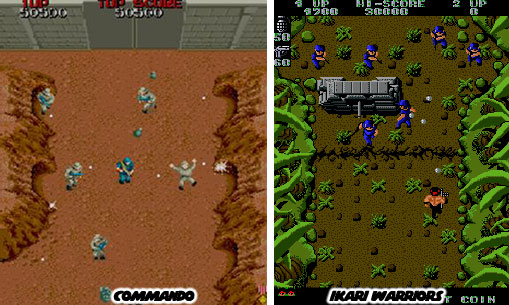
Before Contra had taken off in popularity the run-and-gun had been experimenting with different camera points of view. One of the earliest titles was Commando by Capcom. This 1985 title was set in an overhead perspective. For many developers this approach made sense. The formula had been used with great success previously. The only thing developers had to do was replace the spaceship with a soldier and space with a battlefield for them to advance on. Players could move around the screen in several directions and shoot at opponents but the screen mostly advanced up.


In 1986, before they developed their own arcade platform, or became heavily invested in fighting games, SNK had released the Ikari Warriors. The game allowed two players to control the mercenaries Ralf and Clark as they made their way through some unknown jungle. The game introduced a joystick with an octagonal handle that could be rotated to shoot in 8 different directions. With commando players could shoot forward and to the sides but not behind them. Ikari Warriors proved popular and like Contra several sequels were made. Today most players are familiar with the Ikari Warriors thanks to the King of Fighters series.


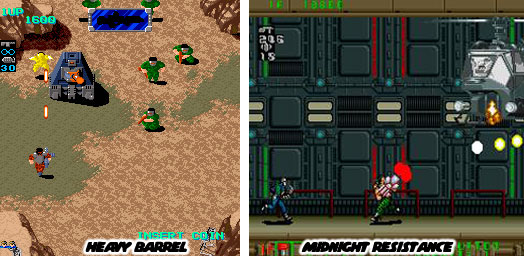
Through the 80’s most of the studios would try to see which format worked best for the run-n-gun shooter. Data East tried a variation of the overhead shooter first with Heavy Barrel in 1987. The game also made use of the octagonal handled joystick. The “Heavy Barrel” itself was a super rifle capable of mowing down the strongest opponents. It was a precursor to the BFG 9000 featured in Doom. Players had to piece it together by locating keys from fallen soldiers and corresponding chests scattered throughout the levels. My older brother had played the game so many times he had the locations of all the keys known by heart. He could speed run through the game before that concept was even invented.


A couple of years later Data East released a sequel. The 1989 game Midnight Resistance was presented in a side-scrolling format, similar to Contra. It kept the octagonal handle on the joystick and allowed players to assemble the mega-weapon from the original game as well. Little by little the side-scrolling format began to shift away from the overhead view. The genre seemed to work better for run-and-gun as well as beat-em-up brawling.


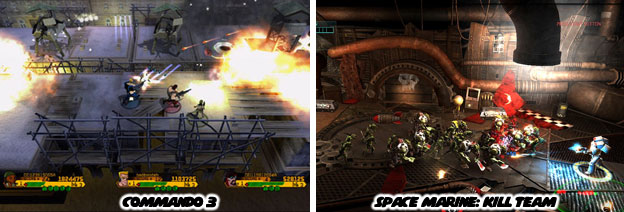
In recent years several major and independent studios had been using the overhead camera to create remake or classic-inspired run-and-gun games. Capcom found great success updating the graphics by preserving the classic gameplay in Bionic Commando for Xbox Live and they Playstation Network. They also released Commando 3: Wolf of the Battlefield for the downloadable services. Developed by Backbone Entertainment in 2008 the game actually borrowed the full name from the original 1985 arcade hit. The game preserved many of the classic run-and-gun mechanics over improved 3D visuals. Unlike the beat-em-up brawler which mostly suffered the migration to 3D the overhead shooting titles worked well with newer technologies.


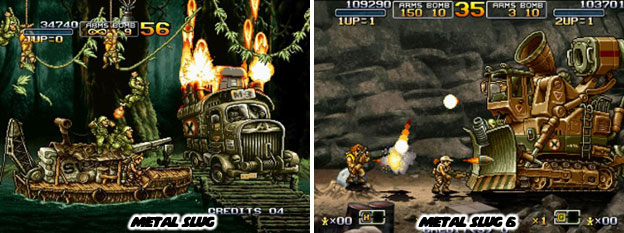
By using a fixed camera perspective several developers were able to create new gaming experiences with a moderate budget and release them across several platforms. Space Marine: Kill Team, released by THQ in 2011 showed that the gameplay could still be as entertaining as it was 26 years ago while the dedicated Space Marine console game used a third-person perspective and was designed for a more modern experience. The side scrolling format would still remain popular for many run-and-gun titles and the best of these would be the Metal Slug series, developed by Nazca and released on the SNK Neo Geo systems through the mid to late 1990's.


The Metal Slug games were a work of art, as difficult as the best side scrolling run-and-gun titles and more beloved than Contra, Ikari Warriors or any other long running title. The contributions of the game and team at Nazca to the run-and-gun genre were so profound that they deserved (and would get) a blog of their own someday… It turned out that side scrolling camera worked well for beat-em-up, run-and-gun and even hack-and-slash titles. We shall explore these transitional titles in the next blog. As always if you enjoyed this blog and would like to sponsor me please visit my Patreon page and consider donating each month, even as little as $1 would help make better blogs and even podcasts!
 follow the Street Writer on Patreon!