Showing posts with label thq. Show all posts

Wednesday, June 23, 2021

My favorite games of all time, the story of Carmageddon part 10...

For the Kickstarter backers there had been a growing sense of unease about the things they had been promised. Audiences knew that it might take weeks before they got their physical rewards. Some things had to be ordered from a local business, or from China where they would be manufactured, and shipped months later. Whether it was a survival kit, a card game, tee shirt, or other ephemera. These weeks turned into months, eventually stretched into years. Patrons began leaving queries on each Kickstarter update without getting too many responses from the studio. Of course some electronic rewards were available right away. People could access the beta trial, they could turn in their codes for games from Steam. One of the nice surprises came in the form of a comic book for certain backers. Concept artist Daniel Tejnicky had originally done a series of fan comics years ago. He was contacted by the studio to produce the art on an official comic. It was scripted by Neil (Nobby) Barnden. It filled in a lot of the back story for the new tournament, and helped flesh out the world of Carmageddon. Many of the details that audiences were noticing in the game levels were explained in the comics. The art was top-notch, and the comic was filled with gore, nudity, and crass humor. It was everything audiences could ask for. Unfortunately, the comic was not what thousands of sponsors had paid for.

A handful of concerned sponsors turned into dozens upon dozens calling out the studio with every Kickstarter post. Many had not gotten the physical rewards they had paid for. They were looking to get their money back, and many complained to both Kickstarter, and Stainless about it. It got to the point where Nobby had to post an update, and say they were going to look into the delays, and apologized for not being more proactive with physical rewards. The studio was running on a razor-thin budget, and crew. All hands were cranking on getting Reincarnation finished, and out the door. What the studio needed was a full time person handling the PR, and following up with all the clients. They didn’t have anybody for that, and as such many queries were left unanswered. Stainless completely ignored the backers asking about the Linux, and Mac ports that were promised. People still went to the Kickstarter page almost a decade after the campaign ended to call out the studio. The lack of transparency only served to build distrust in the studio, and the Kickstarter process.

There were many things that were out of Stainless’ control. For example one of the tiers was to receive a 3D printed model of the classic Eagle, and the TEZ Eagle. That was the one I had signed up for. Some people, mostly in England, posted that they had received their model. They said when it arrived it was tiny, and brittle, like a dry cracker. Very few received one that wasn’t misshapen. It turned out that the company responsible for printing them went out of business. They dumped a bunch off at Stainless after their promised date, and then disappeared. I never received the ones that I had paid for. It seemed that people outside of the UK, or the EU were out of luck as well. Other reward packages had gotten out. My wife’s with a tee shirt, and post cards did arrive eventually. There was no 100% guarantee for any sponsor, and Kickstarter had a policy asking that clients reach out to the publisher first to remedy any complaints. I knew that Kickstarter campaigns could sometimes be a gamble. I’d rather have my cash go into guaranteeing a new game, if it meant I might not get my physical rewards. I was willing to bite the bullet, but I knew that thousands of backers did not have that luxury.

Stainless Games moved forward as if backers weren’t growing despondent. The studio launched a website in 2012; Carmageddon.com, which is now closed. They posted news, new builds, hosted a forum, and shared links to mod updates. They proceeded with their business as if there wasn’t a problem for backers. It was disheartening knowing that hundreds of long-time fans were getting nowhere with the company. While at the same time the game was earning a new audience. We may never know if the studio didn’t actually care, or because they were advised by their lawyers not to say anything about the crowd funding. The Kickstarter campaign ended in May 2012, and Carmageddon Reincarnation came out for Steam in May 2015. In May 2013 Bullfrog studios founder Les Edgar invested an additional $3.5 million into the game to help with console development. He was rewarded with a playable character Ed Lesgar driving the KVN Toucan, a play on the TVR Tuscan. It was an incredibly tight development cycle, from a very small team. The title was also a flop in the eyes of critics, and audiences. Despite all of the advances in technology, and a return to form it seemed like too little, too late for the franchise. The studio redoubled their efforts, and released a version for the Xbox One, and Playstation 4 in July 2016. This version was a free update for PC’s called Carmageddon Max Damage. It added approximately 40% more content to Reincarnation. It too was snubbed by the gaming community. It seemed that they had moved on.

The studio seemed undeterred from the cold reception. They did not want to waste all of the work they had poured into rebuilding the franchise. There were literally thousands of assets that could be used to create new games on other platforms. One of those was Carmageddon Crashers, a mobile game that came out in August 2017. The mobile game featured the rides from Max Damage, with simple controls, and new gameplay. Instead of an open world game the title had players going head-to-head in drag races. This was not the type of drag racing where cars were side by side, the cars were literally heading at each other. What else could you expect from the franchise? The graphics were brilliant, with lots of details, cars to unlock, and upgrade. There was tremendous replay value here. Like many mobile games, it was the perfect way to spend time while waiting in a queue. The one thing Stainless did not say was when there would be another sequel. Things were quiet for about a year when THQ Nordic announced that they had acquired the rights to Carmageddon from Stainless in 2018. That news came to a shock for many in the community. They knew how hard the company had fought to build a franchise, lose it, get it back, only to have to see it go again.

Kickstarter backer Mikko Rasa summed up the theory for Stainless ghosting patrons, and then selling the IP. “I still suspect that the name change from Reincarnation from Max Damage was done so that somewhere down the line they can just drop the promises of delivering physical rewards and ports. After all, those were promised for Reincarnation, which at some point will be obsolete and no longer supported. Max Damage is a different game and no such promises have been made for it.” I’m not sure if there is any legal standing for Mikko’s assumptions. If THQ is on the hook for any broken promises, or what else might happen in the future because of the sale.

I did remember hearing something about the success of the original game, and how Stainless never hit the big time. The first Carmageddon sold about two million copies. Which was not bad for a developer that nobody had ever heard of. We did get the award-winning Splat Pack, and Carmageddon II, both of which also sold well. The studio was nebulous about what happened when they lost the rights. Whether they were contractual, legal, or other issues, it turned out that nobody on the team struck it rich. That was a damn shame. All of the bad press following Reincarnation, plus never getting my pledge rewards left me cold. I steered clear of the series for five years. Then on a whim I picked up Max Damage for the PS4. You couldn't blame me. Four years of dealing with Donald Trump, and an ongoing pandemic brought me to the brink... What I saw gave me a change of heart.

I remember reading things about how difficult the cars were to control, how crap the graphics were, how the physics were broken, how much the music sucked. Some even said this was nothing more than a prettier version of TDR 2000. After I actually sat down, and played through it I’m not sure what those people were griping about. Carmageddon Max Damage was so much better than they gave it credit for. I’m going to give my impressions on it in the next blog. If you would like to sponsor me please visit my Patreon page and consider donating each month, even as little as $1 would help make better blogs and even podcasts!

follow the Street Writer on Patreon!

Monday, May 23, 2016

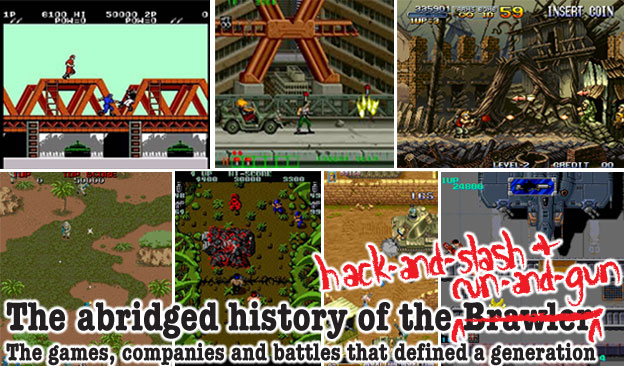
The Abridged History of the Brawler, part 23


The mechanics of the brawler had been a part of the gaming history at least a decade before Double Dragon. Before arcade players could fight wave after wave of opponents with their bare hands they had to defeat wave after wave of aliens in a spaceships in titles like Space Invaders (Taito, 1978) and Galaxian (Namco, 1979). When those ships were replaced with humans, usually made up of a few pixels, the genre began to evolve. Starting with Kung-Fu master the "Beat-em-Up" was the earliest of the Brawler formats. A year later the "Run-and-Gun" and "Hack-and-Slash" formats were born. Really the only difference between the gameplay was that fists were usually replaced with either guns or swords. In some games players could use fists, guns and swords to combat opponents. What I would like to do in this series is highlight how the graphics, gameplay and genres were constantly evolving. How these titles borrowed elements from each other, explored different formats, visual styles and mechanics The first titles I would like to mention were among Konami's earliest arcade hits.


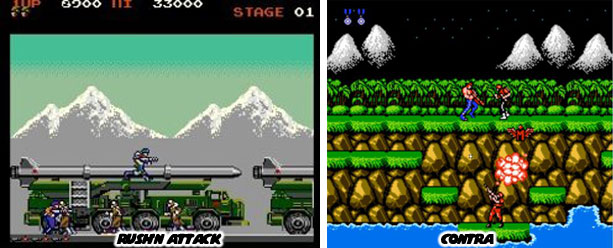
Largely forgotten by most arcade gamers, Rush'n Attack was the 1985 title that really established the side-scrolling run-and-gun action for Konami. In the game a special-forces agent could fight with his bare hands and take weapons from defeated opponents. From flame throwers to laser rifles, each weapon had its own advantage and ammo supply. This game laid the foundation for a more popular title and one which has received countless makeovers since its debut.


Contra became famous for the Konami code (up, up, down, down, left, right, left right, B, A) which allowed gamers to have scores of lives on the home console version of the game. The 1987 arcade gem featured two-player action which had improved on the Rush 'n Attack formula. Players could jump up or down on platforms and shoot in 8 directions now. In portions of the game players could even advance in a behind-the-back POV. The diversity of weapons and nonstop action made the title very popular in the arcades and at home.


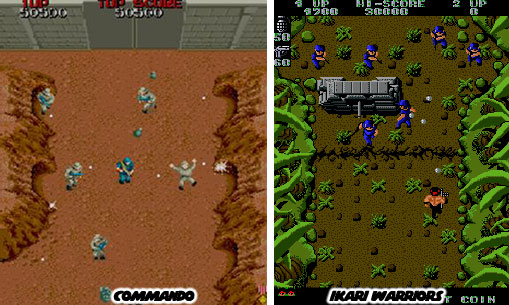
Before Contra had taken off in popularity the run-and-gun had been experimenting with different camera points of view. One of the earliest titles was Commando by Capcom. This 1985 title was set in an overhead perspective. For many developers this approach made sense. The formula had been used with great success previously. The only thing developers had to do was replace the spaceship with a soldier and space with a battlefield for them to advance on. Players could move around the screen in several directions and shoot at opponents but the screen mostly advanced up.


In 1986, before they developed their own arcade platform, or became heavily invested in fighting games, SNK had released the Ikari Warriors. The game allowed two players to control the mercenaries Ralf and Clark as they made their way through some unknown jungle. The game introduced a joystick with an octagonal handle that could be rotated to shoot in 8 different directions. With commando players could shoot forward and to the sides but not behind them. Ikari Warriors proved popular and like Contra several sequels were made. Today most players are familiar with the Ikari Warriors thanks to the King of Fighters series.


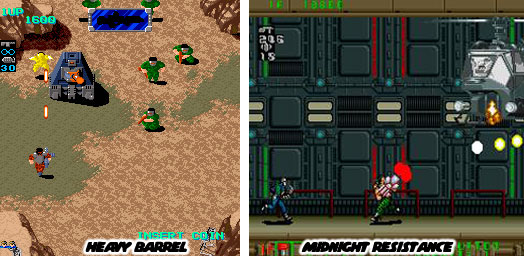
Through the 80’s most of the studios would try to see which format worked best for the run-n-gun shooter. Data East tried a variation of the overhead shooter first with Heavy Barrel in 1987. The game also made use of the octagonal handled joystick. The “Heavy Barrel” itself was a super rifle capable of mowing down the strongest opponents. It was a precursor to the BFG 9000 featured in Doom. Players had to piece it together by locating keys from fallen soldiers and corresponding chests scattered throughout the levels. My older brother had played the game so many times he had the locations of all the keys known by heart. He could speed run through the game before that concept was even invented.


A couple of years later Data East released a sequel. The 1989 game Midnight Resistance was presented in a side-scrolling format, similar to Contra. It kept the octagonal handle on the joystick and allowed players to assemble the mega-weapon from the original game as well. Little by little the side-scrolling format began to shift away from the overhead view. The genre seemed to work better for run-and-gun as well as beat-em-up brawling.


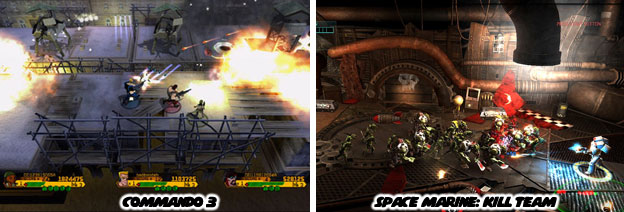
In recent years several major and independent studios had been using the overhead camera to create remake or classic-inspired run-and-gun games. Capcom found great success updating the graphics by preserving the classic gameplay in Bionic Commando for Xbox Live and they Playstation Network. They also released Commando 3: Wolf of the Battlefield for the downloadable services. Developed by Backbone Entertainment in 2008 the game actually borrowed the full name from the original 1985 arcade hit. The game preserved many of the classic run-and-gun mechanics over improved 3D visuals. Unlike the beat-em-up brawler which mostly suffered the migration to 3D the overhead shooting titles worked well with newer technologies.


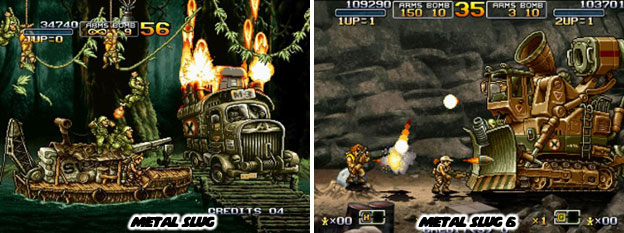
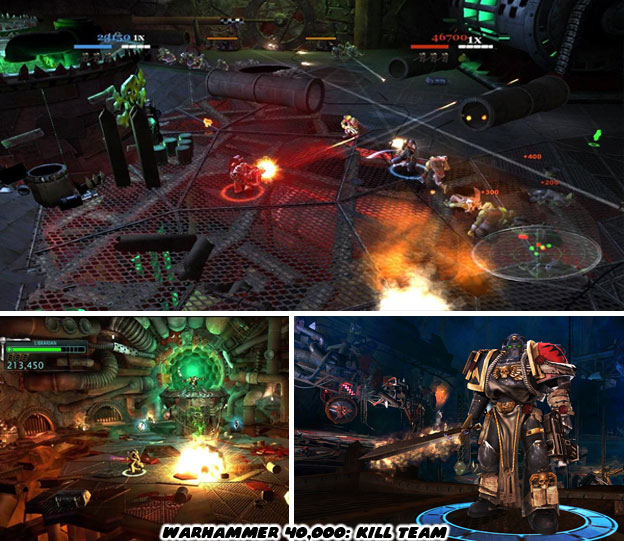
By using a fixed camera perspective several developers were able to create new gaming experiences with a moderate budget and release them across several platforms. Space Marine: Kill Team, released by THQ in 2011 showed that the gameplay could still be as entertaining as it was 26 years ago while the dedicated Space Marine console game used a third-person perspective and was designed for a more modern experience. The side scrolling format would still remain popular for many run-and-gun titles and the best of these would be the Metal Slug series, developed by Nazca and released on the SNK Neo Geo systems through the mid to late 1990's.


The Metal Slug games were a work of art, as difficult as the best side scrolling run-and-gun titles and more beloved than Contra, Ikari Warriors or any other long running title. The contributions of the game and team at Nazca to the run-and-gun genre were so profound that they deserved (and would get) a blog of their own someday… It turned out that side scrolling camera worked well for beat-em-up, run-and-gun and even hack-and-slash titles. We shall explore these transitional titles in the next blog. As always if you enjoyed this blog and would like to sponsor me please visit my Patreon page and consider donating each month, even as little as $1 would help make better blogs and even podcasts!
 follow the Street Writer on Patreon!

Saturday, February 13, 2016

Building a gaming legacy, the Games Workshop series, part 6...

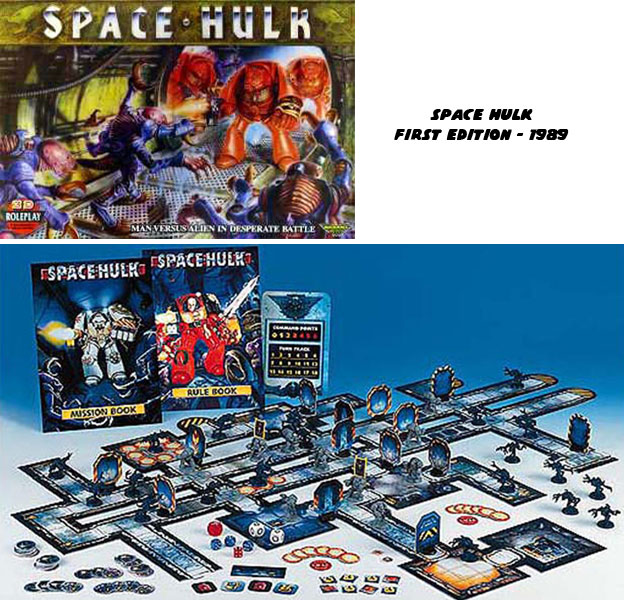
Once upon a time Games Workshop used to support original, stand-alone games. These titles often expanded the canon of the established Warhammer Fantasy and Warhammer 40,000 systems. In the previous blog I mentioned that the company created Adeptus Titanicus out of necessity when Battletech had become all the rage in the tabletop gaming community. In doing so they made the 40K universe much more interesting with the use of robotic Titans and allowed gamers to experience the awesome power of walking battleships. This system ended up being expanded and created the 6mm scale and Epic Space Marine rules which allowed players to deploy entire legions in battle. One of the more popular and even longer-lived systems actually debuted just a year after Adeptus Tianicus. In 1989 GW released Space Hulk. A boxed game set aboard an abandoned space ship in the 40K universe.


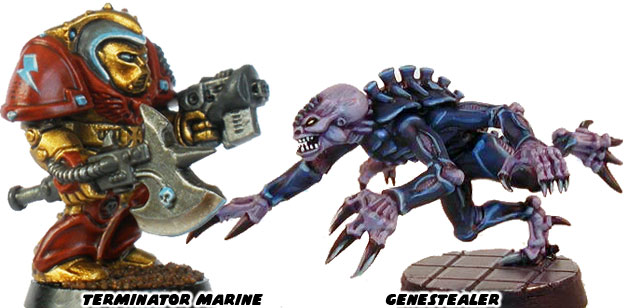
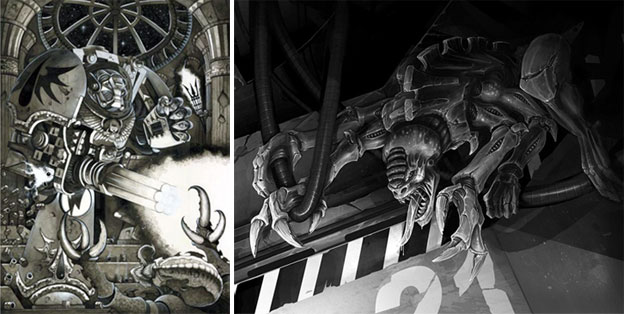
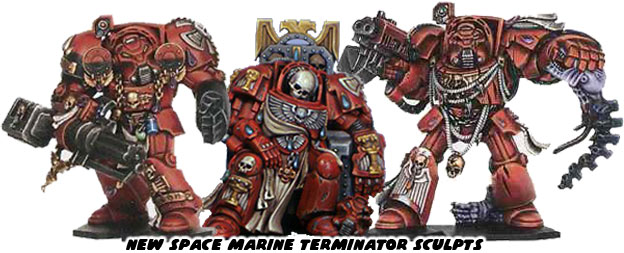
The game was unique for several reasons, but the most important were the introductions of the Terminator Armor Space Marines and the alien enemies known as Genestealers. An entirely new chapter of 40K lore was written in Space Hulk. It was explained that the First Company of each Space Marine chapter consisted of the most experienced and capable warriors from each unit. They were the ones tasked with the most dangerous missions and as such had access to the most powerful weapons and armor. The Terminator Armor was created for the most inhospitable environments. It was bigger and stronger than the standard Power Armor and treated with the reverence of a holy relic. These suits of armor were worn in battle but had gained a reputation for being used while being deployed in a Space Hulk. So what is a Space Hulk? In the 40K universe spaceships are able to cross the galaxy by using the Warp. It is like crossing through a wormhole or tear in space that unites systems that are countless light years apart. The ships have to have powerful reactors in order to escape the gravity well created by the Warp, as well as not to be torn apart by the forces within the Warp which bend time and space as well.


Anyhow, some ships are damaged in the process or have engines that break down and cause the ships to be stuck in the Warp. They will pop in and out of the universe from time to time before being pulled back into the Warp. Some of these ships have weapons and resources that are attractive to scavengers. Aliens and humans alike will risk everything to board one of these vessels. After thousands of years of being adrift in the Warp some of the ships are fused together and get stuck in asteroids and other debris that makes its way into the Warp. These enormous floating piles of debris are often bigger than cities and may even reach the size of a state or nation. They are dubbed Space Hulks and are an ominous sign when they appear near inhabited planets. The reason they are bad news is because within the Space Hulk there are often diseases or even alien species that may easily wipe out an inhabited planet. Those foolish enough to try to salvage the Space Hulks, explore the wreckage of the ships or asteroids they are tied to don't always make it back to port with their bounty. Orks sometimes take over a Space Hulk, put engines on it and raid outposts. This was the plot of the THQ multi-player video game Warhammer 40,000 Kill Team.


Just like the video game there is something far more sinister than Orks lying in the bowels of the oldest and most traveled Space Hulks. The Space Hulks can be lost for countless generations in the Warp. They may turn up in yet uncharted parts of the galaxy and when that happens an alien race may board them and then hibernate, waiting for a foolish explorer to wake them from their slumber. This is the case with the Genestealers. They are an alien shock troop that is the first wave of a species that would later be known as the Tyranid. The Genestealer was modeled after the H.R. Geiger Alien. They are huge, covered in a carapace stronger than steel, quite strong and can even survive in the vacuum of space. Traditional Space Marine armor and weapons are not powerful enough to handle wave after wave of the Genestealers. This is why the Terminators are called in whenever a Space Hulk appears near an Empire-controlled portion of the cosmos.


The Terminators have a set of missions that they can complete in the original boxed game. Sometimes they have to recover a relic from a Space Marine chapter, sometimes they have to find a piece of crucial data from a system computer. Often they have to ensure that there are no Genestealers on board and try to poison the life support systems if they are still functioning so that they can eradicate the threat before the ship slips back into the Warp. The game allows players to explore tight corridors and engage in firefights with scores of Genestealers. Anyone that has seen the film Aliens can remember how intense it is to fight wave after wave of alien with limited resources and in tight quarters. Space Hulk ramps up this concept tenfold and makes surviving each map all the more intense. Speaking of the maps, the original game also came with printed cardboard tiles and doors that could be assembled in any number of layouts. This ensured that the game would constantly keep evolving and offer a different experience each time a player started a campaign. The other thing these printed pieces did was help immerse the player into the game. Those with limited hobby experience didn't have to build or paint any terrain. Each piece was highly detailed, the tiles were painted by Games Workshop artists after all. The boards made it easy to imagine that the Terminators were battling for survival in the maze-like Space Hulk.


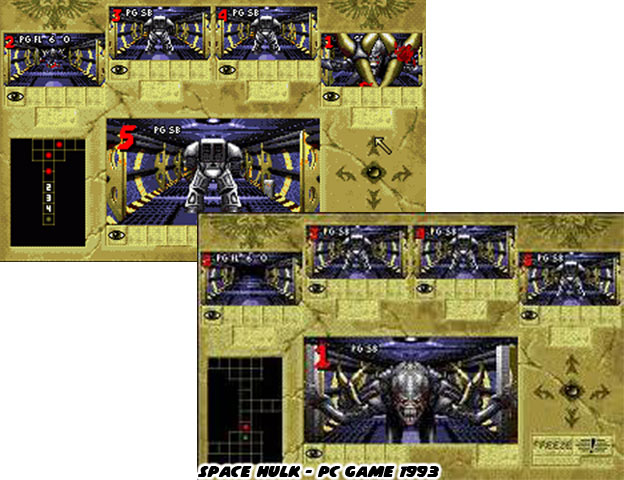
Space Hulk did such a great job at capturing even non traditional tabletop audiences that it was turned into a PC game by Electronic Arts in 1993. The PC game did a fantastic job of recreating the isolation and horror of each mission. Genestealers would lurk at every turn and you would find yourself saying a prayer to the machine spirit that your heavy bolter wouldn't jam during an intense firefight. In the science fiction genre it was a refreshing change of pace, it worked because of the liberally sprinkled horror elements as well. It was unlike anything the US and Japanese studios were producing. Best of all the PC game was getting people interested in the universe of 40K. Space Hulk, the tabletop and PC versions would receive expansions.


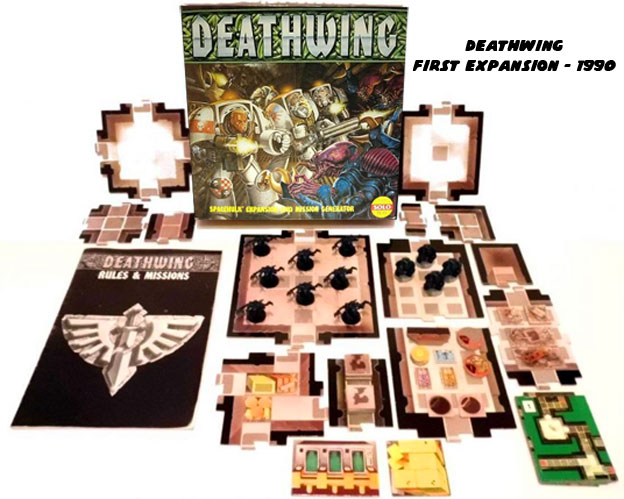
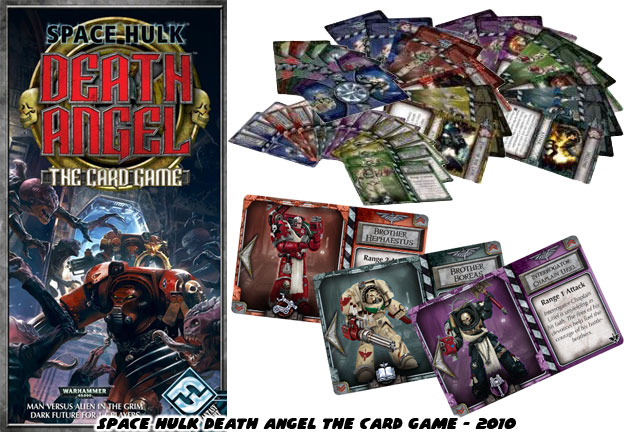
The Deathwing expansion came out in 1990. It would begin to flesh out the Tyranids as well as the other alien species that called the Space Hulk home. The games also helped shed some light on the Dark Angels and Blood Angel Space Marine Chapters. Two of the oldest and most tragic chapters from the earliest days of the Empire. The popularity and longevity of the game was apparent when Fantasy Flight Games released a CCG (collectible card game) based on Space Hulk. The new game called Death Angel came out almost 20 years after the original tabletop game. It instantly brought audiences up to speed on the elements that made the original game so memorable. Players had missions, could arm themselves with rare items or even hunt down opponents as Genestealers. The card game and the expansions that followed could be found in most book stores and even toy stores. This was one of the few Games Workshop systems that found a bit of mainstream success. The popularity of which would bring a few generations into the larger system of Warhammer 40,000.


Because of Space Hulk all new models and rules would be created for the Tyranids. Not only that the entire alien race would be fleshed out. Genestealers would only be one type of troop. There were small, spore-like Tyranids that acted like land mines, releasing toxins and poison quills to those that approached them. There were larger Tyranids, like the Carnifex that were the size of tanks and could peel them apart like a tin can with their massive claws. There were even Tyrnaid large enough to fight against Titans! Tyranids were becoming the alpha-predator in the 40K universe. They would eat and harvest the DNA of every species they came across. This caused the troop types to mutate and gain the best traits of a particular species. Some became bulky and strong thanks to Ork DNA. Some became powerful psychics because they had absorbed Eldar DNA. Because of this new threat the Space Marines would get a boost in new weapons and armor as well.


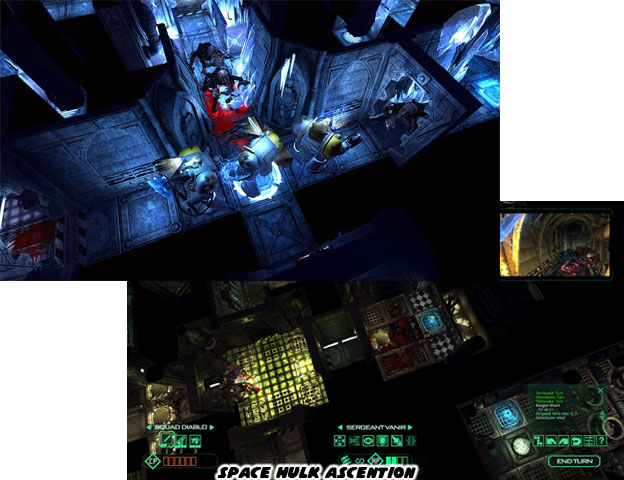
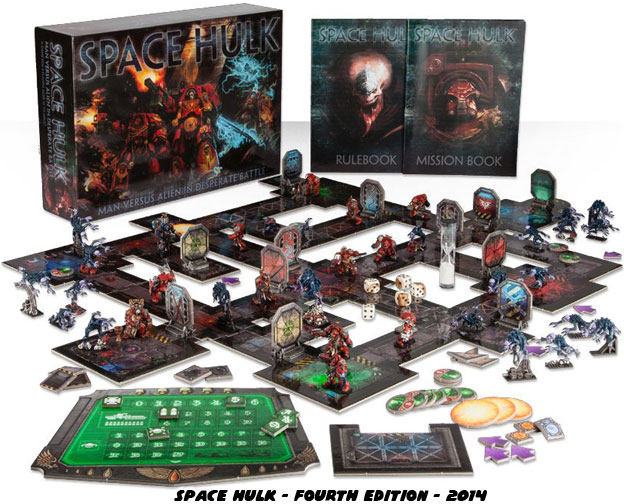
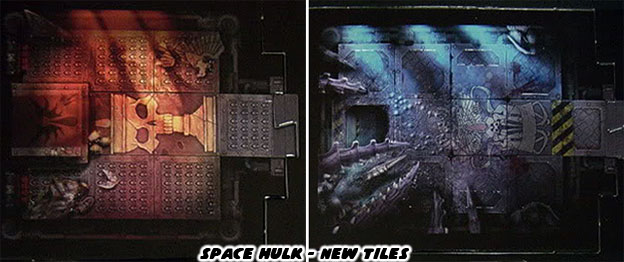
The love of the Space Hulk never died off. In 2013 the PC game was remade, called Space Hulk Ascension. It helped spark renewed interest in the universe. That same year Games Workshop would publish a third-generation of the game with all new rules, models and tiles. Games Workshop made sure to use the latest advances in publishing and released a superior product. The old illustrated cardstock tiles were replaced with thicker, higher quality embossed tiles that featured digital renderings. The printing on the tiles gave them the illusion of depth, light and even texture. One of the problems with the old cardstock tiles was that they were flat-edged, this did allow each tile to perfect align to the next but they often slid around on a table. The new tiles had jigsaw edges so that they could all interlock. The majority of the miniatures that Citadel created for the Games Workshop systems were metal, originally lead but then later on they went to pewter. The plastic miniatures that Citadel developed in the late '80s and early '90s were well done but lacked the same level of detail of metal miniatures. Citadel went with plastics for the self-contained systems, they were cheaper to produce and less prone to bending as a metal figure. The plastic models were used in boxed sets like Blood Bowl, Heroquest and Space Hulk.


The original Space Hulk featured printed cardstock tiles that allowed gamers to create their own mazes, scatter objectives and never have the same experience twice. The combination of plastic miniatures and printed cardstock tiles worked very well for the genre. Audiences didn't have to invest time or money in building elaborate sets to play in, although some of the more hardcore gamers did just that. In fact a few companies popped up featuring easy-to-assemble terrain, much of which was pre-painted or pre-printed so it complimented the Space Hulk rules. What Games Workshop did was create a bridge between the tabletop roleplay system of Warhammer 40K with more traditional board games. By limiting the movement to corridors and small open rooms the studio streamlined the rules on movement, ranged and melee attacks and line of site so that audiences could pick up the gameplay much faster than 40K. In the fantasy world GW did the same thing with Warhammer Quest, which took the characters and rules of Warhammer Fantasy Battle and made it an easy to pick up system with mazes that audiences could randomly build.


Space Hulk and the other boxed games from the studio, which I will highlight on future blogs, were gateway systems for the hobby and in some cases could even be found in large-scale toy stores. The plastics manufacturing process had improved greatly over the decades. When Space Hulk was relaunched the miniatures created for the game were amazing. The characters had individual dynamic poses, both the Terminators and Genestealers and an unparalleled level of detail. Even the relics being searched for got a makeover thanks to the Citadel modeling department.


The third and fourth editions of Space Hulk won several awards and the accolades of gamers and editors the world over. It gave Games Workshop the confidence to pursue other self-contained boxed sets, which was something they hadn't done in years. Before I go too far into the science fiction worlds that Games Workshop created I want to go back and explore the fantasy systems that helped put them on the map. You see if Space Hulk was a great introduction to tabletop role playing systems for sci-fi there was something even more successful for fantasy. The next blog will look at this system. As always if you enjoyed this blog and would like to sponsor me please visit my Patreon page and consider donating each month, even as little as $1 would help make better blogs and even podcasts!
 follow the Street Writer on Patreon!