Showing posts with label ikari warriors. Show all posts

Wednesday, April 18, 2018

The rise of Falke, or how military design works in fighting games...

The newest Street Fighter V character has just been announced. A former Shadowlaw / Shadaloo super soldier that goes by the name of Falke. She debuts on April 24, 2018 as part of Season 3. In this blog we're going to break down the character, her powers, inspiration and the military motif being used in the genre.
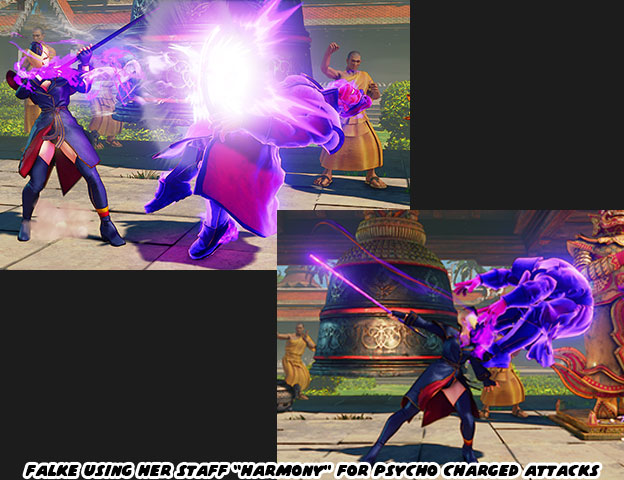

Falke has some very unique powers. As a former Shadowlaw soldier she was subject to experimentation and fight training. This gave her the ability to use "Psycho Power" the psychic energy that allows organization leader Vega / M. Bison / The Dictator to fly, teleport, and even shoot fireballs. Ed was also experimented on and uses his psycho energy to generate awesome punches and even psychic webs. Every major Shadowlaw character in the series uses psycho power a little bit differently. Falke actually channels her energy through a fighting staff which she nicknames Harmony. She can send projectiles of psycho energy through the air, as if they were bullets. She can also fill the staff with psycho energy and use it as a sword. This makes her game play style very unique in Street Fighter V. Her effective distance for strikes is increased over regular hand-to-hand fighters thanks to the staff and because of her psycho power she has the ability to shoot psychic projectiles at range.
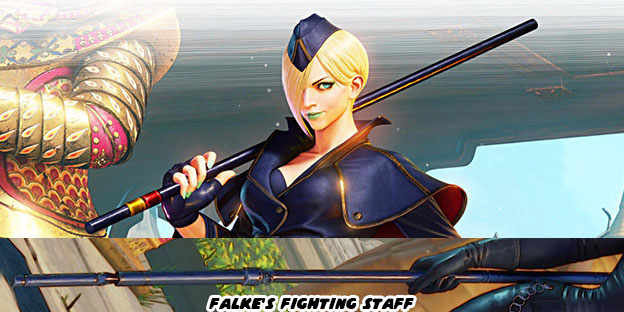

Falke's fighting staff seems to be made in sections and out of a unique composite material. It seems to be metal and not really flexible. If you look at it closely you can see where the staff is screwed together. Also when an alternate costume is selected the staff changes shape slightly as well. It looks collapsible now, almost like a walking stick. Also this variation of the staff has a muzzle diffuser,  these are the small holes that would normally be seen on the tip of a rifle. Perhaps this acts as a blast diffuser, a feature on some firearms that helps focus the energy of a bullet forward instead of out to the sides. In the case of Harmony the diffuser could focus psycho energy in a specific direction. Little details like this help reinforce the overall military look that the designers at Capcom were going for.  
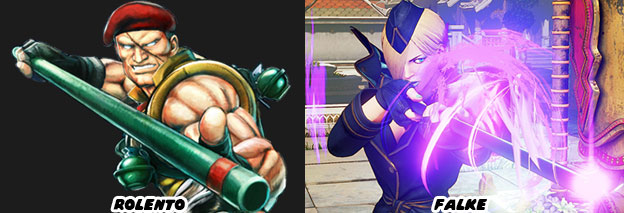

Of course the first thing that many people commented on when Falke was announced was how because she fought with a staff she seemed to be the new Rolento. Well let's talk a little bit about this. Using a staff or any other weapon in Street Fighter is not a new idea. In the original Street Fighter (1987) the ninja Geki had a claw and threw shuriken aka ninja stars. In England the fighter named Eagle used two fighting sticks. The name Falke is actually German for Falcon. I doubt she is related to Eagle because his name was a golf pun. The other fighter from the UK was named Birdie. But I digress... Maki from Final Fight 2, Street Figher Zero 3 fought with a tonfa. Ibuki from Street Fighter 3 (1997) also threw shuriken. Rolento returned in Street Fighter Zero 2 (1996) but he originally debuted in Final Fight (1989) as a boss for Mad Gear. He appeared a few more time in the series, always fighting with his staff and throwing grenades at opponents. These moves were adapted into Street Fighter. The first female to actually use a staff in the series was Nanase in Street Fighter EX 2 (1999). 
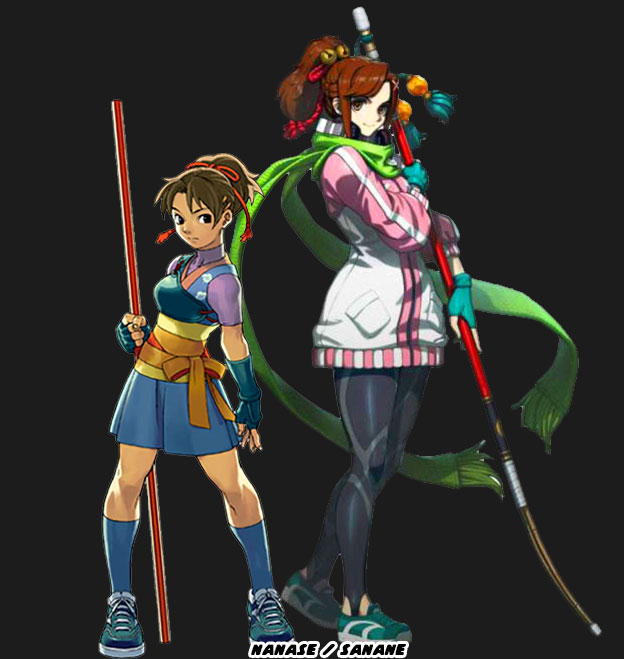

Nanase was the younger sister of Kairi and Hokuto, the two main characters in the story arc of the EX series. Nanase was being groomed to lead the Mizugami clan in the event that anything happened to her elder siblings. Of course in storytelling fashion they both disappeared and she was thrust into the spotlight. She had to track them down and prove her worth in the EX tournament. Because she was a kid it wouldn't have made sense for her to compete hand-to-hand against adults no matter how talented she was. This was why she was designed with a weapon in hand, a bo to be exact. It was a regular wooden bo, nothing special like Falke's staff. Nanase might have been half as big as Ryu but with the staff she had more range than he did and the ability to hit almost as hard. In the updated version of the EX story she is a little older, her memory of Hokuto is wiped but she remembers her fight training. Now going by the name Sanane, an anagram of Nanase. Falke did not move or fight like Nanase, or for that matter any other weapons-based character from the Street Fighter universe. 
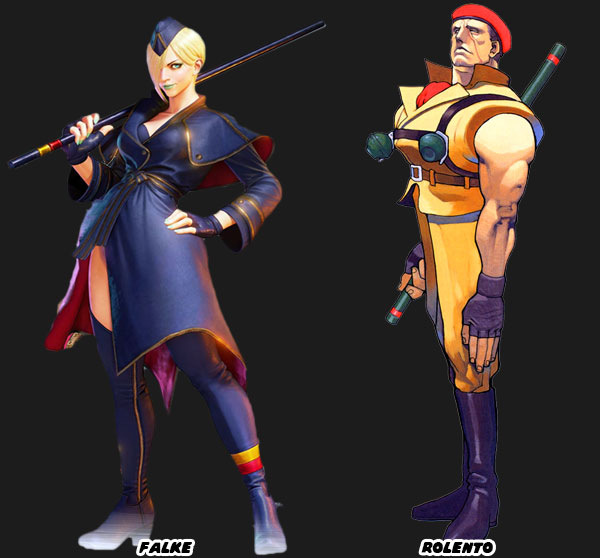

Falke focused her psycho energy through Harmony. She didn't really thrust with it like Nanase, or spin it quickly as with Rolento. It was an extension of herself rather than a weapon. The precision with which she used it was done in a very militaristic fashion. She squared Harmony with her shoulder as if it were a rifle when firing bolts of psycho energy. Without it I don't know how effective of a fighter she would be or if she could even control her psycho power. Ed on the other hand knew how to box, trained by former champ M. Bison / Boxer. He could also use his psycho energy in hand-to-hand combat. In canon fighters like Rolento and Nanase would not be at a loss without their staff. They still had training to fall back on. I wouldn't guess the same thing could be said of Falke. Like Rolento however her design worked in the series because it kept up the military aesthetic. Shadowlaw was made up of mostly soldiers. Looking at the cut of Ed and Falke's uniform you could tell they were not soldiers but officers. Shadowlaw, or Ex-Shadowlaw operatives wore armor and what appeared to be leather. They were fit for operations in the northern hemisphere, especially Eurasia. Rolento was not a member of Shadowlaw but instead a contractor. As a mercenary he did a lot of travelling. He wore khaki's and no armor, his uniform was suited for the tropic or desert climates. The color, cut and fabric of a costume did a lot of storytelling. It was something that every studio could take advantage of.
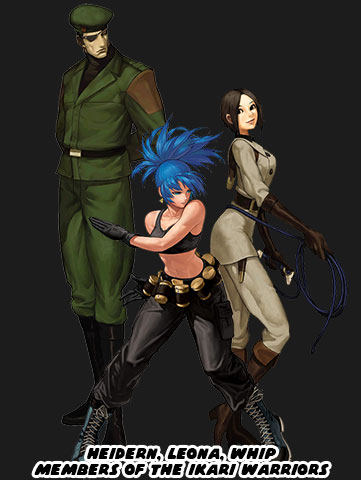

If you are working on a fighting game and want audiences to recognize a character as a serious fighter what do you do? Do you give them a facial scar and tattoos? Do you give them a flat nose and huge muscles? Or do you begin with the most obvious clue to audiences? The easiest thing you can do is put them in a costume. Look at some of the game characters through history and see which were the easiest to identify as a fighter. Those in military, or military-inspired costumes stood out. The best part for designers was that a military uniform could be given to a man or woman. Thanks to history we associated military training with martial ability. This was why characters like Heidern, Leona and Whip stood out in the King of Fighters series. We didn't need to know if they studied a particular form of fighting we just knew that they could fight. If they were members of a special forces team, which they were, then they weren't just good they were lethal. The Ikari Warriors were notorious in game canon as being the most skilled mercenaries operating abroad. They were able to topple regimes, steal secrets or just lay waste to an entire battalion. The two most famous Ikari Warriors, Ralf and Clark, made their debut in 1986. This was a year before the original Street Fighter was released.
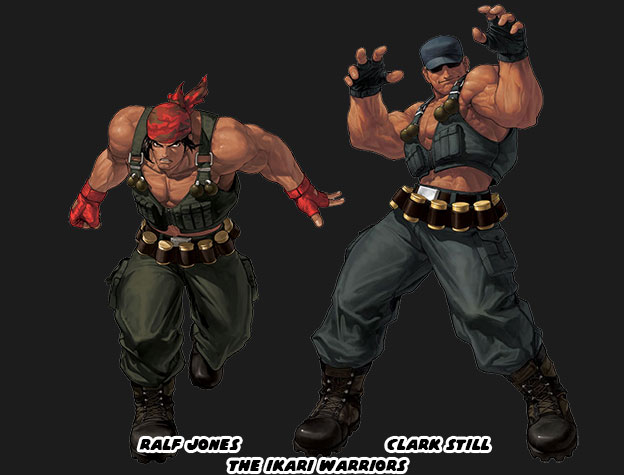

Some costumes, even military ones, can still be ambiguous. A person wearing a karate uniform might be a karateka, but they can also be a judo or jujitsu practitioner. That is why designers give them supporting details. Ken and Ryu for example had striking gloves so you could tell they were more likely karate fighters than judo grapplers. Ralf and Clark are obviously military fighters but what type? They don't wear stripes on their sleeves, or sleeves for that matter. We can tell that Rolento or Heidern are officers because of their full uniforms. Ralf and Clark are different, just look at their supporting details. They carry ammunition and explosives on their vest and belt. They look more like jungle mercenaries than servicemen. Based on their size we can tell that they are immensely strong. Since neither carries a weapon we can tell they are going to be strikers or grapplers in the King of Fighters. 
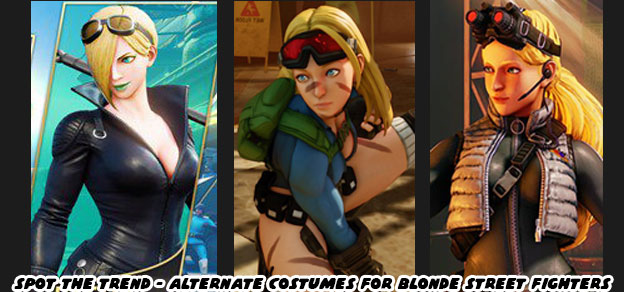

Something that was pointed out on Twitter this week was how somebody at Capcom has a certain fallback when designing alternate costumes. Specifically for blonde female characters. See if you can spot the costume detail they like to add. Aside from that Falke is an interesting addition to the Street Fighter lineup. She seems to be on par with Ed as far as introducing new game play mechanics and shifting the focus to a new generation of characters. Capcom has done a decent job of focusing on new female characters through Street Fighter IV and V. The focus on the story is particularly unique. Ed is the founder of Neo Shadowlaw, a group assembled of former or discarded Shadowlaw experiments. With Falke revealed as a new recruit audiences are eager to find out who the other characters shown in the story mode are. Also if this organization had anything to do with the Illuminati featured in Street Fighter III.
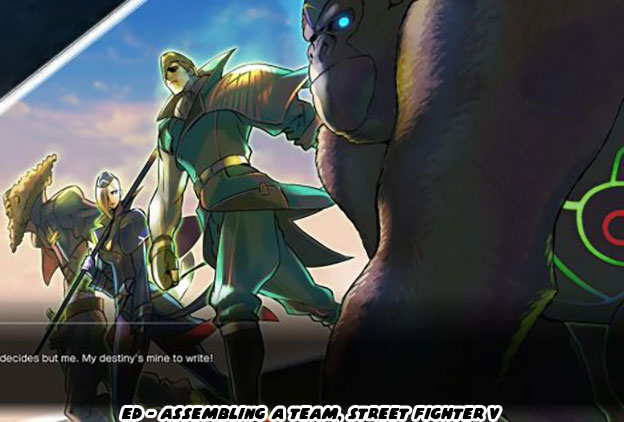

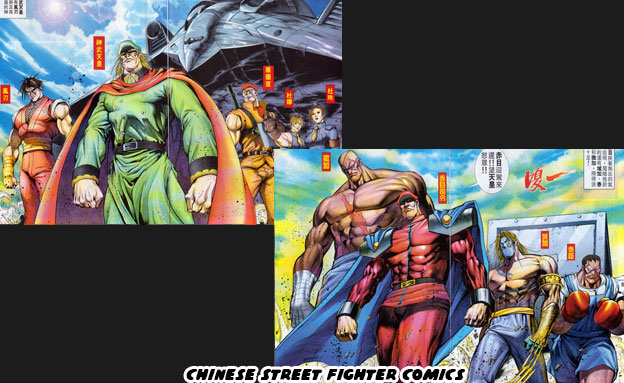
It seemed that Ed and Neo Shadowlaw would soon be confronting The Dictator and his Shadowlaw generals. This was a solid story push and something not entirely new to Street Fighter mythology. Many years ago in the manhua, or Chinese comics, of Street Fighter Zero there was a showdown between two factions fighting for control of Shadowlaw. We'll see how Falke and Ed figure into all of this. Of course the ramifications of any betrayals or sacrifices will ripple down to the rest of the universe.

So what do you think about Falke? Do you like her design? What do you think about her powers? Will you be playing as the character when she is released? Are you siding with Shadowlaw or Neo Shadowlaw in this update? I'd like to hear your take in the comments section. As always if you enjoyed this blog and would like to sponsor me please visit my Patreon page and consider donating each month, even as little as $1 would help make better blogs and even podcasts!
 follow the Street Writer on Patreon!

Thursday, October 12, 2017

Hiding the master in plain sight, the genius of SNK's character design... final part

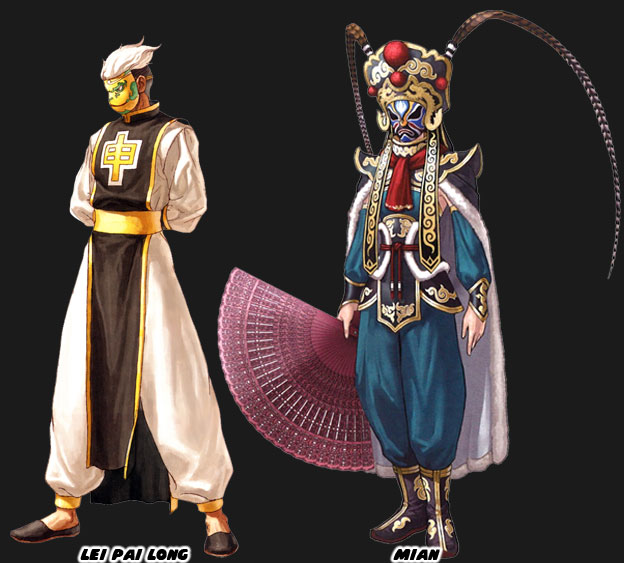
SNK had spent more than 25 years creating a library of amazing fighting game characters. The best ones were the results of talented artists and insightful creative decisions. To stand out from the rival studios they created fighting archetypes that were hidden in plain sight. Martial arts masters could wear street clothing, or in some cases trendy fashion and still work within the context of the game. This rule was not set in stone. Some of the early design choices were made because of what audiences expected from fighters. After all, how would the player be able to tell a karate fighter apart from a boxer if they both wore identical suits? Because of this some martial arts were represented by characters in classic costumes. Some boxers wore shorts and punching gloves. Some karate fighters wore gi's and black belts. China was considered the birthplace of modern martial arts. Just about every major studio, Capcom, Sega, Namco, Midway and SNK at one point or another created a kung-fu master wearing a traditional uniform. Some of these designs were actually quite memorable. In the Art of Fighting for example the character Lee Pai Long not only wore a classic costume, he also sported a monkey mask. This was the type of outfit an actor from the Chinese Opera would actually wear.


Lee was a mysterious figure, his actual face was known only by a few people in King of Fighters continuity. As memorable as the character was, he didn't work well enough to be used as often as some other fighters. The seeds however had been planted to include the traditional costumed fighter from time to time. Almost 25 years later the studio went back to the classics and introduced another masked Chinese character. Mian was not a representative of the Chinese team in the KOF series, she was instead a member invited by tournament organizer Antonov. The dancer and master of the Chinese art of mask changing, was breaking down stereotypes. Her Sichuanese Opera costume was traditionally worn by male actors and even the historic mask changing magic was performed almost exclusively by men. SNK had become more attuned to the Chinese consumer over the past few years. Chinese gaming had exploded in popularity the past decade and every major studio was trying to make headway into the Chinese market. SNK had even partnered with Shanda, one of the largest publishers, to get a KOF massively multiplayer online (MMO) game launched. They were paying closer attention to the growing markets than just about any other fighting game publisher had in the past few years. After facing a few financial crisis, a merger with Playmore and restructuring, SNK had to ensure that they made business savvy moves. This wasn't the case when they originally fleshed out the Chinese team or even Brazilian team in KOF '94.


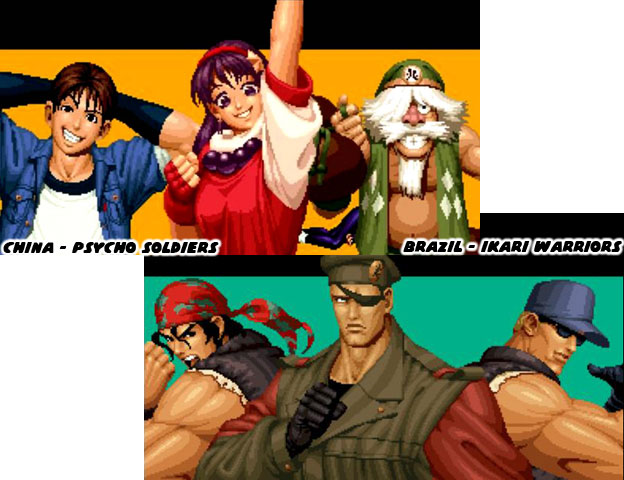
SNK wanted to create a sense of a global competition in the KOF series, the only problem was that they lacked familiar characters from each nation. To circumvent this they relied on characters from other games to act as representatives of a country. The Chinese team of Athena Asamiya and her partner Sie Kensou for example were pulled from the game Psycho Soldier. They were not necessarily fighters trained in a specific named form. The two relied instead on psychic attacks to supplement their martial arts training. The third Chinese representative, Chin Gentsai, was modeled after the "Drunken Master" a movie character named Beggar So played by Yuen Siu-tien. The three barely had a thread that connected them to China. How do you think that Chinese audiences reacted to the characters? The same thing could be observed with the Ikari Warriors, Ralf Jones and Clark Still. The two had appeared in an action shooter set in the jungle but it was not known if they, or team captain Heidern, were actually from Brazil. The three were mercenaries and didn't represent any school of Brazilian martial arts. More than 20 years later SNK had become more attuned to their audiences. The Japanese publishers (Capcom included) were surprised to learn how popular their games were in Central and South America. The Brazil Game Show for example had more than 300,000 attendees in 2017! Because of this the designers took a little more time in crafting new characters for the King of Fighters XIV. Nelson the boxer was from Brazil. I had mentioned previously in this series, but he was joined by two new Brazilians as well.


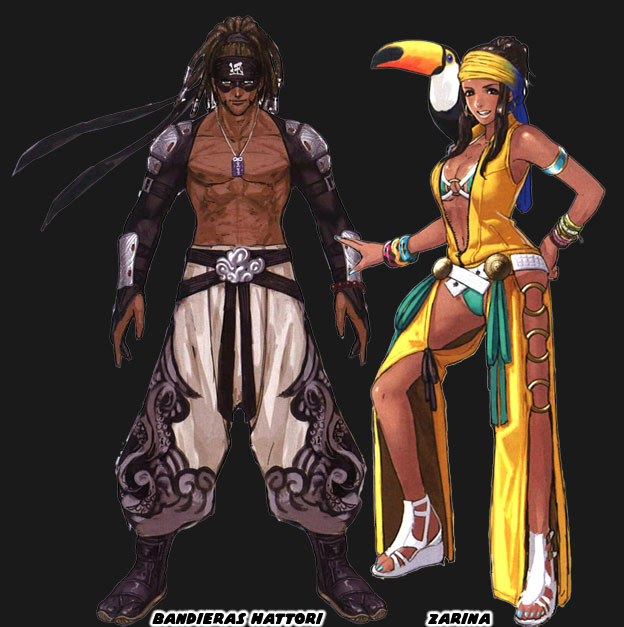
The masked Bandieras Hattori was obsessed with ninjitsu. He idolized Andy Bogard and Mai Shiranui and wanted to become a full-fledged ninja. His ultimate goal was teaching his own form of ninjitsu in Japan. His dark skin, armor and light pants, with sumi-e waves painted on the cuffs created some incredible contrast. His mask and pulled up braided hair made him appear unlike any other modern fighting game character. The character could be seen as an homage (or even parody depending on your perspective) of how passionate South Americans were about Japanese culture. The third new character was Zarina. She sported the colors of the Brazilian flag and most assumed that she would be a capoeirista. Despite her ginga, or dancing stance, she was actually a samba dancer that happened to be a good fighter. It was strange that the new developers would focus on her dance more than the martial arts. Capoeira had been a part of the SNK legacy since Street Smart back in 1989. Richard Meyer and Bob Wilson were two of the more famous Capoeira stars from the Fatal Fury series. I had talked about the origins of Capoeira in fighting games on a previous blog. I don’t understand why the newer generation of SNK developers would have missed this connection to their actual legacy. To be fair I think that many of the Street Fighter IV and V designs also failed to live up to the legacy designs. But I digress. The mix of new Brazilians was a unique choice, not quite the masters hidden in plain sight but perhaps something the studio could build on and learn from. Just like Heavy D was a change in direction for boxers, I’m certain that Bandeiras, Zarina and Nelson were the start of a new direction as well.


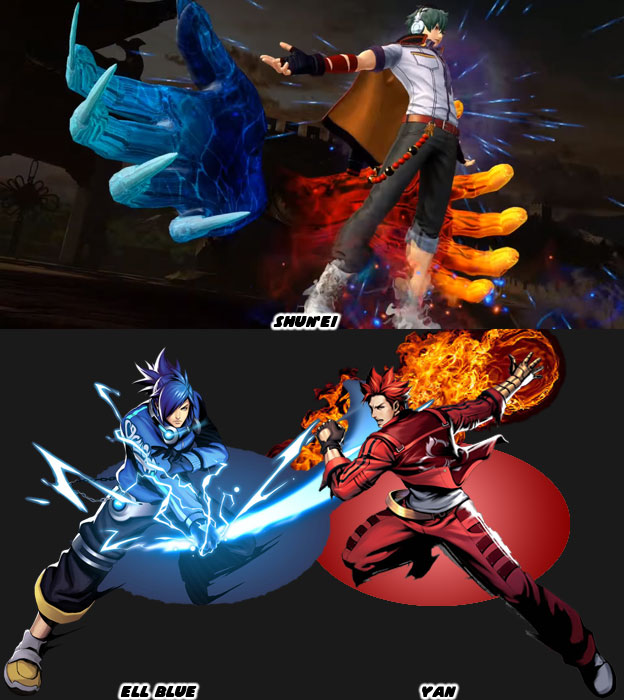
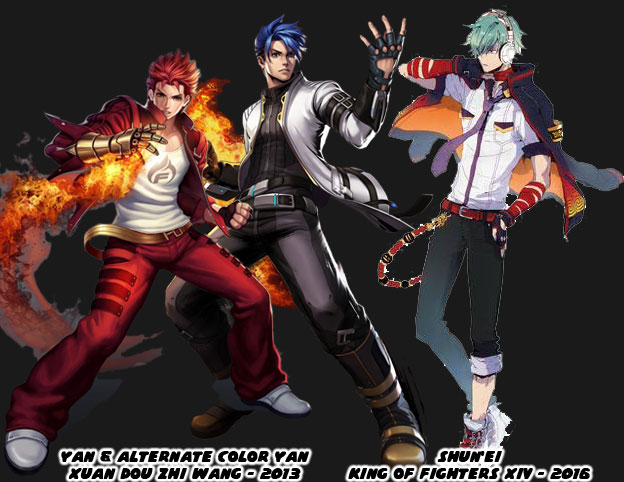
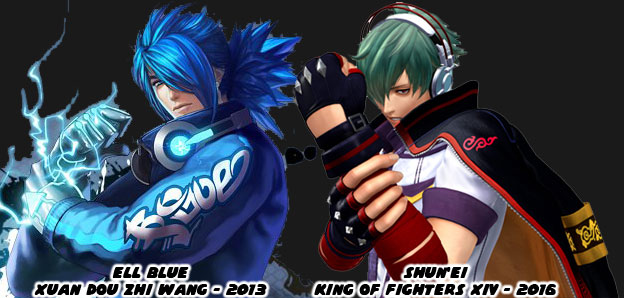
What really surprised me for the new characters in KOF XIV was the Chinese star Shun’ Ei. The design was pandering very heavily to what some Chinese gamers thought made a cool design. Many in the community saw the character as even poaching the design of a couple of characters from Xuan Duo Zhi Wang / the King of Combat. To be fair I had also brought up that fighting games had been stealing things from each other as much as from pop culture for over 30 years. When the Japanese studios did it nobody seemed to mind but when Chinese developers began doing it then suddenly audiences were in an uproar. If anything Shun’Ei was reinforcing the themes that many Chinese audiences favored in the character designs. King of Combat focused on martial arts masters in plain clothes, their inspirations were pulled from post KOF ’94 stars. Terry Bogard was probably the first plain clothes master in a franchise but it was Kyo Kusanagi that redefined the look. From that point going forward the characters in KOF didn’t even need a named fighting art. They could be dressed in trendy fashion and have psychic or elemental powers at their disposal. Ell Blue and Yan were distilled from that understanding.


Kyo Kusanagi, Iori Yagami, Shen Woo and Ash Crimson were some of the templates that the designers from Jade Studio were working from. The majority of the cast was supposed to look cool and trendy and there was no better studio to borrow from. The Chinese developers built a 3D fighter that was presented in 2D so that it played like a classic arcade fighter. They recreated all the elements found in latter KOF games, going so far as to capture the feel of SNK’s level and stage designs. They even sprinkled in elements from Street Fighter and Tekken as well to make a terrific mash-up for the PC. The artists working on the game knew enough of the origins behind characters like Kyo and Iori when they created their stars Ell Blue and Yan. The former being more western-themed and the latter being closer to the East. In case you weren’t familiar Kyo and Iori from the KOF series had costumes that were rooted in high school uniforms. The cut of their clothing was a little bit more fashionable, making them really stand out among the rest of the KOF lineup. Ell Blue had a certain Western hip hop flair to his design, sporting bright blue hair, headphones, and even a rolled up pant leg. He looked like a super producer, a DJ-turned-fighter. Yan had more of the high school uniform mixed with a belt and other stylist accessories.


When Shun’Ei was unveiled his design was so familiar it was uncanny. It was as if the designers at SNK took both Ell Blue and Yan and combined them into one character. There were the elemental powers, fire and electricity, but there was also the strong red and blue theme to accompany those powers. Then there was the costume itself. Part school uniform, with stylish belt, accessories, headphones and rolled up pant leg. There were too many elements brought in to be more than coincidence. They were reflecting back to the Chinese what they assumed they wanted to see in the star of their team. It wasn’t necessarily a case of the Japanese artists copying the Chinese. The publisher of King of Combat, Tencent, was one of the biggest publishers in the world, and they even licensed some KOF stars to appear in their game. There was a good chance that some of the Jade developers helped program or design some of the new faces in KOF IV. Of course only SNK could confirm or deny that observation. Regardless, the company had been at the forefront of fighting game development for almost as long as the genre had existed. Budding developers hoping to capture that SNK-style need to understand why their characters are unlike those in Capcom, Namco, or any other studio. They managed to hide the fighting master in plain sight. Remember this the next time a new character is announced for the series. Now there were two other characters on the new Team China. But I'll talk about them some other day. As always if you enjoyed this blog and would like to sponsor me please visit my Patreon page and consider donating each month, even as little as $1 would help make better blogs and even podcasts!

 follow the Street Writer on Patreon!

Monday, July 18, 2016

The Street Writer Podcast, Episode 6

 
Today we are going to look at the culture that inspired some of the most unique rivals. Japan created many of the the best fighting titles, this cannot be argued. Part of their success was due to being at the right place at the right time. The genre was relatively young in the mid '80s and every idea was fresh and unique. As soon as the developers figured out that a fighting game could be more than video boxing the world opened up. We can credit the various Japanese studios for many other "firsts." They were the first to place fighters from different martial arts schools against each other. They created a narrative for the main characters. They added a way to track health, the ability to perform special attacks and even the ability to destroy the environment on each stage. These details helped pull the audience into the experience. The character designers working on these titles were influenced by a number of sources. Many of the early fighting game heroes were based on movie characters or even popular real world fighters. Some were based on tough guy archetypes. In Japan one of the popular tropes was the young rebel, a sort of gang leader that talked with his fists.


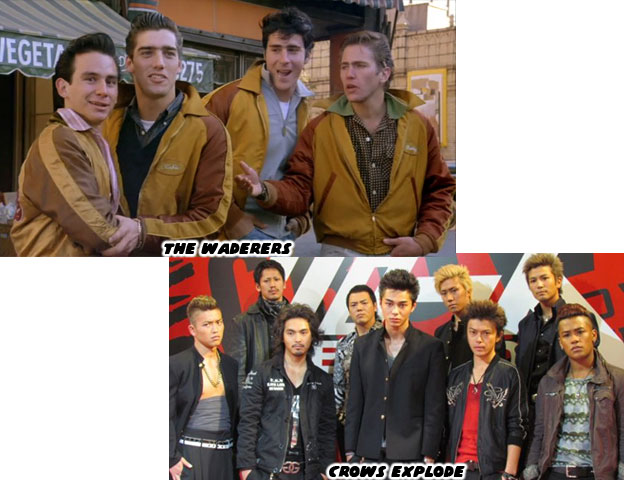
Movies about gangs, coming-of-age, fighting and violence are nothing new. The whole rebel identity is celebrated around the world, especially in pop culture. Cult movies like the Wanderers in the USA and modern films like Crows Explode in Japan capture a portion of the colorful and sometimes brutal side of life in a dysfunctional (rather than dystopian) society. The gang leader with a powerful sense of loyalty is someone to be admired. It doesn't matter if this is a novel, short story or comic book figure. There are actually many positive features with the rebels in these works of fiction. In the USA the leather clad motorcycle rebels from the '50s, the "greasers" were one such archetype. Often they were runaways, young enough to be in school they often rejected authority. They felt smothered by the establishment and wanted to be free to the run the streets. They lived hard, loved hard and fought hard. They were essentially the replacement for the open range "cowboy" from the previous century. Hollywood told their story and in the process they created icons like James Dean in film and The Fonz on TV. In Japan there was a variation of the heroic rebel as well. These figures were often modeled after high school delinquents.


In Japan there is a tremendous pressure to conform. Conform to family customs, societal expectations and especially to authority. Just because a kid is in school doesn't mean they can't get habitually in trouble. This is something that US inner-city schools know all too well. Troublemakers are sometimes perceived differently in Asian countries. In Japan people don't always associate a group of rebels with a gang, instead they lump them together as a more benign group of delinquents. In pop culture the leader of these gangs is known as a bancho. They are usually the toughest guy or the best fighter. They don't actually deviate much from from the look of typical high school kids. In fact they can often be found sporting crisp school uniforms, or gakuran. They might have a pompadour, or perhaps shaggy hair which shows a hint of nonconformity. These guys are magnets for trouble and of course the good girls girls who want nothing more than to fix a bad boy.


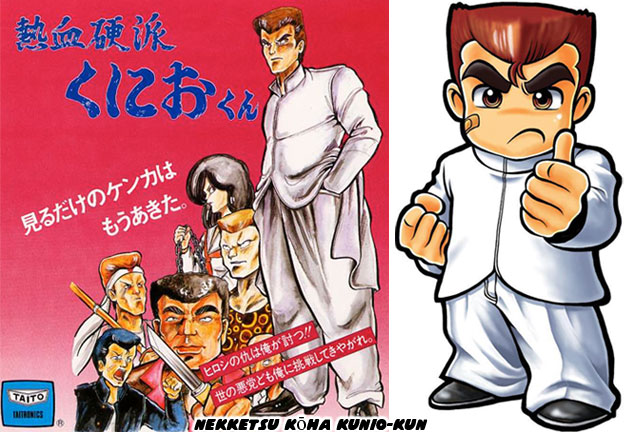
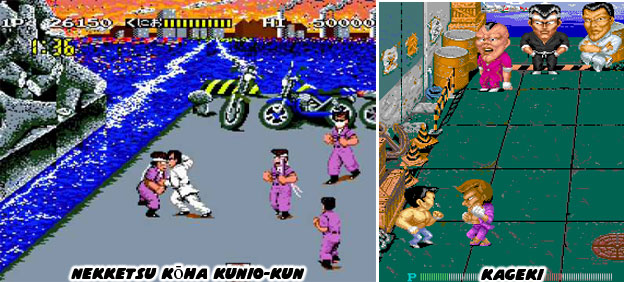
The first video game fighter to exploit this look was Kunio-kun. The game Nekketsu Kōha Kunio-kun, which translated to "Hot Blood Tough Guy Kunio." It was released by Technos in 1986. The character was named after Technos' former president Kunio Taki. It was developed by Yoshihisa Kishimoto, who many attribute the series, if not the entire genre to. This team could be considered the architects of the genre for certain, and the game could be considered the Godfather of the brawler genre. The arcade game was localized as Vigilante in the USA. The look of the hero and bad guys was changed from Japanese high school to more generic motorcycle gangs in order to make them appear more Western. People in the USA didn't really remember Renegade but they did remember the NES version based on the series.You might know it better as River City Ransom. The characters were there although they became shorter and more cartoonish in the process. Mr. Kishimoto went on to design Double Dragon for Technos. The title from 1987 became a huge hit and established the birth of a whole new genre.


Taito published a different sort of bancho fighting game in 1988. Kageki featured a heroic street boxer taking on every member of a local gang. Just about every gang and delinquent archetype from Japanese manga and cinema was represented here. The chubby low-level goon, a slacker, a chisel-jawed heavy, a weasel-like henchman, the dirty fighter, and of course the super-cool gang leader. These characters included the various motorcycle and car freaks that identified with the bosozoku or "violent speed tribes" in Japan. Remember that the seminal AKIRA, the manga first published in 1982 by Katsuhiro Otomo started with the futuristic bosozoku gang lead by Kaneda and his rival The Clowns. Being a delinquent was not only cool, it turned out that a group of them could save the world. Anyhow the various tough guys from pop culture all had to be defeated in Kageki. If a player scored a knockout their opponent would be dropped down a manhole. It was easily the coolest way of disposing a body in a video game.


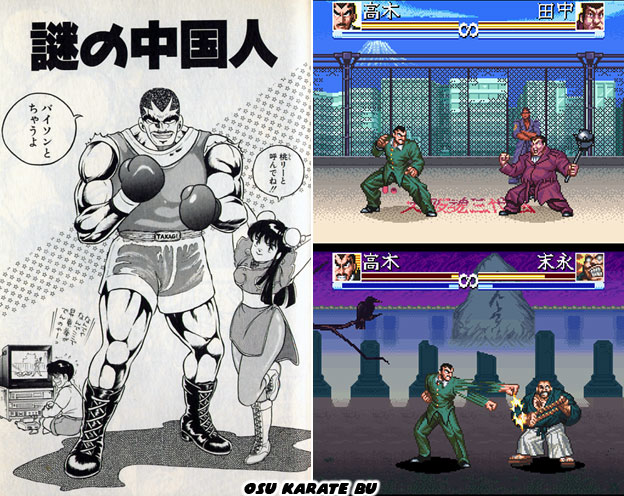
The bancho had a sort of peak in popularity in the mid to late '80s. One of the first breakout manga titles was Osu Karate Bu - "Karate Club" by Koji Takahashi. The series was first published in 1985 and ran through 1996. The story featured the mustached tough guy Takagi Yoshiyuki. He was the overseer of the various gangs that used to take part in his "club" which was really a front for organized no-holds-barred fighting tournaments. Think of it like a high school Fight Club where even mobsters and actual karate masters were allowed to compete. There was much more comedy and over-the-top fighters than the actual Fight Club movie of course. A young character named Matsushita Tadashi would become the most famous person in the series and end up being its narrator. When he started school he would get beat up all the time. He joined the karate club in the hopes that he would learn how to fight. He got even more beat up by the club members but over the years he grew stronger and learned how to fight back. The series hit a peak in 1994 when the manga was turned into a Super Famicom (Super Nintendo) fighting game by Culture Brain. During the rise of the fighting game genre Mr. Takahashi noticed that boxer M. Bison from Street Fighter II had an eery similar haircut to Takagi. He was sure to point it out when he created a parody cover in his comic.


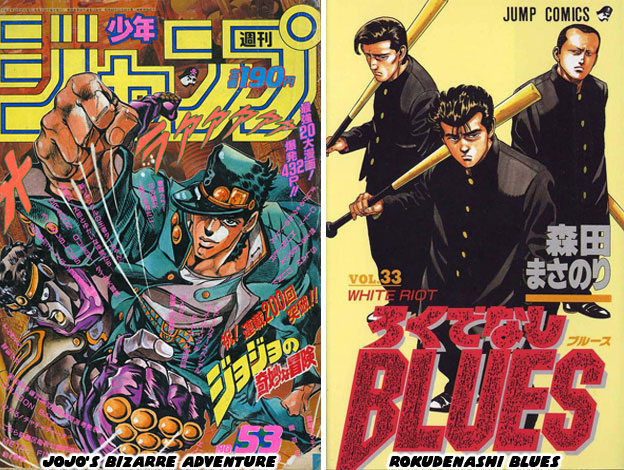
Young anti-heroes and the delinquents were made cool in AKIRA and Osu Karate Bu but those weren't the only series focused on outsider culture. Previously in manga, anime and live-action shows the heroes were straight-laced good guys. The outsider, the rebel of the group was still popular but was never meant to be a replacement for the main hero. All that changed when manga and anime began featuring more anti-heroes and more stories that weren't set on campy henshin or sentai characters like the Power Rangers. Possibly the hottest and strangest manga in the mid-'80s was JoJo's Bizarre Adventure. The series which began in 1986 revolved around Jotaro Kujo and his friends. Jotaro's uniform was a fashionable take on the gakuran, with a big gold chain punched through the collar, a decorated cap and multiple belts on designer slacks. When he and his friends battled they used supernatural abilities against all sorts of crazy-looking characters. The series by Hirohiko Araki was influenced by Western pop culture; character names included musical acts Chaka Khan, Ronnie James Dio, Cameo, ZZ Top, Mariah Carey, Iggy Pop and DEVO. And it featured characters and costumes inspired by international fashionistas. His hero and allies were far from the traditional bancho, the words that would best describe them would be colorful, flamboyant and eccentric. JoJo was on the extreme end of fantasy, yet there was another comic that was grounded in a more realistic world.


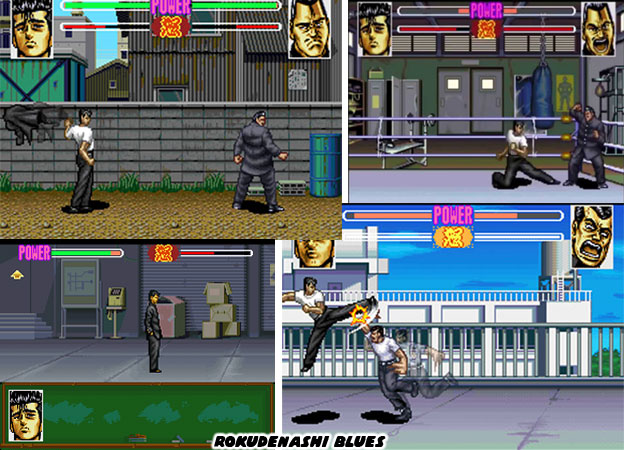
Rokudenashi Blues featured heavy hitter Taison Maeda. He was a scrappy boxer whose first name was reminiscent of Mike Tyson. Different spellings of course. Anyhow Rokudenashi Blues was as classic a bancho manga as there ever was. The series started in 1988 by Masanori Morita was a straightforward look at the life of delinquents trying to survive high school and of course the girls that loved them. There were many encounters with various gangs and other school troublemakers. The fights lasted several panels and the results of which would last for months. Unlike other manga where the heroes could be on the brink of death in one issue and then be perfectly fine the next Taison and his friends were left battered and bruised over the course of several story arcs. Jotaro and Taison were the types of heroes that school kids could identify with, making them very popular with young audiences. It only made sense that the bancho would turn up in fighting games a few years later as the audience began consuming different forms of entertainment. Osu Karate Bu found it's way to the Super Famicom in 1994 but so too did Rokudenashi Blues. Bandai developed and published the game. What made it unique was that the fights in the story mode happened the same order as the encounters did in the manga. This level of accuracy would be used in the Dragon Ball Z fighting games by Bandai as well.


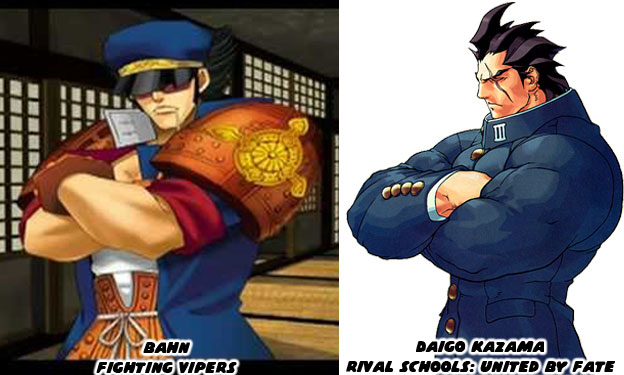
Fighting Vipers was a lesser-know Sega fighting game from 1995. It revolved around youth culture, with skateboarders, rock musicians and motorcycle thugs taking part in a tournament. The control and combo system were fairly easy to pick up and you could imagine that the game was meant to be the younger brother of Virtua Fighter, the more popular 3D fighter from the publisher. The main character in Fighting Vipers was 17-year-old Bahn. A large bruiser whose costume was modeled after Jotaro's. His costume was part gakuran and part samurai armor. He wasn't the only bancho to turn up in the genre. In 1997 Capcom released Rival Schools: United by Fate. That game was set entirely in a world where the top students, the most popular, or most delinquent from a half dozen schools also happened to be excellent fighters. I don't mean traditional fighters either, but more like young versions of the Street Fighter all-stars. A few characters wore traditional Japanese school uniforms but Daigo Kazama, the big brother of motorcycle rider Akira Kazama, was the leader of a gang and central to the plot of the game. He had been brainwashed and was going around attacking students and teachers alike. The other students had to figure out why and get to the bottom of the conspiracy. Daigo's long coat, spiky hair and nasty scar over his eye made him look like that baddest bancho there ever was.

The bancho was the hero that a new generation was following. They were the stars in the comics and cartoons and fans wanted to see them represented in fighting games. But the fighting game still had to do some evolving. The kung-fu films and comics of the late '70s and early '80s inspired the development of Street Fighter and the other first generation fighting games. The Japanese designers would try to create characters that had an international appeal, especially in the US where they could make lots of money in the arcade and home consoles. So they took influences from cult Western movies and mixed that look with the Japanese manga aesthetic. The results were characters with very strong looks. Karate fighters that wore the traditional gi, muay thai fighters in shorts, kung-fu masters in wushu clothes and literal street fighters that wore jeans and sneakers. This was what people expected to see. The bancho star wouldn't appear until later.


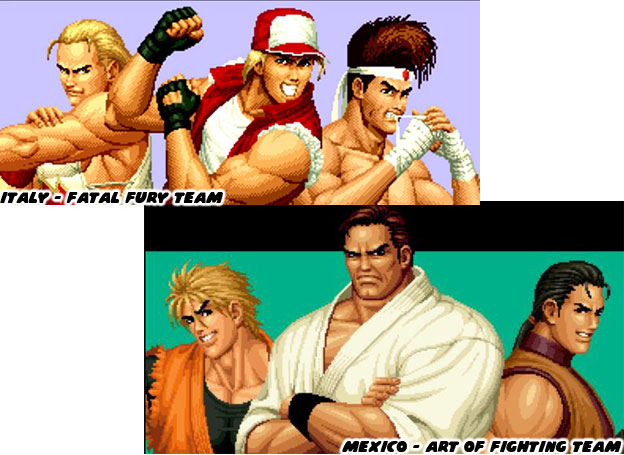
SNK was doing very well at telling the story through a fighting game. They had a gritty theme in the original Art of Fighting. You could almost imagine this game was based on a pulp '80s film. With its seedy villains, imaginative locations and twist ending. They also had the more animé friendly Fatal Fury, which also had a great story and over-the-top villains. By the mid-90s the studio knew that they had to come up with a radical new idea in order to compete against Capcom, Midway and the other studios that were red hot. That was when they decided to formalize the King of Fighters tournament in 1994 and create a game that united the various fighters. For fans of the first generation of fighters there would be both a team Fatal Fury and a team Art of Fighting. Each represented a nation, in this case Italy and Mexico respectively. SNK was not happy with the idea of Terry or Ryo being the solitary star of the game. They did not want fans to think the studio was telling them who were the better fighters, or who they should root for, they would let fans decide. To help make things interesting SNK went way back in their catalog of characters and brought back a few arcade pioneers.


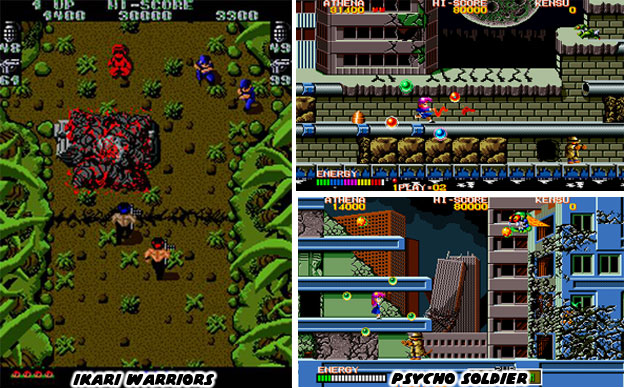
China was represented by a trio of Kung-Fu masters, the leader was a pink-haired Athena Asamiya. Her psychic powers lead to the state-sponsored team being known as the Psycho Soldiers. From Brazil there was a trio of mercenaries, two of the figures looked very familiar to arcade veterans yet the one with the eyepatch was new. It turned out that the guy with the blue baseball cap was Clark Still and the one with the red bandanna was Ralf Jones. The two were better known as the Ikari Warriors, an arcade title that shared the same name. It was one of the pioneering run-and-gun shooters in the arcade. The Ikari Warriors were a mix of Sylvester Stallone's Rambo and Arnold Schwarzenegger's Commando, they could topple any dictator with their nonstop barrage of weapons and combat skills. In the early game the characters wore a red headband or blue headband so players could tell them apart. The game was revolutionary because it featured an octagonal joystick that could be rotated to aim in different directions while running. Prior to that characters might have been able to shoot left, right or diagonally but the joystick had to be pointed in that direction as well. Gamers could suddenly strafe opponents while moving between cover. Seeing the mercs return as fighters was a welcome surprise. Perhaps they were the best brawlers in the KOF universe instead?


It turned out that the Chinese Athena and Sie Kensou had appeared previously as well. They were in a game called Psycho Soldier which didn't see much popularity in the US. It was a side-scrolling action title but instead of flying a spaceship as was the case with most side-scrollers this game had Athena and Sie using their psychic powers through the real world and underworld. The game was actually connected to a previous title called Athena. It was based on the Greek goddess and had players building her armor and fighting to reclaim Olympus. That game was an action platformer in the vein of Capcom's Black Tiger or Ghosts n' Goblins. The modern Athena was descended from the goddess. Both Ikari Warriors and Psycho Soldier were released in 1986 and both represented SNK's older and more cult-favorite titles. It was great that SNK was acknowledging their legacy and putting the various characters into one continuity. Yet something was missing. It was great to see the fighting game stars and other arcade stars introduced in a tag-team battle but the groups were found lacking. The studio needed to introduce a new team, or a couple of new teams that would represent the franchise and stand up to the stars from the other titles. These characters would have to become the next generation fighting icons. Once again the studio looked at pop culture for their inspiration. They had done what they could with classic movie heroes and villains and they needed to find something more contemporary. They found that the bancho was a hero they hadn't yet considered. An amazing rivalry would grow out of this character choice. We'll explore this story in the next entry. I hope to see you then! As always if you would like to sponsor me please visit my Patreon page and consider donating each month, even as little as $1 would help make bigger and better recordings and videos.

follow the Street Writer on Patreon!

Monday, May 23, 2016

The Abridged History of the Brawler, part 23


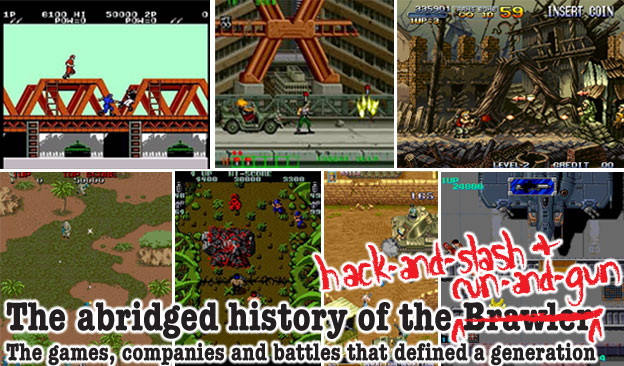
The mechanics of the brawler had been a part of the gaming history at least a decade before Double Dragon. Before arcade players could fight wave after wave of opponents with their bare hands they had to defeat wave after wave of aliens in a spaceships in titles like Space Invaders (Taito, 1978) and Galaxian (Namco, 1979). When those ships were replaced with humans, usually made up of a few pixels, the genre began to evolve. Starting with Kung-Fu master the "Beat-em-Up" was the earliest of the Brawler formats. A year later the "Run-and-Gun" and "Hack-and-Slash" formats were born. Really the only difference between the gameplay was that fists were usually replaced with either guns or swords. In some games players could use fists, guns and swords to combat opponents. What I would like to do in this series is highlight how the graphics, gameplay and genres were constantly evolving. How these titles borrowed elements from each other, explored different formats, visual styles and mechanics The first titles I would like to mention were among Konami's earliest arcade hits.


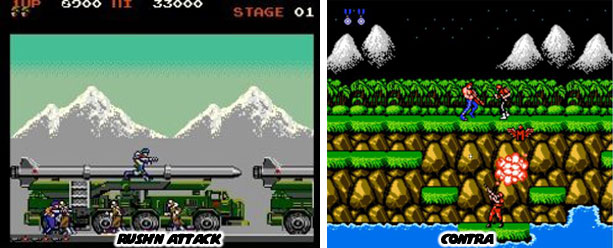
Largely forgotten by most arcade gamers, Rush'n Attack was the 1985 title that really established the side-scrolling run-and-gun action for Konami. In the game a special-forces agent could fight with his bare hands and take weapons from defeated opponents. From flame throwers to laser rifles, each weapon had its own advantage and ammo supply. This game laid the foundation for a more popular title and one which has received countless makeovers since its debut.


Contra became famous for the Konami code (up, up, down, down, left, right, left right, B, A) which allowed gamers to have scores of lives on the home console version of the game. The 1987 arcade gem featured two-player action which had improved on the Rush 'n Attack formula. Players could jump up or down on platforms and shoot in 8 directions now. In portions of the game players could even advance in a behind-the-back POV. The diversity of weapons and nonstop action made the title very popular in the arcades and at home.


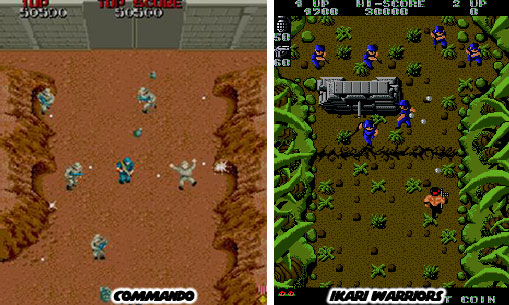
Before Contra had taken off in popularity the run-and-gun had been experimenting with different camera points of view. One of the earliest titles was Commando by Capcom. This 1985 title was set in an overhead perspective. For many developers this approach made sense. The formula had been used with great success previously. The only thing developers had to do was replace the spaceship with a soldier and space with a battlefield for them to advance on. Players could move around the screen in several directions and shoot at opponents but the screen mostly advanced up.


In 1986, before they developed their own arcade platform, or became heavily invested in fighting games, SNK had released the Ikari Warriors. The game allowed two players to control the mercenaries Ralf and Clark as they made their way through some unknown jungle. The game introduced a joystick with an octagonal handle that could be rotated to shoot in 8 different directions. With commando players could shoot forward and to the sides but not behind them. Ikari Warriors proved popular and like Contra several sequels were made. Today most players are familiar with the Ikari Warriors thanks to the King of Fighters series.


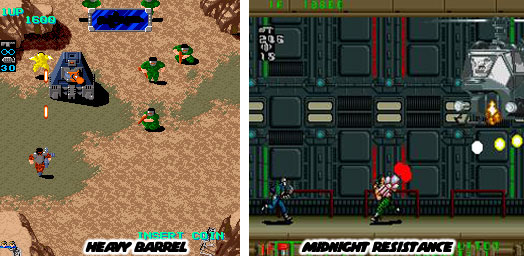
Through the 80’s most of the studios would try to see which format worked best for the run-n-gun shooter. Data East tried a variation of the overhead shooter first with Heavy Barrel in 1987. The game also made use of the octagonal handled joystick. The “Heavy Barrel” itself was a super rifle capable of mowing down the strongest opponents. It was a precursor to the BFG 9000 featured in Doom. Players had to piece it together by locating keys from fallen soldiers and corresponding chests scattered throughout the levels. My older brother had played the game so many times he had the locations of all the keys known by heart. He could speed run through the game before that concept was even invented.


A couple of years later Data East released a sequel. The 1989 game Midnight Resistance was presented in a side-scrolling format, similar to Contra. It kept the octagonal handle on the joystick and allowed players to assemble the mega-weapon from the original game as well. Little by little the side-scrolling format began to shift away from the overhead view. The genre seemed to work better for run-and-gun as well as beat-em-up brawling.


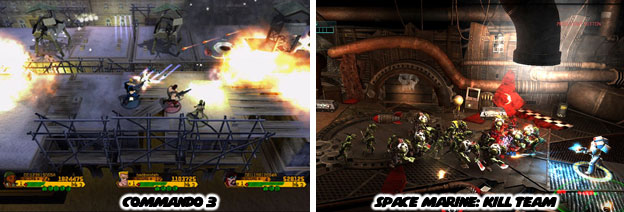
In recent years several major and independent studios had been using the overhead camera to create remake or classic-inspired run-and-gun games. Capcom found great success updating the graphics by preserving the classic gameplay in Bionic Commando for Xbox Live and they Playstation Network. They also released Commando 3: Wolf of the Battlefield for the downloadable services. Developed by Backbone Entertainment in 2008 the game actually borrowed the full name from the original 1985 arcade hit. The game preserved many of the classic run-and-gun mechanics over improved 3D visuals. Unlike the beat-em-up brawler which mostly suffered the migration to 3D the overhead shooting titles worked well with newer technologies.


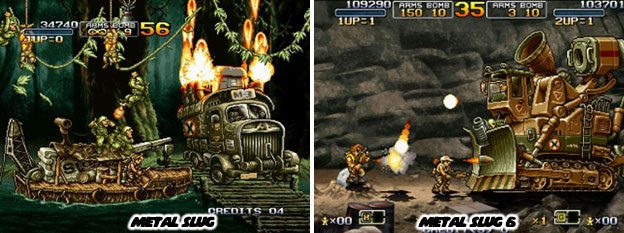
By using a fixed camera perspective several developers were able to create new gaming experiences with a moderate budget and release them across several platforms. Space Marine: Kill Team, released by THQ in 2011 showed that the gameplay could still be as entertaining as it was 26 years ago while the dedicated Space Marine console game used a third-person perspective and was designed for a more modern experience. The side scrolling format would still remain popular for many run-and-gun titles and the best of these would be the Metal Slug series, developed by Nazca and released on the SNK Neo Geo systems through the mid to late 1990's.


The Metal Slug games were a work of art, as difficult as the best side scrolling run-and-gun titles and more beloved than Contra, Ikari Warriors or any other long running title. The contributions of the game and team at Nazca to the run-and-gun genre were so profound that they deserved (and would get) a blog of their own someday… It turned out that side scrolling camera worked well for beat-em-up, run-and-gun and even hack-and-slash titles. We shall explore these transitional titles in the next blog. As always if you enjoyed this blog and would like to sponsor me please visit my Patreon page and consider donating each month, even as little as $1 would help make better blogs and even podcasts!
 follow the Street Writer on Patreon!