Showing posts with label undercover cops. Show all posts

Friday, August 16, 2024

D.A.S. the biggest video game bad guys you've probably never heard of

Hello friends, and visitors to the blog. The other day a random question popped into my head. What was my favorite evil organization in gaming history? Did I even have a favorite? Have you ever thought about the bad guys in your favorite video games? I didn’t mean the villains in game, but the evil organizations. The ones that returned more than once in a series? Evil groups had always appeared in the comics books, and cartoons. When I was a kid G.I. Joe fought against Cobra. The Autobots fought against the Decepticons. The Ninja Turtles fought against the Foot Clan. But could you think of a game series that had a recurring evil organization?
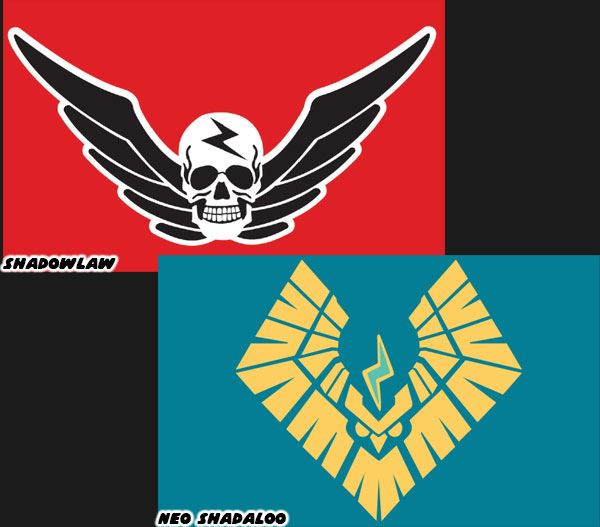
Since I wrote mostly on fighting games it might be Shadowlaw / Shadaloo. That organization got its start in 1991 with Street Fighter II. A dictator named Vega / M. Bison ran his own small nation near Thailand. This group, its soldiers, spies, and generals would pop up again, and again all throughout the series, and even some crossover games. Currently a rival group was introduced by the team at Capcom called Neo Shadaloo. Would they become major players in the franchise, or were they only going to be a part of Ed’s back story in Street Fighter V, and 6?
Shadowlaw had a great name, but I didn’t care to see them keep popping up in the SF franchise. Nor did I care about NESTS showing up in the King of Fighters franchise. I believed that fighting games were more unique when they focused on the fighters, their forms, and the challenge of facing the best. It was more interesting to me to see who could be the next great challenge rather than figure out a way to connect them all to a cartoonish villain again, and again.

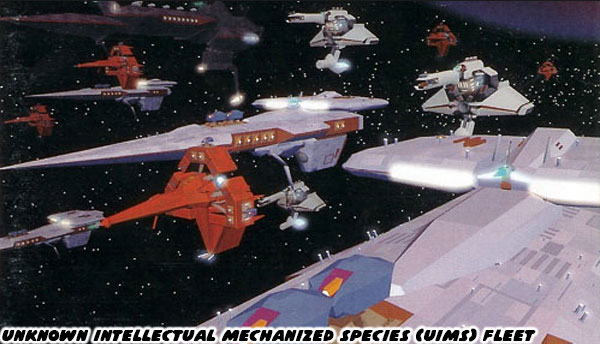
One of my favorite enemy groups might be the Unknown Intellectual Mechanized Species (UIMS). They were just one of the many alien species challenging humanity, and the United Galaxy Space Force (UGSF). The Bosconians, and Galagans were also memorable enemies across the various Namco franchises. As cool as those bad guys were I thought that one of the rarest groups ever featured in any game series deserved more love. The D.A.S. (Dark Anarchy Society) in the international releases, Destroy And Satsujin (Satsujin means murder in Japanese) was a recurring villainous force from Irem's Arcade games.
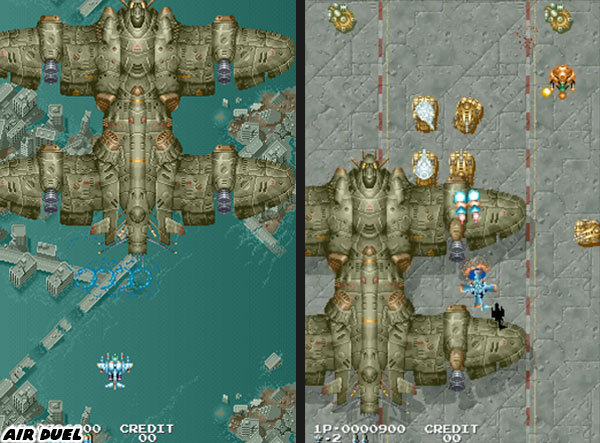
The group appeared as the main antagonists in several titles by Irem, they include In The Hunt, Gun Force II/Geo Storm and Undercover Cops. There were a few things that made the groups, and games they appeared in unique. Primarily that none of the games were in the same genre. Air Duel was a SHMUP, a shoot ‘em up or shooter featuring a jet, and attack helicopter. The game was set in a near post apocalyptic future. D.A.S. would try to take over the world, and it was up to the arcade players to see them destroyed. They would lay low for a few years, and then try to set up their totalitarian regime through violence. Each game mentioned above would be connected by the same group. Probably the closest that D.A.S. came to world domination was with In the Hunt aka Kaitei Daisensou (Great Undersea War) in Japan. The submarine shooter was set in a version of the Earth where the bad guys had just about conquered every nation. With the melting of the polar caps, and the major cities underwater it was easy for them to clear out opposition using their superior naval forces. The last ditch effort to destroy their ocean-based super weapon came with the creation of a super attack submarine called the Granvia. 
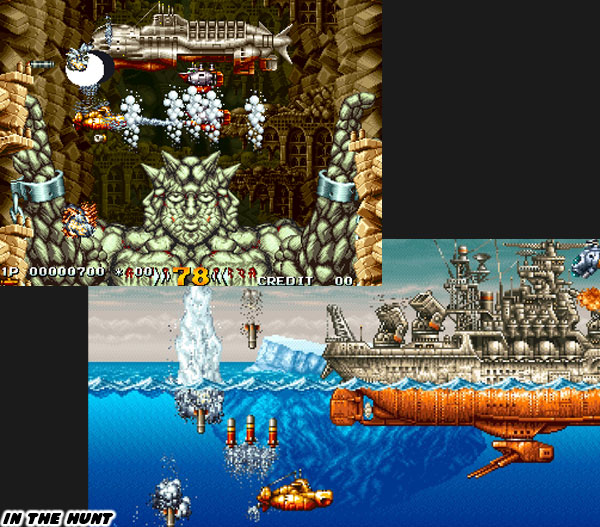
The submarine that players controlled could dance circles around its opposition. I had talked about In the Hunt, and Air Duel on the blog previously. This conflict was serialized in a Gamest Manga by Masato Natsumoto. His vehicle design, and presentation were influenced by Masamune Shirow. He was a perfect fit for the world created by Irem. The series explained that the reason the sub was such an amazing weapon because its design was based on stolen plans for a D.A.S. sub-orbital attack ship. The weapons, and unique magnetic propulsion system was repurposed technology that would liberate the worlds from the oppressive regime.
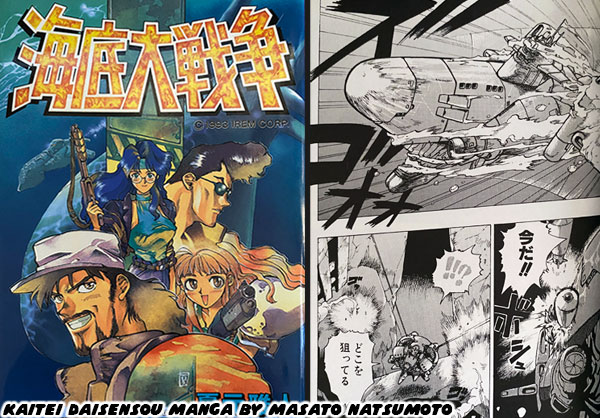
The manga featured the brave pilots Jin, and Rei against the D.A.S. captain Sharking. Every encounter in the game was recreated, and the adventure was greatly fleshed-out. It was a shame the series didn't get a follow-up. These games were important in the history of arcade gaming not only for their content, but for their style of presentation. Visually there were no other studios that crammed as many details on their sprites as this team did. To this day no other studio could claim to have created sprite-based titles with as high a level of detail, and animation. The studios that came close like IGS, and their game Demon Front still fell short of that high mark. The members of that team applied the same amount of detail to everything they worked on. The D.A.S. gunships, tanks, copters, drones, and bases oozed with style. Now that they had covered the air, and sea shooters, they decided to make things interesting with a side-scrolling shooter.
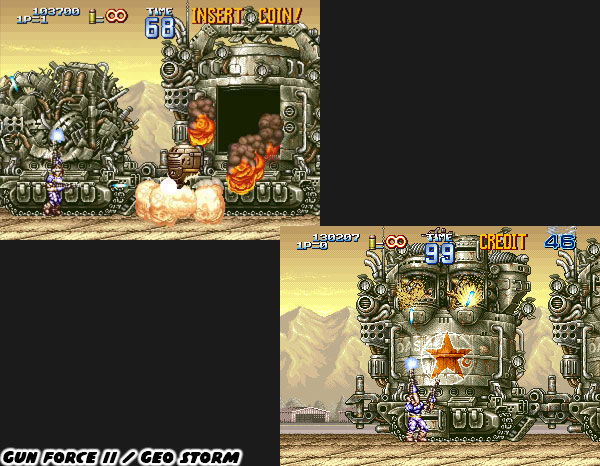
Geo Storm was their response to popular franchises like Konami’s Contra, and Data East’s Midnight Resistance. The challenge was getting even closer to D.A.S. vehicles, upping the amount of detail, and letting us see the individual soldiers. They hit it out of the park, and no other studio could even compare to the work that went into Geo Storm. This group would get tired of waiting for Irem to start new projects, so they left and formed a new company called Nazca. The next gem for the Neo Geo was called Metal Slug. They were the only company capable of topping themselves. Metal Slug, and the team at Nazca were part of a massive legacy in gaming. Before they left Irem the Nazca team flexed their muscle in yet another genre. I talked about Undercover Cops during my history of the brawler series, it was one of the more unique titles of 1992. The fact that they were able to apply the same amount of detail in a brawler, and add new features to the genre meant that this team were made up of critically underrated game designers. Other studios that bounced around different genres were rarely good at multiple ones. They instead specialized in one type of game. The Nazca staff could seemingly do it all.
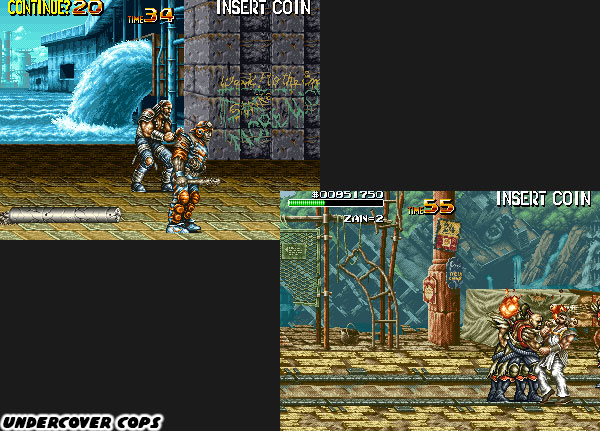
I would like to think that they started with D.A.S., and then worked backwards to figure out who were the heroes that could stand up to this unstoppable evil force. In the oldest games we were looking at massive D.A.S. ships, planes, and tanks. As Nazca learned to make games we started getting closer to the bad guys. By the time they released Undercover Cops we were able to see the monsters, mutants, and villains in a one-on-one setting. No other company had given us the big picture, all the way down to the individual foot soldiers for the evil organization. The nearest thing to that type of world building could be seen with the Rebel Army in the Metal Slug series. It made me appreciate the bad guys that went into the creation of a great series. I’d like to know if there was ever any evil group that you admired in your favorite games. Were they from a well established universe like Star Wars? Or from a horror series like Resident Evil? I’d like to read about them in the comments section. As always if you would like to sponsor me please visit my Patreon page and consider donating each month, even as little as $1 would help make better blogs and even podcasts!
follow the Street Writer on Patreon!

Monday, August 10, 2020

The Street Writer Podcast, Episode 15

The start of the '90s changed quickly for the brawlers. Fighting games had exploded on the scene. Brawlers took a back seat, but innovated despite the market. Some studios went with more kid friendly options, and a few explored cultures other than the USA or Japan for their content.

If you would like to sponsor me please visit my Patreon page and consider donating each month, even as little as $1 would help make better blogs and even podcasts!
follow the Street Writer on Patreon!

Friday, April 22, 2016

The Abridged History of the Brawler, part 10


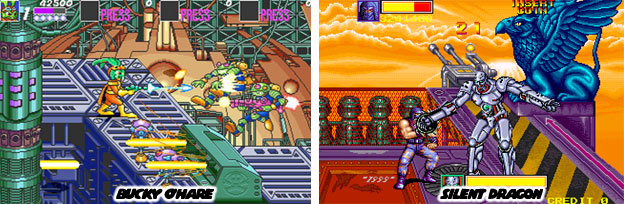
Konami made sure that 1992 got off to a good start with the X-Men game, their next title was also a licensed brawler. Bucky O'Hare was a popular animated series based on an independent comic. It featuring a crew of anthropomorphic alien / animals that were fighting for freedom out in the cosmos.


The game was lighthearted and followed the visual style of the cartoon, going so far as to include sound bytes from the voice actors from the TV series. The game was not very difficult for seasoned players, it was not meant to introduce new gameplay elements. The game was important however because it was designed for a new generation of gamer. The bright colors, smooth animation and clean level design could be seen as an attempt to make a kid-friendly brawler. Those players would be interested in trying out the other titles from Konami and help keep the industry going.


One of the other titles that could be described as player-friendly was Silent Dragon by Taito. It was a very formulaic 4-player brawler, capitalizing on the western fascination with ninjas, fights and random monsters. The large colorful sprites were very animated and the game never felt heavy-handed.


The game was about as simple and straightforward as a brawler could get. Taito did not develop a game as much as they picked characters, designs and themes from other studios and put them in a game. Taito had not done players any favors but was helping move the industry forward with a cross pollination of elements.

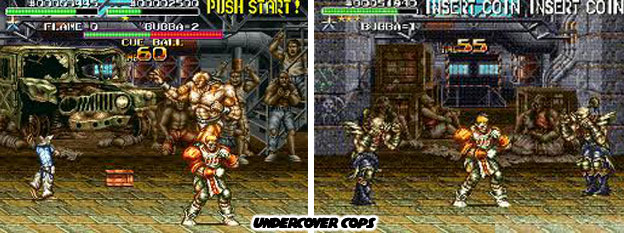
Irem did a better job with the brawler they introduced that year. Undercover Cops returned to the Japanese roots of pandering to the west while making some interesting design choices. In the far future (2015) crime had run amok. Different gangs, some bordering on cults, ruled the streets. Officials formed a team of "City Sweepers" to clear out the thugs, mutants and creeps. I think there was something lost in translation when the characters were created. The three playable characters were Claude the ex-karate master, Bubba the ex-pro football player and Flame ex-female vigilante. I always laughed wondering how somebody could be an ex-karate master, as if they got hit too many times in the head and forgot how to perform karate. Or Flame, who was a rip-off of Blaze from Streets of Rage. Flame was an ex-female vigilante... I thought Poison and Roxy from Final Fight were the only transgender brawlers… but I digress.


The game was unique in that it allowed all three players to choose the same character rather than being forced to use their partners. Characters also had special attacks and techniques that allowed them to knock leaping opponents out of the sky or strike opponents on the other side of the screen. The best brawling experiences were built around characters that weren't slightly better than opponents but had access to techniques and abilities that made fighting fun rather than redundant. The hard hitting heroes that young boys idolized were and should always be head and shoulders above the lowest goon and almost on par with boss characters.


This game was notable also in that the visuals were dark and detailed. Those were the trademarks of other Irem titles. Some of the artists that worked on Undercover Cops would be the same people drawing the insanely detailed pieces for GunForce II, In the Hunt and the iconic Metal Slug series.

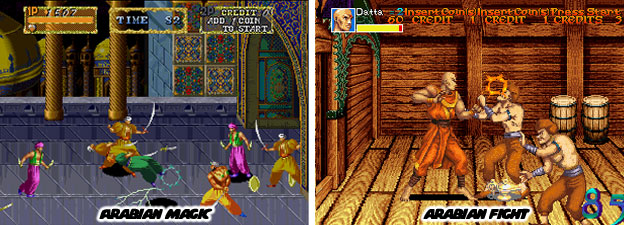
The last two great titles worth mentioning were both set in the Middle East. Sega returned with their System 32 engine and scalable sprites with Arabian Fight. The game featured some of the largest sprites ever in any brawling game. The engine would pan out to show more of the stage as players moved further and further away from each other. It was not until this game was released that the limitations of sprite-based combat in pseudo 3D environments became visible.


A sprite is an animated 2D image, it can be presented to gamers with a sense of weight and depth if artists and programmers remember to draw in shadows and highlights as well. The other visual elements in the game like the perspective and angles used to draw levels could help players visualize the sprite as moving in three-dimensions. Arabian Fight constantly scaled in and out, far more often than in the Spider-Man game. As the camera kept changing distance it became obvious to players that they were looking at 2D objects. The sprites appeared like animated hieroglyphs, flat characters from the walls of some ancient Egyptian tomb. Now if Sega had meant for the entire story to play out on the walls of a temple, or on the pages of a book, then the effect would have been revolutionary. Unfortunately the game was supposed to take place in 3D space and as often as the sprites scaled the game suffered. Players were not fans of the paper-thin sprites. They seemed to ignore the magic system from the game and even the exotic locations featured within as well. The game was Sega's second sleeper in a row. They would shy away from further arcade brawlers and concentrate instead on the home series with Streets of Rage sequels.

Despite the lackluster showing from Arabian Fight the genre was still in need new places to visit and explore. The use of exotic places and legendary characters to play as would help expand the universe. Taito answered the call through Arabian Magic. Like Arabian Fight it too featured multiple characters to play as and a magic system. The locations were even similar, including elaborate palaces, mysterious dungeons, flying carpets and pirate ships. The similarities ended there. Taito used a fixed camera that highlighted the small but detailed figures on elaborate backgrounds.


The game worked because it pandered to the fantastic legends that most gamers in the west had grown up with. Not necessarily from reading the adventures of Sinbad or the 1001 Arabian Nights of Scheherazade but instead from consuming those legends in moves. That was certainly the case for my brothers and I as we were raised on classics like the Thief of Bagdad and The Golden Voyage of Sinbad.

Many a Sunday afternoon was spent watching those movies on TV. Wondering how the Kali statue was brought to life or how the other special effects were accomplished before the aid of computers. The legends of Sinbad were always more appealing to me as a youngster. It was always easier to identify with a dark-skinned hero (even if it was only a tan) than the pasty white guys playing King Arthur and Robin Hood. Not to mention the love interest, a chesty Caroline Monro that sent my adolescent head spinning. Guinevere and Maid Marian could stay locked up in a tower for all I cared! Anyhow, my brothers and I loved the magic, fantasy and worlds that those movies exposed us to and we were eager to see how they would be adapted in a game. Prince of Persia, released by Broderbund gave us taste of that world in 1989. Still we longed for something a bit more epic.


Arabian Magic was the title we were hoping to see in arcades much earlier The sprites and opponents were a fraction of the size of those in Arabian Fight but the game was exponentially greater. The archetypes fought in exotic palaces, decorated in elaborate tiles and ornate rugs, many of them set with traps and pitfalls. Towering minarets of gold dotted the background. Players battled guards, assassins, skeleton warriors, sorcerers and magical creatures. The boss characters could be captured and placed in lamps if they were defeated. The magic system in the game was unlike those from other titles. Players had a finite number of djinn (genies) that they could capture and use. Each spell had its own effect and range. Once used the spirit was gone forever. This management of items was unique among all the brawlers. The locations and heroes from myth, including Sinbad, were icing on the cake. The game was imperfect for its minimal animations. Had a studio like Capcom developed this game then it would have easily made the list of the top 10 greatest brawlers of all-time. 1992 was a very quiet year for brawlers compared to the previous year. The handful of games released did have their own charm but would be forgotten as the industry pushed forward. As always if you enjoyed this blog and would like to sponsor me please visit my Patreon page and consider donating each month, even as little as $1 would help make better blogs and even podcasts!

 follow the Street Writer on Patreon!