Showing posts with label arabian magic. Show all posts
Showing posts with label arabian magic. Show all posts
Monday, August 10, 2020
The Street Writer Podcast, Episode 15
The start of the '90s changed quickly for the brawlers. Fighting games had exploded on the scene. Brawlers took a back seat, but innovated despite the market. Some studios went with more kid friendly options, and a few explored cultures other than the USA or Japan for their content.
If you would like to sponsor me please visit my Patreon page and consider donating each month, even as little as $1 would help make better blogs and even podcasts!


Friday, April 22, 2016
The Abridged History of the Brawler, part 10
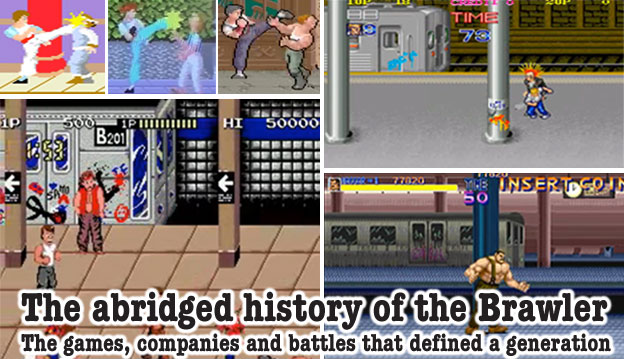
Konami made sure that 1992 got off to a good start with the X-Men game, their next title was also a licensed brawler. Bucky O'Hare was a popular animated series based on an independent comic. It featuring a crew of anthropomorphic alien / animals that were fighting for freedom out in the cosmos.
The game was lighthearted and followed the visual style of the cartoon, going so far as to include sound bytes from the voice actors from the TV series. The game was not very difficult for seasoned players, it was not meant to introduce new gameplay elements. The game was important however because it was designed for a new generation of gamer. The bright colors, smooth animation and clean level design could be seen as an attempt to make a kid-friendly brawler. Those players would be interested in trying out the other titles from Konami and help keep the industry going.
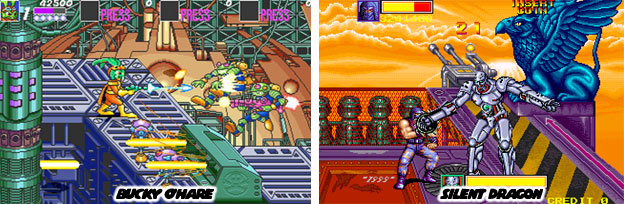
One of the other titles that could be described as player-friendly was Silent Dragon by Taito. It was a very formulaic 4-player brawler, capitalizing on the western fascination with ninjas, fights and random monsters. The large colorful sprites were very animated and the game never felt heavy-handed.
The game was about as simple and straightforward as a brawler could get. Taito did not develop a game as much as they picked characters, designs and themes from other studios and put them in a game. Taito had not done players any favors but was helping move the industry forward with a cross pollination of elements.
Irem did a better job with the brawler they introduced that year. Undercover Cops returned to the Japanese roots of pandering to the west while making some interesting design choices. In the far future (2015) crime had run amok. Different gangs, some bordering on cults, ruled the streets. Officials formed a team of "City Sweepers" to clear out the thugs, mutants and creeps. I think there was something lost in translation when the characters were created. The three playable characters were Claude the ex-karate master, Bubba the ex-pro football player and Flame ex-female vigilante. I always laughed wondering how somebody could be an ex-karate master, as if they got hit too many times in the head and forgot how to perform karate. Or Flame, who was a rip-off of Blaze from Streets of Rage. Flame was an ex-female vigilante... I thought Poison and Roxy from Final Fight were the only transgender brawlers… but I digress.
The game was unique in that it allowed all three players to choose the same character rather than being forced to use their partners. Characters also had special attacks and techniques that allowed them to knock leaping opponents out of the sky or strike opponents on the other side of the screen. The best brawling experiences were built around characters that weren't slightly better than opponents but had access to techniques and abilities that made fighting fun rather than redundant. The hard hitting heroes that young boys idolized were and should always be head and shoulders above the lowest goon and almost on par with boss characters.
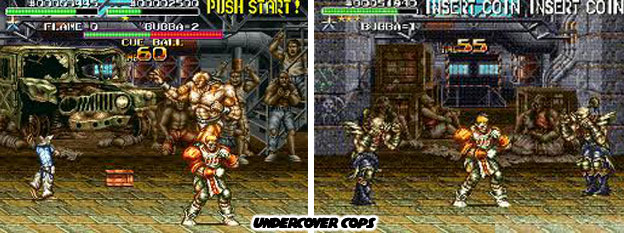
This game was notable also in that the visuals were dark and detailed. Those were the trademarks of other Irem titles. Some of the artists that worked on Undercover Cops would be the same people drawing the insanely detailed pieces for GunForce II, In the Hunt and the iconic Metal Slug series.
The last two great titles worth mentioning were both set in the Middle East. Sega returned with their System 32 engine and scalable sprites with Arabian Fight. The game featured some of the largest sprites ever in any brawling game. The engine would pan out to show more of the stage as players moved further and further away from each other. It was not until this game was released that the limitations of sprite-based combat in pseudo 3D environments became visible.
A sprite is an animated 2D image, it can be presented to gamers with a sense of weight and depth if artists and programmers remember to draw in shadows and highlights as well. The other visual elements in the game like the perspective and angles used to draw levels could help players visualize the sprite as moving in three-dimensions. Arabian Fight constantly scaled in and out, far more often than in the Spider-Man game. As the camera kept changing distance it became obvious to players that they were looking at 2D objects. The sprites appeared like animated hieroglyphs, flat characters from the walls of some ancient Egyptian tomb. Now if Sega had meant for the entire story to play out on the walls of a temple, or on the pages of a book, then the effect would have been revolutionary. Unfortunately the game was supposed to take place in 3D space and as often as the sprites scaled the game suffered. Players were not fans of the paper-thin sprites. They seemed to ignore the magic system from the game and even the exotic locations featured within as well. The game was Sega's second sleeper in a row. They would shy away from further arcade brawlers and concentrate instead on the home series with Streets of Rage sequels.
Despite the lackluster showing from Arabian Fight the genre was still in need new places to visit and explore. The use of exotic places and legendary characters to play as would help expand the universe. Taito answered the call through Arabian Magic. Like Arabian Fight it too featured multiple characters to play as and a magic system. The locations were even similar, including elaborate palaces, mysterious dungeons, flying carpets and pirate ships. The similarities ended there. Taito used a fixed camera that highlighted the small but detailed figures on elaborate backgrounds.
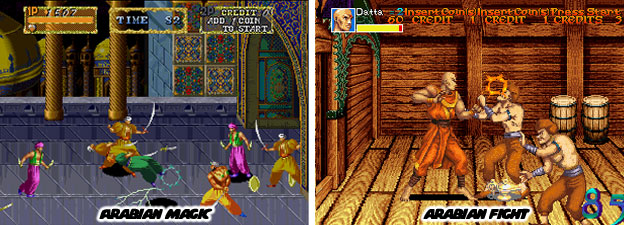
The game worked because it pandered to the fantastic legends that most gamers in the west had grown up with. Not necessarily from reading the adventures of Sinbad or the 1001 Arabian Nights of Scheherazade but instead from consuming those legends in moves. That was certainly the case for my brothers and I as we were raised on classics like the Thief of Bagdad and The Golden Voyage of Sinbad.
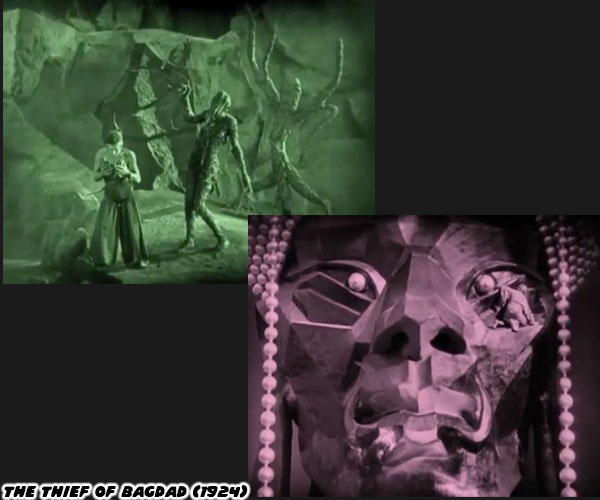
Many a Sunday afternoon was spent watching those movies on TV. Wondering how the Kali statue was brought to life or how the other special effects were accomplished before the aid of computers. The legends of Sinbad were always more appealing to me as a youngster. It was always easier to identify with a dark-skinned hero (even if it was only a tan) than the pasty white guys playing King Arthur and Robin Hood. Not to mention the love interest, a chesty Caroline Monro that sent my adolescent head spinning. Guinevere and Maid Marian could stay locked up in a tower for all I cared! Anyhow, my brothers and I loved the magic, fantasy and worlds that those movies exposed us to and we were eager to see how they would be adapted in a game. Prince of Persia, released by Broderbund gave us taste of that world in 1989. Still we longed for something a bit more epic.
Arabian Magic was the title we were hoping to see in arcades much earlier The sprites and opponents were a fraction of the size of those in Arabian Fight but the game was exponentially greater. The archetypes fought in exotic palaces, decorated in elaborate tiles and ornate rugs, many of them set with traps and pitfalls. Towering minarets of gold dotted the background. Players battled guards, assassins, skeleton warriors, sorcerers and magical creatures. The boss characters could be captured and placed in lamps if they were defeated. The magic system in the game was unlike those from other titles. Players had a finite number of djinn (genies) that they could capture and use. Each spell had its own effect and range. Once used the spirit was gone forever. This management of items was unique among all the brawlers. The locations and heroes from myth, including Sinbad, were icing on the cake. The game was imperfect for its minimal animations. Had a studio like Capcom developed this game then it would have easily made the list of the top 10 greatest brawlers of all-time. 1992 was a very quiet year for brawlers compared to the previous year. The handful of games released did have their own charm but would be forgotten as the industry pushed forward. As always if you enjoyed this blog and would like to sponsor me please visit my Patreon page and consider donating each month, even as little as $1 would help make better blogs and even podcasts!
Monday, December 21, 2015
The Middle Eastern fighter, building a legacy, part 1...
When we look at fighting game characters, both the good or bad designs, we have to take them in context. Most fighting game characters represent more than a fighting art. They often represent a region of the world, and in some cases an entire culture. The majority of fighting game characters are East versus West, but more specifically Japanese versus USA designs. Some of these men and women were inspired by actual people but the majority were created from a number of sources. Films, comics, cartoons and television had done a lot to influence the creation of the biggest names. One region that was rarely discussed, even by me, was the Middle East. It had colored a few of the characters that appeared throughout gaming history. In order to understand the design, influence and even impact of the newer characters added to both Street Fighter and Tekken we have to look at them in context. We will start by going back in time, back to the Golden Age of Islam. Now I do not mean to offend my audience by discussing Islam during this era of heightened security and suspicion. I have talked about Buddhism, Shinto and other spiritual beliefs on my earlier posts regarding fighting game characters and their origins. I hope my readers can extend the same courtesy to the culture I am going to present.
The Arabian Peninsula, Saudi Arabia for the most part, is a bridge of cultures and customs. It was a hub of commerce from North Africa to South Asia, there was tremendous influence in the region to the people, tribes, and traditions of the surrounding areas. From Russia, China and India to Egypt, Sudan and Ethiopia, there were some connective tissues that united this region of the world thanks to the Middle East. When it came to pop culture there were a few things that people knew of the area. It was rich in oil, had survived countless conflicts from internal and external forces and had remained culturally isolated for a good portion of its history. When it came time to present characters from this part of the world the writer, artists or producer often relied on trope. The majority looked at one specific point of reference The folk tales or ancient Arabia could be found in the book One Thousand and One Nights, sometimes printed as 1001 Arabian Nights.
It was a collection of myths from South Asia and the Middle East. There were stories of magicians, monsters, exotic locations, epic battles, great heroes and treacherous villains. Little by little the stories of various cultures, some which were riddles or short poems, would be added to the anthology. The character of Scheherazade would become the storyteller in the series. Just about every myth that people associated with the Middle East, including the tales of Sinbad and Aladdin had come from this book. The stories from 1001 Arabian Nights had the same romantic elements found in many western literature pieces. There were princes and princesses, dragons, magic and all sorts of fantastic elements. Some stories even were precursors to science fiction as they mentioned being able to travel to distant planets and having machines that appeared like robots and androids. It could actually be argued that some western myths were stolen from the Arabic tradition.
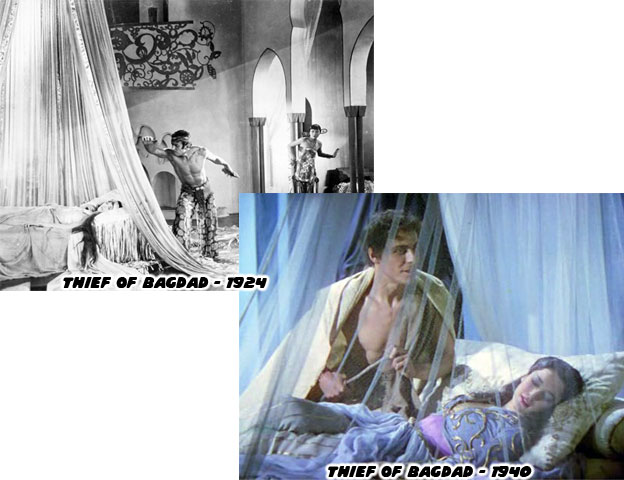
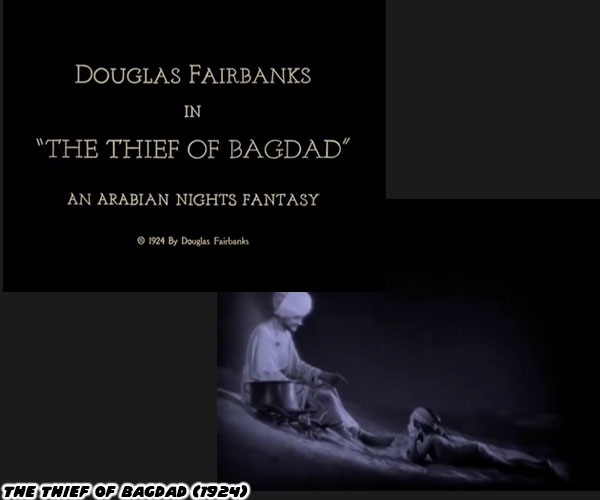
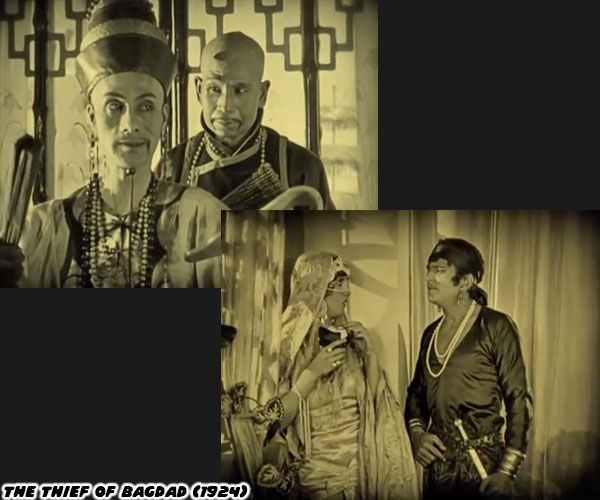
One of the earliest pieces of pop culture was an adaptation of Middle East story called the Thief of Bagdad. I have talked about Hollywood white washing characters before and having minorities cast as villains. When I was talking about F.A.N.G. I mentioned that the West created characters far more offensive than anything Capcom could do. When it came to the Middle East you could expect white actors to play the lead roles. It wasn't the white-washing that stuck with audiences as much as it was the stories. The fantasy created in this part of the world was amazing. Flying carpets, shape-changers and winged horses were visualized in film. They were early attempts at special effects and some of the illusions the pioneers created were well done. The hero of the films, Ahmed, would travel to some exotic locations, including active volcanoes and the bottom of the sea. The early effects artists had to figure out how to create the illusion of weightlessness and the early makeup artists had to create passable monsters for film. These characters and settings would be revisited again and again by Hollywood. Even great animated features like Disney's Aladdin and The Thief and the Cobbler had borrowed liberally from the Thief of Bagdad.
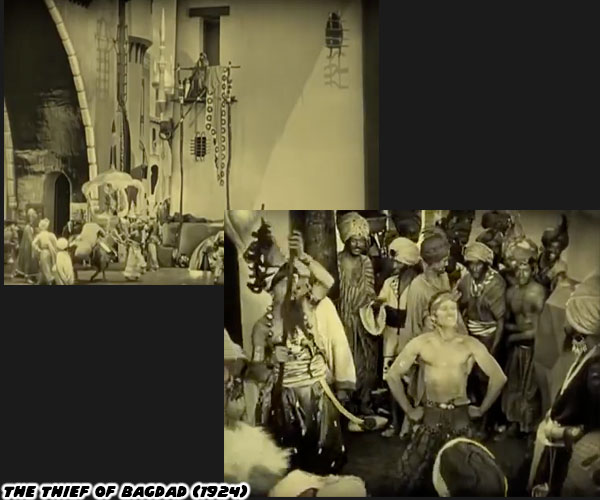
In doing so the studios were exposing countless generations in the USA as well as around the world to the Arabian myths. What was interesting was how benevolent Islam had been presented in these early pop culture pieces. If you ever get a chance please watch the 1924 version of the Thief of Bagdad. It is a silent film but the mythology is not changed to fit western tastes. Imam, the Holy Man that narrates the story and is seen at the beginning and end of the film quotes the Quran and gives praise to Allah. He appears several more times in the film guiding the hero Ahmed, as played by Douglas Fairbanks (who had attained a level of fame in his era that could be considered the equivalent of George Clooney+Brad Pitt+Johnny Depp). It would be almost impossible to film a movie like this today, especially with a big name white actor playing a Muslim. But that era was far different, and surprisingly very accepting of the tenants the film described. Imam was very warm and humble, almost Christ-like with his generosity and wisdom. He helped set Ahmed on the right path after being tortured and whipped by his royal captors. A warm religious figure, even from a different faith, would have gone over very well in turn of the century America. Sadly those days are gone and may never come again. Needless to say the early movies, whether in color or black and white created a world that fans wanted to dig into.
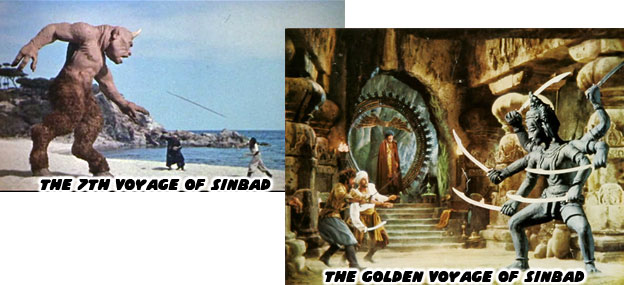
Other stories from the Arabian Nights would be adapted to the big screen. None were more popular or successful than the Sinbad films. Of course the characters were white washed as well but the settings and situations remained based strictly in Arabian fantasy. An effects artist named Ray Harryhausen helped create monsters that the heroes would do battle with. Whether it was a cyclops, medusa, skeleton warrior or kraken the films made the impossible look real. Haryrhausen would painstakingly hand animate tiny models and match them to the actors performances. There was no CGI in the early days of cinema so Harryhausen had to combine props, models and stop-motion animation in order to achieve a desired effect. Many of the sequences he animated withstood the test of time and set the bar for future visual effects artists to meet. Hollywood was doing a fantastic job of bringing the audience into the world of Arabian myth. Many young artists and designers around the world were growing up on these films. As entertainment formats changed some studios looked for ways of incorporating these myths into their own titles.
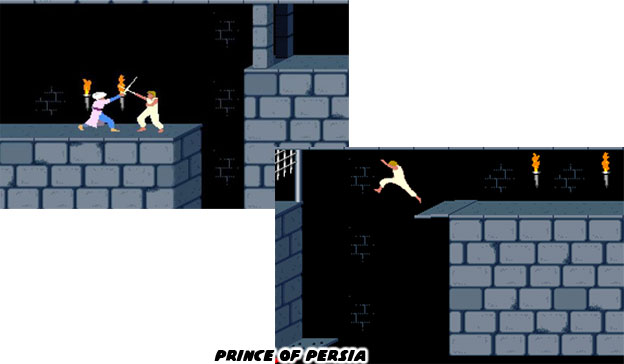
One of the great all-time video games was set in the ancient world . Prince of Persia debuted in 1989 and did a great job of capturing the spirit of mythical Arabia. There was a bad guy, a princess, a hero, some magic, exotic locations and sword fights. The PC game by Broderbund was a hit and eventually found its way on multiple systems, consoles and handhelds. It would receive sequels and reboots but thankfully always retained its location and theme. It was not the first game set in the ancient world and certainly not the last. The Arabian Nights mythology was the basis for several arcade games. The first major title was published by Atari. Arabian was released in 1983, it was actually developed by Sun Electronics. The game featured a digitized score made up of many classical music pieces. Each stage was introduced in the pages of a book, as if you were entering the actual Arabian Nights series. The hero in the game was a tiny figure that wore a turban and fought mythical monsters with his hands and sword. The mechanics of the game were ahead of their time. The prince could jump, crawl and climb throughout the maze-like stages. Most games were having problems figuring out how to do the most basic of controls. The original Mario Bros. was released the same year as Arabian and featured a character that could "only" jump. Granted Mario became a superstar and the prince disappeared into the footnotes of history. To be fair Arabian predicted the gameplay that would become a staple in every adventure title, and especially in the Prince of Persia.
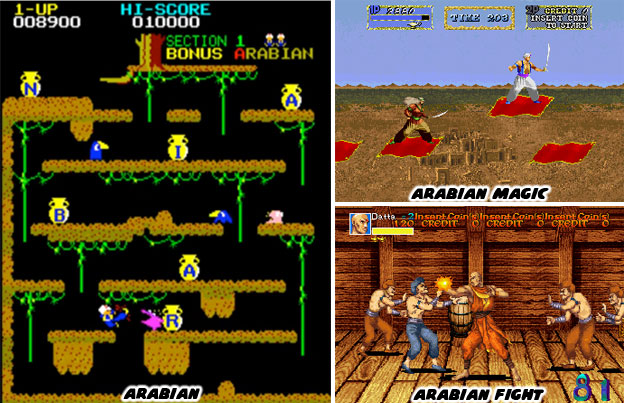
The backdrop of ancient Arabia would be used in two rarely seen arcade titles. Taito unveiled Arabian Magic and Sega unveiled Arabian Fight both in the same year, 1992 to be precise. Both games were brawlers, the same format used in classic games like Double Dragon and Final Fight. Players could control one of multiple characters, each with their own strengths and weaknesses and have a go at the title alone or with a bunch of friends. Both games featured exotic locations, from sailing ships, to temples and even battles while riding atop flying carpets. Both games also featured multiple types of opponents, including assassins, soldiers and the undead. Both games even featured a magic system that allowed them to create more damage to their opponents than fists or weapons ever could. The magic system in Arabian Magic was much harder to use. Players could unlock a new "spell" only if they defeated the djinn or genie that acted as a boss character. Even if the player had a magic in their inventory they could only use it once. There was none of this three wishes stuff so players had to save their magic for when they truly needed it.
In Arabian Fight the characters could perform the magic attacks multiple times and recharge the system as well. Both games were rare in the arcade. Sega was showing off its new System 32 hardware, capable of presenting sprites that were much larger than the competition. Plus these sprites featured more colors and more frames of animation than the game engines used by other studios. The System 32 hardware was also capable of scaling sprites on the fly, displaying transparencies and other graphical effects that were put to use in creating visuals that hadn't been seen in any other arcade title. The Taito game was visually impressive as well. The amount of detail that was crammed into each level was amazing. Unfortunately the game seemed to lack polish. The animation was spotty in places and the control was not as tight as it could have been. Of all the Arabian themed games that had ever come out I think Arabian Magic was aesthetically once of the best. The character designs were superb, the costumes, stages, djinn and opponents were all well done and correct for the history they were representing. Arabian Fight was simply too animé in design and presentation. The characters looked like typical Japanese cartoon characters but dressed in costumes, rather than actual Arab, Indian, African or Asian figures.
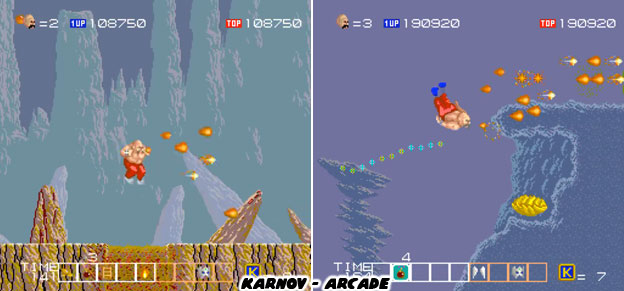
One of the most interesting video game characters was based on Arabian storytelling traditions. Karnov appeared in his own arcade game in 1987. The title by Data East featured the fire-breathing strongman on an adventure in the ancient world. He fought dozens of mythical creatures, including griffons, gorgons (Medusa), mermaids and other fantastic beasts from Arab, Indian, Assyrian, Greek and Egyptian mythology. In the game players could unlock bombs, ladders, wings and other bonuses that would help Karnov complete his journey. Karnov was physically gifted, in addition to his strength and fire-breathing ability he could also swim like a fish and when equipped with a golden wing backpack he could fly. The developers created many wonderful stages highlighting the diverse gameplay features. The title was difficult in that it did not give you hints as to what type of item had to be used in order to reach the end of the stages. Many items were hidden throughout the levels and players were rewarded by exploring their surroundings. When I think of the design of classic adventure games and even some modern adventure games like God of War I see some traditions that were started in Karnov. Through his adventure the character would end up symbolizing the myth of the Arabian hero. He would be blessed with magical abilities that would be applied to other game characters across multiple genres.
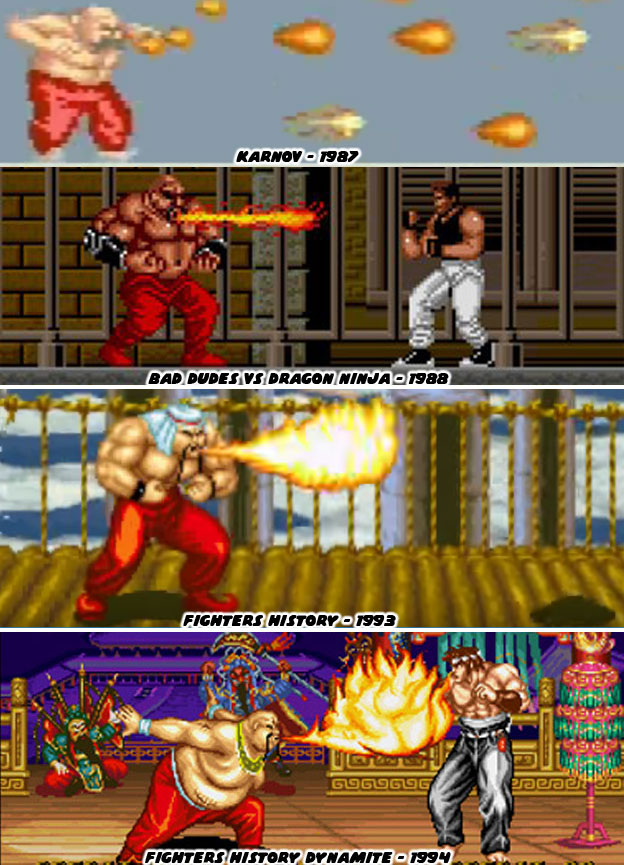
The trademark of the character was his fire-breathing attack. He could spit fireballs or breath large clouds of flame. Each time he returned, whether it was a cameo character in Bad Dudes, or as a boss in the Fighter's History fighting series, he retained the ability to breathe fire. These things, these techniques were pulled partially from myth and partially from fact. In classical literature it was Indian and sometimes Arab characters that could breathe fire. These characters would come in handy when having to do battle with supernatural monsters. Yet there were people in the real world that were considered true "fire eaters." Street and circus performers were known for their ability to spit fire, juggle flaming chains, walk on fire and even eat hot coals without injuring themselves. Some of these performances were done by religious and military officials. What game designers did in Japan and the USA was sprinkle some basic understanding of a region and mix it with a liberal dose of fiction. I had talked about Indian characters and yoga as the inspiration for magical fighters on an earlier blog. Karnov may have been the first fire-breathing mystic in a game but it was Dhalsim from Street Fighter that became the most popular.
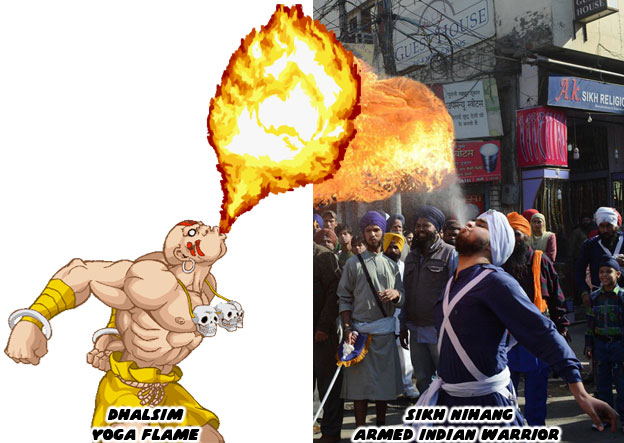
Game developers took the elements that made the Arabian characters memorable in the fantasy stories and began including them in various games. In many instances they were not far removed from the classic hero. Whether they worked in the game or not was subject to debate. In the next blog we will look at how Karnov began a questionable legacy. As always if you enjoyed this blog and would like to sponsor me please visit my Patreon page and consider donating each month, even as little as $1 would help make better blogs and even podcasts!
The Arabian Peninsula, Saudi Arabia for the most part, is a bridge of cultures and customs. It was a hub of commerce from North Africa to South Asia, there was tremendous influence in the region to the people, tribes, and traditions of the surrounding areas. From Russia, China and India to Egypt, Sudan and Ethiopia, there were some connective tissues that united this region of the world thanks to the Middle East. When it came to pop culture there were a few things that people knew of the area. It was rich in oil, had survived countless conflicts from internal and external forces and had remained culturally isolated for a good portion of its history. When it came time to present characters from this part of the world the writer, artists or producer often relied on trope. The majority looked at one specific point of reference The folk tales or ancient Arabia could be found in the book One Thousand and One Nights, sometimes printed as 1001 Arabian Nights.
It was a collection of myths from South Asia and the Middle East. There were stories of magicians, monsters, exotic locations, epic battles, great heroes and treacherous villains. Little by little the stories of various cultures, some which were riddles or short poems, would be added to the anthology. The character of Scheherazade would become the storyteller in the series. Just about every myth that people associated with the Middle East, including the tales of Sinbad and Aladdin had come from this book. The stories from 1001 Arabian Nights had the same romantic elements found in many western literature pieces. There were princes and princesses, dragons, magic and all sorts of fantastic elements. Some stories even were precursors to science fiction as they mentioned being able to travel to distant planets and having machines that appeared like robots and androids. It could actually be argued that some western myths were stolen from the Arabic tradition.
One of the earliest pieces of pop culture was an adaptation of Middle East story called the Thief of Bagdad. I have talked about Hollywood white washing characters before and having minorities cast as villains. When I was talking about F.A.N.G. I mentioned that the West created characters far more offensive than anything Capcom could do. When it came to the Middle East you could expect white actors to play the lead roles. It wasn't the white-washing that stuck with audiences as much as it was the stories. The fantasy created in this part of the world was amazing. Flying carpets, shape-changers and winged horses were visualized in film. They were early attempts at special effects and some of the illusions the pioneers created were well done. The hero of the films, Ahmed, would travel to some exotic locations, including active volcanoes and the bottom of the sea. The early effects artists had to figure out how to create the illusion of weightlessness and the early makeup artists had to create passable monsters for film. These characters and settings would be revisited again and again by Hollywood. Even great animated features like Disney's Aladdin and The Thief and the Cobbler had borrowed liberally from the Thief of Bagdad.
In doing so the studios were exposing countless generations in the USA as well as around the world to the Arabian myths. What was interesting was how benevolent Islam had been presented in these early pop culture pieces. If you ever get a chance please watch the 1924 version of the Thief of Bagdad. It is a silent film but the mythology is not changed to fit western tastes. Imam, the Holy Man that narrates the story and is seen at the beginning and end of the film quotes the Quran and gives praise to Allah. He appears several more times in the film guiding the hero Ahmed, as played by Douglas Fairbanks (who had attained a level of fame in his era that could be considered the equivalent of George Clooney+Brad Pitt+Johnny Depp). It would be almost impossible to film a movie like this today, especially with a big name white actor playing a Muslim. But that era was far different, and surprisingly very accepting of the tenants the film described. Imam was very warm and humble, almost Christ-like with his generosity and wisdom. He helped set Ahmed on the right path after being tortured and whipped by his royal captors. A warm religious figure, even from a different faith, would have gone over very well in turn of the century America. Sadly those days are gone and may never come again. Needless to say the early movies, whether in color or black and white created a world that fans wanted to dig into.
Other stories from the Arabian Nights would be adapted to the big screen. None were more popular or successful than the Sinbad films. Of course the characters were white washed as well but the settings and situations remained based strictly in Arabian fantasy. An effects artist named Ray Harryhausen helped create monsters that the heroes would do battle with. Whether it was a cyclops, medusa, skeleton warrior or kraken the films made the impossible look real. Haryrhausen would painstakingly hand animate tiny models and match them to the actors performances. There was no CGI in the early days of cinema so Harryhausen had to combine props, models and stop-motion animation in order to achieve a desired effect. Many of the sequences he animated withstood the test of time and set the bar for future visual effects artists to meet. Hollywood was doing a fantastic job of bringing the audience into the world of Arabian myth. Many young artists and designers around the world were growing up on these films. As entertainment formats changed some studios looked for ways of incorporating these myths into their own titles.
One of the great all-time video games was set in the ancient world . Prince of Persia debuted in 1989 and did a great job of capturing the spirit of mythical Arabia. There was a bad guy, a princess, a hero, some magic, exotic locations and sword fights. The PC game by Broderbund was a hit and eventually found its way on multiple systems, consoles and handhelds. It would receive sequels and reboots but thankfully always retained its location and theme. It was not the first game set in the ancient world and certainly not the last. The Arabian Nights mythology was the basis for several arcade games. The first major title was published by Atari. Arabian was released in 1983, it was actually developed by Sun Electronics. The game featured a digitized score made up of many classical music pieces. Each stage was introduced in the pages of a book, as if you were entering the actual Arabian Nights series. The hero in the game was a tiny figure that wore a turban and fought mythical monsters with his hands and sword. The mechanics of the game were ahead of their time. The prince could jump, crawl and climb throughout the maze-like stages. Most games were having problems figuring out how to do the most basic of controls. The original Mario Bros. was released the same year as Arabian and featured a character that could "only" jump. Granted Mario became a superstar and the prince disappeared into the footnotes of history. To be fair Arabian predicted the gameplay that would become a staple in every adventure title, and especially in the Prince of Persia.
The backdrop of ancient Arabia would be used in two rarely seen arcade titles. Taito unveiled Arabian Magic and Sega unveiled Arabian Fight both in the same year, 1992 to be precise. Both games were brawlers, the same format used in classic games like Double Dragon and Final Fight. Players could control one of multiple characters, each with their own strengths and weaknesses and have a go at the title alone or with a bunch of friends. Both games featured exotic locations, from sailing ships, to temples and even battles while riding atop flying carpets. Both games also featured multiple types of opponents, including assassins, soldiers and the undead. Both games even featured a magic system that allowed them to create more damage to their opponents than fists or weapons ever could. The magic system in Arabian Magic was much harder to use. Players could unlock a new "spell" only if they defeated the djinn or genie that acted as a boss character. Even if the player had a magic in their inventory they could only use it once. There was none of this three wishes stuff so players had to save their magic for when they truly needed it.
In Arabian Fight the characters could perform the magic attacks multiple times and recharge the system as well. Both games were rare in the arcade. Sega was showing off its new System 32 hardware, capable of presenting sprites that were much larger than the competition. Plus these sprites featured more colors and more frames of animation than the game engines used by other studios. The System 32 hardware was also capable of scaling sprites on the fly, displaying transparencies and other graphical effects that were put to use in creating visuals that hadn't been seen in any other arcade title. The Taito game was visually impressive as well. The amount of detail that was crammed into each level was amazing. Unfortunately the game seemed to lack polish. The animation was spotty in places and the control was not as tight as it could have been. Of all the Arabian themed games that had ever come out I think Arabian Magic was aesthetically once of the best. The character designs were superb, the costumes, stages, djinn and opponents were all well done and correct for the history they were representing. Arabian Fight was simply too animé in design and presentation. The characters looked like typical Japanese cartoon characters but dressed in costumes, rather than actual Arab, Indian, African or Asian figures.
One of the most interesting video game characters was based on Arabian storytelling traditions. Karnov appeared in his own arcade game in 1987. The title by Data East featured the fire-breathing strongman on an adventure in the ancient world. He fought dozens of mythical creatures, including griffons, gorgons (Medusa), mermaids and other fantastic beasts from Arab, Indian, Assyrian, Greek and Egyptian mythology. In the game players could unlock bombs, ladders, wings and other bonuses that would help Karnov complete his journey. Karnov was physically gifted, in addition to his strength and fire-breathing ability he could also swim like a fish and when equipped with a golden wing backpack he could fly. The developers created many wonderful stages highlighting the diverse gameplay features. The title was difficult in that it did not give you hints as to what type of item had to be used in order to reach the end of the stages. Many items were hidden throughout the levels and players were rewarded by exploring their surroundings. When I think of the design of classic adventure games and even some modern adventure games like God of War I see some traditions that were started in Karnov. Through his adventure the character would end up symbolizing the myth of the Arabian hero. He would be blessed with magical abilities that would be applied to other game characters across multiple genres.
The trademark of the character was his fire-breathing attack. He could spit fireballs or breath large clouds of flame. Each time he returned, whether it was a cameo character in Bad Dudes, or as a boss in the Fighter's History fighting series, he retained the ability to breathe fire. These things, these techniques were pulled partially from myth and partially from fact. In classical literature it was Indian and sometimes Arab characters that could breathe fire. These characters would come in handy when having to do battle with supernatural monsters. Yet there were people in the real world that were considered true "fire eaters." Street and circus performers were known for their ability to spit fire, juggle flaming chains, walk on fire and even eat hot coals without injuring themselves. Some of these performances were done by religious and military officials. What game designers did in Japan and the USA was sprinkle some basic understanding of a region and mix it with a liberal dose of fiction. I had talked about Indian characters and yoga as the inspiration for magical fighters on an earlier blog. Karnov may have been the first fire-breathing mystic in a game but it was Dhalsim from Street Fighter that became the most popular.
Game developers took the elements that made the Arabian characters memorable in the fantasy stories and began including them in various games. In many instances they were not far removed from the classic hero. Whether they worked in the game or not was subject to debate. In the next blog we will look at how Karnov began a questionable legacy. As always if you enjoyed this blog and would like to sponsor me please visit my Patreon page and consider donating each month, even as little as $1 would help make better blogs and even podcasts!
Thursday, July 23, 2015
Representation Matters! Or, what happened to Birdie, final part...
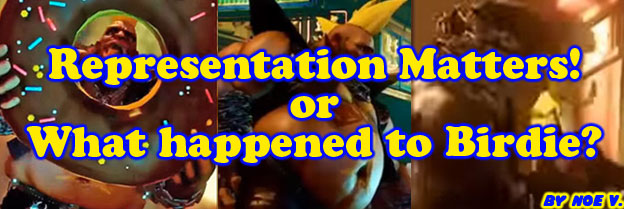
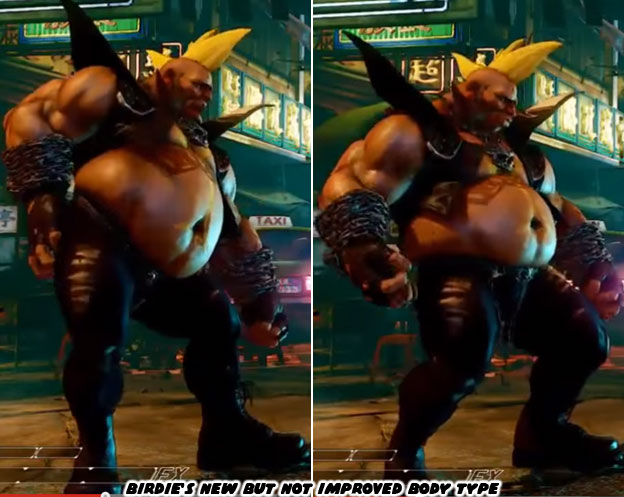
This whole series was sparked after seeing what the Street Fighter V team had done to Birdie. Obviously I did not like it. Nowhere in the legacy of Birdie's previous appearances was he ever presented as a fat slob. Why would the studio start doing this to him now? In an interview with EventHubs Matt Dahlgren the Director of Brand Marketing & eSports at Capcom said of the updated designs "A good example for our tone is Birdie… I don't think anyone really saw him coming, but we had this really cool character design — he's practically a new character in himself — but he doesn't take up one of the slots we have for brand new fighters." If Birdie is "practically a new character", with mostly new moves then why not introduce a new character in that spot? Why would they force Birdie into a template that was not his original? My friend challenged me to redesign Birdie so that he would make sense in Street Fighter V. I said that was not why I was upset with the design. Capcom did not redesign Ken, Ryu, Chun-Li, Cammy or the Dictator for the game. Granted they discolored the skin of Charlie Nash and left him with scars and staples but that was part of his return. If the studio did not need to change any of the other returning characters why would it be acceptable to do that to Birdie? I saw two reasons why, because he was black or because he was a punk. If there was a third reason I'd like to hear it, especially from the producer.
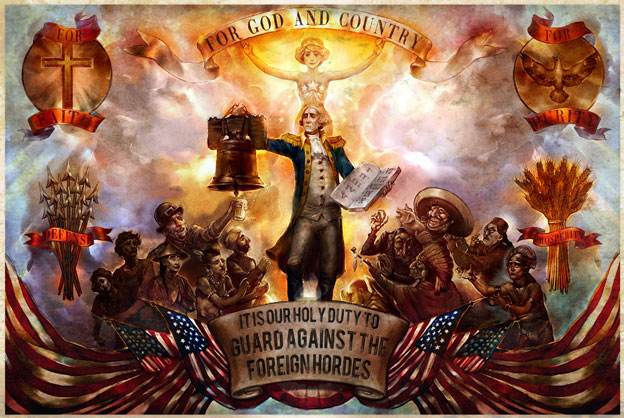
Representation was one of the most important things that defined society yet was also something rarely spoken of. We lived in a post-racial world where every member of society had an equal opportunity to advance. Or so that was what we were taught. It was something that the majority, the people at the top of the social ladder, did not necessarily see or understand. Minorities by comparison could feel the effects of representation on a daily basis. They did not always see themselves in television, movies or games. If they did the people were often portrayed with negative stereotypes. These images added up. They effected the psyche of consumers, they became subconscious biases. Years of seeing minorities in only one light, of hearing about minorities spoken about in only one way, especially in the news, had a detrimental effect on society. Just see how divided the USA was when the words "illegal immigrants" or "thugs" were spoken on television. They were trigger words. Those words caused a reaction far greater than their original meaning. This post-racial society was not as inclusive and welcoming as we would like it to be. The images that audiences were bombarded with on a daily basis could be toxic. Pictures and videos could be laced with layers and layers of subversive messages. The way minorities were visualized was more powerful than any derogatory term.
Fans had supported Street Fighter for almost 30 years because it introduced us to a library of fighters of every color and from every nation. These characters were not all heavy-handed stereotypes and that was part of the reason why they were so popular. During the early days of Street Fighter II's development Anabebe, Great Tiger, Zhi Li and Vodka Gobalsy were a sampling of stereotypes that the studio designers had identify and break. In doing so they were freed from preconceptions, they were able to create a title with more diversity and inclusiveness than any other fighting game ever made. Only in later revisions was it decided that the fighters should come from different walks of life. The musician from Jamaica and the chef from Mexico were two of the weakest reasons to introduce a new character. The fighter became secondary to the profession. Which was an odd choice considering what the name of the game was.
If you were not a member of a minority group it could be hard to explain what the images in media meant to us. For example it was hard for me to find positive Mexican-American role models on US television when I was growing up. I think officer Poncherello from the show CHIPs was the only person I could remember. Everyone else that remotely looked like a member of my family was usually a bad guy that spoke broken English and had no redeeming qualities. There weren't any Latino game characters that I could think of while growing up, let alone in a popular game. Many years ago when I heard that a Mexican would be added to the roster of Super Street Fighter II I was elated. It was as if the people at the top of the ladder were validating our culture. T. Hawk had some unique moves and a distinct style that worked well compared to the other fighters. More than 15 years later when a masked Mexican wrestler was announced for Street Fighter IV I was over the moon with excitement. Pro wrestling was something that Mexico was known for, now would be our chance to shine. Or so I thought. Then I saw El Fuerte, then I listened to him, then I played as him. This was not what Mexican wrestling was about. This was not the best masked wrestler that Capcom could have come up with. At least he was not the best masked wrestler that the previous designs teams could have come up with. El Fuerte was a joke and when T. Hawk returned he was a joke too. Then a Turk was introduced and he was a joke. Then a fat character was introduced and he was a joke. I wondered what had happened in Street Fighter IV. The diversity in the cast was an excuse to point and laugh at those that did not have traditional Asian fighting roots.
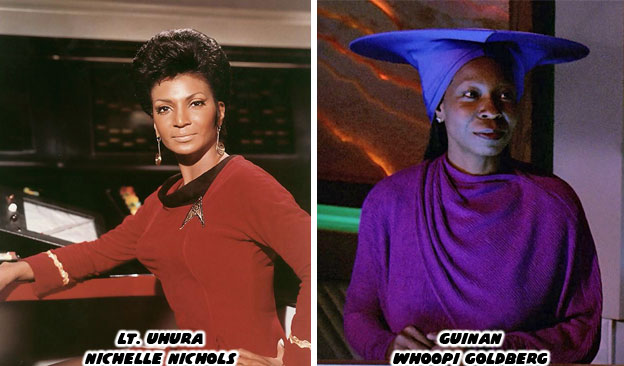
The best example on the importance of positive representation came from actress Whoopi Goldberg. “Well, when I was nine years old, Star Trek came on, I looked at it and I went screaming through the house, ‘Come here, mum, everybody, come quick, come quick, there’s a black lady on television and she ain’t no maid!’ I knew right then and there I could be anything I wanted to be.” The television show Star Trek was a very progressive show, especially for 1963 sensibilities. There was more diversity in that series than in just about any other show on television. Nichelle Nichols played Lt. Uhura, the communications officer that Whoopi spoke of. She carried herself with great dignity and was never written as a second-class citizen. It was a very promising look at the future, one in which all minorities were represented and they all had equally important jobs. Whoopi would find herself playing a character called Guinan in Star Trek: The Next Generation. It was role that influenced a whole new generation of fans. The thing was that Whoopi's performance did not only effect black audiences but also white ones as well. Whoopi was joined by black actors Michael Dorn as Lt. Worf and Levar Burton as Lt. Commander Geordi La Forge (who was also playing a blind character) in one of the most inclusive casts on television. But that level of representation had fallen by the wayside in recent years.
Today young minorities were not watching television, they were playing video games. They were learning what society thought of them based on the games they played. Since the majority of game heroes were white males then it was pretty obvious who they should look up to. When they saw a minority in a game then they were usually bad guys. However on that rare occasion when they saw a powerful minority in a game it went a long way towards how the audiences saw themselves. Now imagine if each time a minority turned on a fighting game the black character only knew how to box or that the Mexican character only knew professional wrestling. What did they think of when White and Japanese characters could do everything? There were some truths and some untruths to the character designs in all fighting games, not just Street Fighter. The most idolized karate champions in history were Japanese and the pro wrestlers that wanted to learn the art of high flying were trained in Mexico. That was basic understanding of fight culture but the thing was that the culture was not set in stone. Like all cultures it was constantly changing. It turned out that there were many black kung-fu and karate champions. Some of the greatest masked wrestlers were Japanese and Brazilians shaped the history of ju-jitsu. But that was rarely, if ever, shown in games.
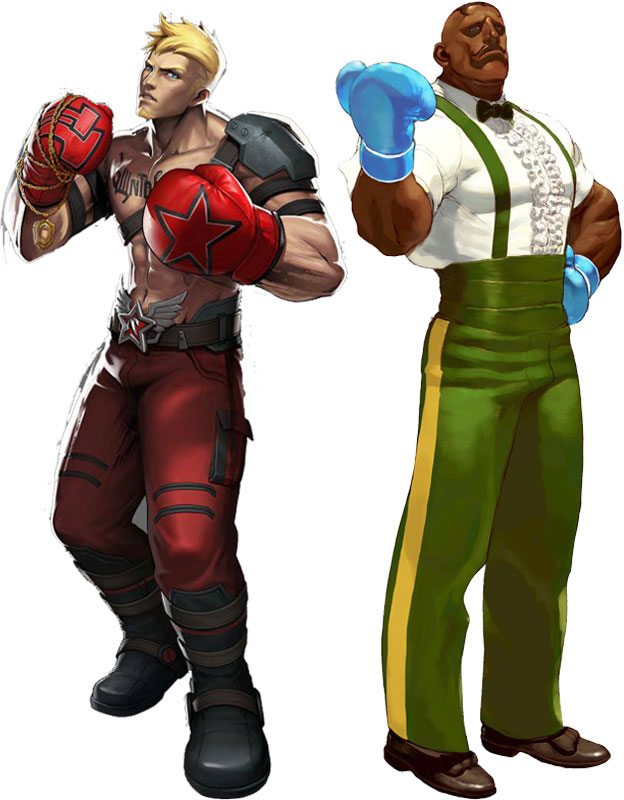
Blacks had been a major force in professional boxing for more than a century, this was true. But there had also been boxing champs from Latin American countries, from Eastern European countries, from Asia and Oceana. Those fighters were not often represented in games. Instead audiences were shown the extremes of one color. This decision was often made at the design stage because it was just easier to present one ethnicity with one fighting art. This pattern was repeated by every other studio. The rude and aggressive black fighter as well as the calm and gentlemanly black fighter had both been seen in Street Fighter. The comparisons between Evander Holyfield and Mike Tyson to Dudley and M. Bison were valid. But then there were the details that the developers and even audiences didn't completely catch. Dudley was patterned on people like Holyfield but also Joe Lewis, Jack Dempsy and UK boxing champ Lennox Lewis. Like many fighters in the series Dudley was painted as a heavy-handed stereotype of a nation. Lewis was always polite and cordial in his interviews but Dudley was on a completely different level. His butler would bring him tea in between rounds, he tended to a rose garden on his country estate and he drove vintage Jaguars in the game. Of course he did all of this while wearing boxing gloves which was absurd but made sense in the Street Fighter universe. After all, Ryu wore the same uniform everywhere he went, even when he was not fighting. This could certainly be argued as being a stereotype and it was. But like a cancer a stereotype could be benign or malignant. Dudley was benign.
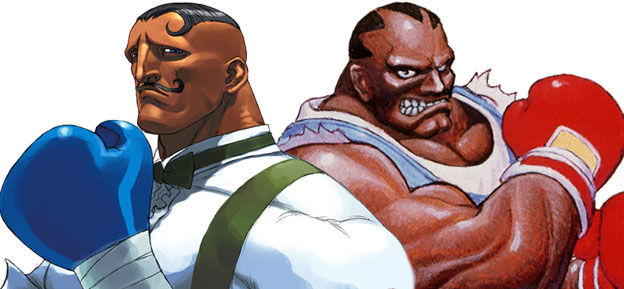
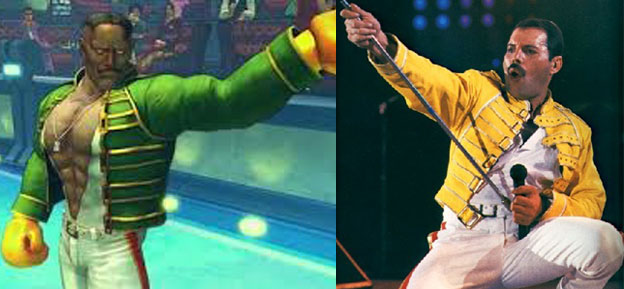
When Capcom gave Dudley an alternate costume in Street Fighter IV it was modeled after the jacket, shirt and striped pants worn by Freddie Mercury during his famous Wembly Stadium concert. The legendary singer / songwriter from Queen was considered to be one of the greatest pop music voices ever. Freddie was synonymous with British culture. His fair skin and broad mustache made him appear like a true Cockney. The thing was that Freddie wasn't from England. Freddie was born Faroukh Bulsara in Zanzibar (Tanzania) and followed the ancient Iranian religion of Zoroastrianism. His heritage was a world away from Queen Elizabeth and the Church of England, yet his talents were embraced by an entire nation.
The Japanese admired the aristocracy, they admired refined culture and idealized the Victorian era. This was part of the reason why characters like Elena from Street Fighter III had to be educated in Paris and why the not-too-delicate Emilie "Lili" De Rochefort from Tekken was from France as well. Being a member of the rich elite were some of the reasons why Dudley was painted in such a positive light. The idealized images of England and Europe were sometimes met with heartbreak when Japanese visitors traveled abroad. For example when they discovered that France was nowhere near as soft and pastel as the Studio Ghibli films had them believe it caused a nervous breakdown for some known as Paris Syndrome. Japanese audiences had been fed a fable about Paris and England being the peak of refined society, it was too much to bear that they were as dirty and unkempt as any other major metropolis. If the Japanese could be wrong about European nobility then they could be wrong about punk culture.
Punks were not supposed to be upper class like Dudley and therefore punks were not supposed to be admired, this message was loud and clear from the designers at Capcom. But it also showed how little they knew about the culture. Punks were not fat and lazy slobs, those would be politicians. The reason punks looked and dressed a certain way was because they were counter-culture, they were trying to be seen and heard. They represented the masses that were disenfranchised with society, especially with politics and classicism. They were keenly aware of what was going on in society and despite the shocking haircuts and attire they could be well spoken and intelligent. Dudley was a member of the elite and while he did fight for and earn his championship he had the luxury of never having to fight in the first place. He was born into money and power and could have done anything he wanted. A punk did not have that freedom, they were often born into poverty and had to fight for everything they had. There was an interesting dynamic at work between British punk culture and the aristocracy. The majority identified with the Royal Family in England however kids, especially minorities, could identify more with the punks because nothing came easy for them. Everywhere a punk went they were stared at and judged. In media they were vilified and demonized. It was something that minorities had become used to.
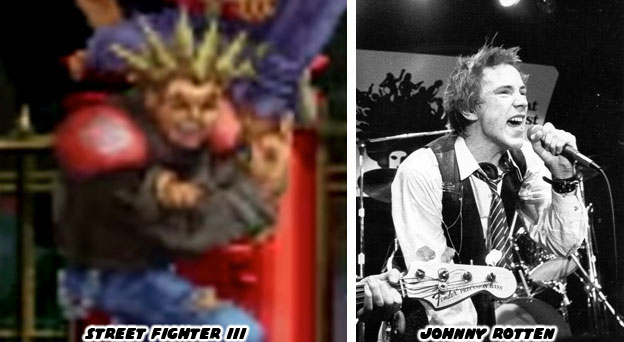
Imagine a young minority playing Street Fighter and seeing Dudley presented in such a positive light. Someone that not only outfought but also outclassed the bully boxer. Imagine how important it was for a young Iranian to learn what a profound influence Freddie had on the world. They too could become anything that they wanted if they worked hard enough at it. It would help make them fans on a completely different level. Now imagine that a minority punk was turned into a fat slob. The message was clear, the aristocrat should be emulated, not the guy from the streets. Punks had no redeeming qualities, they were not cool at all according to Street Fighter V. Kids that identified with Birdie were pretty much fat shamed at that point. Sure Freddie Mercury could represent British culture but he was not the only musician to do so. Punks and "shock rockers" like Johnny Rotten and Sid Vicious from the Sex Pistols and the enigmatic David Bowie could have also fit the bill. Also unlike Mercury, the three aforementioned musicians were actually from England. Just imagine how different the series could be if the team treated Birdie with the same level of respect they had for Dudley.
Representation had been a part of the greatness of the designs in Street Fighter. Any fighting game could have men, women and minority characters. In fact many fighting games did have a tremendous amount of diversity. It was how that diversity was represented that was more important than the inclusion. The Tekken series for example had dozens of female characters from around the world. Yet these women were either young or played up sexually. They were poured from the same mold with only the costume and color of their skin making them different. It was a superficial change that was seen in many 2D and 3D fighting games. Juri and C. Viper from Street Fighter IV were very sexualized as well but they were also the two newest faces. They didn't necessarily represent the legacy designs. Look at how women had been portrayed in Street Fighter prior to 2008. Women could represent the major fighting arts. A karate master could be a man but could also be a girl. A kung-fu master could be a man but also a young woman.
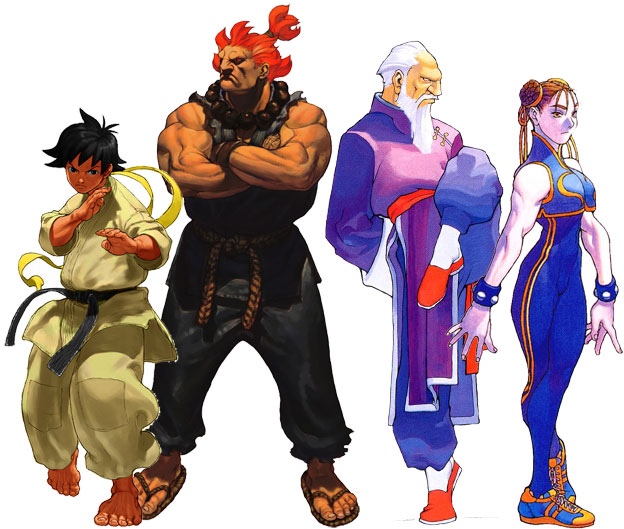
The developers working on the newer Street Fighter games needed to re-evaluate the role of their characters before the first 3D model was even built. They needed to work harder on their designs and consider the ways that they were representing different cultures and different arts. I do not think that making a minority character the star of the next game would automatically make the series better. The game had always revolved around Ken and Ryu and that should never change. The way that the game presented minorities could be done with more consideration though. Consideration was something that stopped the team from putting Anabebe, the Great Tiger and Vodka Gobalsky in SF II. In their place were three iconic fighters that were not necessarily a slap in the face to the nationalities represented. When Turkish oil wrestling or yagli gures was put in Street Fighter IV the Turk was presented beet red with a blue dome haircut. Players had to constantly oil themselves up so they could slide across the floor and perform silly attacks. How was this representation of the culture and fighting art different than the Great Tiger? The designers were not able to make a Dhalsim-like change to Hakan before he debuted. When I saw T. Hawk sitting on opponents and going "How" when I saw El Fuerte making Quesadilla Bombs, when I saw Birdie stuffing his face with donuts and bananas I got a distinct feeling of disrespect. I saw the ugliness of stereotypes become malignant with those representations.
Did the developers in Japan simply have no confidence in creating a serious minority character? We saw how a powerful black fighter was turned into a fat white guy during the development of SF IV. It was as if the team could not wrap their collective heads around a black not being a boxer or a silly karateka. So they erased him from the lineup, took his costume away and gave it to Ken as an alternate uniform. Instead of creating Blanka out of Anabebe they went backwards. As a life-long fan of the series that decision would never settle with me. When I thought about what the team did to Birdie in SF V I could see shades of that same misrepresentation. The consideration that the team missed was seen on how different body types could be represented. The cancer had returned.
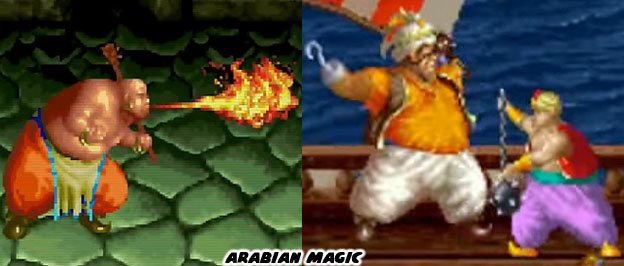
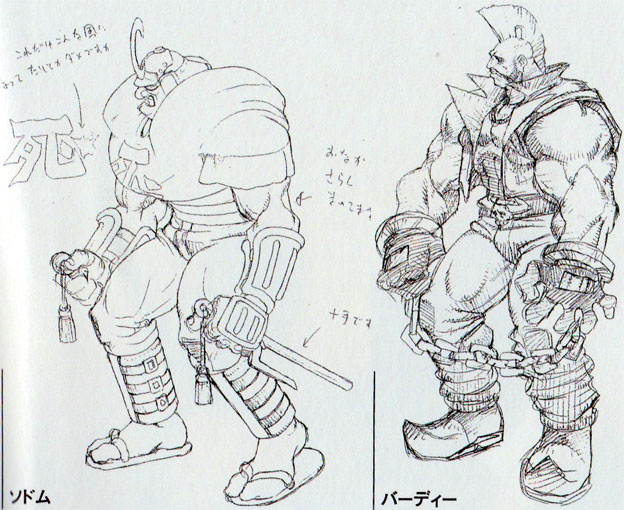
I had mentioned where fat body types had been done well as fighters and adventurers in other games. Fat characters used to represent strength, power and success in ancient stories. In modern fighting tournaments there were boxers, mixed martial artists and wrestlers that were both fat and successful. It was up to Capcom to think about their own legacy and where they wanted to go with it. At one point many years ago they were able to create fat characters that were powerful instead of goofy. At one point long ago they were able to present wrestlers and punks that were unique instead of jokes as well. Why did the team move away from those designs? Were they unaware of what they had done previously or did they choose to ignore it? When did sticking with classic designs become taboo at Capcom? Or did ignoring the rules only apply to minority characters? When popular fighting game YouTube commentator Maximillian Dood made a personal list of five people that should not return in Street Fighter V it consisted of Street Fighter IV characters Rufus (in the number 1 spot), Hakan, Seth, El Fuerte and Abel. Maximilian had his finger on the pulse of gamers and said what they were thinking. He knew that the designs, their control and place in the series were not as well done as the earlier fighters. Hopefully Capcom would listen to him if they wouldn't to me.
I "get" that Street Fighter was a series filled with fantastic characters that had impossible abilities. There were martial arts masters could kick with the force of a tornado or split boulders in half with a punch. They lived in a world where science fiction and fantasy were real. Yoga masters could float in the air, mad scientists could bring the dead back to life and beast men were real. This mix of different genres was refreshing. It was another reason why audiences kept coming back. On one side of the spectrum there were fighters that had realistic punches and kicks, they could have existed in this world. But on the extreme end there were fighters that could breathe fire and even "teleport" these things were improbable if not outright impossible.
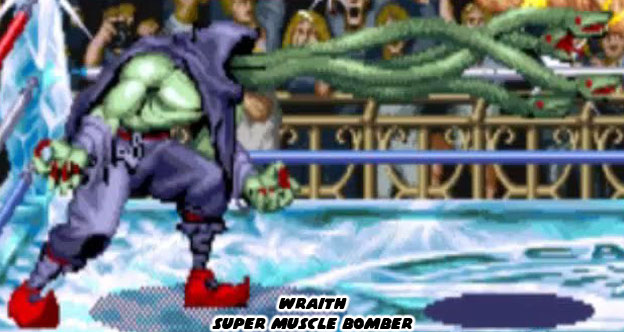
In the extended Capcom universe there were characters every bit as fantastic and as well done as those in Street Fighter. Take the Indian wrestler Wraith from Muscle Bomber / Saturday Night Slam Masters. The game actually took place in Street Fighter continuity. The character from New Dheli was 7' 2", a certifiable giant. He was equally mysterious with pasty green skin and covered in a hood and rags. He moved erratically and seemed to be some sort of ghoul. He had long red nails that he would use to slash the throats of opponents. He also had sharp jagged teeth which he used to maul opponents like a rabid dog. Similar to Dhalsim he could even breath fire and had some sort of connection to the supernatural. One of his special attacks was absolutely bizarre. Snakes would burst from underneath his hood to bite opponents. It was a perfectly impossible attack that also made him memorable.
Here was the thing that made the Capcom fighting games unique when compared to every other studio. There was often a hidden truth, some basis in reality in the most memorable fighters and in their arts. It gave the character designs a bit more staying power in the genre. Ryu was inspired by the life and times of Mas Oyama and Yoshiji Soeno. Chun-Li was most likely inspired by Wing Chun and Bruce Lee. Ken Masters was most likely inspired by Joe Lewis and Bill "Superfoot" Wallace. We saw where Zangief came from, where even Dhalsim and Blanka originated from earlier in this blog. The special attacks also known as the "Fireball" moves had been written about in Chinese myth for years. Those attacks were called fa-jin and some kung fu masters claimed to be able to perform such moves to this day (granted they were invisible to the naked eye). Even the ShunGokuSatsu, or "Instant Hell Murder" of Gouki was based on the dim mak or death touch from Chinese legend.
A character as macabre as Wraith could never have existed in real life, or could he? Stop and think about it. A giant of a man, somebody with an undead gimmick that was impervious to harm and both frightened and delighted audiences. Yeah, I wonder where Tetsuo Hara could have based his design on…
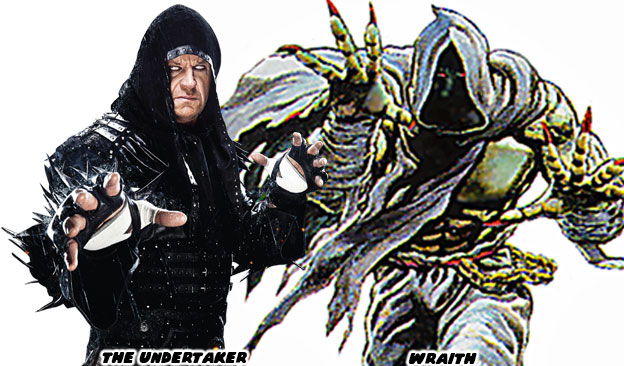
We knew that Wraith was an absurd character but he did not have to be presented silly in order for us to get that. Part of the charm of professional wrestling is how gimmick performers try not to break character so that the audience can stay entertained. We all know that pro wrestling matches are pre-determined and the stories shown on television are scripted, yet the fans choose to believe that this is real combat and these are real characters. Masked wrestling is an even more absurd concept, I think we all get this, but it is also a great form of entertainment. But to take the masked wrestler out of context and turn him into a silly chef then you dismiss the entire culture. These changes were done because it was the quick fix to make the character "different." By the same token we know that beast men were not real. If they were then they would look like the Amazon or Blanka. As it stood Blanka was a ferocious monster in his original incarnation, he did not have to become dumber as the series progressed. Birdie already had a shocking appearance, the studio did not have to go out of their way to make him fat and gross. When I saw what the studio did to him in Street Fighter V I knew that they took the shortcut, they took the low road. They went for the quick laugh and used a minority to reach the punchline. When it comes to representation these things are important, young audiences can see a powerful minority in their game and be inspired, or they can see a silly character and be disheartened. If you do not think there is an ethnic bias at play ask yourself this question, would Capcom make the main characters fat, gross or silly?
Capcom would probably not address any of the issues that I had brought up over the course of this series. After all they never responded to my other blogs. But I hope that my readers think about the importance of representation and challenge Capcom when something does not seem right for Street Fighter. I will always challenge the studio to try harder. To be better ambassadors to the world and stop thinking so insular about their designs. It would not hurt to revise, review and represent cultures with a modicum of dignity. If they could not introduce a minority character without giving them silly attacks or of stereotypical appearances then maybe they should not be in the game. My hope is that they get rid of the nonsense and bring back the real Birdie and look at how they are representing minority characters. Thank you for reading and I hope you share your thoughts with Capcom! As always if you enjoyed this blog and would like to sponsor me please visit my Patreon page and consider donating each month, even as little as $1 would help make better blogs and even podcasts!
Representation was one of the most important things that defined society yet was also something rarely spoken of. We lived in a post-racial world where every member of society had an equal opportunity to advance. Or so that was what we were taught. It was something that the majority, the people at the top of the social ladder, did not necessarily see or understand. Minorities by comparison could feel the effects of representation on a daily basis. They did not always see themselves in television, movies or games. If they did the people were often portrayed with negative stereotypes. These images added up. They effected the psyche of consumers, they became subconscious biases. Years of seeing minorities in only one light, of hearing about minorities spoken about in only one way, especially in the news, had a detrimental effect on society. Just see how divided the USA was when the words "illegal immigrants" or "thugs" were spoken on television. They were trigger words. Those words caused a reaction far greater than their original meaning. This post-racial society was not as inclusive and welcoming as we would like it to be. The images that audiences were bombarded with on a daily basis could be toxic. Pictures and videos could be laced with layers and layers of subversive messages. The way minorities were visualized was more powerful than any derogatory term.
Fans had supported Street Fighter for almost 30 years because it introduced us to a library of fighters of every color and from every nation. These characters were not all heavy-handed stereotypes and that was part of the reason why they were so popular. During the early days of Street Fighter II's development Anabebe, Great Tiger, Zhi Li and Vodka Gobalsy were a sampling of stereotypes that the studio designers had identify and break. In doing so they were freed from preconceptions, they were able to create a title with more diversity and inclusiveness than any other fighting game ever made. Only in later revisions was it decided that the fighters should come from different walks of life. The musician from Jamaica and the chef from Mexico were two of the weakest reasons to introduce a new character. The fighter became secondary to the profession. Which was an odd choice considering what the name of the game was.
If you were not a member of a minority group it could be hard to explain what the images in media meant to us. For example it was hard for me to find positive Mexican-American role models on US television when I was growing up. I think officer Poncherello from the show CHIPs was the only person I could remember. Everyone else that remotely looked like a member of my family was usually a bad guy that spoke broken English and had no redeeming qualities. There weren't any Latino game characters that I could think of while growing up, let alone in a popular game. Many years ago when I heard that a Mexican would be added to the roster of Super Street Fighter II I was elated. It was as if the people at the top of the ladder were validating our culture. T. Hawk had some unique moves and a distinct style that worked well compared to the other fighters. More than 15 years later when a masked Mexican wrestler was announced for Street Fighter IV I was over the moon with excitement. Pro wrestling was something that Mexico was known for, now would be our chance to shine. Or so I thought. Then I saw El Fuerte, then I listened to him, then I played as him. This was not what Mexican wrestling was about. This was not the best masked wrestler that Capcom could have come up with. At least he was not the best masked wrestler that the previous designs teams could have come up with. El Fuerte was a joke and when T. Hawk returned he was a joke too. Then a Turk was introduced and he was a joke. Then a fat character was introduced and he was a joke. I wondered what had happened in Street Fighter IV. The diversity in the cast was an excuse to point and laugh at those that did not have traditional Asian fighting roots.
The best example on the importance of positive representation came from actress Whoopi Goldberg. “Well, when I was nine years old, Star Trek came on, I looked at it and I went screaming through the house, ‘Come here, mum, everybody, come quick, come quick, there’s a black lady on television and she ain’t no maid!’ I knew right then and there I could be anything I wanted to be.” The television show Star Trek was a very progressive show, especially for 1963 sensibilities. There was more diversity in that series than in just about any other show on television. Nichelle Nichols played Lt. Uhura, the communications officer that Whoopi spoke of. She carried herself with great dignity and was never written as a second-class citizen. It was a very promising look at the future, one in which all minorities were represented and they all had equally important jobs. Whoopi would find herself playing a character called Guinan in Star Trek: The Next Generation. It was role that influenced a whole new generation of fans. The thing was that Whoopi's performance did not only effect black audiences but also white ones as well. Whoopi was joined by black actors Michael Dorn as Lt. Worf and Levar Burton as Lt. Commander Geordi La Forge (who was also playing a blind character) in one of the most inclusive casts on television. But that level of representation had fallen by the wayside in recent years.
Today young minorities were not watching television, they were playing video games. They were learning what society thought of them based on the games they played. Since the majority of game heroes were white males then it was pretty obvious who they should look up to. When they saw a minority in a game then they were usually bad guys. However on that rare occasion when they saw a powerful minority in a game it went a long way towards how the audiences saw themselves. Now imagine if each time a minority turned on a fighting game the black character only knew how to box or that the Mexican character only knew professional wrestling. What did they think of when White and Japanese characters could do everything? There were some truths and some untruths to the character designs in all fighting games, not just Street Fighter. The most idolized karate champions in history were Japanese and the pro wrestlers that wanted to learn the art of high flying were trained in Mexico. That was basic understanding of fight culture but the thing was that the culture was not set in stone. Like all cultures it was constantly changing. It turned out that there were many black kung-fu and karate champions. Some of the greatest masked wrestlers were Japanese and Brazilians shaped the history of ju-jitsu. But that was rarely, if ever, shown in games.
Blacks had been a major force in professional boxing for more than a century, this was true. But there had also been boxing champs from Latin American countries, from Eastern European countries, from Asia and Oceana. Those fighters were not often represented in games. Instead audiences were shown the extremes of one color. This decision was often made at the design stage because it was just easier to present one ethnicity with one fighting art. This pattern was repeated by every other studio. The rude and aggressive black fighter as well as the calm and gentlemanly black fighter had both been seen in Street Fighter. The comparisons between Evander Holyfield and Mike Tyson to Dudley and M. Bison were valid. But then there were the details that the developers and even audiences didn't completely catch. Dudley was patterned on people like Holyfield but also Joe Lewis, Jack Dempsy and UK boxing champ Lennox Lewis. Like many fighters in the series Dudley was painted as a heavy-handed stereotype of a nation. Lewis was always polite and cordial in his interviews but Dudley was on a completely different level. His butler would bring him tea in between rounds, he tended to a rose garden on his country estate and he drove vintage Jaguars in the game. Of course he did all of this while wearing boxing gloves which was absurd but made sense in the Street Fighter universe. After all, Ryu wore the same uniform everywhere he went, even when he was not fighting. This could certainly be argued as being a stereotype and it was. But like a cancer a stereotype could be benign or malignant. Dudley was benign.
When Capcom gave Dudley an alternate costume in Street Fighter IV it was modeled after the jacket, shirt and striped pants worn by Freddie Mercury during his famous Wembly Stadium concert. The legendary singer / songwriter from Queen was considered to be one of the greatest pop music voices ever. Freddie was synonymous with British culture. His fair skin and broad mustache made him appear like a true Cockney. The thing was that Freddie wasn't from England. Freddie was born Faroukh Bulsara in Zanzibar (Tanzania) and followed the ancient Iranian religion of Zoroastrianism. His heritage was a world away from Queen Elizabeth and the Church of England, yet his talents were embraced by an entire nation.
The Japanese admired the aristocracy, they admired refined culture and idealized the Victorian era. This was part of the reason why characters like Elena from Street Fighter III had to be educated in Paris and why the not-too-delicate Emilie "Lili" De Rochefort from Tekken was from France as well. Being a member of the rich elite were some of the reasons why Dudley was painted in such a positive light. The idealized images of England and Europe were sometimes met with heartbreak when Japanese visitors traveled abroad. For example when they discovered that France was nowhere near as soft and pastel as the Studio Ghibli films had them believe it caused a nervous breakdown for some known as Paris Syndrome. Japanese audiences had been fed a fable about Paris and England being the peak of refined society, it was too much to bear that they were as dirty and unkempt as any other major metropolis. If the Japanese could be wrong about European nobility then they could be wrong about punk culture.
Punks were not supposed to be upper class like Dudley and therefore punks were not supposed to be admired, this message was loud and clear from the designers at Capcom. But it also showed how little they knew about the culture. Punks were not fat and lazy slobs, those would be politicians. The reason punks looked and dressed a certain way was because they were counter-culture, they were trying to be seen and heard. They represented the masses that were disenfranchised with society, especially with politics and classicism. They were keenly aware of what was going on in society and despite the shocking haircuts and attire they could be well spoken and intelligent. Dudley was a member of the elite and while he did fight for and earn his championship he had the luxury of never having to fight in the first place. He was born into money and power and could have done anything he wanted. A punk did not have that freedom, they were often born into poverty and had to fight for everything they had. There was an interesting dynamic at work between British punk culture and the aristocracy. The majority identified with the Royal Family in England however kids, especially minorities, could identify more with the punks because nothing came easy for them. Everywhere a punk went they were stared at and judged. In media they were vilified and demonized. It was something that minorities had become used to.
Imagine a young minority playing Street Fighter and seeing Dudley presented in such a positive light. Someone that not only outfought but also outclassed the bully boxer. Imagine how important it was for a young Iranian to learn what a profound influence Freddie had on the world. They too could become anything that they wanted if they worked hard enough at it. It would help make them fans on a completely different level. Now imagine that a minority punk was turned into a fat slob. The message was clear, the aristocrat should be emulated, not the guy from the streets. Punks had no redeeming qualities, they were not cool at all according to Street Fighter V. Kids that identified with Birdie were pretty much fat shamed at that point. Sure Freddie Mercury could represent British culture but he was not the only musician to do so. Punks and "shock rockers" like Johnny Rotten and Sid Vicious from the Sex Pistols and the enigmatic David Bowie could have also fit the bill. Also unlike Mercury, the three aforementioned musicians were actually from England. Just imagine how different the series could be if the team treated Birdie with the same level of respect they had for Dudley.
Representation had been a part of the greatness of the designs in Street Fighter. Any fighting game could have men, women and minority characters. In fact many fighting games did have a tremendous amount of diversity. It was how that diversity was represented that was more important than the inclusion. The Tekken series for example had dozens of female characters from around the world. Yet these women were either young or played up sexually. They were poured from the same mold with only the costume and color of their skin making them different. It was a superficial change that was seen in many 2D and 3D fighting games. Juri and C. Viper from Street Fighter IV were very sexualized as well but they were also the two newest faces. They didn't necessarily represent the legacy designs. Look at how women had been portrayed in Street Fighter prior to 2008. Women could represent the major fighting arts. A karate master could be a man but could also be a girl. A kung-fu master could be a man but also a young woman.
The developers working on the newer Street Fighter games needed to re-evaluate the role of their characters before the first 3D model was even built. They needed to work harder on their designs and consider the ways that they were representing different cultures and different arts. I do not think that making a minority character the star of the next game would automatically make the series better. The game had always revolved around Ken and Ryu and that should never change. The way that the game presented minorities could be done with more consideration though. Consideration was something that stopped the team from putting Anabebe, the Great Tiger and Vodka Gobalsky in SF II. In their place were three iconic fighters that were not necessarily a slap in the face to the nationalities represented. When Turkish oil wrestling or yagli gures was put in Street Fighter IV the Turk was presented beet red with a blue dome haircut. Players had to constantly oil themselves up so they could slide across the floor and perform silly attacks. How was this representation of the culture and fighting art different than the Great Tiger? The designers were not able to make a Dhalsim-like change to Hakan before he debuted. When I saw T. Hawk sitting on opponents and going "How" when I saw El Fuerte making Quesadilla Bombs, when I saw Birdie stuffing his face with donuts and bananas I got a distinct feeling of disrespect. I saw the ugliness of stereotypes become malignant with those representations.
Did the developers in Japan simply have no confidence in creating a serious minority character? We saw how a powerful black fighter was turned into a fat white guy during the development of SF IV. It was as if the team could not wrap their collective heads around a black not being a boxer or a silly karateka. So they erased him from the lineup, took his costume away and gave it to Ken as an alternate uniform. Instead of creating Blanka out of Anabebe they went backwards. As a life-long fan of the series that decision would never settle with me. When I thought about what the team did to Birdie in SF V I could see shades of that same misrepresentation. The consideration that the team missed was seen on how different body types could be represented. The cancer had returned.
I had mentioned where fat body types had been done well as fighters and adventurers in other games. Fat characters used to represent strength, power and success in ancient stories. In modern fighting tournaments there were boxers, mixed martial artists and wrestlers that were both fat and successful. It was up to Capcom to think about their own legacy and where they wanted to go with it. At one point many years ago they were able to create fat characters that were powerful instead of goofy. At one point long ago they were able to present wrestlers and punks that were unique instead of jokes as well. Why did the team move away from those designs? Were they unaware of what they had done previously or did they choose to ignore it? When did sticking with classic designs become taboo at Capcom? Or did ignoring the rules only apply to minority characters? When popular fighting game YouTube commentator Maximillian Dood made a personal list of five people that should not return in Street Fighter V it consisted of Street Fighter IV characters Rufus (in the number 1 spot), Hakan, Seth, El Fuerte and Abel. Maximilian had his finger on the pulse of gamers and said what they were thinking. He knew that the designs, their control and place in the series were not as well done as the earlier fighters. Hopefully Capcom would listen to him if they wouldn't to me.
I "get" that Street Fighter was a series filled with fantastic characters that had impossible abilities. There were martial arts masters could kick with the force of a tornado or split boulders in half with a punch. They lived in a world where science fiction and fantasy were real. Yoga masters could float in the air, mad scientists could bring the dead back to life and beast men were real. This mix of different genres was refreshing. It was another reason why audiences kept coming back. On one side of the spectrum there were fighters that had realistic punches and kicks, they could have existed in this world. But on the extreme end there were fighters that could breathe fire and even "teleport" these things were improbable if not outright impossible.
In the extended Capcom universe there were characters every bit as fantastic and as well done as those in Street Fighter. Take the Indian wrestler Wraith from Muscle Bomber / Saturday Night Slam Masters. The game actually took place in Street Fighter continuity. The character from New Dheli was 7' 2", a certifiable giant. He was equally mysterious with pasty green skin and covered in a hood and rags. He moved erratically and seemed to be some sort of ghoul. He had long red nails that he would use to slash the throats of opponents. He also had sharp jagged teeth which he used to maul opponents like a rabid dog. Similar to Dhalsim he could even breath fire and had some sort of connection to the supernatural. One of his special attacks was absolutely bizarre. Snakes would burst from underneath his hood to bite opponents. It was a perfectly impossible attack that also made him memorable.
Here was the thing that made the Capcom fighting games unique when compared to every other studio. There was often a hidden truth, some basis in reality in the most memorable fighters and in their arts. It gave the character designs a bit more staying power in the genre. Ryu was inspired by the life and times of Mas Oyama and Yoshiji Soeno. Chun-Li was most likely inspired by Wing Chun and Bruce Lee. Ken Masters was most likely inspired by Joe Lewis and Bill "Superfoot" Wallace. We saw where Zangief came from, where even Dhalsim and Blanka originated from earlier in this blog. The special attacks also known as the "Fireball" moves had been written about in Chinese myth for years. Those attacks were called fa-jin and some kung fu masters claimed to be able to perform such moves to this day (granted they were invisible to the naked eye). Even the ShunGokuSatsu, or "Instant Hell Murder" of Gouki was based on the dim mak or death touch from Chinese legend.
A character as macabre as Wraith could never have existed in real life, or could he? Stop and think about it. A giant of a man, somebody with an undead gimmick that was impervious to harm and both frightened and delighted audiences. Yeah, I wonder where Tetsuo Hara could have based his design on…
We knew that Wraith was an absurd character but he did not have to be presented silly in order for us to get that. Part of the charm of professional wrestling is how gimmick performers try not to break character so that the audience can stay entertained. We all know that pro wrestling matches are pre-determined and the stories shown on television are scripted, yet the fans choose to believe that this is real combat and these are real characters. Masked wrestling is an even more absurd concept, I think we all get this, but it is also a great form of entertainment. But to take the masked wrestler out of context and turn him into a silly chef then you dismiss the entire culture. These changes were done because it was the quick fix to make the character "different." By the same token we know that beast men were not real. If they were then they would look like the Amazon or Blanka. As it stood Blanka was a ferocious monster in his original incarnation, he did not have to become dumber as the series progressed. Birdie already had a shocking appearance, the studio did not have to go out of their way to make him fat and gross. When I saw what the studio did to him in Street Fighter V I knew that they took the shortcut, they took the low road. They went for the quick laugh and used a minority to reach the punchline. When it comes to representation these things are important, young audiences can see a powerful minority in their game and be inspired, or they can see a silly character and be disheartened. If you do not think there is an ethnic bias at play ask yourself this question, would Capcom make the main characters fat, gross or silly?
Capcom would probably not address any of the issues that I had brought up over the course of this series. After all they never responded to my other blogs. But I hope that my readers think about the importance of representation and challenge Capcom when something does not seem right for Street Fighter. I will always challenge the studio to try harder. To be better ambassadors to the world and stop thinking so insular about their designs. It would not hurt to revise, review and represent cultures with a modicum of dignity. If they could not introduce a minority character without giving them silly attacks or of stereotypical appearances then maybe they should not be in the game. My hope is that they get rid of the nonsense and bring back the real Birdie and look at how they are representing minority characters. Thank you for reading and I hope you share your thoughts with Capcom! As always if you enjoyed this blog and would like to sponsor me please visit my Patreon page and consider donating each month, even as little as $1 would help make better blogs and even podcasts!
Thursday, July 2, 2015
Representation Matters! Or, what happened to Birdie, part 3...
I'll get right to the punchline, fat characters were introduced into the recent crop of fighting games because they were funny to look at. For some reason Capcom producer Yoshinori Ono had decided to steer several characters into the absurd. When I saw what the team had done to Birdie in Street Fighter V I was deeply saddened. I thought to myself why would they do such a thing to such an original design. I could not think of a context where his transformation was justified. None of the other characters brought back had gotten fat. If the excuse was that punks got fat and lazy in their old age I would have to ague against that. Sure everybody may get out of shape as they get older but some in the punk rock community would argue that sentiment.
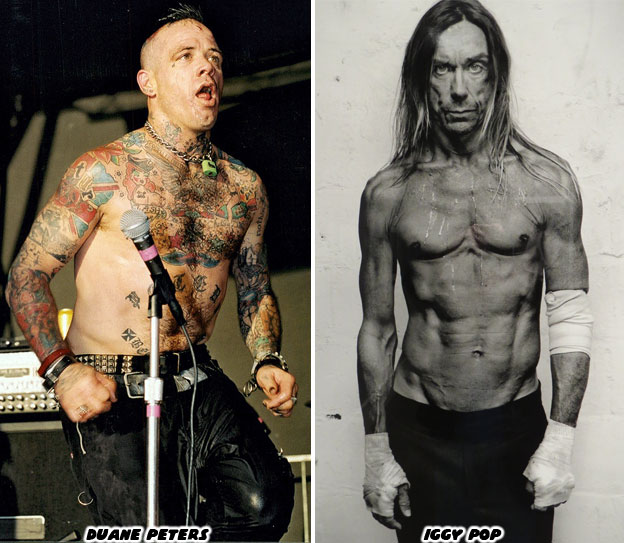
Singer, skateboarder Duane "The Master of Disaster" Peters was into the punk scene from a young age. He was as tough as any long-time punk and had lived a life that would have killed many other people. A veteran of the road he skates as hard as he ever did. He was also born in 1961, during the golden era of skateboarding in Southern California. But let's go even further back. The iconic Iggy Pop also works hard and rocks harder. He was born 1947 and was a catalyst of the punk movement. Iggy has a body better than most men half his age and also shows no sign of slowing down. So when everything about Birdie (up until) now says punk I don't think of fat bikers (which is really what he became). Instead I think of rockers like Iggy and Peters. Birdie should remain as timeless as the other Street Fighter characters. If the developers cannot meet the character with that basic understanding then maybe he shouldn't be in the game.
Let's make this perfectly clear. I am not against fat characters in fighting games. I am against silly gimmick characters in franchises that do not need them. Before Birdie got a makeover an even older, and more popular Capcom icon had gotten the same treatment. Mega Man was announced as a playable character for Street Fighter X Tekken. When most people thought of Mega Man they imagined a blue robot that looked like a kid wearing a blaster on his arm and a helmet on his head. What no one could have imagined was a fat guy with a laser pistol and some tights.
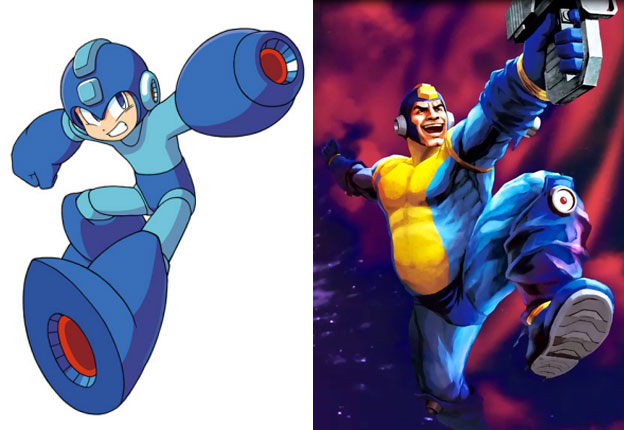
It was an absurd redo of a classic character, one that was based on the poorly designed NES box art from North America. It was more outlandish presentation than say the Bionic Commando as a morose ex-soldier in dreadlocks. Yet somehow somebody at Capcom not only thought this was a good idea, they pushed for it to get done. The artists, animators, programmers and developers all had to model and create this fat guy in a costume and balance him out against the rest of the Street Fighter and Tekken cast. I would assume that it was the producer, Mr. Ono that made the call. Let's go back and look at his short list of questionable decisions in the fighting game arena. He was ultimately responsible for getting Hakan into Street Fighter IV and giving him the silly oiled up attacks. For having T. Hawk sit on opponents and make the Native "how" gesture. For turning El Fuerte from a traditional masked wrestler to a cooking obsessed parody. Of course there was the greatest misstep of all, the addition of Rufus to the Street Fighter universe.
I do not hate fat people in fighting games. I love fat people in fighting games. I love to see diversity in body types, body shapes, skin color, age and ability more than anybody else I know. I love the fact that fat characters have been a part of fighting games since the earliest days. King Hippo in Nintendo's Punch-Out!! and Buchu from Konami's Yie Ar Kung-Fu were two of the earliest fat characters in the genre. The were swift, powerful, had great attacks and distinct looks. Hippo was a likable character and was paralleled in real life by people like super heavyweight boxer Eric "Butterbean" Esch. Capcom had even included fat people in their action games before Street Fighter II debuted.
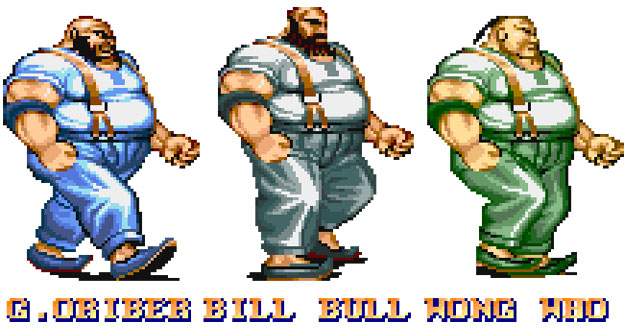
G. Oriber, Bill Bull and Wong Who were members of the Mad Gear Gang. They fought the heroes in Final Fight. The trio, like the rest of the gang, would get beaten up then return for more punishment later on in the stages. The three characters were heavy set but also very muscular. Being nothing more than pallet swaps (simple color changes) with a few cosmetic changes to the heads they were a quick way for the developers to make the cast of villains look numerous. These characters also showed a range of diversity. Oriber and Bull looked Western and Who was presumed to be Chinese. The archetypes were actually inspired by a heavy-set man that used to menace the local bars near Capcom's headquarters in Japan. This added an extra layer of dimension to the brawlers as I could imagine the Capcom employees had to sidestep this person after a night out on the town. I always thought that the fat characters worked well in the series and looked forward to their counterparts in the Final Fight sequels.
The tradition of adding respectable fat fighting game characters was actually observed by several studios and not solely Capcom. Two of the most massive fighters in a fighting game turned out to be eerily similar. Kimala the Bouncer from Capcom's Muscle Bomber / Saturday Night Slam Masters series (1993) and Burnov from SNK's Double Dragon (1995) fighting game were two of fattest game characters ever created. Their arms and legs were often wider than their entire opponents torsos. The two also happened to have Mohawk haircuts to add to their already imposing presence. There was nothing playful or silly about the fighters. They were there to brutalize opponents. Kimala was actually the BWA (Blood Wrestling Association) Heavyweight Champ. Burnov was a post-apocalyptic warlord, not far removed from the villains in Hokuto No Ken / the Fist of the North Star manga series.
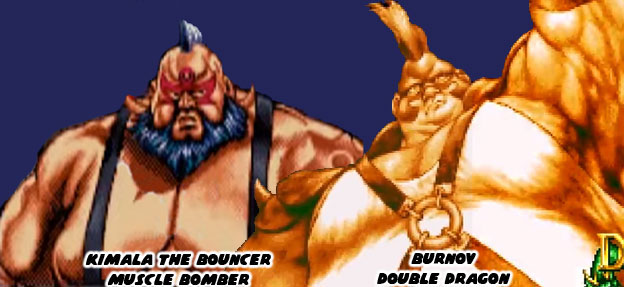
Speaking of which, Hokuto No Ken was a very influential manga series from the early '80s. It colored the development of many fighting games. One of the evil warlords from the comics was called King Heart. He was tall and fat, with deep scars on his forehead. He also had a distinct tattoo on the side of his head. It was a heart with a K for King, modeled after the classic Bicycle company playing cards. The heart tattoo placed on the head of Birdie as a nod to the character. Despite dying a gruesome death in the comics King Heart turned up in a few fighting games, including an arcade version.
Hokuto No Ken series creator Tetsuo Hara was actually a fan of the Street Fighter series and was called in to help with character designs for the wrestling game Muscle Bomber. He created a lineup that was in almost every way as unique as the original World Warriors from Street Fighter II. He modeled Kimala after the Sudanese (actually Canadian) wrestler Larry Robert Shreve, better known by his ring name Abdullah the Butcher. Abdullah was six feet tall and over 350 pounds. He had studied some karate and judo growing up. He found a living through pro wrestling. Abdullah had a very distinct look. He wore red pants with a sash and had curly-toed shoes, a costume that was supposed to bring up images of ancient Arabia. His most defining feature was his forehead. After years of blading (cutting himself to make the matches bloody) his head was left with very deep scars. Abdullah was never much of an athlete so his matches were often standing brawls where he would bring out illegal weapons, like a fork, which he would then use to stab opponents and bust them open so that they bled as well.
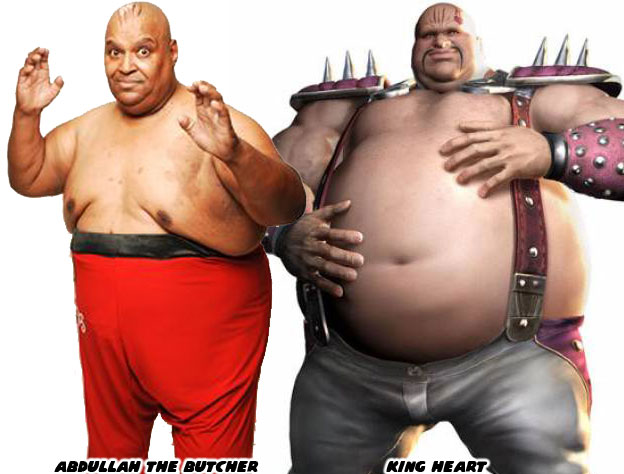
Tetsuo Hara did more than develop fighters, he helped create the backstory for Capcom's wrestling universe. Brutality was what the BWA was known for. The "good guys" wrestled in the CWA or Capcom Wrestling Association. The wrestlers would cross between promotions and have an all-out war trying to find out who was the best wrestler of all. I always admired Kimala as a character and also what Hara was trying to represent through him. The influence that he had on Street Fighter was immeasurable. The boots of Abdullah were paralleled in the curly-toed shoes worn by Birdie. But that was not the only thing that Hara had shaped for the character. Birdie was actually tag team partners with Titan the Great. Titan was the giant of the Muscle Bomber series. He was absolutely massive and just a centimeter or two shorter than Hugo Andore from Final Fight / Street Fighter. In the official character art between Titan and Birdie we could see that Optimus Prime and Megatron from the Transformers were characters on the rings of Birdie. Not only that but Birdie had a Decepticon tattoo on his shoulder. These were details that the people working on Street Fighter V had overlooked or simply did not know.
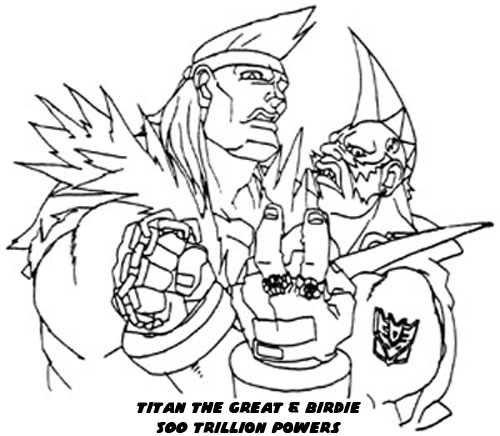
As an aside Abdulah had a hand in influence other fat characters in gaming. The wrestler had been at his craft through the '70s, often touring Japan. There was no doubt that Hara as well as other artists and developers were familiar with the character from his trips. The Middle Eastern look of the Butcher influenced the creation of one of the early console and arcade adventure heroes. Jinborov Karnovski aka Karnov was a fire breathing, ex-circus strongman from East Russia. His red pants, curly-toed boots and heavyweight frame were distinctly Abdullah's. If they were not then he was at least based on old Arabic folklore. The arcade game and NES adaptation of Karnov appeared in 1987. Data East was one of the forefathers of the fighting genre, they had created Karate Champ after all. Instead of focusing on one-on-one combat with fighters of different abilities they instead decided to wrap adventure games around these fighters. Karnov would face fantastic monsters on his journey, similar to a character like Sindbad, the pirate of Arabian legend. In addition to his strength Karnov also had the ability to breath fire. This was an important detail that would shape other characters and games.
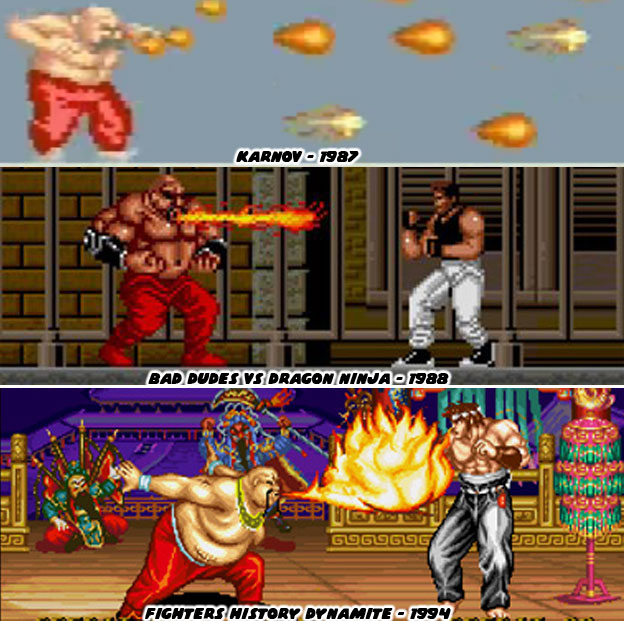
A year after his debut Karnov appeared as the first level boss in the game Bad Dudes vs Dragon Ninja. This appearance meant that Karnov was a modern character but with ancient powers. His adventure was therefor not set in ancient times but instead in a part of the world where mythical creatures and demons existed. Karnov would fall off the radar for a few years. He would return in Fighters History Dynamite: Karnov's Revenge in 1994. Data East could not ignore the runaway success of Street Fighter II in the arcade and on home consoles. The publisher decided to create their own entry. The characters and controls in the original Fighters History were very similar to Street Fighter II. They were so similar in fact that Capcom took Data East to court for copyright infringement. Capcom lost the case and that precedence allowed other studios to create fighting games that also poached ideas from Capcom.
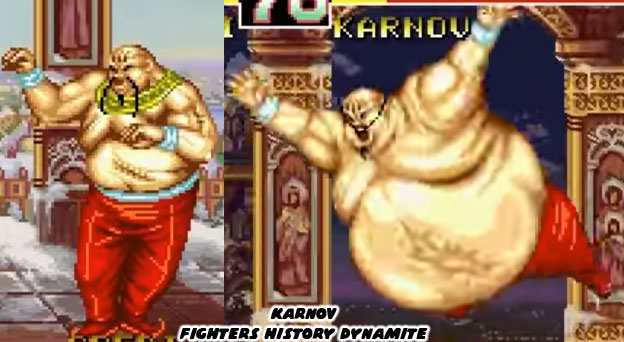
Here's the thing that I want all of my readers to pay attention to. In the original Karnov the character was heavy-set and each time he returned he became a bit fatter. This evolution of the character made sense in continuity. His ability to breathe fire, and his newfound ability to make himself a large balloon were based on ancient magic rather than martial techniques. It also made sense based on the origins of his look and powers. The costume that Abdullah the Butcher wore, the same costume of Karnov was based on ancient Arabia. In the classic story traditions of One Thousand and One Nights, Ali Baba and the Forty Thieves and the Seven Voyages of Sinbad there was a certain body type that kept turning up.
The fat characters were the strongest figures in the stories. Remember that thousands of years ago there were no such things as gyms or weight training programs. Big characters, fat characters, were universally understood as being the strong ones. Also fat characters could sometimes be seen as having status in society because they could afford to eat well. Fighters from these legends sometimes had magical properties. They had to have superhuman strength, be able to breath fire, and run across the sky in order to battle against the mythological characters. Sometimes these mythological characters could partner with them. Djinn or genie's could be summoned by the heroes. The would do this when they needed visit far off lands or destroy their enemies. These classic archetypes were actually featured in the game Arabian Magic by Taito in 1992.
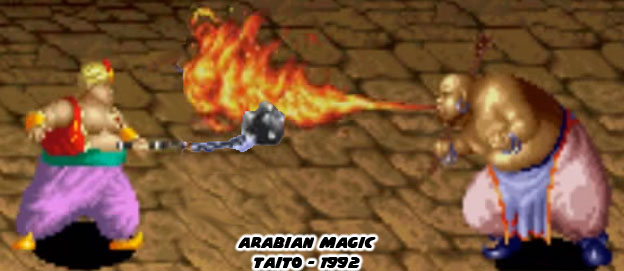
Heroes and villains in Arabian Magic could actually be fat fighters. They were not silly and they did not have some sort of gimmick (like eating bananas and donuts) in order to make them more interesting. Abdullah the Butcher would probably have fit into one of the old stories and definitely would have worked in the games as well. This is where the genius of Hara came into play. Not only was he a huge fan of pro wrestling, he was also very familiar with the classic storytelling traditions. Kimala was influenced by Abdullah but he maintained some of the special abilities from myth. The character could spit poison (a trick used by the Graet Mutah) or breath fire as well. This was a tradition that SNK was familiar with. They used it when they created Burnov. The character could breathe fire and even engulf himself in flames and run over opponents. If you study the costume of Burnov you can see how it was a modernized version of the ancient Arabian costumes.
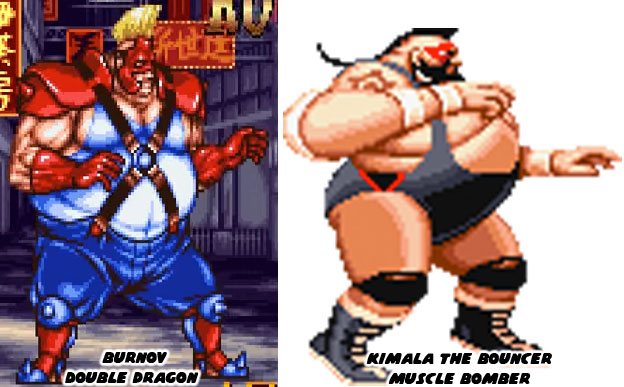
These fat characters were well designed and demonstrated that those body types could work in a fighting game as well. It turned out that characters like Kimala and Karnov were actually the exception instead of the rule. In the next blog we shall take an even closer look at fat characters in the fighting genre and see how the industry changed the purpose of those figures. I hope to see you in the next entry. Please leave any questions or comments if you'd like. As always if you enjoyed this blog and would like to sponsor me please visit my Patreon page and consider donating each month, even as little as $1 would help make better blogs and even podcasts!
Singer, skateboarder Duane "The Master of Disaster" Peters was into the punk scene from a young age. He was as tough as any long-time punk and had lived a life that would have killed many other people. A veteran of the road he skates as hard as he ever did. He was also born in 1961, during the golden era of skateboarding in Southern California. But let's go even further back. The iconic Iggy Pop also works hard and rocks harder. He was born 1947 and was a catalyst of the punk movement. Iggy has a body better than most men half his age and also shows no sign of slowing down. So when everything about Birdie (up until) now says punk I don't think of fat bikers (which is really what he became). Instead I think of rockers like Iggy and Peters. Birdie should remain as timeless as the other Street Fighter characters. If the developers cannot meet the character with that basic understanding then maybe he shouldn't be in the game.
So are you against fat characters in fighting games?
No.
Let's make this perfectly clear. I am not against fat characters in fighting games. I am against silly gimmick characters in franchises that do not need them. Before Birdie got a makeover an even older, and more popular Capcom icon had gotten the same treatment. Mega Man was announced as a playable character for Street Fighter X Tekken. When most people thought of Mega Man they imagined a blue robot that looked like a kid wearing a blaster on his arm and a helmet on his head. What no one could have imagined was a fat guy with a laser pistol and some tights.
It was an absurd redo of a classic character, one that was based on the poorly designed NES box art from North America. It was more outlandish presentation than say the Bionic Commando as a morose ex-soldier in dreadlocks. Yet somehow somebody at Capcom not only thought this was a good idea, they pushed for it to get done. The artists, animators, programmers and developers all had to model and create this fat guy in a costume and balance him out against the rest of the Street Fighter and Tekken cast. I would assume that it was the producer, Mr. Ono that made the call. Let's go back and look at his short list of questionable decisions in the fighting game arena. He was ultimately responsible for getting Hakan into Street Fighter IV and giving him the silly oiled up attacks. For having T. Hawk sit on opponents and make the Native "how" gesture. For turning El Fuerte from a traditional masked wrestler to a cooking obsessed parody. Of course there was the greatest misstep of all, the addition of Rufus to the Street Fighter universe.
A-ha! I knew it, you do hate fat people in fighting games!
Pay attention because I do not want to repeat myself.
I do not hate fat people in fighting games. I love fat people in fighting games. I love to see diversity in body types, body shapes, skin color, age and ability more than anybody else I know. I love the fact that fat characters have been a part of fighting games since the earliest days. King Hippo in Nintendo's Punch-Out!! and Buchu from Konami's Yie Ar Kung-Fu were two of the earliest fat characters in the genre. The were swift, powerful, had great attacks and distinct looks. Hippo was a likable character and was paralleled in real life by people like super heavyweight boxer Eric "Butterbean" Esch. Capcom had even included fat people in their action games before Street Fighter II debuted.
G. Oriber, Bill Bull and Wong Who were members of the Mad Gear Gang. They fought the heroes in Final Fight. The trio, like the rest of the gang, would get beaten up then return for more punishment later on in the stages. The three characters were heavy set but also very muscular. Being nothing more than pallet swaps (simple color changes) with a few cosmetic changes to the heads they were a quick way for the developers to make the cast of villains look numerous. These characters also showed a range of diversity. Oriber and Bull looked Western and Who was presumed to be Chinese. The archetypes were actually inspired by a heavy-set man that used to menace the local bars near Capcom's headquarters in Japan. This added an extra layer of dimension to the brawlers as I could imagine the Capcom employees had to sidestep this person after a night out on the town. I always thought that the fat characters worked well in the series and looked forward to their counterparts in the Final Fight sequels.
The tradition of adding respectable fat fighting game characters was actually observed by several studios and not solely Capcom. Two of the most massive fighters in a fighting game turned out to be eerily similar. Kimala the Bouncer from Capcom's Muscle Bomber / Saturday Night Slam Masters series (1993) and Burnov from SNK's Double Dragon (1995) fighting game were two of fattest game characters ever created. Their arms and legs were often wider than their entire opponents torsos. The two also happened to have Mohawk haircuts to add to their already imposing presence. There was nothing playful or silly about the fighters. They were there to brutalize opponents. Kimala was actually the BWA (Blood Wrestling Association) Heavyweight Champ. Burnov was a post-apocalyptic warlord, not far removed from the villains in Hokuto No Ken / the Fist of the North Star manga series.
Speaking of which, Hokuto No Ken was a very influential manga series from the early '80s. It colored the development of many fighting games. One of the evil warlords from the comics was called King Heart. He was tall and fat, with deep scars on his forehead. He also had a distinct tattoo on the side of his head. It was a heart with a K for King, modeled after the classic Bicycle company playing cards. The heart tattoo placed on the head of Birdie as a nod to the character. Despite dying a gruesome death in the comics King Heart turned up in a few fighting games, including an arcade version.
Hokuto No Ken series creator Tetsuo Hara was actually a fan of the Street Fighter series and was called in to help with character designs for the wrestling game Muscle Bomber. He created a lineup that was in almost every way as unique as the original World Warriors from Street Fighter II. He modeled Kimala after the Sudanese (actually Canadian) wrestler Larry Robert Shreve, better known by his ring name Abdullah the Butcher. Abdullah was six feet tall and over 350 pounds. He had studied some karate and judo growing up. He found a living through pro wrestling. Abdullah had a very distinct look. He wore red pants with a sash and had curly-toed shoes, a costume that was supposed to bring up images of ancient Arabia. His most defining feature was his forehead. After years of blading (cutting himself to make the matches bloody) his head was left with very deep scars. Abdullah was never much of an athlete so his matches were often standing brawls where he would bring out illegal weapons, like a fork, which he would then use to stab opponents and bust them open so that they bled as well.
Tetsuo Hara did more than develop fighters, he helped create the backstory for Capcom's wrestling universe. Brutality was what the BWA was known for. The "good guys" wrestled in the CWA or Capcom Wrestling Association. The wrestlers would cross between promotions and have an all-out war trying to find out who was the best wrestler of all. I always admired Kimala as a character and also what Hara was trying to represent through him. The influence that he had on Street Fighter was immeasurable. The boots of Abdullah were paralleled in the curly-toed shoes worn by Birdie. But that was not the only thing that Hara had shaped for the character. Birdie was actually tag team partners with Titan the Great. Titan was the giant of the Muscle Bomber series. He was absolutely massive and just a centimeter or two shorter than Hugo Andore from Final Fight / Street Fighter. In the official character art between Titan and Birdie we could see that Optimus Prime and Megatron from the Transformers were characters on the rings of Birdie. Not only that but Birdie had a Decepticon tattoo on his shoulder. These were details that the people working on Street Fighter V had overlooked or simply did not know.
As an aside Abdulah had a hand in influence other fat characters in gaming. The wrestler had been at his craft through the '70s, often touring Japan. There was no doubt that Hara as well as other artists and developers were familiar with the character from his trips. The Middle Eastern look of the Butcher influenced the creation of one of the early console and arcade adventure heroes. Jinborov Karnovski aka Karnov was a fire breathing, ex-circus strongman from East Russia. His red pants, curly-toed boots and heavyweight frame were distinctly Abdullah's. If they were not then he was at least based on old Arabic folklore. The arcade game and NES adaptation of Karnov appeared in 1987. Data East was one of the forefathers of the fighting genre, they had created Karate Champ after all. Instead of focusing on one-on-one combat with fighters of different abilities they instead decided to wrap adventure games around these fighters. Karnov would face fantastic monsters on his journey, similar to a character like Sindbad, the pirate of Arabian legend. In addition to his strength Karnov also had the ability to breath fire. This was an important detail that would shape other characters and games.
A year after his debut Karnov appeared as the first level boss in the game Bad Dudes vs Dragon Ninja. This appearance meant that Karnov was a modern character but with ancient powers. His adventure was therefor not set in ancient times but instead in a part of the world where mythical creatures and demons existed. Karnov would fall off the radar for a few years. He would return in Fighters History Dynamite: Karnov's Revenge in 1994. Data East could not ignore the runaway success of Street Fighter II in the arcade and on home consoles. The publisher decided to create their own entry. The characters and controls in the original Fighters History were very similar to Street Fighter II. They were so similar in fact that Capcom took Data East to court for copyright infringement. Capcom lost the case and that precedence allowed other studios to create fighting games that also poached ideas from Capcom.
Here's the thing that I want all of my readers to pay attention to. In the original Karnov the character was heavy-set and each time he returned he became a bit fatter. This evolution of the character made sense in continuity. His ability to breathe fire, and his newfound ability to make himself a large balloon were based on ancient magic rather than martial techniques. It also made sense based on the origins of his look and powers. The costume that Abdullah the Butcher wore, the same costume of Karnov was based on ancient Arabia. In the classic story traditions of One Thousand and One Nights, Ali Baba and the Forty Thieves and the Seven Voyages of Sinbad there was a certain body type that kept turning up.
The fat characters were the strongest figures in the stories. Remember that thousands of years ago there were no such things as gyms or weight training programs. Big characters, fat characters, were universally understood as being the strong ones. Also fat characters could sometimes be seen as having status in society because they could afford to eat well. Fighters from these legends sometimes had magical properties. They had to have superhuman strength, be able to breath fire, and run across the sky in order to battle against the mythological characters. Sometimes these mythological characters could partner with them. Djinn or genie's could be summoned by the heroes. The would do this when they needed visit far off lands or destroy their enemies. These classic archetypes were actually featured in the game Arabian Magic by Taito in 1992.
Heroes and villains in Arabian Magic could actually be fat fighters. They were not silly and they did not have some sort of gimmick (like eating bananas and donuts) in order to make them more interesting. Abdullah the Butcher would probably have fit into one of the old stories and definitely would have worked in the games as well. This is where the genius of Hara came into play. Not only was he a huge fan of pro wrestling, he was also very familiar with the classic storytelling traditions. Kimala was influenced by Abdullah but he maintained some of the special abilities from myth. The character could spit poison (a trick used by the Graet Mutah) or breath fire as well. This was a tradition that SNK was familiar with. They used it when they created Burnov. The character could breathe fire and even engulf himself in flames and run over opponents. If you study the costume of Burnov you can see how it was a modernized version of the ancient Arabian costumes.
These fat characters were well designed and demonstrated that those body types could work in a fighting game as well. It turned out that characters like Kimala and Karnov were actually the exception instead of the rule. In the next blog we shall take an even closer look at fat characters in the fighting genre and see how the industry changed the purpose of those figures. I hope to see you in the next entry. Please leave any questions or comments if you'd like. As always if you enjoyed this blog and would like to sponsor me please visit my Patreon page and consider donating each month, even as little as $1 would help make better blogs and even podcasts!
Subscribe to:
Posts (Atom)