Showing posts with label dudley. Show all posts

Monday, August 19, 2024

Ryu Final, the real Street Fighter III and IV - A 1UP classic from January 30, 2008

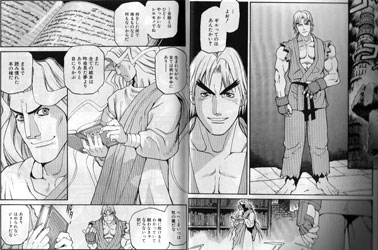
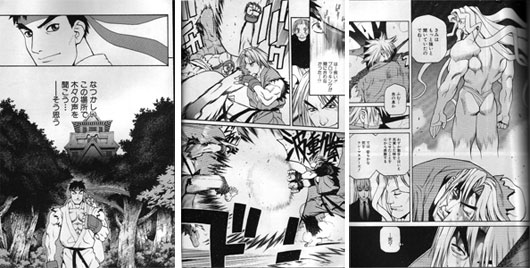
Welcome back friends. We're here to talk about Ryu Final, the last book Masahiko Nakahira created for Street Fighter. The book was set in the SF III continuity, to be precise it is set during 2nd Impact: Giant Attack. Nakahira never did a SF II book for Capcom, those were covered by Masaomi Kanzaki and Mami Itoh. So how does Nakahira's story go? How does it progress? If you read it once then go back through you'll notice that everything that went into this story was done so deliberately. Every character, location, fight and moral was done with forethought. Nakahira is a genius when it comes to plotting the events of his book. He doesn't just plot out a linear story but carefully intersects flashbacks which keeping you turning the pages. The weakest part of his story is better than anything I've seen with Udon. Overall it is perfect storytelling and great art combined. Let's touch on the events of the first collected book.

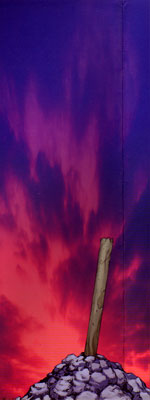
This comic begins with a rock pile and a stick. It is a grave marker, but for whom?

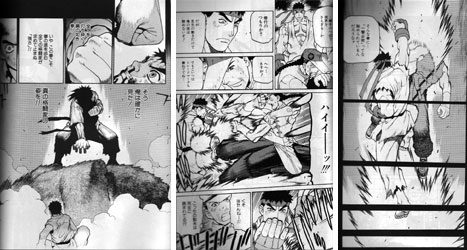
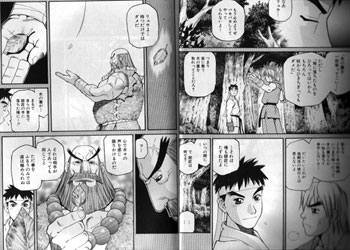
Ken and Ryu are much older, stronger and wiser than when we last saw them. They are possibly at the peak of their abilities. Ryu begins the tale, he is training in the shadow of his old dojo. He remembers the lessons learned from his master Gouken. Nakahira presents Ken and Ryu younger than they appeared in the Zero books, as young as they appear in some Udon flashbacks. The sage advice is not lost on Ryu as he remembers, in Jedi style, that he and Ken are part of the living, breathing world, not apart from it. It is up to Ken and Ryu to catch a falling leaf, the task sounds simple but has profound meanings. In almost all the Nakahira books you see a big oak tree and leaves come up time and again. The leaves and lessons of Gouken also return in the ending credits of SF III: 3rd Strike. The cycle of growth and change, the eternal strength with roots deepening as they grow. The hard training of Ryu and the trees that shake with his blows are inspired by actual accounts of Mas Oyama's tremendous power.

Ryu is fully confident in his abilities and decides it is time for him to return to the circuit and prove himself. His first stop is San Francisco where the understudy of Ken, Sean, taxis Ryu to a yacht. Young Mel, the son of Ken and Eliza is crying because he's afraid that Ryu is going to beat his father. After a few formalities the classic rivalry gets underway. The outcome isn't even close. Ryu is soundly beaten by Ken and can't even manage to get a hit in. Somehow his best friend and rival has surpassed him. Ken has worked harder than Ryu and has become a true martial artist. The reason is told in flashback.

Ken had challenged the man-god Gill and was beaten within an inch of his life. He came to the realization of his purpose as he was lying in a pool of his own blood. He could not allow this defeat to happen, he would never allow himself to be defeated in combat by anyone. His life was not forfeit as he remembered his wife and son. They were his foundation and Gill be damned for trying to sever those ties. The fight became a stepping stone for Ken. From that point on Ken realized he was not only fighting for himself, but for his family and with that conviction he would never fail them. With his remaining strength he leveled Gill with a dragon punch and did the same to Ryu. A clear-cut victory.

The scenes and plot with Gill were covered in the shortest span of time. Nakahira knew the important part of the story was not in trying to explain the plot of SF III but instead allowing the reader to discover how much the cast had grown. Ryu walked away from the encounter a little humbled but grateful. He knew now that he had room to grow. So he said farewell to his friends and set out again. While sleeping in a park he was awoken by Oro, who was trying to walk away with his duffel bag. Ryu tries to teach the old man a lesson but is instead beaten by the aged master. To make things fair Oro even puts one hand behind his back and still manages to beat up Ryu. FYI: remember that Capcom has been trying to use a one-armed boxer in their series because their template for SF II, the Master of the Flying Guillotine sparked the idea. Ryu becomes progressively angry with his aged opponent and finally decides he's had enough. Ryu tries to counter with a fireball but he is instead knocked silly when Oro unleashes a massive Yagyou Dama, or two handed fireball the size of a Volkswagen Beetle. It turns out that Oro was testing him. Hoping to find a student worthy to train. Ryu is the one and from then on he is under the hard tutelage of the 140-year-old master. He begins by making Ryu carry a massive boulder on his back with Oro riding atop.

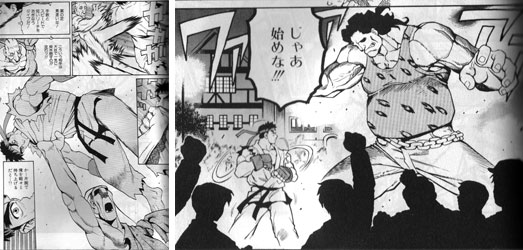
At this point of the story Ryu has pretty much hit rock bottom. This is important because he must be rebuilt as a person and as a fighter. The battles he has had in the past, against opponents like Sagat and Vega should have made more of him. Instead he is still locked in the rigid system taught to him by his master and unwilling to progress. It is up to Oro to show Ryu his true potential or kill him in the process. Somewhere in Germany Ryu's first battle turns out to be against the giant Hugo. The battle is brutal on Ryu as Hugo dominates him for most of the match. Pounding him into the ground and throwing him like a ragdoll, Hugo is a force of nature against Ryu. Nakahira uses exaggerated perspective to make Hugo appear 20 feet tall rather than the 7'8" he is. This is in the same dramatic technique that Tetsuo Hara would do to make gigantic opponents for his Kenshiro to battle. After losing for most of the match Ryu is able to defeat Hugo with a well placed dragon punch to his stomach.

It is not easy for Ryu to win battles. Unlike the Udon books where fan-favorites can knock out opponents in one hit, nothing comes easy in the Nakahira books. This importance of this fight is to show him, and the reader, that there will always be bigger and stronger opponents waiting for the challenge. Ryu will always bring out the best in his opponents and he can't always out-muscle them. The moral of the Hugo battle is that strength is tempered by technique. Ryu continues his training with Oro from there, having earned the respect of Hugo and Poison. He travels south and eventually encounters Yun and Yang. The brothers are brash and inexperienced fighters. The determination of the young kung-fu masters is a parallel between Ryu and Ken's legacy. Even though Yun and Yang are beaten by Ryu they will not quit. Ryu is reminded of how stubborn he was in his youth as well. Yun and Yang establish the core of the Ryu story.

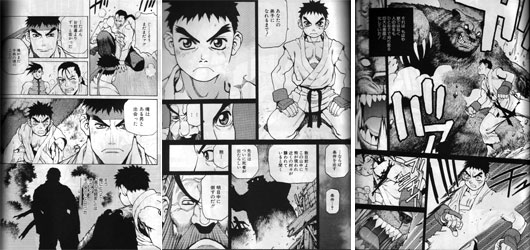
In flashback we see a young Ryu, much younger than he's ever been presented. His build is skinny, his hair unkempt, but he has a determination that impresses Gouken. He wants to prove that he is worthy to learn under the master so he says he will strike out to chase away a bear terrorizing the local villages. Gouken discovers his bloody duffel bag a few days later. Gouken fears that the bear has killed Ryu. This adventure, like much in the life of Ryu is inspired by the fictional retelling of the life of Mas Oyama, better known as the Karate Baka Ichidai anime. In particular the battle here is between Ryu and a dangerous bear, the same thing that happened to Yoshiji Soeno in the cartoon. We catch up to Ryu in the woods and see that a bear is indeed slashing at him ferociously.

The bear pounces on Ryu and is about to finish him when he is struck from behind. The force of the punch travels through the head of the bear and stops inches from the face of Ryu. It is a wild-haired Gouki that has saved Ryu and killed the bear. Gouken arrives to take Ryu away. Gouki cares not for man or beast, saving Ryu was an afterthought. It was that day where Ryu saw the face of evil. He saw that the techniques he wanted to learn was lethal in the wrong hands. These were techniques that could easily be used to kill if left unchecked. In present time Ryu thanks Yun and Yang for the fight and hopes to see them again someday. Like they Ryu has room to grow and many more battles to come.

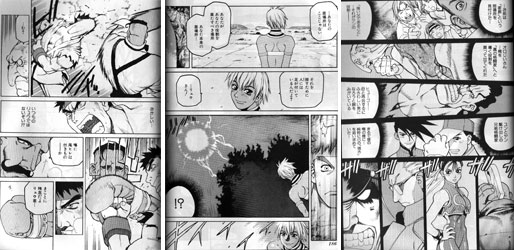
The next battle Ryu faces is nowhere near as easy as the battle with Yun and Yang. Dudley the boxer, the undisputed heavyweight world champion, wishes to challenge Ryu. You would think that with Oro as his new master he would have become a better fighter by now. Dudley beats the tar out of Ryu and has a counter for every move. Ryu is simply not fast enough to catch the champ with his guard down. Even his dragon punch is caught and countered. Round 1 goes to Dudley but Ryu will not stay down.

This is the abstract part of the book, the weakest reason for a character to be introduced. Elena is brought in an aside and doesn't fight in any way. She is in Africa, a continent away from where Ryu is. Yet she, like every other fighter in the world is connected. It all goes back to the lessons that Gouken planted into the young Ken and Ryu. They are part of this living world, their roots have grown deep and they have more potential than they realize. It is up to them to wake up to that and release their true potential. With that Ryu comes to his senses and catches his second wind. The leaves in the mighty oak tree in the background shake. Ryu plants his feet and prepares a new fighting stance. Oro and Dudley are intrigued at this newfound intensity in Ryu.

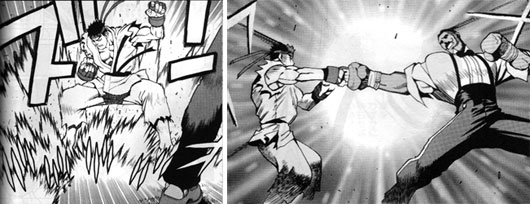
Oro wonders how Ryu will face his opponent now. Dudley is the culmination of the boxing arts, possibly the oldest fighting arts in the world, dating back thousands of years. Boxing is a refined sport, called the sweetest science by practitioners. Embracing the culmination of the art Dudley represents a fighter in the purest sense of the word. He is taller than Ryu and has a longer reach than Ryu, there is no way he can get caught by Ryu's blows. A pure fighter cannot be defeated by traditional strategies and technique. Ryu has learned that he is not fast enough for a special move, he has also learned that he can't always out-muscle his opponents. In order to evolve he must be willing to change his strategy. He decides to use the force of a killing strike but use it in a new way. In one strike they go at each other with everything they have.

Dudley was aiming for the head of Ryu and failed to notice that Ryu's punch was headed for his hand. Ryu has learned to harness the power of a killing strike but not in the way that was used against Sagat. The force of the blow destroys Dudley's boxing glove and breaks the bones in his arm. The force of the blow also travels through Ryu's arm and tears part of his gi off. Ryu remained grounded and the remaining energy returned to the Earth. Dudley concedes defeat. Ryu has learned the fist of the wind, a technique unique to him. He is now ready for an even greater challenge.

End of book 1.

As always if you would like to sponsor me please visit my Patreon page and consider donating each month, even as little as $1 would help make better blogs and even podcasts!
follow the Street Writer on Patreon!

Saturday, June 9, 2018

30 years of Street Fighter, 30 Days of Characters; #22


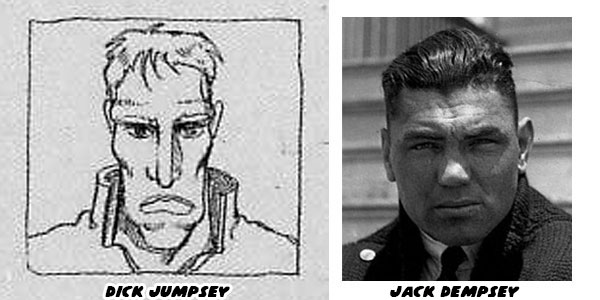
Boxing characters are as old as the fighting game genre itself. Every generation of the Street Fighter series has featured at least one boxer. In the original Street Fighter (1987) it was a scrappy young man named Mike. No doubt influenced by Mike Tyson, the young heavyweight champion. In Street Fighter II (1991) the boxer had grown up and went by the name M. Bison, as in Mike Bison. At least that was his name in Japan. As you already know the Shadowlaw boss names were swapped around when the game came to the USA. Did you know that Mike was not the original choice for a boxer in the Street Fighter II? In the planning stages the designers were looking at a classic boxer named Jack Dempsey. Jack was active from 1914-1927, he was notable for winning and defending a championship, being the first fighter to break a million dollars at the gate and ranked among the best of all time. Dempsey influenced the character Makounochi Ippo in the manga and anime Hajime no Ippo. He uses the "Dempsey Roll" a nonstop barrage of punches and dodges to take down opponents.


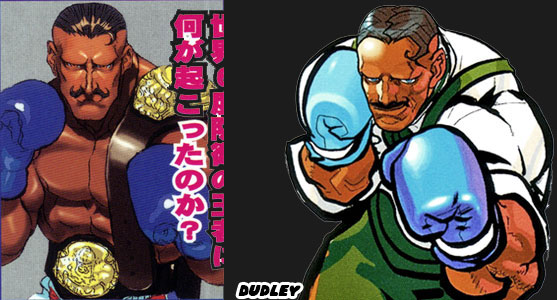
The boxer for Street Fighter II was called Dick Jumpsey but he seemed a little bit antiquated. That was why a more contemporary Mike Tyson served as the template for Bison. The seeds for a classic boxer had been planted at the Capcom offices. It would take a while for that archetype to return. Many studios had their own variation of a boxer. Most wore shorts or training clothes. They looked exactly like a pro fighter should have in the current era. That was until 1997 when Street Fighter III debuted. The gentlemanly boxer Dudley was literally cut from a different cloth. He was an aristocrat that happened to be a boxer. He traveled in luxury automobiles, with butler Ortho K. Gotch at his side. He fought while wearing fine suits, he simply rolled up his sleeves when it was time to teach an opponent some manners. There were no fighters before or after that had as much personality.  


Dudley was a change of pace from the thuggish boxers that had taken over the world of pro fighting. Loud braggarts like Mike Tyson and Floyd Mayweather Jr. that flashed their money and acted questionably seemed to hold the title forever. When classy fighters Evander Holyfield and Lennox Lewis captured heavyweight gold in the '90s it was a refreshing change of pace. Dudley was created as a reflection of this new reality. Of course he was a way over-the-top in his mannerisms and ability. There has never been a character as eccentric as him and there probably never will be again. Because of this we want to celebrate Dudley on Street Fighter's 30th anniversary. As always if you enjoyed this blog and would like to sponsor me please visit my Patreon page and consider donating each month, even as little as $1 would help make better blogs and even podcasts!
 follow the Street Writer on Patreon!

Wednesday, October 26, 2016

The best championships in fighting games, part 1

If you are a fan of fighting games then you're probably familiar with the different fighting styles represented. Kung-fu, karate, judo, muay thai and boxing are among some of the more common forms featured in the genre. One of the stand out forms is pro wrestling. In video games the pro wrestlers are often the characters wearing the brightest costumes and using the flashiest, most impractical moves. These days they are thought of less as fighters and more as "sports entertainers" thanks to the WWE. If you have been following this blog then you know that pro wrestling is among the oldest of the fighting arts. There are some legitimately tough fighters that know actual grappling moves. Many consider themselves true professional wrestlers.

In the fighting game genre the most memorable characters often represent the best fighters in a particular form. Ken and Ryu for example are not simply practitioners of karate or ansatsuken, they are the absolute best in the world. Chun-Li is not a very good kung-fu practitioner, she is the best living kung-fu artist. She represents a legacy that includes the earlier Street Fighter masters Gen and Lee. Sagat is not a muay thai expert, he was formerly the greatest fighter in the world. Zangief is not simply a massive wrestler, he is a Russian hero. Fighting games are designed to answer the question of who was the best fighter and what is the best style. What would happen if the best boxer that ever lived squared off against the best karate master?


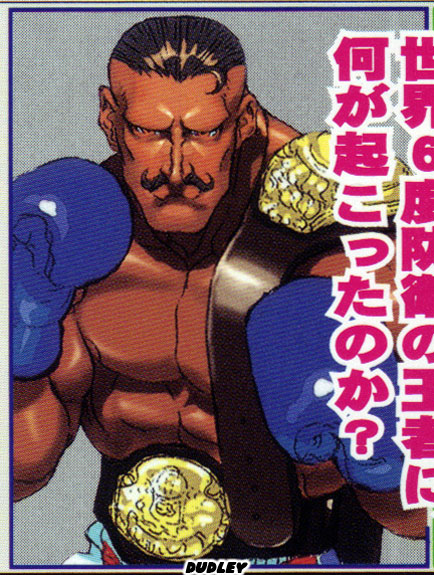
A small detail that you may or may not have noticed is how few characters in fighting games are presented wearing a championship belt. After all, real pro fighters don't wear their titles while fighting. But this is something that makes some game characters visually appealing. Dudley has a great design but he doesn't go around with his belts. The aesthetic choice of having him dressed in civilian clothing worked well in the lineup. Street Fighter III was a chance to introduce a new generation of fighters, one that wasn't as campy as the original cast. Yun and Yang for example had classic Chinese shirts and pants but also paired that with modern sneakers. Alex was an MMA star but wore overalls and heavy combat boots instead of trunks. As long as Dudley wore his boxing gloves it was painfully obvious what type of fighter he was. In canon Dudley had at least two, of what can be assumed, world championship belts. Here's a short list of some memorable champions in the genre, if not their fancy belts.


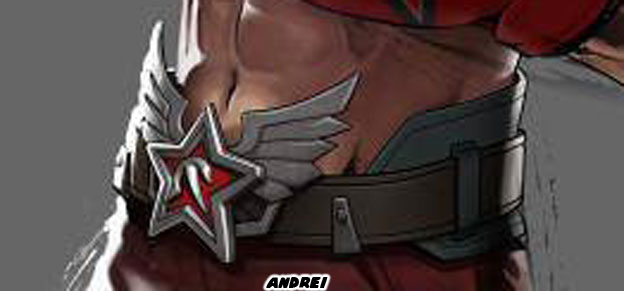
Not many boxers flashed their belts in game, one of those that did was Andrei. The Russian boxer was featured in King of Combat. The young boxer had a great belt design. The star, sickle and hammer were supposed to conjure up images of the old Soviet Union. It was perfect for the upstart. He was proud of his country. It showed in his Cryllic tattoos, amulet he wrapped around his boxing glove and militaristic haircut. In the best designs from the various studios every detail of a costume has to reinforce the personality of the fighter. The details should each tell a story. Whether it's a torn sleeve, a spiked bracelet or even an eye patch. They all have to mean something and not simply be a superfluous detail. There were other fighters in the various games that were as accomplished as Dudley and Andrei.


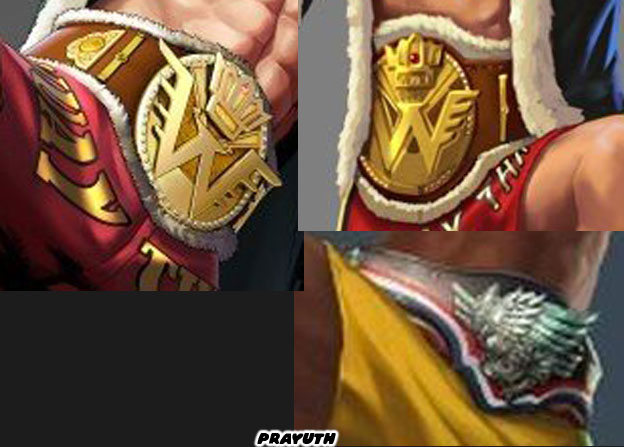
Muay Thai master Prayuth had a hefty belt that he wore in the King of Combat. The large circular fur-lined plate was reminiscent of modern championship belts. Flamboyant champions are nothing new in professional fighting. The best in the world wanted to show off from time to time. Over the past century and a half many different champions would add their own flare to the titles. They would encrust their belts with ribbons, fur and eventually gold plating and jewels. Some belts were even made of leather that had been dyed to a brilliant red or bright green. Prayuth's belt was representative of modern belts but its fur-lining also served a practical purpose. It could be worn while fighting. It wouldn't scrape or irritate his skin even with sweat. The developers on King of Combat even had an alternate color scheme and with it an alternate belt for Prayuth. The alternate title was more in tune with a classic championship belt. Instead of the sponsor logo there was a head of the mythical Garuda. It celebrated the spiritual origins of South Asian, specifically behind Indonesian and Thai culture. If Prayuth was the best Muay Thai fighter in the world then his belt should reflect the culture that created that form of fighting.


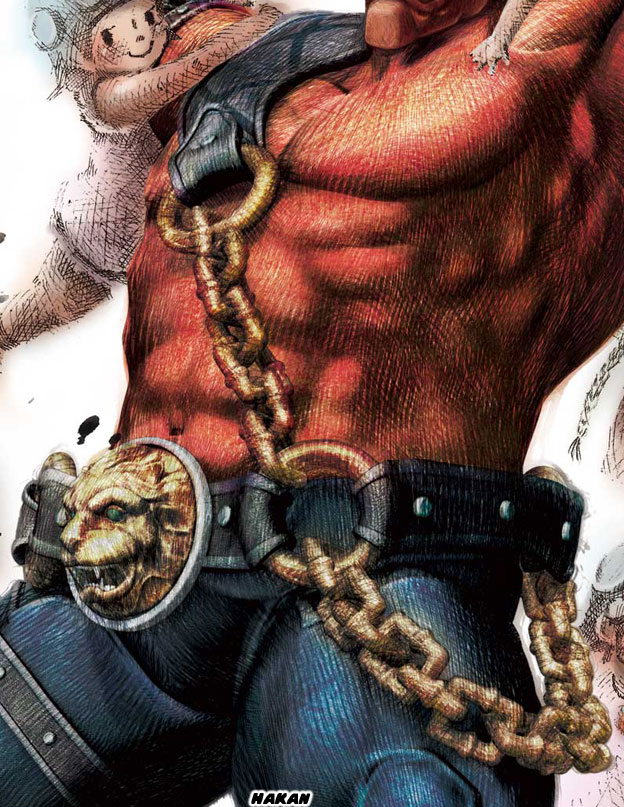
A belt that celebrated a culture and also looked intimidating belonged to Hakan from the Street Fighter IV. I was not a fan of his design, how he misrepresented yağlı güreş or Turkish oil wrestling. I was not a fan of the color of his skin and absurd blue hair. One thing that I cannot deny is the costume he wore. The chain and strap symbolized strength but it was the roaring lion that really caught my eye. I cannot say with any certainty that this was a championship belt. Modern oil wrestling championships are sometimes a trophy and sometimes a belt that looks like a modern wrestling title. Hakan's belt might have simply been a family crest or his business logo. In all regards it was a fine belt, accessorized by large metal chains and rings. Anyone could tell that only the absolute strongest could wear this ensemble.


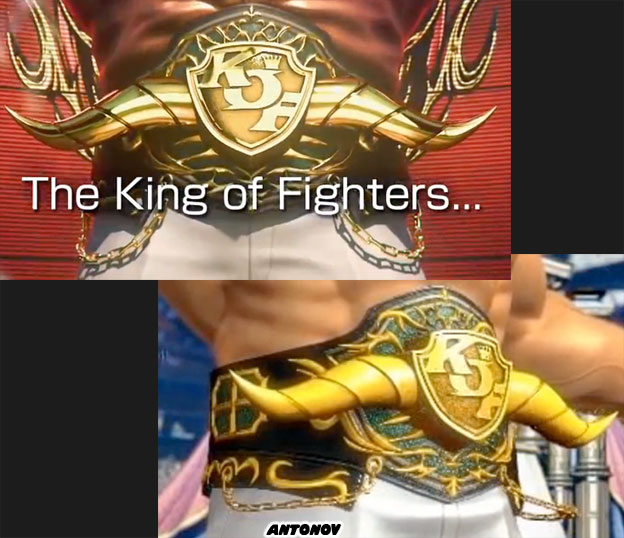
One of the biggest and possibly gaudiest championship belts belongs to Antonov. The self proclaimed original King of Fighters champion wears the belt in KOF XIV. Although I would argue the legitimacy of his claim with the iconic Geese Howard and Terry Bogard who had been there since the first tournament. Anyhow the belt is plated in gold, with thorn tribal patterns, gold chains and enormous bull horns. Aside from being bulky it would not be sensible to wear in a fight. The horns would limit the range of motion for the wearer. I can only imagine the number of times Antonov split his forearms open each time he threw a punch. The reason that Antonov wore it was two-fold. It showed off that he was the champion obviously but less known was that he was hooked on smoking and he kept his trademark cigars hidden in the front plate. If it were reproduced I can only imagine that a combination title and humidor would make it among the most expensive belts ever built. Antonov's belt was meant to be over-the-top, bigger and gaudier than any other title in any fighting game. It was not supposed to look like a traditional belt as with Dudley, nor was it supposed to have elements of a particular culture like Hakan or Prayuth. If I could find an example of a belt that balances culture and gaudiness it would have to be Darun Mister's Indian elephant title.


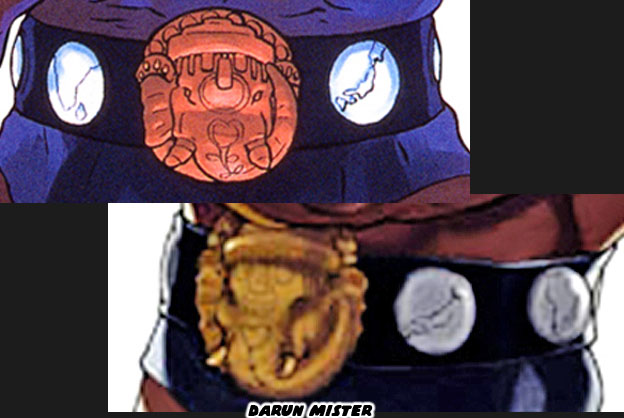
The main plate, in gold or bronze, is a sculpture of an elephant wearing a ceremonial headdress. The side plates are silver and have the outlines of the global continents. It symbolized that this belt had been defended or recognized by promotions around the world. The elephant has a number of details. The flower pattern on the trunk and filigree on the ears mirrors the long standing custom of painting the elephants as a sign of reverence. The elephant has powerful cultural context, especially when considering the relationship that the Hindus have with the god Ganesha. This belt is not representative of Ganesha but it is supposed to make Indians feel proud. There was more forethought to this championship title than say the stages created for Dhalsim in Street Fighter II and Zero / Alpha which pandered heavily the symbol of Ganesha. Unlike Antonov's belt there is nothing that would interfere with the wearer. The elephant trunks are short and stubby, they wouldn't catch a person like bull horns could.


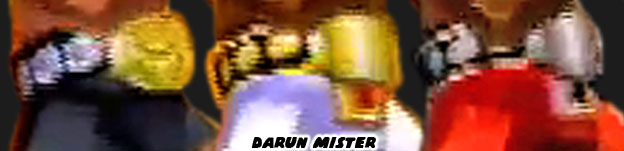
Darun was a unique character, inspired by various legendary Indian wrestlers including the Great Gama. In Street Fighter canon I would argue that he was a greater wrestler and champion than Zangief. I could back up this claim by pointing out that Darun not only held the elephant title, his alternate costumes featured two other belts. The gold and silver titles had a flat cut to them, they seemed to be from other, possibly Western promotions. Darun was a multi-promotion heavyweight champion and possibly the best pure wrestler in Street Fighter canon. Darun however was not the most decorated fighting game champion. In the next blog we will look at the character that had more belts than any other Street Fighter icon combined! As always if you enjoyed this blog and would like to sponsor me please visit my Patreon page and consider donating each month, even as little as $1 would help make better blogs and even podcasts!

 follow the Street Writer on Patreon!

Wednesday, September 16, 2015

How fight culture became fighting game history, part 34

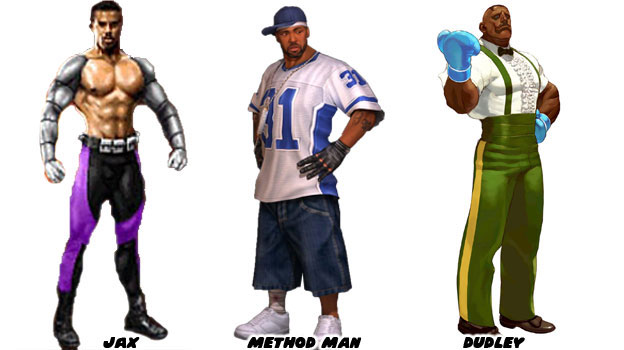
Characters in the fighting game genre did battle for any number of reasons. Some were noble, like police officers trying to bring criminals to justice. Others to prove their fighting style was the best. Some simply for the sake of achieving fame and glory. Black fighters seemed focused on the fame and glory part but to all things there were exceptions. The military officer Jackson "JAX" Briggs from Midway's Mortal Kombat II (1993) and the gentleman boxer Dudley from Capcom's Street Fighter III (1997) were contrary to the typical portrayal of black characters in most games. They were noble, powerful, fit well into their respective franchises and never allowed old conventions to dictate their presence or personality. Unfortunately both Jax and Dudley were rare in that regard. Japanese and US developers seemed to find it easier to rely on the trope that a black fighter was a brute, a thug. EA Sports BIG even created an entire fighting game series based on the Hip Hop / Thug characters in 2003. Def Jam Vendetta put actual rappers like DMX, Ludacris and Method Man against fictional thugs in an underground fighting tournament. The game did well enough to spawn a couple of sequels. It seemed that as long as fighting games were halfway decent then audiences would play characters of any color or background and support the publishers. Yet long-term success seemed to elude the games that only pandered to the lowest common denominator. The demand for a Def Jam fighting game had never been very high, especially when compared to the demand for Street Fighter.


It seemed that substance did matter to the core fighting game audience. Respect for the genre and the audience was good for the long term success of a franchise. The gameplay, control, and animation featured in the Street Fighter series was better presented than any other series. The characters featured within had become more iconic than those from any other game. Most players were familiar with Balrog, the name of M. Bison in the USA, They knew that he was based on pro boxer Mike Tyson. However during the development of Street Fighter II there was going to be a boxer as a playable character. This boxer was named Dick Jumpsey. He was inspired heavily by Jack Dempsey, a prize fighter from the turn of the century. The stance, moves and techniques of those early legends like Dempsey were the stuff of legend, especially in Japan. Boxing was made popular in the manga and anime series Ashita no Joe (Tomorrow's Joe) and the more contemporary Hajime no ippo. The influences of popular culture on the decision to use a boxer and even how he appeared should not be underestimated. These elements have been influencing designers for decades. The Joe story would have been something that the team at Capcom had grown up with in the early 1970's while the Hajime no ippo story would have been a contemporary manga running parallel to the development of Street Fighter II in the late 80’s.


A Dempsey-inspired character would not appear until years later. Dudley, featured in SF III was a gentleman boxer whose timeless qualities made him an instant success and a perfect fit for the SF universe Dudley could be argued as a complete vision for the Dick Jumpsey character abandoned previously. The "Dempsey Roll" was a technique that the actual Dempsey used to dodge under opponents and throw a flurry of punches while bobbing and weaving. This was a rarity as a real life technique rather than a fantastically impossible one would end up in a videogame. In anime form the move looks fantastic, in game form it was doubly so and could be used in combos with relative ease. Dudley's Rolling Thunder in SF IV was based largely on the Hajime no ippo version of the attack and makes for a very visceral super. Dudley may not have been based on a real person but he had a better reputation as a fighter than Method Man.


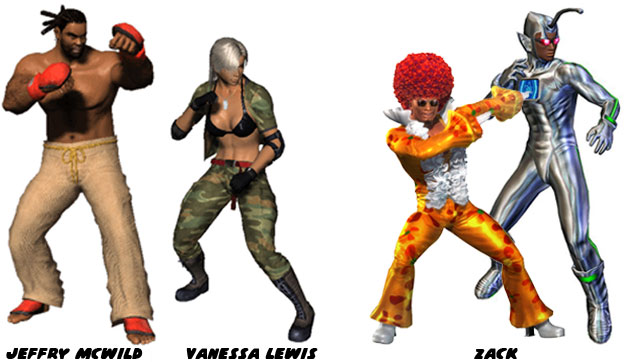
Hip Hop was influencing global culture at an alarming rate. From the rise in New York through the '70s through the exposure on mainstream media in the '80s Hip Hop had pushed for a major shift in pop culture. Blacks were becoming very prominent influences. The points of reference that the Japanese were using to recreate blacks and black culture had evolved greatly between the time the first and second Street Fighter games were released. The Japanese didn't always manage to keep up with those changes. When that happened the studios ran to two extremes of depiction for black characters. They were either over-the-top, boisterous and flamboyant characters. Or they were the opposite, completely devoid of personality and simply a dark skin tone on a 3D model. Jeffry McWild was the first black polygon-based character in a fighting game. He was one of the original faces in Sega's Virtua Fighter released in 1993. The character was neither thug nor cop. He did not have a basketball, nor did he dance. He was a powerful fighter from the caribbean that muscled through opponents with his unorthodox grappling style. Jeffry was a rarity in fighting games, especially for the 3D fighters. He had a personality, proud and confident but not silly like Dee Jay. It was unique that the two characters came from the same region but had vastly different design cues and presentations. The Japanese had demonstrated once more that they could have tremendous respect for black character designs. In 2001 Sega released their second black character in the series. Virtua Fighter 4 added Vanessa Lewis, the first black female mixed martial artist in gaming. She was similar to Jeffry in that she had striking and grappling moves but past that had zero personality. She was a stunning 3D model that was simply designed to appeal to male players. She demonstrated that the developers, while respectful of their audience, had less of a cultural understanding about strong black female characters than they had of black men.

Tecmo licensed the Virtua Fighter 2 engine from Sega when they started their own 3D fighting franchise, Dead or Alive. When Tecmo did not have a point of reference for an acceptable personality trait among the black community they made one up. The character Zack was a DJ that had entered the fighting tournament. He was not a Hip Hop DJ but seemed to be a flamboyant party DJ. To be honest he was never shown on the turntables in the series. Zack became obsessed with fame and attention and became more and more outlandish in each revision of the game. Absurd would not even properly describe the character, he went well beyond the excess of Dee Jay or any other character mentioned thus far in the series. Zack was not representative of black culture, Hip Hop culture or even Western culture. The basis for the character could be likened to Dennis Rodman, the eccentric NBA player. Yet Zack was simply a clown, a buffoon that happened to have dark skin. The defense once more would be that the character made sense within the context of his game and was a satire of typical character designs in a fighter. It was not a surprising defense of the series considering that the title was famous for its jiggling breast "physics" and objectification of its women characters.


There was a world of difference between Jax, Dudley, Jeffry, Dee Jay and Zack. Developers, publishers and even gamers may have dismissed the relevance of the designs over the past two decades but something had to be said. It was a duality that the industry and audience observed about gaming. Players wanted the mainstream culture, and especially the mainstream media to identify games as art. However when questions were raised about games being too violent or sexual for some audiences then it became an argument about entertainment and freedom of speech. The industry and the gamers themselves could argue the fundamental rights protected by the First Amendment, however they seemed to do that when it was most convenient to them. Gamers were passionate about their favorite titles and characters but only when it served their own interests. Many did not want to infer or interpret any controversial themes within their favorite games or even question the developers. There were many fighting game fans extremely passionate about the genre but to not question the characters featured in some of the most popular titles would be irresponsible of them as consumers.

To say that Zack or Dee Jay were just game characters and appropriate within the context of their title would be an attempt to bypass the argument. Without a cultural touchstone the Japanese studios seemed to rely on trope. The patterns of minority character designs were starting to become demeaning to audiences. Yet none of the gaming outlets seemed to call the publishers on that. But again, if I looked for the bad in fighting games I would find the bad. There were positive minority role models in fighting games and videogames in general. Characters like Dudley, Jeffry and Jax were created by Japanese and Western studios to show that diversity was alive and well. Games could still be art and entertainment in equal measure and publishers could still be socially responsible to their supporters. The next blog will look at the recent character that Capcom tried to create out of Hip Hop culture, classic cinema and black sports superstars. As always if you enjoyed this blog and would like to sponsor me please visit my Patreon page and consider donating each month, even as little as $1 would help make better blogs and even podcasts!

Thursday, July 23, 2015

Representation Matters! Or, what happened to Birdie, final part...


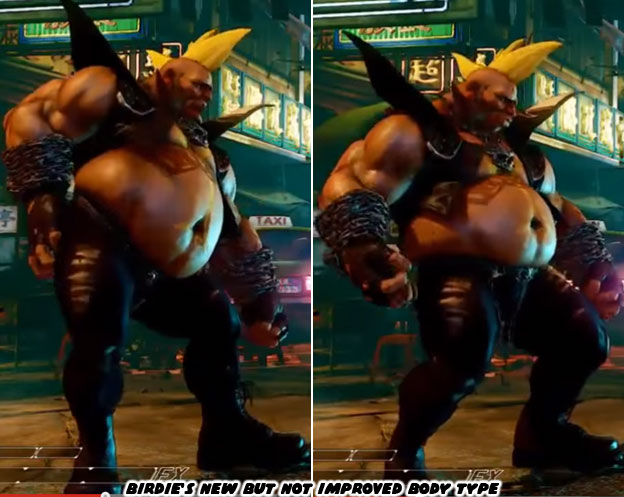
This whole series was sparked after seeing what the Street Fighter V team had done to Birdie. Obviously I did not like it. Nowhere in the legacy of Birdie's previous appearances was he ever presented as a fat slob. Why would the studio start doing this to him now? In an interview with EventHubs Matt Dahlgren the Director of Brand Marketing & eSports at Capcom said of the updated designs "A good example for our tone is Birdie… I don't think anyone really saw him coming, but we had this really cool character design — he's practically a new character in himself — but he doesn't take up one of the slots we have for brand new fighters." If Birdie is "practically a new character", with mostly new moves then why not introduce a new character in that spot? Why would they force Birdie into a template that was not his original? My friend challenged me to redesign Birdie so that he would make sense in Street Fighter V. I said that was not why I was upset with the design. Capcom did not redesign Ken, Ryu, Chun-Li, Cammy or the Dictator for the game. Granted they discolored the skin of Charlie Nash and left him with scars and staples but that was part of his return. If the studio did not need to change any of the other returning characters why would it be acceptable to do that to Birdie? I saw two reasons why, because he was black or because he was a punk. If there was a third reason I'd like to hear it, especially from the producer.

Representation was one of the most important things that defined society yet was also something rarely spoken of. We lived in a post-racial world where every member of society had an equal opportunity to advance. Or so that was what we were taught. It was something that the majority, the people at the top of the social ladder, did not necessarily see or understand. Minorities by comparison could feel the effects of representation on a daily basis. They did not always see themselves in television, movies or games. If they did the people were often portrayed with negative stereotypes. These images added up. They effected the psyche of consumers, they became subconscious biases. Years of seeing minorities in only one light, of hearing about minorities spoken about in only one way, especially in the news, had a detrimental effect on society. Just see how divided the USA was when the words "illegal immigrants" or "thugs" were spoken on television. They were trigger words. Those words caused a reaction far greater than their original meaning. This post-racial society was not as inclusive and welcoming as we would like it to be. The images that audiences were bombarded with on a daily basis could be toxic. Pictures and videos could be laced with layers and layers of subversive messages. The way minorities were visualized was more powerful than any derogatory term.
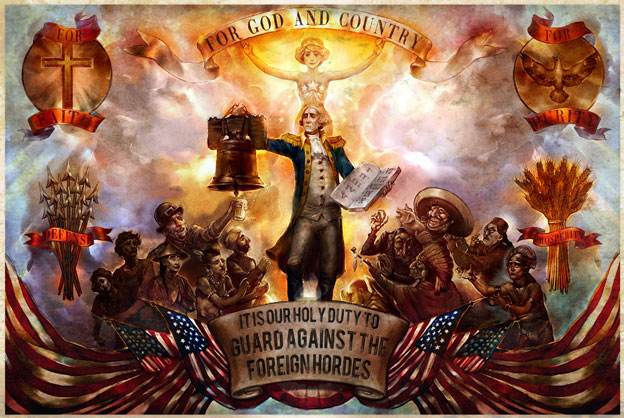
 

Fans had supported Street Fighter for almost 30 years because it introduced us to a library of fighters of every color and from every nation. These characters were not all heavy-handed stereotypes and that was part of the reason why they were so popular. During the early days of Street Fighter II's development Anabebe, Great Tiger, Zhi Li and Vodka Gobalsy were a sampling of stereotypes that the studio designers had identify and break. In doing so they were freed from preconceptions, they were able to create a title with more diversity and inclusiveness than any other fighting game ever made. Only in later revisions was it decided that the fighters should come from different walks of life. The musician from Jamaica and the chef from Mexico were two of the weakest reasons to introduce a new character. The fighter became secondary to the profession. Which was an odd choice considering what the name of the game was.

If you were not a member of a minority group it could be hard to explain what the images in media meant to us. For example it was hard for me to find positive Mexican-American role models on US television when I was growing up. I think officer Poncherello from the show CHIPs was the only person I could remember. Everyone else that remotely looked like a member of my family was usually a bad guy that spoke broken English and had no redeeming qualities. There weren't any Latino game characters that I could think of while growing up, let alone in a popular game. Many years ago when I heard that a Mexican would be added to the roster of Super Street Fighter II I was elated. It was as if the people at the top of the ladder were validating our culture. T. Hawk had some unique moves and a distinct style that worked well compared to the other fighters. More than 15 years later when a masked Mexican wrestler was announced for Street Fighter IV I was over the moon with excitement. Pro wrestling was something that Mexico was known for, now would be our chance to shine. Or so I thought. Then I saw El Fuerte, then I listened to him, then I played as him. This was not what Mexican wrestling was about. This was not the best masked wrestler that Capcom could have come up with. At least he was not the best masked wrestler that the previous designs teams could have come up with. El Fuerte was a joke and when T. Hawk returned he was a joke too. Then a Turk was introduced and he was a joke. Then a fat character was introduced and he was a joke. I wondered what had happened in Street Fighter IV. The diversity in the cast was an excuse to point and laugh at those that did not have traditional Asian fighting roots.
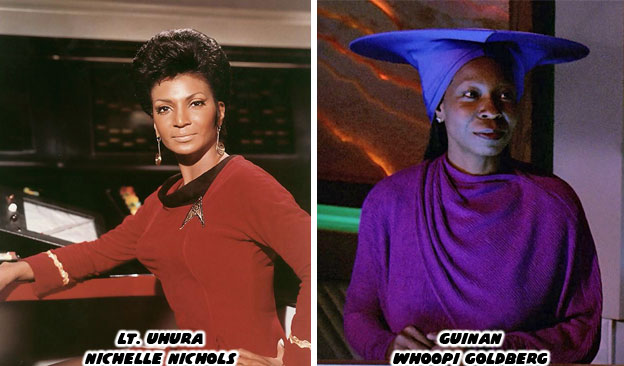

The best example on the importance of positive representation came from actress Whoopi Goldberg. “Well, when I was nine years old, Star Trek came on, I looked at it and I went screaming through the house, ‘Come here, mum, everybody, come quick, come quick, there’s a black lady on television and she ain’t no maid!’ I knew right then and there I could be anything I wanted to be.” The television show Star Trek was a very progressive show, especially for 1963 sensibilities. There was more diversity in that series than in just about any other show on television. Nichelle Nichols played Lt. Uhura, the communications officer that Whoopi spoke of. She carried herself with great dignity and was never written as a second-class citizen. It was a very promising look at the future, one in which all minorities were represented and they all had equally important jobs. Whoopi would find herself playing a character called Guinan in Star Trek: The Next Generation. It was role that influenced a whole new generation of fans. The thing was that Whoopi's performance did not only effect black audiences but also white ones as well. Whoopi was joined by black actors Michael Dorn as Lt. Worf and Levar Burton as Lt. Commander Geordi La Forge (who was also playing a blind character) in one of the most inclusive casts on television. But that level of representation had fallen by the wayside in recent years.

Today young minorities were not watching television, they were playing video games. They were learning what society thought of them based on the games they played. Since the majority of game heroes were white males then it was pretty obvious who they should look up to. When they saw a minority in a game then they were usually bad guys. However on that rare occasion when they saw a powerful minority in a game it went a long way towards how the audiences saw themselves. Now imagine if each time a minority turned on a fighting game the black character only knew how to box or that the Mexican character only knew professional wrestling. What did they think of when White and Japanese characters could do everything? There were some truths and some untruths to the character designs in all fighting games, not just Street Fighter. The most idolized karate champions in history were Japanese and the pro wrestlers that wanted to learn the art of high flying were trained in Mexico. That was basic understanding of fight culture but the thing was that the culture was not set in stone. Like all cultures it was constantly changing. It turned out that there were many black kung-fu and karate champions. Some of the greatest masked wrestlers were Japanese and Brazilians shaped the history of ju-jitsu. But that was rarely, if ever, shown in games.
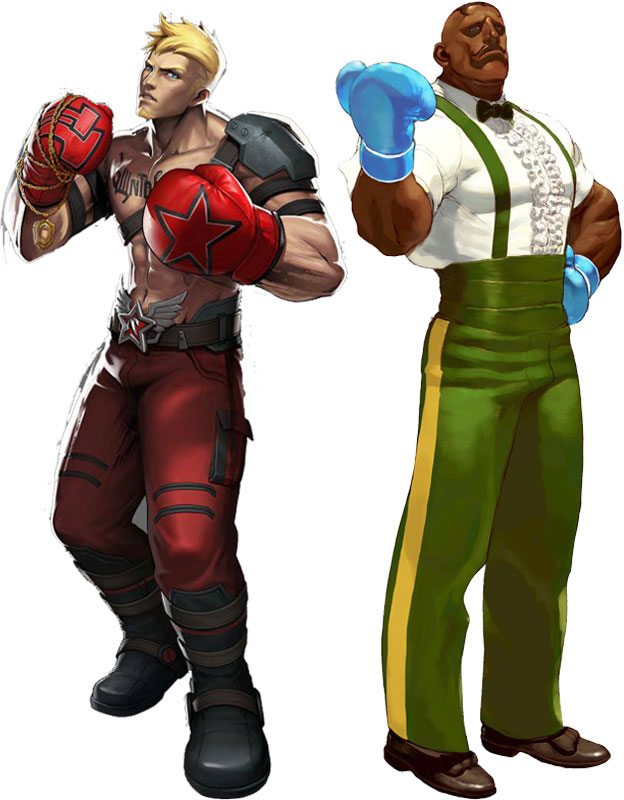


Blacks had been a major force in professional boxing for more than a century, this was true. But there had also been boxing champs from Latin American countries, from Eastern European countries, from Asia and Oceana. Those fighters were not often represented in games. Instead audiences were shown the extremes of one color. This decision was often made at the design stage because it was just easier to present one ethnicity with one fighting art. This pattern was repeated by every other studio. The rude and aggressive black fighter as well as the calm and gentlemanly black fighter had both been seen in Street Fighter. The comparisons between Evander Holyfield and Mike Tyson to Dudley and M. Bison were valid. But then there were the details that the developers and even audiences didn't completely catch. Dudley was patterned on people like Holyfield but also Joe Lewis, Jack Dempsy and UK boxing champ Lennox Lewis. Like many fighters in the series Dudley was painted as a heavy-handed stereotype of a nation. Lewis was always polite and cordial in his interviews but Dudley was on a completely different level. His butler would bring him tea in between rounds, he tended to a rose garden on his country estate and he drove vintage Jaguars in the game. Of course he did all of this while wearing boxing gloves which was absurd but made sense in the Street Fighter universe. After all, Ryu wore the same uniform everywhere he went, even when he was not fighting. This could certainly be argued as being a stereotype and it was. But like a cancer a stereotype could be benign or malignant. Dudley was benign.
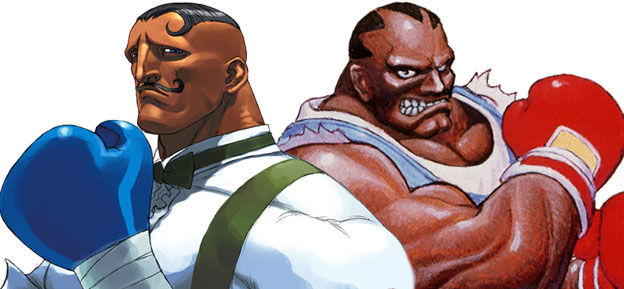

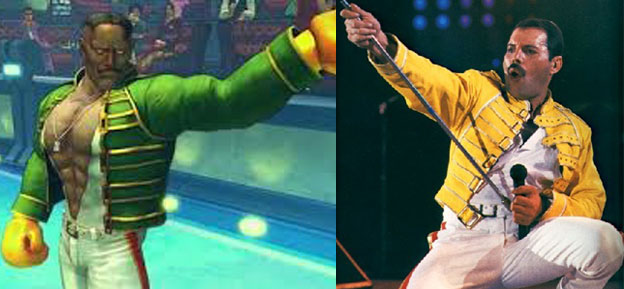
When Capcom gave Dudley an alternate costume in Street Fighter IV it was modeled after the jacket, shirt and striped pants worn by Freddie Mercury during his famous Wembly Stadium concert. The legendary singer / songwriter from Queen was considered to be one of the greatest pop music voices ever. Freddie was synonymous with British culture. His fair skin and broad mustache made him appear like a true Cockney. The thing was that Freddie wasn't from England. Freddie was born Faroukh Bulsara in Zanzibar (Tanzania) and followed the ancient Iranian religion of Zoroastrianism. His heritage was a world away from Queen Elizabeth and the Church of England, yet his talents were embraced by an entire nation.

The Japanese admired the aristocracy, they admired refined culture and idealized the Victorian era. This was part of the reason why characters like Elena from Street Fighter III had to be educated in Paris and why the not-too-delicate Emilie "Lili" De Rochefort from Tekken was from France as well. Being a member of the rich elite were some of the reasons why Dudley was painted in such a positive light. The idealized images of England and Europe were sometimes met with heartbreak when Japanese visitors traveled abroad. For example when they discovered that France was nowhere near as soft and pastel as the Studio Ghibli films had them believe it caused a nervous breakdown for some known as Paris Syndrome. Japanese audiences had been fed a fable about Paris and England being the peak of refined society, it was too much to bear that they were as dirty and unkempt as any other major metropolis. If the Japanese could be wrong about European nobility then they could be wrong about punk culture.
 

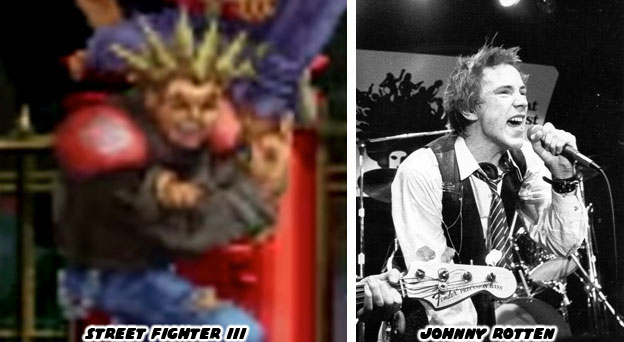
Punks were not supposed to be upper class like Dudley and therefore punks were not supposed to be admired, this message was loud and clear from the designers at Capcom. But it also showed how little they knew about the culture. Punks were not fat and lazy slobs, those would be politicians. The reason punks looked and dressed a certain way was because they were counter-culture, they were trying to be seen and heard. They represented the masses that were disenfranchised with society, especially with politics and classicism. They were keenly aware of what was going on in society and despite the shocking haircuts and attire they could be well spoken and intelligent. Dudley was a member of the elite and while he did fight for and earn his championship he had the luxury of never having to fight in the first place. He was born into money and power and could have done anything he wanted. A punk did not have that freedom, they were often born into poverty and had to fight for everything they had. There was an interesting dynamic at work between British punk culture and the aristocracy. The majority identified with the Royal Family in England however kids, especially minorities, could identify more with the punks because nothing came easy for them. Everywhere a punk went they were stared at and judged. In media they were vilified and demonized. It was something that minorities had become used to.

Imagine a young minority playing Street Fighter and seeing Dudley presented in such a positive light. Someone that not only outfought but also outclassed the bully boxer. Imagine how important it was for a young Iranian to learn what a profound influence Freddie had on the world. They too could become anything that they wanted if they worked hard enough at it. It would help make them fans on a completely different level. Now imagine that a minority punk was turned into a fat slob. The message was clear, the aristocrat should be emulated, not the guy from the streets. Punks had no redeeming qualities, they were not cool at all according to Street Fighter V. Kids that identified with Birdie were pretty much fat shamed at that point. Sure Freddie Mercury could represent British culture but he was not the only musician to do so. Punks and "shock rockers" like Johnny Rotten and Sid Vicious from the Sex Pistols and the enigmatic David Bowie could have also fit the bill. Also unlike Mercury, the three aforementioned musicians were actually from England. Just imagine how different the series could be if the team treated Birdie with the same level of respect they had for Dudley.

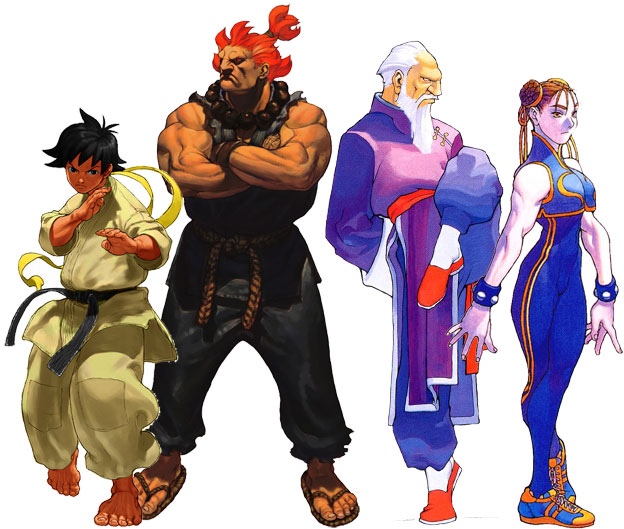
Representation had been a part of the greatness of the designs in Street Fighter. Any fighting game could have men, women and minority characters. In fact many fighting games did have a tremendous amount of diversity. It was how that diversity was represented that was more important than the inclusion. The Tekken series for example had dozens of female characters from around the world. Yet these women were either young or played up sexually. They were poured from the same mold with only the costume and color of their skin making them different. It was a superficial change that was seen in many 2D and 3D fighting games. Juri and C. Viper from Street Fighter IV were very sexualized as well but they were also the two newest faces. They didn't necessarily represent the legacy designs. Look at how women had been portrayed in Street Fighter prior to 2008. Women could represent the major fighting arts. A karate master could be a man but could also be a girl. A kung-fu master could be a man but also a young woman.
 

The developers working on the newer Street Fighter games needed to re-evaluate the role of their characters before the first 3D model was even built. They needed to work harder on their designs and consider the ways that they were representing different cultures and different arts. I do not think that making a minority character the star of the next game would automatically make the series better. The game had always revolved around Ken and Ryu and that should never change. The way that the game presented minorities could be done with more consideration though. Consideration was something that stopped the team from putting Anabebe, the Great Tiger and Vodka Gobalsky in SF II. In their place were three iconic fighters that were not necessarily a slap in the face to the nationalities represented. When Turkish oil wrestling or yagli gures was put in Street Fighter IV the Turk was presented beet red with a blue dome haircut. Players had to constantly oil themselves up so they could slide across the floor and perform silly attacks. How was this representation of the culture and fighting art different than the Great Tiger? The designers were not able to make a Dhalsim-like change to Hakan before he debuted. When I saw T. Hawk sitting on opponents and going "How" when I saw El Fuerte making Quesadilla Bombs, when I saw Birdie stuffing his face with donuts and bananas I got a distinct feeling of disrespect. I saw the ugliness of stereotypes become malignant with those representations.

Did the developers in Japan simply have no confidence in creating a serious minority character? We saw how a powerful black fighter was turned into a fat white guy during the development of SF IV. It was as if the team could not wrap their collective heads around a black not being a boxer or a silly karateka. So they erased him from the lineup, took his costume away and gave it to Ken as an alternate uniform. Instead of creating Blanka out of Anabebe they went backwards. As a life-long fan of the series that decision would never settle with me. When I thought about what the team did to Birdie in SF V I could see shades of that same misrepresentation. The consideration that the team missed was seen on how different body types could be represented. The cancer had returned.
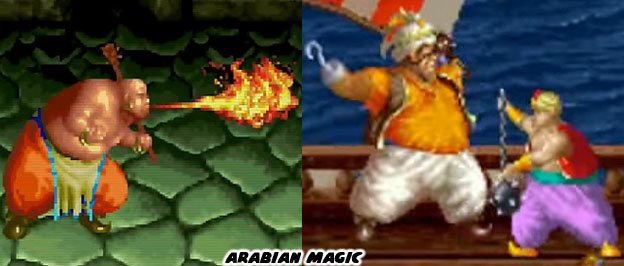
 

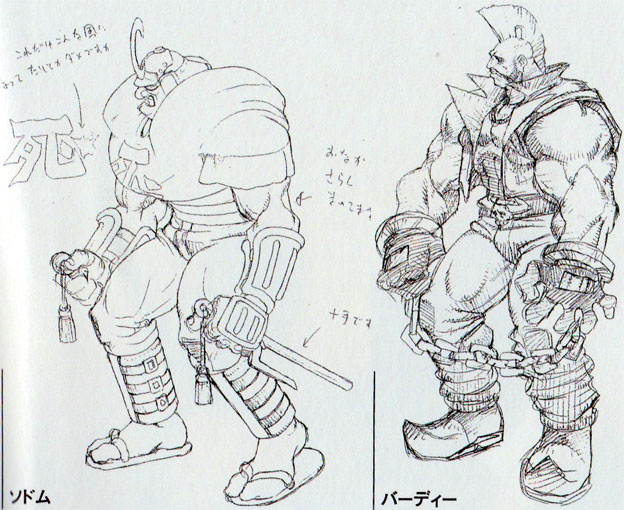
I had mentioned where fat body types had been done well as fighters and adventurers in other games. Fat characters used to represent strength, power and success in ancient stories. In modern fighting tournaments there were boxers, mixed martial artists and wrestlers that were both fat and successful. It was up to Capcom to think about their own legacy and where they wanted to go with it. At one point many years ago they were able to create fat characters that were powerful instead of goofy. At one point long ago they were able to present wrestlers and punks that were unique instead of jokes as well. Why did the team move away from those designs? Were they unaware of what they had done previously or did they choose to ignore it? When did sticking with classic designs become taboo at Capcom? Or did ignoring the rules only apply to minority characters? When popular fighting game YouTube commentator Maximillian Dood made a personal list of five people that should not return in Street Fighter V it consisted of Street Fighter IV characters Rufus (in the number 1 spot), Hakan, Seth, El Fuerte and Abel. Maximilian had his finger on the pulse of gamers and said what they were thinking. He knew that the designs, their control and place in the series were not as well done as the earlier fighters. Hopefully Capcom would listen to him if they wouldn't to me.
 

I "get" that Street Fighter was a series filled with fantastic characters that had impossible abilities. There were martial arts masters could kick with the force of a tornado or split boulders in half with a punch. They lived in a world where science fiction and fantasy were real. Yoga masters could float in the air, mad scientists could bring the dead back to life and beast men were real. This mix of different genres was refreshing. It was another reason why audiences kept coming back. On one side of the spectrum there were fighters that had realistic punches and kicks, they could have existed in this world. But on the extreme end there were fighters that could breathe fire and even "teleport" these things were improbable if not outright impossible.

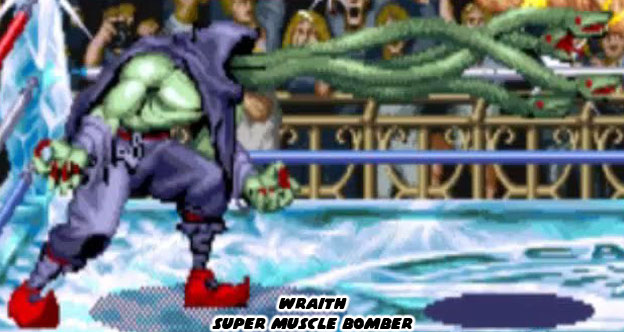
In the extended Capcom universe there were characters every bit as fantastic and as well done as those in Street Fighter. Take the Indian wrestler Wraith from Muscle Bomber / Saturday Night Slam Masters. The game actually took place in Street Fighter continuity. The character from New Dheli was 7' 2", a certifiable giant. He was equally mysterious with pasty green skin and covered in a hood and rags. He moved erratically and seemed to be some sort of ghoul. He had long red nails that he would use to slash the throats of opponents. He also had sharp jagged teeth which he used to maul opponents like a rabid dog. Similar to Dhalsim he could even breath fire and had some sort of connection to the supernatural. One of his special attacks was absolutely bizarre. Snakes would burst from underneath his hood to bite opponents. It was a perfectly impossible attack that also made him memorable.
 

Here was the thing that made the Capcom fighting games unique when compared to every other studio. There was often a hidden truth, some basis in reality in the most memorable fighters and in their arts. It gave the character designs a bit more staying power in the genre. Ryu was inspired by the life and times of Mas Oyama and Yoshiji Soeno. Chun-Li was most likely inspired by Wing Chun and Bruce Lee. Ken Masters was most likely inspired by Joe Lewis and Bill "Superfoot" Wallace. We saw where Zangief came from, where even Dhalsim and Blanka originated from earlier in this blog. The special attacks also known as the "Fireball" moves had been written about in Chinese myth for years. Those attacks were called fa-jin and some kung fu masters claimed to be able to perform such moves to this day (granted they were invisible to the naked eye). Even the ShunGokuSatsu, or "Instant Hell Murder" of Gouki was based on the dim mak or death touch from Chinese legend.

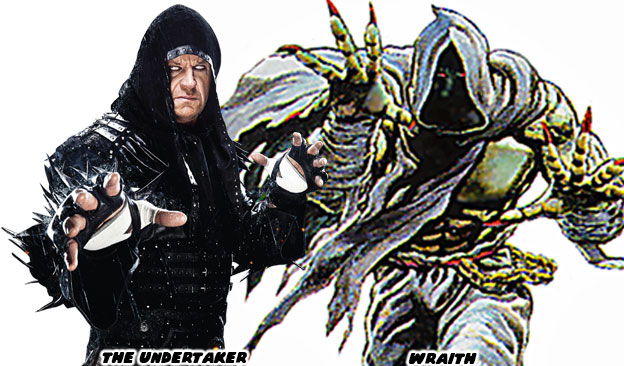
A character as macabre as Wraith could never have existed in real life, or could he? Stop and think about it. A giant of a man, somebody with an undead gimmick that was impervious to harm and both frightened and delighted audiences. Yeah, I wonder where Tetsuo Hara could have based his design on…
 

We knew that Wraith was an absurd character but he did not have to be presented silly in order for us to get that. Part of the charm of professional wrestling is how gimmick performers try not to break character so that the audience can stay entertained. We all know that pro wrestling matches are pre-determined and the stories shown on television are scripted, yet the fans choose to believe that this is real combat and these are real characters. Masked wrestling is an even more absurd concept, I think we all get this, but it is also a great form of entertainment. But to take the masked wrestler out of context and turn him into a silly chef then you dismiss the entire culture. These changes were done because it was the quick fix to make the character "different." By the same token we know that beast men were not real. If they were then they would look like the Amazon or Blanka. As it stood Blanka was a ferocious monster in his original incarnation, he did not have to become dumber as the series progressed. Birdie already had a shocking appearance, the studio did not have to go out of their way to make him fat and gross. When I saw what the studio did to him in Street Fighter V I knew that they took the shortcut, they took the low road. They went for the quick laugh and used a minority to reach the punchline. When it comes to representation these things are important, young audiences can see a powerful minority in their game and be inspired, or they can see a silly character and be disheartened.  If you do not think there is an ethnic bias at play ask yourself this question, would Capcom make the main characters fat, gross or silly?

Capcom would probably not address any of the issues that I had brought up over the course of this series. After all they never responded to my other blogs. But I hope that my readers think about the importance of representation and challenge Capcom when something does not seem right for Street Fighter. I will always challenge the studio to try harder. To be better ambassadors to the world and stop thinking so insular about their designs. It would not hurt to revise, review and represent cultures with a modicum of dignity. If they could not introduce a minority character without giving them silly attacks or of stereotypical appearances then maybe they should not be in the game. My hope is that they get rid of the nonsense and bring back the real Birdie and look at how they are representing minority characters. Thank you for reading and I hope you share your thoughts with Capcom! As always if you enjoyed this blog and would like to sponsor me please visit my Patreon page and consider donating each month, even as little as $1 would help make better blogs and even podcasts!
Tuesday, July 21, 2015

Representation Matters! Or, what happened to Birdie, part 8...


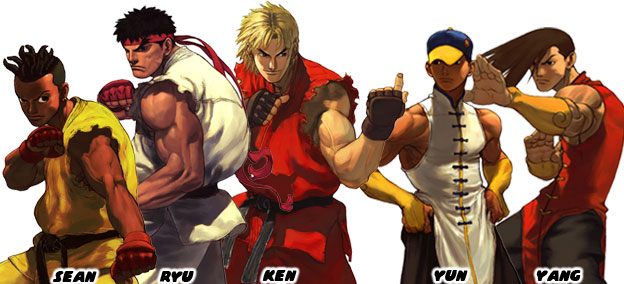
Past the mid '90s Capcom was a completely different studio. The rise of 3D and the 32-bit consoles had changed the gaming landscape. Successfully publishers could no longer ignore home systems market. The arcade market had yet to decline but the writing was on the wall. Studios had to branch out or they would fail. Capcom found success with new franchises such as Breath of Fire and Resident Evil. The fighting game genre was starting to peak and the studio wondered if they had one more great title left in them. Street Fighter III tried to use the elements that made Street Fighter II work. The project began by starting off by deciding who should return. Ken and Ryu were selected to be the only familiar faces and an entirely new cast would fill out the roster. I would argue that there was a lot of redundancy in the new faces. There were a pair of Chinese twins named Yun and Yang that played similarly to each other. They were meant to be a sort of younger Chinese equivalent to Ken and Ryu. Their red and white uniforms were reminiscent of Ken and Ryu's. There was also understudy of Ken called Sean that had similar moves to the stars of the game. I think the team was having too much fun with the names of the new faces. There was the obvious Yin and Yang jab but also the more subtle Sean-Ryu-Ken which was a play on the fireball attack or Shoryuken.


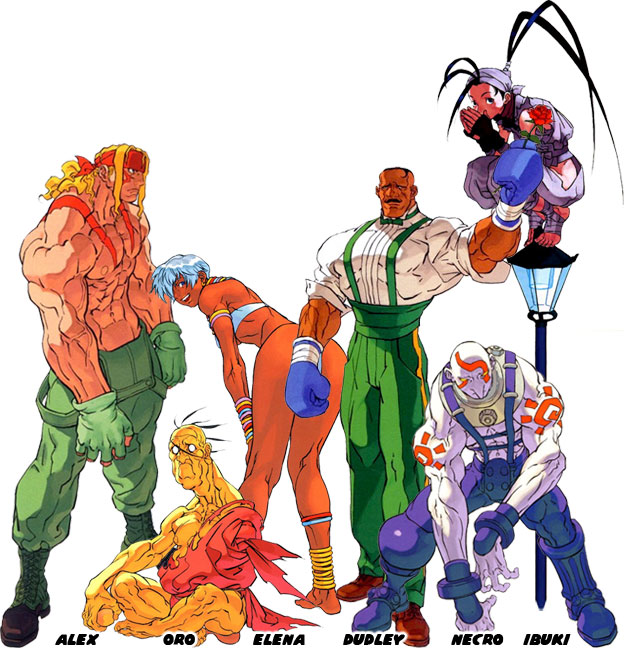
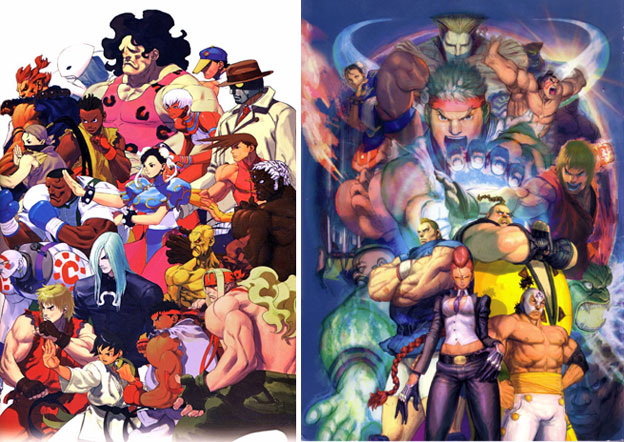
The three karate fighters in all and two kung-fu fighters ate up a lot of the space in the roster. The only duplicates in the original Street Fighter II lineup were pro wrestlers and those were dropped early on so that the team could fit in different styles. Sean was well received, especially as a black minority character. Unfortunately he lacked the impact of Sakura when she debuted. The rest of the cast was more unique. Alex was the star of the new game. He represented an entirely new style of fighting, MMA actually, and was somewhere in between a striking character and a grappler. He actually had elbow attacks similar to Adon, headbutt attacks similar to Birdie and suplex throws similar to Zangief. His size, speed and strength were unique in the genre. The rest of the cast took some chances with the character designs and forms represented. A heroic boxer had finally made it into the series. Moreover Dudley was a very positive black role model. He was not the only minority in the game. Elena was an African that had studied abroad, in Paris first and then Japan. Her dark skin was contrasted by bright blue eyes and white hair. Her costume left little to the imagination. She didn't have the same forethought into her design as Chun-Li. Instead Elena was very much like the characters in anime, pandering heavily to fan service, which was a trend that Akiman was trying to break when he finalized Chun-Li. This was odd considering that the lead artist on this project was Kinu Nishimura, she was heavily influenced by Akiman. Elena did have a unique form of fighting. She used capoeira and there had been some rotoscoping work by the animators to make sure that the moves looked as fluid as possible. Capcom designer Daigo Ikeno was a capoeira practitioner and helped with the reference work.

The game also introduced a female ninja practitioner named Ibuki. Her look was unique and not as grounded in history or anime making her a fantastic addition to the title. The game was not without its own Blanka and Dhalsim, or two extreme characters. An elderly one-armed Brazilian (he actually kept his other arm tucked inside his gi) was a master of a unique fighting art, it was a mix of psychic attacks and judo throws. He was very strong and fast despite his age. Oro was based on Helio Gracie, the co-founder of the Gracie school of Brazilian ju-jisu. The character design was unique because he was the oldest character in Street Fighter mythology, almost twice as old as Gen, the previous elderly character. He demonstrated that age did not make some fighters less dangerous. The other unique character was Necro. The young Russian teen had been experimented on by a mysterious group of religious and scientific zealots. The various experiments they did to him left his muscles, skin and bones like rubber and gave him the ability to shock opponents like an electric eel. Meaning he had some of the best qualities of both Dhalsim and Blanka,


The game did well with audiences. The upgraded arcade engine allowed for larger sprites, a broader color palette and more frames of animation. Having three black characters, including a woman of color was a tremendous credit to Capcom. They were showing an active interest in inclusion and diversity with their lineup. Unfortunately for many audiences and arcade owners this was not the game they had expected. The lack of returning characters and redundant new characters gave the game an unfinished feel. Capcom had established a president in Street Fighter Zero that was tough to beat. They could bring back classic characters and make them work again and again. Upgrade kits were in the planning stages. Each one could introduce a new character if not classic character. Before long Chun-Li and the giant Hugo were put in the game. Hugo was actually meant to be in the first release but the team didn't finish his animations in time. There was no doubt that the time spent creating the redundant Yun, Yang as well as Sean may have been better spent on entirely new figures. Hugo was representing the Final Fight cast as Chun-Li was a return to the SF II lineup. Gouki / Akuma had returned as well but was a hidden character in the first few builds.

The new characters Urien, Q, 12, Remy and Makoto were a mixed bag. Urien was a pallet and head swap for the new final boss Gill. Meaning that another redundant character was also featured in the title. Q was a nonsensical masked secret agent that moved and fought like a robot. Remy had many of the attacks from Guile and Nash but with a look that was pulled from the rival King of Fighters series. 12 was a shape-shifter that was reminiscent of Necro but was also heavily anime-influenced. Of the final new characters added Makoto had the most traditional design elements applied to her. She was a karate fighter, yet her form was completely different than Ken, Ryu, Sean and Gouki. This meant that for audiences she also controlled differently and required some new strategies to use.


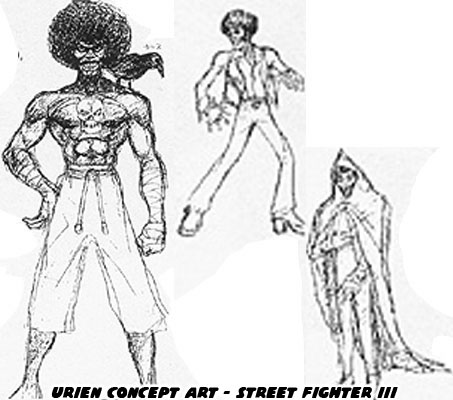
With the exception of Makoto, the last new faces added to SF III were lacking. They didn't have enough time to be evaluated or redesigned. In fact the original plan for Urien had once again fallen on old stereotypes. Had the studio not gone with the pallet swap of Gill who knows how audiences would have reacted to the afro-sporting, disco pants wearing antagonist. I don't think it would have been a warm reception. When development began on Street Fighter IV the approach for new fighters was completely the opposite of SF III. The studio started with Ken, Ryu and the original World Warriors from SF II as all returning members. Then they had a small group of new faces that they would introduce to fans. The characters were designed mainly to appeal to the West, where Capcom had hoped to gain a lion's share of the games profits. The sexy spy Crimson Viper was meant to appeal exclusively to US players. Despite the pandering most gamers in the US ignored the character. Of course the fatty Rufus was forced onto audiences because he was funny. The final two spots would be taken by a judo-ex-military fighter and a masked Mexican wrestler.


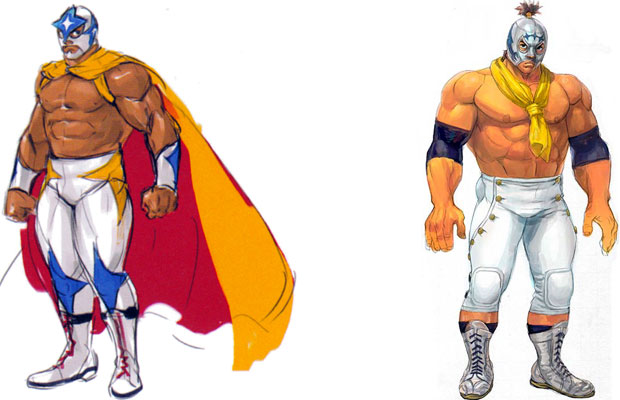
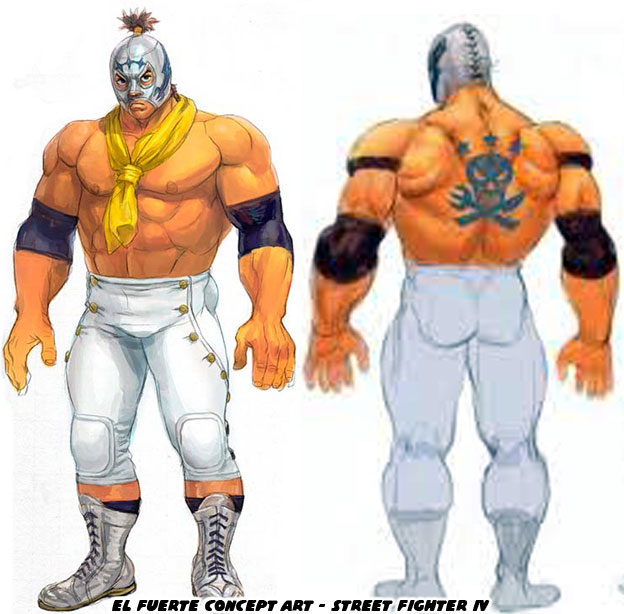
The lead designer on this game was Daigo Ikeno. He could not seem to find designs that worked as well with audiences as the SF II cast had. I think that the choices pushed by producer Yoshinori Ono had something to do with why the characters were lacking. A few blogs back I mentioned how there was a strong black character planned for the game that was eventually turned into Rufus. Something similar happened with El Fuerte the enmascarado, or masked luchador. In the early planning stages El Fuerte had a unique costume that was inspired by actual lucha libre livery. He had the mask, the tights and even a cape. Which was something that performers had worn to the ring since the earliest days of pro wrestling in Mexico, which would be over 80 years ago! In the earliest stages the design was every bit as good as something that Tetsuo Hara could have come up with for the Muscle Bomber series. In fact I would say that the original El Fuerte was a better design than El Stinger, the Mexican wrestler created by Hara. El Fuerte did not necessarily poach and designs from a masked wrestler living or dead. The star on his mask was even a nod to the masked wrestler that had been planned for SF II. But then something happened…


It was decided that El Fuerte was not unique enough. At least not unique enough to be ranked against the World Warriors. So his costume was redone, his mask was redone and even his purpose for fighting was redone. The team decided that it would be great if he was a masked wrestler that was obsessed with cooking. In this way they could name his attacks after food. The Habanero Dash, Tostada Press, Fajita Buster, Gordita Sobat, Calamari Slide Propeller Tortilla, Picadillo Jump, Quesadilla Bomb and Guacamole Leg Throw. The names were an insult to the fantastic and dangerous moves that Mexican pro wrestlers performed on a weekly basis. To add insult to injury, the mask, which is sacred to the performers was even stripped of its origin to reflect the silly obsession with cooking. There were forks coming out of lighting bolts in the early redesigns. The tights were turned to chef pants, at one point El Fuerte even had tattoos or a fork and knife on his back. The three stars that adorned his mask was meant to mimic the Three Star Michelin rating given to the top restaurants around the world. Each decision that the team made took away from the character, it did not add to him. It was as if the designers were bypassing the lessons from previous generations and were focused on the punchline.


It was up to the team to decide how the tone of the game was supposed to be. The new graphics engine allowed for some realistic 3D models. When the majority of the cast fought each strike looked like it had weight and power behind it, giving the game a serious tone. But then all of the models had silly expressions applied to them when certain characters performed super moves. It was a mix of cartoon and realism that was sending a mixed message to audiences. Either the game was a return to the classic challenging Street Fighter II, or it was more anime influenced like SF Zero and SF III. Being caught somewhere in between did little to improve the game itself. The only signal that was not missed was how minorities and their fighting arts were being presented. Mexican and later on Turkish wrestling was seen and shown as an absurd form of fighting not to mention that Americans were stupid, morbidly obese participants.

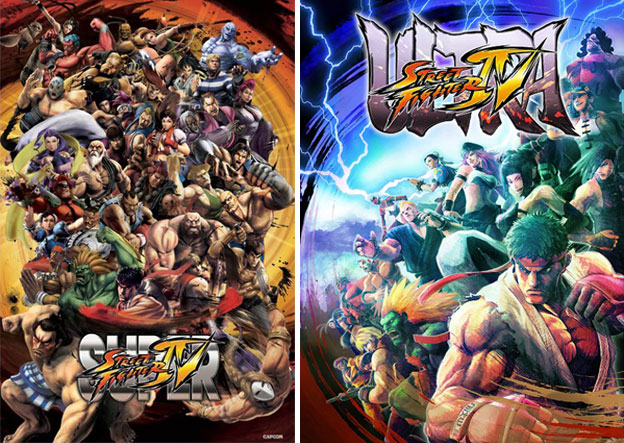
 As the reception to the new characters were met with a lack of interest the team went back in time and started putting in as many classic characters as they could with each update. The majority of characters from SF III and SF Zero had returned by the time Ultra Street Fighter IV. In the rush to return to fan favorites the designers missed a number of important details. The characters from Zero had not matured. Remember that in continuity Zero happened shortly after the events in the first game. Ryu, Ken and Chun-Li were still young adults and Cammy and Sakura were girls. In Street Fighter III Ryu, Ken and Chun-Li were adults. During this timeline Sakura and Cammy would have been adults as well. Instead Street Fighter IV was pitched like the Zero series. It would tie together the events of SF II and SF III. Only this time Daigo Ikeno would not go out of his way to redesign the cast so that they were all unique to this continuity. Instead the team picked and chose the various incarnations that would appear in the game even if their designs were from two or three different games.


It had been almost 10 years since the last Street Fighter III and the first Street Fighter IV had appeared. In that time audiences never forgot what the series meant to them while growing up. Seeing a diversity of male and female characters in SF IV was fantastic. It was also nice to see different nations represented, mainly because they were the original World Warriors. Audiences from around the world would be able to identify with a character or two, including the new ones. It would go a long way in making kids feel validated, especially when they were being underrepresented on television and movies. I only wish that Capcom had done a better job at presenting minorities. They were never as disrespected in any previous version, why did the team start now? Street Fighter IV had missed the boat with new faces and after seeing what was done to Birdie in Street Fighter V I shudder to think what else the studio had planned for non-Asian and non-White British characters. As always if you enjoyed this blog and would like to sponsor me please visit my Patreon page and consider donating each month, even as little as $1 would help make better blogs and even podcasts!