Showing posts with label vanessa. Show all posts

Sunday, April 28, 2024

The return of a wrestling icon in Fatal Fury City of Wolves

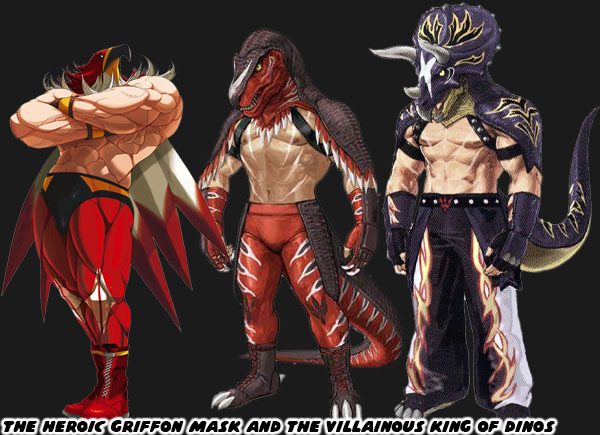
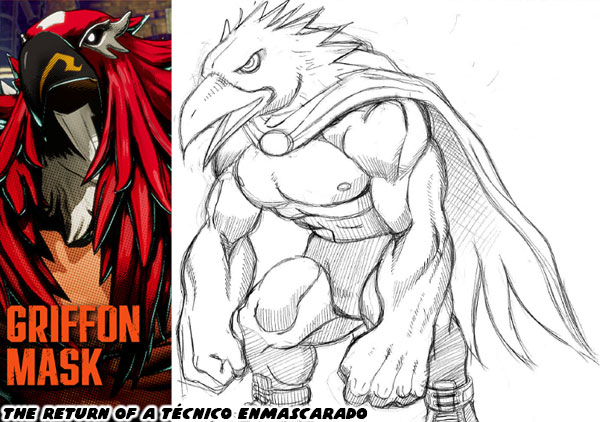
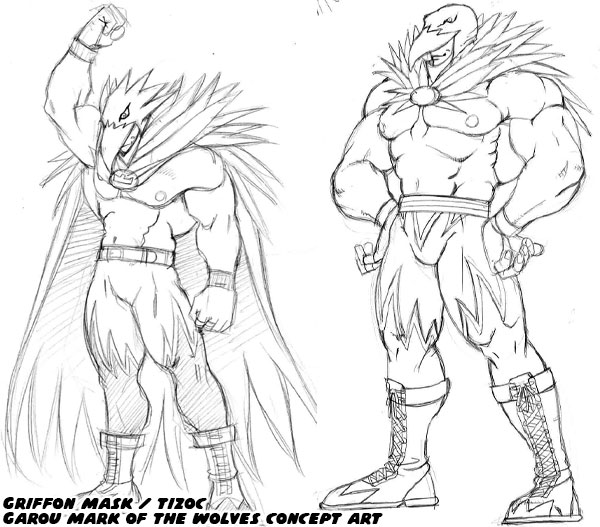
Yesterday the blog looked at some concept art from Garou Mark of the Wolves (1999) thanks to some scans that my friend Zero shared with me. We saw how some character designs evolved. Some characters were dropped, and some ended up being the blueprints for brawlers that would turn up in the King of Fighters series. One of the returning faces in the Garou 2 / Fatal Fury City of Wolves was a masked wrestler that went by the name of Griffon Mask / Tizoc. He was easily one of my favorite pro wrestling characters in a video game. He captured the essence of lucha libre better than 90% of the masked wrestlers in any other title.

There were layers to his design that were important to fans of the sport. Even if you knew nothing about pro wrestling you could tell he was an interesting character, with a unique move set, and his own personal reason for fighting. For die-hard fans of lucha libre his design, and inclusion was profound. There were a lot of differences between the pro wrestling featured in the USA, and in Mexico. I’m going to give you a light overview today, but if you want a deep dive I wrote a comprehensive history of lucha libre on the blog many years ago. Wrestling in Mexico is called lucha libre, literally “free fight” or “freestyle fighting.” Not every luchador or wrestler wore a mask. That was a misnomer. A masked wrestler in Mexico was called an enmascarado.

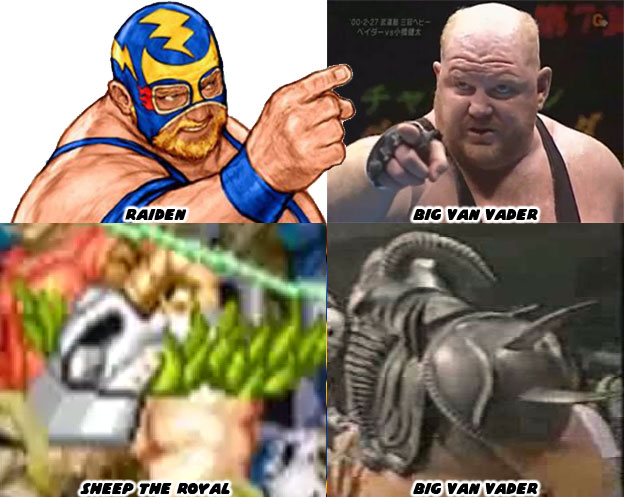
The good guys were referred to as técnicos, literally technical wrestlers. They obeyed the rules of the sport, and practiced good sportsmanship. The villains were called rudos, literally rude, rough, or rugged fighters. They were expected to use dirty tactics, and cheat at every opportunity. It was up to the técnico to beat them fair, and square. It was a challenge never to stoop to their level. There were both good guy, and bad guy enmascarados. They represented a literal battle between good, and evil. In the King of Fighters universe Griffon Mask was among the best of the técnicos. He had no intention of entering the KOF tournament but was recruited by a boxer named Vanessa. Griffon was on the opposite end of the spectrum of Raiden, the heel, or evil masked wrestler that appeared in the original Fatal Fury from 1991. Raiden was based on Leon White aka Big Van Vader. Mr. White (R.I.P) was hugely popular in Japan in the ‘80s, and ‘90s. He influenced the creation of Raiden, as well as Sheep the Royal / Alexander the Grater from the Muscle Bomber / Saturday Night Slam Masters (1993) series by Capcom.

Griffon Mask was the definition of a babyface, or face for short. These were the good guys. He was a noble wrestler, and he fought for all the right reasons. He was actually a mentor to young poor kids, and using his winnings to help orphans. This was a trait shared by King from the Tekken (1994) series. The stories of masked wrestlers fighting for orphans was based on the true story of Fray Tormenta (Friar Storm). He was a monk that would wrestle while masked in order to raise money for the orphanage he ran. His legend changed the perception that Japanese fans had of masked wrestling. He would inspire the creation of some great fighters. The teams at Namco, and SNK seemed to have a profound respect for the sport. By comparison I was not happy with how the developer at Capcom took away the elements of lucha libre, and replaced them with cooking gimmicks for El Fuerte in Street Fighter IV (2008).

In the King of Fighters XIV (2016) Team Mexico featured a new character. Joining fellow pro wrestler Ramon, and Angel was a new enmascarado named King of Dinosaurs. This guy had a similar build, and move set to Griffon Mask. He was however a rudo. Ramon, Angel, and several other competitors in the tournament knew he was actually Griffon but played along in order to preserve “kayfabe” or keep audiences from discovering the truth. The reason for his change in demeanor was because he had been beaten by a young boxer named Nelson. In order to get even he was willing to fight dirty in the tournament. He didn’t want to let any of his fans down so he created a new persona, and mask by extension. I had written about Nelson, the boxing phenom with vitiligo previously on the blog.

I’m glad that Griffon was back to his good guy identity. I wondered if Vanessa had something to do with this, or if it would be addressed during the story mode. I was eager to see if he was going to have a new rival in Fatal Fury the City of Wolves. It would be great if Raiden, or a new rudo debuted in the sequel. What do you think of this character? Were you ever a fan of pro wrestling, or lucha libre? I’d like to hear about it on the comments section. As always if you would like to sponsor me please visit my Patreon page and consider donating each month, even as little as $1 would help make better blogs and even podcasts!
follow the Street Writer on Patreon!

Tuesday, October 10, 2017

Hiding the master in plain sight, the genius of SNK's character design... part 5

SNK had exploded on the scene in the early ‘90s. The success of the Neo Geo console in the arcade, and the steady stream of fighting games made sure they would be around for the long haul. I had mentioned previously that the success to their school of design was based in hiding the masters of the martial arts in plain sight. A karate master didn’t have to be Japanese or wear a gi. This was demonstrated in the Art of Fighting (AoF); Robert Garcia was an Italian playboy that drove exotic cars, wore thousand-dollar shoes, tailored suits, and could go toe-to-toe with the ambassador of Kyokugenryu karate, his friend Ryo Sakazaki. King was a Muay Thai goddess but you would never have suspected it as she dressed like a high-class bartender. Shinkiro and the art team didn’t have a chance to create these plain-clothes masters for every new release but that didn’t stop them from experimenting. Before they found their groove they were as guilty as the other developers of following the trends. Boxers Michael Max, Axel Hawk and Micky Rogers were very generic designs. Pulled in part from real-world fighters Mike Tyson and George Foreman. All of that changed in 1994 when the studio released King of Fighters ’94 (KOF). From this point on it was almost mandated that the figures looked like cool manga characters instead of martial artists.
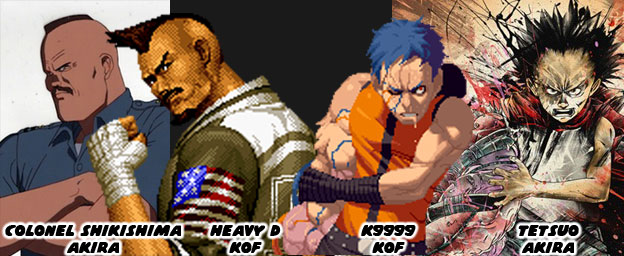
 

Manga and animé were very influential to the design of early fighting games. The team at Capcom were influenced by Buronson and Tetsuo Hara’s work on Hokuto No Ken / Fist of the North Star. The people at SNK were influenced by Katsuhiro Otomo’s science fiction masterpiece AKIRA. The people at SNK were so influenced by the book that it shaped the story of later KOF games. The entire plot revolving around clones and the paramilitary government organization N.E.S.T.S. was roughly pulled from the plot of AKIRA. Even the character K9999 from King of Fighters 2001 was eerily similar to Tetsuo, the antagonist in AKIRA. The likeness was so much so that publisher Kodansha took SNK to court and got them to remove any likeness of the character from future releases and official publications. I would argue that the imposing Heavy D, mohawk, square jaw and all was based on Colonel Shikishima from AKIRA as well. Thankfully SNK made him a dark-skinned character so the comparisons wouldn’t be as obvious. From that point forward the artists at SNK were taking very bold creative chances.
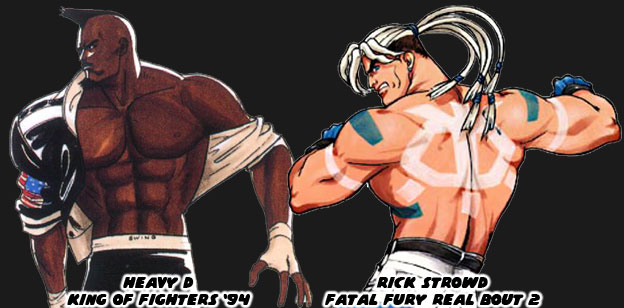
 

Heavy D started the trend of non-traditional boxers in the KOF universe. His street fashion, paired with his leather jacket and wild haircut made him look like an intimidating opponent. His was the type of look that audiences expected from SNK. It was their follow-up that was even more unique. One of the most unusual boxers in the SNK universe was Rick Strowd. He first appeared in Fatal Fury Real Bout 2 in 1998. I say he was unusual because of his appearance. He was as physically strong as any other character but that wasn’t unusual. He was actually a Native American character although he didn’t look like a typical one that we might have expected. Rick had pale skin, long white hair and bright paintings covering his body. His white pants and blue gloves were solid color choices, they matched the markings painted on his chest and back. He was not rooted in any actual native group, nor were his markings reflective of any tradition. The inverted skull painted on his back looked a bit too cartoonish for example. SNK was experimenting with different influences, different stylistic choices and different ways of presenting a traditional fighting art. They figured that they could shake things up by presenting a unique looking character and call him a Native. Their decision worked for the most part. From that point on the studio realized that boxing was not the only thing that American characters could represent.
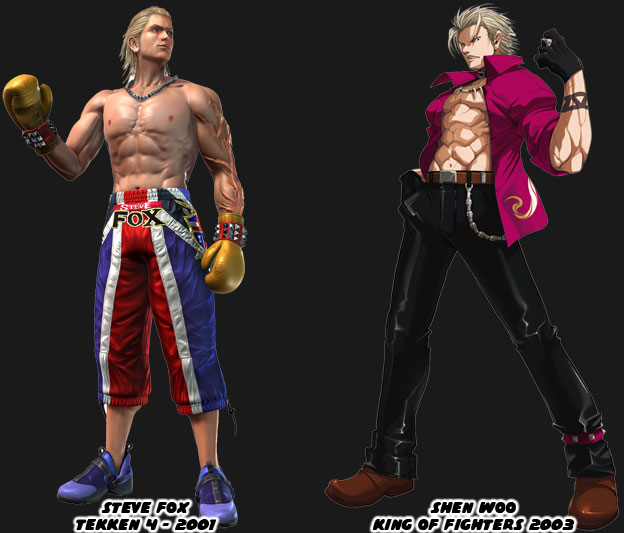
 

The other thing that the artists at SNK, and a few other Japanese studios, realized post Rick Strowd was that boxers did not all have to be big black guys. Two leaner blonde boxers made their marks after 2000. Namco introduced the fighting community to Steve Fox in Tekken 4. The British boxer had an athletic build and not too bulky. Most Tekken characters were nowhere near as swollen as the Capcom or SNK fighters. Fox had long slick blonde hair and most of his costumes in the series were street outfits. Even his “traditional” costume broke the mold. His boxing trunks were actually long training pants. His most unique element were the enormous scars covering his arm. He wasn’t sure how he got them or what their purpose was, making it an interesting side story for the character. Not to be outdone SNK dropped Shen Woo into KOF continuity in 2003. This blonde boxer was cut from the save cloth as Fox but his look and style were even more street. The Shanghai native was mostly a self-taught fighter, similar to Terry Bogard, and had gained a reputation as one of the most dangerous men in South China. Many of the tournament stars in the KOF series were young cool guys with street clothing so Woo fight right in. If the design had any failings it was that SNK had started relying on the street look too much. Prior to Woo the company had introduced a boxer that I would consider one of the best designs in the past 20 years. This character was named Rob Python from Buriki One.
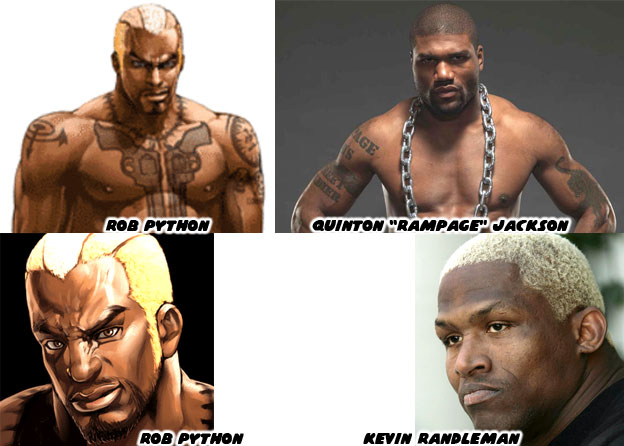
 

Python represented a break from tradition, he was reflective of the next-generation fighting black superstar. His look was inspired in part by actual MMA fighters Quinton “Rampage” Jackson and Kevin Randleman. They were wildly popular in Japanese tournaments. SNK knew that audiences had outgrown the clean-cut look of a young Tyson and the aging Foreman. They had been playing Neo Geo fighters for almost a decade and wanted new blood. The next boxer had to ooze personality and in the case of Python, he also had to ooze a sense of danger. He was among one of the most dangerous fighters in the Buriki One tournament and also the rival to Gai Tendo, the star of the game. Python was an understudy of Silber, whom I had mentioned previously on this series. Python’s tattoos were as much a part of his costume as his gloves or shorts were. No character before or after had ever looked as imposing. The enormous pair of Colt revolvers tattooed on his chest were meant to intimidate his opponents. It was assumed that he spent time in prison where he had learned of Silber. SNK, and in particular the talented artist Hiroaki, had changed the formula yet again. Python was not a fighting master hidden in plain sight, instead he was a killer masked as a boxer. It would take Capcom almost 17 years to reinvent the boxer by going full circle as well.
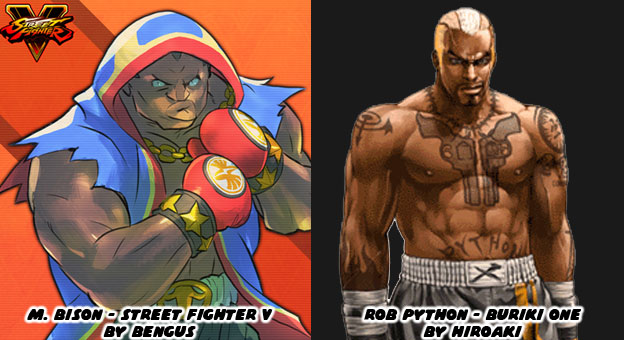
 

In 1991 M. Bison had pretty much set the standard that other boxers were compared against. There wasn’t a fighting game in the ‘90s that wasn’t compared to Street Fighter II. Every boxer was compared to Bison. His look had stagnated in the late ‘90s while SNK was committed to experimenting. Capcom finally conceded and created their own hidden master with Dudley in Street Fighter III (1997). The aristocratic boxer had a unique library of moves but long-time fans of Bison had a soft spot for tradition. Senior Capcom artist (and personal hero) Bengus was called in to work on the Street Fighter V (2016) designs. While he did not develop the original M. Bison, that was more likely AKIMAN and Shoei, Bengus was responsible for the new look. He wanted Bison to have the same big, brash personality but with an updated costume. The Capcom style of design was rooted in making traditional fighting archetypes. Their karate masters had to look like karate masters, their kung-fu masters had to look like kung-fu masters, and their boxers had to be boxers. Bengus went full-bore Americana with red white and blue trunks but then wrapped everything in a red, white and blue robe, with torn sleeves and gold jewelry to boot. The “Crazy Buffalo” now sported elements of the street, elements of real pro boxers and even cartoonish archetypes. He was still classic layered underneath modern accents.
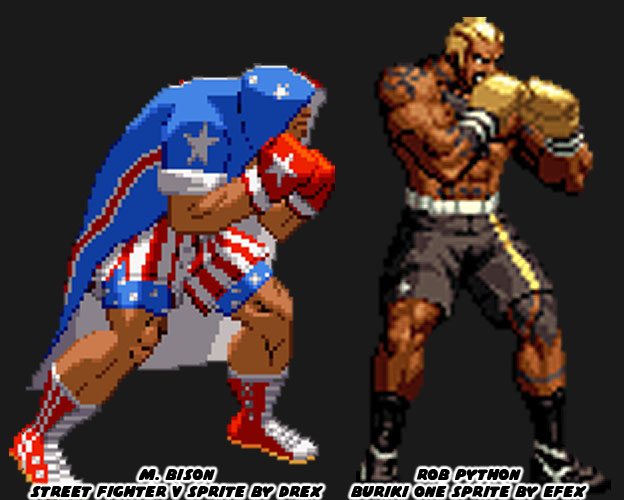
 

This was not to take anything away from Rob Python and all of the work that SNK had done with boxers over the past 25+ years. Their fighters had been among the most unique, most colorful and most diverse ever assembled. I honestly wish that they would revisit their Buriki One cast for the future installments of the KOF series. With that said they still managed to break new ground. One of their most stylish boxers debuted in 2000, right on the heels of Python. The new fighter was a mysterious special agent named Vanessa. She had taken up boxing when her lover was killed. Like King she was a master hidden in plain site. Her pants and suspenders were a nice touch under her sleeveless shirt and tie. The look was very chic. It wasn’t the first time than SNK had explored the dangerous femme. Vice and Mature, the valets for early KOF sponsor Rugal Bernstein were assassins in disguise. Vanessa was a hero using a similar fashion aesthetic. The trio predated and were more than likely the inspiration behind Crimson Viper in Street Fighter IV.


The most recent boxer in KOF canon was a mix of traditional and modern. Nelson debuted in the King of Fighters XIV, also released in 2016. He was a dark-skinned Brazilian and up-and-coming phenom. The young fighter was involved in a hit and run leaving the gym one night. He lost an arm and his girlfriend was put into a coma. A secretive sponsor paid for his cybernetic replacement arm and saw him enter the KOF tournament. SNK embraced his back story and and incorporated the tire tread motif on his boxing gloves and workout gear. His scars were very bright and spread across his face and torso, giving him the look of someone with the skin disease vitiligo. While I think there may have been too many color choices and design elements placed on the character he worked within the series. Like Vanessa he was a progressive character. His appearance might have appealed to people with disabilities or those recovering from amputations. I would like to see how SNK builds on their library moving forward. Speaking of which, some of the more recent entries in the KOF universe were also a mixed bag of design choices. We’ll look at these in the next blog. As always if you enjoyed this blog and would like to sponsor me please visit my Patreon page and consider donating each month, even as little as $1 would help make better blogs and even podcasts!
 follow the Street Writer on Patreon!

Wednesday, September 16, 2015

How fight culture became fighting game history, part 34

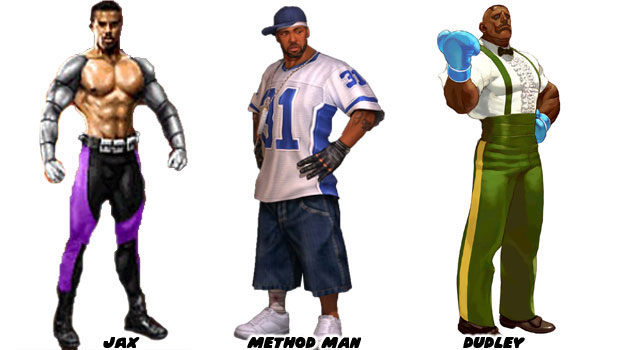
Characters in the fighting game genre did battle for any number of reasons. Some were noble, like police officers trying to bring criminals to justice. Others to prove their fighting style was the best. Some simply for the sake of achieving fame and glory. Black fighters seemed focused on the fame and glory part but to all things there were exceptions. The military officer Jackson "JAX" Briggs from Midway's Mortal Kombat II (1993) and the gentleman boxer Dudley from Capcom's Street Fighter III (1997) were contrary to the typical portrayal of black characters in most games. They were noble, powerful, fit well into their respective franchises and never allowed old conventions to dictate their presence or personality. Unfortunately both Jax and Dudley were rare in that regard. Japanese and US developers seemed to find it easier to rely on the trope that a black fighter was a brute, a thug. EA Sports BIG even created an entire fighting game series based on the Hip Hop / Thug characters in 2003. Def Jam Vendetta put actual rappers like DMX, Ludacris and Method Man against fictional thugs in an underground fighting tournament. The game did well enough to spawn a couple of sequels. It seemed that as long as fighting games were halfway decent then audiences would play characters of any color or background and support the publishers. Yet long-term success seemed to elude the games that only pandered to the lowest common denominator. The demand for a Def Jam fighting game had never been very high, especially when compared to the demand for Street Fighter.


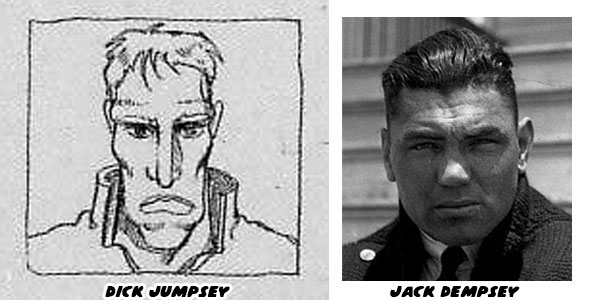
It seemed that substance did matter to the core fighting game audience. Respect for the genre and the audience was good for the long term success of a franchise. The gameplay, control, and animation featured in the Street Fighter series was better presented than any other series. The characters featured within had become more iconic than those from any other game. Most players were familiar with Balrog, the name of M. Bison in the USA, They knew that he was based on pro boxer Mike Tyson. However during the development of Street Fighter II there was going to be a boxer as a playable character. This boxer was named Dick Jumpsey. He was inspired heavily by Jack Dempsey, a prize fighter from the turn of the century. The stance, moves and techniques of those early legends like Dempsey were the stuff of legend, especially in Japan. Boxing was made popular in the manga and anime series Ashita no Joe (Tomorrow's Joe) and the more contemporary Hajime no ippo. The influences of popular culture on the decision to use a boxer and even how he appeared should not be underestimated. These elements have been influencing designers for decades. The Joe story would have been something that the team at Capcom had grown up with in the early 1970's while the Hajime no ippo story would have been a contemporary manga running parallel to the development of Street Fighter II in the late 80’s.


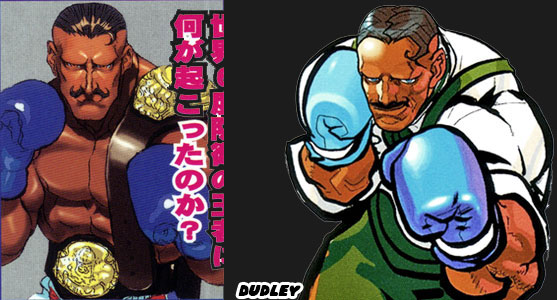
A Dempsey-inspired character would not appear until years later. Dudley, featured in SF III was a gentleman boxer whose timeless qualities made him an instant success and a perfect fit for the SF universe Dudley could be argued as a complete vision for the Dick Jumpsey character abandoned previously. The "Dempsey Roll" was a technique that the actual Dempsey used to dodge under opponents and throw a flurry of punches while bobbing and weaving. This was a rarity as a real life technique rather than a fantastically impossible one would end up in a videogame. In anime form the move looks fantastic, in game form it was doubly so and could be used in combos with relative ease. Dudley's Rolling Thunder in SF IV was based largely on the Hajime no ippo version of the attack and makes for a very visceral super. Dudley may not have been based on a real person but he had a better reputation as a fighter than Method Man.


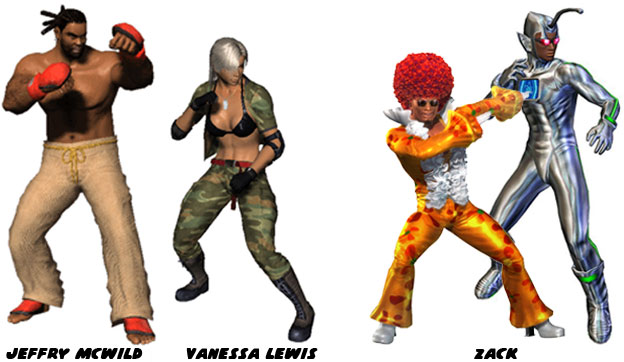
Hip Hop was influencing global culture at an alarming rate. From the rise in New York through the '70s through the exposure on mainstream media in the '80s Hip Hop had pushed for a major shift in pop culture. Blacks were becoming very prominent influences. The points of reference that the Japanese were using to recreate blacks and black culture had evolved greatly between the time the first and second Street Fighter games were released. The Japanese didn't always manage to keep up with those changes. When that happened the studios ran to two extremes of depiction for black characters. They were either over-the-top, boisterous and flamboyant characters. Or they were the opposite, completely devoid of personality and simply a dark skin tone on a 3D model. Jeffry McWild was the first black polygon-based character in a fighting game. He was one of the original faces in Sega's Virtua Fighter released in 1993. The character was neither thug nor cop. He did not have a basketball, nor did he dance. He was a powerful fighter from the caribbean that muscled through opponents with his unorthodox grappling style. Jeffry was a rarity in fighting games, especially for the 3D fighters. He had a personality, proud and confident but not silly like Dee Jay. It was unique that the two characters came from the same region but had vastly different design cues and presentations. The Japanese had demonstrated once more that they could have tremendous respect for black character designs. In 2001 Sega released their second black character in the series. Virtua Fighter 4 added Vanessa Lewis, the first black female mixed martial artist in gaming. She was similar to Jeffry in that she had striking and grappling moves but past that had zero personality. She was a stunning 3D model that was simply designed to appeal to male players. She demonstrated that the developers, while respectful of their audience, had less of a cultural understanding about strong black female characters than they had of black men.

Tecmo licensed the Virtua Fighter 2 engine from Sega when they started their own 3D fighting franchise, Dead or Alive. When Tecmo did not have a point of reference for an acceptable personality trait among the black community they made one up. The character Zack was a DJ that had entered the fighting tournament. He was not a Hip Hop DJ but seemed to be a flamboyant party DJ. To be honest he was never shown on the turntables in the series. Zack became obsessed with fame and attention and became more and more outlandish in each revision of the game. Absurd would not even properly describe the character, he went well beyond the excess of Dee Jay or any other character mentioned thus far in the series. Zack was not representative of black culture, Hip Hop culture or even Western culture. The basis for the character could be likened to Dennis Rodman, the eccentric NBA player. Yet Zack was simply a clown, a buffoon that happened to have dark skin. The defense once more would be that the character made sense within the context of his game and was a satire of typical character designs in a fighter. It was not a surprising defense of the series considering that the title was famous for its jiggling breast "physics" and objectification of its women characters.


There was a world of difference between Jax, Dudley, Jeffry, Dee Jay and Zack. Developers, publishers and even gamers may have dismissed the relevance of the designs over the past two decades but something had to be said. It was a duality that the industry and audience observed about gaming. Players wanted the mainstream culture, and especially the mainstream media to identify games as art. However when questions were raised about games being too violent or sexual for some audiences then it became an argument about entertainment and freedom of speech. The industry and the gamers themselves could argue the fundamental rights protected by the First Amendment, however they seemed to do that when it was most convenient to them. Gamers were passionate about their favorite titles and characters but only when it served their own interests. Many did not want to infer or interpret any controversial themes within their favorite games or even question the developers. There were many fighting game fans extremely passionate about the genre but to not question the characters featured in some of the most popular titles would be irresponsible of them as consumers.

To say that Zack or Dee Jay were just game characters and appropriate within the context of their title would be an attempt to bypass the argument. Without a cultural touchstone the Japanese studios seemed to rely on trope. The patterns of minority character designs were starting to become demeaning to audiences. Yet none of the gaming outlets seemed to call the publishers on that. But again, if I looked for the bad in fighting games I would find the bad. There were positive minority role models in fighting games and videogames in general. Characters like Dudley, Jeffry and Jax were created by Japanese and Western studios to show that diversity was alive and well. Games could still be art and entertainment in equal measure and publishers could still be socially responsible to their supporters. The next blog will look at the recent character that Capcom tried to create out of Hip Hop culture, classic cinema and black sports superstars. As always if you enjoyed this blog and would like to sponsor me please visit my Patreon page and consider donating each month, even as little as $1 would help make better blogs and even podcasts!