Showing posts with label raiden. Show all posts

Sunday, April 28, 2024

The return of a wrestling icon in Fatal Fury City of Wolves

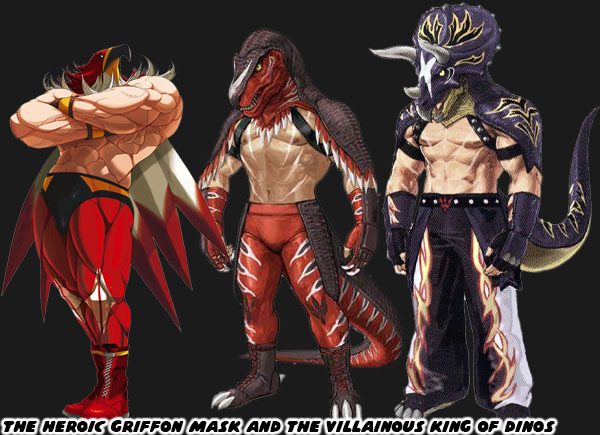
Yesterday the blog looked at some concept art from Garou Mark of the Wolves (1999) thanks to some scans that my friend Zero shared with me. We saw how some character designs evolved. Some characters were dropped, and some ended up being the blueprints for brawlers that would turn up in the King of Fighters series. One of the returning faces in the Garou 2 / Fatal Fury City of Wolves was a masked wrestler that went by the name of Griffon Mask / Tizoc. He was easily one of my favorite pro wrestling characters in a video game. He captured the essence of lucha libre better than 90% of the masked wrestlers in any other title.

There were layers to his design that were important to fans of the sport. Even if you knew nothing about pro wrestling you could tell he was an interesting character, with a unique move set, and his own personal reason for fighting. For die-hard fans of lucha libre his design, and inclusion was profound. There were a lot of differences between the pro wrestling featured in the USA, and in Mexico. I’m going to give you a light overview today, but if you want a deep dive I wrote a comprehensive history of lucha libre on the blog many years ago. Wrestling in Mexico is called lucha libre, literally “free fight” or “freestyle fighting.” Not every luchador or wrestler wore a mask. That was a misnomer. A masked wrestler in Mexico was called an enmascarado.

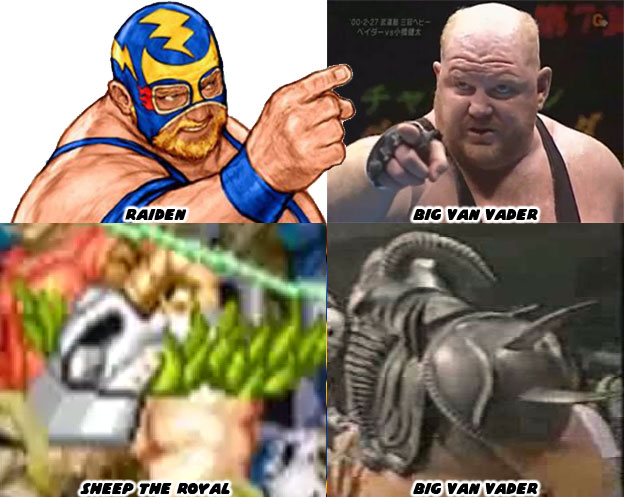
The good guys were referred to as técnicos, literally technical wrestlers. They obeyed the rules of the sport, and practiced good sportsmanship. The villains were called rudos, literally rude, rough, or rugged fighters. They were expected to use dirty tactics, and cheat at every opportunity. It was up to the técnico to beat them fair, and square. It was a challenge never to stoop to their level. There were both good guy, and bad guy enmascarados. They represented a literal battle between good, and evil. In the King of Fighters universe Griffon Mask was among the best of the técnicos. He had no intention of entering the KOF tournament but was recruited by a boxer named Vanessa. Griffon was on the opposite end of the spectrum of Raiden, the heel, or evil masked wrestler that appeared in the original Fatal Fury from 1991. Raiden was based on Leon White aka Big Van Vader. Mr. White (R.I.P) was hugely popular in Japan in the ‘80s, and ‘90s. He influenced the creation of Raiden, as well as Sheep the Royal / Alexander the Grater from the Muscle Bomber / Saturday Night Slam Masters (1993) series by Capcom.

Griffon Mask was the definition of a babyface, or face for short. These were the good guys. He was a noble wrestler, and he fought for all the right reasons. He was actually a mentor to young poor kids, and using his winnings to help orphans. This was a trait shared by King from the Tekken (1994) series. The stories of masked wrestlers fighting for orphans was based on the true story of Fray Tormenta (Friar Storm). He was a monk that would wrestle while masked in order to raise money for the orphanage he ran. His legend changed the perception that Japanese fans had of masked wrestling. He would inspire the creation of some great fighters. The teams at Namco, and SNK seemed to have a profound respect for the sport. By comparison I was not happy with how the developer at Capcom took away the elements of lucha libre, and replaced them with cooking gimmicks for El Fuerte in Street Fighter IV (2008).

In the King of Fighters XIV (2016) Team Mexico featured a new character. Joining fellow pro wrestler Ramon, and Angel was a new enmascarado named King of Dinosaurs. This guy had a similar build, and move set to Griffon Mask. He was however a rudo. Ramon, Angel, and several other competitors in the tournament knew he was actually Griffon but played along in order to preserve “kayfabe” or keep audiences from discovering the truth. The reason for his change in demeanor was because he had been beaten by a young boxer named Nelson. In order to get even he was willing to fight dirty in the tournament. He didn’t want to let any of his fans down so he created a new persona, and mask by extension. I had written about Nelson, the boxing phenom with vitiligo previously on the blog.

I’m glad that Griffon was back to his good guy identity. I wondered if Vanessa had something to do with this, or if it would be addressed during the story mode. I was eager to see if he was going to have a new rival in Fatal Fury the City of Wolves. It would be great if Raiden, or a new rudo debuted in the sequel. What do you think of this character? Were you ever a fan of pro wrestling, or lucha libre? I’d like to hear about it on the comments section. As always if you would like to sponsor me please visit my Patreon page and consider donating each month, even as little as $1 would help make better blogs and even podcasts!
follow the Street Writer on Patreon!

Monday, August 15, 2022

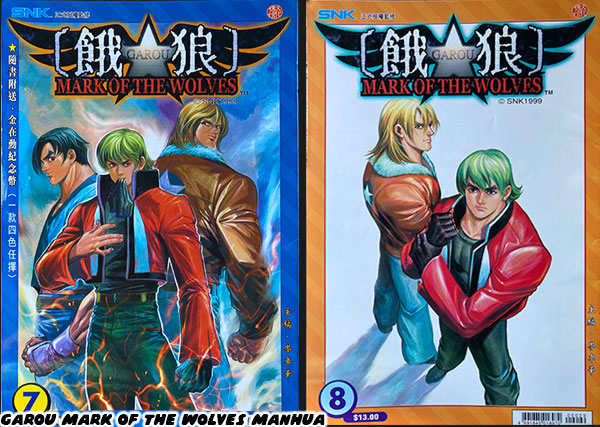
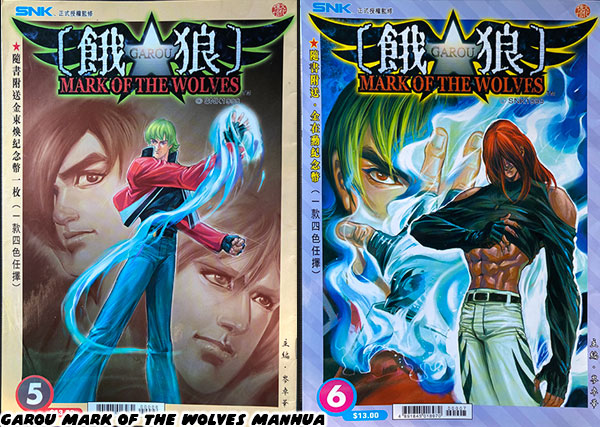
Garou Mark of the Wolves, the manhua part 2

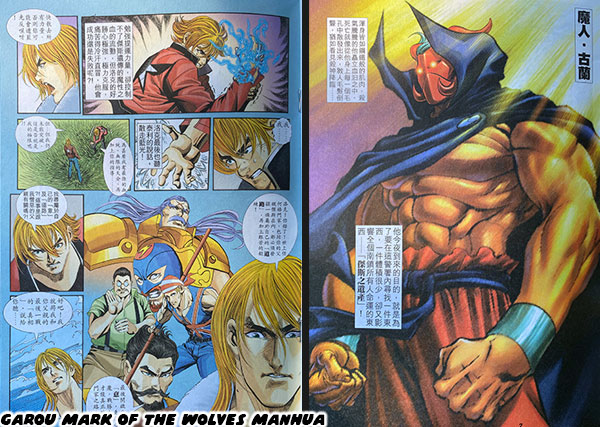
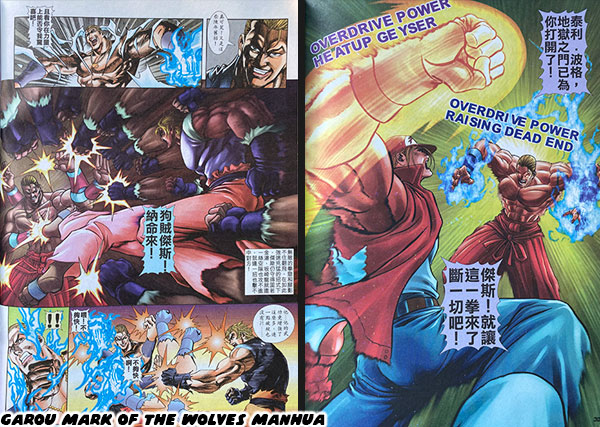
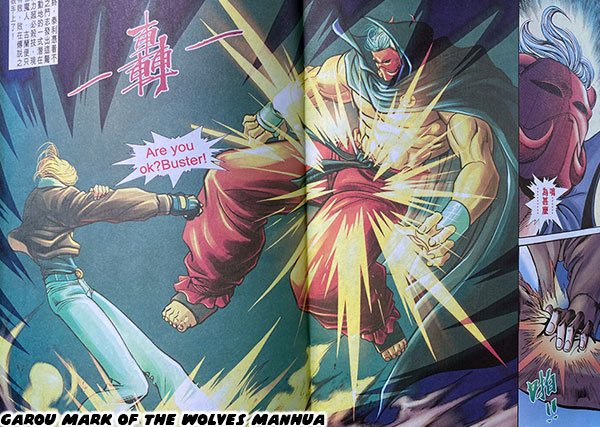
The first half of the Garou Mark of the Wolves manhua from 1999 was a retelling of the events of Fatal Fury. They gave audiences the history of stars Andy, and Terry Bogard. The villain Geese Howard, his relationship with half-brother Wolfgang Krauser, and estranged son Rock Howard. We also get to see several other major players from FF canon including Joe Higashi, Raiden, Mai Shiranui, Tung Fu Rue, Billy Kane, and Yamazaki.

The first few issues had Rock as a kid, and the later issues had him as a young adult. With the rise of new villains like Grant, and his uncle Kain R. Heinlein founding a new KOF tournament Rock is drawn into battle. He has grown as a fighter, and no longer wants to run from his legacy. He feels that he is ready to confront his past, and question his uncle.

Since a decade has passed since we last saw Rock, and Terry it stands to reason that the rest of the cast has also grown, and matured. In the first few issues Ryo Sakazaki was chasing down Geese Howard, and an actively fighting in Southtown. However his father Takuma had retired from teaching his patented Kyokugen “extreme limit style empty hand” form of karate. Ryo was the new master of the dojo, and helping keep the family business alive. He didn’t really venture out of the school.

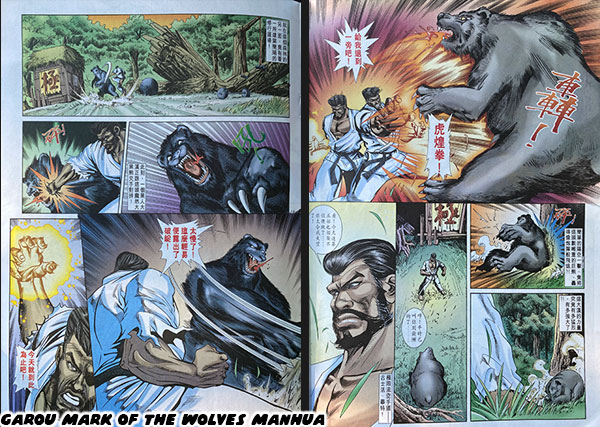
Marco Rodriguez aka Kushnood Butt raids the Sakazaki dojo with some thugs, trying to prove they were the best fighters. Ryo annihilates them, and Marco becomes a convert to the school. He spends the next decade studying under both Takuma, and Ryo. We see him now as a black belt. He’s practicing in the woods, and fighting a bear, a nod to the legendary exploits of Mas Oyama, and Willie Williams.

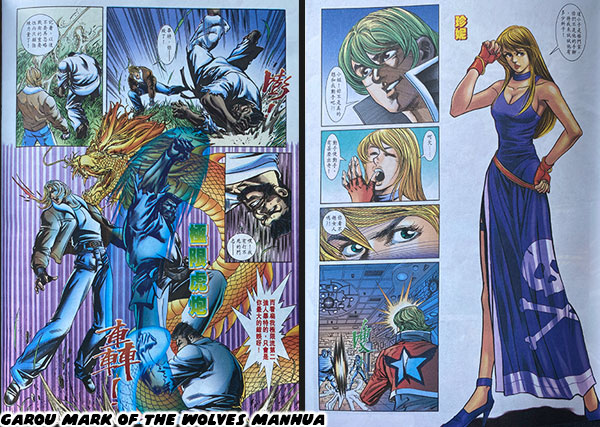
He crosses paths with an older Terry Bogard, and gets into a fight with him. The issues do not spend too much time with the rest of the cast, but at the very least they do get an introduction. This includes Kevin Rian, Hokutomaru, and B. Janet. Their purpose for entering the Maximum Mayhem tournament is explained. Grant is introduced as the big baddie of the tournament, and Terry gets into a fight with him.

The series ends after the introduction of the major players, and how they changed over the years. It doesn’t actually cover the events of the tournament. Which I think is actually the best way to tell the story of a fighting game. When you spell out each, and every battle you end up forcing the canon into a very specific direction, which may, or may not be the intent of the developers. Instead the writers of the manhua let the audience meet the cast. Show some of their backstory. Let a few non-tournament battles take place, and allow the game players to explore all the possibilities, and outcomes in the game.

With the announcement of Garou 2 I can only hope that there is a manga series, and possibly manhua series in the works as well. Either way I am eager to see how the game turns out. It will be about 24 years after the original came out in arcade. The generation that remembers it now has children, and even grandchildren that want to experience the game.

What about you? Are you eager to find out what happened with Terry, and Rock? Do you hope the game is sprite-based, or will you be happy if its 3D? Is there a character you look forward to playing as? Please let me know in the comments section. As always if you would like to sponsor me please visit my Patreon page and consider donating each month, even as little as $1 would help make better blogs and even podcasts!
follow the Street Writer on Patreon!

Friday, August 12, 2022

Garou Mark of the Wolves, the manhua part 1

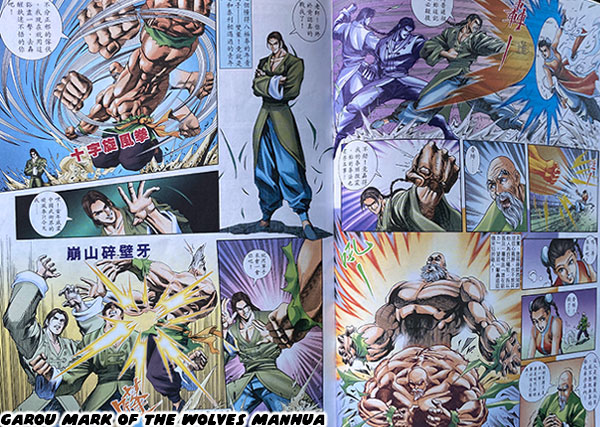
Recently I discovered that there was a manhua, a Chinese comic series based on Garou Mark of the Wolves (MOTW). There were 10 issues in total. The books came out in 1999, the same year that the game debuted. I got them from a collector in California, and thankfully didn’t have to pay a lot. The first thing that I noticed when they arrived were that they were much larger than standard comic books, or manhua. The standard comic book size was 6-5/8 inches wide by 10-1/4” tall, the Garou MOTW books were 7 1/2” wide by 10 1/2”. These issues were almost as big as magazines.
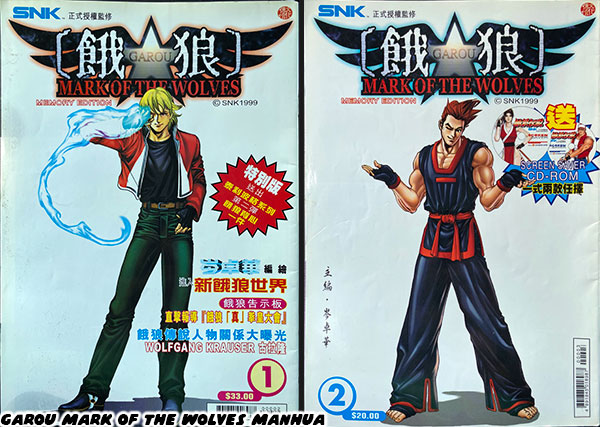
The issues were a great primer on the main players in the Fatal Fury (FF), and Art of Fighting (AoF) series. Specifically focusing on the villains Geese Howard, and the protagonist Terry Bogard. The first several issues actually got us caught up on the events that happened across the first few Fatal Fury games. I’m not certain if there ever were licensed AoF, or FF comics in China in the early ‘90s. There may have been, and like Street Fighter there may have been several unlicensed comics as well. In all my years doing research, surfing bidding sites, I’ve never seen a collection of classic SNK comics from China prior to 1997. I know there were many from the King of Fighters series, and the various games, including KOF 98, 2000, SNK vs Capcom, and KoF Maximum Impact. The fact that the Garou MOTW manhua retold the plot of the first few FF games, including the creation of the KOF tournament helped get audiences up to speed. The events of Garou MOTW are set a decade after what happened in the first FF game.
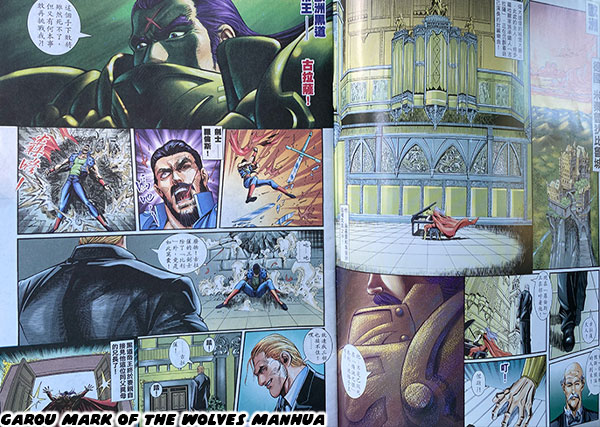
The series actually begins with a look at the battle between Geese, and his half-brother Wolfgang Krauser, head of the Stronheim family. Geese had long sought revenge on Wolfgang, and his father Rudolph, because they abandoned his mother Maria, and left her to die penniless in America. As a long-time fan of fighting games this was the type of action, and storytelling that I looked for. The panels were filled with lots of action, and we got a chance to see each character use their trademark special attacks.
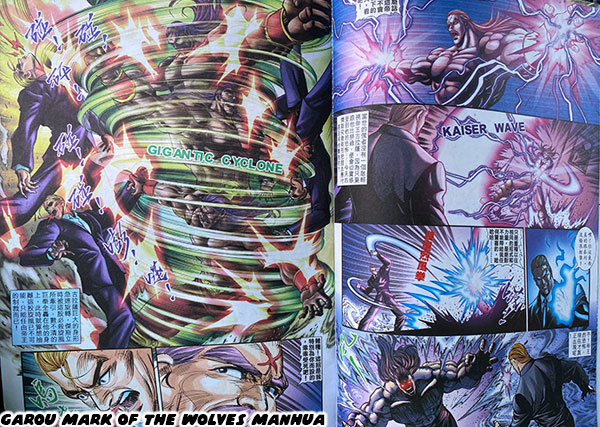
Seeing the fights in print was a way to determine which parts of the game were canon, and which were pure speculation. Not every fighting game gave us concrete answers, or tied up the plot points. More often than not they read as a sort of “what if?” series of events, that were loosely connected. For the longest time I fancied Wolfgang as being the stronger brother. He was older, and much stronger, but Geese had greater fighting experience. After a fierce battle Geese took out Wolfgang to take control of the family assets. With that taken care of he returned to Southtown to run it from the shadows, and sponsor the King of Fighters tournament.
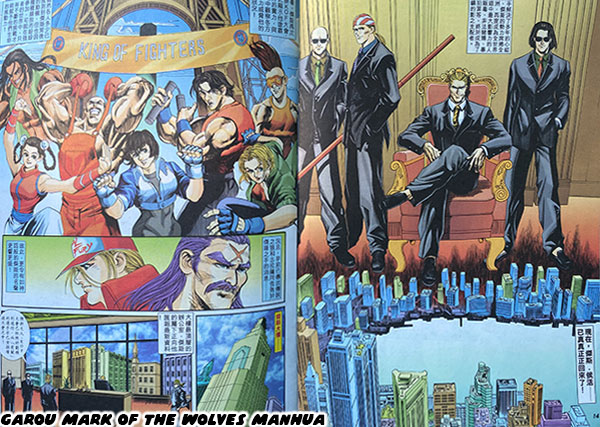
It actually takes a few issues of the Garou MOTW manhua before we even get past the original FF timeline. We actually get a chance to inhabit the complex web of characters, and their relationships. We get to see Toni Sakata from FF Wild Ambition making a cameo when he meets with Geese. We get to see Andy Bogard training with Mai Shiranui, and Jubei Yamada. We also get to see the fallout from the first time an adult Terry Bogard, and Geese Howard do battle. Geese shows him no mercy, and defeats him with relative ease. Terry is bruised, and beaten. Marie, Geese’s estranged wife nurses Terry back to health, and introduces him to a young Rock Howard. The two live in a modest home away from Southtown.
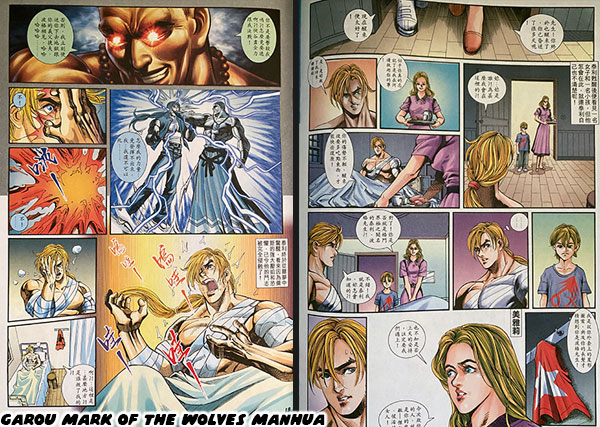
Terry worries about Rock, the legacy he hails from, and what his future might hold. Marie has a rare medical condition that she keeps from Rock. She asks Terry to watch over the young Howard, especially in the event that anything happens to her. Terry promises to take care of him while he continues training, with the hopes of getting a rematch with Geese.
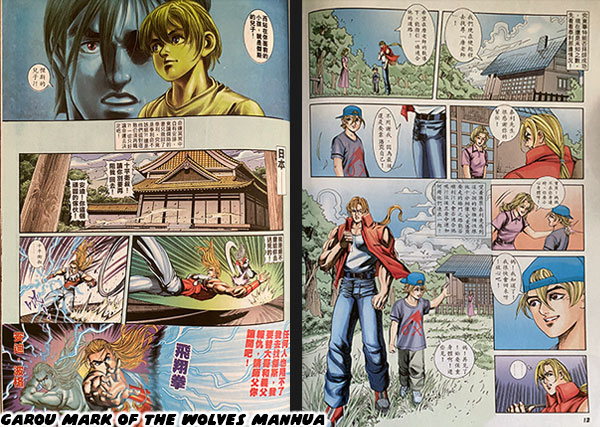
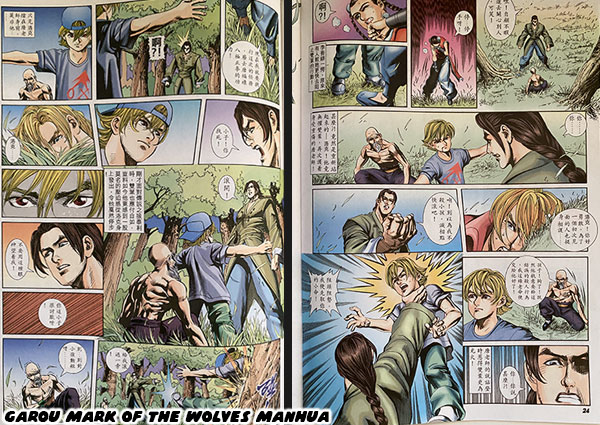
We get to see Terry pick up training with Tung Fu Rue, arguably the most powerful elderly kung-fu master in the entire KOF universe. Tung is attacked by an upstart master named Gato.
Terry tries to intervene, but he is still not at 100%. Both he, and Rue take some punishment from Gato. Rock steps in, and tries to get Gato to leave them alone. Gato retaliates by strangling the boy.
Terry is out of commission for several pages. The story uses that time to look at the history of Terry, and his younger brother Andy. It shows the reader the origins of their vendetta against Geese. We get to see the orphan brothers trying to protect their adopted father Jeff Bogard as he gets pummeled by Geese. We get to see them being trained how to fight in different schools, both before, and after the murder of their father.
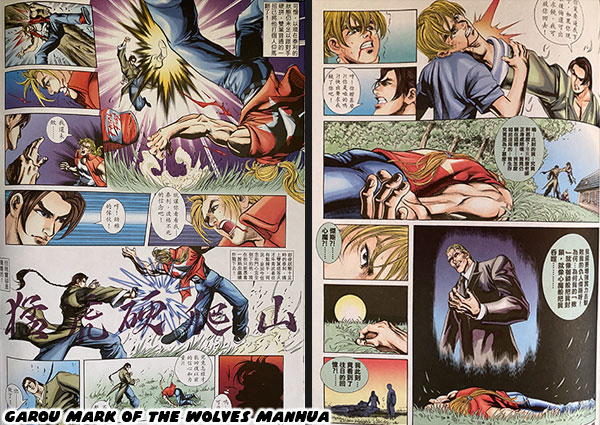
We see that Terry blames himself for not being stronger, for not being able to protect his brother. Eventually the two part ways in search of a master. Their relationship strained. Andy decides to study under the same masters that their father studied with, in the hopes that he could defeat Geese.
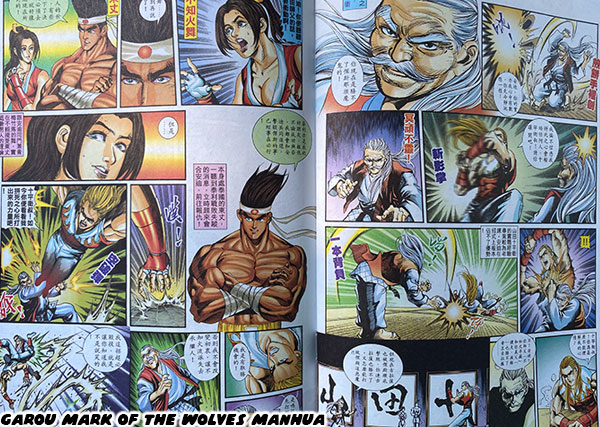
Terry on the other hand learns to fight in the street. Living up to his lone wolf reputation.
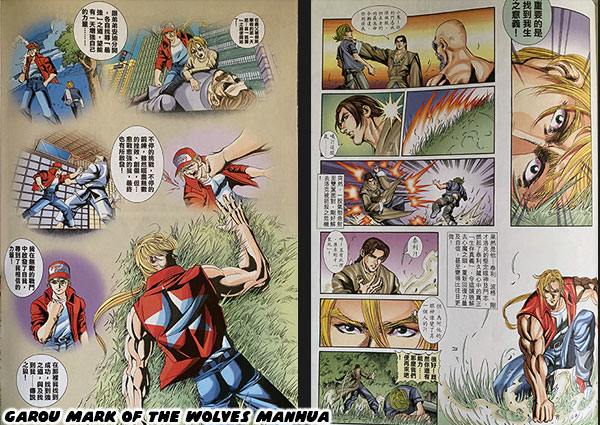
Terry eventually snaps out of it when he realizes that Rock is about to experience the same trauma that he, and his brother endured. He digs in deep, and turns the tables on Gato.
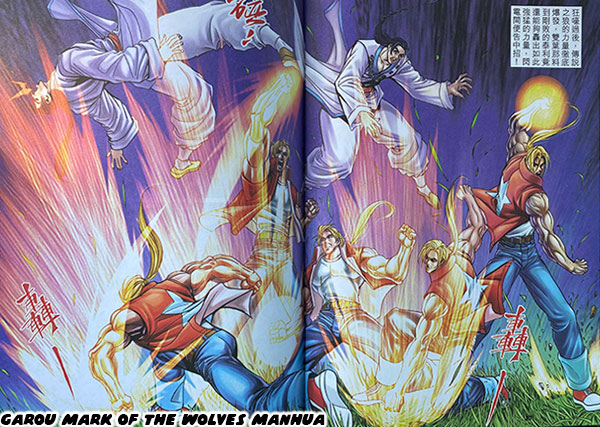
As all this happens Rock discovers that his mother is dying from her condition. He knows that his father is rich, and powerful, and he goes to him to beg for help. Geese wants nothing to do with him or his wife. Rock calls him a cold blooded devil, when he realizes that Geese probably could get Marie the medical attention she needs, but doesn’t care enough to do so. Rock vows never to beg him for anything again.
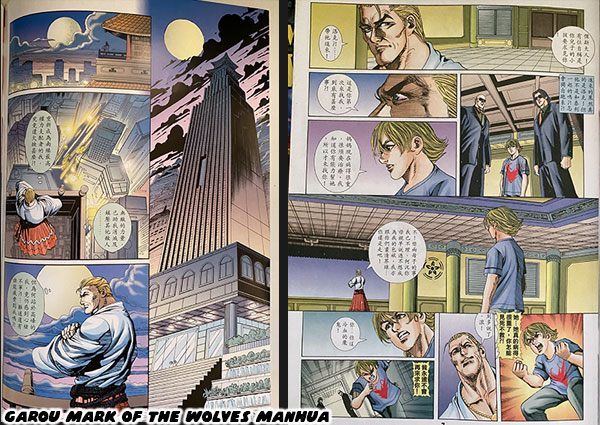
Andy, Terry, and their good friend Joe Higashi are now older, and more experienced. They decide to challenge Geese in the same high rise building that Rock had visited. They are ambushed by Geese’s hired goons, including the wrestler Raiden, yakuza hitman Ryuji Yamasaki, and stick master Billy Kane.
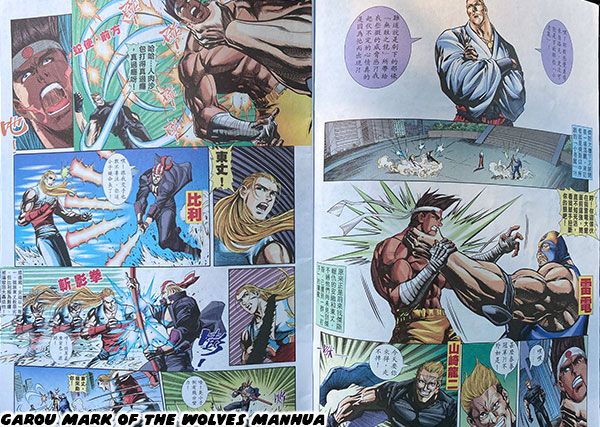
The next part of the story was new to me. The version of the events in the Garou manhua had Ryo Sakazaki as the first to reach, and do battle with Geese. Ryo was from the Art of Fighting game series. In the original game he was hunting down the man that kidnapped his sister Yuri. It turned out that the kidnapper was a masked man known as Mr. Karate. The end of the original AoF reveals that Mr. Karate was actually their father, Takuma Sakazaki. Takuma was forced to work for Geese as an enforcer under the threat that his children would be killed. This leads us to AoF 2, and the chance for Ryo to take out the kingpin.
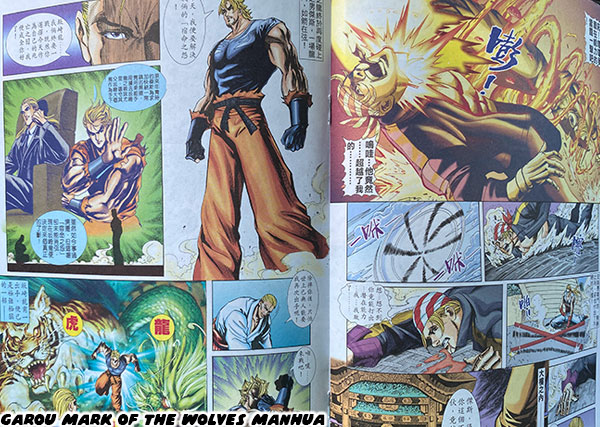
Ryo follows the clues right up to Geese, and gives him a decent fight. Unfortunately it isn’t enough, and the young Sakazaki is defeated. The battle rages on outside with Andy, and Joe barely holding their own against Geese’s best men.
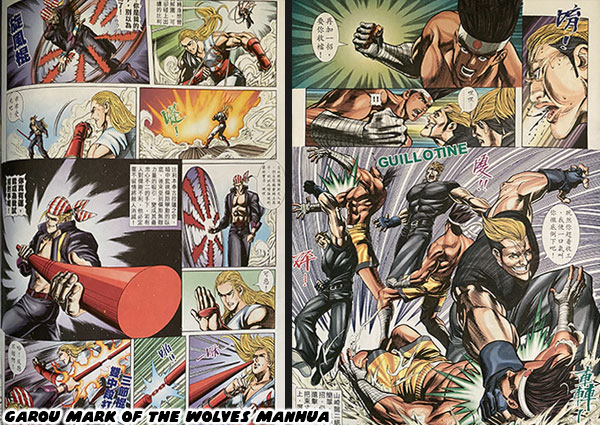
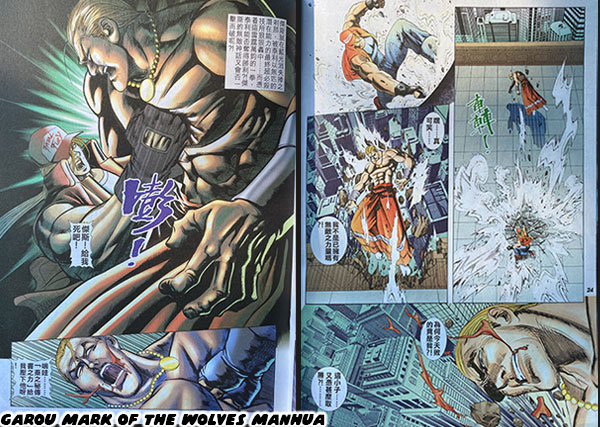
Terry eventually makes it to Geese as well, and they have the battle made famous in the first Fatal Fury. Terry knocks Geese off the roof of his building, seemingly to his death. Of course it turns out that it’s not that easy to kill him.
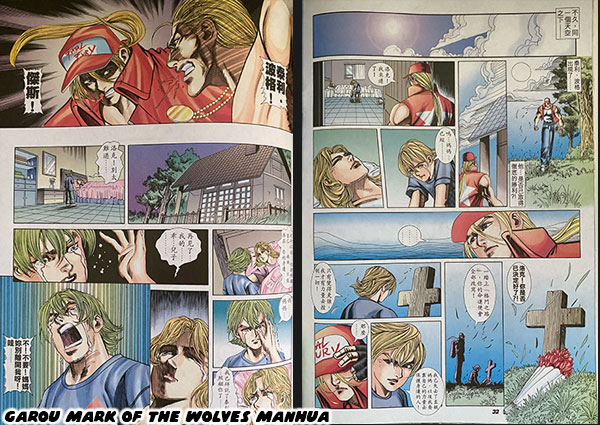
On the other side of town Marie was in the final stages of her disease. We see Rock, and Terry with her when she passes away. Terry promises to take care of Rock. Marie dies peacefully on her bed, and is buried not far from her house. However according to Kain R. Heinlein Rock's mother is still alive. So if the events of the manhua are canon, that means the lady that was buried may not have been Rock's actual biological mother. It would explain why Geese was so indifferent to her, especially since he had also been abandoned as a boy, and knew Rock's pain. At least that's my theory.
All of this carries us through most of the Garou manhua. However as you may know there are new faces, and changes to existing characters when the King of Fighters Maximum Mayhem tournament is created. The tournament organizer Kain R. Heinlein, the brother of Marie, and uncle of Rock is trying to recruit Terry, and Rock into his organization. He wants to rule Second Southtown following the power vacuum when Geese is defeated.
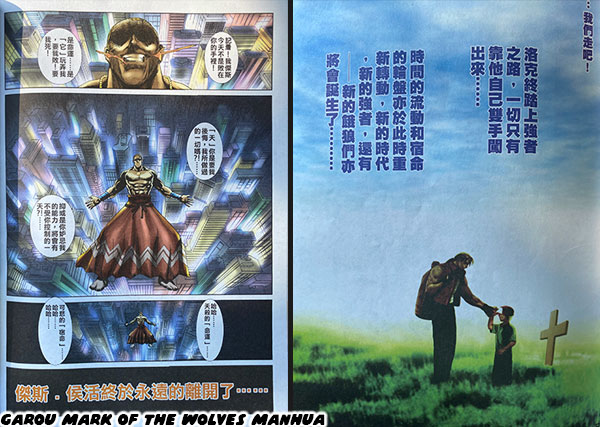
Those that have played Garou know that there were many new characters introduced in the game, and most get at least a panel or two of an introduction. We’ll look at the events in the remaining issues on the next blog. I hope to see you back for that. As always if you would like to sponsor me please visit my Patreon page and consider donating each month, even as little as $1 would help make better blogs and even podcasts!
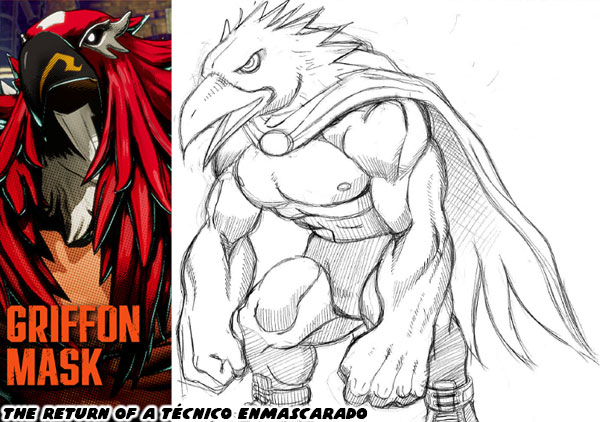
follow the Street Writer on Patreon!

Wednesday, August 19, 2015

How fight culture became fighting game history, part 22

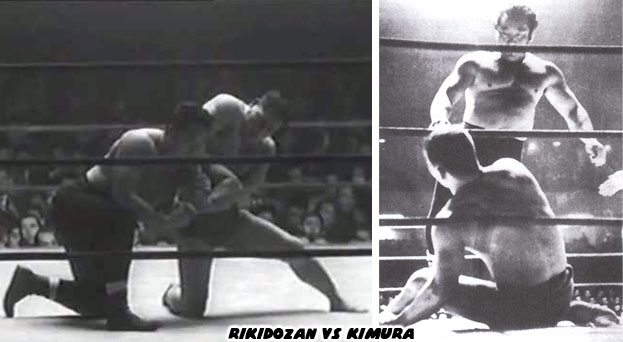
After Helio Gracie lost to Masahiko Kimura the Brazilian Ju-Jitsu scene exploded in popularity. The Gracie family would open schools and spread their technique all over South, Central and North America. Tragedy seemed to follow Kimura by comparison. Kimura had done some pro wrestling to help make ends meet as judo instructor did not pay as well. It was said that the only reason he became a pro wrestler was to make enough money to help pay for his wife's tuberculosis medication. He had partnered with another pro wrestler named Rikidozan before and after the fight with Helio. The two decided to start a feud to raise their profile and generate ticket sales. In case you don't know much about "pro" wrestling, many of the big names often start a feud and go town to town generating buzz through highly publicized matches. These matches are often pre-determined and no wrestler ever seems to get the upper hand. Many times the matches end at a draw or disqualification. When the audiences can take no more, usually after a few months, a world champion match is set where both of the performers get a big payout. Unfortunately in the first match Rikidozan decided to fight Kimura for real and put himself "over" as the better athlete. He delivered a neck chop with full force to knock Kimura out in December 1954.


The loss was a few months after Kimura had defeated Helio. This win made Rikidozan an even larger-than-life figure than he already was. The Yakuza was incensed at the betrayal, chances were they were taking part of the gate and expected a big return on an ongoing feud. They called Kimura to let him know they would kill his opponent. Years later they made good on their promise by stabbing Rikidozan in a club. He died a few weeks later from an infection.

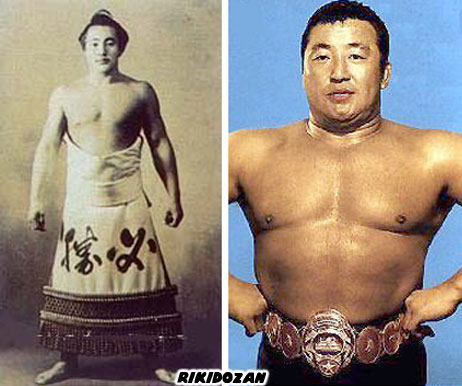
The life of Rikidozan was actually a unique case of martial arts storytelling. The man was born Mitsuhiro Momota, a Korean-Japanese that tried to hide his heritage. Koreans were and continue to be looked down upon socially by the Japanese. It was interesting that Mas Oyama and Rikidozan were seen like fighting gods to many of the same people that considered Koreans inferior people. But I digress! Mitsuhiro wanted to be a sumo wrestler and faired decently in many matches. But the social stigma was getting to him and he needed to find another source of income. Mitsuhiro had an impressive physique and was destined to find greatness in pro wrestling. He was a bit of a "stiff" worker, that was he was green and didn't always pull his punches. What he lacked in in-ring ability he made up for with a strong gimmick. During the '50s pro wrestling was as hot in Japan as it had ever been in the USA. Rikidozan would often partner up with another Japanese wrestler to fight against the US talent. Back in the wrestling heyday the matches would have several rounds, like a boxing match. For two rounds the US performers would "work" over the Japanese wrestlers. They would sometimes use illegal moves and cheat and somehow never get caught by the referee. This made the audiences have a great sense of despair during the matches. The US were occupiers after all and following the events of World War II nobody wanted to see the Westerners beat up any more Japanese.


Just as everything seemed at a loss Rikidozan would turn up in the third round and absolutely crush the Americans with broad "Mongolian" chops and big kicks. The audiences exploded as they watched Rikidozan seemingly rise from the ashes like the fabled Phoenix and destroy his opponents. It was very cathartic for the fans, no matter how far down the Japanese had been beaten they would find a way back. A similar experience could be said to have happened to the audiences that watched the first Godzilla movie. The monster of atomic warfare had a name and a face and the Japanese would withstand his worse time and time again. But again I digress. When Rikidozan traveled to the US the gimmick was reversed and he was the heel or bad guy. He would dominate and cheat when he could but always lose in the end. Rikidozan was as big a star as any wrestler could be in Japan. He was like Hulk Hogan, Steve Austin and Ric Flair all rolled into one. He was also a very hard living man. He drank and partied like there was no tomorrow and became very full of himself. Through the '50s his battles and style became the template for Japanese pro wrestling or "puroresu," sometimes written as "puro" for short. By the end of the decade he assumed that he could begin calling the shots. His streak ended in the early '60s when the Yakuza had tired of his antics. Japanese game developers grew up with the legend of Rikidozan and all of the wrestlers that followed in his footsteps. Many of the big stars in the US worked in Japan where they developed very strong gimmicks. Those with the biggest personalities often found themselves being repurposed as fighting game characters.

One such personality was Leon "Big Van Vader" White. His large frame, extreme physicality and in-ring presence gave kids nightmares and delighted adults. He had a mask and shoulder pads fashioned that made him look like a live action "henshin" villain. It would even blow smoke as he made his entrance. He was such an inspiring figure that several characters were molded after him in the early days of fighting games. SNK created Raiden and Big Bear (Raiden without the mask) for the Fatal Fury and King of Fighters series. Capcom developed Sheep the Royal aka Alexander the Grater after Vader in the Muscle Bomber / Saturday Night Slam Masters series.


I will spend much more time talking about the influence of pro wrestlers in fighting games a little later on. Right now lets gets back to seeing how mixed martial arts developed in the new world.
The next few decades would see a lot of interesting, controversial and lethal consequences for being in the fight game, this was not limited in Japan either! The Gracie family pretty much had a target painted on their back after the Kimura battle. The sons and grandchildren of Helio and his brothers were pretty much guaranteed to be enrolled in the school of hard knocks from the get go. They would have to defend the family name and school wherever they went. When doing clinics they would get called out to prove the superiority of their style. On the street, in the gym, on the beach and in any other public venue the family would get called out. Such was the case for Rickson Gracie, the son of Helio, when he had to deal with Hugo Duarte for slandering the family name. Even in the professional ring it was a tough going. Fighters from every background would test their mettle against the Gracie clan again and again.


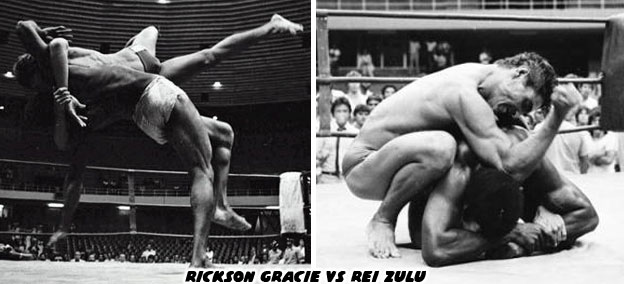
One such character was an underground legend that went by Rei Zulu. Literally the "Zulu King." The big man, about 6' 4" and had earned a reputation on the street for being a natural born fighter. He was tough, wily and adapted well to his opponents. He had compiled an undefeated streak in some of the toughest parts of Brazil. He had a record of allegedly of 150-0 when he challenged Rickson Gracie to prove who was the best "Vale Tudo" fighter. In Brazil the fighters were called luttadores, or wrestlers. Luta Livre was their version of pro wrestling and a pretty rough version at that. They had a more violent form of fighting as well called Vale Tudo or anything goes. Knees, elbows, just about anything was allowed short of eye gouges. Instead of closed fists most of the fighters had to use open hand slaps or palm strikes to subdue opponents. That rule was not always observed however.

Anyhow in 1980 Rei Zulu was served with his first ever defeat. It seemed that everyone in Brazil witnessed the fight or knew someone that was there in person. Rickson and the name of Gracie had become even bigger. For some Zulu was a hero from the streets that could never be defeated in a fair fight. For others he was like the neighborhood bully and used his strength and natural ability to push people around. Unfortunately for him natural ability did not prepare him for the techniques that the Gracie family had been refining for over two generations. Zulu called out Rickson a few years later. The rematch in 1984 drew an even bigger crowd. Zulu lost again. Unlike the manga comics that were made on the life of Oyama there would be no caricatures made of Rickson or Zulu. It would be a shame too. Both men had such different upbringings that they had deserved the same treatment of the Japanese superstars.


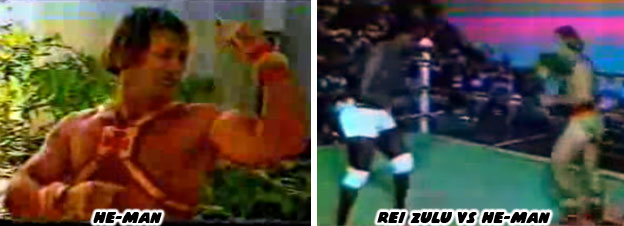
Not everyone would or could become a hero like Helio Gracie even in defeat. It was the sad reality of fighters that lost and Rei Zulu was no exception. The man was born, raised and lived in poverty for most of his life. The Gracie family cleverly marketed their name, built their schools, legacies and successes. The family would end up very well off while Zulu would be relegated to the outskirts. The people Rei faced seemed to be as big characters and underground legends. This included the blonde wrestler from Paraguay named He-Man. Lenine "He-Man" Alves Batista pulled his look and gimmick from the Mattel toy and cartoon character. He was beloved by all audiences because he extolled the virtues of clean living, represented wrestlers from America and could prove they were the best fighters. The fight between Zulu and He-Man was a high point in many young South American kids eyes. It was like Hulk Hogan fighting and beating Andre the Giant at Wrestlemania.

Sadly He-Man would hold onto the gimmick well past his prime. The long haired barbarian with a bit more paunch still plied his craft in Brazil until 2010. He worked for a circus and would take on all challengers, in a way it was a nod to the wrestlers of old. For the right money capoiera fighters, karate fighters, vale tudo fighters and even random people could step into the ring to challenge him. He fought 30 men at once in one encounter, in another he fought a group of women. The ring was makeshift and falling apart but fans still packed the stands. They had grown up watching the man wrestle in the late '80s and early '90s. They gave him all the awe and respect that people in the US would have reserved for Hulk Hogan or Roddy Piper. He was shot by his father-in-law for unexplained reasons when he returned to Paraguay. The martial arts community didn't seem to notice. Had the wrestler been doing the same gimmick a century earlier, without cameras to capture the battles and only eyewitness testimony to go on then he would probably be written about as a fighting god.


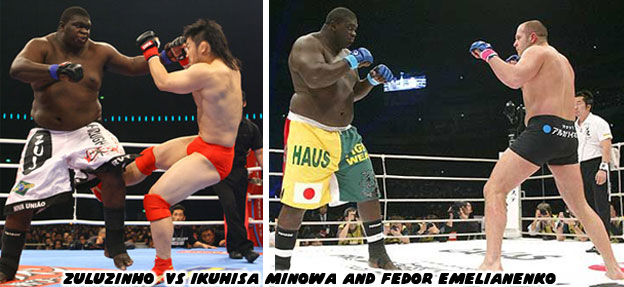
It was tragic when the heroes fell, got old or never grew out of their character. He-man and Zulu suffered much in the same way. Never quite becoming superstars in their own right, never being recognized out of their own neighborhood. Zulu, alive today, still lived in relative poverty and despite being over 60 was still looking for a fight if the money was right. His legacy would also continue through his bruiser-of-a-son named Zuluzinho. The "kid" was 6' 7" and neared 400 lbs. The son of Zulu did not gain his reputation by going building to building and beating up the local tough guys. Instead he tried making his money in legal cage fighting tournaments. His record was not as impressive as his father's, in fact more people seemed to be interested in the spectacle that his fight provided more than the idea that he could win. Thankfully he had the support of sponsors and media coverage to ensure that his moment in the spotlight would generate more money for him than his father had earned in a lifetime. People like Zulu and his son were spectacles that would find a modicum of success in professional fighting.

It is true that larger and heavier fighters hit harder than small fighters. It is also generally accepted that they tend to be able to absorb more damage than smaller opponents. But it comes to a point where the fighters are so massive that they end up being too slow to achieve a world championship. Well, this is not necessarily true in the Sumo arena, but in the mixed martial arts arena the most massive fighters rarely fare that well. They do attract audiences because of the spectacle they provide like Zuluzinho. It becomes apparent however that no amount of size or strength can compensate for a lack of technique or speed, especially against slightly smaller opponents.


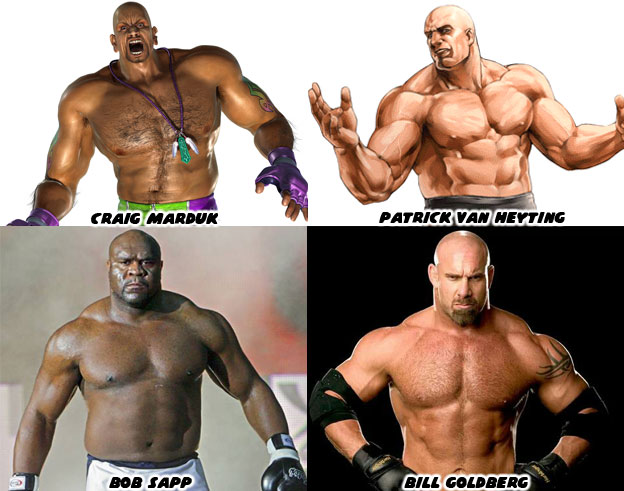
The massive fighter is still a fan favorite around the world, and doubly so in the pro wrestling community. These fighters become recreated in various fighting games, including those from Capcom as well as SNK, Namco and Tecmo. Certainly they change some of the details, alter the color of the skin or nation of origin but the inspiration is unmistakable. People like Zuluzhino, or the more muscular Bob Sapp (6'7") or Bill Goldberg (6'4") look very much like the templates used for the massive fighters in 3D titles. Okay, to be fair the Australian wrestler and actor Nathan Jones (7') was also an inspiration for Marduk from Tekken and US wrestler and actor Stone Cold Steve Austin (6'2") was also influential with the design of Von Heyting from Buriki One. In gaming form the massive characters tend to stick around a little longer than they do in real life. That's a good thing for fans.

It turned out that Brazil had only just begun influencing the fight community. The next blog will explore how the younger brother of Rickson Gracie would change the way the world thought about Ju-jitsu as a fighting art. As always if you enjoyed this blog and would like to sponsor me please visit my Patreon page and consider donating each month, even as little as $1 would help make better blogs and even podcasts!

Monday, August 3, 2015

How fight culture became fighting game history, part 15

Amazingly powerful attacks and defenses had been written about for eons and visualized in manhua stories for most of the 20th century. These were not the standard punches and kicks of a fighter but instead the strikes that could knock down trees and split boulders in half. There were people that could chop through stones and bricks and even people that could kick down small trees. These people inspired the stories of people that could do much more. However there was a "missing link" of sorts. Between the legend and the comic book there was another media format that had influenced the visual style of the fighting masters and their powers. Martial arts cinema was every bit as important to the development of Street Fighter as any manga or animé title. In fact it was more important to the franchise because designers could see exotic martial arts and characters in a moving medium. Great fighting plots, character designs and action sequences were the staple of action films. Nowhere else was this better presented than in Hong Kong (HK) cinema.


Whether a martial arts character was supposed to be serious or funny, whether in film, comic, game or television, the pull of Hong Kong cinema was inescapable. Martial artists and the various forms of fighting as presented in any media were almost all universally based on a character that had appeared in a classic martial arts film.

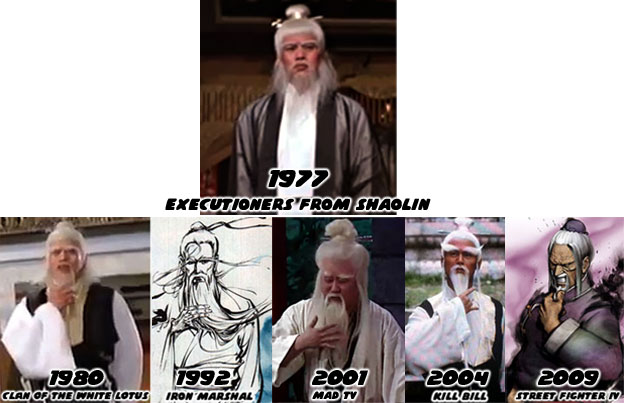
Pai Mei was one such archetype. He was created in the 1977 film Executioners from Shaolin. This character sported a head of long white hair and long white eyebrows. His uniform was pristine and he was very arrogant in his abilities. The character seemed impervious to harm and was impossible to defeat in hand-to-hand combat. Pai Mei was a caricature of kung-fu masters from ancient China. His appearance was rooted in Chinese Opera and an imaginative film wardrobe department. He looked fantastic because it was more appealing on the screen. The earliest photos of kung-fu masters looked nothing at all like Pai Mei. The men appeared very ordinary. They may have been able to shatter bones with a single punch but were so unassuming that we would have never guessed. Nobody in HK cinema ever looked this bland. The bright, ornate costumes featured in the films from the late '60s and early '70s were directly responsible for the designs used in videogames. Pai Mei was copied time and time again not only in China but in Japan and the US as well. Everything from the look to the mannerisms of the character was so familiar to moviegoers that he could be used in a homage or parody depending on the project. Very few non-corporate or non-cartoon characters could claim to have the same global recognition as a kung-fu archetype. Pai Mei was just one of many film characters that influenced the Street Fighter cast.


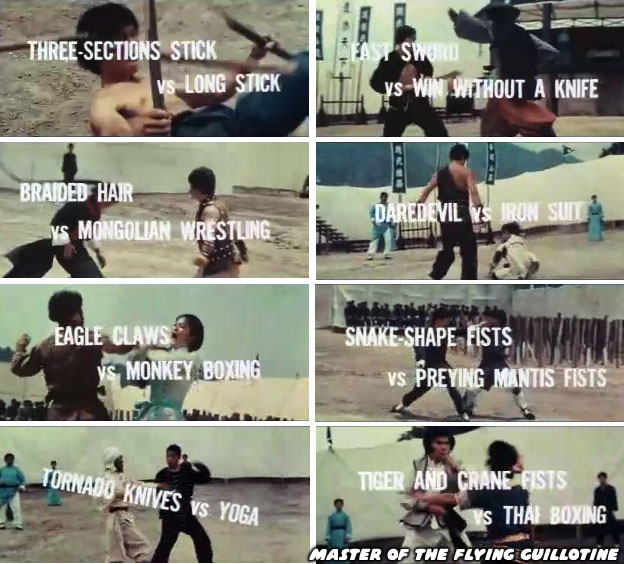
The life of Mas Oyama may have influenced the narrative of Street Fighter however the supporting characters and universe were inspired more by action films. The 1975 film the Master of the Flying Guillotine was undoubtedly one of the most important films referenced by the designers at Capcom in the 1980's. Both the Guillotine and its predecessor the One Armed Boxer had great action sequences and a wonderfully diverse cast of characters, including masters of kung-fu, muay thai, karate, judo and other forms.


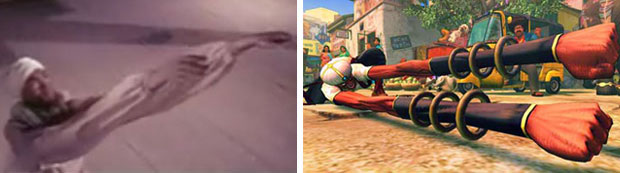
The Master of the Flying Guillotine was notable because it pulled together the martial artists in a tournament setting. When the burly Mongolian wrestler fought the petite Chinese fighter it predated the Zangief versus Chun-Li matchup by more than 15 years. The arrogant muay thai fighter and stretchy limbed yoga master were paralleled by Adon and Dhalsim many years later as well. The use of an international tournament to determine the best fighter was basis for Street Fighter II and the original Mortal Kombat. In SF II this tournament was actually a front for a bigger plot in which the main character, Ryu was being trapped by a more powerful character. In the Master of the Flying Guillotine the tournament happened to take place at the same time an assassin was after the One Armed Boxer. Vega (M. Bison in the US) was pulling the strings and using his three bosses to ensure victory in SF II. In the film the blind monk was aided by a couple of tournament participants in tracking down the One Armed Boxer. The tournament format was not a new idea, but it was a good plot device bringing the various characters and styles together in one place. What cinema did was put a human face on these archetypes and infused them with personality.

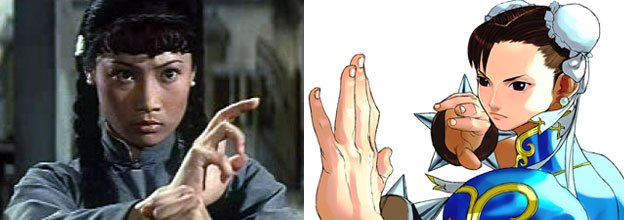
Martial arts cinema in China differed from action films in other countries. The wuxia stories applied to men and women equally. Females in Hong Kong cinema often held their own against the men. This distinction should be noted since women were usually the prize for the action stars in the west. There were female fighters celebrated in myth and legend in China almost as much as men. The daughter of the tournament sponsor in the Guillotine movie had entered the contest herself. The historical figure Hua Mulan was said to have exceptional skill in battle and served in the army for 12 years on behalf of her father in ancient times. In fact Wing Chun, the style of boxing taught by Yip Man, was created by a woman. The godmother of martial arts cinema was Angela Mao. She was the first international movie female fighting star. There had been other women with great fighting scenes in earlier movies however Angela was the star of Lady Whirlwind. The 1973 film actually predated the Master of the Flying Guillotine! It pitted the petite master of kung-fu against masters of different styles including judo and karate. She demonstrated that a perfect fighting form could conquer the strength and size of any man. Angela was the mold from which tremendous characters like Chun-Li were cast.


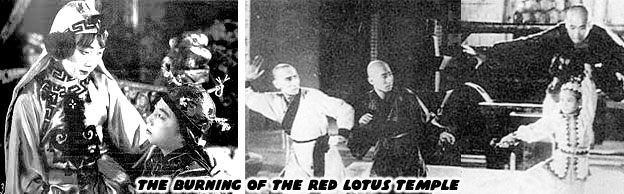
The HK movie industry could be kind to stars like Angela Mao but turn its back on others like Jimmy Wang Yu. The characters they created would live on however and be embraced the world over. Hong Kong cinema was also known for influencing fight choreography in Eastern and Western films. Martial arts cinema could actually be traced back to The Burning of the Red Lotus Temple, an incredibly long series from 1928. The actors were trained martial artists, mostly from the Chinese Opera. They choreographed basic fight scenes and even sword battles. The film made use of early special effects techniques including some wire work. It was interesting to see wuxia type epics during this era because the films were challenged by the government at the time for promoting the ideas of superstition and anarchy.


Where the format really took off was post-WWII. The Chinese were eager to rebuild and find a distraction from the horrors of the war. They, like many other countries, turned to film. The True Story of Wong Fei Hung was a series of movies beginning in 1949. It chronicled the life and adventures of Wong Fei Hung, the doctor and martial arts master made famous in more contemporary films including Once Upon a Time in China and the Iron Monkey. The doctor was celebrated as a folk hero with amazing martial prowess. Reaching a mythical level of fame allowed various comics, movies, television shows and even videogames to be made about him.

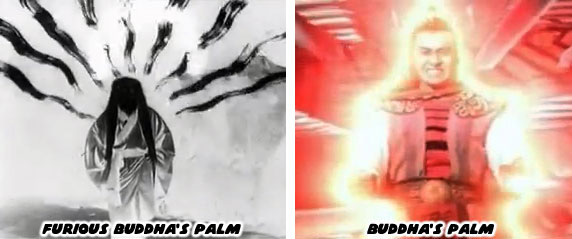
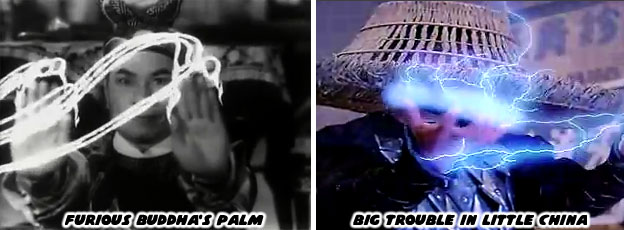
Not all of the early films were grounded in Chinese Opera or real-life heroes. Many of the most memorable films introduced fantastic characters with special powers to audiences. One film that exploited special effects and martial arts archetypes was the Furious Buddha's Palm. This film predated the Master of the Flying Guillotine by a decade. The 1965 film presented the types of stories and characters that audiences had been reading about in manhua titles. The masters could harness and expel chi as energy. It protected them from attack and allowed them to do amazing things like running on air and stopping weapons with their bare hands.


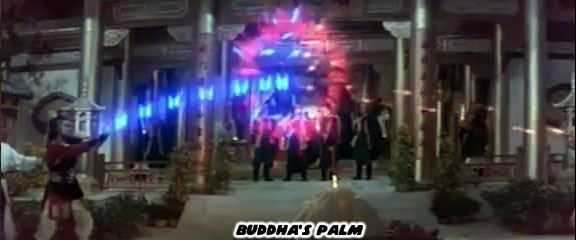
The film was remade in 1982 and the title shortened to just Buddha's Palm. The special effects were improved considerably. The films were important for the development of manhua, manga and fighting games. They were some of the first wuxia titles that presented the fabled super techniques of the qigong masters in a visual format. This included characters that were able to heal as well as harm people using advanced chi manipulation. Energy waves, beams of light and other forces could be seen emanating from the hands of the martial arts masters. These things were seen in film years before Street Fighter was even conceived. The influences of these characters and their amazing powers not only shaped Japanese designers but western filmmakers as well. Big Trouble in Little China, a John Carpenter film from 1986, put wuxia legends in a modern context. The combination of elements was fantastic and completely over-the-top; martial arts masters were deflecting bullets with their kung-fu, ancient monsters lived under the streets of Chinatown and secretive gangs ran the streets with guns and magic. Audiences accepted that these legendary fighters still existed in some hidden part of the world and mobsters used them to terrorize the public.


It was not hard to imagine that the juxtaposition of the classic and the modern themes would also work in a videogame. After all, what would happen if a Japanese man wearing a white gi and black belt walked into a pub looking to fight the strongest mohawk-haired punk? People would probably laugh and then call the police. A scenario like this was a good set-up for a martial arts film but was actually the backdrop between Ryu and Birdie in the original Street Fighter. By coincidence(?) the original Street Fighter was released in 1987, a year after Big Trouble in Little China. Midway would concede that Mortal Kombat was inspired by this movie and various other martial arts films as well.
Buddha's Palm visualized the fa jin energy attacks and moreover featured elements that predated Hokuto no Ken. The master of the Dark Moon Clan shot blue energy blasts in the shape of two outstretched hands, for all intents and purposes this was the original hadoken. The villain, Heavenly Foot, shot yellow beams of energy in the shape of daggers. Even in the original black and white film there were energy attacks of different shapes. Some were lightning bolts, others were waves and still others were shaped like chains. Each of these energy blasts did a different thing and had to be defeated with different techniques or by combining forces.


Street Fighter was built around different fighting styles and archetypes. It was not expected that every fighter was a master of chi manipulation. Some that could not throw fireballs still had ranged attacks. In Street Fighter Zero the mercenary Rolento threw knives and the convict Cody threw rocks. This was acceptable given the type of fighters that they were. The diversity of moves allowed players to exploit weaknesses in every style. Even special moves had their own limitations. A fireball attack could be jumped over and a rising uppercut could be ducked under. This left the player with all sorts of strategies for offensive as well as defensive playing. No style was absolutely perfect and no form was completely impenetrable. This understanding was the driving force behind the balance that SF would become famous for.

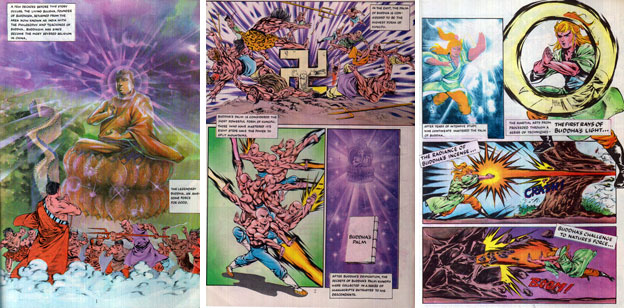
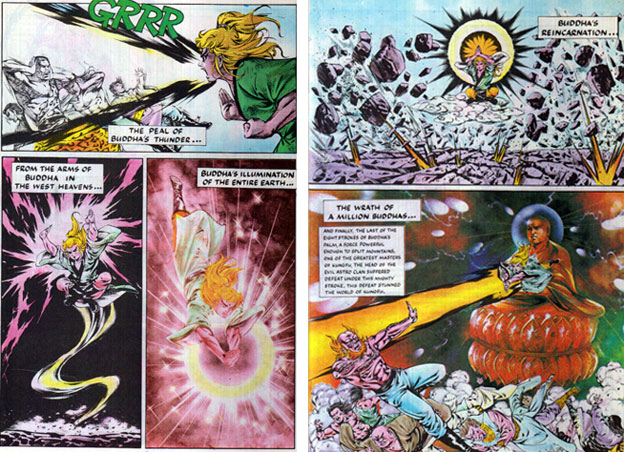
Buddha's Palm was not only an influential film, it was also a defining manhua series. It was created by Tony Wong in 1982, the same year as the movie remake. However Mr. Wong's version had nothing to do with the movie. Instead it was inspired by The Story of the Sword and the Sabre aka Heaven Sword and Dragon Sabre. The manhua series featured Lung Kim-fei, an orphan who was rescued by a Shaolin Monk after a violent clash between the Mongolians and Chinese. The young hero became a master of the Buddha's Palm, the most powerful technique in all kung-fu. It was a form of fighting that was not only physically impressive but could be used to fight off demons and destroy evil.


This series was a template for many fantastic manhua and manga spectacles. It featured characters of all types including giants and man-beasts fighting against humans. These characters could perform chi blasts and do the other fantastic things featured in HK cinema. The Buddha's Palm was not a singular technique but a series of techniques that had different properties. Lung could shoot energy from his hands, it was powerful enough to split rocks and cut down trees. He could also use his power to fly, destroy opponents with a yell and even cause earthquakes. This collection of powers was very similar to the things that Western comic book super heroes had. Like those heroes Lung was in a constant battle against evil and always defending the powerless.


Not every fighter had fantastic powers. In order to ground fighters into reality many manga characters had to put a unique spin on the existing fighting arts. See how creators sometimes made things up for the sake of telling a story in the next blog. As always if you enjoyed this blog and would like to sponsor me please visit my Patreon page and consider donating each month, even as little as $1 would help make better blogs and even podcasts!