Showing posts with label master of the flying guillotine. Show all posts

Monday, August 22, 2016

Fighting with a disability, final part.

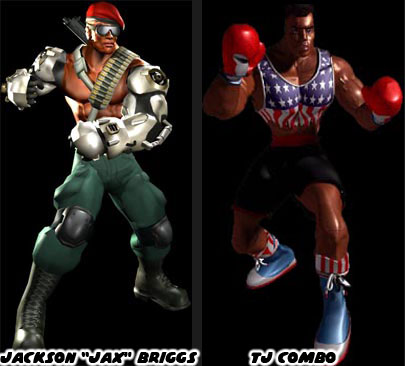
In the previous blog I had mentioned some fighting game characters with visual impairments and even blindness. But what about characters with other disabilities, how were they represented over the years? There have actually been a few characters that fought despite amputations. Two of the most memorable were doing the representation act quite well. The fighters were actually Black and featured an assortment of boxing moves. Major Jackson "Jax" Briggs was a new player in Mortal Kombat II. He debuted in 1993, like his co-stars he was originally an actor that was rotoscoped and turned into a sprite for the game graphics. He wore spandex pants and silver sleeves on his arm that made them look cybernetic. His look changed over the years when the game engine went to 3D. His arms were now clearly robotic. Like many fighters in the series he had to be very strong in order to survive the onslaught of the warriors from the Netherrealm. A similar character appeared in 1994. TJ Combo debuted as the deadly boxer in Killer Instinct. He was a great boxer but his arms were cybernetic implants, making him punch much harder than a regular human. He had to fight demons and aliens in his respective title so his exaggerated strength made sense.


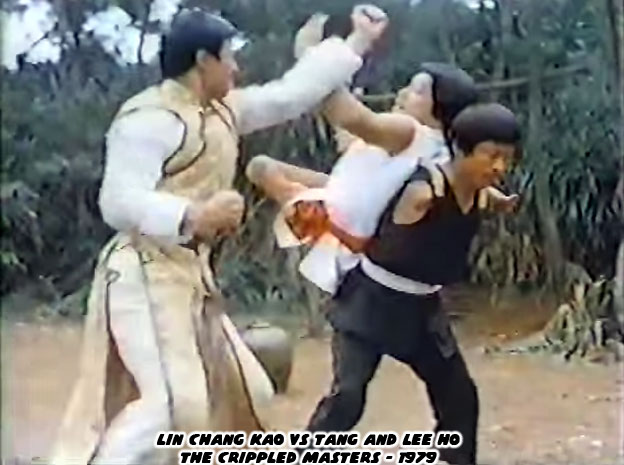
Actual paraplegic fighters had very rarely been done in gaming. In cinema there had been plenty of drunken and blind masters but those with real or imaginary physical deformities were rare. Possibly the most famous of the real-life kung-fu exploitation films was the Crippled Masters. The film from 1979 featured Chen Mu Chuan, Jackie Conn and Frankie Shum, two of the actors were actually born with deformities. The film told the story of a Shaolin monk that teaches a person born with no arms, and a person with deformed legs, how to use kung-fu in order to beat a local crime boss. It so happened that the crime boss was a "hunchback" with deep facial scars. The villain actually had a metal plate covering his deformity. It was a unique premise but with an absurd "team up" ability. The duo has a backpack that allows them to fight back-to-back.
 

In fighting game history there was actually a character that was similar to the Crippled Masters. The villain Twin Tartars appeared in the game the Killing Blade. The 1998 title by IGS appeared on their PGM arcade system. Both fighters had flaming swords that they used in combat. The larger of the fighters was blind and the smaller had achrondoplasia. He was a little person, someone that may be mislabeled a dwarf. The smaller brother rode on the shoulders of the larger and helped direct the attacks. There was a more recent character that was in a similar vein. Ferra and Torr appeared in Mortal Kombat X. The game came out in 2015 yet the idea of a smaller character controlling a larger fighter was at least 30 years old. The design could be traced back to the film Mad Max Beyond Thunderdome. Released in 1985 it was the third film in George Miller's Mad Max series. In the film the warlord that controlled Bartertown was called Master Blaster. Master was a little person that rode on the shoulders of an enormous warrior "Blaster" who was actually a young man with down syndrome. People with cognitive disorders or impaired development were even less likely to be featured in any form of popular entertainment. It was one of many bold ideas that Miller brought to cinema and it helped color the design of other films as well as fighting games.
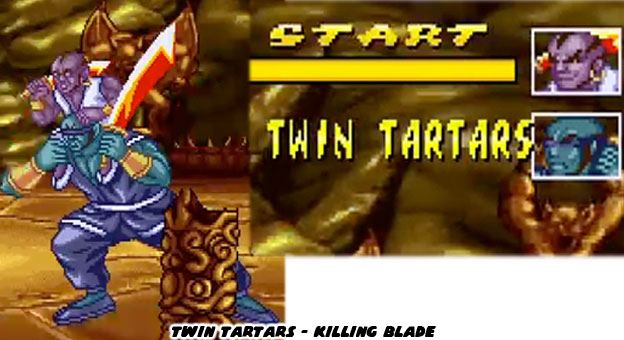

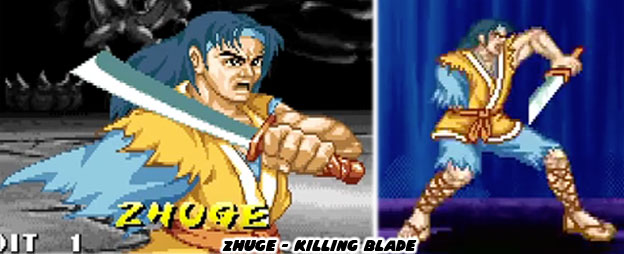
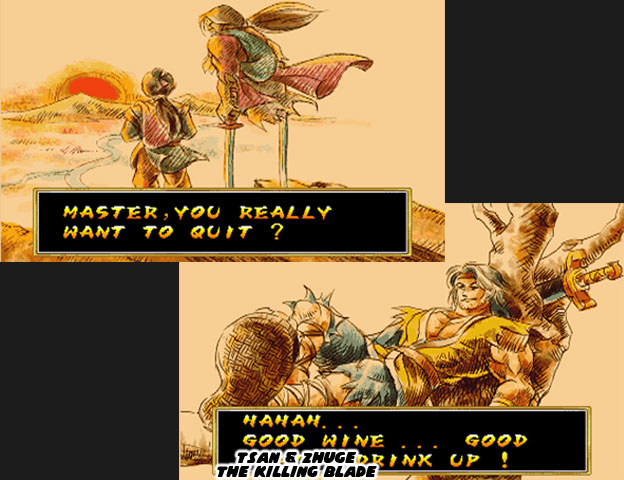
Killing Blade was notable because it had more characters with physical challenges than any other fighting game ever made. The Twin Tartars were non-playable boss characters in the story mode. One of the main characters that players could use was just as unique as the bosses. Zhuge was a one-armed swordsman. He was driven for revenge but by the end of the game he realizes that no amount of bloodshed would bring back his loved ones or his arm for that matter. He accepted this and became a wandering sword for hire, content with his jug of wine. If anything he had the temperament of Haohmaru, the star of the Samurai Shodown series.

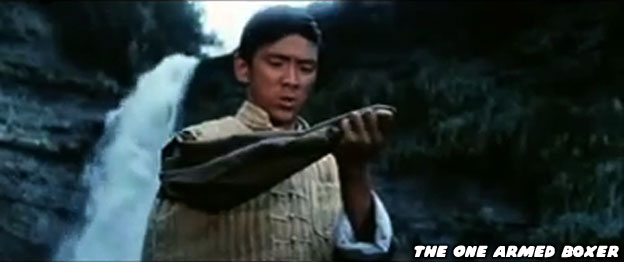
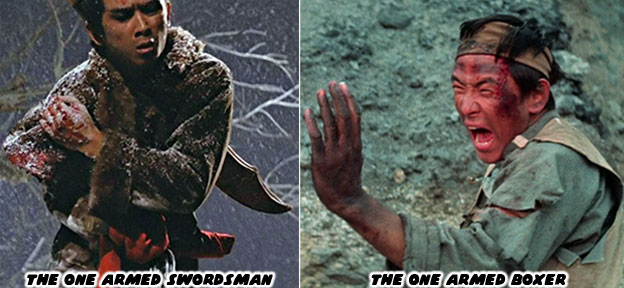
The one -armed swordsman was a character that was made popular more than a generation ago. Jimmy Wang Yu was a young writer / action film star that appeared in a movie called the One Armed Swordsman. The title from 1967 introduced us to a melancholy fighter. It became a big hit in Asian markets and a sequel soon followed. The films gave Wang Yu the traction to leave the famous Shaw Bros. Studio and strike out on his own. In 1971 he released a variation of the movie titled the One Armed Boxer. I had written about this influential person in a previous blog. The movies featuring Jimmy not only influenced other action films but they also planted the design seeds of fighting games, not the least of which was the Street Fighter series. His one armed characters were very well done. They were interesting and sympathetic characters.
 

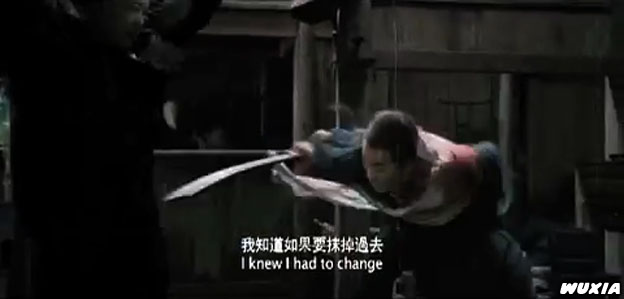
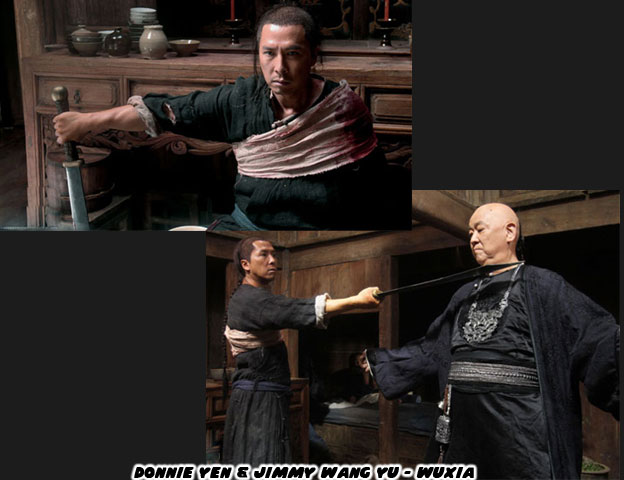
One of the action film stars influenced by Jimmy was Donnie Yen. Donnie like many of his contemporaries had grown up watching the movies and learning the legends of the various martial arts heroes. Donnie decided to write, direct and produce a love letter to the classic films. He called his 2011 movie WuXia, which was the Chinese word for martial arts myth. In the film Donnie played Tang Long, an assassin that was wanted to escape his brutal past. He married and had a child and moved to a village in the country. A botched robbery brought him out of hiding and made it so his old gang was able to track him down. In a last ditch effort to leave the gang he tries faking his own death and even cuts off his own arm in a symbolic gesture that he has quit the gang. I don't want to bore you with the details but I will mention that Donnie managed to get Jimmy Wang Yu out of retirement to play the leader of the 72 Dragons and father of Tang Long. The fight choreography was superb and it really demonstrated what was capable by using only one arm in battle.
 

Zhuge was a variation of the One Armed Swordsman, combined with elements from other films. As great as it was having an amputee represented in a fighting game, it also pointed out one glaring issue with sprite-based technology. Namely the issue of sprite mirroring. Animators working on sprite-based titles only had to create character art facing one direction. The programmers would simply mirror or flip the image so that they could face the opposite direction in game. This was perfectly fine for the vast majority of fighting games because players had full use of both arms and legs. When The Killing Blade came out this limitation was obvious. Zhuge would have the wrong arm missing when he faced the opposite direction. It was a minor detail and most audiences didn't seem to mind this.
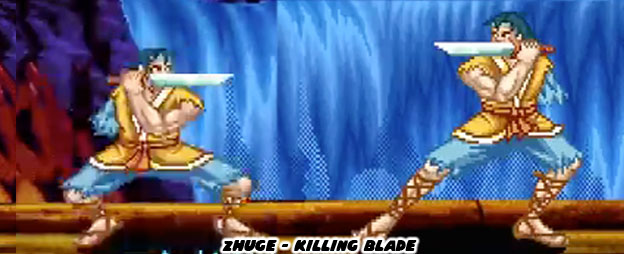
 

The limitations in technology throughout the '80s, specifically with memory, were responsible for sprite mirroring. Designers had to carefully plan out costumes for their main characters that required few colors and little detail. They tried to limit the details that would give away the mirroring effect, such as patches or words that would end up backwards. When the game came out many Street Fighter II fans noticed that Guile's USA flag tattoo was reversed when he faced the opposite side. Not every studio took the time to review these details, a few got past Capcom but not enough to be noticeable. When sprite-based engines improved in the '90s then the ability to create larger, more colorful and more detailed sprites took over. Capcom showed off their CPS-3 hardware with the games Warzard (Red Earth) and Street Fighter III. To show how much the engine had advanced they decided to create a boss that would take advantage of this new technology. The final boss of Street Fighter III, Gill, was not a mirrored sprite. He had a left and right side, the right side was made of fire and the left made of ice. That little detail remained correct regardless of what side of the screen he was on. His attacks even showed off this detail, he could burn or freeze opponents depending on which arm or leg he struck with.
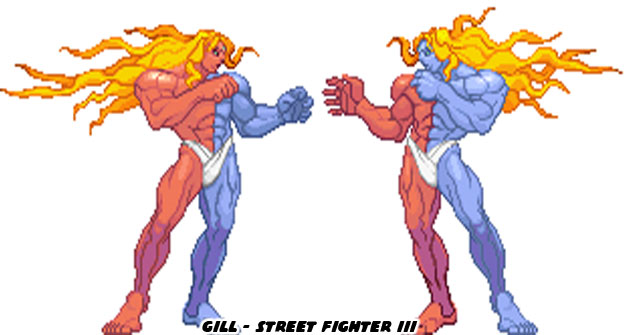

In the planning stages Gill was not the only character that was supposed to have a left and right side. One of the early concept characters for the "New Generation" was a one-armed fighter. Somebody that could be likened to the one-armed boxer from the Jimmy Wang Yu movies. The artists, specifically Akiman and Kinu Nishimura looked at Helio Gracie, the co-founder of the Gracie Ju-Jitsu system as the root of this new character. The figure would evolve and become Oro. The developers realized that while they could create a left and a right-side version of this fighter that in order to be accurate he would actually have to have his back to the player. This was an aesthetic challenge. The ability to "read" the character was very important to players. The competitive game players would have their rhythm thrown off if they could not see a leading hand or foot, Casual players would not be able to appreciate the design of the character if all they saw was a back. Capcom had to figure out a way to present the "crippled" boxer while also using sprite mirroring. It was decided that Oro would simply tuck his arm behind his back depending on which side he was facing. It made sense and was accepted by audiences. Just remember that for a brief moment the designers at Capcom were considering including an amputee in the lineup. How interesting would that have been?
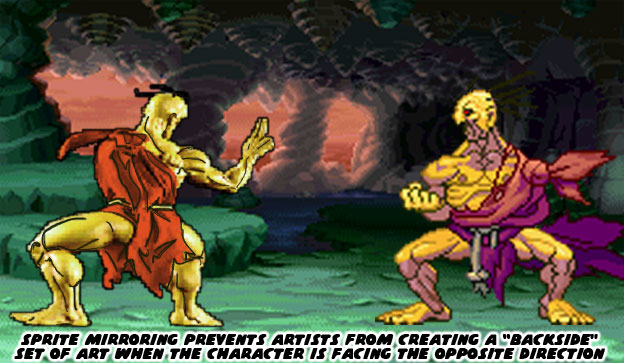

The Taiwanese designers at PGM didn't think twice, they actually put a swordsman with only one arm in their game. More important they had another playable character that had an even greater physical disability. The character Tsan was legless. His long white hair and green skin made him appear like a demon. Many game players assumed that he was indeed some sort of supernatural creature. The game was poaching many of the ideas and themes explored in SNK's Samurai Shodown series, including the mystical elements. Yet instead of feudal-era Japan this game was set in ancient China. Tsan wielded two swords and actually "walked" around on the tip of his blades. He could hurl himself at players, leap across the screen and pretty much moved like a ghost.
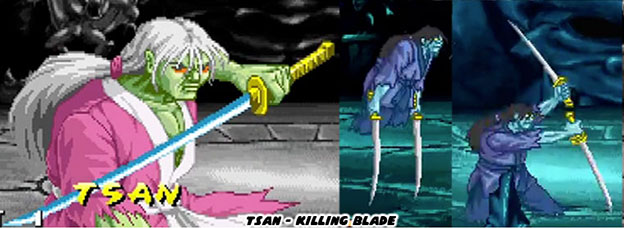
 

As the plot was revealed it turned out that Tsan was a living sword master and not some sort of ghoul. He had overcome his disability and learned various two sword techniques. The fact that he was lighter without his legs allowed him to move much faster than a normal person. When this was combined with his looks it was easy to see why people thought he was some sort of monster. Tsan was actually a positive character. He was such an accomplished fighter that he had actually taken on pupils. When the evil of the Twin Tartars and a corrupt emperor were defeated he decided to go into retirement. The Taiwanese developer had done a great job at creating heroes and villains with different backgrounds. The fact that they included disabled fighters was one of their more unique contributions to the genre.
 

What are your thought on fighting game characters with different backgrounds and abilities? Who were some of your favorite non-traditional fighters? I'd like to hear about it in the comments. As always if you would like to sponsor me please visit my Patreon page and consider donating each month, even as little as $1 would help make better blogs and even podcasts!
follow the Street Writer on Patreon!

Friday, August 7, 2015

How fight culture became fighting game history, part 17

The fighting game genre that audiences know today would not have existed without Jimmy Wang Yu. He was not a programmer, director, designer, producer or animator for any game studio, yet his fingerprints were all over the genre. Jimmy was Hong Kong cinema's biggest star through the 1960's and the single most influential star to fighting games. He was a good fighter but not exceptional, he actually studied karate instead of kung-fu. His directors and choreographers would frame his battles in ways which made him look great. His greatest strength was his understanding as to what audiences wanted in the movies. He took a radical approach to the martial arts genre.


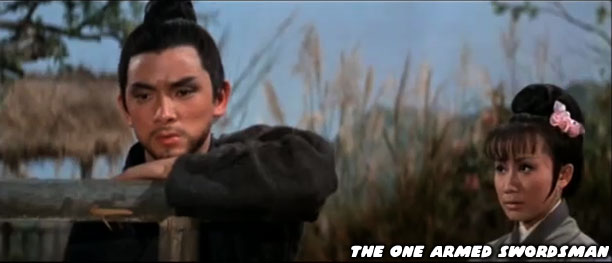
Jimmy gained prominence as a leading man in 1967 when he appeared in the One Armed Swordsman. His portrayal of a melancholy martial artist named Fang Gang won over critics. In the film he lost his arm in a cruel accident. He disregarded the advances of his master's daughter and when she struck at him out of jealousy she ended up cutting off his arm. He threw himself into a river thinking he was done for but was rescued by the daughter of a farmer living downstream. To help him cope with his loss his rescuer gave Fang a manual of fighting techniques which emphasized one armed stances. He used this book to become a master of the short sword style. Fang eventually fell in love with the girl that saved his life. He soon learned of a roving gang that was using some sort of secret weapon that could trap swords. They used this to defeat the best swordsmen and rob villages. He used his newfound skills to defeat the gang and save his former master.

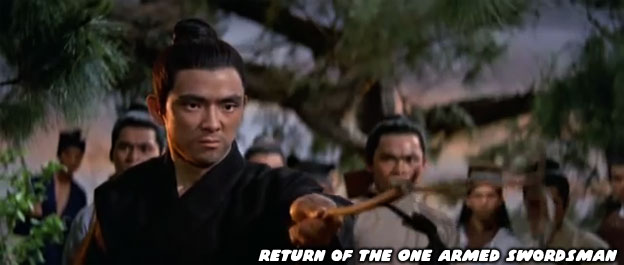
The film and character proved so popular that it would be revisited shortly after. The 1969 film Return of the One Armed Swordsman was an even bigger hit. The budget seemed much greater as there were more location shots than in the first film. There were also more villains to be defeated, better costumes and special effects.


The popularity of the series caused Jimmy to do something unheard of. He broke his contract with the Shaw Bros. studio, then the biggest if not best known martial arts production company in Hong Kong. Wang Yu decided to produce his own films thinking that he could do better. He found that the one armed hero was his niche and created a new character by the name of Tien Lung. This gamble earned him a blacklisting from Hong Kong cinema, not to mention a lawsuit from the Shaw Bros. Jimmy had to set up shop in Taiwan where he would film the majority of his projects. He wrote, directed and starred in the 1971 film the One Armed Boxer.


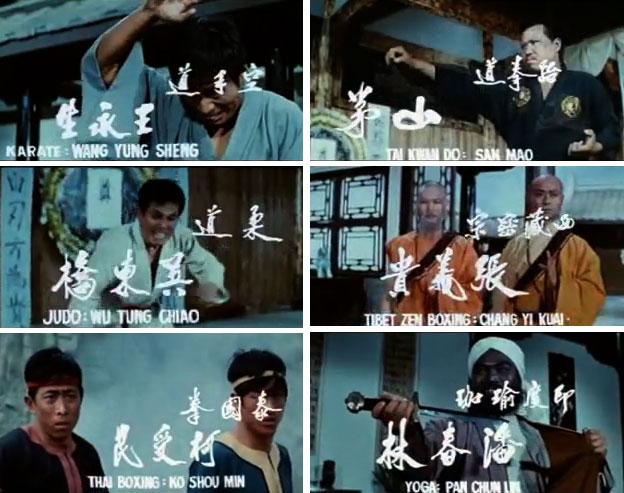
This new film rewrote the book on martial arts cinema. Up until that point most of the martial arts and martial artists were Chinese. Every film seemed to be a variation of the previous Chinese legend. Wang Yu introduced a group of foreign fighting masters that were supposedly from all over Asia. The authenticity of their fighting styles and cultural representations were questionable if not outright racist. The diversity of looks, costumes and styles were unforgettable. In the film the group of fighters was hired by a drug lord to beat up the members of a local martial arts school. The drug lord wanted revenge because his own men, the hook gang, were beaten up by the martial artists.


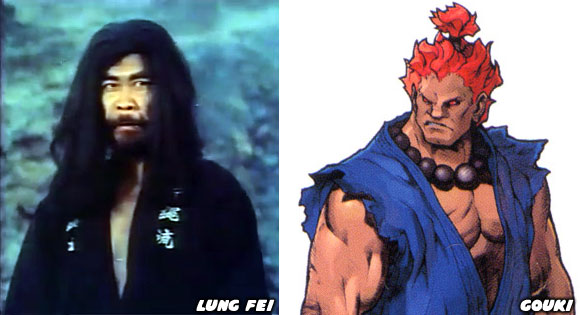
Wang Yu made sure to give each of the foreign characters fantastic abilities to go along with their techniques. Most of the assassins fighting Tien Lung and his allies were superhumanly strong and agile. They were able to leap great distances and move with blurring speed. The leader of these men was a karate fighter named Chi Park Dao Long, played by Lung Fei. The character was even more sure of his abilities than the legendary Pai Mei. His variation of karate was used to kill opponents. It was far removed from the "empty hand" defensive techniques taught in the Japanese schools. To make the character appear more powerful than the rest he had all the trappings of a cartoon villain. He wore black with a red belt, had long unruly hair, sported fangs, had claw-like nails and black palms. He appeared more like a demon than a martial artist. This character and the other villains in the Wang Yu films undoubtedly helped inspire the characters in Street Fighter and Street Fighter II.


Early on in the movie Lung Fei chopped off Tien's arm with his bare hands, showing the power that he had at his disposal. This made the one armed origin story much better, especially when compared to how Jimmy lost his arm in the swordsman movie. Tien spent some time in despair thinking that his life as a fighter was over. Xiao Yu the daughter of a nearby farmer told Tien that her father had a powerful medicine that could make anybody stronger. Even a one-armed man could be more powerful than a regular fighter. He agreed and went through the brutal treatment which involved him burning his arm in a fire pit to kill off the nerve endings. Then the arm was put in a medicinal broth where it became super strong. He began to work on his arm as if he were forging a sword. He used brutal training regiments which included dropping large stones on his hands to toughen it up. His goal was to develop an arm strong enough to kill with a single punch. He figured he might not get a chance for a second strike.

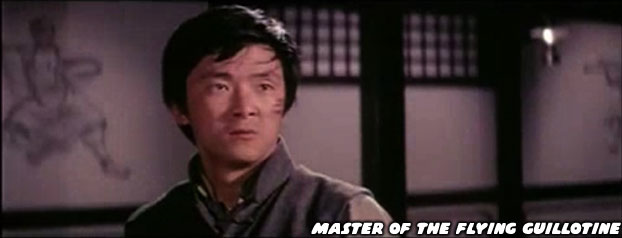
The film was a hit and it financed Wang Yu's next projects. A few years later he revisited the character or Tien Lung. He wrote and directed a sequel in 1976 called the Master of the Flying Guillotine. The story picked up shortly after the events of the first movie. In it an evil monk named Fung Sheng Wu Chi learned that two of his disciples Chow Lung and Chow Fu, the students of Tibet Zen Boxing, were killed by Tien. The blind monk went on a hunt for the boxer. He went to the last known location of the character, a school he had founded a few months after the events of the first film. As if this set up was not enough for a martial arts film Wang Yu had the story take place during a fighting tournament. Dozens of fighters from around Asia were invited to take part in the tournament. The diverse styles, characterizations and costumes would end up coloring the world of fighting games for years to come.


The movie was by no means cheap to produce. The cost for all the actors, sets and special effects had gone up as the scope of the project was much greater than the previous film. There was a reason that Jimmy had to ramp up the spectacle. After the One Armed Boxer was released the movie industry had another revolution. Bruce Lee had returned to Hong Kong to begin acting in martial arts pictures. Within a short while Lee would move from actor to choreographer and finally writer / producer. Lee had stolen Wang Yu's thunder and was releasing films that were more successful with audiences. In order to win viewers back Jimmy had to pull out all the stops and return to his popular one-armed hero. He included elements of the supernatural, violence and gore on top of some memorable character designs.

The film did very well at the box office in China and even abroad. Like other martial arts films it began to get screen time in western theaters, making an impression on young designers, directors and developers outside of Asia. If the One Armed Boxer planted the seeds to Street Fighter then the Master of the Flying Guillotine was the forest that shaped the entire fighting game industry. Capcom, SNK and Midway (RIP) owed a tremendous debt to the films and Wang Yu's progressive ideas.
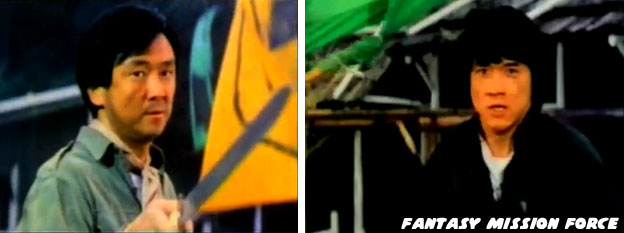
Wang Yu managed to produce a lot of films through the '70s and '80s but his time at the top was short-lived thanks to the success of the Lee films. This did not stop Jimmy from influencing the genre in other ways. In the late 70's he helped out a young martial artist that was having a dispute with a producer in Hong Kong. The rumors were that the producer had triad (mafia) ties and the artist was in some trouble. Wang Yu helped the artist out and in return he appeared in a few of his films. The artist was Jackie Chan and his films would be ranked among the most popular ever produced. In the 1983 film Fantasy Mission Force Wang Yu played a villain against the new Hong Kong darling.


The true life of Wang Yu had more plot turns than any of his films. The person had a long history getting into trouble. He had numerous drunken brawls, public affairs and was even charged and acquitted of murder. Those that hired him to work on projects did so at the risk of their own reputation. His former steady stream of work turned into a light trickle from the 80's onward.
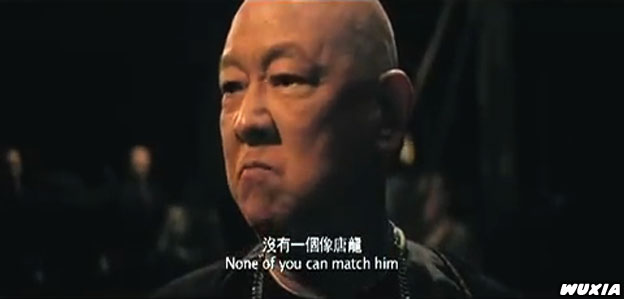
The actor had a sort of comeback in the 2011 martial arts film Wu Xia. The film was a subtle deconstruction of the martial arts fable. Directed and produced by Peter Chan and starring Donnie Yen, it played very much like an homage to the classic 60's and 70's films. Not in the sense that anything is campy or melodramatic, but instead that audiences were allowed to become familiar with the characters before the action happened. The story and characters were revealed at a slower, more natural pace. It was not for fans used to seeing fight after fight in action movies however the action scenes were worth the wait.

Tang Long (Donnie Yen) was an assassin that had been hiding out in a remote village for over a decade. He assumed the name Liu Jinxi, got married and was raising two sons. He killed two wandering bandits that had tried to rob the paper mill in which he worked. News of the act caught the attention of the local authorities. His true identity as a master assassin was uncovered by a detective named Xu Baiju (played by Takeshi Kaneshiro) in some decidedly Hong Kong cinema-meets-CSI reconstructions of the crime scenes. Xu was not only a detective but also a master of acupuncture which he used to cure himself of an earlier poisoning attempt.


Jimmy Wang Yu was introduced halfway into the film as the leader of the 72 Demons, a group of assassins and the father of Tang Long. The actor brought the character to life, crafting a villain that was evil to the core and feared by his own men as much as the law. Upon learning that his son was hiding out and had even fathered a grandchild the evil master rode out in search of him.
What happened next was a series of dramatic battles between Tang Long and the 13th Madam (his stepmother) played by veteran martial arts actress Kara Hui and his father. The fight scenes were very well done, directed by Donnie himself. Tang Long tried to fake his own death to the clan by slowing his heartbeat and breath to a crawl with the aid of Xu Baiju's acupuncture needles. If he did not try to convince the 72 Demons that he was dead they would have hunted him to the ends of the Earth. They would have killed his family and villagers to get to him. When he finally was discovered by the clan he did something even more dramatic than play dead, SPOILER ALERT: he cut off his own arm and turned it over to the clan in an attempt to get out. If the Japanese Yakuza thought that cutting off a finger was an act of loyalty then clearly they had not heard of Tang Long! This did not appease the clan or his father.

The last part of the film was very well done. The master was waiting patiently for his son to return to his family, sitting at a table holding his grandchildren hostage. The scene between Donnie and Jimmy was very powerful. Wang Yu was at his best when he was playing up the intimidating father figure. The last fight in the film pitted the one-armed swordsman against Wang Yu. This bit of fanservice was a sort of passing of the torch. It could not have happened better between any other actors.


Jimmy Wang Yu was a successful actor but never seemed to hit the stratosphere like Bruce Lee or Jackie Chan. Donnie Yen could be argued as having the same luck. Yen had an incredible volume of work but was not a globally recognized name like his contemporary Jet Li. Neither of the actors were destined to become big stars in the west or be featured in Hollywood-backed films. Wu Xia was conceived by the director and Yen as an homage to the One Armed swordsman and other films of that era, not as a remake. The film could not have told a better story. Donnie Yen created another memorable hero that was every bit as good as his other characters but the highlight of the film was actually seeing Jimmy in action once more. Wang Yu spent decades fighting controversy, all while falling in and out of the spotlight. Little consideration was given to him as a martial artist, let alone as a writer or director. His contributions to the industry were rarely acknowledged because of his personal history. He was all but forgotten by modern action cinema. It took 43 years after creating the archetypical hero for him to be remembered once more. Jimmy Wang Yu was redeemed when he played an irredeemable villain. Fans of the genre owe it to themselves to pick up this film and see the greatness of the forgotten legend. The next blog will highlight the further evolution of HK cinema and how the hero changed to fit with the times. Instead of the reluctant master as with Wang and his contemporaries this new archetype was somebody that already had amazing fighting abilities but wanted to remain anonymous. Due to circumstances beyond their control they found themselves defending the weak and often fighting for their lives. The next blog will look at the life and influence of "the Dragon". As always if you enjoyed this blog and would like to sponsor me please visit my Patreon page and consider donating each month, even as little as $1 would help make better blogs and even podcasts!
Wednesday, August 5, 2015

How fight culture became fighting game history, part 16

Hong Kong cinema had exposed audiences to the various real world fighting arts and mixed them in with some mystical and super natural elements. It was interesting how the films would explore the myths of other cultures and in some cases exploit the ignorance of the masses and make up fighting techniques in the process. In the previous blog I mentioned the influence of The Master of the Flying Guillotine to the fighting game genre. It was not only film to put kung-fu against other fighting styles.


What was interesting was how other forms of "fighting" had to have a strong gimmick in order for audiences to accept that they were effective against kung-fu. Yoga for example was not a martial art but instead a philosophical school and method of exercise. Practitioners of the arts from India wore a turban and could stretch their limbs. This was what movies taught us. Young fans accepted this at face value.

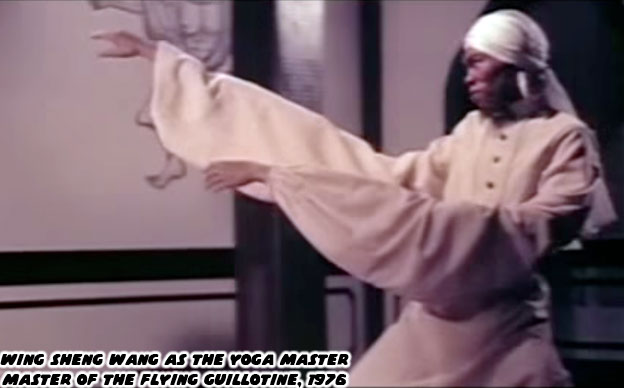
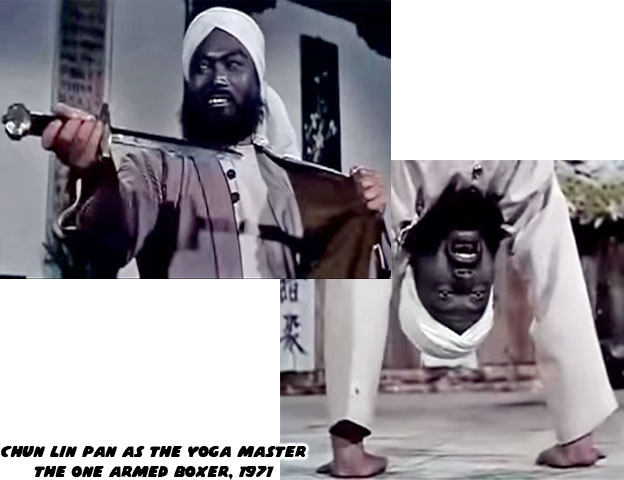
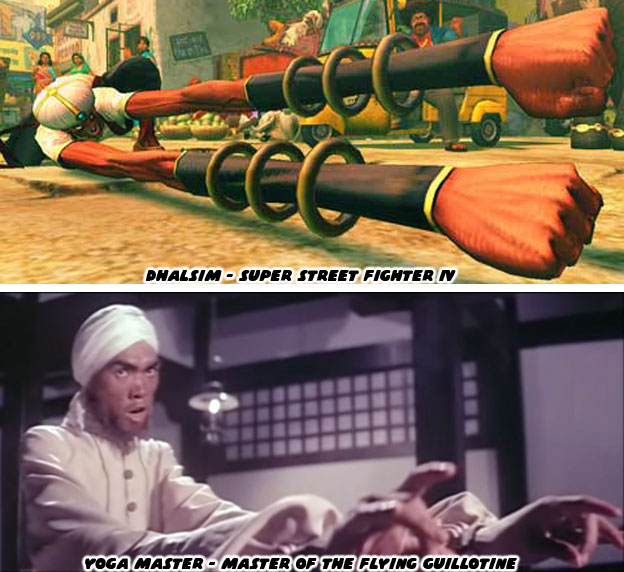
Yoga had actually been used as a rival fighting art in the prequel to the Master of the Flying Guillotine. In the One Armed Boxer Chun Lin Pan wore literal blackface and played a yoga mystic. There were no minority groups to protest their representation in cinema back in the early '70s. The Yoga Master was seemingly invulnerable, he could absorb a knife stab without bleeding and could teleport around his opponents by standing on his hands. Certainly we could see how absurd this was in hindsight but imagine playing the movie in places that were still rooted in strong supernatural and religious beliefs. For all the movie goers knew there were really people in India that could do this.


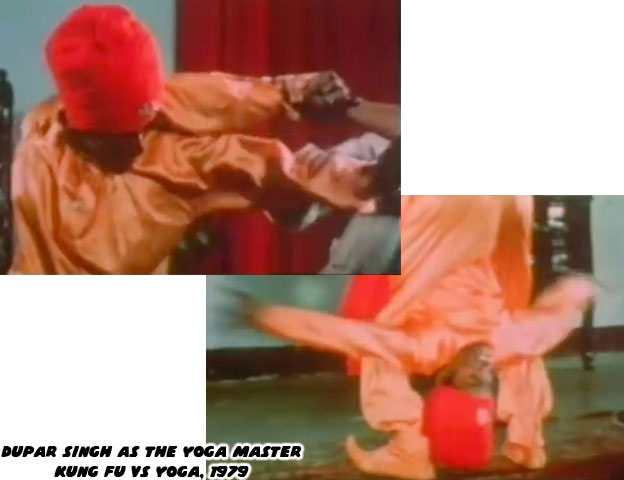
Even when there were actual Indians cast in the role they still relied on gimmicks in order to get audiences to watch the film. Such was the case of contortionist Dupar Singh in Kung Fu vs Yoga. The performer didn't really kick or punch his opponents as much as he danced around them and avoided their strikes with his limberness. Certainly some of the poses used by Dupar may have originated from Yoga but it took a clever choreographer to work them into a routine for the movie. These representations of the art did not go unnoticed by the developers working in Japan. When Capcom was filling out a cast for Street Fighter and Street Fighter II they would often reference films, television shows and manga characters for their cast. Sometimes the inspiration was passing and other times it was heavy handed.


The representations of the foreign fighting arts were sometimes done with a sense of history and respect. See Sagat and Adon for proof. However some of the more "exotic" arts were pulled out of thin air at the whims of the designers.

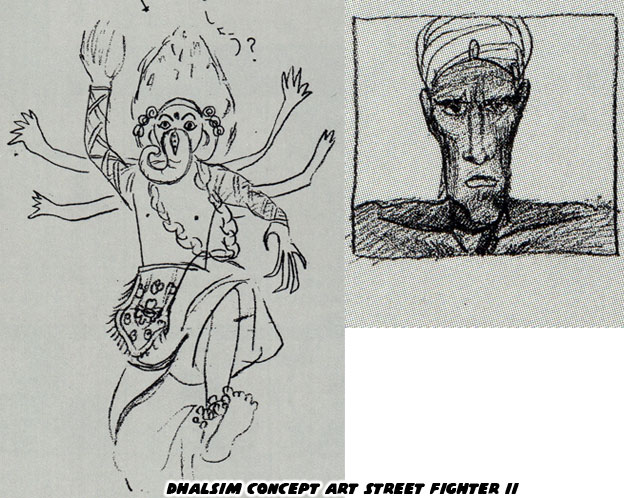
Long-time fans of the series might not have believed that in the early stages Dhalsim wore an elephant mask and could have sported six arms. Talk about being disrespectful to Indians and those that believe in Ganesh! He was known as the "Great Tiger." Those that were familiar with the Punch-Out boxing series by Nintendo probably also remember seeing an Indian boxer wearing a turban with the same exact name. The Indian-as-a-fighter gimmick was heavily influenced by pro wrestler Tiger Jeet Singh. He would often come to the arena wearing a turban and wildly swinging a saber. He scared audiences with his antics. The wrestler was very famous in the '70s and '80s when the designers at Capcom would have been most influenced by pop culture.


Tiger would have extremely violent matches against other characters like "the Sheik" and "the Butcher." He was able to make a good living by exploiting a gimmick that had little to no basis on reality. Audiences fell for it and by extension helped perpetuate a myth about Indian fighters. Singh had a son that carried the name and the gimmick into a new generation.

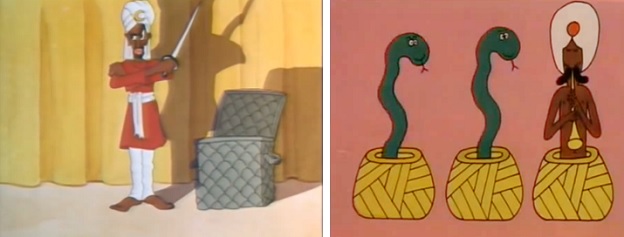
Great Tiger was supposed to be an Indian mystic but his look was very bland. He was a dark-skinned character with a turban, he could have been pulled right out of any comic book. Not much else was known about this figure, what form of fighting he represented or what his abilities were. This was when the team looked to a few new points of reference. Where had they seen Indian fighters before and what made them special? Of course the Indian was well known in television and cartoon tropes. Who does not remember seeing a cartoon of an Indian lying on a bed of nails, or running swords through a basket with their apprentice inside? What about the classic Indian rope trick or the Madari better known as the snake charmers?


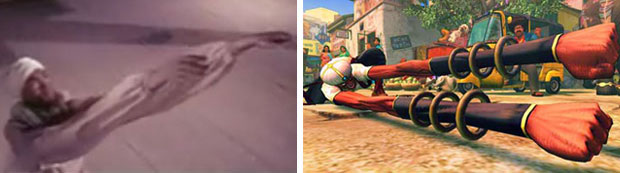
These were things that everyone had seen and was familiar with. Yet these things could have also been negative subconscious cues about a particular culture. India had introduced words like Guru and Yogi into Western language. Whether true or not these images of Indians colored pop culture the world over. Magicians from India were part of folklore and many assumed that there was some truth to these legends. The second Indian character feature in the Wang Yu films was even more memorable. He had arms that stretched, creating a very unique challenge for the hero of the film. It was an impressive effect in the film, using prosthesis and a second person to create the illusion. This character, blackface and all, had a profound influence on the development of the Great Tiger.


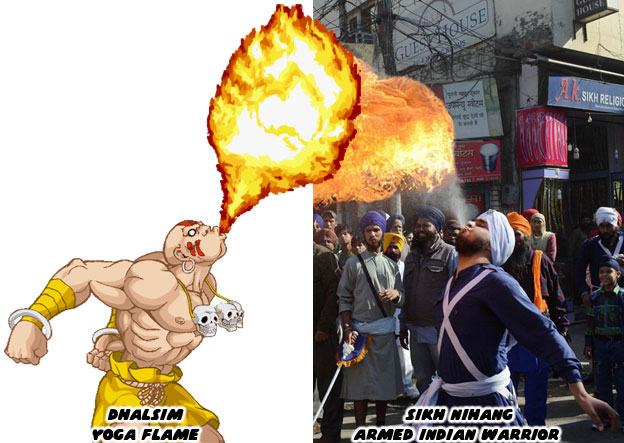
As Dhalsim began to emerge the designers wanted to know how else they could make him unique. Again they used the Indian mystic as a point of reference. In legend the magicians from India and Arabia were highly tolerant to fire. They could walk on hot coals and even breathe flames. These performers ended up in traveling caravans and helped create the myth that found its way to film and television centuries later. The best thing about Street Fighter was that there was a hint to truth to the icons. There was a caste of Sikh Warriors that were armed with weapons and trained in the art of war. During celebrations they would parade in uniform and sometimes put on a show for audiences, singing, dancing and breathing fire. It was an amazing visual. Imagine an animated version of a Sikh warrior in a battle against a karate master. There was real potential in trying to recreate these different arts for game playing audiences.

The team at Capcom began experimenting with the look and moves of the Great Tiger. They stripped away the turban and Sikh costume and made him appear very humble. In Sikh practice hair was a sacred, it was never exposed and was kept wrapped up. Dhalsim was supposed to appear more like a beggar. Literally someone that gave up his worldly possessions and even shaved himself bald to humble himself. A pair of ragged trunks and a rope belt became his new costume. Around his neck he wore three small skulls. It would be revealed that these were children from his village that had died. As a pacifist the only reason he entered the Street Fighter tournament to win the prize money to help his village. His backstory would be revealed at the end of the game. Like Chun-Li and Ryu the developers learned that it was important to know what each character was fighting for and why it made them interesting. The developers respected their characters and audience enough to let players discover what made them unique through the endings of the game.


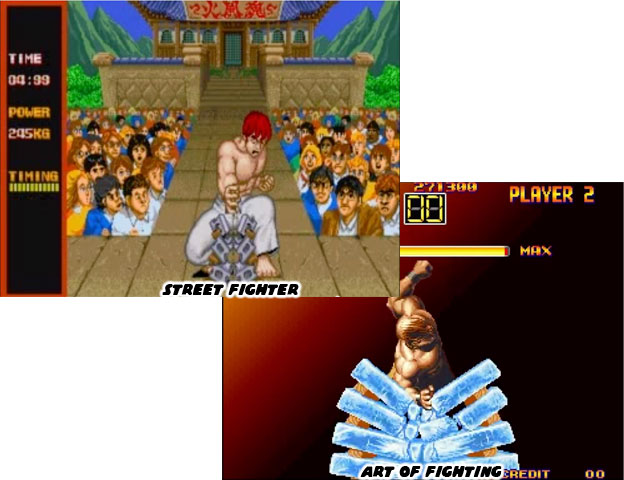
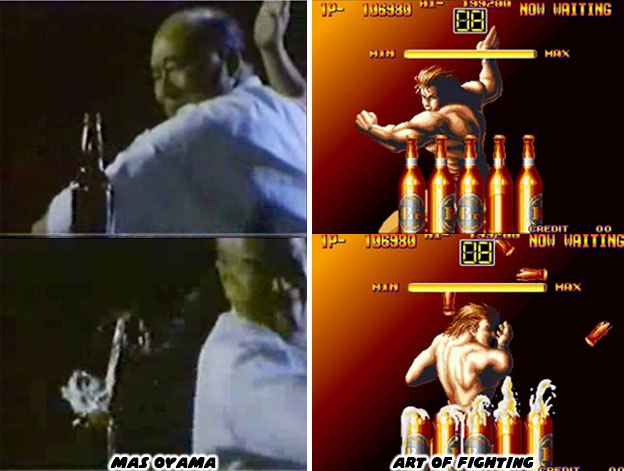
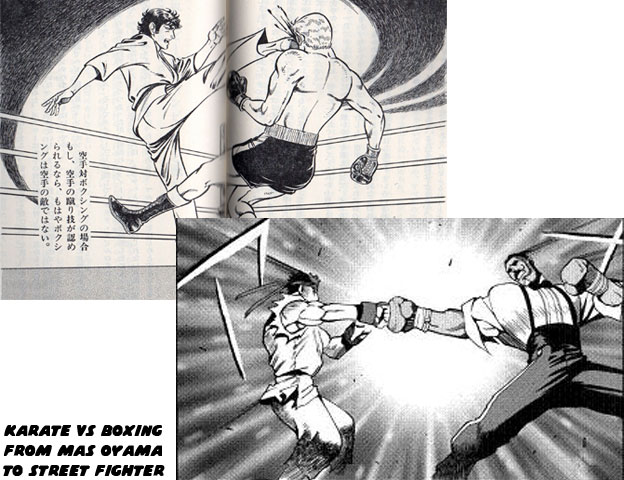
Despite the legends created by cinema some of these representations of the fighting arts in film and manga were based on first-hand accounts of traveling fighters. The trips of Mas Oyama and Yoshiji Soeno became the basis of the Karate Baka Ichidai books. In the journeys they fought students as well as masters of various forms of karate, judo, jujitsu and of course muay thai. When Oyama traveled he would put on exhibitions. Sometimes they would involve him breaking boards and bricks. Sometimes blocks of ice and baseball bats as well. In many early arcade fighting games the bonus levels consisted of these breaking demonstrations to add to their authenticity.


Remember that Oyama had a reputation for being a "God Hand" he could dispatch most of the fighters that challenged him with a single punch. To prove how accurate his strikes were he would chop the tops off of wine bottles. He could legitimately perform this move in real life but when he was touring with American wrestling promoters they did not want to risk him injuring himself. They would score the glass ahead of time. Oyama would put his life on the line multiple times by getting in the arena with a bull. He would chop off its horns and then kill it with a punch to the head. There was no mistaking that he was the real deal.


Oyama and his followers would recount how he was able to defeat the best fighters of a particular style. Even if a person was bigger or stronger, had a greater reach, he would always find a way to prove his style was the best. These retellings would become more embellished through the years as they were adapted to manga stories. Remember that his fans couldn't just follow him around with their cell phones and upload the footage to YouTube in the late '50s and early '60s. All they could do was wait for installments of his life story via comic so they could visualize these fights. This would set a precedence that almost every other modern comic would borrow. Start with a fighter and follow them as they challenge themselves against bigger and better opponents. Even the comics based on fighting games didn't deviate from this formula.


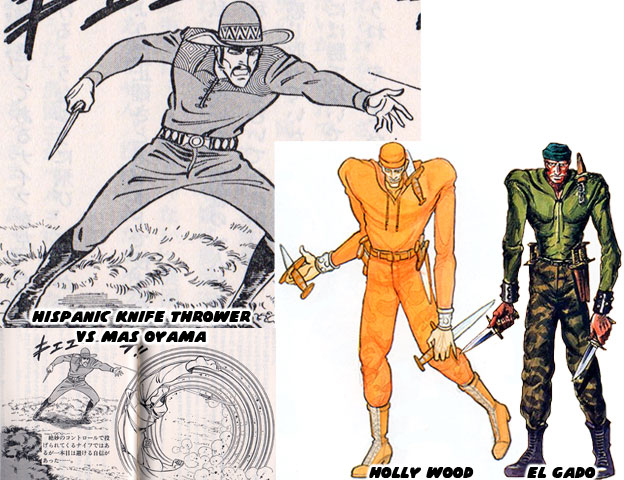
When Oyama was away from the wrestling circuit people would seek him out and challenge him to a duel. In the Americas there wasn't really a defined fighting style. Just about every other nation on Earth had an identifiable form of grappling or striking but not North, Central or South America. Some of the natives and Spanish land owners were known to be good fighters but they fought using knives. Count Kouma could attest to how some Capoeira practitioners were about having access to a knife in combat. The knife thrower would be revisited by Capcom in Final Fight, originally called Street Fighter '89. Holly Wood and El Gado would have some of the trimmings of the Hispanic knife fighters that Oyama spoke of. These techniques were labeled by the designers at Capcom, El Gado for example was a master of  Souo-katsuken (Double Scorpion Tail technique).


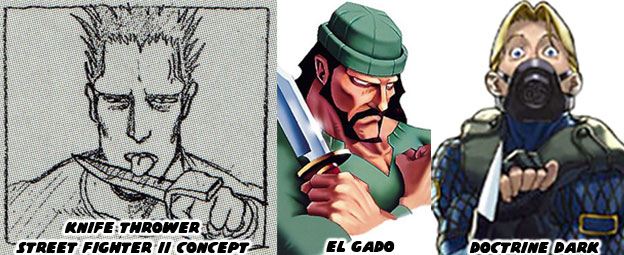
This character would evolve into a sort of sadistic mercenary. In the early planning stages of Street Fighter II they had even considered putting a knife fighter in the lineup. The fighters was slightly crazed but at the same time boasted an IQ of 220. El Gado would turn up in other Capcom games as a playable as well as background character and the insane Doctrine Dark would be created by ARIKA and Capcom for the Street Fighter EX series. The knife fighter would only find a limited following in the genre. To represent the Americas most of the Japanese developers would focus on wrestlers instead. This seemed to work out much better in the long run.


The lesson was learned by producers early on. If you don't have a real fighting art to show off just make something up and stick to your story. It just might convince audiences that this was a real thing. Cinema introduced a new type of hero in the early '70s. These stories would become the foundation for television, film and game heroes for years to come. The next blog will highlight one of the movie pioneers that helped shape the world of fighting games. As always if you enjoyed this blog and would like to sponsor me please visit my Patreon page and consider donating each month, even as little as $1 would help make better blogs and even podcasts!
Monday, August 3, 2015

How fight culture became fighting game history, part 15

Amazingly powerful attacks and defenses had been written about for eons and visualized in manhua stories for most of the 20th century. These were not the standard punches and kicks of a fighter but instead the strikes that could knock down trees and split boulders in half. There were people that could chop through stones and bricks and even people that could kick down small trees. These people inspired the stories of people that could do much more. However there was a "missing link" of sorts. Between the legend and the comic book there was another media format that had influenced the visual style of the fighting masters and their powers. Martial arts cinema was every bit as important to the development of Street Fighter as any manga or animé title. In fact it was more important to the franchise because designers could see exotic martial arts and characters in a moving medium. Great fighting plots, character designs and action sequences were the staple of action films. Nowhere else was this better presented than in Hong Kong (HK) cinema.


Whether a martial arts character was supposed to be serious or funny, whether in film, comic, game or television, the pull of Hong Kong cinema was inescapable. Martial artists and the various forms of fighting as presented in any media were almost all universally based on a character that had appeared in a classic martial arts film.

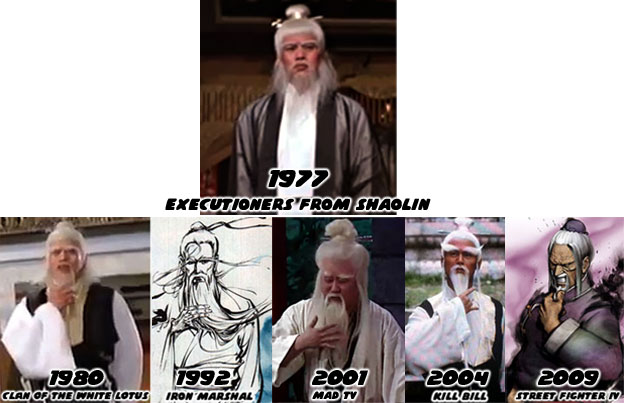
Pai Mei was one such archetype. He was created in the 1977 film Executioners from Shaolin. This character sported a head of long white hair and long white eyebrows. His uniform was pristine and he was very arrogant in his abilities. The character seemed impervious to harm and was impossible to defeat in hand-to-hand combat. Pai Mei was a caricature of kung-fu masters from ancient China. His appearance was rooted in Chinese Opera and an imaginative film wardrobe department. He looked fantastic because it was more appealing on the screen. The earliest photos of kung-fu masters looked nothing at all like Pai Mei. The men appeared very ordinary. They may have been able to shatter bones with a single punch but were so unassuming that we would have never guessed. Nobody in HK cinema ever looked this bland. The bright, ornate costumes featured in the films from the late '60s and early '70s were directly responsible for the designs used in videogames. Pai Mei was copied time and time again not only in China but in Japan and the US as well. Everything from the look to the mannerisms of the character was so familiar to moviegoers that he could be used in a homage or parody depending on the project. Very few non-corporate or non-cartoon characters could claim to have the same global recognition as a kung-fu archetype. Pai Mei was just one of many film characters that influenced the Street Fighter cast.


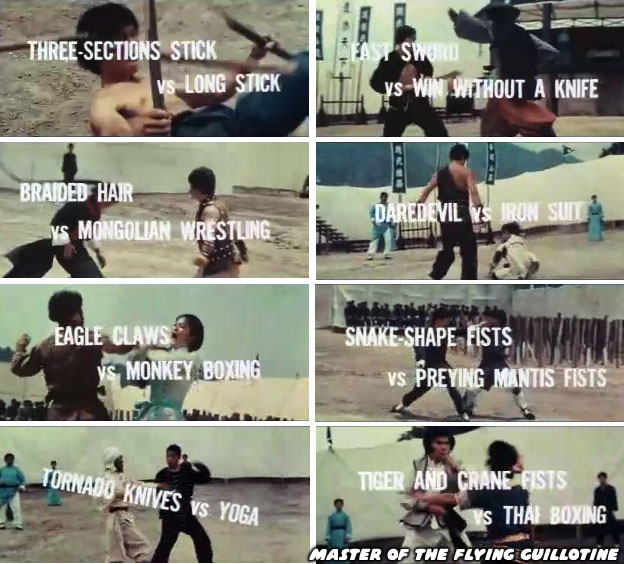
The life of Mas Oyama may have influenced the narrative of Street Fighter however the supporting characters and universe were inspired more by action films. The 1975 film the Master of the Flying Guillotine was undoubtedly one of the most important films referenced by the designers at Capcom in the 1980's. Both the Guillotine and its predecessor the One Armed Boxer had great action sequences and a wonderfully diverse cast of characters, including masters of kung-fu, muay thai, karate, judo and other forms.


The Master of the Flying Guillotine was notable because it pulled together the martial artists in a tournament setting. When the burly Mongolian wrestler fought the petite Chinese fighter it predated the Zangief versus Chun-Li matchup by more than 15 years. The arrogant muay thai fighter and stretchy limbed yoga master were paralleled by Adon and Dhalsim many years later as well. The use of an international tournament to determine the best fighter was basis for Street Fighter II and the original Mortal Kombat. In SF II this tournament was actually a front for a bigger plot in which the main character, Ryu was being trapped by a more powerful character. In the Master of the Flying Guillotine the tournament happened to take place at the same time an assassin was after the One Armed Boxer. Vega (M. Bison in the US) was pulling the strings and using his three bosses to ensure victory in SF II. In the film the blind monk was aided by a couple of tournament participants in tracking down the One Armed Boxer. The tournament format was not a new idea, but it was a good plot device bringing the various characters and styles together in one place. What cinema did was put a human face on these archetypes and infused them with personality.

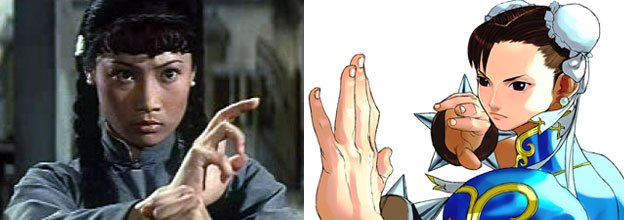
Martial arts cinema in China differed from action films in other countries. The wuxia stories applied to men and women equally. Females in Hong Kong cinema often held their own against the men. This distinction should be noted since women were usually the prize for the action stars in the west. There were female fighters celebrated in myth and legend in China almost as much as men. The daughter of the tournament sponsor in the Guillotine movie had entered the contest herself. The historical figure Hua Mulan was said to have exceptional skill in battle and served in the army for 12 years on behalf of her father in ancient times. In fact Wing Chun, the style of boxing taught by Yip Man, was created by a woman. The godmother of martial arts cinema was Angela Mao. She was the first international movie female fighting star. There had been other women with great fighting scenes in earlier movies however Angela was the star of Lady Whirlwind. The 1973 film actually predated the Master of the Flying Guillotine! It pitted the petite master of kung-fu against masters of different styles including judo and karate. She demonstrated that a perfect fighting form could conquer the strength and size of any man. Angela was the mold from which tremendous characters like Chun-Li were cast.


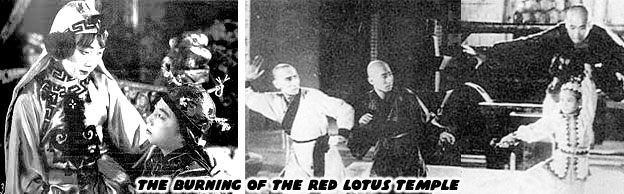
The HK movie industry could be kind to stars like Angela Mao but turn its back on others like Jimmy Wang Yu. The characters they created would live on however and be embraced the world over. Hong Kong cinema was also known for influencing fight choreography in Eastern and Western films. Martial arts cinema could actually be traced back to The Burning of the Red Lotus Temple, an incredibly long series from 1928. The actors were trained martial artists, mostly from the Chinese Opera. They choreographed basic fight scenes and even sword battles. The film made use of early special effects techniques including some wire work. It was interesting to see wuxia type epics during this era because the films were challenged by the government at the time for promoting the ideas of superstition and anarchy.


Where the format really took off was post-WWII. The Chinese were eager to rebuild and find a distraction from the horrors of the war. They, like many other countries, turned to film. The True Story of Wong Fei Hung was a series of movies beginning in 1949. It chronicled the life and adventures of Wong Fei Hung, the doctor and martial arts master made famous in more contemporary films including Once Upon a Time in China and the Iron Monkey. The doctor was celebrated as a folk hero with amazing martial prowess. Reaching a mythical level of fame allowed various comics, movies, television shows and even videogames to be made about him.

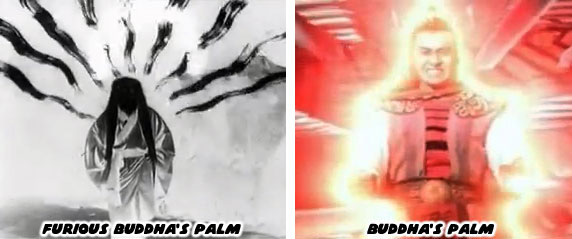
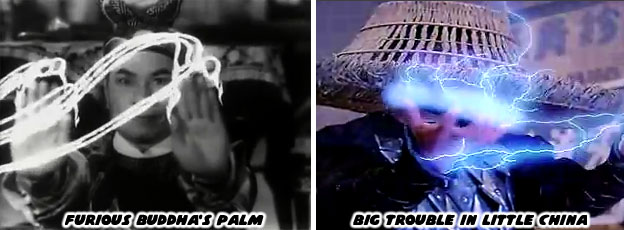
Not all of the early films were grounded in Chinese Opera or real-life heroes. Many of the most memorable films introduced fantastic characters with special powers to audiences. One film that exploited special effects and martial arts archetypes was the Furious Buddha's Palm. This film predated the Master of the Flying Guillotine by a decade. The 1965 film presented the types of stories and characters that audiences had been reading about in manhua titles. The masters could harness and expel chi as energy. It protected them from attack and allowed them to do amazing things like running on air and stopping weapons with their bare hands.


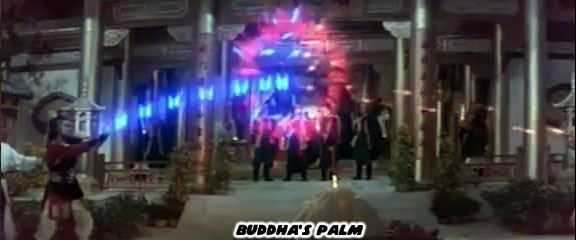
The film was remade in 1982 and the title shortened to just Buddha's Palm. The special effects were improved considerably. The films were important for the development of manhua, manga and fighting games. They were some of the first wuxia titles that presented the fabled super techniques of the qigong masters in a visual format. This included characters that were able to heal as well as harm people using advanced chi manipulation. Energy waves, beams of light and other forces could be seen emanating from the hands of the martial arts masters. These things were seen in film years before Street Fighter was even conceived. The influences of these characters and their amazing powers not only shaped Japanese designers but western filmmakers as well. Big Trouble in Little China, a John Carpenter film from 1986, put wuxia legends in a modern context. The combination of elements was fantastic and completely over-the-top; martial arts masters were deflecting bullets with their kung-fu, ancient monsters lived under the streets of Chinatown and secretive gangs ran the streets with guns and magic. Audiences accepted that these legendary fighters still existed in some hidden part of the world and mobsters used them to terrorize the public.


It was not hard to imagine that the juxtaposition of the classic and the modern themes would also work in a videogame. After all, what would happen if a Japanese man wearing a white gi and black belt walked into a pub looking to fight the strongest mohawk-haired punk? People would probably laugh and then call the police. A scenario like this was a good set-up for a martial arts film but was actually the backdrop between Ryu and Birdie in the original Street Fighter. By coincidence(?) the original Street Fighter was released in 1987, a year after Big Trouble in Little China. Midway would concede that Mortal Kombat was inspired by this movie and various other martial arts films as well.
Buddha's Palm visualized the fa jin energy attacks and moreover featured elements that predated Hokuto no Ken. The master of the Dark Moon Clan shot blue energy blasts in the shape of two outstretched hands, for all intents and purposes this was the original hadoken. The villain, Heavenly Foot, shot yellow beams of energy in the shape of daggers. Even in the original black and white film there were energy attacks of different shapes. Some were lightning bolts, others were waves and still others were shaped like chains. Each of these energy blasts did a different thing and had to be defeated with different techniques or by combining forces.


Street Fighter was built around different fighting styles and archetypes. It was not expected that every fighter was a master of chi manipulation. Some that could not throw fireballs still had ranged attacks. In Street Fighter Zero the mercenary Rolento threw knives and the convict Cody threw rocks. This was acceptable given the type of fighters that they were. The diversity of moves allowed players to exploit weaknesses in every style. Even special moves had their own limitations. A fireball attack could be jumped over and a rising uppercut could be ducked under. This left the player with all sorts of strategies for offensive as well as defensive playing. No style was absolutely perfect and no form was completely impenetrable. This understanding was the driving force behind the balance that SF would become famous for.

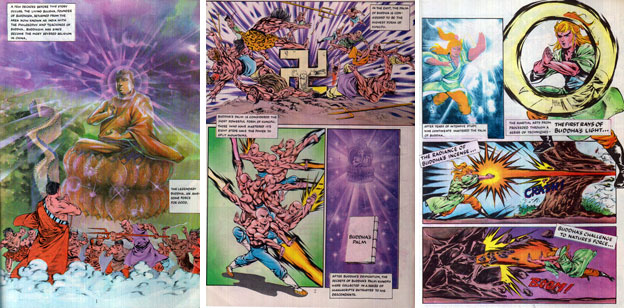
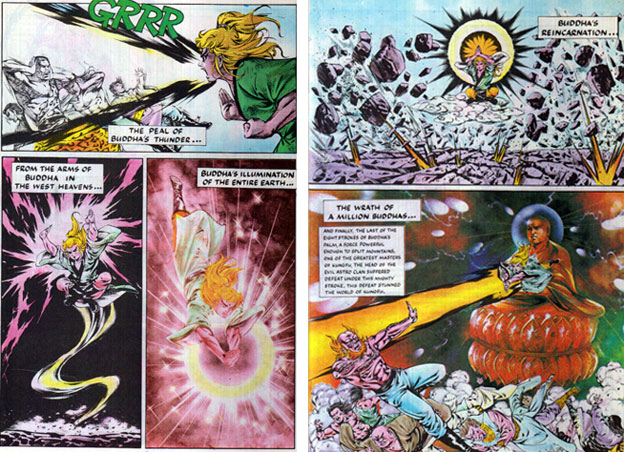
Buddha's Palm was not only an influential film, it was also a defining manhua series. It was created by Tony Wong in 1982, the same year as the movie remake. However Mr. Wong's version had nothing to do with the movie. Instead it was inspired by The Story of the Sword and the Sabre aka Heaven Sword and Dragon Sabre. The manhua series featured Lung Kim-fei, an orphan who was rescued by a Shaolin Monk after a violent clash between the Mongolians and Chinese. The young hero became a master of the Buddha's Palm, the most powerful technique in all kung-fu. It was a form of fighting that was not only physically impressive but could be used to fight off demons and destroy evil.


This series was a template for many fantastic manhua and manga spectacles. It featured characters of all types including giants and man-beasts fighting against humans. These characters could perform chi blasts and do the other fantastic things featured in HK cinema. The Buddha's Palm was not a singular technique but a series of techniques that had different properties. Lung could shoot energy from his hands, it was powerful enough to split rocks and cut down trees. He could also use his power to fly, destroy opponents with a yell and even cause earthquakes. This collection of powers was very similar to the things that Western comic book super heroes had. Like those heroes Lung was in a constant battle against evil and always defending the powerless.


Not every fighter had fantastic powers. In order to ground fighters into reality many manga characters had to put a unique spin on the existing fighting arts. See how creators sometimes made things up for the sake of telling a story in the next blog. As always if you enjoyed this blog and would like to sponsor me please visit my Patreon page and consider donating each month, even as little as $1 would help make better blogs and even podcasts!