Showing posts with label dhalsim. Show all posts

Wednesday, September 6, 2023

Street Fighter 6: A master class in game design, part 17

At the start of this series I talked about how the Street Fighter 6 developers were using the World Tour to ease a new generation of players into the many fighting game concepts. From random gang encounters, to part time jobs, to selective battles with pedestrians. Each of these things helped build muscle memory, teach range, reaction, counters, and using the Drive Meter. Each of these would make for better fighters, and a better SF experience. One of the more specific ways that the World Tour was prepping audiences for fights with the various masters was through the use of Copy Fighters. These were synthetic humans that popped up on occasion, similar to gangs. Yet unlike a gang member these androids were guaranteed to have many of the special attacks of an actual SF master. To be fair sometimes a random pedestrian or gang member would also have a move or two from a master, but the Copy Fighters had almost all their moves. They were nowhere near as strong as the actual master, like E. Honda, Ryu, or Guile for example, but they did know how to perform several of their combos, and special attack strings. Copy Fighters were sort of like random mini bosses to increase the challenge in the middle of the World Tour.
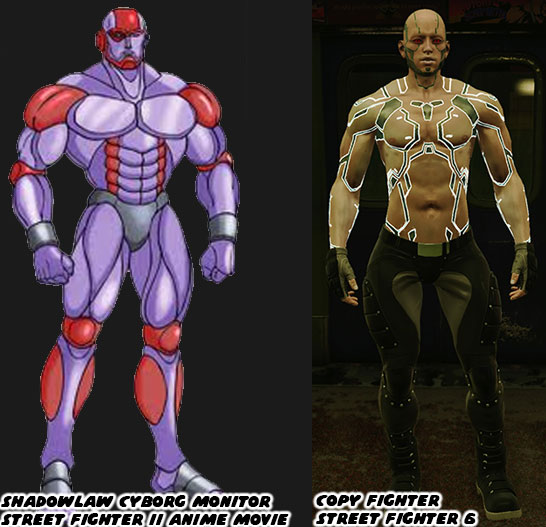
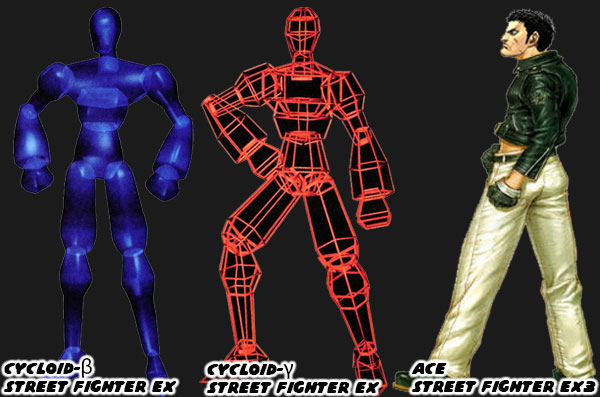
The idea of a cyborg that could copy the moves of the various fighters had been seen in other games, including Mortal Kombat. In the SF universe the first use of this was the Shadowlaw Cyborg Monitor. They were seen in the SFII anime movie, they were stealing the data, and copying the moves of the various masters. These cyborgs were actually playable on the Japanese Saturn, and Playstation consoles with Street Fighter II: The Interactive Movie. Audiences could take control of the cyborg after a prompt, and try to defeat Ryu in order to steal his moves. This sort of character would evolve in the Street Fighter EX series by ARIKA. There were two humanoid robots called Cycloids; Beta, and Gamma respectively. They each had special attacks from roughly half of the cast. Between the two they could perform all the special attacks from the masters. The evolved version of this character became ACE, and players could choose which moves he would be able to copy.
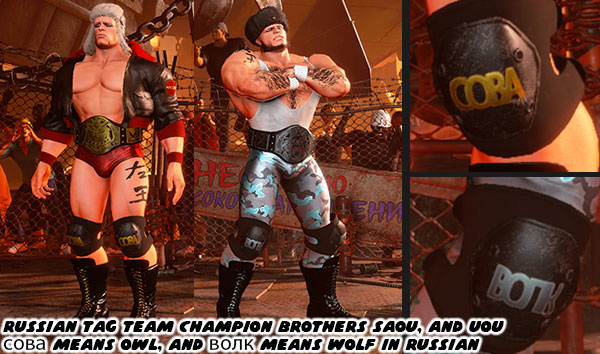
Copy Fighters, and Cycloids weren’t the only way to get a lighter version of a boss fight. Street Fighter 6 had understudies for several of the masters. They had the moves, range, and strategy of their masters. The only lacked the stamina, and more advanced combo attacks of the main SF roster. For example Zangief was established as a pro wrestler. Arguably he was the greatest pro wrestler in the entire SF universe. This didn’t mean he was the only one. The game introduced a pair of tag team wrestlers. They were Russian brothers named Saou, and Uou. One wore the championship belt with an owl mascot, and the other with a wolf. The two shared lessons from Zangief with the player. They could also be challenged for a match.
There were two other NPCs that were crucial to the story mode. Bosch, your friendly rival introduced in the story mode, had stolen money from the Mad Gear gang. In order to make amends you had to team up with Mad Gear, look for recruits, and fight against the Crows. The leader of the Crows was a punk named Rudra. It turned out that he was an understudy of Dhalsim, who had run away from the temple many years prior. He saw that kids were suffering, and being abandoned on the street. Instead of meditating about the problem he figured had a duty to act. So he would round them up, and teach them how to survive. Despite his punk looks he was a noble character in many regards. I think that was the reason why his abilities developed greatly with Dhalsim as his master. In typical SF6 design, nothing was put into the game by accident. The name Rudra actually had multiple meanings in Hindi, including he "who eradicates problems from their roots".
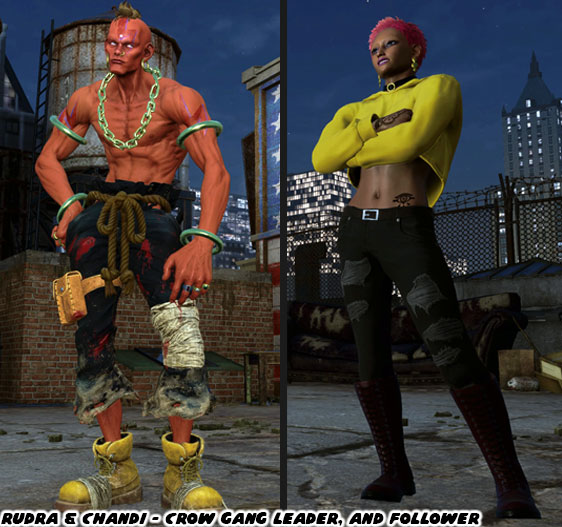
Rudra was joined at the hip by Chandi. The long-suffering Crows recruit that was doing everything in her power to get senpai to notice her. The writing, and personalities of the two characters came through clearly in the World Tour. Rudra was aloof, and disinterested in everything, but especially in society. Chandi was a sort of opposite. She had a bubbly personality, and earnestly believed in her leader. They easily had my favorite dynamic in the title. As with Rudra her name was important as well. Chandi or Chandika was a Hindu deity. She was a powerful form of Mahadevi (the supreme goddess) who manifested to destroy evil. Both of the characters may have been involved in gangs, but they had a noble purpose. This was opposed to the Mad Gear who just wanted to take back control of the streets, and the city.
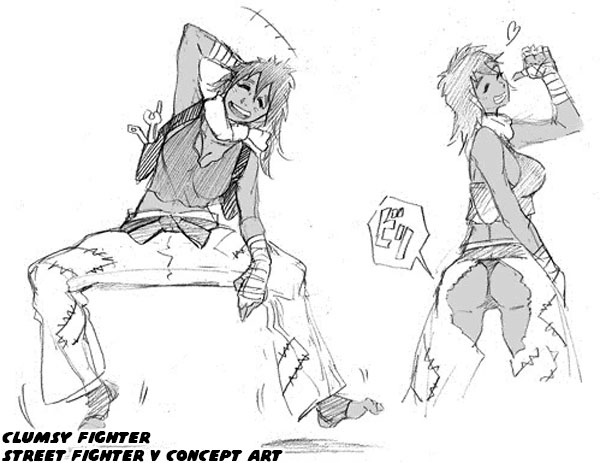
I believe that the roots for the characters had actually been planted many years earlier. During the planning stages of Street Fighter V one of the character concepts was called the Clumsy Fighter. She was a girl wearing torn clothing that managed to stumble her way through a fight. She carried a bag with wrenches, and other tools that she could use to her advantage. I could imagine the SF6 team, which also worked on SFV were going through their unused concepts, and being influenced by the tattered clothing, and carefree attitude of this girl. It was also possible that the idea of NPCs in SF6 throwing wrenches came from this concept character. Or it could have come from Pupa Salgueiro from the Rage of Dragons. That young lady also fought with a wrench in an earlier rival studio game.
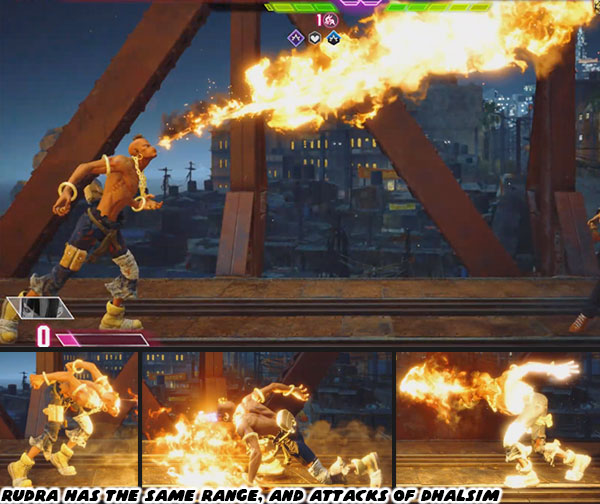
If you were to tell me a few years ago that there would be a new stretchy-limbed Indian in SF6 then I would have scoffed at the idea. If you would have told me that the character was better developed, and presented than Dhalsim then I would have said it was impossible. Yet in the end I absolutely loved the character. I would go so far as to say I enjoyed his design more than all the new SF characters. To be fair Kimberly, and Marisa had some amazing personalities that shone through their animations. There were so many fantastic elements layered over the punk that it wasn’t fair that he would be an NPC opponent. For example take a look at the little details like his mohawk, and the paint on his head. At first glance it looked like the red stripe on Dhalsim’s forehead. However it was painted in a lightning bolt shape, falling over his left eye. This conjured up images of Ziggy Stardust the stage character created by rock icon David Bowie. He also wore a lot of jewelry. His nose, and ears were pierced with gold rings, he sported a gold chain, and large gold bands on his upper arm, and wrists, plus gold rings on his fingers. There hadn’t been this much flash on a punk since Birdie in SFZero.
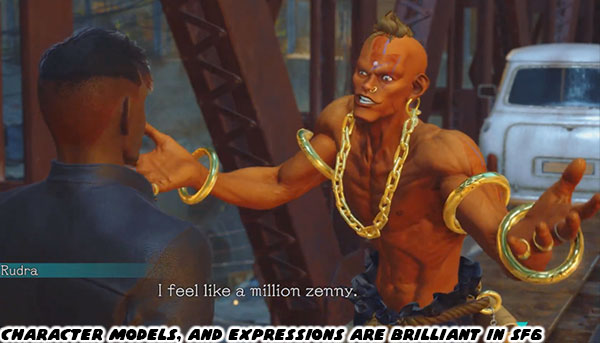
Dhalsim was much more subtle in design, and personality. His necklace was made of rope, and his bracelets were metal, I wouldn’t even say they were silver. He was much more humble by comparison. To be fair Rudra was literally cut from the same cloth. His clothes were tattered, and torn. Athletic tape was holding his pants, and boots together. These were the modern equivalent of the rags that Dhalsim wore when he was doing his Prāyaścitta or penance. I could easily imagine Dhalsim being retired, and having Rudra return to fill that role in future sequels. I would frankly welcome that.
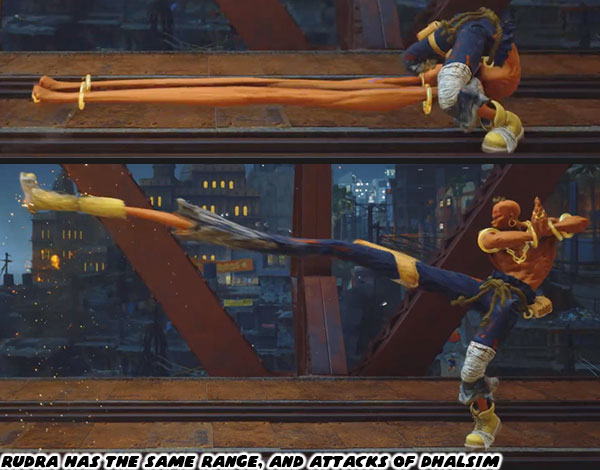
If I had one complaint about Dhalsim, or Rudra it would be with how their powers were represented. Previously it made sense that Dhalsim could only stretch his limbs on direct strikes. You could imagine that he could dislocate his joins, and throw a punch, or kick straight forward, and back. However in SFV, and SF6 he seems to be made completely out of rubber. He would contort himself in all sorts of positions, even while throwing simple attacks. There was no regard for his bone structure, muscles, or tendons. As if he were Plastic Man, or Mr. Fantastic from the comic books. The thing was that this type of character had already been done in SFIII. His name was Necro.
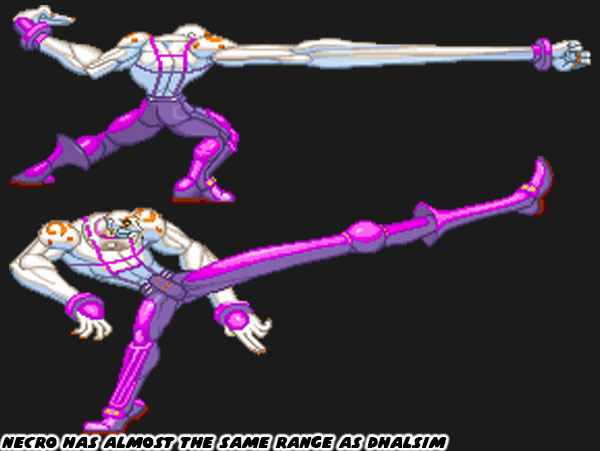
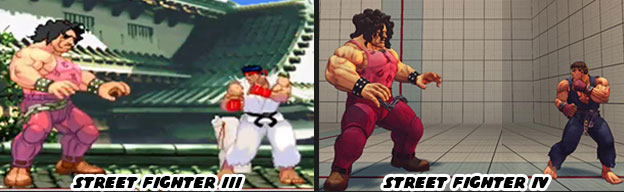
Street Fighter III Producer Tomoshi Sadamoto, and designers Yasuhiro Seto, Tomonori Ohmura, and Obata Shinichiro did their best to follow in the footsteps of the previous teams. Their goal was to create an entire new library of characters. They didn’t want to bring back any of the previous World Warriors, except for Ken, and Ryu. They wanted to explore new styles of fighting, and create new archetypes. Unfortunately for them people were looking for new characters that played exactly like old characters. They saw the stretchy Necro, and assumed he was the new Dhalsim. In a way he was. He had almost the same range, and his fire special attacks were replaced with electricity. But then if you dug deeper you realized this character did not employ the same strategies. His setups, his combos, and special attacks were uniquely his own.
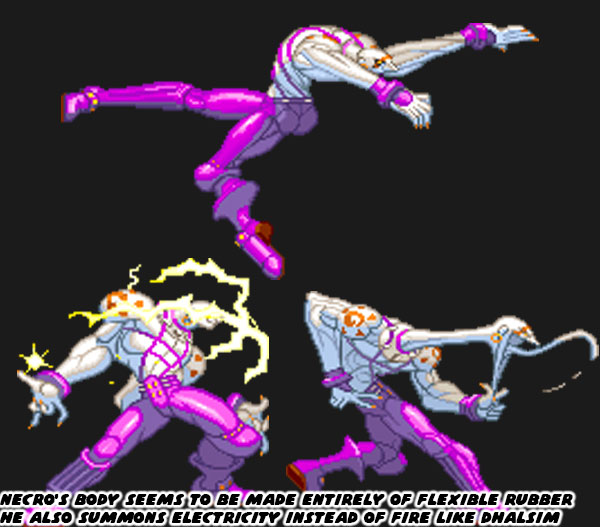
The other thing about Necro was that his skin, bones, muscles, and tissue were rubberized. He had been experimented on by Gill, and his Illuminati as part of the G-Project. They were trying to create the ultimate soldier, someone that was impossible to injure. Necro didn’t look quite human. His pupils were gone, his skin pigment was gone. The melanin was replaced instead by a light lavender. The fighter could stretch his face as if it was made of putty. He could twist his torso, arms, and legs past where they would normally break. He seemed impervious to any damage no matter how much he twisted himself up. Capcom shared the earliest designs for Necro in their arcade Secret Files. He was originally proposed to be an android.
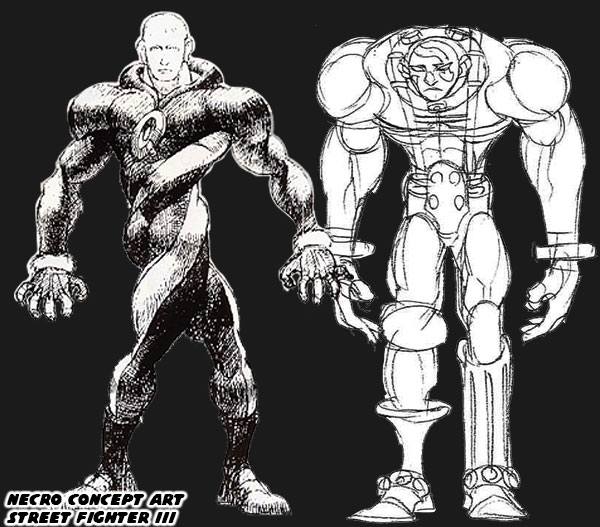
Other synthetic lifeforms were created following the Necro experiments, including the shape-shifting characters Eleven, and Twelve. It made sense for Necro to be more flexible than humanly possible given that had been genetically modified. All of that stretching, and flexibility worked in the context of his origins. I don’t think those things should have been applied to Dhalsim in SF6. But that was a minor gripe in an otherwise fantastic game. Thanks to Copy Fighter, Saou, Uou, and Rudra audiences could get practice fighting light versions of the SF masters while in the middle of the story mode. Speaking of which. All of the time spent traveling the globe, and Metro City meant that you were going to compete as an amateur in the Metro City Fighting Tournament. It would be a test of whether or not you had mastered everything that had happened up until that point. We will look at the next chapter of creating this experience in the next blog. I hope to see you back for the next entry. If you are a long time fan of Final Fight, or Street Fighter then I would like to hear your impressions of SF6. If you have never played any game previously then tell me your experiences in the comments section please. As always if you would like to sponsor me please visit my Patreon page and consider donating each month, even as little as $1 would help make better blogs and even podcasts!
follow the Street Writer on Patreon!

Wednesday, August 30, 2023

Street Fighter 6: A master class in game design, part 14

The Street Fighter 6 senior team; director Takayuki Nakayama, producers Kazuhiro Tsuchiya, and Shuhei Matsumoto, and designer Yusuke Hashimoto had brought the franchise into the 21st century. This was not only from a technical standpoint, but in addressing the ugly roots of some of their characters. In the previous blog I mentioned how the studio had put progressive ideas of gender representation, and fluidity into the series through characters designs, and avatar options. As I was working through the World Tour I told my family that this game felt like it was fixing a lot of old issues. That the franchise was no longer going to perpetuate some old stereotypes, even if the fans expected them to. Let’s go back in time, and look at how the Street Fighter II designers approached the original lineup.

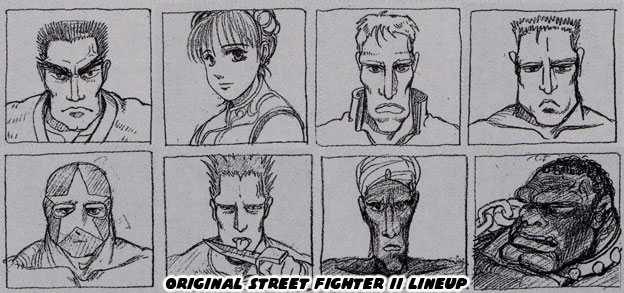
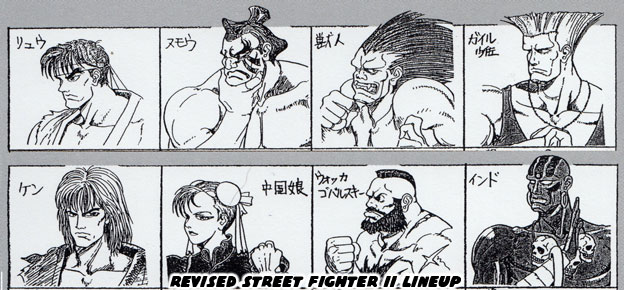
I had written a lot about the concept characters previously on the blog. Including the actual fighters like Yoshiji Soeno who influenced the creation of Sakurada Gashou. Sakurada was actually going to be the focus of SFII instead of Ryu. Thankfully the team did a lot of revision after the initial lineup. Of course if you didn’t know about the rough draft you were probably looking at the dark-skinned characters posted above. If you had time you could read about Anabebe, and the roots of Blanka’s racist origins. You could also read about the kung-fu cinema origins of Dhalsim on an earlier blog. Thankfully the designers knew that these characters might be racist, or at the very least misinformed stereotypical in their origins. They went back to the drawing board, and created what could arguably be seen as the greatest fighting game lineup of all time.

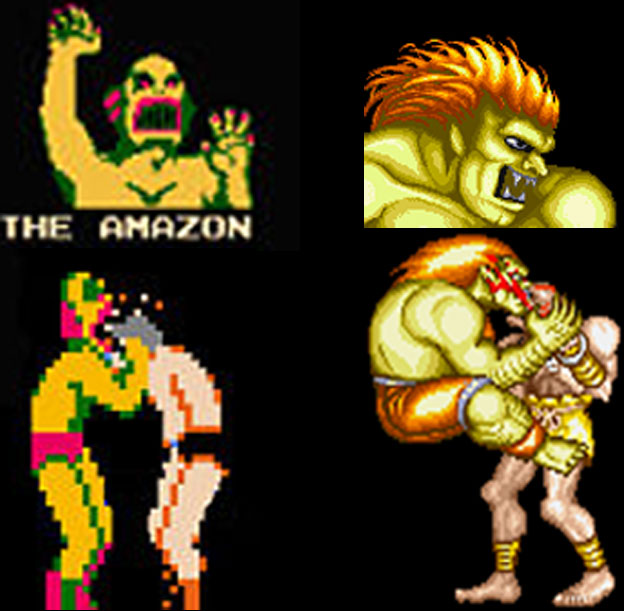
The majority of the cast represented an actual fighting art, such as karate, kung fu, military special ops, and wrestling. Then there were two characters as sort of oddballs. They were designed to add figurative, and literal color to the lineup. In the earliest drafts Blanka was easily the ugliest racist design you could think of. He was a dark skinned, big lipped, collar-wearing wild man. He had been captured by a hunter, and was going to be taken from battle to battle in a cage. This was instead changed to a green skinned wild man from the jungle. The entire roots of that change were because AKIMAN, the designer that gave us Chun-Li, always remembered how The Amazon would bite his wrestler’s face in the old Nintendo Pro Wrestling game. He wanted Blanka to be that same green skinned savage monster in this game. Both Dhalsim, and Blanka became popular with the fans, thanks to how they balanced out the cast, as well as how unique they were to play as. Capcom pretty much didn’t make too many changes to the characters over the next 30 years.

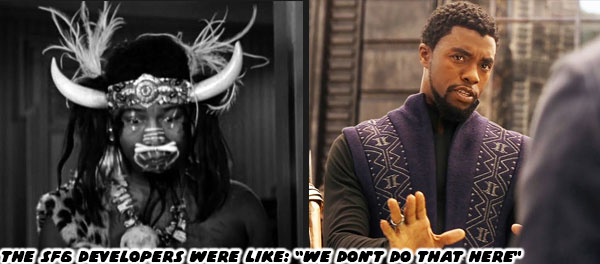
Blanka, and Dhalsim were rooted in some ugly history. People from the jungle, or natives that aided colonizers created the Myth of the Noble Savage. Native dress was often parodied in popular media. I’m talking about costumes made of fur, and feathers with a bone through the actor's nose. These caricatures were seen as harmless like Bumbo the wild man from Borneo, from a 1933 Little Rascal’s film the Kid from Borneo. Bumbo was a cannibal whose only line was "Yum, Yum Eat-Em-Up!" That ugly stereotype was used for decades in TV, and animation. Now I want you to imagine that you’re a Brown kid, or a Black kid that loves fighting games. At the same time you can’t help but notice that the only colored characters in your favorite games were either weirdos, or villains (M. Bison/Boxer). The community told you no, these characters were positive stereotypes, not negative stereotypes. Blanka, the only Brazilian in the series at the time couldn’t even speak. His game voice was nothing but screeches, and roars. Then Dhalsim’s only lines were “Yoga Fire, Yoga Flame, Yoga, Yoga, Yoga.” It’s fair to say that these characters might as well have been saying "Yum, Yum Eat-Em-Up!"

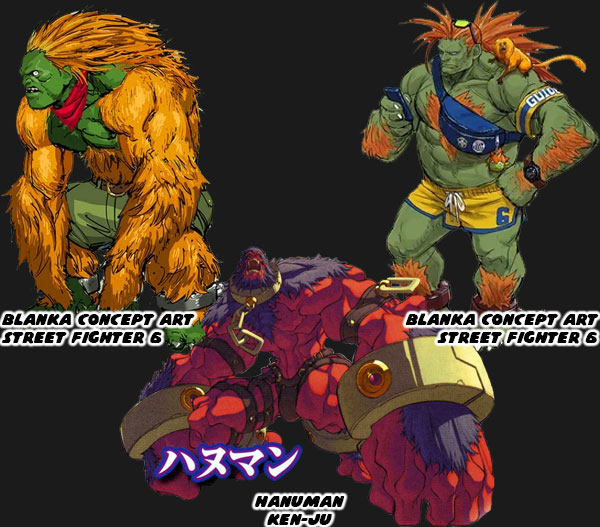
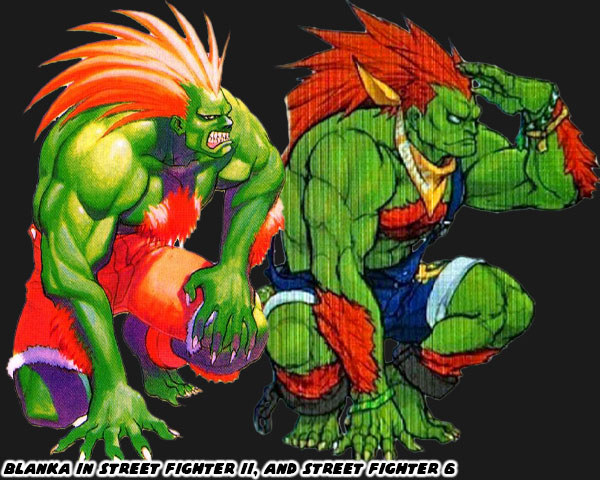
The Street Fighter 6 team took a hard look at these designs, at their roots, and decided that they would no longer pursue those tropes. The studio had essentially two choices when it came to redesigning the oddball characters. They could double-down on their origins, or they could try to soften, and fix the character. Let’s look at Blanka for example. In the early SF6 concept art the team was thinking of making him even more of a monster. He would be covered with even more orange fur, looking like a long haired ape, instead of a man. This would have essentially turned him into a lab experiment like Hanuman from the game Ken-Ju. The other would be to have him look, and dress more like a human. He would remain a person with a sort of mutation that had to learn to survive in the jungle. He was aware that he was different from regular people, but was eager to make them see past that, and embrace the jungle for its beauty. The SF6 art team went with the second choice, and turned Blanka into a budding tour guide filled with childlike wonder.

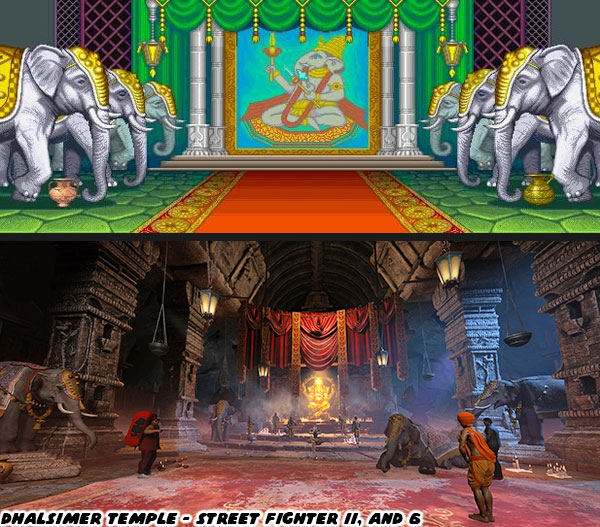
It was a good start, they did a number of similar things with Dhalsim. The first thing I noticed was his updated stage. In SFII the Dhalsimer Temple was a brightly painted stage with a mural of Ganesha in the background, and elephants in the wings. The updated version in SF6 had essentially recreated the temple, but presented it as how it might look if it actually existed. The colors were much more subdued. There was a statue of Ganesha now at one end of the temple. The tapestries, lanterns, carpets, column reliefs, and elephants looked much more authentic. The art team did not just study graffiti, and tattoo art for the game. They were being mindful of trying to understand, and reproduce the small details from other cultures. This was especially true of places that had a less than positive origin.

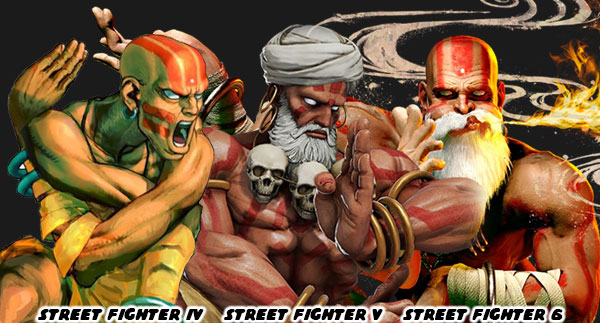
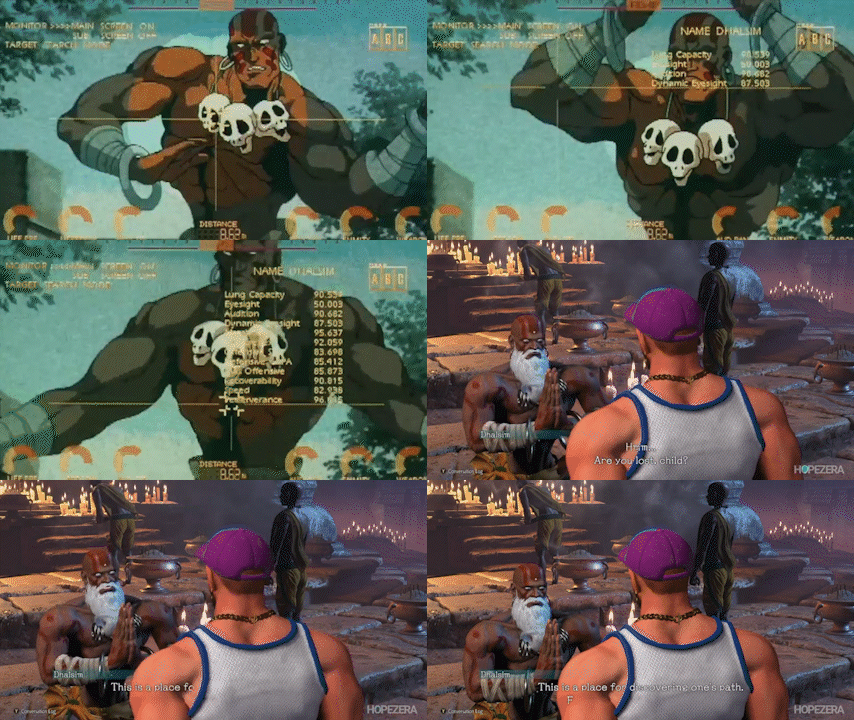
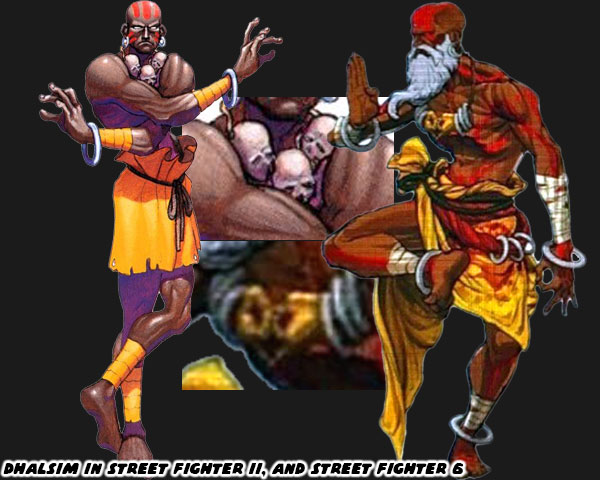
As for Dhalsim the changes applied to the character were more subtle. He was still a stretchy guy that breathed fire. However in every interaction with him, and the NPC visitors in the temple all carefully explained the purpose of yoga. They talked in reverence about the power of mediation, of being mindful, and the search for inner peace. The character hadn’t gone through many redesigns in over 30 years. He looked pretty much unchanged through SFII, SFZero, SFEX, and SFIV. In Street Fighter V his biggest change was his white beard. He was also playable with a turban. He actually wore the head wrap in his intro in SFZero, but would pull it off before the match started. Not all Hindus wore a turban, but at the same time it was a little disrespectful to have him toss it aside. In SF6 Dhalsim had a longer beard, and the turban was gone.

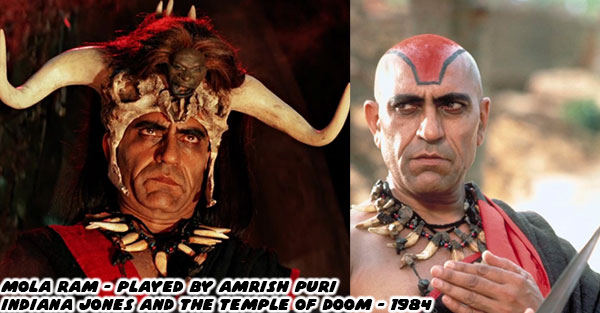
While I had spoken a lot in the past about how Dhalsim was essentially pulled from a villain in the Master of the Flying Guillotine, that only had to do with his stretchy powers. As for how the character came to have a bald head, and red paint. I would point to the character of Mola Ram. The villain of 1984’s most successful film; Indiana Jones and the Temple of Doom. The character was a cult leader, looking to usurp a young maharajah. He lead a group of Thuggee warriors, and was determined to bring his cult to prominence with the power of three sacred lingam stones. He didn’t have any stretchy powers, but he could rip the still beating heart out of a person’s chest, predating the Mortal Kombat fatalities even!

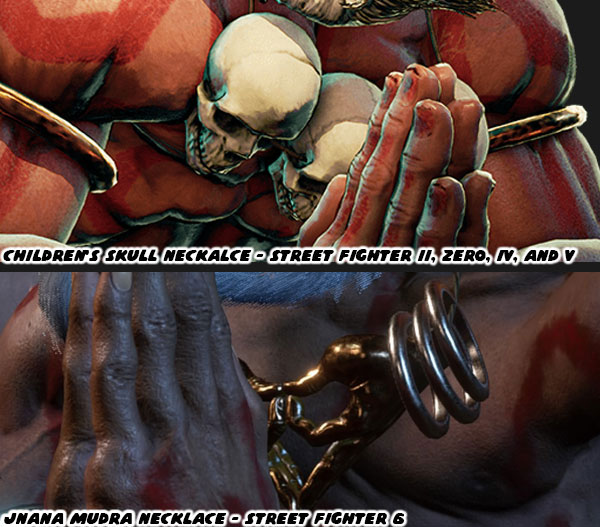
I believe that Capcom took design cues from the previously mentioned films. and managed to make a hero out of them. Unfortunately one of the ugliest elements in his design was the necklace that he wore through the past 30 years. There were three small skulls on a simple rope necklace. Dhalsim wore this in a form of penance. These were pulled from children that died in a famine. It was a barbaric design, and somehow it seemed okay for decades. The SF6 team thought that it was time to move past that. The skulls were ditched, and replaced with metal jewelry. There were two hands forming the jnana mudra. The mudra were almost 400 possible hand positions that you could hold during meditation. For example had the hands been inverted it would have been the chin mudra. Each of these hand positions had a purpose, and could have various health benefits. Dhalsim was a teacher, and thus it made sense that the specific mudra was related to knowledge. It could be used to invoke wisdom, peace and clear communication.

Getting rid of the skulls was a small gesture, an attempt by the designers to make up for past mistakes. Possibly earn the respect of their audience. It was the least they could do, but definitely a welcome change. The developers were also demonstrating that they were paying attention to the smallest details of the international community. Some might consider it another throwaway detail, but how many of you noticed that when Dhalsim spoke in the World Tour he would perform an Indian head wobble? I would contend that this was another deliberate choice. It was meant to rectify an earlier mistake. In the Street Fighter II anime movie there was a three second shot of Dhalsim performing a head shake while fighting E. Honda. Those three seconds were actually my favorite shot in the entire movie.

As nice as it was the head shake was not correct for the character. The way he moved his head from side to side in the anime was based on traditional Balinese dance. There was some cultural cross pollination between India, and Bali, however their customary dances were quite unique. It looked like the SF6 team bothered to study the differences, and make sure that they approached Dhalsim with much more respect this time around. Could the same thing be said of the other dark-skinned characters returning in SF6? We will look at how in the next blog. I hope to see you back for the next entry. If you are a long time fan of Final Fight, or Street Fighter then I would like to hear your impressions of SF6. If you have never played any game previously then tell me your experiences in the comments section please. As always if you would like to sponsor me please visit my Patreon page and consider donating each month, even as little as $1 would help make better blogs and even podcasts!
follow the Street Writer on Patreon!

Friday, November 18, 2022

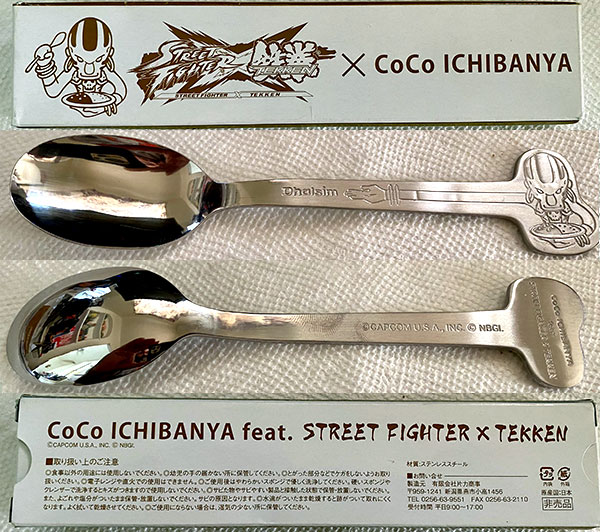
Is Dhalsim a fan of curry? A rare Street Fighter collectable from Japan turns up on my birthday!

I got tons of goodies for my bday. Games, comics, toys, and lots of Disney stuff, including Oswald the Lucky Rabbit. My favorite gift is something that’s been on my radar for almost a decade. Capcom had a cross promotion with CoCo Ichibanya to celebrate the release of Street Fighter X Tekken. They sold a limited number of spoons featuring the stretchy armed Dhalsim. The restaurant serves Japanese style curry in case you haven't heard of it. It's super tasty if you ever get a chance to visit it.

Dhalsim is Indian as you may know, and seen eating a plate of curry on the spoon. When the promotion started I asked the manager at the Torrance California location if they would be getting any. He gave me the strangest look. I never forgot about the spoon but it would only pop up intermittently on bidding sites. Anyhow, it’s finally off the checklist. I’ll keep it with my official Charlie Nash dog tags, Chun-Li bracelet, and Balrog/Claw mask. Do you have any odd Street Fighter collectables? I'd like to hear about it in the comments section. As always if you would like to sponsor me please visit my Patreon page and consider donating each month, even as little as $1 would help make better blogs and even podcasts!
follow the Street Writer on Patreon!

Thursday, June 23, 2022

Dhalsim, and Blanka, the return of the strange characters in Street Fighter 6

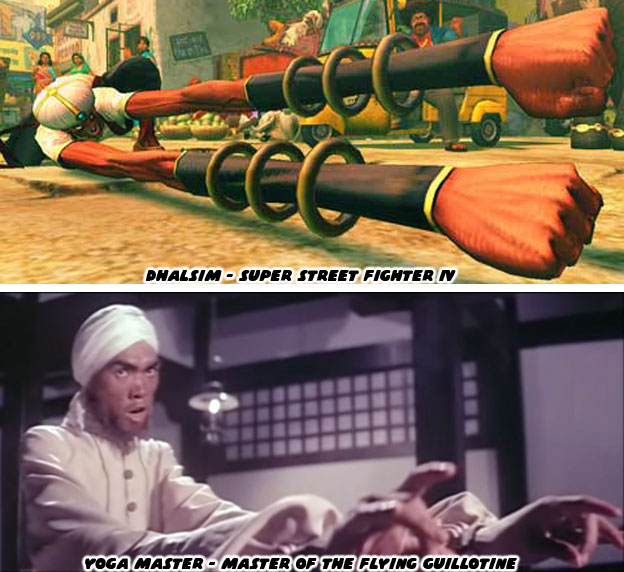
Yesterday we talked about JP the new character in Street Fighter 6. I mentioned that his design was odd on purpose. Normally fighting game characters look like they represent a certain martial art. Whether it's Ryu wearing a karate gi, or Zangief wearing wrestling trunks, it's very easy to see what form they reflect. JP was wearing an orange suit, and white cape. These were not things that defined any named style. The Street Fighter franchise has always relied on some non-mainstream styles, and characters. Even in the original Street Fighter the first two characters that Ken, and Ryu fought were a monk, and a ninja. This concept became more extreme in SFII, especially through the characters of Dhalsim, and Blanka. Dhalsim was based on a stretchy yoga master from the film The Master of the Flying Guillotine. Blanka was a wild man inspired by the green-skinned "Amazon" from Nintendo Pro Wrestling. The two outliers helped create a memorable game. Often times I think that studios forget that fighting games work best when they feature at least one cast member that is an oddball. Dhalsim, and Blanka's look has changed a little through the years, and when it did I think it was for the better. Dhalsim went from wearing rags, a necklace laced with the skulls of children, and a rope belt to portray his humility, and penance. Now he is wearing a necklace showing the Gyan Mudra, or meditating hand positions. He also has the robes of a holy man, or mystic. Dhalsim even went from a freshly shaven bald man, to a bearded man, sporting a turban. Clearly time had passed for the character, and Capcom was interested in capturing details from Indian culture rather than make stuff up.

The studio created both fighters from stereotypes, but it was good to see them move away from adding more problematic choices. More important, they started stripping away elements without betraying the spirit of the character. The fact that they were trying to be more inclusive by adding more women, and minority characters in SF6 could be seen as proof that they had learned from the past. There were new people in charge of the franchise, and they were bringing it into the new millennium. The changes applied to Blanka were subtle, but just as important. His original design saw him in orange shorts, and shackles. This was a holdover from the time where he was literally a fighting slave. The beast man from Brazil was reunited with his mother at the end of SFII, and was reintroduced to society. He now wears jean overalls, and a bandana. Clearly he still prefers the outdoors, but no longer looks like he escaped from the circus. I’m not sure why Blanka would keep the ankle shackles, even if they were a gift from his mother. But that’s a minor complaint. These were small changes to the characters, but added much more dimension to them at the same time.

I am eager to see how the duo of odd characters have grown. What are their moves, and special abilities like now? What is their purpose in the latest story? I have plenty of questions, but no answers from Capcom. In the next few months I’m sure a lot more will be revealed. What do you think about the updated looks of Dhalsim, and Blanka? Is Capcom going in the right direction, or would you rather them try something different? Please let me know in the comments section. If you would like to sponsor me please visit my Patreon page and consider donating each month, even as little as $1 would help make better blogs and even podcasts!
follow the Street Writer on Patreon!

Friday, June 1, 2018

30 Years of Street Fighter, 30 Days of Characters; #30


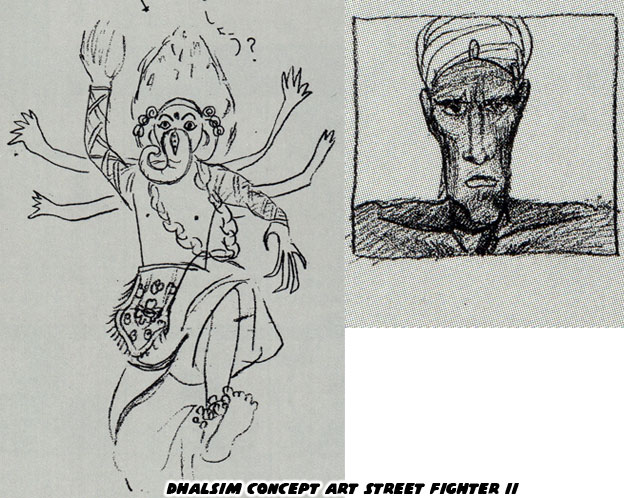
Over the next 30 days I will be celebrating 30 characters from the Street Fighter universe. This will not be a ranking of who I think is the most powerful, or who is the best in canon. Instead it will be a look at 30 influential characters and why I find them interesting. First up is one of the most unusual characters in the library. Dhalsim started off like many other Street Fighter II designs. He was a trope based on a certain nationality. In this case he represented the mystical fighter from India, originally known as the Great Tiger.


The character was alarmingly racist with his many arms and Ganesha costume. Even the name Great Tiger was a call back to an earlier trope were citizens of a certain country were identified by the local animals. Indians were sometimes identified with the animals native to South Asia; elephants, tigers, cobras, etc. The designers at Capcom went back to the drawing board. They wanted to make the character really stand out and not necessarily by relying too heavily on those caricatures. That was part of the reason they left the turban behind. One of the ways they improved on the Great Tiger was by recalling a fantastic villain from the film Master of the Flying Guillotine. In it there was an Indian character that could stretch his limbs. This film and the earlier One Armed Boxer helped shape the development of the Street Fighter cast. In pop culture some Indians were said to have had mystical powers. A few of them were the gatekeepers to ancient magics. This stereotype was repeated in film as Chinese actors wore brown face and pretended to be Indians that could teleport, stretch their limbs and even be impervious to stabs. The stereotypes about Indians were ugly but they became ingrained in pop culture.


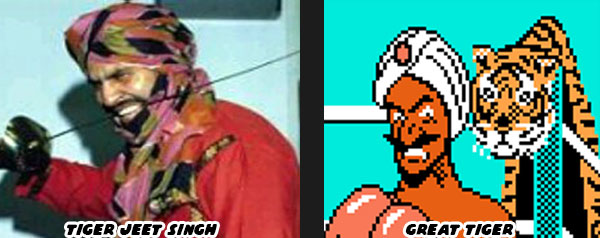
If there was a real person that helped cement the idea of a fighting Indian in pop culture it would be professional wrestler Jagjeet Singh Hans better known as Tiger Jeet Singh. The Canadian-Indian started wrestling the '60s and developed a memorable gimmick that carried him for decades. Tiger Singh was never a technical wrestler, he didn't perform power moves or take risks by leaping off the top rope. Instead Singh was known for having violent matches that ended with lots of blood. He would storm the ring while swinging a sword over his head, kicking chairs, pushing audience members around and shouting like a madman. He began wrestling in Japan in the 1970's. The developers at Capcom and other studios were incorporating elements from the things they grew up with in their games. Popular comics, cartoons, movie and television characters from the '70s influenced the designs in the '80s. The '80s influenced the '90s and so on. An example of a character that was not far removed from trope was The Great Tiger. The Indian boxer wore a tiger-skinned robe, a jeweled turban and had a magic ability that allowed him to teleport around the ring. This character was featured in the arcade version of Super Punch Out!! (1984) and the NES console version of Punch-Out!! (1987).


Capcom started with a turbaned fighter not far removed from Tiger Singh but then stripped away the unnecessary elements. They ditched the turban, the clothing and even facial hair. When they were done the character looked more like a beggar than a brawler. Dhalsim worked because he didn't look like a traditional fighter. It was easy to think the rail-thin, half-naked man didn't stand a chance in a tournament. Then you saw how far his range was and how he even breathed fire. Suddenly he became very interesting. Players wanted to find out more. Capcom decided that he was a yogi that was humbled by tragedies in the past. That was when he gave up most of his worldly possessions and shaved his head. He carries the burden of his people and fights to give them a better life. Dhalsim is far from a perfect character in terms of representation but he is certainly a memorable one. That is why I am bringing him up for the 30th Anniversary of Street Fighter. As always if you enjoyed this blog and would like to sponsor me please visit my Patreon page and consider donating each month, even as little as $1 would help make better blogs and even podcasts!

 follow the Street Writer on Patreon!

Tuesday, August 1, 2017

A look at the big man, where did the Capcom giants come from? Part 2...

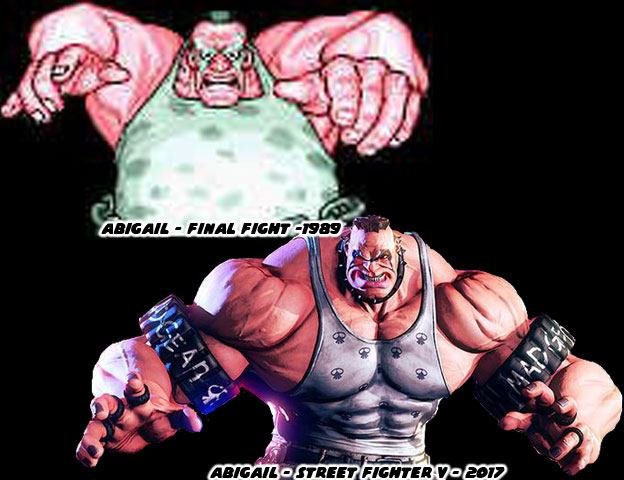
Abigail, a character introduced in Season 2 of Street Fighter V had originally appeared in Final Fight, an arcade hit from 1989. The character was a boss in Mad Gear gang, a group made up of the biggest, meanest criminals from Metro City. Abigail was gigantic, even by Final Fight standards which had many characters above 6 and 7-feet in height. In the Street Fighter universe, where the Final Fight story took place in, he was listed at 8' tall and 584 lbs. He was the largest figure in the series and among the largest human character in any fighting game. The tradition of over-sized, muscular characters in fighting games went back to the start of the genre. The third boss in the 1984 Irem classic Kung Fu Master was a dark skinned character named Giant, he was a full head and shoulders taller than Thomas the hero. The trope of gigantic villains in a fighting game really took off however with the cast featured in the Technos series Double Dragon. There were massive villains in the original and sequel; named Burnov, Bolo, Oharra and Abore. They were capable of lifting players up with one hand and even punching down walls with their bare fists. The bad guy that audiences remember most was a bodybuilder-type character called Abobo.


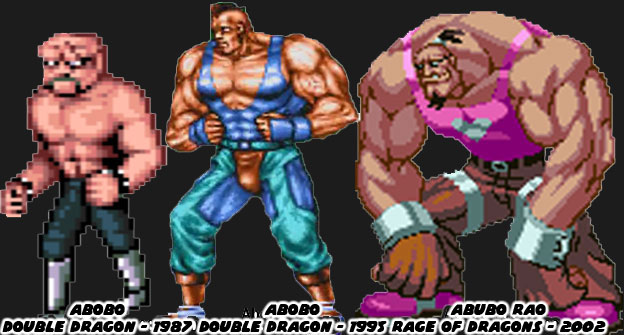
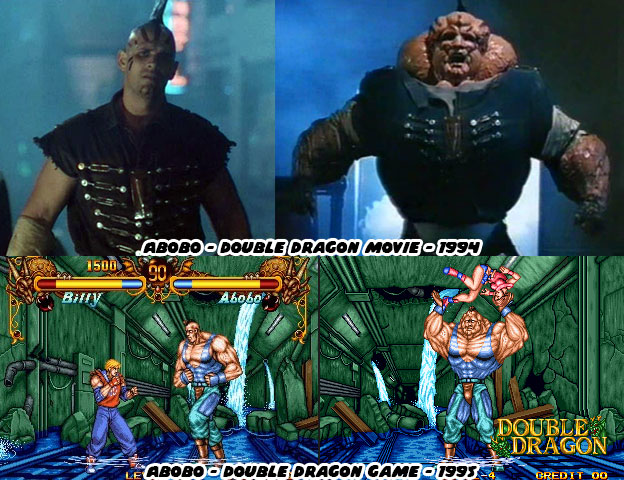
Abobo actually changed during the various sequels and remakes of the series. He was a generic bruiser in the original 1987 game. His face paint and spiked wrist guards made him appear like a heel or bad guy wrestler. Abobo was far more fleshed out when the studio created a 2D fighting game in 1995. This newer version of Abobo was more proportional to the rest of the cast and was officially listed at 7' 2" and 336 lbs. He was still huge but nowhere near as big as the character's final appearance. In 2002 the Mexican developer EVOGA created an unlicensed Double Dragon game, which they called Rage of the Dragons, an homage to the series. They avoided legal issues by slightly changing the names of the main characters. The bruiser in this game was called Abubo instead of Abobo. This character was on the absolute extreme end of character designs. He was now 8-feet tall, actually 8.03, and 640 lbs. making him a fraction bigger than Abigail. His arms were so huge that they hung to the ground. This type of large upper half / small lower half character designs had actually evolved through the '90s and were almost commonplace post 2000. I had written a history of these "top heavy" designs when Gigas was introduced in Tekken 7. Abubo and Abobo had set a standard, or rather limit, on what worked when it came to fighting character designs. Believe it or not in the '95 version of Double Dragon the character could grow even larger and more muscular.


The "transforming" version of Abobo and the updated cast were based on the 1994 Double Dragon film. In the movie Abobo was a typical punk bad guy. He was already big and dumb but Koga Shuko, the main villain in the film, turned him into a mutated freak for failing to recover an artifact. This weirdly swollen character had muscles where muscles didn't exist. He was literally swollen where his glands, bones, cartridge and neck should have been. The absurdity of his updated look was incorporated into the game where he could temporarily "buff up" while performing certain moves. The movie was absolutely horrid and had nothing in common with the game, except for the names of the characters. It was the first and hopefully last film directed by James Yukich, whom had probably never even played the title. Interestingly enough the story was co-written by Paul Dini (The Batman Animated Series and co-creator of Harley Quinn) who has been one of the greatest comic and cartoon writers of a generation. I guess something was lost in translation when the screenwriters adapted his story. But I digress, character transformations were not a new idea in games, cartoons or comics. The Incredible Hulk for example turned from a small scientist into a thousand-pound green skinned monster. A more contemporary version of the transforming villain was seen with the character Bane.


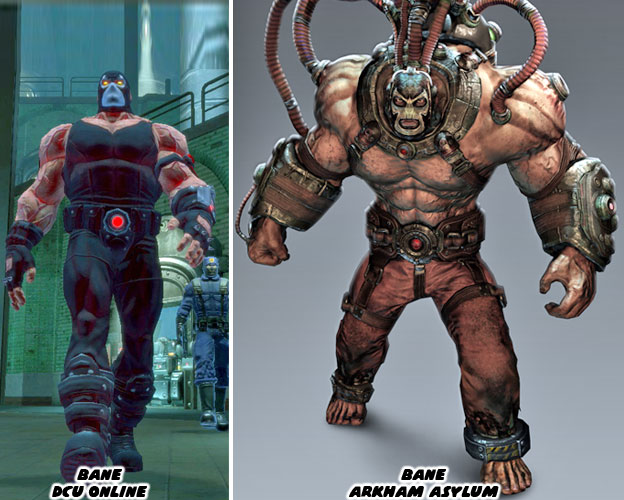
Bane debuted as a Batman villain in 1993. He was an assassin that was trained in the fighting arts and was a perfect rival to Batman. The thing that made him a superior opponent was a synthetic drug, similar to adrenaline, called Venom. It increased his speed, reflexes, strength and durability. He could turn on a pump filled with Venom whenever he wanted to boost his fighting prowess. When the character originally appeared he was muscular but realistic. He had a bodybuilder physique and was not as deformed as Abobo. A really good 3D representation of his original design appeared in DCU Online, the DC Comics online multiplayer game (MMO). However as comic book aesthetics changed, and as different writers and artists took over, the look and purpose of Bane changed as well. In less than 20 years he went from a realistic physique to a grossly disproportionate one. To see how far the character had changed look at the version that was featured in the Batman Arkham games. This new Bane had a gross physique. Not only that but every iteration of Bane seemed to become dumber and dumber. It wasn't long until he was nothing more than a typical brute that used his muscles rather than technique to beat people. Abigail was sliding into modern Bane territory but for over 30 years the designers at Capcom managed to avoid this trope. How did they do it?


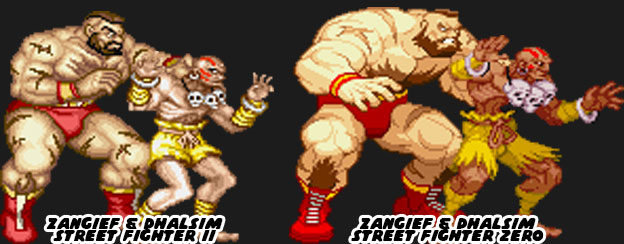
Capcom developed a template copied hundreds of times over. The idea for Street Fighter was simple, different martial arts masters fighting against each other to prove who was the best. The designers created a library of characters that reflected different nationalities and by default the different fighting arts. One of the reasons the series stood out was because of how unique the character designs looked compared to other games. The artists at Capcom, people like AKIMAN, Shoei and SENSEI created figures that were not quite manga, not quite anime, and not even comic book in appearance. They were instead something in between the Japanese and USA aesthetics. These archetypes worked incredibly well and they helped launch a franchise. The characters were diverse in size, color and body type. Their appearance helped reinforce a particular fighting style. These basic concepts were used and expanded upon by other studios as well. Look at a character like Dhalsim, a slender Yoga practitioner that stood 5' 9" and weighed about 100 lbs. Compare him to the burly Zangief, a 7-foot 400 lbs wrestler. In Street Fighter II the characters had good contrast. When the studio created a new sequel they went with a different designer. Bengus wanted to keep the scale of the characters similar but he used artistic license to exaggerate their proportions. Zangief and Dhalsim had the same height difference in Street Fighter Zero, but Bengus made Zangief much wider, especially on his shoulders, arms and back. He also cut Dhalsim's waist in half, making him even more gaunt. This contrast was more profound. It looked fantastic on screen but did not break the scale of the franchise. The exaggerated proportions ended up influencing a generation of game designers in Japan and even comic book artists in the USA.


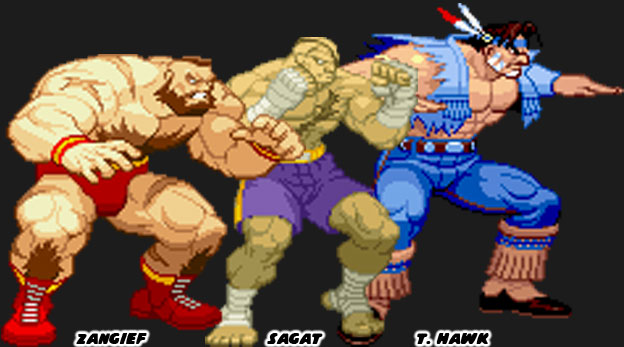
The proportions developed by Bengus were used by Edayan, Kinu and Ikeno in the other Capcom games from that era. In doing so the giant characters appeared far more menacing when compared to the rest of the lineup. The Street Fighter library had always worked within a certain range of body types. Every character had to be muscular, the sumo wrestler E. Honda had an enormous belly but his arms and chest were well defined. Dhalsim was thin but his muscles had definition as well. As the characters got taller they preserved those same basic rules. Zangief was considered a standard for giant characters in the series but that concept was flexible. Sagat was 7' 4", a few inches taller and slightly leaner than Zangief. Sagat was the original boss in Street Fighter and was a character of distinction in both Street Fighter II and Street Fighter Zero. He stood a head above every other character and did a great job of capturing the boss feel. Yet even Sagat would be replaced as the biggest fighter. T. Hawk was a native character, at 7' 7" he was on the edge of the character sizes that worked within the continuity of the series. Moreover his height was about the limit for any giant character in a fighter. There was actually some real world precedence for this.


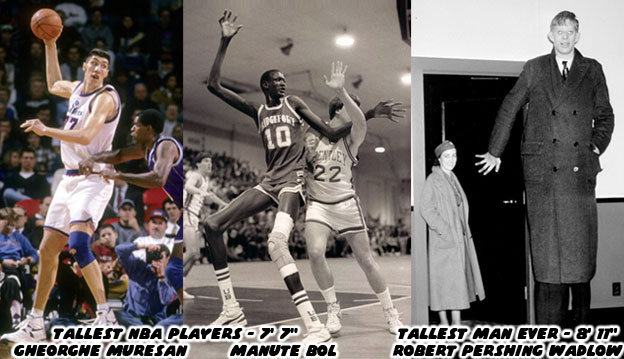
Professional NBA basketball players were 6' 7" on average with centers being around 6' 10" to 6' 11". Teams were constantly on the hunt for athletic 7-footers. These people represented less than .00004% of the population, and an even smaller fraction of those were healthy and coordinated enough to play at a professional level. The tallest of these men were Shawn Bradley standing 7' 6", Manute Bol at 7' 7" and Gheorghe Muresan also at 7' 7". Think about how imposing it was for T. Hawk to be created at the same height as the biggest NBA players. When you saw these players on TV the height differences between someone 6' 6" and 6' 10" looked much greater. Keep height to weight ratio in mind. A bulky tall person did not appear as tall as a lean person at the same height. Most basketball players were lean because it allowed them greater flexibility and speed. On television thinner people looked much taller than their opponents even though the actual height difference was only an inch or two. In a sport like American football tall players were very muscular. Because of this it was harder to spot the height differences on television.

Most fighting games have characters with a similar height to weight ratio. When you look at the height differences between Zangief, Sagat and T. Hawk it doesn't seem like much. Now think about Abigail. At 8 feet his height was very rare but not impossible. There had been taller people in history. The tallest that ever lived, Robert Pershing Wadlow was 8' 11". He would have broken the 9-foot barrier if an infection and compromised immune system didn't end his life at the age of 22. What made Abigail so awkward in appearance was his weight. The character was extremely muscular, almost to the inflated Bane or Abobo proportions. In the original Final Fight Abigail was shaped more like a professional strongman, with a wide gut, rather than a trim bodybuilder physique. This was actually very believable as there were many strongmen and wrestlers throughout history that were tall with that same body type.


The designers at Capcom went overboard with the muscular physiques in Street Fighter IV. I believe it was because the artists were reacting to the trends in Western character designs which favored overly-muscular characters. Look at how big comic book characters were today. When presented as 3D models rather than 2D sprites the extra bulk made the height seem less dramatic. In order to make the differences more noticeable the model heights were exaggerated ever so slightly. Many players did not pick up on the new sizes. When the characters were far apart on the screen most people couldn't tell that the scale was different. But as they got closer it became obvious. Take the character Hugo for example. The original version featured in Street Fighter III Giant Attack was an updated version of the classic Final Fight character. His height was astounding but proportional to the rest of the cast. Fans of the Final Fight series, and those that remember his cameos in the Street Fighter Zero / Alpha series remember how massive he was and therefor his sprite worked. When the character was created in 3D for Street Fighter IV and also for Street Fighter X Tekken he became bulkier and taller. Players really noticed this change when the character model was close to an opponent.


Abigail was absurdly huge. He looked as wide as he was tall, dwarfing Zangief and the other large characters in the process. He didn't seem to have the same proportions as Hugo or the other giants. That is to say he was missing his neck and shoulders. This made him look cartoonish in appearance. None of the other characters had the same type of physiology. The addition of car tires around his biceps and belt made little to no sense. I understand they were part of his new personae as a scrap yard owner but they were not part of his original costume. The most jarring thing about Abigail's appearance in Street Fighter V was his personality. Abigail went from high-ranking Mad Gear boss, with a genuine fighting ability to an idiot. He retained his temper from Final Fight but everything else was made up. It was embarrassing watching him putting around and making car noises in his introduction and story mode. Both Street Fighter IV and V had played up the silliness of certain characters while making others seem terrifying. Rufus, Hakan, Birdie and F.A.N.G were some of the other goofy / awkward characters added to the series. The director and producer of the series were certainly playing favorites with the cast. I wondered if the studio created a moronic Abigail to make fun of USA fighting game designs. They had given us a mindless Bane because apparently that's what we thought all strong characters should be like. The studio hadn't always treated their giant characters so poorly. In fact they used to treat their legacy characters with a lot more consideration. We'll look at the ways they used to present giants in the next blog. As always if you enjoyed this blog and would like to sponsor me please visit my Patreon page and consider donating each month, even as little as $1 would help make better blogs and even podcasts!
 follow the Street Writer on Patreon!
Friday, December 25, 2015

The Middle Eastern Fighter, building a legacy, part 3...

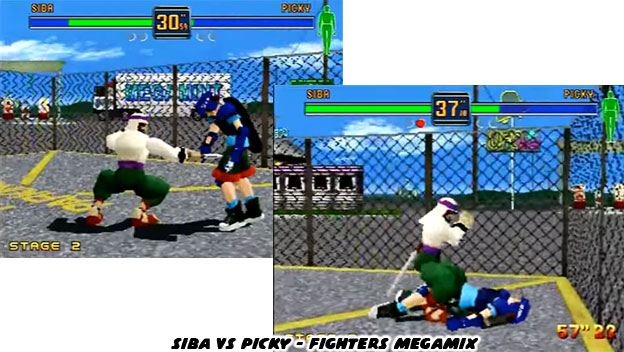
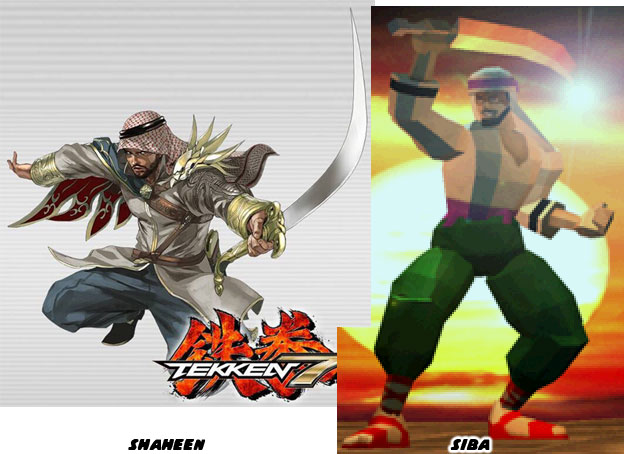
The Middle Eastern fighter had never found his or her groove in the most popular titles. When I heard that there would be one in Street Fighter V I was a bit skeptical. How would this person be presented. Would they also be a fat fire breather with curly-toed shoes? Or would they be something else entirely? I wasn't sure then but I did know that the Arab hadn't really been a major player in the genre. The first 3D fighter from the Middle East that could have been a major star was Siba. The reason I say could-have-been was because he was cut at the last moment from the game Virtua Fighter before it was released in arcades. The character actually appeared in previews for the games circa late 1992 and early 1993, in some test locations and even in early advertising. He was very much a traditional character in that he wore what someone would expect an Arabian fighter to wear from perhaps a century ago. He sported a beard, wore a keffiyeh and brandished a scimitar. The character did not officially debut until Fighter's Megamix in 1996. The Sega Saturn title crossed over characters from Virtua Fighter, Fighting Vipers and even Daytona USA!


It seemed difficult to get accurate Arabian representation in an arcade fighter. At the same time home consoles did not fare any better. Aside from Siba in Fighter’s Megamix there was the character Abdul in Fighter’s Destiny. This was a title exclusive to the Nintendo 64. The console was not really known for their deep 2D or 3D fighting game library. The title from 1998 was developed by Genki, and Opus Corp. In Japan it was known as Fighting Cup. Abdul was a mix of multiple “exotic” elements. Physically he was the chubby, yet muscular character that we had come to expect from Arabian mythology. Turban, vest, genie pants, and curly-toed boots. It was another caricature of Middle Eastern wear. The developers even leaned into his ethnic origins as his full name was Abdul Jabbar. This was a traditional Muslim name which translated to “Servant of the giver / compeller / god.”

The game was not well known outside of the most die-hard console gamers, or fighting game aficionados. It was an average experience at best, with some extremely challenging features. This included a 100 man kumite tournament, and some overpowered hidden bosses. The game did well enough to warrant a sequel in 1999, also for the N64. The game had improved visuals, controls, and animation. Abdul got some adjustments to his outfit. Specifically his feathered turban was replaced with a naqshbandi taj, this was a pointy shaped kufi, or hat worn in many Arab countries. The hats were not only stylish, they were also functional. They could be folded for easy travel. The hats were seen outside of Arab nations, and were often found in Muslim countries such as Turkey. This was where the lack of cultural insight from the developers at Genki, as well as other Japanese studios really stood out. Not all Arabs were Muslim, and vice-versa. Abdul was a Muslim name, however in official canon he was from Mongolia. Around half of the Mongolians identified as Buddhist, while nearly the other half did not consider themselves as religious at all. A very small minority, about 3-4% were Muslim, and those were often people that had Kazakh or Turkish roots.

I was surprised that Abdul did not represent Mongolian Wrestling. The first time that form of fighting appeared in a game was in Fighting Layer. The ARIKA title from 1998 featured a grappler named Jigjid Bartol. He dressed much more like a Mongolian athlete compared to Abdul. His strikes, and grabs were also closer to the actual form of wrestling. Although it could be argued that the developers were trying to give Abdul a stylized version of the wrestling. It was nice to see Genki make the effort to try and connect the Mongolian culture through his stage design. Across the grassy planes we could see many large yurts set up. These tents could be transported for the nomadic people, and were resistant to the elements, and even extreme cold found in the steppes. The little bit of cultural insight to the Mongolians was undone by the official story. Abdul’s occupation was “Mysterious Phantom” which was a fancy way to say street performer. His entire purpose in the Fighting Cup was to buy back a cow which he had sold off for money a long time ago. His attacks were odd, and his victory animation had him gyrating in a sort of dance. It seemed that Japanese developers lacked any sort of cultural awareness. It was as if every attempt to diversify the nationalities of the fighting games always ended up taking shots at some ethnic group.

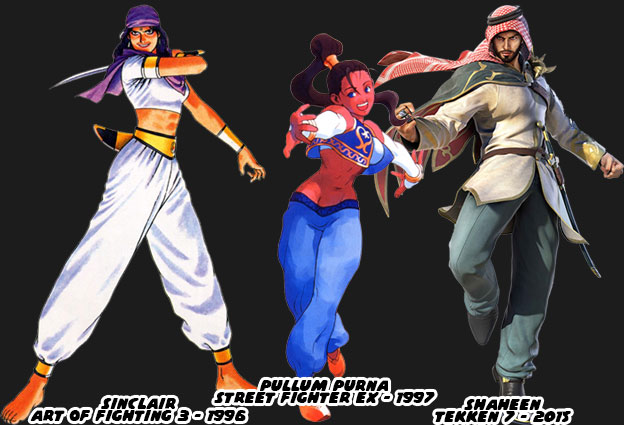
Sega had created the world's first 3D arcade fighter in 1993 and had beaten Namco to the punch by a year. Both studios learned from Capcom and tried to have a diverse lineup in their games. Virtua Fighter featured characters from around the world, although most systems and characters were Asian. Producer Yu Suzuki was trying to make a game that was more accurate to real fighting than what Street Fighter portrayed. Thus the characters were more or less the same size and build with strikes were based on actual systems. Namco's Tekken on the other hand had a mix of characters and abilities that was a mix of realism and fantasy. As if the studio was looking for a balance between Street Fighter and Virtua Fighter's mechanics. Yet Namco did not feature a Middle Eastern character when Tekken came out in 1994. A fighter from that region would not appear until Tekken 7, in 2015. This figure had very similar design to Siba. Although the characters were separated by 20 years the Japanese designers did not put too much effort into Shaheen.


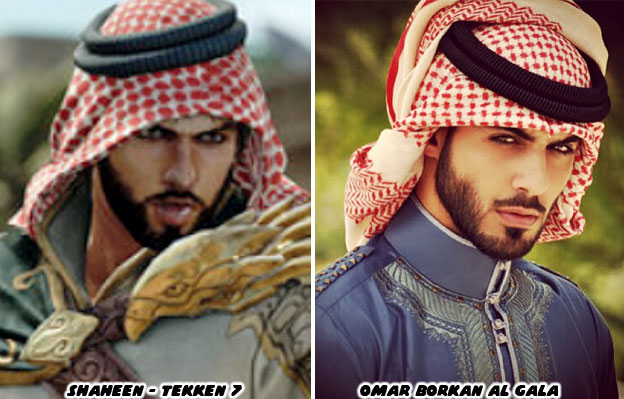
Although to be more accurate, the look of Shaheen was based on a real person. It wasn't a martial arts expert though, not someone like Palestinian Nizar Taleb or Lebanese Walid Kassas. Nor was it a modern MMA fighter like Jordanian Hashem Arkhagha. The person that inspired Shaheen was a model named Omar Borkan Al Gala. This was a man whose good looks were cause for concern. The rumors were that religious clerics in Saudi Arabia were concerned that he was giving women impure thoughts and he had to be deported to Canada. He was a big draw wherever he went and was even a celebrated model in Japan. There was no doubt that some of the team members at Namco remembered this figure.


When it came time to introduce a Middle Eastern fighter into Tekken then they decided he should be based on the popular model. I didn't really have a problem with Shaheen except that he lacked an actual Arab striking art. I was more concerned that in the modern crop of fighting games looks greatly determined how a character would be perceived. If you wanted to state an opinion about a minority you could make them fat and ugly. If you wanted to show favoritism you could make them handsome, or in the case of female character you could sex them up. The concept of beauty was something defined by society. What the west and east saw as attractive differed greatly. I was Mexican and not Middle eastern, not that it mattered because I was brown-skinned and brown-skinned people were always being told what beautiful looked like on TV. Dark skinned people wre rarely seen on TV or in games.


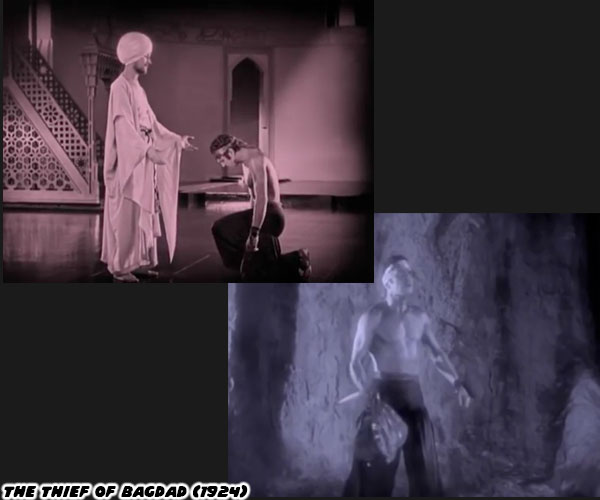
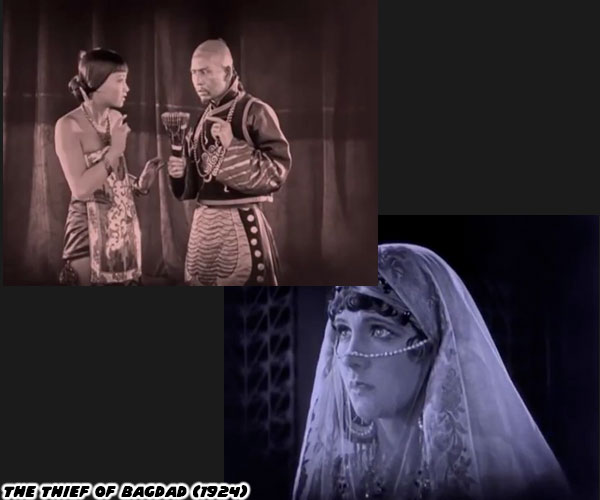
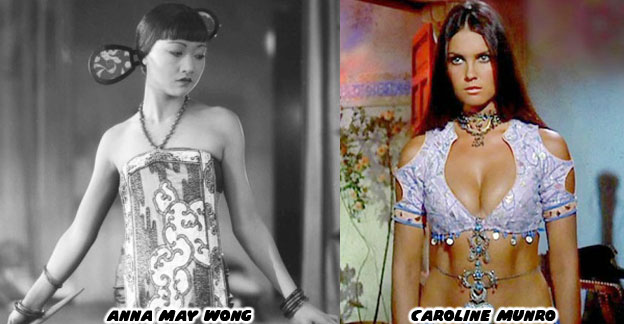
While growing up I was aware how minorities and other cultures were being represented in pop culture. I grew up reading the myths from different nations, watching the films on TV. The Arabian heroes had been presented many times by many different studios. I did pay attention whenever the heroes of a movie had dark skin and dark hair. They were the opposite of the blonde haired, blue-eyed heroes I was told to idolize in comics and cartoons. Mind you I'm a huge fan of Captain America but just a hint of representation went a long way as a kid. The stories from Arabia always seemed to have the largest cast of dark-skinned people. They were always going on the most wonderful adventures. I was always saddened when the minority actors played villains in the films. As I grew older I learned to appreciate their contribution. Anna May Wong was the servant and a spy in the Thief of Bagdad.
 

I was a kid when I saw the silent film on a TV marathon, and couldn't help but notice how beautiful she was. Audiences were supposed to be awe-struck with the Princess that Julanne Johnson played but she had nothing on Anna May. It turned out that Ms. Wong was one of the first major Asian actors in Hollywood. She was someone that never settled for a stereotypical role, never spoke in broken English and instead let Hollywood hang itself with their appropriation films. I was even younger when I saw Caroline Munro in the Golden Voyage of Sinbad. She had the most beautiful bronze skin and dark hair. I'm pretty sure that was the moment when I became a life-long fan of the Sinbad films. I would hear things like blondes Marilyn Monroe, Jennifer Anniston and Calista Flockhart were the most beautiful actresses of their era, yet in my mind they couldn't compare to Caroline or Anna May. Could a non-Western ideal of beauty ever be seen in a game? Could there be a dark-skinned character in a fighting game that transcended sexiness?


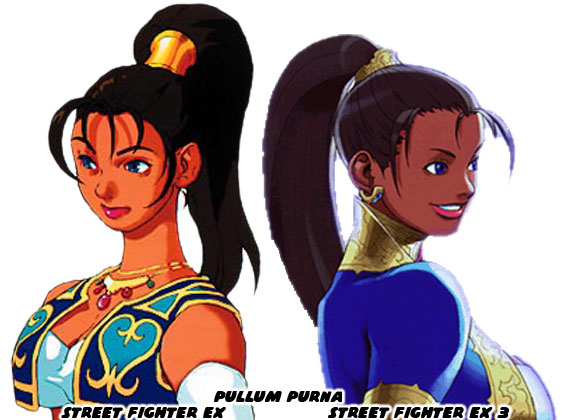
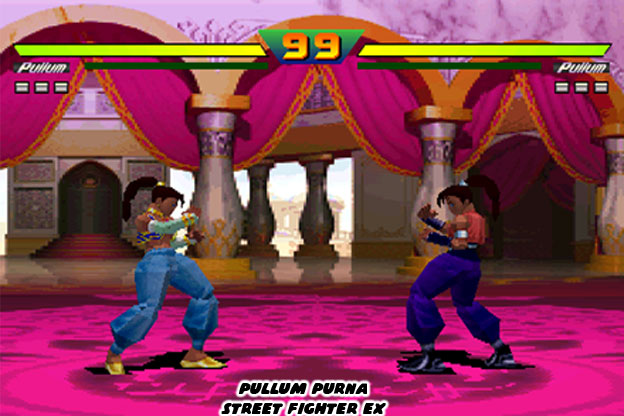
Almost 20 years before Shaheen there was another fighter from the Middle East. The pioneering 3D character was actually a female. It turned out that Street Fighter had the first Arab fighter to be featured in an arcade 3D release. To be specific the game was Street Fighter EX, a title from 1996 that was developed by ARIKA and published by Capcom. This game would be the last title created by the majority of the people that worked on the Street Fighter II. The studio wanted to create a cast of new international stars to compliment the original "World Warriors." Pullum Purna (sometimes written as Puruna) was introduced as a contemporary to Chun-Li. The fighter was actually one half of a compliment to Chun-Li, the other was Pullum's friend and the first MMA fighter in the Street Fighter universe, Blair Dame. I had talked about these designs on an earlier blog. Pullum was a strong character that had many things going for her. Representation was as important to audiences then as it was now. Introducing a character from a different nationality always brought risks with it. What fighting style would they represent? How would they look, how would they move, what was their story? Would audiences accept them? Making a new character female was doubly challenging. We would like to think that gaming was diverse but we know there were far more male leads than females, especially in fighting games. When it came to females they were almost all hyper-sexualized figures.


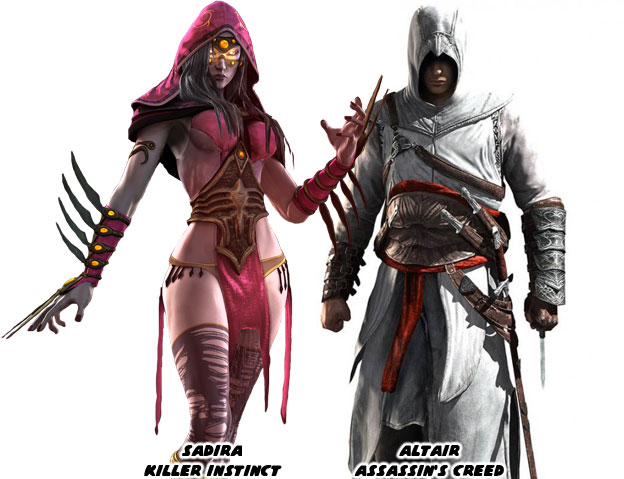
Pullum was absolutely modest when compared to Sadira, the Persian fighter introduced in Killer Instinct. The 2013 game by Microsoft Studios was a remake of an arcade fighting classic by Rare. The original title featured a large number of black, Native American and mixed-ethnicity characters. Sadira was a sexy character and an assassin to boot. Her inclusion in this new game was in part to help diversify the cast but also to perpetuate the types of sexy fighters that the west seemed to favor. Her costume and appearance may have been inspired in part by the uniform worn by Altair in Assassin's Creed. She may also have been a counterpoint to the sexy female ninjas in the Mortal Kombat series as well. Women in the Killer Instinct had always been very curvy, fan-service-type characters. Sadira was no different, except for her country of origin made her a standout for this blog.


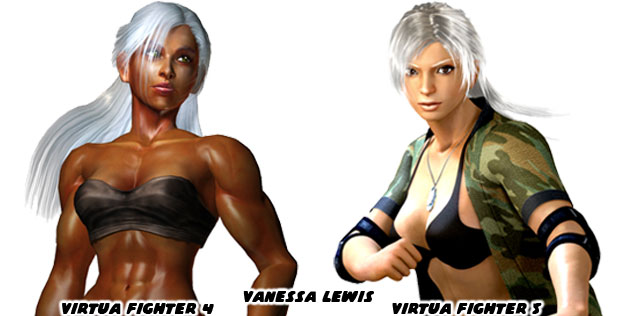
Pullum was a different type of character though. While her costume showed off some skin it was not far removed from the costumes worn by the heroes in legend. It certainly was not more revealing than the costumes of the female leads in Arabian Fight or Arabian Magic. Pullum had a series of unique tumbling kicks and sweeps that hadn't really been used by many characters. She also had a few special takedowns that were a unique mixture of wrestling and MMA. I think the most striking thing of Pullum and her bodyguard Darun Mister was their skin color. They were both presented as dark and proud. In fact the design of Pullum changed slightly as the series progressed. She matured a little and her skin color actually got darker. This was the opposite of what happened to Vanessa Lewis, a black female Vale Tudo striker introduced in Virtua Fighter 4. The 2001 game was met with a lukewarm response from audiences. The graphics got better but the gameplay mechanics lacked the spark of a title like Street Fighter or Tekken, but that's an aside. The next time players saw Vanessa in Virtua Fighter 5 they could see something had definitely changed about her. Many assumed that she was lightened considerably because Japanese audiences did not find dark skin attractive.


The Middle Eastern fighter had become a part of the genre in the '90s but they were relegated to a classic costume. Characters from other nations, Japanese, American and British for example were allowed to wear more contemporary clothing. A good portion of the King of Fighters cast for example wore street clothing. It was as if designers lacked the confidence to say a character was from Egypt, Iran or Persia, unless they also put them in a storybook costume. Japanese developers were not the only ones that were guilty of this. Despite what could be construed as misrepresentation, it was nice to see dark skinned characters in fighting games.


Here is where I have to stop momentarily and talk about the game players that were offended by Capcom removing the shot of R. Mika's butt slap in Street Fighter V. As of this writing there are almost 8,000 signatures on Change.org claiming that Capcom is performing self censorship and that gamers will not buy a game that is censored in any way. Not too far removed is a petition with almost 7,000 signatures as of this writing, saying that Western gamers are in support of Japanese developers and they shouldn't alter their content for Westerners with delicate tastes. The goal in part is to get Dead or Alive Xtreme 3 (a bikini-centric game featuring the DOA girls) released in the USA and to get Capcom to put the butt slap back into Street Fighter V. Where all that outrage was when minority characters were whitewashed by Sega? I mean if game players do not want the producers to alter their vision because of some delicate tastes then why not make it an international rule? Why not tell the Japanese that dark skin is beautiful and belongs in Virtua Fighter? Do these people realize that the Japanese change course on a game, feature or character without ever taking western opinions into consideration?
 

I mean if the Japanese were concerned about what the USA thought do you really think Rufus would have made it into Street Fighter IV? Do you think they ran Hakan past a group of Turkish kids before he was added to the series as well? If the people in favor of the petitions would stop for a moment and just think about how women are depicted in games they might think twice about signing. These things have less to do with censorship as much as they have to do with control. How women are represented in gaming and to a larger context how minorities are represented is a real problem. This has nothing to do with censorship or altering a creative vision. You have to be included in the discussion before you can be silenced. Right now women and minorities do not have a seat at the table.


But I digress, Pullum Purna and Darun Mister were a refreshing change of pace for the genre. The fact that ARIKA had chosen two dark skinned characters, from South Asia and the Arabian Peninsula to balance out the cast was very progressive. These characters were never whitewashed. These were not fat and ugly caricatures like Karnov, they were not even stretchy-limbed cartoons like Dhalsim. There was a sense of realism to their designs, no fire breathing special attacks here! Sincerity was something that made the Street Fighter EX cast unique. The designers at Capcom and ARIKA were not making fun of a culture as much as they were celebrating it. The Middle East could produce interesting characters that did not necessarily rely on trope to sell. The question was whether the new Middle Eastern character added to Street Fighter V would be based on stereotypes or not. The next blog will look at this figure. As always if you enjoyed this blog and would like to sponsor me please visit my Patreon page and consider donating each month, even as little as $1 would help make better blogs and even podcasts!