Showing posts with label stereotype. Show all posts

Monday, June 8, 2026

A look at Yasmine, Filipino representation in Street Fighter 6

Hello friends, welcome back to the blog. This entry is a follow up to the one I posted on Arjun. This has to do with the new character reveals for Season 4 of Street Fighter 6. I said that the design behind Arjun was poorly executed. His appearance, and costume was essentially a copy of the concept art for Ryu in SF6. It was bland, and lackluster, and made me think that the team’s Senior Designer Yusuke Hashimoto had nothing to do with his look. I could almost argue the same thing with the other new character introduced for the game. Yasmine was the first new female added to the game since its launch. The other women introduced in the seasonal updates were pulled from older games.

Before Capcom said anything about the origin of the character, or her move set I knew where she was from, and what she represented. She appeared to be a Filipino. Making her the first Asian-Pacific islander represented in the series. The colors of her uniform were rooted in the flag of the Philippines. It was white, blue, red, and yellow. The sun icon on her shoulder was modeled very much on the sun logo on the flag. As many national flags there is tremendous meaning behind the colors, shape, and symbols featured on it. Not the least of which are the eight rays emerging from the sun, which represents the eight provinces that rebelled against the Spanish in 1898. Her top was based on the Barong Tagalog, a traditional shirt strongly rooted in national identity. It wasn’t just worn by residents in casual, or formal settings, but also by politicians in the Senate.

In her hands she had an ornamental karambit. This knife was used in the traditional fighting art Eskrima, sometimes referred to as Kali or Arnis. For many people in the USA their first exposure to this martial art was in the 2003 film The Hunted featuring Tommy Lee Jones, and Benicio Del Toro. It highlighted the lethality of the fighting art. It was made popular in recent years from The Raid movies. The Raid 2 specifically from 2014 featured Iko Uwalis as the undercover cop Rama, and Cecep Arif Rahman as the Assassin. Their karambit battle was one of the best sequences in martial arts cinema. Yasmine could have used sticks as a weapon. Most people were familiar with stick fighting with the Filipino martial arts. The staff, and sticks were already featured by Eagle, Rolento, and Falke in the series. The advantage of the karambit was a stronger national theme.

Since Yasmine’s karambit was not a blade in the traditional sense it was still a weapon that could be used for trapping, as well as striking. I think this tool was inspired by the wooden fishing hooks carved by Pacific Islanders. There was a lot of cultural influence between Malaysia, Indonesia, and the Philippines. The karambit was only part of a strong ethnic identity that united the three nations. Her martial arts belt was also accurate to her region. Karate practitioners tied their belt in the front, in the Philippines the belt was knotted at the right hip. Her name, and school were written on the belt. It was worn is very specific way for the Filipino martial arts. In some schools a sash could be used in place of a belt. 

Everything that Capcom did with the new character seemed to be the polar opposite of the last time a Filipina was used in a fighting game. If you were familiar with fighting games then you realized that Yasmine was not the first Filipino fighting game character. She wasn’t even the second. Josie Rizal debuted in Tekken 7, back in 2015. She was a time-release character that came out in April of that year. Series producer Katsuhiro Harada said that he had wanted t include a Filipino character going back to Tekken 5 in 2005. He didn’t get a chance to do so until much later. Unfortunately for him this character would be very divisive. Fighting games were big the world over, Tekken was especially popular in the Philippines. The downside was that even though Josie was proposed as an eskrima fighter, without any weapon it was hard to tell. She was voiced by Ananda Jacobs, and had no detectable Filipino accent. The other was she had the name of a national hero, and the attitude of a crybaby.

José Rizal was a writer, nationalist, and doctor whose work helped inspire the country to rise up against Spain. He was executed in Barcelona for rebellion after a brief exile in Cuba. He had no direct involvement with the resistance, but his death helped spark a revolution. The fact that Bandai Namco used the name of an icon, but put it on a crybaby girl was read as a direct insult to millions of Filipinos. The Japanese had committed many war crimes against the Philippines, China, and Korea during regional conflicts. It was not hard to imagine that they still looked down on other cultures even if this was not the intention from the developers.

To add fuel to the fire Namco put a Filipina in a fighting game much earlier, and was more culturally sensitive about it. They did this with Talim in Soulcalibur II. The game came out in 2002. It was directed by Jin Okubo, and Yoshitaka Tezuka. It was produced by Hiroaki Yotoriyama. The Soulcalibur, and Tekken teams had a friendly rivalry inside of Namco. They traded jabs with each other at gaming events, but deeply respected each other at the same time. The Soulcalibur series was a sword fighting game which pulled elements from ancient history. It was much closer to fantasy than historical to be honest. In the case of island representation Talim was a sort of amalgamation of Indonesia, Malaysia, and Philippines. Her costume was pseudo-traditional, as was her weapon. It was a hybrid karambit, and tonfa. She demonstrated that the studio was capable of better representation if they tried. Yasmine was a better design compared to Josie, but I think that Capcom was trying too hard to swing in the other direction.
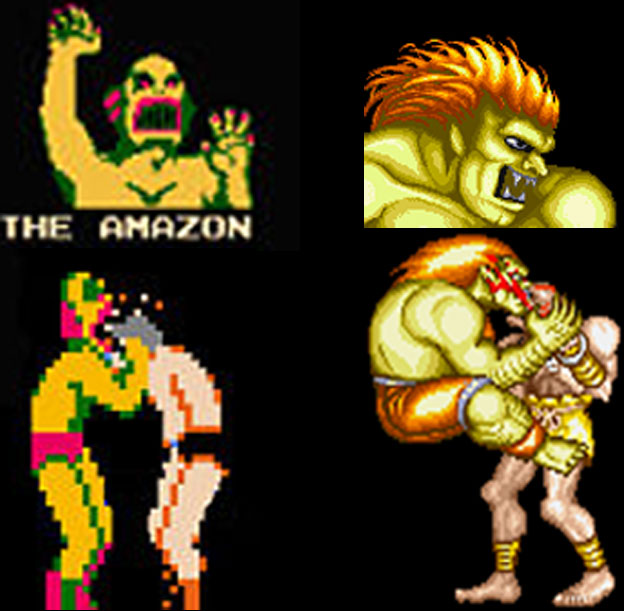
The taped shins, and hands signaled to audiences that Yasmine was clearly a fighter. The use of the Filipino national flag as primary colors on her costume, with the sun, and stars as accents let us know what region she was from. Her hair color was purple, a mix of the red, and blue from the flag as well. You would think this made her a fantastic design, and a prime example of inclusion done well. I would argue that it was sloppily done at worst, and ham-fisted at best. For starters I want you to think about which characters in the game wore their national flag as the primary colors on their uniforms. Zangief did indeed wear the old USSR colors on his shorts. Ryu was a happy accident in that his gi was white, with a splash of red on his headband. Contrary to popular belief Blanka was not green because of the Brazilian flag, but because he was modeled after the Amazon from Nintendo’s Pro Wrestling. Past that none of the World Warriors from SFII or New Generation from SFIII used their national colors as their costume.
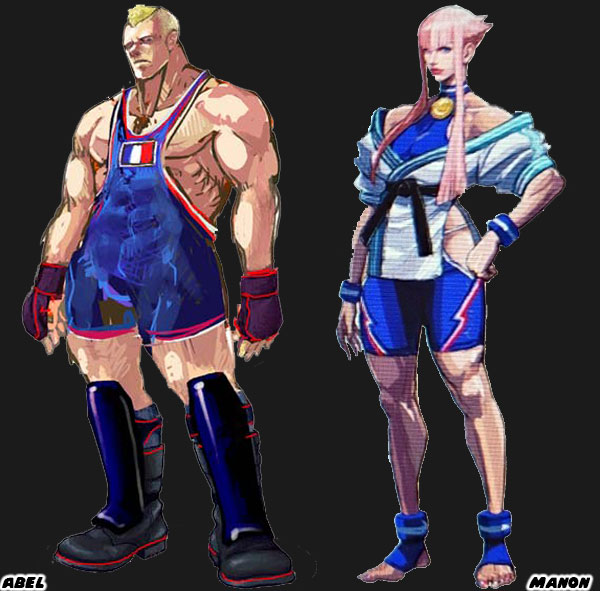
Street Fighter IV, and V started the trend of turning the colors of a national flag into costumes. We could see it with Abel from Street Fighter IV, Manon from SF6, and Laura from Street Fighter V. I argued that of all the new characters introduced into the franchise Juri Han was the best because she poached the most from Chun-Li’s design roots. I mentioned that the purple in her hair, and uniform were created by mixing the red, and blue from the South Korean flag. I would argue that the purple hair featured on Yasmine was a result of the same logic. I thought it was a cheap, and unnecessary design choice.

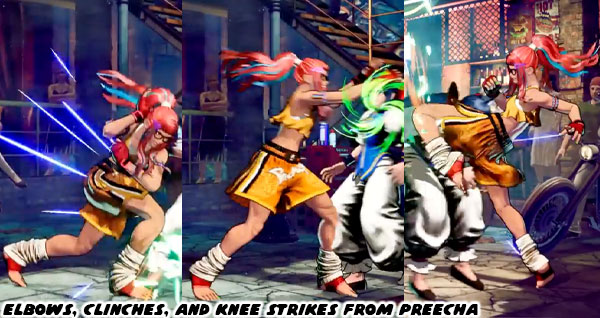
Any other color hair would have clashed Juri, and Yasmine’s costume. At the same time we had to address the Asian colored hair phenomenon. For decades Asian characters were coded with attitude thanks to colored hair streaks. Teen Vogue covered this issue, and Glamour said it was time to retire this trope. I was aware of it when I talked about how Juri Han’s design got better with time. It might seem insignificant to you, but I think that turning a flag into a costume was cheap. I think that giving colored hair to an Asian, or Pacific-Islander was sloppy. This pandering to tropes was not limited to Capcom. Even Preecha, the new female Muay-Thai fighter from SNK had colored hair with contrasting streaks.
Going with popular generalizations was not a substitute for actual research. You cannot achieve great design by pandering to the lowest common denominator. With some effort you can have a great national figure, and undo years of ugly caricatures. This was why I respected Designer Yusuke Hashimoto, and the team working on SF6. They managed to take Dhalsim, and Blanka which were the two ugliest caricatures in the franchise, and make them significantly better by changing just a few details. Not only that. I would argue that Rudra was an even better design, and a sort of way for Capcom to quietly retire Dhalsim. It seemed like an impossible task for Capcom, or any Japanese developer to do better. I knew it wasn’t impossible. A generation ago we had T. Hawk. He was originally going to be the new Zangief for Street Fighter III. Along with Cammy, Dee Jay, and Fei Long. However they were pushed into the Super SF II update before his design was refined. 

I wanted to see Mexican representation in the SF franchise, but this was not it. T. Hawk was a member of the fictional Thunderfoot Tribe from Mexico. He was about as authentic a native as Iron Eyes Cody. For those that didn’t know Iron Eyes was born Espera Oscar De Corti. He was an Italian-American that was cast for Native-American movie roles going back to the 1920’s. He spent the next 70 years convincing the USA that he was the real deal when in actuality he was perpetuating stereotypes. With his face paint, moccasins, jean vest, and feathered headband T. Hawk was doing the same thing for the fighting game crowd. I was saddened to see how little Capcom cared to present a Mexican fighter correctly, and even more disappointed with what was done with El Fuerte. When Lili / Lily was announced for SF6 she was pulled from the same tribe, and had essentially the same design elements. In any other timeline her look would have remained the same from concept to publication. Yet the SF6 team did a lot more homework, and revised her appearance several times before her debut.

The changes to Lily were subtle, but made for a much better overall design. Her physical appearance was mostly the same. But the color choices, costume, and fashion worked much better without the pandering. Capcom got rid of the face paint, and feather. Her clothes did not have to be a poncho of red, white, and green. The colors of the national flag. An oversized jaripeo shirt did just fine. Even the change in her boots from Central to Northern American worked better. I had a similar thought on Yasmine (and Arjun). It was good to see the Philippines get representation, especially with a strong female warrior. But she was version 1.0 of the character. I knew that version 2.0 was going to be much better, just as it was for Juri, and Lily. That was my belief anyhow. What did you think of this character reveal? Who were you most interested in using in the next season of Street Fighter 6? Tell me about it in the comments section. As always if you enjoyed this blog, and would like to sponsor me please visit my Patreon page and consider donating each month, even as little as $1 would help make better blogs and even podcasts!
follow the Street Writer on Patreon!

Friday, May 17, 2024

Remix Culture, how Asian designers changed the game, part 4

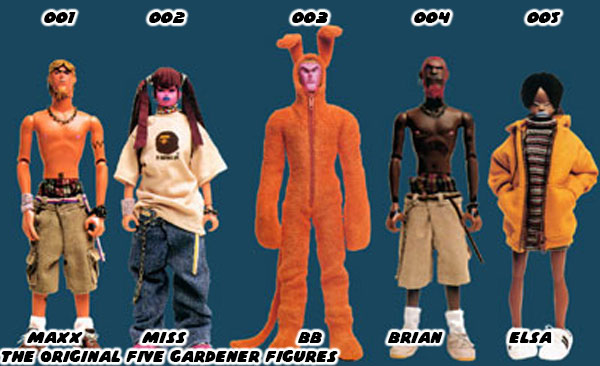
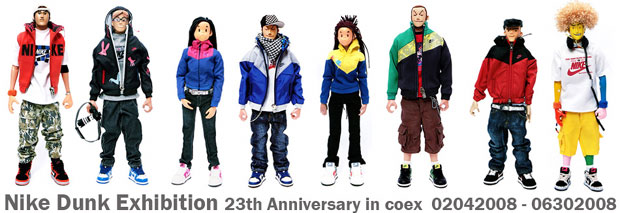
The previous Friday I talked about how Michael Lau set the stage for the urban vinyl movement. Specifically his gallery shows from 1999, and 2001 featuring his 12” figures in Hong Kong, and Japan respectively. While he was exposing the world to a new type of art his friends, and contemporaries were following closely behind, and releasing their own 12” figures to collectors. At best groups like Brothersfree understood the art movement. They weren’t poaching the community that Lau was representing, I’m talking about street culture specifically. Instead the Brothersfree group were trying to carve out their own niche, to tell their own story by turning industrial workers into the heroes of their Brothersworker line. Or Wendy, and Kelvin Mak telling the stories of Hong Kong tradespeople with their 2da6 line. I felt that other artists like Eric So, Jason Siu, and Pal Wong were biting a little too hard on what Lau had established previously.

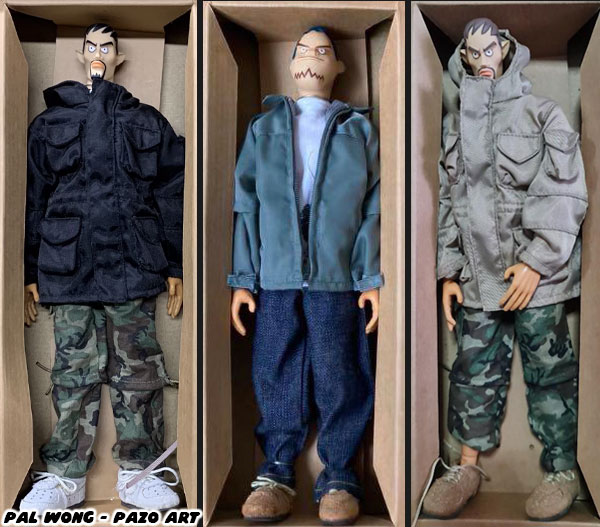
The Pazo Art figures from Mr. Wong for example went through all the same motions as Mr. So, and Mr. Siu. They were highly detailed, quality sculpts, with realistic fashion. They often came with a change of clothes, accessories, stickers, and all of the trim that one would expect from $200-$300 figures. They also went right after the street fashion look. What got under my skin was that Pal was sculpting faces that were eerily similar to what the gardeners looked like. Michael Lau created a gardener called Future, he was essentially a caricature of established graffiti icon Futura 2000. When that character was unveiled it was a breath of fresh air. Knowing that he was a part of the gardener community connected their story to the culture. Then seeing Pal going down the same path with his figures felt redundant, and even slightly disrespectful. The smaller figures that he released showed to me that he didn’t understand what the movement was about.

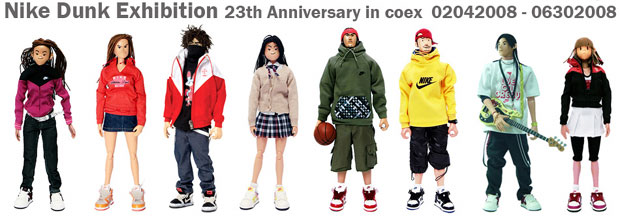
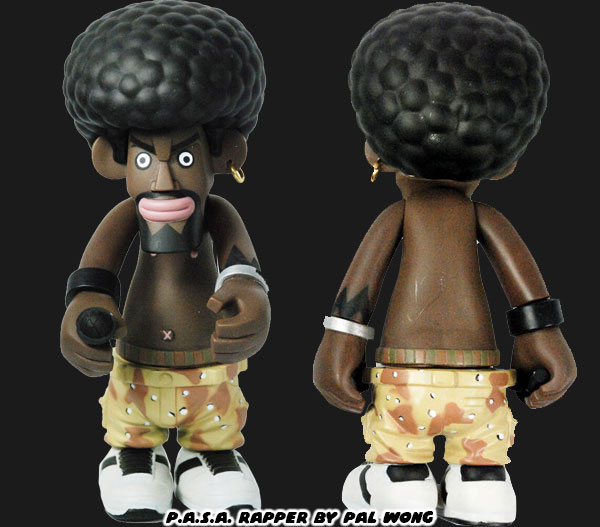
The P.A.S.A. Rapper by Pal Wong was an obvious attempt at capitalizing on the 6” gardener trend. To the casual observer the scale, proportions, details, and accessories were all spot on. He could have been one of the gardeners except for a few things. The sculpt, and paint was an amalgamation of Maxx, and Brian from the earlier gardener line. He was missing a chain for his wallet, and there was no felt wristband, instead it was sculpted, and painted to his wrist. These were all shortcuts to bring a cheaper figure to market, and pass it off to the masses. To make the character slightly different from the gardeners he had an afro, large eyes, and some really thick lips. These things didn’t really capture the spirit of the gardeners, and felt a little bit heavy-handed, if not outright racist. But I don’t want to sweep what Lau did under the rug either. We need to talk about culture, representation, and appropriation with context to this new art form.

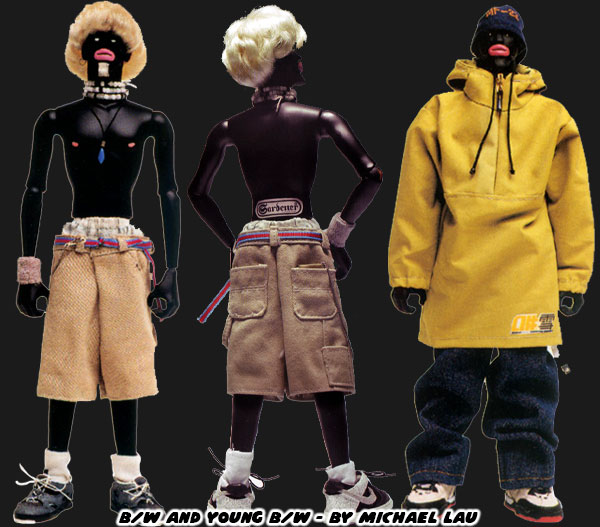
Michael Lau had also released a figure with dark skin, and big lips as well. This character was called B/W. He was an African born in Hong Kong. His friends liked him, but he could be long tongued, aka he could be very chatty. He stuck out for several reasons, the most obvious was his jet-black skin, and large pink lips. B/W was the ninth figure of the original 10 gardeners, and was the only one that had skin that dark, and large cartoonish lips. Brian, Elsa, and Uncle were Black characters in the original 10 lineup that looked more like regular people. There would also be a group of basketball characters added to the lineup that had various shades of Black skin, but none as dark as B/W. I would argue that Michael did not intend to use a racist caricature. All of his gardeners had exaggerated cartoonish, facial features. It was bad form to push the envelope that far with B/W. His representation on the rest of the cast was more or less well done.

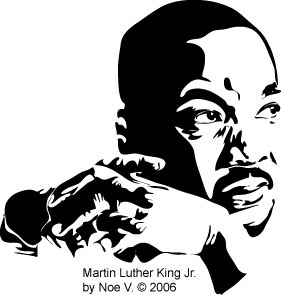
Why did Pal Wong, and Michael Lau feel that it was okay to present a Black character like this? For Mr. Wong I feel that he was just trying to cash in on the popularity of Lau. He poached his art style, and created a knock-off figure without understanding the culture that Lau was trying to recreate. For Lau I would say it was his lack of awareness he had regarding Blackface. The importance of representation was something that I had written about previously, especially when it came to fighting games. One of the things that I want to remind you of is that the Civil Rights movement that the US went through in the ‘60s only happened in the USA. Martin Luther King Jr, Malcom X, John Lewis, James Farmer, and the other Black leaders of that era shaped the culture in the US.

There were no civil rights movements similar to what we had in other countries. While schools overseas might talk about it, culturally the UK, Japan, or China did not have anything like what the America went through. There was a good chance that Lau, and his contemporaries did not realize that the big lips character was offensive. This was partly due to cultural relativism, they got the trope directly from the US. That presentation had been a part of US cultural exports to the rest of the world since the late 1800’s. It was seen in advertising, in toy design, and popular music of the era. By the 1940’s Blackface fell out of favor as a form of entertainment in the states. Culturally the new enemy were the Japanese, and Black Americans were signing up to fight in WWII. It was disrespectful for them to return home and see that ugly face waiting for them. So little by little it started getting taken down in marketing. The change got a lot of pushback in many states, not unlike the removal of Confederate statues did as recently as the 2020’s. 

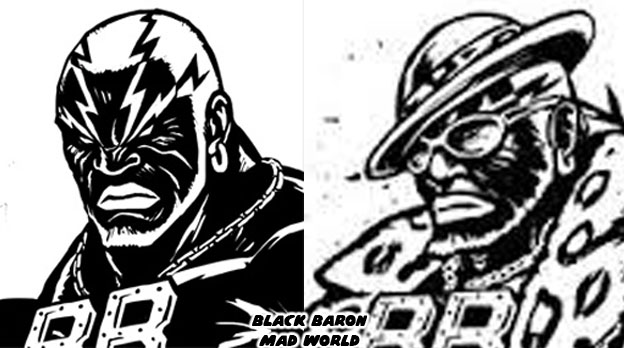
The thing was while this trope was fazed out in the USA, it didn't entirely disappear overseas. The big lipped characters in pop culture could still be seen through Mr. Popo from Dragon Ball in 1988 (R.I.P. Akira Toriyama), Chocolove McDonnell from Shaman King in 1998, and as recently as 2012 with the release of Anarchy Reigns, the follow-up to Mad World by PlatinumGames. This is why I want to talk about context of the gardeners, including B/W. Lau intended on creating figures based on the street culture that his friends, and he had grown up in. He didn’t go in trying to specifically hurt any ethnic group specifically. Of course that doesn’t prevent people from being insulted. 

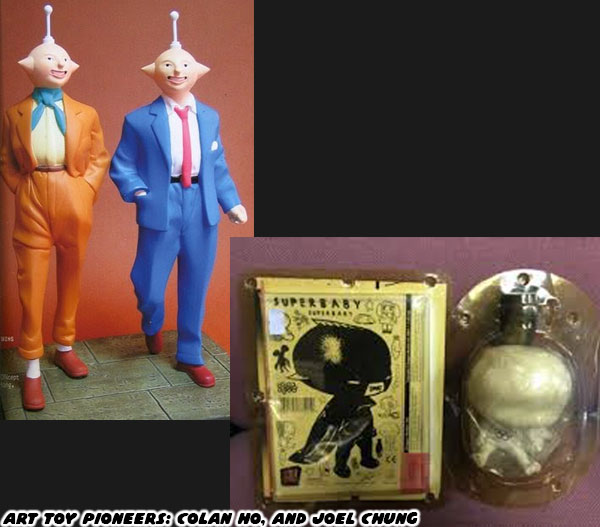
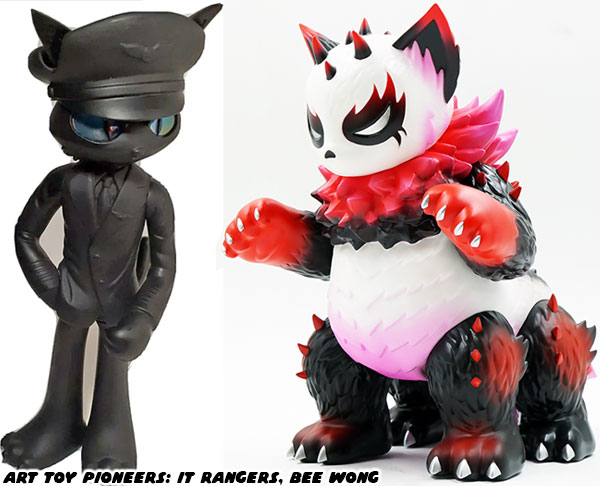
As for all of the artists from Hong Kong, and Japan that came out right on the heels of his work, they also had to be put in context. Were they releasing figures because they were going for a cash grab? Were they doing this as an homage to Mr. Lau? Could it be both, or neither? Again, it depends on the way we look at it. Designers like Colan Ho, and Joel Chung were releasing pieces very much out of left field. Their figures weren't workers, skaters, breakdancers, or anything else like that. They had their own signature style, but could also work with a license if they had to. It was an interesting time for collectors that wanted unique, high quality pieces. The urban vinyl craze spread like wildfire throughout Asia. Some artists were turning sketchbook creations into 3D representations, some were remixing kaiju monsters with cute, and cuddly toys. This approach was evident in some of the early pioneers like IT Rangers, and Bee Wong. 

In 2008 South Korean figure artist CoolRain made his debut. He was heavily influenced by Lau, and managed to secure some high profile clients in a relatively short span of time, including Nike, Adidas, Vans, and the NBA. Although he designed a number of smaller 6” mini gardener-type figures for the NBA, he rarely produced a 12” figure that wasn’t a prop for a commercial, or gallery show. Very few people were able to get their hands on his original 1/6 figures, and these tended to be rappers, and star athletes. CoolRain was kind enough to do an interview with me. He gave all the credit to Lau for inspiring him. He definitely approached figure art as an art form, and not a way to make a quick buck.

Lau had also collaborated with Nike, and Sony, but he was notoriously hard to pin down by any company. When in doubt it seemed that the corporations could go to CoolRain if they wanted to use the aesthetic, rather than wait on Lau. Was this an example of an artist holding onto his integrity, or being selective about clients? Was CoolRain selling out the culture? It all depends on the context. He understood the line was blurring between art, toy, and collectable. He taught classes, and presented workshops to the new generation of creatives in South Korea. He was very mindful of the communities he was asked to recreate, whether they were skaters, basketball players, or even professional futbol / soccer players. He was just one of many voices helping spread the word about “urban vinyl” and the larger art movement.

The respect I had for CoolRain remained consistent over the past 20 years. It made me reconsider what I thought about other artists appearing in the early 2000’s as more than just poaching the work of Michael Lau. I’ll talk more about it in a future blog. For now I’d like to hear your thoughts. Could art be controversial, or accidentally racist? Would context be important in exploring, or explaining the relationships between ethnicity, stereotype, and culture? Tell me about it in the comments section. As always if you would like to sponsor me please visit my Patreon page and consider donating each month, even as little as $1 would help make better blogs and even podcasts!
follow the Street Writer on Patreon!

Friday, July 8, 2022

Figuring out the changing Street Fighter style, part 2...

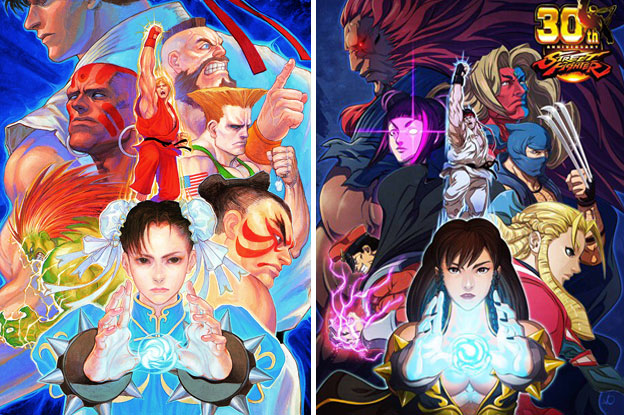
The previous blog had us trying to figure out the Street Fighter Style of character design. I used Chun-Li, and Jamie as examples. Capcom had historically done a great job at creating fighters from various nations in pseudo-traditional costumes. This made it so that audiences from any country could easily figure out who the character was, and what form they represented. Even if you didn’t speak English, or Japanese, you could look at just about anybody in the SFII lineup and tell a lot about them. There were two karate guys, one wore red, and one wore white. There was a huge wrestler, a sumo wrestler, and a female kung-fu practitioner. There was a buff American in military fatigues. The odd ones were a stretchy Indian, and a green skinned beast man. They were the outliers that literally added some color to the lineup.

Every successive Street Fighter made sure to strike a balance between easily identifiable archetypes, with the occasional oddball thrown into the mix. Capcom made a fortune with SFII, and the successive updates. They were so good at what they did they gave some studios the impression that it would be easy to make their own fighting game. I mean all you had to do was follow the template right? Here was where design, and experience came into play. The artists in every company had their own style, their own aesthetics. An art team in Japan drew differently than a team in Taiwan, or Korea, or Hong Kong. Yet there was some aesthetic overlap, and audiences in the West could tell that the designs were from Asia, even if they couldn’t necessarily pinpoint the country of origin. Now imagine if a studio wanted to make their own fighting game, and put archetypes from a certain country in it. They wanted to release this game in all the markets, and capture some of the sweet arcade money that Capcom had enjoyed. If they didn’t want to use the military look for an American then how else could they convey their nationality to audiences?

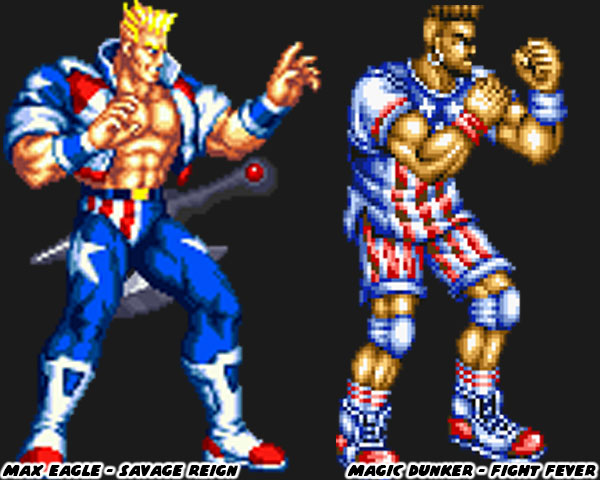
The studios could absolutely say “here’s Number One Yankee GI Joe”, and wrap that character in the stars, and stripes. Audiences the world over would instantly be able to tell a lot about that person. In fact it would be fair to do that. The point of reference about westerners many studios in Japan had were the over-the-top wrestling personalities, and sports stars they saw on TV. Even in formal karate tournaments they had seen actual contestants from the USA show up in gaudy outfits. The obnoxious red, white, and blue gi of Allen Snider from Fighting EX Layer was based on reality. Of course this type of character design could also be seen as pandering. It didn’t always translate well with the target audience. The lack of cultural understanding, or sensitivity also had a lot to do with it. In 1994 SNK published three fighting games where the Black characters were given basketball attacks, and a fourth game where the Black guy used dance attacks. Imagine the fallout if a studio perpetuated the stereotype of Blacks only being good at dancing or basketball today. Experience with the target audience helped senior designers know when they needed to change the direction of a character, or cut them altogether. For over 30 years Capcom had designed characters with Western markets in mind. The focus on guessing western tastes became more prevalent starting with Street Fighter IV.

By now you were aware that Capcom originally created a tall Black character as a rival to Ken. A sort of Sagat for the US legend. This character evolved to become King Cobra. Unfortunately his style of fighting was called “breakdance kung-fu.” The idea of a dancing Black guy in 2008 was outdated, and I’m sure despite his awesome appearance it wouldn’t have been appreciated by everyone in the community. Those dance fight moves would eventually find their way to Jamie in SF6. King Cobra would evolve to become Rufus, which I would consider to be the worst fighting game character of the past 20 years. There were plenty of odd choices coming from Capcom. 

It turned out that part of the reason why some of the character designs seemed out of place was because their roots were not necessarily from Capcom. The studio had outsourced some of the development work to DIMPS. That company was filled with former SFII staffers. They had created some amazing 3D fighting games, including the Dragon Ball Z Budokai series, Spikeout: Battle Street, and The Rumble Fish. Two of the characters from The Rumble Fish looked to have directly influenced two new characters slotted for SFIV.  It was becoming apparent that the Producer Yoshinori Ono had been steering the franchise in a silly direction. It was as if he had not paid attention to the process that Capcom had used previously. The studio would talk about how Western audiences playing early builds of the game were not drawn to the characters they had created specifically for them. If you understood the design elements that I had mentioned previously then you would understand why Abel stood out.

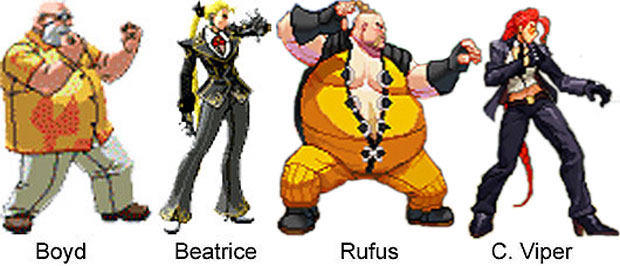
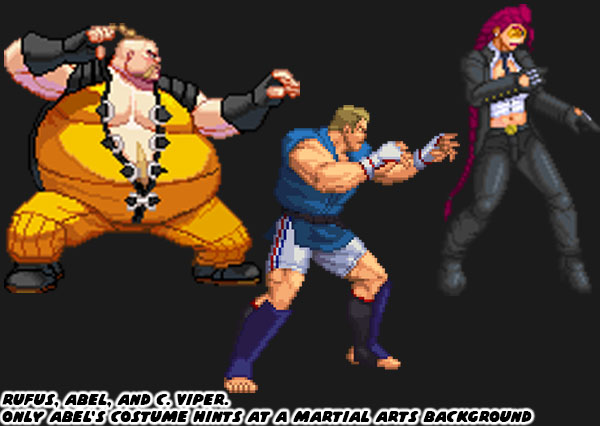
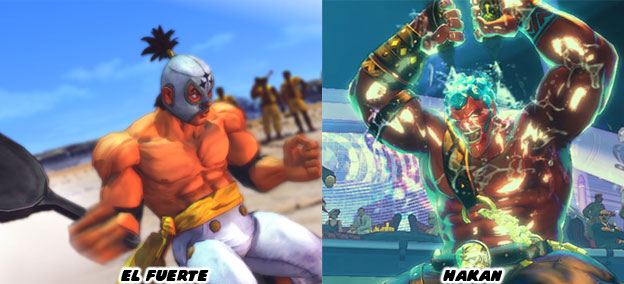
Abel had the pseudo-traditional costume. Given his size, and build, he looked like an actual fighter. By comparison audiences skipped Rufus because he was seen as a fat joke character. Crimson Viper looked like a sexy spy. Mr. Ono assumed that Western players would be drawn to this mysterious character. Instead test players immediately went to Abel because he looked authentic. Mr. Ono misread this attraction because of his size. He thought that western players would only use characters if they were hyper muscular. It would help explain why every male character in SF IV was absolutely swollen. Even “skinny” characters like Dhalsim were much bulkier than ever before. The trend continued with every expansion, and DLC fighter especially Gouken. By the time of Street Fighter V the biggest character in SF canon was put into the game as well. Abigail was eight-feet-tall. He was so massive he wore truck tires around his biceps as if they were armbands. It was definitely pandering as if Yoshinori was saying “here he is, look at this super buff American for you to play with.” I don’t think he was aware of how to fix the bad character ideas, or how to improve on the good ones. We could see that through Hakan, and El Fuerte, as well as his insistence of adding Rufus to the lineup. If we dug deeper we could also see the fixation on muscles with the original design of Abel.

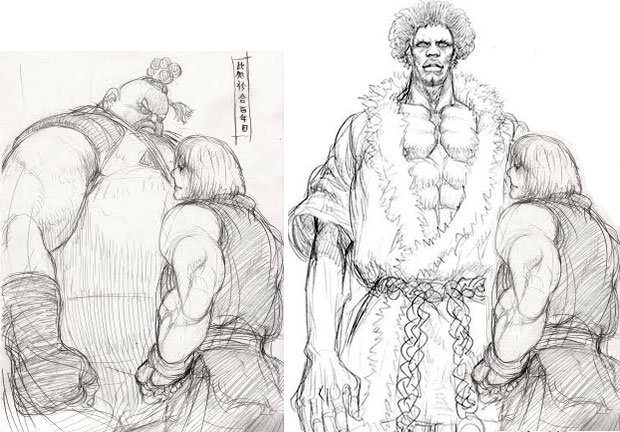
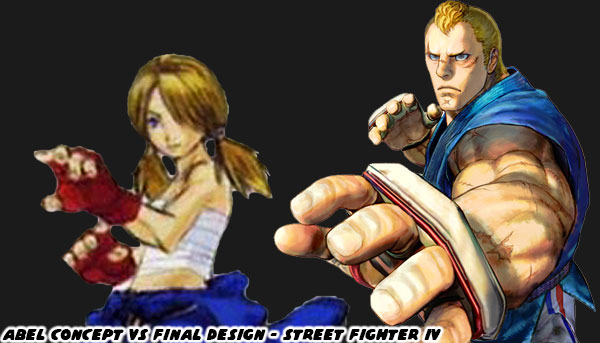
The earliest version of Abel was a sort of oddball character, like Blanka, or Dhalsim. The character was still a judoka, however he was not massive. In fact he was a skinny little androgynous boy in pigtails. Age wise he might have been the youngest person ever featured in the series. He was supposed to be incredibly quick, and have the ability to flip any character onto their head. I think that Daigo Ikeno had come up with the earlier concept because he was trying to put together a lineup with different sizes, and abilities. Maybe Abel would have always ended up being a big man, or maybe he was pushed in that direction because the team didn’t understand his appeal. Whatever the reason the changes went over well with the test audiences. What I think this did for the team was reinforce the idea that people in the US wanted to see big blonde characters in leading roles. That somehow the game narrative should be written around them. It was a tradition they started with Ken in 1987, and Guile in 1991 because they wanted to give Americans someone to play as. They never considered that Ryu, Chun-Li, Cammy or another character would be more popular with westerners. They repeated that way of thinking when Alex was introduced as the star of Street Fighter III: New Generation in 1997. Yoshinori saw the reaction to Abel, and it must have influenced his decision to push for Cody, Ed, and Luke as central to the story. Big muscular guys didn’t guarantee a fighting game would be more appealing to westerners. It was simply an aesthetic choice, this was a lesson that SNK learned in 2009.

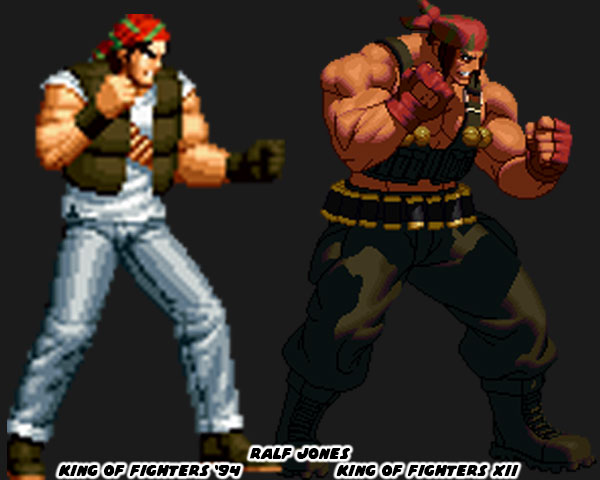
The King of Fighters series could be considered one of the true rivals to the Street Fighter series. The SNK school of design differed from Capcom in that they often had their cast in street wear. The costumes on the characters from 1994 to 2022 were roughly the same. At least there was more consistency in their look than the jump Capcom had between Street Fighter V, and 6. In 2009 SNK published KOF XII with completely new sprite art. SNK mastered Dot Art graphics which allowed for larger sprites with more frames of animation, and greater fidelity than their rivals. Several of the characters in the game were far more muscular than they had ever been. They made the changes Mr. Ikeno put on the SFIV cast pale by comparison. I’m not sure if SNK had assumed that the new swollen characters would instantly be embraced by western audiences. The game sold well, and it got a sequel with KOF XIII in 2010. However the time, and price of developing high resolution sprites didn’t seem worth it to the publisher. By KOF XIV the studio switched to 3D graphics as well. That was not the only change from the studio. They decided to steer their school of design away from the west. We will look at how Capcom, and SNK adapted to their audience in the next blog. I hope to see you back for that. If you have any thoughts on the topic please share them in the comments section. As always if you would like to sponsor me please visit my Patreon page and consider donating each month, even as little as $1 would help make better blogs and even podcasts!
follow the Street Writer on Patreon!

Thursday, June 23, 2022

Dhalsim, and Blanka, the return of the strange characters in Street Fighter 6

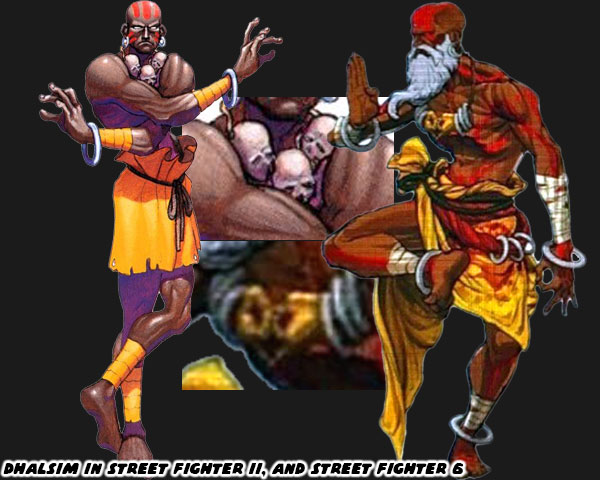
Yesterday we talked about JP the new character in Street Fighter 6. I mentioned that his design was odd on purpose. Normally fighting game characters look like they represent a certain martial art. Whether it's Ryu wearing a karate gi, or Zangief wearing wrestling trunks, it's very easy to see what form they reflect. JP was wearing an orange suit, and white cape. These were not things that defined any named style. The Street Fighter franchise has always relied on some non-mainstream styles, and characters. Even in the original Street Fighter the first two characters that Ken, and Ryu fought were a monk, and a ninja. This concept became more extreme in SFII, especially through the characters of Dhalsim, and Blanka. Dhalsim was based on a stretchy yoga master from the film The Master of the Flying Guillotine. Blanka was a wild man inspired by the green-skinned "Amazon" from Nintendo Pro Wrestling. The two outliers helped create a memorable game. Often times I think that studios forget that fighting games work best when they feature at least one cast member that is an oddball. Dhalsim, and Blanka's look has changed a little through the years, and when it did I think it was for the better. Dhalsim went from wearing rags, a necklace laced with the skulls of children, and a rope belt to portray his humility, and penance. Now he is wearing a necklace showing the Gyan Mudra, or meditating hand positions. He also has the robes of a holy man, or mystic. Dhalsim even went from a freshly shaven bald man, to a bearded man, sporting a turban. Clearly time had passed for the character, and Capcom was interested in capturing details from Indian culture rather than make stuff up.

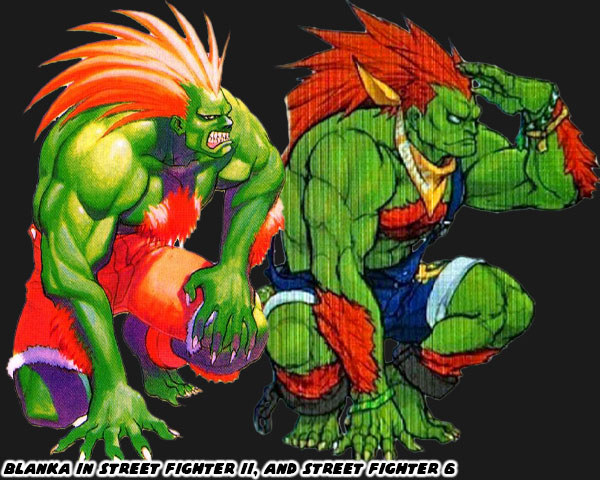
The studio created both fighters from stereotypes, but it was good to see them move away from adding more problematic choices. More important, they started stripping away elements without betraying the spirit of the character. The fact that they were trying to be more inclusive by adding more women, and minority characters in SF6 could be seen as proof that they had learned from the past. There were new people in charge of the franchise, and they were bringing it into the new millennium. The changes applied to Blanka were subtle, but just as important. His original design saw him in orange shorts, and shackles. This was a holdover from the time where he was literally a fighting slave. The beast man from Brazil was reunited with his mother at the end of SFII, and was reintroduced to society. He now wears jean overalls, and a bandana. Clearly he still prefers the outdoors, but no longer looks like he escaped from the circus. I’m not sure why Blanka would keep the ankle shackles, even if they were a gift from his mother. But that’s a minor complaint. These were small changes to the characters, but added much more dimension to them at the same time.

I am eager to see how the duo of odd characters have grown. What are their moves, and special abilities like now? What is their purpose in the latest story? I have plenty of questions, but no answers from Capcom. In the next few months I’m sure a lot more will be revealed. What do you think about the updated looks of Dhalsim, and Blanka? Is Capcom going in the right direction, or would you rather them try something different? Please let me know in the comments section. If you would like to sponsor me please visit my Patreon page and consider donating each month, even as little as $1 would help make better blogs and even podcasts!
follow the Street Writer on Patreon!

Tuesday, June 21, 2022

Dee Jay is back in Street Fighter 6, is he better than we remember?

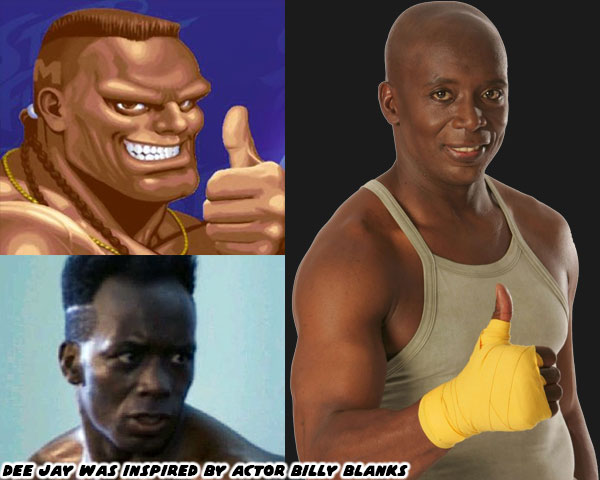
Today we're going to talk about a returning character to Street Fighter 6. Dee Jay made his first appearance in Super Street Fighter II: The New Challengers in 1993. The new challengers the title referred to were T. Hawk, Fei Long, Cammy, and Dee Jay. Capcom was in the planning stages of Street Fighter III, and those four were the earliest characters slated to be inserted into the series. Several of the fighters in the SF series were inspired by pop culture, whether they were film characters, or actual martial artists. Dee Jay was no different. The character was created by James Goddard. The Capcom employee was Co-Lead Designer for Street Fighter II: Champion Edition. The studio had long sought to add a kickboxer to the game. The last time a fighter of that style was featured was with the non-playable Joe in the original SF from 1987.

For inspiration Mr. Goddard looked at Billy Blanks who is an actual martial arts practitioner, and fitness guru. Billy's first major role was as the villain Khan the Great in The King of Kickboxers. The film came out in 1990, after Final Fight, but before SFII was released. Billy's next starring role was in TC 2000. In that film he played Jason Storm. The film debuted in August 1993, Super SFII would come out a month later. Many people mistake TC 2000 as the film that inspired Dee Jay, but there's no way a studio could create a character, and their move set in less than a month. Blanks had a great physique, and a trademark fade that was made for game characters. Although there were a few notable Black martial arts film stars in the late '70s like Ron Van Clief, and Jim Kelly, there weren't too many in the late '80s/early '90s. Blanks (and Wesley Snipes) helped spark a new trend for actors like Michael Jai White, Marrese Crump, and Lateef Crowder. As for the character I think his new design was a bit better than his original.

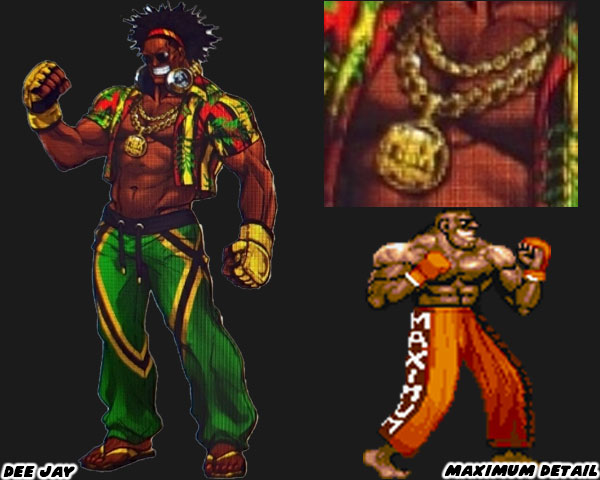
Dee Jay had ditched the fade, and braids for natural hair. This was a nice touch. He was also wearing the colors of the Jamaican flag (green, yellow, and black) on his pants, and the Pan-African colors on his shirt. You know by now that I believe that the most memorable characters were assigned solid colors. Wrapping a character in a multi-colored national flag might be pandering, or a good substitute depending on your perspective. The reason I think for Dee Jay’s multicolored costume in this game was because yellow with black accents were already assigned to Sean in Street Fighter III, and green with yellow trim was assigned to his sister Laura in Street Fighter V. The updated look also includes gold jewelry around his neck, along with a medallion that reads MAXIMUM. This was a nod to his original costume. The studio had originally wanted to put MANTIS on the side of his pants, as in praying mantis. The problem with this was sprite mirroring, the N, and S would have been flipped on the screen. Maximum reads the same when mirrored vertically. The sticking point for me with the character was his stupid grin. It harkened back to an uglier time in US history, and I'm not talking about the '90s.

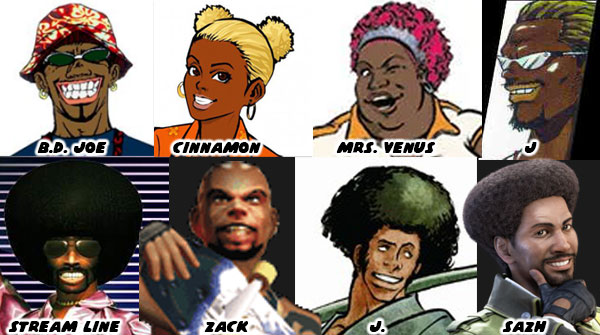
I am for more minority representation in the series. With that said I would like to see it in a positive light. I did not appreciate the gimmicks, and racial overtones applied to El Fuerte, Birdie, T. Hawk, and Hakan. Also I thought that there could be fat representation without it being used for the sake of comedy like Rufus. I had talked about the perpetually grinning Dee Jay, and the stereotypes behind black characters in Japanese games earlier on the blog. Younger readers may not be aware of it, especially out-of-touch Japanese developers, but the grinning black character was a trope from the days of Jim Crow. In short, to make a Black character more appealing (less threatening) to audiences he often had to be presented as a grinning entertainer. Even if Dee Jay now wore the colors of the Jamaican flag, and sported natural hair, he also wore a lot of jewelry, and never lost that wide grin. I’ve no doubt he would be fun to play with in the game. I also have no doubt that the new developers meant no harm in his return. I just hope that if the studio takes more careful consideration when adding minorities into the franchise. What do you think of Dee Jay? Are you eager to see his return, or would you rather have seen a different, or new character instead? I’d like to hear about it in the comments section. If you would like to sponsor me please visit my Patreon page and consider donating each month, even as little as $1 would help make better blogs and even podcasts!
follow the Street Writer on Patreon!

Tuesday, June 30, 2015

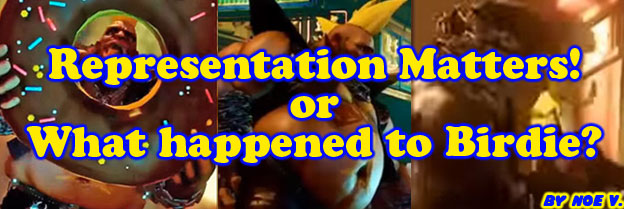
Representation Matters! Or, what happened to Birdie, part 2...


In the previous blog I talked briefly about the influence of Street Fighter around the world. There were many reasons why the franchise was so successful. From a move selection, balance and control standpoint Capcom had done a superb job. The controls were experimental, many developers thought that anything more than two buttons might confuse players, six was going to be overkill! Despite the fears of the industry (and the extra expense to Capcom to put in all those extra buttons) players seemed to quickly pick up on the nuances of multiple buttons and joystick combinations. From week to week gamers were becoming exponentially better at the title and were uncovering secrets and techniques over months. The studio had a hit on their hands with Street Fighter II and decided to refine the game. Unlike other companies that would publish a title and move to something else Capcom was looking to fine tune Street Fighter II and offer arcade owners more repeat business. They would release upgrades to the game, known as the Hyper, Turbo and Super versions. The changed the way certain characters played and modified the balance accordingly based on location tests and feedback from player. Each upgrade to the arcades was met with great success.

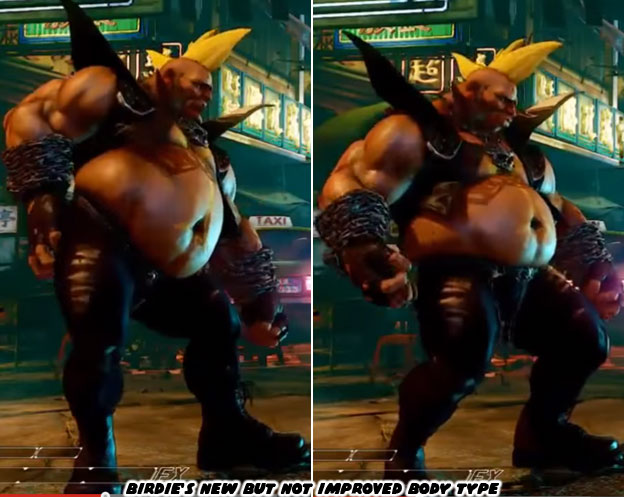
From a technical standpoint the developers at Capcom were unparalleled. Yet with certain updates and sequels the characters introduced into canon did not have the staying power of the original Street Fighter II "World Warriors." The designs of the subsequent characters did not evolve as greatly as the game engine had. In some cases the characters were ill informed, if not crude and stereotypical. Birdie had started out as a typical punk character in the original Street Fighter but turned into an icon in Street Fighter Zero. It had been 17 years since Birdie was last featured in a Capcom game. In Street Fighter V the years had not been kind to him.


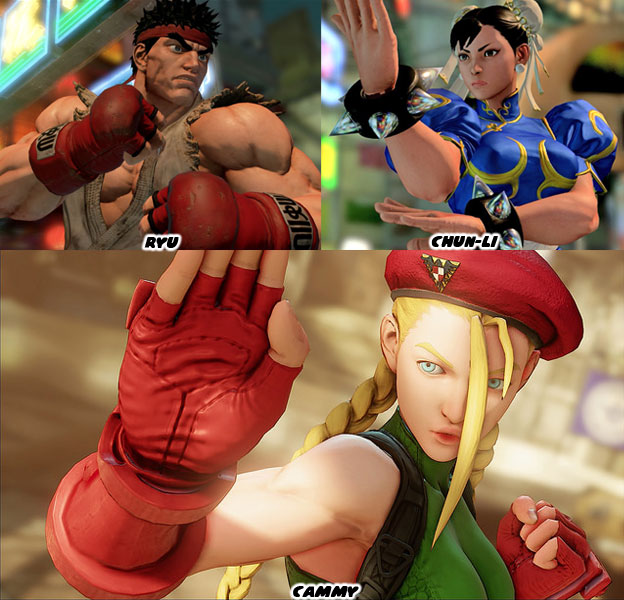
Actually it was the designers that were not kind to Birdie. They turned the character into a slob. A fat, junk food craving shadow of his former self. I wondered why Capcom would do such a thing. The other characters announced thus far had not changed at all. Ryu (who happens to be friends with Birdie in canon) was still muscular, Chun-Li was as beautiful as her previous incarnation, and Cammy seemed a minute older than her previous appearance but was still beautiful. None of the characters were fat or out of shape.


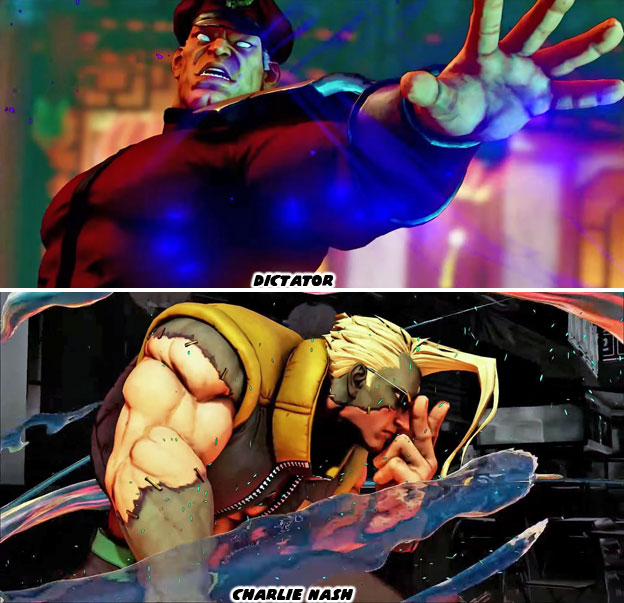
The Dictator, known as Vega in Japan and M. Bison in the USA, leader of the terrorist organization Shadowlaw was the main villain in Street Fighter II. He had also returned for Street Fighter V. He appeared very much the same as he did in Street Fighter IV only that now his hair was white. It didn't seem to go white due to his age but instead due to his mysterious "Psycho Power." The surprise announcement was that of Charlie Nash asa  returning character. Charlie had last been seen in Street Fighter Zero. Like Birdie it had also been 17 years since his last major role. Nash had changed somewhat as well. The character was presumed dead following the events of SF Zero, he had been shot in the back by Shadowlaw soldiers and thrown off a cliff. Revenge spurred his military friend Guile to enter the SF II tournament and track down the Dictator. In canon Nash was brought back from the dead, brainwashed and turned into an assassin. His discoloration and Frankenstein's monster-like appearance were done deliberately. Of course neither the Dictator or Charlie had returned fat and out of shape.


I wondered why Birdie had been turned into a slob. What did the character do to deserve such a disservice from the  new developers? Did the team of artists and animators not like him? Was it because they did not like punk culture? Was it because they did not like minority characters? Perhaps they simply didn't understand the appeal of the character in the first place. Unlike the radical redesign of Birdie from the original game to Street Fighter Zero the designers used the Zero version and tore him down. They did not even bother to use the cues that were placed on him in his previous incarnation. For example he didn't wear chains on his wrists because it was his primary weapon but because they were attached to a pair of handcuffs that he had broken. The newest version is missing the handcuffs as well as some other details that I will let you figure out.

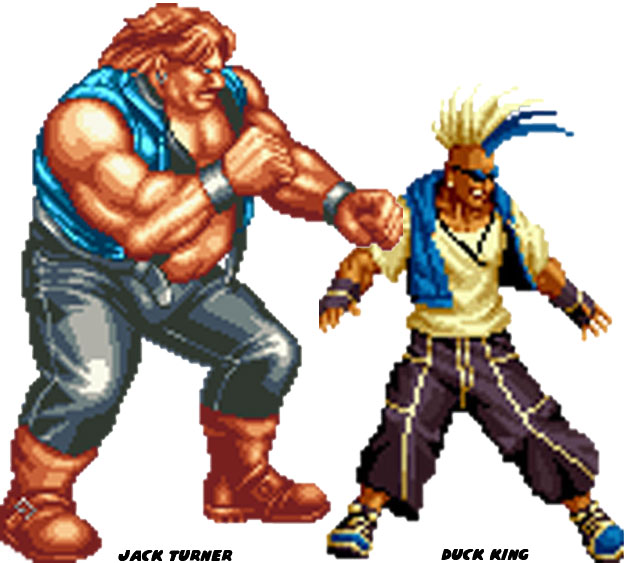
So what exactly did Birdie's new point of reference come from if it was not from previous games? I would say that the new Birdie is now a mash up of SNK's Jack Turner and Duck King. Both characters appeared in 1991. Jack appeared in the Art of Fighting. He was a mob enforcer in South Town. The character was modeled after the stereotypical fat bikers from the West. He hung out in bars and seedy back alleys looking for trouble. His costume and fat belly had a lot in common with the Birdie redesign.


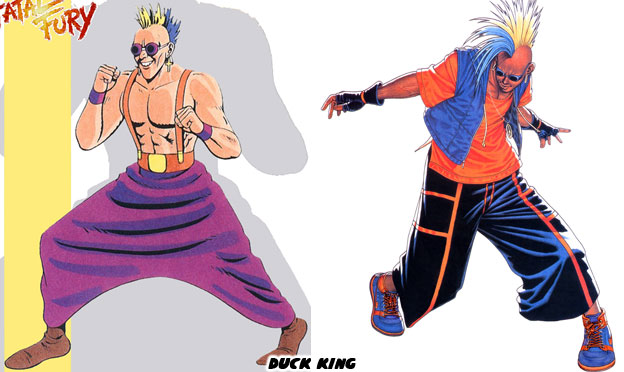
Duck King appeared in Fatal Fury. Despite the Mohawk haircut he was not supposed to be seen as a punk character. He was instead based on party kids, ravers and b-boys (break dancers) from the USA. His bright colors and costumes were pulled from trends in the West. There was a difference between how he was put together versus J and Two-P. In the early character art we could see that his costume, especially sunglasses and fat pants was inspired heavily by MC Hammer. He was never meant to be seen as any sort of gang member. As dance trends and pop culture changed the look of Duck King evolved. He was still a colorful character but now dressed in more street appropriate costumes. I would argue that neither Duck King nor Jack Turner were ever as popular as Birdie. In fact I remember the first time that I saw Duck King in the game I thought to myself that SNK was trying to create their own Birdie. I mean even the name was similar.


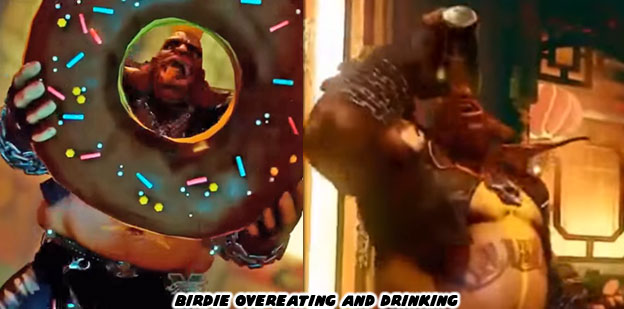
Yet anything that SNK did was nothing compared to what Capcom would do to their legacy character. Everything the designers did to Birdie in Street Fighter V reinforced what a slob he had become. For example some of his "attacks" consisted of him sneaking a donut from his back pocket or guzzling an energy drink. In fact in his character animation after winning a match he would pull a gigantic donut out of thin air and bite into it. It was an odd visual that nothing but demean him. Not only that but unlike previous representations of punks in the series the team did not seem to have the insight as to what Birdie would have eaten to gain so much weight. Donuts were considered more of a USA treat than a British one. Perhaps fish and chips and a warm beer would have made more sense.


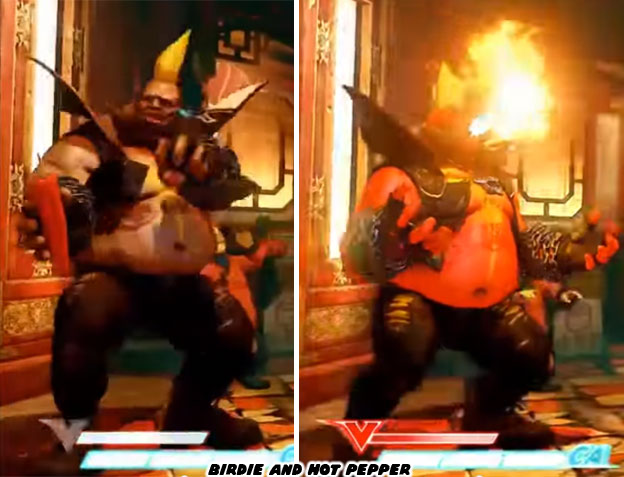
Having Birdie drink and eat and throw his garbage at opponents would hardly be considered "punk." He was just being crude and nasty. The most absurd of his mid-match snacks was a hot pepper. It would cause Birdie to breath fire, have his skin glow red hot and do more damage to his opponents with each hit. Birdie had never had any moves in previous versions of the game that were similar to these new food-based attacks. I could not figure out what made the developers think that this radical direction was appropriate for the character.


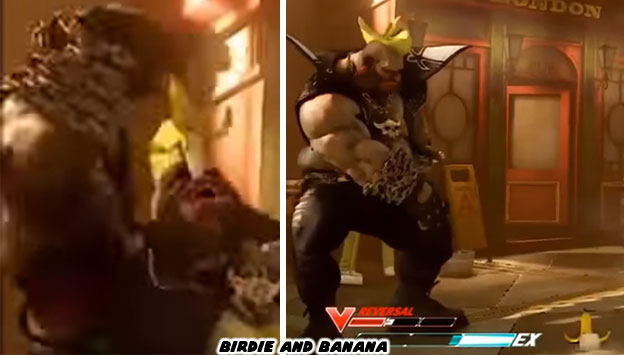
When I saw his last food-based attack it raised a red flag in my mind. Birdie would eat a banana and throw the peel on the ground. Opponents could slip on this banana. It was supposed to be a funny attack that also helped keep aggressive opponents at a safe distance. It was an ill-informed choice to make a black character enthusiastically eat a banana, There were heavy racial overtones that Capcom could have done without. In many parts of the world black professional athletes are often called monkeys and bananas are thrown at them from the stands. Seeing as how Street Fighter V is going to become an international title then I would strongly suggest avoiding anything that could even remotely be taken in the wrong context.


Since Birdie had never had these types of silly attacks before I wondered why the studio would start adding them now. If they are giving Birdie absurd attacks why not do the same for Ryu, Chun-Li, Cammy, Dictator or Charlie? If Birdie is now fat and sloppy but none of the other characters are why is that? All of the other characters seem to be played very straight. The way they were in previous games is the way they are now. I would hate to think that Capcom is doing this because of the color of his skin or the minority status of the character but it just might be true. Consider for a moment the previous nationalities represented in Street Fighter IV. There was a lot of diversity in the lineup but the new characters created for the game were very odd as well. The Mexican wrestler El Fuerte for example was obsessed with cooking and named several of his moves after plates. There was also a Turkish wrestler with beet red skin and bright blue hair named Hakan that practiced the art of Yagli Gures, or Turkish oil wrestling. That character was obsessed with finding the perfect oil recipe to help him dominate in his matches. Players could splash themselves with oil in the game and slide across the floor. The gimmicks placed on El Fuerte and Hakan were done to give the characters a personality and make them more interesting. Yet gimmicks and throw away attacks were not something that was used with the original Street Fighter II cast. Those characters were far more interesting without being silly or sloppy.


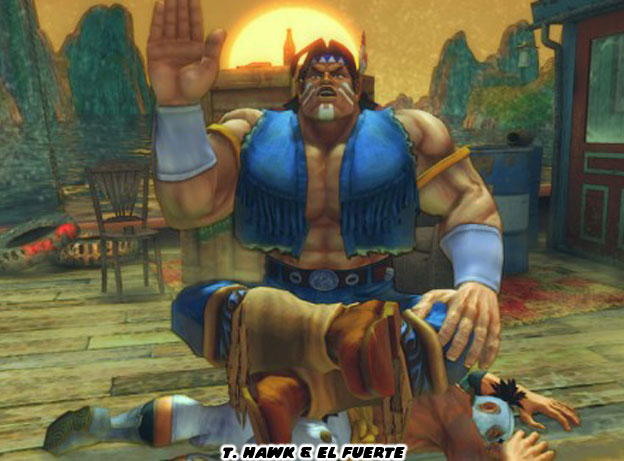
The trend was becoming apparent in the more recent Capcom fighting games. El Fuerte, Hakan and Birdie had something in common. They were all minority characters. The designers had no point of reference for the characters, their cultures or their specific fighting arts. So instead they gave each of them a gimmick and made them silly. I sincerely doubt that the developers would have done the same to a Japanese character or one of the female characters. Before Birdie had the silly food attacks applied to him the developers had done something similar in Street Fighter IV. The Native Mexican character T. Hawk  was given an update to his "Raging Typhoon" special attack. In Super Street Fighter II the character would grab an opponent by the head, spin them in the air and slam them into the ground. In Street Fighter IV an extra animation was added where T. Hawk would then sit cross-legged on top of the opponent making a stereotypical "how" pose for Native Americans. This was a trope used by television to depict the ways that Native North Americans would greet each other.


I would hate to think that the developers at Capcom were being racist with the characters. I like to think that these choices were made out of ignorance (which is a root cause of racism) rather than racial bias. Unfortunately the silly makeover was a trend that was becoming more and more apparent for the series. Something that could be measured over the past few years were how odd the character selection had become. What was done to Birdie was part of a pattern. The next blog will question the choices from the developers. As always if you enjoyed this blog and would like to sponsor me please visit my Patreon page and consider donating each month, even as little as $1 would help make better blogs and even podcasts!