Showing posts with label charlie nash. Show all posts

Tuesday, June 14, 2022

A new look for Guile, or correcting a mistake? His update in Street Fighter 6.

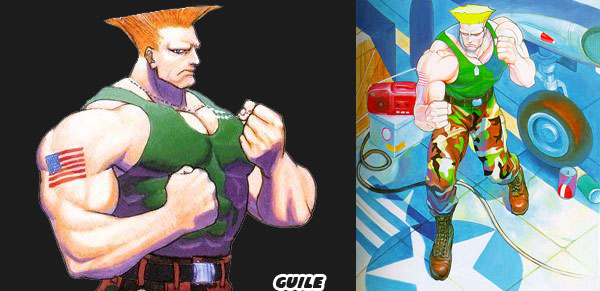
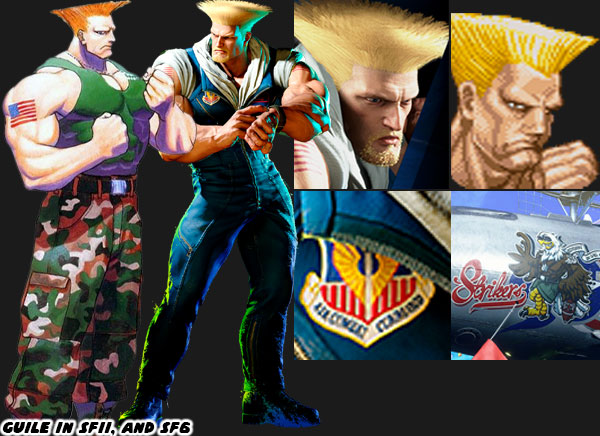
Today we’re going to look at the makeover Guile received for Street Fighter 6. I’m a fan of the character, and I ranked him eight on my personal list of the 30 most important Street Fighters. SF6 Designer Yusuke Hashimoto did a great job of capturing the look, proportions, and details that worked for him in Street Fighter II. Guile has always had a bodybuilder physique, even more so than Ken, and Ryu. Bengus did some of the most memorable illustrations of the character some 31 years ago. Mr. Hashimoto essentially worked out a modern interpretation of him, while still giving him some unique touches.

If you look at the size of the character, his hair, and proportions it’s as close to the look of SFII than any other sequel. Mr. Hashimoto added some facial hair, and eyebrows to Guile to show that time had passed since his previous appearance. The biggest change to the character comes in the way of the color of his uniform. You know already that I am a proponent of SF characters being assigned a main solid color, and complimentary secondary color. For Guile his costume went from green camouflage to a dark blue flight suit. I’m fairly certain that the military fans of Street Fighter are jumping for joy. Soldiers are just about universally accepted as being exceptional fighters in the genre. Green is mainly associated with Army soldiers, and not Air Force pilots. Technically Guile had been wearing the wrong colors for a generation. It doesn’t matter though at this point. His clothing maintains its military designation. Heavy boots for stomping on opponents. A weathered flight crew top with a couple of patches on it including Air Combat Command signaling his place in the United States Air Force.

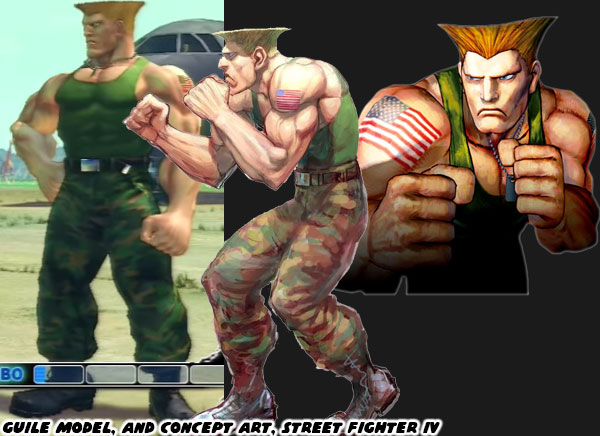
Guile’s first 3D appearance was in Street Fighter EX in 1996. That game was developed by ARIKA. The first time he was presented in 3D by Capcom was with Street Fighter IV in 2008. The version of the characters that appeared in those games were heavy stylized. Artist Daigo Ikeno created the look of the World Warriors for that sequel. Many people noted how bulky the cast looked. Producer Yoshinori Ono said the characters were much thicker than they used to be in order to make them appealing to western audiences. Their reasoning was based on looking at the hyper-masculine heroes in first person shooter games. The cast of Gears of War, Doom, and Duke Nukem were big, muscular stars after all. He didn’t think that the characters appealed to fans on this side of the Pacific because of the Japanese aesthetic. Yes there were some bodybuilder physiques in the original SFII, but there were also fat, skinny, and feminine body types as well. Most of them became bulky across the board in SFIV. Thankfully the distinct body types seem to have returned in SF6.

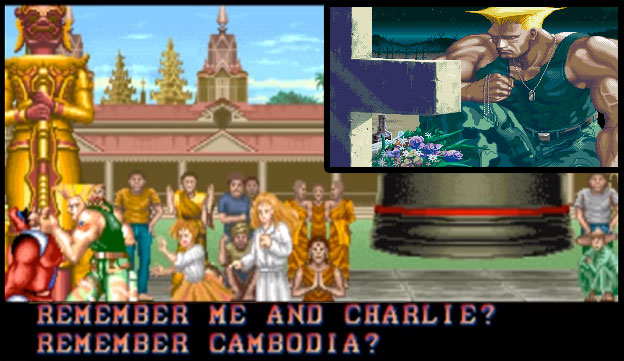
The other appealing thing about Guile has to do with his story. He entered the SFII Tournament in order to get revenge on the organizer for killing his friend Charlie Nash. The emotionally scarred soldier looking for vengeance made for a very interesting plot point. Audiences could root for a character like that. Guile In the end he doesn’t murder the villain. He is instead dispatched by Ken, and Ryu. Guile comes to his senses, and returns to the wife, and child that he had abandoned. Coming to terms with what happened to his friend, and becoming a family man made for a very satisfying conclusion. Why he would be in SF6 has yet to be revealed, but I’m certain it will make for an interesting story. What do you think about the return of Guile? Do you like the switch in color scheme? Do you wonder how he will be incorporated into the plot of SF6? Give me your takes in the comments section please. If you would like to sponsor me please visit my Patreon page and consider donating each month, even as little as $1 would help make better blogs and even podcasts!
follow the Street Writer on Patreon!

Saturday, June 23, 2018

30 years of Street Fighter: 30 years of Characters #8


Guile is without a doubt an over-the-top G.I. Joe-cartoon character squeezed into the Street Fighter II lineup for the sake of appealing to Westerners. I should be mad but I'm not. I'm not mad about his nonsensical haircut. Or that he looks like a caveman because he's missing his eyebrows. I'm not even mad about the USA flag tattoo and camo pants that obviously every serviceman gets when they enlist. Capcom of Japan really had our number when designing the westerner. Every fiber of Guile's being was infused with military imperialism. It was a bit on the nose. That's why I can't say anything bad about it. Guile deserves to be remembered on the 30th anniversary of Street Fighter. Not because of the overt pandering but instead because of what he evolved into.


Guile's look was obtuse for a reason. The Capcom designers were heavily influenced by the stylish manga JoJo's Bizarre Adventure. The tall hair was pulled from Jean Pierre Polnareff, the military muscle from Rudol von Stroheim and the name taken from Jean Pierre's rival J. Geils. Despite this mix of influences Guile was a prime example of how military design worked in a fighting game. Just about every other character presented was an archetype of a school of fighting. We had the karate guys, the kung-fu girl, the wrestler, the boxer, a muay thai champ, and so on. We could more or less tell what they were about just by looking at them. Then there was this super buff American soldier. We didn't know what style he practiced but knew he could brawl. Not only could he fight but he had some very unorthodox moves. He could do an inverted head kick, a somersault "Flash Kick" and even had his own variation of the fireball called the "Sonic Boom." These moves were flashy and very effective in the game, making him a sold choice for the tournament crowd. His fighting ability was as mysterious as his personality. His origins and reason for entering the Street Fighter competition were shrouded in secrecy.  


It turned out that Guile was a special forces officer. He was on the hunt for Vega / The Dictator. Years ago he lost his best friend Charlie Nash in a Shadowlaw ambush. Guile swore revenge and traveled the globe looking for clues. His obsession lead him to abandon his family. Nash was not only his best friend, he was also the one that taught him how to fight. These small details would be revealed over the events in Street Fighter II and Street Fighter Zero. As Guile's origin came into focus it made him more interesting. He wasn't just a pandering brute but an interesting archetype. He would become central to the plot of Street Fighter II and even get a prominent role in the animated movie. There hadn't been many military fighters in this series or other games that was as interesting. So to Guile we salute you on this anniversary! As always if you enjoyed this blog and would like to sponsor me please visit my Patreon page and consider donating each month, even as little as $1 would help make better blogs and even podcasts!
 follow the Street Writer on Patreon!

Monday, September 26, 2016

Some of my favorite Street Fighter collectibles, part 2...

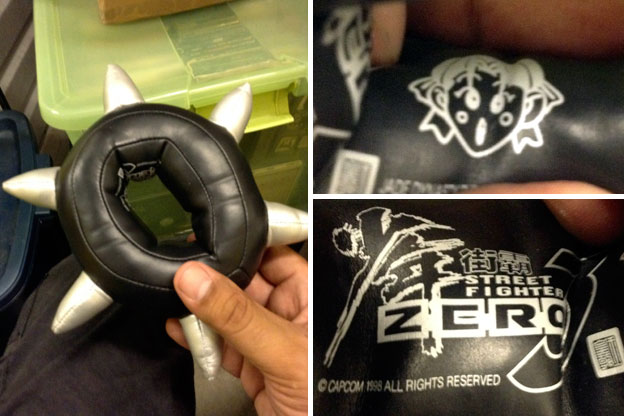
In the previous blog I highlighted some of my favorite collector covers from the Chinese Street Fighter comics. Today we're going to look at some of the other memorable special issues that they printed. Often a special issue not only came with a unique cover, it also came with a collectible. Some of these things were postcards, puzzles or calendars featuring the best covers from the past year. Sometimes these issues came with an embroidered hat or sweatband featuring a character. The best were even more original. Take Chun-Li for example, when the publisher wanted to celebrate the character in Street Fighter Zero they distributed spike bracelets to their fans.


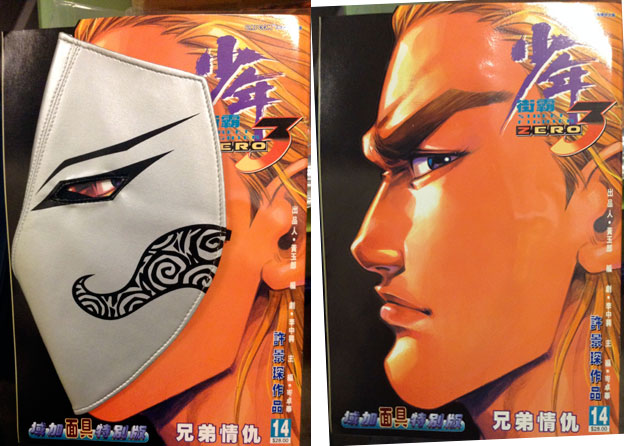
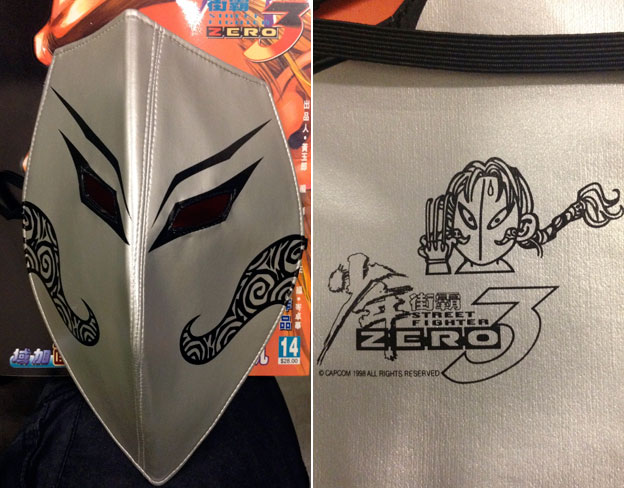
Of course the bracelet was foam wrapped in vinyl, but it was a very clever marketing toy. In what other country did Capcom create anything like that for their fans? Another soft good that they distributed through the comics was actually attached to the cover of a comic. The Spanish assassin Balrog (Claw) wore a trademark mask. The publisher of the Street Fighter Zero comics created a die-cut cover of Balrog wearing the mask. Fans could remove the mask and wear it. Imagine being a kid and being a huge fan of Street Fighter. How awesome would it be if your favorite comic book came with a goody on a regular basis? What if Marvel did the same for Spider-Man, or DC for Batman? People would be all over it.


Granted in the US there have been unique collectibles released with comics as well. The Batman trade paperback A Death in the Family came with a grotesque Joker mask and the Court of Owls came with an owl mask. Fans had to wait until the specific series had ended and was put into a TPB before they could buy it. Yet overseas these giveaways are more common. In Italy for example the Topolino (Mickey Mouse) comics sometimes come with toys, called gadgets. The most popular Chinese comics came with all sorts of soft goods and toys on a more regular basis.


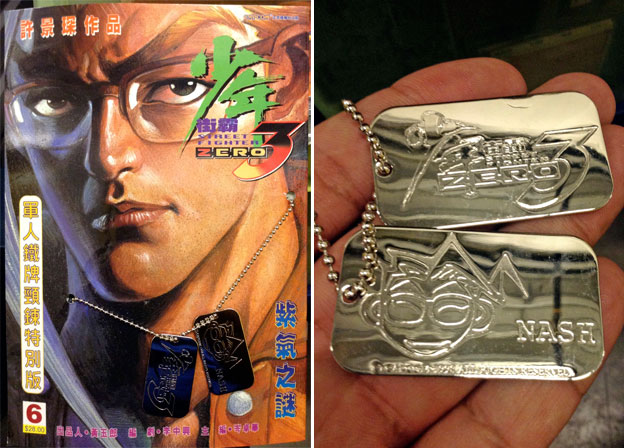
Of all the collectibles I've gotten from the Chinese Street Fighter comics the best one was without a doubt the dog tags worn by Charlie Nash. Like the Balrog issue this comic also had a die-cut cover. There were two holes poked in the sides of the neck were a metal chain and polished metal dog tags were on display. These were full-size dog tags with the name and likeness of Nash. To make sure collectors picked up the issues there was even an embossed Capcom license on them. I wonder how many people that cosplayed as Guile ever tracked down these dog tags.


What about you? Do you have any rare or unique Street Fighter items in you collection? If so I'd like to hear about it! As always if you would like to sponsor me please visit my Patreon page and consider donating each month, even as little as $1 would help make better blogs and even podcasts!

 follow the Street Writer on Patreon!

Sunday, July 19, 2015

The return of Charlie Nash, or how zombies make the best fighters...

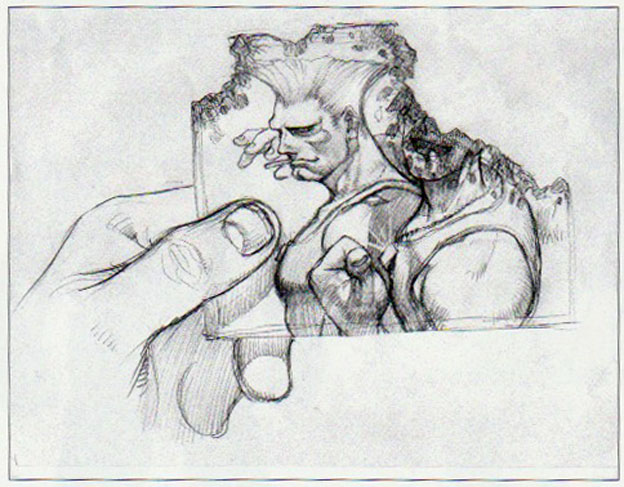
Of the characters announced so far for Street Fighter V I think the most interesting was the return of Charlie Nash. I thought he was a great character in the Street Fighter Zero / Alpha series. I liked him partially because he wore glasses. For those that didn't get a chance to play as the soldier he was essentially the American representative for the series. He was created the person whose death Guile was avenging during Street Fighter II. What was most interesting was that this character did not have a face, only a name when Street Fighter II came out. In fact even the developers at Capcom didn't know what Charlie looked like originally. In some unused art by Bengus the only picture that Guile had of his friend had the face burned out. Making him the original gaming unknown soldier.


Audiences didn't know if Charlie was a friend or family member killed in the line of duty. Guile would hoist his dog tags in the air in some victory animations. The myth behind Charlie grew as the endings in the Street Fighter II were changed and new details were added. At first Guile would threaten the Dictator and in other versions Guile would visit the grave of his friend. Guile was a visually unique character, with his military look and odd haircut, but he became interesting thanks to his ending. He attacked the Dictator after his defeat, grabbing him by the collar. It was a palpable rage when he brought up the names of Charlie and Cambodia. Audiences didn't know quite what happened but it sounded like something serious went down. When Charlie Nash was killed Guile was younger, considered a runt, Only Guile's wife and daughter were able to talk him out of killing the Dictator. Some of the endings in the game were silly but most were played out like a dramatic movie, Guile's ending was no exception. He had abandoned his family in the pursuit of revenge and was reunited once his vendetta was completed.


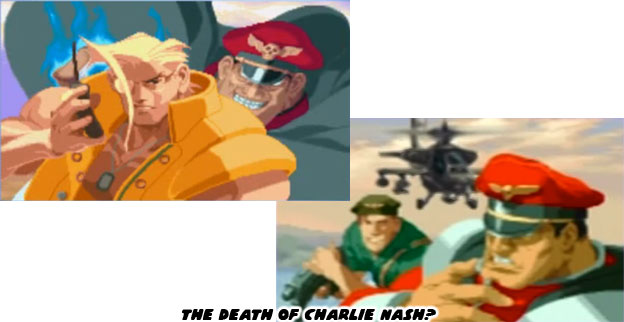
Charlie Nash died officially during the events of the Street Fighter Zero / Alpha series. What was unique was how differently he died during each release of the game. In one version he had found a hideout for Shadowlaw and was radioing home base for reinforcement. The Dictator snuck up behind him and attacked him. All that was left was a bloody dog tag. It didn't really look like Cambodia but more like the US Southwest.


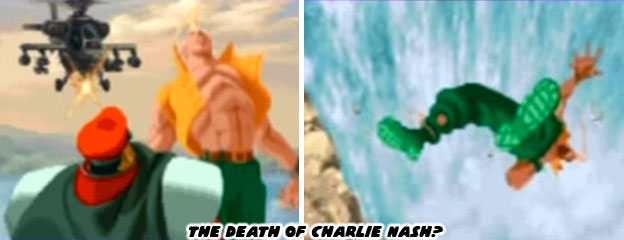
In the second release of the game Nash had the Dictator on the ropes, somewhere in Brazil, possibly the Iguazu Falls, when he was shot in the back by a Shadowlaw helicopter and fell to his presumed death. When the Shadowlaw soldier asked the Dictator if he wanted to confirm the kill the Dictator said that no one could have survived the fall. Again, all that was left of Nash were some dog tags. By the third release of the game Nash was flying a jet and had blown up the base of operations for Shadowlaw but was still on the hunt for the Dictator. So in one out of the three endings he did not die.


It was an interesting contrast from the previous game and this was something that the Street Fighter series had become known for. There were multiple endings in the games yet each ending did not necessarily work with every other one. There were even endings that contradicted the ending of a previous game. Sure the Dictator could have captured Nash and turned him into one of his brainwashed soldiers. He had done this before to soldiers and special agents the world over, including his prized subject the Delta Red agent known as Cammy. 


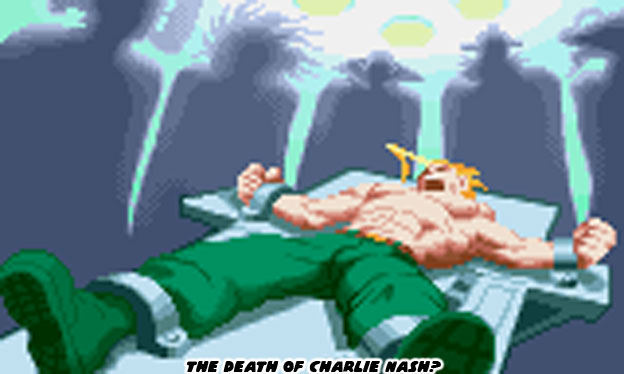
Then again Nash could have been captured and brainwashed by a different group. In Marvel Super Heroes vs Street Fighter the Shadow version of Nash made his debut. He even popped up in X-Men vs Street Fighter. During the crossover games it was hinted that some mysterious group was responsible for his new form. Were these mad scientists, or cultists of some sort? All gamers could do was speculate as to the "true" fate of Charlie.


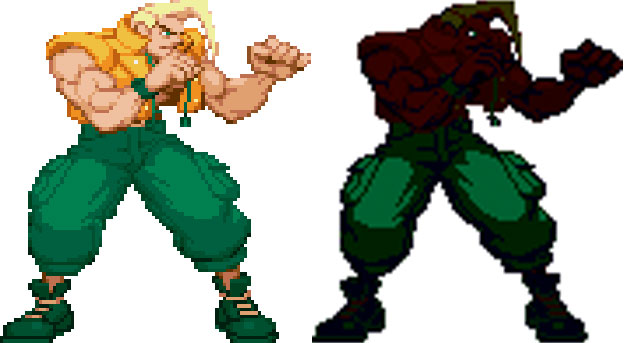
The dark Shadow version was literally a sprite of Charlie from the Zero series that had been discolored to make him look as if he were in a perpetual shadow. His eyes glowed and his attacks took on a blue hue. He had the same basic attacks and audiences began wondering if the character had returned from the dead. It did not become official until Udon began writing about the character and his history and of course when Street Fighter V was announced, almost 20 years since the character had debuted.


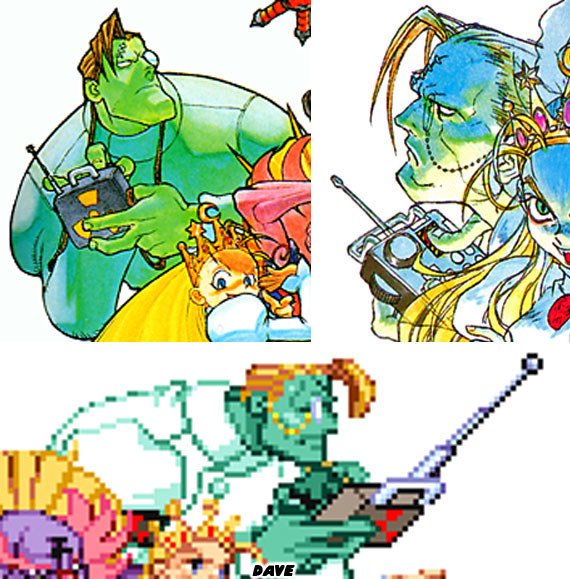
Of course many eagle-eyed Capcom fans said that the new Charlie Nash looked an awful lot like Dave. He was one of the alien henchmen characters from Cyberbots: Full Metal Madness. He served under Princess Devilotte de Deathsatan IX, an over-the-top lolita-dressed alien bent on universal domination. I could see where people would see the same hair and glasses on both characters. Dave debuted a few months before Charlie Nash, it's entirely possible that the artists liked the look of the character and incorporated some of his visual cues on Charlie as well.


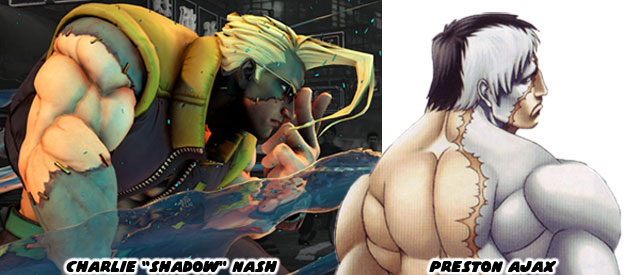
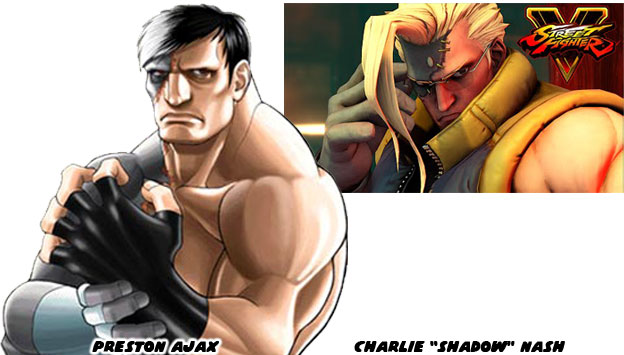
When I saw Charlie back from the dead, complete with stapled and stitched body parts, I was reminded of a different fighting game character. Preston Ajax was a sub-boss character from the game Fighting Layer. The character was a mercenary that had been mortally wounded in a bomb attack. He was pieced together with the remains of his brother, who was a fellow mercenary. The discolored portions of his skin were like dead tissue, very macabre. I got the same feeling while looking at Charlie. Ajax was actually inspired by the manga character Black Jack. He was injured when he stepped on a land mine as a young man. His only friend, a young black boy named Kuro, donated his skin for a transplant. This contrast made him one of the most memorable manga heroes ever created. Black Jack went on to inspire the creation of the Tekken series as well, but I digress...


Preston was created by ARIKA, the studio that was founded by many Street Fighter II members. The game Fighting Layer that Ajax appeared in could be considered a revisit to the original plans for Street Fighter II. I wonder if it was a coincidence that two military characters with similar "back from the dead" origin stories ended up in fighting games or if it was an idea that the SF II team had kicked around before they split up. I guess the world may never know.

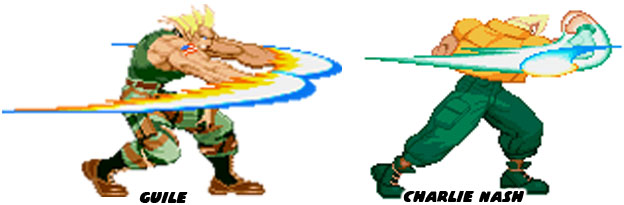
But there was more to the character than a cool background and a connection to one of the Street Fighter II characters. The series had always been about combining a great fighting game engine with characters that could perform amazing moves. Ken and Ryu had the Shoryuken or "Fireball" attack. In the original game only they and Sagat could perform the move. In the sequel it was the same thing but Guile was one of the new characters that could also perform a ranged attack. Guile's version was called a Sonic Boom. When Charlie appeared as a playable character a few years later he too was given the Sonic Boom attack. However there were nuances that separated Guile from Charlie.


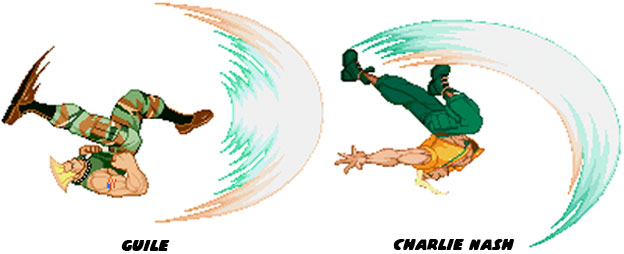
It was assumed that Nash had taught Guile the special attacks. As a master of these unknown fighting arts Nash was able to perform the same moves with a little more ease. For example he would perform his Sonic Boom attack with one hand while Guile used both. That was not the only special move that Guile possessed. He also had a Flash Kick, which was a backflip and kick combined into one. Nash also had a version of this move except he did it with his back turned to his opponent. Again the move looked a little bit easier for Nash to perform.


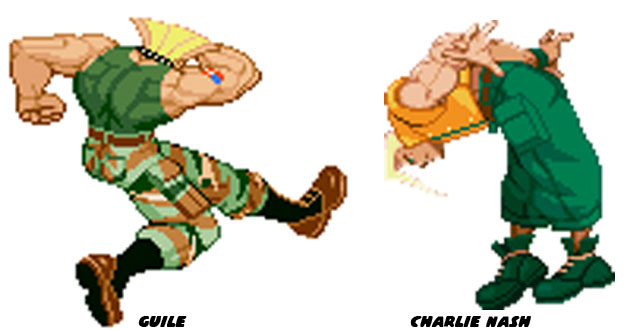
Both moves happened so fast that audiences didn't always catch the frames of animation that Capcom placed on them. There was a tremendous amount of forethought that went into how each fighter tumbled in the air. Each actually led with the opposite kicking leg in order to create the momentum for the attack. Since Charlie had his back to opponents he needed to be able to kick as well as twist in the air, this translated to him leaping cross legged. He would kick his back leg out and then tuck it in as his other leg created the arc for the Flash Kick. Then just before he landed he would complete the twist and land facing his opponent.


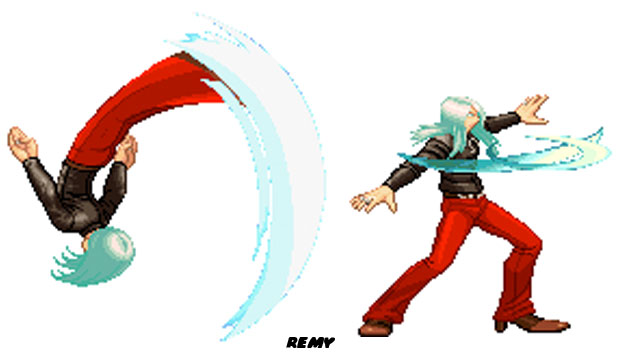
Both moves looked fantastic even if audiences didn't spend the time dissecting how each was performed. If assigning special attacks was all it took to make a character memorable in the genre then it would apply to any new character introduced. Right? Capcom pushed their luck in Street Fighter III 3rd Strike with a new character called Remy. This character had all of the moves of Guile and Nash and could perform them with even greater ease than the military fighters.


This character didn't have a fraction of the forethought that went into the design of Guile or Nash. It was a bit insulting to the legacy character that some skinny Frenchman with no build for fighting or no interesting origin would have the same techniques. Not only that he could also throw Sonic Boom attacks while crouching which was something that neither Charlie nor Guile could do. Audiences wondered why put in a character with all of Guile's attacks in Street Fighter III rather than just return Guile. After all the studio had brought back Chun-Li in the series as well. Remy was one of the more forgettable characters that the studio produced and had not been brought up since.


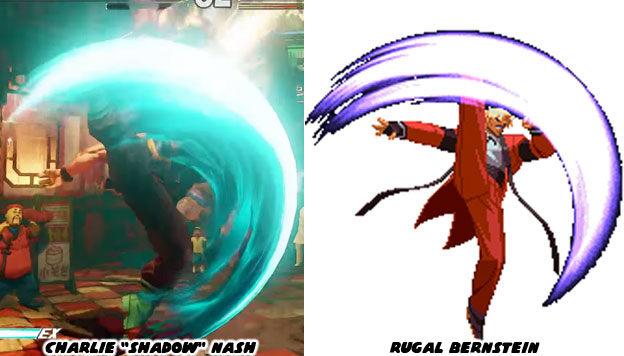
The physical appearance of Charlie was not the only thing that had changed with his return. The Flash Kick was gone, in it's place were two new special kicks, the Sonic Scythe and the Moonsault Slash. Nash now performed the trademark kick with one wide arcing leg movement. It was reminiscent of the special attacks of Rugal Bernstein, a boss character from the King of Fighters series. I kind of miss his original backwards flip.


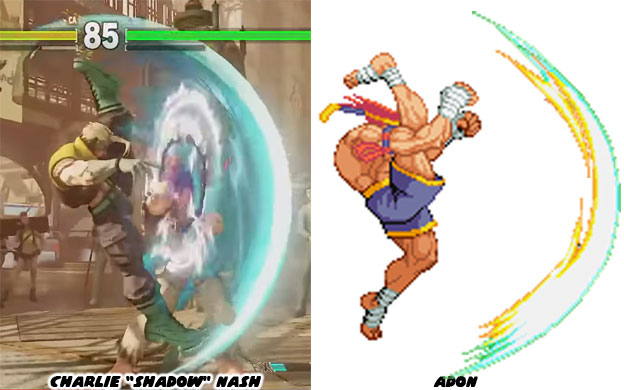
The other kick was a front tumbling heel strike. It was very similar to the Jaguar Kick pioneered by Adon. Charlie's super attacks had been changed as well. The character not only looked new but played new. What do you think about the return of Charlie? What do you think of the changes of his strikes and abilities? Are you a fan of the new look? Who do you want to see in the new lineup? As always if you enjoyed this blog and would like to sponsor me please visit my Patreon page and consider donating each month, even as little as $1 would help make better blogs and even podcasts!

Thursday, July 16, 2015

Representation Matters! Or, what happened to Birdie, part 7...


After Street Fighter II was released the extra people brought aboard to help with character designs went back to their respective projects. This meant that that the Turbo and Hyper upgrades were put in by the smaller original designers. The upgrades were based on arcade feedback as well as what illegally hacked boards had done to the speed and combo abilities of the game engine. Development on Street Fighter III was stopped so that the studio could release one final upgrade kit, Super would introduce 4 new characters and a new boss villain, Gouki, into the universe. The characters in this upgrade felt incomplete, Cammy, T. Hawk and Gouki were furthest along in development but Fei Long and Dee Jay looked and played like rushed characters. It stood to reason because there were not the same eyes on the project as there was in the editing process for the earlier World Warriors.
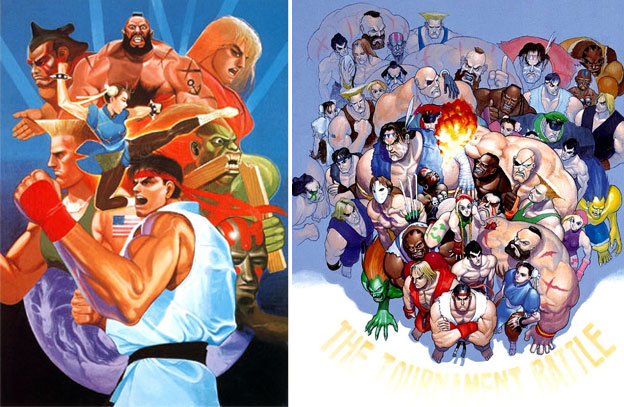
 

In fact not long after the release of Super Street Fighter II, producer Akira Nishitanti took about half the team that worked at Capcom and left to start up ARIKA studios. Even if Capcom wanted to bring everyone back together it would be almost impossible. Work on Street Fighter III was halted because of the shake up. The studio took inventory of who was left and was challenged to see how they could keep the Street Fighter series going. There was no reason to lose faith in those that remained. After all the sequel did very well after the original Street Fighter planner Takashi Nishiyami left to join rival studio SNK. The new designers Noritaka Funamizu, Haruo Murata and Hideaki Itsuno as well as the art team came up with a brilliant plan. Instead of making a sequel they would instead create a game that tied together the events of the first and second games. Not only that but it would also bring together heroes and villains from Final Fight to show that they were indeed part of the same continuity. By doing this they would not hurt the expectation of audiences. Those that wanted a "true" sequel would have to wait. Street Fighter Zero / Alpha was instead a celebration of the genre that Capcom had defined.

The plan worked better than expected. Audiences were falling over themselves at the radical new direction that the game had taken. The lead artist on the project, Bengus, created an entirely new aesthetic for the lineup. His design fell somewhere in between Japanese anime and Western comic book body types. His exaggerated proportions and strong but fluid lines would go on to influence artists on both sides of the Pacific. His fellow artists helped create memorable version of many iconic Capcom characters. They also took some creative chances with the handful of characters they introduced. The most important of which was the addition of new female characters.
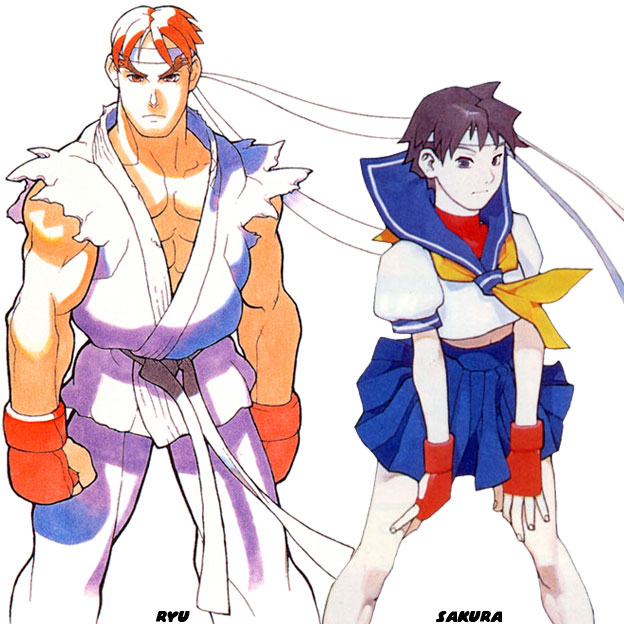
 

The genius in the planning was that each of the characters found some balance. A girl version of Ryu was introduced. She lacked the strength and range of Ryu but it made sense because her journey was just beginning whereas Ryu had been fighting for years. Sakura became the darling of game players around the world. She was a very positive role model. She had youth and enthusiasm on her side but we could tell that within a few years this character would grow into a woman as powerful as Chun-Li. Vega the Dictator was a villain of the story but not necessarily the only one.

The Dictator was not a traditional martial arts master, he wore some sort of cartoonish military costume and not much was known about him. Little was revealed in the endings of Street Fighter II so audiences were left with many questions. The designers wanted to flesh out the character and get a little more into his origin. They had plenty of room to explore his mysterious powers and military conquests in the Zero series. Yet they did not want to give everything away. They still wanted to leave some things up to our imagination. The best way to do this was by giving him a counterpart with equally unique abilities. The team designed a female with a costume that slightly mirrored the Dictator's, just as Sakura had reflected Ryu's. Tripling the amount of playable female characters (a younger Chun-Li had returned as well) from Street Fighter II was a gamble and it payed off from a critical response as well as from an inclusive point of view.
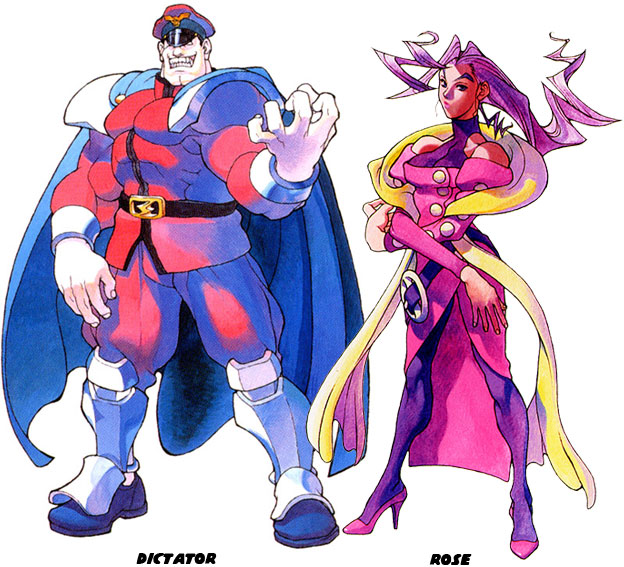
 

Strong female characters of every age and background were rarely seen in fighting games. Most studios relied on sex appeal to sell their women to audiences but not Capcom. They wanted players to know that these characters could fight every bit as hard as the men. It did not matter if they came from China, Japan, England or Italy. Think for a moment how powerful that message was to the female fans of the series. It was a loud statement that happened in 1991 and again in 1995. For the next two decades girls and women would dress as Chun-Li, Cammy and now Sakura and Rose as well. The strong female role models from comic books were no longer alone. Video games were contributing great role models to pop culture and that list would only grow.

Just about every choice that the team did seemed like a right one for the game as well as for the genre. It was hard to believe that it had been four years, and many upgrades since Street Fighter II had appeared. Street Fighter Zero was very different from a graphics, gameplay and control standpoint, yet at the same time it looked and felt like an old friend. Part of the greatness behind the designs had something to do with how far Capcom had called out to all of their own influences as well as the legacy they had been working on. People that had grown up watching the same movies, reading the same comics as the developers felt like they were in on the jokes. Even a small thing like a level background became something special to players.
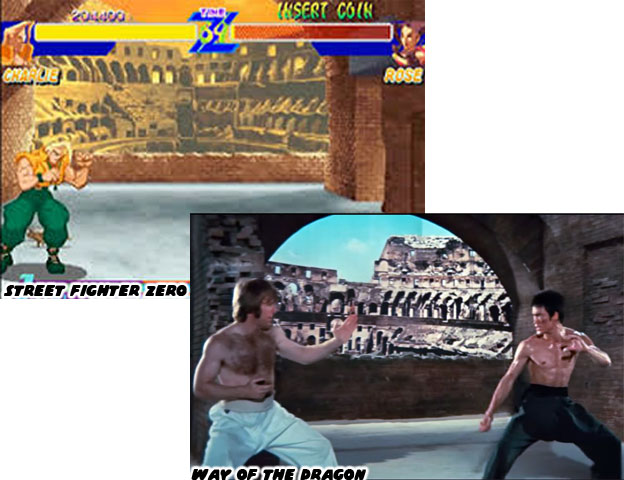
   

Capcom played up this bit of nostalgia by bringing back old faces and giving them a fresh new look. It had been eight years since players saw Birdie so he was given a big makeover. The studio did this so that he would become as timeless as the main cast. this initial makeover was something that this entire blog series was started on. Birdie went from a forgettable tough guy in the first game to a fully-formed bruiser. He had dimension and a personality that complimented his wild attacks. There was nobody like him before and would be nobody like him after. Birdie was joined by a pair of characters that hadn't been seen in six years as well. To be fair they were seen on console games but not in arcades for that length of time. You might think that it would be impossible to balance out somebody as colorful as Birdie but the team found a perfect matchup.

Sodom was a leader in the Mad Gear Gang. He was an underground wrestling legend that had an undefeated streak, thanks in part to his use of two samurai swords Musashi and Muramasa. Sodom was obsessed with Japanese culture and fashioned himself samurai armor which was made mostly from football gear. He was more over-the-top than any other Mad Gear gang member. He was given an assortment of moves that was every bit as unorthodox as those given to Birdie. To help tone down his range the team took away his swords and he was given a pair of jitte, an ancient Edo weapon. It still made dangerous but players had to get close to opponents in order to use them. Seeing the two classic bruisers return was like a dream come true for fans of the earlier games.
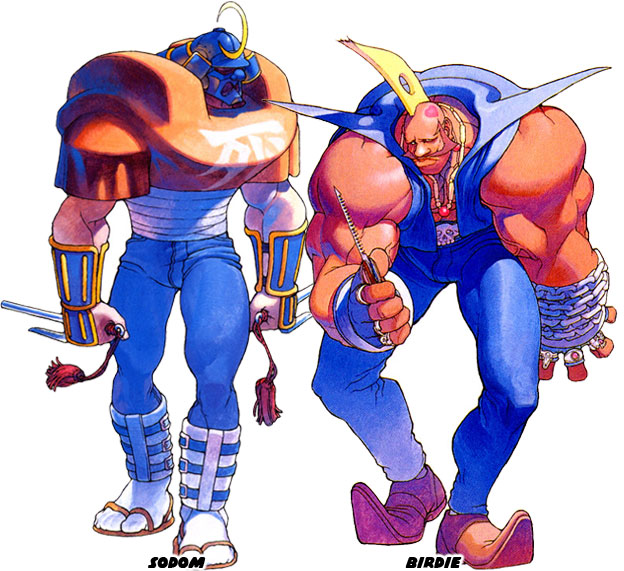
 

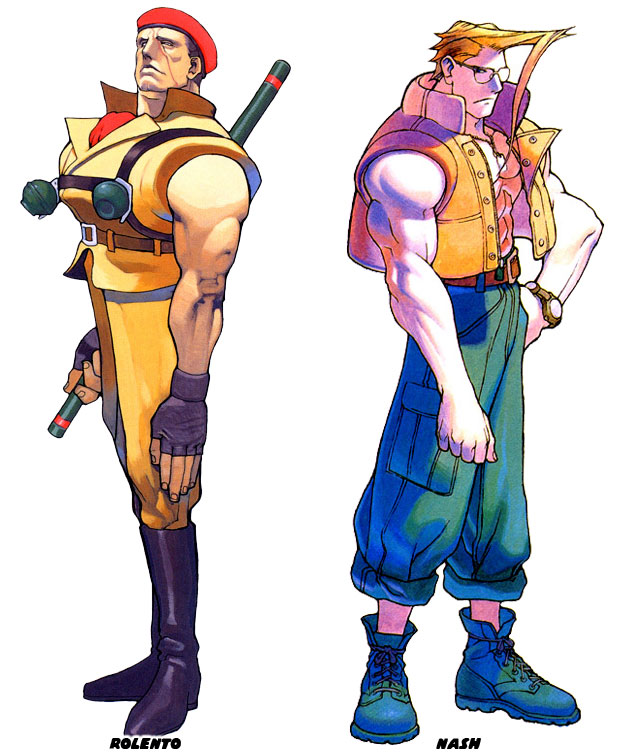
The Mad Gear gang was the precursor to Shadowlaw. They were not solely a gang that ran the streets of Metro City but actually a network of criminals and terrorists the world over. A group that large got their orders from a business tycoon named Belger. However he had his trusted gang leaders, that acted like generals, to help carry out his plans. Sodom was a lower-ranking leader but his right hand man was a mercenary named Rolento. The military specialist was a superb hand-to-hand fighter. His design was actually based on the Colonel a character from Hokuto No Ken. I'm telling you that Capcom wouldn't have made as many memorable characters if not for Tetsuo Hara! Anyhow Rolento was blindingly fast. He could take on Haggar, Guy and Cody in Final Fight all by himself. He fought with an assortment of throwing knives and even grenades. Players knew he was not somebody that would be trifled with.

Having a few villains from Final Fight was a great idea and Capcom balanced them out by including the heroic Guy. The military presence was also balanced out by a new hero. In addition to Rose and Sakura the team added a third figure designed to remind audiences of the original World Warriors. In this case it would be Charlie Nash, the best friend of Guile. The character fought similarly to Guile with a few unique touches. He was put in the game to help fill in the backstory of Guile. Nash had tracked down the Dictator through the fighting tournament but he was found out and shot by Shadowlaw soldiers before he could take the Dictator in. He thrown over a cliff next to a waterfall and presumed dead. Guile swore revenge and ended up in the fighting tournament during the events of Street Fighter II.
   

Filling out the continuity of the Capcom universe went over very well with audiences. It was great to see how all of these characters were interconnected but even greater to see the diversity of fighting styles. The game engine was perfectly suited to different types of gamers. Those that preferred fast-action combos had characters that could do that. Those that preferred power moves instead had those characters as well. There were even a few in the middle that had a unique mix of brawling and technique. It would be the elements of Street Fighter Zero that would be most repeated in Street Fighter IV and now V. Those games wanted to bring back as many characters as they could to please the requests of fans. However in doing so they missed the little things. How Ken, Chun-Li and Ryu looked younger in Zero. How they had matured in Street Fighter II and III. In IV they stayed mature but Sakura and Cammy had unexpectedly returned. Only it was a young Sakura from Zero and the older Cammy from Street Fighter II. These could be seen as minor issues but they could also be seen as how the teams working on the newer Street Fighter IV were not working as diligently on new character types as the previous teams had. It showed that they were not being as mindful of their legacy as previous teams were either.

The last time the majority of the people that had worked on Street Fighter II worked together was during the mid '90s. Most of the team reunited during he development of Street Fighter EX. Their purpose was to create an entirely new set of World Warriors and put them in a 3D engine. They wouldn't necessarily have to be 1-to-1 copies of the earlier cast either. To which I say thank goodness too because it might have sparked another Anabebe mess. The new female characters, Pullum Purna and Blair Dame were distilled from the ideas that made Chun-Li unique. Pullum, an Arabian fighter represented the youthful aspects of the original China Daughter and Blair represented the toughness of the adult Chun-Li. The wrestler Darun was a mirror for Zangief, Doctrine Dark was a Rolento-style military counter to Guile, Ryu and Ken had Kairi and Allen Snider to respectively deal with. The characters found their own niche to carve out without necessarily copying the formula exactly. The circus performer Skullomania was by far the most colorful of the lineup. He was a sort of Dhalsim / Blanka level of absurd. But again all of these character types worked within the universe.
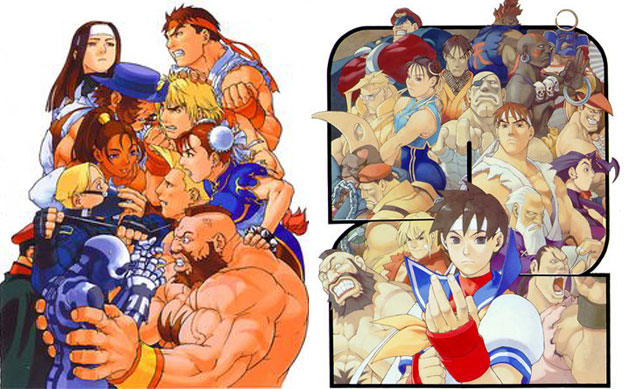
   

The Street Fighter games post Zero and EX had the weakest amount of character creation and diversity. It stood to reason considering that many of the original members had gone to DIMPS, ARIKA and even SNK by this time. By not having triple the amount of people working on the cast then a lot of voices, a lot of insight was lost. The next blog will look at how Street Fighter III and IV began to deviate from the lessons set by the earlier games. I hope to see you back for that. As always if you enjoyed this blog and would like to sponsor me please visit my Patreon page and consider donating each month, even as little as $1 would help make better blogs and even podcasts!
Tuesday, June 30, 2015

Representation Matters! Or, what happened to Birdie, part 2...


In the previous blog I talked briefly about the influence of Street Fighter around the world. There were many reasons why the franchise was so successful. From a move selection, balance and control standpoint Capcom had done a superb job. The controls were experimental, many developers thought that anything more than two buttons might confuse players, six was going to be overkill! Despite the fears of the industry (and the extra expense to Capcom to put in all those extra buttons) players seemed to quickly pick up on the nuances of multiple buttons and joystick combinations. From week to week gamers were becoming exponentially better at the title and were uncovering secrets and techniques over months. The studio had a hit on their hands with Street Fighter II and decided to refine the game. Unlike other companies that would publish a title and move to something else Capcom was looking to fine tune Street Fighter II and offer arcade owners more repeat business. They would release upgrades to the game, known as the Hyper, Turbo and Super versions. The changed the way certain characters played and modified the balance accordingly based on location tests and feedback from player. Each upgrade to the arcades was met with great success.

From a technical standpoint the developers at Capcom were unparalleled. Yet with certain updates and sequels the characters introduced into canon did not have the staying power of the original Street Fighter II "World Warriors." The designs of the subsequent characters did not evolve as greatly as the game engine had. In some cases the characters were ill informed, if not crude and stereotypical. Birdie had started out as a typical punk character in the original Street Fighter but turned into an icon in Street Fighter Zero. It had been 17 years since Birdie was last featured in a Capcom game. In Street Fighter V the years had not been kind to him.


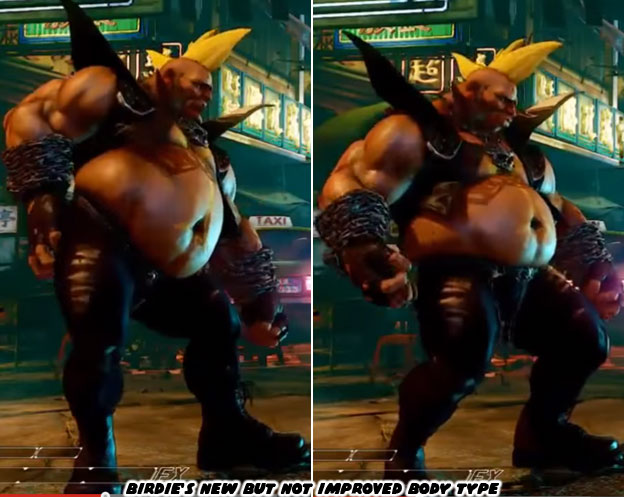
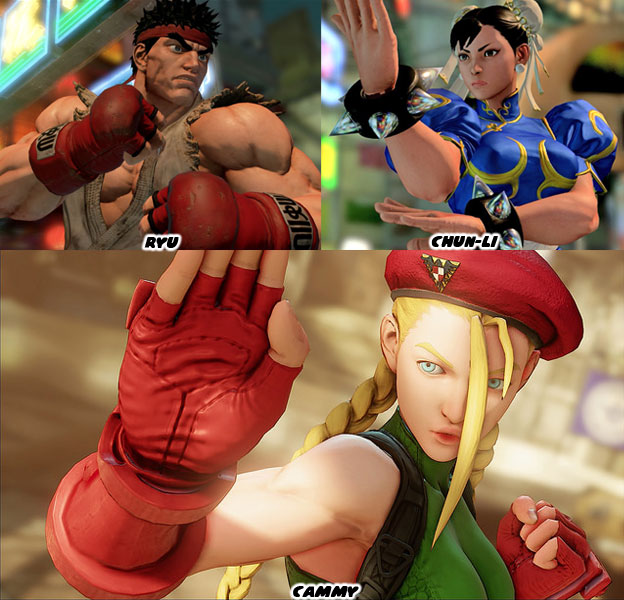
Actually it was the designers that were not kind to Birdie. They turned the character into a slob. A fat, junk food craving shadow of his former self. I wondered why Capcom would do such a thing. The other characters announced thus far had not changed at all. Ryu (who happens to be friends with Birdie in canon) was still muscular, Chun-Li was as beautiful as her previous incarnation, and Cammy seemed a minute older than her previous appearance but was still beautiful. None of the characters were fat or out of shape.


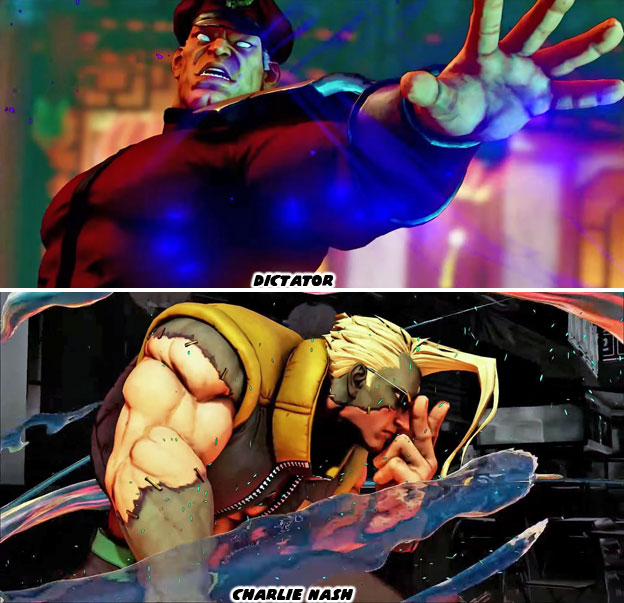
The Dictator, known as Vega in Japan and M. Bison in the USA, leader of the terrorist organization Shadowlaw was the main villain in Street Fighter II. He had also returned for Street Fighter V. He appeared very much the same as he did in Street Fighter IV only that now his hair was white. It didn't seem to go white due to his age but instead due to his mysterious "Psycho Power." The surprise announcement was that of Charlie Nash asa  returning character. Charlie had last been seen in Street Fighter Zero. Like Birdie it had also been 17 years since his last major role. Nash had changed somewhat as well. The character was presumed dead following the events of SF Zero, he had been shot in the back by Shadowlaw soldiers and thrown off a cliff. Revenge spurred his military friend Guile to enter the SF II tournament and track down the Dictator. In canon Nash was brought back from the dead, brainwashed and turned into an assassin. His discoloration and Frankenstein's monster-like appearance were done deliberately. Of course neither the Dictator or Charlie had returned fat and out of shape.


I wondered why Birdie had been turned into a slob. What did the character do to deserve such a disservice from the  new developers? Did the team of artists and animators not like him? Was it because they did not like punk culture? Was it because they did not like minority characters? Perhaps they simply didn't understand the appeal of the character in the first place. Unlike the radical redesign of Birdie from the original game to Street Fighter Zero the designers used the Zero version and tore him down. They did not even bother to use the cues that were placed on him in his previous incarnation. For example he didn't wear chains on his wrists because it was his primary weapon but because they were attached to a pair of handcuffs that he had broken. The newest version is missing the handcuffs as well as some other details that I will let you figure out.

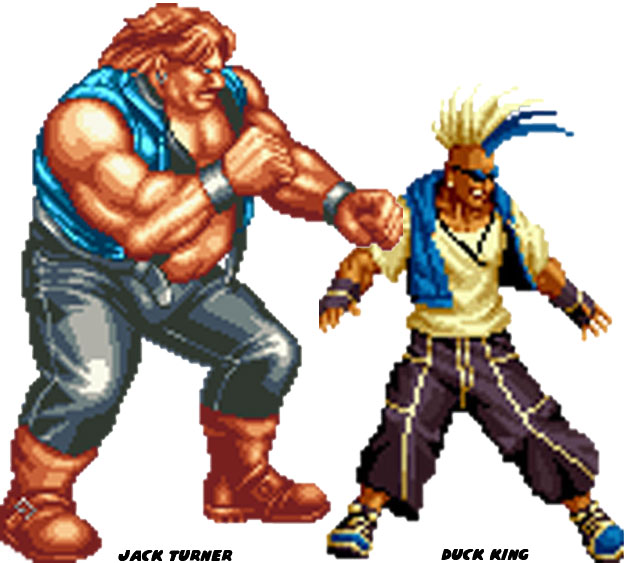
So what exactly did Birdie's new point of reference come from if it was not from previous games? I would say that the new Birdie is now a mash up of SNK's Jack Turner and Duck King. Both characters appeared in 1991. Jack appeared in the Art of Fighting. He was a mob enforcer in South Town. The character was modeled after the stereotypical fat bikers from the West. He hung out in bars and seedy back alleys looking for trouble. His costume and fat belly had a lot in common with the Birdie redesign.


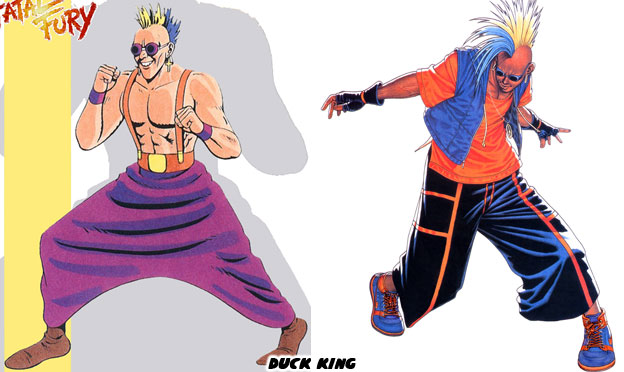
Duck King appeared in Fatal Fury. Despite the Mohawk haircut he was not supposed to be seen as a punk character. He was instead based on party kids, ravers and b-boys (break dancers) from the USA. His bright colors and costumes were pulled from trends in the West. There was a difference between how he was put together versus J and Two-P. In the early character art we could see that his costume, especially sunglasses and fat pants was inspired heavily by MC Hammer. He was never meant to be seen as any sort of gang member. As dance trends and pop culture changed the look of Duck King evolved. He was still a colorful character but now dressed in more street appropriate costumes. I would argue that neither Duck King nor Jack Turner were ever as popular as Birdie. In fact I remember the first time that I saw Duck King in the game I thought to myself that SNK was trying to create their own Birdie. I mean even the name was similar.


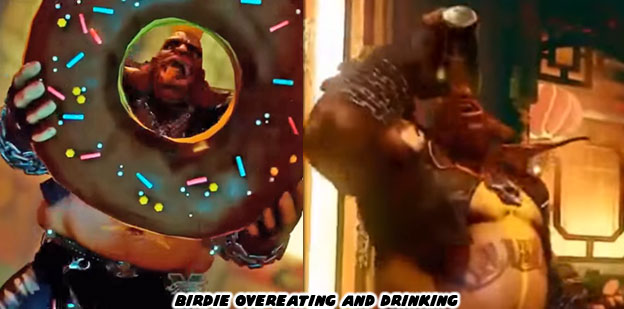
Yet anything that SNK did was nothing compared to what Capcom would do to their legacy character. Everything the designers did to Birdie in Street Fighter V reinforced what a slob he had become. For example some of his "attacks" consisted of him sneaking a donut from his back pocket or guzzling an energy drink. In fact in his character animation after winning a match he would pull a gigantic donut out of thin air and bite into it. It was an odd visual that nothing but demean him. Not only that but unlike previous representations of punks in the series the team did not seem to have the insight as to what Birdie would have eaten to gain so much weight. Donuts were considered more of a USA treat than a British one. Perhaps fish and chips and a warm beer would have made more sense.


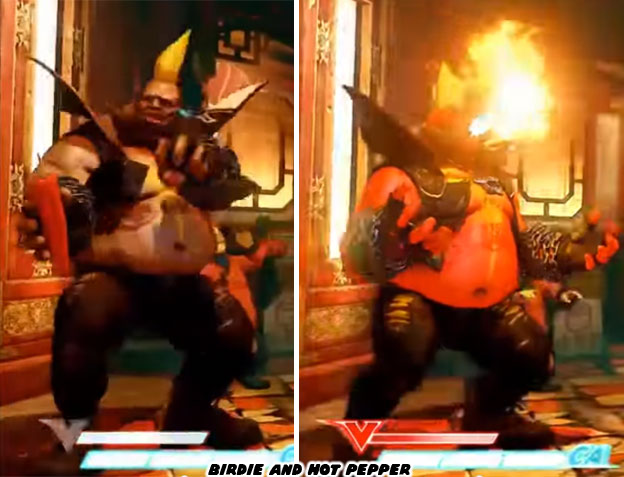
Having Birdie drink and eat and throw his garbage at opponents would hardly be considered "punk." He was just being crude and nasty. The most absurd of his mid-match snacks was a hot pepper. It would cause Birdie to breath fire, have his skin glow red hot and do more damage to his opponents with each hit. Birdie had never had any moves in previous versions of the game that were similar to these new food-based attacks. I could not figure out what made the developers think that this radical direction was appropriate for the character.


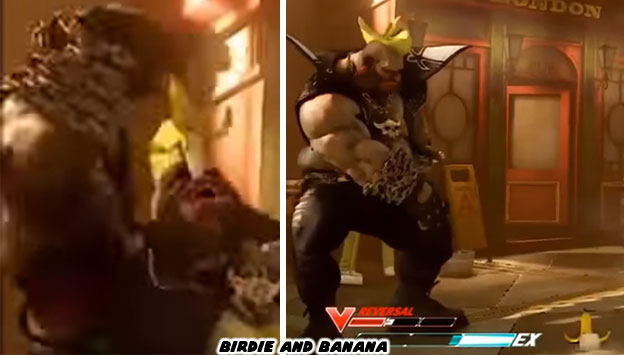
When I saw his last food-based attack it raised a red flag in my mind. Birdie would eat a banana and throw the peel on the ground. Opponents could slip on this banana. It was supposed to be a funny attack that also helped keep aggressive opponents at a safe distance. It was an ill-informed choice to make a black character enthusiastically eat a banana, There were heavy racial overtones that Capcom could have done without. In many parts of the world black professional athletes are often called monkeys and bananas are thrown at them from the stands. Seeing as how Street Fighter V is going to become an international title then I would strongly suggest avoiding anything that could even remotely be taken in the wrong context.


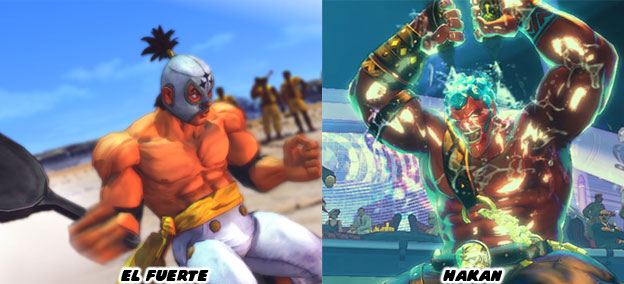
Since Birdie had never had these types of silly attacks before I wondered why the studio would start adding them now. If they are giving Birdie absurd attacks why not do the same for Ryu, Chun-Li, Cammy, Dictator or Charlie? If Birdie is now fat and sloppy but none of the other characters are why is that? All of the other characters seem to be played very straight. The way they were in previous games is the way they are now. I would hate to think that Capcom is doing this because of the color of his skin or the minority status of the character but it just might be true. Consider for a moment the previous nationalities represented in Street Fighter IV. There was a lot of diversity in the lineup but the new characters created for the game were very odd as well. The Mexican wrestler El Fuerte for example was obsessed with cooking and named several of his moves after plates. There was also a Turkish wrestler with beet red skin and bright blue hair named Hakan that practiced the art of Yagli Gures, or Turkish oil wrestling. That character was obsessed with finding the perfect oil recipe to help him dominate in his matches. Players could splash themselves with oil in the game and slide across the floor. The gimmicks placed on El Fuerte and Hakan were done to give the characters a personality and make them more interesting. Yet gimmicks and throw away attacks were not something that was used with the original Street Fighter II cast. Those characters were far more interesting without being silly or sloppy.


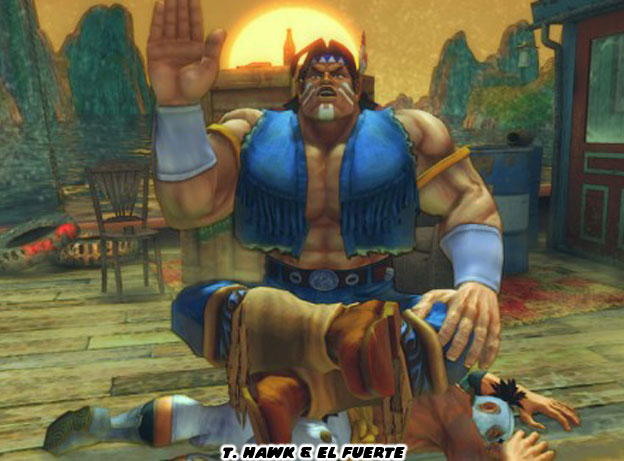
The trend was becoming apparent in the more recent Capcom fighting games. El Fuerte, Hakan and Birdie had something in common. They were all minority characters. The designers had no point of reference for the characters, their cultures or their specific fighting arts. So instead they gave each of them a gimmick and made them silly. I sincerely doubt that the developers would have done the same to a Japanese character or one of the female characters. Before Birdie had the silly food attacks applied to him the developers had done something similar in Street Fighter IV. The Native Mexican character T. Hawk  was given an update to his "Raging Typhoon" special attack. In Super Street Fighter II the character would grab an opponent by the head, spin them in the air and slam them into the ground. In Street Fighter IV an extra animation was added where T. Hawk would then sit cross-legged on top of the opponent making a stereotypical "how" pose for Native Americans. This was a trope used by television to depict the ways that Native North Americans would greet each other.


I would hate to think that the developers at Capcom were being racist with the characters. I like to think that these choices were made out of ignorance (which is a root cause of racism) rather than racial bias. Unfortunately the silly makeover was a trend that was becoming more and more apparent for the series. Something that could be measured over the past few years were how odd the character selection had become. What was done to Birdie was part of a pattern. The next blog will question the choices from the developers. As always if you enjoyed this blog and would like to sponsor me please visit my Patreon page and consider donating each month, even as little as $1 would help make better blogs and even podcasts!