Showing posts with label chun li. Show all posts

Friday, July 1, 2022

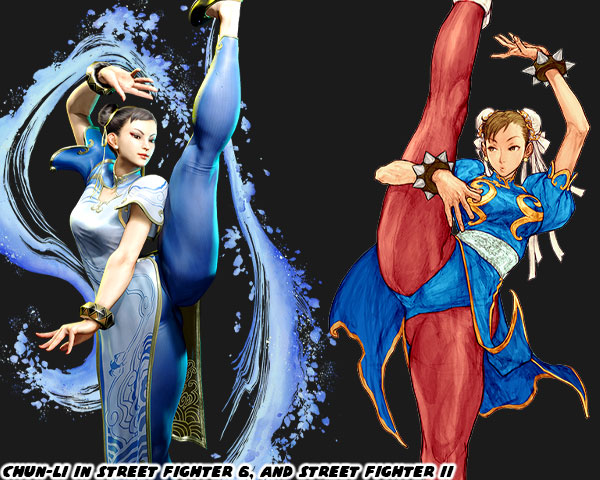
Chun-Li's new look in Street Fighter 6. Is it a step backwards?

Today we are going to look at the last character I had yet to talk about for Street Fighter 6. Chun-Li was an icon. I had her listed #2 on my list of the 30 most important Street Fighter characters of the past 30 years. When she appeared in the SF6 debut trailer audiences all over the world celebrated. Fan art started pouring in online featuring her in the new costume. The reaction so far had been overwhelmingly supportive. I’m sure this pleased SF6 Designer Yusuke Hashimoto. I was happy to see her return, along with the rest of the original World Warriors. What I didn’t care for frankly was her new outfit. I think it's actually regressive, and betrays the spirit, and design that made Chun-Li unique.
Let’s take a deep dive into the origins of Chun-Li. The nation of China and the Chinese martial arts were perfect for video games. They were celebrated for their visual splendor, and fancy moves. Especially in Hong Kong cinema. Fan and Star were featured opponents in Yie Ar Kung-Fu, released by Konami in 1984. They were the first female martial arts fighters in a game. They predated Chun-Li by six years. In fact before Capcom even created Chun-Li they had designed a trio of female martial artists that could hold their own against the titular character Strider Hiryu in the arcade game Strider. The Kuniang Martial Arts Team aka The Tong Pooh Three Sisters appeared in 1989. Chun-Li would not appear until 1991. The sisters were fabled bounty hunters, selling their deadly talents to the highest bidder. Their pseudo-traditional Chinese martial arts uniforms beguiled their amazing powers. The sisters could cut tanks in half with their powerful kicks. They were the perfect challenge to the futuristic ninja Hiryu.

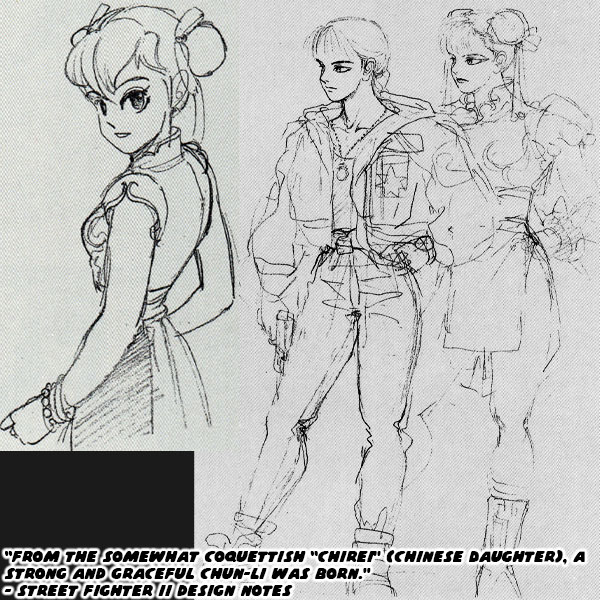
In some of the earliest design notes Chun-Li was essentially credited as another one of the sisters. Her method of fighting was originally listed as Northern Praying Mantis. Not only that, but her special attack was based on whipping her hair. Capcom was one of my favorite companies growing up. I loved their games, yet looking back I could see that some cultural stereotypes were also perpetuated by the studio. Chinese characters in fighting games were often presented in some sort of pre-revolutionary martial arts costume. It didn't matter if the characters were appearing in a current timeline. They were often dressed in the costume that would have been appropriate in the late 19th century rather than in casual modern clothing. For example the Three Sisters were presented in outfits that made more sense in classical Chinese Opera rather than in the science fiction future that Strider was set in. Even Chun-Li was presented in a pseudo-traditional costume in Street Fighter II. Within the context of the game however her costume made sense. It took a lot of subtle changes to get Chun-Li just right. Let’s talk about her evolution.
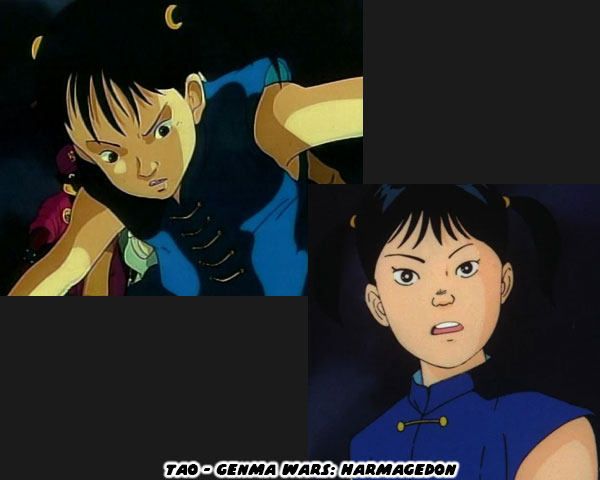
Chun-Li was going to be a very generic female kung-fu practitioner. According to the “father” of Chun-Li; Akira “Akiman” Yasuda said she was inspired by Tao from the anime Genma Wars: Harmagedon (1983). Japan had a fondness for setting stories in China, or borrowing cultural touchstones from China in the '80s. This included putting characters in traditional dresses, even if they didn’t reflect contemporary Chinese fashion. Lynn Minmay was a half-Chinese heroine in Super Dimension Fortress Macross (1982), Son Goku in Dragon Ball (1984) was a retelling of Journey to the West, then there was Pai from 3x3 Eyes (1987), and Ranma from Ranma ½ (1987) to name a few. Chun-Li was going to be as middle-of-the-road Chinese character as you could get. Even in the early design notes from Capcom she was labeled “Chirei” which translated to Chinese Daughter. Something amazing happened though. The studio kept going back and revising the cast again, and again. They poured more people into the development of Street Fighter than had ever been assembled on any other Capcom game. The end result was nothing short of amazing.
It was the insistence of all the senior developers in making the lineup better than any of their concept art. Producer Yoshiki Okamoto, and Designers Akira Nishitani, and Akira Yasuda pushed the staff to create a lineup that would not only define a franchise, but set the standard for the genre as well. With Chun-Li they really dug into the heart of the character. They knew that it would be great to have a representative of the different fighting arts as playable figures. In the earliest drafts they even had a military contractor, and capoeira master set for SFII. Yet they knew that audiences wanted more than a plain karate guy, or kung-fu girl in the roster. These characters needed to have more dimension, more personality, and more details than were provided in Yie Ar Kung-Fu. Chun-Li came to life when the studio realized that she was actually an undercover cop in a fighting tournament.
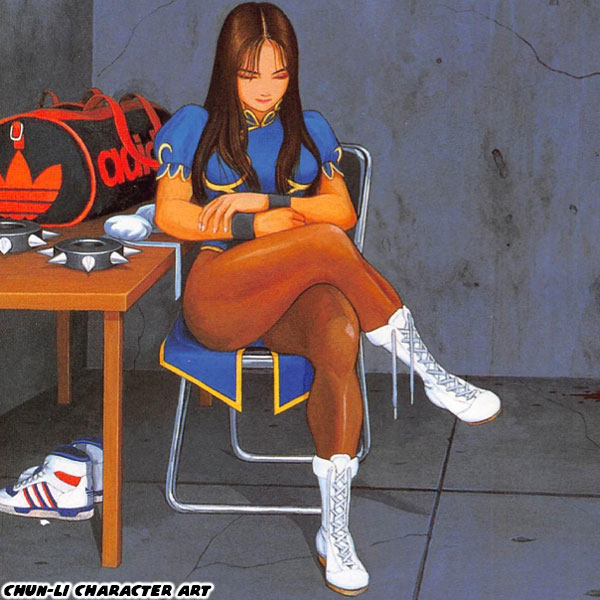
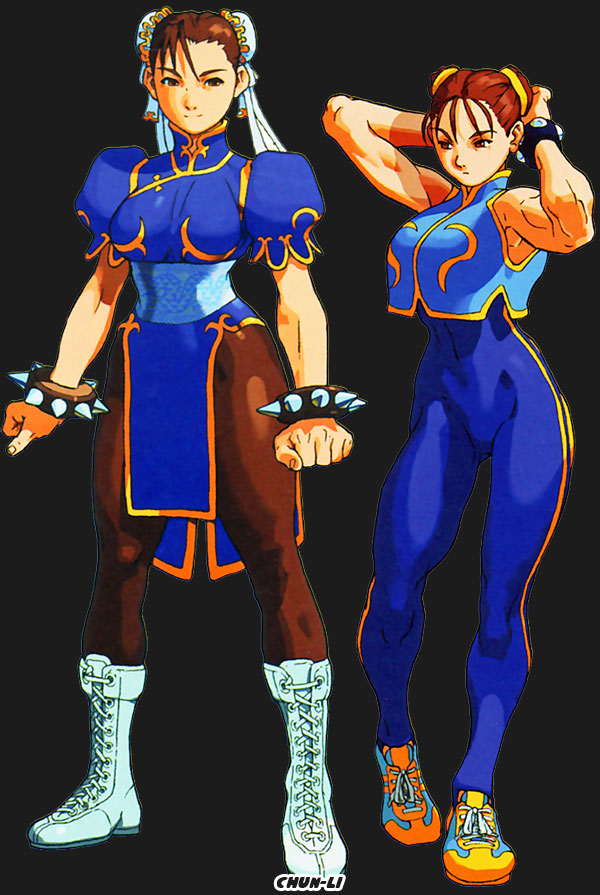
Her costume was literally a disguise, it was something to hide her true identity. Although the cut, and color of the outfit seemed authentic, there was nothing remotely classical about it. The short dress with open sides, large puffy shoulders, dark tights, wrestling boots, and weighted spiked bracelets had never been worn by an actual practitioner of any Chinese martial art. The genius of Akiman was that he assembled all the elements in such a way that on first glance they looked like authentic kung-fu garb, that was until you looked closer. Akiman, and SHOEI would paint official character art to remind us what Chun-Li was like in between fights. They presented her with her hair down, sometimes without makeup. She was an actual person. These were some of the most important illustrations that defined the character. We could see that she had an Adidas sports bag where she kept all her gear. She would rather be wearing sneakers when traveling instead of slippers or boots.
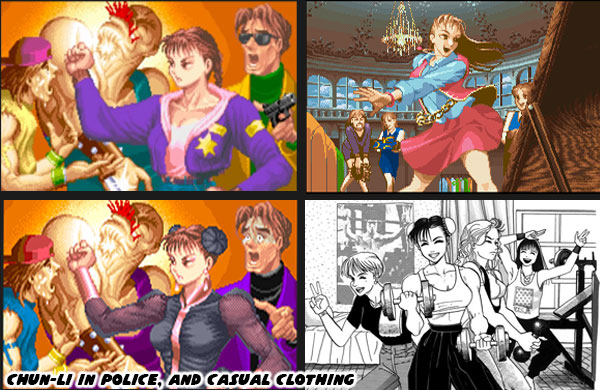
Audiences were reminded again, and again in the ending screens that she was a modern woman. She was not a stereotypical Chinese girl from manga, or anime. Chun-Li was often presented either in her police uniform, or in casual urban clothing. She didn’t stay in costume once the fighting was done. Sometimes she was seen in workout gear, or while going out on a date with her friends. This didn't really change until 1999, when in Street Fighter 3: Third Strike the company turned her into a sort of martial arts instructor that stayed in costume. Prior to that the studio did a major revision to her in Street Fighter Zero / Alpha in 1995. They created a costume for a young Chun-Li. With it they had her in a striped bodysuit, weighted bracelet, a pseudo-traditional crop top, and sneakers. She kept the Capcom logo colors of blue, and yellow even in this outfit. It went over well with audiences as they were reminded of the striped bodysuit worn by Bruce Lee in his final film the Game of Death. The original, and young versions of the outfits were so well crafted that it would be easy to dismiss them as traditional Chinese, but were actually costumes put together for a modern woman. These were the things that Capcom had started ignoring when designing alternate costumes for her in Street Fighter V. The goal seemed to be make Chun-Li sexier, and sexier with every revision.
I think the SF6 developers completely missed the mark with her as well. It was as if they took that first-glance understanding of Chun-Li, and perpetuated only the Chinese stereotypes. They essentially regressed the character to Chunrei. Her costume became more formal, the dress became longer, with pants, and flats. No more wrestling boots, gone was her spiked bracelet, replaced by a more modest gold, and mahogany bangle. Her subversive design elements became more conservative. Chun-Li had inspired the creation of other female kung-fu masters in the genre. Most of the developers working on their own variation never got past the Chinese Daughter look. Sega most notably had Pai Chan, the daughter of Lau Chan in Virtua Fighter from 1993. It was no accident that her costume was blue with gold trim, or that she had her hair in braids. Pai’s costume was much more authentic, and it made sense in context. Sega was trying to make their series look, and feel more realistic than Street Fighter. The plausible fantastic was one of the things audiences enjoyed most with the design of the World Warriors. It was possible to have a seven-foot one eyed muay thai master, it was possible to have an air force pilot with a wild flat top. You might never see them, but they could be out there. With Chun-Li's new look she was easily out there because her outfit was so middle-of-the-road. 
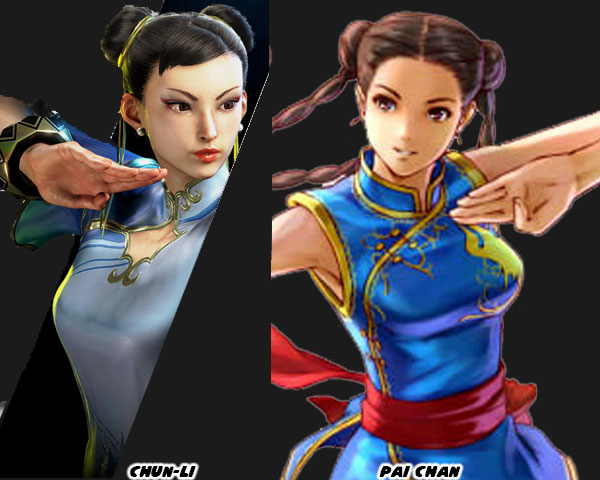
When I look at the changes that Capcom made to Chun-Li I saw them going backwards. They were forgetting her evolution, and what the countless artists working at the studio changed during the revision process. She was never designed to be an ancient Chinese master, like Gen, or Lee. She was an Interpol officer working an undercover assignment. The world seemed to offer more for her other than fighting in the story mode. Seeing her floating in the air like Ip Man, acting like a movie hero in the SF6 trailer made me doubt the studio. I’m sure she still plays like Chun-Li, and will be a top tier character. No doubt about it. I do hope that they consider her original design, and purpose moving forward. I’ll be eager to see what DLC outfits they have planned for her. Like Ken, Ryu, and Cammy, I’m not feeling her new look. That’s my take anyway. Please let me know what you think about Chun-Li’s updated design. Will she be a character you try out on day one? Tell me about it in the comments section. As always if you would like to sponsor me please visit my Patreon page and consider donating each month, even as little as $1 would help make better blogs and even podcasts!
follow the Street Writer on Patreon!

Monday, September 26, 2016

Some of my favorite Street Fighter collectibles, part 2...

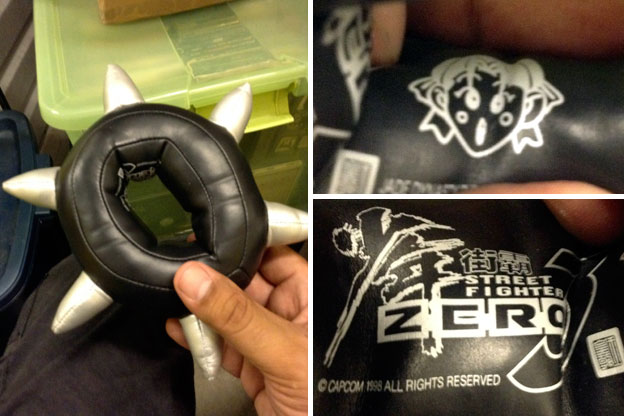
In the previous blog I highlighted some of my favorite collector covers from the Chinese Street Fighter comics. Today we're going to look at some of the other memorable special issues that they printed. Often a special issue not only came with a unique cover, it also came with a collectible. Some of these things were postcards, puzzles or calendars featuring the best covers from the past year. Sometimes these issues came with an embroidered hat or sweatband featuring a character. The best were even more original. Take Chun-Li for example, when the publisher wanted to celebrate the character in Street Fighter Zero they distributed spike bracelets to their fans.


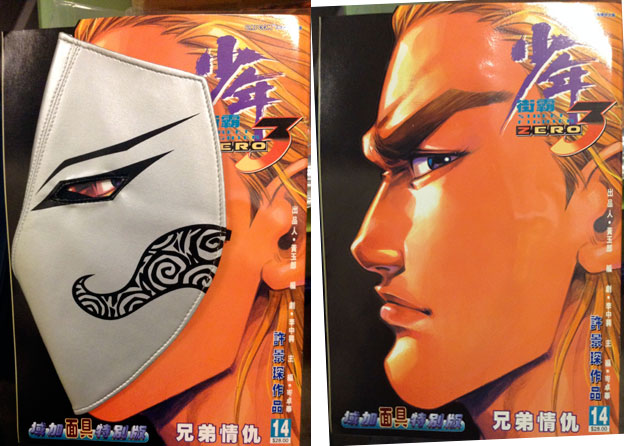
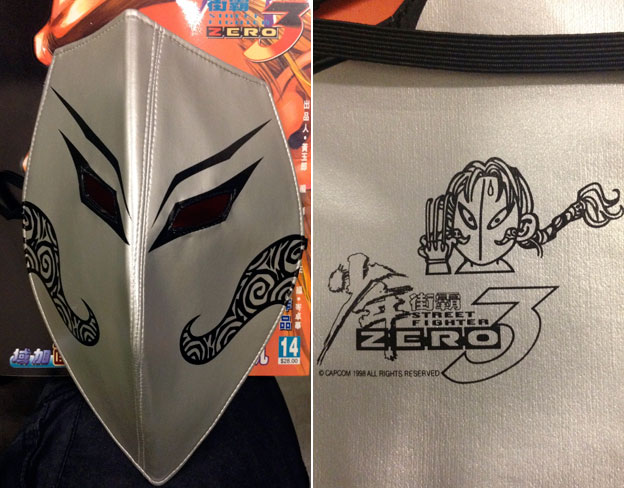
Of course the bracelet was foam wrapped in vinyl, but it was a very clever marketing toy. In what other country did Capcom create anything like that for their fans? Another soft good that they distributed through the comics was actually attached to the cover of a comic. The Spanish assassin Balrog (Claw) wore a trademark mask. The publisher of the Street Fighter Zero comics created a die-cut cover of Balrog wearing the mask. Fans could remove the mask and wear it. Imagine being a kid and being a huge fan of Street Fighter. How awesome would it be if your favorite comic book came with a goody on a regular basis? What if Marvel did the same for Spider-Man, or DC for Batman? People would be all over it.


Granted in the US there have been unique collectibles released with comics as well. The Batman trade paperback A Death in the Family came with a grotesque Joker mask and the Court of Owls came with an owl mask. Fans had to wait until the specific series had ended and was put into a TPB before they could buy it. Yet overseas these giveaways are more common. In Italy for example the Topolino (Mickey Mouse) comics sometimes come with toys, called gadgets. The most popular Chinese comics came with all sorts of soft goods and toys on a more regular basis.


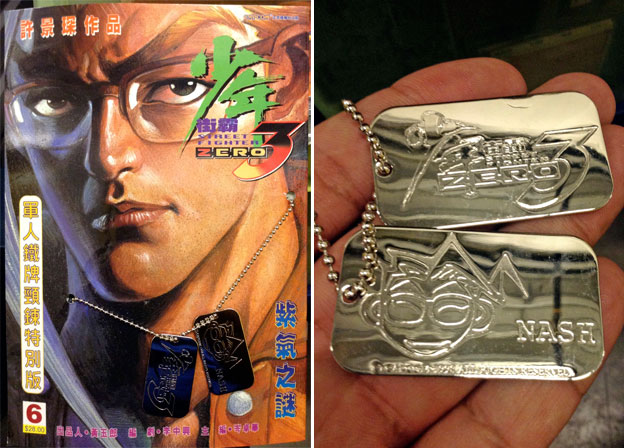
Of all the collectibles I've gotten from the Chinese Street Fighter comics the best one was without a doubt the dog tags worn by Charlie Nash. Like the Balrog issue this comic also had a die-cut cover. There were two holes poked in the sides of the neck were a metal chain and polished metal dog tags were on display. These were full-size dog tags with the name and likeness of Nash. To make sure collectors picked up the issues there was even an embossed Capcom license on them. I wonder how many people that cosplayed as Guile ever tracked down these dog tags.


What about you? Do you have any rare or unique Street Fighter items in you collection? If so I'd like to hear about it! As always if you would like to sponsor me please visit my Patreon page and consider donating each month, even as little as $1 would help make better blogs and even podcasts!

 follow the Street Writer on Patreon!

Tuesday, June 30, 2015

Representation Matters! Or, what happened to Birdie, part 2...


In the previous blog I talked briefly about the influence of Street Fighter around the world. There were many reasons why the franchise was so successful. From a move selection, balance and control standpoint Capcom had done a superb job. The controls were experimental, many developers thought that anything more than two buttons might confuse players, six was going to be overkill! Despite the fears of the industry (and the extra expense to Capcom to put in all those extra buttons) players seemed to quickly pick up on the nuances of multiple buttons and joystick combinations. From week to week gamers were becoming exponentially better at the title and were uncovering secrets and techniques over months. The studio had a hit on their hands with Street Fighter II and decided to refine the game. Unlike other companies that would publish a title and move to something else Capcom was looking to fine tune Street Fighter II and offer arcade owners more repeat business. They would release upgrades to the game, known as the Hyper, Turbo and Super versions. The changed the way certain characters played and modified the balance accordingly based on location tests and feedback from player. Each upgrade to the arcades was met with great success.

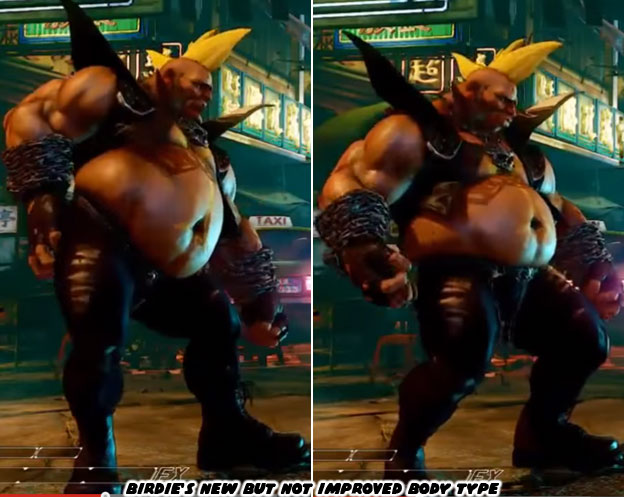
From a technical standpoint the developers at Capcom were unparalleled. Yet with certain updates and sequels the characters introduced into canon did not have the staying power of the original Street Fighter II "World Warriors." The designs of the subsequent characters did not evolve as greatly as the game engine had. In some cases the characters were ill informed, if not crude and stereotypical. Birdie had started out as a typical punk character in the original Street Fighter but turned into an icon in Street Fighter Zero. It had been 17 years since Birdie was last featured in a Capcom game. In Street Fighter V the years had not been kind to him.


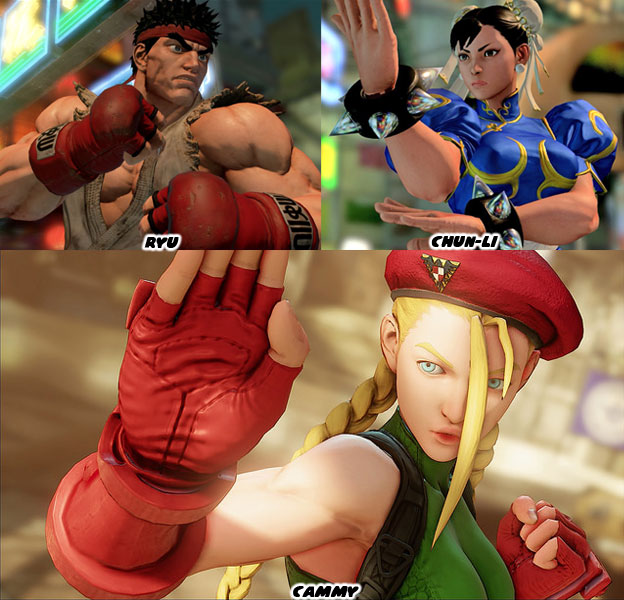
Actually it was the designers that were not kind to Birdie. They turned the character into a slob. A fat, junk food craving shadow of his former self. I wondered why Capcom would do such a thing. The other characters announced thus far had not changed at all. Ryu (who happens to be friends with Birdie in canon) was still muscular, Chun-Li was as beautiful as her previous incarnation, and Cammy seemed a minute older than her previous appearance but was still beautiful. None of the characters were fat or out of shape.


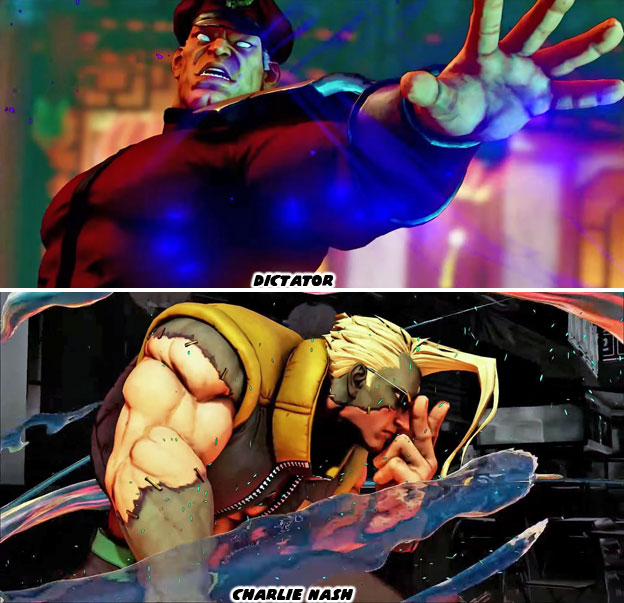
The Dictator, known as Vega in Japan and M. Bison in the USA, leader of the terrorist organization Shadowlaw was the main villain in Street Fighter II. He had also returned for Street Fighter V. He appeared very much the same as he did in Street Fighter IV only that now his hair was white. It didn't seem to go white due to his age but instead due to his mysterious "Psycho Power." The surprise announcement was that of Charlie Nash asa  returning character. Charlie had last been seen in Street Fighter Zero. Like Birdie it had also been 17 years since his last major role. Nash had changed somewhat as well. The character was presumed dead following the events of SF Zero, he had been shot in the back by Shadowlaw soldiers and thrown off a cliff. Revenge spurred his military friend Guile to enter the SF II tournament and track down the Dictator. In canon Nash was brought back from the dead, brainwashed and turned into an assassin. His discoloration and Frankenstein's monster-like appearance were done deliberately. Of course neither the Dictator or Charlie had returned fat and out of shape.


I wondered why Birdie had been turned into a slob. What did the character do to deserve such a disservice from the  new developers? Did the team of artists and animators not like him? Was it because they did not like punk culture? Was it because they did not like minority characters? Perhaps they simply didn't understand the appeal of the character in the first place. Unlike the radical redesign of Birdie from the original game to Street Fighter Zero the designers used the Zero version and tore him down. They did not even bother to use the cues that were placed on him in his previous incarnation. For example he didn't wear chains on his wrists because it was his primary weapon but because they were attached to a pair of handcuffs that he had broken. The newest version is missing the handcuffs as well as some other details that I will let you figure out.

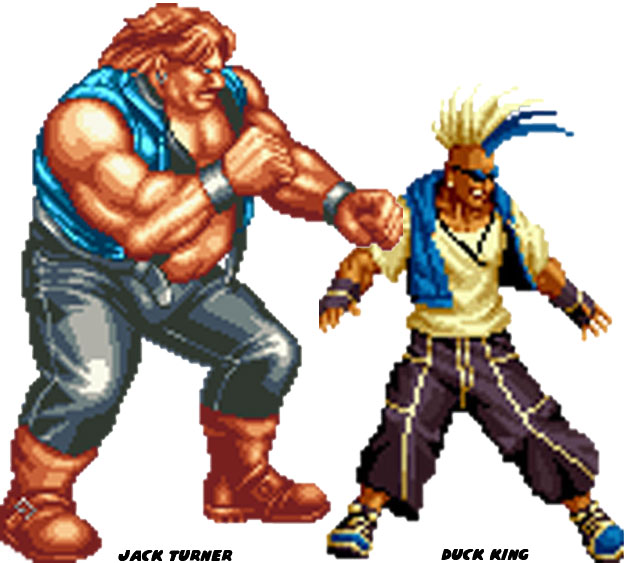
So what exactly did Birdie's new point of reference come from if it was not from previous games? I would say that the new Birdie is now a mash up of SNK's Jack Turner and Duck King. Both characters appeared in 1991. Jack appeared in the Art of Fighting. He was a mob enforcer in South Town. The character was modeled after the stereotypical fat bikers from the West. He hung out in bars and seedy back alleys looking for trouble. His costume and fat belly had a lot in common with the Birdie redesign.


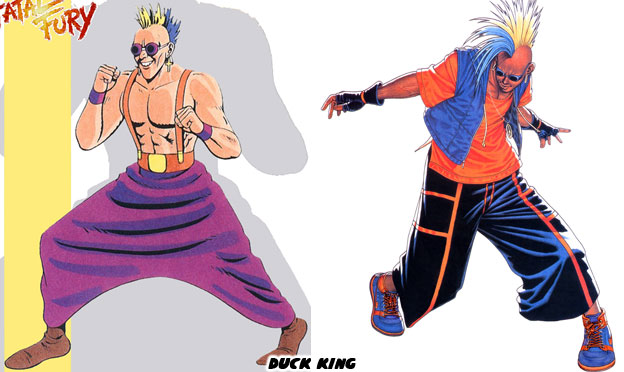
Duck King appeared in Fatal Fury. Despite the Mohawk haircut he was not supposed to be seen as a punk character. He was instead based on party kids, ravers and b-boys (break dancers) from the USA. His bright colors and costumes were pulled from trends in the West. There was a difference between how he was put together versus J and Two-P. In the early character art we could see that his costume, especially sunglasses and fat pants was inspired heavily by MC Hammer. He was never meant to be seen as any sort of gang member. As dance trends and pop culture changed the look of Duck King evolved. He was still a colorful character but now dressed in more street appropriate costumes. I would argue that neither Duck King nor Jack Turner were ever as popular as Birdie. In fact I remember the first time that I saw Duck King in the game I thought to myself that SNK was trying to create their own Birdie. I mean even the name was similar.


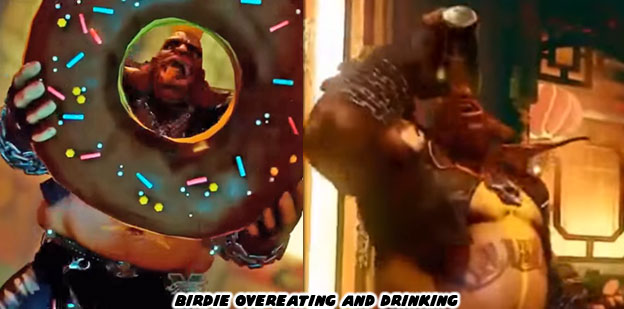
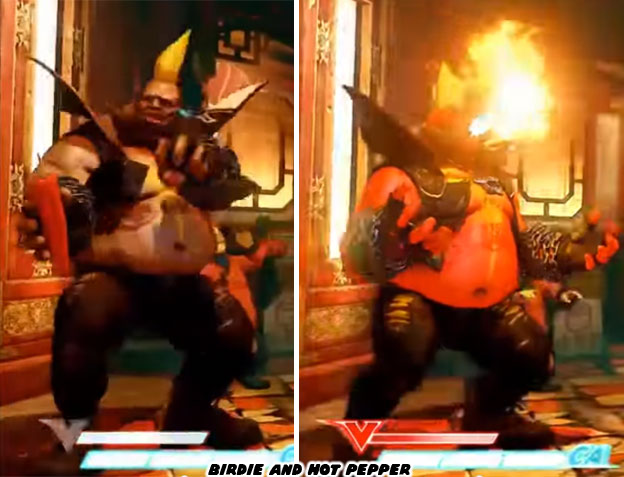
Yet anything that SNK did was nothing compared to what Capcom would do to their legacy character. Everything the designers did to Birdie in Street Fighter V reinforced what a slob he had become. For example some of his "attacks" consisted of him sneaking a donut from his back pocket or guzzling an energy drink. In fact in his character animation after winning a match he would pull a gigantic donut out of thin air and bite into it. It was an odd visual that nothing but demean him. Not only that but unlike previous representations of punks in the series the team did not seem to have the insight as to what Birdie would have eaten to gain so much weight. Donuts were considered more of a USA treat than a British one. Perhaps fish and chips and a warm beer would have made more sense.


Having Birdie drink and eat and throw his garbage at opponents would hardly be considered "punk." He was just being crude and nasty. The most absurd of his mid-match snacks was a hot pepper. It would cause Birdie to breath fire, have his skin glow red hot and do more damage to his opponents with each hit. Birdie had never had any moves in previous versions of the game that were similar to these new food-based attacks. I could not figure out what made the developers think that this radical direction was appropriate for the character.


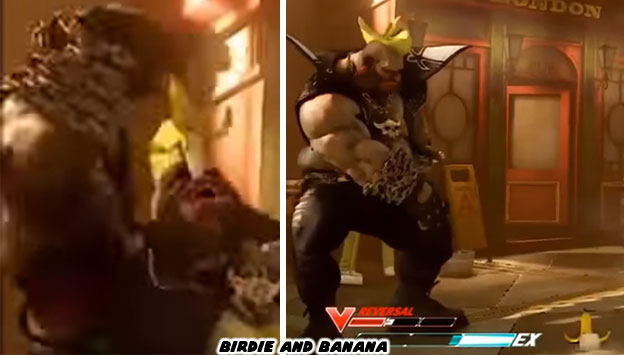
When I saw his last food-based attack it raised a red flag in my mind. Birdie would eat a banana and throw the peel on the ground. Opponents could slip on this banana. It was supposed to be a funny attack that also helped keep aggressive opponents at a safe distance. It was an ill-informed choice to make a black character enthusiastically eat a banana, There were heavy racial overtones that Capcom could have done without. In many parts of the world black professional athletes are often called monkeys and bananas are thrown at them from the stands. Seeing as how Street Fighter V is going to become an international title then I would strongly suggest avoiding anything that could even remotely be taken in the wrong context.


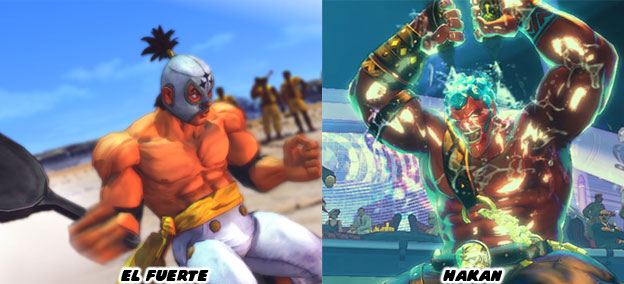
Since Birdie had never had these types of silly attacks before I wondered why the studio would start adding them now. If they are giving Birdie absurd attacks why not do the same for Ryu, Chun-Li, Cammy, Dictator or Charlie? If Birdie is now fat and sloppy but none of the other characters are why is that? All of the other characters seem to be played very straight. The way they were in previous games is the way they are now. I would hate to think that Capcom is doing this because of the color of his skin or the minority status of the character but it just might be true. Consider for a moment the previous nationalities represented in Street Fighter IV. There was a lot of diversity in the lineup but the new characters created for the game were very odd as well. The Mexican wrestler El Fuerte for example was obsessed with cooking and named several of his moves after plates. There was also a Turkish wrestler with beet red skin and bright blue hair named Hakan that practiced the art of Yagli Gures, or Turkish oil wrestling. That character was obsessed with finding the perfect oil recipe to help him dominate in his matches. Players could splash themselves with oil in the game and slide across the floor. The gimmicks placed on El Fuerte and Hakan were done to give the characters a personality and make them more interesting. Yet gimmicks and throw away attacks were not something that was used with the original Street Fighter II cast. Those characters were far more interesting without being silly or sloppy.


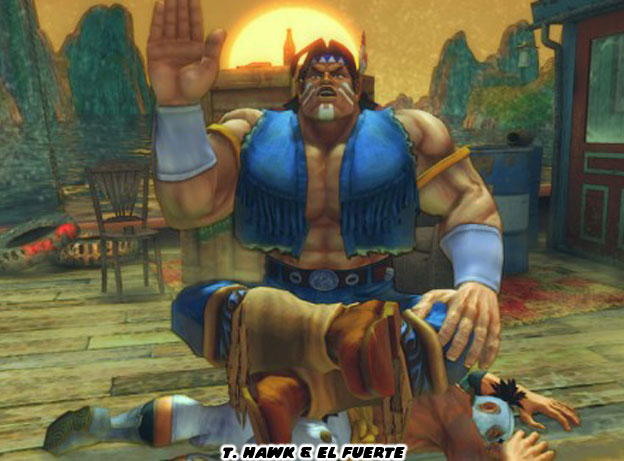
The trend was becoming apparent in the more recent Capcom fighting games. El Fuerte, Hakan and Birdie had something in common. They were all minority characters. The designers had no point of reference for the characters, their cultures or their specific fighting arts. So instead they gave each of them a gimmick and made them silly. I sincerely doubt that the developers would have done the same to a Japanese character or one of the female characters. Before Birdie had the silly food attacks applied to him the developers had done something similar in Street Fighter IV. The Native Mexican character T. Hawk  was given an update to his "Raging Typhoon" special attack. In Super Street Fighter II the character would grab an opponent by the head, spin them in the air and slam them into the ground. In Street Fighter IV an extra animation was added where T. Hawk would then sit cross-legged on top of the opponent making a stereotypical "how" pose for Native Americans. This was a trope used by television to depict the ways that Native North Americans would greet each other.


I would hate to think that the developers at Capcom were being racist with the characters. I like to think that these choices were made out of ignorance (which is a root cause of racism) rather than racial bias. Unfortunately the silly makeover was a trend that was becoming more and more apparent for the series. Something that could be measured over the past few years were how odd the character selection had become. What was done to Birdie was part of a pattern. The next blog will question the choices from the developers. As always if you enjoyed this blog and would like to sponsor me please visit my Patreon page and consider donating each month, even as little as $1 would help make better blogs and even podcasts!
Monday, May 12, 2014

Fighting Layer, return of the dragon, part 2...

A Chinese girl and a stylish American had been invited to the Fighting Layer tournament as well. They seemed like friendly rivals to Tesuo Kato and were both approximately the same age. Where or where have we seen these archetypes before? There was much more to Lan-Yinghua and Allen Snider than simply being revisionist versions of Chun-Li or Ken from Street Fighter. They actually had origins with the developers that went back a generation.


Karate and Kung-Fu were cornerstones of the Asian martial arts. Each style of fighting had countless schools within. What Capcom, ARIKA and the other developers did was create archetypes that symbolized the best fighters in each discipline. Ryu and Ken had come to symbolize karate for the Street Fighter series and Chun-Li was the embodiment of kung-fu. However in the planning stages of Street Fighter II it wasn't a given that Ryu or Ken would even be returning to the series. The studio knew that they had to have a karate representative in the game but the original design was very traditional and lacked the visual cues given to Ryu. The studio had been criticized for moving too far from the Street Fighter formula when they introduced Final Fight to arcade owners. In response they pulled back and tried to reinvent the fighting game by going very traditional with the early designs.

The downside to the prototypical Ryu and Chun-Li were that they were very generic designs. Both lacked a creative spark. The karate character was a 25-year-old stone faced fighter. Who would ever find him interesting? Ryu had the torn sleeves, red gloves and red headband that broke up the consistency of the all-white costume. Just a few changes gave him more visual flair. Tetsuo Kato was similar, with taped-up hands and a wood-block-print of blue ocean waves on his gi he could never be mistaken for a traditionalist. The original plans for Chun-Li were not much better. Her design was very dated and lackluster.


Akira "Akiman" Yasuda went back to the drawing board. Instead of going with a token girl fighter, as would be the problem for the majority of fighting games following SFII, he instead turned Chun-Li into a woman. To give her more presence she was imagined as an undercover cop. The costume she wore was a disguise for the Street Fighter tournament. The spiked weights, dark tights and wrestling boots broke up the visual consistency for the character like the red garnishes did for Ryu. There were many reasons why Chun-Li worked from a design standpoint as well as within the game. I wrote more about the importance of the character in the Female Equation blog from a few years back. The karate and kung-fu characters were revised countless times until they set the new standard.


Lan-Yinghua was a nod to the original concept for Chun-Li. She was young but also a seasoned fighter. Her costume was also pseudo-traditional. The nunchaku tied into her braids could testify to the designers having fun with the character. The Fighting Layer designs are not far removed from the Street Fighter II ones. Looking at the FL cast is like playing "what if?" with Street Fighter. The characters put into the Capcom series could have turned out like the ARIKA designs depending on what the producer was looking for. Akira Nishitani and his team had a specific vision for their new franchise. The new Chinese female lead would remind players of Chun-Li just as the new American would reflect Ken Masters.

Allen Snider had been introduced as a sort of friendly rival and understudy of Ken during Street Fighter EX. Ken was supposed to represent the best martial artist from the USA. His long blonde hair and bright red gi made him stand out from the crowd. His design cues said something about Western culture. The Japanese considered themselves more reserved by comparison so Ryu was slightly more traditional in appearance. Snider was created to be as flamboyant as Ken but without copying the same costumes worn by either he or Ryu. Snider was also an amalgamation of real life fighters that had influenced the Street Fighter developers. Enter the Dragon had influenced the creation of Street Fighter II, Mortal Kombat and even Fighting Layer. The real martial artists and actors found within also influenced the games themselves. Allen Snider was inspired by Chuck Norris and Bruce Lee. His hair and facial features were very similar, as was his desire to become a movie star. Lee and Norris battled in the 1972 film Way of the Dragon. That film came out a year before Enter the Dragon. The fight was memorable for many reasons but one of which was because the backdrop was the Roman Colosseum. That location would be recreated in Street Fighter Zero / Alpha many years later.


ARIKA demonstrated that they still had a fondness for the characters they had introduced in Street Fighter EX. Those characters met many of the same conventions as the original World Warriors and some had the same staying power as well. The inclusion of Allen Snider in the series meant to many SF fans that there was a chance that this game, and these characters, might fall within Street Fighter canon as well. A crossover was certainly not impossible. Of course there would be a lot of legal wrangling between ARIKA, Namco and Capcom if that day were ever to happen. What the game was lacking however was a strong female lead. Lan-Yinghua was not quite a Chun-Li tier character and the game needed someone more powerful. ARIKA reached back to their Street Fighter EX catalog and brought in Blair Dame. She, like Allen, was designed to balance out the SFII icons.

 Blair was the first mixed martial arts character in SF continuity. Her costume was revealing, as she was meant to represent the more sexual designs for female leads from the West. Her selection of strikes and grapples was pandering to male audiences but in a different way. Chun-Li had grace and style behind her attacks. Blair was a hard hitter by comparison, capable of throwing spinning backhands, knee strikes and drop kicks in rapid succession. She also had arm bars, ankle locks and take-downs which would make most MMA champions proud. Blair was created to balance out Chun-Li in Street Fighter EX, as such she had to be a woman and not a girl. Lan-Yinghua was a great character but she was more like Cammy than Chun-Li in scale and purpose.


When ARIKA designed Fighting Layer they included all of the control options that modern fighting game audiences had expected in the second or third revision of a game. They also included a robust cast that might have been included in an upgrade as well. Fighting Layer was not only an attempt at redoing the original plans for Street Fighter II but also for Super Street Fighter II. The parallels between Chun-Li and Blair, as well as Cammy and Lan were there but so were the other characters introduced in the game. The title was going to feature different traditional fighting styles but not make the practitioners appear strictly formal.

The three mid-sized fighters were pulled from other nations. The "cool" American guy, George Jensent had kickboxing type moves. He was an undercover officer trying to dig up information on the sponsor of the tournament. He was not far removed from the character that Bruce Lee played in Enter the Dragon. The roots of George's designs were based on C. Jack, the baseball bat-wielding supercop in Street Fighter EX. Both C. Jack and Jensent were designed to balance out Guile, the token US soldier in SFII. Hong Gillson was a prideful Korean and Taekwondo practitioner. He was looking to destroy Tetsuo in the tournament. Hong was the first TKD character in ARIKA and SF mythos, predating Juri Han by more than a decade. He could be likened to a striker like Dee Jay but without the obnoxious racial pandering of the character.


The third character, Shang Fenhuan, was a dangerous kung-fu master. He was taught the martial arts by a very secretive family that also ran the criminal underworld. He was trying to seek his path and was advised by a sage kung-fu elder that it would be found in the Sea of Japan, during the Fighting Layer tournament. Shang was lighting quick and had a very unconventional design. He could be likened to Fei Long, the Bruce Lee clone introduced in Super Street Fighter II. Shang could never be mistaken for yet another Lee wannabe.

Of course what would a fighting game lineup be without dedicated wrestlers? ARIKA did their homework and introduced three distinct characters into canon that represented different grappling arts. Jigjid Bartol represented the ancient Mongolian / Tuvan wrestling form known as Bökh. The form and rules of that school of grappling were said to have been the forefather of Japanese sumo wrestling. Jigjid was not a mountain of a man, like Zangief, but his lack of mass did not mean he lacked muscle. He was still fairly strong and his powerful attacks could shake the Earth. Jigjid entered the FL tournament to help lift an ancient curse. There were many strange occurrences plaguing the villagers in rural areas of Asia and both Jigjid and Lan-Yinghua were sent by their elders to investigate the cause of it. A secretive tournament on a private island in the Sea of Japan seemed to be the destination for all of these martial artists. A different type of wrestler, non-traditional and very flamboyant was also called to the competition. The gold spandex wearing Exodus represented the pageantry and spectacle of modern pro wrestling. Exodus wrestled in only the loosest concept of the word. He was an exceptionally dirty fighter. He could stab opponents with a fork he kept in his belt. He could also set opponents on fire and hit them with chairs or drop them through tables as well. He had come to represent what many had considered the worst aspects of modern pro wrestling.


There was a wrestler in the game however that subscribed to the classic catch-as-catch can school of wrestling. Clemence Kleiber was considered the greatest pro wrestler in the modern era. When he ran out of opponents he simply disappeared. Exodus declared himself the de facto champion. Critics would not accept his claim until he had proven himself by beating Kleiber in the ring. Exodus had to seek out the champ at his last known destination. The secretive Fighting Layer tournament. Kleiber was actually one of three sub-boss characters in the game and not initially a playable character. The bosses would be released by the game over the weeks that it had been played. Only after all of the sub bosses had been unlocked would the final boss become playable.

During the planning stages of Street Fighter II the developers wanted to include a pro wrestler in the lineup. Two different characters were sketched out. One looked very much like the popular Japanese wrestler Tiger Mask while the other had a more generic star mask. This character was dubbed "Maskuman" or Masked Man. These characters were in the lineup well before Zangief was ever finalized. They were meant to capture part of the showmanship of the wrestlers had during the formative years of the Capcom developers. The inclusion of Exodus and Clemence could have been a chance to revisit the original pro wrestler ideas from the company.


There were many other playable and hidden characters in the game. We shall look at them in the next blog. If you would like to sponsor me please visit my Patreon page and consider donating each month, even as little as $1 would help make better blogs and even podcasts!
follow the Street Writer on Patreon!