Showing posts with label blair dame. Show all posts

Thursday, June 21, 2018

30 years of Street Fighter: 30 years of Characters #10


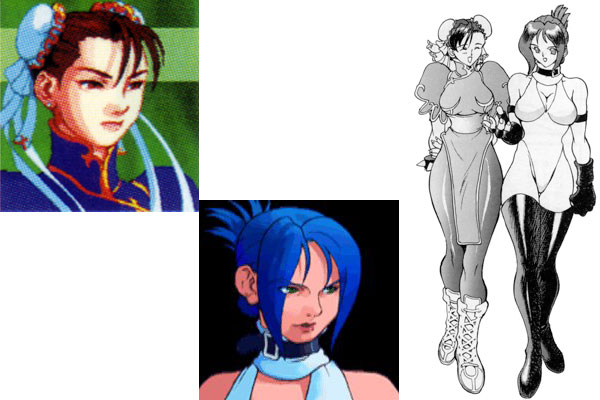
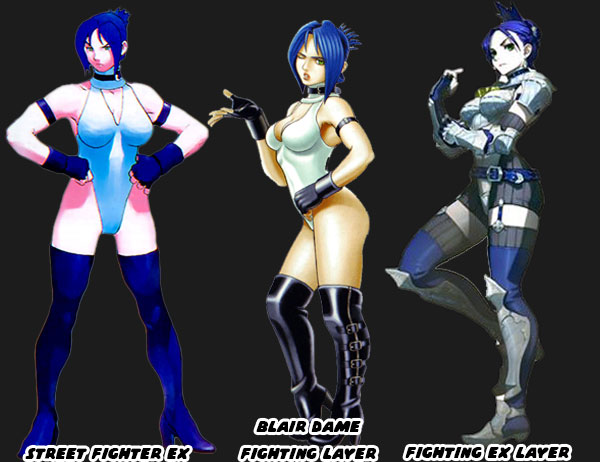
Blair Dame is a very unique character in the Street Fighter universe. There have been many amazing women leading the charge but Blair is a real standout. She was introduced in Street Fighter EX in 1996. ARIKA developed their cast to be a balance for the Street Fighter II: World Warriors. Blair was the counter to Chun-Li. This meant that she had to be strong, powerful and confident. Her heritage was one of prestige and wealth but these things bored her. Her passion was in fighting. She wasn't a student of one style or form. She had fast hands in the game and equally fast feet. She could go toe-to-toe with a striker but was also a capable grappler. She could take down opponents and get them in a bone-breaking move very quickly. Her well-rounded ability made her the first mixed martial arts star in the Street Fighter universe. Alex from Street Fighter III wouldn't appear until a year later. The haughty billionaire Karin Kanzuki, from Street Fighter Alpha 3, appeared two years after Blair.


Blair is fun to play as in the series because she can string together punches and kicks so easily. Players can mix and match different moves to hit high or low depending on whatever is most effective. To confuse opponents she can even move from a strike to a tackle faster than just about any fighter. Blair also has the distinction of appearing in ARIKA's other fighting game, the Namco produced Fighting Layer. She, along with Allen Snider, helped expand the universe of Street Fighter into new uncharted territory. Granted most Street Fighter fans will never acknowledge the Fighting Layer characters as falling within canon. It doesn't mean they were not great characters to begin with. A good reason why Street Fighter II was a hit was due to Akira Nishitani and his team that founded ARIKA. Now that they are back in the business with Fighting EX Layer then it makes Blair one of the rare characters that has appeared in three different 3D fighting games.


Blair has been around 22 of Street Fighter's 30 years. There are many reasons as to why she is so long-lived in the franchise. She is an amazing character. Like most of her EX co-stars she has only become more interesting as time has gone on. How her relationship with former bodyguard Cracker Jack has changed will eventually be explored in Fighting EX Layer. What I do know is that her status in the Street Fighter universe is secure. Few women in fighting games have been as well rounded. We certainly could use more role models like her. What do you think about Blair or the other female fighters in the universe? I'd like to read about it in the comments section. As always if you enjoyed this blog and would like to sponsor me please visit my Patreon page and consider donating each month, even as little as $1 would help make better blogs and even podcasts!
 follow the Street Writer on Patreon!

Wednesday, September 2, 2015

How fight culture became fighting game history, part 28

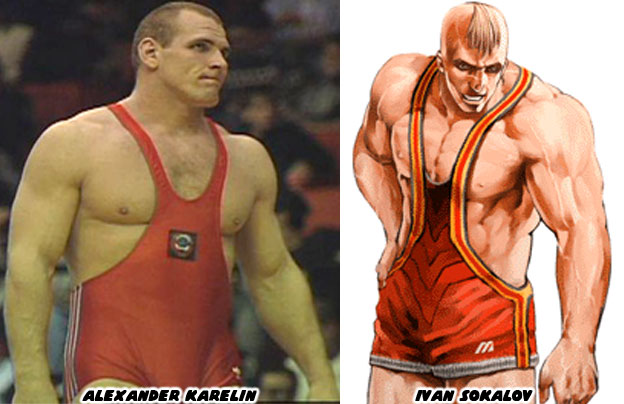
Buriki One was released by SNK in 1999. The game tried to capture the spirit of the early MMA competitions. To help ground the game in reality none of the characters could throw fireball-like projectiles. It also featured character designs that were inspired by actual fighters. Royce Gracie had influenced the development of Jacques Ducalis and Kazushi Sakuraba had influenced Tendo Gai. Those weren't the only high-profile athletes whose fingerprints were in the game. Multi Olympic and World Gold Medalist Alexander Karelin influenced the inclusion of Ivan Sokalov. At his peak Alexander was considered the most dangerous man on the planet. More than a decade had gone without a defeat in international competition, and not only that but during that time an opponent could not manage to score a point off of him. He had a list of incredible statistics that would make him a shoe-in for the pantheon of wrestling Gods. Possibly his most outstanding accomplishment was that he would routinely pick opponents off of the mat and flip them upside down in the air. These were men weighing almost 300 lbs and most of that solid muscle, they would kick, squirm and flail and still they would be tossed like rag dolls. it was something not seen before or since Karelin. Yet since he was not a striker then most people did not know about his legacy or his contribution to the fighting arts.

Rival studio Capcom had actually incorporated an MMA fighter years before Gai. Instead of basing a character on real world fighters Capcom invented their own legend. This was one thing that Capcom did better than any other studio. They took cues from various fighting arts and real legends and adapted them into new and refreshing designs. In 1997 they introduced the world to the star of Street Fighter III. The first of the "New Generation" fighters was named Alex.

In keeping with tradition the studio had to tell a story through the design of the character. They made Alex tall and incredibly muscular. His costume had to show off enough skin to highlight his massive frame, as well as two massive scars that ran under his eyes and down his shoulders. His clothing consisted of fingerless gloves, a pair of green overalls and green combat boots. Street Fighter characters had typically been assigned a primary color to help them stand out in a lineup. Chun-Li wore blue, Ken wore red and Ryu wore white for example. A large red bandanna kept Alex's long hair out of his face. Designer Kinu Nishimura had considered placing him in the more traditional MMA uniform. However it was not believable that a half naked person wearing only shorts and sparring gloves would have been able to wander from town to town without drawing the attention of local authorities.
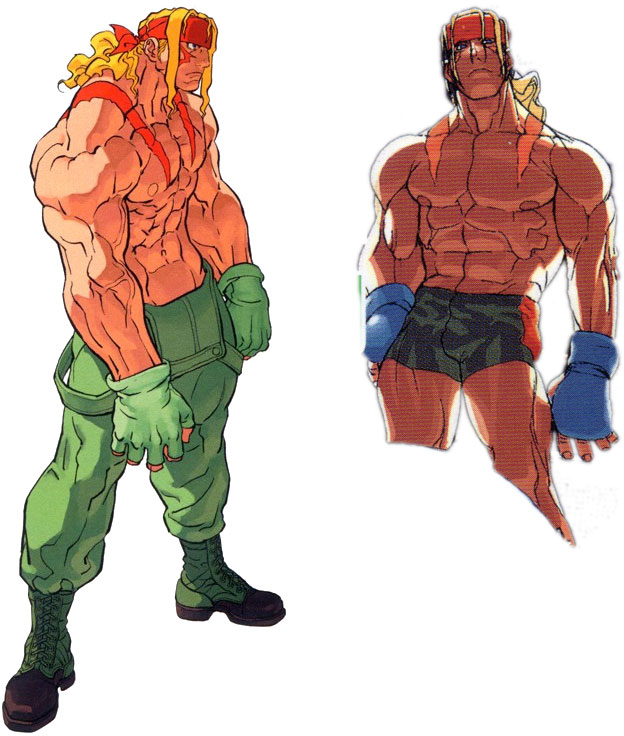

Alex was in essence a new fighter that was following in the traditions of Ryu. The red bandana was partially an homage to Ryu as well as his mentor Tom. Instead of traveling from place to place fighting the masters of the martial arts he was learning from them. Alex wanted to be the best fighter the world had ever known so that he could get revenge on a powerful Illuminati leader named Gill.
The fighting style given to Alex was unique for SF characters yet also eerily familiar. Capcom wanted to make it very obvious who his fighting influences had been. Unlike Ken and Ryu who shared a similar form of karate or any of the Kung-Fu fighters, Alex had strikes and special attacks that crossed the spectrum of schools. The attacks were meant to remind players of older characters.
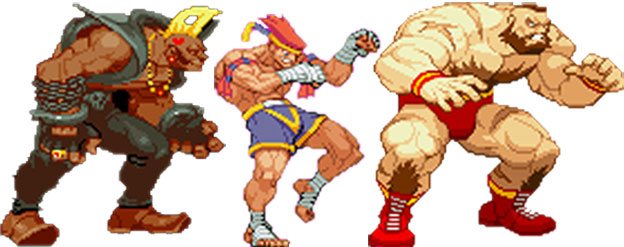

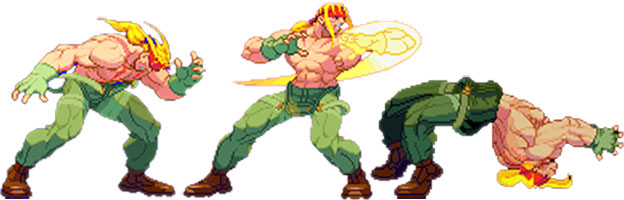
Long time fans of the series could pick out the moves that Alex had learned and who he had learned them from. He had the scrappy street brawling style of Birdie from the original Street Fighter and Street Fighter Alpha. From Birdie he also picked up a dangerous headbutt strike. Alex had a flurry of vicious elbow strikes that could only come from a master of muay thai. However he did not have the knees or kicks of Sagat so the flashy elbows were undoubtedly from Adon, the understudy. Adon was also from the original Street Fighter and Street Fighter Alpha. The grappling moves, throws and rolling German suplex attacks could have only come from the Russian Zangief.

Capcom managed to create a character that was textbook MMA, as in he had bits and pieces of very effective systems, and combined them into his own form. By not making him look like any fighter living or dead they would not date themselves to a particular era. Overalls and combat boots could be found in any time of the modern world yet could have also worked a century ago. Some of the fighters featured in Buriki One were based on real people and thus marked a particular era. By 2013 most of the original fighters from Pride and K1 had retired from competition and some of the promotions that hosted early MMA tournaments had closed as well.

To be fair Capcom had also inserted a character that looked eerily similar to a certain BJJ master. The character of Oro was an ancient fighter that was looking for a worthy understudy. He was so powerful that he would only use one arm in combat. That was all he needed too! He could choke out opponents and even throw them effortlessly with his single arm. Oro had been influenced in part by the One Armed Boxer, a character created by Jimmy Wang Yu, but his physical appearance was very much based on Helio Gracie. That was if Helio were 140-years-old and had lived in a cave for the past half century. The arm tucked into his gi was also a nod to the toughness of Helio and his refusal to ever tap out.
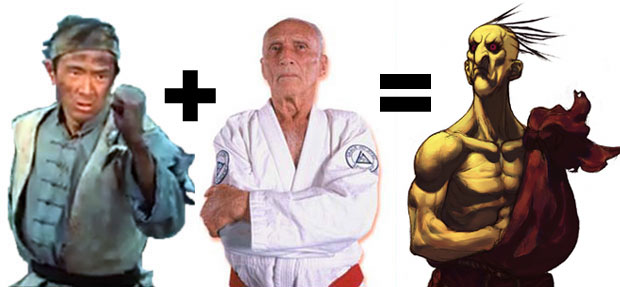

Capcom had actually featured a different MMA fighter earlier. A year before Street Fighter III was released the character Blair Dame appeared in Street Fighter EX. The game was rendered in 3D rather than 2D as Street Fighter had traditionally been done. Blair had a number of strikes, takedowns and bone-breaking locks that she could use in rapid succession. Yet despite this few people acknowledged the contribution of the EX designs even though they were done by current and former Capcom employees.


Additionally ARIKA held the rights to the EX characters so most did not recognize the first lady of MMA in a Street Fighter game. A decade after Street Fighter III was released Capcom returned for a sequel. One of the bruisers they introduced in Street Fighter IV was modeled after the God of heavyweight MMA fighters.

Unfortunately audiences in the west had made up their minds as to the authenticity of wrestling and wrestlers. To them only boxing or karate were real fighting arts and any wrestler trying to convince the public otherwise was looking for a big payday. This perception only grew through the 80's and 90's as gimmick gave way to attitude and wrestling shows began to be scripted by Hollywood writers. This shift began to polarize the audience and those that grew up on a steady diet of wrestling were looking for something more genuine. By this time Japan was going through a mixed martial arts renaissance.


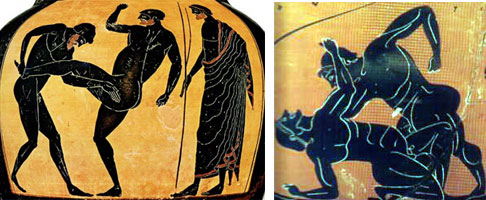
The MMA concept has actually been around for thousands of years in one format or another. Not content with being one of the first cultures to establish both wrestling and boxing the Greeks also developed pankration which was a hybrid of the two. It was the closest thing to no-holds-barred fighting. The modern world would rediscover this type of combat and package it with all the spectacle of pro wrestling, with pyrotechnics, ring girls and hyped match-ups. The K-1 Grand Prix and Pride Tournaments were becoming very popular.

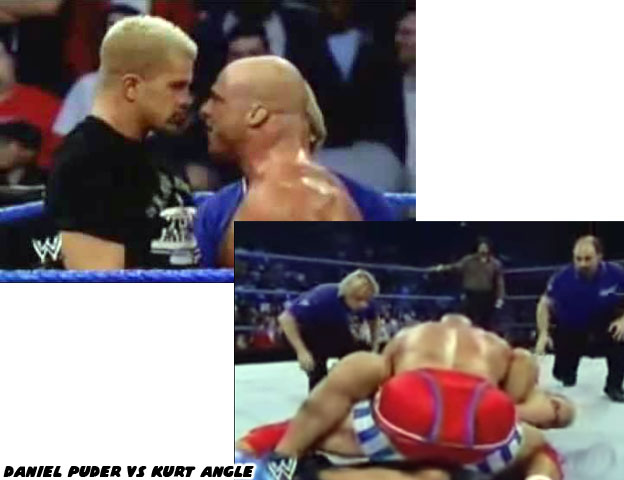
The US was slow on adopting the format as the UFC and King of the Cage tournaments followed at a slower pace. Young grapplers, eager to show their skills and become television superstars were more than willing to try out for reality shows like WWE's "Tough Enough." One of the challenges had hopefuls taking on Olympic gold medalist and WWE superstar Kurt Angle in a wrestling match. To ensure that Angle looked unbeatable the challengers were forced to do wind sprints and other exercises for an hour before accepting Angle's test. The organizers assumed that the activity would tire them out and they wouldn't be able to put up a decent fight. The opposite turned out to be true.


Daniel Puder was trained in various martial arts and had already competed in UFC matches before auditioning for Tough Enough. He was eager to fight Angle and give the audience a taste of some real fighting. In the video you can clearly hear the fans cheering on Puder with chants of "UFC." Angle did not dominate the match as management had hoped and was angered at being shown-up on national television. A rift between the entertainment product, the audience and the wrestlers had grown tremendously on that night. Rather than embrace the MMA community and audience WWE instead went out of their way to downplay and humiliate Puder for his efforts. Fans of the sport argued that WWE management had no idea what the audience was looking for and should have capitalized on the rivalry between Angle and Puder, between wrestling and MMA.

Angle was furious for several reasons. Had the hold Puder put on Angle lasted a few more seconds he would have separated Angle's arm from his shoulder. Severely injuring the star wrestler of a company you are trying to get a contract with is not only bad for business but it also made Puder look selfish and reckless with his skills. This was also a severe blow to Angle's ego. Angle had won a gold medal competing in the 1996 Olympics in Atlanta, as he likes to remind people, "with a broken frickin' neck." So Angle had genuine wrestling skills and in a competition under greco-roman wrestling or freestyle wrestling he would have outclassed Puder. Unfortunately he was not well versed in the trappings of jujitsu and could not have foreseen that Puder would try to get him in a submission move. It was probably Angle's pride that took the biggest hit.


Over the next few years many pro wrestlers would begin adopting submission moves into their repertoire. The "Dead Man" character the Undertaker even adopted the gogoplata jujitsu submission move to make him more fearful. Even without formally saying anything about the contribution of mixed martial arts, the wrestlers were slowly taking on more of their cues in an attempt to broaden their appeal. None more so than Angle. After leaving the WWE Angle maintained his wrestler gimmick a while longer before slowly changing his look to more of a MMA fighter. He ditched the stars and stripes wrestling suit and boots in favor of shorts and taped up hands and feet. Without saying he had renounced wrestling it was easy to see that Angle had taken on the guise of MMA fighter to appeal more to the fans.
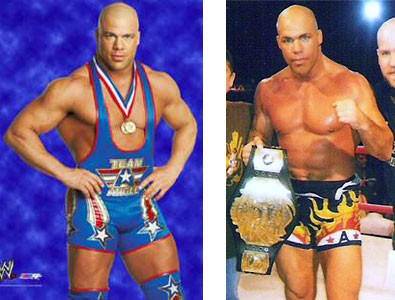

This part of the draw of modern mixed martial arts. The reason why it, above all of the combat sports, has been growing in popularity around the world. Many fighters hungry for fame and fortune began seeing the sport as a way to reach the top. To achieve what we call the "American Dream." Beating the snot out of people is appealing in and of itself for the majority of the fighters. However the challenge is more than being able to dish out the hits but to be able to take them as well. You would think that burly guys would reign supreme in the culture. Several strongmen have tried their hand at the sport. Bouncers, professional football players and yes indeed, champion wrestlers like Brock Lesnar have all stepped into the cage. The results have been varied. It seems that it takes more than brute force to be a successful MMA fighter.
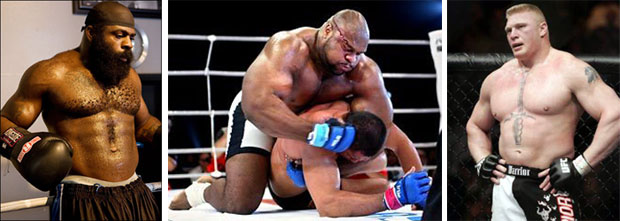

The best, or at least longest-lived MMA fighters were more than gifted athletes or strongmen. They proved their dominance by learning to adapt and build on the legacy of several martial arts. The angles exploited by boxers, the punishing strikes of karate, the close work of muay thai, the grappling of judo and jujitsu and even the mat skills of wrestling. As the name implies, these fighters practice under a mixed bag of martial arts. Some of them were better on the mat and some were better strikers on their feet, very rarely would we find fighters that could do both well. It would make sense that the brutal art would find favor in the most recent fighting game sequels.

Even with the rise in popularity of MMA tournaments Pro wrestling would remain as popular as ever. The pioneers of the sport were some of the most colorful performers ever to step into the ring. In North America they reflected a culture steeped in centuries of tradition. The next blog will highlight these people. As always if you enjoyed this blog and would like to sponsor me please visit my Patreon page and consider donating each month, even as little as $1 would help make better blogs and even podcasts!
Monday, May 12, 2014

Fighting Layer, return of the dragon, part 2...

A Chinese girl and a stylish American had been invited to the Fighting Layer tournament as well. They seemed like friendly rivals to Tesuo Kato and were both approximately the same age. Where or where have we seen these archetypes before? There was much more to Lan-Yinghua and Allen Snider than simply being revisionist versions of Chun-Li or Ken from Street Fighter. They actually had origins with the developers that went back a generation.


Karate and Kung-Fu were cornerstones of the Asian martial arts. Each style of fighting had countless schools within. What Capcom, ARIKA and the other developers did was create archetypes that symbolized the best fighters in each discipline. Ryu and Ken had come to symbolize karate for the Street Fighter series and Chun-Li was the embodiment of kung-fu. However in the planning stages of Street Fighter II it wasn't a given that Ryu or Ken would even be returning to the series. The studio knew that they had to have a karate representative in the game but the original design was very traditional and lacked the visual cues given to Ryu. The studio had been criticized for moving too far from the Street Fighter formula when they introduced Final Fight to arcade owners. In response they pulled back and tried to reinvent the fighting game by going very traditional with the early designs.

The downside to the prototypical Ryu and Chun-Li were that they were very generic designs. Both lacked a creative spark. The karate character was a 25-year-old stone faced fighter. Who would ever find him interesting? Ryu had the torn sleeves, red gloves and red headband that broke up the consistency of the all-white costume. Just a few changes gave him more visual flair. Tetsuo Kato was similar, with taped-up hands and a wood-block-print of blue ocean waves on his gi he could never be mistaken for a traditionalist. The original plans for Chun-Li were not much better. Her design was very dated and lackluster.


Akira "Akiman" Yasuda went back to the drawing board. Instead of going with a token girl fighter, as would be the problem for the majority of fighting games following SFII, he instead turned Chun-Li into a woman. To give her more presence she was imagined as an undercover cop. The costume she wore was a disguise for the Street Fighter tournament. The spiked weights, dark tights and wrestling boots broke up the visual consistency for the character like the red garnishes did for Ryu. There were many reasons why Chun-Li worked from a design standpoint as well as within the game. I wrote more about the importance of the character in the Female Equation blog from a few years back. The karate and kung-fu characters were revised countless times until they set the new standard.


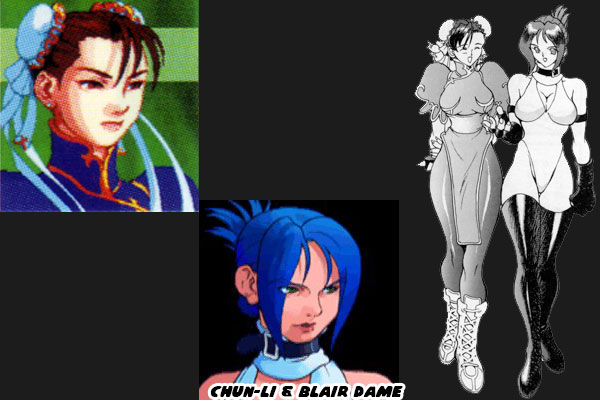
Lan-Yinghua was a nod to the original concept for Chun-Li. She was young but also a seasoned fighter. Her costume was also pseudo-traditional. The nunchaku tied into her braids could testify to the designers having fun with the character. The Fighting Layer designs are not far removed from the Street Fighter II ones. Looking at the FL cast is like playing "what if?" with Street Fighter. The characters put into the Capcom series could have turned out like the ARIKA designs depending on what the producer was looking for. Akira Nishitani and his team had a specific vision for their new franchise. The new Chinese female lead would remind players of Chun-Li just as the new American would reflect Ken Masters.

Allen Snider had been introduced as a sort of friendly rival and understudy of Ken during Street Fighter EX. Ken was supposed to represent the best martial artist from the USA. His long blonde hair and bright red gi made him stand out from the crowd. His design cues said something about Western culture. The Japanese considered themselves more reserved by comparison so Ryu was slightly more traditional in appearance. Snider was created to be as flamboyant as Ken but without copying the same costumes worn by either he or Ryu. Snider was also an amalgamation of real life fighters that had influenced the Street Fighter developers. Enter the Dragon had influenced the creation of Street Fighter II, Mortal Kombat and even Fighting Layer. The real martial artists and actors found within also influenced the games themselves. Allen Snider was inspired by Chuck Norris and Bruce Lee. His hair and facial features were very similar, as was his desire to become a movie star. Lee and Norris battled in the 1972 film Way of the Dragon. That film came out a year before Enter the Dragon. The fight was memorable for many reasons but one of which was because the backdrop was the Roman Colosseum. That location would be recreated in Street Fighter Zero / Alpha many years later.


ARIKA demonstrated that they still had a fondness for the characters they had introduced in Street Fighter EX. Those characters met many of the same conventions as the original World Warriors and some had the same staying power as well. The inclusion of Allen Snider in the series meant to many SF fans that there was a chance that this game, and these characters, might fall within Street Fighter canon as well. A crossover was certainly not impossible. Of course there would be a lot of legal wrangling between ARIKA, Namco and Capcom if that day were ever to happen. What the game was lacking however was a strong female lead. Lan-Yinghua was not quite a Chun-Li tier character and the game needed someone more powerful. ARIKA reached back to their Street Fighter EX catalog and brought in Blair Dame. She, like Allen, was designed to balance out the SFII icons.

 Blair was the first mixed martial arts character in SF continuity. Her costume was revealing, as she was meant to represent the more sexual designs for female leads from the West. Her selection of strikes and grapples was pandering to male audiences but in a different way. Chun-Li had grace and style behind her attacks. Blair was a hard hitter by comparison, capable of throwing spinning backhands, knee strikes and drop kicks in rapid succession. She also had arm bars, ankle locks and take-downs which would make most MMA champions proud. Blair was created to balance out Chun-Li in Street Fighter EX, as such she had to be a woman and not a girl. Lan-Yinghua was a great character but she was more like Cammy than Chun-Li in scale and purpose.


When ARIKA designed Fighting Layer they included all of the control options that modern fighting game audiences had expected in the second or third revision of a game. They also included a robust cast that might have been included in an upgrade as well. Fighting Layer was not only an attempt at redoing the original plans for Street Fighter II but also for Super Street Fighter II. The parallels between Chun-Li and Blair, as well as Cammy and Lan were there but so were the other characters introduced in the game. The title was going to feature different traditional fighting styles but not make the practitioners appear strictly formal.

The three mid-sized fighters were pulled from other nations. The "cool" American guy, George Jensent had kickboxing type moves. He was an undercover officer trying to dig up information on the sponsor of the tournament. He was not far removed from the character that Bruce Lee played in Enter the Dragon. The roots of George's designs were based on C. Jack, the baseball bat-wielding supercop in Street Fighter EX. Both C. Jack and Jensent were designed to balance out Guile, the token US soldier in SFII. Hong Gillson was a prideful Korean and Taekwondo practitioner. He was looking to destroy Tetsuo in the tournament. Hong was the first TKD character in ARIKA and SF mythos, predating Juri Han by more than a decade. He could be likened to a striker like Dee Jay but without the obnoxious racial pandering of the character.


The third character, Shang Fenhuan, was a dangerous kung-fu master. He was taught the martial arts by a very secretive family that also ran the criminal underworld. He was trying to seek his path and was advised by a sage kung-fu elder that it would be found in the Sea of Japan, during the Fighting Layer tournament. Shang was lighting quick and had a very unconventional design. He could be likened to Fei Long, the Bruce Lee clone introduced in Super Street Fighter II. Shang could never be mistaken for yet another Lee wannabe.

Of course what would a fighting game lineup be without dedicated wrestlers? ARIKA did their homework and introduced three distinct characters into canon that represented different grappling arts. Jigjid Bartol represented the ancient Mongolian / Tuvan wrestling form known as Bökh. The form and rules of that school of grappling were said to have been the forefather of Japanese sumo wrestling. Jigjid was not a mountain of a man, like Zangief, but his lack of mass did not mean he lacked muscle. He was still fairly strong and his powerful attacks could shake the Earth. Jigjid entered the FL tournament to help lift an ancient curse. There were many strange occurrences plaguing the villagers in rural areas of Asia and both Jigjid and Lan-Yinghua were sent by their elders to investigate the cause of it. A secretive tournament on a private island in the Sea of Japan seemed to be the destination for all of these martial artists. A different type of wrestler, non-traditional and very flamboyant was also called to the competition. The gold spandex wearing Exodus represented the pageantry and spectacle of modern pro wrestling. Exodus wrestled in only the loosest concept of the word. He was an exceptionally dirty fighter. He could stab opponents with a fork he kept in his belt. He could also set opponents on fire and hit them with chairs or drop them through tables as well. He had come to represent what many had considered the worst aspects of modern pro wrestling.


There was a wrestler in the game however that subscribed to the classic catch-as-catch can school of wrestling. Clemence Kleiber was considered the greatest pro wrestler in the modern era. When he ran out of opponents he simply disappeared. Exodus declared himself the de facto champion. Critics would not accept his claim until he had proven himself by beating Kleiber in the ring. Exodus had to seek out the champ at his last known destination. The secretive Fighting Layer tournament. Kleiber was actually one of three sub-boss characters in the game and not initially a playable character. The bosses would be released by the game over the weeks that it had been played. Only after all of the sub bosses had been unlocked would the final boss become playable.

During the planning stages of Street Fighter II the developers wanted to include a pro wrestler in the lineup. Two different characters were sketched out. One looked very much like the popular Japanese wrestler Tiger Mask while the other had a more generic star mask. This character was dubbed "Maskuman" or Masked Man. These characters were in the lineup well before Zangief was ever finalized. They were meant to capture part of the showmanship of the wrestlers had during the formative years of the Capcom developers. The inclusion of Exodus and Clemence could have been a chance to revisit the original pro wrestler ideas from the company.


There were many other playable and hidden characters in the game. We shall look at them in the next blog. If you would like to sponsor me please visit my Patreon page and consider donating each month, even as little as $1 would help make better blogs and even podcasts!
follow the Street Writer on Patreon!