Showing posts with label street fighter III. Show all posts

Saturday, June 9, 2018

30 years of Street Fighter, 30 Days of Characters; #22


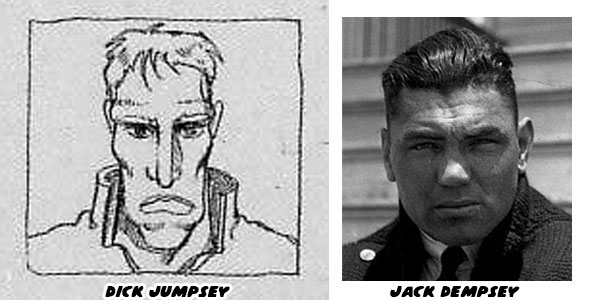
Boxing characters are as old as the fighting game genre itself. Every generation of the Street Fighter series has featured at least one boxer. In the original Street Fighter (1987) it was a scrappy young man named Mike. No doubt influenced by Mike Tyson, the young heavyweight champion. In Street Fighter II (1991) the boxer had grown up and went by the name M. Bison, as in Mike Bison. At least that was his name in Japan. As you already know the Shadowlaw boss names were swapped around when the game came to the USA. Did you know that Mike was not the original choice for a boxer in the Street Fighter II? In the planning stages the designers were looking at a classic boxer named Jack Dempsey. Jack was active from 1914-1927, he was notable for winning and defending a championship, being the first fighter to break a million dollars at the gate and ranked among the best of all time. Dempsey influenced the character Makounochi Ippo in the manga and anime Hajime no Ippo. He uses the "Dempsey Roll" a nonstop barrage of punches and dodges to take down opponents.


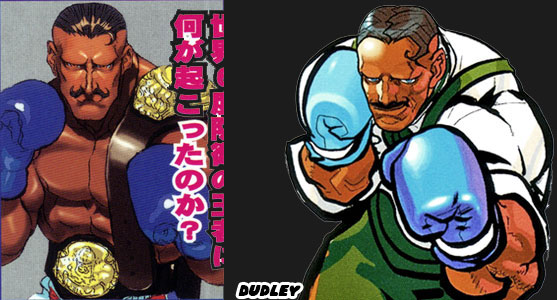
The boxer for Street Fighter II was called Dick Jumpsey but he seemed a little bit antiquated. That was why a more contemporary Mike Tyson served as the template for Bison. The seeds for a classic boxer had been planted at the Capcom offices. It would take a while for that archetype to return. Many studios had their own variation of a boxer. Most wore shorts or training clothes. They looked exactly like a pro fighter should have in the current era. That was until 1997 when Street Fighter III debuted. The gentlemanly boxer Dudley was literally cut from a different cloth. He was an aristocrat that happened to be a boxer. He traveled in luxury automobiles, with butler Ortho K. Gotch at his side. He fought while wearing fine suits, he simply rolled up his sleeves when it was time to teach an opponent some manners. There were no fighters before or after that had as much personality.  


Dudley was a change of pace from the thuggish boxers that had taken over the world of pro fighting. Loud braggarts like Mike Tyson and Floyd Mayweather Jr. that flashed their money and acted questionably seemed to hold the title forever. When classy fighters Evander Holyfield and Lennox Lewis captured heavyweight gold in the '90s it was a refreshing change of pace. Dudley was created as a reflection of this new reality. Of course he was a way over-the-top in his mannerisms and ability. There has never been a character as eccentric as him and there probably never will be again. Because of this we want to celebrate Dudley on Street Fighter's 30th anniversary. As always if you enjoyed this blog and would like to sponsor me please visit my Patreon page and consider donating each month, even as little as $1 would help make better blogs and even podcasts!
 follow the Street Writer on Patreon!

Wednesday, September 2, 2015

How fight culture became fighting game history, part 28

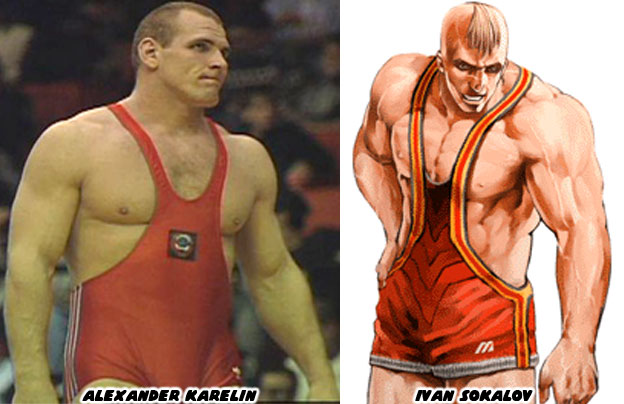
Buriki One was released by SNK in 1999. The game tried to capture the spirit of the early MMA competitions. To help ground the game in reality none of the characters could throw fireball-like projectiles. It also featured character designs that were inspired by actual fighters. Royce Gracie had influenced the development of Jacques Ducalis and Kazushi Sakuraba had influenced Tendo Gai. Those weren't the only high-profile athletes whose fingerprints were in the game. Multi Olympic and World Gold Medalist Alexander Karelin influenced the inclusion of Ivan Sokalov. At his peak Alexander was considered the most dangerous man on the planet. More than a decade had gone without a defeat in international competition, and not only that but during that time an opponent could not manage to score a point off of him. He had a list of incredible statistics that would make him a shoe-in for the pantheon of wrestling Gods. Possibly his most outstanding accomplishment was that he would routinely pick opponents off of the mat and flip them upside down in the air. These were men weighing almost 300 lbs and most of that solid muscle, they would kick, squirm and flail and still they would be tossed like rag dolls. it was something not seen before or since Karelin. Yet since he was not a striker then most people did not know about his legacy or his contribution to the fighting arts.

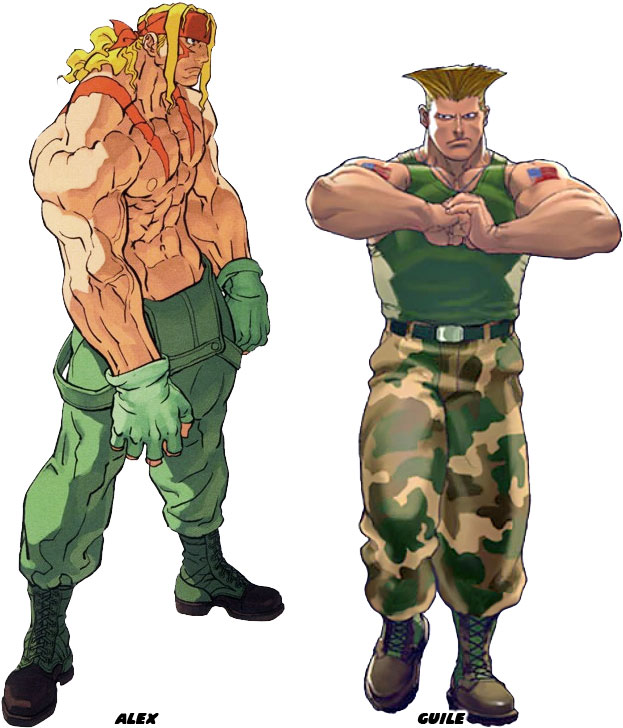
Rival studio Capcom had actually incorporated an MMA fighter years before Gai. Instead of basing a character on real world fighters Capcom invented their own legend. This was one thing that Capcom did better than any other studio. They took cues from various fighting arts and real legends and adapted them into new and refreshing designs. In 1997 they introduced the world to the star of Street Fighter III. The first of the "New Generation" fighters was named Alex.

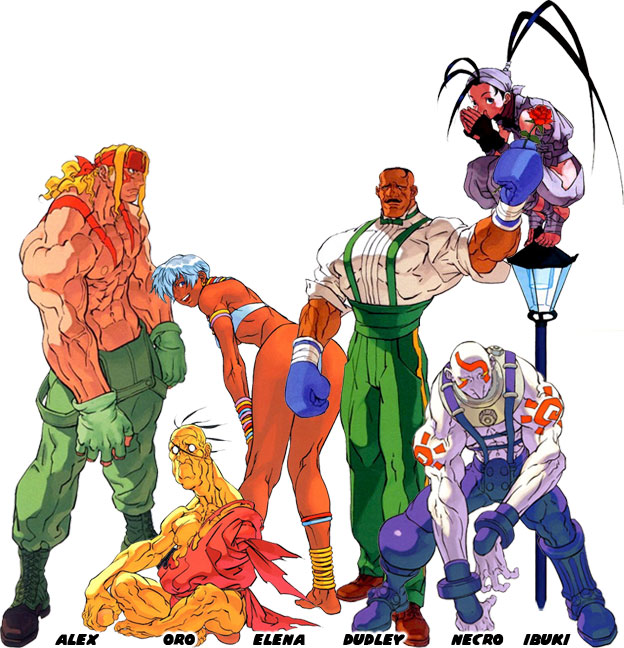
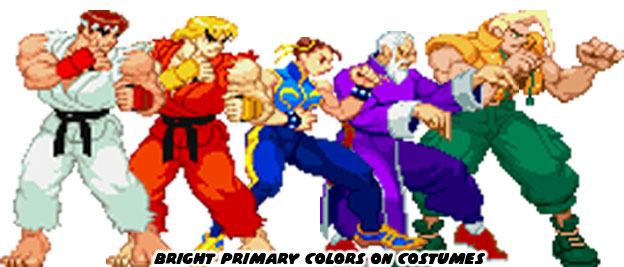
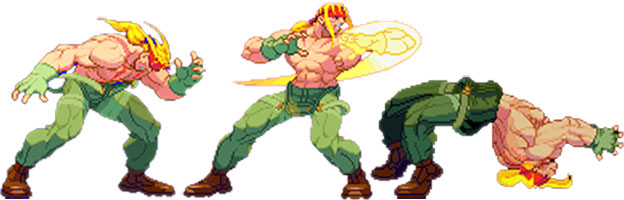
In keeping with tradition the studio had to tell a story through the design of the character. They made Alex tall and incredibly muscular. His costume had to show off enough skin to highlight his massive frame, as well as two massive scars that ran under his eyes and down his shoulders. His clothing consisted of fingerless gloves, a pair of green overalls and green combat boots. Street Fighter characters had typically been assigned a primary color to help them stand out in a lineup. Chun-Li wore blue, Ken wore red and Ryu wore white for example. A large red bandanna kept Alex's long hair out of his face. Designer Kinu Nishimura had considered placing him in the more traditional MMA uniform. However it was not believable that a half naked person wearing only shorts and sparring gloves would have been able to wander from town to town without drawing the attention of local authorities.
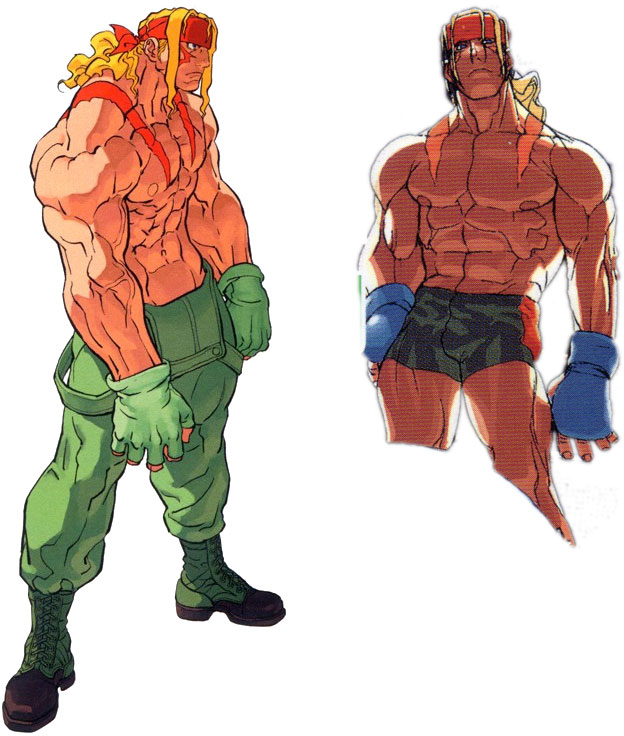

Alex was in essence a new fighter that was following in the traditions of Ryu. The red bandana was partially an homage to Ryu as well as his mentor Tom. Instead of traveling from place to place fighting the masters of the martial arts he was learning from them. Alex wanted to be the best fighter the world had ever known so that he could get revenge on a powerful Illuminati leader named Gill.
The fighting style given to Alex was unique for SF characters yet also eerily familiar. Capcom wanted to make it very obvious who his fighting influences had been. Unlike Ken and Ryu who shared a similar form of karate or any of the Kung-Fu fighters, Alex had strikes and special attacks that crossed the spectrum of schools. The attacks were meant to remind players of older characters.
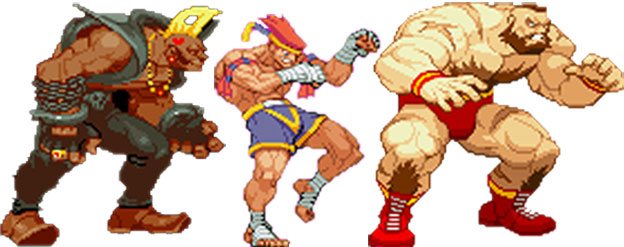

Long time fans of the series could pick out the moves that Alex had learned and who he had learned them from. He had the scrappy street brawling style of Birdie from the original Street Fighter and Street Fighter Alpha. From Birdie he also picked up a dangerous headbutt strike. Alex had a flurry of vicious elbow strikes that could only come from a master of muay thai. However he did not have the knees or kicks of Sagat so the flashy elbows were undoubtedly from Adon, the understudy. Adon was also from the original Street Fighter and Street Fighter Alpha. The grappling moves, throws and rolling German suplex attacks could have only come from the Russian Zangief.

Capcom managed to create a character that was textbook MMA, as in he had bits and pieces of very effective systems, and combined them into his own form. By not making him look like any fighter living or dead they would not date themselves to a particular era. Overalls and combat boots could be found in any time of the modern world yet could have also worked a century ago. Some of the fighters featured in Buriki One were based on real people and thus marked a particular era. By 2013 most of the original fighters from Pride and K1 had retired from competition and some of the promotions that hosted early MMA tournaments had closed as well.

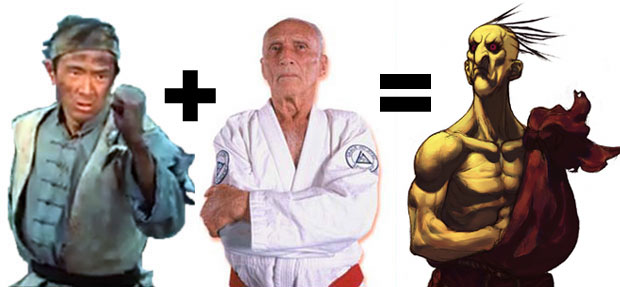
To be fair Capcom had also inserted a character that looked eerily similar to a certain BJJ master. The character of Oro was an ancient fighter that was looking for a worthy understudy. He was so powerful that he would only use one arm in combat. That was all he needed too! He could choke out opponents and even throw them effortlessly with his single arm. Oro had been influenced in part by the One Armed Boxer, a character created by Jimmy Wang Yu, but his physical appearance was very much based on Helio Gracie. That was if Helio were 140-years-old and had lived in a cave for the past half century. The arm tucked into his gi was also a nod to the toughness of Helio and his refusal to ever tap out.

Capcom had actually featured a different MMA fighter earlier. A year before Street Fighter III was released the character Blair Dame appeared in Street Fighter EX. The game was rendered in 3D rather than 2D as Street Fighter had traditionally been done. Blair had a number of strikes, takedowns and bone-breaking locks that she could use in rapid succession. Yet despite this few people acknowledged the contribution of the EX designs even though they were done by current and former Capcom employees.


Additionally ARIKA held the rights to the EX characters so most did not recognize the first lady of MMA in a Street Fighter game. A decade after Street Fighter III was released Capcom returned for a sequel. One of the bruisers they introduced in Street Fighter IV was modeled after the God of heavyweight MMA fighters.

Unfortunately audiences in the west had made up their minds as to the authenticity of wrestling and wrestlers. To them only boxing or karate were real fighting arts and any wrestler trying to convince the public otherwise was looking for a big payday. This perception only grew through the 80's and 90's as gimmick gave way to attitude and wrestling shows began to be scripted by Hollywood writers. This shift began to polarize the audience and those that grew up on a steady diet of wrestling were looking for something more genuine. By this time Japan was going through a mixed martial arts renaissance.


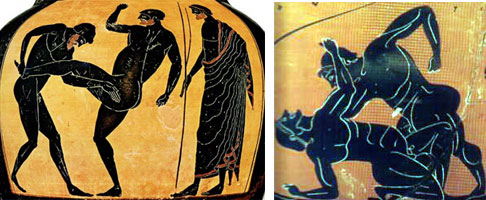
The MMA concept has actually been around for thousands of years in one format or another. Not content with being one of the first cultures to establish both wrestling and boxing the Greeks also developed pankration which was a hybrid of the two. It was the closest thing to no-holds-barred fighting. The modern world would rediscover this type of combat and package it with all the spectacle of pro wrestling, with pyrotechnics, ring girls and hyped match-ups. The K-1 Grand Prix and Pride Tournaments were becoming very popular.

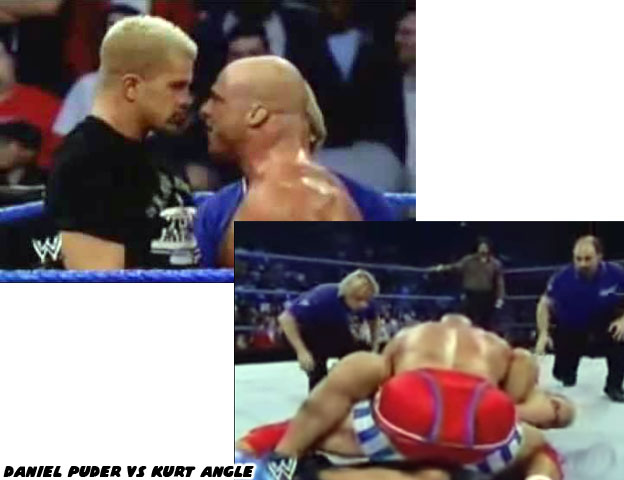
The US was slow on adopting the format as the UFC and King of the Cage tournaments followed at a slower pace. Young grapplers, eager to show their skills and become television superstars were more than willing to try out for reality shows like WWE's "Tough Enough." One of the challenges had hopefuls taking on Olympic gold medalist and WWE superstar Kurt Angle in a wrestling match. To ensure that Angle looked unbeatable the challengers were forced to do wind sprints and other exercises for an hour before accepting Angle's test. The organizers assumed that the activity would tire them out and they wouldn't be able to put up a decent fight. The opposite turned out to be true.


Daniel Puder was trained in various martial arts and had already competed in UFC matches before auditioning for Tough Enough. He was eager to fight Angle and give the audience a taste of some real fighting. In the video you can clearly hear the fans cheering on Puder with chants of "UFC." Angle did not dominate the match as management had hoped and was angered at being shown-up on national television. A rift between the entertainment product, the audience and the wrestlers had grown tremendously on that night. Rather than embrace the MMA community and audience WWE instead went out of their way to downplay and humiliate Puder for his efforts. Fans of the sport argued that WWE management had no idea what the audience was looking for and should have capitalized on the rivalry between Angle and Puder, between wrestling and MMA.

Angle was furious for several reasons. Had the hold Puder put on Angle lasted a few more seconds he would have separated Angle's arm from his shoulder. Severely injuring the star wrestler of a company you are trying to get a contract with is not only bad for business but it also made Puder look selfish and reckless with his skills. This was also a severe blow to Angle's ego. Angle had won a gold medal competing in the 1996 Olympics in Atlanta, as he likes to remind people, "with a broken frickin' neck." So Angle had genuine wrestling skills and in a competition under greco-roman wrestling or freestyle wrestling he would have outclassed Puder. Unfortunately he was not well versed in the trappings of jujitsu and could not have foreseen that Puder would try to get him in a submission move. It was probably Angle's pride that took the biggest hit.


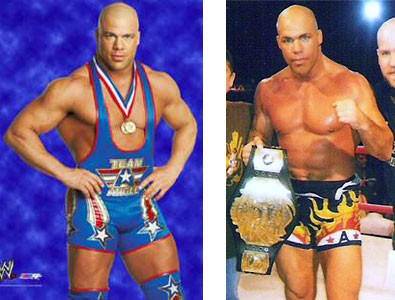
Over the next few years many pro wrestlers would begin adopting submission moves into their repertoire. The "Dead Man" character the Undertaker even adopted the gogoplata jujitsu submission move to make him more fearful. Even without formally saying anything about the contribution of mixed martial arts, the wrestlers were slowly taking on more of their cues in an attempt to broaden their appeal. None more so than Angle. After leaving the WWE Angle maintained his wrestler gimmick a while longer before slowly changing his look to more of a MMA fighter. He ditched the stars and stripes wrestling suit and boots in favor of shorts and taped up hands and feet. Without saying he had renounced wrestling it was easy to see that Angle had taken on the guise of MMA fighter to appeal more to the fans.

This part of the draw of modern mixed martial arts. The reason why it, above all of the combat sports, has been growing in popularity around the world. Many fighters hungry for fame and fortune began seeing the sport as a way to reach the top. To achieve what we call the "American Dream." Beating the snot out of people is appealing in and of itself for the majority of the fighters. However the challenge is more than being able to dish out the hits but to be able to take them as well. You would think that burly guys would reign supreme in the culture. Several strongmen have tried their hand at the sport. Bouncers, professional football players and yes indeed, champion wrestlers like Brock Lesnar have all stepped into the cage. The results have been varied. It seems that it takes more than brute force to be a successful MMA fighter.
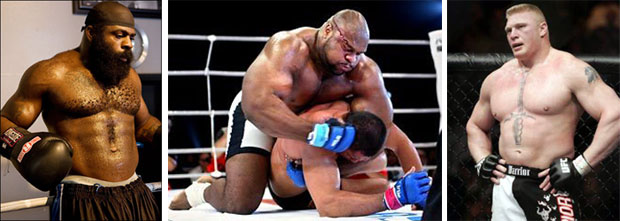

The best, or at least longest-lived MMA fighters were more than gifted athletes or strongmen. They proved their dominance by learning to adapt and build on the legacy of several martial arts. The angles exploited by boxers, the punishing strikes of karate, the close work of muay thai, the grappling of judo and jujitsu and even the mat skills of wrestling. As the name implies, these fighters practice under a mixed bag of martial arts. Some of them were better on the mat and some were better strikers on their feet, very rarely would we find fighters that could do both well. It would make sense that the brutal art would find favor in the most recent fighting game sequels.

Even with the rise in popularity of MMA tournaments Pro wrestling would remain as popular as ever. The pioneers of the sport were some of the most colorful performers ever to step into the ring. In North America they reflected a culture steeped in centuries of tradition. The next blog will highlight these people. As always if you enjoyed this blog and would like to sponsor me please visit my Patreon page and consider donating each month, even as little as $1 would help make better blogs and even podcasts!
Tuesday, July 21, 2015

Representation Matters! Or, what happened to Birdie, part 8...


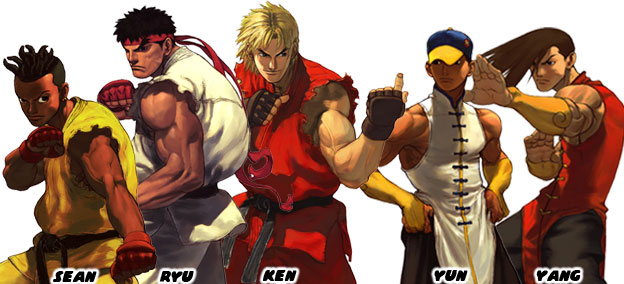
Past the mid '90s Capcom was a completely different studio. The rise of 3D and the 32-bit consoles had changed the gaming landscape. Successfully publishers could no longer ignore home systems market. The arcade market had yet to decline but the writing was on the wall. Studios had to branch out or they would fail. Capcom found success with new franchises such as Breath of Fire and Resident Evil. The fighting game genre was starting to peak and the studio wondered if they had one more great title left in them. Street Fighter III tried to use the elements that made Street Fighter II work. The project began by starting off by deciding who should return. Ken and Ryu were selected to be the only familiar faces and an entirely new cast would fill out the roster. I would argue that there was a lot of redundancy in the new faces. There were a pair of Chinese twins named Yun and Yang that played similarly to each other. They were meant to be a sort of younger Chinese equivalent to Ken and Ryu. Their red and white uniforms were reminiscent of Ken and Ryu's. There was also understudy of Ken called Sean that had similar moves to the stars of the game. I think the team was having too much fun with the names of the new faces. There was the obvious Yin and Yang jab but also the more subtle Sean-Ryu-Ken which was a play on the fireball attack or Shoryuken.


The three karate fighters in all and two kung-fu fighters ate up a lot of the space in the roster. The only duplicates in the original Street Fighter II lineup were pro wrestlers and those were dropped early on so that the team could fit in different styles. Sean was well received, especially as a black minority character. Unfortunately he lacked the impact of Sakura when she debuted. The rest of the cast was more unique. Alex was the star of the new game. He represented an entirely new style of fighting, MMA actually, and was somewhere in between a striking character and a grappler. He actually had elbow attacks similar to Adon, headbutt attacks similar to Birdie and suplex throws similar to Zangief. His size, speed and strength were unique in the genre. The rest of the cast took some chances with the character designs and forms represented. A heroic boxer had finally made it into the series. Moreover Dudley was a very positive black role model. He was not the only minority in the game. Elena was an African that had studied abroad, in Paris first and then Japan. Her dark skin was contrasted by bright blue eyes and white hair. Her costume left little to the imagination. She didn't have the same forethought into her design as Chun-Li. Instead Elena was very much like the characters in anime, pandering heavily to fan service, which was a trend that Akiman was trying to break when he finalized Chun-Li. This was odd considering that the lead artist on this project was Kinu Nishimura, she was heavily influenced by Akiman. Elena did have a unique form of fighting. She used capoeira and there had been some rotoscoping work by the animators to make sure that the moves looked as fluid as possible. Capcom designer Daigo Ikeno was a capoeira practitioner and helped with the reference work.

The game also introduced a female ninja practitioner named Ibuki. Her look was unique and not as grounded in history or anime making her a fantastic addition to the title. The game was not without its own Blanka and Dhalsim, or two extreme characters. An elderly one-armed Brazilian (he actually kept his other arm tucked inside his gi) was a master of a unique fighting art, it was a mix of psychic attacks and judo throws. He was very strong and fast despite his age. Oro was based on Helio Gracie, the co-founder of the Gracie school of Brazilian ju-jisu. The character design was unique because he was the oldest character in Street Fighter mythology, almost twice as old as Gen, the previous elderly character. He demonstrated that age did not make some fighters less dangerous. The other unique character was Necro. The young Russian teen had been experimented on by a mysterious group of religious and scientific zealots. The various experiments they did to him left his muscles, skin and bones like rubber and gave him the ability to shock opponents like an electric eel. Meaning he had some of the best qualities of both Dhalsim and Blanka,


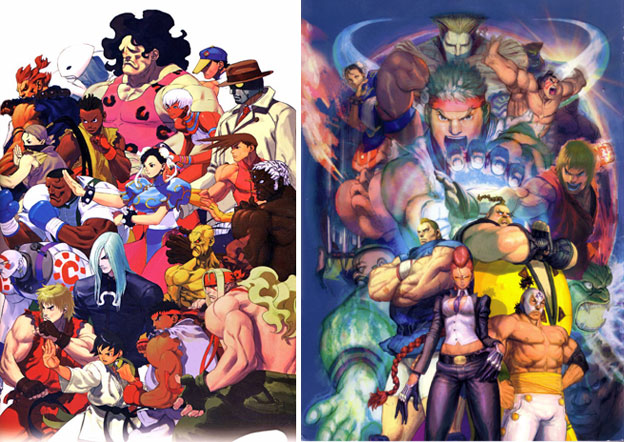
The game did well with audiences. The upgraded arcade engine allowed for larger sprites, a broader color palette and more frames of animation. Having three black characters, including a woman of color was a tremendous credit to Capcom. They were showing an active interest in inclusion and diversity with their lineup. Unfortunately for many audiences and arcade owners this was not the game they had expected. The lack of returning characters and redundant new characters gave the game an unfinished feel. Capcom had established a president in Street Fighter Zero that was tough to beat. They could bring back classic characters and make them work again and again. Upgrade kits were in the planning stages. Each one could introduce a new character if not classic character. Before long Chun-Li and the giant Hugo were put in the game. Hugo was actually meant to be in the first release but the team didn't finish his animations in time. There was no doubt that the time spent creating the redundant Yun, Yang as well as Sean may have been better spent on entirely new figures. Hugo was representing the Final Fight cast as Chun-Li was a return to the SF II lineup. Gouki / Akuma had returned as well but was a hidden character in the first few builds.

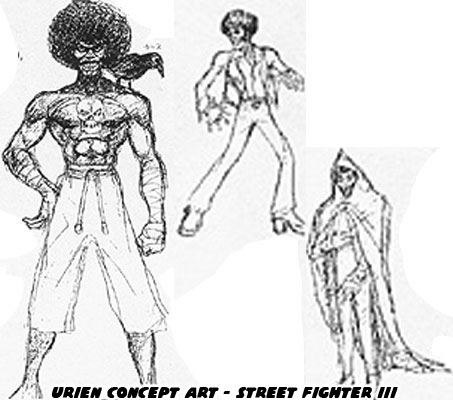
The new characters Urien, Q, 12, Remy and Makoto were a mixed bag. Urien was a pallet and head swap for the new final boss Gill. Meaning that another redundant character was also featured in the title. Q was a nonsensical masked secret agent that moved and fought like a robot. Remy had many of the attacks from Guile and Nash but with a look that was pulled from the rival King of Fighters series. 12 was a shape-shifter that was reminiscent of Necro but was also heavily anime-influenced. Of the final new characters added Makoto had the most traditional design elements applied to her. She was a karate fighter, yet her form was completely different than Ken, Ryu, Sean and Gouki. This meant that for audiences she also controlled differently and required some new strategies to use.


With the exception of Makoto, the last new faces added to SF III were lacking. They didn't have enough time to be evaluated or redesigned. In fact the original plan for Urien had once again fallen on old stereotypes. Had the studio not gone with the pallet swap of Gill who knows how audiences would have reacted to the afro-sporting, disco pants wearing antagonist. I don't think it would have been a warm reception. When development began on Street Fighter IV the approach for new fighters was completely the opposite of SF III. The studio started with Ken, Ryu and the original World Warriors from SF II as all returning members. Then they had a small group of new faces that they would introduce to fans. The characters were designed mainly to appeal to the West, where Capcom had hoped to gain a lion's share of the games profits. The sexy spy Crimson Viper was meant to appeal exclusively to US players. Despite the pandering most gamers in the US ignored the character. Of course the fatty Rufus was forced onto audiences because he was funny. The final two spots would be taken by a judo-ex-military fighter and a masked Mexican wrestler.


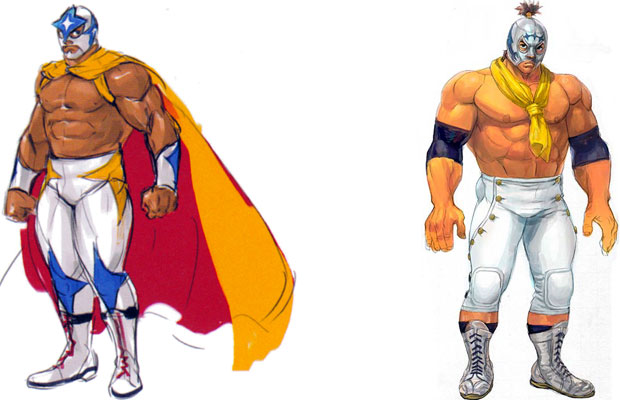
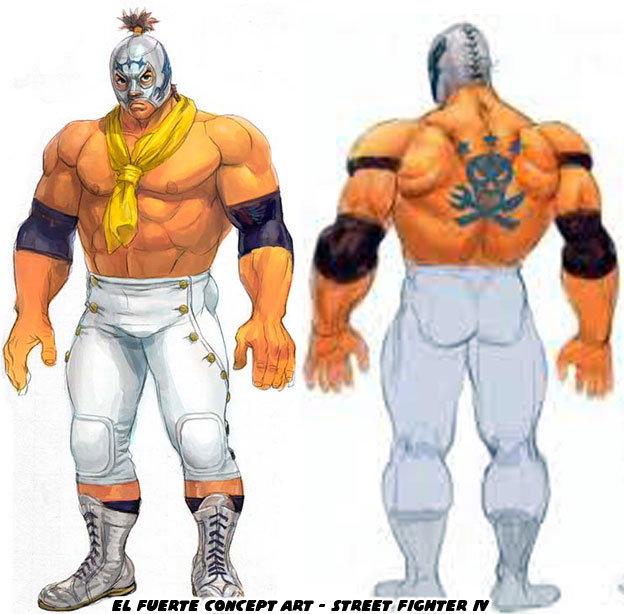
The lead designer on this game was Daigo Ikeno. He could not seem to find designs that worked as well with audiences as the SF II cast had. I think that the choices pushed by producer Yoshinori Ono had something to do with why the characters were lacking. A few blogs back I mentioned how there was a strong black character planned for the game that was eventually turned into Rufus. Something similar happened with El Fuerte the enmascarado, or masked luchador. In the early planning stages El Fuerte had a unique costume that was inspired by actual lucha libre livery. He had the mask, the tights and even a cape. Which was something that performers had worn to the ring since the earliest days of pro wrestling in Mexico, which would be over 80 years ago! In the earliest stages the design was every bit as good as something that Tetsuo Hara could have come up with for the Muscle Bomber series. In fact I would say that the original El Fuerte was a better design than El Stinger, the Mexican wrestler created by Hara. El Fuerte did not necessarily poach and designs from a masked wrestler living or dead. The star on his mask was even a nod to the masked wrestler that had been planned for SF II. But then something happened…


It was decided that El Fuerte was not unique enough. At least not unique enough to be ranked against the World Warriors. So his costume was redone, his mask was redone and even his purpose for fighting was redone. The team decided that it would be great if he was a masked wrestler that was obsessed with cooking. In this way they could name his attacks after food. The Habanero Dash, Tostada Press, Fajita Buster, Gordita Sobat, Calamari Slide Propeller Tortilla, Picadillo Jump, Quesadilla Bomb and Guacamole Leg Throw. The names were an insult to the fantastic and dangerous moves that Mexican pro wrestlers performed on a weekly basis. To add insult to injury, the mask, which is sacred to the performers was even stripped of its origin to reflect the silly obsession with cooking. There were forks coming out of lighting bolts in the early redesigns. The tights were turned to chef pants, at one point El Fuerte even had tattoos or a fork and knife on his back. The three stars that adorned his mask was meant to mimic the Three Star Michelin rating given to the top restaurants around the world. Each decision that the team made took away from the character, it did not add to him. It was as if the designers were bypassing the lessons from previous generations and were focused on the punchline.


It was up to the team to decide how the tone of the game was supposed to be. The new graphics engine allowed for some realistic 3D models. When the majority of the cast fought each strike looked like it had weight and power behind it, giving the game a serious tone. But then all of the models had silly expressions applied to them when certain characters performed super moves. It was a mix of cartoon and realism that was sending a mixed message to audiences. Either the game was a return to the classic challenging Street Fighter II, or it was more anime influenced like SF Zero and SF III. Being caught somewhere in between did little to improve the game itself. The only signal that was not missed was how minorities and their fighting arts were being presented. Mexican and later on Turkish wrestling was seen and shown as an absurd form of fighting not to mention that Americans were stupid, morbidly obese participants.

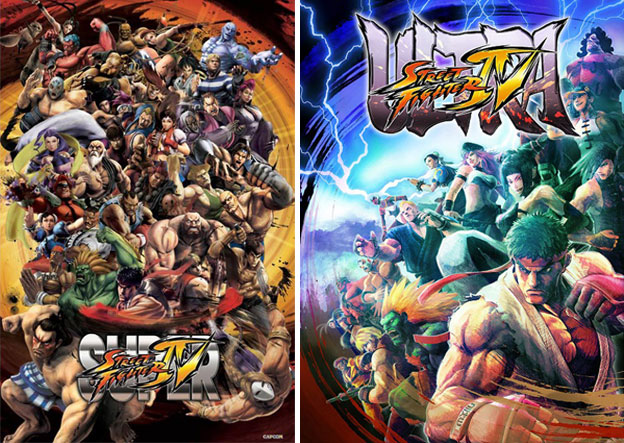
 As the reception to the new characters were met with a lack of interest the team went back in time and started putting in as many classic characters as they could with each update. The majority of characters from SF III and SF Zero had returned by the time Ultra Street Fighter IV. In the rush to return to fan favorites the designers missed a number of important details. The characters from Zero had not matured. Remember that in continuity Zero happened shortly after the events in the first game. Ryu, Ken and Chun-Li were still young adults and Cammy and Sakura were girls. In Street Fighter III Ryu, Ken and Chun-Li were adults. During this timeline Sakura and Cammy would have been adults as well. Instead Street Fighter IV was pitched like the Zero series. It would tie together the events of SF II and SF III. Only this time Daigo Ikeno would not go out of his way to redesign the cast so that they were all unique to this continuity. Instead the team picked and chose the various incarnations that would appear in the game even if their designs were from two or three different games.


It had been almost 10 years since the last Street Fighter III and the first Street Fighter IV had appeared. In that time audiences never forgot what the series meant to them while growing up. Seeing a diversity of male and female characters in SF IV was fantastic. It was also nice to see different nations represented, mainly because they were the original World Warriors. Audiences from around the world would be able to identify with a character or two, including the new ones. It would go a long way in making kids feel validated, especially when they were being underrepresented on television and movies. I only wish that Capcom had done a better job at presenting minorities. They were never as disrespected in any previous version, why did the team start now? Street Fighter IV had missed the boat with new faces and after seeing what was done to Birdie in Street Fighter V I shudder to think what else the studio had planned for non-Asian and non-White British characters. As always if you enjoyed this blog and would like to sponsor me please visit my Patreon page and consider donating each month, even as little as $1 would help make better blogs and even podcasts!
Saturday, July 11, 2015

The Ken reaction, part 1...

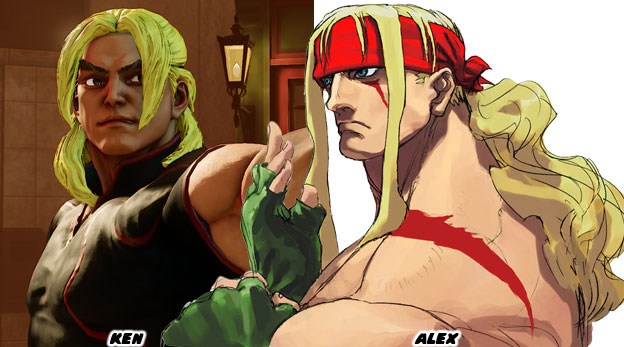
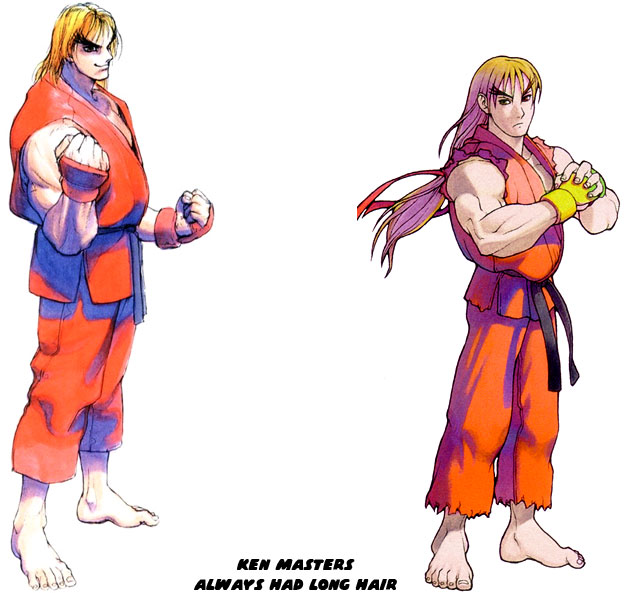
Let's talk a moment about the reaction to Ken returning in Street Fighter V. There are people that love the news, the new look and new moves and people that are offended by all the changes. It's understandable from either perspective. Those that have been with the series for a long time might not welcome the changes made to the character. Those that are relatively new don't mind the makeover as long as he still plays well. One of the biggest knee-jerk reactions has actually been about his hair. It is much longer now than in the previous game. So much so that it is falling over his eyes. There hasn't been a male character with this much hair since Alex in Street Fighter III.


Of course the people that are complaining about his long hair may fail to address that this character has always had long blonde hair. In fact this is the second major makeover for the character. In Street Fighter Alpha / Zero, he had much longer hair and in a ponytail. The decision to present a young Ken and Ryu in the series was based in part on the designs used for the Street Fighter II anime movie. Most fans enjoyed the look so long as Ken was still a fun character to play as.


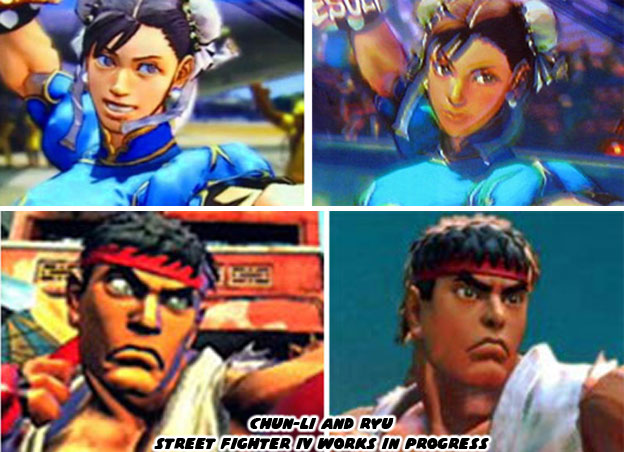
The other major complaint is that the model in the trailer is ugly. The hair itself looks like it was sculpted out of Play-doh. I'd actually like to remind critics that these are Beta and possibly even Pre-Alpha models going into the teaser trailers. The character is still months and months away from being finalized. In case these people forgot the early footage of Street Fighter IV caused the same reaction from many gamers. Ryu was ugly, as was Chun-Li. Their heads were odd, their proportions were funny. Their hair looked like blobs of colored clay. On and on people complained while the game was still being developed. Many wrote off the series then and there. They should have stuck around a bit longer because from month to month the models changed greatly. I can only assume that the same thing is going to happen with Ken and the rest of the cast. Also for the people that dropped the series while it was still in beta were not really missed. The over 8 million copies of the Street Fighter IV series sold helped single-handedly revive and entire genre with the masses.


I'll hold my judgement on Ken until he is finalized. I'm already not happy with what the studio did with Birdie but that's an entire series in and of itself. Right now I am sitting on the fence regarding the redesign for Ken. Like many long-time fans of the genre I can point out what the issues are. First and foremost the character is part of a legacy design going back to the start of the genre. And I'm not talking about the first Street Fighter either. I mean a game even older than that!


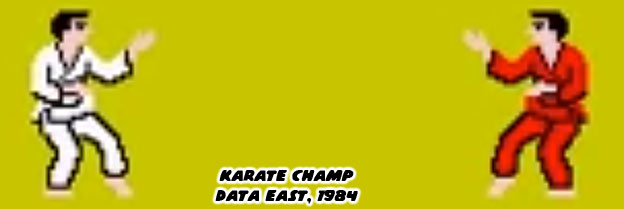
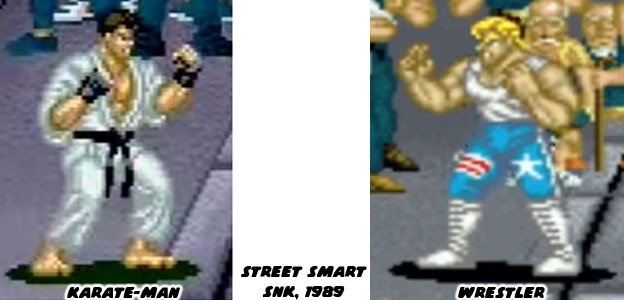
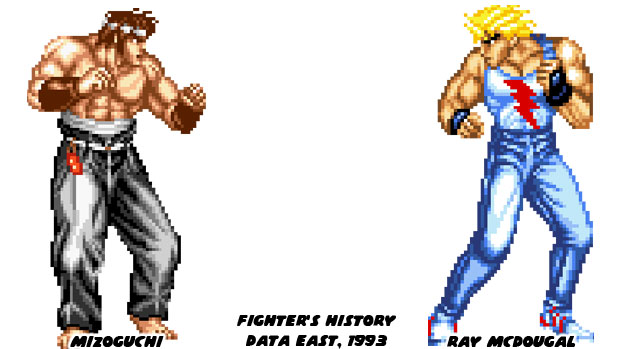
The karate guy in the white uniform versus the karate guy in the red uniform was a tradition started by Data East over 30 years ago! There were a couple of reasons why the characters were presented this way. First off the uniforms could have actually been worn in competition. Secondly the red uniform was a good contrast because two characters wearing white would be difficult to track as they jumped toward each other. It made a lot of sense for programmers that had to use two main karate fighters in a game. It would become a tradition that other studios would follow.


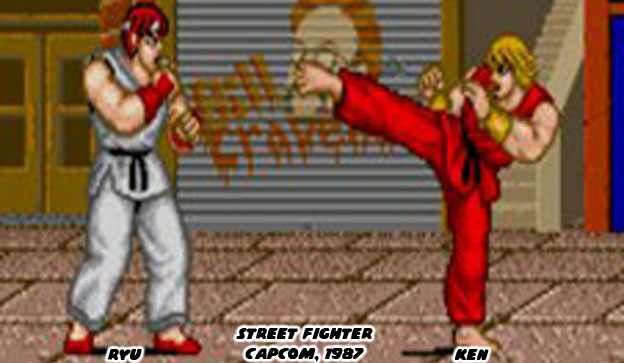
Capcom pretty much set the standard a few years later with the original Street Fighter. Since the game engine was running on the CPS-1 board the sprites were larger and supported more colors than what was possible earlier. They used these extra colors to add some details to the characters. Ryu had reddish hair, red punching gloves and red slippers. Ken had blonde hair and gold punching gloves. These details would become standardized for both characters over the next 25+ years.


As more developers began creating fighting games of their own they started out with two main characters. They were almost always a Japanese and an American because that was the two biggest markets the industry was focused on. The Japanese was usually a karate fighter and the American was also a karate fighter or some sort of wrestler. SNK had experimented with the formula since early on. Such was the cast with Street Smart. A game that was a hybrid brawler and fighting game.


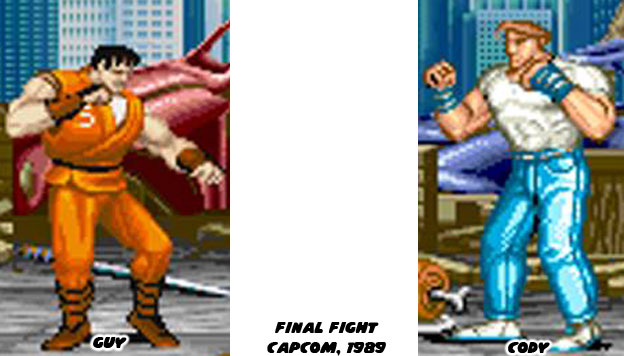
That same year Capcom also released a title that was a hybrid fighting game and brawler. Final Fight was designed as the sequel to Street Fighter. What was interesting was that the uniforms for the main characters were reversed. The American wore white and the Japanese wore red, well actually a burnt orange color.


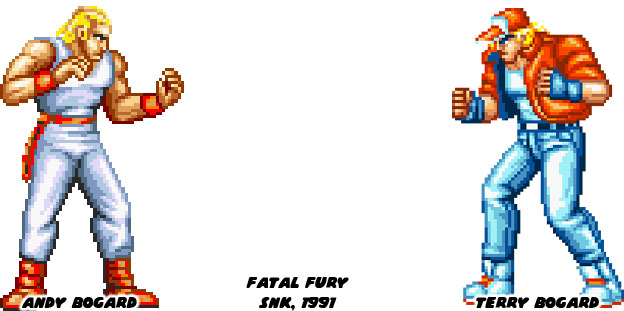
And so the trend continued through the years. In 1991 Capcom released Street Figher II and updated the look of Ryu mostly. Ryu had dark hair and lost the slippers. Ken more or less stayed the same. The other developers were keenly aware of the trends and had also released their own fighters. The closest one on the calendars was Fatal Fury, which was produced by the planner on the original Street Fighter. The main colors remained on the characters, red and white yet this time they were brothers. Also SNK began inserting more contrasting colors and even secondary colors to all of the uniforms. This would be a trend that made the SNK library appear much different.


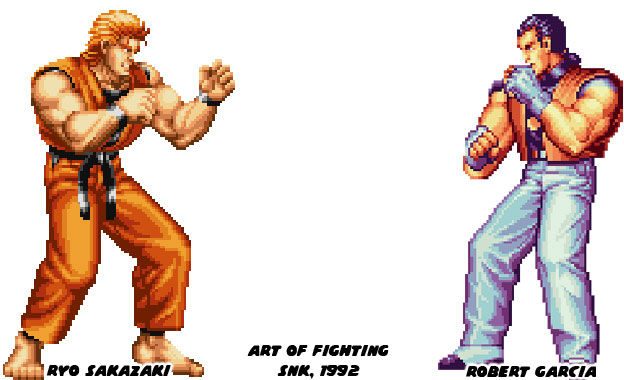
A year later SNK released the Art of Fighting. Again the colors were reversed on the main characters, except this time there was more diversity. Instead of a blonde American, the second player was a black haired Italian. I'm sure many audiences noticed that while Ryo was very much an amalgamation of Ken and Ryu, his uniform had a distinct black vest under his gi. This was something that would return for Ken in Street Fighter V.


The following year was a major period for the evolution of fighting games. Three titles were released that each shaped the course of history. Data East finally returned to the genre they created with Fighters History. From the neck up the two main characters were very much identical to Ken and Ryu. The rest of the cast was even similar to the World Warriors in Street Fighter II. So much so that Capcom sued Data East for copyright infringement. Capcom would lose the case which allowed other studios to release games and characters very similar to Street Fighter.


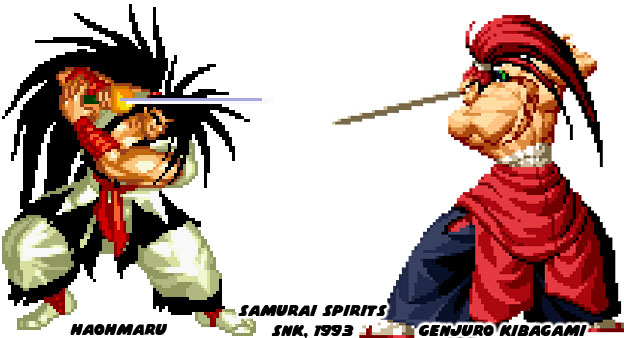
SNK would return with one of the most popular weapon-based fighting games of all-time. Samurai Spirits came out in 1993 and introduced Haohmaru. However he was without his balance until the sequel came out. Genjuro was very much the Ken to Haohmaru's Ryu, although technically both were Japanese.


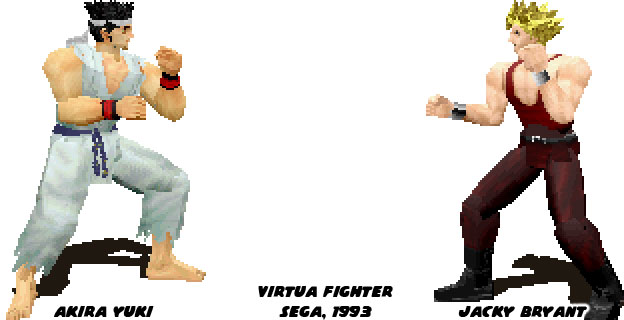
The most revolutionary title of '93 was Virtua Fighter by Sega. It was the first 3D fighting game. Yet despite all of the advances with graphics technology the main characters were still a Japanese and blonde American wearing white and red respectively.


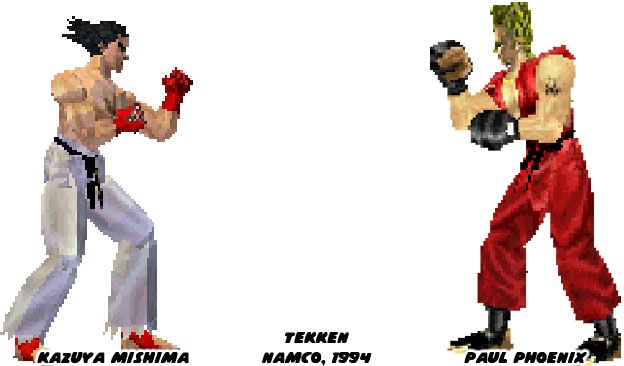
A year later Namco released their first entry in the 3D arena and surprise-surprise there was a Japanese protagonist wearing white and a blonde American in red. Of course any similarity between Ken and Ryu to Paul and Kazuya was superficial. The Street Fighters and the Tekken games had different control schemes, different combo setups and altogether different gameplay elements. The biggest franchises, at least those that came from Japan kept the tradition alive for a generation. Red and white costumers were done because of technical limitations originally. The early arcade engines only had enough memory and processing power to display a few colors at a time. Characters had to be painted in broad single colors. As technology improved so did the ability to display dozens and then hundreds of colors on screen. Even then developers learned that the most memorable characters preserved a single main color. This was most obvious in Street Fighter.


Let's play some word association. What is the first color that comes to mind when you think about these characters: Ryu, Ken, Chun-Li, Gen and Charlie Nash? Chances are you would think white, red, blue, purple and green. Think about every Street Fighter character and how you could pin a color to them, Sean was synonymous with yellow, Blanka was green and Makoto was white. Costumes or uniforms with a solid color were easier to track on the screen than a character with busy patterns on them. This worked in traditional animation, in comic books and just about everywhere else where you wanted to grab the attention of the audience. If there was one thing that Capcom had relied too much on over the past 30 years was that certain nationalities were stuck with the same colors.


It was not a hard and fast rule but audiences around the world were expected to identify the American character because they were white with blue eyes, blonde hair and military themes. Costumes started to become a little heavy handed with social bias. Japanese characters that were not wearing a gi were sumo wrestlers. Black fighters were mainly boxers and on an on. This started to wear a little thin with audiences. They wanted to see some more original ideas. If not more diversity then perhaps costumes that would make the characters look a little more contemporary. The only down side was that Street Fighter had gone unchanged for such a long time that giving a main character with a completely new look was going to make a lot of players mad. Capcom found a nice middle ground by offering DLC costume packs which offered everything from actual street clothing to animal costumes. However Street Fighter V was a completely different approach to the genre and because of that some of the returning characters would not be the same. In the next blog we will take a closer look at the new Ken. As always if you enjoyed this blog and would like to sponsor me please visit my Patreon page and consider donating each month, even as little as $1 would help make better blogs and even podcasts!
Tuesday, September 16, 2014

Copycat Culture, part 7...

The easy thing for most game “journalists” to do is make up a controversy. For example bring up a list of images from the cast of Xuan Dou Zhi Wang / King of Combat and say which character the company Tencent was poaching. I’ve already talked about how King was basically Ken from Street Fighter with a chance of clothes. The character could also have been called a clone of Ryu.


Audiences were upset that the King introduced in King of Combat was not the same King from the King of Fighters universe or even King from the Tekken series. The character looked instead like a blend of various KOF characters including Rock Howard and Shen Woo.


Fighting games weren't the only sources of inspiration for the King of Combat characters. Simca, one of the stars from the manga and animé series Air Gear was part of the basis for Ciel.


What modern fighting game wouldn't be complete without a weird long haired character? There's no doubt that Freeman from Garou: Mark of the Wolves and Remy from Street Fighter III: Third Strike were the sources used for Tsukikage Arashi.


SNK had a well established history of using male and female Tae Kwon-Do practitioners in their Fatal Fury and King of Fighters games. When rival studio Capcom finally decided to add a TKD fighter into the lineup they made a very unique design choice. The revealing costume of Juri Han was anything but traditional, unlike the clothing featured on the SNK fighters. The character became a hit and it was only a matter of time before Tencent answered with Lee Won Hee.


These characters were just a sampling of the parallels that could be drawn between King of Combat and the other fighting games. Pointing out the similarities was not hard at all. Any fighting game aficionado could do the same. The more important question was why did Tencent do this? Why did they feel that it would be acceptable for their game to take so many elements from other sources? Money was the primary reason. They could follow in the footsteps in the longest-lived and most successful franchises and make a quick buck. By going with free-to-play and selling costumes and other upgrades via micro transactions they could make their money back on the millions and millions of Chinese gamers that loved the genre. There was another reason for why the studio thought it was acceptable to poach so many ideas.

When it came to pop culture, especially comics, cartoons and toys, the Chinese had an ingrained concept that imitation was the sincerest form of flattery. It was part of the reason why the nation pursued the creation of counterfeit goods. The western world idolized many brands, turning Nike, Prada and Rolex into the labels that everyone wanted. When the genuine article could not be had the Chinese economy rewarded counterfeiters for making the next-best thing at a reasonable price. This way of thinking was very pragmatic. It extended to many levels of society especially in major cities. The residents of the big towns like Beijing, Shanghai and Hong Kong wanted to be recognized as having the same sophisticated tastes as their global counterparts. The best way to do that was by imitating the buying patterns of their western brethren. In the entertainment front it also meant copying what the rest of the world was into. Street Fighter II was a smash hit in China and fans wanted anything and everything with the characters in it.


The nation began adapting the legend of the World Warriors into comic book format. The Chinese actually had the first licensed Street Fighter comics in the world, before the US and even Japan! Of course the comic industry in China also produced tons of unlicensed comics as well. But I digress... Many of the best panels and covers featured in the comics were based on the official character art from Capcom. To western comic book fans this was clearly more poaching from a nation of counterfeiters.

If only those comic book fans would have looked a little closer though, they would have seen some tremendous material. Some was silly but most was sincere. Many of the licensed comcis had well written stories and superb art. The best authors and artists treated the material with as much respect as it deserved. They certainly did much more for the franchise than the horrid Malibu comics did in the US. There was a generation growing up in China that identified with the SF characters as much as those in the US or Japan did.


Imagine how difficult this perception of imitation and fraud was on the Chinese nationals and even Chinese-Americans that had migrated to the US centuries earlier. They were the ones who built the railroads and factories and did the work once the slaves had been freed. Their culture was up for grabs, their labor welcome but their opinion wasn't. Chinese culture had been appropriated by Japan and the US. It did not matter if it was accurate or insulting as it was being put in television and gaming. The Chinese were not allowed to contribute to this presentation for most of the 19th and 20th centuries.

The Chinese wanted to show the world that they too knew a thing about the popular trends. They could make restaurants that looked just like fast food franchises in the West. They could make television shows that matched the popular titles in the West. They could make apparel that looked like the hot fashion labels. They could even make comic books that looked every bit as good as the official art from the studios. When they produced these things in sweatshops under a license then they were contractors, when they did it on their own volition they were thieves. Instead of being acknowledged as contributors to pop culture they were called copycats. The line between homage and rip-off seemed arbitrary. It was hypocritical especially when the creators were passionate about the projects they worked on unlike those in the west that took the license and ran it into the ground. It was a slap in the face to the audiences saw a lot of their own culture within the context of the Street Fighter series.


The Chinese fans did not readily have access to the arcade boards produced in the US or Japan. They were often playing a bootleg copy of Street Fighter II. Specifically a version that had been modified to adjust the speed up the gameplay and allow players to perform special moves mid-air where the original version did neither. These bootleg copies would make their way to the US and the rest of the world, known as the "Rainbow" kits. These releases would influence the direction of the franchise. Gamers and arcade owners would demand legal upgrade kits that had the same elements of the bootleg roms. Capcom listened and released the Hyper, Turbo and Super upgrades for SFII in the early '90s. The Japanese courted their western partners while stealing in the design elements created by the Chinese. This portion of history was glossed over in most retrospective articles concerning the evolution of the franchise.

Here was where I take exception to most game "journalists" I was willing to argue on behalf of the "pirate" and not take history as it was presented by one side. The Chinese developers weren't acknowledged for their contribution to the fighting genre and worse yet, the Japanese were glorified for theirs. When Xuan Dou Zhi Wang came out many considered it a wholesale rip-off of the King of Fighters. Even I called it the Frankenstein approach to fighting game design. What audiences did online, myself included, did was have a knee-jerk reaction to the title. Now that it has been a few months the game deserves a second look and with it the industry as well. Looking back on the evolution of the fighting game genre I saw how important imitation was to the biggest franchises. We'll look at this more in the next and final blog in this series. If you would like to sponsor me please visit my Patreon page and consider donating each month, even as little as $1 would help make better blogs and even podcasts!
follow the Street Writer on Patreon!