Showing posts with label yang. Show all posts

Sunday, June 5, 2022

A first take on Jamie, the new Street Fighter 6 character

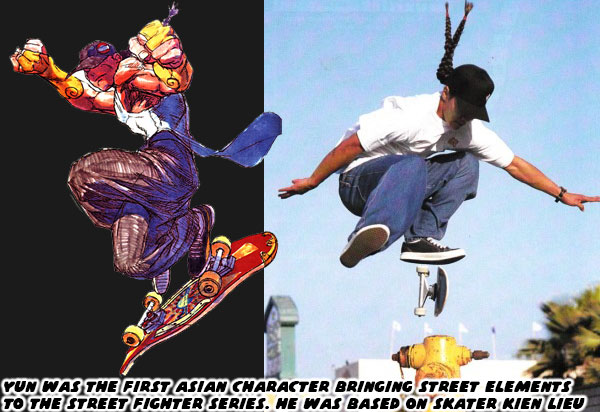
The full Street Fighter 6 trailer dropped recently. Make sure to check it out before continuing. Today we are going to focus on Jamie, the young kung-fu fighter. He is one of the new characters introduced in the footage, and apparently the friendly rival to Luke. I will be going through every character announced so far, the changes made to those returning, as well as those that were leaked in more depth. But for now let’s focus on Jamie. The character is listed as from Hong Kong. As you may know it was previously under British colonial rule before being handed over to China. Culturally they people from Hong Kong had more western influences, and freedoms, thus the transfer to a more authoritarian government was met with resistance. Jamie is similar to other young Street Fighter (SF) characters in that he wears what appears to be traditional martial arts gear, with a hint of modern touches. This trend for the series started in 1997 with Street Fighter III. Yun, and Yang were twin brothers that wore what appeared to be traditional outfits, but skateboarded, and inline skated respectively.
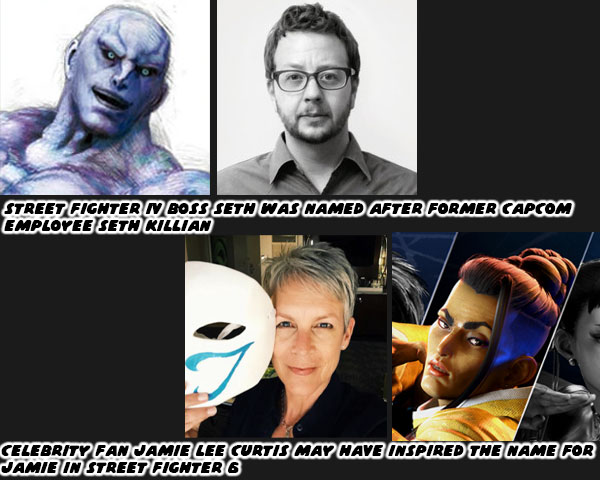
The other thing that stood out for the character was the name. Jamie is not a name that we might consider traditionally Chinese. To be fair, a number of Asians have both traditional names, and adopted western names. For example Lee Jun-fan was the birth name of Bruce Lee, and Fang Shilong is the birth name of Jackie Chan. Capcom often gives the staff leeway on the names they select. James Goddard named his Black kickboxer DeeJay in Super Street Fighter II. It is well known that pro fighting game player, and Seth the boss in Street Fighter IV was named after former Capcom Community Manager Seth Killian. If I were to guess where the name Jamie came from it would be from actress Jamie Lee Curtis. She famously attended the EVO tournament in a full Balrog / Claw costume. She has been known to dress up as various pop culture icons in order to attend conventions incognito with her family.
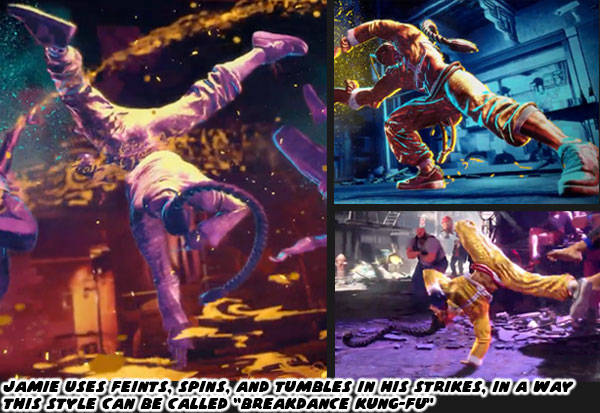
Jamie moves unlike almost any other character in the series, or in fighting games in general. In the trailer we see footage of him spinning, flipping, and tumbling with a ton of dexterity. He has quick strikes which are a mix of kung-fu punches, but with the footwork that appears like an uprock, the foundation of competitive breakdance. His stance, and movement is dance-like, it stands out like a “ginga” does for capoeira practitioners. Given his design, it stands to reason that the young fighter is having fun with his natural abilities, as well as his training.
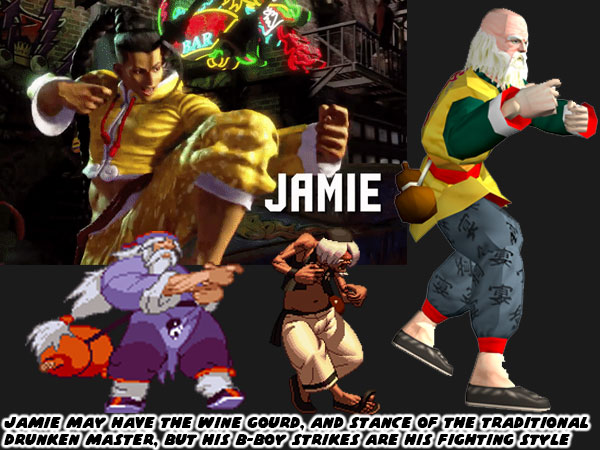
At first glance the character appears to be a master of Drunk Fist kung-fu. He carries a gourd, which is often filled with wine, according to popular media. Although his stance, and fist positions seem to be those of a traditional kung-fu master, very few of his strikes appear to be based on any traditional form of kung-fu.
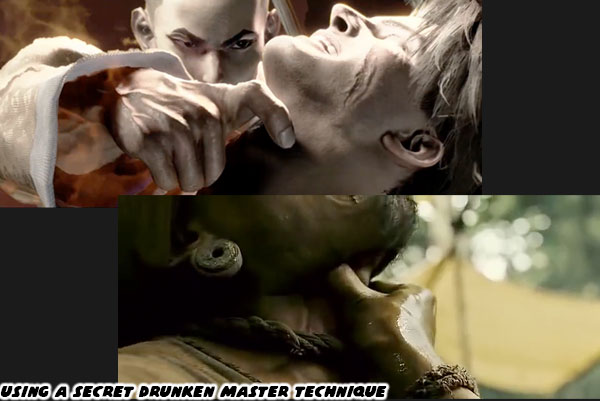
There is a part in the trailer where Jamie says “my secret art” then goes for Luke’s throat. This was similar to a move used by Tony Jaa in Ong Bak 2. Jaa was playing the mythical fighter Tien in the film. Tien was a young prince that got kidnapped by pirates, and trained in multiple forms of combat. The character makes his way to some bandits that had brutalized him, and his friends earlier in the film, and fights off a slave trader using Drunken Fist. He grabs the villain by his Adam’s apple before throwing him through a stand via fishhook to the mouth. I sincerely hope that Jamie doesn't have the full attack in SF6.
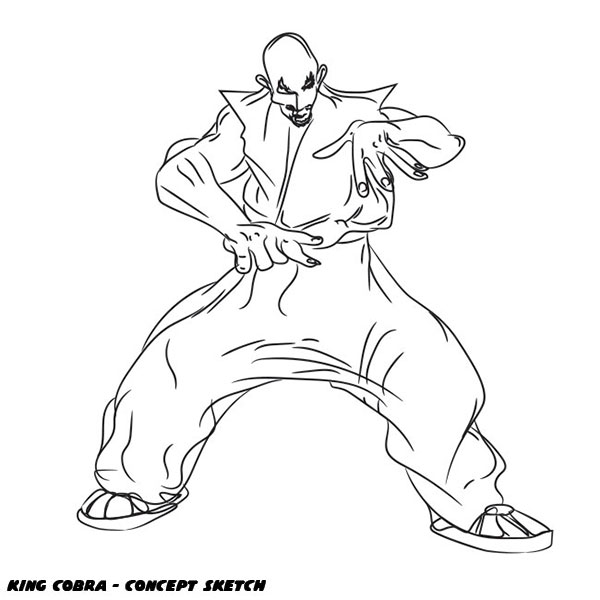
Jamie’s style can be best described as “Breakdance Kung-Fu.” If you remember your SF history you will know that before Rufus there was a young Black fighter in the planning stages called King Cobra. Although he wore what appeared to be a traditional karate gi, his method of fighting was said to be a form of breakdance kung-fu. He sported sneakers, and a gold chain, showing just hints of an urban background. Sadly there was never a 3D model, or sprite built for this character, let alone the actual animated moves. All we have to go on are concept sketches.
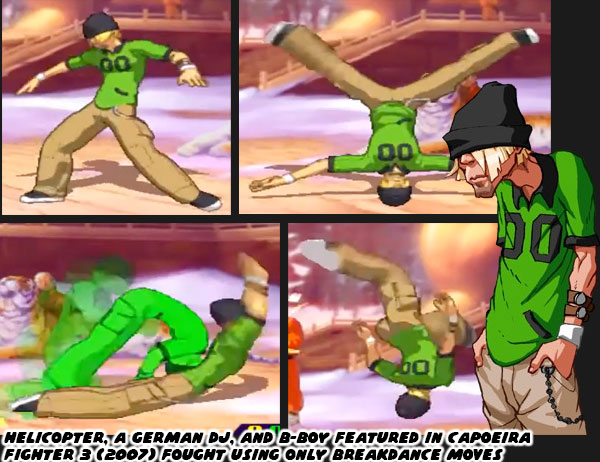
To be completely fair, there was a fighting game character whose entire arsenal was based on breakdancing. Helicopter from Capoeira Fighter 3 used nothing but b-boy moves. Even his stance, and movement saw him performing the wave as he danced through the stages some 15-years-ago.
Many people feel that no great idea goes to waste. Elements of King Cobra eventually found their way into the series. Ken was given an alternate costume in SF IV that looked just like King Cobra’s. Also the fictional form of striking eventually found its way to Jamie. Which makes more sense than to give it to the Black kid from the US. Since Jamie is from Hong Kong, and blends eastern, and western cultures. So what exactly are the origins of dancing as a form of fighting? The roots are based on tropes, and racial undertones. The Black athlete, and Black entertainer are stereotypes known the world over. In many of the early fighting games Black characters were presented often as basketball players. At least one was presented as a dancer.
Mind you, before the internet, it was tough for Japan to get a finger on the pulse of US culture. All the gaming studios had to go by was pop culture references. The way Blacks were portrayed in movies, music videos, and TV shows did a lot to color their perception. Hip Hop was, and continues to be a major part of that perception. The cultural revolution moved into every corner of the world. The four elements of Hip Hop; rap, breakdance, DJ, and graffiti influenced everything from advertising, to fashion, language, and music of course. The trailer for Street Fighter 6 even begins with a graffiti styled version of the Capcom logo. 30+ years ago the Japanese studios were not as in tune as to the proper ways to reflect, let alone incorporate that culture.
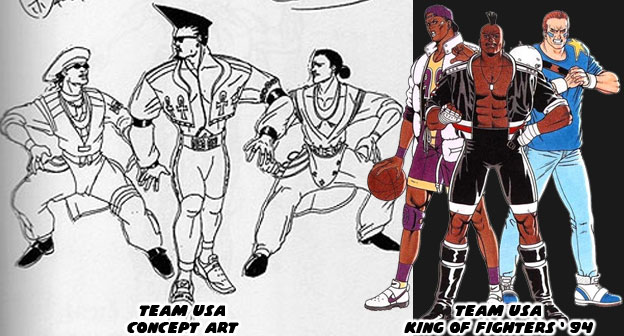
The concept for Team USA in SNK’s iconic King of Fighters series was laughable. The trio of men in costumes that were reminiscent of back-up dancers for Salt n Pepa, or Janet Jackson made little to no sense in a fighting tournament. Yet the Japanese designers persisted. They continued putting in elements of Hip Hop into the games. Jamie may yet be the most in tune the studio has ever been to the elements.
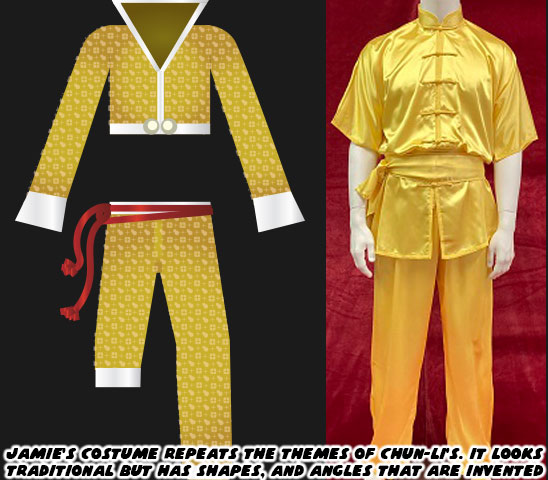
Pay very close attention to the cut, color, and design of Jamie’s costume. It looks traditional, but is far from an actual outfit worn in classic China. The illusion of a certain form, and fit is a long-standing design legacy of Street Fighter. I spoke about it at length with Chun-Li’s costume. Most wushu, or tai chi uniforms are made of soft, silk material, but the shirts usually hang long, and the pants are baggy. Jamie’s has a cut top, exposed midriff, and the the shirt, and pants fit more snugly. Also instead of a sash belt, Jamie wears a red cord belt, to hold his gourd. Also note that in all of the footage revealed of the character he wears one pant leg rolled up. Sure enough the Hip Hop elements are not lost on this kid.
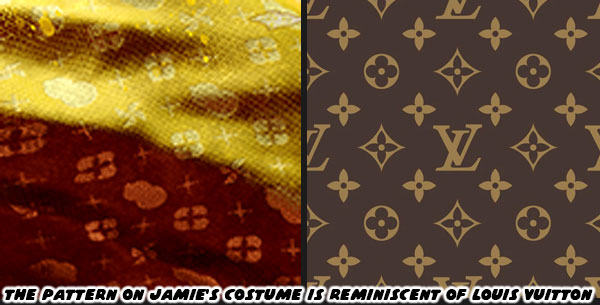
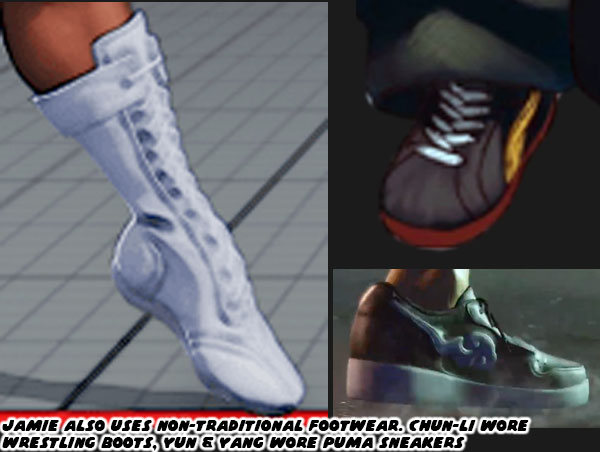
If you look carefully at his costume there is a repeated pattern over it. Some competition uniforms may feature an embroidered phoenix, lion, or dragon on them. However Jamie has a pattern reminiscent of the Louis Vuitton brand. As you may know a lot of rappers promote material displays of wealth. In videos, and photo shoots they are often showing off, or “flossing” diamonds, gold, and rocking brands like Louis Vuitton, Gucci, Prada, Dolce and Gabanna, etc. Jamie’s version of the pattern uses the stars, and gourd motif, as a clever nod to the designer. Also Jamie is rocking some Cloud-label sneakers, instead of the flat-soled shoes that most practitioners wear. The cloud motif shows up on other parts of his outfit. Perhaps to denote his light, and airy fighting style. The use of non-traditional footwear again goes back to Chun-Li, who wore white wrestling boots instead of dainty slippers. Yun, and Yang sported Puma brand sneakers. As a nod to Keen Lieu, who was sponsored by the brand when Street Fighter III was developed.
These were the things that I was able to pick out about Jamie after seeing the footage of the character. I will be digging in to the rest of the cast over the next several weeks. I hope to see you back for that. Is there a character you would like me to look at sooner, rather than later please let me know. Also any feedback would be appreciated. What details did you notice about Jamie? What do you think of the SF6 announcement so far? Are you interested in playing this game when it’s released? Let me know in the comments section please. If you would like to sponsor me please visit my Patreon page and consider donating each month, even as little as $1 would help make better blogs and even podcasts!
follow the Street Writer on Patreon!

Tuesday, July 21, 2015

Representation Matters! Or, what happened to Birdie, part 8...


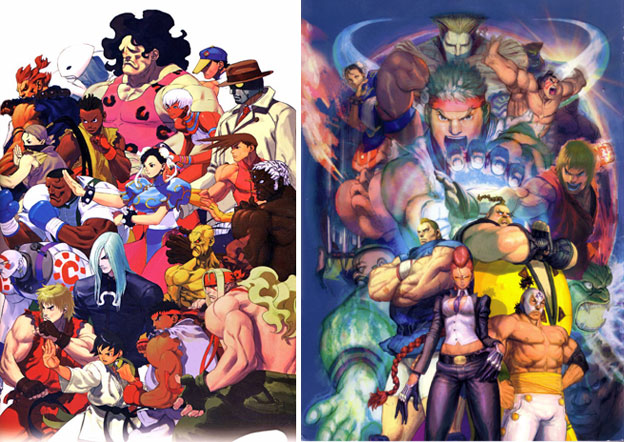
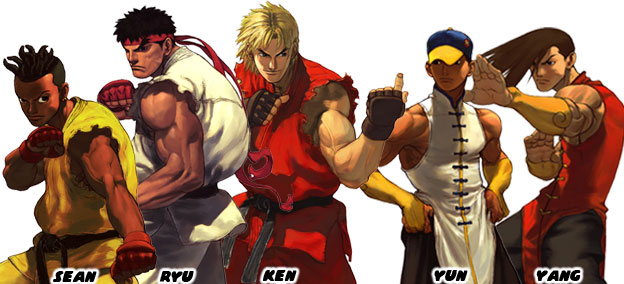
Past the mid '90s Capcom was a completely different studio. The rise of 3D and the 32-bit consoles had changed the gaming landscape. Successfully publishers could no longer ignore home systems market. The arcade market had yet to decline but the writing was on the wall. Studios had to branch out or they would fail. Capcom found success with new franchises such as Breath of Fire and Resident Evil. The fighting game genre was starting to peak and the studio wondered if they had one more great title left in them. Street Fighter III tried to use the elements that made Street Fighter II work. The project began by starting off by deciding who should return. Ken and Ryu were selected to be the only familiar faces and an entirely new cast would fill out the roster. I would argue that there was a lot of redundancy in the new faces. There were a pair of Chinese twins named Yun and Yang that played similarly to each other. They were meant to be a sort of younger Chinese equivalent to Ken and Ryu. Their red and white uniforms were reminiscent of Ken and Ryu's. There was also understudy of Ken called Sean that had similar moves to the stars of the game. I think the team was having too much fun with the names of the new faces. There was the obvious Yin and Yang jab but also the more subtle Sean-Ryu-Ken which was a play on the fireball attack or Shoryuken.


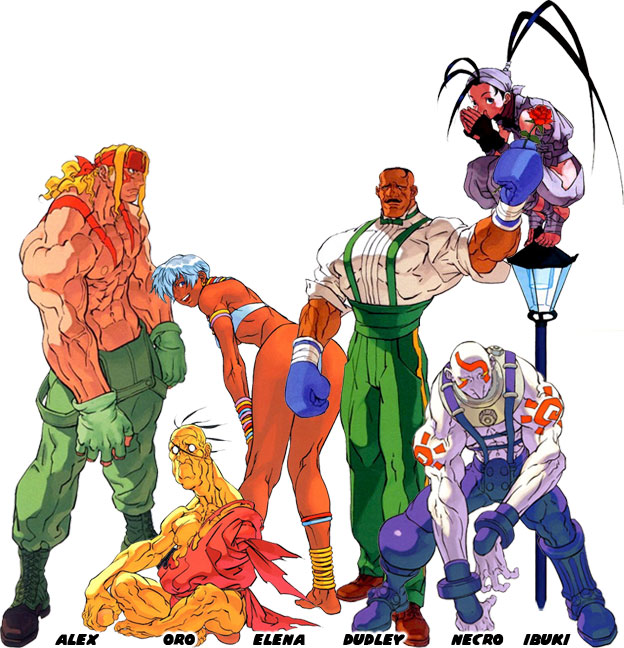
The three karate fighters in all and two kung-fu fighters ate up a lot of the space in the roster. The only duplicates in the original Street Fighter II lineup were pro wrestlers and those were dropped early on so that the team could fit in different styles. Sean was well received, especially as a black minority character. Unfortunately he lacked the impact of Sakura when she debuted. The rest of the cast was more unique. Alex was the star of the new game. He represented an entirely new style of fighting, MMA actually, and was somewhere in between a striking character and a grappler. He actually had elbow attacks similar to Adon, headbutt attacks similar to Birdie and suplex throws similar to Zangief. His size, speed and strength were unique in the genre. The rest of the cast took some chances with the character designs and forms represented. A heroic boxer had finally made it into the series. Moreover Dudley was a very positive black role model. He was not the only minority in the game. Elena was an African that had studied abroad, in Paris first and then Japan. Her dark skin was contrasted by bright blue eyes and white hair. Her costume left little to the imagination. She didn't have the same forethought into her design as Chun-Li. Instead Elena was very much like the characters in anime, pandering heavily to fan service, which was a trend that Akiman was trying to break when he finalized Chun-Li. This was odd considering that the lead artist on this project was Kinu Nishimura, she was heavily influenced by Akiman. Elena did have a unique form of fighting. She used capoeira and there had been some rotoscoping work by the animators to make sure that the moves looked as fluid as possible. Capcom designer Daigo Ikeno was a capoeira practitioner and helped with the reference work.

The game also introduced a female ninja practitioner named Ibuki. Her look was unique and not as grounded in history or anime making her a fantastic addition to the title. The game was not without its own Blanka and Dhalsim, or two extreme characters. An elderly one-armed Brazilian (he actually kept his other arm tucked inside his gi) was a master of a unique fighting art, it was a mix of psychic attacks and judo throws. He was very strong and fast despite his age. Oro was based on Helio Gracie, the co-founder of the Gracie school of Brazilian ju-jisu. The character design was unique because he was the oldest character in Street Fighter mythology, almost twice as old as Gen, the previous elderly character. He demonstrated that age did not make some fighters less dangerous. The other unique character was Necro. The young Russian teen had been experimented on by a mysterious group of religious and scientific zealots. The various experiments they did to him left his muscles, skin and bones like rubber and gave him the ability to shock opponents like an electric eel. Meaning he had some of the best qualities of both Dhalsim and Blanka,


The game did well with audiences. The upgraded arcade engine allowed for larger sprites, a broader color palette and more frames of animation. Having three black characters, including a woman of color was a tremendous credit to Capcom. They were showing an active interest in inclusion and diversity with their lineup. Unfortunately for many audiences and arcade owners this was not the game they had expected. The lack of returning characters and redundant new characters gave the game an unfinished feel. Capcom had established a president in Street Fighter Zero that was tough to beat. They could bring back classic characters and make them work again and again. Upgrade kits were in the planning stages. Each one could introduce a new character if not classic character. Before long Chun-Li and the giant Hugo were put in the game. Hugo was actually meant to be in the first release but the team didn't finish his animations in time. There was no doubt that the time spent creating the redundant Yun, Yang as well as Sean may have been better spent on entirely new figures. Hugo was representing the Final Fight cast as Chun-Li was a return to the SF II lineup. Gouki / Akuma had returned as well but was a hidden character in the first few builds.

The new characters Urien, Q, 12, Remy and Makoto were a mixed bag. Urien was a pallet and head swap for the new final boss Gill. Meaning that another redundant character was also featured in the title. Q was a nonsensical masked secret agent that moved and fought like a robot. Remy had many of the attacks from Guile and Nash but with a look that was pulled from the rival King of Fighters series. 12 was a shape-shifter that was reminiscent of Necro but was also heavily anime-influenced. Of the final new characters added Makoto had the most traditional design elements applied to her. She was a karate fighter, yet her form was completely different than Ken, Ryu, Sean and Gouki. This meant that for audiences she also controlled differently and required some new strategies to use.


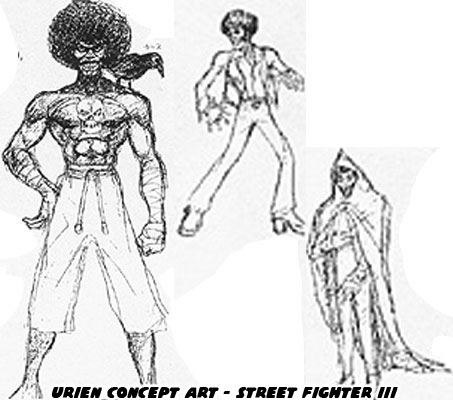
With the exception of Makoto, the last new faces added to SF III were lacking. They didn't have enough time to be evaluated or redesigned. In fact the original plan for Urien had once again fallen on old stereotypes. Had the studio not gone with the pallet swap of Gill who knows how audiences would have reacted to the afro-sporting, disco pants wearing antagonist. I don't think it would have been a warm reception. When development began on Street Fighter IV the approach for new fighters was completely the opposite of SF III. The studio started with Ken, Ryu and the original World Warriors from SF II as all returning members. Then they had a small group of new faces that they would introduce to fans. The characters were designed mainly to appeal to the West, where Capcom had hoped to gain a lion's share of the games profits. The sexy spy Crimson Viper was meant to appeal exclusively to US players. Despite the pandering most gamers in the US ignored the character. Of course the fatty Rufus was forced onto audiences because he was funny. The final two spots would be taken by a judo-ex-military fighter and a masked Mexican wrestler.


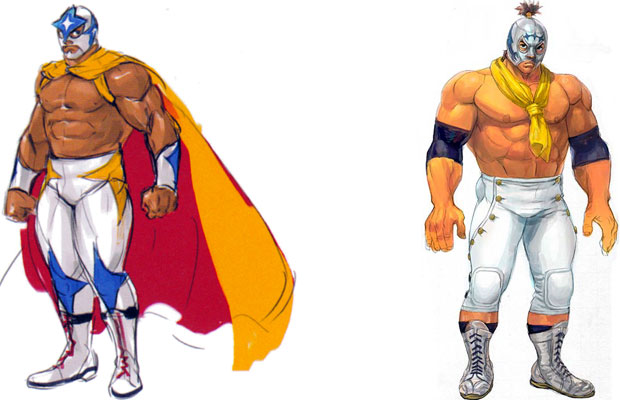
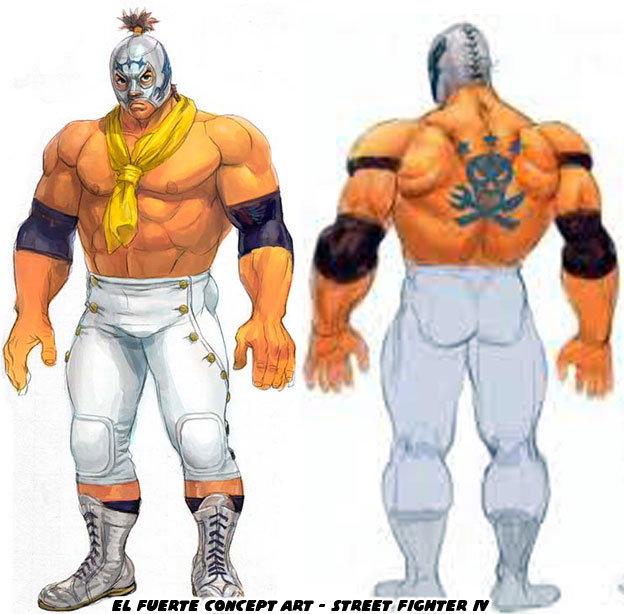
The lead designer on this game was Daigo Ikeno. He could not seem to find designs that worked as well with audiences as the SF II cast had. I think that the choices pushed by producer Yoshinori Ono had something to do with why the characters were lacking. A few blogs back I mentioned how there was a strong black character planned for the game that was eventually turned into Rufus. Something similar happened with El Fuerte the enmascarado, or masked luchador. In the early planning stages El Fuerte had a unique costume that was inspired by actual lucha libre livery. He had the mask, the tights and even a cape. Which was something that performers had worn to the ring since the earliest days of pro wrestling in Mexico, which would be over 80 years ago! In the earliest stages the design was every bit as good as something that Tetsuo Hara could have come up with for the Muscle Bomber series. In fact I would say that the original El Fuerte was a better design than El Stinger, the Mexican wrestler created by Hara. El Fuerte did not necessarily poach and designs from a masked wrestler living or dead. The star on his mask was even a nod to the masked wrestler that had been planned for SF II. But then something happened…


It was decided that El Fuerte was not unique enough. At least not unique enough to be ranked against the World Warriors. So his costume was redone, his mask was redone and even his purpose for fighting was redone. The team decided that it would be great if he was a masked wrestler that was obsessed with cooking. In this way they could name his attacks after food. The Habanero Dash, Tostada Press, Fajita Buster, Gordita Sobat, Calamari Slide Propeller Tortilla, Picadillo Jump, Quesadilla Bomb and Guacamole Leg Throw. The names were an insult to the fantastic and dangerous moves that Mexican pro wrestlers performed on a weekly basis. To add insult to injury, the mask, which is sacred to the performers was even stripped of its origin to reflect the silly obsession with cooking. There were forks coming out of lighting bolts in the early redesigns. The tights were turned to chef pants, at one point El Fuerte even had tattoos or a fork and knife on his back. The three stars that adorned his mask was meant to mimic the Three Star Michelin rating given to the top restaurants around the world. Each decision that the team made took away from the character, it did not add to him. It was as if the designers were bypassing the lessons from previous generations and were focused on the punchline.


It was up to the team to decide how the tone of the game was supposed to be. The new graphics engine allowed for some realistic 3D models. When the majority of the cast fought each strike looked like it had weight and power behind it, giving the game a serious tone. But then all of the models had silly expressions applied to them when certain characters performed super moves. It was a mix of cartoon and realism that was sending a mixed message to audiences. Either the game was a return to the classic challenging Street Fighter II, or it was more anime influenced like SF Zero and SF III. Being caught somewhere in between did little to improve the game itself. The only signal that was not missed was how minorities and their fighting arts were being presented. Mexican and later on Turkish wrestling was seen and shown as an absurd form of fighting not to mention that Americans were stupid, morbidly obese participants.

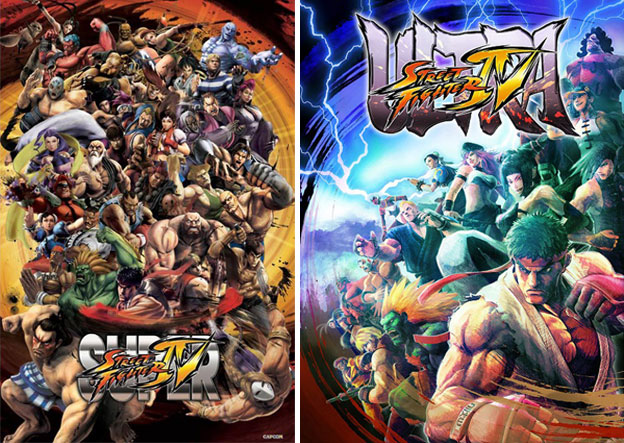
 As the reception to the new characters were met with a lack of interest the team went back in time and started putting in as many classic characters as they could with each update. The majority of characters from SF III and SF Zero had returned by the time Ultra Street Fighter IV. In the rush to return to fan favorites the designers missed a number of important details. The characters from Zero had not matured. Remember that in continuity Zero happened shortly after the events in the first game. Ryu, Ken and Chun-Li were still young adults and Cammy and Sakura were girls. In Street Fighter III Ryu, Ken and Chun-Li were adults. During this timeline Sakura and Cammy would have been adults as well. Instead Street Fighter IV was pitched like the Zero series. It would tie together the events of SF II and SF III. Only this time Daigo Ikeno would not go out of his way to redesign the cast so that they were all unique to this continuity. Instead the team picked and chose the various incarnations that would appear in the game even if their designs were from two or three different games.


It had been almost 10 years since the last Street Fighter III and the first Street Fighter IV had appeared. In that time audiences never forgot what the series meant to them while growing up. Seeing a diversity of male and female characters in SF IV was fantastic. It was also nice to see different nations represented, mainly because they were the original World Warriors. Audiences from around the world would be able to identify with a character or two, including the new ones. It would go a long way in making kids feel validated, especially when they were being underrepresented on television and movies. I only wish that Capcom had done a better job at presenting minorities. They were never as disrespected in any previous version, why did the team start now? Street Fighter IV had missed the boat with new faces and after seeing what was done to Birdie in Street Fighter V I shudder to think what else the studio had planned for non-Asian and non-White British characters. As always if you enjoyed this blog and would like to sponsor me please visit my Patreon page and consider donating each month, even as little as $1 would help make better blogs and even podcasts!

Monday, September 15, 2014

Copycat Culture, part 6...

Western audiences were quick to point out the characters that the Xuan Dou Zhi Wang / King of Combat lineup was based on. They would try to shame the Chinese developers by calling out their lack of originality. Yet if they were to look at the history of video games there was often some sort of poaching going on, and certainly some level of cultural appropriation that was never called out. This was especially true in the early days of the industry. Two of the most important games in the evolution of the fighting genre used China as a backdrop. Kung-Fu Master by Data East came out in 1984. The game was inspired by the Bruce Lee film the Game of Death. In the movie Bruce went from floor to floor, moving between harder and harder opponents until he fought the final "boss" at the top floor. Kung-Fu Master incorporated elements from that film as well as other Chinese hero or “wuxia” stories.

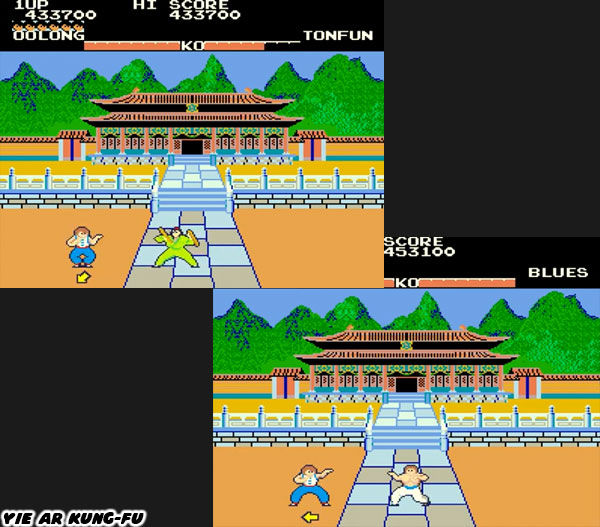
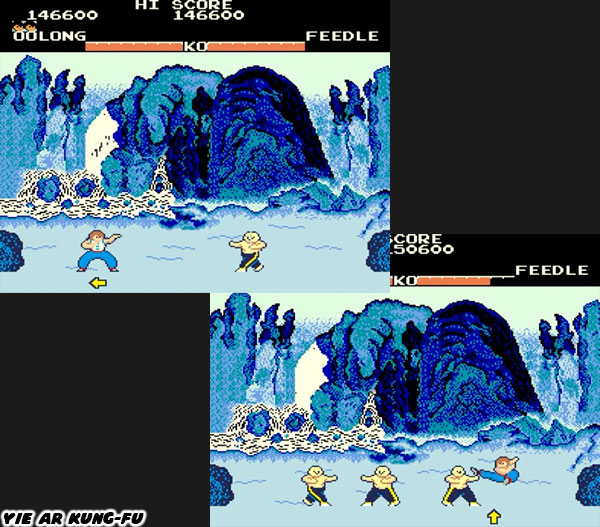
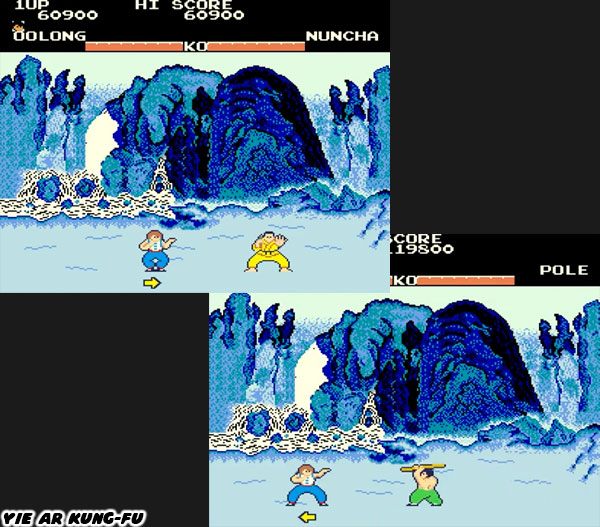
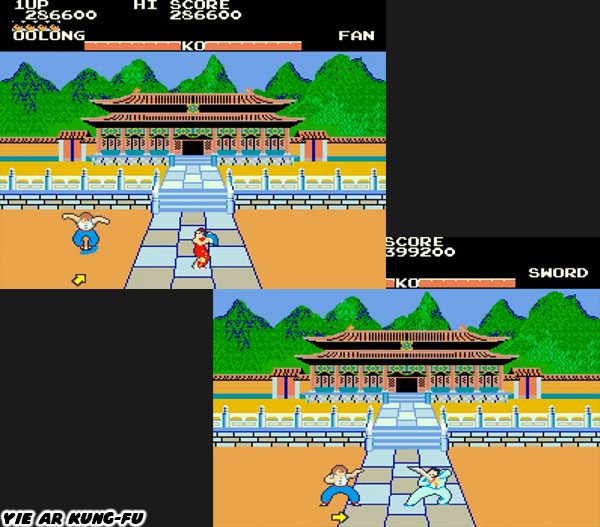
Kung-Fu Master was an important milestone because the evolving enemy types had not been done previously in a fighting game. It was also the basis of the brawler genre, in which one player had to fight off wave after wave of enemies. A year later Konami released a game that was the template that all fighting games would follow, including the original Street Fighter. Yie Ar Kung-Fu featured a Chinese hero named Oolong. He fought masters of different styles, including a few women. Some masters fought with hands and feet while others with a particular weapon. The characters were all grounded in classical styles and looked as if they had been plucked out of Chinese martial arts cinema. Even the backgrounds in the stages looked like traditional watercolor landscape paintings rather than photorealistic images.


The thing to remember was that China and the Chinese martial arts were welcome in video games. They were celebrated for their visual splendor and fancy moves. Fan and Star were featured opponents in Yie Ar Kung-Fu. They were the first female martial arts fighters in a game. They predated the iconic Chinese character Chun-Li by six years. In fact before Capcom even created Chun-Li they had designed a trio of female martial artists that could hold their own against the titular character Strider Hiryu in the arcade game Strider. The Kuniang Martial Arts Team aka The Tong Pooh Three Sisters appeared in 1989. Chun-Li would not appear until 1991. The sisters were fabled bounty hunters, selling their deadly talents to the highest bidder. Their pseudo-traditional Chinese martial arts uniforms beguiled their amazing powers. The sisters could cut tanks in half with their powerful kicks. They were the perfect challenge to the futuristic ninja Hiryu.

Capcom was without a doubt one of my favorite companies growing up. The arcade games the developed had no peer in my book, yet they could also be used as an example of the cultural appropriation that was happening within the gaming industry. Chinese characters in fighting games were often presented in some sort of pre-revolutionary martial arts costume. It didn't matter if the character were appearing in in a current timeline. Chances were they were dressed in the costume that would have been appropriate in the late 19th century rather than casual modern clothing. For example the Three Sisters were presented in costumes that made more sense in the classic Chinese Opera rather than in the science fiction future that Strider was set in. Even Chun-Li was presented in a pseudo-traditional costume in Street Fighter II. Within the context of the game however her costume made sense.


Chun-Li was a police officer that was going undercover into a fighting tournament. She couldn't exactly wear her badge into battle. I described the appeal of Chun-Li in a series called the Female Equation if you haven't read it yet I suggest visiting the link. The most important things that could be learned from Chun-Li were based on her name. She was inspired in part by Wing Chun, the legendary martial artist that had a fighting style named after her. Chun-Li was also inspired by the kicking speed and fearless spirit of Bruce Lee and the characters he played on screen. If you remember the undercover officer that Lee played in Enter the Dragon had also entered a martial arts tournament. Capcom flipped the script by turning Lee into a woman yet maintained her importance in the context of the story.

Chun-Li was not a token hyper-sexualized character nor was she some sort of damsel in distress. She was one of the most carefully planned out and respectable characters in the history of video games. This was something that I had yet to hear Anita Sarkeesian bring up in her game criticisms. The inclusion of Chun-Li was something that the Chinese audiences could be proud of. Through the history of Chinese martial arts cinema there had been formidable female protagonists. Going back to the 1920's strong female characters had always been a part of the movie experience. In other countries women were often the prize for the hero, they were in need of rescue or vindication. That was not always the case in China. Certainly there were revenge stories where women were raped, murdered or kidnapped, but there were also many more films where women were tremendous fighters and leads in the films. In several cases they upstaged the men. Some women played major villains as well adding more weight to their contribution in action cinema. This was something that the Japanese developers had picked up on and made sure to use when introducing Chun-Li and the Three Sisters into gaming history. Sadly the action films from the west rarely used a female lead. Rare was a director like Luc Besson, who knew that women could make for amazing action stars and not just be used as eye candy on the big screen. But I digress. The Japanese studios were becoming hung up on presenting one take of the Chinese in fighting games.

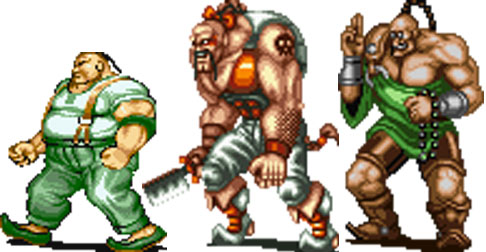
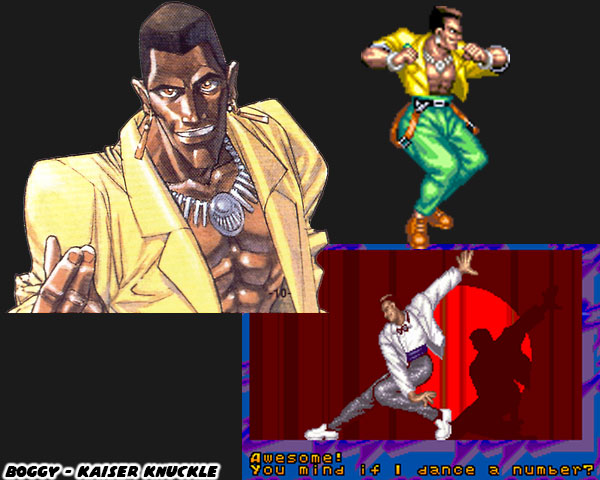
In Capcom's Final Fight, which also debuted before Street Fighter II, the Chinese characters looked very stereotypical. Even when the series moved to the consoles in following years the studio did not try to evolve with the times. They made sure to give the Chinese characters a very particular look. The males had long braided ponytails, wore slippers and had names like Wong Who, Won Won and Wong. I wish I could say that they were based on a particular movie hero or villain but they were instead gross generalizations of Chinese thugs and gangsters. It was an easy tool for the majority to caricature foreigners and immigrants, especially in a nation that had never had a civil rights movement. The characters in many fighting games, not just by Capcom, were skirting the line of racial pandering. This was not limited to the Chinese either. Blacks were by and large known for only a few things according to game culture. They were good at sports and dancing. The two stereotypes were combined when they appeared in a fighting game. I wish there were more positive role models in games like Dudley the boxer but he was few and far between. Instead audiences got Boggy the Dancing Master, Magic Dunker and a slew of other basketball playing figures.


The Chinese heroes in brawlers and fighting games were again placed in classic costumes. Some wore decorative robes and some looked like Shaolin Monks. Sometimes they appeared like Bruce Lee and fought with nunchakus or costumes that he would have worn in a movie. SNK, Capcom, Data East, Namco and Midway were just some of the many developers in the East and West that relied on trope to design Chinese martial artists. What none of the studios seemed to grasp was the effect that this was having on the Chinese audiences. When it came to fair representation in gaming China wanted to be part of the conversation. They wanted to be seen as more than a costume. After all the majority of martial arts, especially those in Japan were rooted in China. The practitioners in Mainland China may have been strict traditionalists for certain styles but this was not the case for every form of self-defense.

There was a broad diversity of styles that had never been captured accurately in film and especially not in the game screen. These true arts deserved some exposure. Even Chinese-Americans like Bruce Lee were excluded from the conversation. He wanted to adapt the elements that worked from different systems and mix them together into a hybrid form which he called Jeet Kun Do. As much as Lee was imitated by the rest of the world the lessons that he set out to teach were missed by most of the producers. They turned him into a caricature based on his movie roles. He became just like the Chinese practitioners that came before him. He was something that could be synthesized into a few visual cues and put into a fighting game. He went from fighting drug lords and fighting for the respect of Chinese nationals on film to fighting panda bears and robots on the video game screen.


The Chinese were in a conundrum. Those that lived in the country and those that lived in the city were keenly aware of how they were being represented in popular media. The nation had grown tremendously since the Cultural Revolution but you wouldn't know it if you relied on fighting games to give you the news. When the developers at Jade Studio tried to create a fighting game and join the conversation the world saw nothing but the blatant rip-off of the King of Fighters. Those that took a moment to understand the roots of the characters saw something else. The costumes, colors, moves, abilities and even story had a distinct Chinese aesthetic. The developers were keenly aware of what was going on in sports, street culture, music and the martial arts. They knew how all of these elements contributed to pop culture. They knew how these elements should be incorporated into the design of their characters, stages and gameplay. In short they knew how to make the game into something their own. Certainly the characters had a familiar KOF design to them but I would challenge critics to look a little closer. The stylization of the characters was more manhua (Chinese comic book) than manga.

The diversity of the characters was also more inclusive of people of color than most KOF or Street Fighter titles. Characters could have dark skin, light skin and still be Chinese. They weren’t simply given a basketball or shown to be some sort of b-boy (break dancer). The racial gimmicks were left on the sidelines. When was the last time a mixed ethnicity character was featured in a fighting game? When was the last time a minority was shown without some sort of cultural trope? Imitation was the biggest sticking point for the community but sometimes the community missed how much imitation helped the industry grow. We will visit this idea in the next blog. If you would like to sponsor me please visit my Patreon page and consider donating each month, even as little as $1 would help make better blogs and even podcasts!
follow the Street Writer on Patreon!