Showing posts with label king of combat. Show all posts

Monday, July 11, 2022

Figuring out the changing Street Fighter style, part 3

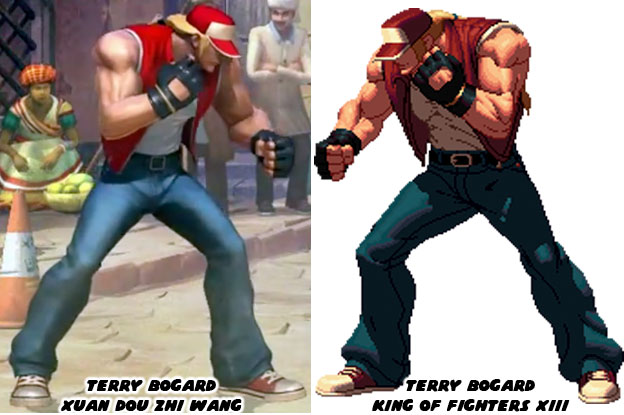
In the previous blog I talked about how different studios tried to create fighting game characters by using Capcom’s template from Street Fighter II. One of the missteps that some studios made was in overtly pandering to the western audience. The examples I used were Max Eagle, and Magic Dunker who wore costumes made up the stars, and stripes of the USA flag. There was no mistaking who these characters were, and what they represented when they literally wore the nation’s colors on their shorts. Yet great character design was more often subtle. It was subtle in the sense of how people thought Chun-Li’s costume was traditionally Chinese even if there wasn’t’t really anything classical about it. There was another way this subtlety was accomplished. SNK would not always use traditional outfits on their fighters. Instead they would put their martial arts masters in street clothes. But they weren’t just any outfits from the mall. They were on the leading edge of fashion, if not predicting it by a few years. These outfits were more than just flashy, they were carefully assembled to tell a story. The star of Fatal Fury, and poster boy for a lot of SNK’s greatest hits was Terry Bogard. Take a look at the evolution of his costume over 30 years, and see what you could identify. For the sake of this blog I am going to leave out the updated look that he received in Garou Mark of the Wolves. Since that involved a time jump.
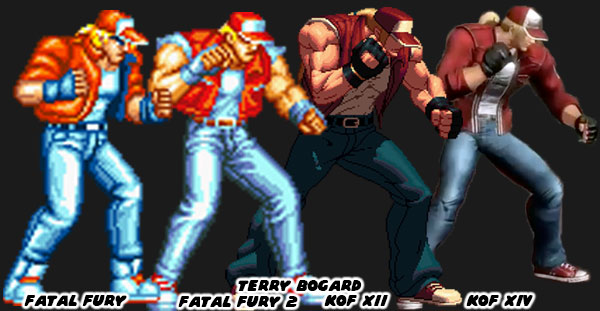
Terry was the “Wild Wolf” of the King of Fighters universe. He didn’t represent any traditional form, like his brother Andy, instead Terry learned how to fight on the streets. He was a western character, the typical blonde-haired protagonist, however SNK didn’t play up those features. They covered him up with a trucker cap. His colors were red, white, and blue, but they weren’t the shades that you would find on the US flag. The blue on his jeans was a very faded light blue. This signaled to players that he spent a lot of time living, and working outdoors. He wore a white tee shirt, something classic, and humble. He wore a leather jacket, tough, and durable. It had a single star on the back, but it was saturated with more orange than crimson. He wore white sneakers, casual, but sporty. These would be swapped out for red ones which contrasted better with his outfit in later revisions. The tweaks that SNK gave his outfit only further reinforced the story elements from his costume. The sleeves on his jacket would be torn off to reveal huge muscles. By King of Fighters XII he was at his most muscular form. A few years later he was slimmed down, and the sleeves put back on his jacket. His jacket turned from leather to jean material, lighter, and more flexible. The majority of characters got similar makeovers post KOF XIII. Why was this?
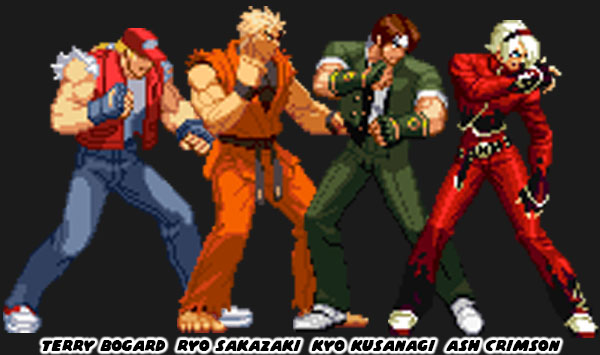
With the exception of Ryo Sakazaki, SNK had mainly pushed leading characters in very fashionable street costumes. The character that carried the torch in the KOF series was Kyo Kusanagi, he wore a very hip take of a gakuran, or school uniform. Not unlike the way Jamie wore his kung-fu outfit with a Hip Hop vibe in SF6. The young Kyo’s powers were cloned for the even more fashionable Ash Crimson. There were many characters introduced in the KOF series who wore flashy outfits. This was one of the things that distinguished their lineup from Street Fighter’s. SNK changed the look, feel, and overall aesthetic of KOF with XIV. They saw that the swollen characters in XII, and XIII weren’t necessarily going over well with audiences. The studio then put former Capcom developer, and SFIV team member Yatsuyuki Oda in charge of KOF. He focused more on making cool-looking characters that would appeal to their target audience. In this case they wouldn’t try to guess western tastes, but instead try to create archetypes that would be more popular in Asia.
Fighting games enjoyed popularity all around the world. North, and South America, the Middle East, Europe, and England had millions of fans, all eager to get the next game, and hopefully see a little representation in the lineup. In Asia there were countless fans, more so than just Japan. People in Malaysia, Singapore, Hong Kong, Taiwan, Korea, and Thailand loved the game. There were a number of changes happening between developers, and publishers all throughout Asia, some of which directly influenced the franchises. 37Games from China bought a majority stake of SNK in 2015. The studio created, and distributed browser, and mobile games in North America, and Europe, as well as China. The owners were fairly large company with a market cap of $7.14 billion. By comparison Capcom headquartered in Japan had a market cap of $5.18 billion. Both companies were of course mindful of the new media juggernaut. The biggest publisher in China was Tencent. That company had a market cap of $446 billion, by comparison Disney had a market cap of $175 billion. It would make sense to try and get Tencent’s attention, and become partners on a game somewhere down the road.
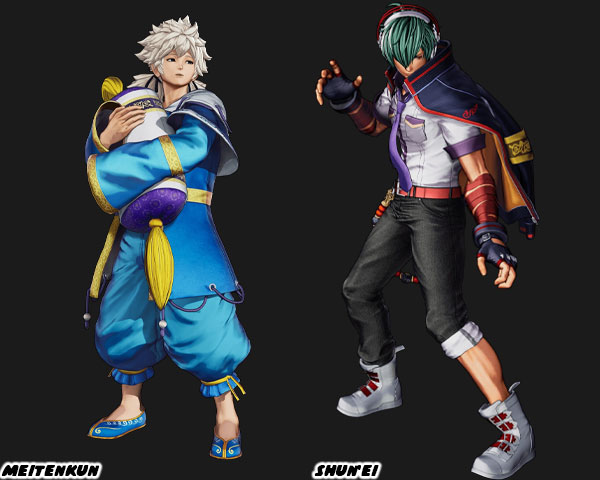
Since China was becoming the biggest gaming market. It only made sense for SNK to make a title that could win over Chinese fans. This was why the two new leads in KOF were added to Team China. Meitenkun, and Shun’ei made more sense in that role than the “Psycho Soldier” team of Athena, and Sie Kensou. The team also had the elderly master trope of Tung Fu Ru, who was a mentor to Terry, and Andy Bogard. Meitenkun, and Shun’ei were decidedly unlike the super-strong brawlers that Americans were used to seeing. They weren’t tall, weren’t buff, and weren’t “manly” by western standards. The sleepy Meitenkun was a decidedly soft boy with incredible internal power. He was a sort of pretty boy that could be appealing to female fans. His name actually sounded like the Mandarin saying “mei tian kun” which meant “sleepy everyday". The other character Shun’ei was meant to be the star character. He was an updated take on the cool guy, the new Kyo essentially. His school uniform was just as fashionable, and he even wore it with one pant leg rolled up, take that Jamie! The designers behind Rock Howard, the young star of Garou Mark of the Wolves, had a hand in creating Shun’ei.
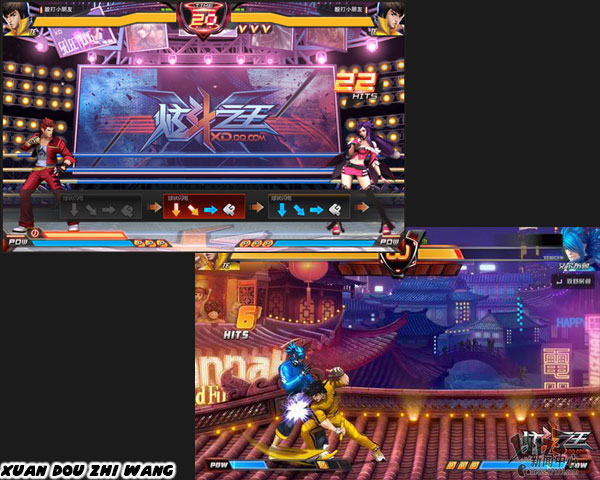
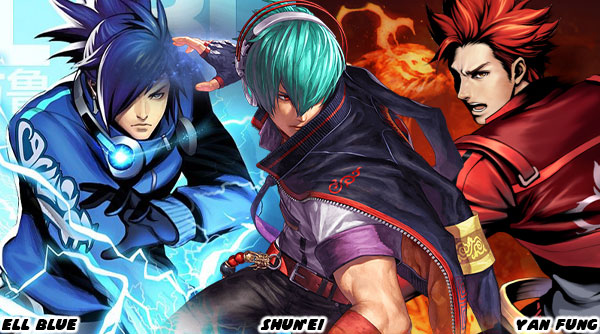
Many of the KOF star characters did not represent a traditional martial arts style, they were given awesome powers instead. Very much like comic book heroes. Kyo had flame powers, as did Ash. Shun’ei had both flame, and water powers. These were reflected in the red, and blue psychic hands that he attacked with. The design, and choice of colors I think was done in response to the popular home-grown Chinese game Xuan Dou Zhi Wang aka King of Combat. Jade Studio developed the game for publisher Tencent Games in 2011. It would receive new characters, and stages over the next eight years. This was well before 37Games acquired SNK. Those that had seen King of Combat, and had played it could say that it was a clone of the KOF series. The character selection, and even stage design seemed lifted from SNK’s best work. I had already talked about this connection with Shun’ei, but essentially his look was an amalgamation of Ell Blue, and Yan Fung, the stars of that game. 
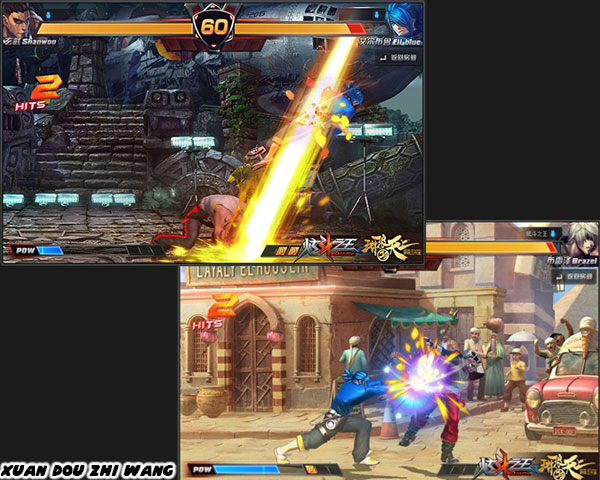
Two years before SNK was sold Tencent announced a crossover where KOF characters would appear in King of Combat. This raised the status of the game, and made the copycat title appear more legit to the Chinese fighting game community. It also helped make sure that the aesthetic that SNK used would remain more Asian influenced. These things helped explain the shift in changes from slim-to-buff, back-to-slim characters in KOF. There was something happening in Capcom as well. I'm going to talk about it on the next blog. I hope to see you back for that. I’d like to hear your take in the comments section. Let me know what you think defines the Capcom, SNK, or the style of any publisher. As always if you would like to sponsor me please visit my Patreon page and consider donating each month, even as little as $1 would help make better blogs and even podcasts!
follow the Street Writer on Patreon!

Thursday, April 21, 2016

Will the King of Fighter XIV be something old or something new?

Did you know that Chinese publisher Tencent licensed Terry Bogard and Benimaru Nikaido to appear in their own fighting game called the King of Combat a few years ago? The reason I bring this up is because some people online have speculated that a few characters revealed in the King of Fighters XIV trailers were originally created for the King of Combat. I do not know if the developers working on KOF XIV are a team from China or the SNK-Playmore team from Japan. I can say that the models and animations do not appear to have been used in the King Of Fighters XII, XIII, or in the King of Combat game.


The developers working for Tencent used resources and created 3D models that had the same shape, form and proportions as the "Dot Art" sprites created for the KOF XII and XIII games. There was an uncanny resemblance to the characters between the different games and it was a sort of trademark style.


If you compare the models and moves in the KOF XIV trailers with those used in either KOF XIII or the King of Combat you will see how the developers created entirely new resources. New models, textures, costumes, animations, the works. The differences are subtle but they are clearly there.


I have a few questions to run by you. Are you planning on picking up King of Fighters XIV when its released? Would you have cared if a Chinese, or Korean company had developed it instead of a Japanese company? Do you think KOF XIV will have a smoother release than Street Fighter V? I'd like to know in the comments.

Also an important question for anyone that reads or follows my posts here or on my personal blog. Would you be interested if I converted my blogs into podcasts? Would you tell your friends or even think about sponsoring me on Patron for that matter? Even $1 a month from a handful of people is enough to put some gas in the car and buy me some time to do some research and find something interesting to share. You may not know it but some of my longer posts sometimes take months to put together. I do everything on my free time, just about every weeknight and weekend I spend writing and editing pics. I don't have much of a social life aside from that. I enjoy sharing and would still do it even if I didn't get any sponsors but you can imagine it would be a little easier for me to focus on games when I'm not focused on paying bills. Just something to think about, here's my logo in the meantime...

Wednesday, September 17, 2014

Copycat Culture, final part...

So far in this series I had highlighted where Xuan Dou Zhi Wang / King of Combat had poached the designs of SNK and Capcom fighting games. It wouldn't be very fair to the Chinese developers if they were painted as wholesale thieves of IP. If you look at the Japanese and US fighting game developers they often took liberties with the characters that appeared in rival titles. In fact just after Street Fighter II debuted in 1991 there were a flood of copycat titles, the majority of which came from Japan. One of the more blatant entries was a 1993 game called Fighter's History by Data East. The game was so familiar in form and content that Capcom slapped the publisher with a lawsuit. The funny thing however was how much Capcom had stolen from other studios during the development of Final Fight, originally called Street Fighter '89 in addition to Street Fighter II. In the interest of time let me just point you towards AerialGroove's definitive list of Street Fighter rip-offs. On that website you can see the real life athletes, films, manga and animé characters that "inspired" the designers at Capcom.

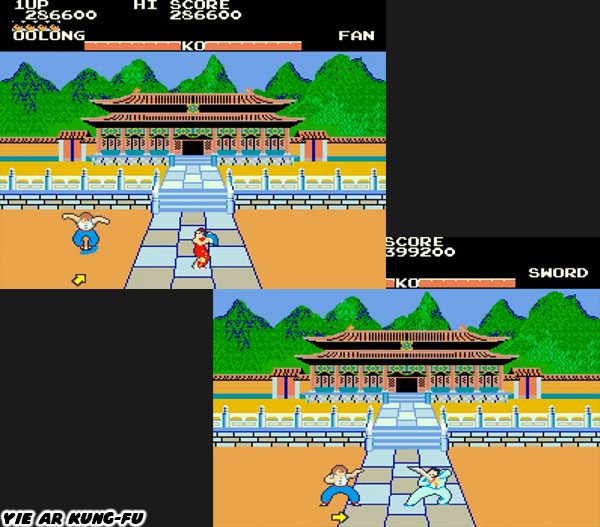
Remember that Data East had released Kung-Fu Master in 1984. That game was a one player affair but it did feature villains of different backgrounds to fight against. Then Konami released Yie Ar Kung Fu in 1985 which added the familiar format of 1-on-1 combat against different martial arts forms. Yie Ar Kung Fu even featured a health meter at the top of the screen so players knew when they were close to a knock out. The original Street Fighter would not debut until 1987. It took elements of the aforementioned titles and Technos' Karate Champ from 1984 but was not called a copycat. That was because history always favored the most successful franchise, which was not necessarily the first.


Capcom actually lost the lawsuit to Data East and that ended up opening the floodgates for even more blatant Street Fighter rip-offs. There was little that Capcom could do in the face of some of the most glaring copies. The ADK developed and SNK published World Heroes was one of the first copies in arcades. The format was very similar to Street Fighter II and the character roster slightly familiar too. The same thing could be said of Kaiser Knuckle. The sleeper from 1994 was known for some of the cheesiest characters ever. I mean just how many Bruce Lee clones fighting power mad dictators did we really need to see before audiences had enough?


There was no internet in the early days of the genre. There were not forums calling out the developers for creating second-rate copies of a franchise. These things were accepted as status quo because, well, frankly the Japanese were the only ones in the market that knew how to develop a decent fighting game. It would take a few years for the West to catch on and when they did they offered experiences that were decidedly un-Japanese. The ultraviolent and combo heavy games like Mortal Kombat, Killer Instinct and Primal Rage would help pull audiences away from the Japanese mechanics. On top of trying to copy the SF II format Mortal Kombat had taken a number of elements and characters from Big Trouble in Little China. There was no outrage amongst fans instead they saw the poaching as an homage to the film.

In return the Japanese studios would adapt their fighting engines to become faster paced and more focused on longer combo strings because that’s what the West seemed to enjoy. Remember that the Chinese SF II bootlegs had a hand in shaping the pace of the format during the early '90s. I would call the games that offered rapid juggling of opponents "combo porn" titles. It was during that era that Japan had a free pass on copying icons from different sources in order to put them in a fighting game. The most successful Japanese studios of today would not have grown as large without poaching characters that had been established in comics and even martial arts cinema.


Poaching ideas seemed okay during the early ‘90s. Part of that was because audiences were starved for unique fighters. They demanded new games with the fervor of a junkie looking for the next fix. I'm not going to lie, I was jonesin' for a new fighting game whenever I went to the arcade. The home consoles just weren’t up to par yet so the only way to experience the genre was outside of the house. In hindsight I could see how the runaway demand for fighting games eventually killed the genre. There were too many copycat titles and not enough innovative ones. Audiences today should actually be grateful that there are only few studios in China capable of developing quality fighters. Otherwise the market would be saturated once again with clones.

Imitation in and of itself was not necessarily a bad thing, especially not when the right developers were in charge. One of the best wrestling franchises ever created had poached dozens upon dozens of real wrestlers and promotions from around the world. Fire Pro Wrestling, a series which began in 1989, allowed console players to enjoy the spectacle of pro wrestling without paying one dime in licensing costs. The developer Human Entertainment / Spike, created a sprite-based wrestling game with a fixed camera. It sounded like an outdated visual format and it was compared to other wrestling games in the arcade. While it lacked 3D graphics it made up for it in the character, match and move editors. The game actually gave audiences all the tools they needed to create an entire library of wrestlers, each with their own trademark moves including taunts and finishing attacks.


The studio helped audiences out by including dozens of generic versions of wrestlers from the biggest promotions in the US and Japan. In later versions they also included MMA competitors and octagonal cages as well. Audiences were free to use the editing tools and rename the characters, change their appearances to make them identical to actual athletes. Audiences could even create comic book characters using the editors and assign them special moves as well. By building a solid but customizable engine the publisher could offer a tremendous wrestling experience that had all the spectacle of the biggest matches in the world. By giving audiences the liberty to mix formats they were free to combine the biggest promotions into a mega-crossover that would never exist in real life. Without having to pay licensing fees to a dozen different promotions or for use of the likenesses the company was able to sell the game very cheaply. Imagine how the publisher would have been talked about online if the game were to debut today? The game lacked originality, it was nothing but a collection of stolen likenesses and moves. I think that it would have gotten the same reception as King of Combat got from the fighting game community. Human Entertainment / Spike would have been shamed for something that other studios in the community had gotten away with.

Originality did count for a lot in the videogame world but audiences that think the biggest franchises appeared out of thin air were deluding themselves. The developers in Japan, the developers in the US, China and Europe were influenced by countless things. Some of those experiences were shared, like popular music or hit movies, while some were more regional. Those influences in turn were synthesized in the story, art and game design of the projects that the developers worked on. The things that worked well were copied by the developers again and again. Perhaps they would adjust a few details here and there but there was a lot of repetition of what worked. If you don’t believe me look at the number of sequels that the biggest franchises got. There was even repetition within many of the the games themselves. Count the number of karate fighters in the Street Fighter series that were similar to Ryu. Count the number of brooding cool guys in the King of Fighters and see how many were derived from Kyo Kusanagi.


Tencent did owe SNK and Capcom credit for the success of King of Combat. But SNK and Capcom also owed credit to other companies for the success of their respective franchises. I want visitors of this blog to remember how the genre evolved before taking sides in a debate. Regardless of what nation they were from no one company was perfect. As long as they pushed the genre forward, as long as they kept it evolving then I would call their contribution valid. King of Combat had a classic aesthetic but with a bunch of modern twists. The things that never made it into King of Fighter Online and King of Fighters World had at least a spiritual successor. I’m glad the company was staying true to the early format of the genre but was also not chained to it. Audiences in the west may never get to play Xuan Dou Zhi Wang but that wouldn’t stop the die-hard fans from pushing for it. If you’d like to give it a go then sign this petition to bring King of Combat to the US.

The only concern that I have with the genre is that Capcom is on the decline and has limited funds (somewhere over $100 million in cash) available to produce new games from. The board of directors in Japan declined an anti-buyout plan in summer 2014, meaning that a larger company with enough money could buy controlling shares of Capcom. Many journalists and fans hoped that a company like Nintendo or Sony might step in and buy them out and keep the licenses intact. This might not be the case. If Capcom dissolves then companies can pick and choose which IP's they want as part of a fire sale. Tencent is a company loaded with money and may very well buy Capcom in its entirety or buy the fighting game licenses and fold them into the King of Combat series. Having a Chinese publisher purchase a long-standing Japanese developer is both a scary and interesting scenario to consider. Whatever the case I hope that fighting games continue to grow and evolve. Tencent has shown through some of their more recent updates that they trust their designers a bit more than before and in doing so are coming up with fighters that compliment some of the best Japanese designs ever created. Maybe this trend will continue. Thanks for reading this series. If you have any questions or comments then please feel free to leave a note. Until next time take care! If you would like to sponsor me please visit my Patreon page and consider donating each month, even as little as $1 would help make better blogs and even podcasts!
follow the Street Writer on Patreon!

Monday, September 15, 2014

Copycat Culture, part 6...

Western audiences were quick to point out the characters that the Xuan Dou Zhi Wang / King of Combat lineup was based on. They would try to shame the Chinese developers by calling out their lack of originality. Yet if they were to look at the history of video games there was often some sort of poaching going on, and certainly some level of cultural appropriation that was never called out. This was especially true in the early days of the industry. Two of the most important games in the evolution of the fighting genre used China as a backdrop. Kung-Fu Master by Data East came out in 1984. The game was inspired by the Bruce Lee film the Game of Death. In the movie Bruce went from floor to floor, moving between harder and harder opponents until he fought the final "boss" at the top floor. Kung-Fu Master incorporated elements from that film as well as other Chinese hero or “wuxia” stories.

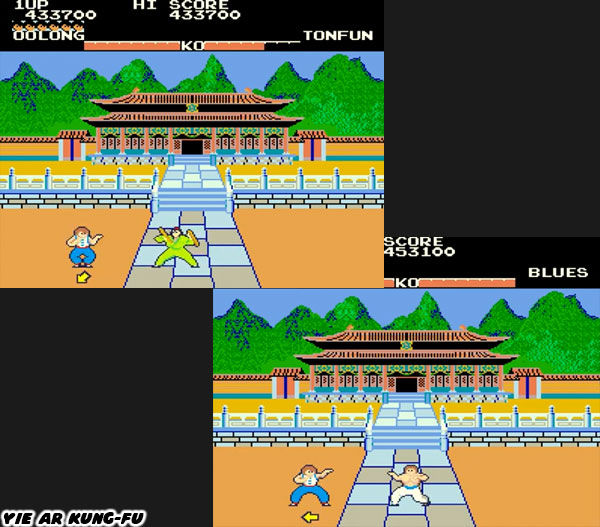
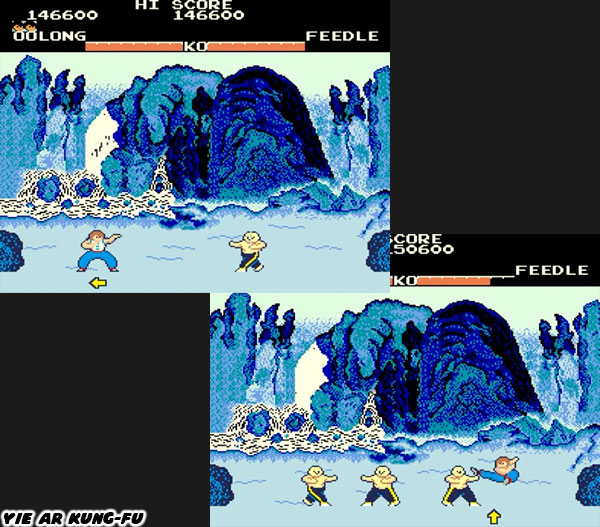
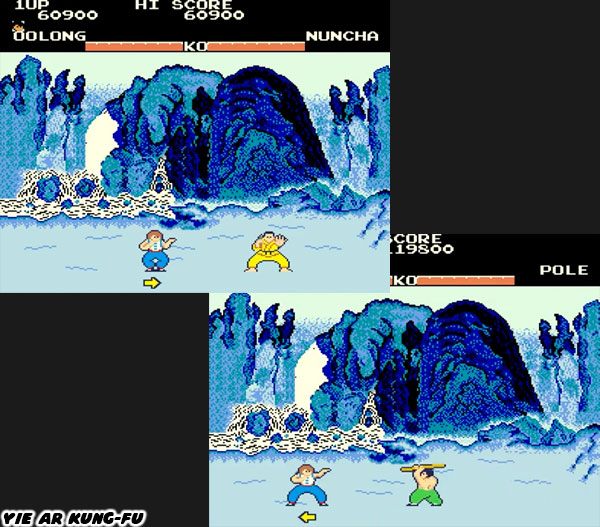
Kung-Fu Master was an important milestone because the evolving enemy types had not been done previously in a fighting game. It was also the basis of the brawler genre, in which one player had to fight off wave after wave of enemies. A year later Konami released a game that was the template that all fighting games would follow, including the original Street Fighter. Yie Ar Kung-Fu featured a Chinese hero named Oolong. He fought masters of different styles, including a few women. Some masters fought with hands and feet while others with a particular weapon. The characters were all grounded in classical styles and looked as if they had been plucked out of Chinese martial arts cinema. Even the backgrounds in the stages looked like traditional watercolor landscape paintings rather than photorealistic images.


The thing to remember was that China and the Chinese martial arts were welcome in video games. They were celebrated for their visual splendor and fancy moves. Fan and Star were featured opponents in Yie Ar Kung-Fu. They were the first female martial arts fighters in a game. They predated the iconic Chinese character Chun-Li by six years. In fact before Capcom even created Chun-Li they had designed a trio of female martial artists that could hold their own against the titular character Strider Hiryu in the arcade game Strider. The Kuniang Martial Arts Team aka The Tong Pooh Three Sisters appeared in 1989. Chun-Li would not appear until 1991. The sisters were fabled bounty hunters, selling their deadly talents to the highest bidder. Their pseudo-traditional Chinese martial arts uniforms beguiled their amazing powers. The sisters could cut tanks in half with their powerful kicks. They were the perfect challenge to the futuristic ninja Hiryu.

Capcom was without a doubt one of my favorite companies growing up. The arcade games the developed had no peer in my book, yet they could also be used as an example of the cultural appropriation that was happening within the gaming industry. Chinese characters in fighting games were often presented in some sort of pre-revolutionary martial arts costume. It didn't matter if the character were appearing in in a current timeline. Chances were they were dressed in the costume that would have been appropriate in the late 19th century rather than casual modern clothing. For example the Three Sisters were presented in costumes that made more sense in the classic Chinese Opera rather than in the science fiction future that Strider was set in. Even Chun-Li was presented in a pseudo-traditional costume in Street Fighter II. Within the context of the game however her costume made sense.


Chun-Li was a police officer that was going undercover into a fighting tournament. She couldn't exactly wear her badge into battle. I described the appeal of Chun-Li in a series called the Female Equation if you haven't read it yet I suggest visiting the link. The most important things that could be learned from Chun-Li were based on her name. She was inspired in part by Wing Chun, the legendary martial artist that had a fighting style named after her. Chun-Li was also inspired by the kicking speed and fearless spirit of Bruce Lee and the characters he played on screen. If you remember the undercover officer that Lee played in Enter the Dragon had also entered a martial arts tournament. Capcom flipped the script by turning Lee into a woman yet maintained her importance in the context of the story.

Chun-Li was not a token hyper-sexualized character nor was she some sort of damsel in distress. She was one of the most carefully planned out and respectable characters in the history of video games. This was something that I had yet to hear Anita Sarkeesian bring up in her game criticisms. The inclusion of Chun-Li was something that the Chinese audiences could be proud of. Through the history of Chinese martial arts cinema there had been formidable female protagonists. Going back to the 1920's strong female characters had always been a part of the movie experience. In other countries women were often the prize for the hero, they were in need of rescue or vindication. That was not always the case in China. Certainly there were revenge stories where women were raped, murdered or kidnapped, but there were also many more films where women were tremendous fighters and leads in the films. In several cases they upstaged the men. Some women played major villains as well adding more weight to their contribution in action cinema. This was something that the Japanese developers had picked up on and made sure to use when introducing Chun-Li and the Three Sisters into gaming history. Sadly the action films from the west rarely used a female lead. Rare was a director like Luc Besson, who knew that women could make for amazing action stars and not just be used as eye candy on the big screen. But I digress. The Japanese studios were becoming hung up on presenting one take of the Chinese in fighting games.

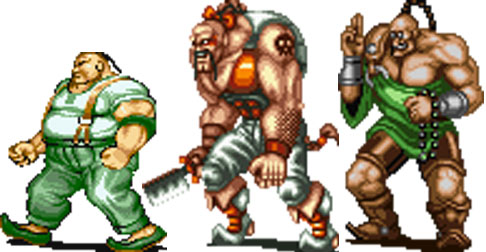
In Capcom's Final Fight, which also debuted before Street Fighter II, the Chinese characters looked very stereotypical. Even when the series moved to the consoles in following years the studio did not try to evolve with the times. They made sure to give the Chinese characters a very particular look. The males had long braided ponytails, wore slippers and had names like Wong Who, Won Won and Wong. I wish I could say that they were based on a particular movie hero or villain but they were instead gross generalizations of Chinese thugs and gangsters. It was an easy tool for the majority to caricature foreigners and immigrants, especially in a nation that had never had a civil rights movement. The characters in many fighting games, not just by Capcom, were skirting the line of racial pandering. This was not limited to the Chinese either. Blacks were by and large known for only a few things according to game culture. They were good at sports and dancing. The two stereotypes were combined when they appeared in a fighting game. I wish there were more positive role models in games like Dudley the boxer but he was few and far between. Instead audiences got Boggy the Dancing Master, Magic Dunker and a slew of other basketball playing figures.


The Chinese heroes in brawlers and fighting games were again placed in classic costumes. Some wore decorative robes and some looked like Shaolin Monks. Sometimes they appeared like Bruce Lee and fought with nunchakus or costumes that he would have worn in a movie. SNK, Capcom, Data East, Namco and Midway were just some of the many developers in the East and West that relied on trope to design Chinese martial artists. What none of the studios seemed to grasp was the effect that this was having on the Chinese audiences. When it came to fair representation in gaming China wanted to be part of the conversation. They wanted to be seen as more than a costume. After all the majority of martial arts, especially those in Japan were rooted in China. The practitioners in Mainland China may have been strict traditionalists for certain styles but this was not the case for every form of self-defense.

There was a broad diversity of styles that had never been captured accurately in film and especially not in the game screen. These true arts deserved some exposure. Even Chinese-Americans like Bruce Lee were excluded from the conversation. He wanted to adapt the elements that worked from different systems and mix them together into a hybrid form which he called Jeet Kun Do. As much as Lee was imitated by the rest of the world the lessons that he set out to teach were missed by most of the producers. They turned him into a caricature based on his movie roles. He became just like the Chinese practitioners that came before him. He was something that could be synthesized into a few visual cues and put into a fighting game. He went from fighting drug lords and fighting for the respect of Chinese nationals on film to fighting panda bears and robots on the video game screen.


The Chinese were in a conundrum. Those that lived in the country and those that lived in the city were keenly aware of how they were being represented in popular media. The nation had grown tremendously since the Cultural Revolution but you wouldn't know it if you relied on fighting games to give you the news. When the developers at Jade Studio tried to create a fighting game and join the conversation the world saw nothing but the blatant rip-off of the King of Fighters. Those that took a moment to understand the roots of the characters saw something else. The costumes, colors, moves, abilities and even story had a distinct Chinese aesthetic. The developers were keenly aware of what was going on in sports, street culture, music and the martial arts. They knew how all of these elements contributed to pop culture. They knew how these elements should be incorporated into the design of their characters, stages and gameplay. In short they knew how to make the game into something their own. Certainly the characters had a familiar KOF design to them but I would challenge critics to look a little closer. The stylization of the characters was more manhua (Chinese comic book) than manga.

The diversity of the characters was also more inclusive of people of color than most KOF or Street Fighter titles. Characters could have dark skin, light skin and still be Chinese. They weren’t simply given a basketball or shown to be some sort of b-boy (break dancer). The racial gimmicks were left on the sidelines. When was the last time a mixed ethnicity character was featured in a fighting game? When was the last time a minority was shown without some sort of cultural trope? Imitation was the biggest sticking point for the community but sometimes the community missed how much imitation helped the industry grow. We will visit this idea in the next blog. If you would like to sponsor me please visit my Patreon page and consider donating each month, even as little as $1 would help make better blogs and even podcasts!
follow the Street Writer on Patreon!

Friday, September 12, 2014

Copycat Culture, part 5...

Xuan Dou Zhi Wang / King of Combat was not all about characters and gameplay that were poached from the King of Fighters. The developers went out of their way to incorporate influences from Street Fighter, Guilty Gear and other franchises. One of the most blatant characters that they poached was a panda bear by the name of Wojownik. At first sight audiences knew that he had been based on the character Po from the animated film Kung Fu Panda. His alternate costume actually turned him into a red panda with the costume stylings of Gouki / Akuma from Street Fighter. The characters were certainly cute but many players couldn't get over how shameless Tencent was about poaching ideas from other studios.


Yet to be completely fair and objective those same gamers failed to identify the origins of Kung Fu Panda. The film series debuted in 2008 and was produced by DreamWorks Animation. The Chinese-influenced martial arts panda in a video game had appeared a few years prior. In 2003 Blizzard released some screenshots of the next expansion pack for Warcraft III. It was an elaborate April Fools joke revolving around a race of characters known as the Pandaren. It took the publisher more than a decade to actually put the race into the series. By the time the expansion pack his the World of Warcraft MMO many fans thought it was too little too late.

Even then Blizzard was not the first to put a martial arts panda bear in a video game. In 1999 DreamWorks Interactive developed a game called T'ai Fu: Wrath of the Tiger. The game featured animal characters taking on the roles of kung-fu masters in ancient China. One of the supporting characters was a panda bear named Ping. If anything the game was the roots that the film grew out of. Yet that was not the whole story. According to rumors within the animation community the concept art of a young artist named Stephen Silver (Kim Possible / Clerks) were poached by DreamWorks. Some of his portfolio, which had been shown around the DreamWorks offices had included a martial arts panda bear and several other Chinese-themed animal warriors. These were shown years before T'ai Fu or Kung Fu Panda were in development. I can't say if the rumors had any validity because I've haven't gotten Jeffrey Katzenberg and Steven Silver in a room together to ask.


Yet even if Stephen Silver did create the template for Po, Ping and the other animal martial artists he was in no way coming up with an original idea, a least not when video games were concerned. Before T'ai Fu there was a game called Tekken 3, you might have heard of it. The 1997 hit introduced a fighting panda bear named Panda and a grizzly bear named Kuma. Both characters had roots in kung-fu forms and fought while standing on their hind legs. Of course even Namco's Panda was anything but original. A smaller studio called Psykio, known for their shooters, was trying to cash in on the fighting game craze. They had created a title called Battle K-Road. The little-known game from 1994 had a final opponent called Mr. Bear. He was a very difficult opponent and by many estimates one of the hardest bosses ever created. Even Mr. Bear was not original.

The game Ranma ½ Hard Battle for the Super Famicom / Super Nintendo had debuted in 1992. The game was based on the popular animé and manga series titled Ranma ½. The panda bear in the series was actually a human named Genma. He was the father of Ranma and changed into an animal whenever he got wet. The character retained all of his human memories and even ability to fight. Both Ranma and Genma were Chinese martial arts masters. The series debuted in 1987 and unless Steven Silver was living in a bubble then chances are he was familiar with the work of creator Rumiko Takahashi.


Genma would communicate as a panda bear by holding up wooden signs with a message on them. In the comics, cartoons and games he would sometimes attack his opponents with the sign. Wojownik actually did the same thing in King of Combat, making him a perfect blend of Po and Genma. Despite being a poached character he was also somewhat endearing to audiences.

While reading the message boards online about reactions to King of Combat I saw how selective many gamers were in remembering the legacy of fighting games. The studios in the US and Japan had been poaching ideas off of each other for decades. Worse than that they often used classical Chinese elements without actually allowing the nation to be reflected accurately. It was cultural appropriation for the sake of entertainment. Was it defensible or discriminatory? The next blog would look at this a little closer. If you would like to sponsor me please visit my Patreon page and consider donating each month, even as little as $1 would help make better blogs and even podcasts!
follow the Street Writer on Patreon!

Thursday, September 11, 2014

Copycat Culture, part 4...

Last year Tencent turned the fighting game community upside down. Benimaru Nikaido and Terry Bogard, two star characters from the King of Fighters series appeared in Xuan Dou Zhi Wang / King of Combat. Up until that point the game was considered a wholesale rip-off of the KOF franchise by the fighting game community. Many of the characters looked and played like those from SNK games. Even the visual style, the aesthetics of the game, looked more like a KOF title than any other fighting game franchise. Whether Tencent paid an outrageous amount to get the two characters to appear in their game or whether SNK was building bridges to adapt King of Combat to Japan or see an exclusive KOF title made for China was not known. The developers at Tencent had done an amazing job of creating 3D models of Terry and Benimaru based on their sprites featured in KOF XIII. Whether this was because SNK shared 3D assets with the Chinese studio or whether they had done this from scratch was not known. Of course based on the accuracy of the models I would lean towards SNK sharing those characters with the Chinese. The look of the sprites in KOF XII and KOF XIII was very distinct. They were some of the highest quality figures ever featured in any 2D fighting game.


SNK wanted the visuals on their series to set a standard that could not be topped by their rivals. They had been rehashing sprites through most of the '90s. There was little progress made with the technology from the first KOF game in 1994 all the way through KOX XI in 2005. The majority of those games simply added an extra frame of animation to the sprites and added more intricate backgrounds to the stages. Players could tell that the graphics were getting very stale. When the company began planning out KOF XII they knew their graphics system was in dire need of an overhaul. So they started from scratch using a patented Dot Art technique. The system of creating the sprites and animations that had been employed by SNK, Capcom and their peers was outdated. It took a long time to correct errors in the game, especially during the crucial balancing process and redrawing sprites was slow and time consuming. For KOF XII the studio built a 3D engine to help with balancing the fighting engine and 3D models of many of the main characters for artists to work from. The programmers could balance the game on the fly and decide which animations needed to be recreated in sprite form. The studio then rotoscoped or traced the 3D models by hand and created an entirely new sprite library. The end result were sprites that were more colorful, more detailed and leagues ahead of the competition.


Tencent had managed to do a very good job at recreating the visual style of the Dot Art characters. Through careful use of textures, lighting and modeling the company was able to preserve the 2D aesthetic that SNK had worked so hard to achieve. The game community wondered who was ultimately responsible for creating the thousands of frames of animation required for the characters post KOF XII. The level of quality that SNK achieved was amazing but how was the company able to turn around those games while working on other titles at the same time? The hours that would be required to draw each and every character was astonishing. There seemed no way that the company could keep the franchise on any sort of timetable without help. Many wondered if the studio had outsourced their workload to another studio, perhaps another company in Japan or even China which would have been more cost effective.


Each character in KOF XII and XIII had hundreds of frames of animation associated with them. This was much greater than any other fighting game ever released. Most studios pushed a few dozen frames of animation for any special attack, SNK surpassed that count just having a character perform a standing animation. This achievement was not the only thing that SNK could show off. The sprites in their engines could be customized somewhat by players. The clothing, skin and hair colors could all be adjusted. The hue, saturation and brightness of the characters could be changed making each character look very different than the base model. SNK also had a rendering engine that illuminated sprites differently between levels. It could make the sprites appear as if they were fighting in the shade, direct sunlight or even at dusk. These were some of the rendering effects that Shanda was trying to achieve in KOF World before it was cancelled. Many wondered if Shanda was the studio that SNK had outsourced their sprite creation to. All of the features in KOF World seemed to be based on an engine that was more advanced than that used in the fighting games. Of course once the project was cancelled few outside of the company knew what became of the developers or assets they had been working with. That was of course until Tencent announced that Xuan Dou Zhi Wang would feature one of SNK's biggest stars.


SNK World began development in 2009 with Shanda and SNK Playmore as partners. The game was cancelled in 2011 much to the chagrin on the fighting community. Xuan Dou Zhi Wang appeared at the end of 2013 and was developed by Jade studio, one of the four main developers under Tencent. The space of time between the end of KOF World and the beta of King of Combat was enough to develop a solid fighting game. Especially one that had all of the insight and nuances from a King of Fighters release. It Tencent was not using talent they had poached from Shanda then they certainly did a good job of copying everything they were working on. The lack of originality from Tencent would be called out again and again by the gaming community. Yet it would also serve to show how selective that community was when it came to calling out western studios for doing the same thing. It can all be boiled down to a fighting panda bear. The next blog will show why. If you would like to sponsor me please visit my Patreon page and consider donating each month, even as little as $1 would help make better blogs and even podcasts!
follow the Street Writer on Patreon!

Tuesday, September 9, 2014

Copycat Culture, part 2...

The Chinese consumer wanted to be part of the international dialogue. They want to be recognized for their contributions to science, fashion, art, education, politics and culture as well. Of course the rest of the western world has a problem with that because of how often and how blatant the nation stole the IP from other countries. Business Insider compiled a sampling of things China copied from the rest of the world last year. China was known for being the source of most counterfeit goods the world over. From clothing to electronics and even drugs. If it had a street value then chances are somebody in China was mass producing a knock-off. Even things that had value with other cultures, such as the satirical Colbert Report show, had been poached unapologetically. This reflected badly on the Chinese consumers. They knew the difference between the original product and the copy but did not always see the value in spending an outrageous markup for the genuine article. At the end of the 20th century the Chinese had found that they could outspend just about every other nation on goods and services. In a few short generations the middle class had exploded in purchasing power. The working class were holding most of the manufacturing contracts from around the world. Suddenly the counterfeit items they had supported no longer seemed justifiable. Purchasing name brand items suddenly became a symbol of status for the middle and upper class as well. Name brands had a seductive influence on consumer culture and the Chinese could not escape its pull. If they wanted to imitate the trends of the west then they had to "buy" into it. Sadly many designers, artists, directors, composers and content creators from China would be overlooked because they lacked the approval from the West.


The same cycles of copying the content from the West would follow the Chinese gaming industry as well. Chinese gamers were familiar with all of the biggest arcade and console hits from around the world. They did not appreciate that the local developers were simply copying the trends from the West. Unfortunately for them there was little else for them to choose from. They could either import games at a great cost, download pirated games for free or support domestic developers. The Chinese gamer longed to see an original idea that catered to them rather than followed the status quo. Of course entertainment consumers from around the world longed for the same thing. Creativity and risk taking were counter to the business climate from the West. Most studios, from Disney to Warner Bros, were willing to invest on a proven format or character rather than try to invent a new franchise. Marvel was making a killing releasing movies based on characters that were more than half a century old, why would they risk a sure thing by trying out something new? Disney was content marketing cartoon characters almost a century old. They had no problem working on sequels from the Pixar library, which incidentally was also growing old. Toy Story would turn 20 in 2015 and Disney had no plans on retiring the characters. I'm not even going to mention the plans that the company had for the aging Star Wars franchise. Game studios in the west were run similarly. Sequels made more business sense than new ideas. Gamers had little say in what developers worked on. Unless they stopped buying into a particular franchise there seemed no other way of getting the publishers to listen. The Chinese gamers were pretty much in the same boat. It was obvious by how far Tencent was willing to go to poach the IP that worked for other companies. The biggest publisher in the country and the fourth largest internet company in the world (behind eBay, Google and Amazon) knew no shame. Andrei, featured in the previous blog, was an interesting boxer from Xuan Dou Zhi Wang / King of Combat. The previous character introduced however was a shameless rip-off of a more famous fighter.

Although the character "King" was dressed differently than Ken from the Street Fighter series there was no mistaking his inspiration. Huateng Ma aka Pony Ma, the founder and chairman of Tencent was quoted as saying "to copy is not evil." His business rivals once remarked that "Pony Ma is a notorious king of copying" and "the problem in Tencent is no innovation; all things are copies." This understanding obviously worked very well for business.


Move for move Ken and King were almost identical. The Hadoken "fireball", Shoryuken "Dragon Punch" and Tatsumaki Senpukyaku "Hurricane Kick" could also be performed by King. Of course his attacks were relabeled the Vacuum Wave Punch, Shen Long Fist and Cyclone Leg respectively. Tencent had the audacity to use the same joystick and button combinations from the Street Fighter games to activate the special attacks for King.


Tencent had stolen the trademark special attacks from the Capcom character. The copyright infringement lawsuit that Capcom slapped Data East with when they released Fighters History was based on vague similarities with characters, moves and gameplay. The similarities between King of Combat and Street Fighter were even more profound and worthy of legal action. Since the Chinese copyright system was hopelessly impossible to petition there would be no stopping Tencent from getting away with it.


The Chinese studio had gotten away with murder. Fighting game aficionados could do nothing but standby and watch. Well, actually the aficionados did more than that. They were eager to try out the character and see how he stacked up against the others in the King of Combat. In a way it settled the bet of what would happen if Capcom's best fighters turned up in a different franchise.


To be fair the artists, designers and programmers working for Tencent were as big a fan of the genre as any studio in the world. Perhaps more than most. They wanted to demonstrate that they were capable of creating a fighting game that was beat-for-beat as good as anything released from Japan or the US. They wanted to show their contemporaries that they weren't sleeping when the various franchises became hits. They were learning how to code and dissected the elements that made the various fighters successful. They were able to release a solid game in the fraction of the time that it would have taken a Japanese studio to. They made sure to include nods to the legacy characters and hide details in Xuan Dou Zhi Wang for the most die-hard fighting game fans to find. King was actually added as an answer to a partnership that Tencent had started up with a Japanese publisher. It would not be the first time that this studio, and long-time rival to Capcom, had tried to break into the Chinese market. The next blog will set the groundwork for how Tencent capitalized on a franchise and made it their own. If you would like to sponsor me please visit my Patreon page and consider donating each month, even as little as $1 would help make better blogs and even podcasts!
follow the Street Writer on Patreon!

Monday, September 8, 2014

Copycat Culture, part 1...

Thanks to my long-time readers for putting up with my long tangent on cars and space shooters. I think I got it out of my system, at least for another week. Right now the pendulum is swinging back to fighting games, I know, big surprise! I wanted to preface the news on the fighting game front with a bigger theme. Every form of entertainment is synthesized from the human experience. The collective culture, interests and life lessons that every creator had was part of the creative cycle. You might remember hearing that there were Seven Basic Plots to every great or even not-so-great story. The ways in which that story were presented were also remixed in infinite ways. Perhaps the story was told in a poem or through a song. Perhaps the story was on a stage, a television set or a movie screen. For our generation the video game was the biggest medium for exploration in each of those seven basic plots. For the first time in the history the audience got a chance to take an active role in the plot. They no longer had to imagine what it would be like to be a part of the story when they were instead the central figure. A well assembled team of designers, programmers and artists could point audiences in the right direction, give them tools to succeed and provide just enough challenge to make the players think that they did everything themselves. It was the invisible hand of a producer that made sure all of the pieces worked well together so that audiences never felt disconnected from the action on screen. These game creators could not separate their own influences from seeping into the games they designed. The stories, comics, cartoons, music and movies that they grew up with and continued to enjoy colored the games they produced. In turn the games they released influenced their peers and the next generation of artists, designers, programmers and composers as well. It was a circle of storytelling dating back to the dawn of civilization. The only thing that changed was the format in which it was consumed.

Several of the most successful franchises were influenced by many sources. Some of these influences were subtle and others were very overt. The earliest video games mirrored the content of popular movies, comics and cartoons. Back in the early days the developers sometimes did not try hard to cover up these influences, especially where the Japanese designers were concerned. International copyright law was a different beast in the '70s and '80s. Characters, levels, in-game art and even box art in early arcade, console and PC titles were often poached. The developers and publishers knew they could often get away with it because they changed enough elements as to define an entirely new work of art. Of course for sharp-eyed audiences could pick out what the developers took from other sources. Hardcore Gaming 101's big writeup on gaming "influences" was a perfect site to see these game comparisons. The site displayed a bunch of art that was pretty much stolen and featured in Japanese, US and European games. Audiences tended to overlook the poached content so long as the game itself was well done. Many of the small companies that relied on outside inspiration for their first console hits eventually turned into publishing giants. Konami, Namco, Capcom and Sega were just a few of the companies that managed to grow exponentially during the '80s and '90s despite some poached art and designs. The entire library that each company produced was still very original and completely surpassed the few instances of stolen art that they got away with. The only reason that I bring this up is because poached art and design was at the heart of the Chinese gaming boom. The fastest growing economy in the world would soon be telling the developers and publishers from Japan and the US what they wanted to see in mainstream media. Since the entertainment companies seemed more focused on a profit rather than original content they would probably acquiesce to the Chinese demands. Yet what the Chinese gaming consumer wanted was at the core not much different than what the Japanese, US, UK or Europeans wanted. They longed for a great experience that was original and memorable. What they got instead were often rehashes of a popular genre.


Valve's Team Fortress 2 was a runaway hit with PC gamers. It was only a matter of time before imitators came out of the woodwork to poach the art style, character classes and gameplay of the first person shooter. None were as blatant as Final Combat. The Chinese title did very little to distinguish itself from its US inspiration. The studio went so far as to release trailers for each class of character as Valve had been doing over the past few years. Certainly the Chinese PC gaming market was starved for a quality FPS but was this really the way to go? The country had put a ban on console systems and arcade games in 2000 and did not lift that ban until 2014. This meant that a generation missed out on the formative years for both the Playstation 2, Playstation 3 and Xbox and Xbox 360. Audiences could still purchase modified consoles sold as home computers rather than gaming consoles. These hybrid PS2/3 and Xbox systems often came with Linux and a few dozen games pre-installed on the internal hard drive. Of course these modifications were done without the approval of Sony or Microsoft, the respective manufacturers of the consoles. Those that played PC titles could find a way to download the hottest games from the West but were always eager to play comparable experiences created at home. Games that reflected Chinese culture and tastes instead of being force-fed a diet of what was hot according to the west. Rather than invest in new technology, experiment with new formats or trust the designers to come up with an original idea the publishers often chose to copy what worked. The developers did an exceptional job of copying and running with it. It was good for a quick profit. It explained Final Combat and a number of other copycat titles that China developed. To be fair the idea of poaching popular games was something that the neighboring nations of Taiwan and Korea also had a hand in. Those other countries mixed and matched popular western culture to suit their needs.

The fighting game genre was no different than any other. As one of the more popular formats of gaming the Chinese were starved for an original fighting game that spoke to the community. What they got was a game that was as innovative as any fighting game released in the US or Japan in the past decade. The reason for that was because it also took tremendous influences from the characters, mechanics and balance from numerous different franchises. I had talked about Xuan Dou Zhi Wang aka the King of Combat on my 1UP and Capcom-Unity blogs previously. The game was worth revisiting because it continued to grow and evolve. It certainly was not the same game now as it was a year ago and would be a different experience next year. Every few months the publisher Tencent would roll out a patch that fixed the online gameplay, balanced the roster and introduced entirely new characters into the mix. One of the more recent was a Movin' In Circles from Ridge Racer Type 4. I sincerely doubt that Namco was paid for the use of the song.


Players would have a relatively short learning curve with Andrei because they could use many of the earlier set-ups and tactics from Street Fighter. Yet Andrei and the other fighters in the game were unique because they did not only borrow attacks from the Street Fighter series, they also borrowed elements from the King of Fighters, Tekken, Virtua Fighter and Guilty Gear. To be completely honest there were even elements of Blaze Blue, Capoeira Fighter 3, Sengoku Basara X and JoJo's Bizarre Adventure in the series as well. The addition of moves and attacks that were previously only seen in 3D fighting games and sword-fighting games was a welcome change of pace. Although King of Combat was rendered in 3D it followed the mechanics of 2D fighting games very closely. This blending of formats was handled very well, although some in the community could not get behind the game because of how blatantly it had copied the characters from other titles.

It wasn't enough to dissect the way that Andrei played. Audiences were looking for some originality in his design. A light-skinned playable boxer hadn't been seen in a 2D fighting game for some time. Most had been black characters, which was only fair since they reflected the legacy of actual boxing champions. Yet to say all of the great heavyweight champs were only black would be a slap in the face to some of the more recent champs. Ukranian brothers Vitali and Wladimir Klitscho were light skinned as well. Between the two they held every heavyweight title through most of the turn of the millennium.


In 3D fighting games the black boxer was not the trend. Steve Fox from Namco's Tekken series was a fair skinned British boxing champ. He had some devastating attacks but what really set him apart from his contemporaries was his lighting-fast defense. He was designed to take advantage of some unique dodges that left opponents wide open for a counter-attack. Andrei did have a touch of Steve in his design but also the other British boxing champ Aleron from Capoeira Fighter 3. Even the non-playable Joe from the original Street Fighter could have been an inspiration to Andrei. The original arcade boxing hero was Little Mac from Nintendo's Punch-Out series was the one that started it all. There was a hint of the baby face and haircut of Little Mac in Andrei's appearance as well.

The studio has actually gotten a lot better about masking the influences from other fighting games with the debut of Andrei. The previous character that Tencent had introduced was so blatantly stolen from another IP that many in the community were wondering if the company had any shame at all. The next blog would look at this character and what he meant for the series. If you would like to sponsor me please visit my Patreon page and consider donating each month, even as little as $1 would help make better blogs and even podcasts!
follow the Street Writer on Patreon!