Showing posts with label eliza. Show all posts

Monday, June 13, 2022

Ken Masters, from champ to chump in Street Fighter 6

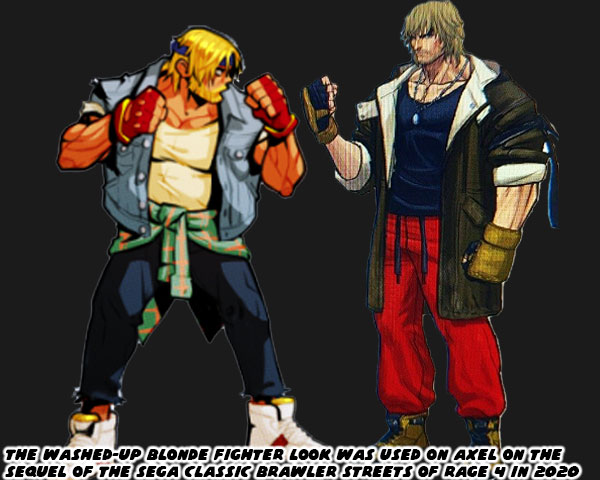
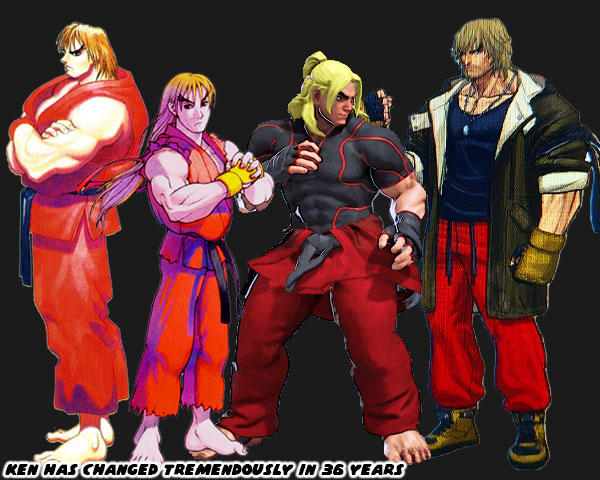
Ken Masters is a video game icon. He’s not only known in the fighting game community, but across the entire gaming landscape. Ken was the US equivalent to Ryu in the very first Street Fighter way back in 1987. I clearly remember the shaggy haired guy with the red gi when I was pounding the giant foam buttons on the original cabinet. The leaked design for Ken in SF6 was met with mixed reactions from the community. Most of them were negative. The very first take was that the redesign was poaching the same thing that developers Lizardcube, Guard Crush Games and Dotemu for Streets of Rage 4 did with the character Axel Stone. In short Capcom aged the character of Ken Masters, gave him a beard stubble and overcoat. Making him look like a washed-up version of his earlier self.
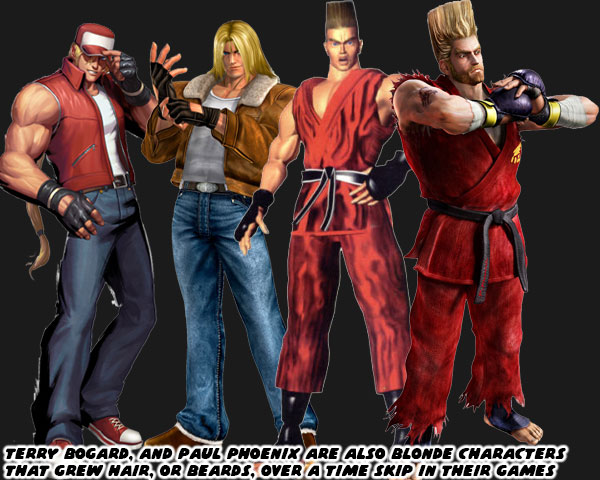
The thing is that this would not be the first time a Japanese developed did the same thing for the blonde-haired western character in a fighting game. Terry Bogard from SNK’s Fatal Fury series, and Paul Phoenix from Namco’s Tekken games had similar makeovers. Terry’s was handled slightly better, as it was a big time jump from the events of the original Fatal Fury. In Garou Mark of the Wolves he was already a seasoned master, and mentor to Rock Howard who was now seen as the star of the franchise. A lot of SF fans lamented that the son of Ken had not been inserted in his place in similar fashion.
There’s not much I want to say about Ken’s new look. It’s sad, and uninspired. I’ve talked about the importance of color on this blog. Hopefully you know how important the assignment of bright primary colors, and complimentary secondary colors has been to the creation of memorable characters. With Ken the designers are throwing away the classic look. A blue shirt, brown jacket, brown gloves, and brown boots clashed badly with his primary red outfit. If Ken had given up on his purpose then I don’t understand why he would even be wearing red gi pants, as they don’t usually contain pockets, not to mention his black belt. The level of disrespect to his form of karate, to himself, his master, and Ryu is off the chart. It would have made more sense if he was presented in street clothes, or even a suit. This half classic Ken, and homeless Ken doesn’t make much sense. This is especially bad considering how much good will the company had created with the character.
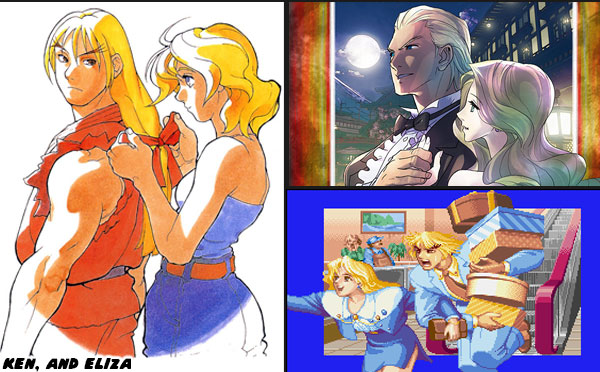
Ken was born into privilege, he didn’t have to work hard, but he did. He is considered to be on par, if not better than Ryu. He considers Ryu his brother. Through the series we got to see both grow up. Ken did a tremendous amount of personal growth when compared to Ryu. We saw his long-time girlfriend Eliza become his wife across several games. We saw them build a life together. They got to travel the globe while Ken racked up tournament victories. They set the standard of the perfect partnership. They seemed to have a better life than any other married couple in gaming. Then it got better. Ken became a father to Mel.
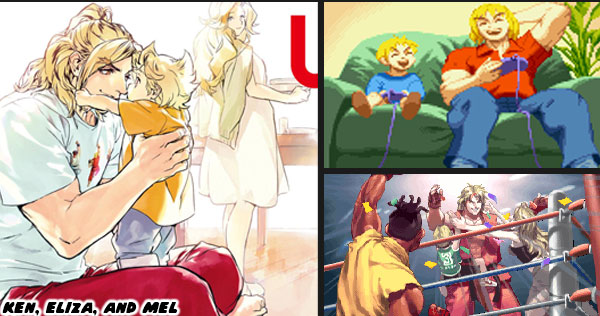
We got to see the baby be born, play games with his dad, throw his first punches. He idolized his old man, thought of Ryu as his uncle. Both Mel, and Eliza celebrated every victory with Ken. We saw all of this, and more character building in the game series, as well as in various manga, and comic book adaptations. Having him appear washed up, and “over” his life as a fighter doesn’t make any sense. Saying that Rose, and Menat predicted this path in a couple of lines in SFV feels like a cop-out. Capcom has not been sprinkling any clues that Ken, and his family were not happy with their lifestyle. Not one drop of apathy, or detachment to the fighting arts, or his own family over 35+ years. In fact the character did nothing but portray the opposite of that. Ryu was not the only one to continue climbing the mountain. Ken continually pushed himself to learn, and grow as well. His attacks became stronger throughout the series. His Shouryuu Reppa, Shinryuu Ken, and Shippuu Jinrai Kyaku were distinct variations of the legendary Dragon Punch, and Hurricane Kick that Ryu couldn’t do, or didn’t know how to do. These were techniques that canonically took him decades to develop. Why then would he suddenly stop doing everything?
Did Ken back away from everything because something happened with Mel, or Eliza? Did they get hurt, or are they dead? If that is the case then it would make sense that Ken was presented as a changed man in SF6. At the same time it would be a sad development for the franchise. Eliza, and Mel were fun characters. They gave Ken so much dimension. They connected Chun-Li, and some of the other characters together. I think it’s too ambitious if Street Fighter 6 Director Takayuki Nakayama wanted to create a come-back story for Ken, especially in one game. Street Fighter has always juggled multiple balls at the same time. We got to find out what happened to each, and every character in the tournament through their own cut scenes, and endings. Sometimes the scenes were comedic, others tragic, and some heroic. Some endings tied two characters closer together, or even pushed them apart.
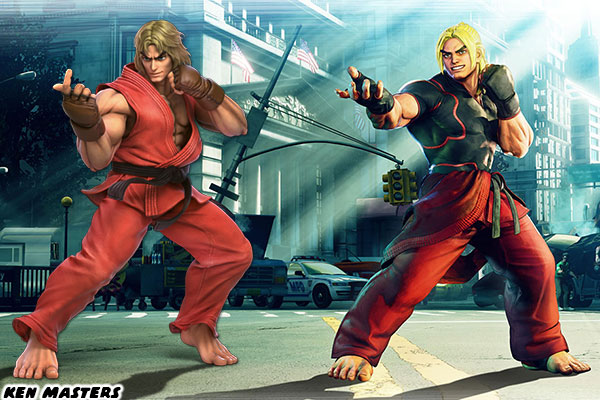
In any case we could always count on Ken, and Ryu always choosing the right path. They were trusted protagonists that moved the series forward. For the company to suddenly change Ken’s appearance, and motivation off screen was a disservice to the character. I have more faith in Mr. Nakayama, Mr. Tsuchiya, and Mr. Hashimoto than I had in Mr. Ono when it comes to the direction of the series. If there is one saving grace about the leaked designs, it is that the producer, director, and designer can gauge the audience reaction, and make changes accordingly. I hope they consider adjusting the look, and motivation of Ken. They have enough time to do so. What do you think of the leaked Ken redesign? Do you like the character or no? What would you have done different, if anything? I’d like to hear about it in the comments section. If you would like to sponsor me please visit my Patreon page and consider donating each month, even as little as $1 would help make better blogs and even podcasts!
follow the Street Writer on Patreon!

Wednesday, August 30, 2017

Meet Street Fighter V's Menat, an old soul in a young body?

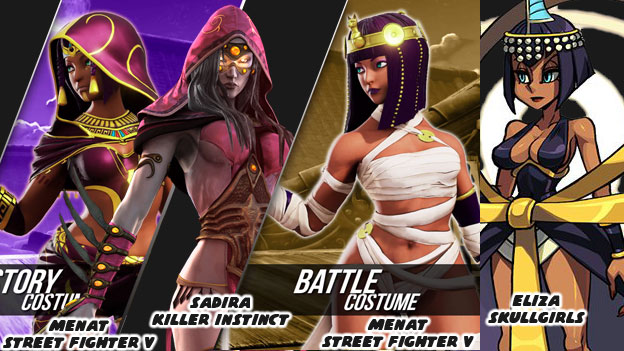
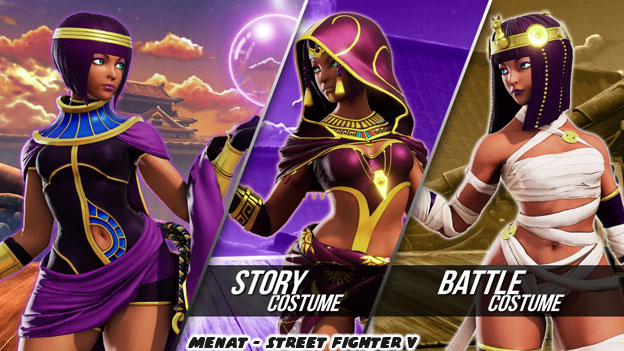
More news from the people at Capcom. The latest fighter for Street Fighter V; Season 2 has been revealed. This time it is a young female by the name of Menat. Harrison at Capcom-Unity gave the fighting game crowd a full preview of the character. In case you haven't seen her here she is along with her alternate costumes.


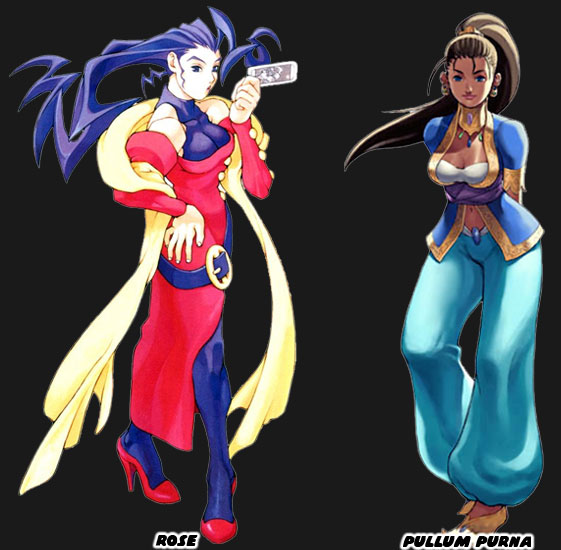
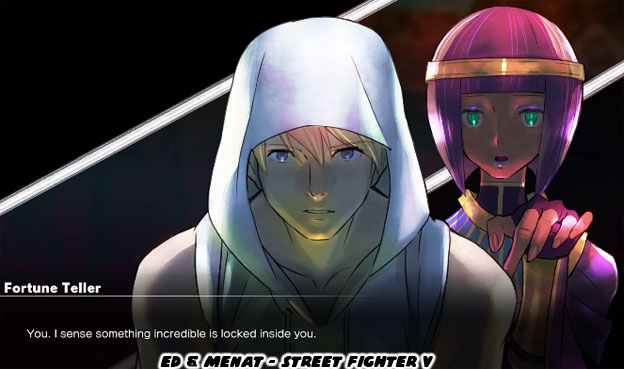
The character was actually teaser earlier, appearing in the visions of Ed. In her earlier debut she was listed only as a Fortune Teller. The connection between her and Ed was instant. I had mentioned previously that Ed was a return to Psycho Power. This was the mysterious psychic energy that powered Vega / the Dictator and allowed him to do things like fly, teleport and glowing orbs of psychic energy. The origins of this power were connected by a mystical person named Rose. She debuted in Street Fighter Zero / Alpha, which tied together the events that happened between Street Fighter, Final Fight and Street Fighter II. It looks like Menat is filling in that same role. Harrison said that Menat was the understudy of Rose. It made sense that Menat and Ed were connected. Rose and Vega also shared a psychic bond. This was explored in the various endings.


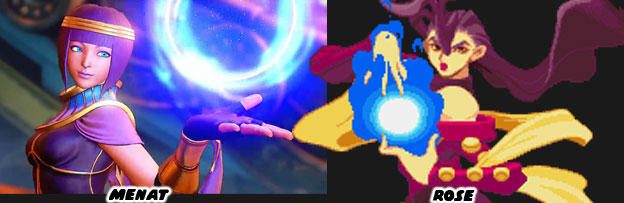
The moves and special abilities of Menat had a few things in common with Rose. She could reflect fireball attacks and even add energy to them to make them more powerful. Yet like Ed, she was her own unique character. Menat fought with a crystal ball, which she named Ankh. The Capcom designers called it a soul sphere, the name was based on the ancient Egyptian symbol which symbolized life. I didn't know if the crystal ball actually contained her soul, or was a conduit for her psychic powers. I suppose we'll find out shortly. There had been a few characters from the Middle East in the history of fighting games. Egyptian characters were not unique but they sometimes wore costumes that were more classical than contemporary.


I wouldn't say that Menat's default costume was daily wear for an Egyptian but her alternate costumes did seem eerily familiar. At worst the costumes could be considered culturally insensitive. I mean did Egyptians in the 21st century really wear mummy wraps? But more important than that, a lot of people have noticed that the alternate costumes looked like costumes worn by characters in other fighting games. Sadira for example was an assassin introduced in Killer Instinct. The fighting game from 2013 was a relaunch of a cult-classic Rare franchise. Sadira was inferred to be from the Middle East. The colors of her hood and patterns on her costume looked like traditional dress. Something inspired loosely by the bedleh, the light clothing worn by dancers. Sadira's uniform looked very much like the basis for Menat's costume. Then there was Eliza. This Pharaoh-themed character was introduced in Skullgirls Encore. The indy fighting game from 2014 pulled inspiration from dozens of different sources, including classic American cartoons and Japanese anime. Eliza was actually a design that was voted on by fans. The studio used Kickstarter to raise funds for new characters and Eliza was extremely popular in the voting. She really stood out when she was finally added. It was as if Cleopatra had become a fighter, her dress, Ankh symbol and crown were pulled from ancient history. And then apparently it looked like these things were poached by Capcom to be used for Menat as well. The similarities I think were too close for this to be more than coincidence.


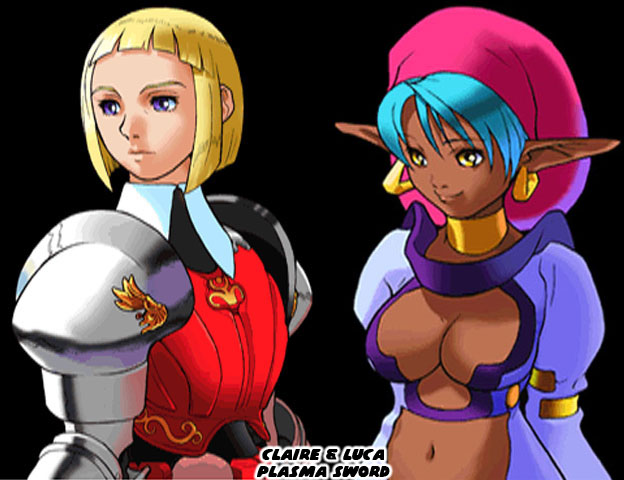
Poaching costumes from a rival studio was pretty low in my book. But then it might all be coincidence. The first time I saw the Fortune Teller / Menat the very first thing that stood out to me was the cut of her hair. Her look, her costume didn't immediately strike me as something that was featured in any contemporary game. Instead the hair, the colors and overall look actually reminded me of a few characters that Capcom had designed previously. The hair specifically reminded me of Claire, an officer in the Fourth Empire. She had a look that was inspired by medieval Spanish knights. She even fought with a plasma rapier. Plasma Sword: Nightmare of Bilstein came out in 1998. It was the sequel to Star Gladiator, a 1996 3D game, that was essentially Capcom's version of Star Wars as a fighting game. The sequel also introduced us to Luca, an alien fighter that was the fiance' of the alien Gore.


When I first saw Menat I thought that she was a sort of combination design of Claire and Luca. As if the designers revisited the notes on other fighters and tried to create something new. Also, seeing her bubbly personality reminded me of ARIKA's Pullum Purna. The youthful and energetic girl from the Arabian peninsula predated Menat by 20 years. It was hard to deny that Sadira and and Eliza also predated if not outright influenced Menat's design. What Capcom did right was in approaching her move set, her special abilities and connection to the past. Menat worked in part because she was reminiscent of Rose. Just as Ed reminded us of M. Bison and Vega, the Boxer and Dictator. But Menat was her own character, with her own special attacks, strategies and techniques. She would bridge the legacy designs and make a unique spot in the lineup.


If you are an artist trying to crack the code of the Street Fighter designs just look at three of the newer characters introduced into the series. Juri, Ed and Menat were all inspired by previous characters, they were in essence mirroring legacy designs. Juri was like an evil version of Chun-Li. Ed was a hybrid of Vega and Bison. Menat was the fresh face. She was to Rose as Cammy was to Chun-Li. It was not a coincidence that audiences gravitated towards these characters. Whether they realized it or not Capcom was using the same design elements that brought people into the fold 30 years ago. You can't really say the same about Rufus, Hakan, F.A.N.G. or Necali could you? I'd like to hear your take on Menat. Do you like the character? Why do you think she does or doesn't work in the series. As always if you enjoyed this blog and would like to sponsor me please visit my Patreon page and consider donating each month, even as little as $1 would help make better blogs and even podcasts!

 follow the Street Writer on Patreon!

Tuesday, September 9, 2014

Copycat Culture, part 2...

The Chinese consumer wanted to be part of the international dialogue. They want to be recognized for their contributions to science, fashion, art, education, politics and culture as well. Of course the rest of the western world has a problem with that because of how often and how blatant the nation stole the IP from other countries. Business Insider compiled a sampling of things China copied from the rest of the world last year. China was known for being the source of most counterfeit goods the world over. From clothing to electronics and even drugs. If it had a street value then chances are somebody in China was mass producing a knock-off. Even things that had value with other cultures, such as the satirical Colbert Report show, had been poached unapologetically. This reflected badly on the Chinese consumers. They knew the difference between the original product and the copy but did not always see the value in spending an outrageous markup for the genuine article. At the end of the 20th century the Chinese had found that they could outspend just about every other nation on goods and services. In a few short generations the middle class had exploded in purchasing power. The working class were holding most of the manufacturing contracts from around the world. Suddenly the counterfeit items they had supported no longer seemed justifiable. Purchasing name brand items suddenly became a symbol of status for the middle and upper class as well. Name brands had a seductive influence on consumer culture and the Chinese could not escape its pull. If they wanted to imitate the trends of the west then they had to "buy" into it. Sadly many designers, artists, directors, composers and content creators from China would be overlooked because they lacked the approval from the West.


The same cycles of copying the content from the West would follow the Chinese gaming industry as well. Chinese gamers were familiar with all of the biggest arcade and console hits from around the world. They did not appreciate that the local developers were simply copying the trends from the West. Unfortunately for them there was little else for them to choose from. They could either import games at a great cost, download pirated games for free or support domestic developers. The Chinese gamer longed to see an original idea that catered to them rather than followed the status quo. Of course entertainment consumers from around the world longed for the same thing. Creativity and risk taking were counter to the business climate from the West. Most studios, from Disney to Warner Bros, were willing to invest on a proven format or character rather than try to invent a new franchise. Marvel was making a killing releasing movies based on characters that were more than half a century old, why would they risk a sure thing by trying out something new? Disney was content marketing cartoon characters almost a century old. They had no problem working on sequels from the Pixar library, which incidentally was also growing old. Toy Story would turn 20 in 2015 and Disney had no plans on retiring the characters. I'm not even going to mention the plans that the company had for the aging Star Wars franchise. Game studios in the west were run similarly. Sequels made more business sense than new ideas. Gamers had little say in what developers worked on. Unless they stopped buying into a particular franchise there seemed no other way of getting the publishers to listen. The Chinese gamers were pretty much in the same boat. It was obvious by how far Tencent was willing to go to poach the IP that worked for other companies. The biggest publisher in the country and the fourth largest internet company in the world (behind eBay, Google and Amazon) knew no shame. Andrei, featured in the previous blog, was an interesting boxer from Xuan Dou Zhi Wang / King of Combat. The previous character introduced however was a shameless rip-off of a more famous fighter.

Although the character "King" was dressed differently than Ken from the Street Fighter series there was no mistaking his inspiration. Huateng Ma aka Pony Ma, the founder and chairman of Tencent was quoted as saying "to copy is not evil." His business rivals once remarked that "Pony Ma is a notorious king of copying" and "the problem in Tencent is no innovation; all things are copies." This understanding obviously worked very well for business.


Move for move Ken and King were almost identical. The Hadoken "fireball", Shoryuken "Dragon Punch" and Tatsumaki Senpukyaku "Hurricane Kick" could also be performed by King. Of course his attacks were relabeled the Vacuum Wave Punch, Shen Long Fist and Cyclone Leg respectively. Tencent had the audacity to use the same joystick and button combinations from the Street Fighter games to activate the special attacks for King.


Tencent had stolen the trademark special attacks from the Capcom character. The copyright infringement lawsuit that Capcom slapped Data East with when they released Fighters History was based on vague similarities with characters, moves and gameplay. The similarities between King of Combat and Street Fighter were even more profound and worthy of legal action. Since the Chinese copyright system was hopelessly impossible to petition there would be no stopping Tencent from getting away with it.


The Chinese studio had gotten away with murder. Fighting game aficionados could do nothing but standby and watch. Well, actually the aficionados did more than that. They were eager to try out the character and see how he stacked up against the others in the King of Combat. In a way it settled the bet of what would happen if Capcom's best fighters turned up in a different franchise.


To be fair the artists, designers and programmers working for Tencent were as big a fan of the genre as any studio in the world. Perhaps more than most. They wanted to demonstrate that they were capable of creating a fighting game that was beat-for-beat as good as anything released from Japan or the US. They wanted to show their contemporaries that they weren't sleeping when the various franchises became hits. They were learning how to code and dissected the elements that made the various fighters successful. They were able to release a solid game in the fraction of the time that it would have taken a Japanese studio to. They made sure to include nods to the legacy characters and hide details in Xuan Dou Zhi Wang for the most die-hard fighting game fans to find. King was actually added as an answer to a partnership that Tencent had started up with a Japanese publisher. It would not be the first time that this studio, and long-time rival to Capcom, had tried to break into the Chinese market. The next blog will set the groundwork for how Tencent capitalized on a franchise and made it their own. If you would like to sponsor me please visit my Patreon page and consider donating each month, even as little as $1 would help make better blogs and even podcasts!
follow the Street Writer on Patreon!