Showing posts with label bengus. Show all posts

Friday, December 27, 2024

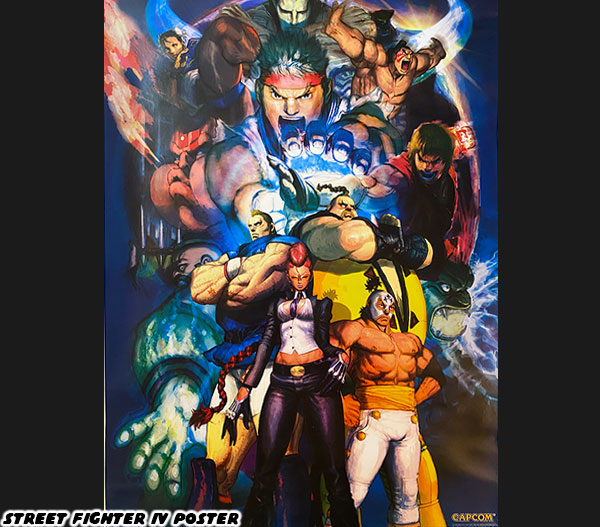
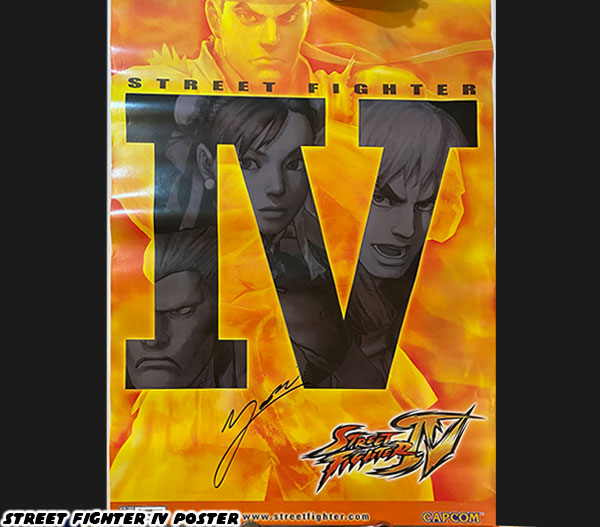
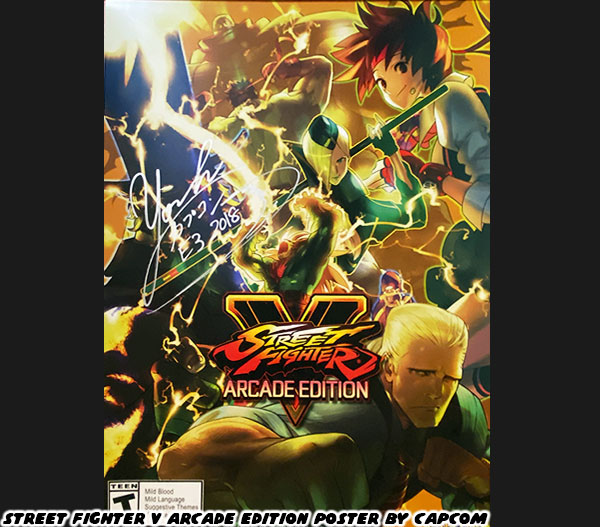
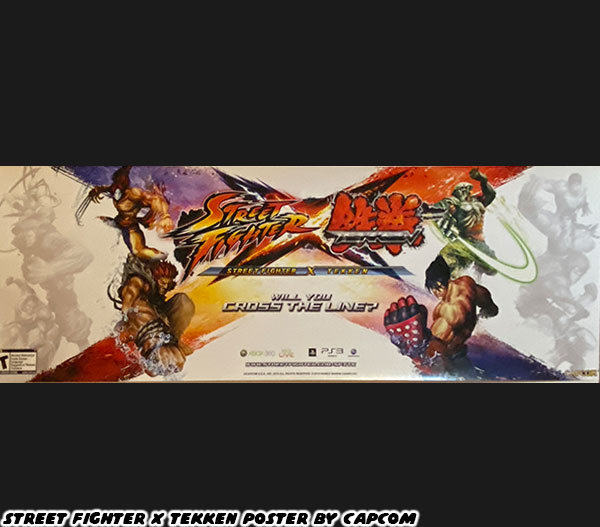
Freeze frame, my poster collection, final part...

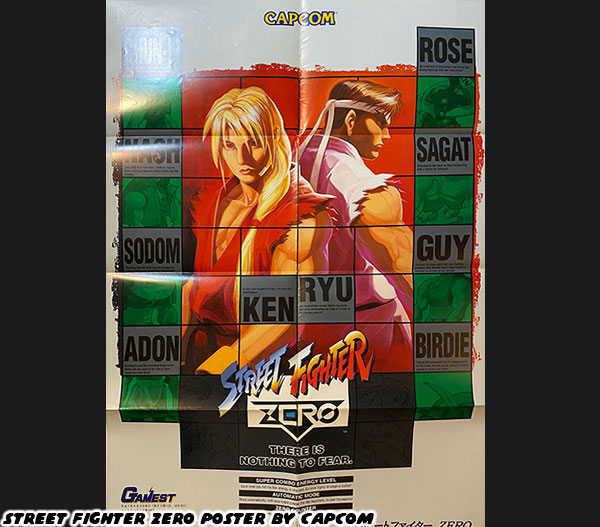
I had so many posters in my Capcom collection that I had to break them over several separate blogs. Here's a reminder for any Street Fighter, or fighting game fans in general. If you want to get into collecting the posters then try to track down the game guides from Japan. The gems in my collection came from Gamest. It was the premier arcade magazine through the '90s. When they published guides, which they called MOOKS after Magazine-Book they often included a poster. 

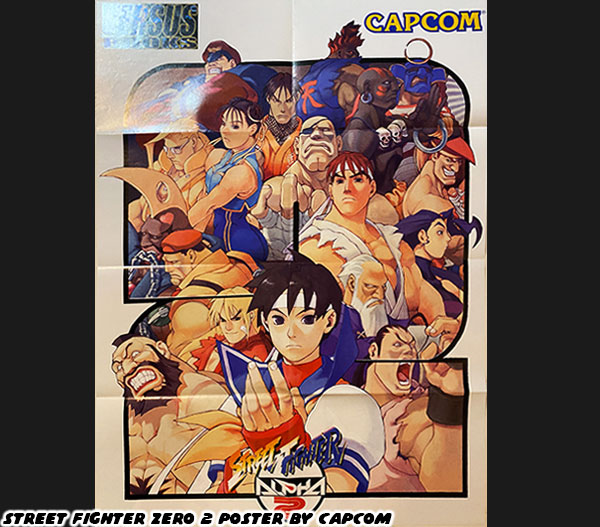
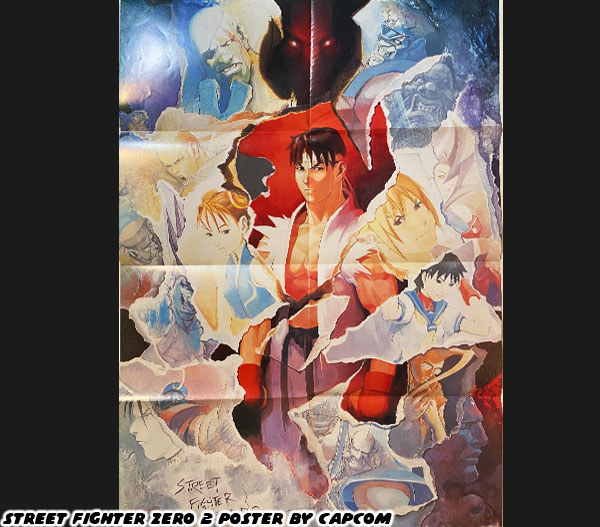
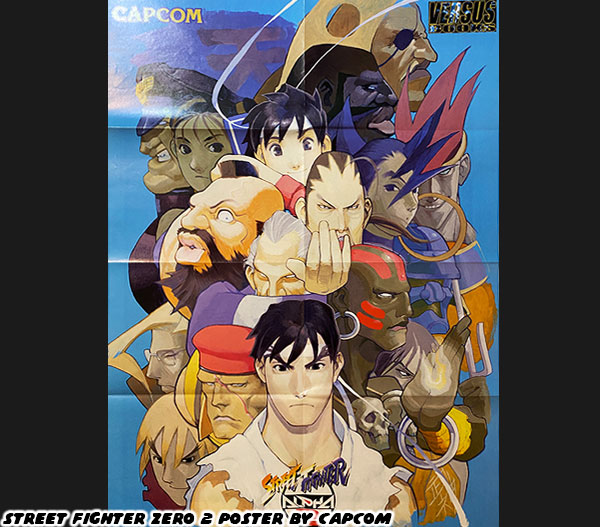
There would even be posters included in US game guides. The one for Street Fighter Zero / Alpha 2 by Versus Books for example was amazing. They printed a fantastic image on both sides, making it impossible to frame unless you had a second copy. 

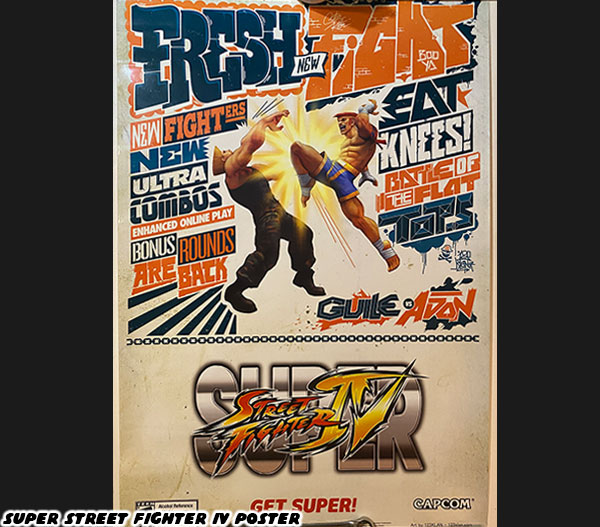
Some of the posters in my collection I got from events like the E3, the San Diego Comic Con, the Wondercon, and even live events. I cannot remember where I got the massive Super Street Fighter IV poster.

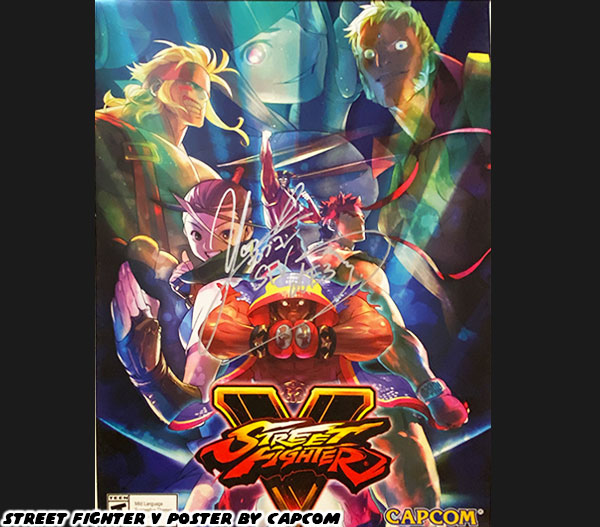
Bengus is, and will always be the GOAT. I was so hyped that he was doing the designs, and poster work for Street Fighter V. My goal before I die is to have an original sketch from the man.

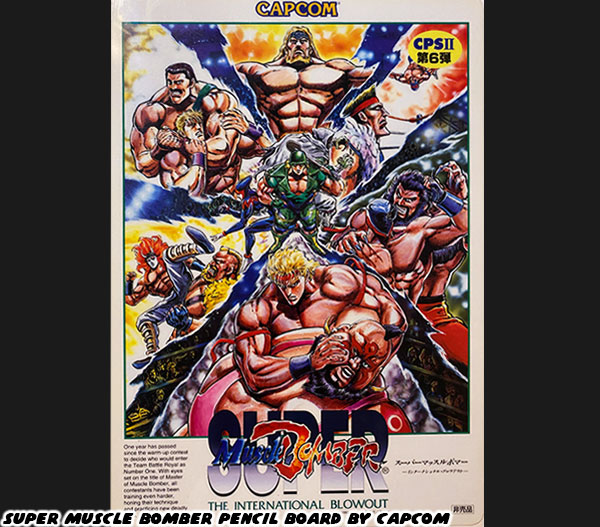
Not all of the rare items in my collection are posters. I am still on the hunt for a Super Muscle Bomber poster by Tetsuo Hara, the man that illustrated Hokuto No Ken / Fist of the North Star. He designed the wrestlers for Capcom, and did the advertising art as well.

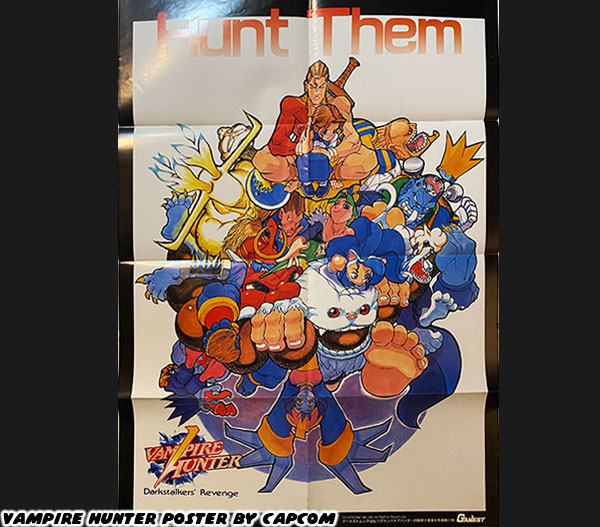
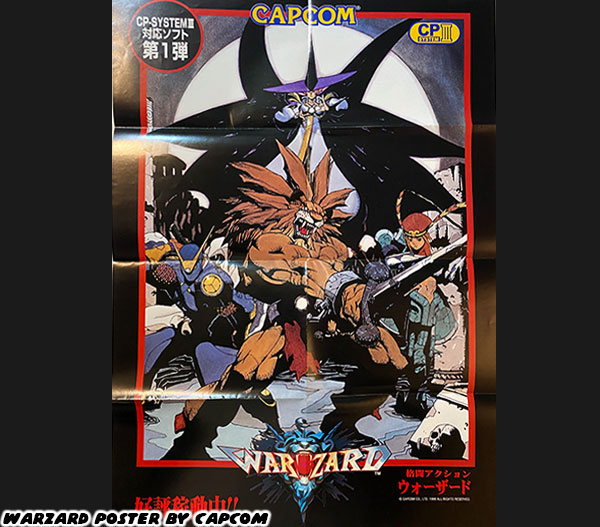
Fighting games of every kind mean the world to me. I needed to make sure that I had a Vampire / Darkstalkers poster in my collection. I had no idea that I would get my hands on one for Warzard / Red Earth. This is easily one of the rarest fighting games ever made.

Thank you for joining me on this journey through my poster collection. Many of which I forgot I had. One day I’d like to get most of them framed, and put them on display, even if I have to cycle through them. Were there any you enjoyed? I’d like to read about them in the comments section. As always if you would like to sponsor me please visit my Patreon page and consider donating each month, even as little as $1 would help make better blogs and even podcasts!
follow the Street Writer on Patreon!

Wednesday, December 25, 2024

Freeze frame, my poster collection, part 25...

Merry Christmas to all my friends, and family. I didn't get too many goodies this year. I'm saving my money for taxes. Thankfully everyone over here had a good holiday season. I had so many posters in my Capcom collection that I had to break them over several separate blogs. Here's a reminder for any Street Fighter, or fighting game fans in general. If you want to get into collecting the posters then try to track down the game guides from Japan. The gems in my collection came from Gamest. It was the premier arcade magazine through the '90s. When they published guides, which they called MOOKS after Magazine-Book they often included a poster.

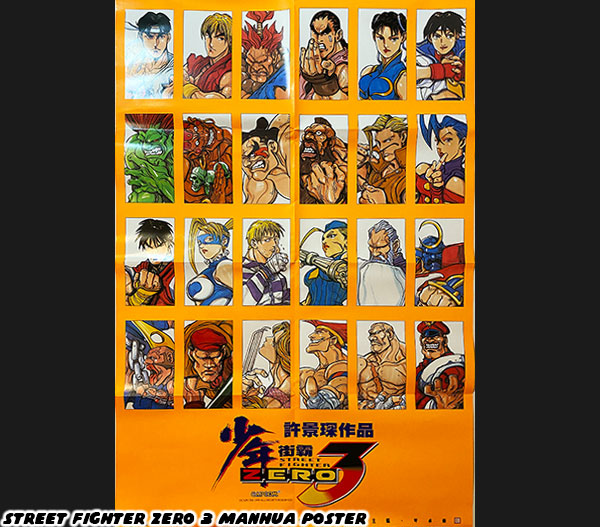
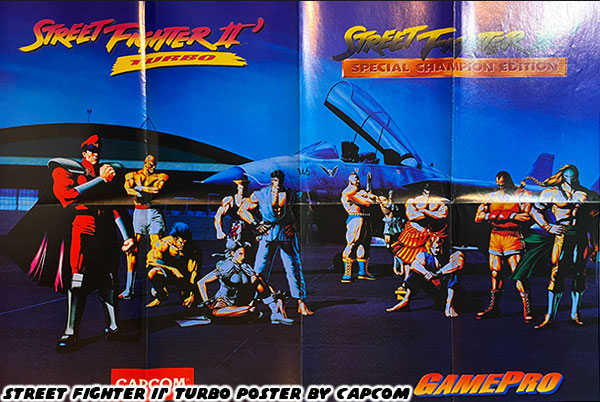
I have a lot of manhua or comics from Hong Kong. Some of them had gimmick covers, and even came with prizes like Charlie Nash's dog tags, and Chun-Li's spiked bracelet. This was the only poster that I was able to get when buying collections. 

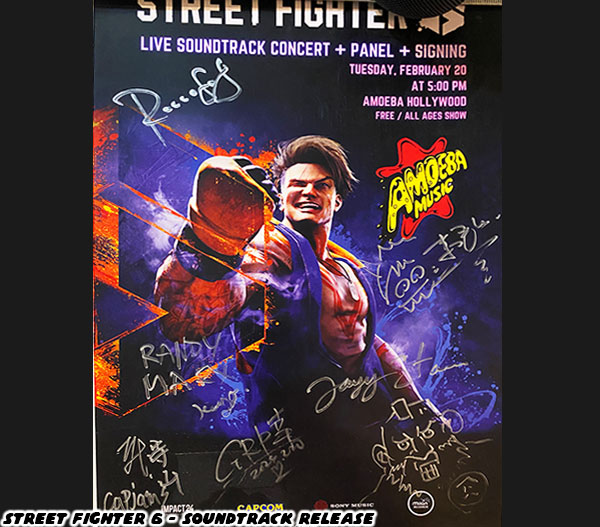
The story behind this autographed poster was so much fun. Read all about it here

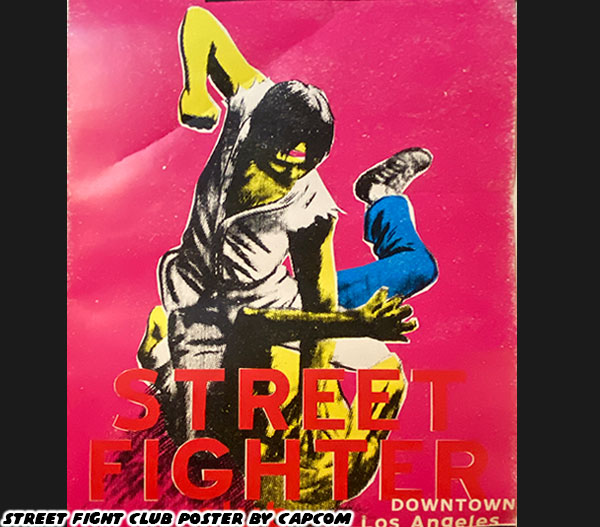
I can't believe this poster is 16 years old as of 2024. I had no idea if Capcom would ever do another Street Fight Club event. So I swiped two of the posters they had lining the walls on my way out of the event. I was grateful for the community then, and glad I still talk to a few members of the FGC on occasion. 

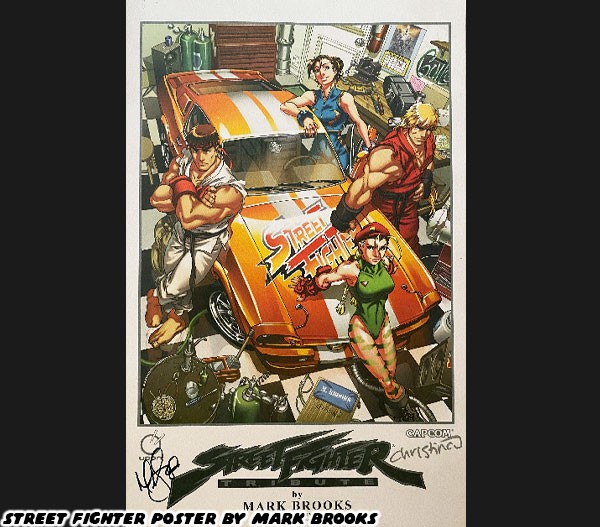
One of the first Street Fighter prints I ever got was at the San Fiego Comic Con. This illustration by Mark Brooks reminded us why the UDON books were succeeding when other game comics books were failing in the USA.

Thank you for joining me on this journey through my poster collection. Many of which I forgot I had. One day I’d like to get most of them framed, and put them on display, even if I have to cycle through them. Were there any you enjoyed? I’d like to read about them in the comments section. As always if you would like to sponsor me please visit my Patreon page and consider donating each month, even as little as $1 would help make better blogs and even podcasts!

follow the Street Writer on Patreon!

Monday, December 23, 2024

Freeze frame, my poster collection part 24...

Going back through my poster collection has been a present for my mental health. I had so many posters in my Capcom collection that I had to break them over several separate blogs. 

Here's a reminder for any Street Fighter, or fighting game fans in general. If you want to get into collecting the posters then try to track down the game guides from Japan. The gems in my collection came from Gamest. It was the premier arcade magazine through the '90s. When they published guides, which they called MOOKS after Magazine-Book they often included a poster. 

If I remember correctly many of the posters featured today I was able to get at the E3. You can see the autograph of Yoshinori Ono on several of them. Lord how I miss that convention.

BENGUS IS GOD.

The Street Fighter X Tekken event was another amazing show put together by Capcom. Lord I wish there were more of these. 

Thank you for joining me so far, I still have a few more posters to feature. Many of which I forgot I had. One day I’d like to get most of them framed, and put them on display, even if I have to cycle through them. Were there any you enjoyed? I’d like to read about them in the comments section. As always if you would like to sponsor me please visit my Patreon page and consider donating each month, even as little as $1 would help make better blogs and even podcasts!
follow the Street Writer on Patreon!

Friday, December 20, 2024

Freeze frame, my poster collection part 23...

I had so many posters in my Capcom collection that I had to break them over several separate blogs. Here's a reminder for any Street Fighter, or fighting game fans in general. If you want to get into collecting the posters then try to track down the game guides from Japan. The gems in my collection came from Gamest. It was the premier arcade magazine through the '90s. When they published guides, which they called MOOKS after Magazine-Book they often included a poster.

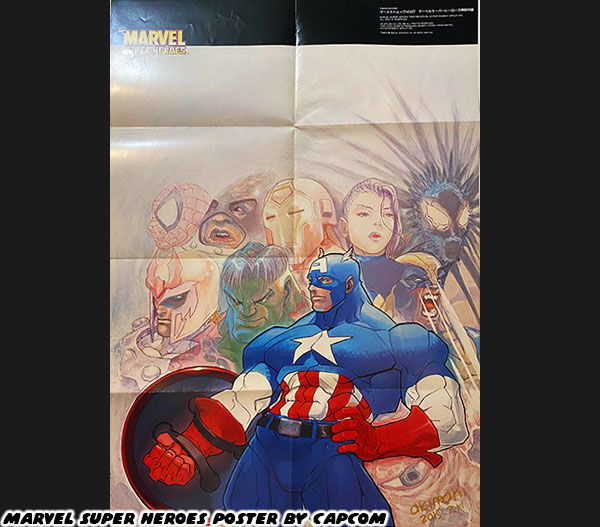
My Marvel Super Heroes poster was actually autographed by AKIMAN, the father of Chun-Li. It was at the San Diego Comic Con at the UDON Booth. The booth did not want to honor their commitment to one autograph per person who purchased one of the Capcom hardcovers. I said I didn't want the autograph on the book, but instead the poster. They pushed back until I talked to the managers, then they told the staff that it was okay, in fact that I could get the autograph on my book too for the hassle.

There are two Muscle Bomber posters that I know of. The first is the same as the main art that most people are familiar with. This version I had no idea existed until I saw it pop up in a Japanese auction site. I was super happy with it, and was one of the official drawings by Tetsuo Hara where I could see the details on the CWA belt that I used as reference for the actual belt I commissioned.

I don't believe in wall scrolls since they usually steal licensed art. I bought this Marvel vs Capcom 3 poster under false pretenses, I was told it was an official poster, and was sent a scroll instead. You just can't trust people online.

The Pocket Fighter is too cute, as is this classic illustration of Sakura.

Do you have a favorite game, or character that you wish you had a poster of? I’d like to read about them in the comments section. As always if you would like to sponsor me please visit my Patreon page and consider donating each month, even as little as $1 would help make better blogs and even podcasts!
follow the Street Writer on Patreon!

Monday, July 8, 2024

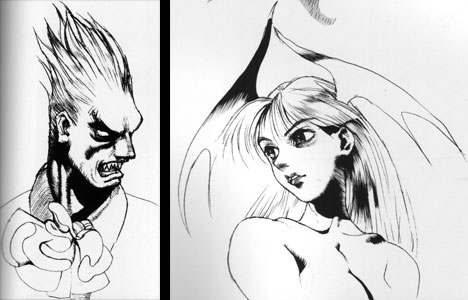
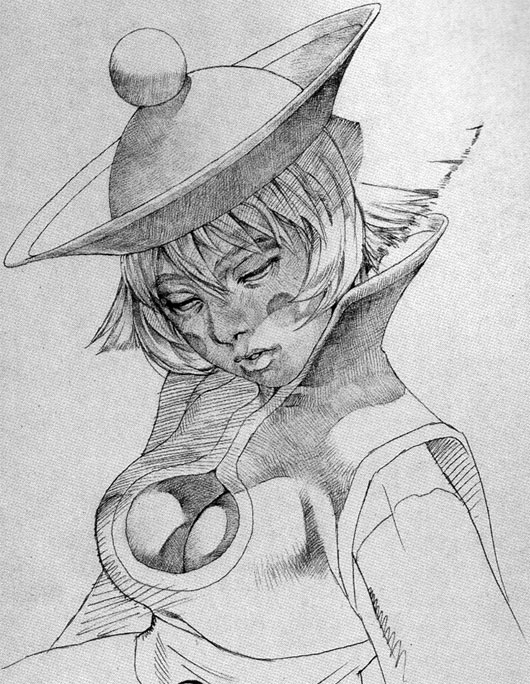
Bengus, the Vampire Savior - A 1UP classic from May 9, 2008

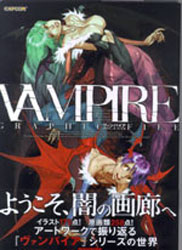
Friends, I shouldn't have to say one more word about Bengus, but I will. Only because I got my hands on concentrated awesomeness last weekend. If you like the Vampire / Darkstalkers series and you like Bengus, honestly, who doesn't? Then you have to get your hands on a copy of the Vampire Graphic File, ISBN978-4-86233-124-3.

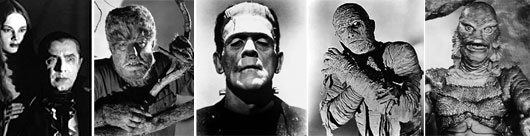
For those that aren't familiar with the game, it is to the classic monster genre what Street Fighter was to legendary fighters. Capcom decided to include as many classic archetypes in the game as they could. There was a succubus, a vampire, a wolfman, Frankenstein, mummy and even gill-man. However the ones featured in the game looked nothing like the classic Universal movie monsters. The Capcom doppelgangers were kung-fu werewolves, wrestling bigfoots and undead samurai. Crazy by anyones standards.

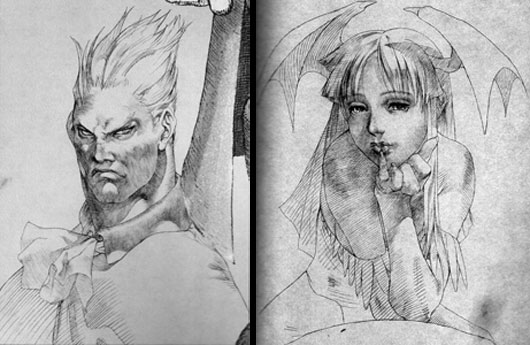
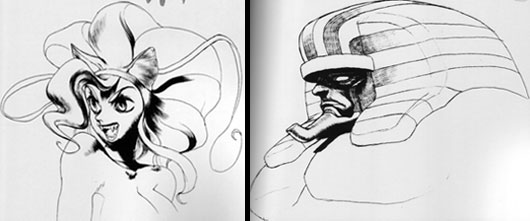
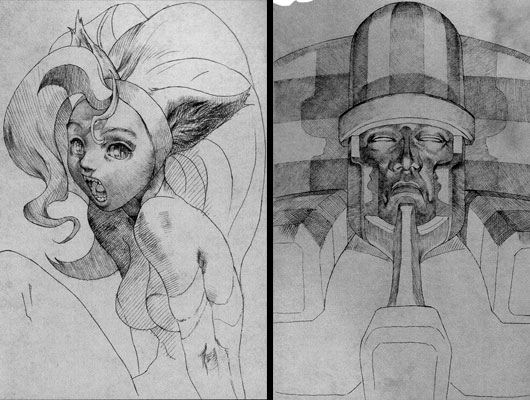
Bengus wrapped those archetypes around his head and came up with designs that were just as unique and memorable. They also included slight nods to their original inspirations. I'm only going to show a small sampling of the illustrations. Below are his pen illustrations of the original Vampire character art compared to his final portraits years later in Vampire Savior.

Notice how bold he was with his shadows in the original Dimitry and Morrigan art. Now look at how far he had refined his style by the time he was finishing his stint producing art.

The style was clearly Bengus and yet there was the sublime genius of DaVinci behind his technique. With nothing but one color Bengus simply shines. Look at the shadows and highlights of his figures. Look carefully at the subtleties of his crosshatching technique.

Even on the more fantastic characters like Felicia and Anakaris he managed to remain playful and iconic at the same time. Look carefully at the expressions on the characters for his original art and then his latter art.

Is Felicia meowing? She has depth and weight, shape and substance. The Anakaris piece is as epic as any classic movie poster. It is part Boris Karloff and part Alex Ross and yet something else entirely. Look at the way he created the illusion of multiple sources of lighting on the head of Anakaris!

MY GOD!

There isn't an artist working in videogames that has ever filled me with such awe. Not any of the greats at Sony Santa Monica or Incog Inc. Not anybody at Nintendo or even Sega. And just when you think that Falcoon, Hyung-tae Kim or the artists at Udon are getting close you go back and reference this art. That is when you realize that the other artists aren't even in his league. Bengus set a standard. Scratch that. Bengus is the standard. He breathed life into the characters featured in Street Fighter and Vampire. He put his stamp on history. If you ever doubt that he was anything more than a cartoonist just look at this illustration of Lei-Lei and then get back to me.

Have a great weekend and let me know what you are up to!

As always if you would like to sponsor me please visit my Patreon page and consider donating each month, even as little as $1 would help make better blogs and even podcasts!
follow the Street Writer on Patreon!

Friday, April 28, 2023

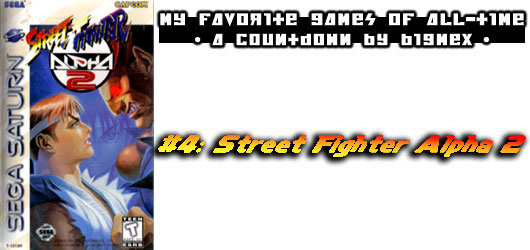
My favorite Games of All-Time #4: Street Fighter Alpha 2 - Originally published on 1UP - July 28, 2006

Street Fighter Alpha 2 is the greatest fighting game ever made. That's all I should have to say about it. A decade after it's release it still had not been topped, not even by Capcom. But I can't leave it at that, I have to explain why it ranks so high on my list. Above so many fine RPG's, racing and adventure games.

The game meets all my criteria for what I consider a great title. It is a title that is easy to pick up and learn, yet impossible to master. If I could sum up the game in one word it would be "balance." I don't mean solely a balance between characters in the game. I mean a complete balance behind the development and execution of every element in the game... I should elaborate.

Street Fighter Alpha 2 (SFA2) is a title that works on multiple levels. The more you look into the details the more you will discover. From the control, to the graphics and sound, pay attention now. Peel back each layer of the game and you will discover something yet to be duplicated.

SFA2 picks up on the heels of the original Alpha. Many felt that the first Alpha was rushed for release, Capcom countered by updating the game and fleshing out the experience with new levels, moves and characters. The game was nothing short of perfect.
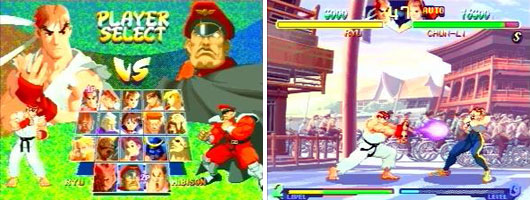
Capcom had recently lost a good portion of the Street Fighter II team and was nervous about the next fighting project. With a good number of former Capcom employees working on the Samurai Showdown series a rivalry was building. SF II was such an incredible game that topping it was going to be near impossible with members of the team missing.

In fact Street Fighter II was the reason that many left Capcom. Management kept pushing the developers for updates to SF II rather than allowing them the time to develop a proper Street Fighter III. Many elements that were supposed to debut in III were added in the final version of Super Street Fighter II. In protest many members of the team walked away. The rest as they say is history...

Okay, so it really wasn't cut and dry.

Noritaka Funamizu and Yoshiki Okamoto were the last senior men left from the original team. They knew that without Akira Nishitani (who left Capcom to start ARIKA and create Street Fighter EX), making a proper SF III would be next to impossible, the universe of Street Fighter had grown very quickly. Would SF III be a new beginning or would it return to the plot of SF II?

Rather than release part III, Noritaka turned the clock back and created a legacy that tied together the first two SF games. In a word it was genius. There was no way Noritaka could have developed a proper trilogy when a good portion of his team had jumped ship. What he gave us instead was an epilogue far more enjoyable than any Street Fighter before.

It began with a careful selection of characters.

Of course Ken and Ryu were in the game, they are the stars. Or as it turned out, Ken and Ryu are part of a larger world where the supporting cast influences their fate and the fate of the Street Fighter universe as well. These people include Nash (I use the original Japanese names), the soldier and best friend of Guile. Aside from being a great character, Nash was placed in the game to add depth and back story to Shadowlaw and the murderous Vega.

The women in the game were all strong characters. None of them had enormous breasts that bounced all over the screen. None of the women wore anything too revealing. The women, like all of the characters in the game, took on multiple meanings. Sex appeal was substituted for substance and history. Chun-Li, returning from SF II in a younger guise with her traditional kung-fu, Sakura as a parody of the girl fighters in SNK games. Rose as a mystic who reveals some of the origin of Vega.

Rolento, Guy and Sodom tie the Street Fighter and Final Fight universe together. Final Fight was originally titled Street Fighter '89 and all of the characters in the series were meant to replace Ken and Ryu as the stars of the universe. Instead there became a melding in Alpha and all of the characters were allowed center stage. Birdie was a returning character from the original Street Fighter. Dhalsim and Zangief were returning from Street Fighter II. These were all nods to the legacy of the series, the creators and even the people that left Capcom.

This balance of the new and old was brilliant. Between strong female characters and familiar male characters there was little more the game needed. That's when Capcom piled on the substance and turned a potential good fighter into the "greatest."
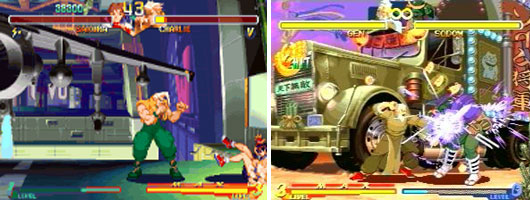
The move selection for each character was great. The special moves, super moves and combos were unique and balanced. Large characters actually had a fighting chance against smaller, faster characters. Those in the middle weren't impervious to either extreme in character or style. Unlike the latter games, the ones I mention in the Primal Rage blog as "combo pornography," Alpha had just the right amount of multiple hit combos and even defense against those combos.

I mention styles because each character in the game represents a particular form of the martial arts. Noritaka and crew went to great lengths to make sure that the characters not only looked unique, their style of fighting and associated strategy was unique as well. These styles balanced each other, moreover there was always more than one character to handle a particular form. Zangief's wrestling could be countered by Birdie's brawling or Sodom's hybrid budokan. Ken and Ryu's fireballs proved ineffective to Rose or Dhalsim's mystic powers... etc.

The final group of characters I mention help round out the plot of the series. Dan is another parody of the SNK characters, his pink uniform is a blend between Ken and Ryu's red and white uniforms. Dan, like Muay Thai fighter Adon, exists to be a thorn in the side of Sagat. Sagat being the original boss in Street Fighter and second-to-the-end in Street Fighter II. The "best" fighters in the game blend classic forms and mythology.

Gen is returning from the original Street Fighter and is on his last legs as a master of the old forms of kung-fu. His purpose, like the purpose of Ken and Ryu is to end the murderous spree of Gouki. Gouki was meant to be the original boss of Street Fighter III but was instead introduced in the sequel. Now with a stronger purpose in Alpha, Gouki serves as the true boss and best fighter in the game. Vega ties in the plot from SF II and shows how the tournament became a front for his criminal organization.

Still with me?
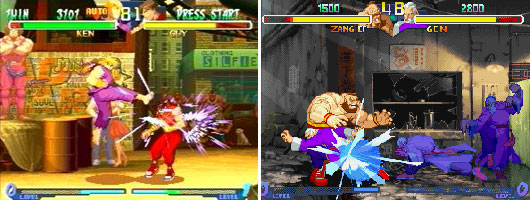
The plot of the game is complex. Whether stated or implied there are layers of subtlety in the story. Each characters plays their role, if you can actually allow yourself the freedom to get lost in the world of a fighting game. The beauty of the game being that the endings and relationships between characters were open to different interpretations. It is one thing to tell an audience what happens in the story, it is another to allow the gamer the freedom to explore the possibilities. That type of game design is unfathomable. Moreover it was easy to become immersed in the story thanks to the detail in the levels.

Each level in SFA2 has as much personality as the fighters. Some levels are an homage to the previous games. Some levels filled with characters and locations from Final Fight. These characters would return in Alpha 3 and the eventual SF III. There was even a level brought in from the Street Fighter II anime movie because it was so influential.
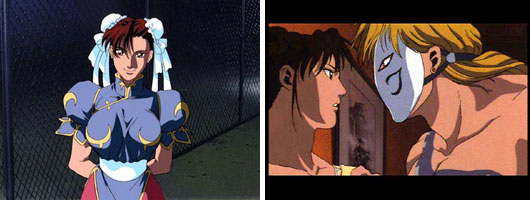
The art direction in the game was the icing on the cake. The immortal Bengus was credited for the look of the characters. At the time that Killer Instinct's SGi-workstation characters wowed audiences, Mortal Kombat 3's live actor models were different, as were Primal Rage's clay dinosaurs or Virtua Fighter 2's polygon models. The only way Street Fighter could compete in that arena was with sprites that oozed style and substance. Bengus' designs were pure genius. Always working behind the scenes at Capcom, Bengus was responsible for some of the best art and design ever to come out of the studio. His body of work went on to influence all of the artists working there and at rival companies for years to come.

His characters were all unique, colorful, bold-and-yet-subdued, just by looking at the designs you could tell a lot about them. They had a history, both the good and bad "guys" had a story to tell. They spoke volumes without saying a word. Such is the work of a talented artist, possibly the greatest videogame artist ever.
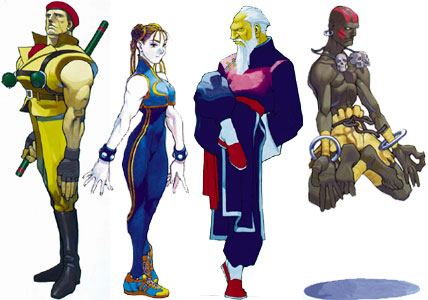
Bengus was responsible for the exaggerated, anime-look of the Alpha characters and the creatures in the Vampire (Darkstalkers) series. The sprites Capcom produced based on his work were nothing short of amazing. The characters were so universally loved that for the next decade Capcom would pull these sprites and use them on other games. This art, this game, influenced untold fighting games for many years after.

The legacy of Street Fighter has no equal. Street Fighter Alpha 2 made certain that Capcom would forever remain as the greatest company ever to produce a sprite-based fighter. Although the company has turned their back on sprite-based games, and has officially killed the 2-D sprite wing they cannot deny that it was the Street Fighter series that put them on the map. They cannot deny that Bengus carried them with his awe-inspiring art.

Street Fighter Alpha 2 will remain on my favorites list for all-time. I doubt that I will live long enough to see a better fighter. I hope that you get a chance to play it if you haven't already. Have a great weekend people! Next week begins the top-3, can you believe it?

I’d like to hear your personal top-10, top-20, top fighting games, top sports games, or top games in any genre. Let me know in the comments section please. As always if you would like to sponsor me please visit my Patreon page and consider donating each month, even as little as $1 would help make better blogs and even podcasts!
follow the Street Writer on Patreon!

Thursday, June 28, 2018

30 years of Street Fighter: 30 years of Characters #3

For the 30th Anniversary of Street Fighter we've talked about Ryu, the hero of the series. We've  talked about Sagat, his great rival and the template for a memorable martial arts boss. We've even talked about Vega / The Dictator as a way of redefining what a final boss villain could be. With every fighting game that's ever been and that will ever be, there is one boss that is considered the gold standard. His name is Gouki. You might know him as Akuma. He represents the peak of the mountain, the ultimate fighter if ever one existed. Designed with a frightening appearance he has elements pulled from Asian mythology, including demons, the afterlife, and even lions. His origins are part of a larger narrative. He is the estranged brother of Gouken, the master of Ken and Ryu. He murdered his master and his brother in a fit of rage. He is as complex as he is intimidating. The best renditions of the character coming from the talented hand of Bengus, one of Capcom's best artists.


The origins of Gouki are obscure, owing more to an April Fool's prank rather than clever planning. The long defunct EGM magazine invented a character named Sheng Long who was supposedly the master of Ken and Ryu. He could only be fought under certain conditions. Capcom decided that they should introduce a version of this mythical fighter in one of the final Street Fighter II upgrades for the arcade. His debut in Super Street Fighter II became the stuff of legend. He only showed up at the end of the game if certain conditions were met. He absolutely destroyed Vega before the match started. His moves were far more impressive than Ken or Ryu's. He could throw fireballs while leaping, he could even teleport across the screen. He showed that even the best Street Fighter bosses were far beneath him. His popularity really took off as he was formally added as a playable character in the Street Fighter Zero series. He had his own story and ending to help explain his purpose in the universe. Gouki wasn't the main boss for every character in the Street Fighter universe and that made sense. He wanted to fight the best ever, and in particular see if his brother's students were any good. He was reclusive and you had to work hard to find him and even harder to beat him. He embodied every quality that made for a memorable final boss.


No studio was able to recreate what Capcom had stumbled into. After 30 years we have yet to see a boss character in the series that holds a candle to Gouki. Part of the reason why is because most developers, including the current Capcom stable, have a limited approach to their villain designs. They often create one-dimensional bosses, pure evil with amazing powers and no redeeming factors. Gouki was a murderer, that would never change, but he fought with his own code. He didn't kill everybody he ran into. He was obsessed with a worthy challenge. This was best explained in a drawing by Bengus. Gouki, selling fruit, probably by the side of the road. Earning some money to buy provisions and supplies. He could take whatever he wanted but he was no thief. He only became a monster when a fight was at stake. Gouki looked supernatural, he looked demonic but the thing that made him better than every boss character was his humanity. Gouki could have been a real person with a killer's instinct and that is truly frightening. It may be 30 years before Capcom ever creates a villain as memorable. What do you think about this character? Please let me know in the comments section. If you would like to sponsor me please visit my Patreon page and consider donating each month, even as little as $1 would help make better blogs and even podcasts!
follow the Street Writer on Patreon!

Tuesday, October 10, 2017

Hiding the master in plain sight, the genius of SNK's character design... part 5

SNK had exploded on the scene in the early ‘90s. The success of the Neo Geo console in the arcade, and the steady stream of fighting games made sure they would be around for the long haul. I had mentioned previously that the success to their school of design was based in hiding the masters of the martial arts in plain sight. A karate master didn’t have to be Japanese or wear a gi. This was demonstrated in the Art of Fighting (AoF); Robert Garcia was an Italian playboy that drove exotic cars, wore thousand-dollar shoes, tailored suits, and could go toe-to-toe with the ambassador of Kyokugenryu karate, his friend Ryo Sakazaki. King was a Muay Thai goddess but you would never have suspected it as she dressed like a high-class bartender. Shinkiro and the art team didn’t have a chance to create these plain-clothes masters for every new release but that didn’t stop them from experimenting. Before they found their groove they were as guilty as the other developers of following the trends. Boxers Michael Max, Axel Hawk and Micky Rogers were very generic designs. Pulled in part from real-world fighters Mike Tyson and George Foreman. All of that changed in 1994 when the studio released King of Fighters ’94 (KOF). From this point on it was almost mandated that the figures looked like cool manga characters instead of martial artists.


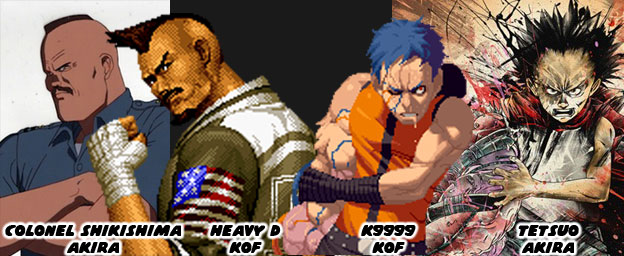
Manga and animé were very influential to the design of early fighting games. The team at Capcom were influenced by Buronson and Tetsuo Hara’s work on Hokuto No Ken / Fist of the North Star. The people at SNK were influenced by Katsuhiro Otomo’s science fiction masterpiece AKIRA. The people at SNK were so influenced by the book that it shaped the story of later KOF games. The entire plot revolving around clones and the paramilitary government organization N.E.S.T.S. was roughly pulled from the plot of AKIRA. Even the character K9999 from King of Fighters 2001 was eerily similar to Tetsuo, the antagonist in AKIRA. The likeness was so much so that publisher Kodansha took SNK to court and got them to remove any likeness of the character from future releases and official publications. I would argue that the imposing Heavy D, mohawk, square jaw and all was based on Colonel Shikishima from AKIRA as well. Thankfully SNK made him a dark-skinned character so the comparisons wouldn’t be as obvious. From that point forward the artists at SNK were taking very bold creative chances.


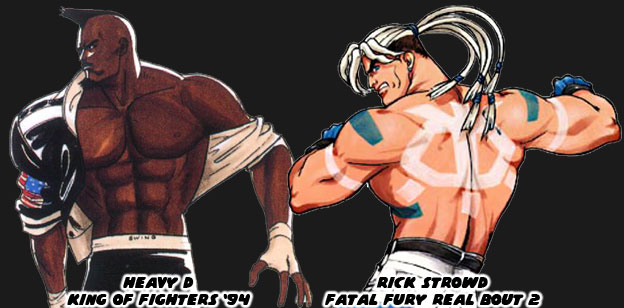
Heavy D started the trend of non-traditional boxers in the KOF universe. His street fashion, paired with his leather jacket and wild haircut made him look like an intimidating opponent. His was the type of look that audiences expected from SNK. It was their follow-up that was even more unique. One of the most unusual boxers in the SNK universe was Rick Strowd. He first appeared in Fatal Fury Real Bout 2 in 1998. I say he was unusual because of his appearance. He was as physically strong as any other character but that wasn’t unusual. He was actually a Native American character although he didn’t look like a typical one that we might have expected. Rick had pale skin, long white hair and bright paintings covering his body. His white pants and blue gloves were solid color choices, they matched the markings painted on his chest and back. He was not rooted in any actual native group, nor were his markings reflective of any tradition. The inverted skull painted on his back looked a bit too cartoonish for example. SNK was experimenting with different influences, different stylistic choices and different ways of presenting a traditional fighting art. They figured that they could shake things up by presenting a unique looking character and call him a Native. Their decision worked for the most part. From that point on the studio realized that boxing was not the only thing that American characters could represent.


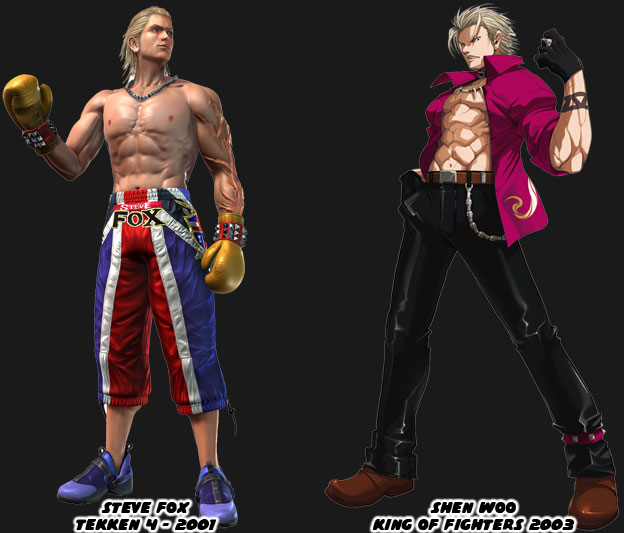
The other thing that the artists at SNK, and a few other Japanese studios, realized post Rick Strowd was that boxers did not all have to be big black guys. Two leaner blonde boxers made their marks after 2000. Namco introduced the fighting community to Steve Fox in Tekken 4. The British boxer had an athletic build and not too bulky. Most Tekken characters were nowhere near as swollen as the Capcom or SNK fighters. Fox had long slick blonde hair and most of his costumes in the series were street outfits. Even his “traditional” costume broke the mold. His boxing trunks were actually long training pants. His most unique element were the enormous scars covering his arm. He wasn’t sure how he got them or what their purpose was, making it an interesting side story for the character. Not to be outdone SNK dropped Shen Woo into KOF continuity in 2003. This blonde boxer was cut from the save cloth as Fox but his look and style were even more street. The Shanghai native was mostly a self-taught fighter, similar to Terry Bogard, and had gained a reputation as one of the most dangerous men in South China. Many of the tournament stars in the KOF series were young cool guys with street clothing so Woo fight right in. If the design had any failings it was that SNK had started relying on the street look too much. Prior to Woo the company had introduced a boxer that I would consider one of the best designs in the past 20 years. This character was named Rob Python from Buriki One.


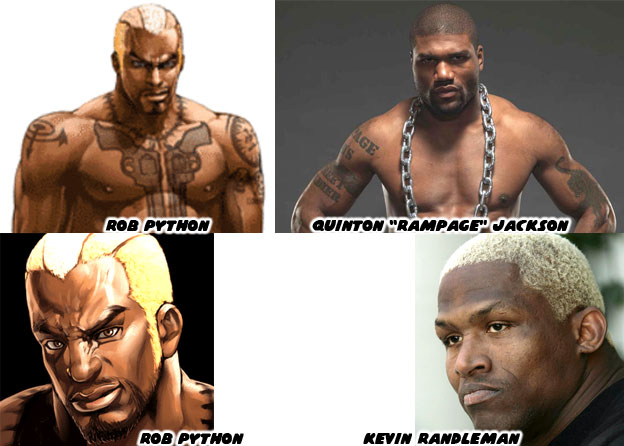
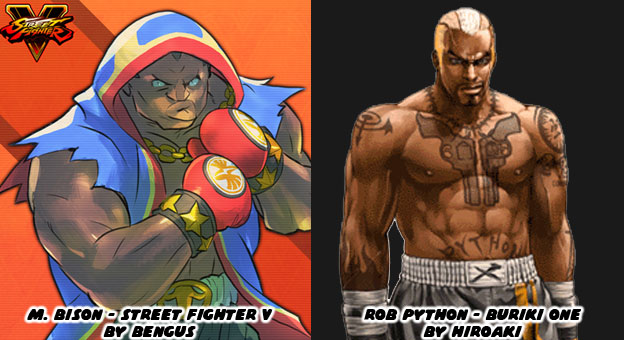
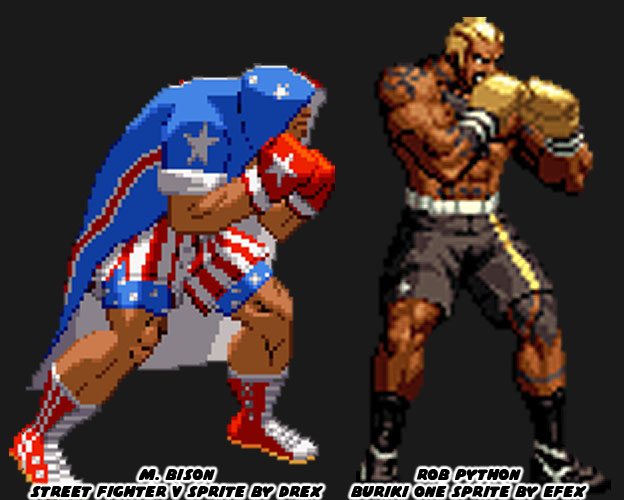
Python represented a break from tradition, he was reflective of the next-generation fighting black superstar. His look was inspired in part by actual MMA fighters Quinton “Rampage” Jackson and Kevin Randleman. They were wildly popular in Japanese tournaments. SNK knew that audiences had outgrown the clean-cut look of a young Tyson and the aging Foreman. They had been playing Neo Geo fighters for almost a decade and wanted new blood. The next boxer had to ooze personality and in the case of Python, he also had to ooze a sense of danger. He was among one of the most dangerous fighters in the Buriki One tournament and also the rival to Gai Tendo, the star of the game. Python was an understudy of Silber, whom I had mentioned previously on this series. Python’s tattoos were as much a part of his costume as his gloves or shorts were. No character before or after had ever looked as imposing. The enormous pair of Colt revolvers tattooed on his chest were meant to intimidate his opponents. It was assumed that he spent time in prison where he had learned of Silber. SNK, and in particular the talented artist Hiroaki, had changed the formula yet again. Python was not a fighting master hidden in plain sight, instead he was a killer masked as a boxer. It would take Capcom almost 17 years to reinvent the boxer by going full circle as well.


In 1991 M. Bison had pretty much set the standard that other boxers were compared against. There wasn’t a fighting game in the ‘90s that wasn’t compared to Street Fighter II. Every boxer was compared to Bison. His look had stagnated in the late ‘90s while SNK was committed to experimenting. Capcom finally conceded and created their own hidden master with Dudley in Street Fighter III (1997). The aristocratic boxer had a unique library of moves but long-time fans of Bison had a soft spot for tradition. Senior Capcom artist (and personal hero) Bengus was called in to work on the Street Fighter V (2016) designs. While he did not develop the original M. Bison, that was more likely AKIMAN and Shoei, Bengus was responsible for the new look. He wanted Bison to have the same big, brash personality but with an updated costume. The Capcom style of design was rooted in making traditional fighting archetypes. Their karate masters had to look like karate masters, their kung-fu masters had to look like kung-fu masters, and their boxers had to be boxers. Bengus went full-bore Americana with red white and blue trunks but then wrapped everything in a red, white and blue robe, with torn sleeves and gold jewelry to boot. The “Crazy Buffalo” now sported elements of the street, elements of real pro boxers and even cartoonish archetypes. He was still classic layered underneath modern accents.


This was not to take anything away from Rob Python and all of the work that SNK had done with boxers over the past 25+ years. Their fighters had been among the most unique, most colorful and most diverse ever assembled. I honestly wish that they would revisit their Buriki One cast for the future installments of the KOF series. With that said they still managed to break new ground. One of their most stylish boxers debuted in 2000, right on the heels of Python. The new fighter was a mysterious special agent named Vanessa. She had taken up boxing when her lover was killed. Like King she was a master hidden in plain site. Her pants and suspenders were a nice touch under her sleeveless shirt and tie. The look was very chic. It wasn’t the first time than SNK had explored the dangerous femme. Vice and Mature, the valets for early KOF sponsor Rugal Bernstein were assassins in disguise. Vanessa was a hero using a similar fashion aesthetic. The trio predated and were more than likely the inspiration behind Crimson Viper in Street Fighter IV.


The most recent boxer in KOF canon was a mix of traditional and modern. Nelson debuted in the King of Fighters XIV, also released in 2016. He was a dark-skinned Brazilian and up-and-coming phenom. The young fighter was involved in a hit and run leaving the gym one night. He lost an arm and his girlfriend was put into a coma. A secretive sponsor paid for his cybernetic replacement arm and saw him enter the KOF tournament. SNK embraced his back story and and incorporated the tire tread motif on his boxing gloves and workout gear. His scars were very bright and spread across his face and torso, giving him the look of someone with the skin disease vitiligo. While I think there may have been too many color choices and design elements placed on the character he worked within the series. Like Vanessa he was a progressive character. His appearance might have appealed to people with disabilities or those recovering from amputations. I would like to see how SNK builds on their library moving forward. Speaking of which, some of the more recent entries in the KOF universe were also a mixed bag of design choices. We’ll look at these in the next blog. As always if you enjoyed this blog and would like to sponsor me please visit my Patreon page and consider donating each month, even as little as $1 would help make better blogs and even podcasts!

 follow the Street Writer on Patreon!