Showing posts with label street fighter zero. Show all posts

Friday, December 27, 2024

Freeze frame, my poster collection, final part...

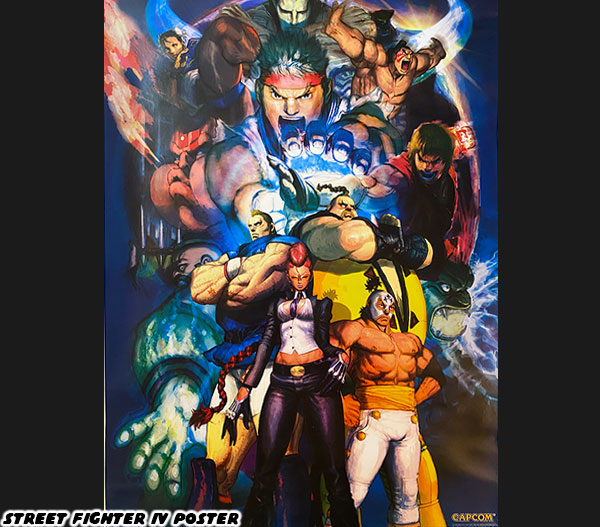
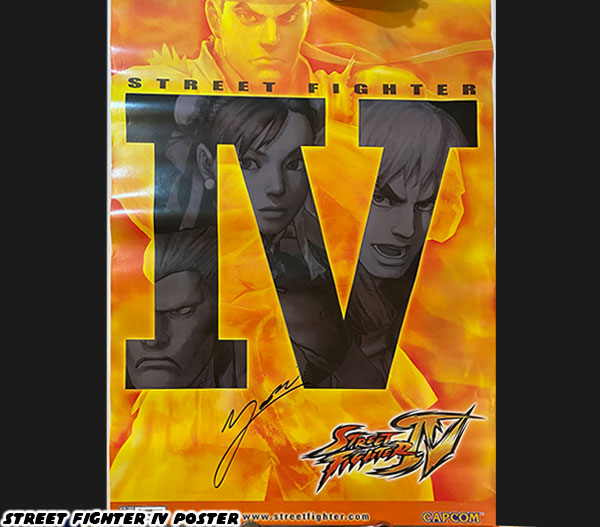
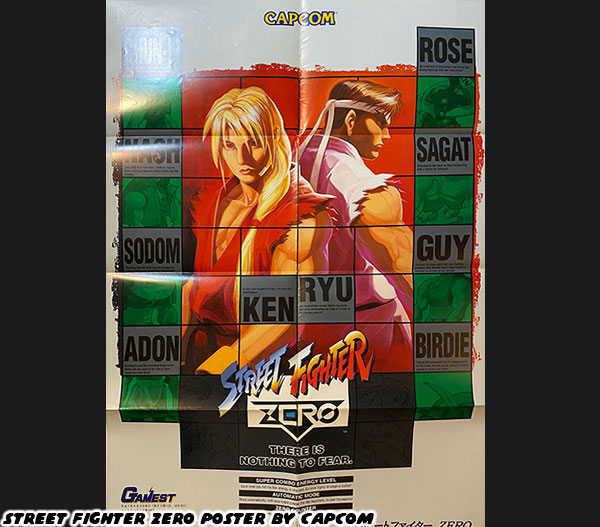
I had so many posters in my Capcom collection that I had to break them over several separate blogs. Here's a reminder for any Street Fighter, or fighting game fans in general. If you want to get into collecting the posters then try to track down the game guides from Japan. The gems in my collection came from Gamest. It was the premier arcade magazine through the '90s. When they published guides, which they called MOOKS after Magazine-Book they often included a poster. 

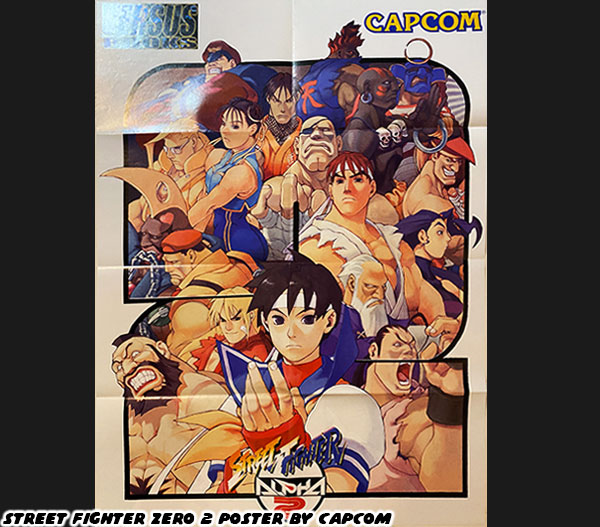
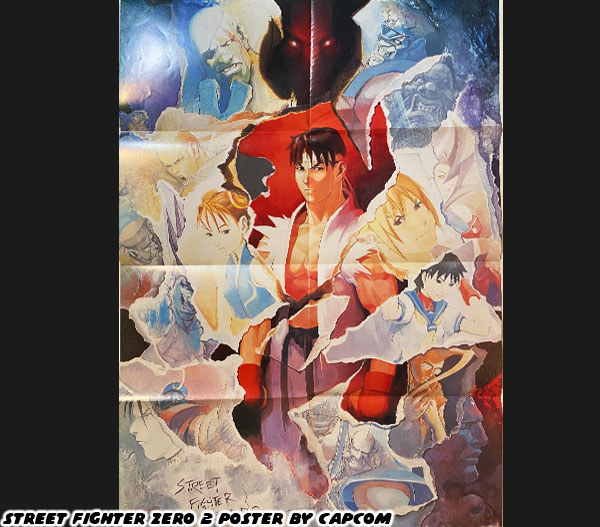
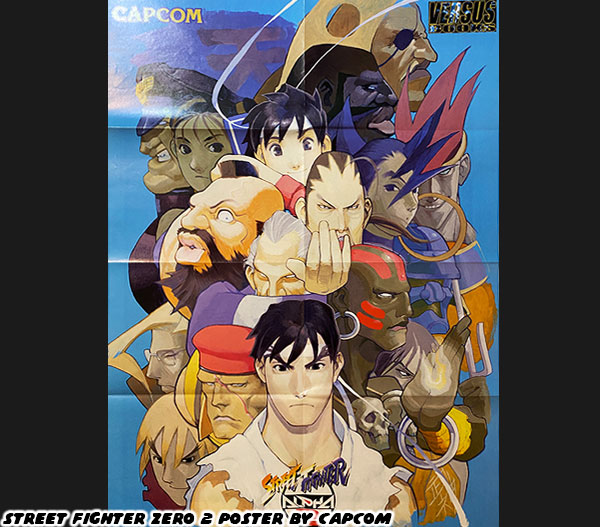
There would even be posters included in US game guides. The one for Street Fighter Zero / Alpha 2 by Versus Books for example was amazing. They printed a fantastic image on both sides, making it impossible to frame unless you had a second copy. 

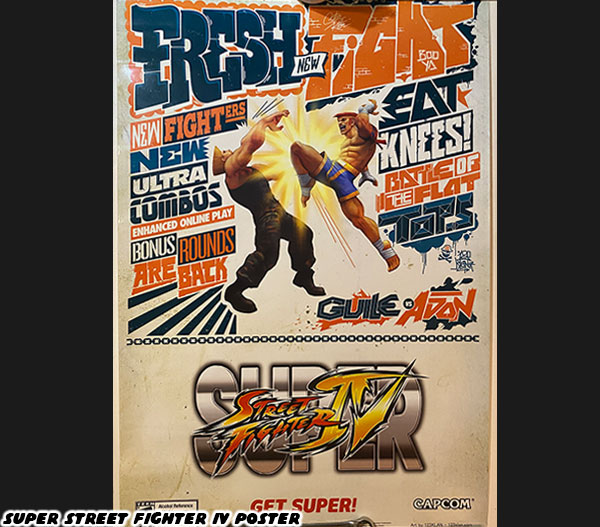
Some of the posters in my collection I got from events like the E3, the San Diego Comic Con, the Wondercon, and even live events. I cannot remember where I got the massive Super Street Fighter IV poster.

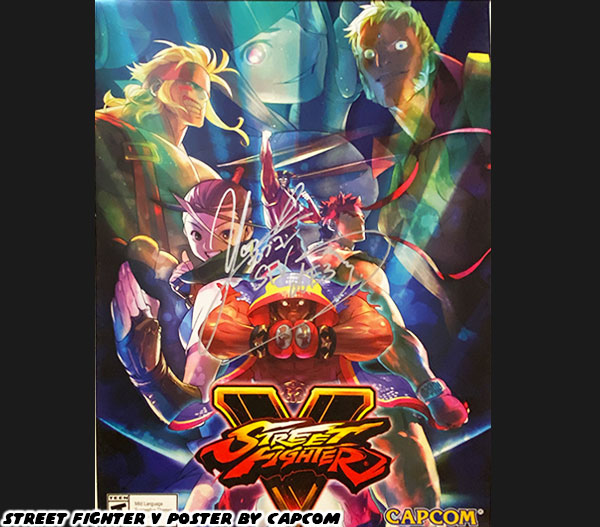
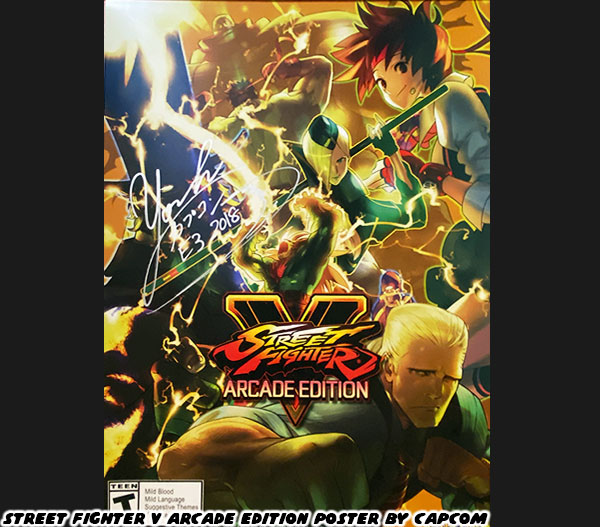
Bengus is, and will always be the GOAT. I was so hyped that he was doing the designs, and poster work for Street Fighter V. My goal before I die is to have an original sketch from the man.

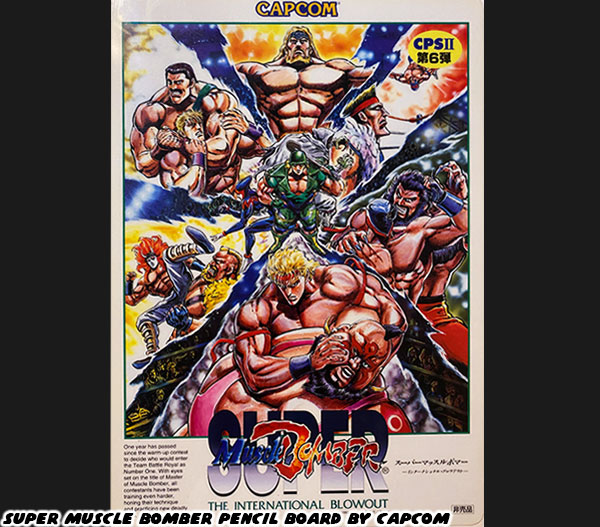
Not all of the rare items in my collection are posters. I am still on the hunt for a Super Muscle Bomber poster by Tetsuo Hara, the man that illustrated Hokuto No Ken / Fist of the North Star. He designed the wrestlers for Capcom, and did the advertising art as well.

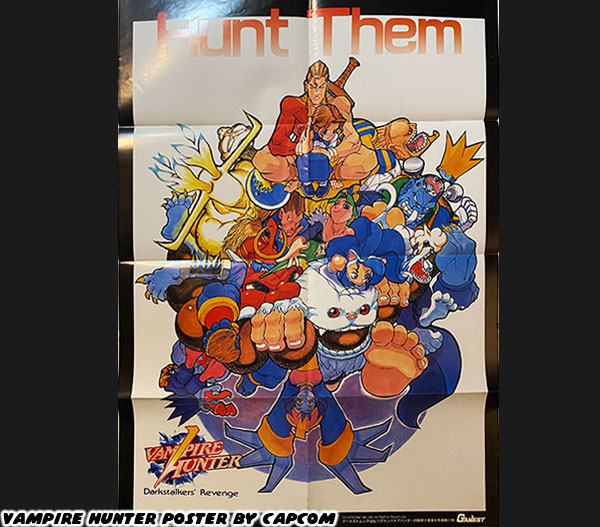
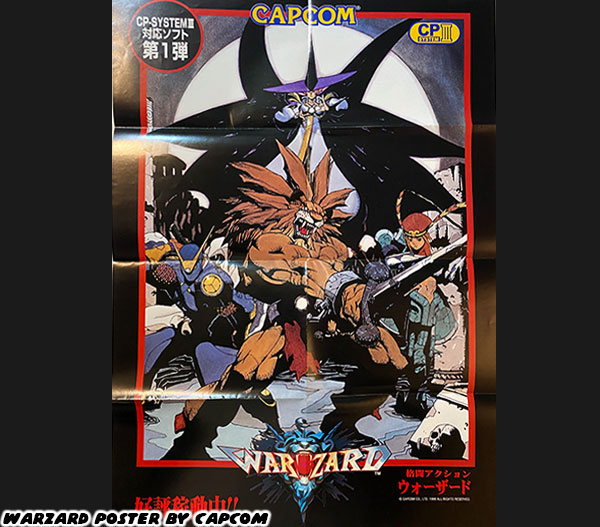
Fighting games of every kind mean the world to me. I needed to make sure that I had a Vampire / Darkstalkers poster in my collection. I had no idea that I would get my hands on one for Warzard / Red Earth. This is easily one of the rarest fighting games ever made.

Thank you for joining me on this journey through my poster collection. Many of which I forgot I had. One day I’d like to get most of them framed, and put them on display, even if I have to cycle through them. Were there any you enjoyed? I’d like to read about them in the comments section. As always if you would like to sponsor me please visit my Patreon page and consider donating each month, even as little as $1 would help make better blogs and even podcasts!
follow the Street Writer on Patreon!

Wednesday, December 25, 2024

Freeze frame, my poster collection, part 25...

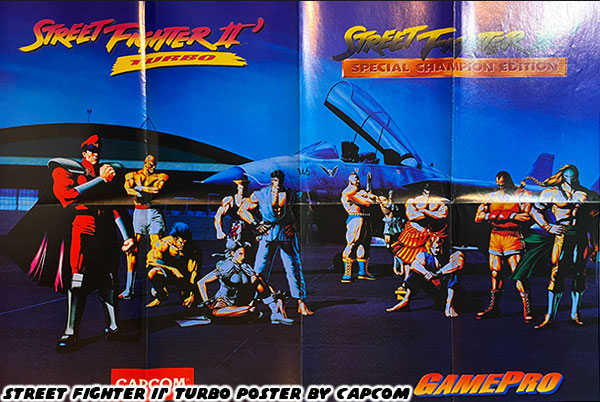
Merry Christmas to all my friends, and family. I didn't get too many goodies this year. I'm saving my money for taxes. Thankfully everyone over here had a good holiday season. I had so many posters in my Capcom collection that I had to break them over several separate blogs. Here's a reminder for any Street Fighter, or fighting game fans in general. If you want to get into collecting the posters then try to track down the game guides from Japan. The gems in my collection came from Gamest. It was the premier arcade magazine through the '90s. When they published guides, which they called MOOKS after Magazine-Book they often included a poster.

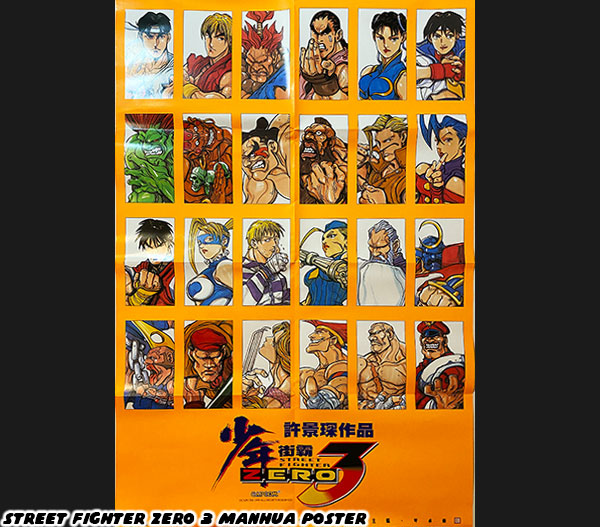
I have a lot of manhua or comics from Hong Kong. Some of them had gimmick covers, and even came with prizes like Charlie Nash's dog tags, and Chun-Li's spiked bracelet. This was the only poster that I was able to get when buying collections. 

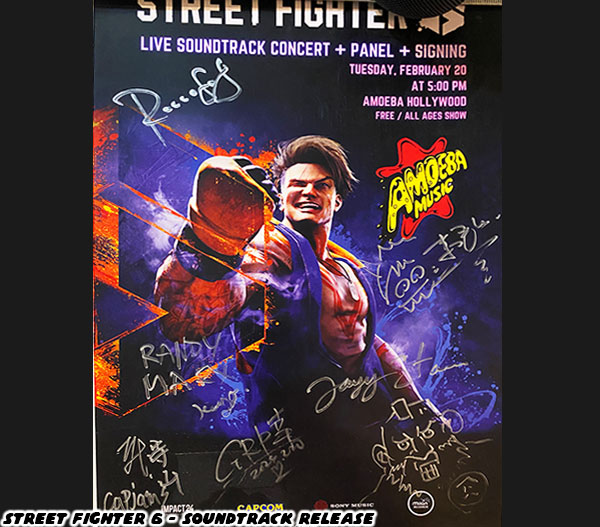
The story behind this autographed poster was so much fun. Read all about it here. 

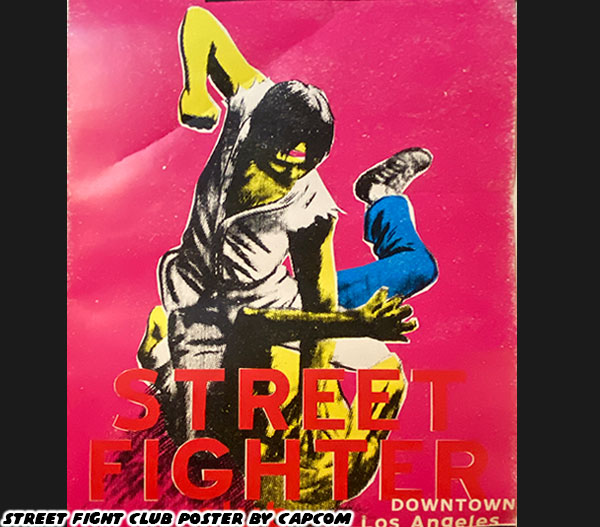
I can't believe this poster is 16 years old as of 2024. I had no idea if Capcom would ever do another Street Fight Club event. So I swiped two of the posters they had lining the walls on my way out of the event. I was grateful for the community then, and glad I still talk to a few members of the FGC on occasion. 

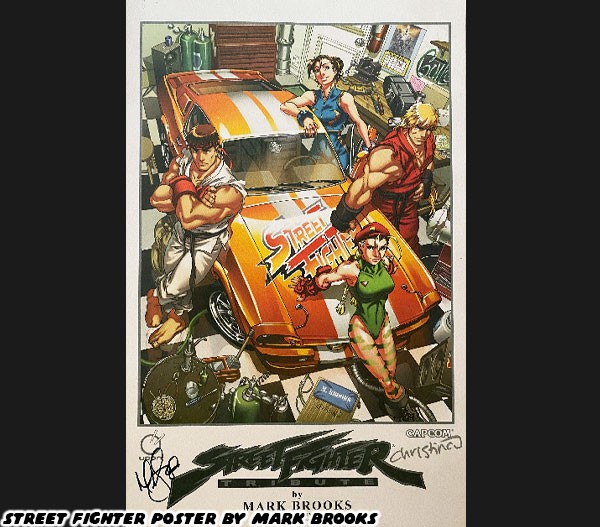
One of the first Street Fighter prints I ever got was at the San Fiego Comic Con. This illustration by Mark Brooks reminded us why the UDON books were succeeding when other game comics books were failing in the USA.

Thank you for joining me on this journey through my poster collection. Many of which I forgot I had. One day I’d like to get most of them framed, and put them on display, even if I have to cycle through them. Were there any you enjoyed? I’d like to read about them in the comments section. As always if you would like to sponsor me please visit my Patreon page and consider donating each month, even as little as $1 would help make better blogs and even podcasts!

follow the Street Writer on Patreon!

Monday, December 23, 2024

Freeze frame, my poster collection part 24...

Going back through my poster collection has been a present for my mental health. I had so many posters in my Capcom collection that I had to break them over several separate blogs. 

Here's a reminder for any Street Fighter, or fighting game fans in general. If you want to get into collecting the posters then try to track down the game guides from Japan. The gems in my collection came from Gamest. It was the premier arcade magazine through the '90s. When they published guides, which they called MOOKS after Magazine-Book they often included a poster. 

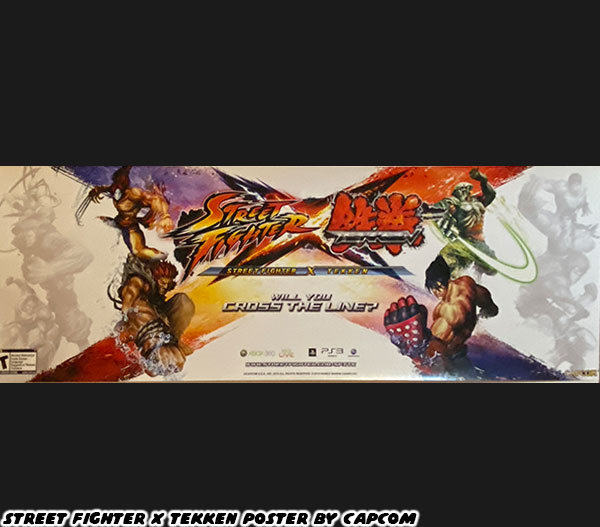
If I remember correctly many of the posters featured today I was able to get at the E3. You can see the autograph of Yoshinori Ono on several of them. Lord how I miss that convention.

BENGUS IS GOD.

The Street Fighter X Tekken event was another amazing show put together by Capcom. Lord I wish there were more of these. 

Thank you for joining me so far, I still have a few more posters to feature. Many of which I forgot I had. One day I’d like to get most of them framed, and put them on display, even if I have to cycle through them. Were there any you enjoyed? I’d like to read about them in the comments section. As always if you would like to sponsor me please visit my Patreon page and consider donating each month, even as little as $1 would help make better blogs and even podcasts!
follow the Street Writer on Patreon!

Thursday, June 28, 2018

30 years of Street Fighter: 30 years of Characters #3

For the 30th Anniversary of Street Fighter we've talked about Ryu, the hero of the series. We've  talked about Sagat, his great rival and the template for a memorable martial arts boss. We've even talked about Vega / The Dictator as a way of redefining what a final boss villain could be. With every fighting game that's ever been and that will ever be, there is one boss that is considered the gold standard. His name is Gouki. You might know him as Akuma. He represents the peak of the mountain, the ultimate fighter if ever one existed. Designed with a frightening appearance he has elements pulled from Asian mythology, including demons, the afterlife, and even lions. His origins are part of a larger narrative. He is the estranged brother of Gouken, the master of Ken and Ryu. He murdered his master and his brother in a fit of rage. He is as complex as he is intimidating. The best renditions of the character coming from the talented hand of Bengus, one of Capcom's best artists.


The origins of Gouki are obscure, owing more to an April Fool's prank rather than clever planning. The long defunct EGM magazine invented a character named Sheng Long who was supposedly the master of Ken and Ryu. He could only be fought under certain conditions. Capcom decided that they should introduce a version of this mythical fighter in one of the final Street Fighter II upgrades for the arcade. His debut in Super Street Fighter II became the stuff of legend. He only showed up at the end of the game if certain conditions were met. He absolutely destroyed Vega before the match started. His moves were far more impressive than Ken or Ryu's. He could throw fireballs while leaping, he could even teleport across the screen. He showed that even the best Street Fighter bosses were far beneath him. His popularity really took off as he was formally added as a playable character in the Street Fighter Zero series. He had his own story and ending to help explain his purpose in the universe. Gouki wasn't the main boss for every character in the Street Fighter universe and that made sense. He wanted to fight the best ever, and in particular see if his brother's students were any good. He was reclusive and you had to work hard to find him and even harder to beat him. He embodied every quality that made for a memorable final boss.


No studio was able to recreate what Capcom had stumbled into. After 30 years we have yet to see a boss character in the series that holds a candle to Gouki. Part of the reason why is because most developers, including the current Capcom stable, have a limited approach to their villain designs. They often create one-dimensional bosses, pure evil with amazing powers and no redeeming factors. Gouki was a murderer, that would never change, but he fought with his own code. He didn't kill everybody he ran into. He was obsessed with a worthy challenge. This was best explained in a drawing by Bengus. Gouki, selling fruit, probably by the side of the road. Earning some money to buy provisions and supplies. He could take whatever he wanted but he was no thief. He only became a monster when a fight was at stake. Gouki looked supernatural, he looked demonic but the thing that made him better than every boss character was his humanity. Gouki could have been a real person with a killer's instinct and that is truly frightening. It may be 30 years before Capcom ever creates a villain as memorable. What do you think about this character? Please let me know in the comments section. If you would like to sponsor me please visit my Patreon page and consider donating each month, even as little as $1 would help make better blogs and even podcasts!
follow the Street Writer on Patreon!

Tuesday, June 26, 2018

30 years of Street Fighter: 30 years of Characters #5


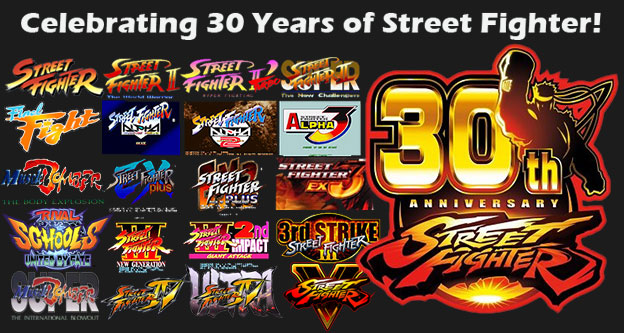
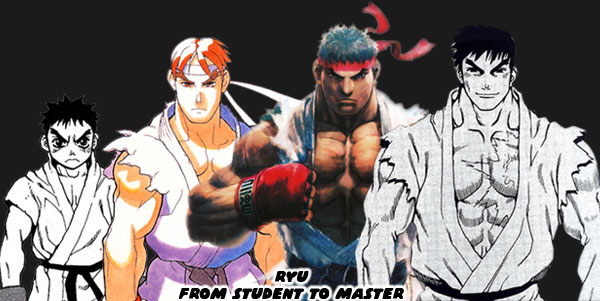
Street Fighter is nothing without its star. Where some people may see a bland, almost generic character, I see one of the great fighting game archetypes. Yesterday we celebrated Sagat, the villain of the original game and the strongest fighter in the world. Today we look at Ryu the young star of the series and arguably the new strongest fighter in the entire universe. I say arguably because we also have to consider the strength of his best friend Ken Masters, the cursed siblings Kairi and Shirase, and of course the wrestling legend Victor Ortega. Thirty years ago Ryu was a young red-haired kid wearing slippers and wandering from town to town in the first Street Fighter tournament. Today he is a grown man, old enough to mentor several young prodigies. He is still evolving and becoming more powerful. Perhaps he has yet to reach his full potential and that is a scary thought.


Ryu began his path while still a student, his master Gouken had just been murdered and Ryu felt that he still had many lessons to learn. The only way he could continue on his path was by fighting the best masters he could find. It didn't matter what school or style they studied. Nobody assumed that he would manage to beat Sagat for the recognition as world's best. The game series, manga, comic books, anime and movies that followed all expanded on the legend of Ryu. They gave us an insight to the character. Where were his passions, who were his friends, what did he find in each battle? Fans of the series watched the fighter literally grow up before their eyes. In 30 years we saw his greatest triumphs, his biggest defeats and the hardest lessons he could have ever learned. Those that were there from the beginning felt a particular connection to the man. His most beloved story arc was on of the crown jewels of the series, Street Fighter Zero / Alpha 2. When he almost became a villain.


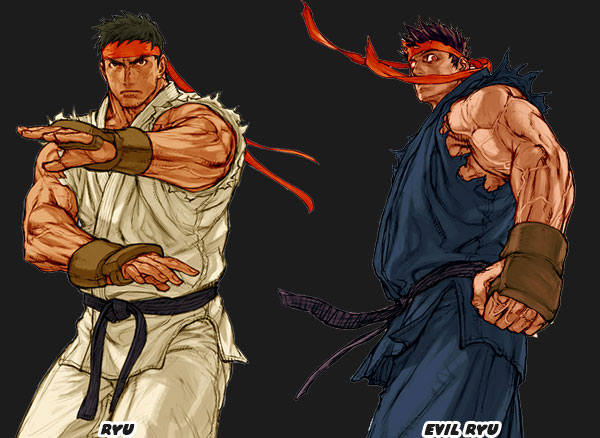
We discovered that the only reason Ryu was able to beat Sagat was because he fought with murderous intent. The dark hadou, an evil energy, had possessed the man and tried to turn him into a killer. Sagat survived thanks to his strength and size. But the revelation made Ryu more complex. His evil personae was just below the surface, he had to face it and defeat it if he wanted to remain in control of his destiny. It was an amazing period for the man and the series. Many fans like to revisit the character and ask themselves "what if?" The only thing we know for certain is how far Ryu has come. I look forward to growing old with the character. If you are a fan of Ryu let's hear your favorite version in the comments section. As always if you enjoyed this blog and would like to sponsor me please visit my Patreon page and consider donating each month, even as little as $1 would help make better blogs and even podcasts!
 follow the Street Writer on Patreon!

Wednesday, June 20, 2018

30 years of Street Fighter: 30 years of Characters #11


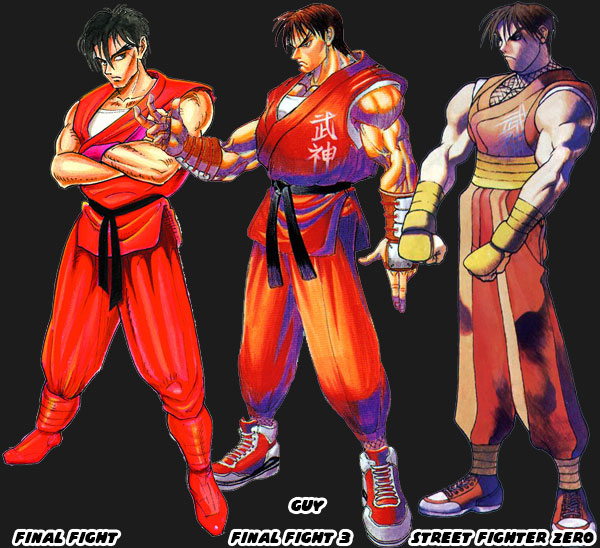
In the 30 years since Street Fighter was created there have been many characters that have come and gone. One of those that remains timeless is Guy. The origin of Guy and his friends was the stuff of legend. The short version goes like this; Street Fighter wasn't a smash hit when it debuted in 1987. Technos on the other hand had ruled arcades with their game Double Dragon. When Capcom decided to create a sequel for Street Fighter they went in the direction of making a better version of Double Dragon. With three playable characters named Guy, Cody and Haggar, who were supposed to replace Ryu and Ken as the stars of the game. This new brawler would be called Street Fighter '89. Arcade owners didn't like the shift from one-vs-one fighting game so Capcom relabeled it Final Fight and started working on Street Fighter II instead. Guy was supposed to replace Ryu, as Cody was supposed to replace Ken in the series. This time around the Japanese and US fighters would look and play completely different.


The DNA of Final Fight could be seen in SNK's Fatal Fury. Takashi Nishiyama and Hiroshi Matsumoto helped create the original Street Fighter and had a lot of notes about a radical new sequel. One which featured three main characters instead of two. They never got to start work on this new fighting game at Capcom. The duo left the studio and went to SNK where they developed the King of Fighters universe. The trio of characters they created turned out to be Terry Bogard, Andy Bogard and Joe Higashi. The reason why Guy worked in the lineup was the same as why Terry worked. These were the new fighting archetypes. Instead of looking like a character from an old martial arts movie they had cues from modern heroes. Guy looked like some sort of classical ninja until you noticed that he was wearing sneakers. It was a subtle but stylish upgrade to the classical look. It was Bruce Lee that we had to thank for this shift in thinking. Lee pulled the action movie genre into the future. He didn't have to play a master in ancient China when he could be a present-day hero. He could wear sneakers, sunglasses and ride a motorcycle while still being a realistic fighter.


Guy's red solid-color uniform and sneakers had the same level of coolness as Bruce Lee's yellow outfit in the movie Game of Death. It wasn't hard to imagine that he could easily dethrone Ryu as the main character in the Street Fighter universe. The fact that his lightning quick speed, leaping kicks and backhand punches easily made the transition from Final Fight in 1989 to Street Fighter Zero in 1995 showed that he was always ready for the spotlight. Throw in a mysterious master named Zeku that only recently became a playable character and you had all the makings of a Street Fighter Legend. Guy was just one of the many reasons why the series has lasted for 30 years. The game had now multiple generations following it and it showed no signs of slowing down. As always if you enjoyed this blog and would like to sponsor me please visit my Patreon page and consider donating each month, even as little as $1 would help make better blogs and even podcasts!
 follow the Street Writer on Patreon!

Friday, June 15, 2018

30 years of Street Fighter: 30 years of Characters #16


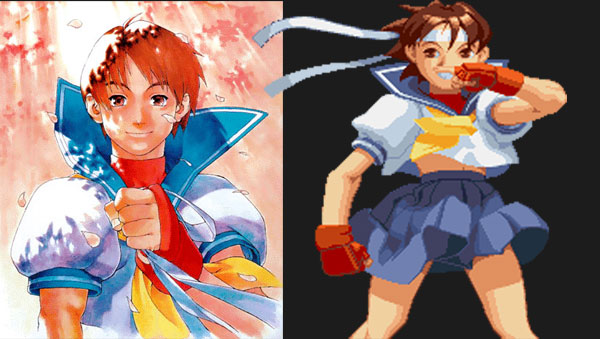
I think it's fair to say that Sakura stole the show when she debuted in Street Fighter Zero / Alpha 2 in 1996. Young female fighters were nothing new to the genre. I had mentioned previously that Cammy was the younger variation of Chun-Li but outside of Capcom the young female fighters were already established. Girls that practiced judo, taekwondo, kung-fu, fencing and other martial arts had been featured by rival studios in other games. So what was it that made Sakura a stand out character? Why was she worth celebrating on the 30th anniversary of the franchise? Sakura and Dan Hibiki were a sort of parody to the characters in the Art of Fighting series by SNK. Specifically Sakura was a call out to Yuri Sakazaki, the little sister of Ryo Sakazaki. Sakura was meant to be a type of little sister to Ryu. A cute character that had weaker versions of the main character's attacks. Only she turned out to be more important than just a clone.


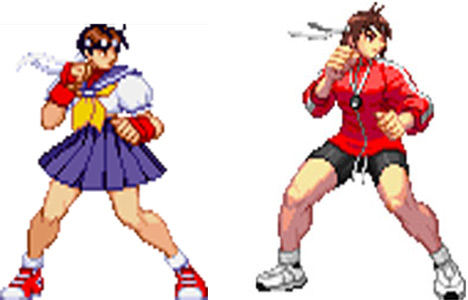
Sakura's look stood out right away. Before audiences even got a chance to play as the character we could tell there was something different about her. She was wearing a school uniform, not a martial arts costume. Characters that wore street clothing or non-traditional martial arts costumes were rare in the series. On closer inspection we could make out that her school uniform broke from tradition. Sakura wore big red punching gloves, and a long headband, just like her idol Ryu. She wore red bloomers and a red sports bra underneath her outfit to create an athletic undertone. She had a short, sporty haircut, instead of the usual long anime girl hairstyle. Her red sneakers helped ground her in the modern era and reflected her personality. Sakura was a spirited fighter yet still growing into adulthood. She perfectly captured the Street Fighter school of design. On first glance you got one idea of the type of character you were dealing with but on closer inspection every design cue told a story. She was not a typical schoolgirl, just like Ryu was not a typical karate guy.


Sakura was the next generation of Street Fighter. It was okay that she didn't wear a karate gi. It was okay if she wasn't as powerful as her heroes, this meant she had room to grow. Most important, it was okay that she was a girl from a middle-class family in Japan. The best fighters in the world came from every walk of life. They didn't have to dress like characters in a movie or comic book to be recognized as masters of the fighting arts. In fact those traditional figures had become campy. They belonged to the older school, the people that founded the Street Fighter Tournament. Sakura was the new face of the series and represented an overdue change in tone and design. I'm glad she got a chance to shine in the game series and especially manga series. I look forward to seeing this character grow and evolve over the next 30 years. As always if you enjoyed this blog and would like to sponsor me please visit my Patreon page and consider donating each month, even as little as $1 would help make better blogs and even podcasts!
 follow the Street Writer on Patreon!

Sunday, October 15, 2017

Zeku, the ninja spirit from the '70s finally returns!

Hello friends, welcome back to another quick character design breakdown. The latest Street Fighter V character has just been revealed. Many people had predicted this character based on the silhouette that was unveiled by Capcom many months ago. The unique hair really was what gave this character away. In case you didn’t know who I was talking about it was the ninja Zeku.


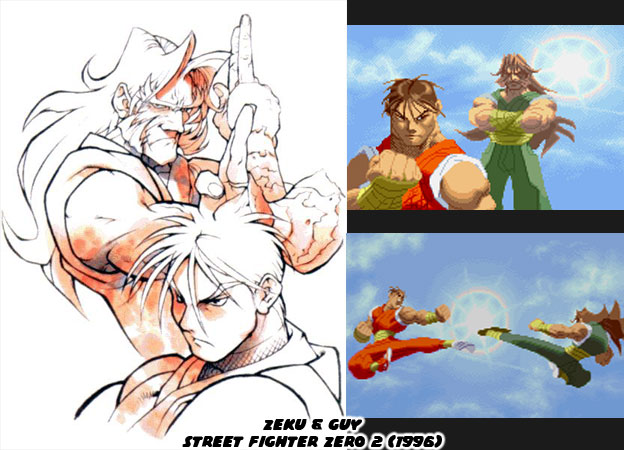
In canon Zeku was the master of Guy, one of the star characters in Final Fight. What made Zeku unique was that he was never a playable character in any previous game. In fact his appearance was very rare. Final Fight was an arcade hit and was ported to several different consoles. In 1993 it spawned a sequel for the Super Nintendo. At that point the only returning character was Haggar. Maki, another fighter from the same clan as Guy had joined his battle against the Mad Gear Gang. Then in 1996 a third Final Fight was released, including the return of Guy to the lineup. At about that time Capcom was also working on a follow up to Street Fighter Zero / Alpha. They had Final Fight on the mind and were going to retcon the events of Street Fighter, Street Fighter II and Final Fight in this new game. Street Fighter Zero 2 included Guy and Rolento from the Final Fight series as well as some Metro City-themes stages. It was at this point that Capcom introduced the world to Zeku.


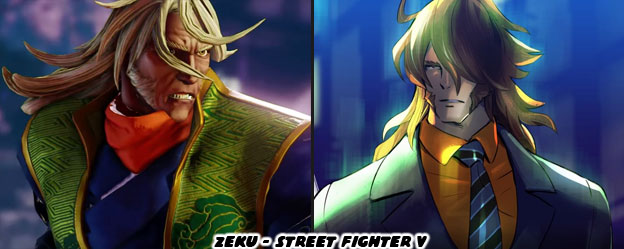
Zeku appeared very briefly in Guy’s ending. A sort of final showdown between the master and the student. This in addition to the official character art led a lot of Street Fighter fans to speculate that Zeku would soon be joining the lineup. Nobody thought that it would take Capcom 21 years to actually do this. Senior artist Bengus was responsible for his look. It was appropriate that Bengus would update the character for Street Fighter V. It’s funny that I should use the word update when what he did was actually keep the look decidedly “old-school.” Zeku was actually a nod to the characters and artists that influenced the Capcom designers from a young age.


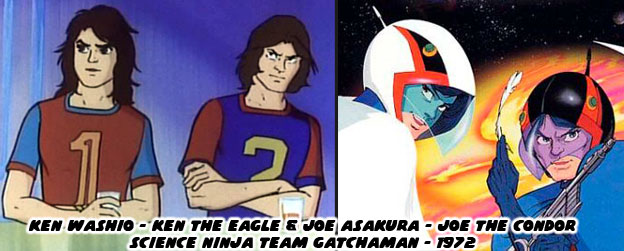
The long, wild, hair of Zeku had its origins in the “70s, when it was trendy for men to sport this look. One of the biggest hits of the time was Science Ninja team Gatchaman, a show from 1972 that was adapted for the USA as Battle of the Planets. The series worked for a number of reasons, not the least of which was that it was a unique blend of different elements. The stars looked like everyday people. They wore shirts and (bellbottom) jeans. They had long hair and sunglasses, making them easily the coolest animé characters of the era. Also the henshin, or transforming hero shows, were just starting to take off in Japan. This was one of the first animated shows to use that concept. It took a group of ordinary teens and turned them into costumed superheroes. What kid growing up didn’t want to be just like them? The Capcom designers were kids and young men during this era. Although Street Fighter is not filed with characters like Viewtiful Joe, the ‘70s aesthetic did leave an impression with many of the artists.


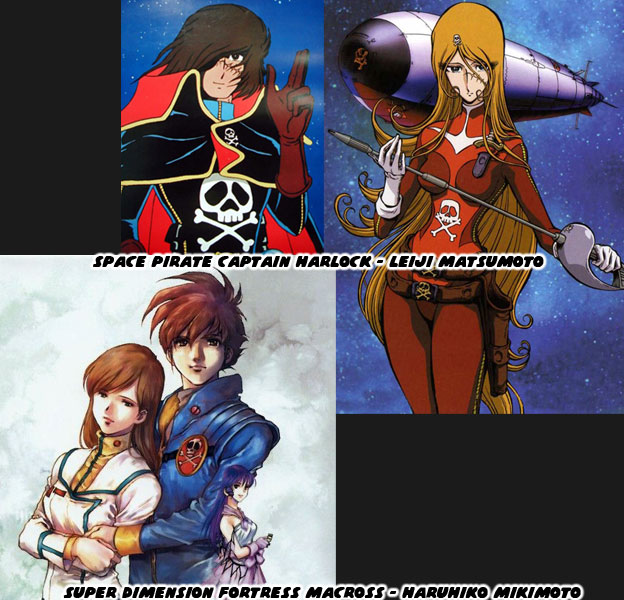
Animé was evolving by leaps and bounds during this era. When manga and animé first took off many designers were copying the style of Osamu Tezuka, considered The Godfather of animé. Gatchaman was pulling away from the Tezuka style, creator Tatsuo Yoshida wanted a more rebellious look for his heroes. This was a stark difference from his previous work on the clean-cut Speed Racer. This rebellious attitude and freeform character designs were combined with the popularity in science fiction. Leiji Matsumoto created the iconic Space Captain Harlock in 1977. His style was very different than his contemporaries, nobody created figures with the same super-exaggerated proportions. His men were almost as slender as his female characters, yet they all oozed personality. He introduced an entirely new aesthetic into animation. Figures had to push the envelope of body types. There could be squat fat men and lanky femmes on frame and somehow it worked. His anti-hero designs were the envy of all. His iconic skull and crossbones would somehow find their way into other manga and animé (and Mad Gear) as well. The next evolutionary step in character design was from an artist known as Haruhiko Mikimoto. The animé Super Dimension Fortress Macross was another sci-fi smash hit. The series began in 1982, and was among the great space operas. Mikimoto further distanced his work from his predecessors, but there were still connective tissue on the heroes and villains. The long hair, sideburns were trimmed but the rebellious spirit was still there.


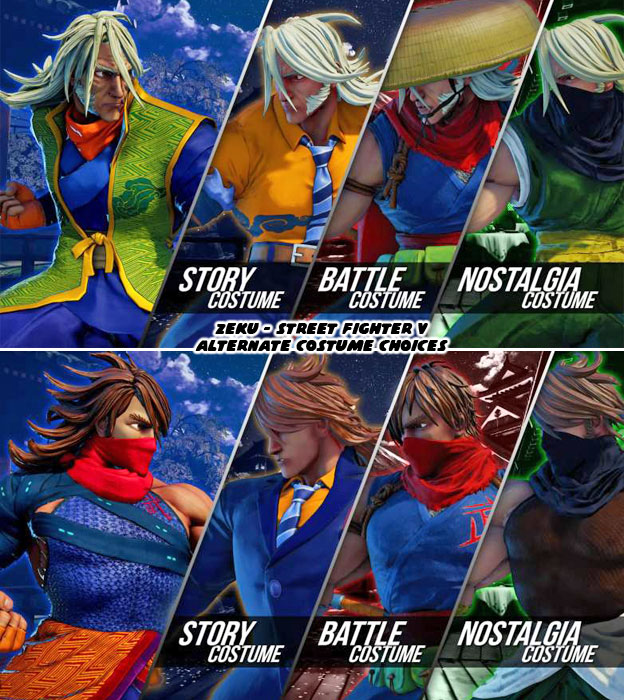
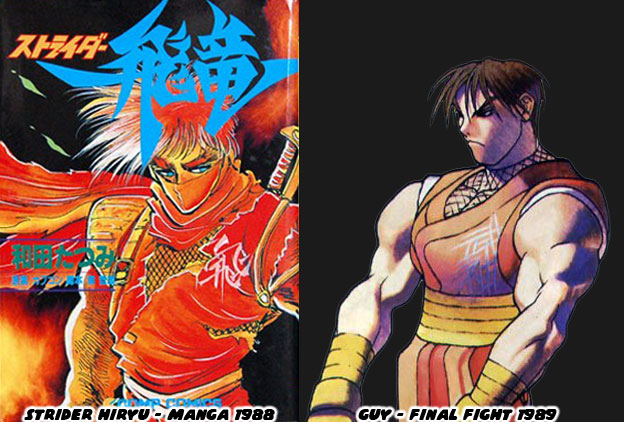
Zeku was a call-back to the hyper-cool heroes like Ken “the Eagle” Washio and Joe “the Condor” Asakura. It wasn’t enough that he carried over the hair, but his actual facial features, the angles on his jaw and eyes were very much spot-on with the Matsumoto aesthetic. Go back to the illustration at the top of the blog and take a closer look at the “young” version of Zeku. As it appears Zeku had two different sets of costumes. They look like his current older version and a set based on how he looked as a young man. It would make sense that 40 years ago Zeku was in his prime, he would have worn clothing and had hair that looked like he was right out of the ‘70s. Long time Capcom fans would be the first to spot the blue and red uniform that he sported was similar to that of Strider Hiryu as well. Here’s where things get very interesting for the ninja master.


Strider was a character designed by Tatsumi Wada and published by the artist collective Moto Kikaku in 1988. The manga was in collaboration with Capcom who wanted to have their own henshin superstar. The manga set the groundwork and the arcade release came out a year later. During the same development cycle Capcom was also working on Street Fighter ’89 / Final Fight. I believe that Guy was pulled from the same design notes that went into Strider. The comparisons between the two were more than skin deep. Strider was of course presented with a blue uniform but audiences didn’t know that with the original red-toned cover. The genius design element that grounded Guy in the present were his high-top sneakers. The genius design element that grounded Zeku in the past were his ‘70s haircut and fashion choices. If Capcom were to lay the foundation for a Strider reboot then this would be their chance. According to canon Strider Hiryu was born in 2030. At that time Guy would be as old as Zeku was now. And if Zeku were still alive he could have launched the organization fighting against global terrorism. That was of course if Capcom were looking at their long-term game strategy. Even if not Zeku was a welcome addition to the lineup. He certainly had more care given to his re-introduction than either Birdie or Abigail. As always if you enjoyed this blog and would like to sponsor me please visit my Patreon page and consider donating each month, even as little as $1 would help make better blogs and even podcasts!

 follow the Street Writer on Patreon!

Wednesday, December 30, 2015

The return of Rainbow Mika, did Capcom cross the line in Street Fighter V?

It is tough to talk about two of the females in Street Fighter V, one new and one returning, without bringing up the issue of pandering. Whether I start with Rainbow Mika or Laura Matsuda the problem that I have with the designs have already been echoed by many in the community. The developers at Capcom are really pushing the sex appeal first and foremost with the female characters introduced in the series. It's hard to ignore it when the camera angles and animations used to introduce the characters give audiences a butt or crotch shot or a peek at some gratuitous cleavage. Granted, in Street Fighter IV the pandering was even less classy. With a camera in an "upskirt" shot pointed right at Cammy's backside.
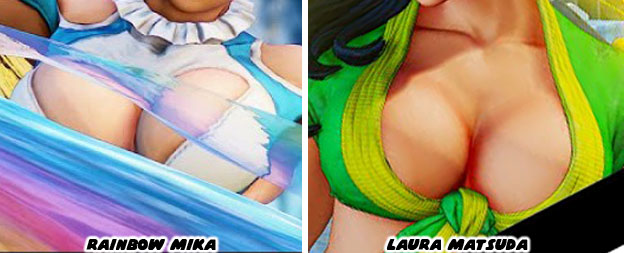

In the Rashid blog I mentioned that there were people that were offended that Capcom changed the angle on the shot in the game where R. Mika slaps her butt. Those against the edit said it was censorship, that it was social pressure forcing the team to change their creative vision. So games where women were objectified were okay as long as everyone knew from the get-go this was how they were all supposed to be presented? I mean why stop at R. Mika, why not put Karin Kanzuki in a bikini or Chun-Li in lingerie? Then again the Street Fighter IV and V developers had also been creating costume packs with more revealing costumes for female characters. The limited edition SFV box art in Japan even featured shirtless "sexy" Ryu with Chun-Li in a more skimpier dress. Was this focus on sexualizing the lead characters something that the original developers on Street Fighter, Street Fighter II or Street Fighter III had in mind? Or was this something that the newer developers were doing simply because they had the technology that allowed them to play dress up with the characters? I would be lying if I said this was a problem with Capcom. This was actually an industry-wide problem that Capcom managed to avoid for almost 30 years. The greatest Capcom designs always took the high road, it was the competition that tried to win over players by making female characters into objects of desire. Look at the female leads in Mortal Kombat or Killer Instinct to see what I'm getting at.

Some people would defend the legacy of the studio by saying that the men were sexualized as well; with bare bulging muscles and in the case of Zangief just a pair or tight trunks and not much else. Yet hyper-masculine, big beefy guys were not necessarily something that female audiences found attractive. Did we forget that Shaheen in Tekken was based on the male model Omar Borkan Al Gala? He was not exactly the bodybuilder type and didn't walk around shirtless. He wore suits and a keffiyeh yet still made women all over the world swoon. So what was it that made the Capcom series so controversial in recent years? It could be pinpointed to Street Fighter IV. That was when studio made sure to zoom in on certain body parts using the in-game camera. The developers began to experiment with "jiggle physics" and apply them liberally to female breasts and backsides. By doing this Capcom opened a door that they would never be able to close again.
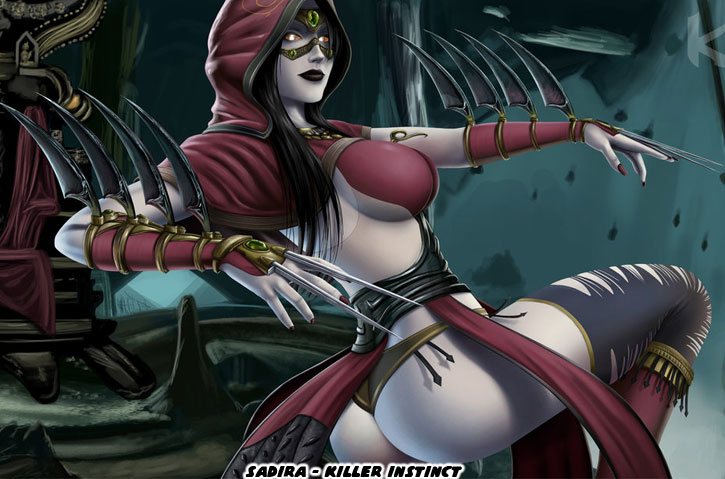
   

I would like to know if the pandering or in the case of the edits featuring Cammy and R. Mika, the so-called "censorship" were making the game better or worse. I'm talking about the fight mechanics, the gameplay, the balance, the roster. Did sexualizing make the game better or worse, or did it have zero impact on the game itself? This is an issue of perception and some people see no problem and some people are highly offended by any change. Some fans are more passionate about certain aspects of the game and did not take the bigger picture into consideration. As soon as Capcom changed the camera angle for Cammy's intro for example it made a part of the community mad. This portion of the community claimed censorship was ruining a game but they didn't question what would have caused the studio to rethink their approach. Was it a case of social justice warriors out for blood? Or was it a more practical business decision regarding the publisher and the ESRB? The company that put rating labels on the games had some influence on the direction of every game released in the USA.

Capcom was in the business of making money and they wanted to get the best rating possible. I wish we could say that Capcom was in the business of making fans happy but when you are a publicly traded company on the stock exchange happiness does not pay the bills. It's true of Disney, Sony, EA and the other big publishers. The feeling of the gamers did not matter as much as the money they poured into a franchise. Games in every genre can sell more units depending on what rating they receive. The more mature the rating statistically the less money they may make. The rating system itself, including for movies, I always thought was skewed. Violence, guns, blood and guts was not as high a priority as sex. We could have people shooting and killing on screen and receive a teen rating but if you put boobs or a butt on screen then it becomes mature-only. That is sort of the opposite in other countries where nudity is not seen as problem as much as violence is. But I digress. Did the community bother to think that Capcom was pushing the envelope with the ratings board and had to scale things back a little? Did they not consider that the ESRB could punish the game with an unfair rating? Some of the things that changed in Street Fighter V, the camera angles to be specific, had received the loudest complaints. Yet these things happened for only a split second in the game itself. The revealing costumes for R. Mika, Laura, Cammy and the other females did not change. So it seemed kind of like an arbitrary line to draw when it came to what some fans considered censorship. I want to know how much pandering was too much pandering? How much could Capcom show and still get a Teen rating? I tended to write about the inspirations behind a character and it would be impossible to separate culture from these designs. Let's start with women's pro wrestling.

Around the world there were various types of pro wrestling. There were the technical styles, the high-flying styles, the "hard" style where people barely pulled strikes. There were also the violent, hardcore and comedic schools of wrestling as well. In essence there was a style, if not an entire organization dedicated to the the audience. When it came to pro wrestling the more over-the-top a personality was, or the more fantastic the gimmick used was then the more likely they were to be embraced by fans. Of course we all know that the Undertaker from the WWE was not really a dead man or that his "brother" Kane was not a demon in disguise, but we have willing suspension of disbelief. This is what allowed the creative at WWE to sell us a story. It worked in every promotion around the world, no matter how real or absurd it was. Rainbow Mika came from the Japan, she reflected Puro, an abbreviated term for puroresu or pro wrestling. There were other schools including lucharesu, which was more Mexican-influenced lucha libre mixed with hard striking puro. To be precise R. Mika reflected the Joshi school of women's pro wrestling. Joshi was hard-hitting, high-flying, old school female wrestling. In the joshi promotions women had angles or gimmicks just like in the all-male promotions. Rainbow Mika was by design a very flamboyant character. The color of her hair, her high pigtails and the revealing cut of her costume were very far removed from the more conservative wrestlers. He friend and sometimes tag-team partner Yamato Nadeshiko was created more in tune with what Joshi wrestlers sometimes looked like. When you place the two side-by-side you can see how many artistic liberties Capcom took when creating the look of R. Mika.
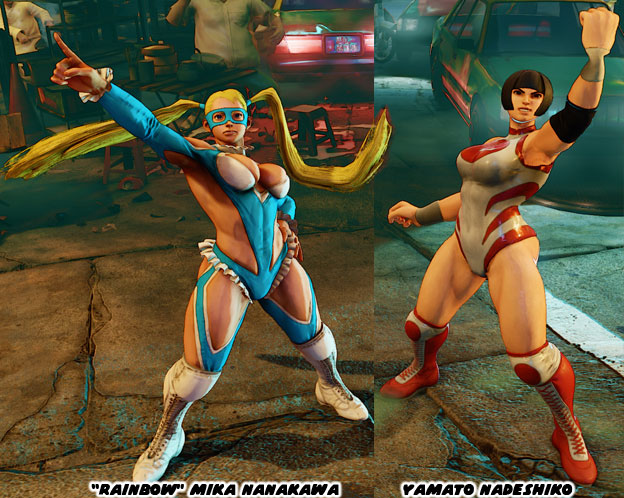

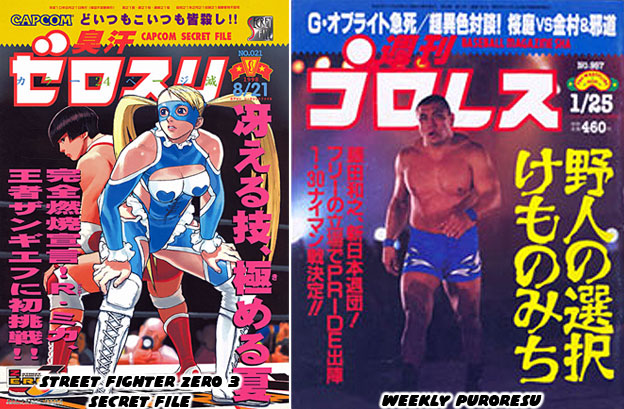
Rainbow Mika was created as a sort of parody of joshi wrestling. Introduced in Street Fighter Zero / Alpha 3 in 1998, the wrestler was obsessed with becoming the best. Even the promotional material for the game, the Capcom Secret File, was designed as a parody of the popular wrestling magazine Weekly Puro. This meant that the developers actually knew a little bit about what they were trying to lampoon. In between rounds R. Mika would practice her mic skills and challenge all the other Street Fighter legends. Players would see her dragging tractor tires, training under the cruel tutelage of Yoko Harmegeddon (one of the greatest wrestling names I've ever heard) between matches as well. She was as much of a zealot of her own abilities as Dan Hibiki was of his. There was simply no stopping the blonde bomber from achieving her goals, "The superstar of the ring… that's what I wanna be."

Designer Bengus, my favorite Capcom artist hands down, wanted her to be a silly character. She was someone that was even more flamboyant and exaggerated than any other wrestler in the game. A sort of counterpoint to Zangief. The female balance seemed to be a popular theme in SF Zero. Sakura was following in the footsteps of Ryu, while Karin was her "Ken" or friendly rival. Rose was a balance to the Dictator. Of all the female characters in the series Mika was the one working the hardest, the one with the most hustle. By comparison Sakura and Karin were slightly younger and had school and a private life they could fall back on but wrestling was all R. Mika had. If she didn't make it then what would become of her? It was kind of sad when you think about it. Now let's place this character in context. Where did she come from, what did she reflect and how did she fit into the Street Fighter universe?

   

Women's wrestling had long since been relegated to a side-card for the biggest wrestling promotions. Yet this was not to take anything away from the performers themselves. I would say that one of the best barbed wire death matches I ever saw was between two female wrestlers. Women trained just as hard as men, if not harder, in many promotions. They worked hard to build a character, to work an angle and get noticed. They had to do the double duty of trying to get to the top while still young and pretty. The window of opportunity for a female wrestler, just like a Hollywood actress, was very limited. You had to make your money while you were able. The next female lead was already being groomed as a teenager to dethrone the queen. The same didn't usually apply to men. Male stars could work into their late '40's and still earn a fantastic paycheck but you would be hard pressed to find women wrestling at that age. Rainbow Mika was a reflection of that culture, a reflection of society. She was on her way to the top and was doing what she could to get there. If this meant taking on the best male fighters in the Street Fighter tournament then so be it. Whether in sports or film this was a trend that happened in the real world. In Mexico there were wrestlers like Estrelita (Little Star) and in Japan wrestlers like Kana who were a handful that rose to the top. They had each worked nonstop for over a decade just to get noticed. They did not have a problem with showing off skin or wearing sexy costumes because that was what it took in the business to get people to pay attention. Once the audience was weatching it was their wrestling ability that made the fans stay in their seats. Female wrestlers were tremendous athletes. Anyone that doubts this should realize that some of the best female wrestlers had some brutal finishing moves that would be banned in the WWE. The stunning attacks and finishing moves from real life would also be turned into caricature by Bengus.
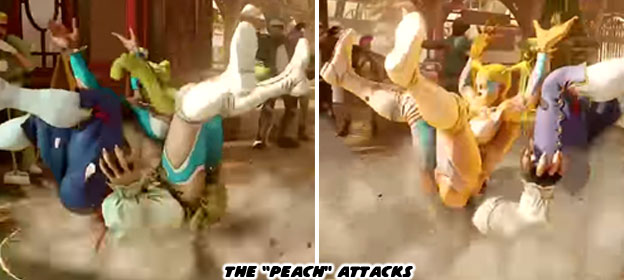
 

For Mika her butt, rather her "Peach" would be the main weapon. She had a number of chops, slams and elbow strikes but her peach stole the show. She would do flying hip attacks and stomp on her opponents with it. When she did some of her harder attacks, a headbutt or suplex for example she would sometimes fall on the floor and rub her head or backside in plain view of the camera. This was a sight gag that helped keep the presentation of the game a little more lighthearted. The tone of the Alpha / Zero series was much different than either Street Fighter IV or V. For one it was heavily influenced by the Street Fighter II animé movie. As such the characters were bright and colorful, they were also a bit younger than they were in SFII, moreover the animation style was more cartoonish. The proportions of the figures were greatly exaggerated. There was a huge difference in the body types and sizes between Zangief and Dhalsim in SF Zero for example, than there was in SF II. When the characters performed their special moves they were all brightly animated and had a very distinct style to them. There was some humor in the game, it was subtle but also silly, as if this was an animé show-turned-fighter. Things changed in Street Fighter IV when the graphics went from cartoon to realistic.
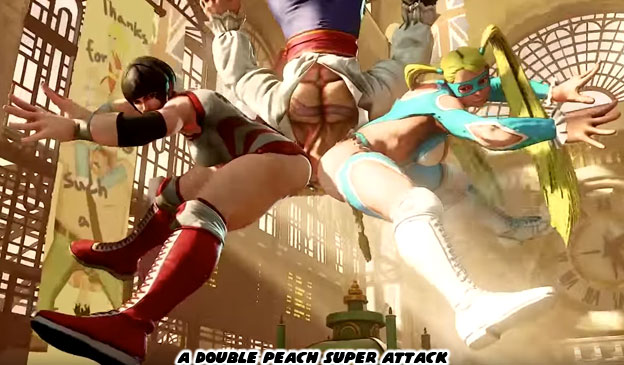
 

The attempt to interject humor in the moves and characters was awkward because there was so much depth to the the Unreal engine generated 3D models. For Rainbow Mika the peach attacks went from flat to visceral. Her costume was way more revealing in SF V than it was originally and I'm not mentioning how much more cleavage was revealed in this version. The ruffled skirt she wore, almost a tutu, originally did come down slightly over her backside. The cut of her costume was more like a swimsuit than a thong. In Street Fighter V he tutu was gone and Rainbow Mika's costume now had a frilly trim that left little to the imagination. The other thing that the developers discovered was that they could also add jiggle physics to her butt and breasts as well. Just as they did for Cammy, Chun-Li and the other women in IV they began pushing the boundaries for what they could put on screen. It wasn't a question of how the opponents would look like having R. Mika pounce on them, instead it became a question on how far could they stick a face of an opponent up her crotch or backside. Those that claim that the character and her moves didn't change between the games were only telling half the story. The presentation of all the characters went from flat, cartoonish sprites to highly detailed 3D models. There was a big difference between the way the two appeared on screen. Audiences were not necessarily being more sensitive to the characters or moves in Street Fighter V. The audience didn't change, the technology, the development team and their tastes changed the presentation of the character.

 

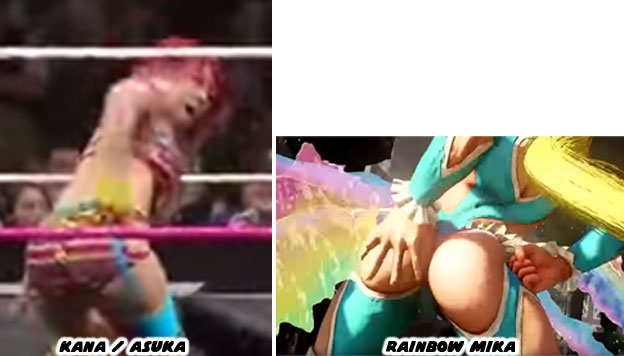
Again, R. Mika was not created in a vacuum. Her look, her moves came from somewhere. Believe it or not both male and female wrestlers have been using their backside as a weapon in the ring. Andre the Giant, Rikishi and the Great Muta were some of the legends from around the world that let their backsides do the talking. Kana (Asuka in the WWE) was one of the more recent female superstars to use the hip attack. She launched herself with reckless abandon butt-first into opponents. It's one of the harder strikes in her arsenal, no pun intended. She even taunted opponents with it. After flattening them with a hip attack Kana would slap her butt. Capcom couldn't even get this detail right. The hit came first, then the taunt.

Capcom betrayed the original purpose of the character. It was as if the designers stopped paying attention to the martial arts that inspired the cast, and missed the point of costumed female wrestlers as well. Kana was a sexy wrestler but not because she flew ass-first into opponents. She was confident, talented and fought with an assortment of strikes, grapples and submission holds that could even take out male opponents. Even if you didn't watch wrestling look carefully at her costume, or for that matter the costumes of the other top Joshi wrestlers in Japan. They were all flashy and tight. Kana wore multi-colored garter belts that matched her bra. Yet she didn't wear fishnet stockings or nylons with her garter, nor did she really show off her cleavage. Her costume created a sense that she was fighting in lingerie all while covered up. It was the illusion of sexiness without actually giving anything away. Her costume was also functional. She could probably wrestle in lingerie but that clothing wasn't designed to survive a fight. There would be way more wardrobe malfunctions if the joshi wrestlers were not careful about the cut and fabric in their costumes. If the designers at Capcom couldn't be bothered to understand these things, to grasp those concepts then what hope do future female characters have for the series?

Did Street Fighter need a female wrestler? Absolutely! Should the female wrestler have a sexy costume? Possibly! Should her breasts and butt be what was shown in her close-ups? No! It's as simple as that, The developers should spend less time trying out ways to sex up a female character and instead focus on making her a well-rounded fighter that balanced out the game and offered unique moves and abilities that no other character had. Chun-Li was by far the best female, and by any measure the best fighting game character ever designed (not named Gouki). At the same time Chun-Li was also the most modestly dressed female fighter ever created. Stop and think about that for a while. How was it that audiences found Chun-Li attractive when she wore tights and a leotard under her dress? How did taking scissors to Rainbow Mika's costume make the character or the game better? Let me know whether or not you were one of the people that was offended by Capcom's decision to "censor" the butt slap and why. As always if you enjoyed this blog and would like to sponsor me please visit my Patreon page and consider donating each month, even as little as $1 would help make better blogs and even podcasts!
 follow the Street Writer on Patreon!