Showing posts with label sakura. Show all posts

Friday, December 20, 2024

Freeze frame, my poster collection part 23...

I had so many posters in my Capcom collection that I had to break them over several separate blogs. Here's a reminder for any Street Fighter, or fighting game fans in general. If you want to get into collecting the posters then try to track down the game guides from Japan. The gems in my collection came from Gamest. It was the premier arcade magazine through the '90s. When they published guides, which they called MOOKS after Magazine-Book they often included a poster.

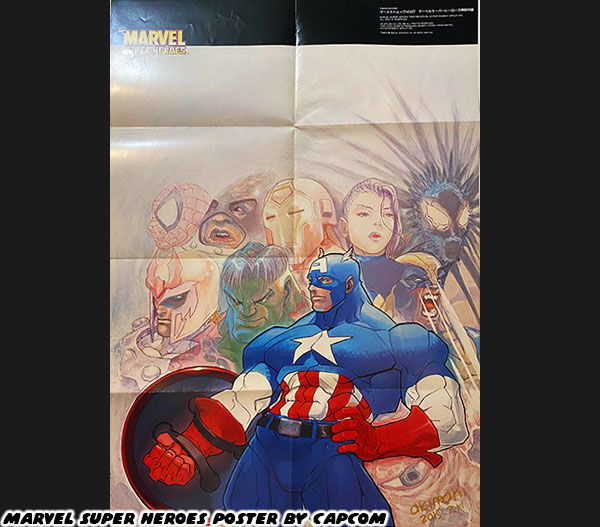
My Marvel Super Heroes poster was actually autographed by AKIMAN, the father of Chun-Li. It was at the San Diego Comic Con at the UDON Booth. The booth did not want to honor their commitment to one autograph per person who purchased one of the Capcom hardcovers. I said I didn't want the autograph on the book, but instead the poster. They pushed back until I talked to the managers, then they told the staff that it was okay, in fact that I could get the autograph on my book too for the hassle.

There are two Muscle Bomber posters that I know of. The first is the same as the main art that most people are familiar with. This version I had no idea existed until I saw it pop up in a Japanese auction site. I was super happy with it, and was one of the official drawings by Tetsuo Hara where I could see the details on the CWA belt that I used as reference for the actual belt I commissioned.

I don't believe in wall scrolls since they usually steal licensed art. I bought this Marvel vs Capcom 3 poster under false pretenses, I was told it was an official poster, and was sent a scroll instead. You just can't trust people online.

The Pocket Fighter is too cute, as is this classic illustration of Sakura.

Do you have a favorite game, or character that you wish you had a poster of? I’d like to read about them in the comments section. As always if you would like to sponsor me please visit my Patreon page and consider donating each month, even as little as $1 would help make better blogs and even podcasts!
follow the Street Writer on Patreon!

Friday, June 15, 2018

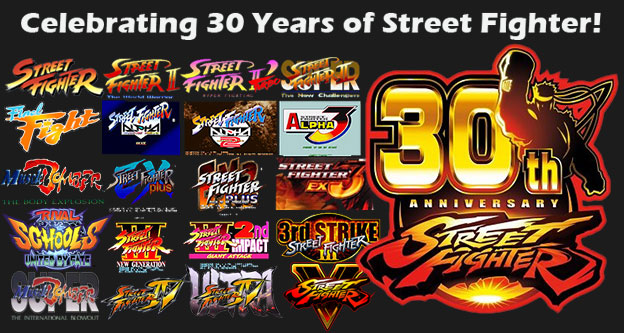
30 years of Street Fighter: 30 years of Characters #16


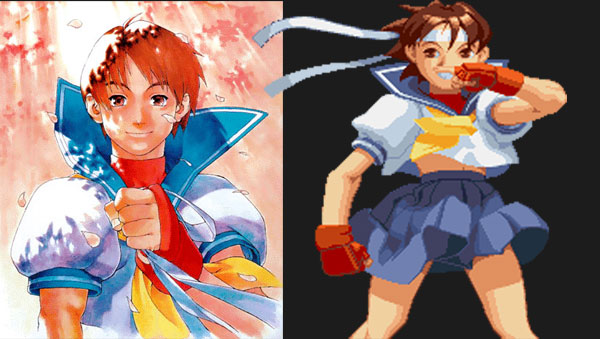
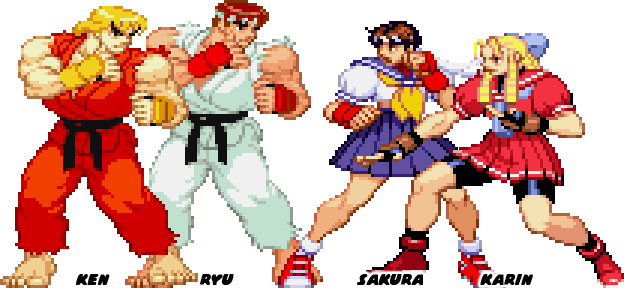
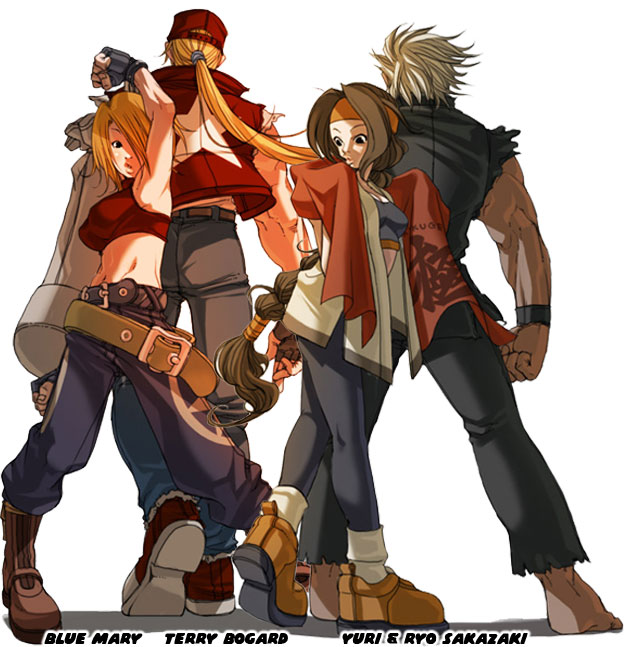
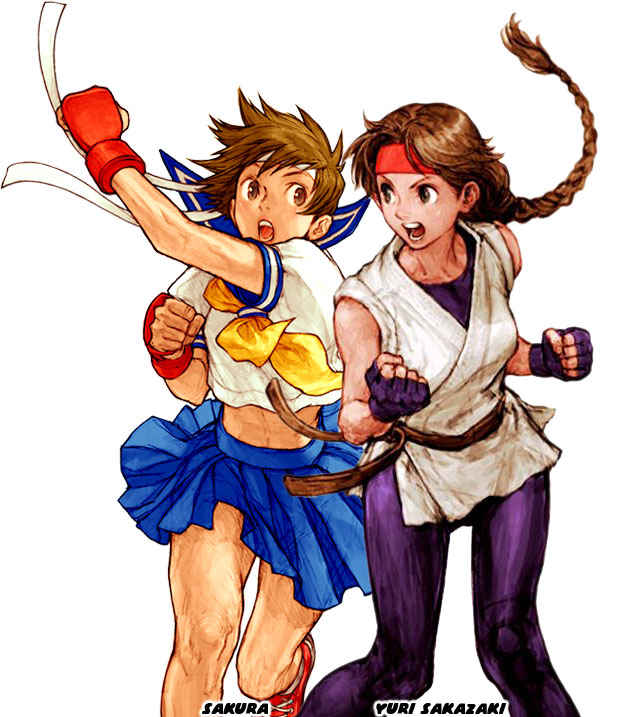
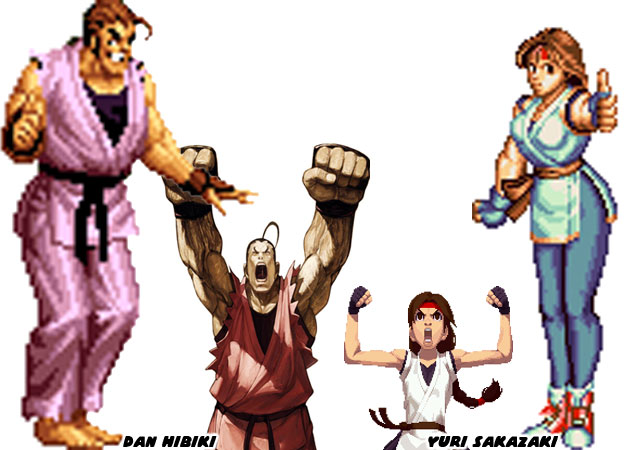
I think it's fair to say that Sakura stole the show when she debuted in Street Fighter Zero / Alpha 2 in 1996. Young female fighters were nothing new to the genre. I had mentioned previously that Cammy was the younger variation of Chun-Li but outside of Capcom the young female fighters were already established. Girls that practiced judo, taekwondo, kung-fu, fencing and other martial arts had been featured by rival studios in other games. So what was it that made Sakura a stand out character? Why was she worth celebrating on the 30th anniversary of the franchise? Sakura and Dan Hibiki were a sort of parody to the characters in the Art of Fighting series by SNK. Specifically Sakura was a call out to Yuri Sakazaki, the little sister of Ryo Sakazaki. Sakura was meant to be a type of little sister to Ryu. A cute character that had weaker versions of the main character's attacks. Only she turned out to be more important than just a clone.


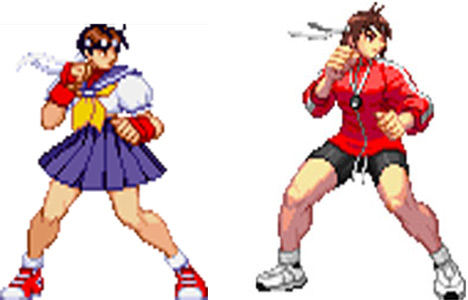
Sakura's look stood out right away. Before audiences even got a chance to play as the character we could tell there was something different about her. She was wearing a school uniform, not a martial arts costume. Characters that wore street clothing or non-traditional martial arts costumes were rare in the series. On closer inspection we could make out that her school uniform broke from tradition. Sakura wore big red punching gloves, and a long headband, just like her idol Ryu. She wore red bloomers and a red sports bra underneath her outfit to create an athletic undertone. She had a short, sporty haircut, instead of the usual long anime girl hairstyle. Her red sneakers helped ground her in the modern era and reflected her personality. Sakura was a spirited fighter yet still growing into adulthood. She perfectly captured the Street Fighter school of design. On first glance you got one idea of the type of character you were dealing with but on closer inspection every design cue told a story. She was not a typical schoolgirl, just like Ryu was not a typical karate guy.


Sakura was the next generation of Street Fighter. It was okay that she didn't wear a karate gi. It was okay if she wasn't as powerful as her heroes, this meant she had room to grow. Most important, it was okay that she was a girl from a middle-class family in Japan. The best fighters in the world came from every walk of life. They didn't have to dress like characters in a movie or comic book to be recognized as masters of the fighting arts. In fact those traditional figures had become campy. They belonged to the older school, the people that founded the Street Fighter Tournament. Sakura was the new face of the series and represented an overdue change in tone and design. I'm glad she got a chance to shine in the game series and especially manga series. I look forward to seeing this character grow and evolve over the next 30 years. As always if you enjoyed this blog and would like to sponsor me please visit my Patreon page and consider donating each month, even as little as $1 would help make better blogs and even podcasts!
 follow the Street Writer on Patreon!

Wednesday, August 23, 2017

How age and gender helped make the Street Fighter cast unique...

Working on the blogs about Ed in Street Fighter V and Allen Snider in the EX series I was reminded about how important legacy designs were to the creation of new fighting game characters. If you were a fan of fighting games, a budding designer or an artist looking for new ideas I wanted you to think about your favorite characters. Try to break them down and see what it was that you liked about them. Was it the moves and abilities they had? Was it their temperament and attitude? Did they have a unique costume or a unique look? Was it perhaps a combination of multiple elements? When exploring the details that went into making Ed I challenged the readers to try to do the same thing. Take any two favorite characters from the Street Fighter, or any fighting game series, and try to combine their design elements. Or take an existing character and try to make a young version of them, for bonus points try to change the sex or ethnicity of the character. How would they appear when compared to the rest of the cast? If a new character was done well then most people didn't notice these elements. For example Juri from Street Fighter IV was based very much on the elements that created Chun-Li. The costume, looks and moves of Juri and Chun-Li were very complimentary. This was no accident. Almost 10 years ago I wrote about the symmetry of Street Fighter.


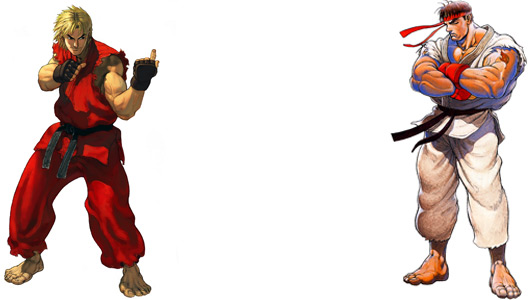
I said that one of the reasons Street Fighter II became an iconic game was because of how the characters were balanced. I'm not talking about how the fighting mechanics were balanced, but instead how each of the main characters had a sort of visual rival. It didn't matter if it was a friendly rival or an arch rival. Ken had Ryu, this was a literal balance, but Ryu also had Sagat, which was an asymmetrical balance. Having two main stars in the game created a trend that would be used by other studios. Ryo and Robert in the Art of Fighting, Akira and Jacky in Virtua Fighter, Haohmaru and Genjuro from Samurai Spirits were other examples of balanced main characters. There was something that the team at Capcom added to make the lineup more unique in the Street Fighter Zero / Alpha series. They weren't afraid to play with the roles and genders as well. Sakura was very much a girl version of Ryu. She had her own rival with Karen, who was like a girl version of Ken. These rules also applied to villains.


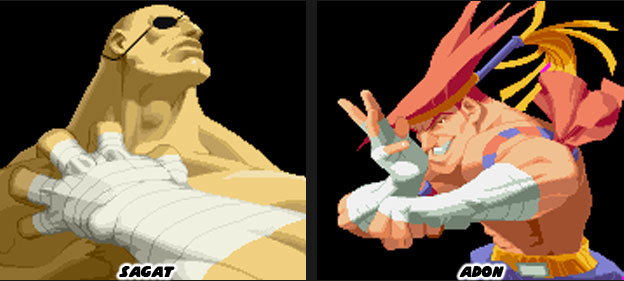
Having a younger rival was an excellent way to expand a character library. Sakura for example wanted to become a great fighter like the person she idolized. She trained very hard and even dressed a little bit like Ryu, with a similar headband. Then there were young rivals like Adon who wanted to dethrone their mentor. Ed was similar in this regard. People in Shadowlaw fought their way to the top. The four generals in the organization represented the most dangerous fighters in the universe. M. Bison the Boxer, Balrog the Claw Assassin and Sagat the Muay Thai champion were brutal opponents. Their boss Vega / the Dictator was absolutely ruthless. If Ed hoped to remain in their presence then he would have to surpass them. In his ending in Street Fighter V it is suggested that he might organize his own group to take over Shadowlaw. This wasn't the first time that a young character was created with the intent to replace and established fighter. In the early stages of Street Fighter III development the people at Capcom looked at only having Ken and Ryu return. They enjoyed the success of the World Warriors introduced in Street Fighter II. So they wanted to create a new cast with similar archetypes.


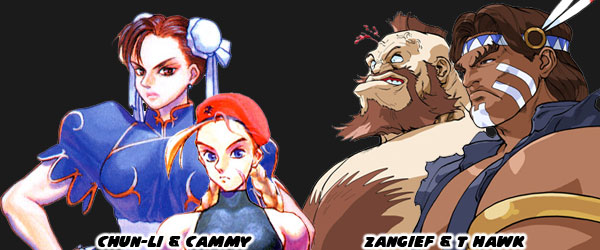
Two of the characters that were far along in the design process were Cammy and T. Hawk. They were going to be the updated version of Chun-Li and Zangief respectively. Plans for Street Fighter III were scrapped and these new figures were introduced in the upgrade called Super Street Fighter II: The New Challengers. The team at Capcom did a good job of recreating the archetypes without making these new characters look exactly the same as the veterans. Chun-Li was a special agent for Interpol. Her Chinese heritage was reflected in her costume. Cammy was a soldier working for Delta Red, her uniform looked more militaristic. Zangief was a powerful figure with some hard hitting slams. He was a Russian fighting for the pride of his homeland. T. Hawk was a native character, younger and bigger with equally powerful slams and protective of his reservation. By making the new fighters slightly younger it meant that they might be brought back in sequels, along with Ken and Ryu as older, more mature fighters. The thing about this school of design was that it worked almost as well when introducing older characters into the series.


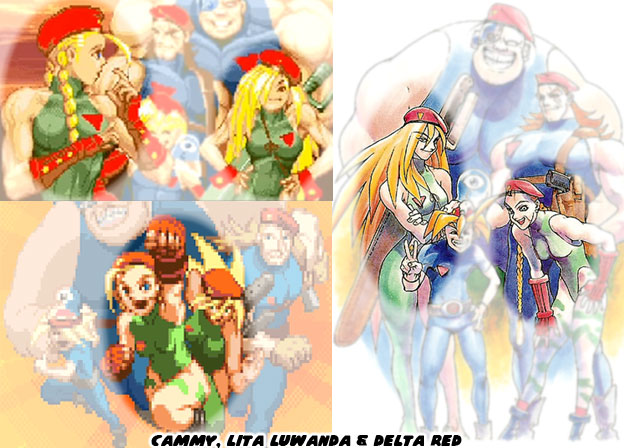
When planning out Cammy the studio wanted her team to be as unique. One of the members, Lita Luwanda, was a weapons expert. She also had long blonde hair, a green leotard and the trademark red beret. She could easily be mistaken for Cammy's older sister. The style of this character complimented the other fighters very well. She could have popped up instead of Cammy in a Street Fighter sequel and I think audiences would have enjoyed her and the massive sword she used. A designer could push the age of the character to the far end and still find a fit with the series. Gen and Oro were elderly fighters that worked well in their respective appearances in Street Fighter Zero and Street Fighter III. Gouken, the elder master of Ken and Ryu had been written about for years but had only appeared as recent as Street Fighter IV in 2008.


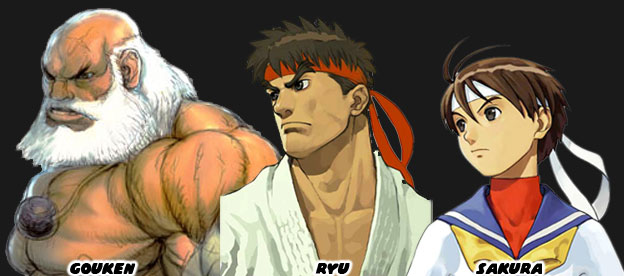
Gouken, Ryu and Sakura had a similar form of fighting but the differences between the three were very profound. If you are designing characters for a story, game or comic look carefully at how Capcom distinguished the trio. Gouken was at the peak of his abilities, every move that he had oozed power. He had techniques that were not yet known to Ryu or Sakura. He could perform the famous fireball attack with one hand, showing how much more advanced he was than the younger stars. Sakura was in the early stages of her abilities. She couldn't yet perform a proper hurricane kick so she would spin on her sneakers across the floor. Her fireball lacked the speed and range of the old master. Ryu was closer in terms of moves and abilities to Gouken than Sakura. Although the three had similar techniques, they all employed different strategies in the game. If you are thinking of designing your own fighters remember that characters can be from the same school but they should not all play the same. Gouken, Ryu and Sakura played as uniquely as they looked.


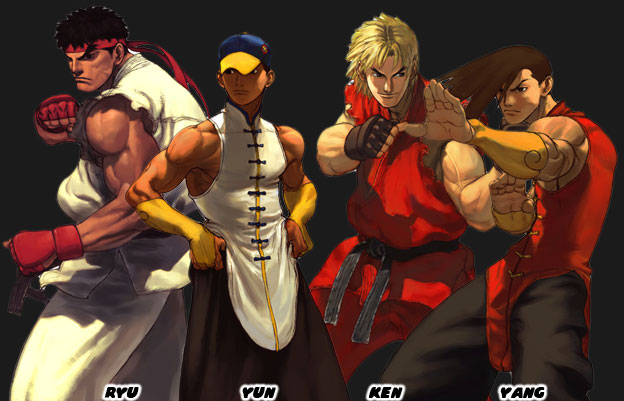
When development got started on an actual Street Fighter III Producer Tomoshi Sadamoto and Designers Yasuhiro Seto, Tomonori Ohmura and Obata Shinichiro were very mindful of the things that went into the creation of the original Street Fighter and Street Fighter II. They decided that only Ken and Ryu should return and there would be a new story and new main villain. The duo were joined by a new library of fighters and styles. Dubbed the "New Generation" these fighters were not necessarily based on previous characters but there were some similarities to them. The new heavyweight, Alex, was a hybrid fighter, with both strikes and grapples in his arsenal, similar to Adon and Birdie. Necro had stretchy limbs and electrical attacks, similar to Blanka and Dhalsim. Hugo was originally planned as the super-heavyweight, the Zangief of the game, but his sprites weren't ready until a few months after the game debuted. The two characters that were most similar were the brothers Yun and Yang. In design and temperament they were like a young Ken and Ryu. They even had a familiar red and white color scheme. If the developers made one mistake it was in having the moves of Yun and Yang be too similar, making them redundant. It took Capcom plenty of sequels to make the library of moves between Ken and Ryu unique. They forgot this while planning out Yun and Yang, and as such they didn’t take off as well as the studio had hoped.


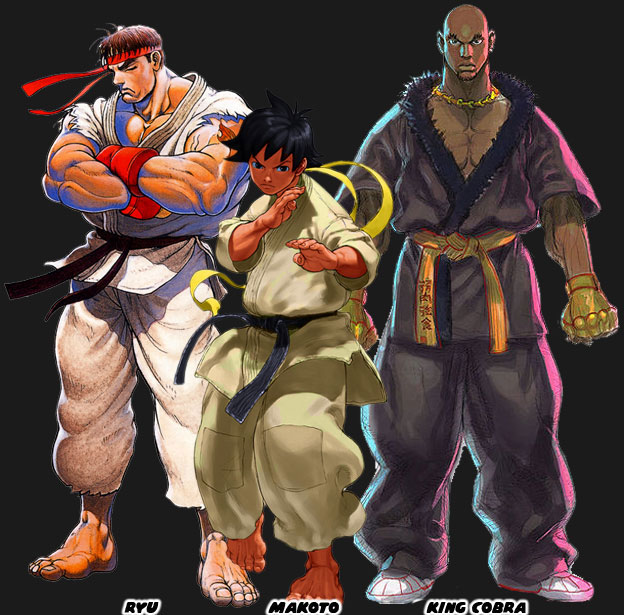
Capcom didn't always get the designs perfect the first time they were released but they quickly adapted. Well, at least they used to. For a long while every time they put a karate character in the game they played similarly to Ken and Ryu. Making fighters like Gouki, Sakura, Dan, Sean, Kairi, Allen Snider and Gouken were far more redundant than Yun & Yang. In fact this group of karate fighters were dubbed "Shotoclones" by the fighting game community. Yet the designers went back and challenged themselves to rethink the karate form. They incorporated the elements of an established character and then applied them to a younger fighter. Not only that, they considered changing the sex and ethnicity of the characters as well. They even gave these characters a unique form of karate. The final version of Street Fighter III, called 3rd Strike, Capcom expanded the library again. Of the new characters Makoto was a strong, young female, but she also had a new form of karate. She did not play like Ryu, and did not use the same strategies. Her attacks were amazing and they all worked well in the context of the series.


Capcom reminded us that no two styles, even from the same school, had to play the same. Makoto could never be considered another shotoclone. Even the unused design for the King / Black Cobra had a uniqe version of karate/kung-fu. These lessons had worked in previous games. No two giants had to play the same, like Zangief and T. Hawk. No two Muay Thai specialists had to fight the same, like Adon and Sagat. All of the archetypes were flexible. If you were a designer and couldn't think of where to take a character or style then think about how Capcom faced this challenge. If you were having a problem with your current design, think about making your fighter very young or extremely old. How would this affect the way they moved, animated or performed? If the design was found lacking think about changing the color the skin, or think about changing the gender of the character. Take a new approach to the archetype and you might end up with something great. Was there a character that you thought was well done? Could you spot the influences in their design? I'd like to read about it in the comments. As always if you enjoyed this blog and would like to sponsor me please visit my Patreon page and consider donating each month, even as little as $1 would help make better blogs and even podcasts!

 follow the Street Writer on Patreon!

Thursday, September 22, 2016

Some of my favorite Street Fighter collectibles, part 1...

Howdy friends and visitors. I apologize for the lack of updates. I was working on a new series when my computer crashed. I was in the process of gathering images and history for a few projects actually. It was the reason I had started a Patreon to help me raise some money. I knew the days of my computer were numbered so I wanted to get a back up as well as new system. Unfortunately it died before I could do either. I am saving up my money to get a new computer and hopefully salvage the data on my old hard drive. Once I am up and running I may actually be able to put together podcasts and even videos a little bit faster, that is the goal after all! I was saving some of the text and image links on my email for those future projects just in case. This way I didn't have to start from scratch when I got a new computer. The next few posts might be a little short, I hope you understand.

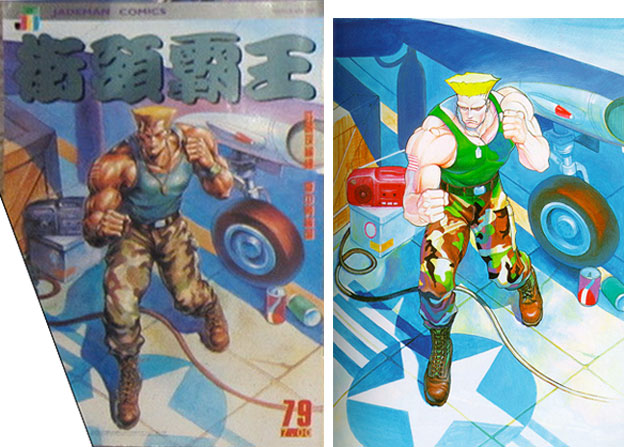
Like many of you I am a huge fan of Street Fighter and I like to collect SF merchandise. I focus on things that are not common in the USA, so I have a lot of books and guides from Japan. Udon made a fantastic comic book series out of the franchise, no doubt about it! When it came to collector issues and special issues Udon gave the fans what they wanted. Some of my favorite Street Fighter comics actually came from China. As great as the comics were in North America I have to say that the Chinese comics sometimes had the better exclusives. Best of all these were not bootlegs, but actual licensed items!
 

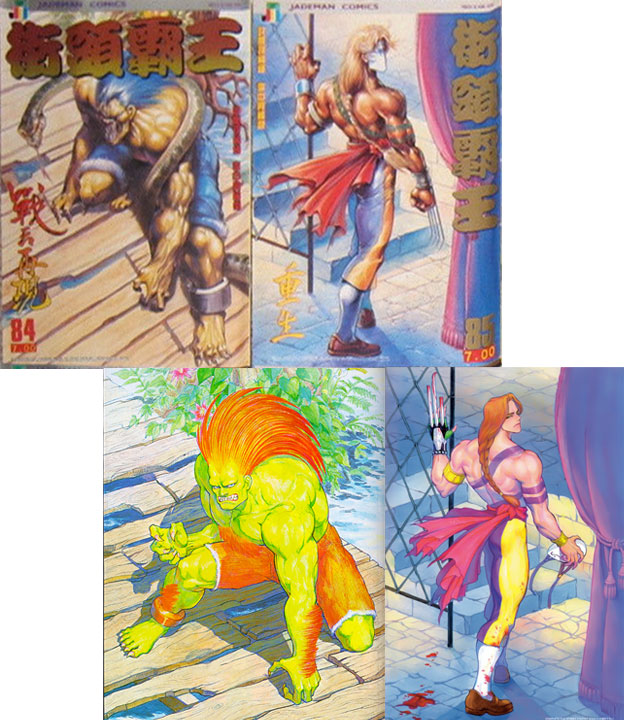
Let's be completely honest when talking about licensed Chinese comics, or manhua as they are traditionally known. From a print standpoint these comics are inferior to those from the West. The paper the comics are printed on are not as good as the magazine quality paper used in comics from North America. In fact they still use the old 4-color process instead of modern digital printing, except for the covers. The covers are glossy and sometimes feature wrap-around painted images. Yet the best cover poses are often stolen from the official character art from Capcom in Japan.


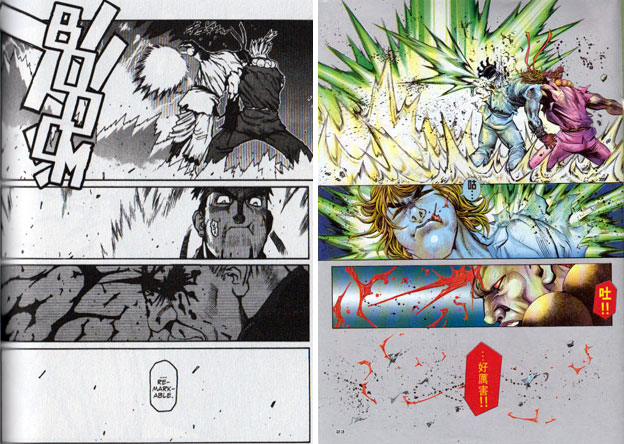
Sometimes it's even more shameful than a repaint of a classic Akiman illustration. The artists working on the manhua will actually redraw, or repaint the art from a licensed Japanese manga and change the main characters around! It's tough to be a fan where there is so much shameless poaching on the part of the Chinese. It happens in comics, in film, toys, gaming, fashion and electronics. Yet to be fair they do this with everything that is popular, not just Street Fighter. The nation doesn't necessarily correlate copying with a bad thing, at least not the people that run the companies. They consider it more of an "imitation is the sincerest form of flattery" or just smart business to follow the popular trends. The consumers on the other hand have a less favorable opinion on copies or counterfeit items.


But I digress... the reason I like some of my Chinese Street Fighter comics more than those from Udon are because of the painted panels. They are few and far between but some of the better covers and spreads in manhua are actually brush paintings instead of digital color illustrations like in the US comics. There is something to be admired in the art form, in the ability to create an actual physical painting and see it reproduced in print. These original panels and covers were rare, but when done right they jumped off the page.


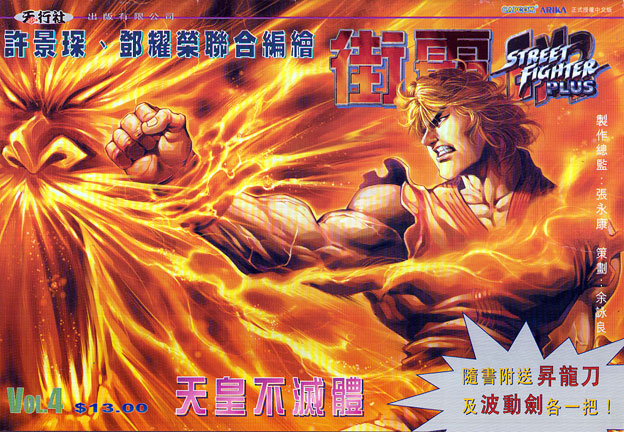
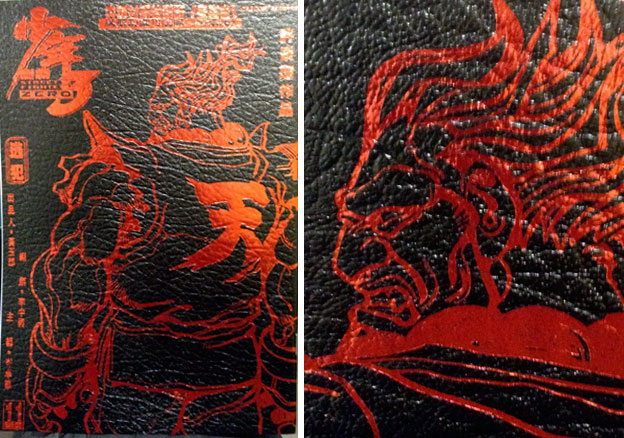
The other reason I enjoyed the SF manhua were because of the special issues. Limited runs, foil, hologram and other gimmick covers had been used by Udon and other publishers for years. In China they went the extra mile when creating the exclusive covers. One that they released for Street Fighter Zero3 featured Gouki in a red metallic ink. It was printed over a black vinyl cover, that looked a bit like leather. It was a classic pose but not poached from any official Capcom art.


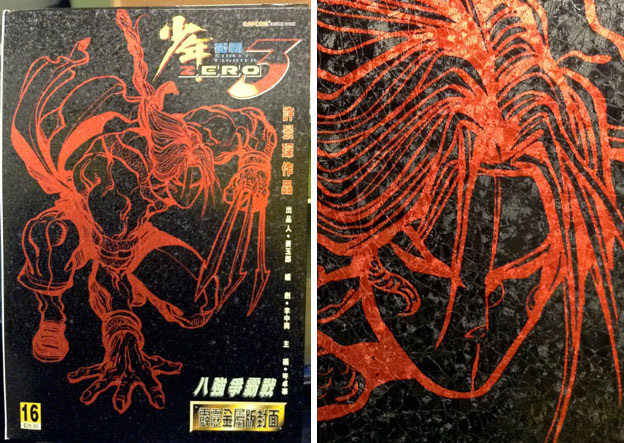
The special edition covers are often placed over the regular covers. I have a few issues with both the regular and special edition covers. What makes these covers unique is that no two are printed exactly the same. A different black and red cover that I had featured Balrog (Claw). It was also printed in a red metallic ink yet the cover was a hard black plastic with tiny cracks that gave it a prismatic effect. It was a great pose which highlighted how the Chinese artists had their own unique aesthetic, their own unique was of interpreting the character that was every bit as memorable as those from Japan and the USA.


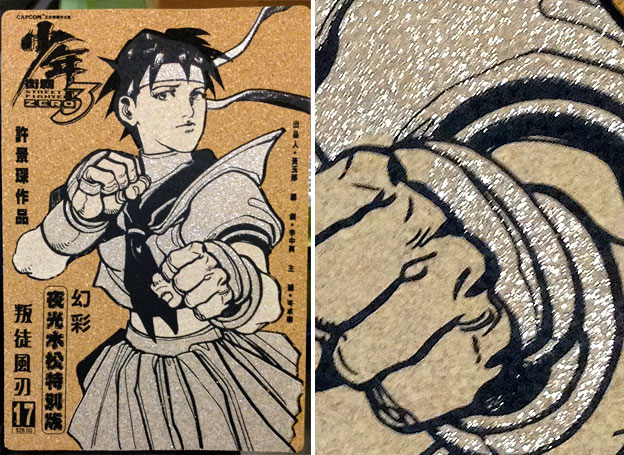
Some of the covers I had celebrated the fan-favorite characters. A Sakura cover for example was printed on a very thin piece of corkboard. It was printed in black and silver-flake ink. The inspiration behind this cover was school related. The corkboard was supposed to rekindle images of doodling on folders and pinning favorite pictures on a study area. The cover actually had a lot of hand-drawn details. Once printed the finishing touches were applied by hand. Some of the hair and costume were hand-painted in black ink. It's hard to tell from my fuzzy pictured but you can actually see the brush strokes and different shades of black ink used by the artists.


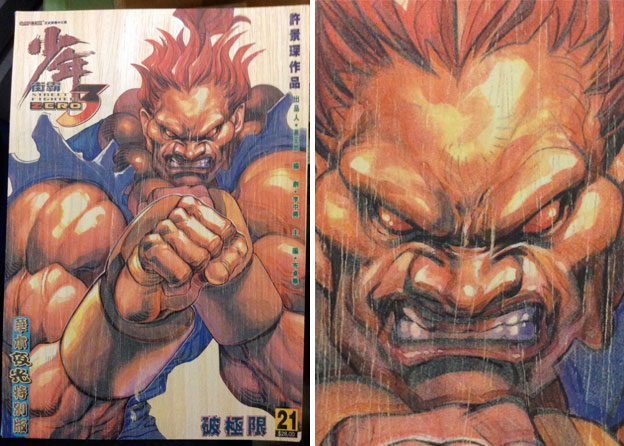
Possibly the most unique of the custom covers again featured Gouki. This cover was printed on a paper-thin piece of bamboo and then laminated to prevent splitting. The texture was unique and thanks to the printing process no two covers would ever be exactly alike.


There are a few more special issues that I would like to share with you, but I'll save it for next time. Are there any Street Fighter comics that you are proud of or are your favorites? Please let me know in the comments. As always if you would like to sponsor me please visit my Patreon page and consider donating each month, even as little as $1 would help make better blogs and even podcasts!

 follow the Street Writer on Patreon!

Friday, July 1, 2016

The legend of Blue Mary, or girls in fighting games, part 2...

In the previous blog I talked about how Capcom and SNK were trading jabs at each other through the characters they had introduced in their own respective fighting games. The competition was healthy from a business standpoint and also for fans that were lining up to try each and every new game and update from the two publishers. SNK and Capcom both had established strong female characters early on yet SNK also did something more unique. The designers in-house created female characters that could be interpreted as counterparts to the male stars. It was a sort of symmetry that worked for the most memorable fighting games but not many studios recognized that symmetry and balance were things that helped make the cast unique while filling out a roster. When Sakura debuted in Street Fighter Zero it was obvious that she was filling in a role as a female counterpart to Ryu, as well as taking design cues from Yuri Sakazaki. Dan was a sort of balance to the cast, a way of taking two SNK-ish characters and putting them in Street Fighter continuity. Yet there was something missing. Capcom didn't realize it until comic book artist Masahiko Nakahira introduced Karin Kanzuki in his Sakura Ganbare! comics. Suddenly it was too obvious that Sakura needed her own rich, white, counterpart. Karin was officially added by Capcom to the lineup in Street Fighter Zero / Alpha 3. Audiences in the West did not see the comics that introduced her until more than a decade later when Udon translated them. It didn't matter however, the fair skin, red dress and blonde hair pretty much summed up what Karin was supposed to represent. Her unique trapping strikes made her stand out, she was not another "shotoclone." She was certainly more than a girl version of Ken.


SNK had established one of the most important rules in fighting game character designs before Capcom; the symmetry of female counterparts to be specific. It can be fair to say that I did not credit the studio enough for their contributions to the genre in earlier blogs. SNK was critical in the history of the genre and shaped not only their own legacy but influenced the creative decisions in rival studios. SNK developed many strong female character archetypes in every fighting game they produced. The women in these games varied in age, style and ability. Some were very young but capable, and some were closer in age and strength to the male stars of the game. The other studios developing fighting games for the Neo Geo were sometimes on board with the strong female characters but others had more sexual pandering designs in mind. Yuri was a cute character in the Art of Fighting, she was the kid sister of Ryo Sakazaki and not meant to be the main protagonist. It was a fighter in the Fatal Fury series that proved sex and strength could be found in equal measure. While developing this character the team at SNK looked at the elements that made the star of the series work. They then created a female counterpart with a similar look, down to the color schemes and nationality, but with completely different moves. In essence you could say that the studio was working on Karin Kanzuki years before Capcom or Masahiko Nakahira even thought about it. The name of this revolutionary character was Mary Ryan aka Blue Mary. She would become a counterpoint to Terry Bogard. She demonstrated that a fem fighter could be an important addition to the lineup and not just fan service.


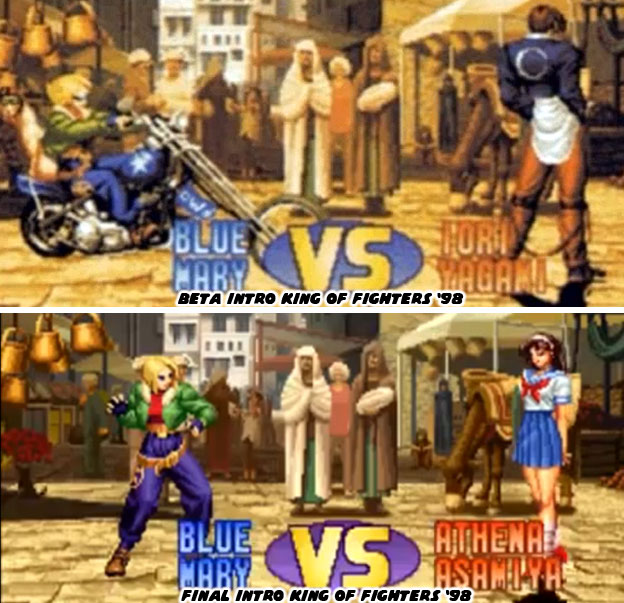
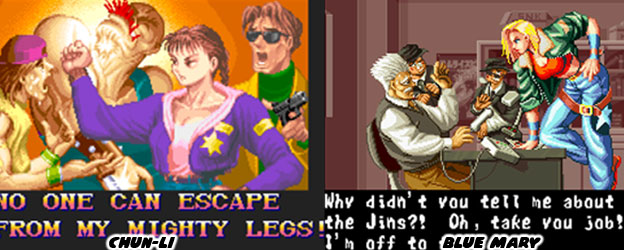
Blue Mary debuted in Fatal Fury 3 - Wild Ambition in 1995. Remember that both she and Yuri were playable characters in a fighting game before years before Sakura or Karin. Mary had a complex back story that would be unveiled over the years. It made her more than just a pretty face. Her origin helped the designers know how to present her in the series, how to include her into the plot and even figure out what techniques she would be using. Mary was always presented as a fearless, completely independent woman. Yet there was a good bit of planning behind this. Her father was a Secret Service Agent as was Butch her boyfriend. Both had taught her some fighting moves as did her own grandfather. Butch and her father were both killed in the line of duty. She believed strongly in justice and became a detective, working on and off for the law. When she debuted in Fatal Fury game there was nothing to lead players into thinking she was in a relationship. The two holdovers from her earlier life were put in plain site and only revealed later on. She was sometimes accompanied by a dog to her matches. This was Antonio or Anton for short, he was a puppy when Mary and Butch adopted him. She also wore a bomber jacket to the the fights, this was a gift from Butch before he passed away. Blue Mary could sometimes be seen riding a motorcycle. It was the obvious choice for a cool American character and a trait that was unique to her. In an early build of the King of Fighters '98 Blue Mary had the trifecta introduction, the motorcycle, her jacket, and Anton riding in the back with goggles on. I'm not sure why the intro was dropped in the final build. Maybe it was too masculine for Japanese tastes?


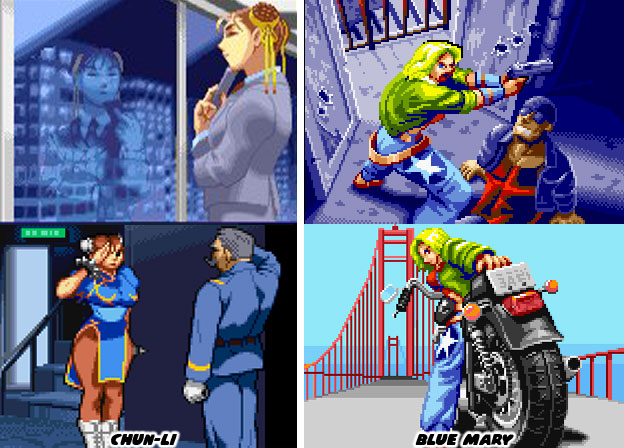
Blue Mary was as far from the dainty-fighter archetype as one could get. She was not the damsel in distress and she was certainly not the prize for any male lead. This character had a lot in common with the first female Street Fighter legend. Chun-Li's father was assassinated by Balrog (Claw), one of the generals of Shadowlaw (Shadaloo). She joined the police academy to obtain justice and eventually worked her way up to ICPO officer. She was a no-nonsense character behind the badge, especially while wearing her plain clothes uniform. What made her unique among the other female icons was that she could then switch her role and appear very feminine in the Street Fighter tournament. She wore nylons and a form-fitting, pseudo traditional dress. Blue Mary did not have this second layer of design. She was more like the female leads in other fighting games. The person that you saw in the pre-round animations and at the end of the game still looked the same.


The design and presentation of Blue Mary was deliberate. She was the cool cop, the rogue that didn't necessarily take orders, a trope created in Western films and shows like Lethal Weapon and Miami Vice. She was a hard drinking, door kicking, motorcycle riding, crime busting bad ass. You could almost imagine the character starring in her own crime action series. Chun-Li was much more reserved. Her time in the academy made her a student of the criminal mind. She began looking at the big picture instead of focusing on stopping individual crimes as she matured through the events of Street Fighter Zero and Street Fighter II. She knew that avenging the death of her father was only one piece of a bigger puzzle. The crimes, drugs, arms flooding the streets in Asia were being controlled by a central kingpin. It was revealed that General Vega had ordered the hit on her father. She would figure out that it was Shadowlaw trying to destabilize several countries in the south. She was instrumental in revealing this conspiracy and helping international forces take down their base of operations. She became a decorated officer in the process. Blue Mary on the other hand wasn't looking for accolades. She wanted to do her job and keep scum off the streets, even if it meant taking down a powerful kingpin in hand-to-hand combat. She was fearless, if slightly foolish, in that regard.


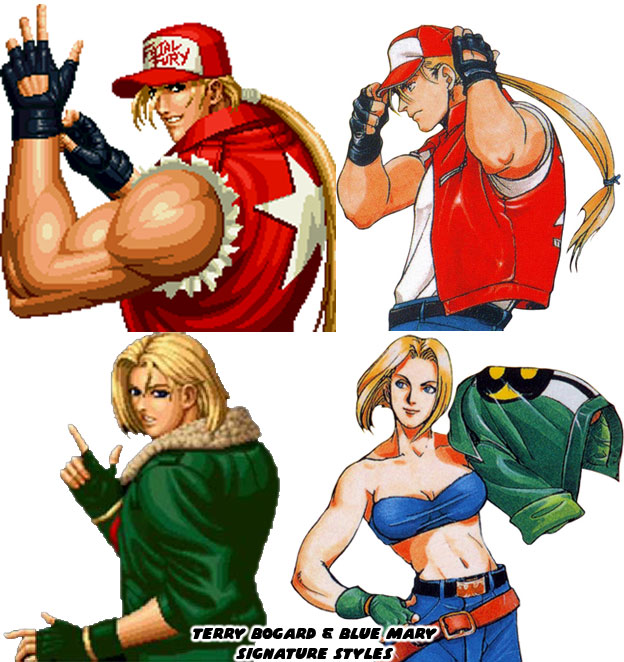
The physical appearance of Blue Mary was molded very closely on Terry Bogard the breakout star of the Fatal Fury series. The Japanese designers didn't really have a point of reference for white American martial arts stars. There were a few notable fighters in the '60s, '70s and '80s that did travel to Japan and abroad. Chuck Norris, Joe Lewis and Bill "Superfoot" Wallace were some of the high-profile white martial artists that made a name for themselves. They appeared on the popular ABC Wide World of Sports broadcasts and on the covers of Black Belt magazine. They were inspiring millions of white Americans to pursue the fighting arts while Bruce Lee and Jim Kelly were opening the eyes of minorities. Yet none of the men were big enough to have their own comic book or cartoon series in Japan, like Mas Oyama and Yoshiji Soeno. To be fair Chuck Norris did have his own cartoon and toy line in the USA in the '80s and Lee had his own comic book series as well. To the mainstream Japanese and many of the artists working at both SNK and Capcom they simply didn't know what made white America unique. They had a few fashion cues from our music videos, television shows and action films. This was what they used when creating Terry Bogard, and for that matter many of the other western characters in Capcom games as well. Stop and think about it for a second, if you were born in the USA and had a reputation for fighting would you wear jeans, a bright red jacket with a star on the back and a trucker cap? Maybe you would wear something more subdued, something that didn't attract too much attention especially from gangs or even the cops. Of course the developers in Japan assumed that their customers needed to see that trope, that stereotype in order to identify the cast. The American needed primary colors that were red, white and blue.


The designers at SNK didn't have to try very hard when creating their new cool female character. They changed some of the colors and dropped the cap but Blue Mary had a signature style that was very much reminiscent of Terry's, The physical similarities didn't end there. Both were blonde, it reinforced the idea that white people were mostly of English descent. Think about how many white characters, especially the early ones in fighting games were blonde. Ken and Joe in the original Street Fighter, Cody in Final Fight, the wrestler in Street Smart, Guile in Street Fighter II, Galford in Samurai Spirits, Ray in Fighter's History, Paul Phoenix in Tekken, Jacky Bryant in Virtua Fighter… the list goes on. It was a bit of racial pandering on the part of the developers. They assumed that most players in the West would want to try a character from their homeland before they tried an Asian character. It was logical thinking. What they often missed were the details that made the characters really "American" or "English" or "French." But I digress. That was only part of the reason why the characters were blonde. The primary colors that were assigned to the costumes needed balance. Most of the Japanese characters practiced karate and their gi was typically white. That costume contrasted well with black hair. They couldn't assign white costumes to the white characters with blonde hair, there wasn't enough contrast. So solid colors like red, green and blue were given to these fighters instead. Blonde hair worked well with those colors and the tradition more or less stuck.


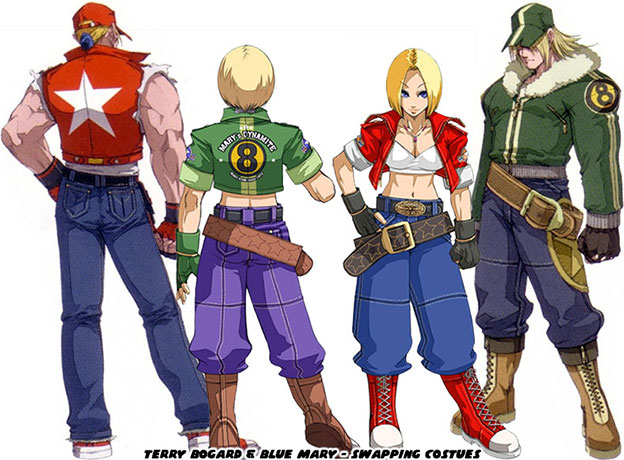
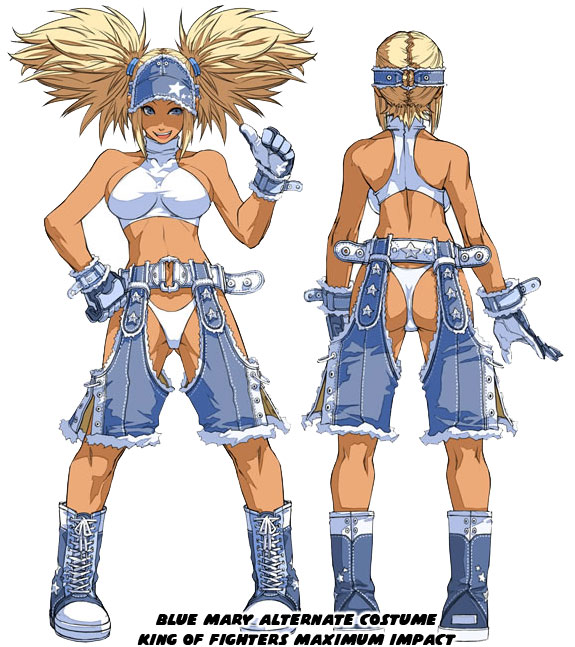
The color choices assigned to Terry and Mary were complimentary. Mary had a few differences in her uniform that made her stand apart. Her pants were not blue jeans but a darker purple with a large sheriff star on the side. She ditched the sneakers for boots and she wore a wide belt on her hips. It was a look that was a little more biker than brawler. It worked so well for her that it was considered as an acceptable alternate costume for Terry in the King of Fighters Maximum Impact game. The opposite was true and Mary could wear Terry's clothing and everything looked great. What was disappointing however was her alternate costume. Terry was given a "B" costume known as the Wild Wolf which was how he appeared in the Garou: Mark of the Wolves game. That version of Fatal Fury was set in the future where Terry was an older and more experienced fighter. He wore a large bomber jacket, boots and let his hair loose. Gone were the sneakers and over-the-top red, white and blue color scheme. Terry was given a look that was more like a biker. Sadly Blue Mary did not get the same Wild Wolf treatment. Instead she was presented in a white bikini with nonsensical jean chaps and a jean visor. Any modicum of respect the original designers meant for her went right out the window. It was unapologetic fan service that didn't fit the character, her origin or any previous appearance.


Blue Mary was a female fighter that defied convention. Her appearance was one thing, the moves she featured in game were something else. In the next blog we will take a closer look at the things that made Blue Mary memorable. As always if you enjoyed this blog and would like to sponsor me please visit my Patreon page and consider donating each month, even as little as $1 would help make better blogs and even podcasts!

 follow the Street Writer on Patreon!

Wednesday, June 29, 2016

The legend of Blue Mary, or girls in fighting games, part 1...

Competition is good for health, good for business and good for the arts as well. Competition helps create an incentive to work harder, to work smarter and in some cases to offer something new and unique. In the fighting game universe there have been many okay games but only a few truly exceptional games. The greatest games caused the other studios to take notice. Those that worked hard and took a chance on a new idea were sometimes rewarded for their hard work. Competition created rivalries between some of the biggest publishers. Some of the rivalries were friendly and some were filled with tension. The worst of the rivalries were celebrated with legal battles. For the most part there were a few studios that could be considered on par with each other. Capcom and SNK had the 2D fighting game arena on lockdown while Namco and Sega were the two studios constantly pushing the envelope in 3D. Some of the design choices by one studio team would be ridiculed by another. Yet sometimes a good idea would be copied and refined by a rival studio. There was a fine line between parody and poaching. Capcom and SNK had a history of trading jabs with their earliest games. Street Fighter II was the undisputed king of fighting games when it debuted in 1991, however when SNK released the Art of Fighting (AoF) in 1992 Capcom thought that the main characters looked and fought very similar to Ken and Ryu. The star of the game, Ryo, even sounded too close to Ryu for comfort.


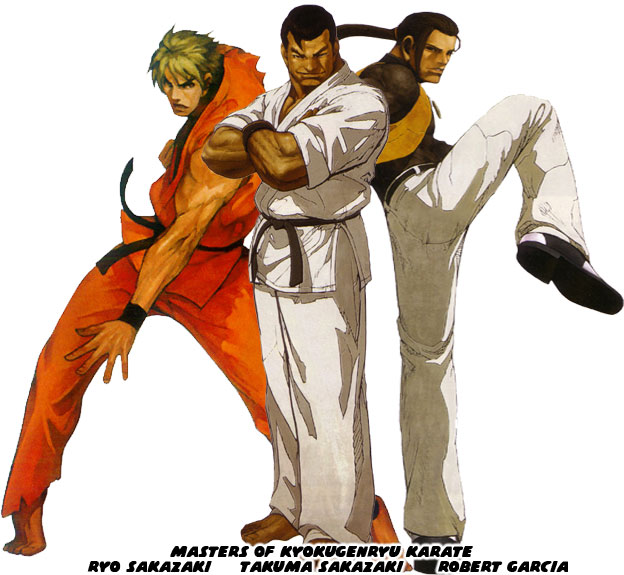
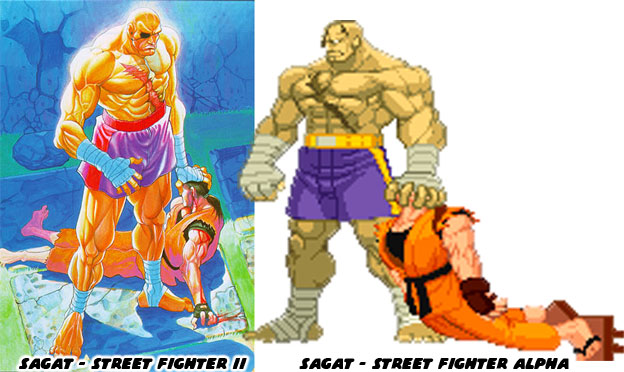
The masters of Kyokugenryu "Extreme Utmost Limit Way" Karate had very similar moves to both Ken and Ryu, including a leaping kick, rising uppercut and fireball attack. Arcade audiences saw these as the SNK version of the hurricane kick, dragon punch and fireball. Even the button and joystick moves required to perform these attacks were very similar to the control scheme created by Capcom. The artists and programmers working on the Street Fighter II updates didn't take too kindly to the AoF. When they were working on updated character art they made sure to let fans and SNK know exactly what they thought of their new fighters. Sagat was presented holding the head of a defeated opponent. Players could see blood, a dislocated elbow and a costume that was eerily similar to Ryo's but with the black hair and ponytail of Robert. The shots were fired but it didn't end there. A few years later they decided to make good on their comparison and created a sprite of the same character that would be featured in Sagat's opening animation. This defeated figure would become to be known as Gou Hibiki. Sagat was now going through the Street Fighter universe fighting all the karate masters so that he could gain an edge against Ryu. He killed Gou in the fight and that started a new round of shots aimed at SNK.


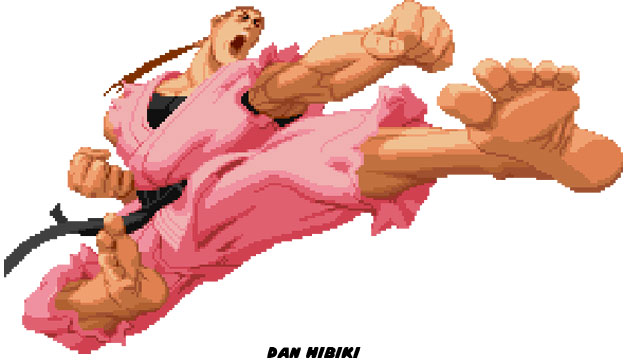
When Capcom was creating the intro animation for Sagat they had a bigger goal in mind. They were going to introduce an entirely new karate fighter into the universe. Someone who was an amalgamation of the two AoF stars. The result was Dan Hibiki, a square-jawed, long-haired karateka that appeared in Street Fighter Zero / Alpha in 1995. He wore pink because the color was somewhere in between Ryu's white and Ken's red gi. At first audiences didn't know what to make of him. In the original arcade release he could only be unlocked if you knew a secret code. This was rare for a Capcom fighting game, and especially for a Street Fighter title. The studio tended to shy away from time-release characters or secret characters for fear of upsetting the balance they had worked so hard to achieve. In the end it worked in favor of this new character. Dan was hopelessly underpowered when compared to the other fighters and this was all on purpose. His one-handed fireball didn't travel very far across the screen. Nor did his leaping triple kick or uppercut strike. It was obvious that Capcom was telling the team at SNK exactly what they thought of Kyokugenryu practitioners and their moves. Serious competitive players tended to stay away from Dan while the rest of the community chose him because of his unique move set.


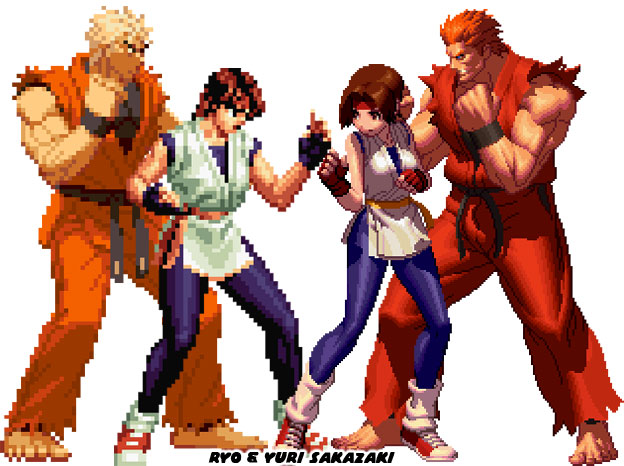
Dan was not the only character that Capcom was calling out. Sakura, who would become the most popular new character, was designed to be a girl version of Ryu. Yet even this character was not completely original. In the original Art of Fighting both Ryo Sakazaki and Robert Garcia were after Mr. Big and Mr. Karate because the young Yuri Sakazaki had been kidnapped. In the end she revealed that Mr. Karate was Takuma Sakazaki, the father of Ryo and herself. In 1994 SNK released a sequel which now made Yuri a playable character. The little sister had her own variation of the Kyokugenryu moves, they were not as strong as the men's attacks but were much faster. She even had her own unique look. Rather than wearing a traditional gi, she wore the top but mixed it with more contemporary leggings and sneakers. The design of her and her brother remained fairly consistent over the next 20 years. The sprites evolved, the aesthetics between games changed as new art directors were brought on board but very little changed between the siblings.


Street Fighter Zero / Alpha had gotten off to a great start but it felt lacking. Capcom revised it, added some familiar faces from Final Fight, the original Street Fighter and Street Fighter II. The newest face, Sakura, was the breakout star. She debuted in Street Fighter Zero 2 in 1996. Long-time fighting game fans saw the inclusion of Dan and Sakura a sort of jab at Ryo and Yuri. After all, if Capcom was going to call out their rival in a game why not go for broke? Yet there was a certain charm to the pair that was undeniable. They were far more than parody characters, they were far more than clones of SNK fighters or derivative Street Fighters. They were instead a blend of different influences that worked within Street Fighter continuity. Dan was the overly dramatic rival to Sagat, like a movie character he was driven by an intense feeling to avenge the death of his father. Dan was someone who was so outclassed he didn't even realize it. He also idolized his father and his fighting form "Saikyo-ryu" aka the "Strongest Style" even though it didn't stand up to the other forms in canon. Sakura on the other hand did not hail from a martial arts family. Her parents were regular people and little brother enjoyed playing video games more than anything. Her stage was even set in her own backyard instead of some fancy building , which reinforced that idea that she came from a regular household She was driven by a desire to achieve greatness and patterned her life after Ryu, her hero. She came a long way despite a lack of formal training and Dan decided to insert himself into her training routine even if she was technically a greater fighter. The inclusion of these two added some dimension and humor to a sometimes overly-serious plot. It didn't take long for the new characters to be embraced by the community. Fans all around the world drew art and used cosplay to let Capcom know how much they enjoyed these faces.


SNK should be remembered for their many, many, many contributions to the fighting genre. They are sometimes overlooked for how they changed the roles of female characters in fighters. Mai Shiranui from Fatal Fury / King of Fighters fame was arguably the most famous female character designed by the studio. She was the busty ninja that left little to the imagination. In the pantheon of female stars was was second only to Chun-Li in international fame. Yet Mai was far from being the only notable character created by the studio. King, who also debuted in the original Art of Fighting way back in 1992 was important for being the first androgynous character. Modeled loosely on the martial artist and action film star Cynthia Rothrock the blond striker was a force to be reckoned with. King would become more feminine in every subsequent game but in her original appearance players assumed that she was a effeminate young man. They thought that anyhow until her jacket top was torn, revealing that she had taped down her breasts to be a bouncer. Yuri was neither the sexy archetype, nor was she the tomboy but instead something in-between. She was a girl trying to be more than a girl version of her brother. She was trying to find her own voice and fit into the series.


Sometimes Yuri would be a little too enthusiastic, a little too vocal of her superior techniques. The team at Capcom picked up on these cues and instead of assigning them to Sakura they placed the mannerisms on Dan, which made him all the more comedic. Audiences could appreciate what the developers were going for with Yuri. She was the young upstart, eager to show the world what she was made of. Maybe she got herself into hot water but the other females in the series were often there to help out just as much as the male stars. Players could tell that when Yuri matured she would become a force of nature. The designers at SNK had a unique approach to the genre and the lessons they learned from their male cast would help color their female counterparts. We'll explore one of these characters in the next blog. I hope to see you back for that. As always if you enjoyed this blog and would like to sponsor me please visit my Patreon page and consider donating each month, even as little as $1 would help make better blogs and even podcasts!

 follow the Street Writer on Patreon!

Thursday, March 31, 2016

Odd Girl Out, a look at alternate female fighting game characters...

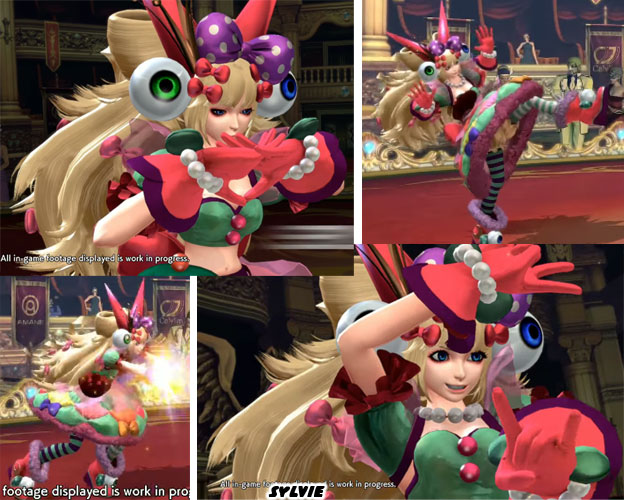
Did you know that the King of Fighters franchise is celebrating 25 years? It began with the original Fatal Fury back in 1991 when Geese Howard sponsored the first tournament. Now with the debut of King of Fighter XIV there are 50 playable reasons to celebrate. Yet one was revealed recently that sort of came out of left field. The franchise has had many odd characters, don't get me wrong, but this new character is really pushing the envelope for what works for the franchise. In case you hadn't heard or seen of this character let me introduce you to Sylvie.


Her look is very over-the-top. Oversized bangles, pearls, gloves and the puffiest of vinyl skirts covered in star-shaped pillows. She looks like a cross between a pop idol and a fashion stylist from Harajuku. To be fair a lot of people online have called SNK out on poaching Sylvie's design from pop star Kyary Pamyu Pamyu specifically the Pon Pon Pon music video from a few years back. I'd be hard pressed to defend SNK on this one.
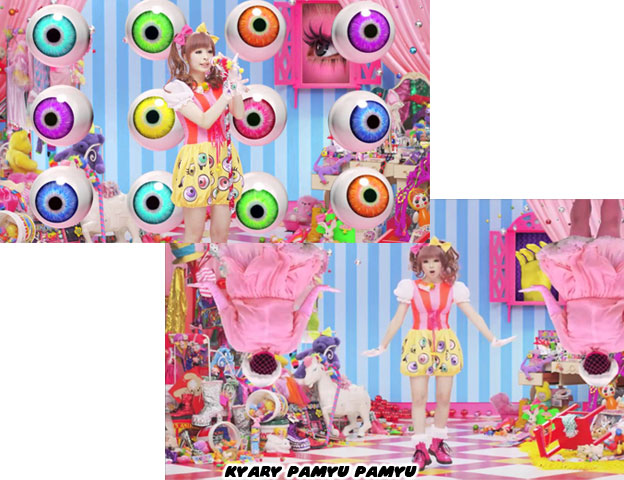

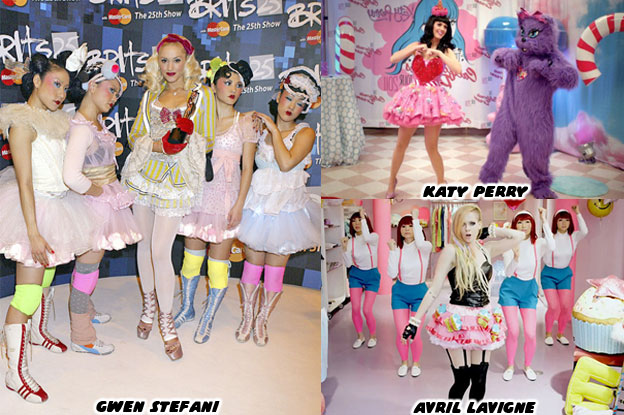
Companies, ad agencies, producers and other musicians have been poaching elements from street culture for decades. Thanks to how quickly trends spread on the internet the companies or artists that want to be ahead of the curve have to do this more often. They want to keep a sharp eye on what is happening in the West, in Europe and especially in Japan. Harajuku is an area between Shibuya (home of Jet Set Radio's famous GG's) and Shinjuku where youth culture converges to create the fashion trends of tomorrow. This area is so well known that artists have been going to it to be "inspired" for costume ideas, so much so that even western performers have been poaching ideas from it for years. Singer Gwen Stefani has made it no secret that she worships Harajuku girls and created an album, perfume and fashion line around them. Also pop stars like Katy Perry and Avril Lavigne have been swiping ideas from them for videos and concert tours. It can be a little more than insulting when Japanese girls are mainly used as ornaments for Western acts. As if they exist only to be props in a music video or backup dancers on a tour. Sure their culture and fashion are good enough to steal but heaven forbid that a Japanese singer tries to cross over to the West. Suddenly the roads for exposure, for distribution and contracts dry up faster than the California reservoirs. But I digress…

Sylvie has a very strong Harajuku idol look. But if you dig a little bit deeper there is a reason why she is in the KOF lineup. She seems to possess some sort of electrical power that emits from her hands. It may be because of some sort of power source hidden in her costume, sort of like Rashid in Street Fighter V, which would explain why her clothes seems to be made out of vinyl. However she probably generates the power naturally. There are other characters in the universe that can emit fire, ice and other forms of energy from their hands. Of course it isn't enough that she can shoot bolts of lightning but she generates enough power to fly. Which is amazing in and of itself. She can also generate force fields, like electrical cages and throw her opponents around. Sylvie is small and doesn't seem to be very muscular so power moves were probably not going to be her forté. There were other women in the series that were amazingly strong but usually that was due to genetic modification. Sylvie's electrical powers are a good equalizer especially when going up against the power players. As odd as she appears she actually is a good fit for the King of Fighters universe.
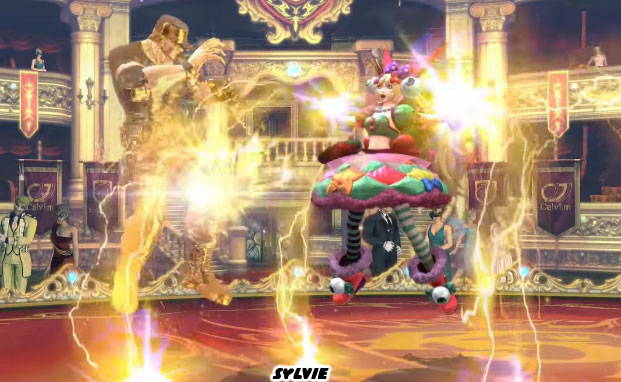

With that said not every character design works in every fighting game. Sylvie would be very much out of place in a western-produced game like Killer Instinct or Mortal Kombat. Those games have mature women which are ruthless killers, some are monsters in disguise or even sorceresses. Not to mention that they wear skimpy clothing and are usually designed to be sexually appealing. The design of Sylvie is grounded in reality, well, the reality of youth culture in a very specific part of the world. The reality presented in Mortal Kombat or Killer Instinct is more on the western fantasy, or horror side. When Sylvie debuted it got me wondering where the precedence was set for someone like her to be included in traditional fighting games. Over the past three decades there have been women, both adults and girls in fighting games representing a wide range of styles and different schools of martial arts. There have even been all-female fighting games in different formats created as well. A character like Sylvie however is a female fighter that has no discernible style or technique, an "outsider" character for lack of a better word. Where did those archetypes come from and what did they represent in the genre?

 While there had been women in brawlers, including some of the first female and trans villains in games like Double Dragon and Final Fight, from 1987 and 1989 respectively I want to say that the first "outsider" girl character that stood out was Kurara Hananokoji. The 13-year-old magical girl appeared in the game Power Instinct 2. The game from 1994 was developed by Atlus. It was a sequel to the 1993 arcade original. It was one of the first fighting franchises that was presented with a strong sense of humor. The characters in the title were typical archetypes from other fighting games, a Shaolin Monk, a ninja and a Native American. Then there were geriatric twins Otane and Oume Goketsuji that were excellent fighters and could even shape shift into their younger former selves. I wouldn't say that the game was meant to be a parody of the genre but instead it was as if a silly comic book were turned into a fighting game. One of the stars of the game was Kurara. She had elements from manga and anime shows about magical girls. To make her inspiration more obvious she was voiced by Kotono Mitsuishi the voice actress of Usagi Tsukino, the star of Sailor Moon,
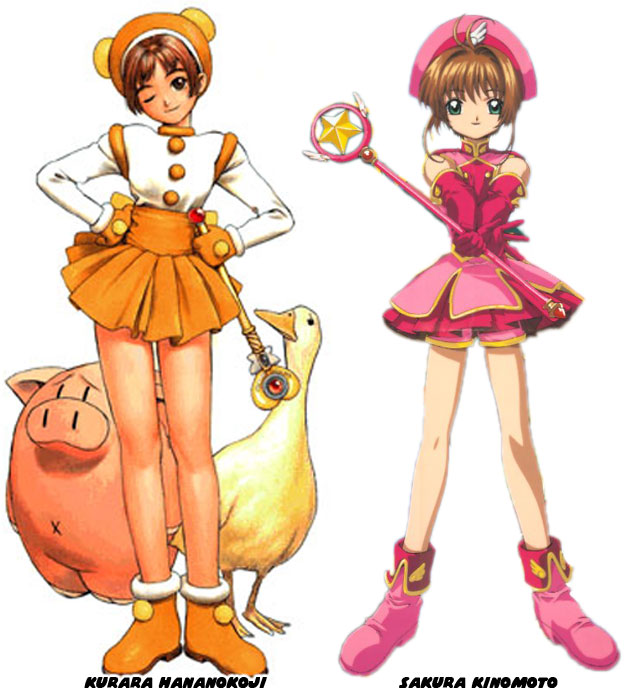

Here is where things get interesting about Kurara. Her designer was Range Murata. He was a popular artist that had worked for Atlus and Psikyo. He was known for his cheesecake paintings so it was interesting to see him develop a bunch of fighting game archetypes that weren't all topless female models. Kurara was a cute design by herself. For years I simply assumed that Range had poached the look of Cardcaptor Sakura from the popular manga and animé series by female artist collective CLAMP. It turned out the opposite was true. The CLAMP book wouldn't debut for another 2 years. In that time Atlus developed two games featuring Kurara. Sure the bangs, magical wand, skirt, boots and puffy hat might be coincidence then again they might not be. Of course Range wouldn't be able to get very far in the franchise unless he did some fan service. In this case he turned Kurara into a cheesecake character as well. In order to avoid doing this to a 13-year-old he created an alternate version of her in the 1995 release of Power Instinct Legends. Since she had magical powers she could turn herself into an adult, this version was called Super Kurara. Her moves and costume changed completely.
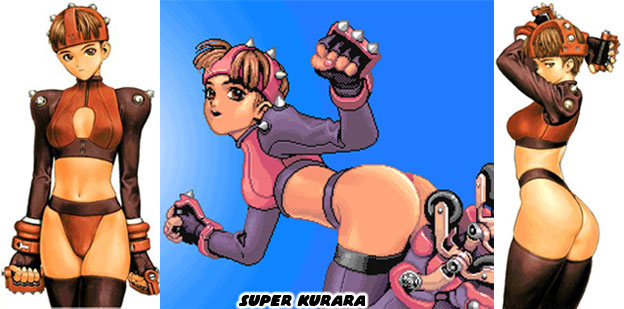
 

Her updated look left little to the imagination. Super Kurara's attacks were more physical than magical. From a design standpoint Kurara represented several important elementsthat could be applied to other female archetypes in fighting games. Women and girls could appear in fighting games but their design could be pooled into one of two camps. There were female characters that were practitioners of a traditional fighting art; karate, judo, kung-fu, capoeira, ninjitsu, etc. They dressed conservatively and were mostly serious figures. Then there were female characters where style didn't matter as much as sex appeal, a revealing costume was one way of helping spot these fighters. Kurara, at least the original version, created a third camp of female characters. These were female fighters that didn't fit the mold. They were not dressed in any traditional costume, not even a school sailor uniform. They were in essence the outsider characters, to make a Street Fighter comparison she represented a female equivalent to Blanka, Dhalsim or Skullomania. Except that women in pop culture were rarely seen as beast men, stretchy yoga masters or costumed weirdoes.
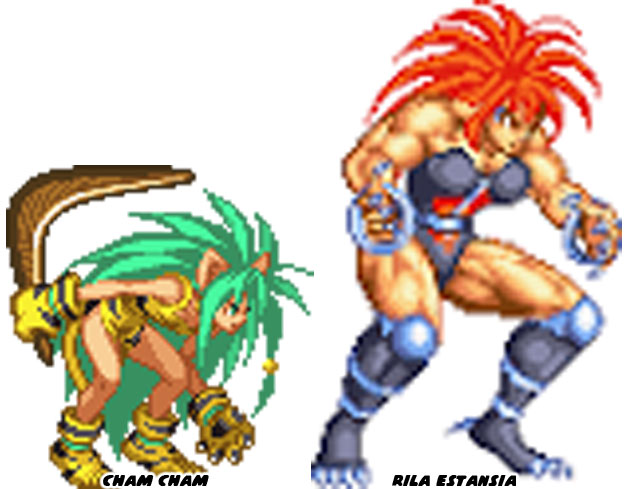
 

Although to be fair the genre had tried to replace the beast man concept with the wild girl / Amazonian archetype. I don't mean the traditional Greek amazon either but rather someone from the Amazon jungle. Cham Cham from Samurai Showdown II an SNK title from 1994 was one such character. Covered in animal skins she slashed at opponents with her gloved paws. Then there was an adult version that was a similar character, Rila Estansia from Breakers, a Visco title from 1996. She didn't wear a costume with built-in claws but instead sharpened her actual fingernails and toenails into claws. She was very much the Blanka equivalent from a rival studio. These female characters reflected a part of that outsider category of designs. They weren't the only ones, not by far. In the middle of the '90s almost every major developer had released a fighting game. They were all experimenting with female characters in the various franchise and offshoots. Another comic book artist came in and introduced a female that would again fall outside of the sexy or traditional archetypes. Masahiko Nakahira created a rival for Street Fighter Zero / Alpha's Sakura. He introduced Karin Kanzuki in the pages of Sakura Ganbaru!, a spin-off of the Street Fighter Zero manga he had also created. The fan reaction to the character was great and Capcom put her in Street Fighter Alpha 3 in 1998.

Karin represented another break from tradition. She did not wear revealing costumes, her design was very reserved. She was presented as refined and elegant young lady but retained a strength and ferocity that intimidated all of her male counterparts. There had been petit and dainty moe-type characters in fighting games but Karin was not one of them. This was a princess that enjoyed fighting. This archetype would be revisited by Capcom as well as by rival studios. Depending on how extreme the designer wanted to go with the idea the character could go from gym clothes under a school uniform (which also applied to Sakura!) all the way to the frilliest Gothic Lolita dress. The power and techniques of a kung-fu master remained with these girls despite their frilly costuming.
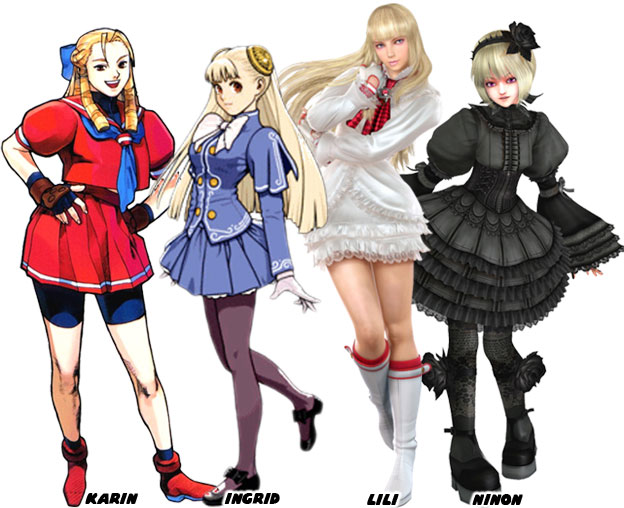

Just look at the chronology of characters that were the fighting princesses. In early 2003 Capcom created Ingrid, who was planned for the 3D Capcom Fighting All-Stars. That title was cancelled but Ingrid returned in 2D form for Capcom Fighting Evolution a year later. In 2005 the world was introduced to Emilie de Rochefort or Lili for short. She debuted in Tekken 5: Dark Resurrection. The Namco character was coquettish and enjoyed torturing her friends as much as her rivals. On the extreme end of the princess design was Ninon Beart. The character appeared in the 2006 SNK title King of Fighters: Maximum Impact 2. Unlike the previous three Ninon had average physical attacks but extremely powerful psychic attacks. Of these types of characters the gaming audience, especially in Japan seemed to enjoy Karin and Lili most. Yet when Tekken producer, Katsuhiro Harada wanted to introduce another outsider female character into the franchise he was met with a harsh response online, at least from the West.
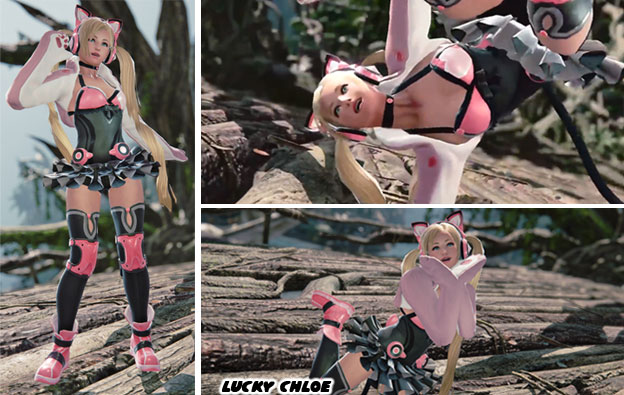
 

In 2015 Mr. Harada unveiled a Japanese trope character, an energetic genki-girl named Lucky Chloe. This character wore a silly cat costume and seemed absolutely spastic about fighting. The Japanese seemed to be "in" on the joke and didn't seem to mind her inclusion into the franchise. After all there had been cyborgs, demons, dinosaurs and even kangaroos all accepted as canon fighters. Yet for some reason some people in the US had an absolute fit that the game would include her. Harada had no intention of pulling the character simply because some people didn't get the joke. He shot back sarcastically online saying that he would essentially put a musclebound skinhead in the series, possibly with a gun, because that's all that the US was interested in. Lucky Chloe did not appear out of thin air. Her design had been building for some time. She was a definite outsider character even if audiences got it or not.
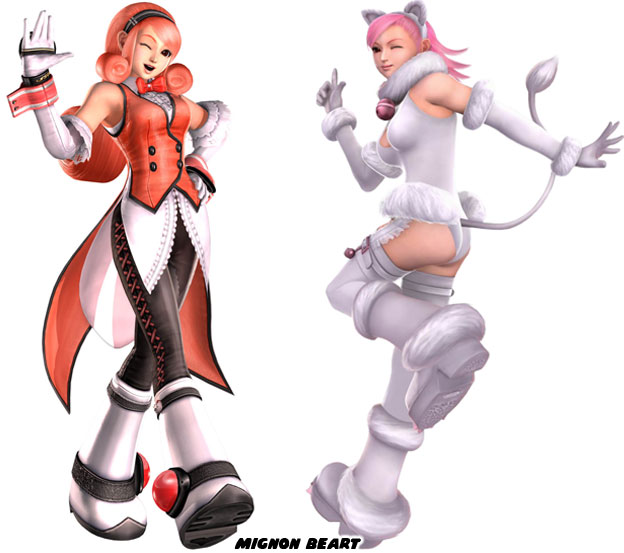
 

To be more precise, Harada was calling out some questionable designs from his contemporaries. Almost a decade earlier the SNK producer Falcoon had created a new girl character for the 3D version of the King of Fighters series. In 2004 Maximum Impact debuted and with it came a girl with psychic powers known as Mignon Beart. She was the big sister of Ninon. Anyhow every character in the game had an alternate costume that was much more than the typical pallet swap. These alternate costumes were instead completely new skins on the models that either showed off more of their personality or had been featured in classic KOF games. Mignon's alternate was a cat costume, complete with tail and ears. It made little to no sense but it made it into the game and became part of KOF canon. Years later Harada was taking a jab at these silly characters and put his own over-the-top fangirl into the franchise. Unfortunately not everyone got the joke.

When Sylvie was unveiled for King of Fighters XIV I thought back to what the reaction was for Chloe. Instead of saying WTF or promising that I would never buy another SNK product I thought there was better use for the blog. Why not ask where did this character come from and why was she in the series? I began thinking about Chloe, then Mignon and then started working backwards from there until I hit Kurara. I realized these were the odd characters that never fit the bill. Again, like Dhalsim, Blanka and Skullomania, they would never be the stars of the game but they had every right to be in the franchise. They reflected something far from the norm and that was what made them so unique. For female characters there was not much leeway, you were the sexy one or the one in the traditional uniform. Or now you were Sylvie or Lucky Chloe or Karin or Kurara. The road to this unique design wasn't all magic and princesses, it also included the self-made female fighters.
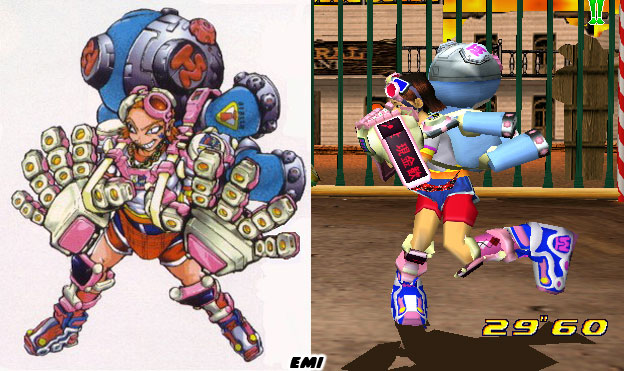

In 1998 Sega released a sequel to the game Fighting Vipers. The title was a sort of teen version of Virtua Fighter. The control and combo system was a little easier to pick up than VF. The cast was made up of mostly teenagers in armor representing some sort of youth culture, such as rock music, skateboarding, inline skating or bmx. In Fighting Vipers 2 there was a talented computer programmer named Emi that wore unique power armor in the tournament. Emi wore her school gym clothes, armored boots, power gloves and then on her back was a robotic teddy bear that doubled as a jet pack. Other fighters wore armor made out of safety gear and even motorcycle parts. While Emi gets the credit for doing the fighting it was her grandfather, a robotics expert that put together her gadgets. When the grandfather was kidnapped Emi put together the elements of her costume so that she could rescue him.
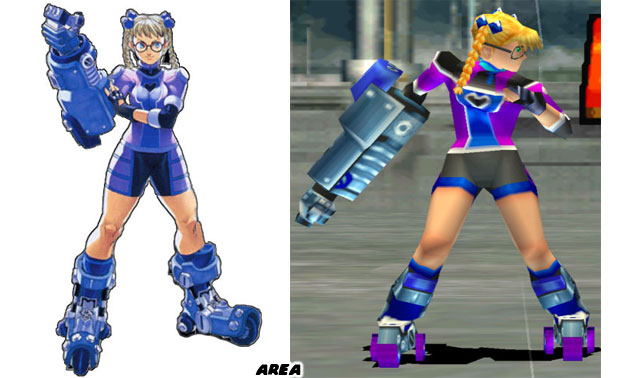

Would you believe that a month later Capcom published a game that had pretty much the same character? Well this one was a French girl in pigtails named Area. Her costume was made up of robotic parts as well. A mechanized arm that granted her strength, defense and a rocket punch and jet-powered roller skates that allowed her to zip across the screen. With this armor she was able to enter the Street Fighter EX 2 tournament. Her father was the robotics expert and he knew his daughter had her heart set on fighting. and there was nothing he could say to convince her otherwise. He wanted to make sure she would stay safe so he set her up with the gadgets that made up for her lack of raw strength and technique. She had smarts of her own and eagle-eyed players could see that she had over-sized molecule bangles holding her pigtails in place. They weren't as big or as glaring as the eyeball bangles worn by Sylvie but they told a story about the character. Through the course of history there were other female fighters that didn't quite fit the mold.
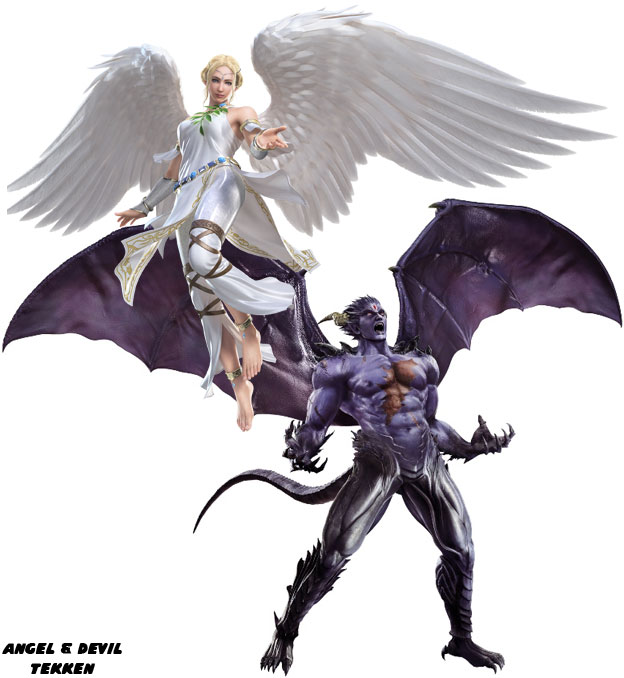
 

Women were sometimes presented as spiritual creatures in fighting games, perhaps demon or even angel. This allowed the designers to assign all sorts of amazing powers and abilities to these characters. These mystical creatures could be used to balance out the most powerful boss-type characters in canon. This was the case for the Angel in the Tekken series. She was a counter to "Devil" form of Kazuya Mishima. Kazuya was born with a "Devil gene" which allowed him to turn into a monster when enraged. While Kazuya had a long history of performing evil deeds, including trying to kill his own father, the Angel believed there was still a shred of good left in him. She appeared in the series to fight the Devil from time to time and try to redeem Kazuya. In 2015, with the release of Tekken 7 a mystery had finally been explained. Kazumi Mishima was presented as the mother of Kazuya and it was revealed that she was the one that had passed along the gene. She had tremendous power that she had to keep in check or else she would turn into a monster as well. She was murdered by her own husband, Heihachi Mishima many years earlier. He tried to kill Kazuya too when he suspected he might be carrying the gene as well. Her spirit returned in physical form to avenge her death.
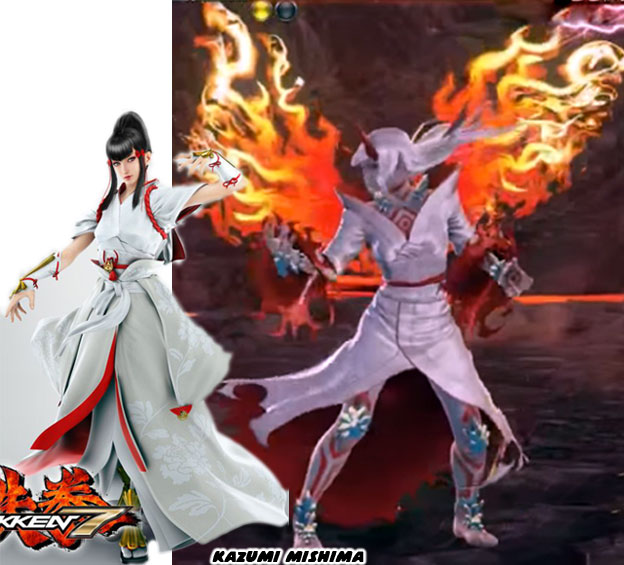
 

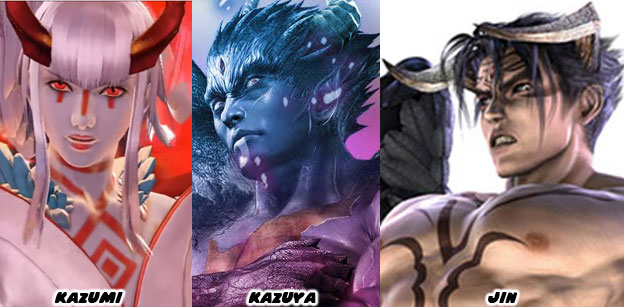
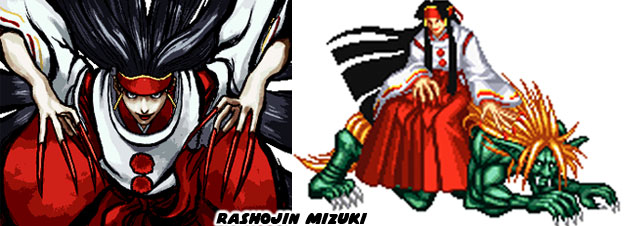
It turned out to be too little too late for Heihachi, or Kazumi to end the cursed bloodline. Kazuya had a son named Jin that he also passed the devil gene to. Jin was a sort of half demon, half angel. His mother was a noble woman named Jun Kazama. She loved, and tried her best to cure Kazuya. In a way she managed to alter the path of Jun. When he changes into a demon instead of leathery bat wings he has bird-like wings, which were more associated with an angel. As for the demon masquerading as a human female was a myth explored in various Japanese folk legends. Some of these legends were the basis of fighting game characters, especially for a franchise like Samurai Shodown / Spirits. The series by SNK created a number of heroes based on real word sword masters and kept them in feudal-era Japan. There was a lot of mythology pulled into the franchise which made it all the more unique. In 1994 SNK released Samurai Shodown II, the original title was a smash hit and there was a lot riding on the sequel. The main villain in this game was a character named Mizuki Rashojin.

Mizuki dressed in a red and white costume, it mirrored the robes worn by "miku" or Shinto Priestess. She looked like a plain character until she began using her powers, then players understood why she was also referred to as the Marauding Deity. She fought with a gohei, a wand used by Shinto priests for blessings, the wand was decorated with shide, the zig zag paper streamers seen on many temples. What was unique was that her gohei was more dangerous than the swords used by the main cast. If players dodged one attack they had to contend with her elongated fingers and dagger-length nails. In ancient Japan she was a priestess for an evil demon called Ambrosia. She hated humanity with a passion. She was born during a famine a thousand years before the events in the original Samurai Spirits. She was cast into the sea by her parents and left to die. She survived thanks to the intervention of Ambrosia. She washed up on shore and was adopted by a new family. Because of her supernatural intuition it was decided she should become a priestess, unfortunately for villagers she was serving a spiteful demon. Mizuki looked like a normal person but she was several centuries old, her evil spirit jumped from body to body. She would sometimes hibernate for centuries at a time and rebuild her powers.

Not every spirit in the Samurai Spirits franchise was malevolent. The forest tribes watched out for the forest spirits and lived in harmony with nature. The girls Nakoruru and Rimururu were protectors of the tribes and nature helped them by sending a giant falcon and wolf to fight alongside them. At least one natural spirit from Japanese mythology was turned into a playable character. Iroha appeared in Samurai Shodown VI. The 2005 title from SNK continued to expand on the universe and put in a unique character. On the surface she looked like a "sexy maid." She did of course happen to debut at the peak of maid mania in Japan. Where everyone was going to a maid cafe and there were comics and cartoons about maids seemingly everywhere. Yet there was much more to this character. The maid costume, a simple black and white motif also reflected the colors of the crane. Iroha was actually a crane-turned-human. The myth was better known as tsuru no ongaeshi the crane returns a favor. In the stories a crane was rescued, usually from a trap or removing the arrow from a hunter. The crane gets released but then returns as a beautiful young girl that acts as a servant to return the favor. The stories were often melancholy but they helped establish a tradition of animals turning into people and vice-versa. This form of animism was seen in cultures all over the world.
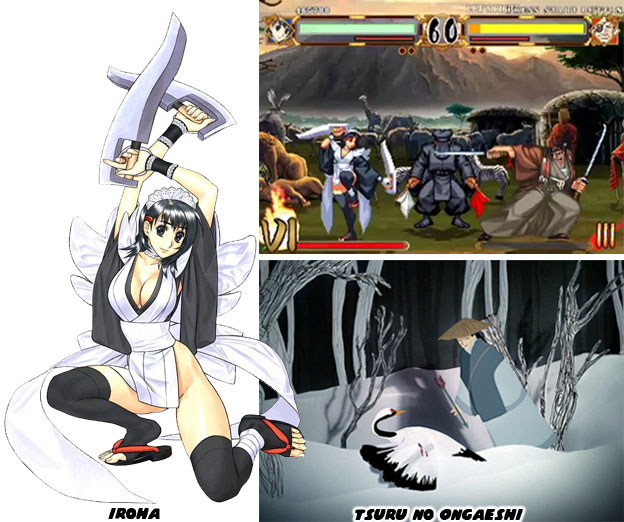

Iroha had perfect balance and fought on one leg, her stance was very crane like. In the game she used two oversized knives but could also throw white feathers like darts. One of her special moves had her take an opponent behind a screen door where she disrobed and beat them up, the silhouette turned into a crane for just a split second. She was actually a servant in the game that was fighting to try and cure the illness of her master. It turned out that he was lonely and when she returned to him he was once again healthy and happy. Another animal spirit-turned-human from Asian myth was not as kindly as Iroha. In the Chinese developed Xuan Dou Zhi Wang / King of Combat game there was a female fighter named Ameth. Like Iroha she appeared like the typical sexy character with some oddly powerful attacks.
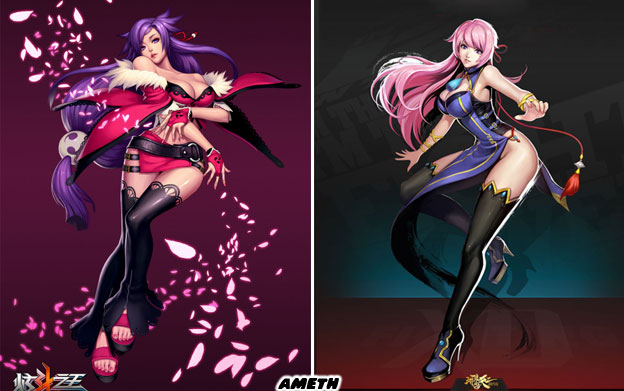
 

Ameth aka the Purple Pupil was a 998-year-old shape changer that was actually a fox. The divine or demonic fox creature appeared in many Asian mythologies. In Chinese stories Huli Jing was a divine fox mischievous but also ill-tempered. In Japanese tradition Kitsune was also a divine fox but with nine tails. The fox mask of Kitsune had been used on female ninja characters in manga, animé and video games for decades. In Korea there was Kumiho, possibly the creepiest of all the fox legends. She was an evil spirit that seduced and killed men. The version featured in the Tencent produced game from 2011 was was on the evil side. Ameth had actually been feeding on souls of powerful people for hundreds of years and was trying to achieve immortality. In order to guarantee that she would live forever she had to achieve a certain amount of power before she turned 1000. She learned about the King of Combat tournament and entered it to steal the souls of the other powerful competitors. I wouldn't say that Ameth or Iroha were typical of the other outsider that I had been talking about. The focus on their design was in making them the token sexy girls for each franchise. I will say that their origins, their powers were decidedly non-traditional and that was why they earned a spot on this presentation. I hope you enjoyed this brief post on female fighting game designs. Be sure to tell us who your favorite outsider female character was from any title. Until next time take care! As always if you enjoyed this blog and would like to sponsor me please visit my Patreon page and consider donating each month, even as little as $1 would help make better blogs and even podcasts!
follow the Street Writer on Patreon!