A blog about my interests, mainly the history of fighting games. I also talk about animation, comic books, car culture, and art. Co-host of the Pink Monorail Podcast. Contributor to MiceChat, and Jim Hill Media. Former blogger on the old 1UP community site, and Capcom-Unity as well.
Showing posts with label art of fighting. Show all posts
Monday, May 18, 2026
Bookmark This Page; Discovering SNK character design
I may be known for my Street Fighter deep dives, but did you know that some of my first blogs were about Fatal Fury, and the Art of Fighting? If you want to learn the differences between Capcom and SNK's approach to design then Bookmark This Page.
Monday, December 12, 2022
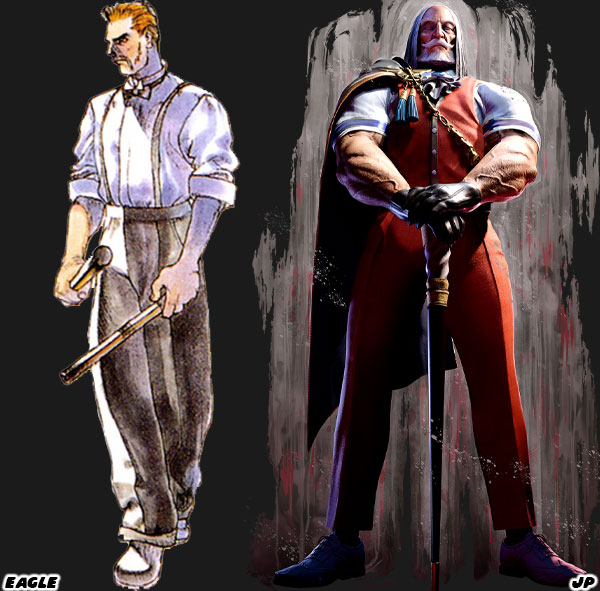
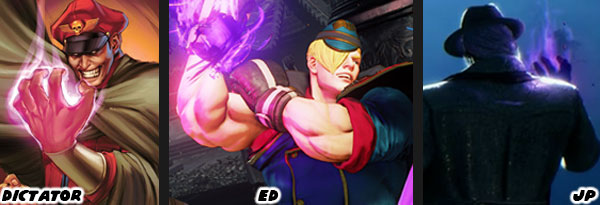
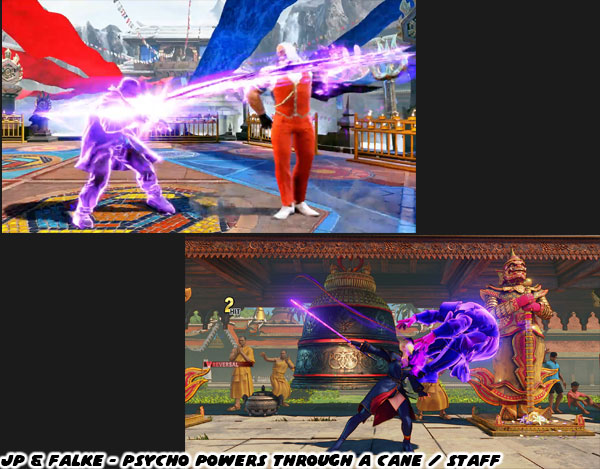
The Street Fighter 6 pre-order trailer, a love letter to the series, and a look at JP
Thank you for dropping by the blog. We have a lot to talk about with the release of the Street Fighter 6 - Pre-Order Trailer. Make sure to watch it if you haven’t already.
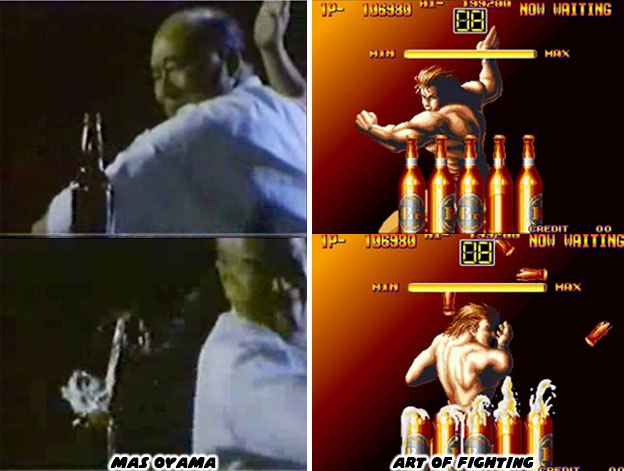
There is a tremendous amount of new information revealed about SF6, including official reveals of some new faces. One of the things that surprised me was the re-introduction of bonus stages. Ways to earn extra points, learn skills, and practice special attacks have been a part of the SF franchise since the very first game in 1986. In fact one of the earliest bonus stages involved board breaking. After 35 years this returns in the game. Long-time players would spot nods to other classic bonus stages, and even new challenges.


Thursday, October 5, 2017
Hiding the master in plain sight, the genius of SNK's character design... part 4
SNK was working hard to stay a step ahead of the competition. Their one-two punch of Fatal Fury and the Art of Fighting were unique entries to the genre. Each game provided a different experience and both expanded on the themes found in Street Fighter II. Not every character in both games worked or were even memorable. SNK had to learn and adapt to the trends quickly. The studio had to focus on multiple fighting games, each with their own aesthetic, while Capcom had to focus on patching and upgrading Street Fighter II. With the focus spread out over several games some of the fighters in the Fatal Fury (FF) and Art of Fighting (AoF) lacked the impact of Capcom's "World Warriors." In one particular field SNK started off slowly but then quickly caught up.
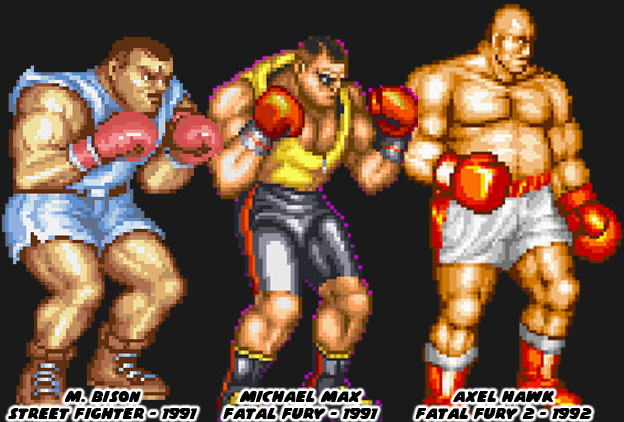
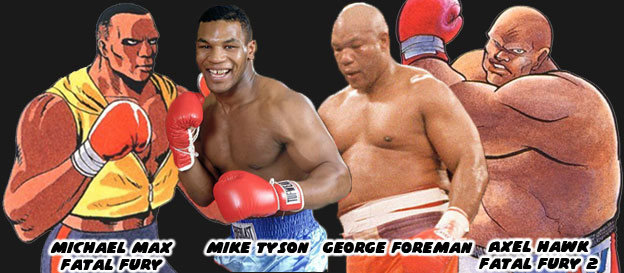
It was no coincidence that Street Fighter II's boxer M. Bison (Balrog in the USA) looked like pro boxer Mike Tyson. Capcom used the heavyweight champ as the template for their ring general earlier. Tyson had launched his professional career in 1985 and was featured in a version of Nintendo's Punch-Out!! He helped inspire the character Mike in the original Street Fighter as well. Tyson dominated the squared circle, at the age of 20 he became the youngest ever to win a heavyweight title. He earned a reputation for being destructive, and often knocked out opponents shortly after the opening bell. His supernatural fighting ability made him the perfect candidate for a fighting game. Of course Capcom didn't want to pay the boxer any royalties for using his likeness so they made a few changes, swapping out his name with another Shadowlaw general, and presented him in warmup gear. He was an easy fit into Street Fighter II and would even inspire a Fatal Fury boxer. Michael Max was literally cut from the same cloth as Bison, both having roughly the same size, shape, similar warmup gear and even haircut. Audiences felt this character was lacking, even if he had a unique tornado uppercut.
SNK's follow-up boxer had a more unique look. The bald and pudgy Axel Hawk was a friend and trainer for Michael Max. This fighter, featured in Fatal Fury 2, was taller and heavier than his protege. From a design standpoint it was strange to have a character that was older and fatter than the previous star. From a real-world influence however it made sense. George Foreman was a legendary heavyweight fighter that started his career in 1969 and stopped fighting at the end of the '70s. He became a preacher but returned to the ring in the late '80s. He got a title shot against Bernard Hopkins, a fighter 16 years younger than he was. Foreman recaptured the heavyweight championship at the age of 45, making him the oldest person ever to win the title. It was an underdog story that inspired long-time boxing fans. Chances were that SNK boss and boxing aficionado Eikichi Kawasaki suggested a version of Foreman for the sequel. Axel was a bit more rotund, especially in the official character art, than Foreman but they both had amazing power behind their strikes. Pop culture tended to color the SNK character designs more than any other studio. Aside from real-world fighters there were also decisions based on popular aesthetics. This was seen on another boxer in the SNK universe.
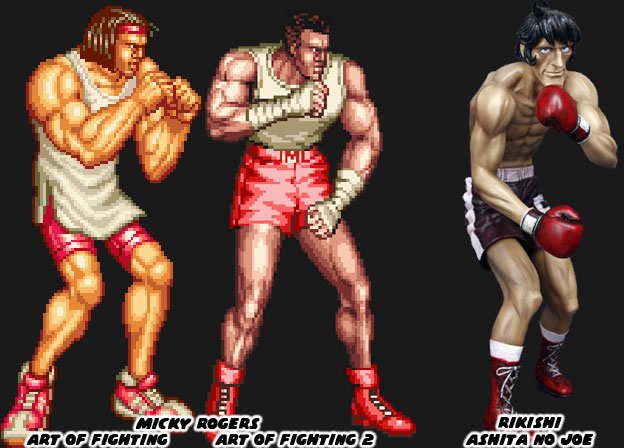
Micky Rogers was the boxing archetype introduced in the AoF series. The character sported braids in his first appearance and the look was changed slightly when he appeared again in a sequel. Visually the fighters in the AoF series were much different than the figures in FF. The artists working on the characters tried to make them more proportional to actual people. The reason for this was because of the larger sprites that AoF featured. If the character were drawn too muscular it would have looked awkward when they were scaled up. The fighters would have looked like cartoon characters in an otherwise realistic setting. Micky looked anemic compared to some of the other characters. He was lanky but well defined. It made sense given he was a boxer where speed was often more prized than power. The manga Ashita No Joe was a wildly popular boxing manga from Japan. The artist Tetsuya Chiba would draw his character with long, lean muscles. The action was easy to follow on the page because of his slender lines. This style of art that he popularized in 1968 would end up influencing countless other manga and anime shows about boxing. I believe that this design also found its way to SNK, given the Mr. Kawasaki was a boxing fan. Micky had almost the same build as characters like Joe or Rikishi, the champion fighters from the book.
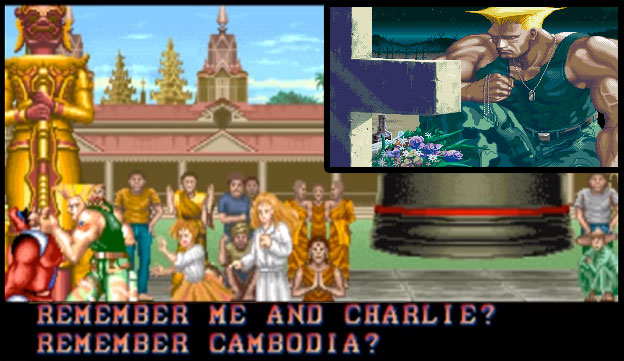
SNK, like most major arcade publishers realized that in order to succeed they had to become global players. This meant that they had to include fighters from other countries, especially the USA. Capcom and a few other studios included fighters from the USA in their games but gave them the slightest connection to real western culture. Joe and Mike in the original Street Fighter looked very plain, wearing street clothes, they were somewhat forgettable. The studio punched up their efforts with Guile in SF II. If anything they were pandering quite heavily to each nation, easily to the point of parody. Look at Zangief and Dhalsim’s original endings. Even the American was over-the-top. He was a military fighter wearing camouflage pants, with an absurd haircut, that was all muscles, and sported USA flag tattoos. As a Mexican-American I can confess that I must run into people that look like Guile at least twice a day! SNK did a slightly better job with their US characters and realistic street fashion in both the FF and AoF games. They decided to really crank it up with each sequel. They payed close attention to the trends happening in tv and in movies. When the studio began work on the King of Fighters, which would bridge all of their fighting games together they began pandering heavily to the USA. They did this by making the US team captain a boxer, and by looking at pop culture for his design cues.
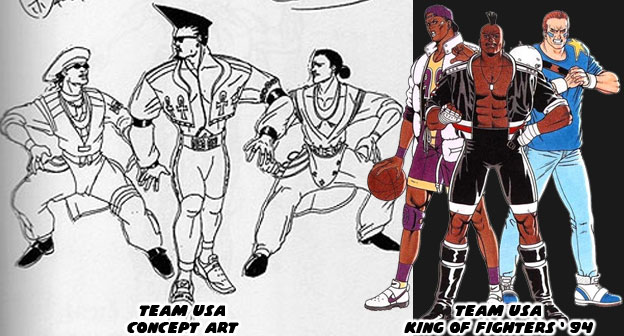
Decades ago fashion trends travelled much slower than they did today. The artists at SNK wanted international audiences to visually identify the US team because of how they looked, rather than what school of fighting they were representing. In order to do this they had to create archetypes that were wearing the most “Western” costumes. The people at SNK were using fashion cues from pop culture as the basis. The only problem was that street culture evolved rapidly. The look of the US fighters were reminiscent of dancers from the films Beat Street and music videos from Salt-N-Pepa and Queen Latifah. The spandex and leather outfits of the late ‘80s were quite outdated for a game dropping in 1994. Thankfully the studio revised the outfits and based the fighters more on sports icons. A hint of the street fashion remained but for the most part it worked given the character. Heavy D, the captain of the team (and a name pulled from a popular rapper) was a breath of fresh air. He was a boxer that completely rewrote the book on character design. In the next entry we’ll look at how SNK’s designs evolved post 1994. As always if you enjoyed this blog and would like to sponsor me please visit my Patreon page and consider donating each month, even as little as $1 would help make better blogs and even podcasts!
It was no coincidence that Street Fighter II's boxer M. Bison (Balrog in the USA) looked like pro boxer Mike Tyson. Capcom used the heavyweight champ as the template for their ring general earlier. Tyson had launched his professional career in 1985 and was featured in a version of Nintendo's Punch-Out!! He helped inspire the character Mike in the original Street Fighter as well. Tyson dominated the squared circle, at the age of 20 he became the youngest ever to win a heavyweight title. He earned a reputation for being destructive, and often knocked out opponents shortly after the opening bell. His supernatural fighting ability made him the perfect candidate for a fighting game. Of course Capcom didn't want to pay the boxer any royalties for using his likeness so they made a few changes, swapping out his name with another Shadowlaw general, and presented him in warmup gear. He was an easy fit into Street Fighter II and would even inspire a Fatal Fury boxer. Michael Max was literally cut from the same cloth as Bison, both having roughly the same size, shape, similar warmup gear and even haircut. Audiences felt this character was lacking, even if he had a unique tornado uppercut.
SNK's follow-up boxer had a more unique look. The bald and pudgy Axel Hawk was a friend and trainer for Michael Max. This fighter, featured in Fatal Fury 2, was taller and heavier than his protege. From a design standpoint it was strange to have a character that was older and fatter than the previous star. From a real-world influence however it made sense. George Foreman was a legendary heavyweight fighter that started his career in 1969 and stopped fighting at the end of the '70s. He became a preacher but returned to the ring in the late '80s. He got a title shot against Bernard Hopkins, a fighter 16 years younger than he was. Foreman recaptured the heavyweight championship at the age of 45, making him the oldest person ever to win the title. It was an underdog story that inspired long-time boxing fans. Chances were that SNK boss and boxing aficionado Eikichi Kawasaki suggested a version of Foreman for the sequel. Axel was a bit more rotund, especially in the official character art, than Foreman but they both had amazing power behind their strikes. Pop culture tended to color the SNK character designs more than any other studio. Aside from real-world fighters there were also decisions based on popular aesthetics. This was seen on another boxer in the SNK universe.
Micky Rogers was the boxing archetype introduced in the AoF series. The character sported braids in his first appearance and the look was changed slightly when he appeared again in a sequel. Visually the fighters in the AoF series were much different than the figures in FF. The artists working on the characters tried to make them more proportional to actual people. The reason for this was because of the larger sprites that AoF featured. If the character were drawn too muscular it would have looked awkward when they were scaled up. The fighters would have looked like cartoon characters in an otherwise realistic setting. Micky looked anemic compared to some of the other characters. He was lanky but well defined. It made sense given he was a boxer where speed was often more prized than power. The manga Ashita No Joe was a wildly popular boxing manga from Japan. The artist Tetsuya Chiba would draw his character with long, lean muscles. The action was easy to follow on the page because of his slender lines. This style of art that he popularized in 1968 would end up influencing countless other manga and anime shows about boxing. I believe that this design also found its way to SNK, given the Mr. Kawasaki was a boxing fan. Micky had almost the same build as characters like Joe or Rikishi, the champion fighters from the book.
SNK, like most major arcade publishers realized that in order to succeed they had to become global players. This meant that they had to include fighters from other countries, especially the USA. Capcom and a few other studios included fighters from the USA in their games but gave them the slightest connection to real western culture. Joe and Mike in the original Street Fighter looked very plain, wearing street clothes, they were somewhat forgettable. The studio punched up their efforts with Guile in SF II. If anything they were pandering quite heavily to each nation, easily to the point of parody. Look at Zangief and Dhalsim’s original endings. Even the American was over-the-top. He was a military fighter wearing camouflage pants, with an absurd haircut, that was all muscles, and sported USA flag tattoos. As a Mexican-American I can confess that I must run into people that look like Guile at least twice a day! SNK did a slightly better job with their US characters and realistic street fashion in both the FF and AoF games. They decided to really crank it up with each sequel. They payed close attention to the trends happening in tv and in movies. When the studio began work on the King of Fighters, which would bridge all of their fighting games together they began pandering heavily to the USA. They did this by making the US team captain a boxer, and by looking at pop culture for his design cues.
Decades ago fashion trends travelled much slower than they did today. The artists at SNK wanted international audiences to visually identify the US team because of how they looked, rather than what school of fighting they were representing. In order to do this they had to create archetypes that were wearing the most “Western” costumes. The people at SNK were using fashion cues from pop culture as the basis. The only problem was that street culture evolved rapidly. The look of the US fighters were reminiscent of dancers from the films Beat Street and music videos from Salt-N-Pepa and Queen Latifah. The spandex and leather outfits of the late ‘80s were quite outdated for a game dropping in 1994. Thankfully the studio revised the outfits and based the fighters more on sports icons. A hint of the street fashion remained but for the most part it worked given the character. Heavy D, the captain of the team (and a name pulled from a popular rapper) was a breath of fresh air. He was a boxer that completely rewrote the book on character design. In the next entry we’ll look at how SNK’s designs evolved post 1994. As always if you enjoyed this blog and would like to sponsor me please visit my Patreon page and consider donating each month, even as little as $1 would help make better blogs and even podcasts!
Labels:
art of fighting,
ashita no joe,
axel hawk,
boxer,
boxing,
fatal fury,
george foreman,
guile,
heavy d,
hip hop,
m bison,
michael max,
micky rogers,
mike tyson,
neo geo,
rap,
rikishi,
snk,
usa
Thursday, September 28, 2017
Hiding the master in plain sight, the genius of SNK's character design...part 2
Fatal Fury introduced audiences to the SNK school of fighting game design. Audiences could now choose between traditional masters like Joe Higashi, street fighters like Terry Bogard, or a hybrid fighter like Andy Bogard. By contrast the Capcom school of design was rooted closer to featuring only martial arts archetypes. The fighters all wore costumes that looked classic, they each represented a certain school of fighting. Almost none of the characters in Street Fighter II wore street clothing, whereas many of those in Fatal Fury did. This boiled down to the people that were developing the games. Takashi Nishiyama and Hiroshi Matsumoto put literal street fighters in the original Street Fighter. People like Mike, Joe and Birdie fought in their everyday clothing. These things carried over into Fatal Fury’s cast. It was Yoshiki Okamoto, Akira Nishitani and Akira Yasuda that decided to focus on archetypes for Street Fighter II. SNK boss Eikichi Kawasaki wanted his fighting games to be the biggest and the best, his new title, developed by Mr. Matsumoto was the most ambitious.
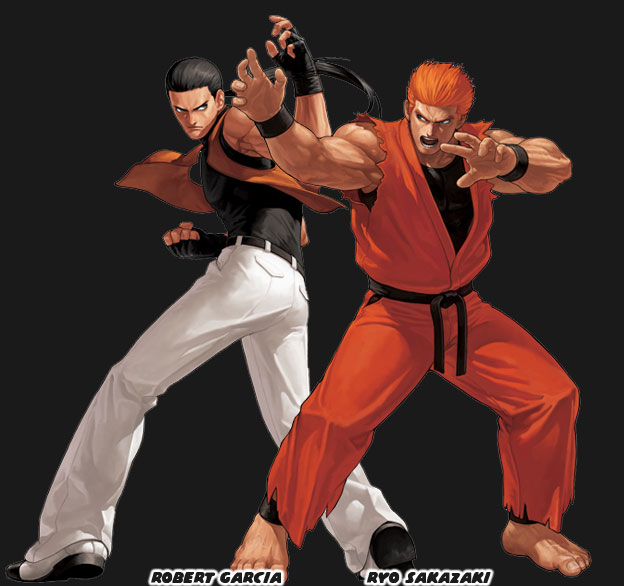
Mr. Matsumoto wanted The Art of Fighting (AoF) to be more cinematic, to look and feel like an action movie. To be more visceral than any game before it. Like Street Smart and Fatal Fury there was a mix of the traditional martial arts master and the street fighter as playable characters. The fictional Kyokugenryu Karate style was placed on both Robert Garcia and Ryo Sakazaki. The two were evolved from the Ken and Ryu template respectively. This new game was really pushing the power of the Neo Geo console. It featured more color, more detail and sprites bigger than the competition’s. Not to mention that it had graphics that zoomed in and out of the action. These sprites could also reveal damage. Characters bruised and their clothing tore from round to round. There was even a slight RPG element as characters could grow and evolve thanks to the lessons learned in the bonus stages. The genius of this game came in the planning stages. If SNK wanted to dethrone Capcom as the best fighting game developer then they had to offer the best experience. Although Fatal Fury and the Art of Fighting looked and played differently they were part of the same shared universe. This meant that at some point there would be a crossover game featuring a massive library of established characters.
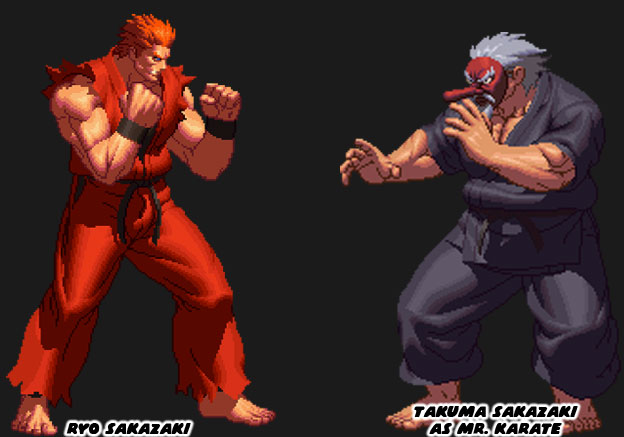
The entire cinematic feel of AoF was not lost on audiences. The figures in the game had more realistic proportions and looked less cartoonish than their rivals. It was much easier to get pulled into this world as bits and pieces of the story were revealed in between every stage. Yuri Sakazaki, the young sister of Ryo had been kidnapped. It was up to Ryo and Robert to find and save her. Every person that the duo faced had been hired or bribed by Mr. Big, a South Town mob boss. Each encounter brought them one step closer to the truth. At the end of the journey Ryo found out that the kidnapper was a martial arts master known as Mr. Karate. At the climax of the game Yuri stopped her brother from killing Mr. Karate. She cried out that man was their father. This was an exceptional plot twist and something that set up a sequel. It turned out that both Mr. Big and Mr. Karate answered to Geese Howard. Now that Yuri was safe there would be a reckoning between the Sakazaki family and Howard. Imagine how confident Geese must have been in his abilities by also starting a war with the Bogard brothers at around the same time. Story points aside the AoF game is one of the perfect examples of the SNK school of design. I’ll begin with one of the best masters hidden in plain sight.
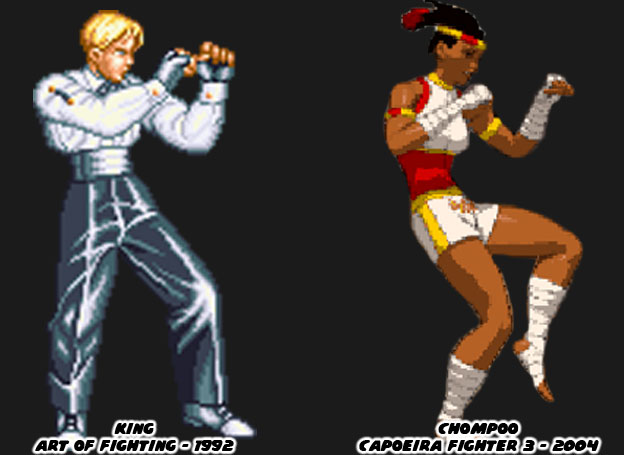
A while back I talked about how the traditional Muay Thai master ended up in fighting games. I called Chompoo the first notable female Muay Thai master in a fighting game. This angered a lot of SNK fans because the character King predated her by more than 20 years. In context I was talking about actual Thai fighters that dressed in the traditional fighting uniforms. Chompoo had the shorts, taped up hands and feet and even headdress. I was not talking about characters that knew Thai boxing. With that said let’s actually look at the elements that went into making King and why she had a fantastic design. First off she wore a suit, close to that of a bartender in a high class restaurant. She had the familiar stance, hands up for striking and moving on the balls of her feet. If you had asked any other designer to create a female Muay Thai master you probably would have ended up with someone that looked more like the character by Saeed Jalabi. Saeed hit all of the traditional notes perfectly. The shorts, headdress and even wrapped cords of older, classical forms of the Thai boxing arts. Any audience member could look at the design and know instantly this was some sort of fighter. Even if the gamer was not familiar with the fighting arts they could still tell a few things about her. The athletic frame, toned muscles, wrapped hands and feet were meant for striking. This was not a ceremonial costume but one for competition.
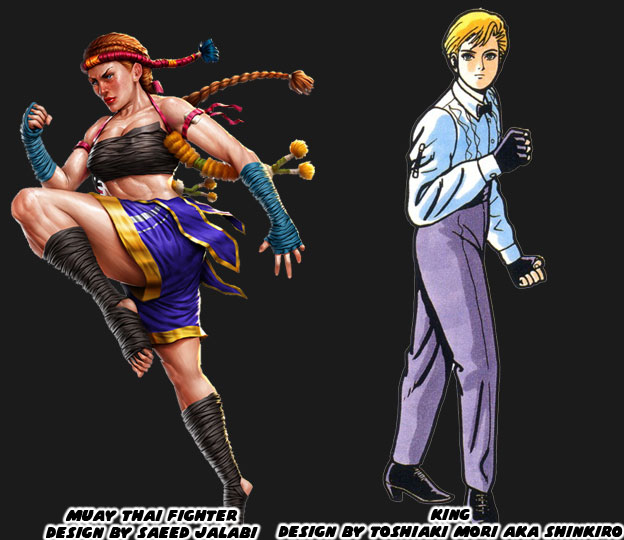
By contrast look at the design that Toshiaki Mori came up with. The SNK designer would become one of the most influential artists of all time. Most people would recognize him by his pen name, Shinkiro. He didn’t approach his designs the way one would have expected. What made his work so great was how down-to-Earth every figure was. When he was helping create the costumes for the AoF cast he knew to make each character fit the story. As Robert and Ryo made their way through South Town the people they fought reflected a certain part of the city. The thugs looked like biker gang members, those in the military wore fatigues. Having a half-naked Muay Thai fighter in a classy restaurant would not have made any sense. But what about one dressed like a bartender? The uniform was central to the character. Modern martial arts movies featured characters that wore deceptive clothing. One the first examples was the tuxedo that Robert Baker wore when he fought Bruce Lee in Fist of Fury (1972). Bruce Lee helped bring classic wuxia or Chinese hero stories into the modern era. The same thing was true of the suit that Benny Urquidez wore when he fought Jackie Chan in Wheels on Meals (1984).
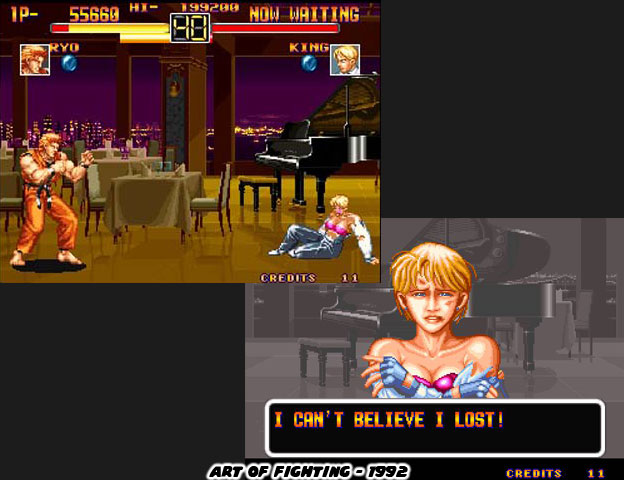
The suit was deceptive but that was only one layer of Shinkiro’s design. King looked like an effeminate man, or perhaps a boy. Audiences had been conditioned to expect 99% of the people they fought to be men. Up until that point Fan from Yie Ar Kung-Fu was the only female opponent in a fighting game and Chun-Li from Street Fighter II was the only playable female character. Audiences expected a female martial artists to be wearing a traditional dress. That whole idea was turned upside down if players tore the blouse off of King with a special attack. That was when it was revealed that she was wearing a bra underneath. That violent act made the game feel far more mature than any other title. This sort of turn was something that you would expect in a movie and certainly not in a game. SNK hid the reveal right until the end, going so far as to name the character King instead of Queen. In doing so it made the design very memorable. This master of the fighting arts was hiding in plain sight. She would be the perfect example as to what set SNK apart from the competition.
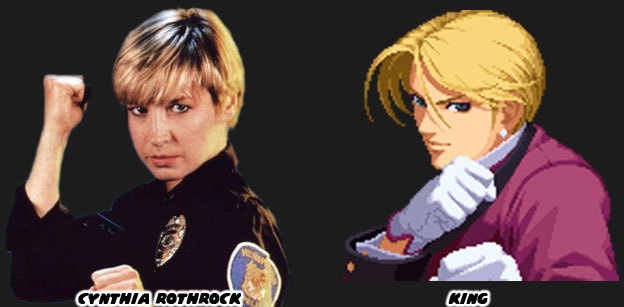
If you have been reading my blogs for a while then you know that I like to dig into the influences behind the various characters. For King the most obvious comparison would be with the martial arts star Cynthia Rothrock. Since 1985 Cynthia had been featured in a string of movies, mostly produced overseas. Women hadn’t really been considered for leading roles in most Western-produced martial arts films. There have been exceptions of course in other action films such as the Black Widow from the Avengers films, Furiosa from Mad Max or Gazelle from the Kingsmen. Those characters were almost always in a supporting role and not the stars of the film. In Hong Kong however women could be the stars of the film. This was a tradition going back to 1928. Heroes came in all shapes (see the chubby Sammo Hung), sizes, and colors even. When Cynthia couldn’t land a role in a US film she was almost always guaranteed to find a spot in Hong Kong. The same thing was true for Ron Van Clief. As a black martial artist, and Army veteran he faced tremendous racism in the USA but was a welcome star in Hong Kong cinema.
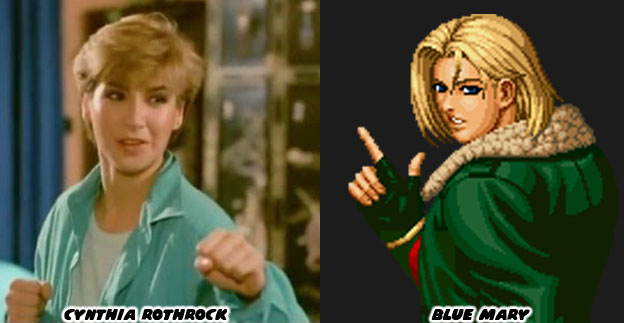
Cynthia’s trademark short haircut, lightning fast kicks and array of martial arts moves made her a stand out star. She had been actively involved in martial arts for a long time and was trained in different schools, including Tang Soo Do, Tae Kwon Do, Eagle Claw, Wu Shu, and both Southern and Northern Shaolin. She was able to hold her own against many men and women artists from Hong Kong, some of which learned fighting and acrobatics from the Chinese Opera, just like Jackie Chan. Cynthia often played a street smart cop, nicknamed China O’Brien in one of her more famous recurring roles. She was such a formidable figure that I would argue she not only influenced the design behind King but also Blue Mary, who turned up in the Fatal Fury series. This made Cynthia one of the rare real world figures that inspired the creation of more than one character, in more than one game series.
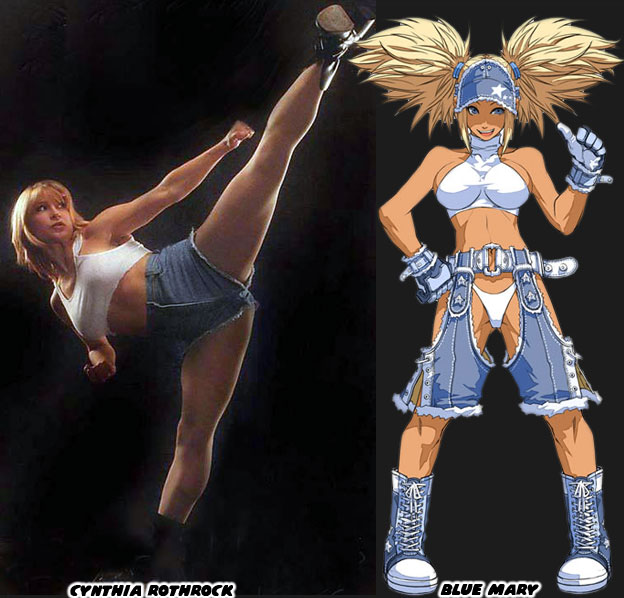
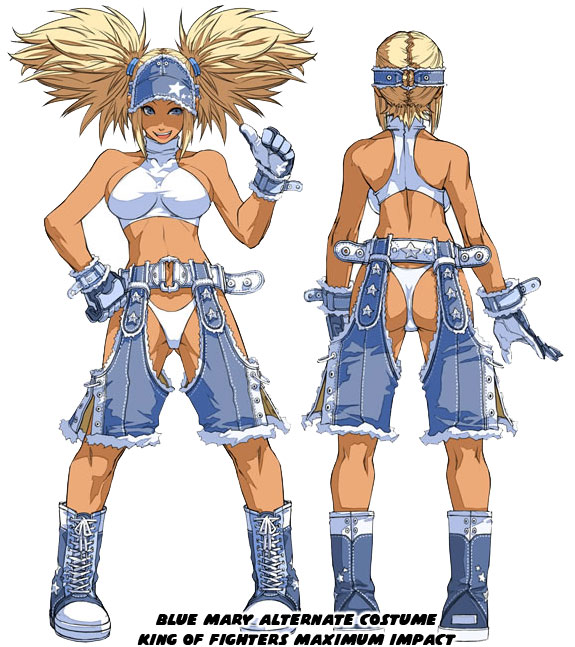
Cynthia was not shy about using her good looks in the roles she played. When the part called for it she would show some skin, tastefully of course. The people working at SNK were keenly aware of how the actress sexed up some of her parts or modeling shoots. Shinkiro did not outright try to make King a voluptuous, overly sexualized character. It would have destroyed any surprise waiting for audiences when they first saw her. It was the other artists working at the studio that started putting her in form-fitting suits, they turned her vest into a bustier and starting pushing her breasts out further and further. She would not longer appear androgynous following the AoF. Blue Mary had always been presented as the more sexualized of the designs. She was top heavy with an exposed midriff, wearing uniforms that were not standard law-enforcement. A very skimpy white top and denim bottom was created as an alternate costume for her in King of Fighters (KOF): Maximum Impact 2 Regulation A. This costume was inspired by an outfit worn by Rothrock in a modeling shoot. However we should confuse the two. The design behind King and her planning extended far into the lore or the SNK universe.
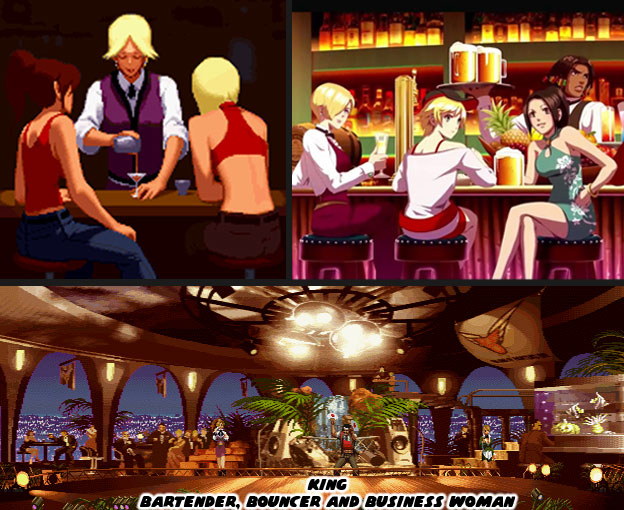
On the surface King was a very simple design. She had the skills and grace of a top bartender but with the power of a no-nonsense bouncer. On top of everything she was not going to remain as a bit player in South Town. The figures in the SNK universe had room to grow and the did in the various KOF sequels. The Sakazaki family opened Kyokygenryu schools, with Ryo entering tournaments to help spread its name. Andy and Terry Bogard travelled the globe following the trail of Geese Howard and making new allies along the way. King made fast friends with the other leading females in the KOF series. She partnered with the ninja Mai Shiranui and Kyokugenryu prodigy Yuri Sakazaki to form an all-women team. This was a first in fighting game history. She also partnered with them to open a club in a later timeline. King had taken her experience, including learning from Capoeira master Richard Meyer and his infamous Pao Pao Cafe, and applied it to her own business. She was ambitious and was destined to be a major player in South Town, yet unlike Geese Howard she was going to do this without resorting to extortion. King was an exceptional character design and easily one of the greatest fighting game characters ever created, female or otherwise. Artists and developers try to break into the genre should learn from SNK and see how they were able to hide these martial artists in plain site. The studio was able to hide masters in many ways. We will explore the ways they were able to do this in the next blog. As always if you enjoyed this blog and would like to sponsor me please visit my Patreon page and consider donating each month, even as little as $1 would help make better blogs and even podcasts!
Mr. Matsumoto wanted The Art of Fighting (AoF) to be more cinematic, to look and feel like an action movie. To be more visceral than any game before it. Like Street Smart and Fatal Fury there was a mix of the traditional martial arts master and the street fighter as playable characters. The fictional Kyokugenryu Karate style was placed on both Robert Garcia and Ryo Sakazaki. The two were evolved from the Ken and Ryu template respectively. This new game was really pushing the power of the Neo Geo console. It featured more color, more detail and sprites bigger than the competition’s. Not to mention that it had graphics that zoomed in and out of the action. These sprites could also reveal damage. Characters bruised and their clothing tore from round to round. There was even a slight RPG element as characters could grow and evolve thanks to the lessons learned in the bonus stages. The genius of this game came in the planning stages. If SNK wanted to dethrone Capcom as the best fighting game developer then they had to offer the best experience. Although Fatal Fury and the Art of Fighting looked and played differently they were part of the same shared universe. This meant that at some point there would be a crossover game featuring a massive library of established characters.
The entire cinematic feel of AoF was not lost on audiences. The figures in the game had more realistic proportions and looked less cartoonish than their rivals. It was much easier to get pulled into this world as bits and pieces of the story were revealed in between every stage. Yuri Sakazaki, the young sister of Ryo had been kidnapped. It was up to Ryo and Robert to find and save her. Every person that the duo faced had been hired or bribed by Mr. Big, a South Town mob boss. Each encounter brought them one step closer to the truth. At the end of the journey Ryo found out that the kidnapper was a martial arts master known as Mr. Karate. At the climax of the game Yuri stopped her brother from killing Mr. Karate. She cried out that man was their father. This was an exceptional plot twist and something that set up a sequel. It turned out that both Mr. Big and Mr. Karate answered to Geese Howard. Now that Yuri was safe there would be a reckoning between the Sakazaki family and Howard. Imagine how confident Geese must have been in his abilities by also starting a war with the Bogard brothers at around the same time. Story points aside the AoF game is one of the perfect examples of the SNK school of design. I’ll begin with one of the best masters hidden in plain sight.
A while back I talked about how the traditional Muay Thai master ended up in fighting games. I called Chompoo the first notable female Muay Thai master in a fighting game. This angered a lot of SNK fans because the character King predated her by more than 20 years. In context I was talking about actual Thai fighters that dressed in the traditional fighting uniforms. Chompoo had the shorts, taped up hands and feet and even headdress. I was not talking about characters that knew Thai boxing. With that said let’s actually look at the elements that went into making King and why she had a fantastic design. First off she wore a suit, close to that of a bartender in a high class restaurant. She had the familiar stance, hands up for striking and moving on the balls of her feet. If you had asked any other designer to create a female Muay Thai master you probably would have ended up with someone that looked more like the character by Saeed Jalabi. Saeed hit all of the traditional notes perfectly. The shorts, headdress and even wrapped cords of older, classical forms of the Thai boxing arts. Any audience member could look at the design and know instantly this was some sort of fighter. Even if the gamer was not familiar with the fighting arts they could still tell a few things about her. The athletic frame, toned muscles, wrapped hands and feet were meant for striking. This was not a ceremonial costume but one for competition.
By contrast look at the design that Toshiaki Mori came up with. The SNK designer would become one of the most influential artists of all time. Most people would recognize him by his pen name, Shinkiro. He didn’t approach his designs the way one would have expected. What made his work so great was how down-to-Earth every figure was. When he was helping create the costumes for the AoF cast he knew to make each character fit the story. As Robert and Ryo made their way through South Town the people they fought reflected a certain part of the city. The thugs looked like biker gang members, those in the military wore fatigues. Having a half-naked Muay Thai fighter in a classy restaurant would not have made any sense. But what about one dressed like a bartender? The uniform was central to the character. Modern martial arts movies featured characters that wore deceptive clothing. One the first examples was the tuxedo that Robert Baker wore when he fought Bruce Lee in Fist of Fury (1972). Bruce Lee helped bring classic wuxia or Chinese hero stories into the modern era. The same thing was true of the suit that Benny Urquidez wore when he fought Jackie Chan in Wheels on Meals (1984).
The suit was deceptive but that was only one layer of Shinkiro’s design. King looked like an effeminate man, or perhaps a boy. Audiences had been conditioned to expect 99% of the people they fought to be men. Up until that point Fan from Yie Ar Kung-Fu was the only female opponent in a fighting game and Chun-Li from Street Fighter II was the only playable female character. Audiences expected a female martial artists to be wearing a traditional dress. That whole idea was turned upside down if players tore the blouse off of King with a special attack. That was when it was revealed that she was wearing a bra underneath. That violent act made the game feel far more mature than any other title. This sort of turn was something that you would expect in a movie and certainly not in a game. SNK hid the reveal right until the end, going so far as to name the character King instead of Queen. In doing so it made the design very memorable. This master of the fighting arts was hiding in plain sight. She would be the perfect example as to what set SNK apart from the competition.
If you have been reading my blogs for a while then you know that I like to dig into the influences behind the various characters. For King the most obvious comparison would be with the martial arts star Cynthia Rothrock. Since 1985 Cynthia had been featured in a string of movies, mostly produced overseas. Women hadn’t really been considered for leading roles in most Western-produced martial arts films. There have been exceptions of course in other action films such as the Black Widow from the Avengers films, Furiosa from Mad Max or Gazelle from the Kingsmen. Those characters were almost always in a supporting role and not the stars of the film. In Hong Kong however women could be the stars of the film. This was a tradition going back to 1928. Heroes came in all shapes (see the chubby Sammo Hung), sizes, and colors even. When Cynthia couldn’t land a role in a US film she was almost always guaranteed to find a spot in Hong Kong. The same thing was true for Ron Van Clief. As a black martial artist, and Army veteran he faced tremendous racism in the USA but was a welcome star in Hong Kong cinema.
Cynthia’s trademark short haircut, lightning fast kicks and array of martial arts moves made her a stand out star. She had been actively involved in martial arts for a long time and was trained in different schools, including Tang Soo Do, Tae Kwon Do, Eagle Claw, Wu Shu, and both Southern and Northern Shaolin. She was able to hold her own against many men and women artists from Hong Kong, some of which learned fighting and acrobatics from the Chinese Opera, just like Jackie Chan. Cynthia often played a street smart cop, nicknamed China O’Brien in one of her more famous recurring roles. She was such a formidable figure that I would argue she not only influenced the design behind King but also Blue Mary, who turned up in the Fatal Fury series. This made Cynthia one of the rare real world figures that inspired the creation of more than one character, in more than one game series.
Cynthia was not shy about using her good looks in the roles she played. When the part called for it she would show some skin, tastefully of course. The people working at SNK were keenly aware of how the actress sexed up some of her parts or modeling shoots. Shinkiro did not outright try to make King a voluptuous, overly sexualized character. It would have destroyed any surprise waiting for audiences when they first saw her. It was the other artists working at the studio that started putting her in form-fitting suits, they turned her vest into a bustier and starting pushing her breasts out further and further. She would not longer appear androgynous following the AoF. Blue Mary had always been presented as the more sexualized of the designs. She was top heavy with an exposed midriff, wearing uniforms that were not standard law-enforcement. A very skimpy white top and denim bottom was created as an alternate costume for her in King of Fighters (KOF): Maximum Impact 2 Regulation A. This costume was inspired by an outfit worn by Rothrock in a modeling shoot. However we should confuse the two. The design behind King and her planning extended far into the lore or the SNK universe.
On the surface King was a very simple design. She had the skills and grace of a top bartender but with the power of a no-nonsense bouncer. On top of everything she was not going to remain as a bit player in South Town. The figures in the SNK universe had room to grow and the did in the various KOF sequels. The Sakazaki family opened Kyokygenryu schools, with Ryo entering tournaments to help spread its name. Andy and Terry Bogard travelled the globe following the trail of Geese Howard and making new allies along the way. King made fast friends with the other leading females in the KOF series. She partnered with the ninja Mai Shiranui and Kyokugenryu prodigy Yuri Sakazaki to form an all-women team. This was a first in fighting game history. She also partnered with them to open a club in a later timeline. King had taken her experience, including learning from Capoeira master Richard Meyer and his infamous Pao Pao Cafe, and applied it to her own business. She was ambitious and was destined to be a major player in South Town, yet unlike Geese Howard she was going to do this without resorting to extortion. King was an exceptional character design and easily one of the greatest fighting game characters ever created, female or otherwise. Artists and developers try to break into the genre should learn from SNK and see how they were able to hide these martial artists in plain site. The studio was able to hide masters in many ways. We will explore the ways they were able to do this in the next blog. As always if you enjoyed this blog and would like to sponsor me please visit my Patreon page and consider donating each month, even as little as $1 would help make better blogs and even podcasts!
Labels:
art of fighting,
blue mary,
chompoo,
cynthia rothrock,
design,
king,
mr karate,
muay thai,
pao pao,
robert,
ryo,
sakazaki,
shinkiro,
snk,
south town,
takuma
Friday, July 1, 2016
The legend of Blue Mary, or girls in fighting games, part 2...
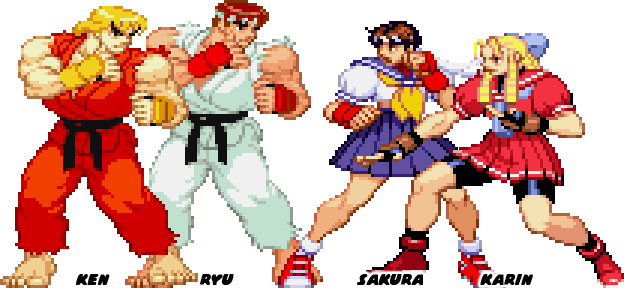
In the previous blog I talked about how Capcom and SNK were trading jabs at each other through the characters they had introduced in their own respective fighting games. The competition was healthy from a business standpoint and also for fans that were lining up to try each and every new game and update from the two publishers. SNK and Capcom both had established strong female characters early on yet SNK also did something more unique. The designers in-house created female characters that could be interpreted as counterparts to the male stars. It was a sort of symmetry that worked for the most memorable fighting games but not many studios recognized that symmetry and balance were things that helped make the cast unique while filling out a roster. When Sakura debuted in Street Fighter Zero it was obvious that she was filling in a role as a female counterpart to Ryu, as well as taking design cues from Yuri Sakazaki. Dan was a sort of balance to the cast, a way of taking two SNK-ish characters and putting them in Street Fighter continuity. Yet there was something missing. Capcom didn't realize it until comic book artist Masahiko Nakahira introduced Karin Kanzuki in his Sakura Ganbare! comics. Suddenly it was too obvious that Sakura needed her own rich, white, counterpart. Karin was officially added by Capcom to the lineup in Street Fighter Zero / Alpha 3. Audiences in the West did not see the comics that introduced her until more than a decade later when Udon translated them. It didn't matter however, the fair skin, red dress and blonde hair pretty much summed up what Karin was supposed to represent. Her unique trapping strikes made her stand out, she was not another "shotoclone." She was certainly more than a girl version of Ken.
SNK had established one of the most important rules in fighting game character designs before Capcom; the symmetry of female counterparts to be specific. It can be fair to say that I did not credit the studio enough for their contributions to the genre in earlier blogs. SNK was critical in the history of the genre and shaped not only their own legacy but influenced the creative decisions in rival studios. SNK developed many strong female character archetypes in every fighting game they produced. The women in these games varied in age, style and ability. Some were very young but capable, and some were closer in age and strength to the male stars of the game. The other studios developing fighting games for the Neo Geo were sometimes on board with the strong female characters but others had more sexual pandering designs in mind. Yuri was a cute character in the Art of Fighting, she was the kid sister of Ryo Sakazaki and not meant to be the main protagonist. It was a fighter in the Fatal Fury series that proved sex and strength could be found in equal measure. While developing this character the team at SNK looked at the elements that made the star of the series work. They then created a female counterpart with a similar look, down to the color schemes and nationality, but with completely different moves. In essence you could say that the studio was working on Karin Kanzuki years before Capcom or Masahiko Nakahira even thought about it. The name of this revolutionary character was Mary Ryan aka Blue Mary. She would become a counterpoint to Terry Bogard. She demonstrated that a fem fighter could be an important addition to the lineup and not just fan service.
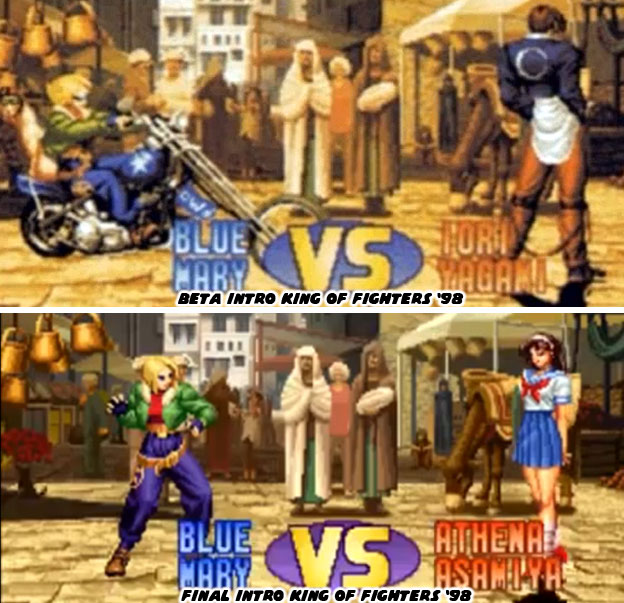
Blue Mary debuted in Fatal Fury 3 - Wild Ambition in 1995. Remember that both she and Yuri were playable characters in a fighting game before years before Sakura or Karin. Mary had a complex back story that would be unveiled over the years. It made her more than just a pretty face. Her origin helped the designers know how to present her in the series, how to include her into the plot and even figure out what techniques she would be using. Mary was always presented as a fearless, completely independent woman. Yet there was a good bit of planning behind this. Her father was a Secret Service Agent as was Butch her boyfriend. Both had taught her some fighting moves as did her own grandfather. Butch and her father were both killed in the line of duty. She believed strongly in justice and became a detective, working on and off for the law. When she debuted in Fatal Fury game there was nothing to lead players into thinking she was in a relationship. The two holdovers from her earlier life were put in plain site and only revealed later on. She was sometimes accompanied by a dog to her matches. This was Antonio or Anton for short, he was a puppy when Mary and Butch adopted him. She also wore a bomber jacket to the the fights, this was a gift from Butch before he passed away. Blue Mary could sometimes be seen riding a motorcycle. It was the obvious choice for a cool American character and a trait that was unique to her. In an early build of the King of Fighters '98 Blue Mary had the trifecta introduction, the motorcycle, her jacket, and Anton riding in the back with goggles on. I'm not sure why the intro was dropped in the final build. Maybe it was too masculine for Japanese tastes?
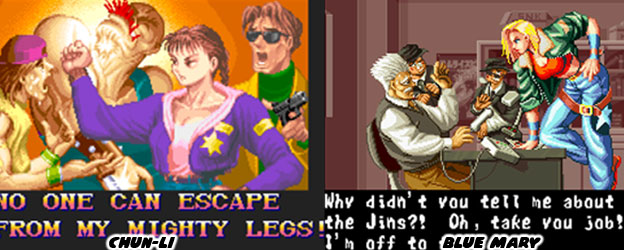
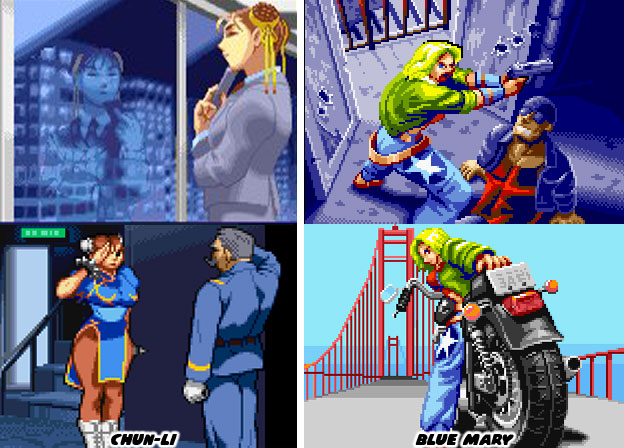
Blue Mary was as far from the dainty-fighter archetype as one could get. She was not the damsel in distress and she was certainly not the prize for any male lead. This character had a lot in common with the first female Street Fighter legend. Chun-Li's father was assassinated by Balrog (Claw), one of the generals of Shadowlaw (Shadaloo). She joined the police academy to obtain justice and eventually worked her way up to ICPO officer. She was a no-nonsense character behind the badge, especially while wearing her plain clothes uniform. What made her unique among the other female icons was that she could then switch her role and appear very feminine in the Street Fighter tournament. She wore nylons and a form-fitting, pseudo traditional dress. Blue Mary did not have this second layer of design. She was more like the female leads in other fighting games. The person that you saw in the pre-round animations and at the end of the game still looked the same.
The design and presentation of Blue Mary was deliberate. She was the cool cop, the rogue that didn't necessarily take orders, a trope created in Western films and shows like Lethal Weapon and Miami Vice. She was a hard drinking, door kicking, motorcycle riding, crime busting bad ass. You could almost imagine the character starring in her own crime action series. Chun-Li was much more reserved. Her time in the academy made her a student of the criminal mind. She began looking at the big picture instead of focusing on stopping individual crimes as she matured through the events of Street Fighter Zero and Street Fighter II. She knew that avenging the death of her father was only one piece of a bigger puzzle. The crimes, drugs, arms flooding the streets in Asia were being controlled by a central kingpin. It was revealed that General Vega had ordered the hit on her father. She would figure out that it was Shadowlaw trying to destabilize several countries in the south. She was instrumental in revealing this conspiracy and helping international forces take down their base of operations. She became a decorated officer in the process. Blue Mary on the other hand wasn't looking for accolades. She wanted to do her job and keep scum off the streets, even if it meant taking down a powerful kingpin in hand-to-hand combat. She was fearless, if slightly foolish, in that regard.
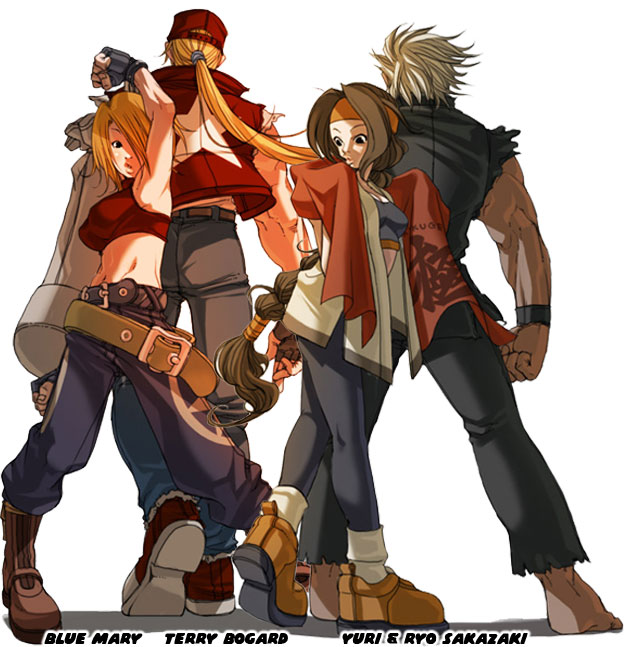
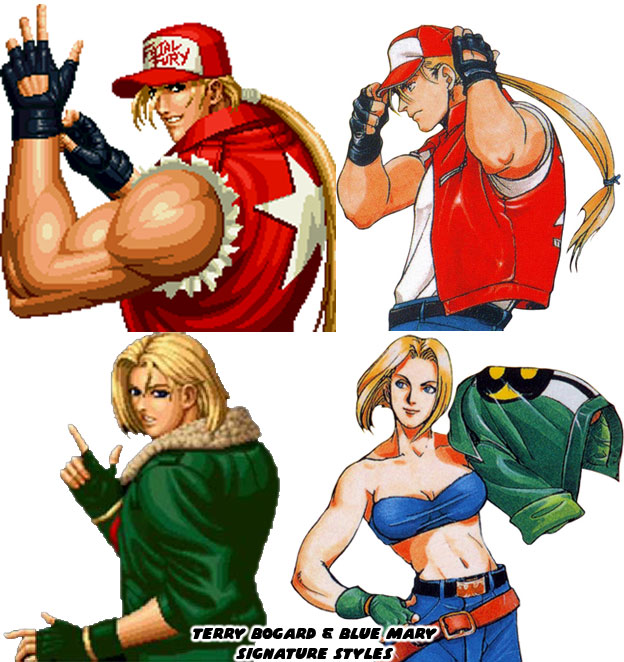
The physical appearance of Blue Mary was molded very closely on Terry Bogard the breakout star of the Fatal Fury series. The Japanese designers didn't really have a point of reference for white American martial arts stars. There were a few notable fighters in the '60s, '70s and '80s that did travel to Japan and abroad. Chuck Norris, Joe Lewis and Bill "Superfoot" Wallace were some of the high-profile white martial artists that made a name for themselves. They appeared on the popular ABC Wide World of Sports broadcasts and on the covers of Black Belt magazine. They were inspiring millions of white Americans to pursue the fighting arts while Bruce Lee and Jim Kelly were opening the eyes of minorities. Yet none of the men were big enough to have their own comic book or cartoon series in Japan, like Mas Oyama and Yoshiji Soeno. To be fair Chuck Norris did have his own cartoon and toy line in the USA in the '80s and Lee had his own comic book series as well. To the mainstream Japanese and many of the artists working at both SNK and Capcom they simply didn't know what made white America unique. They had a few fashion cues from our music videos, television shows and action films. This was what they used when creating Terry Bogard, and for that matter many of the other western characters in Capcom games as well. Stop and think about it for a second, if you were born in the USA and had a reputation for fighting would you wear jeans, a bright red jacket with a star on the back and a trucker cap? Maybe you would wear something more subdued, something that didn't attract too much attention especially from gangs or even the cops. Of course the developers in Japan assumed that their customers needed to see that trope, that stereotype in order to identify the cast. The American needed primary colors that were red, white and blue.
The designers at SNK didn't have to try very hard when creating their new cool female character. They changed some of the colors and dropped the cap but Blue Mary had a signature style that was very much reminiscent of Terry's, The physical similarities didn't end there. Both were blonde, it reinforced the idea that white people were mostly of English descent. Think about how many white characters, especially the early ones in fighting games were blonde. Ken and Joe in the original Street Fighter, Cody in Final Fight, the wrestler in Street Smart, Guile in Street Fighter II, Galford in Samurai Spirits, Ray in Fighter's History, Paul Phoenix in Tekken, Jacky Bryant in Virtua Fighter… the list goes on. It was a bit of racial pandering on the part of the developers. They assumed that most players in the West would want to try a character from their homeland before they tried an Asian character. It was logical thinking. What they often missed were the details that made the characters really "American" or "English" or "French." But I digress. That was only part of the reason why the characters were blonde. The primary colors that were assigned to the costumes needed balance. Most of the Japanese characters practiced karate and their gi was typically white. That costume contrasted well with black hair. They couldn't assign white costumes to the white characters with blonde hair, there wasn't enough contrast. So solid colors like red, green and blue were given to these fighters instead. Blonde hair worked well with those colors and the tradition more or less stuck.
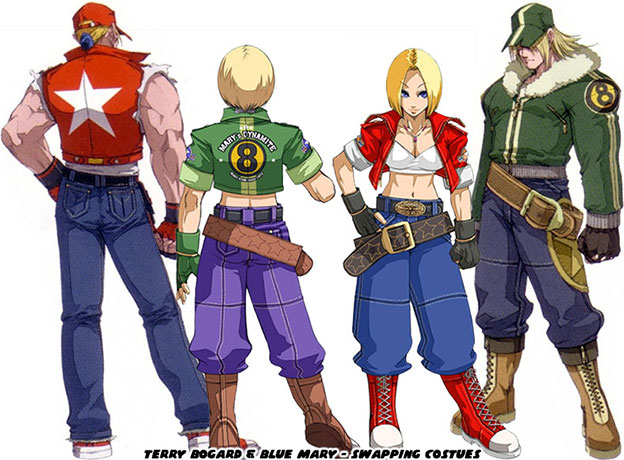
The color choices assigned to Terry and Mary were complimentary. Mary had a few differences in her uniform that made her stand apart. Her pants were not blue jeans but a darker purple with a large sheriff star on the side. She ditched the sneakers for boots and she wore a wide belt on her hips. It was a look that was a little more biker than brawler. It worked so well for her that it was considered as an acceptable alternate costume for Terry in the King of Fighters Maximum Impact game. The opposite was true and Mary could wear Terry's clothing and everything looked great. What was disappointing however was her alternate costume. Terry was given a "B" costume known as the Wild Wolf which was how he appeared in the Garou: Mark of the Wolves game. That version of Fatal Fury was set in the future where Terry was an older and more experienced fighter. He wore a large bomber jacket, boots and let his hair loose. Gone were the sneakers and over-the-top red, white and blue color scheme. Terry was given a look that was more like a biker. Sadly Blue Mary did not get the same Wild Wolf treatment. Instead she was presented in a white bikini with nonsensical jean chaps and a jean visor. Any modicum of respect the original designers meant for her went right out the window. It was unapologetic fan service that didn't fit the character, her origin or any previous appearance.
Blue Mary was a female fighter that defied convention. Her appearance was one thing, the moves she featured in game were something else. In the next blog we will take a closer look at the things that made Blue Mary memorable. As always if you enjoyed this blog and would like to sponsor me please visit my Patreon page and consider donating each month, even as little as $1 would help make better blogs and even podcasts!
SNK had established one of the most important rules in fighting game character designs before Capcom; the symmetry of female counterparts to be specific. It can be fair to say that I did not credit the studio enough for their contributions to the genre in earlier blogs. SNK was critical in the history of the genre and shaped not only their own legacy but influenced the creative decisions in rival studios. SNK developed many strong female character archetypes in every fighting game they produced. The women in these games varied in age, style and ability. Some were very young but capable, and some were closer in age and strength to the male stars of the game. The other studios developing fighting games for the Neo Geo were sometimes on board with the strong female characters but others had more sexual pandering designs in mind. Yuri was a cute character in the Art of Fighting, she was the kid sister of Ryo Sakazaki and not meant to be the main protagonist. It was a fighter in the Fatal Fury series that proved sex and strength could be found in equal measure. While developing this character the team at SNK looked at the elements that made the star of the series work. They then created a female counterpart with a similar look, down to the color schemes and nationality, but with completely different moves. In essence you could say that the studio was working on Karin Kanzuki years before Capcom or Masahiko Nakahira even thought about it. The name of this revolutionary character was Mary Ryan aka Blue Mary. She would become a counterpoint to Terry Bogard. She demonstrated that a fem fighter could be an important addition to the lineup and not just fan service.
Blue Mary debuted in Fatal Fury 3 - Wild Ambition in 1995. Remember that both she and Yuri were playable characters in a fighting game before years before Sakura or Karin. Mary had a complex back story that would be unveiled over the years. It made her more than just a pretty face. Her origin helped the designers know how to present her in the series, how to include her into the plot and even figure out what techniques she would be using. Mary was always presented as a fearless, completely independent woman. Yet there was a good bit of planning behind this. Her father was a Secret Service Agent as was Butch her boyfriend. Both had taught her some fighting moves as did her own grandfather. Butch and her father were both killed in the line of duty. She believed strongly in justice and became a detective, working on and off for the law. When she debuted in Fatal Fury game there was nothing to lead players into thinking she was in a relationship. The two holdovers from her earlier life were put in plain site and only revealed later on. She was sometimes accompanied by a dog to her matches. This was Antonio or Anton for short, he was a puppy when Mary and Butch adopted him. She also wore a bomber jacket to the the fights, this was a gift from Butch before he passed away. Blue Mary could sometimes be seen riding a motorcycle. It was the obvious choice for a cool American character and a trait that was unique to her. In an early build of the King of Fighters '98 Blue Mary had the trifecta introduction, the motorcycle, her jacket, and Anton riding in the back with goggles on. I'm not sure why the intro was dropped in the final build. Maybe it was too masculine for Japanese tastes?
Blue Mary was as far from the dainty-fighter archetype as one could get. She was not the damsel in distress and she was certainly not the prize for any male lead. This character had a lot in common with the first female Street Fighter legend. Chun-Li's father was assassinated by Balrog (Claw), one of the generals of Shadowlaw (Shadaloo). She joined the police academy to obtain justice and eventually worked her way up to ICPO officer. She was a no-nonsense character behind the badge, especially while wearing her plain clothes uniform. What made her unique among the other female icons was that she could then switch her role and appear very feminine in the Street Fighter tournament. She wore nylons and a form-fitting, pseudo traditional dress. Blue Mary did not have this second layer of design. She was more like the female leads in other fighting games. The person that you saw in the pre-round animations and at the end of the game still looked the same.
The design and presentation of Blue Mary was deliberate. She was the cool cop, the rogue that didn't necessarily take orders, a trope created in Western films and shows like Lethal Weapon and Miami Vice. She was a hard drinking, door kicking, motorcycle riding, crime busting bad ass. You could almost imagine the character starring in her own crime action series. Chun-Li was much more reserved. Her time in the academy made her a student of the criminal mind. She began looking at the big picture instead of focusing on stopping individual crimes as she matured through the events of Street Fighter Zero and Street Fighter II. She knew that avenging the death of her father was only one piece of a bigger puzzle. The crimes, drugs, arms flooding the streets in Asia were being controlled by a central kingpin. It was revealed that General Vega had ordered the hit on her father. She would figure out that it was Shadowlaw trying to destabilize several countries in the south. She was instrumental in revealing this conspiracy and helping international forces take down their base of operations. She became a decorated officer in the process. Blue Mary on the other hand wasn't looking for accolades. She wanted to do her job and keep scum off the streets, even if it meant taking down a powerful kingpin in hand-to-hand combat. She was fearless, if slightly foolish, in that regard.
The physical appearance of Blue Mary was molded very closely on Terry Bogard the breakout star of the Fatal Fury series. The Japanese designers didn't really have a point of reference for white American martial arts stars. There were a few notable fighters in the '60s, '70s and '80s that did travel to Japan and abroad. Chuck Norris, Joe Lewis and Bill "Superfoot" Wallace were some of the high-profile white martial artists that made a name for themselves. They appeared on the popular ABC Wide World of Sports broadcasts and on the covers of Black Belt magazine. They were inspiring millions of white Americans to pursue the fighting arts while Bruce Lee and Jim Kelly were opening the eyes of minorities. Yet none of the men were big enough to have their own comic book or cartoon series in Japan, like Mas Oyama and Yoshiji Soeno. To be fair Chuck Norris did have his own cartoon and toy line in the USA in the '80s and Lee had his own comic book series as well. To the mainstream Japanese and many of the artists working at both SNK and Capcom they simply didn't know what made white America unique. They had a few fashion cues from our music videos, television shows and action films. This was what they used when creating Terry Bogard, and for that matter many of the other western characters in Capcom games as well. Stop and think about it for a second, if you were born in the USA and had a reputation for fighting would you wear jeans, a bright red jacket with a star on the back and a trucker cap? Maybe you would wear something more subdued, something that didn't attract too much attention especially from gangs or even the cops. Of course the developers in Japan assumed that their customers needed to see that trope, that stereotype in order to identify the cast. The American needed primary colors that were red, white and blue.
The designers at SNK didn't have to try very hard when creating their new cool female character. They changed some of the colors and dropped the cap but Blue Mary had a signature style that was very much reminiscent of Terry's, The physical similarities didn't end there. Both were blonde, it reinforced the idea that white people were mostly of English descent. Think about how many white characters, especially the early ones in fighting games were blonde. Ken and Joe in the original Street Fighter, Cody in Final Fight, the wrestler in Street Smart, Guile in Street Fighter II, Galford in Samurai Spirits, Ray in Fighter's History, Paul Phoenix in Tekken, Jacky Bryant in Virtua Fighter… the list goes on. It was a bit of racial pandering on the part of the developers. They assumed that most players in the West would want to try a character from their homeland before they tried an Asian character. It was logical thinking. What they often missed were the details that made the characters really "American" or "English" or "French." But I digress. That was only part of the reason why the characters were blonde. The primary colors that were assigned to the costumes needed balance. Most of the Japanese characters practiced karate and their gi was typically white. That costume contrasted well with black hair. They couldn't assign white costumes to the white characters with blonde hair, there wasn't enough contrast. So solid colors like red, green and blue were given to these fighters instead. Blonde hair worked well with those colors and the tradition more or less stuck.

The color choices assigned to Terry and Mary were complimentary. Mary had a few differences in her uniform that made her stand apart. Her pants were not blue jeans but a darker purple with a large sheriff star on the side. She ditched the sneakers for boots and she wore a wide belt on her hips. It was a look that was a little more biker than brawler. It worked so well for her that it was considered as an acceptable alternate costume for Terry in the King of Fighters Maximum Impact game. The opposite was true and Mary could wear Terry's clothing and everything looked great. What was disappointing however was her alternate costume. Terry was given a "B" costume known as the Wild Wolf which was how he appeared in the Garou: Mark of the Wolves game. That version of Fatal Fury was set in the future where Terry was an older and more experienced fighter. He wore a large bomber jacket, boots and let his hair loose. Gone were the sneakers and over-the-top red, white and blue color scheme. Terry was given a look that was more like a biker. Sadly Blue Mary did not get the same Wild Wolf treatment. Instead she was presented in a white bikini with nonsensical jean chaps and a jean visor. Any modicum of respect the original designers meant for her went right out the window. It was unapologetic fan service that didn't fit the character, her origin or any previous appearance.
Blue Mary was a female fighter that defied convention. Her appearance was one thing, the moves she featured in game were something else. In the next blog we will take a closer look at the things that made Blue Mary memorable. As always if you enjoyed this blog and would like to sponsor me please visit my Patreon page and consider donating each month, even as little as $1 would help make better blogs and even podcasts!
Wednesday, June 29, 2016
The legend of Blue Mary, or girls in fighting games, part 1...
Competition is good for health, good for business and good for the arts as well. Competition helps create an incentive to work harder, to work smarter and in some cases to offer something new and unique. In the fighting game universe there have been many okay games but only a few truly exceptional games. The greatest games caused the other studios to take notice. Those that worked hard and took a chance on a new idea were sometimes rewarded for their hard work. Competition created rivalries between some of the biggest publishers. Some of the rivalries were friendly and some were filled with tension. The worst of the rivalries were celebrated with legal battles. For the most part there were a few studios that could be considered on par with each other. Capcom and SNK had the 2D fighting game arena on lockdown while Namco and Sega were the two studios constantly pushing the envelope in 3D. Some of the design choices by one studio team would be ridiculed by another. Yet sometimes a good idea would be copied and refined by a rival studio. There was a fine line between parody and poaching. Capcom and SNK had a history of trading jabs with their earliest games. Street Fighter II was the undisputed king of fighting games when it debuted in 1991, however when SNK released the Art of Fighting (AoF) in 1992 Capcom thought that the main characters looked and fought very similar to Ken and Ryu. The star of the game, Ryo, even sounded too close to Ryu for comfort.
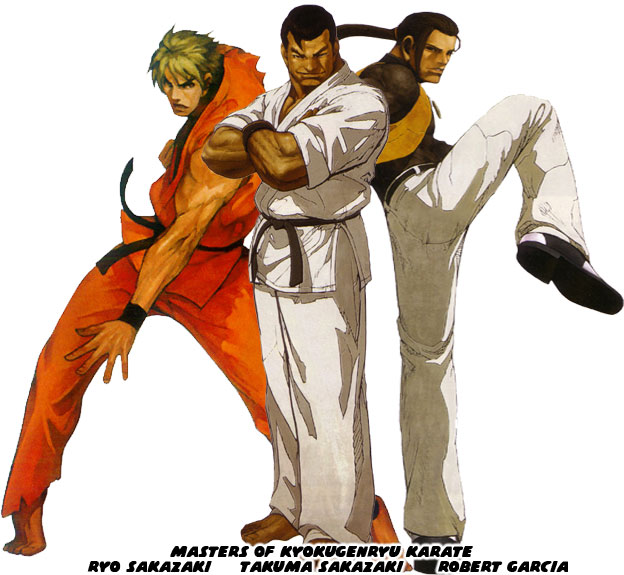
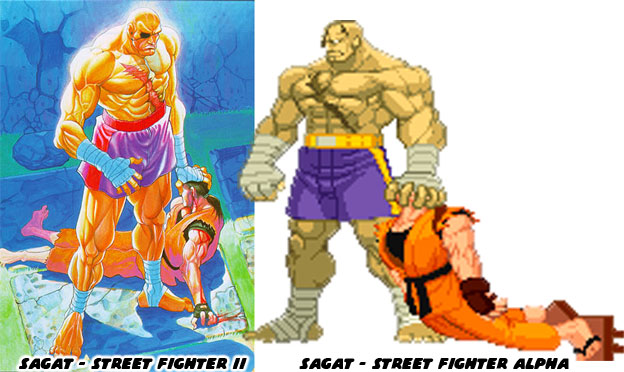
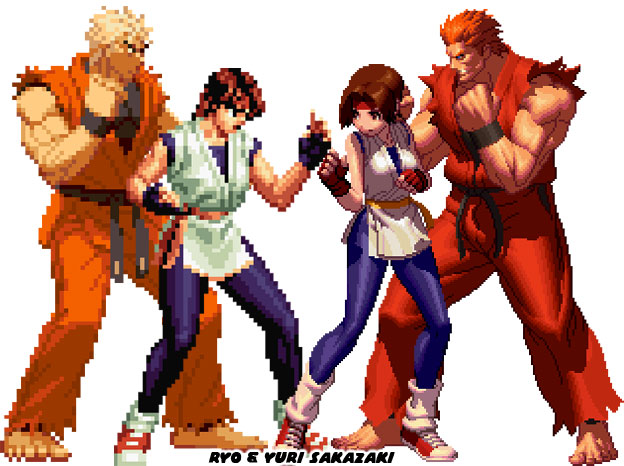
The masters of Kyokugenryu "Extreme Utmost Limit Way" Karate had very similar moves to both Ken and Ryu, including a leaping kick, rising uppercut and fireball attack. Arcade audiences saw these as the SNK version of the hurricane kick, dragon punch and fireball. Even the button and joystick moves required to perform these attacks were very similar to the control scheme created by Capcom. The artists and programmers working on the Street Fighter II updates didn't take too kindly to the AoF. When they were working on updated character art they made sure to let fans and SNK know exactly what they thought of their new fighters. Sagat was presented holding the head of a defeated opponent. Players could see blood, a dislocated elbow and a costume that was eerily similar to Ryo's but with the black hair and ponytail of Robert. The shots were fired but it didn't end there. A few years later they decided to make good on their comparison and created a sprite of the same character that would be featured in Sagat's opening animation. This defeated figure would become to be known as Gou Hibiki. Sagat was now going through the Street Fighter universe fighting all the karate masters so that he could gain an edge against Ryu. He killed Gou in the fight and that started a new round of shots aimed at SNK.
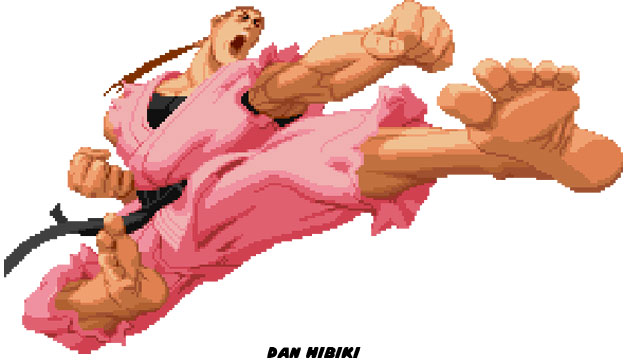
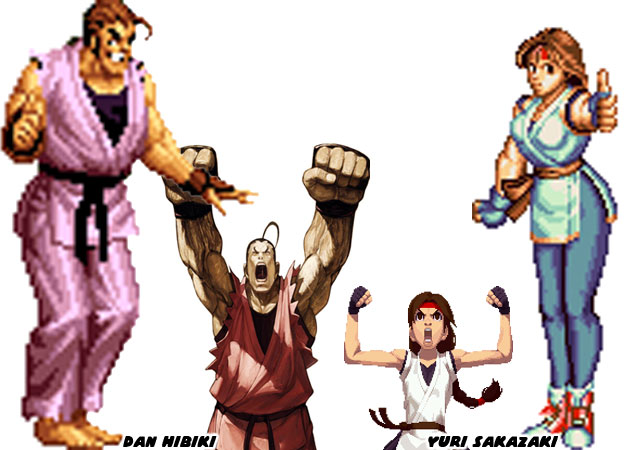
When Capcom was creating the intro animation for Sagat they had a bigger goal in mind. They were going to introduce an entirely new karate fighter into the universe. Someone who was an amalgamation of the two AoF stars. The result was Dan Hibiki, a square-jawed, long-haired karateka that appeared in Street Fighter Zero / Alpha in 1995. He wore pink because the color was somewhere in between Ryu's white and Ken's red gi. At first audiences didn't know what to make of him. In the original arcade release he could only be unlocked if you knew a secret code. This was rare for a Capcom fighting game, and especially for a Street Fighter title. The studio tended to shy away from time-release characters or secret characters for fear of upsetting the balance they had worked so hard to achieve. In the end it worked in favor of this new character. Dan was hopelessly underpowered when compared to the other fighters and this was all on purpose. His one-handed fireball didn't travel very far across the screen. Nor did his leaping triple kick or uppercut strike. It was obvious that Capcom was telling the team at SNK exactly what they thought of Kyokugenryu practitioners and their moves. Serious competitive players tended to stay away from Dan while the rest of the community chose him because of his unique move set.
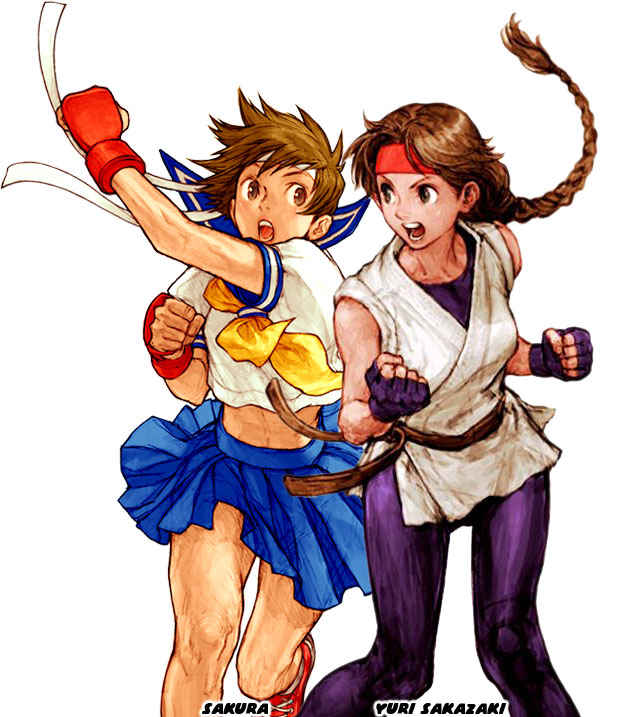
Dan was not the only character that Capcom was calling out. Sakura, who would become the most popular new character, was designed to be a girl version of Ryu. Yet even this character was not completely original. In the original Art of Fighting both Ryo Sakazaki and Robert Garcia were after Mr. Big and Mr. Karate because the young Yuri Sakazaki had been kidnapped. In the end she revealed that Mr. Karate was Takuma Sakazaki, the father of Ryo and herself. In 1994 SNK released a sequel which now made Yuri a playable character. The little sister had her own variation of the Kyokugenryu moves, they were not as strong as the men's attacks but were much faster. She even had her own unique look. Rather than wearing a traditional gi, she wore the top but mixed it with more contemporary leggings and sneakers. The design of her and her brother remained fairly consistent over the next 20 years. The sprites evolved, the aesthetics between games changed as new art directors were brought on board but very little changed between the siblings.
Street Fighter Zero / Alpha had gotten off to a great start but it felt lacking. Capcom revised it, added some familiar faces from Final Fight, the original Street Fighter and Street Fighter II. The newest face, Sakura, was the breakout star. She debuted in Street Fighter Zero 2 in 1996. Long-time fighting game fans saw the inclusion of Dan and Sakura a sort of jab at Ryo and Yuri. After all, if Capcom was going to call out their rival in a game why not go for broke? Yet there was a certain charm to the pair that was undeniable. They were far more than parody characters, they were far more than clones of SNK fighters or derivative Street Fighters. They were instead a blend of different influences that worked within Street Fighter continuity. Dan was the overly dramatic rival to Sagat, like a movie character he was driven by an intense feeling to avenge the death of his father. Dan was someone who was so outclassed he didn't even realize it. He also idolized his father and his fighting form "Saikyo-ryu" aka the "Strongest Style" even though it didn't stand up to the other forms in canon. Sakura on the other hand did not hail from a martial arts family. Her parents were regular people and little brother enjoyed playing video games more than anything. Her stage was even set in her own backyard instead of some fancy building , which reinforced that idea that she came from a regular household She was driven by a desire to achieve greatness and patterned her life after Ryu, her hero. She came a long way despite a lack of formal training and Dan decided to insert himself into her training routine even if she was technically a greater fighter. The inclusion of these two added some dimension and humor to a sometimes overly-serious plot. It didn't take long for the new characters to be embraced by the community. Fans all around the world drew art and used cosplay to let Capcom know how much they enjoyed these faces.
SNK should be remembered for their many, many, many contributions to the fighting genre. They are sometimes overlooked for how they changed the roles of female characters in fighters. Mai Shiranui from Fatal Fury / King of Fighters fame was arguably the most famous female character designed by the studio. She was the busty ninja that left little to the imagination. In the pantheon of female stars was was second only to Chun-Li in international fame. Yet Mai was far from being the only notable character created by the studio. King, who also debuted in the original Art of Fighting way back in 1992 was important for being the first androgynous character. Modeled loosely on the martial artist and action film star Cynthia Rothrock the blond striker was a force to be reckoned with. King would become more feminine in every subsequent game but in her original appearance players assumed that she was a effeminate young man. They thought that anyhow until her jacket top was torn, revealing that she had taped down her breasts to be a bouncer. Yuri was neither the sexy archetype, nor was she the tomboy but instead something in-between. She was a girl trying to be more than a girl version of her brother. She was trying to find her own voice and fit into the series.
Sometimes Yuri would be a little too enthusiastic, a little too vocal of her superior techniques. The team at Capcom picked up on these cues and instead of assigning them to Sakura they placed the mannerisms on Dan, which made him all the more comedic. Audiences could appreciate what the developers were going for with Yuri. She was the young upstart, eager to show the world what she was made of. Maybe she got herself into hot water but the other females in the series were often there to help out just as much as the male stars. Players could tell that when Yuri matured she would become a force of nature. The designers at SNK had a unique approach to the genre and the lessons they learned from their male cast would help color their female counterparts. We'll explore one of these characters in the next blog. I hope to see you back for that. As always if you enjoyed this blog and would like to sponsor me please visit my Patreon page and consider donating each month, even as little as $1 would help make better blogs and even podcasts!
The masters of Kyokugenryu "Extreme Utmost Limit Way" Karate had very similar moves to both Ken and Ryu, including a leaping kick, rising uppercut and fireball attack. Arcade audiences saw these as the SNK version of the hurricane kick, dragon punch and fireball. Even the button and joystick moves required to perform these attacks were very similar to the control scheme created by Capcom. The artists and programmers working on the Street Fighter II updates didn't take too kindly to the AoF. When they were working on updated character art they made sure to let fans and SNK know exactly what they thought of their new fighters. Sagat was presented holding the head of a defeated opponent. Players could see blood, a dislocated elbow and a costume that was eerily similar to Ryo's but with the black hair and ponytail of Robert. The shots were fired but it didn't end there. A few years later they decided to make good on their comparison and created a sprite of the same character that would be featured in Sagat's opening animation. This defeated figure would become to be known as Gou Hibiki. Sagat was now going through the Street Fighter universe fighting all the karate masters so that he could gain an edge against Ryu. He killed Gou in the fight and that started a new round of shots aimed at SNK.

When Capcom was creating the intro animation for Sagat they had a bigger goal in mind. They were going to introduce an entirely new karate fighter into the universe. Someone who was an amalgamation of the two AoF stars. The result was Dan Hibiki, a square-jawed, long-haired karateka that appeared in Street Fighter Zero / Alpha in 1995. He wore pink because the color was somewhere in between Ryu's white and Ken's red gi. At first audiences didn't know what to make of him. In the original arcade release he could only be unlocked if you knew a secret code. This was rare for a Capcom fighting game, and especially for a Street Fighter title. The studio tended to shy away from time-release characters or secret characters for fear of upsetting the balance they had worked so hard to achieve. In the end it worked in favor of this new character. Dan was hopelessly underpowered when compared to the other fighters and this was all on purpose. His one-handed fireball didn't travel very far across the screen. Nor did his leaping triple kick or uppercut strike. It was obvious that Capcom was telling the team at SNK exactly what they thought of Kyokugenryu practitioners and their moves. Serious competitive players tended to stay away from Dan while the rest of the community chose him because of his unique move set.

Dan was not the only character that Capcom was calling out. Sakura, who would become the most popular new character, was designed to be a girl version of Ryu. Yet even this character was not completely original. In the original Art of Fighting both Ryo Sakazaki and Robert Garcia were after Mr. Big and Mr. Karate because the young Yuri Sakazaki had been kidnapped. In the end she revealed that Mr. Karate was Takuma Sakazaki, the father of Ryo and herself. In 1994 SNK released a sequel which now made Yuri a playable character. The little sister had her own variation of the Kyokugenryu moves, they were not as strong as the men's attacks but were much faster. She even had her own unique look. Rather than wearing a traditional gi, she wore the top but mixed it with more contemporary leggings and sneakers. The design of her and her brother remained fairly consistent over the next 20 years. The sprites evolved, the aesthetics between games changed as new art directors were brought on board but very little changed between the siblings.

Street Fighter Zero / Alpha had gotten off to a great start but it felt lacking. Capcom revised it, added some familiar faces from Final Fight, the original Street Fighter and Street Fighter II. The newest face, Sakura, was the breakout star. She debuted in Street Fighter Zero 2 in 1996. Long-time fighting game fans saw the inclusion of Dan and Sakura a sort of jab at Ryo and Yuri. After all, if Capcom was going to call out their rival in a game why not go for broke? Yet there was a certain charm to the pair that was undeniable. They were far more than parody characters, they were far more than clones of SNK fighters or derivative Street Fighters. They were instead a blend of different influences that worked within Street Fighter continuity. Dan was the overly dramatic rival to Sagat, like a movie character he was driven by an intense feeling to avenge the death of his father. Dan was someone who was so outclassed he didn't even realize it. He also idolized his father and his fighting form "Saikyo-ryu" aka the "Strongest Style" even though it didn't stand up to the other forms in canon. Sakura on the other hand did not hail from a martial arts family. Her parents were regular people and little brother enjoyed playing video games more than anything. Her stage was even set in her own backyard instead of some fancy building , which reinforced that idea that she came from a regular household She was driven by a desire to achieve greatness and patterned her life after Ryu, her hero. She came a long way despite a lack of formal training and Dan decided to insert himself into her training routine even if she was technically a greater fighter. The inclusion of these two added some dimension and humor to a sometimes overly-serious plot. It didn't take long for the new characters to be embraced by the community. Fans all around the world drew art and used cosplay to let Capcom know how much they enjoyed these faces.

SNK should be remembered for their many, many, many contributions to the fighting genre. They are sometimes overlooked for how they changed the roles of female characters in fighters. Mai Shiranui from Fatal Fury / King of Fighters fame was arguably the most famous female character designed by the studio. She was the busty ninja that left little to the imagination. In the pantheon of female stars was was second only to Chun-Li in international fame. Yet Mai was far from being the only notable character created by the studio. King, who also debuted in the original Art of Fighting way back in 1992 was important for being the first androgynous character. Modeled loosely on the martial artist and action film star Cynthia Rothrock the blond striker was a force to be reckoned with. King would become more feminine in every subsequent game but in her original appearance players assumed that she was a effeminate young man. They thought that anyhow until her jacket top was torn, revealing that she had taped down her breasts to be a bouncer. Yuri was neither the sexy archetype, nor was she the tomboy but instead something in-between. She was a girl trying to be more than a girl version of her brother. She was trying to find her own voice and fit into the series.

Sometimes Yuri would be a little too enthusiastic, a little too vocal of her superior techniques. The team at Capcom picked up on these cues and instead of assigning them to Sakura they placed the mannerisms on Dan, which made him all the more comedic. Audiences could appreciate what the developers were going for with Yuri. She was the young upstart, eager to show the world what she was made of. Maybe she got herself into hot water but the other females in the series were often there to help out just as much as the male stars. Players could tell that when Yuri matured she would become a force of nature. The designers at SNK had a unique approach to the genre and the lessons they learned from their male cast would help color their female counterparts. We'll explore one of these characters in the next blog. I hope to see you back for that. As always if you enjoyed this blog and would like to sponsor me please visit my Patreon page and consider donating each month, even as little as $1 would help make better blogs and even podcasts!
Labels:
art of fighting,
bigmex,
capcom,
dan hibiki,
gou,
kyokugenryu,
parody,
robert garcia,
ryo,
sagat,
sakazaki,
sakura,
snk,
street fighter,
takuma,
yuri
Wednesday, April 30, 2014
The Legend of Kyokugen Karate, Marco Rodriguez
Mr. Karate represented the unbreakable will of Takuma Sakazaki. The man himself was flawed, aging and losing presence within the SNK universe. It was his alter ego that was the true boss that all of the other fighters feared. Mr. Karate never seemed to age, never seemed to get hurt and was an all powerful martial artist without equal. Takuma by comparison had lost his friends and wife in the rough city of Southtown. His children and students helped keep him together but there was always something bubbling under the surface. Many gamers could tell that even without the mask on there was a good portion of Mr. Karate living inside of Takuma. It was obvious by looking at the massive scar over his chest but not that many had seen the marks on his back. This was a person that had survived knife fights, sword fights and gun battles using his bare hands. This was also a person, like Mas Oyama, that had tested himself against wild animals.
The legend of Mr. Karate was what drew practitioners into Southtown, none of them was more important as a student and a character than Marco Rodriguez. This character was absent from my Coloring Perception series. I could not find a proper place to mention him with regards to black character designs in fighting games. Marco had one foot in the absurd design typical of many fighting game developers, yet he was not a clown. He had as many abilities and attacks as Takuma, Ryo, Robert or Yuri. It was his zest for the Kyokugen style that made him a standout. Rodriguez was not only the star pupil but also its biggest supporter. While the Sakazaki's were competing in the KOF tournaments, Buriki One tournament or chasing bad guys around in the Art of Fighting titles it had been Marco that kept the school alive, paid the bills, promoted the system. His eyes would well up with pride whenever he thought about Ryo and how much the school meant to him.
Marco had first appeared as a background character in Takuma's Art of Fighting (AoF) 2 stage. The designers never forgot him so when they redrew the stage for the King of Fighters XII they made sure to include his updated look with a pompadour and sideburns instead of braids. He was also sitting in the dojo laughing at the fighters, it said about the personality and the abilities of Rodriguez. Marco had first appeared as a playable character in Garou: Mark of the Wolves. It was notable because Marco was trained by Ryo and was the first Kyokugen fighter to appear in the Fatal Fury (FF) series. Released in 1999 Mark of the Wolves was the final game in the Fatal Fury series. Most fans of the SNK titles had wondered which star was the best fighter in the universe. Was it Ryo from the Art of Fighting or Terry Bogard from Fatal Fury? SNK would only tease gamers by saying that both universes were connected and even set within the same city and timeline. The boss character from Fatal Fury appeared as a boss in the Art of Fighting 2 yet none of the heroes ever crossed over until the original King of Fighters was released in 1994. However to fans it was a bit of a cop-out. The KOF series had mixed in a lot of other characters and changed the gameplay so that it was neither Fatal Fury nor the Art of Fighting. Both of the earlier games had a unique design aesthetic and control scheme. The sprites featured in the FF series were smaller with the gameplay being focused on allowed characters to jump between to or three different planes so that they could go around opponents. It was a precursor to the first 3D games. By comparison the AoF featured very large, highly detailed sprites and tried to capture a more realistic feel for the fighters. The characters could bruise and their clothes could even tear depending on how much damage the players sustained. Yet neither development team would allow for the stars from one title to appear on the other game.
Garou: Mark of the Wolves was the closest that the two universes would come together outside of the KOF. An older, stronger Terry Bogard was the star of the game yet there was one Kyokugen master in the game as well only it wasn't Ryo Sakazaki or Robert Garcia. Marco Rodriguez was a student of Ryo's and had committed himself completely to the art form. He was so dedicated in fact that he was living like a hermit in the nearby Sarah Forest, training in complete isolation in the same ways of the founder of Kyokugen. Marco had the same moves of the main AoF stars but the control and presentation was decidedly FF. It was a way to finally get both universes in one title without upsetting the rival fans.
Marco was an absolute zealot of the Kyokugen way. He even carried around a large wooden sign of the dojo whenever he fought. He was inspired by Willie Williams, a black US fighter that dedicated himself to the Kyokushin style back in '70s. He believed in the system with tremendous fervor and even moved to Japan to follow in the footsteps of Mas Oyama and train in many of the same places. In 1979 during second ever Kyokushin World Tournament, held in Tokyo Japan, Williams representing the USA competed and came in third. At the time it was the highest ranking for a non-Japanese and the record remained until 1987 when the Swiss-born Andy Hug came in second. In 1980 Williams fought Japanese wrestling icon Antonio Inoki in a highly publicized bout. Inoki had fought Muhammad Ali a few years prior to a draw in the pro wrestling vs boxing contest. This time he wanted to take on the massive American and see if karate was stronger than pro wrestling. The two battled for just over 5 minutes, the first half of which was mostly both men posturing and putting on a show but the last few were rough. This match also ended in a draw but Inoki would suffer from a broken rib and Williams from a broken arm. Williams would be kicked out of the organizing body of Kyokushin for participation in the fight.
Williams, like many people in the '60s and '70s, had become obsessed with Oyama's total karate system. The martial arts had exploded in popularity thanks to the kung-fu films of the Shaw Bros. and Bruce Lee. Westerners were eager to master these exotic arts and signed up for kung-fu, karate, judo and jujitsu classes. Those that stuck with the arts became some of the early masters outside of Japan. Marco was a caricature of Williams. The character not only trained like Takuma but he even lived like a hermit out in the woods in order to focus on just his training. At the start of his stage players actually got to see Rodriguez sparring with a bear dressed in a karate gi. It was a funny visual however players that were familiar with the legend of Mas Oyama remember that he had fought a bear during his many adventures. This encounter was retold in the Karate Baka Ichidai manga and animé series. The fight made the man a legend, yet to Willie Williams he saw it as a testament to Kyokushin. Williams was actually filmed sparring with a bear for the documentary "The Strongest Karate" which was a thinly veiled Kyokushin propaganda piece. Williams was tall and strong but even the 6' 7" man seemed hopelessly ill prepared to fight the bear. Most witnesses said that the bear seemed drugged and confused. Even in such a state the bear managed to throw aside Williams with ease and handily absorbed the punches and kicks from the karateka.
In the videogame however Marco was something else entirely. Just as Takuma Sakazaki was a super powerful version of Mas Oyama so too was Rodriguez when compared to Williams. There was a reason that Rodriguez was smirking and laughing at the characters in the KOF stage. He felt superior to them thanks to his hard training in Kyokugen. After all real men sparred with bears and lived off the land. His stage painted a clear picture as to his level of power. The man made a dumbbell out of boulders and used a wrecking ball as a punching bag. He even chopped down trees with his bare hands and feet. These weren't little trees either but giant hardwood trees that were wider than most cars. It was assumed that he had developed the level of power of Takuma, Ryo and Robert. This made him a perfect ambassador for Kyokugen in the Fatal Fury game and a fitting rival to Terry Bogard.
Marco was extremely passionate about the fighting art and vehemently defended it in the game. He was the ad campaign that the Sakazaki's needed to keep their gym alive. As much as he idolized Ryo he was probably not aware of the dark secret that Takuma was hiding. This complexity made Takuma and his fighting system very unique. His alter ego would be elevated to the status of major villain. With the mask on the character was ruthless in battle. He did not tire, did not suffer injuries and never seemed to age. Mr. Karate was the superior character in every regard. It was as if the mask had relieved Takuma of his responsibilities. He could put everything on the line because his children were safe. The person he fought knew nothing of the man behind the mask or his legacy. It was the same reason why superheroes wore a mask in Western comics, except instead of protecting innocent lives Mr. Karate was seeking out worthy opponents to destroy. While Takuma had an interesting life story he was the reason why I could not rank him higher in my list of greatest fighting game bosses. The character kept Mr. Karate grounded. Truly great villains had no family and held no allegiance. In fighting games this meant that the last man standing was the greatest fighter.
I would always consider Gouki to be the perfect fighting game boss because nothing held him back. Gouki had even made sure of that by killing his master and his brother. Zumbi had ditched Cobra and sold his soul to Macumba in order to become Zumbi Azul. Silber actively pursued the masters of fighting styles like a predator in nature stalking its prey. None of my top three had any regard for their opponents on themselves. Mr. Karate might be considered the greatest boss that ever appeared in an SNK game but he also had a weakness. Mr. Karate had an unbreakable will but Takuma Sakazaki's could still be bent by threatening the lives of his children. Silber did not have that going against him and that was why I ranked him higher.
What do you guys and girls think? Who would you consider the greatest fighting game bosses ever designed? I'd like to hear about it in the comments section. If you would like to sponsor me please visit my Patreon page and consider donating each month, even as little as $1 would help make better blogs and even podcasts!

The legend of Mr. Karate was what drew practitioners into Southtown, none of them was more important as a student and a character than Marco Rodriguez. This character was absent from my Coloring Perception series. I could not find a proper place to mention him with regards to black character designs in fighting games. Marco had one foot in the absurd design typical of many fighting game developers, yet he was not a clown. He had as many abilities and attacks as Takuma, Ryo, Robert or Yuri. It was his zest for the Kyokugen style that made him a standout. Rodriguez was not only the star pupil but also its biggest supporter. While the Sakazaki's were competing in the KOF tournaments, Buriki One tournament or chasing bad guys around in the Art of Fighting titles it had been Marco that kept the school alive, paid the bills, promoted the system. His eyes would well up with pride whenever he thought about Ryo and how much the school meant to him.

Marco had first appeared as a background character in Takuma's Art of Fighting (AoF) 2 stage. The designers never forgot him so when they redrew the stage for the King of Fighters XII they made sure to include his updated look with a pompadour and sideburns instead of braids. He was also sitting in the dojo laughing at the fighters, it said about the personality and the abilities of Rodriguez. Marco had first appeared as a playable character in Garou: Mark of the Wolves. It was notable because Marco was trained by Ryo and was the first Kyokugen fighter to appear in the Fatal Fury (FF) series. Released in 1999 Mark of the Wolves was the final game in the Fatal Fury series. Most fans of the SNK titles had wondered which star was the best fighter in the universe. Was it Ryo from the Art of Fighting or Terry Bogard from Fatal Fury? SNK would only tease gamers by saying that both universes were connected and even set within the same city and timeline. The boss character from Fatal Fury appeared as a boss in the Art of Fighting 2 yet none of the heroes ever crossed over until the original King of Fighters was released in 1994. However to fans it was a bit of a cop-out. The KOF series had mixed in a lot of other characters and changed the gameplay so that it was neither Fatal Fury nor the Art of Fighting. Both of the earlier games had a unique design aesthetic and control scheme. The sprites featured in the FF series were smaller with the gameplay being focused on allowed characters to jump between to or three different planes so that they could go around opponents. It was a precursor to the first 3D games. By comparison the AoF featured very large, highly detailed sprites and tried to capture a more realistic feel for the fighters. The characters could bruise and their clothes could even tear depending on how much damage the players sustained. Yet neither development team would allow for the stars from one title to appear on the other game.

Garou: Mark of the Wolves was the closest that the two universes would come together outside of the KOF. An older, stronger Terry Bogard was the star of the game yet there was one Kyokugen master in the game as well only it wasn't Ryo Sakazaki or Robert Garcia. Marco Rodriguez was a student of Ryo's and had committed himself completely to the art form. He was so dedicated in fact that he was living like a hermit in the nearby Sarah Forest, training in complete isolation in the same ways of the founder of Kyokugen. Marco had the same moves of the main AoF stars but the control and presentation was decidedly FF. It was a way to finally get both universes in one title without upsetting the rival fans.

Marco was an absolute zealot of the Kyokugen way. He even carried around a large wooden sign of the dojo whenever he fought. He was inspired by Willie Williams, a black US fighter that dedicated himself to the Kyokushin style back in '70s. He believed in the system with tremendous fervor and even moved to Japan to follow in the footsteps of Mas Oyama and train in many of the same places. In 1979 during second ever Kyokushin World Tournament, held in Tokyo Japan, Williams representing the USA competed and came in third. At the time it was the highest ranking for a non-Japanese and the record remained until 1987 when the Swiss-born Andy Hug came in second. In 1980 Williams fought Japanese wrestling icon Antonio Inoki in a highly publicized bout. Inoki had fought Muhammad Ali a few years prior to a draw in the pro wrestling vs boxing contest. This time he wanted to take on the massive American and see if karate was stronger than pro wrestling. The two battled for just over 5 minutes, the first half of which was mostly both men posturing and putting on a show but the last few were rough. This match also ended in a draw but Inoki would suffer from a broken rib and Williams from a broken arm. Williams would be kicked out of the organizing body of Kyokushin for participation in the fight.

Williams, like many people in the '60s and '70s, had become obsessed with Oyama's total karate system. The martial arts had exploded in popularity thanks to the kung-fu films of the Shaw Bros. and Bruce Lee. Westerners were eager to master these exotic arts and signed up for kung-fu, karate, judo and jujitsu classes. Those that stuck with the arts became some of the early masters outside of Japan. Marco was a caricature of Williams. The character not only trained like Takuma but he even lived like a hermit out in the woods in order to focus on just his training. At the start of his stage players actually got to see Rodriguez sparring with a bear dressed in a karate gi. It was a funny visual however players that were familiar with the legend of Mas Oyama remember that he had fought a bear during his many adventures. This encounter was retold in the Karate Baka Ichidai manga and animé series. The fight made the man a legend, yet to Willie Williams he saw it as a testament to Kyokushin. Williams was actually filmed sparring with a bear for the documentary "The Strongest Karate" which was a thinly veiled Kyokushin propaganda piece. Williams was tall and strong but even the 6' 7" man seemed hopelessly ill prepared to fight the bear. Most witnesses said that the bear seemed drugged and confused. Even in such a state the bear managed to throw aside Williams with ease and handily absorbed the punches and kicks from the karateka.

In the videogame however Marco was something else entirely. Just as Takuma Sakazaki was a super powerful version of Mas Oyama so too was Rodriguez when compared to Williams. There was a reason that Rodriguez was smirking and laughing at the characters in the KOF stage. He felt superior to them thanks to his hard training in Kyokugen. After all real men sparred with bears and lived off the land. His stage painted a clear picture as to his level of power. The man made a dumbbell out of boulders and used a wrecking ball as a punching bag. He even chopped down trees with his bare hands and feet. These weren't little trees either but giant hardwood trees that were wider than most cars. It was assumed that he had developed the level of power of Takuma, Ryo and Robert. This made him a perfect ambassador for Kyokugen in the Fatal Fury game and a fitting rival to Terry Bogard.

Marco was extremely passionate about the fighting art and vehemently defended it in the game. He was the ad campaign that the Sakazaki's needed to keep their gym alive. As much as he idolized Ryo he was probably not aware of the dark secret that Takuma was hiding. This complexity made Takuma and his fighting system very unique. His alter ego would be elevated to the status of major villain. With the mask on the character was ruthless in battle. He did not tire, did not suffer injuries and never seemed to age. Mr. Karate was the superior character in every regard. It was as if the mask had relieved Takuma of his responsibilities. He could put everything on the line because his children were safe. The person he fought knew nothing of the man behind the mask or his legacy. It was the same reason why superheroes wore a mask in Western comics, except instead of protecting innocent lives Mr. Karate was seeking out worthy opponents to destroy. While Takuma had an interesting life story he was the reason why I could not rank him higher in my list of greatest fighting game bosses. The character kept Mr. Karate grounded. Truly great villains had no family and held no allegiance. In fighting games this meant that the last man standing was the greatest fighter.
I would always consider Gouki to be the perfect fighting game boss because nothing held him back. Gouki had even made sure of that by killing his master and his brother. Zumbi had ditched Cobra and sold his soul to Macumba in order to become Zumbi Azul. Silber actively pursued the masters of fighting styles like a predator in nature stalking its prey. None of my top three had any regard for their opponents on themselves. Mr. Karate might be considered the greatest boss that ever appeared in an SNK game but he also had a weakness. Mr. Karate had an unbreakable will but Takuma Sakazaki's could still be bent by threatening the lives of his children. Silber did not have that going against him and that was why I ranked him higher.

What do you guys and girls think? Who would you consider the greatest fighting game bosses ever designed? I'd like to hear about it in the comments section. If you would like to sponsor me please visit my Patreon page and consider donating each month, even as little as $1 would help make better blogs and even podcasts!
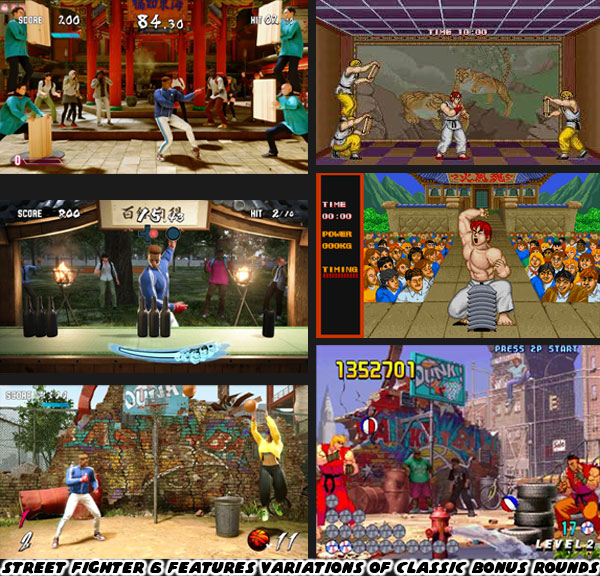
Subscribe to:
Posts (Atom)