Showing posts sorted by relevance for query mas oyama. Sort by date Show all posts

Monday, October 5, 2015

How fight culture became fighting game history, part 42

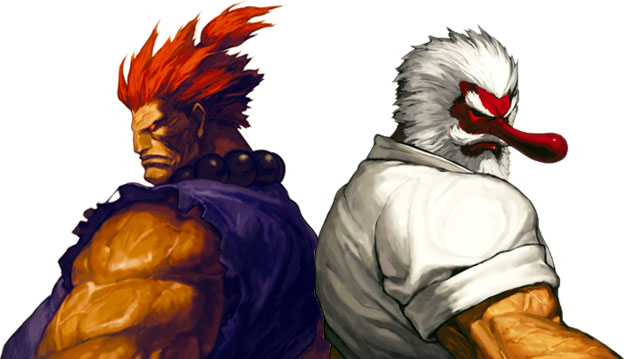
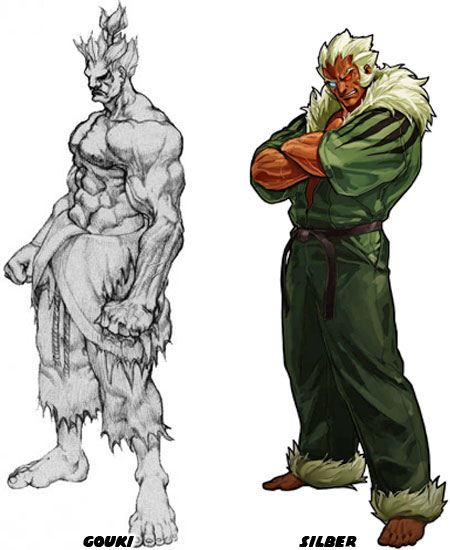
Gouki and Silber demonstrated the price that had to be paid to be two of the best fighting game bosses ever. They were willing to fight to the death at each and every encounter. Very few fighting game characters were ever written with that level of intensity. The pair were willing to kill in order to achieve their goals. The Dictator and the other bosses were willing to do the same but Gouki and Silber did not have a different agenda. They did not want to rule the world or even a small nation. They simply wanted to be the greatest fighters that had ever lived. By their definition the most lethal art proved who had true power. This took them out of the realm of bosses and made them symbols of evil.

The lack of respect that the two villains had for human life extended to themselves. These boss characters were willing to enter a fight even if the numbers were against them. They were willing to punish their own bodies, cripple their own bones and deform themselves for the sake of mastering killing strikes. Gouki and Silber had powerful bodies but gruesome expressions. Their faces were a mockery of the humanity they left behind. In the official character are they almost looked like they were wearing masks. Their features carved by a life of constant battle. The scars that Silber wore were clearly visible but Gouki's were hidden, they were scars on his soul. When Gouki killed his own master and brother he had done damage to himself that he would never be able to undo.
The pair had achieved a level of power that few could ever hope to reach in canon. Their training was so hard that no opponent was strong enough to spar with them and live to talk about it. The two had turned to nature to push themselves further. Instead of breaking rocks and trees they began fighting predators from the animal kingdom. This legend was taken from reality itself. Mas Oyama had travelled the world, defeating masters of just about every fighting style. When he ran out of people to fight he turned to animals. He would put on demonstrations of his Kyokushin karate style by fighting a bull. He would wrestle with the bull, break off its horns with a chop and then kill the bull with a punch to the head. When the bull was examined by a local butcher they would discover that Oyama had broken its ribs in several places and had actually shattered enough bone to make portions of the animal unfit for consumption. This legend evolved to make several Street Fighter characters seem as powerful in comparison and at a younger age at that!
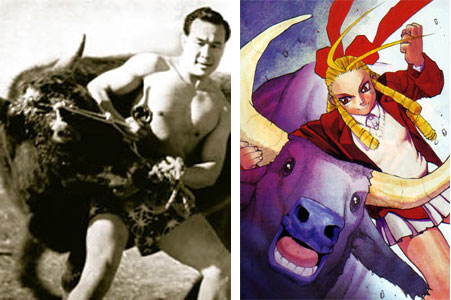
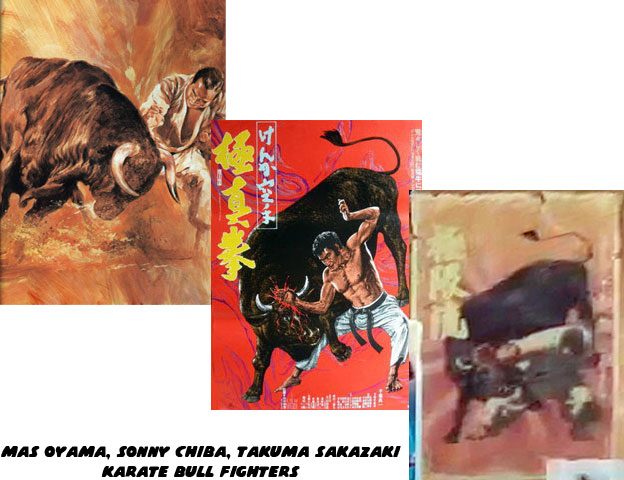
It was such a powerful story that one of Oyama's students played his master in the film Karate Bear Fighter. Sonny Chiba appeared in several other moves based on the life of Oyama. These movies and characterizations helped shape the development of Takuma Sakazaki in the Fatal Fury and King of Fighters series.
Oyama inspired millions with his exploits and made many people believe that they too could follow in his footsteps. However none have proven to be a Godhand since. This was the cautionary tale of karate, the master that never quite made it. This was the lesson and legend of Willie Williams. Some karate practitioners took Soeno's fight against a bear as a literal challenge. Willie Williams was one of those. At 6" 7" and 230lbs. of lean muscle Williams was an imposing karateka. The African-American moved to Japan to train and follow the path laid out by Oyama. He immersed himself completely in the training regiment and wanted to prove that Kyokushin was indeed the Ultimate Truth.

You can imagine that a tall black man in Japan studying karate, dressing in traditional garb, training in the traditional format was a strange sight for conservatives and traditionalists. Surely no gaijin could grasp the nuances of Kyokushin, the fighting spirit. Williams, and most Americans are want to believe that anything is possible and a form can be learned and understood by the people, not solely the Japanese. To prove the authenticity of the karate format and dispel the legends from the truth Williams and his trainers staged some fights. One pitted the man against a bear. News reporters were invited to capture contest on film.When news of this encounter reached the states a few die-hards like Willie Williams began training in the Kyokushin style to become fighting machines as well. Williams even staged a match against a bear for the documentary "The Strongest Karate."
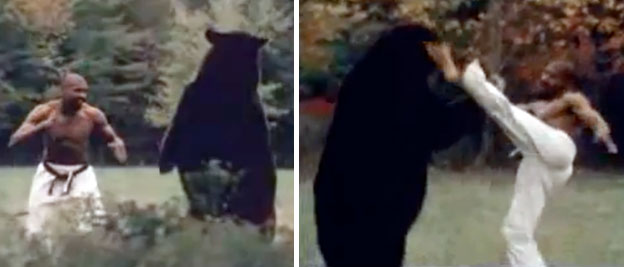
The "fight" was highly debated as the bear seemed disoriented. Critics argued that the bear was clearly drugged and possibly even declawed so that Williams wouldn't have been mauled by the animal. Despite the imposing frame that a young Williams carried his strikes seemed ineffective against the bear. The press that covered the event ended up participating is what was called nothing more than a propaganda film. Williams and his instructor, sensei Shigeru Oyama (no relation to Mas Oyama) spent a lot of time trying to prove the authenticity and effectiveness of the art. In 1980 he and Shigeru were suspended from the International Karate Organization Kyoukushinkaikan because of a fight they had participated in. Williams fought Antoni Inoki to a draw. Williams had suffered a broken arm and Inoki a broken rib. The legend of Inoki grew after the battle while Williams was relegated to the footnotes. It seemed that the best he could do was inspire characters for pop culture.

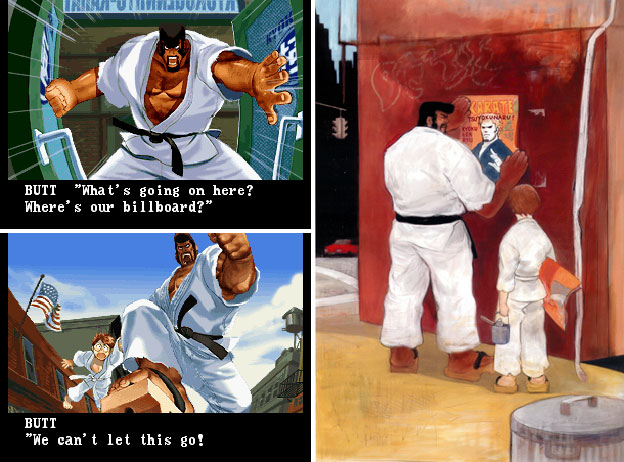
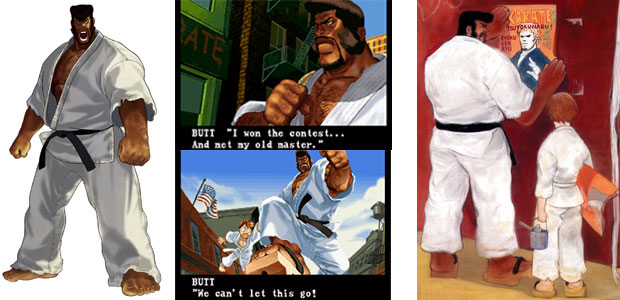
Marco Rodrguez (translated to Khushnood Butt for the US) for the game Garou, Mark of the Wolves was very closely modeled after Williams. To be fair he was inspired by William Oliver, Willie Williams and Charles Martin, the three black Americans better known as the Fighting Black Kings, from the 1976 documentary on the first world Kyokushin fighting tournament. Marco had immersed himself in the study of the fictional Kyokugen (extreme) form of Karate. This is the form invented by Takuma Sakazaki and passed onto his son Ryo and his friend Robert Garcia. Marco believed in the form as the absolute best and touted its superiority with a fanatical zeal in the game, his eyes welling with pride every time he thought about the art and his master. This level of passion, combined with his moves actually being solid, enamored him to gamers. The character worked abroad despite the double stigma of race and karate fool. Gamers were able to see past those conventions because he was a reliable karate-style fighter who played like the traditional Art of Fighting heroes even within a Fatal Fury title. Marco worked very well within the game as well as canon and wasn't simply a joke character for the sake of being a joke character.
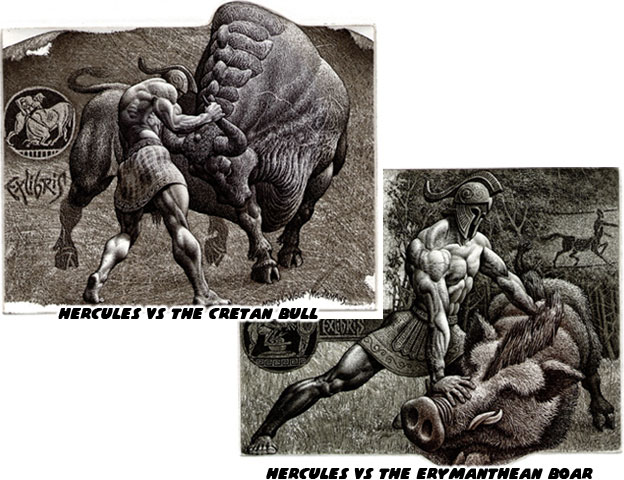
There was a world of difference between a bull and and actual predatory animal however. According to legend Oyama had once staged a battle with a bear. He did not dominate the creature and ended up fighting for his life. A version of that fight was featured in the manga and animé series Karate Baka Ichidai.The idea of a martial artist versus a wild animal had inspired many legends, but the stories themselves were sometimes inspired by actual events. In ancient tradition the heroes of a story were the ones that fought off a colossal beast. Sometimes these animals were real and sometimes they were mythical. In ancient Greece the hero Hercules was said to have wrestler both a lion and boar with his bare hands. The fabled 12 Labors included Hercules against The Erymanthean Boar, The Cretan Bull, The Nemean Lion, The Lemean Hydra and The Cerberus. These were certainly monsters perfect for a video game. Also unlike Mas Oyama the contest was not a fight for survival but a chance for the character to cement his legendary strength.
Oyama and his fans would pontificate on his karate and how it was used to defeat other fighters and other forms. Some of his lessons were based on actual encounters. He would describe in detail how his karate form was used to beat boxers and pro wrestlers from the west. These lessons would then be applied in the abstract and authors (including Oyama himself) would come up with scenarios where karate could be used against wild animals. Imagine the situation where a karate expert is ever wandering through a forest and is attacked by a wild ape. The fighter would be no match for the strength of the beast but they would be able to use their long legs to target open spots on the body. Not unlike fighting a musclebound wrestler I'm sure. The story of karate versus an ape would be used by other manga storytellers over the years. The ape would take on demonic features in many retellings and become more of a monster than wild animal when the legends became animated.
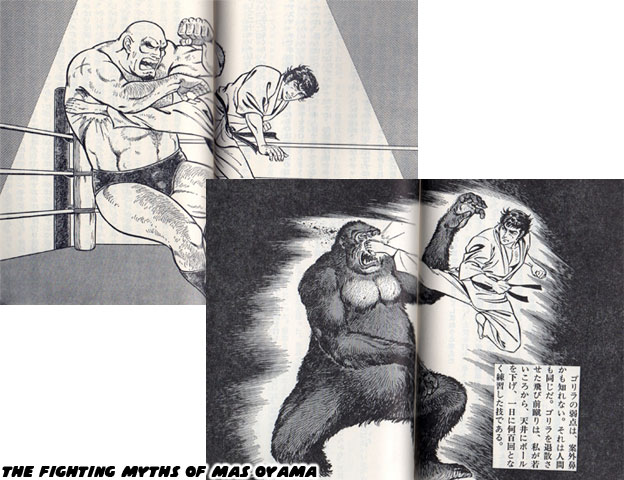
Some of the myths that Oyama shared were based on recorded history. Such as a samurai having to defend himself from a pack of wild dogs. The fighter would have to find a way to use the environment to their advantage and not allow themselves to be surrounded by the dogs. Then they would have to focus their attacks so that every strike was lethal. A miss could leave the fighter open to a counter-attack and that could be the difference between life and death. Wandering swordsmen in feudal-era Japan were sometimes targeted by bandits and these same lessons would have been used to ensure their survival. But when it came to bare handed fighting against natural predators there weren't too many success stories to rely on. Oyama had defeated bulls but he often wondered how he, or his karate form would have faired against a more aggressive predator.

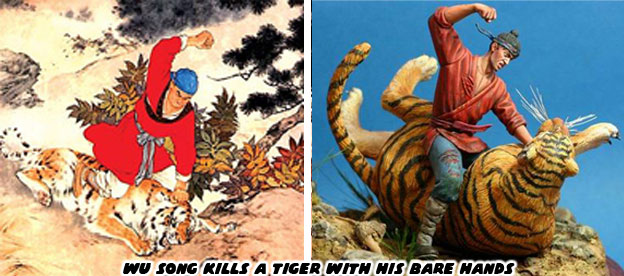
It turned out that a thousand years ago there was an encounter that could go down as something too amazing to be true. The pilgrim Wu Song was traveling through a village in China. He had stopped by an in for some rest. The villagers warned Wu that there was a man-eating tiger nearby and that it was dangerous to take a certain bridge out of town, especially once it started to get dark. After a few drinks Wu thought that it would be a good idea to take the bridge and see what happened. Sure enough the tiger was there and being courageous (or crazed with booze) Song attacked the tiger. He had a stick with him but the tiger broke that quickly. Song in a fit of rage managed to get close to the tiger and kill it with repeated blows to the head. Wu Song was a character in The Water Margin. The character was fictional but many of the men and women in the novel were inspired by actual events. It was possible that a kung-fu practitioner with more ability than sense actually did kill a tiger with his bare hands. When the writer of the Water Margin heard of the legend he figured out a way to incorporate it into the series.
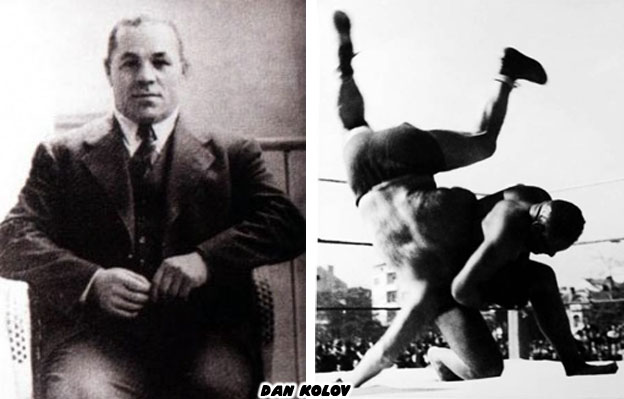
Oyama wasn't the first time that the man versus bear legend had been based on reality. The Bulgarian Dan Kolov was a wrestler and had to fight off a bear attack while he was out hunting. He lost his rifle for a moment when the bear was upon him, he grabbed and pulled at the bear with such ferocity that he pulled chunks of skin and fur off of the creature. Kolov was a self-taught catch wrestler, and circus strongman that was considered by some the greatest wrestler that ever lived. He regained his rifle after a brief struggle and killed the bear with a shot. With such a reputation he became a big draw for wrestling promoters. It was possible that the legend of Kolov had a hand in inspiring the legend of Zangief, who was known to wrestle bears in Street Fighter canon.

Domesticated bears had actually been used in some circus sideshows for over a century. The bears would usually only "wrestle" their trainers, because they were comfortable with them. Bears felt like they were playing and not actually fighting. In some rare cases a circus might let an audience member try to wrestler a muzzled bear. The bear would usually knock the person over and sit on them easily to end the match. But every now and then a story would come out where a person got the upper hand. This was the inspiration behind the Australian folk song about William Sinclair who defeated a bear in a match in Queensland.
It's easy to imagine that a version of these man-vs-beast myths could end up shaping the development of various fighting games. In the early days of the genre the developers did not have to go very far to bring the legends to the game screen. In Karate Champ the designers at Data East introduced a bonus stage that had fighters kicking stacks of tile. Oyama and his karate predecessors had often given breaking demonstration to audiences wherever they went. Sometimes they broke stones, bricks and blocks of ice. Karate Champ was the first fighting game to feature the bonus level and even had players take out a charging bull with a punch or kick.
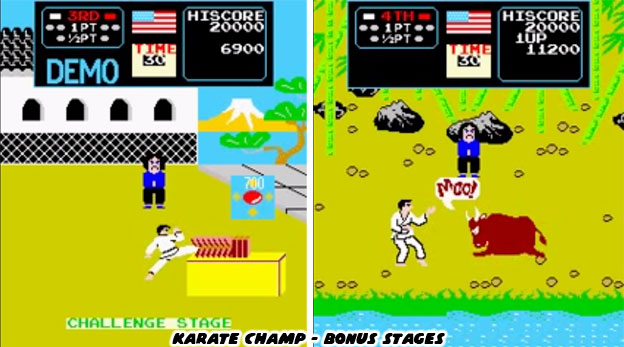
As the developers got more comfortable with the genre they began experimenting with enemy types. The early fighting games had masters of various fighting styles competing against each other. After the studios ran out of identifiable forms they started throwing in monsters, animals and even robots and aliens to keep the genre interesting. A tiger, giant falcon, and even shark would be included in Fighting Layer, a game developed by former Street Fighter II designers.

In Battle K-Road the secret boss was named Mr. Bear. It turned out to be an actual grizzly bear and was among one of the most difficult opponents in any game. The game was over-the-top as one could imagine but it retained some charm. These types of encounters would not have been acceptable in the genre if not for people like Oyama and Kolov who actually fought the beasts and lived to tell the story.
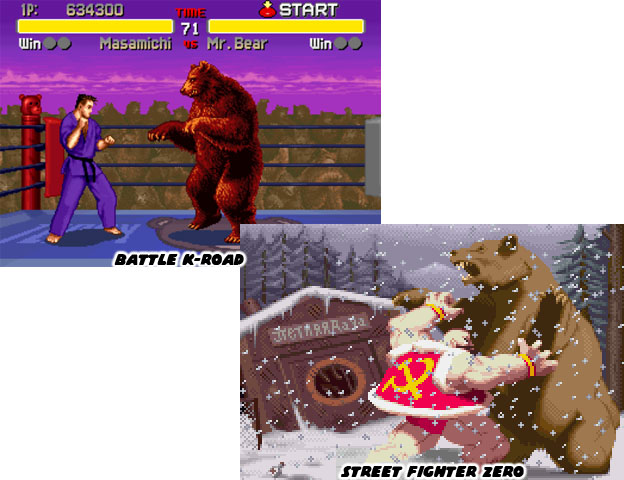
Gouki and Silber should not be confused with the previously aforementioned legends. They did not spar against wild animals with their bare hands, they hunted them down. The two could not only dominate the other fighters that they came across but also the biggest and strongest creatures in nature. In canon Gouki had killed a large bear that was the terror of a nearby forest. A young and inexperienced Ryu went out trying to kill the bear himself but was almost gutted by the creature. Gouki jumped into the fight and punched a hole through the head of the bear. He did not do it as much to save the life of Ryu but to warn him there were things in the world that should be feared and respected more than any animal.

In a similar fashion Silber traveled the globe putting down the animals he tested himself against. He showed little mercy for the other fighters he faced and was willing to put them out of their misery as well. Silber seemed to relish in his power and technique. It had been speculated that the fur on his uniform was taken from a polar bear he had killed and not from a wolf. Few aside from Silber himself knew what points around the world he had visited. Gamers were left to believe that he had wandered into the frozen arctic looking for a new challenge and had returned with the pelt after finding no suitable opponent.
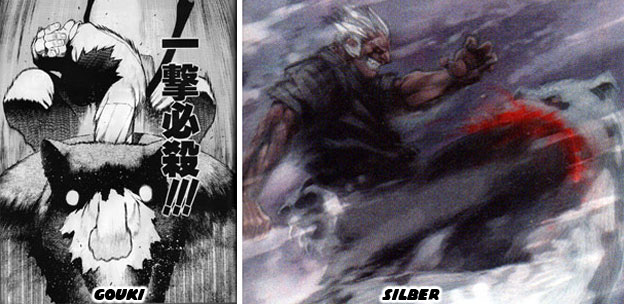
Gouki and Silber were fantastic character designs from Capcom and SNK respectively. They commanded the attention of the audience and held their interest throughout the battle. Each time they appeared in game they were treated with the same sense of awe and respect. Although they were powerful bosses and seemingly superhuman fighters they were not cheap characters from a balance perspective. They did not have attacks that were overpowered or could defeat a player with one or two hits. Even the Shun Goku Satsu at the most took 2/3 of an opponents energy and not the entire health bar. Every character in the game stood a chance against these villains provided that the player were willing to play aggressively and make few mistakes.

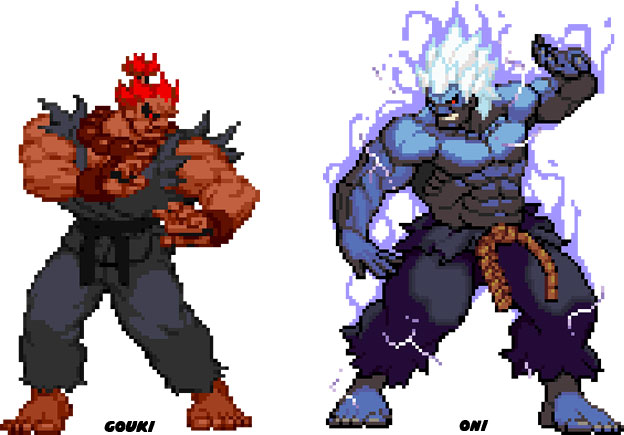
The physical appearance and attacks of the two bosses made them stand apart from the cast and even other villains. Yet there was a point where villains were too powerful and too evil for the genre. When pushed to the extreme ends the evil characters could break the suspension of disbelief from the gamer. Gouki had one such makeover in Street Fighter IV. It turned out that Gouki or even Shin Gouki (the white-haired variation) were not the most powerful incarnation of the character. A third form known only as Oni or Demon in Japanese was introduced by the SF IV designers. Oni was the manifestation of the Dark Hadou, or evil power which Gouki possessed, or rather which had possessed Gouki. The character grew long, spiky white hair, and a large underbite like an ogre with small tusks protruding. His skin even went from clay-colored to blue. Gouki no longer had the elements of a humanized lion but instead the wholesale appearance of a Nio, or protector of the underworld.
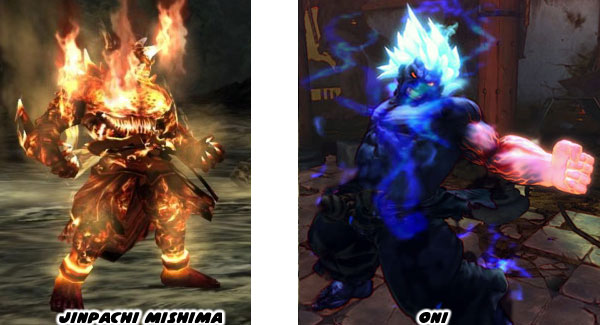
In Tekken a similar character had been unveiled as well. Jinpachi Mishima was a warlord and founder of the Mishima clan. He had spent a few decades locked under the Mishima castle. It was a sentence in Hell but Jinpachi had become so powerful that he broke out and returned to the real world. Oni and Jinpachi were so overpowered that seemingly no other character in the series could have even hurt them. Capcom had ignored all of the elements that made Gouki such an interesting character. They moved right into the realm of the absurd with Oni. The same thing could be said for Namco and the Tekken universe which Jinpachi now occupied. The two studios had been skirting the line between what was good character design, what was bad and what was simply pandering to the masses. Before Oni and Jinpachi the major challenge for the studios was showing gamers the creation of a villain right in the middle of a series. The next blog will look at how Capcom used the template of Gouki to rewrite the Street Fighter mythology. As always if you enjoyed this blog, and would like to sponsor me please visit my Patreon page and consider donating each month, even as little as $1 would help make better blogs and even podcasts!
follow the Street Writer on Patreon!

Friday, July 3, 2015

How fight culture became fighting game history, part 2

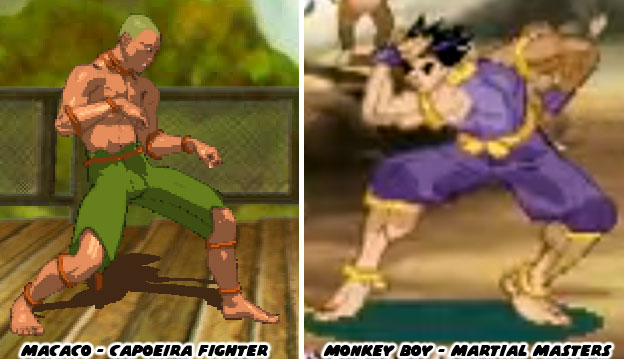
The codified techniques of striking and grappling called wushu or gongfu (kung-fu) in China were drawn from countless schools and styles. The origins of some of the oldest systems were said to have been based on watching how creatures fight. Some styles were formed by monks and others by regular people. According to legend there was a man named Da Sheng Men that was schooled under the Di Tang method of fighting. He was imprisoned deep in the jungle for a crime he committed. The security was light on one side of the compound and heavy on the other. If a prisoner tried to escape on the heavy side they would get cut down by the guards. On the light side they could make a run through the jungle to freedom. Or so they thought. There were some vicious monkeys that lived in the woods and would tear an escapee to shreds. Da Sheng Men served out his short sentence but all the while studied the way the monkeys fought and incorporated it into his style. It became one of the forms of Monkey Kung Fu. This form looked amazing on film and was adapted a few times in gaming. Yet this particular form came into being at the end of the 19th century, many of the animal forms created by the Shaolin were a thousand years older.


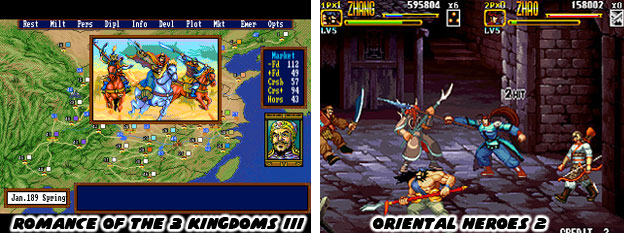
The known martial arts have existed since the earliest empires and just like those kingdoms they have experienced revolutions of their own. Art, science, religion and philosophy changed and evolved at the whim of the cultures and kings. The fighting arts survived the changes and have become immortalized in popular culture. One of the most storied celebrations of the amazing men and women of the martial arts coming from Luo Guanzhong's Romance of the Three Kingdoms. The events of the actual second century Han Dynasty in China were retold to audiences in the 14th century. Creative freedom and a great deal of historical fact made legends out military leaders and strategists. Warriors, heroes, criminals and soldiers have all been celebrated in other classic adventure stories. These fighters had never seemed more real than when they were presented in cinema. The end of the 20th century would signal the rise of a new form of entertainment. The average person would get to play as the legendary fighters in videogame form, marrying Eastern fables with Western technologies. Real and fictional battles could be experienced in any genre, from the role-playing series named after the Three Kingdoms to the action brawler Dynasty Warriors and Oriental Heroes.


This immersion in martial arts folklore gave audiences an entirely new experience. The martial arts would continue to change the face of popular culture. The sciences and philosophies of ancient Asia had to be explored in order to understand and appreciate the origins of the fantastic fighters. The roots of the Eastern Martial arts and philosophies were based in China. Even karate practitioners had to acknowledge that the origins of their systems were based in kung-fu. Mas Oyama, the main inspiration behind Ryu of Street Fighter fame, had defeated hundreds of men in his illustrious career but had known defeat only once. Early on in his karate career he decided to test out his style against a master of Taiji Quan. Taiji is a variation of the same Tai Chi you might see being practiced in a park. The Taiji master, reportedly named "Mr. Chen" was elderly and invited Oyama to a sparring match. Oyama thought that he would make quick work of him. Instead he discovered that no matter how hard he tried he could not land a single blow on the master. The elderly Chen used simple circular motions and smooth footsteps to evade the attacks. With tears in his eyes Oyama thanked the man for showing him that he still had room to grow as a martial artist. The life story of Mr Chen was lost to the pages of history, but the encounter was not. It helped perpetuate the myth of the ancient martial arts masters, characters like Gen in the Street Fighter series for example was one such person.


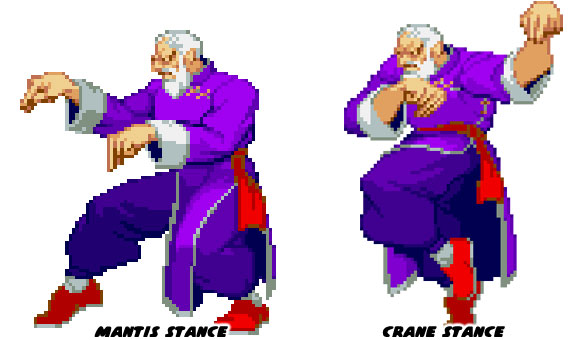
Gen was actually the first and only Street Fighter character to have two sets of fighting stances. Arcade players could switch between them in the middle of a match. Each stance also came with its own special and super moves. The character actually had a few strikes based on Tiger and Eagle Claw but his primary stances were Crane and Mantis. The early forms of Kung-Fu were inspired by the predatory animals in nature. These were considered noble fighting forms. Of course villains developed "evil" versions of Kung-Fu based on the poisonous animals like the scorpion and centipede as well.

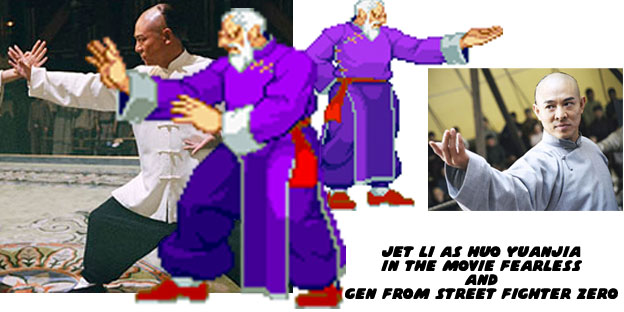
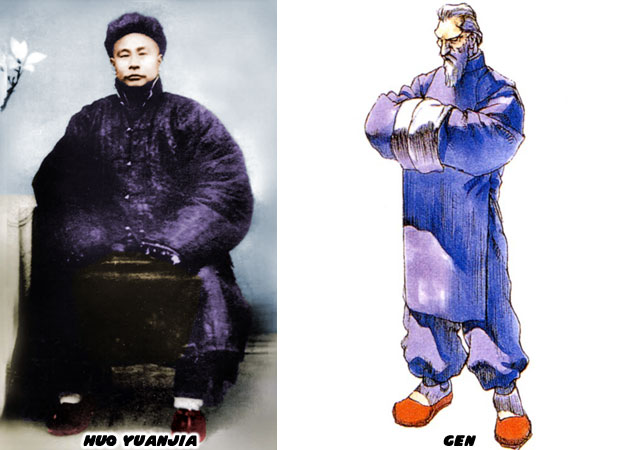
The character of Gen was inspired mainly by Huo YuanJia. Although they do not share many physical traits, it is the legend of the Kung-Fu master that bears the similarities. Huo was born in 1868. He was a sickly child who was kept away from the martial arts by his overprotective father. He proved that he was an amazingly gifted fighter when he defeated the older person that had beaten his brother in a match. From that point on he was allowed to study the martial arts. He had beaten the masters of various styles at a young age. He killed a man in one fight and put himself in exile.


It was similar to what Mas Oyama did when he was younger. Oyama was already an experienced karateka (karate practitioner) and had gotten in a bar fight. He killed the man that pulled a knife on him. Oyama knew that he had the ability to disarm the attacker but instead lashed out. This shame of not being able to control himself in a fight caused him to live like a hermit and become a stronger fighter mentally and physically. Both Huo and Oyama returned from their exile at the peak of their abilities. Of course the legend of Huo goes back almost a century earlier. Huo came out of "retirement" to face the foreign invaders. The Japanese and British had begun colonizing China. The nations would put on matches that surmounted to imperialist propaganda. Having boxers, judo experts and wrestlers take on all so-called kung-fu masters and beat them up in public matches. It was disheartening to the Chinese that their fighters and their arts seemed ineffective against the occupiers. They sorely needed an icon to rally around and Huo came along at the right time. He soundly beat the best fighters from abroad to demonstrate that the Chinese were not inferior people, nor were their fighting styles.


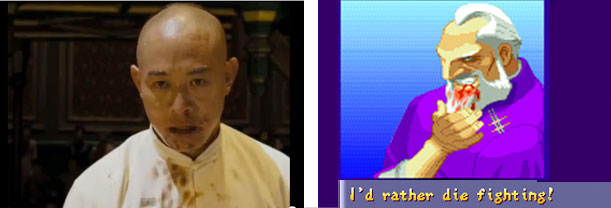
Huo became a national hero when he proved himself against the best Western and Japanese fighters. A fantastic retelling of his life story was done by Jet Li in the film Fearless. The question you may have is why is Gen depicted as an old man whereas Huo was young when he became an icon. Huo died at the age of 42. He suffered from health issues most of his life, including asthma and jaundice. Near the end he had contracted tuberculosis. His health deteriorated quickly and he died just a decade into the new century. The rate at which his health declined was questionable to many. Huo was fast becoming a symbol for national unity, which concerned the occupiers greatly. The Chinese suspected that the Japanese doctors that were treating him for his condition had poisoned him instead.
Gen was a symbolic character. He represented the legendary Kung-Fu masters from 18th and 19th century China. He was what would have happened if Huo had lived long enough to fight the greatest martial artists of the 20th century. Huo would have been elderly but still a dangerous man in the eyes of many. In Street Fighter canon Gen was not only considered a legitimate threat to Ryu but even the main villain Gouki. People suffering from tuberculosis sometimes cough up blood due to the deterioration that the disease has on their lungs. Gen could be seen suffering from this affliction in several endings in the Street Fighter Zero/Alpha series. He was such a proud man that he wanted to die fighting the best opponents in the series rather than to succumb to the disease.


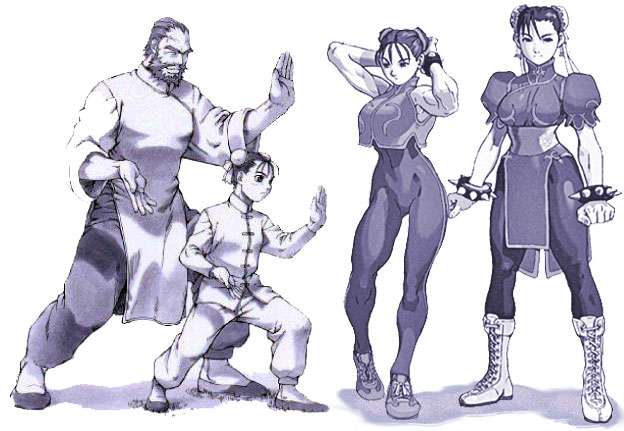
Eventually Gen died, whether by the hand of Gouki or not was never officially stated by Capcom. His secrets did not die with him. As an elderly man he helped mentor Yun and Yang. Each of the Chinese twins learned just enough of his fighting style to make them popular opponents in Street Fighter III. His greatest student however became an international darling. Gen was good friends with the father of Chun-Li. When her father was killed in the line of duty it was Gen that stepped in and continued training her. She became the best female martial arts master in the world but also became a great police officer and avenged the death of her father. Gen would turn up in manga and anime films to cement his status as one of the best fighters in the universe. We should be thankful that Capcom was able to incorporate a mythological Chinese hero in their martial arts fable.


Chun-Li was rooted in a myth that was even more important to the identity of the Chinese martial arts than Gen. The next blog will look at her origin. As always if you enjoyed this blog and would like to sponsor me please visit my Patreon page and consider donating each month, even as little as $1 would help make better blogs and even podcasts!

Wednesday, April 30, 2014

The Legend of Kyokugen Karate, Marco Rodriguez

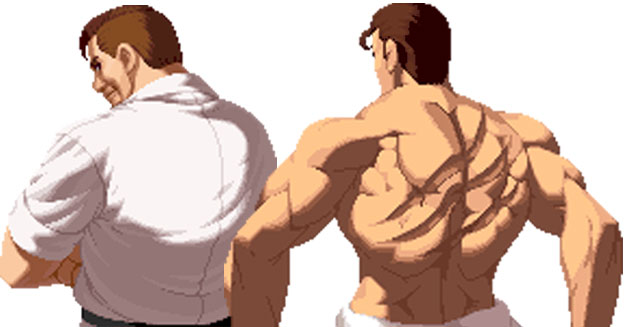
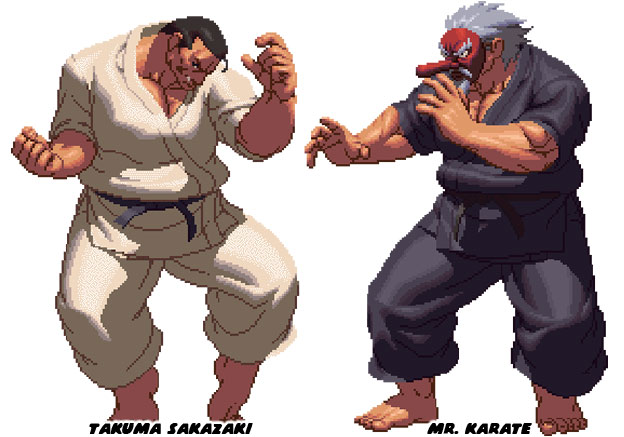
Mr. Karate represented the unbreakable will of Takuma Sakazaki. The man himself was flawed, aging and losing presence within the SNK universe. It was his alter ego that was the true boss that all of the other fighters feared. Mr. Karate never seemed to age, never seemed to get hurt and was an all powerful martial artist without equal. Takuma by comparison had lost his friends and wife in the rough city of Southtown. His children and students helped keep him together but there was always something bubbling under the surface. Many gamers could tell that even without the mask on there was a good portion of Mr. Karate living inside of Takuma. It was obvious by looking at the massive scar over his chest but not that many had seen the marks on his back. This was a person that had survived knife fights, sword fights and gun battles using his bare hands. This was also a person, like Mas Oyama, that had tested himself against wild animals.


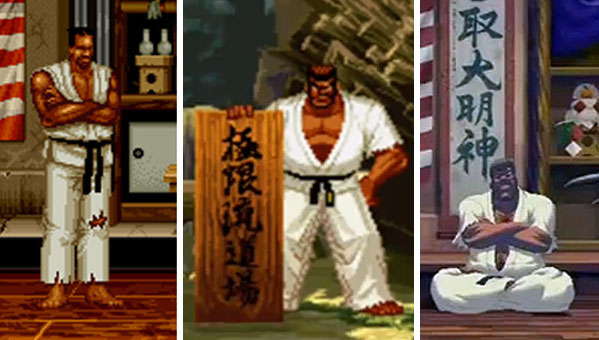
The legend of Mr. Karate was what drew practitioners into Southtown, none of them was more important as a student and a character than Marco Rodriguez. This character was absent from my Coloring Perception series. I could not find a proper place to mention him with regards to black character designs in fighting games. Marco had one foot in the absurd design typical of many fighting game developers, yet he was not a clown. He had as many abilities and attacks as Takuma, Ryo, Robert or Yuri. It was his zest for the Kyokugen style that made him a standout. Rodriguez was not only the star pupil but also its biggest supporter. While the Sakazaki's were competing in the KOF tournaments, Buriki One tournament or chasing bad guys around in the Art of Fighting titles it had been Marco that kept the school alive, paid the bills, promoted the system. His eyes would well up with pride whenever he thought about Ryo and how much the school meant to him.


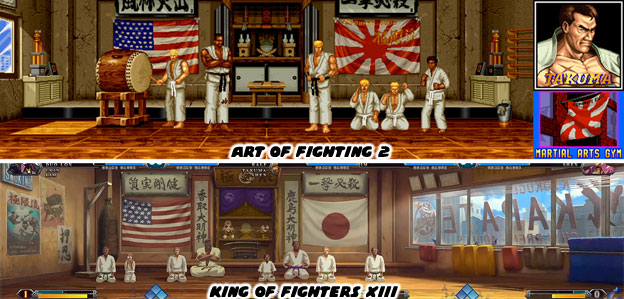
Marco had first appeared as a background character in Takuma's Art of Fighting (AoF) 2 stage. The designers never forgot him so when they redrew the stage for the King of Fighters XII they made sure to include his updated look with a pompadour and sideburns instead of braids. He was also sitting in the dojo laughing at the fighters, it said about the personality and the abilities of Rodriguez. Marco had first appeared as a playable character in Garou: Mark of the Wolves. It was notable because Marco was trained by Ryo and was the first Kyokugen fighter to appear in the Fatal Fury (FF) series. Released in 1999 Mark of the Wolves was the final game in the Fatal Fury series. Most fans of the SNK titles had wondered which star was the best fighter in the universe. Was it Ryo from the Art of Fighting or Terry Bogard from Fatal Fury? SNK would only tease gamers by saying that both universes were connected and even set within the same city and timeline. The boss character from Fatal Fury appeared as a boss in the Art of Fighting 2 yet none of the heroes ever crossed over until the original King of Fighters was released in 1994. However to fans it was a bit of a cop-out. The KOF series had mixed in a lot of other characters and changed the gameplay so that it was neither Fatal Fury nor the Art of Fighting. Both of the earlier games had a unique design aesthetic and control scheme. The sprites featured in the FF series were smaller with the gameplay being focused on allowed characters to jump between to or three different planes so that they could go around opponents. It was a precursor to the first 3D games. By comparison the AoF featured very large, highly detailed sprites and tried to capture a more realistic feel for the fighters. The characters could bruise and their clothes could even tear depending on how much damage the players sustained. Yet neither development team would allow for the stars from one title to appear on the other game.


Garou: Mark of the Wolves was the closest that the two universes would come together outside of the KOF. An older, stronger Terry Bogard was the star of the game yet there was one Kyokugen master in the game as well only it wasn't Ryo Sakazaki or Robert Garcia. Marco Rodriguez was a student of Ryo's and had committed himself completely to the art form. He was so dedicated in fact that he was living like a hermit in the nearby Sarah Forest, training in complete isolation in the same ways of the founder of Kyokugen. Marco had the same moves of the main AoF stars but the control and presentation was decidedly FF. It was a way to finally get both universes in one title without upsetting the rival fans.


Marco was an absolute zealot of the Kyokugen way. He even carried around a large wooden sign of the dojo whenever he fought. He was inspired by Willie Williams, a black US fighter that dedicated himself to the Kyokushin style back in '70s. He believed in the system with tremendous fervor and even moved to Japan to follow in the footsteps of Mas Oyama and train in many of the same places. In 1979 during second ever Kyokushin World Tournament, held in Tokyo Japan, Williams representing the USA competed and came in third. At the time it was the highest ranking for a non-Japanese and the record remained until 1987 when the Swiss-born Andy Hug came in second. In 1980 Williams fought Japanese wrestling icon Antonio Inoki in a highly publicized bout. Inoki had fought Muhammad Ali a few years prior to a draw in the pro wrestling vs boxing contest. This time he wanted to take on the massive American and see if karate was stronger than pro wrestling. The two battled for just over 5 minutes, the first half of which was mostly both men posturing and putting on a show but the last few were rough. This match also ended in a draw but Inoki would suffer from a broken rib and Williams from a broken arm. Williams would be kicked out of the organizing body of Kyokushin for participation in the fight.


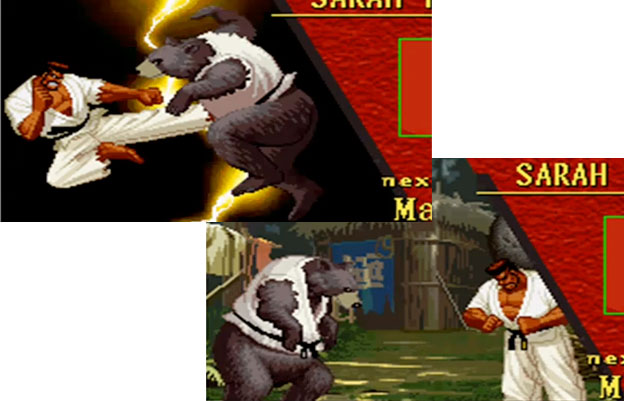
Williams, like many people in the '60s and '70s, had become obsessed with Oyama's total karate system. The martial arts had exploded in popularity thanks to the kung-fu films of the Shaw Bros. and Bruce Lee. Westerners were eager to master these exotic arts and signed up for kung-fu, karate, judo and jujitsu classes. Those that stuck with the arts became some of the early masters outside of Japan. Marco was a caricature of Williams. The character not only trained like Takuma but he even lived like a hermit out in the woods in order to focus on just his training. At the start of his stage players actually got to see Rodriguez sparring with a bear dressed in a karate gi. It was a funny visual however players that were familiar with the legend of Mas Oyama remember that he had fought a bear during his many adventures. This encounter was retold in the Karate Baka Ichidai manga and animé series. The fight made the man a legend, yet to Willie Williams he saw it as a testament to Kyokushin. Williams was actually filmed sparring with a bear for the documentary "The Strongest Karate" which was a thinly veiled Kyokushin propaganda piece. Williams was tall and strong but even the 6' 7" man seemed hopelessly ill prepared to fight the bear. Most witnesses said that the bear seemed drugged and confused. Even in such a state the bear managed to throw aside Williams with ease and handily absorbed the punches and kicks from the karateka.


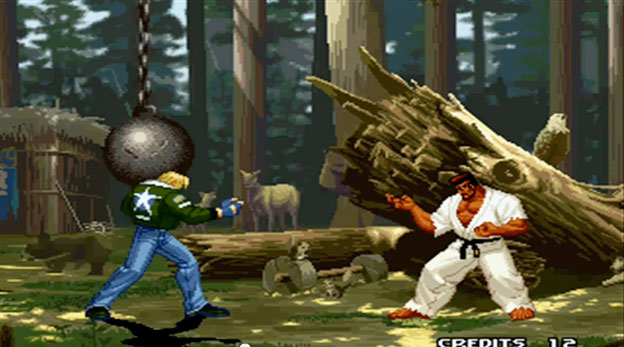
In the videogame however Marco was something else entirely. Just as Takuma Sakazaki was a super powerful version of Mas Oyama so too was Rodriguez when compared to Williams. There was a reason that Rodriguez was smirking and laughing at the characters in the KOF stage. He felt superior to them thanks to his hard training in Kyokugen. After all real men sparred with bears and lived off the land. His stage painted a clear picture as to his level of power. The man made a dumbbell out of boulders and used a wrecking ball as a punching bag. He even chopped down trees with his bare hands and feet. These weren't little trees either but giant hardwood trees that were wider than most cars. It was assumed that he had developed the level of power of Takuma, Ryo and Robert. This made him a perfect ambassador for Kyokugen in the Fatal Fury game and a fitting rival to Terry Bogard.


Marco was extremely passionate about the fighting art and vehemently defended it in the game. He was the ad campaign that the Sakazaki's needed to keep their gym alive. As much as he idolized Ryo he was probably not aware of the dark secret that Takuma was hiding. This complexity made Takuma and his fighting system very unique. His alter ego would be elevated to the status of major villain. With the mask on the character was ruthless in battle. He did not tire, did not suffer injuries and never seemed to age. Mr. Karate was the superior character in every regard. It was as if the mask had relieved Takuma of his responsibilities. He could put everything on the line because his children were safe. The person he fought knew nothing of the man behind the mask or his legacy. It was the same reason why superheroes wore a mask in Western comics, except instead of protecting innocent lives Mr. Karate was seeking out worthy opponents to destroy. While Takuma had an interesting life story he was the reason why I could not rank him higher in my list of greatest fighting game bosses. The character kept Mr. Karate grounded. Truly great villains had no family and held no allegiance. In fighting games this meant that the last man standing was the greatest fighter.

I would always consider Gouki to be the perfect fighting game boss because nothing held him back. Gouki had even made sure of that by killing his master and his brother. Zumbi had ditched Cobra and sold his soul to Macumba in order to become Zumbi Azul. Silber actively pursued the masters of fighting styles like a predator in nature stalking its prey. None of my top three had any regard for their opponents on themselves. Mr. Karate might be considered the greatest boss that ever appeared in an SNK game but he also had a weakness. Mr. Karate had an unbreakable will but Takuma Sakazaki's could still be bent by threatening the lives of his children. Silber did not have that going against him and that was why I ranked him higher.


What do you guys and girls think? Who would you consider the greatest fighting game bosses ever designed? I'd like to hear about it in the comments section. If you would like to sponsor me please visit my Patreon page and consider donating each month, even as little as $1 would help make better blogs and even podcasts!
follow the Street Writer on Patreon!

Tuesday, April 29, 2014

So it begins... a salute to Mr. Karate.

Hello friends, welcome to the first fighting game on my new blog. This entry is actually a successor to the Coloring Perception series that I ran on 1UP and Capcom-Unity. If you remember in that series I was talking about good minority character designs and great villain designs and how the two intersected through the character Zumbi Azul. I had mentioned that the character would have been in my personal top-3 favorite fighting game bosses behind Gouki but ahead of Silber. Some of my friends were wondering where in that list I would have ranked Mr. Karate. I think he would have been number 5 on the list maybe number 6. Number 4 would probably have been Sagat but I haven't made up my mind yet and written the definitive top-10 fighting game bosses, although that might be fodder for a series on the new blog when I think about it. Why did Mr. Karate rank so low on my list? Actually he didn't rank low at all. Stop and think about how many fighting games have been released in the past 30 years. Any boss that ranks in the top 10 has staying power. For the SNK universe nobody has more staying power than Takuma Sakazaki, Mr. Karate himself.

The character originally appeared in 1992 as the main villain in the Art of Fighting. He was the enforcer for Geese Howard, the main villain from the Fatal Fury series. He was forced to serve as a hit man because Geese had threatened the lives of his children. Mr. Big, the second in command for Howard had kidnapped Yuri Sakazaki, the young daughter of Takuma in order to ensure that he would not rebel. His son Ryo and student Robert Garcia chased after the kidnappers all throughout Southtown until the final confrontation. Once the true identity of Mr. Karate was revealed and after Yuri was safe he swore that he would make amends. In the Art of Fighting 2 he ditched the mask and went on a vendetta against Geese and his fighters. I think the biggest impact that the character had within the King of Fighters universe was the legacy he had built. Takuma was one of the characters that had been around since the days of the previous generation of masters. People like Tung Fu Rue and Lee Gakuso were his mentors and contemporaries. Their students and children would have been rivals for the Sakazaki children. Sakazaki was written as a nod to Masusatsu Oyama, the founder of Kyokushin or Ultimate Truth karate. Takuma's version was known as Kyokugen or Extreme Utmost Limit karate.


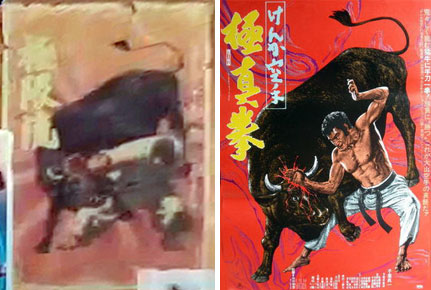
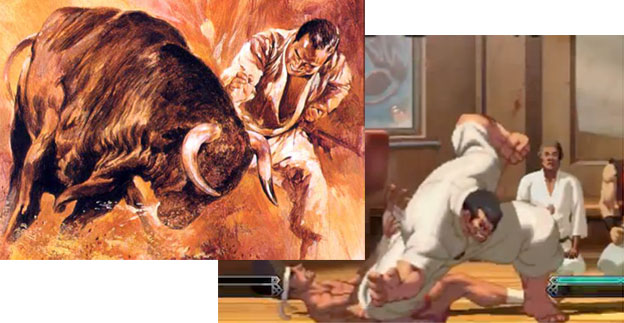
The first Kyokushin karate school in Southtown was a featured stage in the Art of Fighting 2. The artists and designers never forgot that stage and 16 years later a new version was introduced in the King of Fighters XIII. On one wall there were several posters dedicated to the school. One of those posters was in honor of the legend of the founder. It depicted Takuma delivering a killing blow to the head of a bull. It was actually a very metaphysical poster because it was based on a movie poster of Sonny Chiba starring as the "Karate Bull Fighter" that poster was in itself a recreation of the photographs of Oyama actually killing a bull from his live demonstrations.


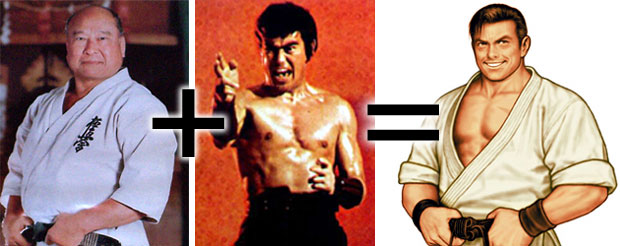
In essence the character of Takuma Sakazaki was based in part of the actual legend of Mas Oyama plus the dramatized retelling of his life in the Chiba films. In the games Takuma would make boastful statements meant to inspire his family and students but often came off as nonsensical. It was as if the elder Sakazaki master had fallen in love with his own legend. He didn't realize that Ryo and Robert had become championship fighters in their own right. They were the characters that gamers looked up to in the SNK titles. Takuma had been unwilling to let go of his share of the limelight. In his mind he still saw himself the same ruggedly handsome person that he was when he starred in the classic karate films so many years earlier. The artists at SNK always made sure to present Takuma as a very confident person with a main full of perfectly sculpted hair. Takuma was meant to have the movie star charisma and looks of Chiba rather than the balding heavy-set man that Oyama became in his later years.


Takuma did have one thing going for him in the games and in canon that neither Robert, Ryo or Yuri had in their favor. The senior Sakazaki was the only true master of Kyokugen, including its most powerful strikes and special moves. For example his all-powerful chop was part of his ultimate strike, the Biruto Appar. This was the strike that used to kill bulls and did tremendous damage to people as well. At the peak of his abilities Mas Oyama had put on many breaking demonstrations all over the world. He would break blocks, bricks, stones and even chop the necks off of bottles. These breaking demonstrations were recreated as bonus stages in the original Street Fighter and the bottle cut specifically in the Art of Fighting. Oyama had earned the nickname Godhand because he could defeat most challengers with a single strike. Imagine the actual martial arts master using his knife hand to break the necks of bulls as easily if he were chopping wood, a person like that would certainly make for an imposing video game character.


The thing that harmed Takuma, at least in terms of ranking him higher on my list of notable fighting game villains, was the lack of consistency that SNK used when presenting him. In canon the user was getting older and often let the fighting up to his children and students. However when his ego felt challenged he would once again enter the King of Fighters tournaments. He would then drop out for a few years because of injuries. This made the character sympathetic and somewhat believable. The shelf life of a fighter past their prime was almost nonexistent. When it came to great villains they could not and should not have had any weaknesses. That was where Mr. Karate came in. He was the other side of Takuma, the dark side with a violent past. Mr. Karate never tired, never got injured and only seemed to come back stronger than before at each encounter. Mr. Karate was the persona, the "Godhand" that really made the senior Sakazaki an interesting character and a great boss design.


It was the legacy that Mr. Karate left behind that really made me appreciate the character and the work that the SNK design team put into him. We shall look at this in the next blog. As always if you enjoyed this blog and would like to sponsor me please visit my Patreon page and consider donating each month, even as little as $1 would help make better blogs and even podcasts!
Wednesday, July 15, 2015

How fight culture became fighting game history, part 7

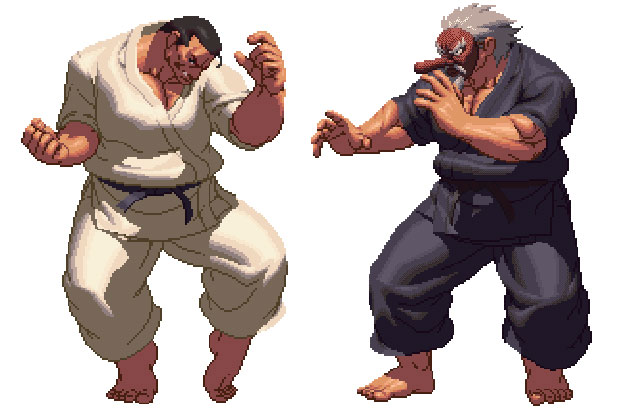
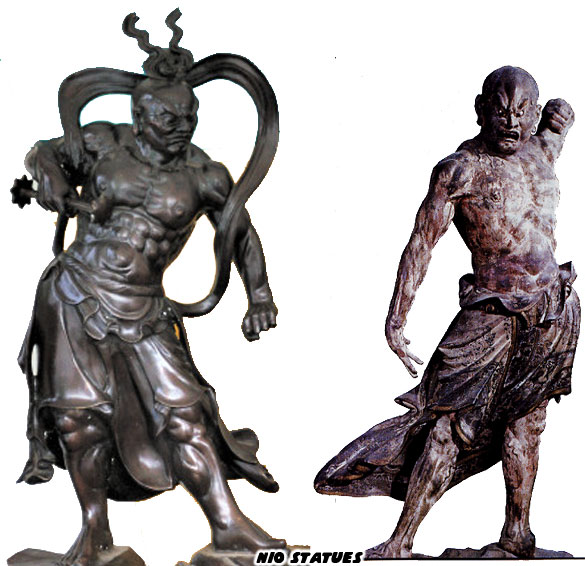
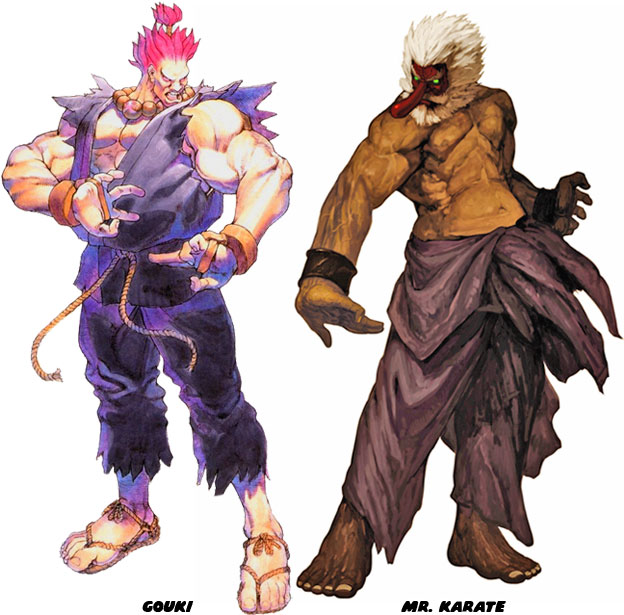
No character is truly original, none are pulled out from thin air, at least not the memorable ones. Gouki and Mr. Karate, the greatest "boss" characters from Capcom and SNK respectively, were inspired by mystical icons. To be specific the spiritual influences of Asian religions. These fighting game characters, their appearance, colors and even poses were based on the Nio. The Nio were the guardians of Buddha. They deterred evil man and demon from the gates of the afterlife and met the honorable ones as a friend when their spirit was ready to transcend this dimension. These figures could be found in temples as intricately detailed wooden carvings, some were life-sized and some were gigantic. They were also referred to as the the Benevolent Kings in other writings. The two most recognizable, the ones highlighted in manga and anime, being Agyo and Ungyo; the beginning and end, or "alpha" and "omega." The guardians were physically imposing figures, whose exaggerated muscles and proportions were meant to instill fear into those that would desecrate a temple. Although empty-handed in most representations they were nonetheless meant to be seen as fearsome warriors and masters of the martial arts.


Upon studying the statues, their origins and aesthetics we can see how the Nio could be incorporated into a fighting game. One of the most popular incarnations being Gouki / Akuma from Capcom's revolutionary Street Fighter series. Years later many of the fearsome elements from the Nio and earlier Vedic Traditions were pulled by Capcom once more to create the heroes and villains featured in Asura's Wrath. Given their importance in Buddhism and symbolically strong gestures they could not have been meant for anything less than "boss" status in their respective titles. The scowls, wide-eyes, raw power and menacing poses were universally understood even if their divine origin was not. All it took was for some artists to come along and update their designs, bring them into a contemporary setting.


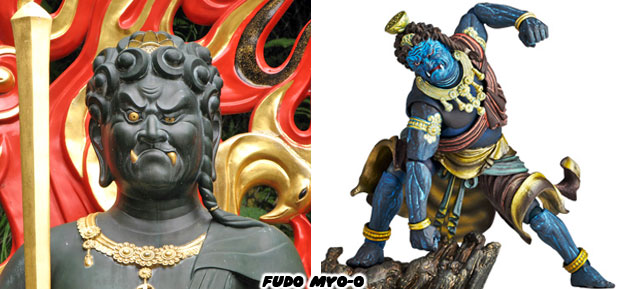
The Nio are sometimes mistaken for another figure from Buddhism. Fudo Myo-o AKA Acala is known as the "Immovable One." The fearsome-looking demon is actually a protector as well. He burns away all impediments and defilement so that living beings can reach enlightenment. The blue skin is supposed to recall elements of the supernatural. Gods and demons are often presented with blue or red skin. Many Hindu deities were presented with blue skin as well and possibly influenced the creation of the Chinese and Japanese spirits.


While Gouki was based on the Nio, a latter version of the character introduced in Super Street Fighter IV was known as Oni (the Japanese word for demon). The supercharged, blue-skinned version of Gouki was undoubtedly rooted in the design of Fudo Myo-o.


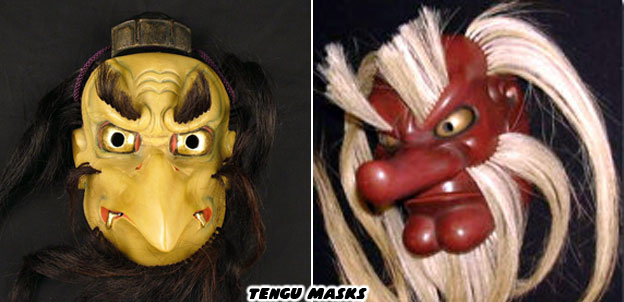
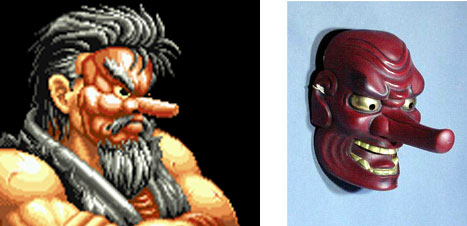
Mr. Karate from the SNK King of Fighters universe combined the Nio influence with a Tengu mask. Masks were very powerful symbols of culture, every culture had a mask tradition and were recognized for their symbolic properties. When used carefully by a game designer they could make an ordinary character extraordinary. In Japan, and in some regions, masks had an important ceremonial position. Originally carved from wood and later turned into a paper-maché craft, Iwami Kagura masks, which were similar to the Tengu masks were used in a historical and folk context. They were most commonly used for Noh plays as great storytelling devices. Even those without an understanding of Japanese culture could still find time to appreciate the colors, design and craftsmanship that goes into these amazing masks.


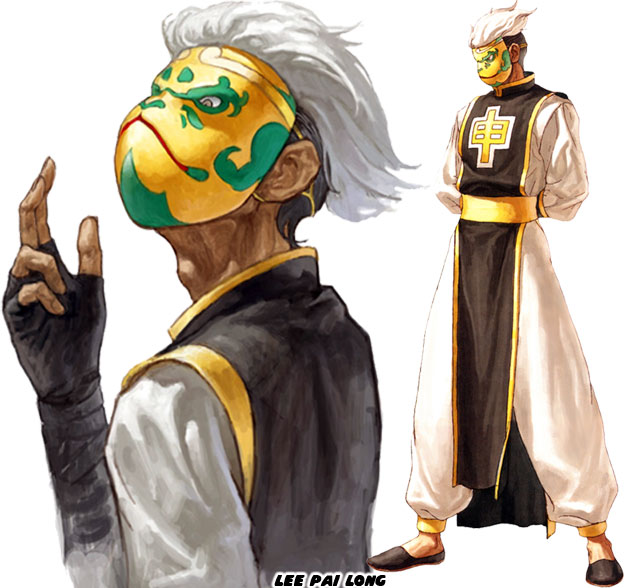
The use of masks as a storytelling device is also something featured in theSichuan Chinese opera. Stories based on the Romance of the Three Kingdoms and Journey to the West often feature performers in full face paint, if not ornately designed silk masks. Some performers were able to switch masks in a fraction of a second as a magic trick. This centuries-old practice was fiercely guarded by the Chinese and the techniques of the masked performers were often handed down to members of the immediate family only through a rigorous apprenticeship. In similar ways certain forms of kung-fu were also only trusted to immediate family members. While the Shaolin were willing to train other monks in the art of self defense many kung-fu practitioners were much more secretive. Many forms died out and it took a long time for certain lineages to be taught to foreigners, if at all. The fighting game character Lee Pai Long was a masked performer and master martial artist. His father was a legend and trusted his only son with his arcane knowledge of medicine as well as the martial arts. In SNK canon Lee Pai Long was a minor character but his design influences were notable. His mask had the pattern of the Monkey King on it. He came from a tradition that predated the Tengu mask.


The word Tengu translated to Heavenly Dog, a Shinto god. Sometimes the tengu mask had a beak and made the wearer appear like a bird. The more common version has red skin and a long nose with certain phallic qualities. Yes, there were some tengu masks with long flaccid noses as well! The term tengu and the characters used to write it in Japanese were borrowed from the name of a fierce demon from Chinese folklore called tiāngoǔ. The tengu were mythical characters, spirits, animals, goblins and such that existed before Buddhism reached Japan. As was the case in other locations the Buddhists pulled mythology of the region and incorporated it into their stories. The tengu stopped being representatives of ancient animistic Shinto figures and were written as opponents of Buddhism but also sometimes protectors of it. This dual nature worked in the favor of the characters designed for fighting games. The character of Mr. Karate was the alias for Takuma Sakazaki. As Takuma the character was heroic, noble and very honorable. Mr. Karate by comparison was a brutal fighter that held nothing back and showed no mercy to his opponents. Takuma was based greatly on the Japanese karate master Mas Oyama. However as soon as he put on the mask he developed a completely new personality. The father of Lee Pai Long was Lee Gakusuo, he was the martial artist that left an enormous scar across the chest of a young and arrogant Takuma. Gakusuo was what Mr. Chen was to the legend of Mas Oyama.


As a design choice it was a bold move from the people working at Capcom and SNK to feature martial artists disguised as divine beings. Imagine what a spectacle a real fighter would have created if they chose to protect their identity, or create a new personae with a mask? What would have happened if Mas Oyama or Huo Yuanjia had returned from their self-imposed exile to fight foreign champions while wearing a mask? What if they shunned the fame and had shown up at fighting tournaments unannounced and disappeared as soon as they beat their opponent? Imagine what the reaction would have been if Bruce Lee had lived and caught anonymously instead of promoted himself and his philosophies on movie screens. The stories and conspiracy theories surrounding their lives would be even stronger today.


The most unique designs in the King of Fighters and Street Fighter revolved around a distinct Japanese aesthetic. The Nio figures, the tengu masks and classic theater all had a part in shaping the legacy of fighting games. To ignore the origins of these characters was to deny the reason why audiences were so attracted to them. Western fans of the titles that lacked an understanding behind the Eastern religions, customs and traditions still appreciated these unique characters. I would argue that Gouki, Mr. Karate and other characters like them inspired Westerners to study more about Asian cultures and religions. There was no doubt that they found some influences with their favorite characters as they progressed deeper into history. The foundation for the King of Fighters and Street Fighter series was planted at the start of the 20th century not in the middle of the century. Mas Oyama was a central influence to both games but there were Japanese legends that existed before he did. When the designers at Capcom and SNK studied these men they were able to work them into the canon of each series. The next blog will get to the roots of the Japanese masters. As always if you enjoyed this blog and would like to sponsor me please visit my Patreon page and consider donating each month, even as little as $1 would help make better blogs and even podcasts!
Wednesday, May 14, 2014

Fighting layer, return of the dragon, part 4...

Fighting Layer featured quasi-believable good and evil martial arts masters in a tournament setting. This was a tradition that was started in Street Fighter II in 1991. The majority of the developers working at ARIKA had worked on both titles. Through the cast, levels and character designs they wanted to make a distinction between the two games. They had several branching paths in their title that allowed players to explore alternate sub bosses and endings. The previous blog had highlighted the human sub bosses. However before players even got a chance to challenge them they first had to defeat dangerous animals. Each of the animals was a master of their respective element. The first of the creatures was very believable and very difficult to beat.


The Tiger had only a few attacks but each of these attacks did a tremendous amount of damage. He swiped with his massive paws, leaped forward with them out and could even pounce and maul his opponents. The Tiger was the creature players had to face before fighting Preston Ajax. The tiger was one of the predators that karate and kung-fu masters were rumored to have tested themselves against. I only say rumored because an actual case, with actual evidence from history had yet to appear. The closest thing to reality was the character Wu Song, a person that appeared in the Water Margin, better known as one of the 108 Heroes of the Marsh. This Chinese fighter had gotten drunk on his way to a village and crossed paths with a ferocious man-eating tiger. He was either very brave or very drunk (or both) when he took on the tiger with his bare hands. He managed to get behind it and proceeded to bash its head in with his punches. Many of the Heroes of the Marsh were inspired by historical figures and actual events. There was a chance that Wu Song existed in some point in the past and had indeed done the impossible.

What was not rumor however were the creatures that martial arts master Mas Oyama had tested himself against. One of his most legendary encounters was against a wild bear. The bear had been menacing the residents of a rural village. Oyama decided to test his form of karate against the bear in an exhibition match. In the end he had to fight for his life and a hunter put down the bear with his rifle. In the manga and animé retelling of his life the battle was made very dramatic and drawn out but the actual fight probably took less than a minute. Of course even a few seconds in a cage with a bear can seem like an eternity. As Oyama got older he would stage exhibition matches against a bull. He would wrestle it to the ground, chop off its horns and kill the bull with a well placed punch to the head.


He would often wonder aloud with his students and friends, often members of the press, how well his Kyokushin karate would hold up against the strongest predators in nature. He always wanted to try his luck against a tiger but would never get a chance. This did not stop him and his contemporaries for coming up with strategies on how they would have taken on all sorts of creatures. They would publish these articles in martial arts journals and help build the legend of karate. Battles against wolves, tigers, bears and even gorillas were discussed. Some were set against actual historical encounters. Stories of hunters and samurai that were ambushed in the forest centuries earlier and how they used their martial training to defeat the creatures helped support some of the claims. These stories colored the world of the young programmers and designers. It wasn't enough that they had been raised on a diet of martial arts films, pro wrestling, sumo wrestling, pro sports, manga and animé, they also had real world legends to draw from. By the time they got to Capcom they were more than ready to create the first generation of virtual legends.

In many manga and manhua (Chinese comic book) stories wild animals could be tamed or defeated in unarmed combat. These stories were often fantastic in their representation of the martial arts masters. In many cases the youngest fighters could sometimes do the impossible. Such was the case for Karin Kanzuki, the arch-rival of Sakura from Street Fighter Zero fame. As the heiress of the Kanzuki empire she showed up her father by defeating the fearsome creatures that patrolled the Kanzui estate in Japan. She defeated a grizzly bear and giant falcon before taming a lion. At the tender age of 15 she had done more than Mas Oyama had in his real or manga lifetime.


The giant bird of prey returned in Fighting Layer as one of the animal bosses to defeat. Like the Tiger, this creature was incredibly fast and powerful. A few strikes was enough to kill most players. The Falcon had to be defeated before players could challenge the boxer Joe Fendi.


The animals in the game had moves that were appropriate for them. None of them stood on two legs and tried to trade punches and kicks with the players. Instead they lunged and slashed ferociously. The Tiger would pin down opponents and maul their faces. The Falcon could pick up opponents and then drop them from a tremendous height. It was always a challenge playing against them but it was even more enjoyable playing as the animals against human opponents.


The animal bosses were time release characters. After a few weeks in the arcade both the animal and sub boss characters became playable. Allen Snider and Blair Dame were the hidden mid-bosses in the game. They could only be fought if the player met the right criteria, like not losing a round and finishing opponents with a super attack.

There were three sub-bosses however and I have only mentioned two of the creatures so far. Both the air and land were covered already but what about the sea? What creature rules the seas in the minds of most players and would make quick work of even the best fighters ever?


A Shark patrolled the sea floor around the host island of the tournament. This character had to be defeated before players could face Clemence Kleiber. Players actually had to face the creature underwater in a stage called the "Sea Zoo." It, like the Tiger and Falcon, would try to circle around the player and look for an opening before striking. The Shark could fit players in its mouth and cut them to ribbons. A few bites could kill players within seconds. It was possible that the Shark was the toughest of the animal bosses to face, just as one would imagine. When the character was unlocked in the game he would actually float above ground and play with the same physics as he had underwater. Players could even get the Shark to "swim" outside of the barrier for each stage where regular players could not tread. In the eyes of many Fighting Layer literally "jumped the shark" with this character. Those that were willing to suspend their disbelief however learned that the game was supposed to be fantastic and over-the-top. The explanation for the creatures, sub bosses and tournament itself was grounded in the supernatural.

When I began this series I mentioned that the film Enter the Dragon had inspired much of the development for both Street Fighter II and Mortal Kombat. Street Fighter was rooted in science and realism, with a militaristic dictator running the tournament. Mortal Kombat was rooted in the supernatural, with an ancient wizard hosting the tournament. Fighting Layer was actually a blend of both mythologies. Fantasy and animal characters acted as the sub bosses while the actual competitors were rooted in real martial arts. The understanding that the game was not entirely based in reality was presented in the very second level of the game. Players had to take on an animated suit of armor in an underground cage. It was obvious then the game would be mixing fantasy and reality elements. Players that didn't understand this inclusion of fantasy would be lost through the rest of the game.


The seeds for the fantastic elements in Fighting Layer had been planted in Street Fighter EX. However some of those designs had been around since the planning stages for Street Fighter II as well. The next blog will look at these origins. If you would like to sponsor me please visit my Patreon page and consider donating each month, even as little as $1 would help make better blogs and even podcasts!
follow the Street Writer on Patreon!