Showing posts with label mas oyama. Show all posts

Monday, December 12, 2022

The Street Fighter 6 pre-order trailer, a love letter to the series, and a look at JP

Thank you for dropping by the blog. We have a lot to talk about with the release of the Street Fighter 6 - Pre-Order Trailer. Make sure to watch it if you haven’t already.
   
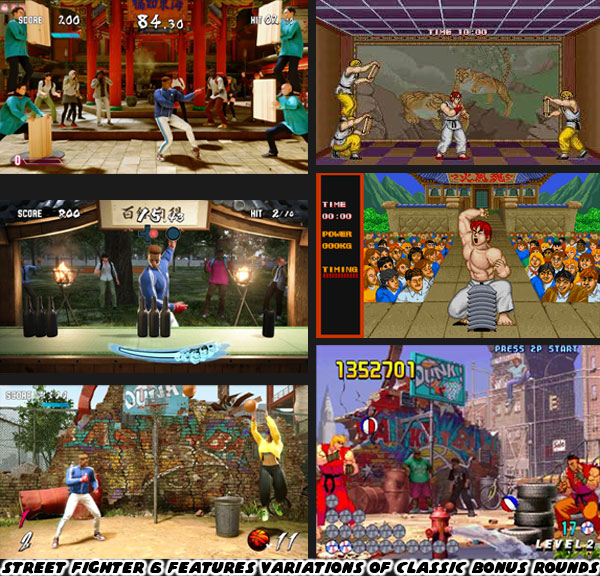
There is a tremendous amount of new information revealed about SF6, including official reveals of some new faces. One of the things that surprised me was the re-introduction of bonus stages. Ways to earn extra points, learn skills, and practice special attacks have been a part of the SF franchise since the very first game in 1986. In fact one of the earliest bonus stages involved board breaking. After 35 years this returns in the game. Long-time players would spot nods to other classic bonus stages, and even new challenges.

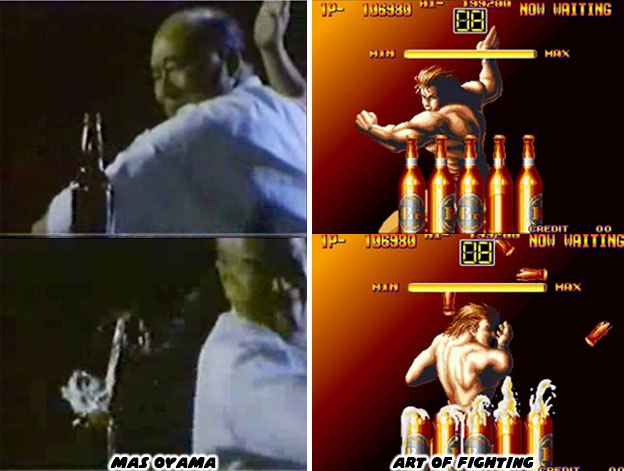
There was a shot of the player character chopping the tops off of glass bottles in one bonus challenge. Those of us old enough to remember would know this bonus was first used in the Art of Fighting in 1992. The SNK game directed by Hiroshi Matsumoto, and Akashi Nishiyama was a sort of updated take on the Street Fighter formula. The duo had developed the original SF before leaving Capcom to join SNK. They took with them a number of their martial arts influences, and translated them into game form. I have written a lot about Mas Oyama, and his influence in the creation of fighting games. The “God Hand” of karate could legit kill bulls with his bare hands. He was the basis for Mr. Karate / Takuma Sakazaki, arguably the most power karateka, and one of the top bosses in the SNK universe. Oyama would put on demos where he would cut the tops off of bottle with a knife hand chop. SNK used the bottle chop as a bonus stage in the original Art of Fighting. This skill now gets a nod in the SF franchise as well.

I have said it before, and it bears repeating. Street Fighter 6 Director Takayuki Nakayama, Producers Kazuhiro Tsuchiya, and Shuhei Matsumoto, and Designer Yusuke Hashimoto have all demonstrated a better understanding, and love of the culture than the previous director Yoshinori Ono with every SF6 update released. The game is not only pushing the genre forward, it is also a love letter to the games that came before. These influences are from Capcom, and from other studios as well. I am not going to focus on Dee Jay this time because he is a returning character. Instead I want to talk about the new faces revealed. Let’s start off with the sharply dressed older gentleman. According to the official bio “JP is the head of an international NGO (nonprofit organization, designed to address social or political issues) responsible for many successful investment projects, and the man behind Nayshall's present prosperity. Has a beloved cat named Cybele.” I did a quick look at JP earlier on the blog. As far as his look, and use of weapons is concerned there is a lot of precedence in the series.

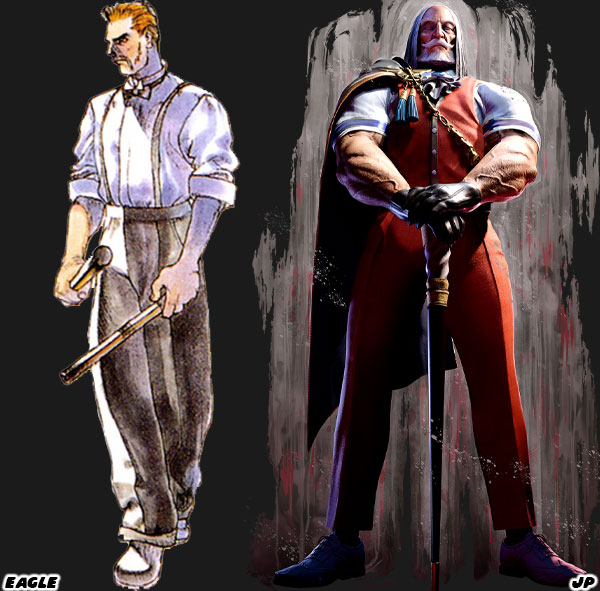
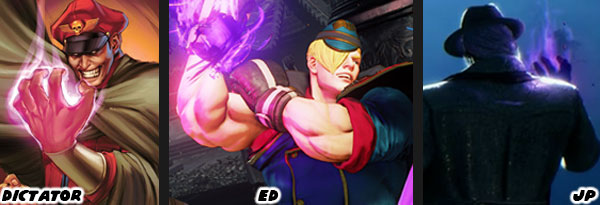
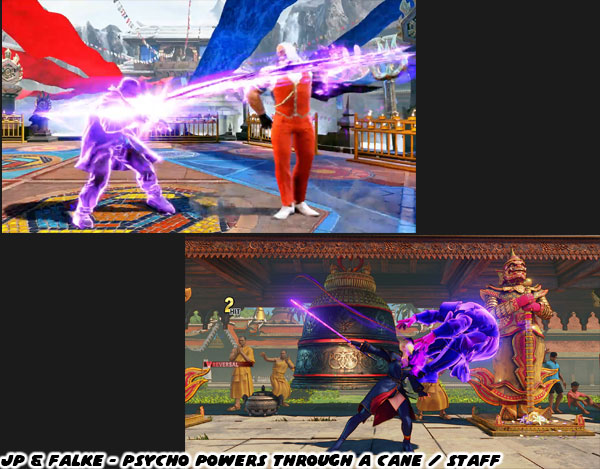
The gentlemanly fighter Eagle was the top British striker in the original Street Fighter. He dressed sharply, and fought with the use of two sticks. JP is a continuation of other well dressed fighters who use a weapon in combat. The closest one that I compared him to would be White from the Fatal Fury sequel Real Bout Garou Densetsu Special: Dominated Mind. It could be considered fair for him to use a cane because JP was an older gentleman competing against fighters half his age, and twice his size. Of course as with any fighter in the franchise looks were often deceptive. JP was more than just skilled with a cane, in the trailer we can see he harasses some sort of psychic ability. The purple glow of “psycho power” had been featured as early as 1991 through Vega / Dictator, as well as in later games with Rose, Menat, Ed, and Falke.

It was established in previous SF games that psychic powers could be funneled, or rather focused through objects. Menat used a crystal ball for example. Falke used a military staff. The vast majority of characters in the SF universe fought with their bare hands, but a select few fought with weapons. These characters helped add balance to roster. From a storytelling perspective it made sense that a Mad Gear boss like Sodom would fight with a weapon. But it also worked when smaller fighters, or older fighters, were allowed to use weapons in combat. To learn more please read the blog on Falke, and how military design works in fighting games.

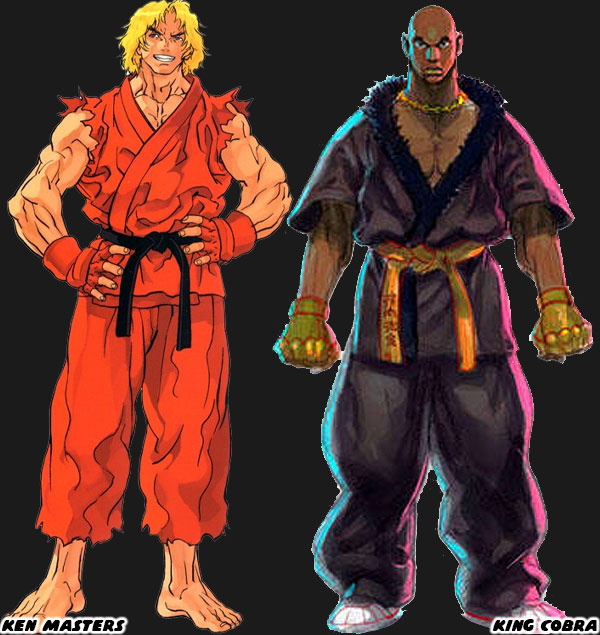
The other two fighters revealed in the Pre-Order Trailer were more interesting to me. They seem to cement the idea that a lot in the online community had. Namely that the SF6 team was trying to redo the characters introduced in SFIV, to redo not only their looks, but also their over-the-top, cartoonish special attacks. Let’s do a recap of what we know, and then what we can infer. Many SF fans learned that the rival to Ken was not originally planned to be the obese, and stupid Rufus. A young Black, “breakdance kung-fu” fighter named King Cobra was going to be his arch-rival. Audiences felt this was a very strong design, one with tremendous potential. Producer Yoshinori Ono insisted on adding a “fatty” for comedic effect instead. The world was robbed of a potentially fantastic design.

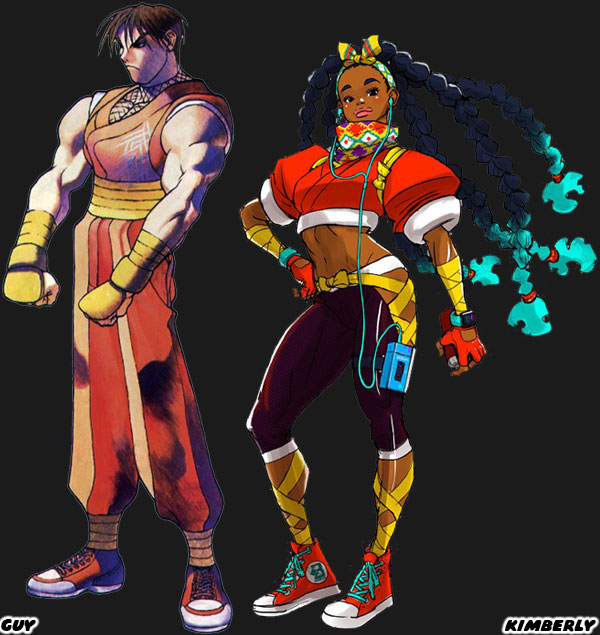
Of course no great idea really dies. At least not at a major studio. I believe that the fighting style originally planned for King Cobra was instead assigned to Jamie, the rival to Luke in SF6. The idea of giving a strong balance, or younger upstart to compliment to a franchise character was expanded on with others in the cast. Chun-Li as you may know finally had a worthy rival with the villainous Juri in SFIV. Juri’s design I believe had finally been perfected in SF6. Although we have not been introduced to A.K.I. officially as of this writing, many online also believe her to be a redesigned version of F.A.N.G. from SFV. One who loses the silly personality, to become a much more sinister archetype. Not every new face in the series is designed to be a rival to an established character. For example, Kimberly is the young ninja that is designed to be the understudy to Guy.

Guy was a featured character in the 1989 hit Final Fight. He was originally designed to be the replacement for Ryu in the Street Fighter series. As Cody was designed to replace Ken as well. The wrestler-turned-mayor Mike Haggar was the prototype for Zangief. But I digress… The sneaker-wearing ninja was certainly cooler than Ryu in design. Bringing just a hint of urban fashion into a traditional martial arts world. Kimberly carries a lot more of that same forward thinking. Mr. Nakayama, Mr. Tsuchiya, Mr. Matsumoto, and Mr. Hashimoto have gone all-in on incorporating the western influences that helped create the SF series. In doing so they expanded the diversity, and more important, created much better representation than in either SFIV, or SFV. They understand, perhaps better than the majority of Japanese designers, that Black culture is pop culture in the west. Not only that Black culture is the backbone of pop culture the world over. Using the fashion, the music, and art of Hip-Hop without including Black characters would have been a disservice to the community. The two other women introduced are other great examples of representation. I will dig into those on the next blog. What are your thoughts on everything revealed with SF6 so far? What are you looking forward to? Let me know in the comments section please! As always if you would like to sponsor me please visit my Patreon page and consider donating each month, even as little as $1 would help make better blogs and even podcasts!
follow the Street Writer on Patreon!

Friday, September 4, 2015

How fight culture became fighting game history, part 29

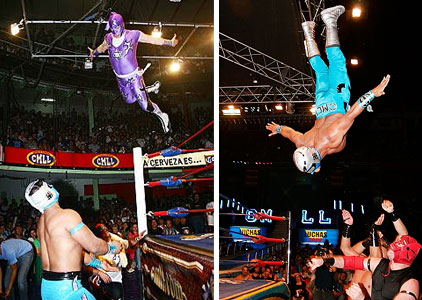
Many people do not realize that there are many different types of pro wrestling. They usually understand that the matches are pre-determined, which leads many to call the sport "fake" but the athleticism of the performers and the origins of their moves are anything but fake. The pro wrestling seen in the US has many variations, from traditional to bloody and violent "hardcore." Those are slightly different than the high-flying lucha libre matches seen in Mexico. In Japan the style of wrestling they perform is a little stiffer, as in the hits they perform are a little harder and they go through more "finishing moves" than either the US or Mexico. They even have a unique name for their format of pro wrestling called puroresu or puro for short. Japanese puro has been heavily influenced by both the USA and Mexico formats. Japan's love of lucha libre even resulted in the creation of lucharesu, a combination of lucha libre and puroresu. What makes the sport unique is how different cultures interpret it and make it their own. For the past century the Americas, North, Central and South have been the catalyst for a unique variation of grappling and fighting. One with more theatrics, more pageantry and more high-risk maneuvers than any other form of ritualized combat in the world.


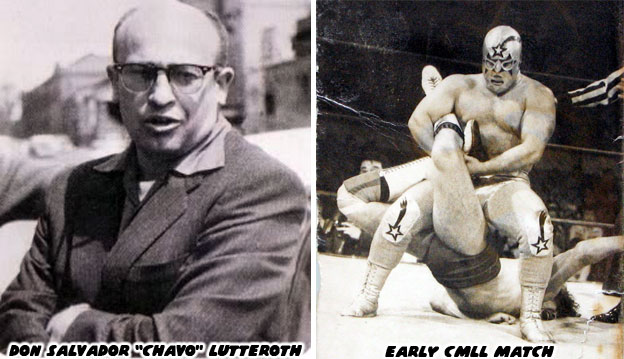
The most obvious distinction of lucha libre to every other form of "pro wrestling" in the Americas are the masked characters and high-flying acrobatics. To many in the US they view these "gymnastics" with disdain, saying that pro wrestling has a history connected to trapping and grappling of catch wrestling, freestyle wrestling and of course classic Greco-Roman wrestling. The National Wrestling Alliance (NWA) from North America could claim to trace its championship back to the first Heavyweight World Championship of Catch-as-catch-can from 1905 won by George Hackenschmidt. Of course the actual NWA organization was founded in 1948 to give the North American territories a "World Champion." The type of wrestling performed in Mexico is seen as too acrobatic or choreographed to be taken seriously. Lucha libre as we know it is actually the oldest form of pro wrestling in the Americas. The original promotion that started it all, the Consejo Mundial de Lucha Libre (CMLL, which was actually the EMLL previously) was established in Mexico in 1933 and survives to this day. It is the longest running promotion in world history. By comparison the WWE could trace its history back to 1952. Also, just so you know not every luchador wears a mask. A masked wrestler is called an enmascarado, these are the creme of the crop when compared to regular luchadores.

Salvador Lutteroth is the man credited to bringing wrestling to Mexico. He saw some matches in El Paso and noticed how a masked performer worked well with the crowd. He thought this secret identity would be very important to fans. They could imagine themselves as the person behind the mask and get lost in the show. They would also believe all sorts of origin stories, such as a wrestler covered his face to keep women from fainting at the sight of his grotesquely disfigured face. Or perhaps this character was a hero, like the Lone Ranger, or Bass Reeves, and hid his identity to protect his family and friends from evil doers. Salvador knew that masked characters would go over well in Mexico and needless to say he was right! I would suggest you watch a short but very well put-together lucha libre podcast from the George Eastman (as in Eastman Kodak) house explaining some of the history and charm of these masked characters. Lucha libre certainly has a long and established tradition that has been highlighted for several generations in gaming.


The closest thing that I could compare the enmascarados in the USA to would be superheroes. The elaborate masks, tights (and sometimes capes), are all part of their costume. Their secret identity is as important to them and their fans as it is to the fictional characters in comic books. A true enmascarado never, ever goes out in public without his mask and protects his identity to the best of his ability. He never does anything to bring shame to his name or his mask. An enmascarado does not go into the lifestyle casually but with all his heart and conviction. If the wrestler is lucky enough to have kids then his son or daughter might take up the family business and even carry the mask through the next generation. Believe it or not the true enmascarados in Mexico never leave the house without their masks, even when they are out with their friends and family. To the public it's all part of tradition and they do not think twice about seeing a masked man.

The reason for what we would consider "odd social behavior" is actually seeped in tradition. These men are seen as daring fighters, mythical warriors. The physical ability to perform all sorts of crazy moves is part of the spectacle but the bond between the audience and the luchador goes deeper than performance fighting. The good guys are called "Technicos" they fight by particular guidelines and always have to uphold the rules of clean combat. The bad guys are called "Rudos" and are free to use every dirty trick in the book. The matches they engage in are very much a live battle between good and evil.

Audiences are drawn to these morality plays like moths to a flame. With the good guys and bad guys so clearly defined it becomes hard not to choose a side. Kids will their heroes to overcome the obstacles and win the fight even when faced against insurmountable odds. Remember the appeal of the wrestler Rikidozan had in Japan? He knew that by wrestling against the foreign invaders, aka the USA, he would win over fans. Each match of Rikidozan's was a chance to prove to the fans that the Japanese were the best. Now imagine that Mexico was the home of a dozen characters as important to history as Rikidozan. Many of these men were fighting for the very souls of the audience.

El Santo "the Saint" was the biggest wrestling superstar of all-time. He was one of the few enmascarados to be buried with his mask on, never losing it in a match. He created an iconic character that still resonates with many Mexicans and Mexican-Americans today. His nickname was el enmascarado de plata (the silver masked man), his mask and silver outfit became a trademark and currently his son keeps the tradition alive.

A huge reason why enmascarados go over so well in Mexico, as opposed to in the USA or Japan, is because of cultural relevance. Mexico is predominantly Catholic but with lingering traditions, folklore and myth from the natives. The battles between good an evil are an every day occurrence for those with strong superstitions. These people pray each and every day to do the right things and not go astray. They pray that they have the courage to fight against evil and even if they lack courage to make sure that God sends a holy warrior to guide them. The warriors that perform in these battles have a second layer of context that is unique to Mexico. 

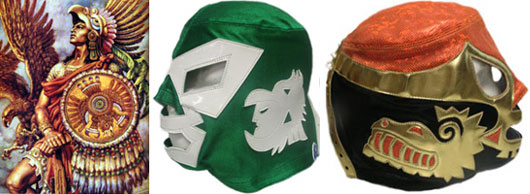
Enmascarados harken back to the pre-columbian world. The masks themselves are inspired by actual warriors. The Aztec warriors went into battle with brightly colored uniforms and headdresses so that generals could watch their exploits in battle. These were known as Caballeros Aguilas (eagle riders) and are symbolic of the fiercest warriors of ancient society. The design of the caballero aguila can be seen on the mask of the villainous Dr. Wagner Jr and Canek "El Princepe Maya" (the Mayan Prince).
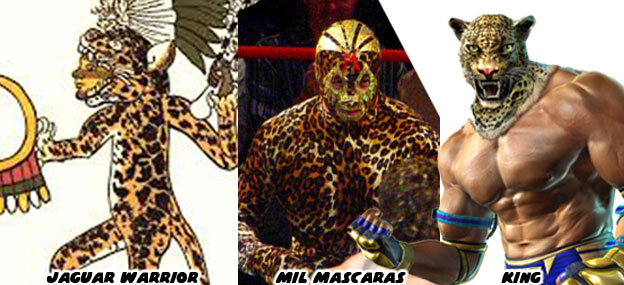


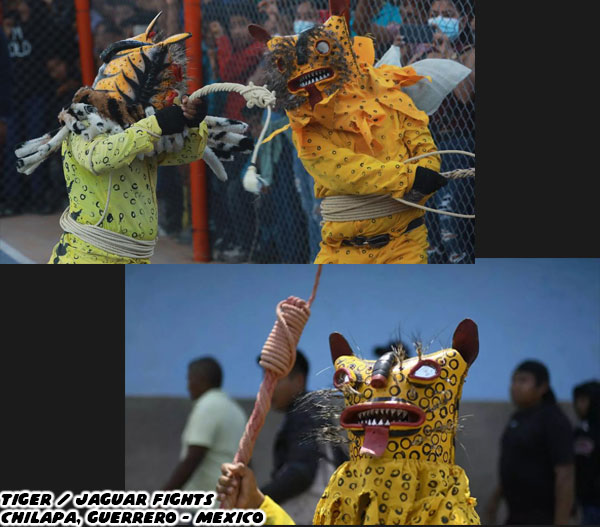
One of the most famous and successful of all the Mexican wrestlers is Mil Mascaras (a thousand masks). He has a mask and costume in the jaguar pattern, similar to what the ancient warriors would wear in battle. His animal print designs helped inspire the character of King in the Tekken series. The tradition of masked fighters outside of the wrestling ring is still seen to this day. One of the longest running traditions happens every year in the city of Chilapa, in the state of Guerrero Mexico. The state is south of Mexico City, and known for the beach city Acapulco. The town of Chilapa is a farming community, and in order to ensure a good harvest they hold a festival in honor of Tlaloc, the ancient Aztec rain god. 


Villagers from Chilapa wear costumes that mimick the jaguars, and tigers of Caballero Aguila fame. They have a parade, and dance in costume. Men, and women then square off in fights where they beat each other with clubs made of rope. Their tiger masks act more like helmets, absorbing terrible blows from the fights. The better the fight, the more rain they can expect to ensure a good harvest. Many people have been severely injured, and a few have died from the battles. When it came to masked combat there was no country on Earth that took it more seriously than Mexico. Here is an excerpt from the Sun interview with enmascarado El Hijo Del Santo explaining the origin and importance of the mask.

"The Sun: Can you describe the importance and history of the mask to Mexican wrestlers?

El Hijo Del Santo: I believe that when lucha libre started, it all began with a wrestler that came from the American circuit. He [the masked wrestler] got a lot of attention from the Mexican crowds and as Mexican wrestling is a war of good v evil, the masks have an importance with the roots of our culture, like the Aztecs, Olmecs and Teotihuacans. They always wore masks of animals when at war, the most significant were the jaguar, wolf, the eagle, snake, as they believed they would get the animal’s powers in combat. I think lucha libre adopted this belief and the luchador looks for a name that suits his personality from say nature, animals, the heaven like El Santo or hell like Demon. Many years ago, my father Santo took the mask off Black Shadow in a match with wagers, that day the importance of the mask took a new dimension, to lose a mask became very important and an opportunity for promoters in Mexico to present something new that doesn’t happen in the USA."
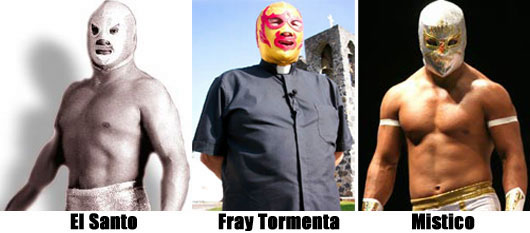


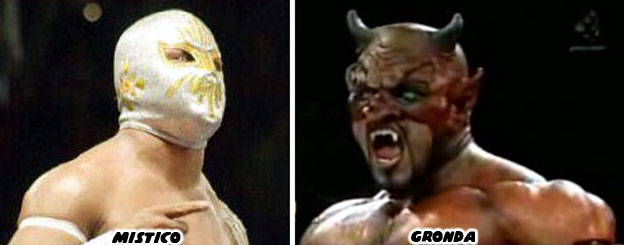
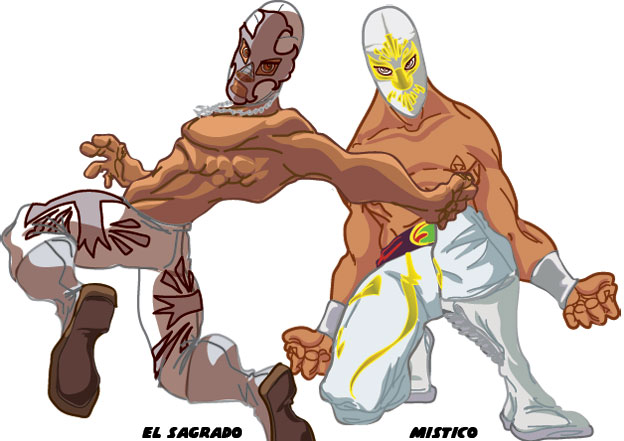
While Fray Tormenta (Father storm) is not the true heir to the Santo legacy, he is a bit of a literal "spiritual" successor. Fray as you might know was the basis of the movie Nacho Libre. He was an actual priest that wrestled to raise money for his parish and the local orphans. The movie isn't nearly as interesting as the true story, and if you ask me quite an insult to the legacy. Fray wore a mask of gold with red lightning trim. Something of a balance to El Santo's silver. A couple of generations later a new high-flying enmascarado showed up on the scene, the new chosen one was not Rey Mysterio Jr. as many believed, he was Mistico and he was "ordained" by Fray Tormenta. His mask was an equal mix of gold and silver, his title "the Prince of the Silver and Gold mask" was a way bringing the iconography of both legends together. He took on all challengers including the men who wore masks of skulls and demons, people like Averno, Ephesto, Mephisto, but not the Devil-masked Gronda because he was in a different federation.
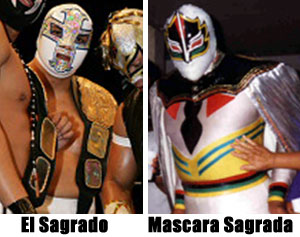

If lucha libre represents the eternal fight between good and evil then fans would want to see the absolute best representing the path of righteousness. Wrestlers like El Santo, Mistico and El Sagrado were famous because of their ties with the Catholic faith. They were very popular in the highly religious small towns of Mexico and even more so in the secular big cities. I cannot overemphasize the importance of the faith that these masked men stood for. They weren't simply "technicos" but absolutely represented the best qualities in humanity. Some, like El Santo, Fray Tormenta and Mistico had a lot of spirituality behind their look and name. The use of halos, crosses and even the Eucharist were not considered gimmicks but symbols of their practicing faith. They represented the ideal qualities of man and acted as living symbols of faith. El Sagrado (the sacred one) and Mascara Sagrada (the sacred mask) were other wrestlers that purported a spiritual path. Their roles were to be great performers and never succumb to the dirty tactics of the rudos. El Sagrado was supposed to be the modern "chosen one" but he did not seem ready for the limelight so he was held back until fans warmed up to him. Mistico was an instant hit with audiences so the torch was passed to him instead.

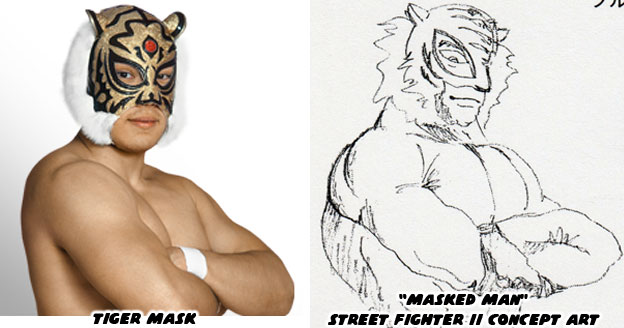
If you know your Street Fighter history then you remember that a masked wrestler was on the drawing board while SF II was in development. They had at least two separate looks for this "Maskuman" (Mask Man) early on. One that looked very much like the legendary Tiger Mask. There was no doubt that Tiger Mask was a character that many of the developers had grown up with. He was unique among his wrestling peers because started off as a bad guy and became a good guy. Tiger Mask proved a popular character in manga and even had his own anime series.

Japanese culture provided a lot of the SF II character influences, Ryu looked more like Kenshiro from Hokuto No Ken than Mas Oyama in the early Street Fighter II concept art as well. It was easy to imagine that the designers wanted an over-the-top masked wrester in the game that had as much personality as any of the characters or bosses in the SF II. Read the InsertCredit.com Making of Street Fighter II feature to see some more concept art.

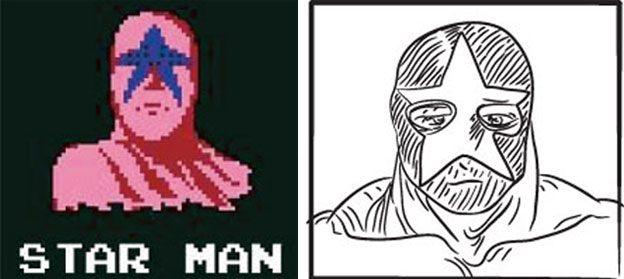
Here is where Japan's wrestling influence, and especially the masked wrestler variety differ from the enmascarado; Japan does not have the cultural relevance of masked characters. Certainly the do respect the legends, especially people like the Destroyer who was the great Western heel a generation before Big Van Vader. At the same time it would be very odd to see a masked person walking around the streets in Japan, unless it was a surgical mask to prevent the spread of colds. They do not have the same cultural significance as the luchadores have in Mexico. They do not have the same religion, myths and folklore that support the symbolism and tradition of elaborate masks. To them a mask is just a mask and it is the wrestler that defines the character. During the development of Street Fighter II Capcom was just drawing masked characters from pop culture without really understanding their origins.In another take on the character he had an enormous star placed over his face, it was not unlike the same mask worn by Star Mask in Tecmo Pro Wrestling for the NES. Because Capcom could not come to a consensus as to what type of masked wrestler they wanted in the game Maskuman never made it past the planning stages.

As the lucha style began gaining popularity in Japan in the late 1970's-early-80's so too did the masked wrestler. Part of this reason was because the Japanese promotions began partnering with Luttheroth's CMLL. The Japanese would send talent to Mexico to learn all about high flying moves and on occasion the Mexicans would organize a tour of Japan. This cross cultural exposure made is to that the Japanese and Mexican's began influencing the development of each form of wrestling. The martial arts characters from Japan, like the Great Sasuke planted the seeds for martial arts enmascarados like Octagon. Sasuke returned to Japan and honored the traditions of Mexico. He did not take off his mask in public and even ran for local government office and won, where he attended cabinet meetings in mask. He was not the only masked wrestler to create waves in Japan either. More famous than the Great Sasuke and possibly just as famous as Tiger Mask was Jushin "Thunder" Liger. The look of the masked wrestler in Japan began to evolve to fit their culture. Since they could not draw cultural significance from the masks or costumes of Aztec warriors they instead began taking cues from henshin and sentai, the popular superhero and science fiction characters from television. The look of Thunder Liger is somewhere in between Ultraman and a Power Ranger. Interestingly enough in Mexico the enmascarados like Psicosis also began experimenting with this new look.
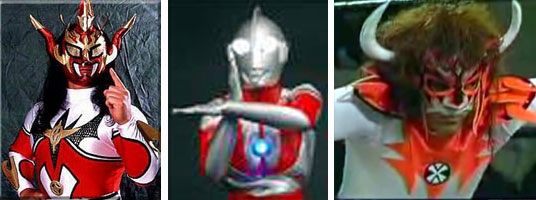

However not all of the masked wrestler in Japan went out of their way to preserve their identity or maintain kayfabe (the illusion of their character). They did not go to extreme lengths to preserve the sacred title of an enmascarado because the cultural significance had no precedence. Even one of my favorite masked Japanese wrestlers of all-time, the Great Hayabusa, would remove his mask after matches so photographers could take pictures of his face. The ego had superseded the symbol in Japanese wrestling.

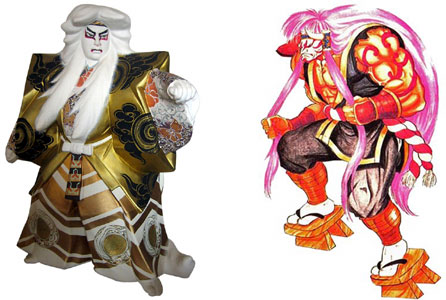
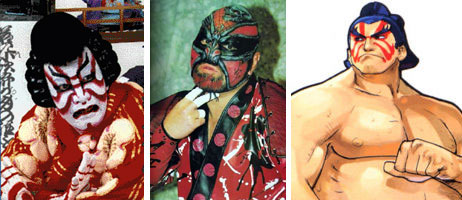
The wrestlers that wore face paint in Japan were closer to capturing the spirit of an enmascarado. They were a little closer in recreating the ideal following in Japan. Some of the most famous Japanese wrestlers, like the Great Muta, wore face paint and sometimes masks during their matches. Many wrestling fans believe that this was because Japan had a well established tradition in theater. Kabuki in particular with the dramatically painted faces of characters was an easy comparison. This translated well to Street Fighter II.

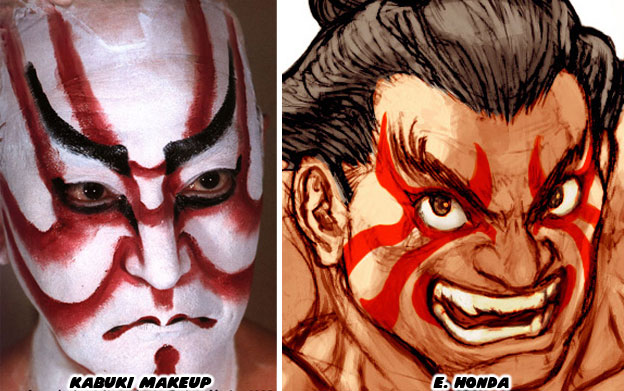
Look at how the kabuki paint was used on E. Honda. From my understanding this was to make Japanese characters more appealing to US audiences. Many sumo purists saw this as a slap in the face, as wearing makeup in the sumo ring is almost sacrilegious. However E. Honda managed to win over enough fans to become the iconic sumo in the universe. As Maskuman ended up on the cutting room floor, he was compensated in some way by a kabuki-painted sumo wrestler, a more "theatrical" traditional athlete.

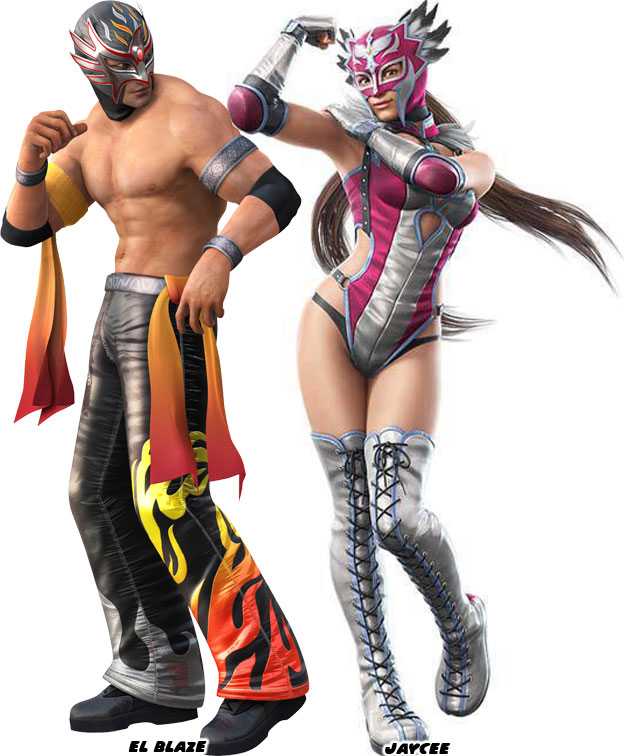
To this day masked wrestlers continue to shape the evolution of fight culture and game design. Rey Mysterio Jr., another famous second-generation wrestler, is undoubtedly the template for popular enmascarado designs in most new fighting games. He does have classic lucha libre training and is considered one of the best high flyers of all-time. His look is very contemporary, as he wears pants instead of tights, sports an open mouth mask and is covered in tattoos. Traditional enmascarados would never dress or present themselves in this way but at the same time the tradition had to evolve in order to stay relevant with audiences. El Blaze from Sega's Virtua Fighter series steals many cues from Rey Mysterio Jr. but even female wrestlers in Japanese games are getting into the enmascarado tradition. Jaycee from Tekken was an attempt at changing the identity of the character previously known as Julia Chang (JC, get it?). Her makeover was a nod to the lucharesu and puro stars in the female wrestling circuit. For decades female wrestlers in Japan had been into the masked traditions as well. Just like their male counterparts many did tours in Mexico where they learned how to work at a quick pace and how to perform the aerial moves.


The longer the Japanese were exposed to the culture and tradition of masked wrestling the more they adapted it into their culture. Game developers were not the only ones that showed their love of masked wrestlers or pro wrestlers in general. In the next blog we will take a closer look at the man men of wrestling and how Japanese artists turned them into game characters. As always if you enjoyed this blog and would like to sponsor me please visit my Patreon page and consider donating each month, even as little as $1 would help make better blogs and even podcasts!
Friday, August 14, 2015

How fight culture became fighting game history, part 20

Great fights made martial artists legends, but only if there were witnesses. Thanks to the advent of film and video the modern fighters had the luxury of being very well paid for their efforts. Cable television deals and prime time programming meant that audiences could enjoy a steady diet of violence and adrenaline from the comfort of their own homes. Unfortunately the ease of access meant that the spectacle once provided by underground matches became commonplace. Even if two fighters were great they were still judged by points, a system, a set of rules. The true contest of man-vs-man, no rules and no holds barred would never be aired. The fights that were settled in the back alleys and in secretive dojos were never recorded. Finding the real legends was becoming harder and harder in the era of film.


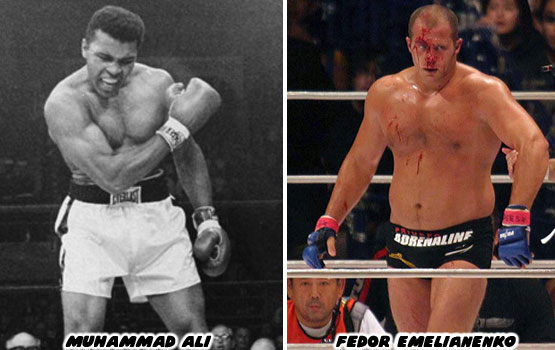
When the fighters were exposed under the bright lights they either rose to the occasion or withered away. The downside was that when they made a mistake, when they fell, the witnesses moved onto the next fighter. It did not matter if the person that had made the mistake was the better overall fighter. A defeat was a defeat. These fans did not always acknowledge that they had witnessed an era of greatness. The fighters that were once world champions, dominating ones at that, were like modern gladiators. Adored by the public when they won and discarded once defeated. Muhammad Ali and Fedor Emelianenko could be considered two of the best heavyweight fighters that ever lived. Their battles were not always easy, yet both managed to grasp victory from the jaws of defeat time and time again. Both men had also beaten some amazing fighters before they had even stepped into the spotlight. Some were remembered but most faded into history. Time eventually caught up with Ali and Fedor. Before they knew it the next champion had arrived, the kings were dethroned and left without a kingdom.

The key to immortality was elusive for a fighter especially one in the public eye. Only those that retired undefeated or died at a young age seemed to reach mythical status. The opponents that the legends defeated were like world champions that never sought fame or glory. The fights that they had were passed down by word of mouth because there were no cameras, and sometimes not even witnesses. Such was the case for young Bruce Lee. The young martial artist had been in plenty of fights during his lifetime, the majority on the street. The martial artist was eager to expose traditional Eastern fighting arts and philosophies to the West. This raised the ire of classical masters of the fighting arts. They forbade him from teaching non-Chinese the fighting styles. When Lee refused the elders sent a young master to beat him into submission. That was how the legend went. Unfortunately the circumstances surrounding the fight were nebulous because of the inconsistency of witnesses.


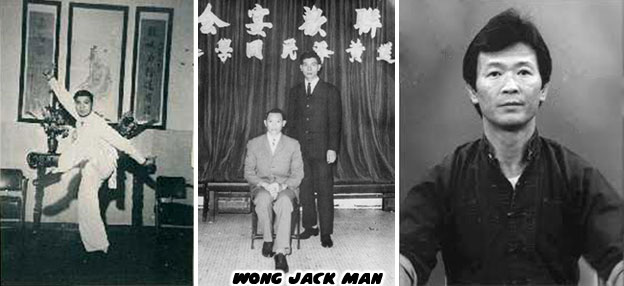
Wong Jack Man was the fighter that was sent to battle Lee. It was said that the older teachers were mad at Lee, not for teaching outsiders, but for bragging about how ineffective the fighting styles were. They wanted to have a contest with rules and regulations so that neither man got seriously hurt and settle the debate. They knew that in ancient China a fight to the death may have been permissible but in the modern world, especially in the US, there would be consequences for these actions. According to some witnesses Lee refused to fight under the limit of rules. Either everything was fair game or nothing was. Eventually they agreed to more lax rules and from the get-go the witnesses agreed that Lee was the more aggressive fighter. To some people Lee was fighting dirty, attacking the eyes and throat of Man throughout the fight. Lee was described as doing everything in his power to finish the fight as fast as he could. Man did everything he could to defend himself. The fight was not a quick battle as Lee later boasted but seemed to drag on. After 20 or 25 minutes Lee was declared the winner although neither man managed to knock the other down or cause serious injury. Different accounts of the contest were reprinted in local Chinese newspapers and each one went more favorably to Lee. Man told his account of the fight and challenged Lee to a public battle and settle the argument once again. Lee would decline.

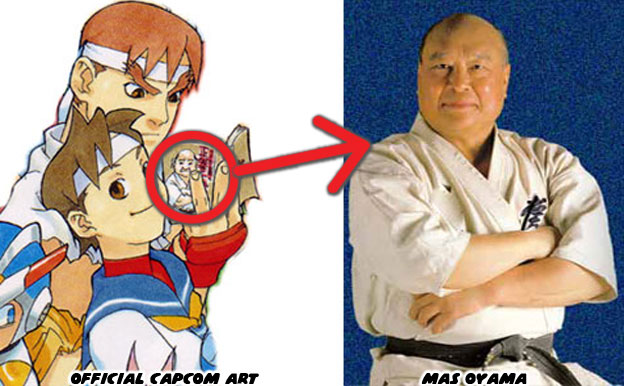
The legend of Bruce Lee grew as he pursued better fighting and training techniques. The exposure he gained from the Black Hornet television series and later his film series made him an icon. Most people that would consider themselves fans of Lee might have never heard of Wong Jack Man. Wong later said that the fight had taken place because both men were young, prideful and headstrong. If anything if the truths from their encounter were revealed it would only serve to hurt their reputations more than help. Some facts managed to disappear through time much to the favor of one fighter. Fiction was malleable, easier to work with than historical accuracy. A decade and a half before Lee rose to prominence a different martial artist was the hero of millions. Mas Oyama, born Choi Bae Dal, was called the "God Hand" of karate. He could beat most fighters with a single punch. He was good but lacked control. He killed a man in a bar fight after the person pulled a knife on him. He realized that he had the ability to disarm the man but let his temper get the best of him and chose to strike instead.


Oyama became a hermit and lived in the mountains. Training his mind and body until he thought he had reached his peak. Then he set out trying to prove himself. He went dojo to dojo and challenged the masters of each school. He beat each one handily and his legend grew. Then he set out to prove that his style was the best. He traveled to the US, China and Thailand to try himself against other masters. Boxers, wrestlers and other fighters lined up for the challenge. Most fights were settled in private, away from the spotlight and the law. Imagine what would happen if a fighter today went to every martial arts school in the city and beat up all the teachers. Chances are that the police would be waiting for him in the next town. Fighters enjoyed their reputations and didn't always want to be proven wrong in their own school, let alone their own country.


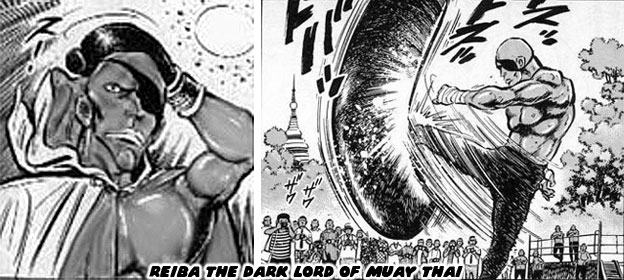
The story of Oyama in turn went on to influence the development of Street Fighter. Ryu played the role of Oyama. The opponents in the original game mirrored the types of people that Oyama faced. Karate, boxing, kung-fu and muay thai were some forms represented. Oyama beat the masters of each style. Only when he had defeated the best Muay Thai fighter, a mysterious person nicknamed the Black Cobra, did he consider his journey complete. There were no photos of the 1954 encounter even though the battle was highly publicized affair that took place in Lumpinee Stadium in Bangkok.


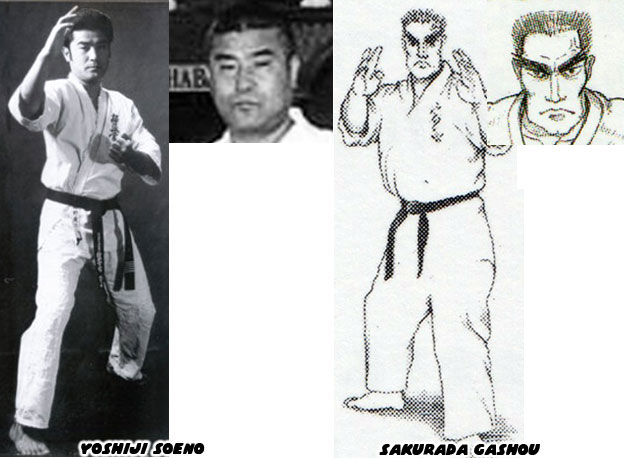
Oyama's understudy Yoshiji Soeno also traveled to Thailand, a decade later to prove which form of fighting was the best. It was reported that the one-eyed Thai fighter Reiba was as good if not better than Black Cobra. Soeno never got a chance to battle Reiba as a Triad or mafia hitman gunned him down before the battle. It did not matter however, he was such an interesting character that his myth managed to live on.

While the actions and reputation of Oyama were the basis for the Street Fighter mythos we should be clear that the look and mannerisms of Ryu were more closely aligned with Soeno. From Street Fighter II to today Ryu has had a very similar face. His eyebrows were large and bushy and his expression was very stern. The similarities between Soeno and Ryu were more than skin deep. There were two competing designs for the updated Ryu. One version had the character wearing leather and armor similar to Kenshiro from Hokuto No Ken / Fist of the North Star. The other version, named Sakurada Gashou had him in a much more traditional uniform. Note that in this version the character did not have his trademark headband.


Soeno went on to learn greatly from various different fighting forms. He studied Judo first but then excelled at Oyama's Kyokushin karate. He also picked up techniques from Goju-Ryu ("Hard Soft Style) which had older Okinawan roots, Shotokan Karate and Muay Thai. Soeno eventually broke his ties with Kyokushin to develop Shidokan Karate in 1980, which translated to"The group that lives and trains in the way of the samurai warrior." Shidokan practitioners were very good at striking, but they were also good at grappling and throwing opponents. They were well-rounded athletes and Soeno was very much like Ryu in that he could literally do it all. There were actually older schools called Shidokan, those with Okinawan roots as well as the more "mainstream" Shorin-Ryu form of Karate. Soeno founded over two dozen schools and still oversees his organization.

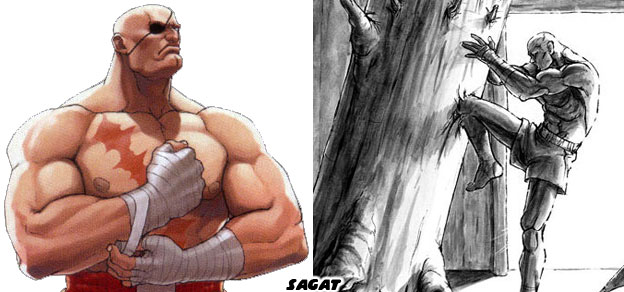
The legend of Oyama and Soeno became the backbone of the manga and animé series Karate Baka Ichidai. The characters featured within were adapted for Street Fighter as well. Sagat replaced Reiba in the game. Interestingly enough the character was shot in the Ryu Final manga by some poachers instead of triad members. Sagat survived the encounter so that audiences could look forward to seeing the seven-foot monster turn up again and again in the game series.


The competition of different fighting styles by Oyama and Soeno could be considered the roots of modern MMA tournaments. Around the same time a similar trend was happening in the Americas. The 20th century would see an explosion in the popularity of martial arts not seen since ancient times. It turned out that the same mass media that was shining a light on the last traditional martial arts masters was also creating a new generation of legends. Film, television and newspapers would help shape the careers of some of the most famous and infamous characters in the fight game. The next blog will explore these pioneers. As always if you enjoyed this blog and would like to sponsor me please visit my Patreon page and consider donating each month, even as little as $1 would help make better blogs and even podcasts!
Monday, August 10, 2015

How fight culture became fighting game history, part 18

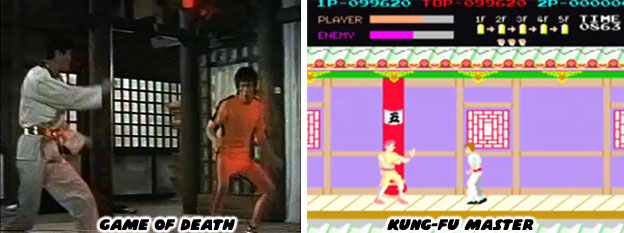
Bruce Lee was the most revolutionary martial artist of the past century. He changed the way people thought about training, fighting and introduced many to Eastern philosophy. Lee also changed the form and content of Hong Kong action cinema. One of the most important things he did was drop the classic heroes and villains from ancient China and instead base all of his films in the modern world. There was no sorcery, no made-up kung-fu styles and no Pai Mei-type white-haired masters. Instead there were corrupt politicians, roving gangs, racist foreigners and drug kingpins to deal with. His films would influence Hollywood and game studios in many ways. Bruce Lee's last film, the 1978 title "Game of Death" featured the fighter going through a series of battles on different floors of a tower. Each floor featured a different opponent and style. These could be thought of stages or boss battles in a videogame. This was the basic template featured in the 1984 Taito game Kung-Fu Master. The main character "Thomas" had to fight through countless waves of opponents and defeat a boss-type character before he could climb the stairs to the next challenge. This blog had featured Kung-Fu Master as the godfather of the brawling and fighting genres. It stood to reason because the producer of the game, Takashi Nishiyama was also the man that helped create the original Street Fighter. He was sought out by Capcom to develop a fighting game based on the success of Kung-Fu Master. Takashi undoubtedly incorporated the cinematic influences of Lee in the development of both titles.


Lee's approach to the martial arts fable was original. His sense of storytelling was refreshing. When he arrived in Hong Kong he created a radically different approach to the fighting legends. He used the diversity of fighting styles, as featured in the Jimmy Wang Yu films but instead brought them down to Earth. Both Bruce and Jimmy saw that there was more potential to the genre if the styles were diversified. Rather than retell a legend where all of the characters used a form of kung-fu, both Wang Yu and Lee created new legends that exploited original styles against the established forms. This would become a staple of all great fighting films and all great fighting games. Wang Yu had the fortune of enjoying his time as a star of these features in China while Lee was struggling to find his voice in the US.

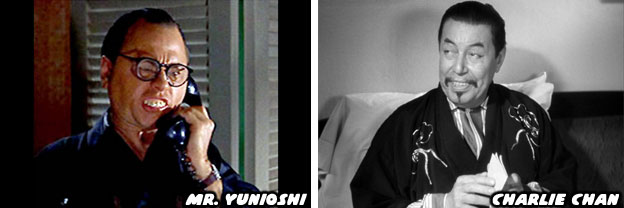
Bruce pursued his calling in Hong Kong after finding that the US had no room for an Asian lead actor. Or for that matter an Asian writer or producer. Lee had discovered that he could only get the creative freedom he enjoyed once he left Hollywood. The USA had a long history of not only white-washing Asian characters but of outright stereotyping them in cinema. The title actor in the Charlie Chan (a Chinese-American detective) was often a white actor in makeup. Even singular performances could be shocking bad, such as Mr. Yunioshi the apartment manager in the popular film Breakfast at Tiffany's. The very crude portrayal of a Japanese by Mickey Rooney was supposed to be hilarious and it was to many but not all audience members. Lee was one of many Asian-American actors that had to suffer through these indignities and social stereotypes while trying to get established. Attitudes were very poor towards minorities in the US. However that could also be said of many other large nations. On his path to fighting immortality Lee had to face the similar discrimination that were highlighted in the stories of Huo Yuan Jia, Wong Fei Hung and his own teacher Yip Man. On the other side of the Pacific the story was completely reversed. In Hong Kong cinema the Asian and Asian-American performers were revered and it was often White Westerners playing the bad guys.


On a personal level and professional level Bruce Lee kept working through the discrimination. He translated the lessons from boxers, wrestlers and judo practitioners that he met in the US. He adapted many styles into his own method of fighting, known as Jeet-Kun Do (JKD). Lee had worked on television and films with stuntmen who were practitioners of various styles. He learned how to make movie fights seem more visceral and realistic than any other previous director. While he was in Hong Kong Lee relied more on natural movements and believable fight choreography than the wire work and stiff kung-fu routines of his contemporaries. This break in tradition opened the eyes of moviegoers around the world.

The martial arts films of the '60s and '70s had a direct influence on the fighting game genre during the '80s and '90s. It was more than just because the developer were impressionable fans but instead because there was something so universally appealing about the greatest action films. Developers created the majority of fighters based on movie tropes. There was a karate hero, a wrestler, a boxer and a kung-fu master in many early titles. The kung-fu character often mirrored the classic heroes and villains from cinema. As the genre grew many developers were looking at trying to put in fan favorite characters. Although he passed away in 1973 nobody was a bigger name than Bruce Lee. The actor would be caricatured time and time again by many studios. His moves, his look and even the costumes from his films would be copied for years to come.


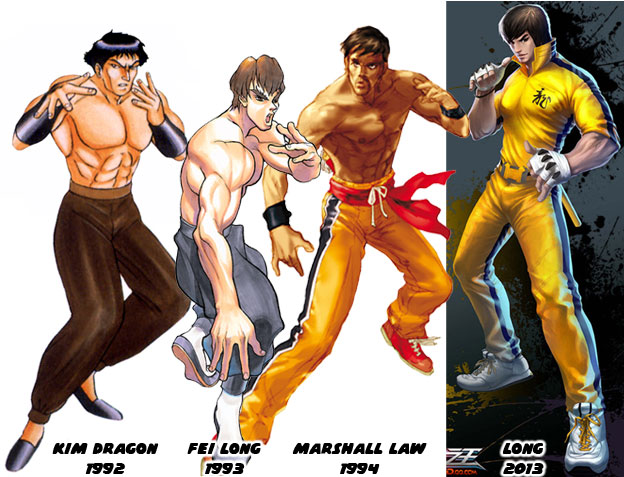
Kim Dragon was the first identifiable Bruce Lee clone. He appeared in the 1992 ADK game World Heroes. The Neo Geo title took fighters from different periods of time and put them into one tournament. To help keep from getting sued by the Lee family it was decided that Kim would be a Korean fighter of course fans could tell whom he was based on. The most popular 2D copy of Lee appeared a year later in Super Street Fighter II. Fei Long (Mandarin for Flying Dragon) made his debut in 1993 and was an eerily close copy of the iconic hero. Like Kim before him he had the trademark yell and leaping kicks. The first and longest running 3D version of the actor was Marshall Law. He appeared in Namco's Tekken in 1994. The boxing footwork and lightning fast punches that Lee was famous for looked amazing in three-dimensions. There were a few fighting characters that used Jeet-Kun Do in other franchises but they weren't as memorable as those based on Lee. The most recent clone of the actor was named Long (Dragon). He appeared in Xuan Dou Zhi Wang / King of Combat in 2013. The game was produced by Chinese developer Tencent, it was the first time that a Chinese developer built an homage to Lee in a major fighting game. Long appeared in an update to King of Combat almost 20 years to the day that Fei Long was introduced in Super Street Fighter II and almost 40 years to the day that Lee had died. Bruce Lee would continue to make cameos in various EA fighting games with permission from his family. The legend would live on forever because of how much he contributed to the martial arts and cinema in such a short amount of time. 

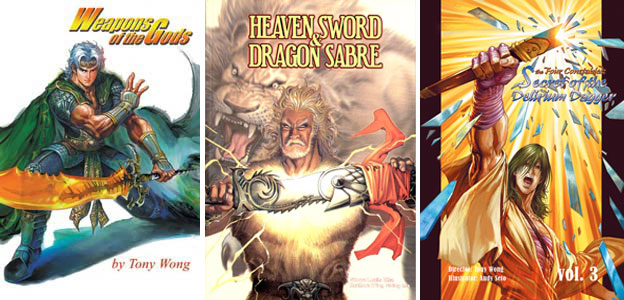
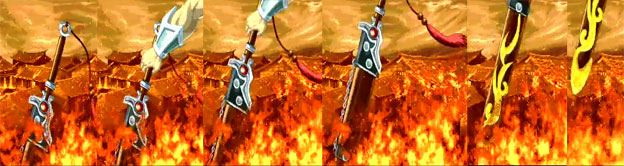
Even though Lee's fights were refreshing on the big screen they still had a touch of the fantastic and even implausible. By a similar token (no pun intended) Kung-Fu Master lacked the special attacks of SF but it still preserved some of the more fantastic elements from kung-fu cinema. Gamers fought all sorts of rivals, including knife throwers, giants and even snakes and dragons. These fantastic creatures and opponents were a staple of the classic wuxia legends. The Sword and Sabre story that inspired the creation of the Buddha's Palm was probably as influential to the development of the wuxia genre as the Romance of the Three Kingdoms or the Water Margin. The sword was an ancient symbol of power and in theSabre story, the sword held a list of secret fighting techniques as well as a hidden treaty. Whoever could lay claim to the sword and unlock its secrets became a powerful physical person, but also had dominion over all of Asia. The Mongolians and Chinese were at war over this sword in the series. Many heroes and legends grew out of this conflict. The symbolism behind the weapons would be revisited in manhua.


In addition to a manhua retelling of the Heaven Sword and Dragon Sabre there were other books by Tony Wong that made the weapons the central focus. The Weapons of the Gods granted martial arts masters power over nature itself, turning the owner of the weapon into a demigod. This series became extremely popular even though it followed the basic premise from the Sabrestory. The Four Constables were on the search for the Delirium Dagger in one of their adventures. Mr. Wong sold the story as based on an actual weapon that had made the wielder near invincible in combat. The Delirium Dagger increased the strength and speed of the wielder and caused opponents to suffer from extreme vertigo.


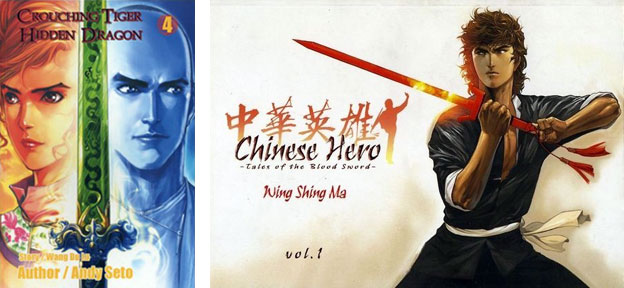
In the movie and manhua of Crouching Tiger Hidden Dragon, the main characters were fighting over a jade-colored sword named the Green Destiny. The story was part of the Crane Iron Pentalogy, a series written by Wang Dulu that captured the qualities of a hero in the classic tradition. Chinese Hero by Wing Shing Ma was an attempt at using the wuxia novel tradition in a manhua format, it was like a mid-century retelling of the heroes in the Crane Iron books. The Chinese Hero had inherited a red sword, the fabled Blood Sword which caused nothing but trouble for the young master. The fantastic art and memorable battles that Wing Shing Ma put on paper caused Tony Wong to completely change his drawing style. Prior to the 1980's Tony drew in a very early manga style, with oversized eyes and cartoonish physical proportions. After 1980, when Chinese Hero because a hit, Tony began to focus on more realistic proportions and higher quality painted panels to rival Mr. Ma.


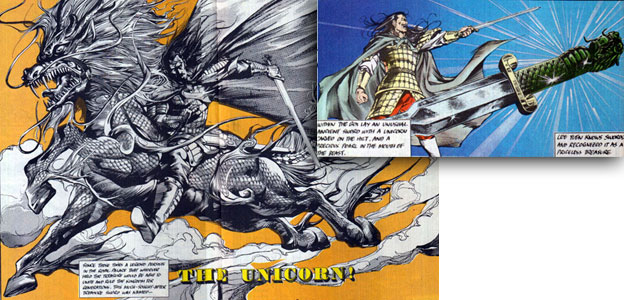
The Iron Marshal also used a fabled sword as a plot device. The Unicorn Sword was said to grant the owner unrivaled powers if they could figure out the mystery of its origin. In the series the sword traded hands several times, each owner discovered something different about the sword, including finding a secret compartment with a map to the Unicorn treasure. At one point in the story the sword edge was broken, revealing that it was a key to the treasure. Fans of the Kingdom Hearts series might be surprised to learn that the "keyblade" was not a new idea. The Unicorn Sword was undoubtedly based on the secrets hidden on the blade and scabbard of the Sabre story.


Chasing after the sword of power was even explored in the best wuxia brawling game ever, Gladiator: Road of Sword by IGS. However what was it about the wuxia legends and powerful weapons that influenced the development of Street Fighter?

The martial arts myth had a basic framework from which to work from. The pursuit of weapons with magical properties was one plot device. Substitute the weapons with the secret scrolls, books and techniques protected by martial arts masters and the template became more obvious for comics and film. Those that pursued these techniques for selfish reasons would become obsessed with achieving power. These people would betray a brother or even master to achieve more power. They became the villains. Those that accepted these techniques also accepted the responsibility to maintain peace and order became heroes. The selfish master and the selfless master would end up doing battle at some point in the story. This was far removed from the legends that created Ryu and Sagat. Fighters that wanted to prove who was the best was a good story but a greater story involved good versus evil. Sagat was a great bad guy in the Street Fighter mythos but the greater villain was the one that murdered the master of Ken and Ryu.


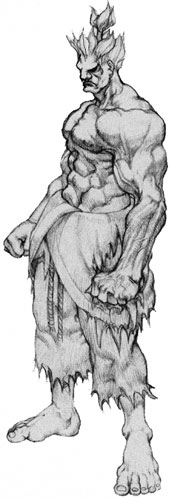
Gouki would become the model for all great fighting game bosses. He had exceptional storytelling and character designs applied to him. The archetypes in Hong Kong cinema were perfect templates for game designers to work from. All the characters needed was a little background to give them dimension. Audiences believed that these sorts of good guy and bad guy martial artists really did get together in secret tournaments but what were the origins of the mixed martial arts tournaments? The UFC would have you believe that they were the first to host such tournaments. While they are popular they were far from being the originators. In fact the roots of mixed format fights are older than Bruce Lee and even Mas Oyama. In the next entry we will look at the godfathers of mixed martial arts. As always if you enjoyed this blog and would like to sponsor me please visit my Patreon page and consider donating each month, even as little as $1 would help make better blogs and even podcasts!
Friday, July 17, 2015

How fight culture became fighting game history, part 8

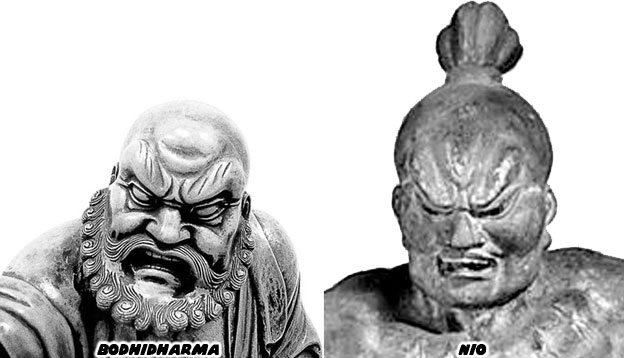
Bodhidharma was a historical figure that helped spread the martial arts and Buddhism throughout Asia. By the time the Chinese fighting arts reached Japan there had been a blend of native Shinto beliefs and mythical stories spreading through the various kingdoms. As Buddhist monks traveled through Japan they spread Buddhism at a slow pace. The Japanese were very insular and wary of any foreign ideas, even more so than the Chinese. The philosophy of the monks became intwined with the Zen teachings in China during the sixth century. By the time Buddhism spread through Korea and reached Japan it was slightly different than what Bodhidharma had started out with. This did not reduce the status however of Bodhidharma. With his dominating presence and hermit-like tendencies the Japanese could see how Bodhidharma predated the wandering swordsmen of the feudal era. It was not hard to understand why he would be revered for his tremendous wisdom and martial prowess.


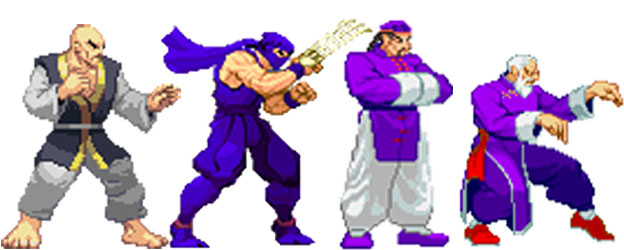
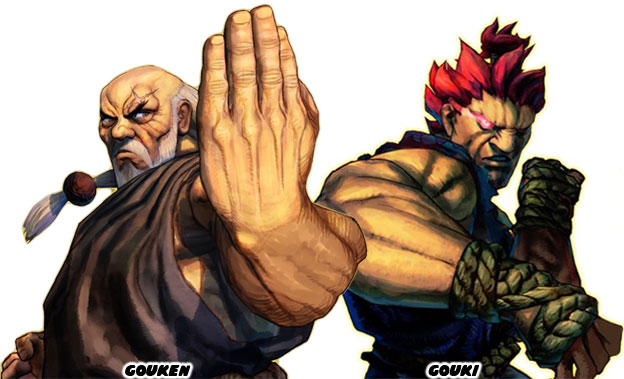
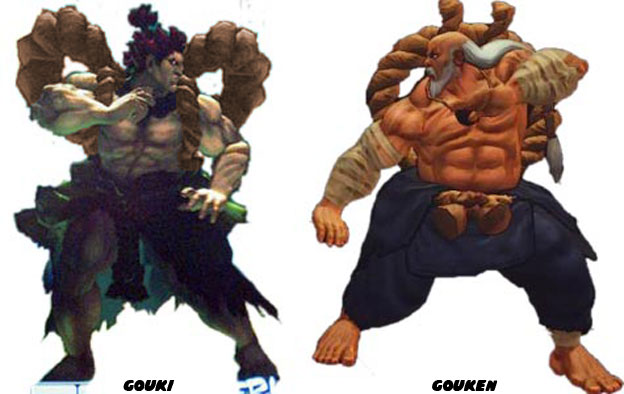
Bodhidharma seemed to be a physical manifestation of the ancient Nio and this appealed to the Japanese. Over the centuries the figure would become more and more recognized until he had also received some level of icon status. Statues and decorations bearing his likeness could be found in temples and also in homes all throughout Asia. Fast forward to the end of the 20th century when the designers at Capcom, and in particular the manga illustrator Masaomi Kanzaki, had to put a face on the master of Ken and Ryu. Up until that point gamers had no idea who their master was. Due to a translation error the west had only known of "Sheng Long." They assumed that it was the name of the master instead of the name of a dragon punch. In Japan the master was known as Gouken but he had only been written about and had never been seen. Kanzaki committed the original design of Gouken to paper in the original Street Fighter manga series. The design had stuck ever since. The master of Ken and Ryu was a bald man, sporting a beard, dressed like a monk with an imposing stature. He had abilities and wisdom that were borderline supernatural. Capcom introduced his evil brother into the Street Fighter series inspired by the myth of Sheng Long. Gouki, Akuma in the USA, had murdered Gouken in a fit of jealousy. The face of Gouki was modeled after that of a lion but his overall impression was that of the Nio. If you were to place Gouken and Gouki side by side it would become apparent that the figures were based in part on Bodhidharma and the Nio.

This connection to spiritual figures also explained why the alternate costumes for both fighters featured them wearing enormous Shinto ropes, called Shimenawa. Ropes were used to bind spirits, called Kami, into objects like rocks or trees in Shinto spiritual beliefs. The objects that attracted kami were known as Yorishiro. When the ropes were adorned with paper streamers, called shide, they marked the spiritual sacredness of the location or object. Throughout Japan there were trees and even islands bound by shimenawa and shide. Street Fighter, Samurai Spirits and a few other Japanese-developed games often made use of Shinto iconography. The unique thing for the spiritual belief was that kami could not only possess natural objects but also people as well. A Yorimashi or "Possessed Person" was a person that took the place of a Yoshiro. The rope belt that Gouki wore, instead of the cloth belt worn by traditional karate masters, would be a way for him to symbolically bind the kami to his body. The prayer beads he wore would be a way to keep the spirits under his control and not vice-versa. When Gouki would go crazy in the comic stories his prayer beads would break and scatter. Gouki would not longer be aware of himself as the Dark Hadou (evil spirits) had completely taken over. In the case of Gouken his belt and knot were designed to protect him from the forces of evil and give him the strength to endure.


To make a crude comparison between the types of knots in Shinto beliefs think about the horseshoe mounted over the doorway in many western homes. If the horseshoe is pointing up then it collects fortune for whomever passes through the door. If the horseshoe is pointing down then it symbolically rains down fortune. The horseshoe can not be placed sideways and do a little of both. It is an up or down prospect or nothing at all. For the shimenawa knots it is either the defensive one where the ends point up, known as the Unryu or the offensive version called the Shiranui where the knot points down. Gouki being the more aggressive brother wears the Shiranui knot in his alternate costume. Sumo wrestlers, especially the grand champion (Yokozuna) celebrate the beginning and ending of the tournament season by replacing their synthetic fiber belts with the Shimenawa ropes, shide streamers and ornate knots. A traditional belt can be spotted as the alternate costume for the sumo wrestler E. Honda.


As an aside, the character of E. Honda was one of the first (slightly) controversial figures in the history of Street Fighter. Sumo wrestling was an ancient tradition, going back almost 2000 years. It had a lineage that could be traced back to Central Asia and India, just as karate could be traced back to aikido, kung-fu and older forms of fighting. Sumo above all other fighting forms was also known for having a strong connection to Shinto spirituality and was therefor revered by many nationals. The use of shimenawa belts, the referees that dressed in feudal-era uniforms and even practice of throwing salt in the ring to ward off evil spirits was all based in Shintoism. The decision to use the theatrical face paint of the secular Kabuki theater was seen as a slap in the face to tradition. The designers at Capcom meant no harm with his look, they used the makeup to make the character seem anything but traditional. Honda had to stand out when compared to the colorful cast that would fill out the rest of the World Warriors introduced in Street Fighter II. Characters inspired by kabuki theater would turn up again in other Capcom fighting games, like Final Fight 3, as well as in games by competitors.


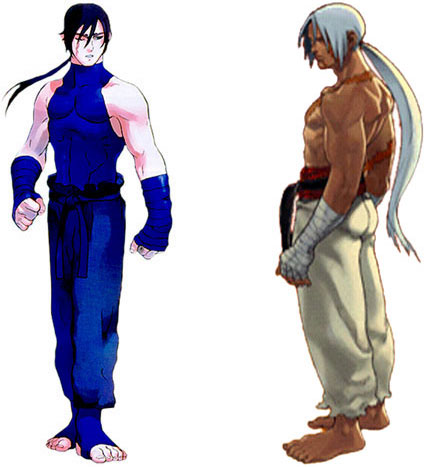
There was an interesting character that Capcom had introduced in Street Fighter EX that was a blend of multiple influences, martial and spiritual as well. Kairi was a melancholy fighter, an amnesiac that was drawn to battle. Kairi's moves took on cultural significance. His fireball was not named the hadoken (punch, wave, fist) but instead the Maryu-Rekko. Maryu meant magical dragon, rekko meant beam / fissure of light. The hurricane kick was named the Mouryo-Kasen. Mouryo were little ghosts, goblins, devils and spirits from Japanese fairy tales. Kasen was a whirlwind / swirling / movement of force. His super fireball was called the Shinki-Hatsudo, which translated to God Ogre - spirit / benevolent energy. His Shungokusatsu-like move was named the Kyoujyarenbu, the "unlucky dance of the cursed tribe." The common translation of "kyo" was unlucky, as this move destroyed him almost as bad as his opponents. The names of his special attacks helped explain his design cues and purpose. They were details that shaped the character and helped explain why he was not only scarred but a loner-type character. We can infer several things from Kairi and his moves. The style of his strikes was based more on spiritual connotations, with a heavy dose of symbolism from Japanese mythology. Imagine that his special kick was possible because he floated on the breeze like little ghosts and goblins. Or that his chi-energy was the result of him tapping into a higher power.


Western gamers wouldn't make sense of these things because most did not have exposure to Japanese mythology, spiritual beliefs or even have translations handy. Most Westerners could tell he was a cool character on the count of his scars and Ryu and Gouki-like moves, the rest of the symbolism was unimportant. While the moves were similar to the fireballs and dragon punches we had been seeing since 1991, their origins were unique. The developers at AKIRA and artists at Capcom were showing players that no one style had exclusive dominion over those special attacks. In a similar fashion Sagat's tiger fireball and uppercut (and knee) were born from Muay Thai rather than karate, Dhalsim's special moves were the result of Yoga and Guile's was a secretive form passed down from Charlie Nash. So what form did Kairi employ? Was it karate or something else?


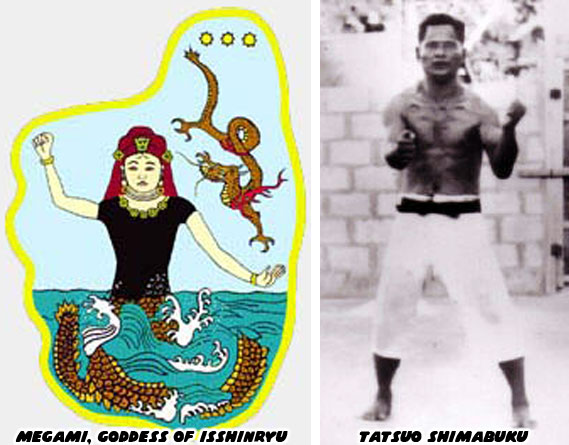
It had been suggested that he was an outcast from the Bushinryuu ninja clan, or a practitioner of the Kyoujarenbu, an "Iron Hand Technique." He was possibly even a practitioner of Mizugami (other times written as Megami or "Goddess") style of Karate. Mizugami style is sometimes dramatized in manga but is rooted in Isshinryu Karate. The form of karate was founded by Tatsuo Shimabuku. Tatsuo was born 1908 and studied in Kyan / Chan village under his uncle Kamusu Chan. The village had a fair share of Chinese immigrants. They were some of the first to introduce an older form of karate to the nation. Tatsuo became well versed in Shorinryu and Gojuryu karate while also studying classic Chinese forms. This diversity made him proficient in both armed and unarmed combat. He was actually one of the legendary fighters that predated Mas Oyama by a generation. Tatsuo avoided being conscripted into World War II by teaching Japanese soldiers how to fight.

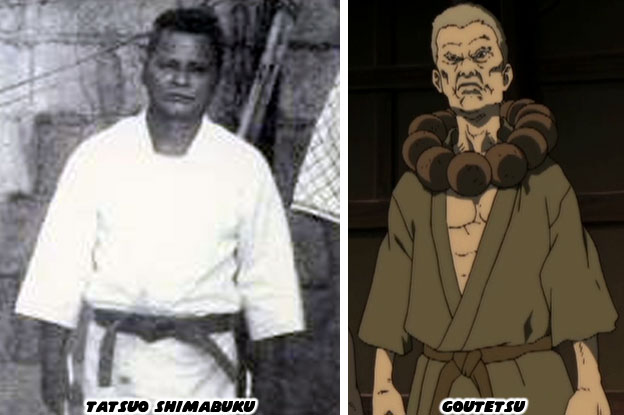
Isshinryu meant "One Heart Method" and actually incorporated Goddess Mizugami on the patch sewn into the gi of practitioners. Ishhinryu had its roots in Okinawa but also in China where other martial arts influenced its development. It's spiritual connection was undeniable. I can draw a spiritual connection between Bodhidharma and Gouken and the Nio and Gouki. I can draw a legacy between Huo Yuanjia and Gen. I can even draw a physical connection between Wing Chun, Bruce Lee and Chun-Li but here is where it gets interesting. There was a master that taught Gouken and Gouki known as Goutetsu. The Chinese immigrant was a master of Ansatsuken, a generic term for the Assassin's Fist. Goutetsu was never written or presented as a particularly large or powerful man. In fact he was a slight figure in most game and comic presentations. Granted, he was elderly by the time he was killed by Gouki but in his younger days he was quite muscular. Tatsuo Shimabuku was to Mas Oyama what Kairi would become for Ryu. He was a martial arts master, a predecessor that was lost to history. He was nonetheless important in its evolution. ARIKA had designed Kairi to ask what would have happened if the two men had faced each other at the peak of their respective abilities. A bit of the ancient world and modern world colliding in video game form. In latter years Capcom would revisit the inspiration for Kairi and instead model Goutetsu after Tatsuo. Gone were the headscarf, long hair and beard, Instead the new Goutetsu, which debuted in the animé film Street Fighter Alpha Generations, looked eerily similar to Mr. Shimabuku.


Isshinryu was a functional form of karate which included vertical strikes (shoryuken?) yet also maintained spiritual beliefs. It bridged the old traditions with the modern concepts of karate. It also predated Oyama's Kyokushin Karate by many years. Tatsuo was a Chinese descendant and the form his uncle introduced to him was rooted in classic Chinese systems. The spirituality behind Isshinryu closely mirrored the philosophy behind many Chinese forms. There was a science behind the fantastic feats of strength and endurance that martial arts practitioners could perform but for most of their history it was assumed to have spiritual importance. The next blog will look at how the myth of the fireball came into being. As always if you enjoyed this blog and would like to sponsor me please visit my Patreon page and consider donating each month, even as little as $1 would help make better blogs and even podcasts!
Wednesday, May 14, 2014

Fighting layer, return of the dragon, part 4...

Fighting Layer featured quasi-believable good and evil martial arts masters in a tournament setting. This was a tradition that was started in Street Fighter II in 1991. The majority of the developers working at ARIKA had worked on both titles. Through the cast, levels and character designs they wanted to make a distinction between the two games. They had several branching paths in their title that allowed players to explore alternate sub bosses and endings. The previous blog had highlighted the human sub bosses. However before players even got a chance to challenge them they first had to defeat dangerous animals. Each of the animals was a master of their respective element. The first of the creatures was very believable and very difficult to beat.


The Tiger had only a few attacks but each of these attacks did a tremendous amount of damage. He swiped with his massive paws, leaped forward with them out and could even pounce and maul his opponents. The Tiger was the creature players had to face before fighting Preston Ajax. The tiger was one of the predators that karate and kung-fu masters were rumored to have tested themselves against. I only say rumored because an actual case, with actual evidence from history had yet to appear. The closest thing to reality was the character Wu Song, a person that appeared in the Water Margin, better known as one of the 108 Heroes of the Marsh. This Chinese fighter had gotten drunk on his way to a village and crossed paths with a ferocious man-eating tiger. He was either very brave or very drunk (or both) when he took on the tiger with his bare hands. He managed to get behind it and proceeded to bash its head in with his punches. Many of the Heroes of the Marsh were inspired by historical figures and actual events. There was a chance that Wu Song existed in some point in the past and had indeed done the impossible.

What was not rumor however were the creatures that martial arts master Mas Oyama had tested himself against. One of his most legendary encounters was against a wild bear. The bear had been menacing the residents of a rural village. Oyama decided to test his form of karate against the bear in an exhibition match. In the end he had to fight for his life and a hunter put down the bear with his rifle. In the manga and animé retelling of his life the battle was made very dramatic and drawn out but the actual fight probably took less than a minute. Of course even a few seconds in a cage with a bear can seem like an eternity. As Oyama got older he would stage exhibition matches against a bull. He would wrestle it to the ground, chop off its horns and kill the bull with a well placed punch to the head.


He would often wonder aloud with his students and friends, often members of the press, how well his Kyokushin karate would hold up against the strongest predators in nature. He always wanted to try his luck against a tiger but would never get a chance. This did not stop him and his contemporaries for coming up with strategies on how they would have taken on all sorts of creatures. They would publish these articles in martial arts journals and help build the legend of karate. Battles against wolves, tigers, bears and even gorillas were discussed. Some were set against actual historical encounters. Stories of hunters and samurai that were ambushed in the forest centuries earlier and how they used their martial training to defeat the creatures helped support some of the claims. These stories colored the world of the young programmers and designers. It wasn't enough that they had been raised on a diet of martial arts films, pro wrestling, sumo wrestling, pro sports, manga and animé, they also had real world legends to draw from. By the time they got to Capcom they were more than ready to create the first generation of virtual legends.

In many manga and manhua (Chinese comic book) stories wild animals could be tamed or defeated in unarmed combat. These stories were often fantastic in their representation of the martial arts masters. In many cases the youngest fighters could sometimes do the impossible. Such was the case for Karin Kanzuki, the arch-rival of Sakura from Street Fighter Zero fame. As the heiress of the Kanzuki empire she showed up her father by defeating the fearsome creatures that patrolled the Kanzui estate in Japan. She defeated a grizzly bear and giant falcon before taming a lion. At the tender age of 15 she had done more than Mas Oyama had in his real or manga lifetime.


The giant bird of prey returned in Fighting Layer as one of the animal bosses to defeat. Like the Tiger, this creature was incredibly fast and powerful. A few strikes was enough to kill most players. The Falcon had to be defeated before players could challenge the boxer Joe Fendi.


The animals in the game had moves that were appropriate for them. None of them stood on two legs and tried to trade punches and kicks with the players. Instead they lunged and slashed ferociously. The Tiger would pin down opponents and maul their faces. The Falcon could pick up opponents and then drop them from a tremendous height. It was always a challenge playing against them but it was even more enjoyable playing as the animals against human opponents.


The animal bosses were time release characters. After a few weeks in the arcade both the animal and sub boss characters became playable. Allen Snider and Blair Dame were the hidden mid-bosses in the game. They could only be fought if the player met the right criteria, like not losing a round and finishing opponents with a super attack.

There were three sub-bosses however and I have only mentioned two of the creatures so far. Both the air and land were covered already but what about the sea? What creature rules the seas in the minds of most players and would make quick work of even the best fighters ever?


A Shark patrolled the sea floor around the host island of the tournament. This character had to be defeated before players could face Clemence Kleiber. Players actually had to face the creature underwater in a stage called the "Sea Zoo." It, like the Tiger and Falcon, would try to circle around the player and look for an opening before striking. The Shark could fit players in its mouth and cut them to ribbons. A few bites could kill players within seconds. It was possible that the Shark was the toughest of the animal bosses to face, just as one would imagine. When the character was unlocked in the game he would actually float above ground and play with the same physics as he had underwater. Players could even get the Shark to "swim" outside of the barrier for each stage where regular players could not tread. In the eyes of many Fighting Layer literally "jumped the shark" with this character. Those that were willing to suspend their disbelief however learned that the game was supposed to be fantastic and over-the-top. The explanation for the creatures, sub bosses and tournament itself was grounded in the supernatural.

When I began this series I mentioned that the film Enter the Dragon had inspired much of the development for both Street Fighter II and Mortal Kombat. Street Fighter was rooted in science and realism, with a militaristic dictator running the tournament. Mortal Kombat was rooted in the supernatural, with an ancient wizard hosting the tournament. Fighting Layer was actually a blend of both mythologies. Fantasy and animal characters acted as the sub bosses while the actual competitors were rooted in real martial arts. The understanding that the game was not entirely based in reality was presented in the very second level of the game. Players had to take on an animated suit of armor in an underground cage. It was obvious then the game would be mixing fantasy and reality elements. Players that didn't understand this inclusion of fantasy would be lost through the rest of the game.


The seeds for the fantastic elements in Fighting Layer had been planted in Street Fighter EX. However some of those designs had been around since the planning stages for Street Fighter II as well. The next blog will look at these origins. If you would like to sponsor me please visit my Patreon page and consider donating each month, even as little as $1 would help make better blogs and even podcasts!
follow the Street Writer on Patreon!