Showing posts with label muhammad ali. Show all posts

Monday, August 17, 2015

How fight culture became fighting game history, part 21

Many of the most influential martial artists from China were fighting at the same time that the legends of the "Wild West" were being written in the USA. Wong Fei Hung and Huo Yuanjia were alive and fighting martial arts masters in Asia while William H. Bonney "Billy the Kid", Wyatt Earp and John Henry "Doc" Holliday were shooting up the west. These mid and late 19th century legends lived during a time where photographs and the printing press could spread their legend. Imagine the fighters that were lost to history simply because there were no newspapers to tell their story! There were some great things that this era had going for it. People were able to travel around the world much faster thanks to the advent of the steam ship. This along with the telegraph meant that news traveled much faster than at any other period of civilization. People emigrated in large numbers and helped take local cultures across the ocean. The fighting styles of Central and South Asia would become sprinkled across Japan, These forms would influence the development of Judo, Jujitsu and Karate. The masters of the Asian fighting arts would sometimes tour Europe and the Americas to demonstrate their particular fighting forms. Sometimes the western boxers and wrestlers would go to China and Japan to try their luck. These travels helped build the legend of people like Huo Yuanjia. Yet there were pioneers that visited the Americas that could be considered the true fathers of mixed martial arts tournaments.

Mitsuyo Maeda nicknamed Count Koma was born in 1878. He excelled in Ju-Jitsu, think of it as a combination of the striking arts of karate with the grapples and throws of Judo. On tour he presented an exhibition of Ju-Jitsu in Brazil, the year was 1914. He toured the Americas for months and returned to Brazil a few years later. He beat boxers and wrestlers from different nations in the contests, he came right on the heels of Yuanjia, making the two men some of the first documented champions of mixed martial arts encounters.
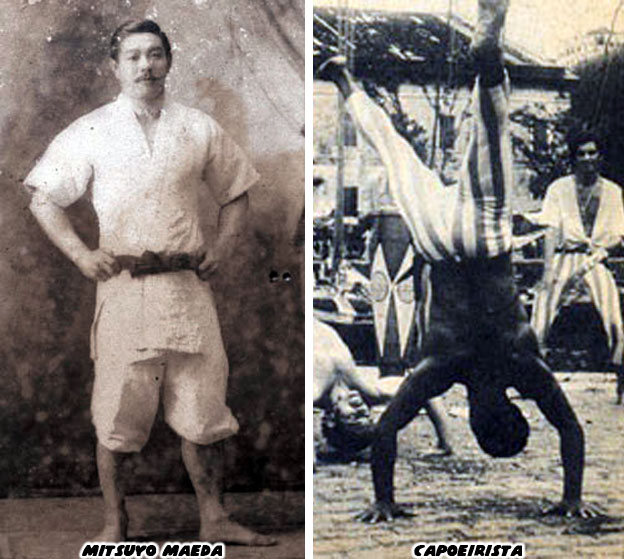

When Kouma was in Brazil in 1919 a fight was arranged against Capoeirista Pé de Bola. Capoeira was a fighting form that was adapted by African slaves and hidden from the masters in the form of a dance. The Brazilians were proud of this fighting form, especially since it survived centuries of oppression during the slave years. There was a stipulation against Count Kouma, his opponent would be allowed to use a knife in the fight. Some of the more dangerous capoeira fights, those using knives and razors were called maculele. They were loosely derived from ancient Angolan knife fighting. Kouma won the fight and earned the admiration of the Brazilians. In 1916 Gastao Gracie was a business partner that had Maeda perform demonstrations as part of a circus side show, his son Carlos Gracie became his student, the techniques were passed down to brothers Osvaldo, Jorge and Helio.

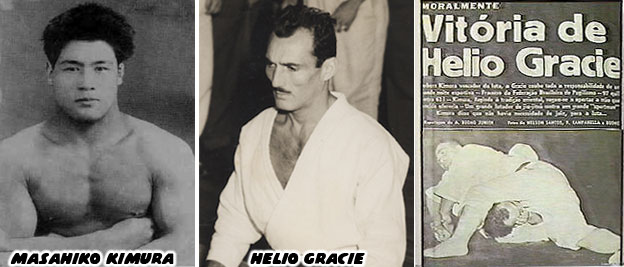
While it could not be considered an early MMA tournament the jujitsu battle between Masahiko Kimura of Japan and Helio Gracie was a turning point in the history of the martial arts. Helio was like a God to grapplers. Born in 1913 the Brazilian was the youngest of five brothers and learned to fight early on. He had a natural acclimation to judo and jujitsu and began teaching at a young age. Helio and his brother Carlos founded the Gracie school of Ju-jitsu or as the rest of the world calls the system Brazilian Ju-jitsu (BJJ). Count Kouma was a defining factor in the form but many Japanese immigrants had brought with them many traditions from overseas and the Brazilians were eager to learn more about the martial arts. Helio was the tallest of his brothers but very thin. Many judo throws and jujitsu submission moves relied on strength and mass. Helio had little of both but learned ways to make the form work for him. He began modifying the traditional hand, hip and leg positions to generate the maximum amount of leverage with the minimum amount of force. He excelled at escaping and counter attacks. Helio began holding his own in tournaments and even defeating opponents that were well above his weight class. He had defeated many Japanese judo practitioners and other martial artists in his career. In 1951 he had two of the most famous matches of his career and one of the few that he had ever lost.
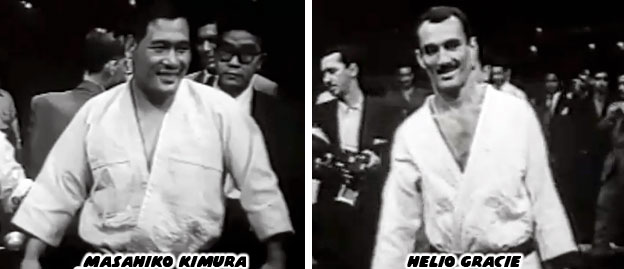

The first fight was against a jujitsu specialist known as Kato. Helio had openly challenged the Japanese champion Masahiko Kimura to a match but Kimura deferred. Saying that Kato would be more than a match for him and would beat him easily. fight lasted less than ten minutes and ended with Kato being choked unconscious. Kimura could no longer assume that Japan had any superiority when it came to the fighting arts. The match against Helio took place 23 days later. Although the two were fighting in the same "style" the techniques exploited by both were very different. The "victor" would turn out to be the one that could adapt to his opponent. It was the same lesson that would turn great fighters into legends. People like Mas Oyama and Bruce Lee were by no stretch of the imagination the first to try their style against other established forms.

When the contest started Kimura wasted no time threw the smaller Helio on the mat again and again, hoping to knock him out in the process. Since they were fighting on padded ground that never happened. If the contest were using a traditional scoring system then Kimura would have won on points alone. But this was a different contest, one designed to see who could get the other to into a submission move. Even then Kimura said that if Helio could last longer than three minutes then he should be declared the winner. Helio managed to elude hold after hold but was eventually caught by an arm bar. Helio refused to tap out and had his arm broken in the process. Kimura kept the pressure on hoping to make him submit but he did not relent. Helio's brother and business partner Carlos threw in the towel to end the match. Even in defeat Helio became an icon to the Brazilian people. He was talented, defiant, tenacious and had an unbreakable spirit. Essentially he was like a real-life grappling Rocky Balboa. The Gracie family name would rise following the battle and members of which would go on to capture regional, national and international championships. the schools they established help produce champions on every corner of the Earth.

In North America judo and jujitsu were becoming well known through the '30s and '40s. Film and television had exposed the mainstream to the secretive fighting arts of the "ancient orient." In many early representations the Asian arts were often seen as people swinging their arms with broad open-hand chops, this was absurd but worked for audiences. More than two decades before Bruce Lee would rewrite martial arts cinema there were some actors in Hollywood that got the importance of knowing and respecting the actual fighting arts. James Cagney was one of those people and it showed. He had few memorable battles highlighting various judo throws and submission moves in the movie Blood on the Sun. He played Nick Condon a newspaper editor working in Japan just before the onset of WWII. The 1945 movie a won an Academy Award for best art direction for a black and white film. Fans of the fight game in North America were interested in how well the Eastern fighting arts would hold up against the sweet science of boxing. In 1963 pro wrestler "Judo" Gene Lebell fought boxer Milo Savage. Although their fight took place a decade after Oyama had beaten kung-fu and muay thai masters on their home turf the Lebell / Savage fight would be considered another major milestone. It was the first filmed MMA encounter in the US, if not the world. Remember that Bruce Lee fought Wong Jack Man a year later in San Francisco! The US was still learning the nuances between Japanese and Chinese fighting arts and an explosion in popularity was steadily building.
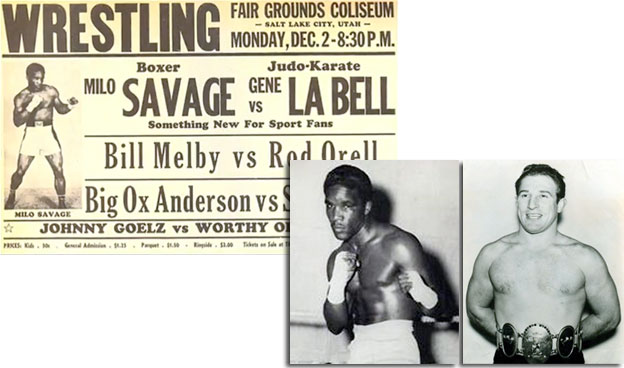

Speaking of Lee, Lebell was a stuntman on the Green Hornet and eventually befriended the actor. The two traded moves at Labell's gym for the better part of a year. Labell learning Lee's strikes and Lee picking up the wrestling and submission moves in return. There was some controversy doing the Labell and Savage fight. Special rules had to be drafted to ensure the fight was more fair for both parties. Savage was allowed to wear speed gloves rather than boxing gloves, the lighter gloves were capable of doing more damage if they connected. But he also had to wear a gi top so the grapples could be applied. Labell was not allowed to use kicks but only traditional grabs and throws. It was said that Savage knew some wrestling moves so he could be able to break holds. Not only that but there was possibly some metal within his speed gloves so he could seriously damage Labell. The fight lasted four rounds and Labell won by choking out Savage. After the fight Labell did not claim it was one particular style that won. In Black Belt Magazine he said "I represented all the martial arts. I never said I was doing only judo or karate or kenpo. I never said one art is better than the others. They're all good. You should learn everything. You're not a complete martial artist unless you do everything."

The reputation that Labell had as a genuine fighter followed him through most of his career. In 1976 there would be a rematch of sorts between a boxer and wrestler. Labell was invited to be the referee. The two men that fought this time were very high profile athletes. The Japanese superstar and founder of New Japan Pro Wrestling Antonio Inoki would be facing the incomparable Muhammad Ali. The fight was scheduled to be one for the ages. Unfortunately there were many challenges in agreeing to the format and rules. Ali was a huge fan of wrestling and had been raised on a steady diet of pro wrestling while growing up. The flamboyant attitude he sported and outlandish microphone skills were undoubtedly influenced by the wrestlers he had seen on television and in person as a boy. Unfortunately a stand up fight with wrestling rules would have put Ali at a disadvantage. There was no way for him to break out of holds with boxing gloves on.
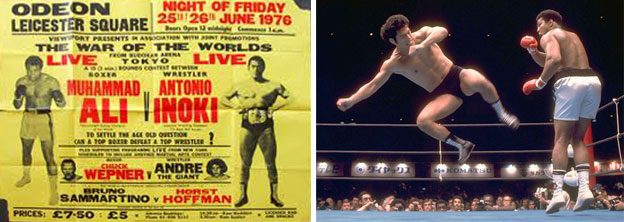

Stipulations were placed on Anoki from the get-go. He was not allowed to throw punches or elbows at Ali, nor was he allowed to grapple with him. Even though the two knew it was a "work" or not a full-out battle so that neither man would be seriously hurt they still wanted to put on a good show. The downside was that there was little for Inoki to do as a student of both wrestling and karate. He resorted to throwing drop kicks and lying on his back kicking at Ali through most of the match. The bout ended as a draw much to the chagrin of those in attendance. It was not much of a show for spectators but those in the martial arts knew the significance of this encounter. Ali lent his name to help raise the legitimacy of wrestling as one of the martial arts as well. In return he ended up going to the hospital because of the massive bruises that Inoki had left him with. Doctors were afraid that Ali might get a blog clot and suffer a stroke or heart attack from the ordeal.

Before Count Kouma, before the "Greatest of All Time" the fighting arts had been subject to vigorous debate. Which was the best form and who was the best fighter that ever lived? That debate lives on today through heated internet forum debates, television analysis and even video game reenactments. Those that studied the martial arts, like Labell knew that there was not one superior school, simply ones that had strengths in particular areas. It did not stop fighters from trying to show that they and their style was the best. Television and news stories on these fighters would help spread the word all around the world. The next blog will compare how the mixed martial arts evolved in Japan and the Americas. As always if you enjoyed this blog and would like to sponsor me please visit my Patreon page and consider donating each month, even as little as $1 would help make better blogs and even podcasts!
Friday, August 14, 2015

How fight culture became fighting game history, part 20

Great fights made martial artists legends, but only if there were witnesses. Thanks to the advent of film and video the modern fighters had the luxury of being very well paid for their efforts. Cable television deals and prime time programming meant that audiences could enjoy a steady diet of violence and adrenaline from the comfort of their own homes. Unfortunately the ease of access meant that the spectacle once provided by underground matches became commonplace. Even if two fighters were great they were still judged by points, a system, a set of rules. The true contest of man-vs-man, no rules and no holds barred would never be aired. The fights that were settled in the back alleys and in secretive dojos were never recorded. Finding the real legends was becoming harder and harder in the era of film.


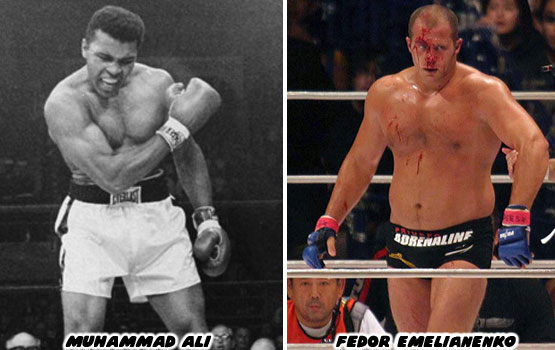
When the fighters were exposed under the bright lights they either rose to the occasion or withered away. The downside was that when they made a mistake, when they fell, the witnesses moved onto the next fighter. It did not matter if the person that had made the mistake was the better overall fighter. A defeat was a defeat. These fans did not always acknowledge that they had witnessed an era of greatness. The fighters that were once world champions, dominating ones at that, were like modern gladiators. Adored by the public when they won and discarded once defeated. Muhammad Ali and Fedor Emelianenko could be considered two of the best heavyweight fighters that ever lived. Their battles were not always easy, yet both managed to grasp victory from the jaws of defeat time and time again. Both men had also beaten some amazing fighters before they had even stepped into the spotlight. Some were remembered but most faded into history. Time eventually caught up with Ali and Fedor. Before they knew it the next champion had arrived, the kings were dethroned and left without a kingdom.

The key to immortality was elusive for a fighter especially one in the public eye. Only those that retired undefeated or died at a young age seemed to reach mythical status. The opponents that the legends defeated were like world champions that never sought fame or glory. The fights that they had were passed down by word of mouth because there were no cameras, and sometimes not even witnesses. Such was the case for young Bruce Lee. The young martial artist had been in plenty of fights during his lifetime, the majority on the street. The martial artist was eager to expose traditional Eastern fighting arts and philosophies to the West. This raised the ire of classical masters of the fighting arts. They forbade him from teaching non-Chinese the fighting styles. When Lee refused the elders sent a young master to beat him into submission. That was how the legend went. Unfortunately the circumstances surrounding the fight were nebulous because of the inconsistency of witnesses.


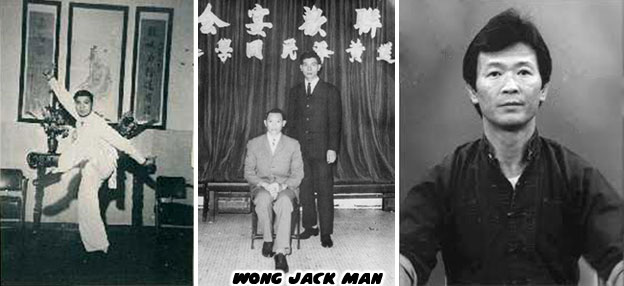
Wong Jack Man was the fighter that was sent to battle Lee. It was said that the older teachers were mad at Lee, not for teaching outsiders, but for bragging about how ineffective the fighting styles were. They wanted to have a contest with rules and regulations so that neither man got seriously hurt and settle the debate. They knew that in ancient China a fight to the death may have been permissible but in the modern world, especially in the US, there would be consequences for these actions. According to some witnesses Lee refused to fight under the limit of rules. Either everything was fair game or nothing was. Eventually they agreed to more lax rules and from the get-go the witnesses agreed that Lee was the more aggressive fighter. To some people Lee was fighting dirty, attacking the eyes and throat of Man throughout the fight. Lee was described as doing everything in his power to finish the fight as fast as he could. Man did everything he could to defend himself. The fight was not a quick battle as Lee later boasted but seemed to drag on. After 20 or 25 minutes Lee was declared the winner although neither man managed to knock the other down or cause serious injury. Different accounts of the contest were reprinted in local Chinese newspapers and each one went more favorably to Lee. Man told his account of the fight and challenged Lee to a public battle and settle the argument once again. Lee would decline.

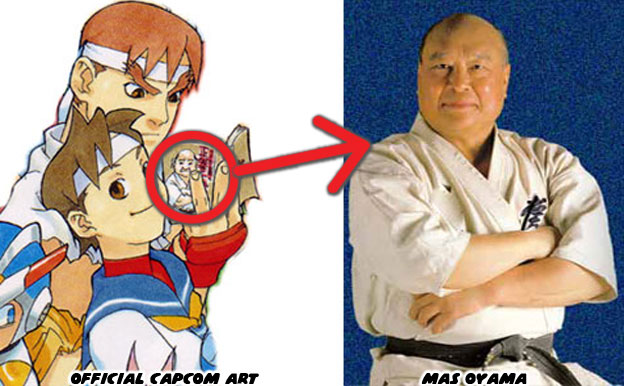
The legend of Bruce Lee grew as he pursued better fighting and training techniques. The exposure he gained from the Black Hornet television series and later his film series made him an icon. Most people that would consider themselves fans of Lee might have never heard of Wong Jack Man. Wong later said that the fight had taken place because both men were young, prideful and headstrong. If anything if the truths from their encounter were revealed it would only serve to hurt their reputations more than help. Some facts managed to disappear through time much to the favor of one fighter. Fiction was malleable, easier to work with than historical accuracy. A decade and a half before Lee rose to prominence a different martial artist was the hero of millions. Mas Oyama, born Choi Bae Dal, was called the "God Hand" of karate. He could beat most fighters with a single punch. He was good but lacked control. He killed a man in a bar fight after the person pulled a knife on him. He realized that he had the ability to disarm the man but let his temper get the best of him and chose to strike instead.


Oyama became a hermit and lived in the mountains. Training his mind and body until he thought he had reached his peak. Then he set out trying to prove himself. He went dojo to dojo and challenged the masters of each school. He beat each one handily and his legend grew. Then he set out to prove that his style was the best. He traveled to the US, China and Thailand to try himself against other masters. Boxers, wrestlers and other fighters lined up for the challenge. Most fights were settled in private, away from the spotlight and the law. Imagine what would happen if a fighter today went to every martial arts school in the city and beat up all the teachers. Chances are that the police would be waiting for him in the next town. Fighters enjoyed their reputations and didn't always want to be proven wrong in their own school, let alone their own country.


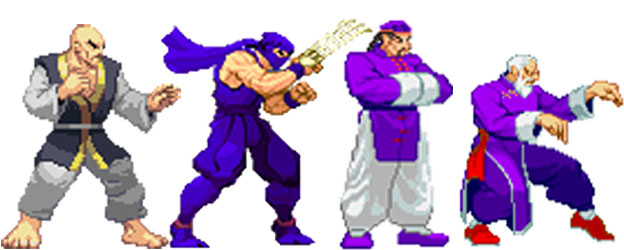
The story of Oyama in turn went on to influence the development of Street Fighter. Ryu played the role of Oyama. The opponents in the original game mirrored the types of people that Oyama faced. Karate, boxing, kung-fu and muay thai were some forms represented. Oyama beat the masters of each style. Only when he had defeated the best Muay Thai fighter, a mysterious person nicknamed the Black Cobra, did he consider his journey complete. There were no photos of the 1954 encounter even though the battle was highly publicized affair that took place in Lumpinee Stadium in Bangkok.


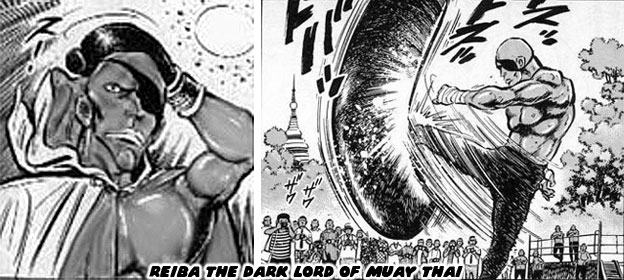
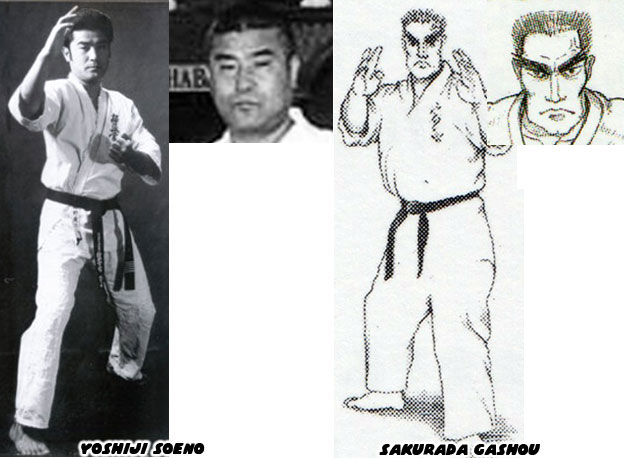
Oyama's understudy Yoshiji Soeno also traveled to Thailand, a decade later to prove which form of fighting was the best. It was reported that the one-eyed Thai fighter Reiba was as good if not better than Black Cobra. Soeno never got a chance to battle Reiba as a Triad or mafia hitman gunned him down before the battle. It did not matter however, he was such an interesting character that his myth managed to live on.

While the actions and reputation of Oyama were the basis for the Street Fighter mythos we should be clear that the look and mannerisms of Ryu were more closely aligned with Soeno. From Street Fighter II to today Ryu has had a very similar face. His eyebrows were large and bushy and his expression was very stern. The similarities between Soeno and Ryu were more than skin deep. There were two competing designs for the updated Ryu. One version had the character wearing leather and armor similar to Kenshiro from Hokuto No Ken / Fist of the North Star. The other version, named Sakurada Gashou had him in a much more traditional uniform. Note that in this version the character did not have his trademark headband.


Soeno went on to learn greatly from various different fighting forms. He studied Judo first but then excelled at Oyama's Kyokushin karate. He also picked up techniques from Goju-Ryu ("Hard Soft Style) which had older Okinawan roots, Shotokan Karate and Muay Thai. Soeno eventually broke his ties with Kyokushin to develop Shidokan Karate in 1980, which translated to"The group that lives and trains in the way of the samurai warrior." Shidokan practitioners were very good at striking, but they were also good at grappling and throwing opponents. They were well-rounded athletes and Soeno was very much like Ryu in that he could literally do it all. There were actually older schools called Shidokan, those with Okinawan roots as well as the more "mainstream" Shorin-Ryu form of Karate. Soeno founded over two dozen schools and still oversees his organization.

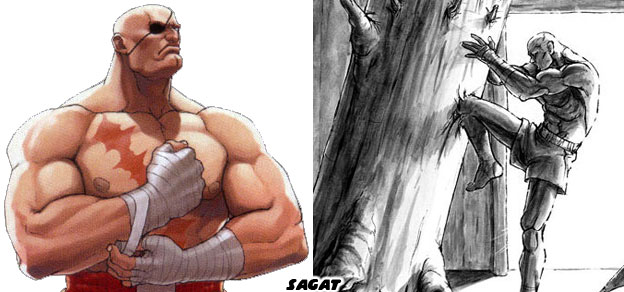
The legend of Oyama and Soeno became the backbone of the manga and animé series Karate Baka Ichidai. The characters featured within were adapted for Street Fighter as well. Sagat replaced Reiba in the game. Interestingly enough the character was shot in the Ryu Final manga by some poachers instead of triad members. Sagat survived the encounter so that audiences could look forward to seeing the seven-foot monster turn up again and again in the game series.


The competition of different fighting styles by Oyama and Soeno could be considered the roots of modern MMA tournaments. Around the same time a similar trend was happening in the Americas. The 20th century would see an explosion in the popularity of martial arts not seen since ancient times. It turned out that the same mass media that was shining a light on the last traditional martial arts masters was also creating a new generation of legends. Film, television and newspapers would help shape the careers of some of the most famous and infamous characters in the fight game. The next blog will explore these pioneers. As always if you enjoyed this blog and would like to sponsor me please visit my Patreon page and consider donating each month, even as little as $1 would help make better blogs and even podcasts!