The military application of Sambo made practitioners very dangerous. Crippling holds, bone breaking strikes and peak conditioning were the things that soldiers relied on to keep them alive when facing down an opponent without the aid of a weapon. Even in sparring the judo-like throws and constantly shifting wrestling positions could severely injure a person that did not focus on training. The more dangerous combat elements, things like neck locks and certain strikes, were taken away to develop Sport Sambo. By 1940 the Russian states had developed more or less a foundation for professional MMA competition, they had even tried to get it to be considered as an Olympic event. All of this happened more than a decade before Oyama began on his world tour, and well before Labell fought Savage in the USA's first MMA competition.
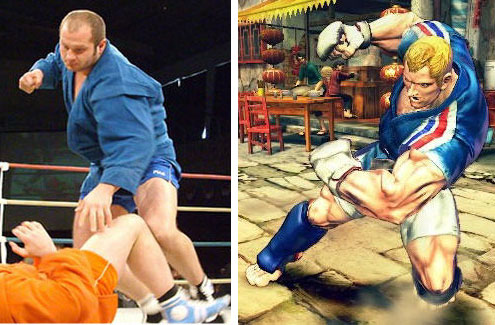
Fedor had established a natural acclimation for the system which mixed elements of grappling, striking and wrestling. He had a relentless dedication to training, working out in seclusion and surrounding himself only with trusted friends and family. Like Oyama before him, it was his focus and drive that allowed him to develop the iron will to reach the top. Fedor had already won several regional and national championships in Sambo before he began competing on the international stage of MMA competitions in Japan and the US. He, along with his brother Aleksander AKA the Grim Reaper seemed to come out of nowhere and dominate opponents through the new millennia, just like the Gracies had in the '90s. Of course there were no flukes in MMA. Kazushi Sakuraba made the most of his wrestling and catch abilities so too did Fedor exploit everything he had picked up in Sambo. He could adapt seamlessly between grapplers and strikers and try to finish off opponents with maximum efficiency. Long time fans of shoot-fighting, vale tudo and other global fighting competitions had known of the system for some time and were waiting for the Europeans to begin exporting their best fighters. Casual fans were intrigued by the techniques and began investigating its history.
By 2008 the legend of Fedor had been established. When Capcom was developing Street Fighter IV they wanted to include a fighter that represented the next generation of combatants. Instead of bringing back Alex they introduced a new character named Abel. His costume was very much like a traditional Sambo uniform of shorts and a Gi-like top. Although the character was French most fans saw the influence from the Ukranian master. Despite his size Abel was fast and agile, able to duck under many attacks and close the distance against his opponents in the blink of an eye. He was also tough and had a great diversity of strikes and grappling moves. Essentially the first Sambo fighter in the Street Fighter series. Many players in the US were eager to try out the character in early play tests. This surprised Producer Yoshinori Ono who had created the spy vixen Crimson Viper with the US audience in mind. He had underestimated the global appeal that fighter like Fedor commanded.
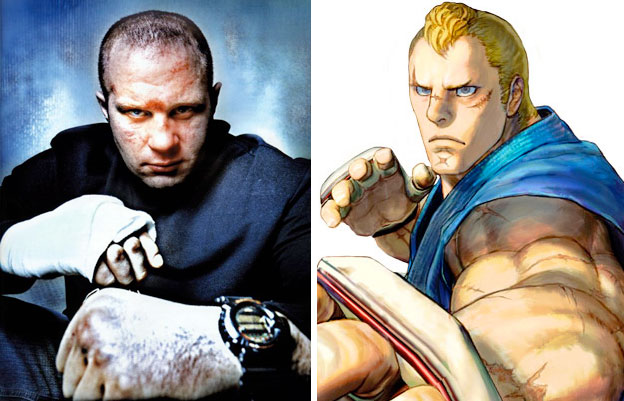
Sambo had been used to train thousands of soldiers in Russia by the time Helio Gracie was teaching his new form of Ju-jitsu to the people of Brazil. Almost twenty years later, when Helio fought Kimura, the sport version of Sambo had been exposed to million of Russians on television and arena battles. Fedor had not appeared out of thin air. He had inherited a culture that had been scientifically identifying the most effective moves from multiple arts and refining them for practical use in battle and on the street. Making interesting game characters and incorporating the Sambo style had been the challenge to the Japanese. Ad Abel demonstrated they were ready for the challenge.
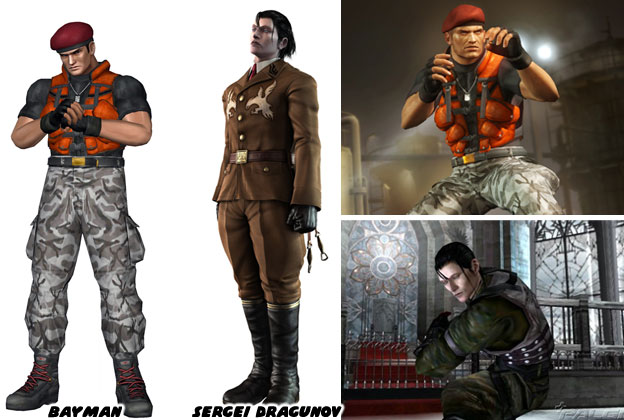
Namco had introduced Sergei Dragunov into their Tekken series and Tecmo had put Bayman into Dead or Alive. By presenting them in military uniforms they wanted audiences to know that these fighters used Combat Sambo and not Sport Sambo as their fighting method. Of course Abel was also written as a soldier in SF canon and one of his alternate costumes had him in camouflage, but I digress. Not since the character Guile in Street Fighter II had another military character demanded as much respect from game players. The Eastern Block MMA fighters had finally arrived on the arcade scene. They would remain relevant so long as Sambo practitioners continued to show and prove on the global stage.
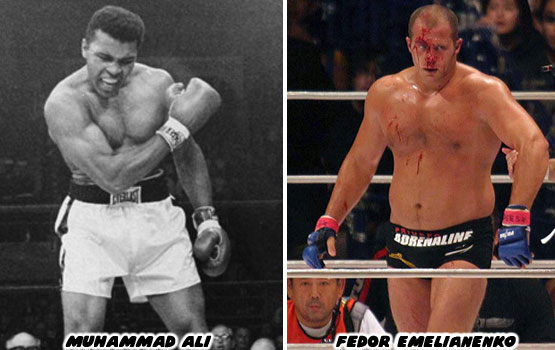
With Fedor achieving an Ali-like status the style would never fall out of favor. For those interested the cable television show the Human Weapon had a great feature on Sambo, its history and applications as both a military and fighting art. Even with the documented success of Fedor why was it that when people thought about what a martial arts master they almost immediately conjured up images of an elderly Asian with a long beards?
The undefeated streak reported by some masters of the martial arts was always subject to criticism. Some claimed to have hundreds of victories over their lifetime. Their criteria for a "fight" was always questionable. Did the masters include sparring or training sessions as an actual fight? What about street fights? Or did only sanctioned battles with witnesses and a judge count? If sparring matches counted then the best would have been able to claim thousands of victories without a single loss. The self-professed champion Rei Zulu said he had a record of almost 200 victories without a defeat before he was beaten by Rickson Gracie. Of course Rickson also claimed that the had won over 400 fights without a loss. Helio Gracie said that the number was inflated based on his opponents and "fight" qualifications. If Helio had counted his battles in the same way then he would have won a million encounters.
The introduction of film and video allowed new legends to be created, verified and ranked almost overnight. Fighters that had merit could be documented. Opponents could also now study techniques of their rivals, making the fights more interesting. Analysts could dissect every fight with slow motion replays and explain why the fighter deserved a championship. Film and video also allowed a number of so-called fighting masters to be debunked. Inflated numbers aside, there were masters that allegedly had super techniques that no previous mortal could ever possess. In ancient times these characters relied on word of mouth to spread the myth of their fighting prowess. Undoubtedly many a martial artist set out trying to track down these masters hopeful that they could learn their secrets. Thanks to video the absurdity of these "masters" could finally be exposed.
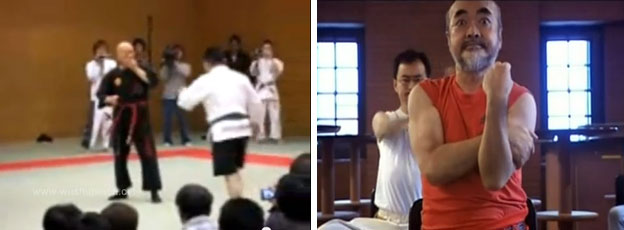
Take for example Yanagiryuken the Kiai Master. Allegedly he had compiled a record of 200 battles with 0 defeats. He was such a powerful fighter that he didn't even have to touch his opponents to throw them or knock them down. He proved this by recording his training sessions with his students. He seemed to have the same mythical powers exploited by videogame characters. Of course his students acted as accomplices and seemed to throw themselves around at the whim of their master. He challenged fighters of any style to compete against him, offering a $5,000 reward to the person that could beat his superior style. A young MMA practitioner accepted the challenge. After signing a contract and death release form he took the kiai master to task. He grabbed him by the sleeve and punched him in the face repeatedly until he dropped. Unfortunately nobody had gotten a chance to repeat the fight against Master Sasaki, the sage of Hida-shiki Kyouken-jutsu. According to his own legend he could disable or even kill a man with the sound of his voice.
Sadly these charlatans existed and duped a large number of people. In older times the false masters would be supported by word of mouth and other willing accomplices. Most people lacked the means to travel across the planet to seek them out so the legends stood at face value. Sadly in the day and age of instant access to media anywhere in the world there are still people tricking the public into believing that they have superhuman powers. Take for example the Qigong master projecting his chi and throwing several people with ease by touch alone. According to ancient philosophies chi is made up of positive and negative energy, like positive and negative energy currents, some practitioners of qigong can harness this energy and direct it to their hands and feet for stronger punches and kicks. It can also be used to increase physical toughness and heal wounds. Western science has tried to debunk or explain the force of chi for some time. Chi was the myth that spawned the creation of "fireball" attacks in fighting games. Unfortunately these modern masters had yet to perform their chi attacks on an actual randomly selected persons let alone real fighters in competition. Proof or not there was no denying the appeal of fabled martial arts master. Comics, movies and cartoons had carried the myth into modern times. Somewhere in the world there was an elderly man that held onto ancient secrets and was waiting for the right person to come along and train. This old fighter had moves and techniques that could beat any man regardless of age or strength.
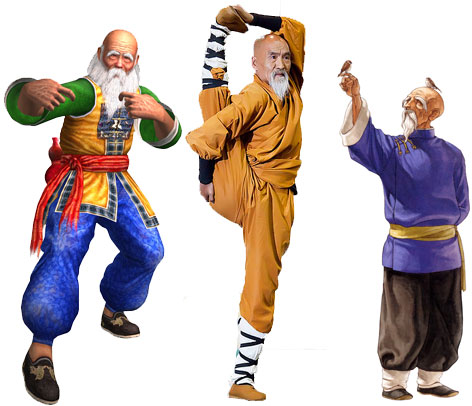
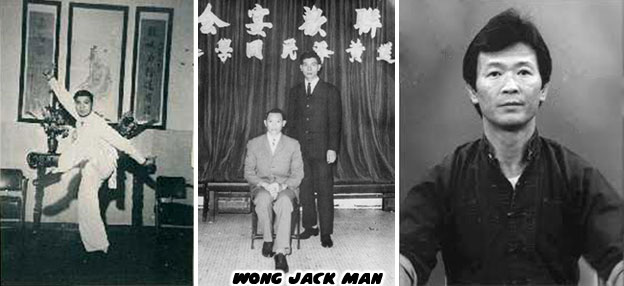
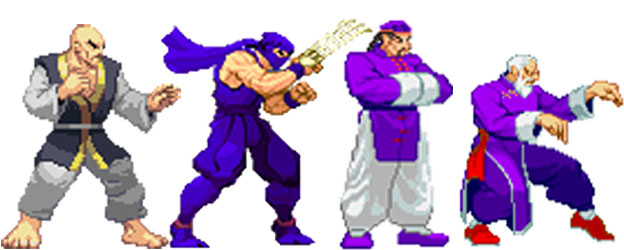
The elderly master was turned into a videogame trope at the dawn of the fighting genre. Shun-Di from Virtua Fighter and Tung Fu Rue from the Fatal Fury series were two such icons. In the games the two were able to compete against brawlers, wrestlers and martial artists that were three times larger and a third their age. The difference between a character Oro and his Street Fighter III rivals was even more profound. Where else could a 140-year-old be able to beat up on seven-foot giants? There was actually an intersection between myth and legend however. Some of the best fighters that had ever lived could be held to a stalemate. It had happened to Bruce Lee early in his career. The fight against Wong Jack Man was not as interesting as the movie Dragon made it out to be. If anything Lee attacked for almost a half hour and never managed to knock down his opponent or even hospitalize him. There were no padded gloves or soft mats to prevent injuries either! The fighting styles and methods that Lee had been taught had failed him. Although he "won" the encounter if forced him to re-evaluate the old traditions and begin rewriting the book on unarmed combat.
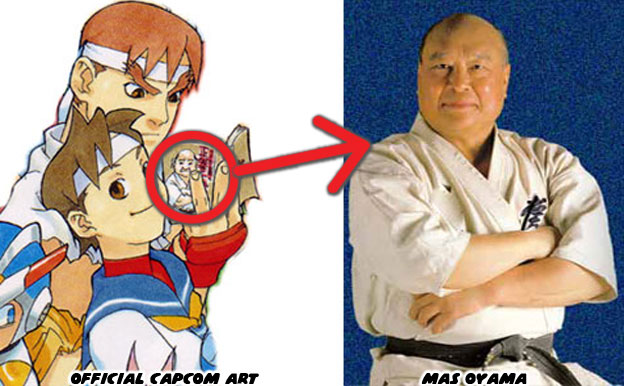
Something similar had happened to Oyama according to legend. After he had defeated the best fighters he had come across in his travels through the US, Japan and Thailand he went to see about a legendary fighter in China. He discovered an elderly man teaching Taiji Chuan and asked if he were the "Mr. Chen" from legend. The older man said he was but Oyama was ashamed to ask for a sparring match. The older man offered first much to Oyama's surprise. The two squared off and Oyama was amazed at the efficiency at which the older fighter was able to deflect all of his strikes using small circular motions and footwork. After a few minutes Oyama realized that he could not land more than a glancing blow to the older fighter and conceded defeat. It was the first time in over 200 battles that he had ever done so. He cried, according to legend, not because he lost but because he had much more room to grow as a fighter. The elderly man invited him to stay and learn what he could. After a few weeks of training Oyama was capable of competing against the best students at the school. Oyama said in later interviews that Taiji was good for health but not a practical fighting art, only 1 in 10,000 people could ever achieve the understanding and ability that Mr. Chen had. The lesson he learned was that no system was perfect and the fighter must constantly be willing to learn and grow. Although Oyama was credited as an icon for karate he had actually learned a lot from boxing, judo, jujitsu, wrestling and kung-fu in all his travels. The same thing helped make Bruce Lee a well rounded fighter in later years and had been incorporated into the Sambo that Fedor had learned.
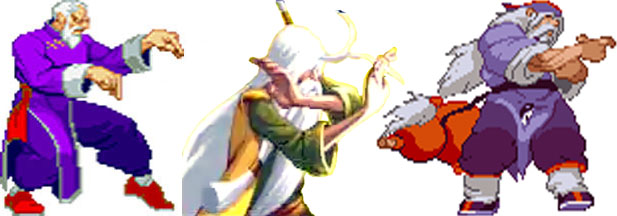
Perhaps the story of Oyama versus Mr. Chen was what spawned the myth of the elderly master that could humble even the most powerful fighter. People wanted to believe that there might still exist a master of the ancient arts and not one of the charlatans that had been putting on phony exhibitions like Sasaki and Yanagiryuken. Ever since that moment the all-powerful master had been a staple in movies, comics and now video games. People had been hoping that some day a real master might reveal himself at an MMA competition and take out a competitor half their age and twice their size. But that day would probably never come. Age robbed the speed, strength and reflexes of the best fighters. It had been proven with Fedor, Ali, Royce and Sakuraba. Even if there were a master out there chances are the bright lights and gaudy excesses of MMA "superstars" would be the antithesis of everything they had learned. They would surely shy away from the cameras or fame seekers.
Many fans were left believing in these mythical characters, too good to ever come down from the mountain, instead the best fighters had to go out and track them down. The stories of the mythical masters would be mixed in with the legends that actually walked the Earth. These stories would become more embellished as word of mouth spread the myth. Even with the advent of film, video and the internet the line between fact and fiction blurred. Whatever the case was the grappling arts had forever changed the way the world perceived fighters. The wrestlers that were once mocked for coming from a carnival lineage, for being "fake" or having no practical fighting ability had flipped the martial arts world on its head. The oldest techniques from the dawn of civilization were alive and well and helping shape 21st century fighters. Hopefully comics, cartoons, movies and video games would begin to expose the next generation to the classic traditions. If you'd like to learn more about Catch and the history of the art please check out Say Uncle! Please leave a question of comment about the series so far and I will try to get back to you. As always if you enjoyed this blog and would like to sponsor me please visit my Patreon page and consider donating each month, even as little as $1 would help make better blogs and even podcasts!