Showing posts with label abel. Show all posts

Wednesday, December 14, 2022

The Street Fighter 6 pre-order trailer, a look at Manon, the graceful judo practitioner

In the previous blog I mentioned that Street Fighter 6 Director Takayuki Nakayama, Producers Kazuhiro Tsuchiya, and Shuhei Matsumoto, and Designer Yusuke Hashimoto were doing a much better job with design, diversity, and inclusion than in either SFIV, and SFV. Although they were working with Capcom on the previous games the final direction of the series was in the hands of Yoshinori Ono, whom as a director I had argued took the franchise into some dumb places. The roots of some great characters were in both SFIV, and SFV, however some of the best ideas seemed left on the cutting room floor. The decision to put Rufus in the game instead of King Cobra set the tone that Mr. Ono would be going with during his time leading the projects. I had mentioned previously that Capcom was able to make a memorable character out of an ugly stereotype in the early days of SFII. Mr. Ono didn’t seem to have the same level of insight that I believe the franchise deserved. I contend that many of the new cast members in Street Fighter 6 are an attempt to redo the plans the staff had much earlier.

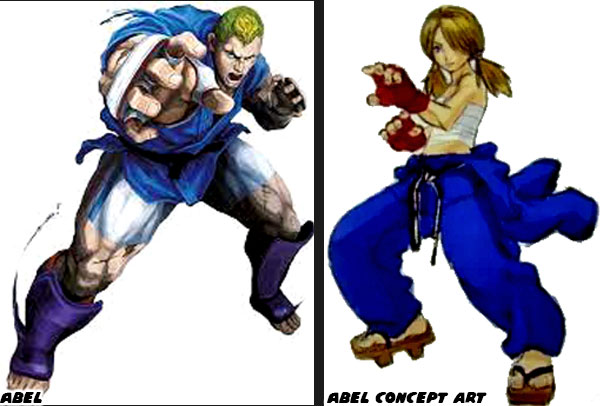
In the planning stages of SFIV the team wanted to introduce an androgynous young grappler.The skinny boy in pigtails would eventually evolve into the hulking Abel. The French-raised fighter was a master at judo. The game series had always had a spot open for the various fighting arts, including judo. The decision to make Abel large, and muscular, along with the rest of the cast, was specifically to make him appeal to western audiences. Capcom saw that the most popular games in the USA featured buff characters. Popular FPS titles like Doom, and Gears of War had characters that were more bodybuilder than standard body types. Hence Abel was hyper muscular, as were Ken, and Ryu. Even skinny characters like Dhalsim now had broad shoulders, and developed pecs, and biceps. Not only that, but the game also gave Abel some absurd judo throws to show off his strength.

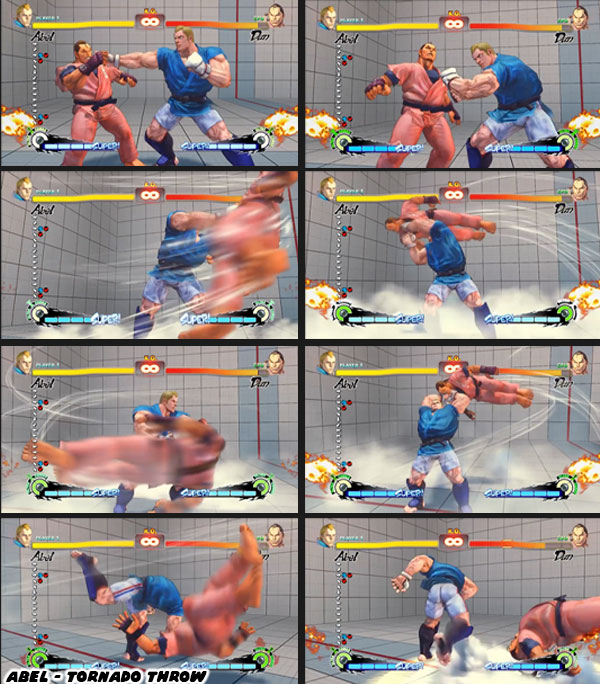
It was the animation that I found most jarring with the new characters introduced in SFIV. The fact that the obese Rufus could move faster than the skinniest fighters took me out of the game. But that was just a part of a bigger trend. The best grab moves in the series were impossible, but plausible. The fact that Abel would grab an opponent by the collar, and easily swing them around like a Tom and Jerry cartoon made little sense in context with the lineup. It was certainly believable against small, and skinny fighters like Sakura, or Dhalsim, but looked absurd when doing that to E. Honda, Zangief, or Hugo. Plus what exactly was Abel grabbing if the opponents did not have a collar? These were things that the designers did not seem to consider. Not only that but some of his moves lacked the setup that coded the special attack as a judo move. Street Fighter 6 needed a cast whose moves were grounded more in that plausible reality. In order to do that the studio had to literally go back to the drawing board. What they gave us was a new take on the original SFIV plans.

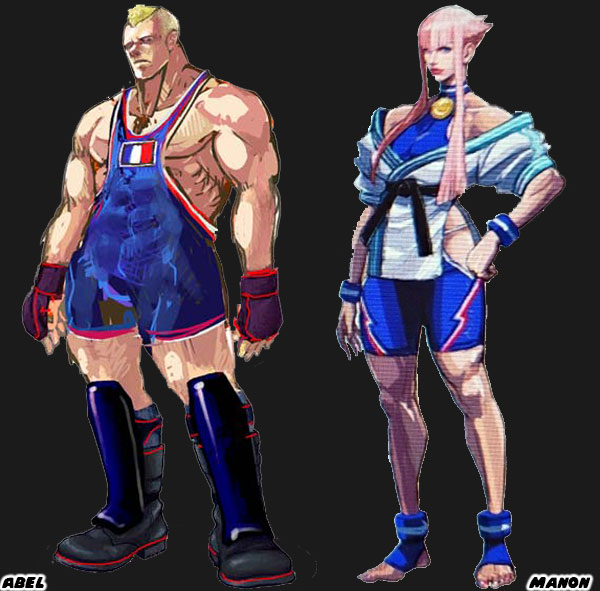
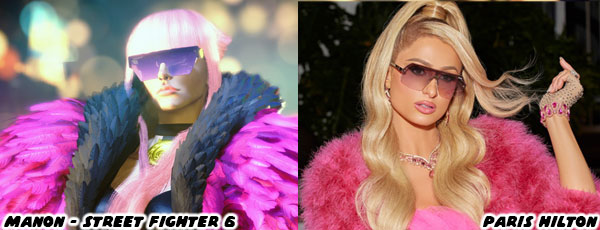
A fighter that we could identify was French was on the menu. Accomplishing this was easy. Using the colors of a national flag was one way that the artists at Capcom would code the lineup. In an early Abel draft, as well as an alternate costume we see him wearing wrestling tights, and a gold medal. Manon’s costume features similar colors, and striping on her outfit as well. In order to make her appear as more of a judoka rather than a wrestler she is wearing a juka top, along with her medal and black belt. Notice however that Manon is wearing her top off-the-shoulders in a very fashionable way. Not only that but her hair is colorful, and stylish. These are all details that support her story. According to her bio she is “A super model and world champion judoka, Manon is an idealist, forever seeking self-improvement in the pursuit of beauty. She struts the catwalk of street fighting to become the world's strongest model.” We can see a bit of her flair in the trailer, and can make comparisons to other fashion icons, and beauty figures like Paris Hilton.

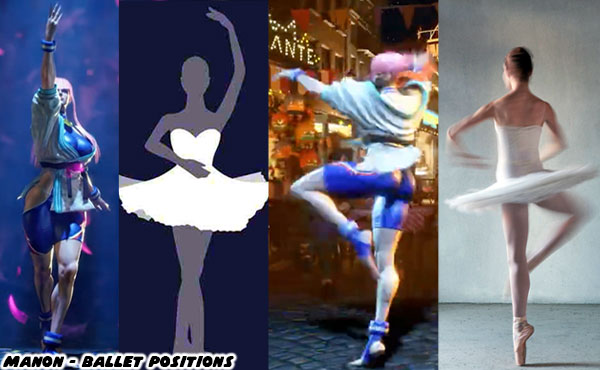
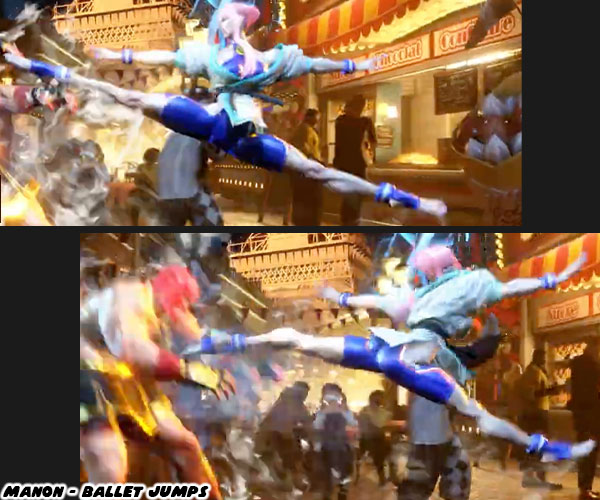
I strongly hoped that Manon was a practitioner of Savate, and with the cut of her outfit even predicted her to be one. It turned out that was not the case, but there was a reason for the tights after all. The range of motion they provided complimented the grace she fought with. We see her spin, leap, and twirl in the air with the ease of a ballerina. If she is a supermodel, then it stands to reason she might be an accomplished dancer as well. Manon might be the most polished model in the genre. No doubt she knows more about the world than other affluent girls that attended a prestigious finishing school.

The SF6 pre-order trailer is filled with many examples of Manon fighting with the grace of a dancer. The moves of Juri, or Chun-Li are focused on delivering strong attacks with their legs, and not so much with their hands. Chun-Li is rooted in sweeping kung-fu strikes, whereas Juri has more open tae kwon do kicks. Manon’s legs are long, and lanky. Her thighs are nowhere as thick, and developed as Chun-Li. This means she does not do a lot of striking with her legs, however her flexibility as a dancer helps her cut down the space between opponents with a leaping kick, while setting up another grapple.

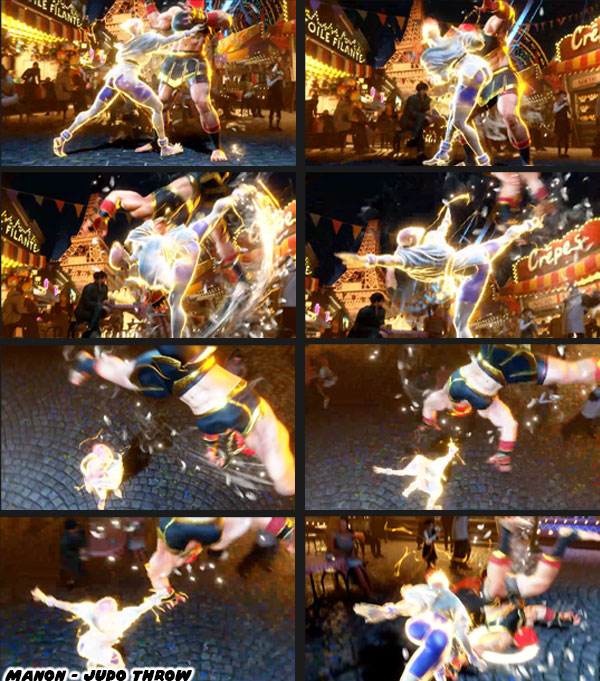
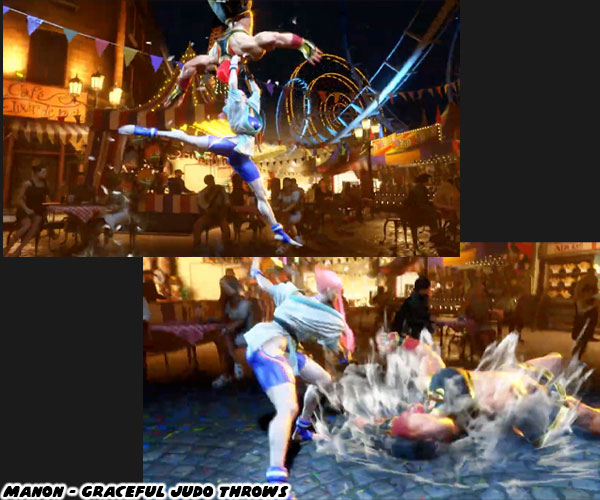
Manon's moves are more plausible for the character, and more important, are more believable for a judoka. Unlike other martial arts judo, and ju-jitsu are not about size, and strength. Certainly a large person with a grasp of the martial arts could do some serious damage. Judo is not about strength, it works through leverage, balance, and a fulcrum. A smaller opponent can easily flip a larger person. Anyone that has tripped over a bench could tell you that gravity does most of the work of falling over. We see these things in action in the SF6 footage. Manon may have dance-like moves, but she also grips her opponent like an actual judo practitioner. In all of her throw moves we see her drop her hip under the opponent’s center of balance. Then she sweeps the leg, and flips them upside down. She grabs their wrist, and controls the landing. It doesn’t matter if the character has a collar to grab onto or not, she is simply tipping them over. They may be exaggerated attacks, but these are fundamental judo moves.

Unlike the cartoonish moves that Abel was given in SFIV, the ones that Manon employs are grounded in actual judo. She doesn’t swing opponents in the air, or toss them like rag dolls. Her throws do not require her to be overly strong. Even massive characters like Hugo, and Abigail would flip head over heels if someone tripped them over their center of gravity. The best moves in the series are inspired by actual martial arts, whether it is a karate uppercut, Muay Thai knee, boxing punch, or wrestling suplex. They can all be made to look fantastic, while not breaking the suspension of disbelief for the audience. In paying attention to all of these elements in the costume cues, moves, and animation of Manon I think that the SF6 team has created a fighter that has more staying power than Abel. The thing that Capcom does better than most studios is exaggerate the method, and outcome of the attacks in animation without going overboard. This is the magic of creating Street Fighter special, and super attacks.

I have established that Kimberly is another take on the Guy template, JP follows closely on the heels of Falke, and that Manon appears to be a new version of Abel. What about Marisa, the other new character revealed in the SF6 pre-order trailer? Is she a new take on an existing character, or is she an entirely new idea? I would argue that Marisa was a redo of one of the cringiest characters in the series. I will explain how, and why in the next blog. I hope to see you back for that. I would like to hear your take on any of the new characters slated for SF6. Who are you going to main when the game drops in 2023? Let me know in the comments section. As always if you would like to sponsor me please visit my Patreon page and consider donating each month, even as little as $1 would help make better blogs and even podcasts!
follow the Street Writer on Patreon!

Monday, August 15, 2016

Fighting with a disability, part 1...

Fighting games make the fantastic possible, but sometimes they make the real-world fantastic as well. It's one of the reasons we love the genre so much. They can turn a boxer into an unstoppable force of nature, they can turn a wrestler into a cast-iron robot. There is a part of us that believes in these characters because we know there have been men and women throughout history that have done legendary things. One of the things I enjoy most are seeing the unorthodox, whether it's a technique or personality. This time I want to feature fighters that were unique because of their disability. There have been athletes and fighters born with all manner of physical and mental conditions. This did not stop them from achieving personal success and I find their stories inspirational. But what about the fighting game characters with disabilities, what do we know about them? What can they tell us about the developers or nations they came from? I want you to think for a moment about characters in fighting games that were presented with a disability. How many could you name?


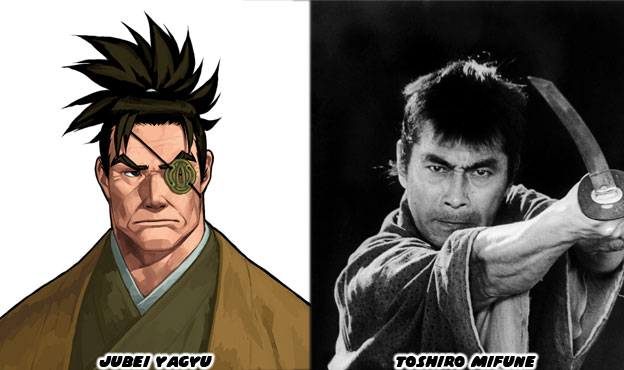
One of the longest-lived character designs, really a trope at this point, is the eyepatch-wearing fighter. Many games have featured a character with this disability. Usually in the form of a villain. But there were a few heroic characters that wore the patch as well. Many of these characters, including men and women, were based on the true story of Jubei Mitsuyoshi. While the actual Jubei had use of both eyes the authors that turned his story into legend often embellished his look and said he wore an eyepatch on the count that he lost it while sparring with his father. It made for an interesting character. One of the first fighting game characters to poach the look was Jubei Yagyu, who appeared in the original Samurai Shodown / Spirits in 1993. What made the series great was that several of the sword masters were inspired by fighters from different feudal eras. The scruffy hair, square chin and rugged looks of the SNK character were no doubt inspired by the actor Toshiro Mifune who played a swordsman in several films, including the phenomenal Seven Samurai.


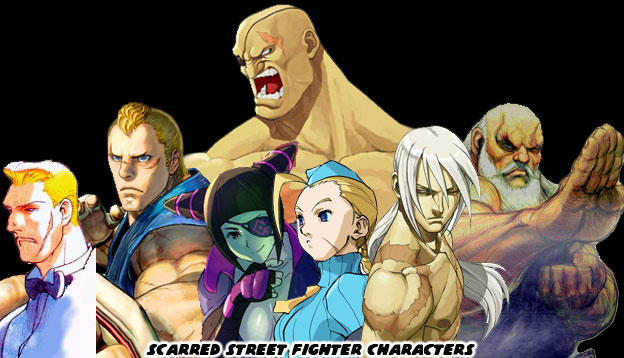
Characters with eye patches were nothing new in the Street Fighter series. The original world champion, Sagat, had a patch. More recently Juri was also presented with an eyepatch as well. When it came to other memorable traits there were several characters covered in massive scars. Eagle, Cammy and Abel were three blondes that each had facial scarring. Abel and Cammy of course also suffered from amnesia and brain washing. These designs and themes would turn up in the Rival School series as well. Some of the characters were covered in many grotesque scars, even over their eyes, like Kairi and Gouken. The bare-handed one-eyed fighter was quickly becoming a trope for the genre.

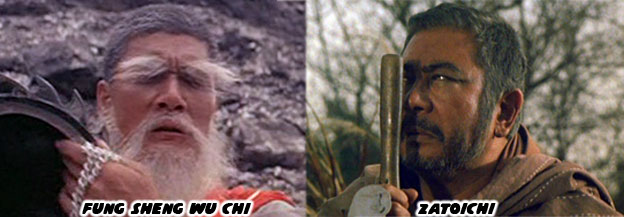
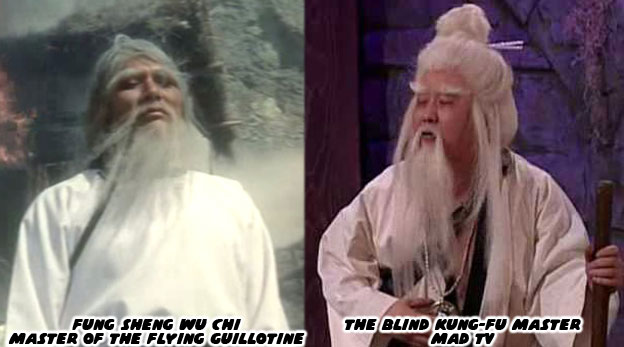
A character blind in one eye was interesting enough but films and comics had turned completely blind characters into stars as well. Hong Kong and Japanese cinema both featured fictional heroes and villains that were both blind but lethal as well. None was more popular than Zatoichi. Created by Kan Shimozawa in the early '60s, the character of Zatoichi engrossed movie audiences for several decades. There was even a television series featuring the character that went on for 100 episodes. Zatoishi was a travelling masseuse and hired sword. His fighting ability seemed superhuman as he would often take on dozens of men at once. He often dealt with and for unsavory characters, including yakuza bosses. There was something sympathetic about the character and the actor. Shintaro Katsu poured himself into the role. Shintaro played the character in almost 30 films. You may have seen a more recent remake of the character featuring cult film star Beat Takeshi. In China there was a villain that was as awe-inspiring as Zatoishi. Unfortunately this character would appear in only one film; the Master of the Flying Guillotine, aka the One Armed Boxer part 2.


Whether the character was a good guy or a bad guy did not matter as much as their martial arts prowess. Zatoishi set an incredible standard. Fung Sheng Wu Chi was just as lethal, taking out masters of various fighting arts with his throwing weapon. The creators of both blind characters demonstrated that their other senses were heightened so that they could anticipate the moves of their opponents. They could hear and even smell opponents, which came in handy while fighting in the pitch black of night. Hong Kong cinema made sure that the myth of the blind master would spread around the world. When the west saw these figures they were engrossed by them. Some of the blind master retellings worked well. Such as the USA take on Zatoishi called Blind Fury. Other retellings were a little more humorous such as the Blind Kung-Fu Master from Mad TV.


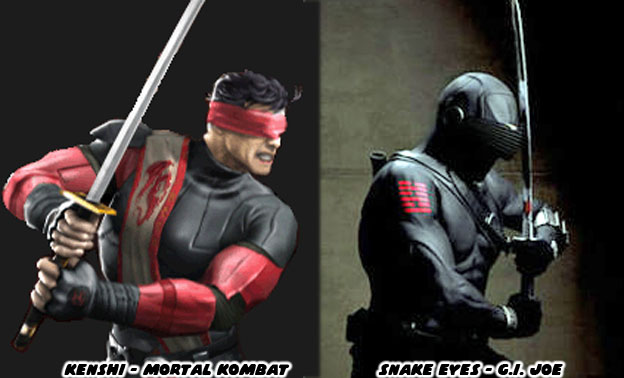
In some instances the blind warrior would become the mentor for the star of the series. Think of the blind Shaolin priest from the classic television series Kung-Fu. Or Jedi Kanan Jarrus from Star Wars Rebels and even Chirrut Imwe from Rogue One. They were great warriors filled with wisdom despite their physical disability. Everything they knew could be passed on to a star pupil that would change the world. The west found these archetypes appealing and began creating new heroes from their legends. In the Mortal Kombat series there was Kenshi Takahashi. He had moves based on Tai Chi and Judo while wielding an ancient sword. Audiences could tell from the red bandage covering his eyes that Kenshi was a blind master. He had telekinetic powers that allowed him to throw opponents around and retrieve his sword without having to move. His initial costume and design was rooted slightly in the comic book and cartoon icon Snake Eyes. While Snake Eyes is not blind, he was disfigured and is mute and wears a mask. He was trained in the secretive arts of ninjitsu and became an elite member of G.I. Joe. He was the deadliest hand-to-hand fighter in the group comprised of the best soldiers of every branch of the armed forces. Mysterious characters like Snake Eyes and Kenshi always go over big in the west.


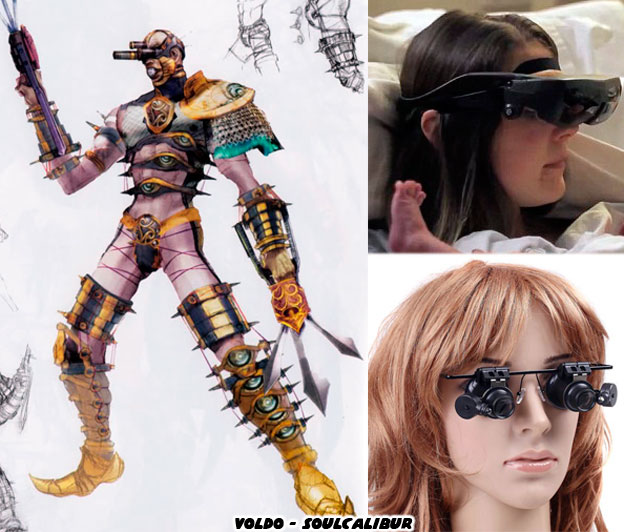
Kenshi was far from being the first blind fighting game character. That honor would go to Voldo. He appeared in Soul Blade / Edge, the first successful 3D sword fighting game from Namco. Voldo was an assassin from Palermo in the Kingdom of Naples from ancient Italy. He fought in an unorthodox style, twisting and flipping at opponents. He fought in an odd costume, wrapped in leather and other bondage elements. He even fought with an unconventional weapon, the three-bladed Jamadhar Katars. Voldo wore a strap across his eyes but he was not completely blind. He suffered from an eye condition that severely limited his vision. Whether it was due to an accident or birth defect he was presented using a telescopic device which allowed him limited visibility. The version he wore predated modern medical devices by more than 400 years. I think this would qualify Voldo as the first and as far as I can remember only character to wear a low vision optical device. Score one for the visually impaired community!


Characters come in a variety of sizes and abilities. We have just talked a little bit about those with disabilities. Differences in physical to mental conditions make certain characters more interesting. They add dimension to the figures and can turn an ordinary fighter into a memorable one. In the next entry we will look at those that had slightly more physical challenges. I hope to see you back for that! As always if you would like to sponsor me please visit my Patreon page and consider donating each month, even as little as $1 would help make better blogs and even podcasts!

follow the Street Writer on Patreon!

Wednesday, September 9, 2015

How fight culture became fighting game history, part 31

The old Soviet Union had long and proud tradition of fighters, war heroes and genuine, old fashioned, tough guys. After the collapse of the Union and the rise of the independent Soviet States the Ukrainian Fedor Emelianenko carved his own legacy. Fedor studied under the formidable school of SAMBO. It was a fighting system that began in the '20s by the army to improve soldier hand-to-hand combat. SAMBO was an acronym for SAMooborona Bez Oruzhiya, or "self-defense without weapons" It was not the only commonly used word to denote a system with a unique meaning. Judo meant "the gentle way" and Aikido meant "the Way of Harmonious Spirit." The word Karate evolved from "Tang Hand" (as in Tang Dynasty 618 - 907 A.D.) or "Chinese Hand." Chinese traders and immigrants had been settling in Okinawa and the surrounding islands for centuries, they brought with them their fighting styles. The Japanese Ryukyu Kingdom began incorporating their lessons in the 14th century after they began their conquests of the islands and its inhabitants. Karate became to mean "Empty Hand" as in fighting without weapons.

The military application of Sambo made practitioners very dangerous. Crippling holds, bone breaking strikes and peak conditioning were the things that soldiers relied on to keep them alive when facing down an opponent without the aid of a weapon. Even in sparring the judo-like throws and constantly shifting wrestling positions could severely injure a person that did not focus on training. The more dangerous combat elements, things like neck locks and certain strikes, were taken away to develop Sport Sambo. By 1940 the Russian states had developed more or less a foundation for professional MMA competition, they had even tried to get it to be considered as an Olympic event. All of this happened more than a decade before Oyama began on his world tour, and well before Labell fought Savage in the USA's first MMA competition.
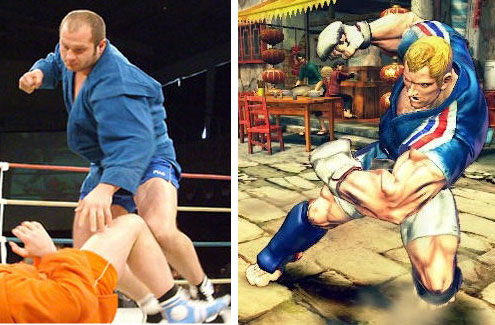

Fedor had established a natural acclimation for the system which mixed elements of grappling, striking and wrestling. He had a relentless dedication to training, working out in seclusion and surrounding himself only with trusted friends and family. Like Oyama before him, it was his focus and drive that allowed him to develop the iron will to reach the top. Fedor had already won several regional and national championships in Sambo before he began competing on the international stage of MMA competitions in Japan and the US. He, along with his brother Aleksander AKA the Grim Reaper seemed to come out of nowhere and dominate opponents through the new millennia, just like the Gracies had in the '90s. Of course there were no flukes in MMA. Kazushi Sakuraba made the most of his wrestling and catch abilities so too did Fedor exploit everything he had picked up in Sambo. He could adapt seamlessly between grapplers and strikers and try to finish off opponents with maximum efficiency. Long time fans of shoot-fighting, vale tudo and other global fighting competitions had known of the system for some time and were waiting for the Europeans to begin exporting their best fighters. Casual fans were intrigued by the techniques and began investigating its history.

By 2008 the legend of Fedor had been established. When Capcom was developing Street Fighter IV they wanted to include a fighter that represented the next generation of combatants. Instead of bringing back Alex they introduced a new character named Abel. His costume was very much like a traditional Sambo uniform of shorts and a Gi-like top. Although the character was French most fans saw the influence from the Ukranian master. Despite his size Abel was fast and agile, able to duck under many attacks and close the distance against his opponents in the blink of an eye. He was also tough and had a great diversity of strikes and grappling moves. Essentially the first Sambo fighter in the Street Fighter series. Many players in the US were eager to try out the character in early play tests. This surprised Producer Yoshinori Ono who had created the spy vixen Crimson Viper with the US audience in mind. He had underestimated the global appeal that fighter like Fedor commanded.
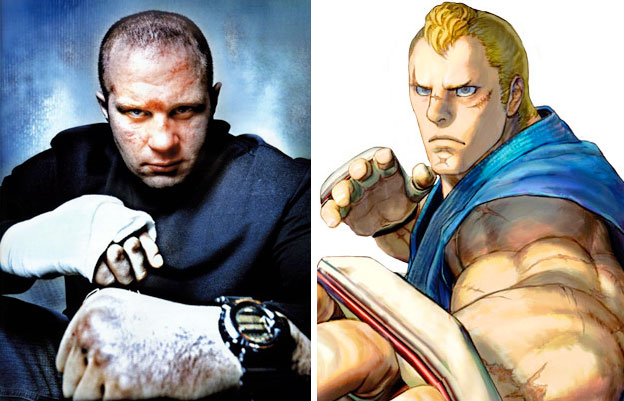

Sambo had been used to train thousands of soldiers in Russia by the time Helio Gracie was teaching his new form of Ju-jitsu to the people of Brazil. Almost twenty years later, when Helio fought Kimura, the sport version of Sambo had been exposed to million of Russians on television and arena battles. Fedor had not appeared out of thin air. He had inherited a culture that had been scientifically identifying the most effective moves from multiple arts and refining them for practical use in battle and on the street. Making interesting game characters and incorporating the Sambo style had been the challenge to the Japanese. Ad Abel demonstrated they were ready for the challenge.

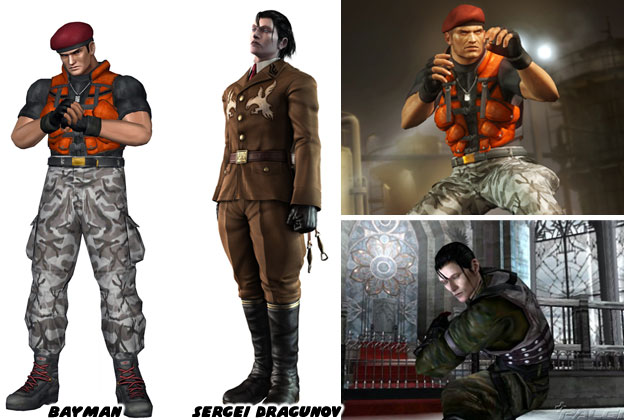
Namco had introduced Sergei Dragunov into their Tekken series and Tecmo had put Bayman into Dead or Alive. By presenting them in military uniforms they wanted audiences to know that these fighters used Combat Sambo and not Sport Sambo as their fighting method. Of course Abel was also written as a soldier in SF canon and one of his alternate costumes had him in camouflage, but I digress. Not since the character Guile in Street Fighter II had another military character demanded as much respect from game players. The Eastern Block MMA fighters had finally arrived on the arcade scene. They would remain relevant so long as Sambo practitioners continued to show and prove on the global stage.


With Fedor achieving an Ali-like status the style would never fall out of favor. For those interested the cable television show the Human Weapon had a great feature on Sambo, its history and applications as both a military and fighting art. Even with the documented success of Fedor why was it that when people thought about what a martial arts master they almost immediately conjured up images of an elderly Asian with a long beards?

The undefeated streak reported by some masters of the martial arts was always subject to criticism. Some claimed to have hundreds of victories over their lifetime. Their criteria for a "fight" was always questionable. Did the masters include sparring or training sessions as an actual fight? What about street fights? Or did only sanctioned battles with witnesses and a judge count? If sparring matches counted then the best would have been able to claim thousands of victories without a single loss. The self-professed champion Rei Zulu said he had a record of almost 200 victories without a defeat before he was beaten by Rickson Gracie. Of course Rickson also claimed that the had won over 400 fights without a loss. Helio Gracie said that the number was inflated based on his opponents and "fight" qualifications. If Helio had counted his battles in the same way then he would have won a million encounters.

The introduction of film and video allowed new legends to be created, verified and ranked almost overnight. Fighters that had merit could be documented. Opponents could also now study techniques of their rivals, making the fights more interesting. Analysts could dissect every fight with slow motion replays and explain why the fighter deserved a championship. Film and video also allowed a number of so-called fighting masters to be debunked. Inflated numbers aside, there were masters that allegedly had super techniques that no previous mortal could ever possess. In ancient times these characters relied on word of mouth to spread the myth of their fighting prowess. Undoubtedly many a martial artist set out trying to track down these masters hopeful that they could learn their secrets. Thanks to video the absurdity of these "masters" could finally be exposed.


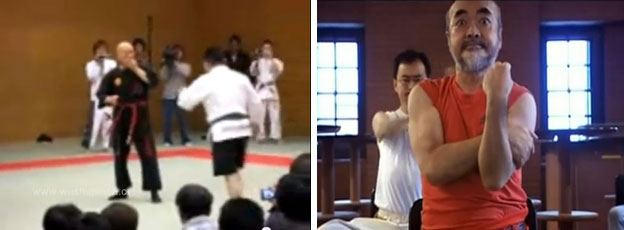
Take for example Yanagiryuken the Kiai Master. Allegedly he had compiled a record of 200 battles with 0 defeats. He was such a powerful fighter that he didn't even have to touch his opponents to throw them or knock them down. He proved this by recording his training sessions with his students. He seemed to have the same mythical powers exploited by videogame characters. Of course his students acted as accomplices and seemed to throw themselves around at the whim of their master. He challenged fighters of any style to compete against him, offering a $5,000 reward to the person that could beat his superior style. A young MMA practitioner accepted the challenge. After signing a contract and death release form he took the kiai master to task. He grabbed him by the sleeve and punched him in the face repeatedly until he dropped. Unfortunately nobody had gotten a chance to repeat the fight against Master Sasaki, the sage of Hida-shiki Kyouken-jutsu. According to his own legend he could disable or even kill a man with the sound of his voice.

Sadly these charlatans existed and duped a large number of people. In older times the false masters would be supported by word of mouth and other willing accomplices. Most people lacked the means to travel across the planet to seek them out so the legends stood at face value. Sadly in the day and age of instant access to media anywhere in the world there are still people tricking the public into believing that they have superhuman powers. Take for example the Qigong master projecting his chi and throwing several people with ease by touch alone. According to ancient philosophies chi is made up of positive and negative energy, like positive and negative energy currents, some practitioners of qigong can harness this energy and direct it to their hands and feet for stronger punches and kicks. It can also be used to increase physical toughness and heal wounds. Western science has tried to debunk or explain the force of chi for some time. Chi was the myth that spawned the creation of "fireball" attacks in fighting games. Unfortunately these modern masters had yet to perform their chi attacks on an actual randomly selected persons let alone real fighters in competition. Proof or not there was no denying the appeal of fabled martial arts master. Comics, movies and cartoons had carried the myth into modern times. Somewhere in the world there was an elderly man that held onto ancient secrets and was waiting for the right person to come along and train. This old fighter had moves and techniques that could beat any man regardless of age or strength.
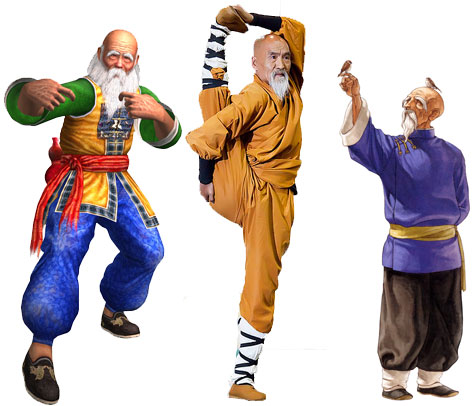

The elderly master was turned into a videogame trope at the dawn of the fighting genre. Shun-Di from Virtua Fighter and Tung Fu Rue from the Fatal Fury series were two such icons. In the games the two were able to compete against brawlers, wrestlers and martial artists that were three times larger and a third their age. The difference between a character Oro and his Street Fighter III rivals was even more profound. Where else could a 140-year-old be able to beat up on seven-foot giants? There was actually an intersection between myth and legend however. Some of the best fighters that had ever lived could be held to a stalemate. It had happened to Bruce Lee early in his career. The fight against Wong Jack Man was not as interesting as the movie Dragon made it out to be. If anything Lee attacked for almost a half hour and never managed to knock down his opponent or even hospitalize him. There were no padded gloves or soft mats to prevent injuries either! The fighting styles and methods that Lee had been taught had failed him. Although he "won" the encounter if forced him to re-evaluate the old traditions and begin rewriting the book on unarmed combat.

Something similar had happened to Oyama according to legend. After he had defeated the best fighters he had come across in his travels through the US, Japan and Thailand he went to see about a legendary fighter in China. He discovered an elderly man teaching Taiji Chuan and asked if he were the "Mr. Chen" from legend. The older man said he was but Oyama was ashamed to ask for a sparring match. The older man offered first much to Oyama's surprise. The two squared off and Oyama was amazed at the efficiency at which the older fighter was able to deflect all of his strikes using small circular motions and footwork. After a few minutes Oyama realized that he could not land more than a glancing blow to the older fighter and conceded defeat. It was the first time in over 200 battles that he had ever done so. He cried, according to legend, not because he lost but because he had much more room to grow as a fighter. The elderly man invited him to stay and learn what he could. After a few weeks of training Oyama was capable of competing against the best students at the school. Oyama said in later interviews that Taiji was good for health but not a practical fighting art, only 1 in 10,000 people could ever achieve the understanding and ability that Mr. Chen had. The lesson he learned was that no system was perfect and the fighter must constantly be willing to learn and grow. Although Oyama was credited as an icon for karate he had actually learned a lot from boxing, judo, jujitsu, wrestling and kung-fu in all his travels. The same thing helped make Bruce Lee a well rounded fighter in later years and had been incorporated into the Sambo that Fedor had learned.
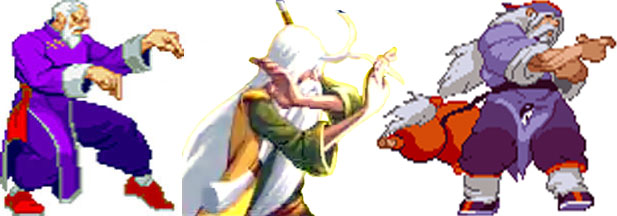

Perhaps the story of Oyama versus Mr. Chen was what spawned the myth of the elderly master that could humble even the most powerful fighter. People wanted to believe that there might still exist a master of the ancient arts and not one of the charlatans that had been putting on phony exhibitions like Sasaki and Yanagiryuken. Ever since that moment the all-powerful master had been a staple in movies, comics and now video games. People had been hoping that some day a real master might reveal himself at an MMA competition and take out a competitor half their age and twice their size. But that day would probably never come. Age robbed the speed, strength and reflexes of the best fighters. It had been proven with Fedor, Ali, Royce and Sakuraba. Even if there were a master out there chances are the bright lights and gaudy excesses of MMA "superstars" would be the antithesis of everything they had learned. They would surely shy away from the cameras or fame seekers.

Many fans were left believing in these mythical characters, too good to ever come down from the mountain, instead the best fighters had to go out and track them down. The stories of the mythical masters would be mixed in with the legends that actually walked the Earth. These stories would become more embellished as word of mouth spread the myth. Even with the advent of film, video and the internet the line between fact and fiction blurred. Whatever the case was the grappling arts had forever changed the way the world perceived fighters. The wrestlers that were once mocked for coming from a carnival lineage, for being "fake" or having no practical fighting ability had flipped the martial arts world on its head. The oldest techniques from the dawn of civilization were alive and well and helping shape 21st century fighters. Hopefully comics, cartoons, movies and video games would begin to expose the next generation to the classic traditions.  If you'd like to learn more about Catch and the history of the art please check out Say Uncle! Please leave a question of comment about the series so far and I will try to get back to you. As always if you enjoyed this blog and would like to sponsor me please visit my Patreon page and consider donating each month, even as little as $1 would help make better blogs and even podcasts!