Showing posts with label eagle. Show all posts

Wednesday, June 15, 2022

A look at Lili, the new native Mexican fighter in Street Fighter 6

We're going to look at Lili today. The new fighter from Mexico is fairly straightforward. I'd say a safe design even. Previously I mentioned how El Fuerte was a great character in the early stages of his planning, but the more Yoshinori Ono insisted they focus on his personality through cooking, instead of lucha libre, the worse the character got. The same thing could be said of Hakan, and his focus on oil, or Birdie, and his focus on eating. The crown jewel of great character designs thrown out for the sake of comedy was when King Cobra becoming Rufus. But I digress...
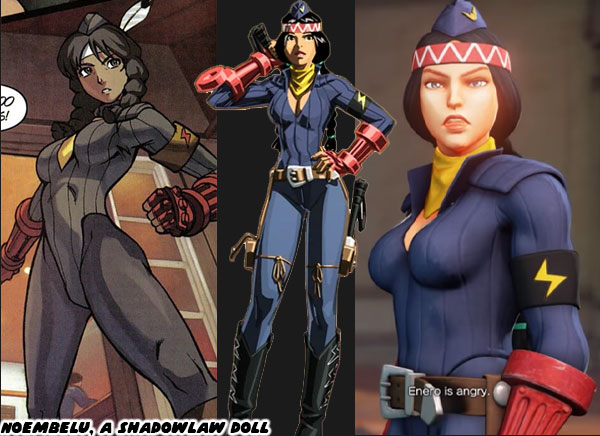
I’m fairly certain that most long-time Street Fighter fans were convinced that Lili, the new native character would turn out to be Noembelu, the Mexican “Doll” agent from Shadowlaw. The dark skin, braids, and feathered headband were spot-on matches. Not to mention that audiences were familiar with Noembelu. She was seen in previous in-game cut scenes, as well as in the comic books. The character fought with dual axes, and this new girl in SF6 fought with dual clubs. Perhaps she was deprogrammed by the government, and returned to her tribe? Something similar happened with Cammy after all. While they could take the agents away from Shadowlaw, they never could take away their ability to fight. When I first saw the new character, I did not think she was a Doll agent. The reason why was because the Street Fighter 6 Director: Takayuki Nakayama, and Producer: Kazuhiro Tsuchiya said they wanted to push the series forward. They would not be trying to tell yet another story related to SFII. Those were things already done to death in SFIV, and SFV. Also because this new character was young, if it were Noembelu she would have been older, based on the current timeline.
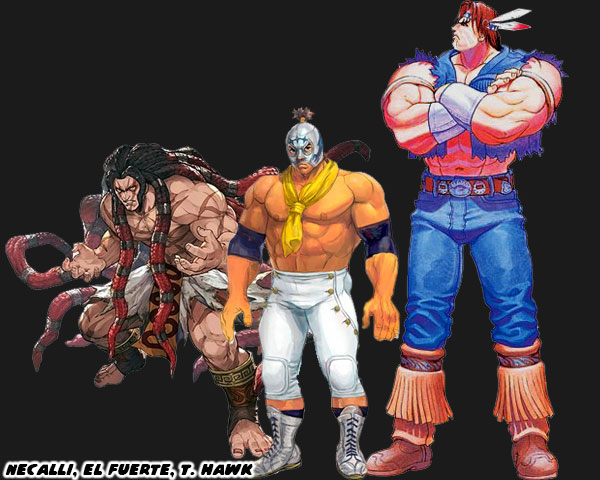
Lili is not the first Mexican character in the series. Let alone the first Mexican fighter across the genre. The studio gave us the gigantic T. Hawk in Super Street Fighter II in 1993. At that time Capcom was in the planning stages of Street Fighter III. The native Mexican was supposed to be the new "Zangief" for the game. He was included along with Cammy, Dee Jay, and Fei Long into the franchise in the form of an upgrade instead of a proper sequel. The other Mexican, or at least character from the peninsula, was Necalli. The wild-haired brute from SFV was an ancient warrior that stole the power from other fighters, and sometimes ate them in the process. Of all the fighters in the series he was possibly the strangest addition. Even fire-breathing Indian mystics made out of rubber were sensible by comparison.
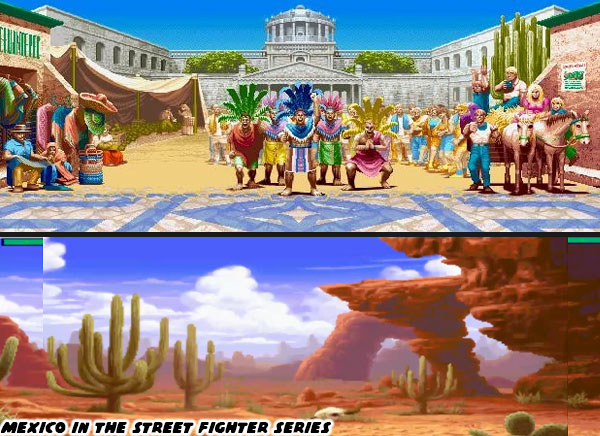
Fighters like T. Hawk, El Fuerte, and Necalli were based on surface level knowledge of Mexico, and Mexican traditions. In pop culture Mexico is often used as set dressing. PiƱatas, tequila, Dia de los Muertos, papel picado, fireworks, and masked wrestlers are things incorporated into many fighting games. The architecture, and traditions of small towns are often the centerpiece in stage backgrounds. Mexico is rarely presented as having any modern cities in videogames, even though the capital of Mexico City is a metropolis with one of the biggest populations in the world. The same surface level was applied to the design of characters. A masked wrestler is 90% of how Mexicans are presented in games. With the remaining 5% being guys with big mustaches wearing sombreros, and 5% being professional boxers. T. Hawk, was a native who wore jeans, moccasins, and a feathered headband. A "safe" choice for the series, but a little uninspired. Lili seems to be cut from the same cloth.
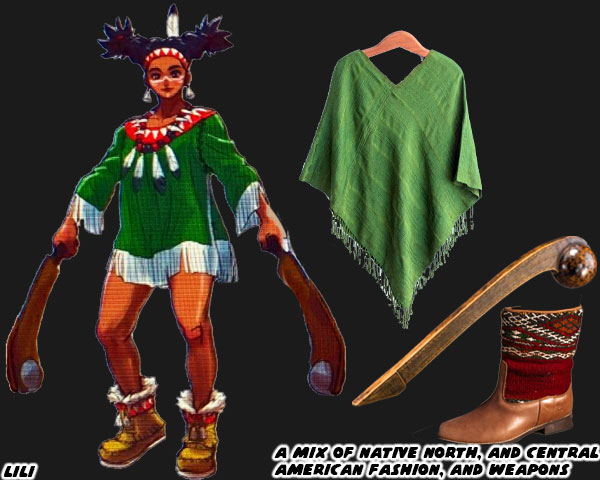
Lili has many of the elements of classic SF designs, but also falls into similar stereotypical traps. Green is her main color, with white, and red accents. I hope that the people reading this realize that she is literally wearing the colors of the Mexican flag. On top of her face paint, and native headdress she is fighting with a club. The cuauhololli, was a club used in Mesoamerica. Here’s the thing that you want to avoid if you are a character designer. It’s something that doesn’t just happen to the people at Capcom, but at other game, and animation studios the world over. Lili, T. Hawk, and other native-styled characters are usually a mix of different regions. They may be wearing clothing from desert, jungle, or mountain environments at the same time. This includes face paint, tattoos, or markings from different tribes, cultures, and even historical periods. Lili’s outfit Inspired in part by Mayan fashion, which is more Central American, than Mexican. The Aztec, and Mayan cultures did not exist at the same time, nor in the same part of Mexico. Many character artists don’t necessarily know this, but lack of knowledge is not an excuse for coloring all natives with one brush. There were hundreds, if not thousands of unique indigenous tribes in North, Central, and South America. Lili is an okay design, much better than the joke characters featured in SF IV, or the cannibal featured in SFV.
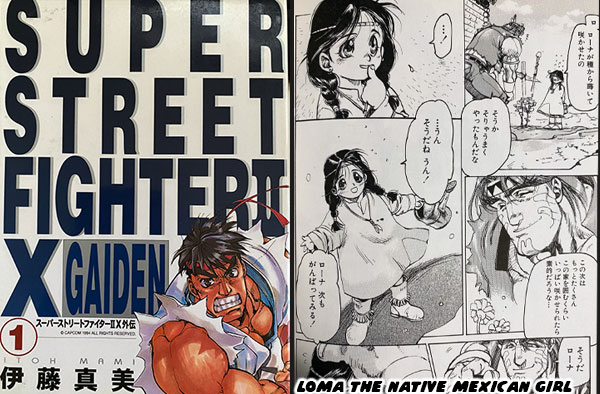
When I first saw Lili I didn’t think she was Noembelu, instead I thought she was an older version of a character featured in Super Street Fighter II X Gaiden. The anthology from Gamest comics was created by Masami “Mami” Itoh. It was one of the best series filling in the events of Super SFII. In one chapter we see T. Hawk, and the few remaining members of his tribe on a reservation. A tiny girl named Loma is introduced. She calls T. Hawk uncle and wants to make flowers bloom in the dry valley. She was an adorable design, with a simple native dress, and large expressive eyes. I thought that it would be great if this little girl had grown up to be a fighter like her uncle. It wouldn’t be the first time that a manga artist had created a character that appeared later in the SF series. Masahiko Nakahira invented Karin Kanzuki, the rival for Sakura in the pages of Sakura Ganbare!. Perhaps SF6 Designer Yusuke Hashimoto might be able to retcon her into the story. There’s still time. What I’m getting at is that the design had been seen before. It was a bit safe, but I understand too that Lili could have been a lot worse.
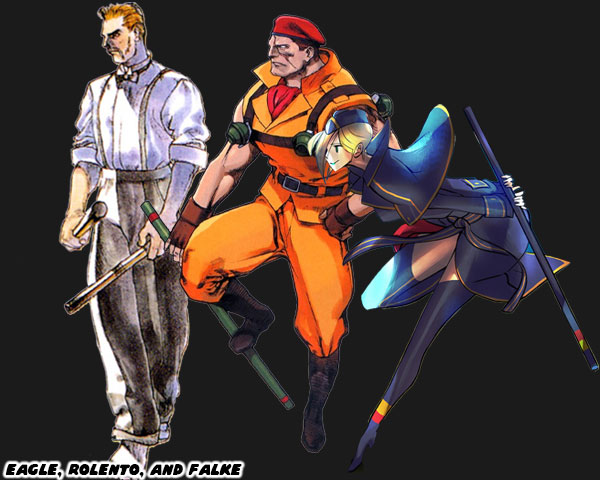
I’m not mad that she fights with a weapon. It makes sense if characters her size need the help of a weapon. Lili wouldn’t stand a chance against someone as massive as Zangief, but a stone, and hardwood club would be a great equalizer. In addition to that there have been several fighters that used weapons in the series. This goes all the way back to Eagle in the original Street Fighter. He fought with two clubs. The military leader Rolento appeared in both Final Fight, and Street Fighter Zero. He fought with a staff, as did Falke from Street Fighter V. I’m eager to see what moves, and special attacks are assigned to Lili. I’m hoping that her alternate costumes are more grounded in reality, like Luke, or Kimberly. I think it’s okay to move away from native pandering for Mexican characters. What about you? What do you think of this character, and her inclusion? Do you like the leaked designs so far? Is there anyone you’d like me to write up next? Please tell me in the comments section. If you would like to sponsor me please visit my Patreon page and consider donating each month, even as little as $1 would help make better blogs and even podcasts!
follow the Street Writer on Patreon!

Monday, August 15, 2016

Fighting with a disability, part 1...

Fighting games make the fantastic possible, but sometimes they make the real-world fantastic as well. It's one of the reasons we love the genre so much. They can turn a boxer into an unstoppable force of nature, they can turn a wrestler into a cast-iron robot. There is a part of us that believes in these characters because we know there have been men and women throughout history that have done legendary things. One of the things I enjoy most are seeing the unorthodox, whether it's a technique or personality. This time I want to feature fighters that were unique because of their disability. There have been athletes and fighters born with all manner of physical and mental conditions. This did not stop them from achieving personal success and I find their stories inspirational. But what about the fighting game characters with disabilities, what do we know about them? What can they tell us about the developers or nations they came from? I want you to think for a moment about characters in fighting games that were presented with a disability. How many could you name?


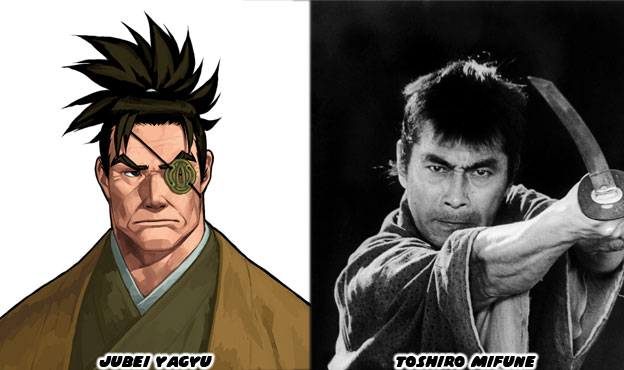
One of the longest-lived character designs, really a trope at this point, is the eyepatch-wearing fighter. Many games have featured a character with this disability. Usually in the form of a villain. But there were a few heroic characters that wore the patch as well. Many of these characters, including men and women, were based on the true story of Jubei Mitsuyoshi. While the actual Jubei had use of both eyes the authors that turned his story into legend often embellished his look and said he wore an eyepatch on the count that he lost it while sparring with his father. It made for an interesting character. One of the first fighting game characters to poach the look was Jubei Yagyu, who appeared in the original Samurai Shodown / Spirits in 1993. What made the series great was that several of the sword masters were inspired by fighters from different feudal eras. The scruffy hair, square chin and rugged looks of the SNK character were no doubt inspired by the actor Toshiro Mifune who played a swordsman in several films, including the phenomenal Seven Samurai.


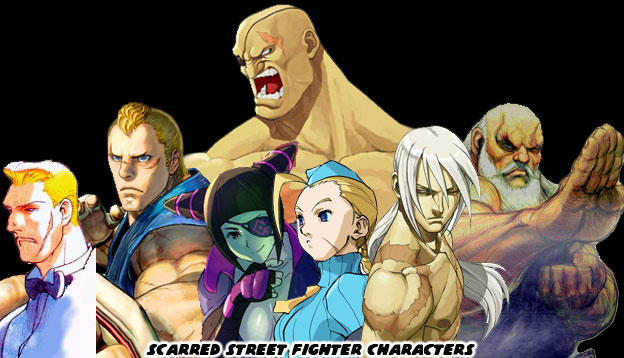
Characters with eye patches were nothing new in the Street Fighter series. The original world champion, Sagat, had a patch. More recently Juri was also presented with an eyepatch as well. When it came to other memorable traits there were several characters covered in massive scars. Eagle, Cammy and Abel were three blondes that each had facial scarring. Abel and Cammy of course also suffered from amnesia and brain washing. These designs and themes would turn up in the Rival School series as well. Some of the characters were covered in many grotesque scars, even over their eyes, like Kairi and Gouken. The bare-handed one-eyed fighter was quickly becoming a trope for the genre.

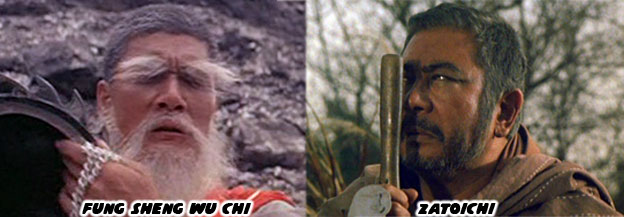
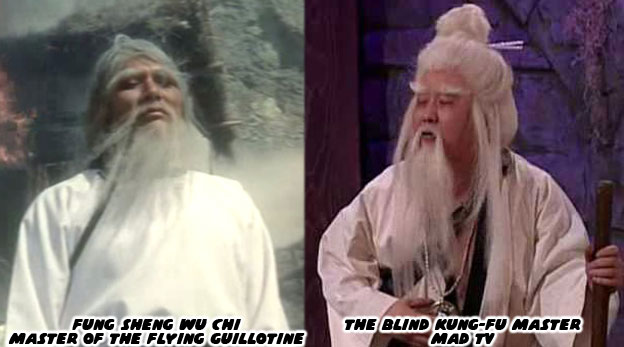
A character blind in one eye was interesting enough but films and comics had turned completely blind characters into stars as well. Hong Kong and Japanese cinema both featured fictional heroes and villains that were both blind but lethal as well. None was more popular than Zatoichi. Created by Kan Shimozawa in the early '60s, the character of Zatoichi engrossed movie audiences for several decades. There was even a television series featuring the character that went on for 100 episodes. Zatoishi was a travelling masseuse and hired sword. His fighting ability seemed superhuman as he would often take on dozens of men at once. He often dealt with and for unsavory characters, including yakuza bosses. There was something sympathetic about the character and the actor. Shintaro Katsu poured himself into the role. Shintaro played the character in almost 30 films. You may have seen a more recent remake of the character featuring cult film star Beat Takeshi. In China there was a villain that was as awe-inspiring as Zatoishi. Unfortunately this character would appear in only one film; the Master of the Flying Guillotine, aka the One Armed Boxer part 2.


Whether the character was a good guy or a bad guy did not matter as much as their martial arts prowess. Zatoishi set an incredible standard. Fung Sheng Wu Chi was just as lethal, taking out masters of various fighting arts with his throwing weapon. The creators of both blind characters demonstrated that their other senses were heightened so that they could anticipate the moves of their opponents. They could hear and even smell opponents, which came in handy while fighting in the pitch black of night. Hong Kong cinema made sure that the myth of the blind master would spread around the world. When the west saw these figures they were engrossed by them. Some of the blind master retellings worked well. Such as the USA take on Zatoishi called Blind Fury. Other retellings were a little more humorous such as the Blind Kung-Fu Master from Mad TV.


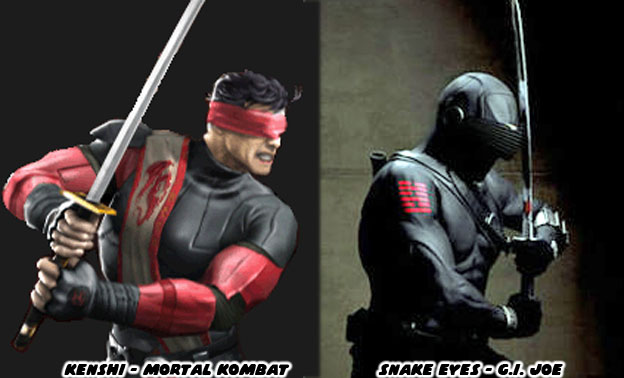
In some instances the blind warrior would become the mentor for the star of the series. Think of the blind Shaolin priest from the classic television series Kung-Fu. Or Jedi Kanan Jarrus from Star Wars Rebels and even Chirrut Imwe from Rogue One. They were great warriors filled with wisdom despite their physical disability. Everything they knew could be passed on to a star pupil that would change the world. The west found these archetypes appealing and began creating new heroes from their legends. In the Mortal Kombat series there was Kenshi Takahashi. He had moves based on Tai Chi and Judo while wielding an ancient sword. Audiences could tell from the red bandage covering his eyes that Kenshi was a blind master. He had telekinetic powers that allowed him to throw opponents around and retrieve his sword without having to move. His initial costume and design was rooted slightly in the comic book and cartoon icon Snake Eyes. While Snake Eyes is not blind, he was disfigured and is mute and wears a mask. He was trained in the secretive arts of ninjitsu and became an elite member of G.I. Joe. He was the deadliest hand-to-hand fighter in the group comprised of the best soldiers of every branch of the armed forces. Mysterious characters like Snake Eyes and Kenshi always go over big in the west.


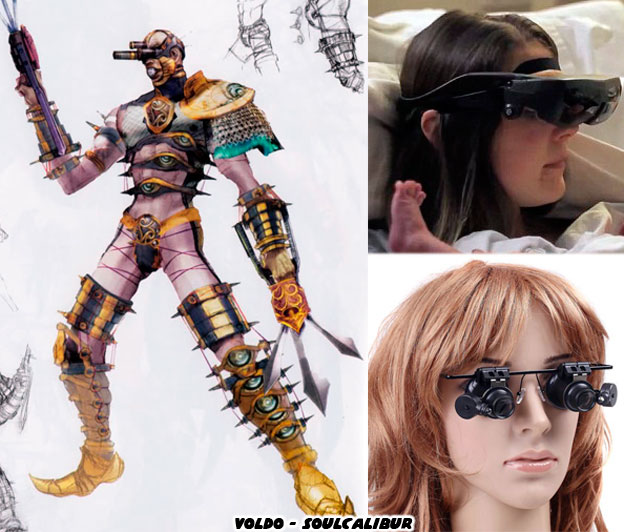
Kenshi was far from being the first blind fighting game character. That honor would go to Voldo. He appeared in Soul Blade / Edge, the first successful 3D sword fighting game from Namco. Voldo was an assassin from Palermo in the Kingdom of Naples from ancient Italy. He fought in an unorthodox style, twisting and flipping at opponents. He fought in an odd costume, wrapped in leather and other bondage elements. He even fought with an unconventional weapon, the three-bladed Jamadhar Katars. Voldo wore a strap across his eyes but he was not completely blind. He suffered from an eye condition that severely limited his vision. Whether it was due to an accident or birth defect he was presented using a telescopic device which allowed him limited visibility. The version he wore predated modern medical devices by more than 400 years. I think this would qualify Voldo as the first and as far as I can remember only character to wear a low vision optical device. Score one for the visually impaired community!


Characters come in a variety of sizes and abilities. We have just talked a little bit about those with disabilities. Differences in physical to mental conditions make certain characters more interesting. They add dimension to the figures and can turn an ordinary fighter into a memorable one. In the next entry we will look at those that had slightly more physical challenges. I hope to see you back for that! As always if you would like to sponsor me please visit my Patreon page and consider donating each month, even as little as $1 would help make better blogs and even podcasts!

follow the Street Writer on Patreon!