Showing posts with label soul calibur. Show all posts

Monday, November 18, 2024

Freeze frame, my poster collection, part 9…

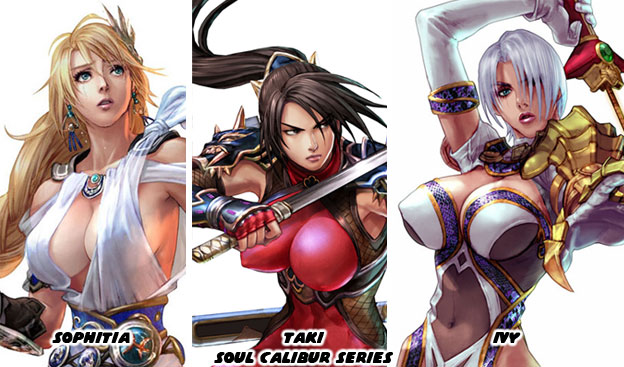
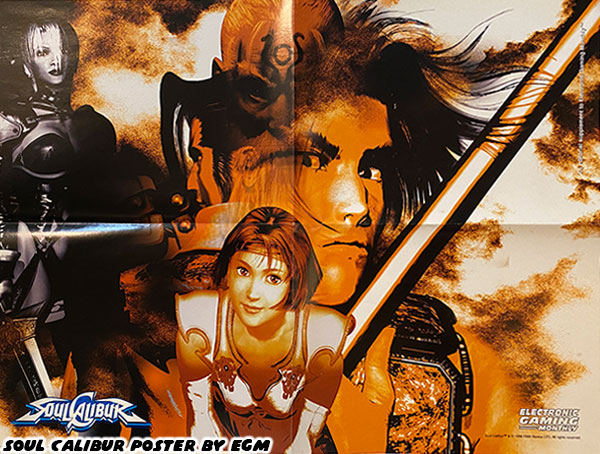
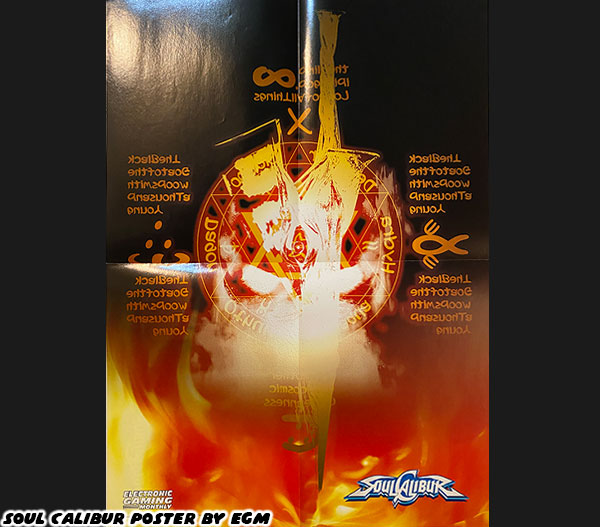
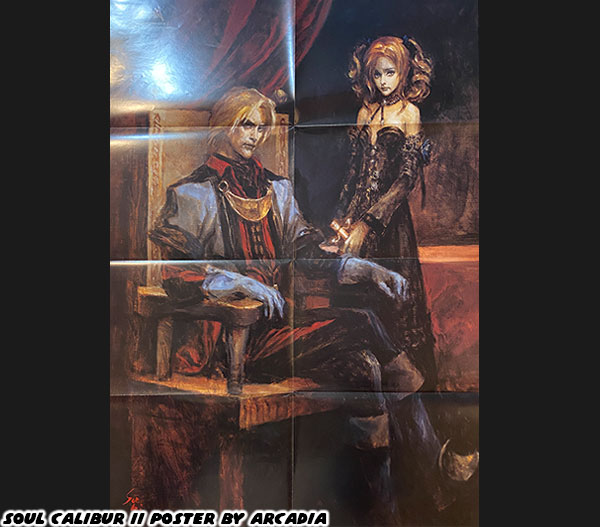
Yesterday was my birthday, and it was amazing! I am grateful for all my friends, and family. I'll talk about the goodies I got at some point in the future. This is why today’s poster lineup is pretty short. You know I love fighting games. Here’s a few gems from the Soul Calibur franchise.

I wish Namco would reboot the series, however the Namco of the ‘80s and ‘90s is nothing like the Namco of today.

It’s a miracle that Tekken is still going. I’m sure that series would have been imploded if not for the advocacy of Katsuhiro Harada. He’s keeping that company more relevant in the fighting game community than they’d like to admit.

Are there any fighting games that you wish would be rebooted? I’d like to read about it in the comments section. As always if you would like to sponsor me please visit my Patreon page and consider donating each month, even as little as $1 would help make better blogs and even podcasts!
follow the Street Writer on Patreon!

Monday, August 15, 2016

Fighting with a disability, part 1...

Fighting games make the fantastic possible, but sometimes they make the real-world fantastic as well. It's one of the reasons we love the genre so much. They can turn a boxer into an unstoppable force of nature, they can turn a wrestler into a cast-iron robot. There is a part of us that believes in these characters because we know there have been men and women throughout history that have done legendary things. One of the things I enjoy most are seeing the unorthodox, whether it's a technique or personality. This time I want to feature fighters that were unique because of their disability. There have been athletes and fighters born with all manner of physical and mental conditions. This did not stop them from achieving personal success and I find their stories inspirational. But what about the fighting game characters with disabilities, what do we know about them? What can they tell us about the developers or nations they came from? I want you to think for a moment about characters in fighting games that were presented with a disability. How many could you name?
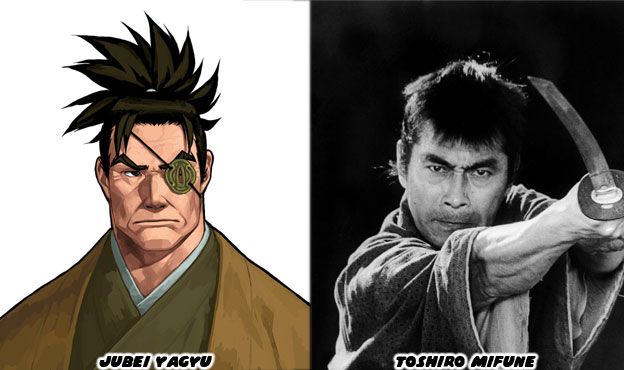
 

One of the longest-lived character designs, really a trope at this point, is the eyepatch-wearing fighter. Many games have featured a character with this disability. Usually in the form of a villain. But there were a few heroic characters that wore the patch as well. Many of these characters, including men and women, were based on the true story of Jubei Mitsuyoshi. While the actual Jubei had use of both eyes the authors that turned his story into legend often embellished his look and said he wore an eyepatch on the count that he lost it while sparring with his father. It made for an interesting character. One of the first fighting game characters to poach the look was Jubei Yagyu, who appeared in the original Samurai Shodown / Spirits in 1993. What made the series great was that several of the sword masters were inspired by fighters from different feudal eras. The scruffy hair, square chin and rugged looks of the SNK character were no doubt inspired by the actor Toshiro Mifune who played a swordsman in several films, including the phenomenal Seven Samurai.
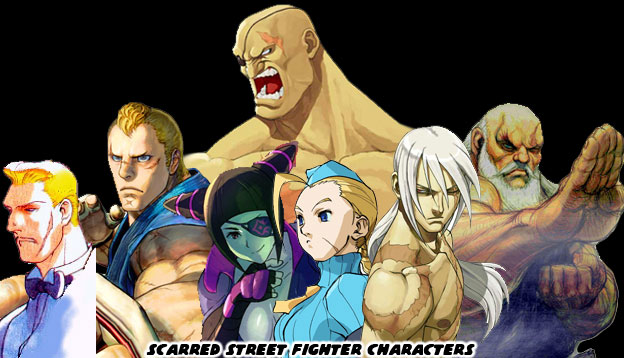
   

Characters with eye patches were nothing new in the Street Fighter series. The original world champion, Sagat, had a patch. More recently Juri was also presented with an eyepatch as well. When it came to other memorable traits there were several characters covered in massive scars. Eagle, Cammy and Abel were three blondes that each had facial scarring. Abel and Cammy of course also suffered from amnesia and brain washing. These designs and themes would turn up in the Rival School series as well. Some of the characters were covered in many grotesque scars, even over their eyes, like Kairi and Gouken. The bare-handed one-eyed fighter was quickly becoming a trope for the genre.

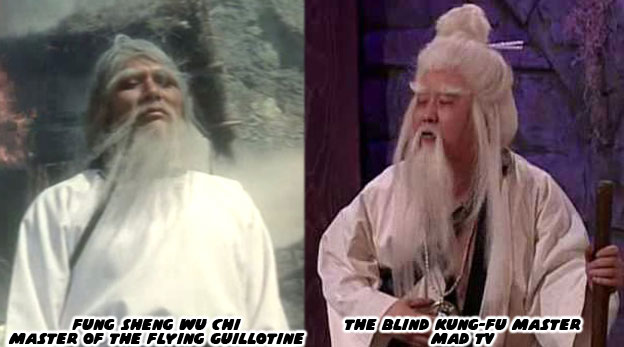
A character blind in one eye was interesting enough but films and comics had turned completely blind characters into stars as well. Hong Kong and Japanese cinema both featured fictional heroes and villains that were both blind but lethal as well. None was more popular than Zatoichi. Created by Kan Shimozawa in the early '60s, the character of Zatoichi engrossed movie audiences for several decades. There was even a television series featuring the character that went on for 100 episodes. Zatoishi was a travelling masseuse and hired sword. His fighting ability seemed superhuman as he would often take on dozens of men at once. He often dealt with and for unsavory characters, including yakuza bosses. There was something sympathetic about the character and the actor. Shintaro Katsu poured himself into the role. Shintaro played the character in almost 30 films. You may have seen a more recent remake of the character featuring cult film star Beat Takeshi. In China there was a villain that was as awe-inspiring as Zatoishi. Unfortunately this character would appear in only one film; the Master of the Flying Guillotine, aka the One Armed Boxer part 2.
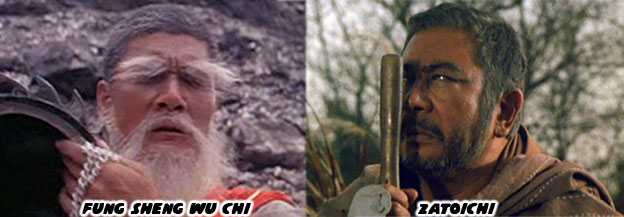
 

Whether the character was a good guy or a bad guy did not matter as much as their martial arts prowess. Zatoishi set an incredible standard. Fung Sheng Wu Chi was just as lethal, taking out masters of various fighting arts with his throwing weapon. The creators of both blind characters demonstrated that their other senses were heightened so that they could anticipate the moves of their opponents. They could hear and even smell opponents, which came in handy while fighting in the pitch black of night. Hong Kong cinema made sure that the myth of the blind master would spread around the world. When the west saw these figures they were engrossed by them. Some of the blind master retellings worked well. Such as the USA take on Zatoishi called Blind Fury. Other retellings were a little more humorous such as the Blind Kung-Fu Master from Mad TV.


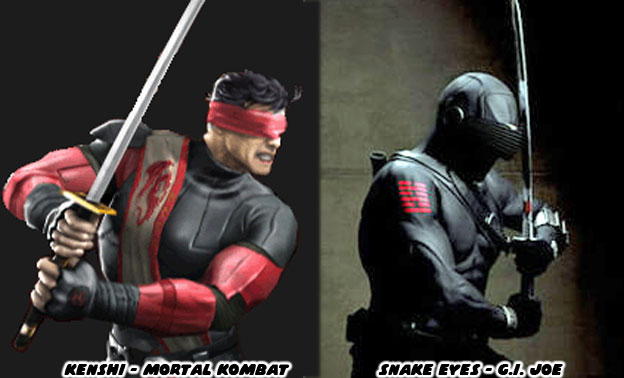
In some instances the blind warrior would become the mentor for the star of the series. Think of the blind Shaolin priest from the classic television series Kung-Fu. Or Jedi Kanan Jarrus from Star Wars Rebels and even Chirrut Imwe from Rogue One. They were great warriors filled with wisdom despite their physical disability. Everything they knew could be passed on to a star pupil that would change the world. The west found these archetypes appealing and began creating new heroes from their legends. In the Mortal Kombat series there was Kenshi Takahashi. He had moves based on Tai Chi and Judo while wielding an ancient sword. Audiences could tell from the red bandage covering his eyes that Kenshi was a blind master. He had telekinetic powers that allowed him to throw opponents around and retrieve his sword without having to move. His initial costume and design was rooted slightly in the comic book and cartoon icon Snake Eyes. While Snake Eyes is not blind, he was disfigured and is mute and wears a mask. He was trained in the secretive arts of ninjitsu and became an elite member of G.I. Joe. He was the deadliest hand-to-hand fighter in the group comprised of the best soldiers of every branch of the armed forces. Mysterious characters like Snake Eyes and Kenshi always go over big in the west.
   

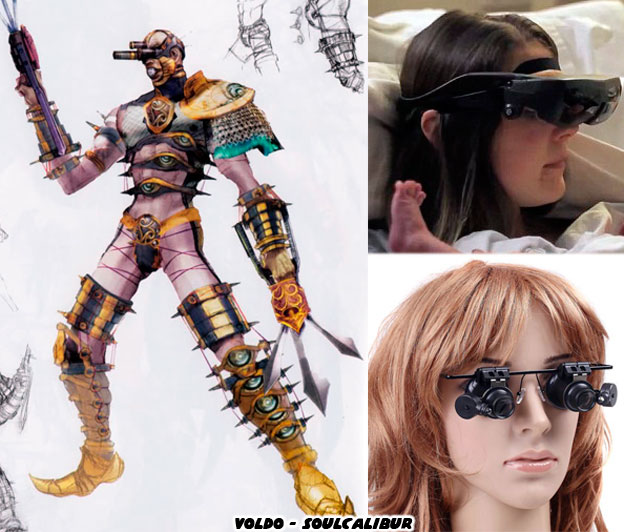
Kenshi was far from being the first blind fighting game character. That honor would go to Voldo. He appeared in Soul Blade / Edge, the first successful 3D sword fighting game from Namco. Voldo was an assassin from Palermo in the Kingdom of Naples from ancient Italy. He fought in an unorthodox style, twisting and flipping at opponents. He fought in an odd costume, wrapped in leather and other bondage elements. He even fought with an unconventional weapon, the three-bladed Jamadhar Katars. Voldo wore a strap across his eyes but he was not completely blind. He suffered from an eye condition that severely limited his vision. Whether it was due to an accident or birth defect he was presented using a telescopic device which allowed him limited visibility. The version he wore predated modern medical devices by more than 400 years. I think this would qualify Voldo as the first and as far as I can remember only character to wear a low vision optical device. Score one for the visually impaired community!
 

Characters come in a variety of sizes and abilities. We have just talked a little bit about those with disabilities. Differences in physical to mental conditions make certain characters more interesting. They add dimension to the figures and can turn an ordinary fighter into a memorable one. In the next entry we will look at those that had slightly more physical challenges. I hope to see you back for that! As always if you would like to sponsor me please visit my Patreon page and consider donating each month, even as little as $1 would help make better blogs and even podcasts!
follow the Street Writer on Patreon!

Monday, July 21, 2014

The Ridge Racer Legacy, part 14...

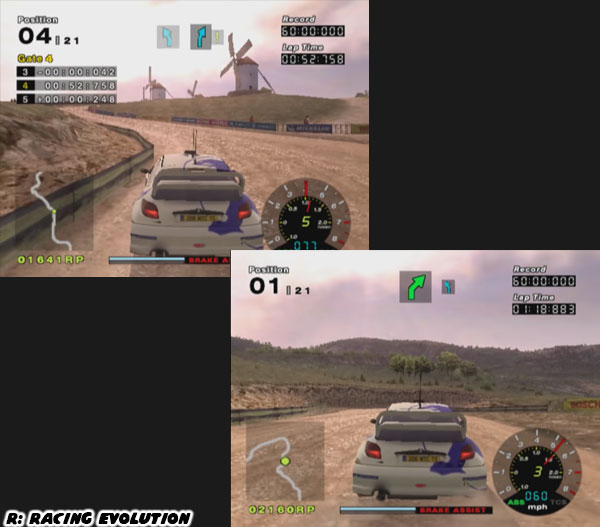
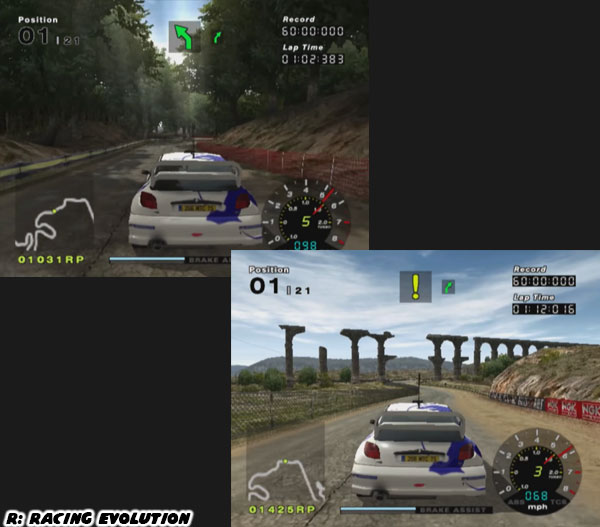
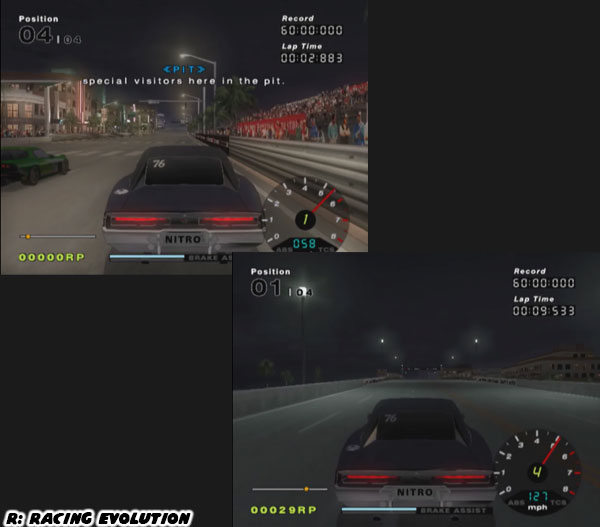
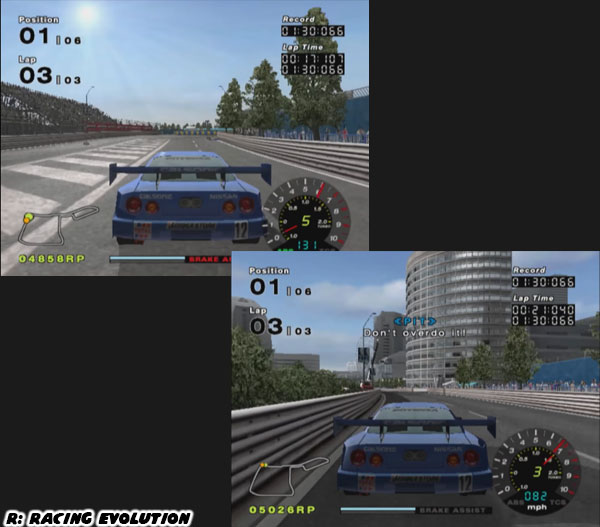
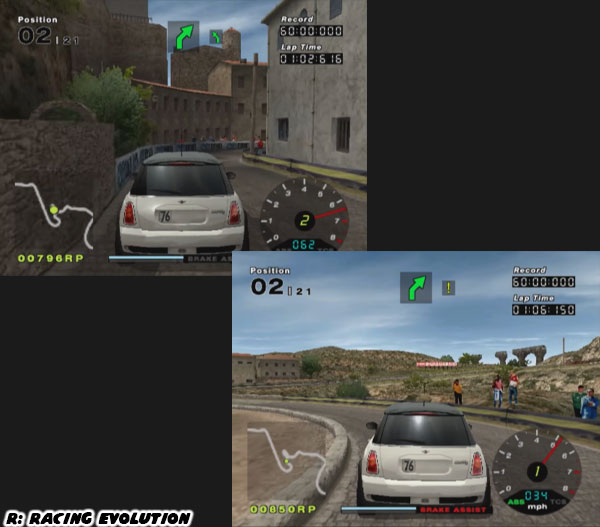
The first issue that long-time Ridge Racer fans had with R: Racing Evolution (RRE) was how Namco had tried to distance themselves from their arcade legacy. The studio went for a sim experience regarding the physics and control of the cars. They also licensed actual cars instead of using the timeless racers that they had spent a decade refining. Namco had done a great job capturing the handling of different classes of cars and creating virtual tracks to race them on. Yet they were going after the market that Gran Turismo had cultivated.

Sony's Polyphony Studio had spent years making each generation of the game superior to the previous in every aspect. The obsession to detail was well known to fans of Polyphony. The producers were known for fitting microphones inside and outside of cars as they raced them over different terrain just to they could capture authentic sounds. They would travel the world and meet with car designers and even the people that sewed the upholstery for the seats just to gain an ounce of knowledge that they could reflect in the game. Gran Turismo 3 A-Spec had been released in 2001, a few years before R: Racing Evolution had come out, yet it had more than four times the number of race cars. Polyphony had set the bar and the best Namco could do was try to meet it because they would never be able to exceed it.

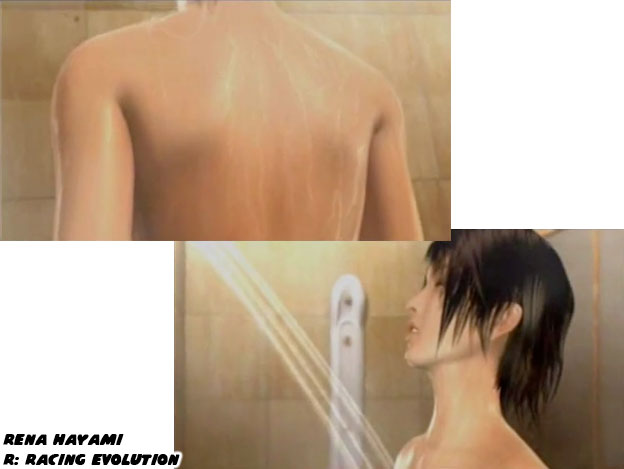
The title of the game also did not sit favorably with audiences. It featured Rena Hayami, an EMT driver for Ridge City. She represented the hometown of Ridge Racer but Namco could not bring themselves to call the game Ridge Racer 6. It was as if they lacked faith in their concept. Where the game really began to fall apart was in the treatment of the main characters in Racing Life mode. In the previous blogs I applauded Namco for having the courage to make a female the main character and the insight for the villain to be a corporation. Yet I should have known better. As the game progressed it became more and more obvious why the designers at Namco had selected a female lead and female rival for the game.

It would be hard to defend some of the cinemas featured in the game. I mean what purpose would it serve to have a (non-nude) shot of Rena taking a shower after a race? If the star of the game were a male chances are this scene wouldn't have made the cut. I understand that sex sells and if this were a movie about a female race car driver then the director would have done the same thing. But this was a game after all and scenes like this did nothing to advance the plot. When I was younger these scenes didn't mean as much. As I got older and wiser (and got married) I suddenly had a daughter that I had to be accountable for. It was then that I began taking another look at the way women had been presented in the game. I could show my daughter how cool it was that Rena went from driving an ambulance and getting a job offer as a professional race car driver. She was a role-model at that point. Yet a few races into the game the next time we see her she is naked. How am I supposed to justify the decision to do that in a racing game?

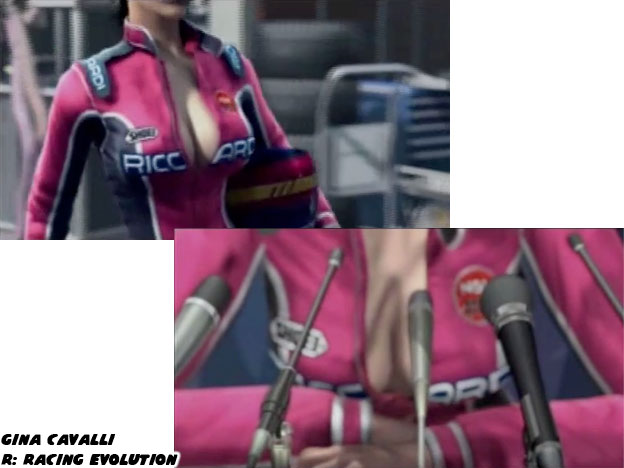
Things were bad before the shower scene actually. The very first time players were introduced to rival Gina Cavalli the camera was fixated on her cleavage. Every scene featuring the character was framed to make sure that her boobs were in the shot. Both Gina and Rena actually wore their racing suit zipped down to reveal their bust line. Every other driver and mechanic was zipped up of course. Rena had a modest black bra for everyone to see while I think Gina was pretty much nude under her suit. I should have been celebrating the decision by Namco to introduce a Spanish female main character into canon. Different ethnic groups and nationalities were and continued to be sorely underrepresented in games after all. While I could tell my daughter that Namco once made a racing game where the two main characters were females I would be ashamed to show her how they were represented.

There were other great games that were hampered by what audiences perceived. For example Marc Ecko's Getting Up was a great narrative on graffiti culture as well as corporate and political corruption. Yet before I could show people the actual graffiti portions of the game I had to spend the majority of the time sneaking up on cops and smashing paint cans on the back of their heads. A blow like that would more likely kill a person than knock them out. How was I supposed to convince viewers of the merits of the game if all they saw was violence instead of art? A similar dilemma had happened with RRE. The racing portions were well done but the only thing that would stick out to viewers (no pun intended) would be the boobs.

It wasn't the first time that Namco, or other Japanese studios for that matter, had been fixated on breasts. For example the Dead or Alive fighting game series by Tecmo was notorious for its "jiggling" breast physics and the original Killer Instinct by Rare featured the character Orchid that would flash her breasts at opponents and give them a heart attack. Pandering to the masses had become the rule rather than the exception in other Namco titles. In the Tekken Tag Tournament 2 they featured rapper Snoop Dog and his own level, The scantily clad women dancing at his side would have been typical in one of his music videos, where Namco really went for exploitation was in offering 150 different bikinis that players could earn for their fighters.

The shorts and loin cloths they put on the male character were tame compared to the strings that made up some of the female costumes. Sex sold in the short run but only substance could sustain a franchise. Many of the female sword fighters in Namco's Soul Calibur series had become more and more busty as the games progressed. The outfits of many of the characters became tighter and more revealing, making Gina seem modest by comparison. The outrageous bust sizes gave the mostly male fan base a reason to overlook the lack of gameplay innovation through the series. Namco was guilty of following the trends of their contemporaries rather than relying on the strength of their developers.

The studio could not manage to win over audiences with RRE despite the number of innovative ideas they had brought console racers. It was a combination of things that cost the publisher from having a hit on their hands. Competing against Gran Turismo was a major problem, but not capitalizing on the Ridge Racer name and trying to inject sex into an otherwise well laid-out plot had doomed the game from the onset. Namco had actually planned to feature Rena and Gina in several other titles if RRE had become a hit. They would continue to use the characters to sell future versions of Ridge Racer, with Gina being the cover star in the Nintendo DS release of the game. Yet any further developments with the characters and teams would be highly unlikely.

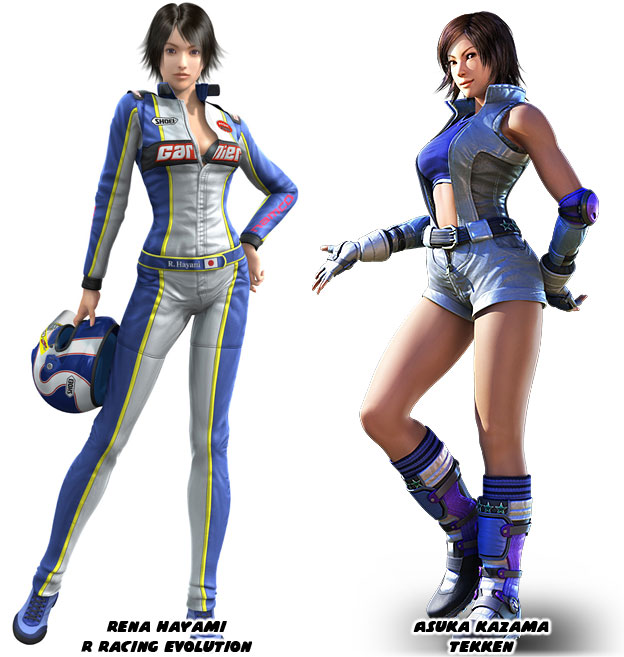
The studio did at least develop a new character inspired by Rena a year after RRE was released. Fans of Tekken 5 noticed that Asuka Kazama had a lot of similarities to Rena. The physical and costume traits were obvious but personality wise they were complete opposites. Asuka was presented as a very immature and ditzy schoolgirl. She ended up playing the fool for the rich schoolgirl Emilie "Lili" De Rochefort. It was a shame that Namco could not find a similar use for Asuka. Her brother Jin was a main character in the series and ran the Mishima Zaibatsu whereas she had been relegated to sidekick status. In fact the objectification was a little more insulting to female fans because Asuka's breasts were the punchline in two different Tekken endings. By comparison Rena was presented with much more confidence and maturity whether she was behind the wheel of an ambulance or race car.

Women had actually been an important part of the Ridge Racer legacy yet Namco did not really know how to present them within the context of the races themselves. The next blog will look at the muses behind the Ridge Racer series. As always if you would like to sponsor me please visit my Patreon page and consider donating each month, even as little as $1 would help make better blogs and even podcasts!
follow the Street Writer on Patreon!