A blog about my interests, mainly the history of fighting games. I also talk about animation, comic books, car culture, and art. Co-host of the Pink Monorail Podcast. Contributor to MiceChat, and Jim Hill Media. Former blogger on the old 1UP community site, and Capcom-Unity as well.
Showing posts with label cammy. Show all posts
Wednesday, May 13, 2026
Bookmark This Page; Women in fighting games
I love to write about fighting games, and fighting game characters. If you want a collection of articles about women in fighting games then Bookmark This Page.
Saturday, June 25, 2022
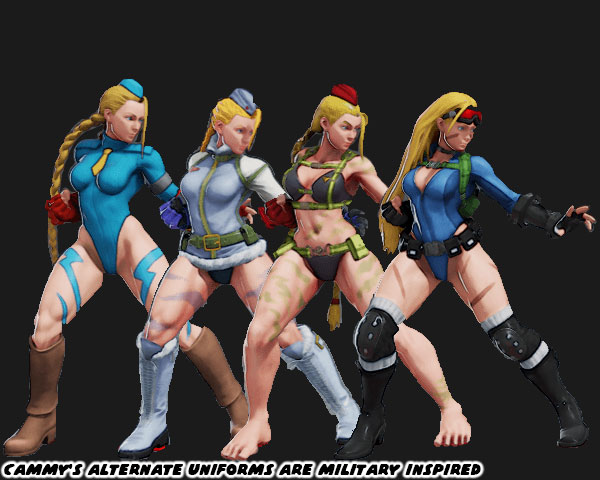
Cammy gets an entirely new look for Street Fighter 6, let's see how
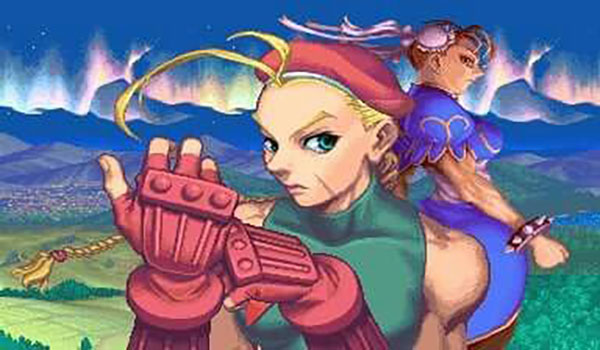
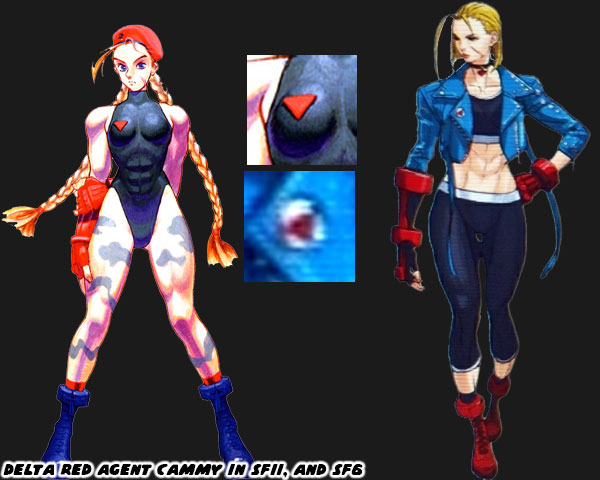
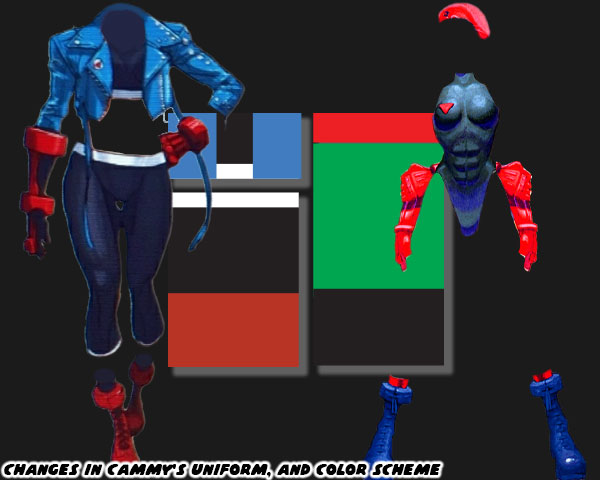
In the previous blog I mentioned that Street Fighter 6 Director Takayuki Nakayama, Producer Kazuhiro Tsuchiya, and Designer Yusuke Hashimoto had decided to redo the costumes of every returning character in the franchise. Some of the designs are obvious, but work in the context of the fighter, like Zangief having red pants, instead of red wrestling trunks. Even the ones that look the same, like Juri, and Rashid, are actually new fits. The changes to the cut, and color for their uniform that I think makes for better overall designs. However I cannot say the same for every returning character. The more casual designs I think hurt the impact of a classic fighter. This was the case with Ken, as his tee shirt, jacket, and boots seemed out of place from his previous red karate gi. I think the same argument could be made for Cammy White.


Wednesday, June 8, 2022
Coloring the action, how color impacted the development of fighting games
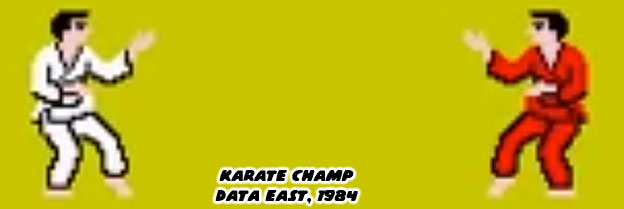
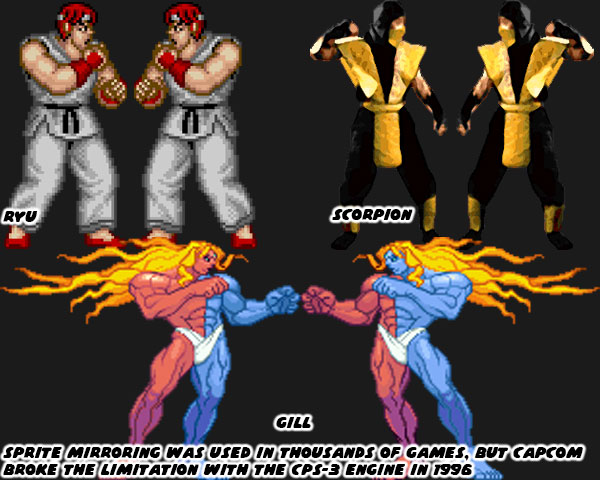
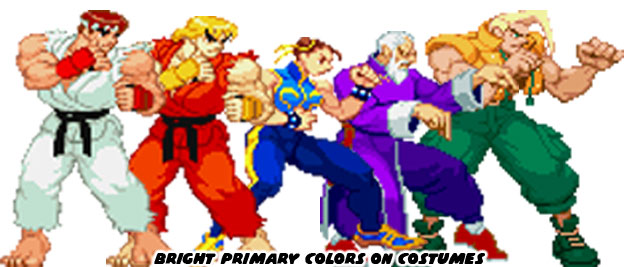
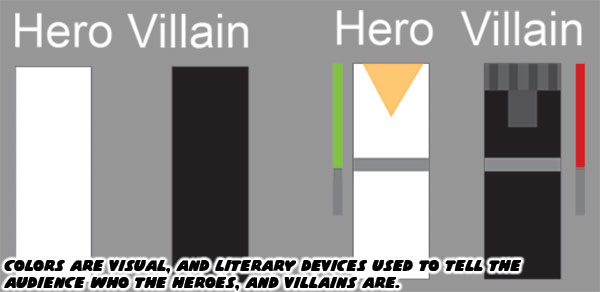
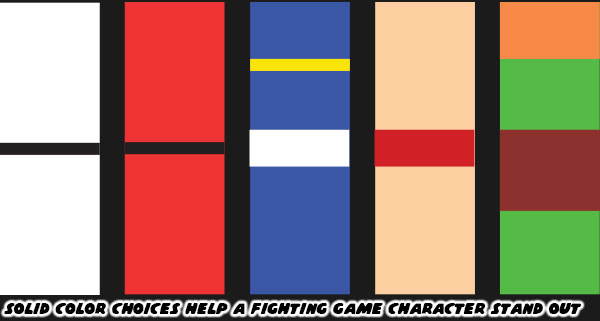
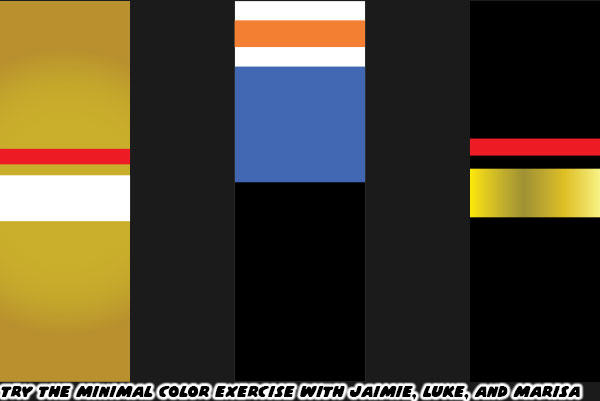
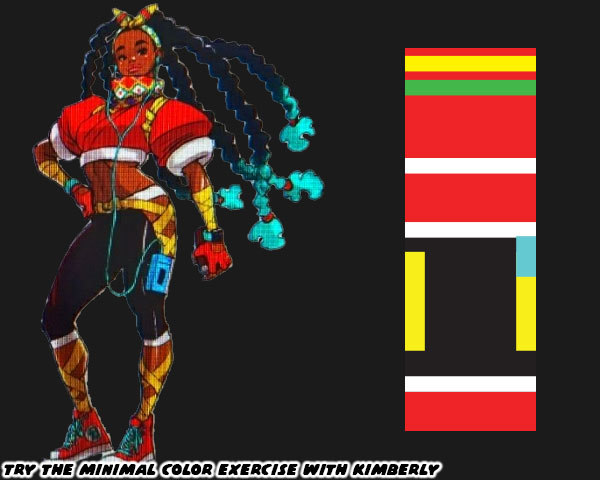
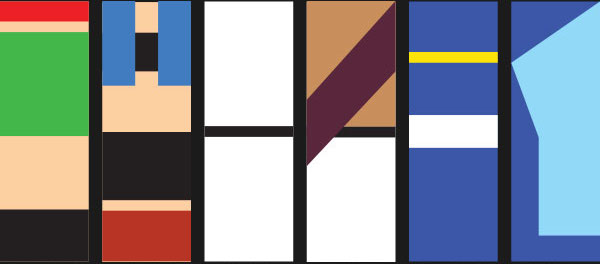
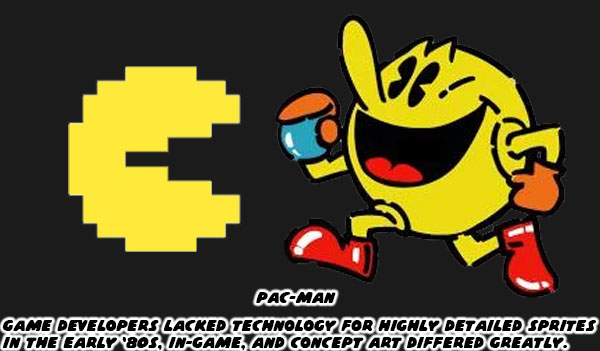
This entry is written with fighting game fans, and budding game designers in mind. If you take away anything today I want you to remember that the use of color may be the most important thing when designing fighting game characters. To expand on the idea, the stronger the color scheme, the bigger the impact it will have on audiences. This goes back to the birth of the genre. In the late ‘70s, and early ‘80s game designers fought the limitations of hardware, and software to bring their ideas to life. Studios like Atari, and Namco created animation through the use of sprites, instead of paint, on cells. Simple shapes, and two, or three frames of data were all they could apply on characters, and enemies. Despite the memory constraints the limited animation brought games to life. Look at a character like Pac-Man. While the game was not the first breakout hit, the character could be considered the original gaming mascot. The character was fairly three dimensional in the eyes of creator Toru Iwatani. You could see this in the official character art, cabinet, and marquee art. The actual sprite of Pac-Man was another story.

![]()


Wednesday, June 13, 2018
30 years of Street Fighter, 30 Days of Characters; #18
If you've been playing Street Fighter for some time you know when some characters are fan favorites and others not so much. Cammy entered the Street Fighter universe like a wrecking ball. The tiny blonde secret agent from Great Britain was an immediate success. There were a number of reasons why she took off in popularity. She debuted in 1993 with the release of Super Street Fighter II. She was accompanied by Fei Long, Dee Jay and T. Hawk. As you probably know the four characters were originally going to appear in Street Fighter III. Capcom had a runaway hit when Street Fighter II debuted in 1991. SNK was breathing down their neck with the Fatal Fury and Art of Fighting series. The US was making waves with Mortal Kombat. Capcom needed to stay a step ahead of the competition so they released upgrade kits for Street Fighter II, known as the Turbo and Championship versions of the game. These updates balanced the game play, added the ability to play as boss characters and introduced other new features. It was much cheaper for an arcade to get an upgrade than to outright buy a new game. Plans for Street Fighter III were scrubbed and the characters meant for it was rolled into the Super upgrade.
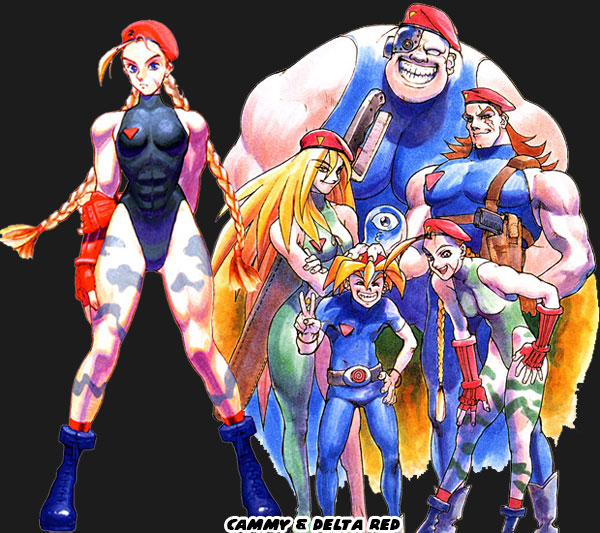
So what was it about Cammy that made her stand out in Super Street Fighter II? She was originally going to be the female lead in Street Fighter III. She was designed to be a replacement for Chun-Li. As such she had to be as powerful and visually memorable. Only Ken and Ryu were scheduled to return in SF III. The rest of the cast would be created entirely from scratch. Much more forethought was given to Cammy than any other new fighter and it showed. The choice of color, the cut of her uniform, the use of metal gauntlets and heavy boots all mirrored the design elements from Chun-Li. When Chun-Li was in the design phase she looked like a generic female character. The studio had to go back and rework her costume and background in order to make her interesting. With a template in place Cammy was much easier to design.
Cammy is a member of Delta Red, an elite special forces unit from overseas. Chances are her teammates would have been more involved in the plot of Street Fighter III, possibly even one or two might have been made playable. Instead they were reworked to fit into the story of Street Fighter II. Cammy's strength and speed is explained as she is a product of Delta Red and also an agent of Shadowlaw as well. She was brainwashed at the time but received additional training from the main villains in the series. As far as I can recall Cammy is the only character in the game series to actually appear on both sides of the Shadowlaw conflict. This unique origin combined with a solid design and some great moves made her stand out in the Super Street Fighter II upgrade. After 25 years she enjoys continuing popularity in the series. Like the most unique characters in the series Cammy is here to stay. I look forward to seeing how she evolves over the next 30 years. As always if you enjoyed this blog and would like to sponsor me please visit my Patreon page and consider donating each month, even as little as $1 would help make better blogs and even podcasts!
Monday, August 15, 2016
Fighting with a disability, part 1...
Fighting games make the fantastic possible, but sometimes they make the real-world fantastic as well. It's one of the reasons we love the genre so much. They can turn a boxer into an unstoppable force of nature, they can turn a wrestler into a cast-iron robot. There is a part of us that believes in these characters because we know there have been men and women throughout history that have done legendary things. One of the things I enjoy most are seeing the unorthodox, whether it's a technique or personality. This time I want to feature fighters that were unique because of their disability. There have been athletes and fighters born with all manner of physical and mental conditions. This did not stop them from achieving personal success and I find their stories inspirational. But what about the fighting game characters with disabilities, what do we know about them? What can they tell us about the developers or nations they came from? I want you to think for a moment about characters in fighting games that were presented with a disability. How many could you name?
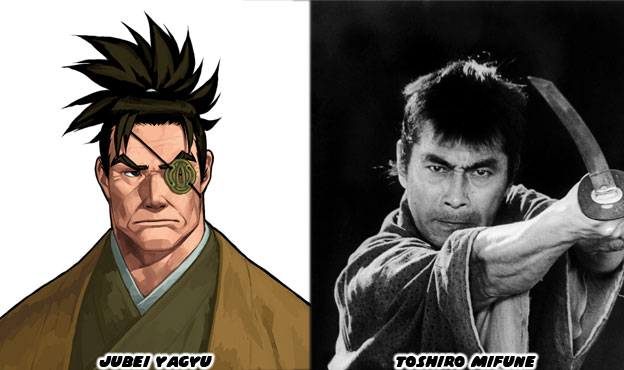
One of the longest-lived character designs, really a trope at this point, is the eyepatch-wearing fighter. Many games have featured a character with this disability. Usually in the form of a villain. But there were a few heroic characters that wore the patch as well. Many of these characters, including men and women, were based on the true story of Jubei Mitsuyoshi. While the actual Jubei had use of both eyes the authors that turned his story into legend often embellished his look and said he wore an eyepatch on the count that he lost it while sparring with his father. It made for an interesting character. One of the first fighting game characters to poach the look was Jubei Yagyu, who appeared in the original Samurai Shodown / Spirits in 1993. What made the series great was that several of the sword masters were inspired by fighters from different feudal eras. The scruffy hair, square chin and rugged looks of the SNK character were no doubt inspired by the actor Toshiro Mifune who played a swordsman in several films, including the phenomenal Seven Samurai.
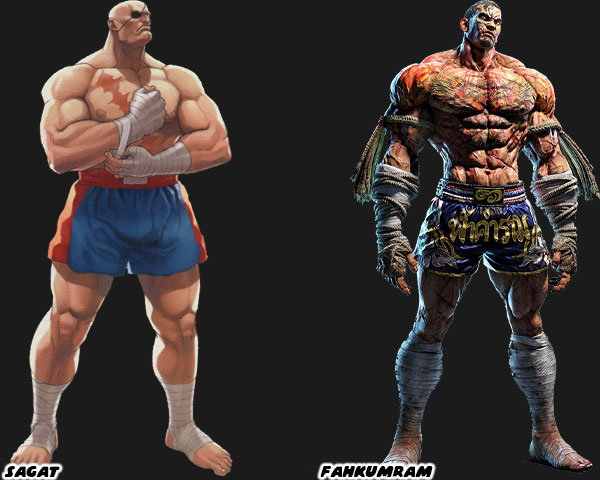
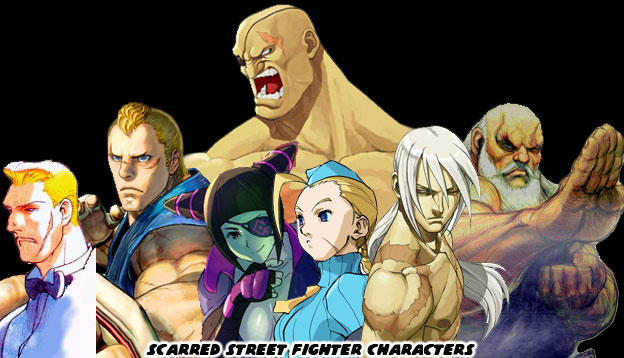
Characters with eye patches were nothing new in the Street Fighter series. The original world champion, Sagat, had a patch. More recently Juri was also presented with an eyepatch as well. When it came to other memorable traits there were several characters covered in massive scars. Eagle, Cammy and Abel were three blondes that each had facial scarring. Abel and Cammy of course also suffered from amnesia and brain washing. These designs and themes would turn up in the Rival School series as well. Some of the characters were covered in many grotesque scars, even over their eyes, like Kairi and Gouken. The bare-handed one-eyed fighter was quickly becoming a trope for the genre.
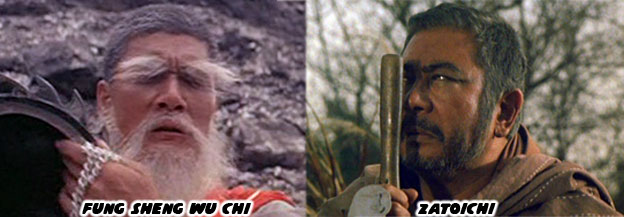
A character blind in one eye was interesting enough but films and comics had turned completely blind characters into stars as well. Hong Kong and Japanese cinema both featured fictional heroes and villains that were both blind but lethal as well. None was more popular than Zatoichi. Created by Kan Shimozawa in the early '60s, the character of Zatoichi engrossed movie audiences for several decades. There was even a television series featuring the character that went on for 100 episodes. Zatoishi was a travelling masseuse and hired sword. His fighting ability seemed superhuman as he would often take on dozens of men at once. He often dealt with and for unsavory characters, including yakuza bosses. There was something sympathetic about the character and the actor. Shintaro Katsu poured himself into the role. Shintaro played the character in almost 30 films. You may have seen a more recent remake of the character featuring cult film star Beat Takeshi. In China there was a villain that was as awe-inspiring as Zatoishi. Unfortunately this character would appear in only one film; the Master of the Flying Guillotine, aka the One Armed Boxer part 2.
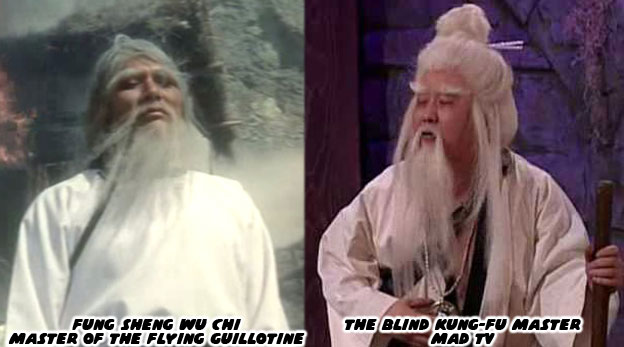
Whether the character was a good guy or a bad guy did not matter as much as their martial arts prowess. Zatoishi set an incredible standard. Fung Sheng Wu Chi was just as lethal, taking out masters of various fighting arts with his throwing weapon. The creators of both blind characters demonstrated that their other senses were heightened so that they could anticipate the moves of their opponents. They could hear and even smell opponents, which came in handy while fighting in the pitch black of night. Hong Kong cinema made sure that the myth of the blind master would spread around the world. When the west saw these figures they were engrossed by them. Some of the blind master retellings worked well. Such as the USA take on Zatoishi called Blind Fury. Other retellings were a little more humorous such as the Blind Kung-Fu Master from Mad TV.
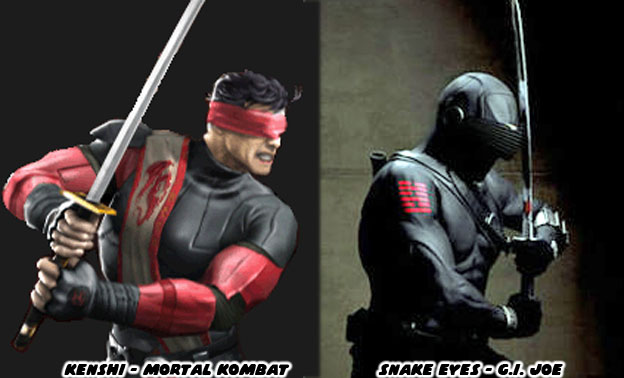
In some instances the blind warrior would become the mentor for the star of the series. Think of the blind Shaolin priest from the classic television series Kung-Fu. Or Jedi Kanan Jarrus from Star Wars Rebels and even Chirrut Imwe from Rogue One. They were great warriors filled with wisdom despite their physical disability. Everything they knew could be passed on to a star pupil that would change the world. The west found these archetypes appealing and began creating new heroes from their legends. In the Mortal Kombat series there was Kenshi Takahashi. He had moves based on Tai Chi and Judo while wielding an ancient sword. Audiences could tell from the red bandage covering his eyes that Kenshi was a blind master. He had telekinetic powers that allowed him to throw opponents around and retrieve his sword without having to move. His initial costume and design was rooted slightly in the comic book and cartoon icon Snake Eyes. While Snake Eyes is not blind, he was disfigured and is mute and wears a mask. He was trained in the secretive arts of ninjitsu and became an elite member of G.I. Joe. He was the deadliest hand-to-hand fighter in the group comprised of the best soldiers of every branch of the armed forces. Mysterious characters like Snake Eyes and Kenshi always go over big in the west.
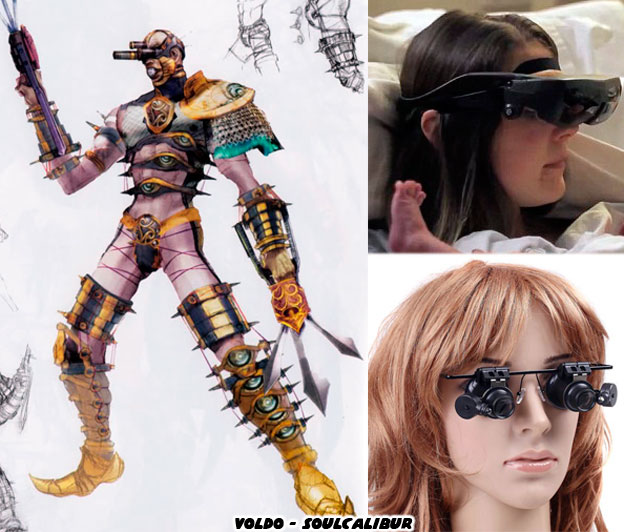
Kenshi was far from being the first blind fighting game character. That honor would go to Voldo. He appeared in Soul Blade / Edge, the first successful 3D sword fighting game from Namco. Voldo was an assassin from Palermo in the Kingdom of Naples from ancient Italy. He fought in an unorthodox style, twisting and flipping at opponents. He fought in an odd costume, wrapped in leather and other bondage elements. He even fought with an unconventional weapon, the three-bladed Jamadhar Katars. Voldo wore a strap across his eyes but he was not completely blind. He suffered from an eye condition that severely limited his vision. Whether it was due to an accident or birth defect he was presented using a telescopic device which allowed him limited visibility. The version he wore predated modern medical devices by more than 400 years. I think this would qualify Voldo as the first and as far as I can remember only character to wear a low vision optical device. Score one for the visually impaired community!
Characters come in a variety of sizes and abilities. We have just talked a little bit about those with disabilities. Differences in physical to mental conditions make certain characters more interesting. They add dimension to the figures and can turn an ordinary fighter into a memorable one. In the next entry we will look at those that had slightly more physical challenges. I hope to see you back for that! As always if you would like to sponsor me please visit my Patreon page and consider donating each month, even as little as $1 would help make better blogs and even podcasts!
One of the longest-lived character designs, really a trope at this point, is the eyepatch-wearing fighter. Many games have featured a character with this disability. Usually in the form of a villain. But there were a few heroic characters that wore the patch as well. Many of these characters, including men and women, were based on the true story of Jubei Mitsuyoshi. While the actual Jubei had use of both eyes the authors that turned his story into legend often embellished his look and said he wore an eyepatch on the count that he lost it while sparring with his father. It made for an interesting character. One of the first fighting game characters to poach the look was Jubei Yagyu, who appeared in the original Samurai Shodown / Spirits in 1993. What made the series great was that several of the sword masters were inspired by fighters from different feudal eras. The scruffy hair, square chin and rugged looks of the SNK character were no doubt inspired by the actor Toshiro Mifune who played a swordsman in several films, including the phenomenal Seven Samurai.
Characters with eye patches were nothing new in the Street Fighter series. The original world champion, Sagat, had a patch. More recently Juri was also presented with an eyepatch as well. When it came to other memorable traits there were several characters covered in massive scars. Eagle, Cammy and Abel were three blondes that each had facial scarring. Abel and Cammy of course also suffered from amnesia and brain washing. These designs and themes would turn up in the Rival School series as well. Some of the characters were covered in many grotesque scars, even over their eyes, like Kairi and Gouken. The bare-handed one-eyed fighter was quickly becoming a trope for the genre.
A character blind in one eye was interesting enough but films and comics had turned completely blind characters into stars as well. Hong Kong and Japanese cinema both featured fictional heroes and villains that were both blind but lethal as well. None was more popular than Zatoichi. Created by Kan Shimozawa in the early '60s, the character of Zatoichi engrossed movie audiences for several decades. There was even a television series featuring the character that went on for 100 episodes. Zatoishi was a travelling masseuse and hired sword. His fighting ability seemed superhuman as he would often take on dozens of men at once. He often dealt with and for unsavory characters, including yakuza bosses. There was something sympathetic about the character and the actor. Shintaro Katsu poured himself into the role. Shintaro played the character in almost 30 films. You may have seen a more recent remake of the character featuring cult film star Beat Takeshi. In China there was a villain that was as awe-inspiring as Zatoishi. Unfortunately this character would appear in only one film; the Master of the Flying Guillotine, aka the One Armed Boxer part 2.
Whether the character was a good guy or a bad guy did not matter as much as their martial arts prowess. Zatoishi set an incredible standard. Fung Sheng Wu Chi was just as lethal, taking out masters of various fighting arts with his throwing weapon. The creators of both blind characters demonstrated that their other senses were heightened so that they could anticipate the moves of their opponents. They could hear and even smell opponents, which came in handy while fighting in the pitch black of night. Hong Kong cinema made sure that the myth of the blind master would spread around the world. When the west saw these figures they were engrossed by them. Some of the blind master retellings worked well. Such as the USA take on Zatoishi called Blind Fury. Other retellings were a little more humorous such as the Blind Kung-Fu Master from Mad TV.
In some instances the blind warrior would become the mentor for the star of the series. Think of the blind Shaolin priest from the classic television series Kung-Fu. Or Jedi Kanan Jarrus from Star Wars Rebels and even Chirrut Imwe from Rogue One. They were great warriors filled with wisdom despite their physical disability. Everything they knew could be passed on to a star pupil that would change the world. The west found these archetypes appealing and began creating new heroes from their legends. In the Mortal Kombat series there was Kenshi Takahashi. He had moves based on Tai Chi and Judo while wielding an ancient sword. Audiences could tell from the red bandage covering his eyes that Kenshi was a blind master. He had telekinetic powers that allowed him to throw opponents around and retrieve his sword without having to move. His initial costume and design was rooted slightly in the comic book and cartoon icon Snake Eyes. While Snake Eyes is not blind, he was disfigured and is mute and wears a mask. He was trained in the secretive arts of ninjitsu and became an elite member of G.I. Joe. He was the deadliest hand-to-hand fighter in the group comprised of the best soldiers of every branch of the armed forces. Mysterious characters like Snake Eyes and Kenshi always go over big in the west.
Kenshi was far from being the first blind fighting game character. That honor would go to Voldo. He appeared in Soul Blade / Edge, the first successful 3D sword fighting game from Namco. Voldo was an assassin from Palermo in the Kingdom of Naples from ancient Italy. He fought in an unorthodox style, twisting and flipping at opponents. He fought in an odd costume, wrapped in leather and other bondage elements. He even fought with an unconventional weapon, the three-bladed Jamadhar Katars. Voldo wore a strap across his eyes but he was not completely blind. He suffered from an eye condition that severely limited his vision. Whether it was due to an accident or birth defect he was presented using a telescopic device which allowed him limited visibility. The version he wore predated modern medical devices by more than 400 years. I think this would qualify Voldo as the first and as far as I can remember only character to wear a low vision optical device. Score one for the visually impaired community!
Characters come in a variety of sizes and abilities. We have just talked a little bit about those with disabilities. Differences in physical to mental conditions make certain characters more interesting. They add dimension to the figures and can turn an ordinary fighter into a memorable one. In the next entry we will look at those that had slightly more physical challenges. I hope to see you back for that! As always if you would like to sponsor me please visit my Patreon page and consider donating each month, even as little as $1 would help make better blogs and even podcasts!
Labels:
abel,
blind,
cammy,
disabled fighters,
eagle,
jubei,
juri,
kairi,
sagat,
samurai spirits,
shodown,
snake eyes,
soul calibur,
street fighter,
voldo
Friday, July 8, 2016
Why is Street Fighter playing with Dolls?
I've been very critical of Yoshinori Ono's direction with the Street Fighter franchise on Capcom-Unity as well as my personal blog. Street Fighter IV and V keep rehashing old characters and old themes which I believe makes them more in tune with the Street Fighter Alpha / Zero series. A "true" sequel should feature a new plot, new characters, new boss and maybe one or two returning faces. It was the rule established in Street Fighter, and observed in Street Fighter II and Street Fighter III. Yet when half the team left Capcom after the development of Super Street Fighter II the studio was left with a void. Remaining senior member Noritaka Funamizu was tasked with creating a new sequel. It was near impossible to do with a lot of the best talent gone. So instead of trying to come up with a new plot, new characters and new boss he went back and connected the various games in the Capcom universe. This way he would not disappoint fans of the franchise by creating a sub-par sequel because technically it was something entirely new. The result, the Street Fighter Zero series was creative genius.
Final Fight, Street Fighter and SF II characters were all part of the same canon. Explaining how the characters crossed paths in between each series was inspired design. The art direction and creative risks they took were bold. Lead artist Bengus created an entirely new look and feel for the cast. They were younger, more cartoonish in proportion and presentation. They looked unlike characters from any other series and really stood out because of this. The entire game was a love letter to the respective franchises and a not so subtle nod to the Street Fighter fandom. As the series progressed it became more and more rooted in dramatic characters and over-the-top plots. Street Fighter was no longer about being the best fighter in a tournament, it was instead about saving the world from Shadowlaw. The fighters became like GI Joe special agents. It worked for the Zero series because it was very cartoonish, very animated. Design elements were pulled from typical anime shows. Otaku or nerd culture became a contributing factor in the design choices. Where I take Mr. Ono to task is that those ideas were fresh in 1995, reusing the formula 20 years later but putting the graphics in 3D was not revolutionary. His ideas of putting oily men, fat men, effeminate men and ugly minority caricatures in the series were poorly conceived.
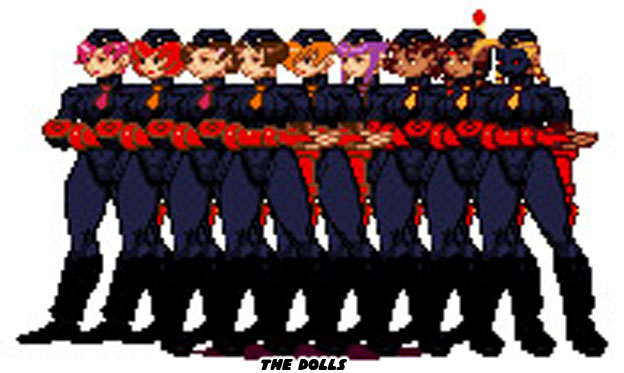
Look back at the legacy that Street Fighter Zero created. The young schoolgirl Sakura would become the breakout star of the game. She was introduced in Street Fighter Zero 2 in 1996. She would be joined by Cammy in Street Fighter Zero (SFZ) 3, released in 1998. She was presented younger than their original Street Fighter II versions. Young female leads were going over well with audiences, Karin Kanzuki (the rival to Sakura), R, Mika, Juni and Juli were also added in SFZ3. The reaction was so well to this influx of female stars that the studio decided to flesh out the origins of Cammy and explain her connection to Shadowlaw. This was when Bengus and the team introduced us to the infamous Dolls.
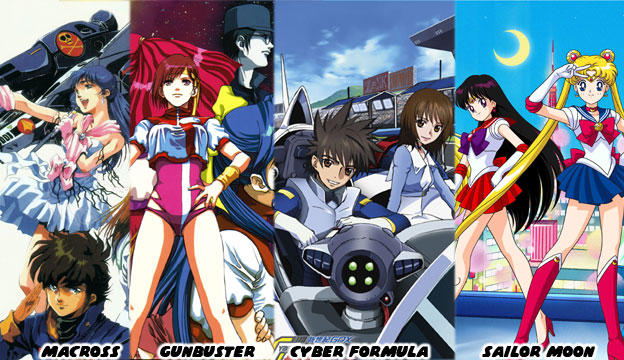
Vega / M. Bison (Dictator) had surrounded himself with young highly trained special agents. Cammy was his star pupil nicknamed Killer Bee. The other Dolls were named after the months of the year. Juni and Juli were German for June and July. Each of them wore tight costumes with small ties on. As if they were some sort of military school uniform. Each Doll was a highly-trained assassin whose appearance was meant to be deceptive. Most were brainwashed and programmed to be specialists, some were naturally gifted, others had gone through genetic modification so that they were stronger or faster than any normal soldier. The girls were around 16-years-old making the Dictator seem like a creep but there was a precedence for his young apprentices. Japanese comics, animated shows and OVAs often revolved around teenage heroes. This went back to the earliest days of Japanese animation. The stars of the shows often tended to be much younger than heroes in western media. Comic book heroes in the USA were often adults and teenagers were sidekicks. That formula was almost opposite in Japan. The greatest pilot, race car driver, magician, or warrior in the stories were usually young and sometimes girls. This made them extremely popular with school-age audiences.
The designers at Capcom were all too familiar with the teenage tradition and created the Dolls as a sort of homage to the female leads in pop culture. Rather than just create a group of Cammy clones they decided that they would each come a different nation, each one would specialize in something. The studio didn't really have enough time to make Juni and Juli more unique than they had planned but the seeds were definitely planted some 18 years ago. Here's some news that certain to make a lot of Street Fighter fans feel old. There is a good chance that many of the new Street Fighter IV and V players were not born when the series began. They might have not even been around when the Alpha series ended or Street Fighter III was released. There are many characters that they are unfamiliar with from games they didn't know existed. It's likely they are wondering where the Dolls featured in Street Fighter V's Story Mode came from.
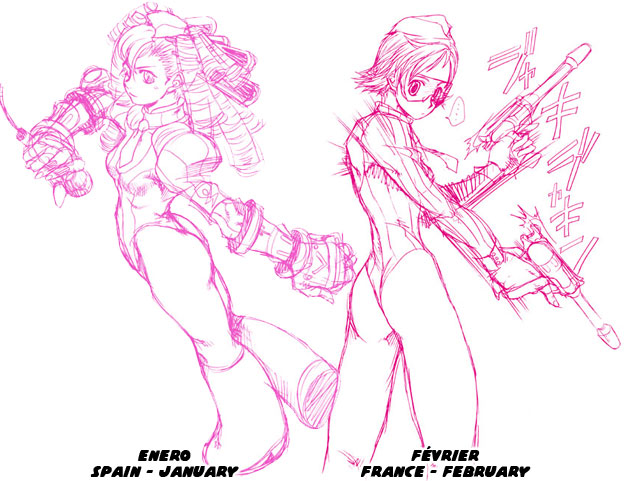
The Dolls had been featured in the Street Fighter comics by Udon and had cameos in the licensed comics in Japan and Hong Kong as well. However I believe that the definitive fan illustrations of the Dolls came from Ataru (NSFW) almost 20 years ago. He took the notes for each character and sketched out versions of each Doll that captured their personality and origin. Enero specialized in communications yet she was presented as a sort of idol character, hence the microphone. Many animé characters want to be idols in their own series. There are models and spokespersons but the singing kind of idol is the most popular. A good portion of the entertainment industry in Asia, including K-Pop from Korea and C-Pop from China, revolves around finding the next idol. Février was an expert at firearms and while she has a more traditional-looking firearm in Street Fighter V in Atatu's version her pistols were more like the science fiction revolvers that could be found in a classic animé series like Space Pirate Captain Harlock or Cobra.
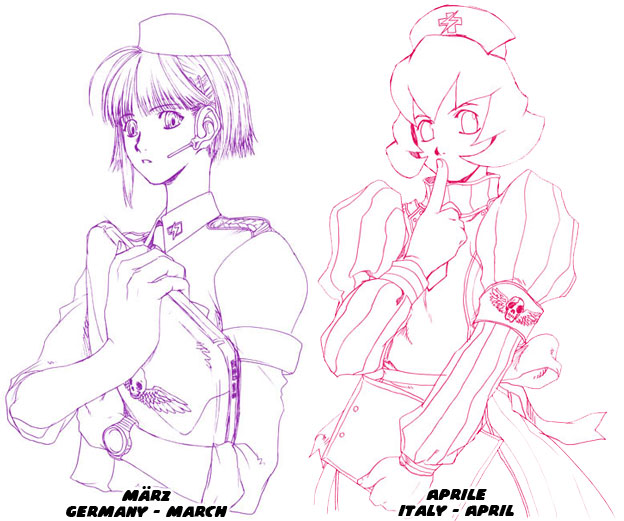
März was an information specialist and she kept her laptop with her everywhere she went. There were many hyper-intelligent / nerdy characters in animé. März filled in the role of hacker / genius for Shadowlaw very well. Aprile was a medic and cute nurse characters always went over well on both sides of the Pacific. There was a long-standing tradition in animé however where nurse characters often attacked lecherous boys with a bazooka-sized syringe. No word if Aprile could use one of those in combat.
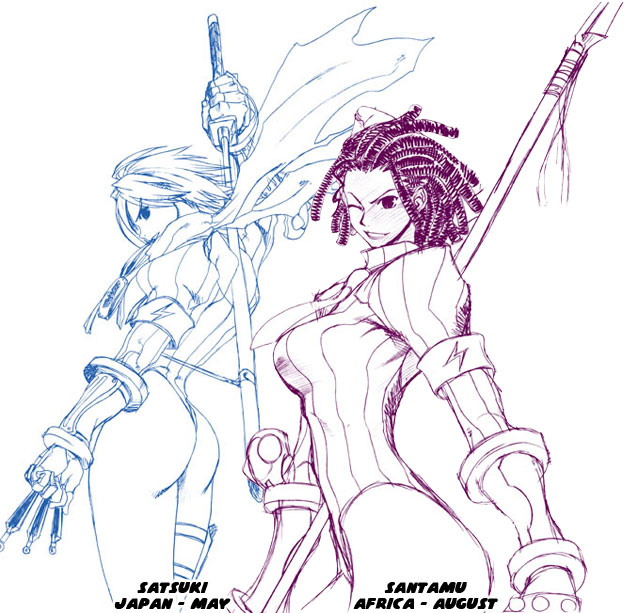
The first half of Dolls were spies or specialists of some sort while the second half were fighters. Each one studied a different form of combat and often used a weapon. Satsuki was the ninja of the Dolls. She had the familiar flowing scarf, It was seen countless times in manga and anime. In video games the scarf was synonymous with the assassin's fist. Galford and Hanzo in Samurai Spirits each had the long scarf, Capcom icon Strider and Sega mascot Shinobi also had a scarf. Santamu was originally Vietnamese but changed to Ethiopian. She was a sort of jungle girl trope. She had a spear and even small monkey when she went into battle.
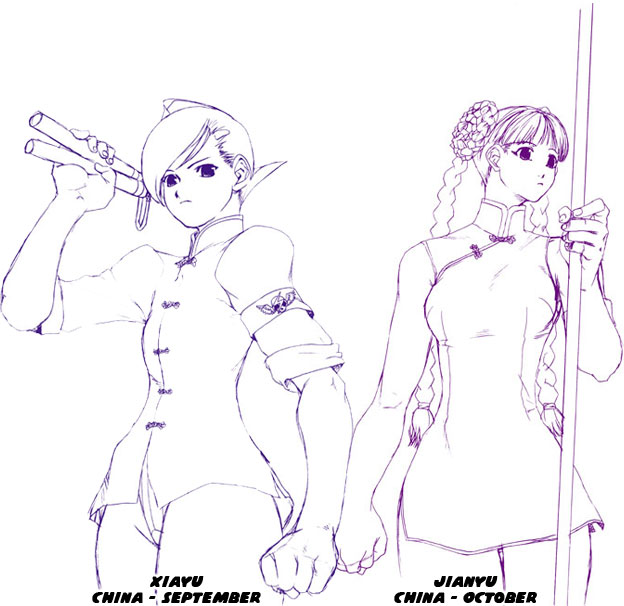
Of course no girl fighting team would be complete without Kung-Fu masters. The two Chinese characters each specialized in a particular weapon. Xiayu used a nunchaku and Jianyu used a staff. When Ataru sketched out the characters he made sure to get the subtlety of each character. The nunchaku was a non-traditional weapon that had actually been adapted from equipment used by rice farmers to separate the rice from the chaff. It was used by peasants to fight off bandits thousands of years ago but was made popular more recently in the Bruce Lee films. Lee was an unorthodox master that incorporated Eastern and Western fighting arts and conditioning into his regiment. He represented a break from tradition, the new form. Xiayu was symbolically cut from the same cloth, the new school kung-fu master. Her haircut and weapon reminded audiences of that. By comparison Jianyu used one of the oldest martial arts weapons ever created. Her costume her form was very traditional, she had more in common with Chun-Li than Bruce Lee. Both characters and even Chun-Li could be considered derived from the Pooh sisters. The enemies of Strider known as the Kuniang Martial Arts Club. Ataru did a fantastic job of conveying this in his illustrations.
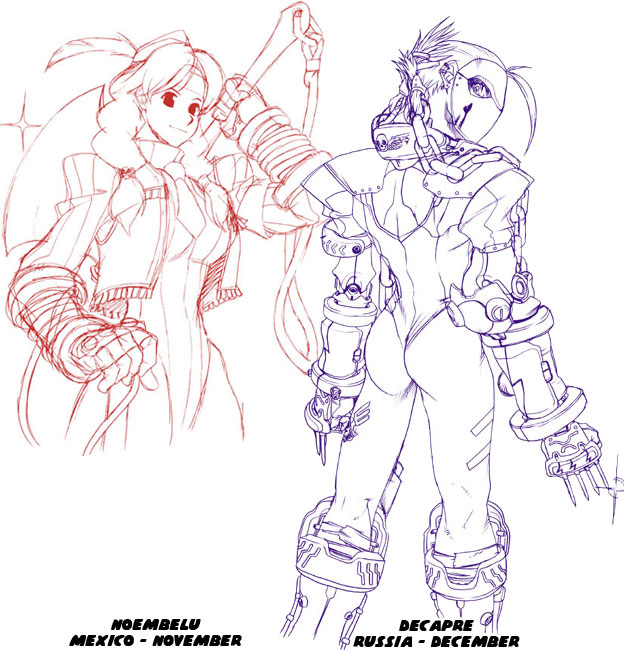
The last two fighters had a the strongest connection to the Street Fighter II universe. Noembelu was a member of the same tribe of Native Americans that T. Hawk was. Her braid, leather vest, oversized tomahawk and headdress were also suppose to reflect the native themes. Of all the Dolls I think Decapre was the most popular and most mysterious. She was seen as an Evil Cammy. She looked like an identical clone of Cammy but wore a dark metallic mask. Ataru gave Decapre armor that looked brutal. He went one step further and replaced the braids of Decapre with chains. It was a bold stylistic choice that really made her look like the evil twin fans never knew existed. It's great that the Dolls have returned to Street Fighter. I wish they had been featured in SF Zero 4 to be honest, they seem out of place in SF V. They are undoubtedly bringing in many new fans to the series and making them wonder where these characters came from. I hope this blog helped answer some questions. You can find out more about the Dolls and see how their look changed from Ataru's fan art to the modern interpretation by picking up the Udon comics. Be sure to leave a comment and tell me what you think about the Dolls in SF V. As always if you enjoyed this blog and would like to sponsor me please visit my Patreon page and consider donating each month, even as little as $1 would help make better blogs and even podcasts!
Final Fight, Street Fighter and SF II characters were all part of the same canon. Explaining how the characters crossed paths in between each series was inspired design. The art direction and creative risks they took were bold. Lead artist Bengus created an entirely new look and feel for the cast. They were younger, more cartoonish in proportion and presentation. They looked unlike characters from any other series and really stood out because of this. The entire game was a love letter to the respective franchises and a not so subtle nod to the Street Fighter fandom. As the series progressed it became more and more rooted in dramatic characters and over-the-top plots. Street Fighter was no longer about being the best fighter in a tournament, it was instead about saving the world from Shadowlaw. The fighters became like GI Joe special agents. It worked for the Zero series because it was very cartoonish, very animated. Design elements were pulled from typical anime shows. Otaku or nerd culture became a contributing factor in the design choices. Where I take Mr. Ono to task is that those ideas were fresh in 1995, reusing the formula 20 years later but putting the graphics in 3D was not revolutionary. His ideas of putting oily men, fat men, effeminate men and ugly minority caricatures in the series were poorly conceived.
Look back at the legacy that Street Fighter Zero created. The young schoolgirl Sakura would become the breakout star of the game. She was introduced in Street Fighter Zero 2 in 1996. She would be joined by Cammy in Street Fighter Zero (SFZ) 3, released in 1998. She was presented younger than their original Street Fighter II versions. Young female leads were going over well with audiences, Karin Kanzuki (the rival to Sakura), R, Mika, Juni and Juli were also added in SFZ3. The reaction was so well to this influx of female stars that the studio decided to flesh out the origins of Cammy and explain her connection to Shadowlaw. This was when Bengus and the team introduced us to the infamous Dolls.
Vega / M. Bison (Dictator) had surrounded himself with young highly trained special agents. Cammy was his star pupil nicknamed Killer Bee. The other Dolls were named after the months of the year. Juni and Juli were German for June and July. Each of them wore tight costumes with small ties on. As if they were some sort of military school uniform. Each Doll was a highly-trained assassin whose appearance was meant to be deceptive. Most were brainwashed and programmed to be specialists, some were naturally gifted, others had gone through genetic modification so that they were stronger or faster than any normal soldier. The girls were around 16-years-old making the Dictator seem like a creep but there was a precedence for his young apprentices. Japanese comics, animated shows and OVAs often revolved around teenage heroes. This went back to the earliest days of Japanese animation. The stars of the shows often tended to be much younger than heroes in western media. Comic book heroes in the USA were often adults and teenagers were sidekicks. That formula was almost opposite in Japan. The greatest pilot, race car driver, magician, or warrior in the stories were usually young and sometimes girls. This made them extremely popular with school-age audiences.
The designers at Capcom were all too familiar with the teenage tradition and created the Dolls as a sort of homage to the female leads in pop culture. Rather than just create a group of Cammy clones they decided that they would each come a different nation, each one would specialize in something. The studio didn't really have enough time to make Juni and Juli more unique than they had planned but the seeds were definitely planted some 18 years ago. Here's some news that certain to make a lot of Street Fighter fans feel old. There is a good chance that many of the new Street Fighter IV and V players were not born when the series began. They might have not even been around when the Alpha series ended or Street Fighter III was released. There are many characters that they are unfamiliar with from games they didn't know existed. It's likely they are wondering where the Dolls featured in Street Fighter V's Story Mode came from.
The Dolls had been featured in the Street Fighter comics by Udon and had cameos in the licensed comics in Japan and Hong Kong as well. However I believe that the definitive fan illustrations of the Dolls came from Ataru (NSFW) almost 20 years ago. He took the notes for each character and sketched out versions of each Doll that captured their personality and origin. Enero specialized in communications yet she was presented as a sort of idol character, hence the microphone. Many animé characters want to be idols in their own series. There are models and spokespersons but the singing kind of idol is the most popular. A good portion of the entertainment industry in Asia, including K-Pop from Korea and C-Pop from China, revolves around finding the next idol. Février was an expert at firearms and while she has a more traditional-looking firearm in Street Fighter V in Atatu's version her pistols were more like the science fiction revolvers that could be found in a classic animé series like Space Pirate Captain Harlock or Cobra.
März was an information specialist and she kept her laptop with her everywhere she went. There were many hyper-intelligent / nerdy characters in animé. März filled in the role of hacker / genius for Shadowlaw very well. Aprile was a medic and cute nurse characters always went over well on both sides of the Pacific. There was a long-standing tradition in animé however where nurse characters often attacked lecherous boys with a bazooka-sized syringe. No word if Aprile could use one of those in combat.
The first half of Dolls were spies or specialists of some sort while the second half were fighters. Each one studied a different form of combat and often used a weapon. Satsuki was the ninja of the Dolls. She had the familiar flowing scarf, It was seen countless times in manga and anime. In video games the scarf was synonymous with the assassin's fist. Galford and Hanzo in Samurai Spirits each had the long scarf, Capcom icon Strider and Sega mascot Shinobi also had a scarf. Santamu was originally Vietnamese but changed to Ethiopian. She was a sort of jungle girl trope. She had a spear and even small monkey when she went into battle.
Of course no girl fighting team would be complete without Kung-Fu masters. The two Chinese characters each specialized in a particular weapon. Xiayu used a nunchaku and Jianyu used a staff. When Ataru sketched out the characters he made sure to get the subtlety of each character. The nunchaku was a non-traditional weapon that had actually been adapted from equipment used by rice farmers to separate the rice from the chaff. It was used by peasants to fight off bandits thousands of years ago but was made popular more recently in the Bruce Lee films. Lee was an unorthodox master that incorporated Eastern and Western fighting arts and conditioning into his regiment. He represented a break from tradition, the new form. Xiayu was symbolically cut from the same cloth, the new school kung-fu master. Her haircut and weapon reminded audiences of that. By comparison Jianyu used one of the oldest martial arts weapons ever created. Her costume her form was very traditional, she had more in common with Chun-Li than Bruce Lee. Both characters and even Chun-Li could be considered derived from the Pooh sisters. The enemies of Strider known as the Kuniang Martial Arts Club. Ataru did a fantastic job of conveying this in his illustrations.
The last two fighters had a the strongest connection to the Street Fighter II universe. Noembelu was a member of the same tribe of Native Americans that T. Hawk was. Her braid, leather vest, oversized tomahawk and headdress were also suppose to reflect the native themes. Of all the Dolls I think Decapre was the most popular and most mysterious. She was seen as an Evil Cammy. She looked like an identical clone of Cammy but wore a dark metallic mask. Ataru gave Decapre armor that looked brutal. He went one step further and replaced the braids of Decapre with chains. It was a bold stylistic choice that really made her look like the evil twin fans never knew existed. It's great that the Dolls have returned to Street Fighter. I wish they had been featured in SF Zero 4 to be honest, they seem out of place in SF V. They are undoubtedly bringing in many new fans to the series and making them wonder where these characters came from. I hope this blog helped answer some questions. You can find out more about the Dolls and see how their look changed from Ataru's fan art to the modern interpretation by picking up the Udon comics. Be sure to leave a comment and tell me what you think about the Dolls in SF V. As always if you enjoyed this blog and would like to sponsor me please visit my Patreon page and consider donating each month, even as little as $1 would help make better blogs and even podcasts!
Tuesday, June 30, 2015
Representation Matters! Or, what happened to Birdie, part 2...
In the previous blog I talked briefly about the influence of Street Fighter around the world. There were many reasons why the franchise was so successful. From a move selection, balance and control standpoint Capcom had done a superb job. The controls were experimental, many developers thought that anything more than two buttons might confuse players, six was going to be overkill! Despite the fears of the industry (and the extra expense to Capcom to put in all those extra buttons) players seemed to quickly pick up on the nuances of multiple buttons and joystick combinations. From week to week gamers were becoming exponentially better at the title and were uncovering secrets and techniques over months. The studio had a hit on their hands with Street Fighter II and decided to refine the game. Unlike other companies that would publish a title and move to something else Capcom was looking to fine tune Street Fighter II and offer arcade owners more repeat business. They would release upgrades to the game, known as the Hyper, Turbo and Super versions. The changed the way certain characters played and modified the balance accordingly based on location tests and feedback from player. Each upgrade to the arcades was met with great success.
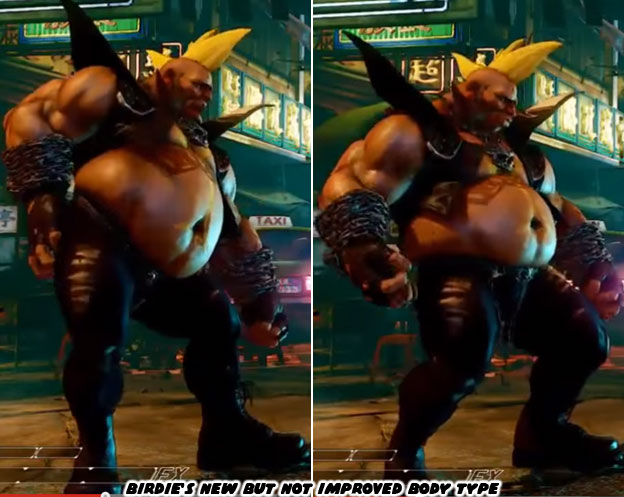
From a technical standpoint the developers at Capcom were unparalleled. Yet with certain updates and sequels the characters introduced into canon did not have the staying power of the original Street Fighter II "World Warriors." The designs of the subsequent characters did not evolve as greatly as the game engine had. In some cases the characters were ill informed, if not crude and stereotypical. Birdie had started out as a typical punk character in the original Street Fighter but turned into an icon in Street Fighter Zero. It had been 17 years since Birdie was last featured in a Capcom game. In Street Fighter V the years had not been kind to him.
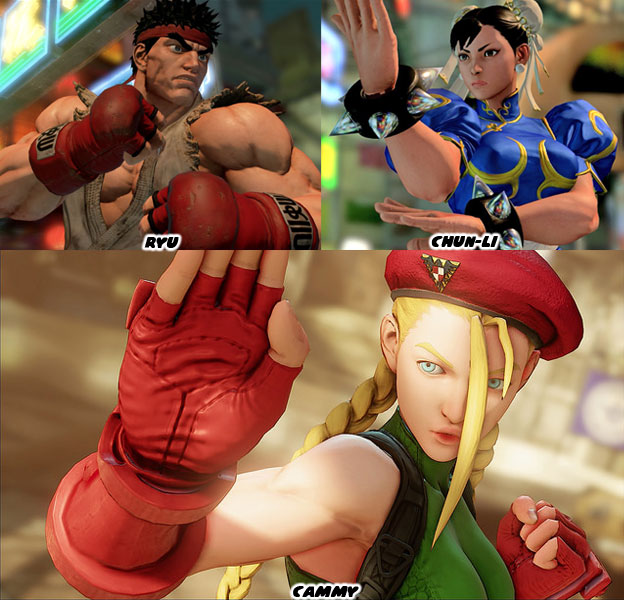
Actually it was the designers that were not kind to Birdie. They turned the character into a slob. A fat, junk food craving shadow of his former self. I wondered why Capcom would do such a thing. The other characters announced thus far had not changed at all. Ryu (who happens to be friends with Birdie in canon) was still muscular, Chun-Li was as beautiful as her previous incarnation, and Cammy seemed a minute older than her previous appearance but was still beautiful. None of the characters were fat or out of shape.
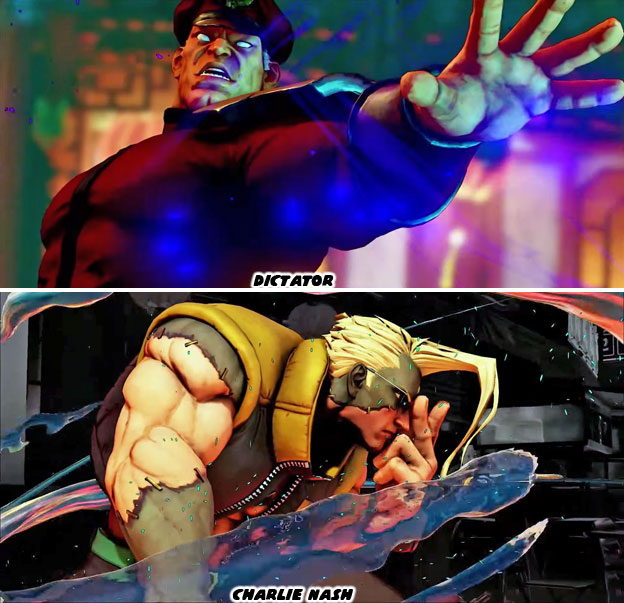
The Dictator, known as Vega in Japan and M. Bison in the USA, leader of the terrorist organization Shadowlaw was the main villain in Street Fighter II. He had also returned for Street Fighter V. He appeared very much the same as he did in Street Fighter IV only that now his hair was white. It didn't seem to go white due to his age but instead due to his mysterious "Psycho Power." The surprise announcement was that of Charlie Nash asa returning character. Charlie had last been seen in Street Fighter Zero. Like Birdie it had also been 17 years since his last major role. Nash had changed somewhat as well. The character was presumed dead following the events of SF Zero, he had been shot in the back by Shadowlaw soldiers and thrown off a cliff. Revenge spurred his military friend Guile to enter the SF II tournament and track down the Dictator. In canon Nash was brought back from the dead, brainwashed and turned into an assassin. His discoloration and Frankenstein's monster-like appearance were done deliberately. Of course neither the Dictator or Charlie had returned fat and out of shape.
I wondered why Birdie had been turned into a slob. What did the character do to deserve such a disservice from the new developers? Did the team of artists and animators not like him? Was it because they did not like punk culture? Was it because they did not like minority characters? Perhaps they simply didn't understand the appeal of the character in the first place. Unlike the radical redesign of Birdie from the original game to Street Fighter Zero the designers used the Zero version and tore him down. They did not even bother to use the cues that were placed on him in his previous incarnation. For example he didn't wear chains on his wrists because it was his primary weapon but because they were attached to a pair of handcuffs that he had broken. The newest version is missing the handcuffs as well as some other details that I will let you figure out.
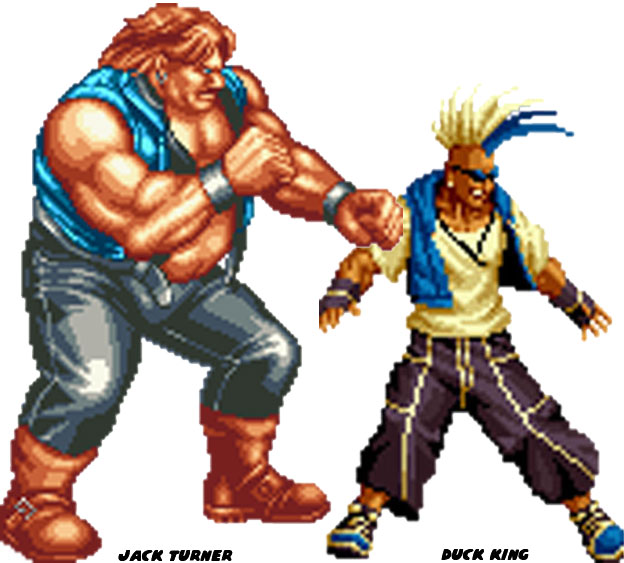
So what exactly did Birdie's new point of reference come from if it was not from previous games? I would say that the new Birdie is now a mash up of SNK's Jack Turner and Duck King. Both characters appeared in 1991. Jack appeared in the Art of Fighting. He was a mob enforcer in South Town. The character was modeled after the stereotypical fat bikers from the West. He hung out in bars and seedy back alleys looking for trouble. His costume and fat belly had a lot in common with the Birdie redesign.
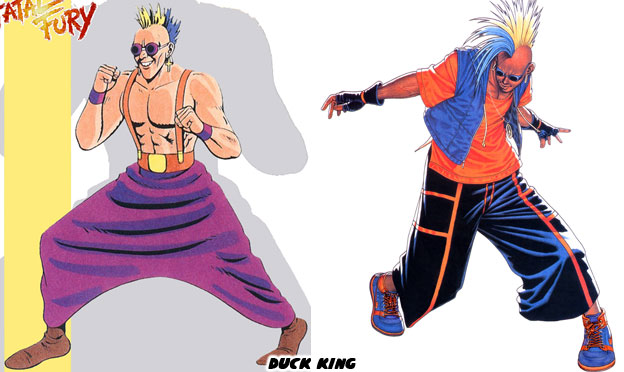
Duck King appeared in Fatal Fury. Despite the Mohawk haircut he was not supposed to be seen as a punk character. He was instead based on party kids, ravers and b-boys (break dancers) from the USA. His bright colors and costumes were pulled from trends in the West. There was a difference between how he was put together versus J and Two-P. In the early character art we could see that his costume, especially sunglasses and fat pants was inspired heavily by MC Hammer. He was never meant to be seen as any sort of gang member. As dance trends and pop culture changed the look of Duck King evolved. He was still a colorful character but now dressed in more street appropriate costumes. I would argue that neither Duck King nor Jack Turner were ever as popular as Birdie. In fact I remember the first time that I saw Duck King in the game I thought to myself that SNK was trying to create their own Birdie. I mean even the name was similar.
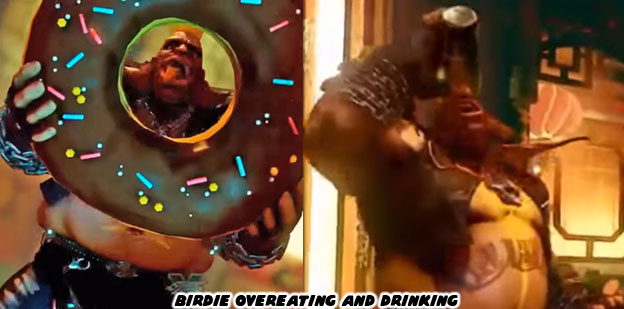
Yet anything that SNK did was nothing compared to what Capcom would do to their legacy character. Everything the designers did to Birdie in Street Fighter V reinforced what a slob he had become. For example some of his "attacks" consisted of him sneaking a donut from his back pocket or guzzling an energy drink. In fact in his character animation after winning a match he would pull a gigantic donut out of thin air and bite into it. It was an odd visual that nothing but demean him. Not only that but unlike previous representations of punks in the series the team did not seem to have the insight as to what Birdie would have eaten to gain so much weight. Donuts were considered more of a USA treat than a British one. Perhaps fish and chips and a warm beer would have made more sense.
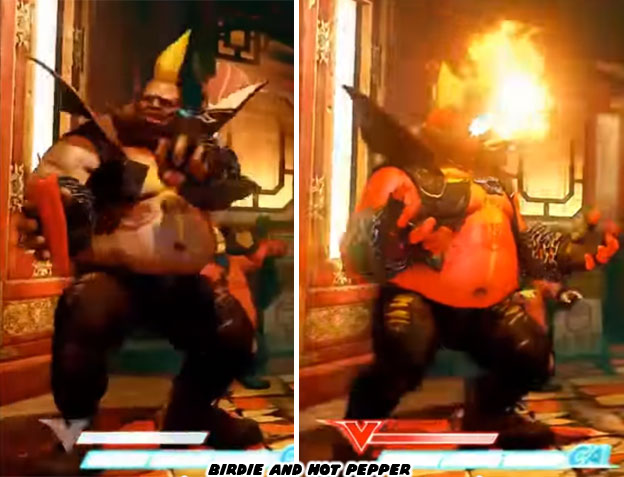
Having Birdie drink and eat and throw his garbage at opponents would hardly be considered "punk." He was just being crude and nasty. The most absurd of his mid-match snacks was a hot pepper. It would cause Birdie to breath fire, have his skin glow red hot and do more damage to his opponents with each hit. Birdie had never had any moves in previous versions of the game that were similar to these new food-based attacks. I could not figure out what made the developers think that this radical direction was appropriate for the character.
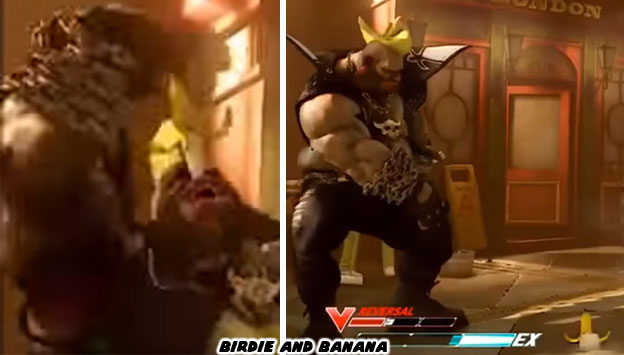
When I saw his last food-based attack it raised a red flag in my mind. Birdie would eat a banana and throw the peel on the ground. Opponents could slip on this banana. It was supposed to be a funny attack that also helped keep aggressive opponents at a safe distance. It was an ill-informed choice to make a black character enthusiastically eat a banana, There were heavy racial overtones that Capcom could have done without. In many parts of the world black professional athletes are often called monkeys and bananas are thrown at them from the stands. Seeing as how Street Fighter V is going to become an international title then I would strongly suggest avoiding anything that could even remotely be taken in the wrong context.
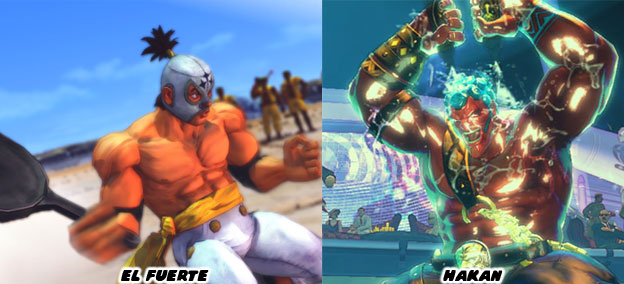
Since Birdie had never had these types of silly attacks before I wondered why the studio would start adding them now. If they are giving Birdie absurd attacks why not do the same for Ryu, Chun-Li, Cammy, Dictator or Charlie? If Birdie is now fat and sloppy but none of the other characters are why is that? All of the other characters seem to be played very straight. The way they were in previous games is the way they are now. I would hate to think that Capcom is doing this because of the color of his skin or the minority status of the character but it just might be true. Consider for a moment the previous nationalities represented in Street Fighter IV. There was a lot of diversity in the lineup but the new characters created for the game were very odd as well. The Mexican wrestler El Fuerte for example was obsessed with cooking and named several of his moves after plates. There was also a Turkish wrestler with beet red skin and bright blue hair named Hakan that practiced the art of Yagli Gures, or Turkish oil wrestling. That character was obsessed with finding the perfect oil recipe to help him dominate in his matches. Players could splash themselves with oil in the game and slide across the floor. The gimmicks placed on El Fuerte and Hakan were done to give the characters a personality and make them more interesting. Yet gimmicks and throw away attacks were not something that was used with the original Street Fighter II cast. Those characters were far more interesting without being silly or sloppy.
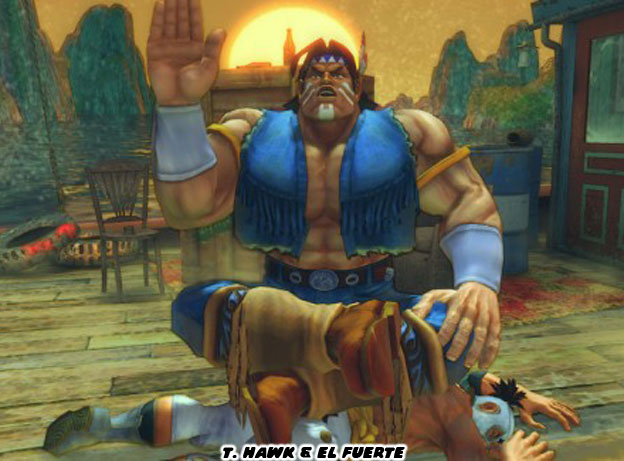
The trend was becoming apparent in the more recent Capcom fighting games. El Fuerte, Hakan and Birdie had something in common. They were all minority characters. The designers had no point of reference for the characters, their cultures or their specific fighting arts. So instead they gave each of them a gimmick and made them silly. I sincerely doubt that the developers would have done the same to a Japanese character or one of the female characters. Before Birdie had the silly food attacks applied to him the developers had done something similar in Street Fighter IV. The Native Mexican character T. Hawk was given an update to his "Raging Typhoon" special attack. In Super Street Fighter II the character would grab an opponent by the head, spin them in the air and slam them into the ground. In Street Fighter IV an extra animation was added where T. Hawk would then sit cross-legged on top of the opponent making a stereotypical "how" pose for Native Americans. This was a trope used by television to depict the ways that Native North Americans would greet each other.
I would hate to think that the developers at Capcom were being racist with the characters. I like to think that these choices were made out of ignorance (which is a root cause of racism) rather than racial bias. Unfortunately the silly makeover was a trend that was becoming more and more apparent for the series. Something that could be measured over the past few years were how odd the character selection had become. What was done to Birdie was part of a pattern. The next blog will question the choices from the developers. As always if you enjoyed this blog and would like to sponsor me please visit my Patreon page and consider donating each month, even as little as $1 would help make better blogs and even podcasts!
Subscribe to:
Posts (Atom)