Showing posts with label kimberly. Show all posts

Wednesday, May 13, 2026

Bookmark This Page; Women in fighting games

I love to write about fighting games, and fighting game characters. If you want a collection of articles about women in fighting games then Bookmark This Page.

The return of Rainbow Mika, did Capcom cross the line in Street Fighter V?

Laura, the new leading lady of Street Fighter V or more fanservice?

Odd Girl Out, a look at alternate female fighting game characters...

The legend of Blue Mary, or girls in fighting games, part 1…

The legend of Blue Mary, or girls in fighting games, part 2…

The legend of Blue Mary, or girls in fighting games, part 3…

Why is Street Fighter playing with Dolls?

Meet Street Fighter V's Menat, an old soul in a young body?

The rise of Falke, or how military design works in fighting games...

The Chun-Li template, don't follow it too closely! A 1UP classic...

A look at Marisa, the Street Fighter 6 gladiator...

A look at Lili, the new native Mexican fighter in Street Fighter 6

Juri in Street Fighter 6, how her design got better with time

Manon in Street Fighter 6, representing a style over 200 years in the making

Cammy gets an entirely new look for Street Fighter 6, let's see how

Let's talk about A.K.I., the Dragon Lady of Street Fighter 6

Meet Kimberly, is she the Urban ninja of Street Fighter 6?

Chun-Li's new look in Street Fighter 6. Is it a step backwards?

Style Wars, looking at Kimberly in Street Fighter 6, and Isla from King of Fighters XIV.

The Street Fighter 6 pre-order trailer, a look at Manon, the graceful judo practitioner

The Street Fighter 6 pre-order trailer, a look at Marisa, the modern gladiator

Lili gets a makeover, just in time for Street Fighter 6!

Do you have a favorite female character in a fighting game. Tell me about it in the comments section. As always if you enjoyed this blog, and would like to sponsor me please visit my Patreon page and consider donating each month, even as little as $1 would help make better blogs and even podcasts!

follow the Street Writer on Patreon!

Monday, December 12, 2022

The Street Fighter 6 pre-order trailer, a love letter to the series, and a look at JP

Thank you for dropping by the blog. We have a lot to talk about with the release of the Street Fighter 6 - Pre-Order Trailer. Make sure to watch it if you haven’t already.
   
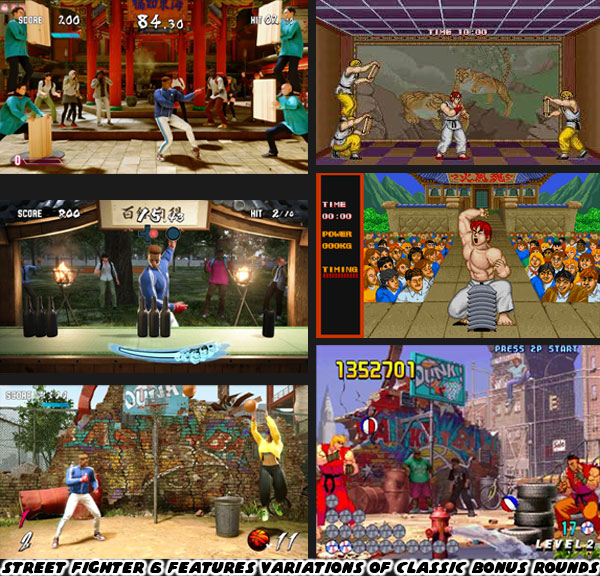
There is a tremendous amount of new information revealed about SF6, including official reveals of some new faces. One of the things that surprised me was the re-introduction of bonus stages. Ways to earn extra points, learn skills, and practice special attacks have been a part of the SF franchise since the very first game in 1986. In fact one of the earliest bonus stages involved board breaking. After 35 years this returns in the game. Long-time players would spot nods to other classic bonus stages, and even new challenges.

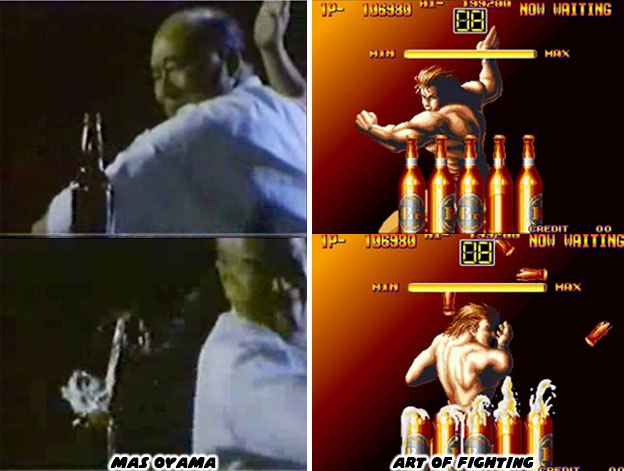
There was a shot of the player character chopping the tops off of glass bottles in one bonus challenge. Those of us old enough to remember would know this bonus was first used in the Art of Fighting in 1992. The SNK game directed by Hiroshi Matsumoto, and Akashi Nishiyama was a sort of updated take on the Street Fighter formula. The duo had developed the original SF before leaving Capcom to join SNK. They took with them a number of their martial arts influences, and translated them into game form. I have written a lot about Mas Oyama, and his influence in the creation of fighting games. The “God Hand” of karate could legit kill bulls with his bare hands. He was the basis for Mr. Karate / Takuma Sakazaki, arguably the most power karateka, and one of the top bosses in the SNK universe. Oyama would put on demos where he would cut the tops off of bottle with a knife hand chop. SNK used the bottle chop as a bonus stage in the original Art of Fighting. This skill now gets a nod in the SF franchise as well.

I have said it before, and it bears repeating. Street Fighter 6 Director Takayuki Nakayama, Producers Kazuhiro Tsuchiya, and Shuhei Matsumoto, and Designer Yusuke Hashimoto have all demonstrated a better understanding, and love of the culture than the previous director Yoshinori Ono with every SF6 update released. The game is not only pushing the genre forward, it is also a love letter to the games that came before. These influences are from Capcom, and from other studios as well. I am not going to focus on Dee Jay this time because he is a returning character. Instead I want to talk about the new faces revealed. Let’s start off with the sharply dressed older gentleman. According to the official bio “JP is the head of an international NGO (nonprofit organization, designed to address social or political issues) responsible for many successful investment projects, and the man behind Nayshall's present prosperity. Has a beloved cat named Cybele.” I did a quick look at JP earlier on the blog. As far as his look, and use of weapons is concerned there is a lot of precedence in the series.

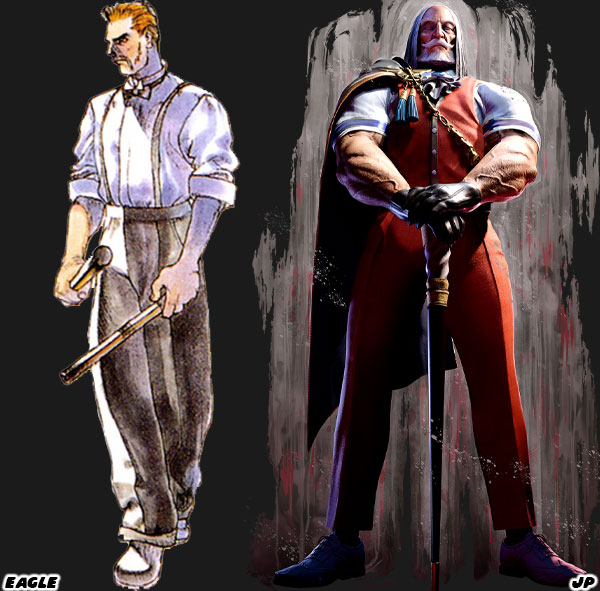
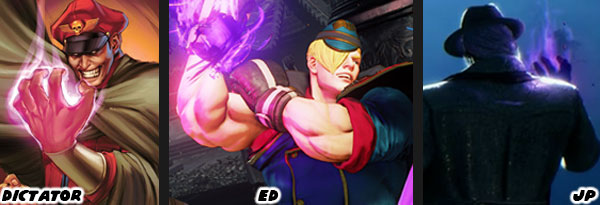
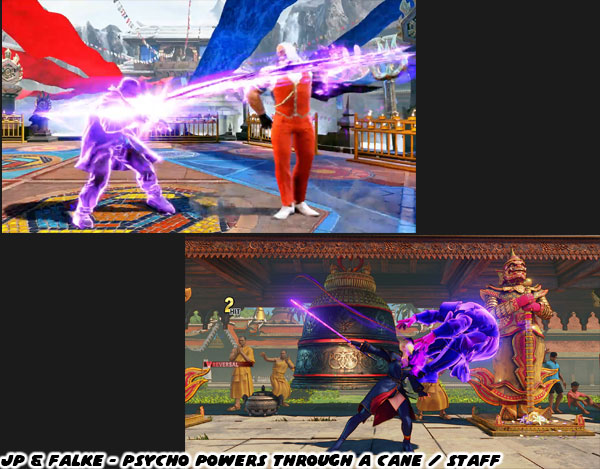
The gentlemanly fighter Eagle was the top British striker in the original Street Fighter. He dressed sharply, and fought with the use of two sticks. JP is a continuation of other well dressed fighters who use a weapon in combat. The closest one that I compared him to would be White from the Fatal Fury sequel Real Bout Garou Densetsu Special: Dominated Mind. It could be considered fair for him to use a cane because JP was an older gentleman competing against fighters half his age, and twice his size. Of course as with any fighter in the franchise looks were often deceptive. JP was more than just skilled with a cane, in the trailer we can see he harasses some sort of psychic ability. The purple glow of “psycho power” had been featured as early as 1991 through Vega / Dictator, as well as in later games with Rose, Menat, Ed, and Falke.

It was established in previous SF games that psychic powers could be funneled, or rather focused through objects. Menat used a crystal ball for example. Falke used a military staff. The vast majority of characters in the SF universe fought with their bare hands, but a select few fought with weapons. These characters helped add balance to roster. From a storytelling perspective it made sense that a Mad Gear boss like Sodom would fight with a weapon. But it also worked when smaller fighters, or older fighters, were allowed to use weapons in combat. To learn more please read the blog on Falke, and how military design works in fighting games.

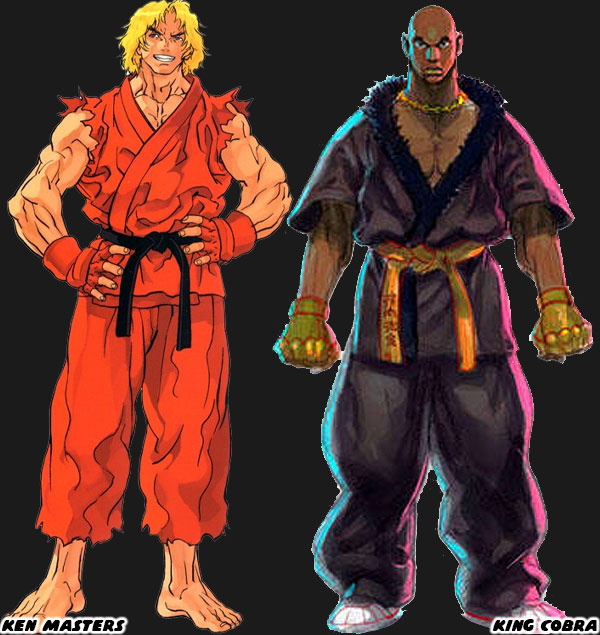
The other two fighters revealed in the Pre-Order Trailer were more interesting to me. They seem to cement the idea that a lot in the online community had. Namely that the SF6 team was trying to redo the characters introduced in SFIV, to redo not only their looks, but also their over-the-top, cartoonish special attacks. Let’s do a recap of what we know, and then what we can infer. Many SF fans learned that the rival to Ken was not originally planned to be the obese, and stupid Rufus. A young Black, “breakdance kung-fu” fighter named King Cobra was going to be his arch-rival. Audiences felt this was a very strong design, one with tremendous potential. Producer Yoshinori Ono insisted on adding a “fatty” for comedic effect instead. The world was robbed of a potentially fantastic design.

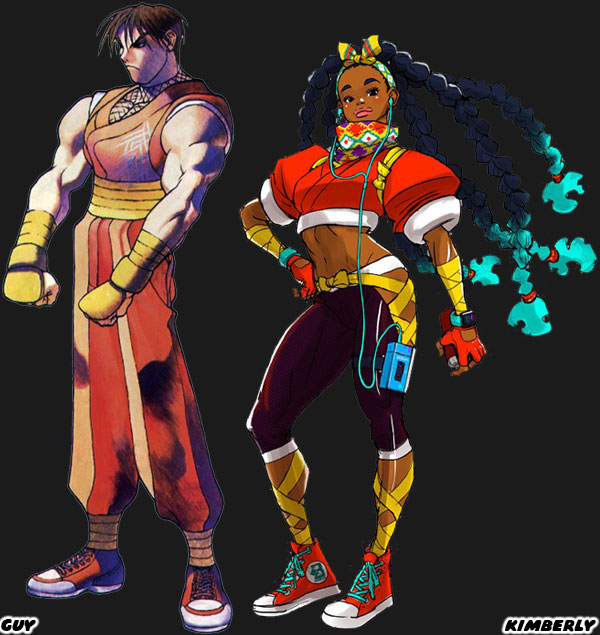
Of course no great idea really dies. At least not at a major studio. I believe that the fighting style originally planned for King Cobra was instead assigned to Jamie, the rival to Luke in SF6. The idea of giving a strong balance, or younger upstart to compliment to a franchise character was expanded on with others in the cast. Chun-Li as you may know finally had a worthy rival with the villainous Juri in SFIV. Juri’s design I believe had finally been perfected in SF6. Although we have not been introduced to A.K.I. officially as of this writing, many online also believe her to be a redesigned version of F.A.N.G. from SFV. One who loses the silly personality, to become a much more sinister archetype. Not every new face in the series is designed to be a rival to an established character. For example, Kimberly is the young ninja that is designed to be the understudy to Guy.

Guy was a featured character in the 1989 hit Final Fight. He was originally designed to be the replacement for Ryu in the Street Fighter series. As Cody was designed to replace Ken as well. The wrestler-turned-mayor Mike Haggar was the prototype for Zangief. But I digress… The sneaker-wearing ninja was certainly cooler than Ryu in design. Bringing just a hint of urban fashion into a traditional martial arts world. Kimberly carries a lot more of that same forward thinking. Mr. Nakayama, Mr. Tsuchiya, Mr. Matsumoto, and Mr. Hashimoto have gone all-in on incorporating the western influences that helped create the SF series. In doing so they expanded the diversity, and more important, created much better representation than in either SFIV, or SFV. They understand, perhaps better than the majority of Japanese designers, that Black culture is pop culture in the west. Not only that Black culture is the backbone of pop culture the world over. Using the fashion, the music, and art of Hip-Hop without including Black characters would have been a disservice to the community. The two other women introduced are other great examples of representation. I will dig into those on the next blog. What are your thoughts on everything revealed with SF6 so far? What are you looking forward to? Let me know in the comments section please! As always if you would like to sponsor me please visit my Patreon page and consider donating each month, even as little as $1 would help make better blogs and even podcasts!
follow the Street Writer on Patreon!

Thursday, August 25, 2022

Style Wars, looking at Kimberly in Street Fighter 6, and Isla from King of Fighters XIV.

I think we should have the conversation about Kimberly, about culture, and the developers at SNK, and Capcom. I had previewed Kimberly when she was leaked a month or so ago. Most of my observations turned out to be accurate. The internet has absolutely fallen in love with her, posting fan art, and cosplay pics following the reveal trailer including the updated Juri. The thing I think we have to acknowledge is that Kimberly has themes that were seen in SNK characters much earlier.
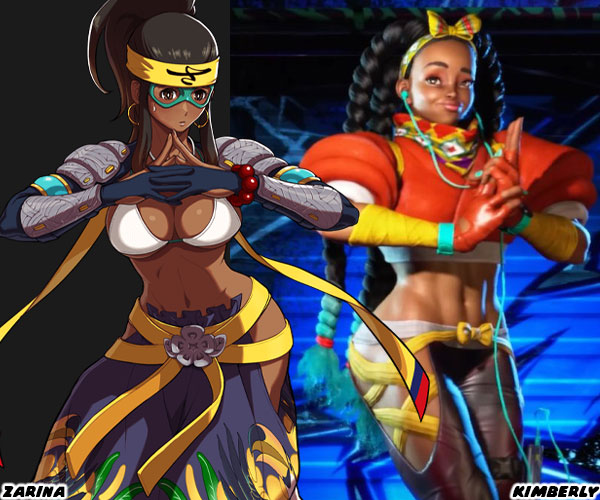
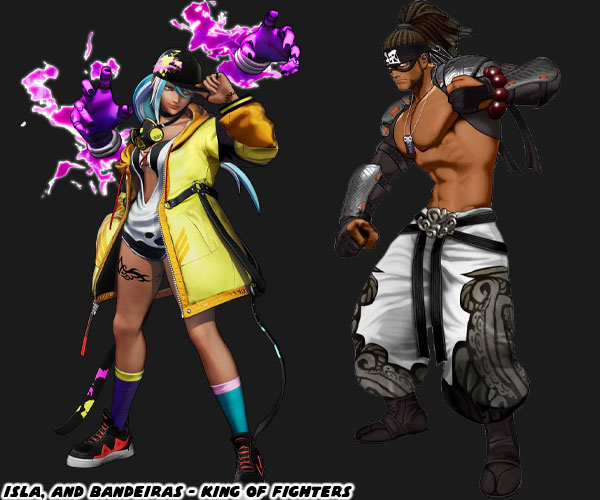
There were at least three SNK characters that Kimberly follows in the footsteps of. Zarina was a Brazilian conservationist, fan of Samba dancing, and kicker of crotches. She debuted in King of Fighters XIV, in 2016, along with Bandeiras Hattori founder of the Brazilian Ninja Arts Dojo. The minority characters were introduced as members of Team South America. The King of Fighters series is wildly popular in Brazil, and other South American countries, and it made sense that SNK would design a team in order to appeal to them. On a surface level Kimberly is young, and energetic, like Zarina, she even has a similar outfit. On a deeper level Kimberly is obsessed with the ‘80s, and ninjitsu. In her debut trailer we see her using a bunch of over-the-top ninja moves.
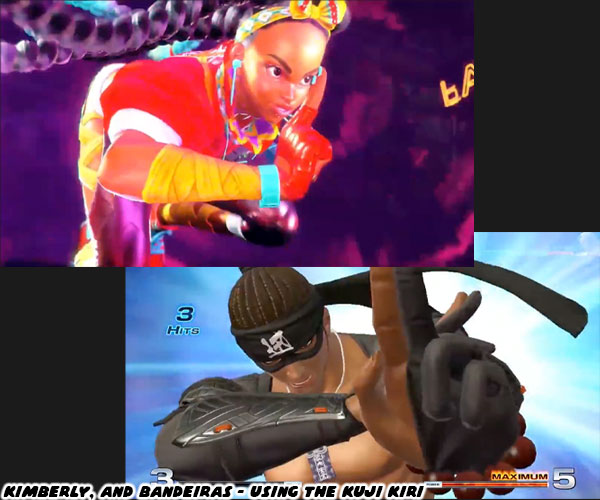
Bandeiras is also a huge fan of ninjutsu. He’s even invented his own form, and is actively trying to recruit students. He’s an absolute geek for Mai Shiranui, the most popular ninja in the KOF tournament. To be fair who wouldn’t be a fan of Mai? Kimberly by the same token is also a ninja super fan, she’s a follower of Guy, the most famous ninja in the Street Fighter universe. Kimberly has natural ability, making traditional fighting game style strikes with her own flair. Both Bandeiras, and Kimberly have lightning quick dashes to punches, and kicks. Ninjas in 3D fighting games often have a lethal move where they suplex their opponent onto their head from a tremendous height. Kage-Maru from Virtua Fighter helped start the tradition way back in 1993. Both Kimberly, and Bandeiras keep the tradition alive almost 30 years later.
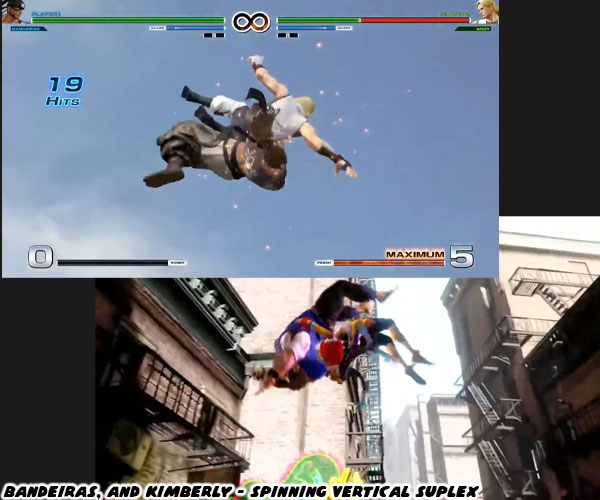
Dark-skinned ninjas, and ninja apprentices aside, there was another character that predated Kimberly. Isla aka the “Dreaming Brilliance” was a Chilean KOF contestant. She was set up as a parallel, and rival to Shun’Ei. She debuted in King of Fighters XV in 2022. Her trailer premiered on Sept 30 2021, almost one full year before Kimberly’s first trailer. It is entirely possible that the new developers working on Street Fighter 6 were keeping tabs on every new face appearing in the KOF series. I would say that they challenged themselves to create characters better than the new faces introduced into the previous two KOF games.
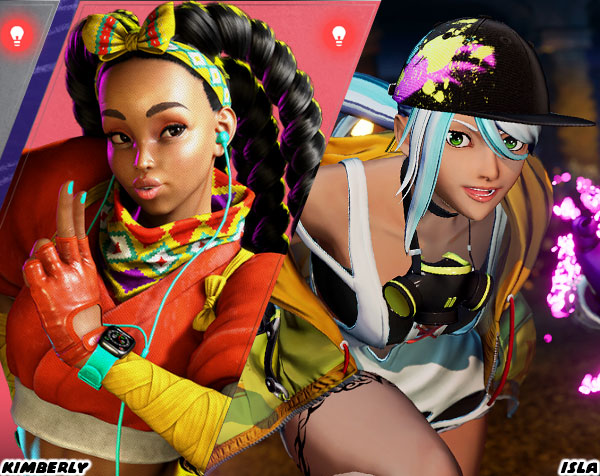
Isla was another South American. SNK was going all-in on making their cast appeal to the community. She was not a dark-skinned character, and her fighting style had nothing to do with ninjitsu or any other traditional art. She has mysterious psychic powers, floating hands nicknamed Amanda help her fight. These are similar to Shun’ei’s psychic hands. Where Isla overlaps with Kimberly is in the use of spray cans. Isla is a graffiti artist, and social media star. She uses the spray can in several of her special, and super attacks. Spray cans, especially those favored by graffiti artists are highly pressurized, and dangerous in certain conditions. In addition to spraying colors capable of blinding an opponent, they are also flammable. In both Isla, and Kimberly’s trailers audiences saw the cans used as explosives. Isla adding them to her kicks, and Kimberly to her punches. If I didn’t know better I would say that the Street Fighter developers simply mixed elements from Bandeiras, and Isla in order to come up with Kimberly. This would be an oversimplification of how her character evolved.
We need to take a step back from the minority ninja-meets-graffiti artist design behind Kimberly, and dig in deeper to how Hip Hop culture influenced the development of fighting games. When a game studio wants to ground a Western character as being “urban” or from the big city what visual cues do they give us? In the case of Guy, Kimberly, or the previous ninja female from the SF universe Maki, it was very subtle. They were wearing sneakers. Aside from that their outfits had elements of traditional ninja uniforms. Perhaps it was a mesh vest, pants, or a top pulled from classic designs. Then to ground it into the modern world they would be wearing modern sneakers. When the studios wanted to ground the universe, and presentation to Western audiences, or let international players know the world was set in a gritty western environment then what else did they do? Perhaps they showed landmarks in the distance. The Statue of Liberty, or high rise buildings that looked like the Empire State, or Chrysler Building from New York instantly told a story. Up close these streets, and environments were covered in graffiti. Graffiti decorated a number of stage backgrounds in many Japanese developed fighting, and brawling games.
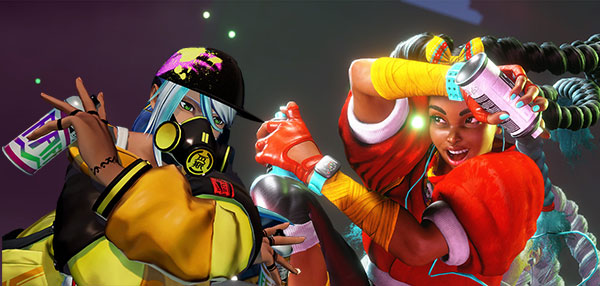
Graffiti is a way of storytelling, and is one of the few visual languages that is almost universally understood. It is one of the four pillars of Hip Hop culture. Graffiti is the visual art of the culture, b-boy (breakdancing) is the style of dance, emcee (rapping) is the style of singing, and dj (turntablism) is the style of music. Hip Hop was born in New York in the ‘70s, and became a globally recognized culture over the next 50 years. That means that a Hip Hop practitioner can come from anywhere. They can breakdance to music in a different language, and write graffiti using a non-English alphabet, and it is still recognized as part of the culture. Graffiti was used in stage backgrounds, and intro screens on video games, and is still used in game design. When graffiti is used with supporting details, such as additional tags, trash, and weathered textures then it helps ground the audience to a particular era, culture, or economic class.
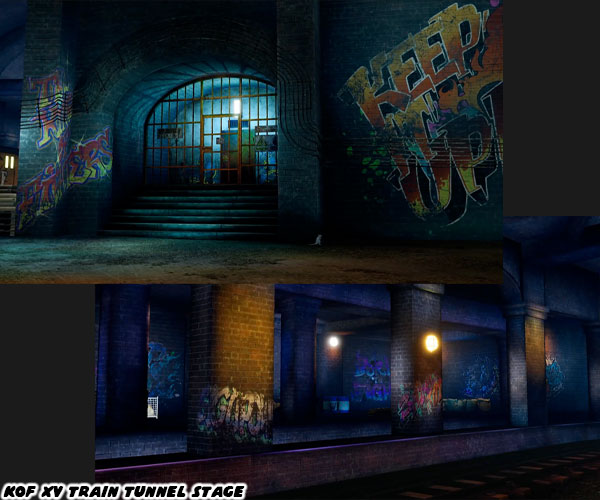
When graffiti is used without supporting context then it can be interpreted as a superficial element, as the developers do not fully grasp the culture they are trying to recreate. Poorly done graffiti doesn’t really help sell the game, or even ground the player. I would argue the superficial use of graffiti applies to Isla, and the train tunnel stage in KOF XV. The tunnel is coded for subway cars, however it features a freight car, which rarely, if ever, use the electrified tracks of a subway system. Also the graffiti covering the walls, and pillars of the tunnel are very clean, and stylish. They are not surrounded by illegible gang tags, trash, or other elements that are often found in living, breathing cities. SNK is very good at introducing characters into the KOF universe based on Western pop culture. The trade off is that these characters sometimes appear to only have a surface appreciation of the culture, and not a deeper foundation. Duck King for example appeared in 1991. He was the first b-boy-turned-fighting game character. His appearance was memorable, but as far as pop culture went it demonstrated that Japanese developers were behind the curve. 
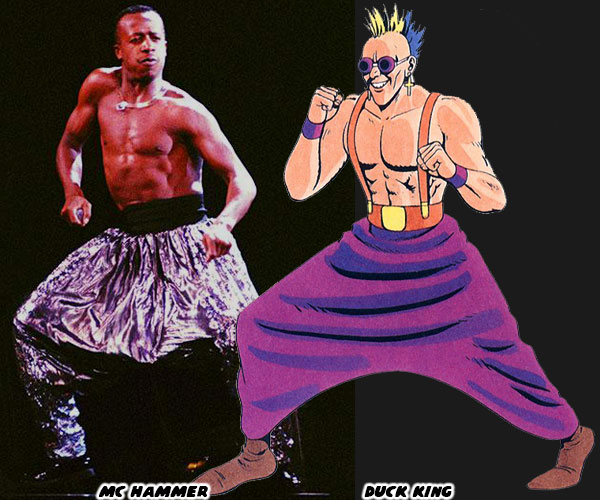
MC Hammer was a famous US rapper, and also an exceptional dancer. He popularized the oversized “genie pants” in the late ‘80s. However by the early ‘90s he was already waning in popularity in the west. Trends traveled much slower before the internet became commonplace. The Japanese developers at SNK thought they were beating the trend, and compared to other studios they very much were. However in a broader sense they were simply exploiting a trend, and not really invested in the culture. It was apparent as Duck King was a relatively minor character in the Fatal Fury timeline. It wasn’t the first time that a Japanese studio appropriated Hip Hop culture in a game. Kaneko released DJ Boy in the arcades in 1989. The brawling game featured an early attempt at recreating the culture for international audiences. It didn’t make much sense for people from the US, but I’m certain that audiences in Japan assumed that rollerskating gangs were everywhere in New York City.
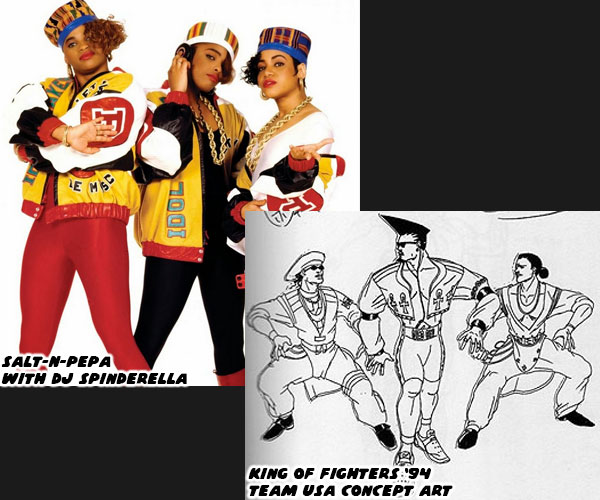
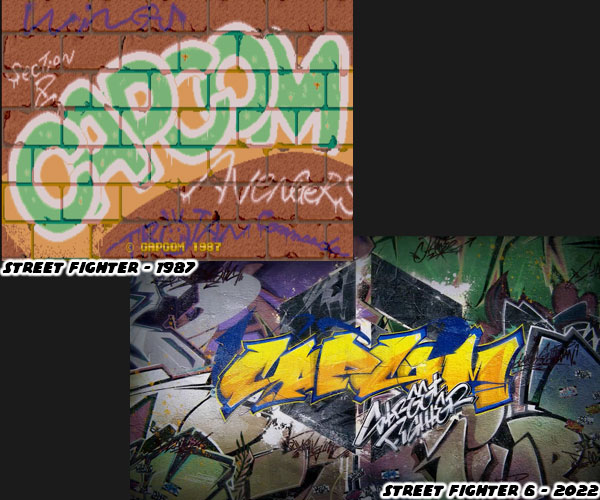
I had posted earlier on this blog that the genius of SNK’s character design was in hiding martial arts masters in plain sight. When the characters were done right, like Terry Bogard, or Kyo Kusanagi, who wore stylish street clothes they were as memorable as the Capcom school of design which favored fighters in more traditional costumes. However not every character was as well regarded. When you look at the design notes from the art team you can see how much they were trying to pander to western audiences. The concept art for Team USA in the King of Fighters ’94 looked like a Hip Hop dance troupe. The mix of spandex, and oversized coats was a popular trend in the late ’80s, and early ‘90s. By the time the team would be introduced the fashion would be outdated in the USA. Thankfully the studio went with a football player, basketball player, and boxer all wearing street clothes. These designs wouldn’t necessarily lock the team into a specific era. Capcom wasn’t immune to the trends from the west either. The original Street Fighter starts with a brick wall covered in graffiti. The Capcom logo is stylized in the original title screen, as well as the SF6 reveal trailer some 35 years later. 
Western pop culture from the ‘80s was all over early video games. Just on the influences of cult movies there would be no Metal Gear Solid without Escape from New York. There would be no Final Fight without Streets of Fire. The difference between how Capcom approached Kimberly, and how SNK created Isla demonstrate the different schools of design, especially with regards to appreciating Hip Hop culture. Kimberly is an energetic Black girl, as enthusiastic as Sakura was when she debuted in Street Fighter Zero. Both characters wore traditional costumes, Sakura dressed like a schoolgirl version of Ryu, and Kimberly dressed as a Black girl version of Guy. Both in sneakers, both essentially modernized takes on the iconic fighters. Kimberly is layered with additional details. Successful Black athletes have to blaze their own trails. In order to stand out from their peers. They have to be bold. Being Black, and successful in the USA means to live with more than a third of the country hating your existence for no reason other than the color of your skin. If you are going to be hated for everything you do then why not then flaunt your greatness? Audiences can see that Kimberly is a blindingly fast fighter, she is impatient as well. Doing running warmups before each battle. I do not think this was a throw-away detail.
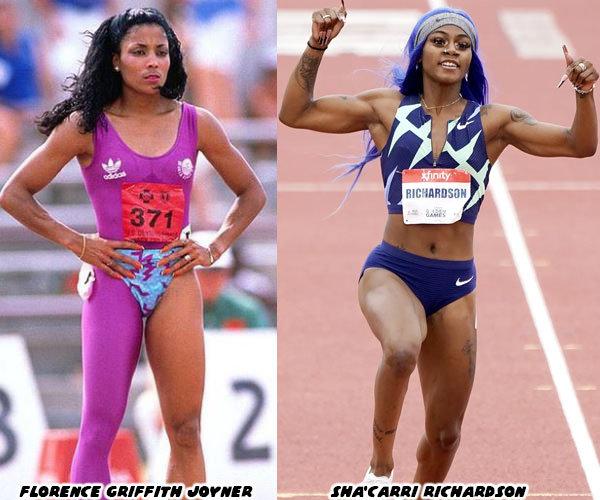
Kimberly is obsessed with the ‘80s. In that era there were many standout Black athletes. One of the most flamboyant was Florence Griffith Joyner aka “Flo-Jo”. The Olympian was a world class track star, that also happened to design her own stylish track suits. She became an icon on, and off the track. Most Black athletes were also subject to a lot of scrutiny. Flo-Jo was such a dominant figure on the track that she was accused of being on performance enhancing drugs. She was rigorously investigated, and subject to far more testing than her white contemporaries. She tested clean every single time, much to the chagrin of racist judges, and spectators. Sadly she passed away in 1998 from an epileptic seizure in her sleep. To this day we see shades of Flo-Jo with young Black track stars. The most recent of which would be Sha’Carri Richardson. The Olympic hopeful was sadly disqualified from the Tokyo Olympics for testing positive for marijuana use. To be fair she was self-medicating following the death of her mother. Of course other athletes, mostly white, did not receive such harsh criticism for recreational drug use. Kimberly has a gift for fighting, and at the same time she is also a young Black athlete. She reflects Hip Hop culture. She is a graffiti artist, she uses a classic cassette player to listen to music. Along with Jamie, the kung-fu b-boy, she is the second Hip Hop influenced character appearing in SF6.
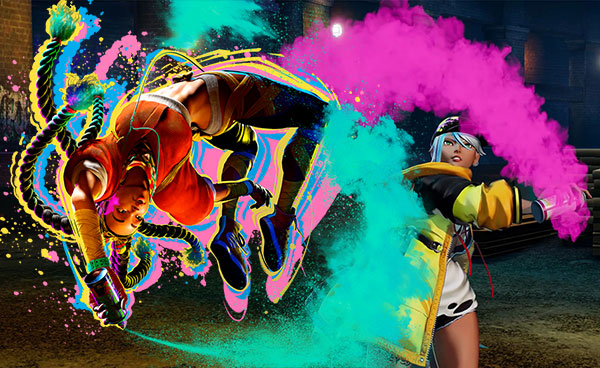
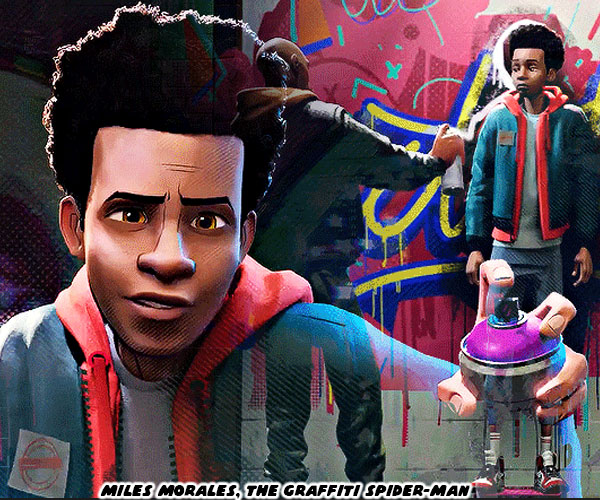
Isla by comparison appears to have cultural elements placed on her, and doesn’t necessarily represent Hip Hop. Not unlike Duck King when he debuted. Isla is focused on being a social media influencer, but SNK didn’t push anything about her art, or upbringing. They instead kept her past ambiguous, focusing less on her art, and more on her strange powers, and rivalry with Shun’ei. SNK could have at the very least associated her with Valparaiso, the street art center of Chile. Or made her an activist painting political street art in South America. I doubt that the current owners of SNK would be willing to put an anti-authoritarian in the game. I am glad that the studio is focusing on adding South American figures to the series, however any character could be placed in street fashion with splashes of paint, a respirator. It doesn’t mean they are a graffiti artist, any more than they represent Hip Hop, or Black culture. If they paid attention to what Marvel, and Sony Animation did with the character of Miles Morales as Spider-Man then they would know how much bigger graffiti art could define a character.
Street Fighter 6 Director Takayuki Nakayama, Producers Kazuhiro Tsuchiya, and Shuhei Matsumoto, and Designer Yusuke Hashimoto have all demonstrated a better understanding, and love of the culture with the footage they’ve released so far, and in their interviews. I doubt that the previous direction under Yoshinori Ono would have gotten it right. Perhaps that was why King Cobra never appeared in the game, despite the strong audience reaction. This is all of course my opinion. I’d like to hear your take on Kimberly, or the other fighters I’ve mentioned in the blog. Do you think Isla, Bandeiras, or Zarina were as well received by the fighting game community as Kimberly? Let me know in the comments section. As always if you would like to sponsor me please visit my Patreon page and consider donating each month, even as little as $1 would help make better blogs and even podcasts!
follow the Street Writer on Patreon!

Wednesday, June 29, 2022

Meet Kimberly, is she the Urban ninja of Street Fighter 6?

Hello friends, today we are going to look at another new character in Street Fighter 6. Kimberly may be the most anticipated of the new members in the lineup. She was first teased at the end of the Street Fighter 6 announce trailer. Her picture came up in the background of the Battle Arena. Leading many to believe she would be the next character to get a full reveal. Her look is actually layered with tons of elements. Let’s dig in to the colors, costume, and origins of Kimberly. First off the team working on SF6 is going full Hip Hop in the music, art, and aesthetic of the game. We saw that with the graffiti version of the Capcom logo in the first trailer, but it went much deeper. SF6 Producer Shuhei Matsumoto explained the Hip Hop connection to the series to Rolling Stone magazine. I had also called out the multiple Hip Hop elements applied to Jamie. Kimberly is no exception to the rule.

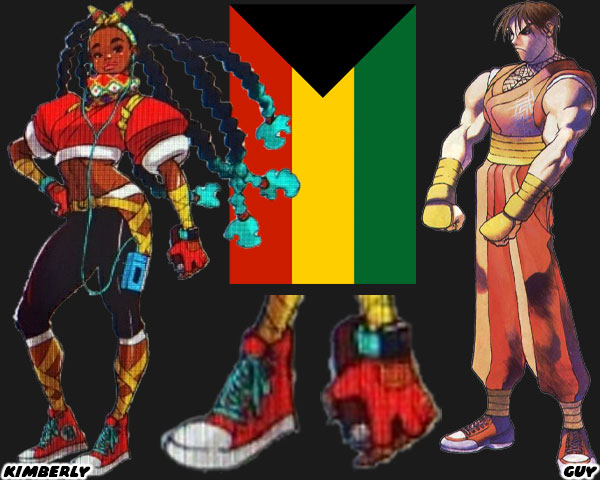
As a Black character Kimberly had a number of “urban” elements put on her. It wasn't the first time. In 1989 Guy broke the mold by being a modern ninja, with just the use of Nike Air Force 1's on his costume. With Kimberly there were a lot more modern details. She was sporting long braids with turquoise colored tips. She was wearing sneakers, a smart watch, listening to her Walkman, and holding a spray can. She had ribbon on her forearms, leggings, and wrapped around her ankles. I believe it is inferred that she is also a trained dancer. Capcom seemed to go all-in on her Black roots. Her color scheme seemed busy, but was very pro-Black, especially if she had been planned in the ‘90s. The colors of her outfit were very intentional. The Pan-African movement started over a century ago as a way to create a brotherhood among Black peoples in every nation. The colors of their flag were black, red, yellow, and green. Black represents the peoples of Africa, Red represents African bloodshed during the years of European occupation, Yellow represents the African riches plundered under occupation, and Green represents the fertility of the land. We get these details all over Kimberly’s costume. If I didn’t know better I’d say the studio was intentionally creating a femme version of Miles Morales.

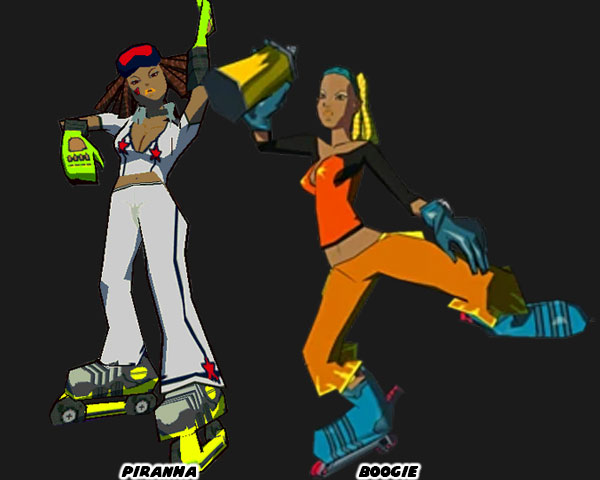
Prior to Kimberly there were two characters created in Japan that were Black, and very Hip Hop in gaming. Piranha from Jet Set Radio (2000), and Boogie from Jet Set Radio Future (2002). Technically I think both were meant to be the same character, but I digress. Smilebit was a Sega developer that created what I would argue to be the greatest Hip Hop games ever published. Both Jet Set games featured all four elements of Hip Hop. The characters could breakdance, and spray painting graffiti was part of the game play. Lastly the music, and plot was pushed forward by the emcee, and DJ Professor K. The kids of Tokyo-To were fighting for freedom of expression under an oppressive police state, and their corporate overlords. Every group of inline skating “Rudies” reflected different gangs in the series. The heroic GG’s were made up of positive figures of all colors, and Nationalities. The Jet Set series had a profound influence on art, gaming, music, and design for several generations. I wouldn’t put it above the Capcom developers to have grown up on this game. I’m not the only one that had this opinion. Kotaku said Ryu’s new theme belonged in Jet Set Radio.

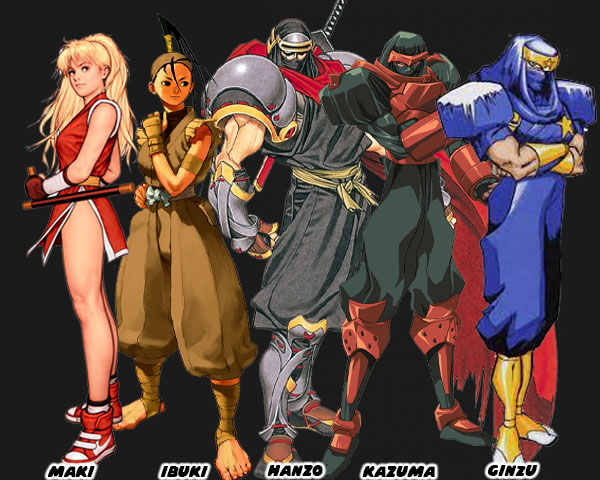
The color, and cut of Kimberly’s top was a familiar red, and white. We had seen the sneakers, and martial arts outfit combination originally placed on Guy from 1989’s Final Fight. I had Guy as #11 on my 30 most important Street Fighter characters. As you may know Guy was a Bushinryu Ninja, that was originally created to replace Ryu as the star of the franchise. With Cody replacing Ken. Street Fighter 6 was set to take place mostly in Metro City, where Final Fight took place. Anyhow the early take was that Kimberly was the first Black female ninja in the series. There were many ninjas in the Street Fighter universe. Geki was a NPC from the original SF. Then there was Maki, another sneaker-wearing member of Guy’s ninja clan in Final Fight 2. Final Fight 2 was a Super Nintendo exclusive. The first playable ninja in a numbered SF game was Ibuki, she debuted in SFIII. If Kimberly is a ninja as well then Capcom has done a good job of masking her costume in what appears to be plain clothing. The oversized shoulder pads was a classic ninja costume choice that had appeared in manga, anime, and other games. For example I talked about Kazuma, and Ginzu on my Galaxy Fight blog. Ninjas in pop culture also often wore face coverings, or sashes. Kimberly had a headwrap, and scarf with the Pan-African colors. I’m curious to see what moves, attacks, and specials she will be given. There is still a long way to go until the game was released, but I was eagerly watching each development. What about you? What do you think of Kimberly, or are you waiting to see how the other characters turn out? Please let me know in the comments section. As always if you would like to sponsor me please visit my Patreon page and consider donating each month, even as little as $1 would help make better blogs and even podcasts!
follow the Street Writer on Patreon!