Showing posts with label metro city. Show all posts

Wednesday, September 13, 2023

Street Fighter 6: A master class in game design, part 20

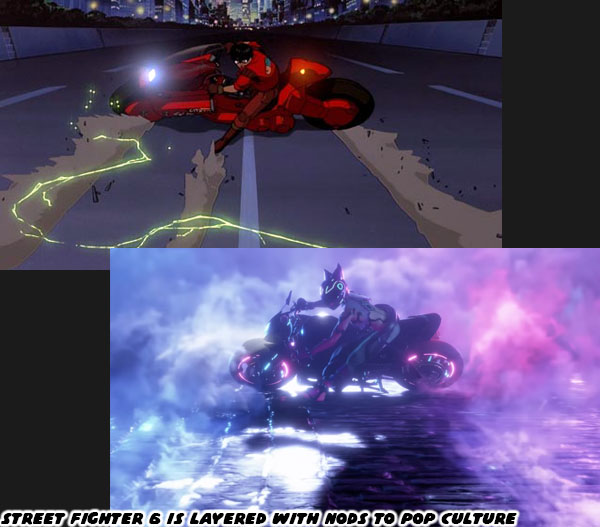
In the previous blog I had mentioned that Bosch had disappeared, and we weren’t sure if he would return. To be fair he didn’t’t disappear as much as he was kidnapped by Juri. After stealing money from Mad Gear to enter a secret underground tournament they had put a bounty on him. The tournament happening in Metro City was a preliminary event that was related to the secret competition. The various gangs were vying for entry into the finals, and its grand prize. That was the case for most of the gangs anyhow. There was a group from Nayshall, including Rewancha from the previous blog, that was trying to get to the finals for ulterior reasons. A clever nod to pop culture happened when Juri appeared to kidnap Bosch. Animation fans could spot the reference from a mile away.

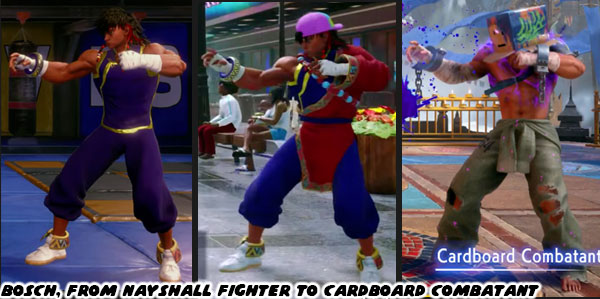
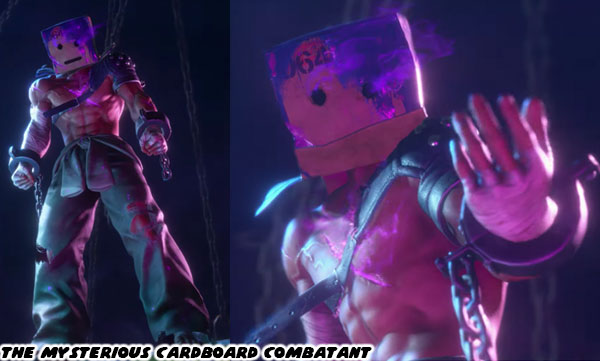
Shortly after Bosch disappeared a mysterious fighter showed up absolutely demolishing all the amateur entrants. The tournament in Metro City was called off due to bomb threats. This was roughly at the same time that the mystery fighter had appeared. He was covered in eerie purple glowing scars. He had broken shackles on his wrists. Long time fans of the SF series would swear that this person was filled with some version of Psycho Power. The same force that Vega / M. Bison / Dictator had been harassing to become more powerful. After the events of SFV it was assumed that Shadowlaw had been completely destroyed, and their technology along with it. This mystery fighter showed that there were still people that had access to that science. He would attack you, and warn you to drop out of the competition. He was known only as the Cardboard Combatant by the people that survived the fights with him.

If you were familiar with character turns in any form of media then you could probably guess who the Cardboard Combatant was. Or if you were obsessed with the details of fighting games you could have studied his size, and stance then you would recognize it was a variation of Yahriki, the martial arts form from native to Nayshall. Only three characters in the game used this particular style of fighting. Those were Bosch, Rewancha, and a character you might run across at the end of the journey named Fou-Lu. Many of us had guessed that this was Bosch well before he took off the box. But the how this happened, and why it happened to him became a mystery that you would have to unravel. In order to do this the World Tour would send you to the other side of the world. To a small town near the Himalayas known as Nayshall.

I would consider the second half of the game, the portion from Nayshall on, to be when Street Fighter 6 stopped being a great game, and became the game of the year. Think about all the praise I had heaped on Capcom over the past few weeks. Everything that they got right when it came to the balance, animation, character updates, new faces, animation, control, and features of Metro City. All of this praise was essentially doubled thanks to all the work the studio had put into Nayshall.

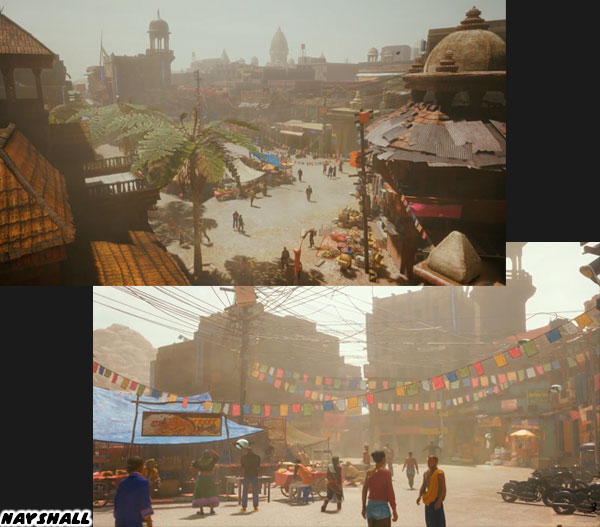
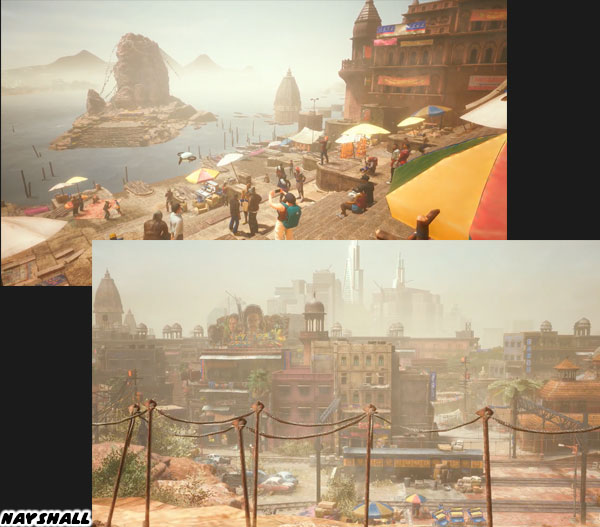
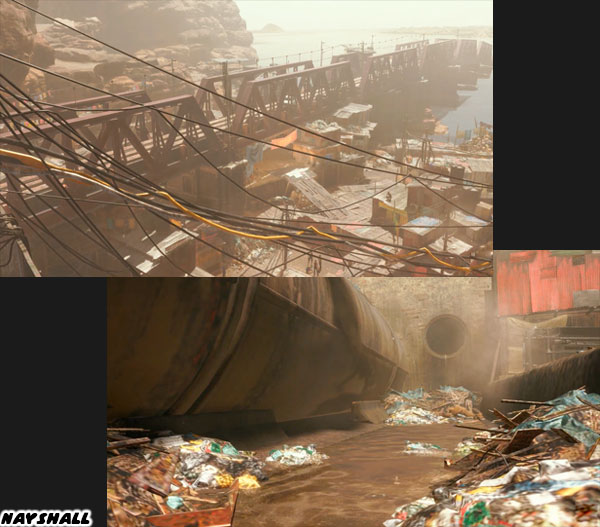
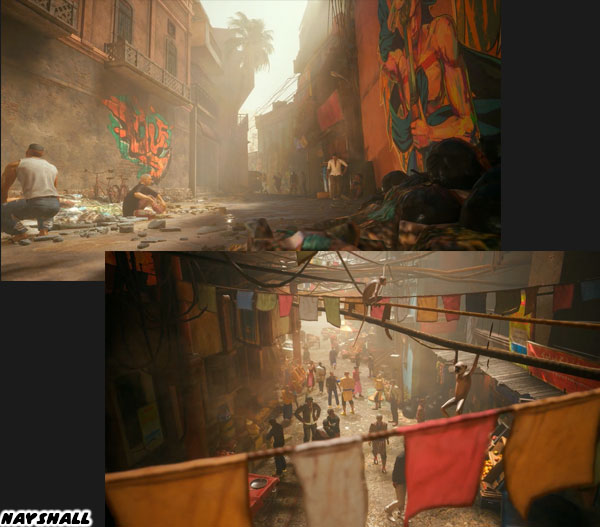
As I was taking screenshots for this series it never occurred to me where to even begin talking about this fictional country. It was easy to ease into Metro City starting at Beat Square, and then expand from there. There was so much to talk about in Nayshall that I felt like it would be easy to overlook something that made this stage feel real to me. So let’s just pause for a moment, and enjoy the first few screens the studio gave us of this country.

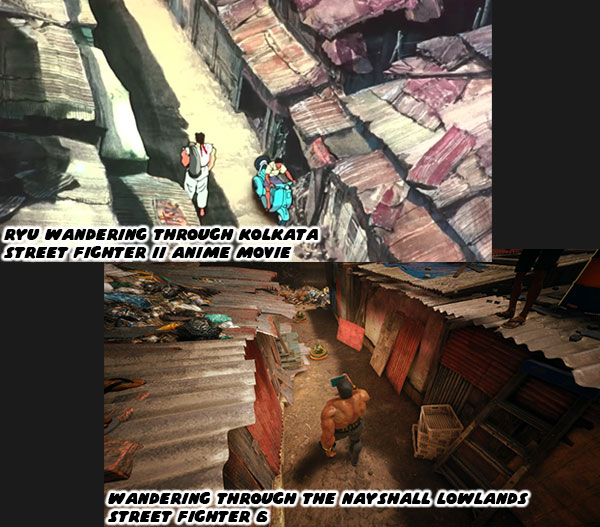
You could clearly see a market, a rail yard, a statue of some sort, and even Tibetan prayer flags strung up across the street. You could also see piles of trash, and people living in slums. There was a lot happening in the city, and many stories waiting to be heard. As I was wandering through the Lowlands I had an epiphany. It was the path of the warrior. The SF6 developers wanted you to feel like you were on a journey of self discovery. To have the same reactions, and reflections that someone like Ryu must have had as he traveled the globe.

The studio quite literally gave us bite-sized cinematic moments. No matter where we went, or who we battled, around every corner there was a new encounter, a new piece of the story. You were building the narrative for your avatar. In order to appreciate how the studio was able to accomplish this we need to travel back in time, to see how a movie shaped the destiny of the franchise. I hope to see you back for that. If you are a long time fan of Final Fight, or Street Fighter then I would like to hear your impressions of SF6. If you have never played any game previously then tell me your experiences in the comments section please. As always if you would like to sponsor me please visit my Patreon page and consider donating each month, even as little as $1 would help make better blogs and even podcasts!
follow the Street Writer on Patreon!

Monday, September 11, 2023

Street Fighter 6: A master class in game design, part 19

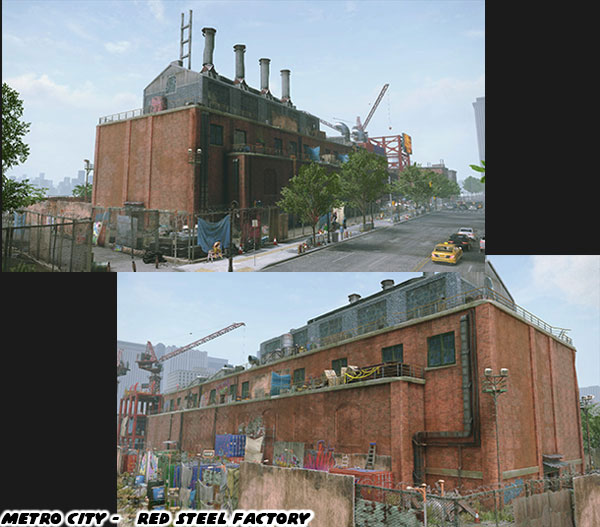
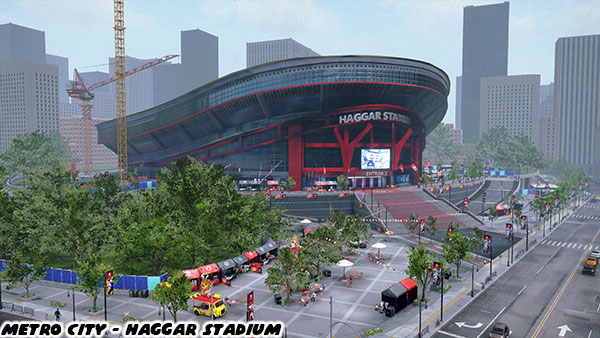
You would complete the side missions of the various masters, build a friendship with them, and challenge them in order learn new techniques. Past a certain point Luke recommended entering the amateur fighting tournament in the Haggar Stadium. It seemed like a logical conclusion to the World Tour. You would be competing against other fighters in this contest. I assumed that the game would end after this point. I mean up until that point I was blown away with how everything had turned out. As a fan since the original title I couldn't ask for anything more. Once you had signed up for the tournament you were allowed to continue exploring, but once the tournament began you wouldn't be allowed to leave the stadium. I had a lot of butterflies about competing so I decided to wander around that side of Metro City, and do more exploration. There was a massive industrial building next to the Chanko House. I decided to check it out.

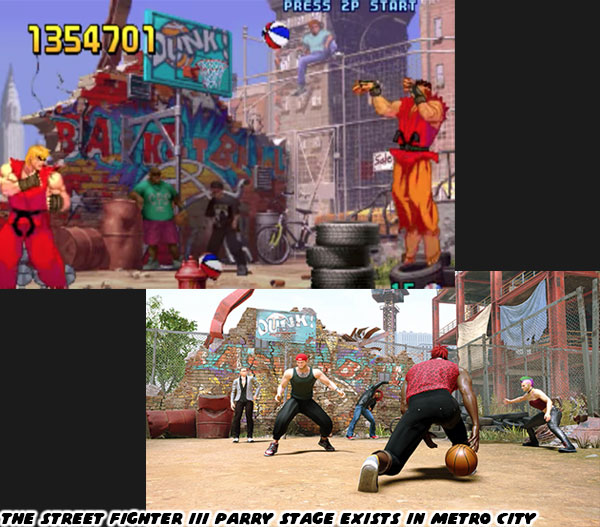
I had the eeriest feeling of deja-vu as I explored the building. I felt that I had been here before, but couldn't quite place the context. As I wandered behind the building I saw some people playing basketball. This was where one of the part time jobs was, the Ball Breaker Blitz, with Baller Mando. People that remember SFIII could recall the bonus stage where Sean was teaching how to parry. He would throw basketballs at you, and had you block them. Capcom had recreated that stage, including the color correct backboard, and graffiti on the wall but in 3D. Again the detail in this game was absolutely insane by any standard.

I still couldn't shake the feeling of deja-vu. It wasn't just the basketball court that reminded me of something. As I poked around the factory I kept thinking to myself there was no way a building this massive would just be taking up space in Metro City. That the developers must have placed something inside. Yet all the doors, and gates were closed. I thought that maybe it would open up at night. As I circled the building I found a ladder. As I climbed it I didn't expect to find much. Thankfully a side door was open near the top. That was when the SF6 team again showed why they were the best team for this project.

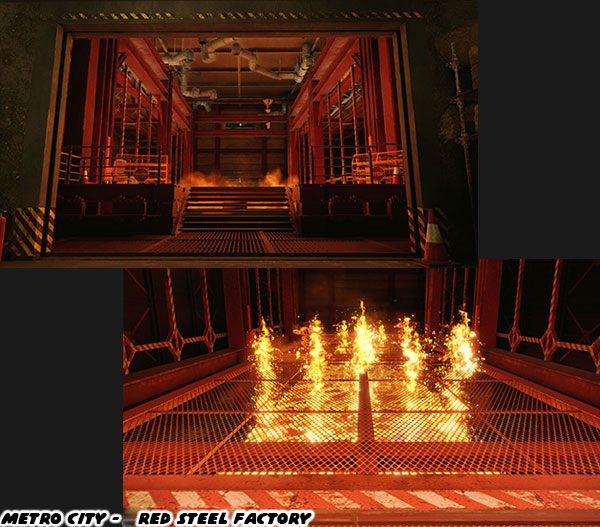
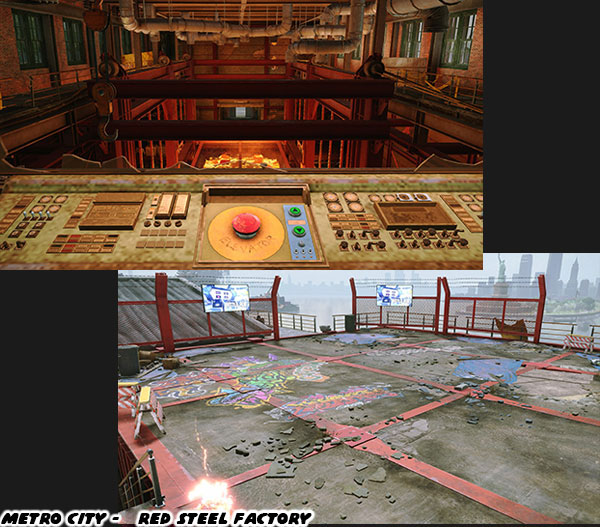
The factory may have looked abandoned, but it was very much still in use. The furnace was burning away, but the workers were nowhere to be seen. Capcom was letting you figure out what had happened inside. As you explored the massive complex you discovered there were Rampaging Drones, and Rampaging Hyoombas hiding in the corners. The robots that were already causing trouble elsewhere in the city had gone completely haywire inside the building. The rampaging models were overheating, they were sparking, smoking, and much more aggressive than any of the other AI robots in the game. They could be found exclusively inside the factory. I could imagine that the workers were too scared to enter the building once the robots had taken over.

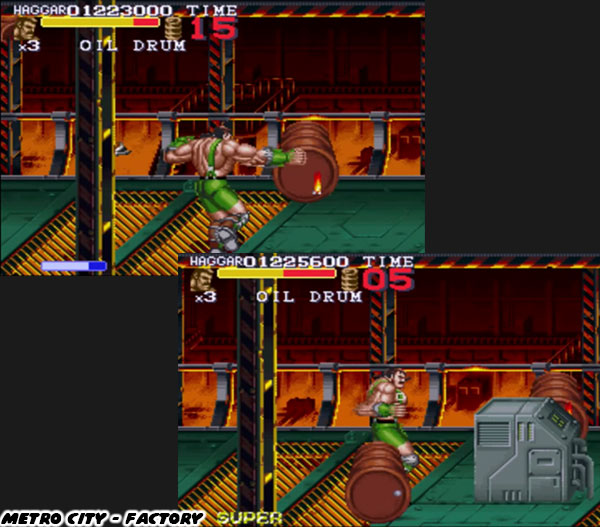
As I made my way through the steel grates, and battled the whirling machines of death I was instantly transported back to 1991. Capcom had recreated the Industrial Area from the original FF as a stand-alone adventure in SF6. This was the exact same Factory that was featured in Final Fight 3 a few years later. As I went floor-by-floor beating up the various robots, and occasional construction gang members waiting outside I was astounded by how much I recalled from the earlier games. Even though I played through the series once or twice I year, many of the details were burned into my memories decades ago.

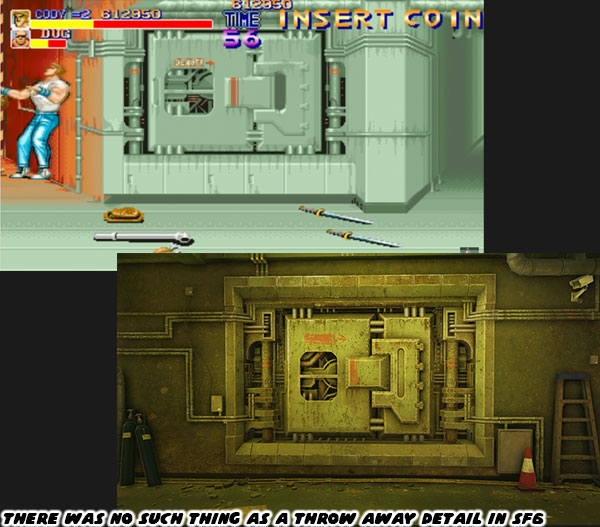
Seeing the massive machine door at the end of a corridor filled me with delight. I recognized all of the features of the building. I was calling them out to my daughter. She wasn't even born when FF came out, and was barely one-year-old when FF3 debuted. She wouldn't have any context or emotional connection to these things, but was happy that I was happy. I had been explaining to her that the game was very much a love letter to the genre. There was no feature that the studio overlooked. As I climbed up each floor, and fought robots, and workers it captured the spirit of FF just as well as the subway had. When I finally reached the control room for the factory I saw that it was packed with all sorts of robots. They must have easily overrun the workers, and forced them out. Upon defeating them you were able to lower the metal grate over the furnace, and unlock the front doors to the building.

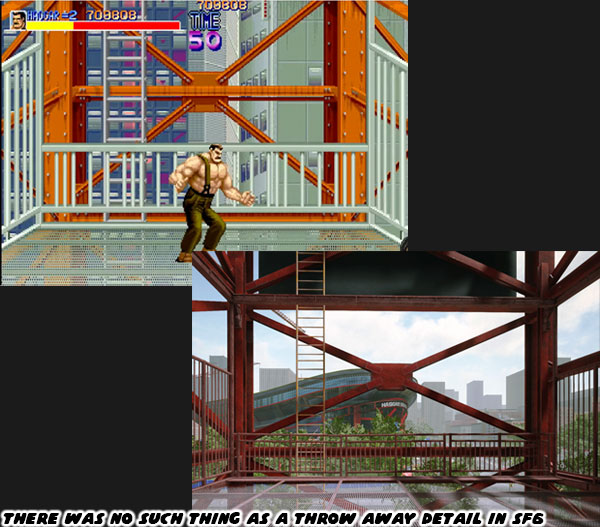
As I walked out of the room, and onto a metal grate industrial elevator I started freaking out. I knew instantly that it was the same elevator that you rode, and fought Rolento on some 35 years prior. There was even a ladder right next to it, the same one that he climbed while throwing grenades at you. As the elevator descended my heart started racing. For just a moment I thought that the Mad Gear general was going to appear. I was disappointed that he didn’t show up given how many cameos the developers were pouring into the game. Instead it was the one place in the city where you were guaranteed to get two android Copy Fighters to appear. After opening up the Red Steel Factory my adrenaline was pumping. The game had me prepped for the tournament now. I reported back to the Mike Haggar stadium, and told the host that I was ready to begin.

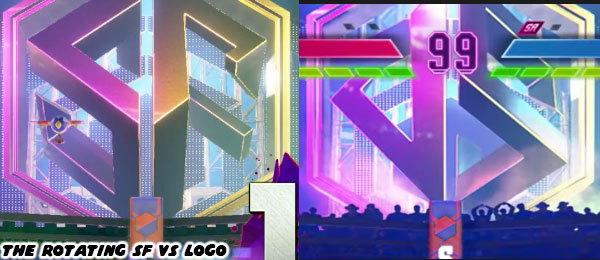
There were a handful of unique characters created for the amateur tournament. Sort of like “light” versions of Street Fighters. They looked like the generic characters that would turn up in an Udon comic book to fill out an encounter with the stars. You were expected to battle a few of them in order to reach the finals. Eternity, the host of the Battle Hub was also on hand to interview the participants before each match. Something that stuck out to me, other than the great arena design, were the floating 3D logos in the background. They rotated to show both the letters SF, and VS, in between matches. Again this was something that could be considered a throw away detail, but was something the team had planned with some forethought.

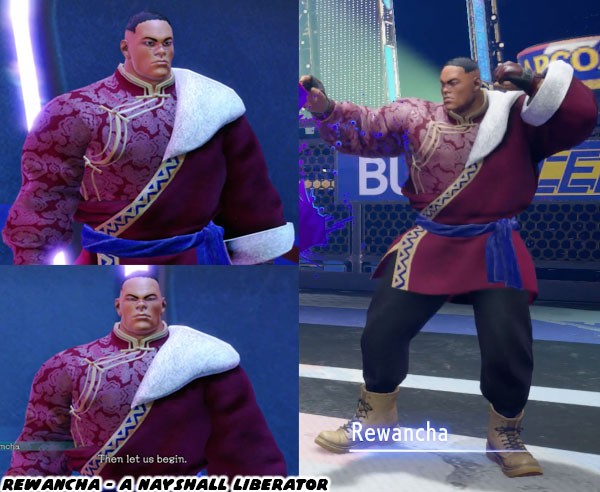
The final match in the tournament featured you versus a large brawler named Rewancha from a country called Nayshall. It was the same place that Bosch was from. This fighter was dressed in traditional clothing, and was determined to win it all. I figured he must be related to Bosch, perhaps a big brother. Maybe he would be able to tell me what happened with my sparring partner. He was as tight lipped, and intimidating as a mob enforcer. You weren’t getting any information out of him, aside from he was planning on destroying you in the fight.

As I said at the start of this blog. I honestly expected the World Tour mode to wrap up after this tournament. After all the SF6 developers had already done a tremendous amount of world building, storytelling, and cameos from the various games. What else could they have hidden up their sleeves? It turned out that I had barely scratched the surface of the game. The next half of the adventure was going to be even deeper. I’ll talk a little bit about the road that brought us here in the next blog. I hope to see you back for that. If you are a long time fan of Final Fight, or Street Fighter then I would like to hear your impressions of SF6. If you have never played any game previously then tell me your experiences in the comments section please. As always if you would like to sponsor me please visit my Patreon page and consider donating each month, even as little as $1 would help make better blogs and even podcasts!
follow the Street Writer on Patreon!

Friday, September 8, 2023

Street Fighter 6: A master class in game design, part 18

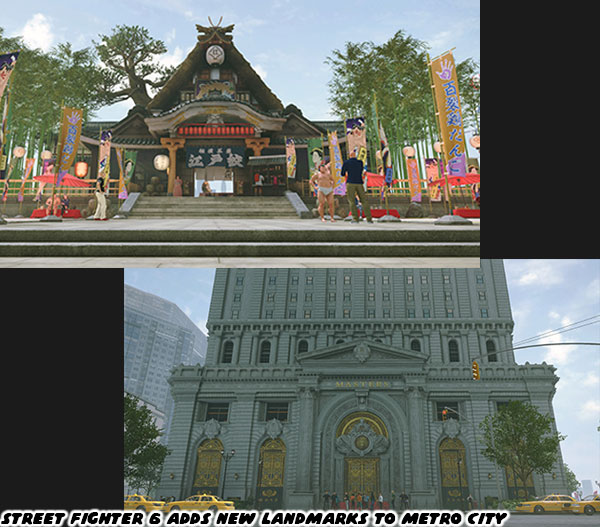
The World Tour in Street Fighter 6 was not only designed to ease players into the genre of fighting games, but it also wanted to tell a good story. The challenge, and pace of the game was perfect for new players, and surprisingly fun for seasoned players. Luke from Street Fighter V had returned, a little bit wiser than before as your trainer. He advised you to visit every corner of Metro City, and then travel the globe looking for new masters. The iconic World Warriors would teach you the basics, and help your avatar become a stronger fighter. Chun-Li was the first star that you met along the way, but she was not the only one that was teaching in Metro City. The thing that I could not have predicted was seeing E. Honda appear on the other side of town. The game had already retconned the Masters Building into the Metro City skyline. It was not the only new landmark being added.

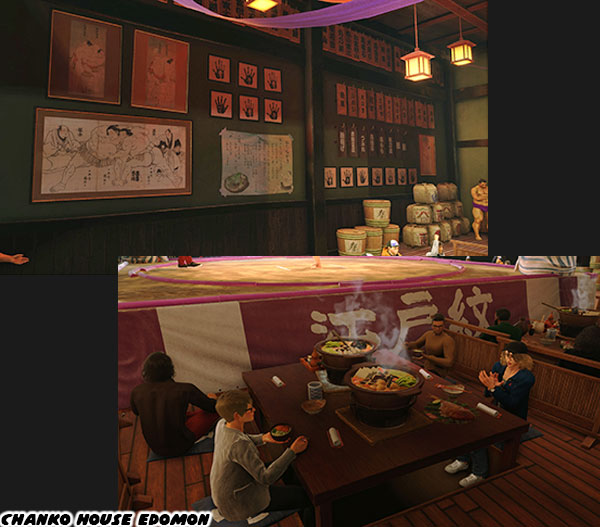
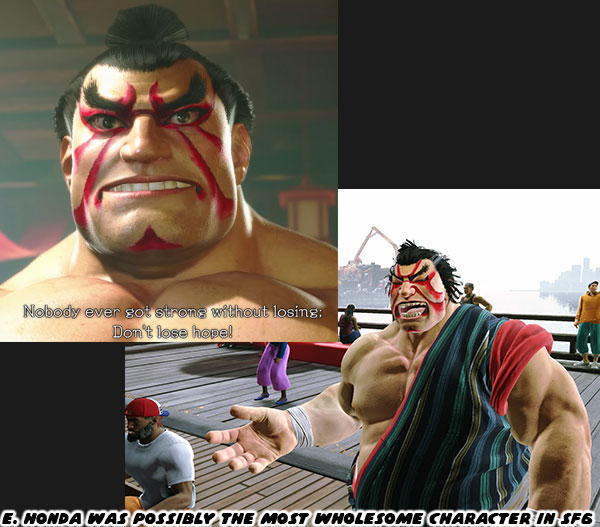
E. Honda had actually been traveling the world looking for the perfect place to set up a restaurant. Well, not just any restaurant, but a chanko house, the food that sumo wrestlers would traditionally eat. He wanted to share the culture of Japan, the tradition of sumo wrestling, and of course the delicious food in an entirely new community. The building he created was similar to a classic Japanese hall. Tiled roof, hardwood floor, and all of the trimmings. The level of detail in the house was absurd. An actual sumo ring was surrounded by booths for guests. They could be seen enjoying bubbling pots of chanko stew, and watching other patrons fight against Honda's stable of wrestlers.

It was easy to get lost in the details placed inside the restaurant. Enormous saké barrels were stacked next to modern refrigerators. There were paintings, and prints of ancient sumo wrestlers adorning the wall. The names of previous yokozuna, ozeki, the ranked sumo wrestlers, and the banzuke or list of current wrestlers were were pinned on the rafters. Sumo autographs were very unique, they would often sign a handprint. Fans could see how massive their palms were compared to regular people. The restaurant had an entire wall dedicated to the other legends in the sport. Honda himself was no different, his hands were as thick as his belly. It was apparent in his dialogue, and the other NPCs that he was beloved in the sport.

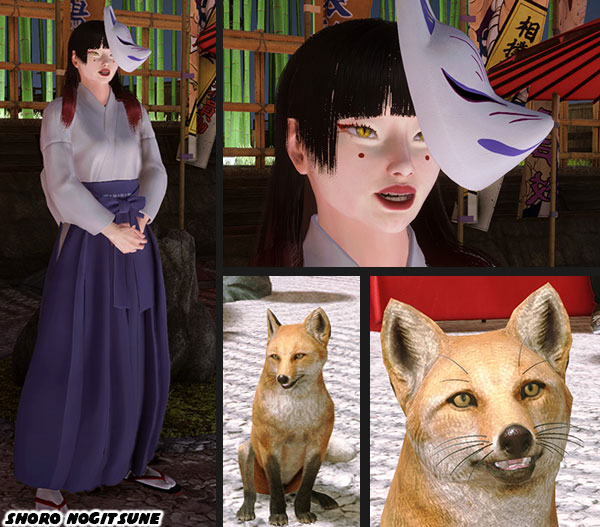
What the game never could have prepared me for was the wholesome writing throughout. You were not only learning how to fight using the styles of the various masters, but you were also building a friendship with them. They were sharing their history, cultures, and traditions with you. Even the more reserved, and introverted characters like Cammy could be won over in time. She would open up a little, and build a bond with you as long as you put in the effort. When it came to Honda he was not doing a surface level overview about sumo culture. He was giving you a deep dive on Japan itself. In fact, Capcom was making sure that he would be bringing a part of Japanese mythology with him. As I was exploring the Chanko House I noticed a young woman named Shoro Nogitsune wearing a fox mask, and standing outside. She had unique yellow eyes. I talked to her to see what she had to say. In one dialogue tree she said that she had no relation with E. Honda. In fact she said “As if I’d give the time of day to young folk like Honda or K-er… did I say young? I meant older than the hills. Why, I’m simply an innocent shrine maiden, lured in by the wafting aroma of fried tofu.” When I returned during the daytime the woman was gone, and instead there was a fox sitting in the rock garden, about the same spot that Shoro was at.

A kitsune was a fox, and had a long history in Japanese mythology, a nogitsune was a fox without a divine spirit this meant they could change shape, and take the appearance of a young woman. Previously we had seen a playable character from the fox myth named Ameth. The 998-year-old fox spirit appeared in the game Xuan Dou Zhi Wang / King of Combat. E. Honda oozed so much Japanese spirit that the spirits followed him to the USA. He explained what the shikona, or ring names meant for the wrestlers themselves. He explained that he never made yokozuna, the top rank in the sport because he was too busy competing outside of the standard tournaments. The sumo schedule was demanding, you had to compete even while injured or else you would lose rankings. He certainly had the skills to be the greatest ever, but his passion extended beyond the ring. In a way it was bittersweet but this self awareness gave the character more dimension than anything else had in the past 30 years.

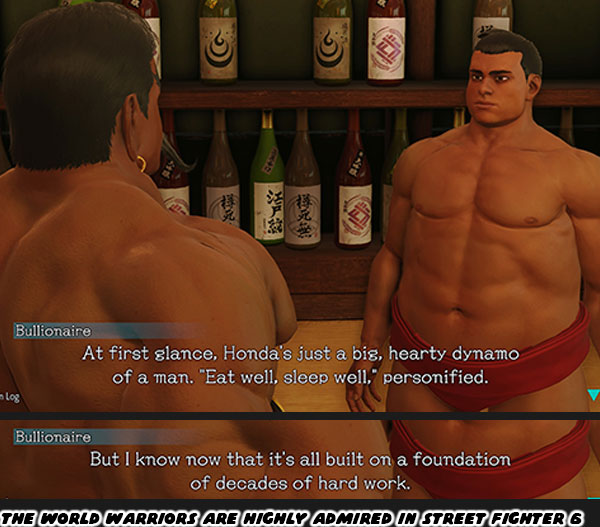
E. Honda was introduced in SFII as the dramatic sumo. His kabuki face-paint flew in the tradition of the sport. Sumo was closely aligned with Shinto spiritual beliefs. Every tournament was layered with religious ceremonies. Then Honda turned up one day and was turning it into theater. That silliness was supposed to appeal to American players more than Japanese audiences. For the majority of his existence he was presented with a comedic tone. This time however he had some actual dimension. The way he acted, the wisdom he spoke, the way he presented himself was deliberate. He was filled with joy, and it was palpable. He would ask you to help find new disciples to work at his restaurant. His passion would rub off on them too. I ended up having much more love, and respect for this character than ever before.

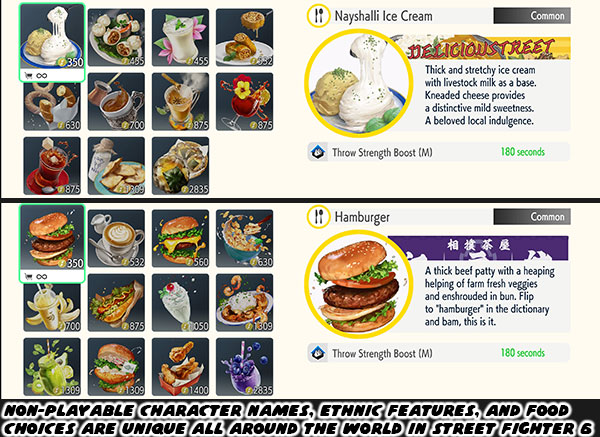
I never expected the SF6 team to go out of their way to give us realistic portraits of the World Warriors. They showed us how they thought, and let us hear in their own words what they were fighting for. The World Tour did much more for all the characters than any arcade story could have ever done. Even the smallest details were explained in the game. For example your avatar would take damage, and lose energy during the fights. You would have to buy something to eat, or drink from the local vendors to recover energy. The food at each business was unique. At the Chanko House you could get udon, tempura, or any other type of traditional meal. Every food item had its own history, and benefit. Some allowed you to earn more experience points, others allowed you to deal more damage for a limited time. There were even unique items that you could order while you were traveling. A drone would deliver your food to you. 

It seemed absurd to me that the SF6 developers would go out of their way to explain every dish in the game, and its benefits, but this was a tiny detail that was important for world building. It would set the standard for the company moving forward. It was an example of the work that Capcom was putting into Street Fighter 6. You weren't expected to just run from fight to fight, but to experience the world that they had created in between all of those battles. We will dig even deeper into this side of Metro City in the next blog. I hope to see you back for that. If you are a long time fan of Final Fight, or Street Fighter then I would like to hear your impressions of SF6. If you have never played any game previously then tell me your experiences in the comments section please. As always if you would like to sponsor me please visit my Patreon page and consider donating each month, even as little as $1 would help make better blogs and even podcasts!
follow the Street Writer on Patreon!

Wednesday, September 6, 2023

Street Fighter 6: A master class in game design, part 17

At the start of this series I talked about how the Street Fighter 6 developers were using the World Tour to ease a new generation of players into the many fighting game concepts. From random gang encounters, to part time jobs, to selective battles with pedestrians. Each of these things helped build muscle memory, teach range, reaction, counters, and using the Drive Meter. Each of these would make for better fighters, and a better SF experience. One of the more specific ways that the World Tour was prepping audiences for fights with the various masters was through the use of Copy Fighters. These were synthetic humans that popped up on occasion, similar to gangs. Yet unlike a gang member these androids were guaranteed to have many of the special attacks of an actual SF master. To be fair sometimes a random pedestrian or gang member would also have a move or two from a master, but the Copy Fighters had almost all their moves. They were nowhere near as strong as the actual master, like E. Honda, Ryu, or Guile for example, but they did know how to perform several of their combos, and special attack strings. Copy Fighters were sort of like random mini bosses to increase the challenge in the middle of the World Tour.
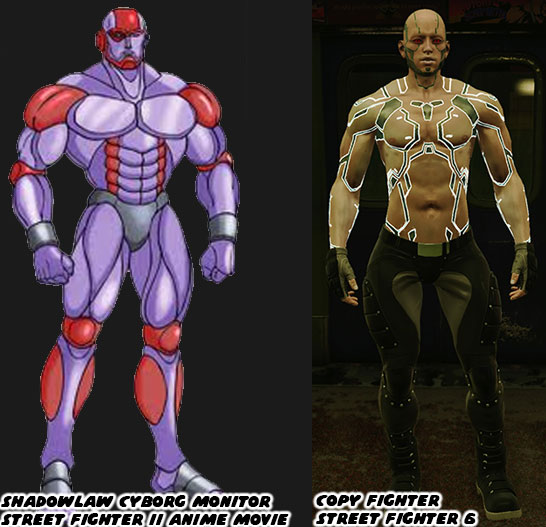
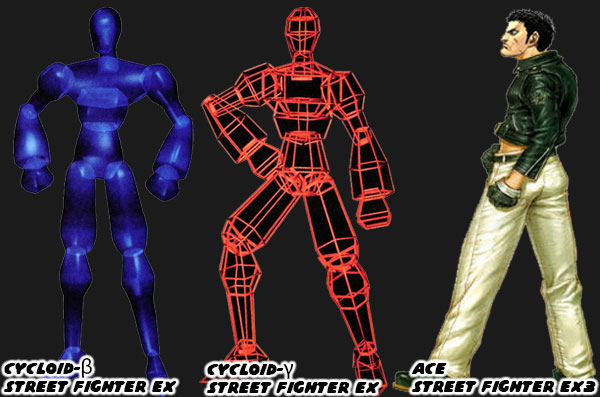
The idea of a cyborg that could copy the moves of the various fighters had been seen in other games, including Mortal Kombat. In the SF universe the first use of this was the Shadowlaw Cyborg Monitor. They were seen in the SFII anime movie, they were stealing the data, and copying the moves of the various masters. These cyborgs were actually playable on the Japanese Saturn, and Playstation consoles with Street Fighter II: The Interactive Movie. Audiences could take control of the cyborg after a prompt, and try to defeat Ryu in order to steal his moves. This sort of character would evolve in the Street Fighter EX series by ARIKA. There were two humanoid robots called Cycloids; Beta, and Gamma respectively. They each had special attacks from roughly half of the cast. Between the two they could perform all the special attacks from the masters. The evolved version of this character became ACE, and players could choose which moves he would be able to copy.
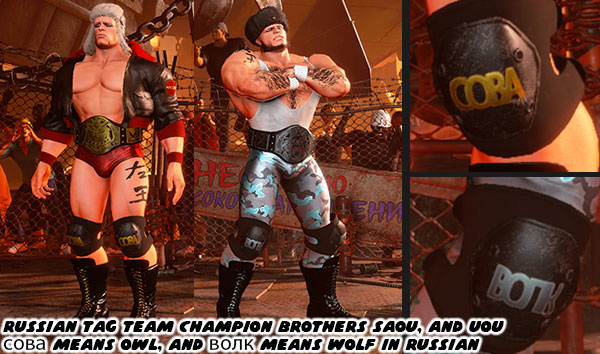
Copy Fighters, and Cycloids weren’t the only way to get a lighter version of a boss fight. Street Fighter 6 had understudies for several of the masters. They had the moves, range, and strategy of their masters. The only lacked the stamina, and more advanced combo attacks of the main SF roster. For example Zangief was established as a pro wrestler. Arguably he was the greatest pro wrestler in the entire SF universe. This didn’t mean he was the only one. The game introduced a pair of tag team wrestlers. They were Russian brothers named Saou, and Uou. One wore the championship belt with an owl mascot, and the other with a wolf. The two shared lessons from Zangief with the player. They could also be challenged for a match.
There were two other NPCs that were crucial to the story mode. Bosch, your friendly rival introduced in the story mode, had stolen money from the Mad Gear gang. In order to make amends you had to team up with Mad Gear, look for recruits, and fight against the Crows. The leader of the Crows was a punk named Rudra. It turned out that he was an understudy of Dhalsim, who had run away from the temple many years prior. He saw that kids were suffering, and being abandoned on the street. Instead of meditating about the problem he figured had a duty to act. So he would round them up, and teach them how to survive. Despite his punk looks he was a noble character in many regards. I think that was the reason why his abilities developed greatly with Dhalsim as his master. In typical SF6 design, nothing was put into the game by accident. The name Rudra actually had multiple meanings in Hindi, including he "who eradicates problems from their roots".
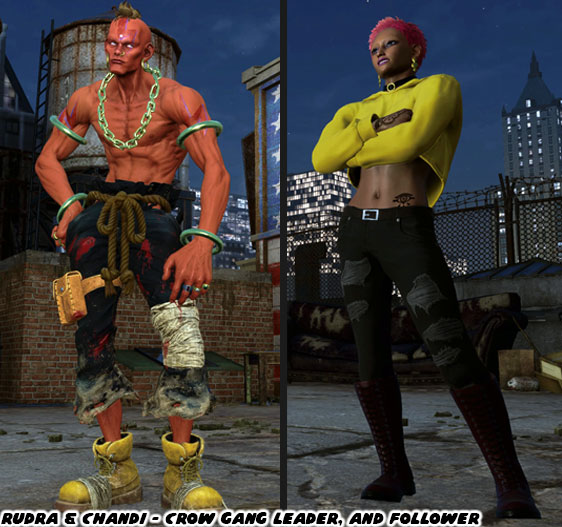
Rudra was joined at the hip by Chandi. The long-suffering Crows recruit that was doing everything in her power to get senpai to notice her. The writing, and personalities of the two characters came through clearly in the World Tour. Rudra was aloof, and disinterested in everything, but especially in society. Chandi was a sort of opposite. She had a bubbly personality, and earnestly believed in her leader. They easily had my favorite dynamic in the title. As with Rudra her name was important as well. Chandi or Chandika was a Hindu deity. She was a powerful form of Mahadevi (the supreme goddess) who manifested to destroy evil. Both of the characters may have been involved in gangs, but they had a noble purpose. This was opposed to the Mad Gear who just wanted to take back control of the streets, and the city.
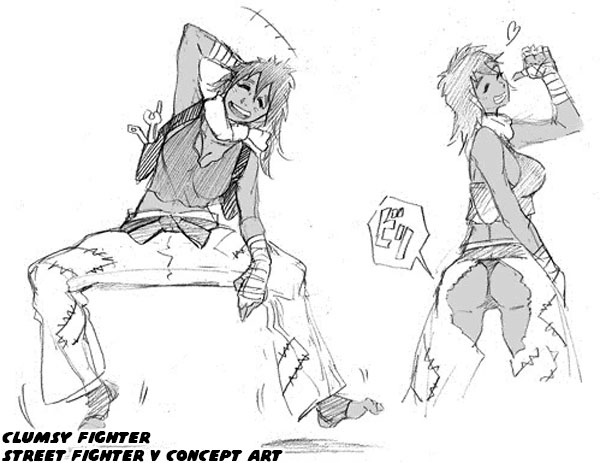
I believe that the roots for the characters had actually been planted many years earlier. During the planning stages of Street Fighter V one of the character concepts was called the Clumsy Fighter. She was a girl wearing torn clothing that managed to stumble her way through a fight. She carried a bag with wrenches, and other tools that she could use to her advantage. I could imagine the SF6 team, which also worked on SFV were going through their unused concepts, and being influenced by the tattered clothing, and carefree attitude of this girl. It was also possible that the idea of NPCs in SF6 throwing wrenches came from this concept character. Or it could have come from Pupa Salgueiro from the Rage of Dragons. That young lady also fought with a wrench in an earlier rival studio game.
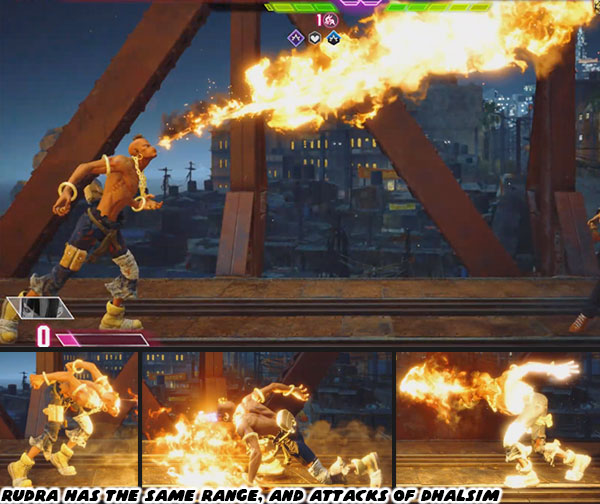
If you were to tell me a few years ago that there would be a new stretchy-limbed Indian in SF6 then I would have scoffed at the idea. If you would have told me that the character was better developed, and presented than Dhalsim then I would have said it was impossible. Yet in the end I absolutely loved the character. I would go so far as to say I enjoyed his design more than all the new SF characters. To be fair Kimberly, and Marisa had some amazing personalities that shone through their animations. There were so many fantastic elements layered over the punk that it wasn’t fair that he would be an NPC opponent. For example take a look at the little details like his mohawk, and the paint on his head. At first glance it looked like the red stripe on Dhalsim’s forehead. However it was painted in a lightning bolt shape, falling over his left eye. This conjured up images of Ziggy Stardust the stage character created by rock icon David Bowie. He also wore a lot of jewelry. His nose, and ears were pierced with gold rings, he sported a gold chain, and large gold bands on his upper arm, and wrists, plus gold rings on his fingers. There hadn’t been this much flash on a punk since Birdie in SFZero.
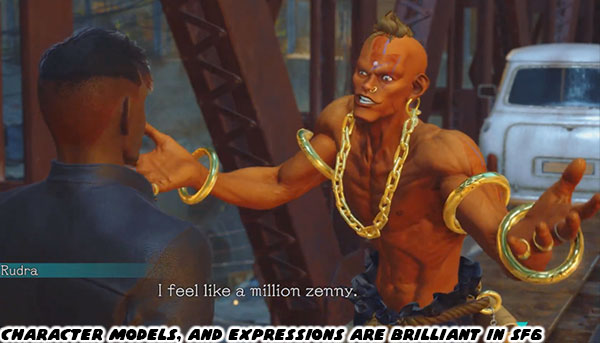
Dhalsim was much more subtle in design, and personality. His necklace was made of rope, and his bracelets were metal, I wouldn’t even say they were silver. He was much more humble by comparison. To be fair Rudra was literally cut from the same cloth. His clothes were tattered, and torn. Athletic tape was holding his pants, and boots together. These were the modern equivalent of the rags that Dhalsim wore when he was doing his Prāyaścitta or penance. I could easily imagine Dhalsim being retired, and having Rudra return to fill that role in future sequels. I would frankly welcome that.
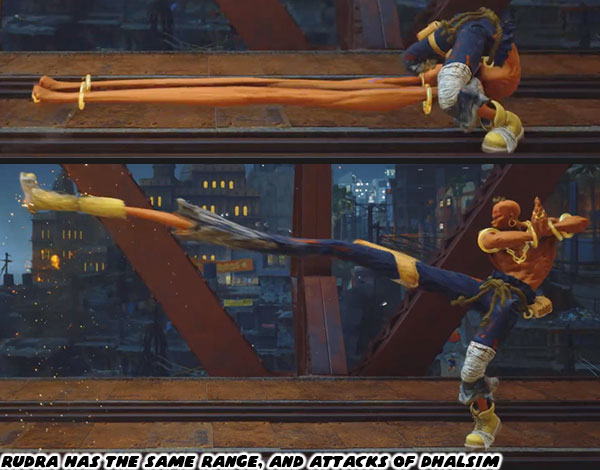
If I had one complaint about Dhalsim, or Rudra it would be with how their powers were represented. Previously it made sense that Dhalsim could only stretch his limbs on direct strikes. You could imagine that he could dislocate his joins, and throw a punch, or kick straight forward, and back. However in SFV, and SF6 he seems to be made completely out of rubber. He would contort himself in all sorts of positions, even while throwing simple attacks. There was no regard for his bone structure, muscles, or tendons. As if he were Plastic Man, or Mr. Fantastic from the comic books. The thing was that this type of character had already been done in SFIII. His name was Necro.
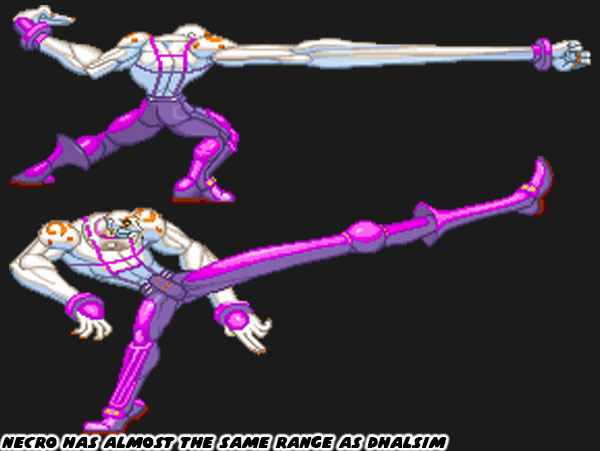
Street Fighter III Producer Tomoshi Sadamoto, and designers Yasuhiro Seto, Tomonori Ohmura, and Obata Shinichiro did their best to follow in the footsteps of the previous teams. Their goal was to create an entire new library of characters. They didn’t want to bring back any of the previous World Warriors, except for Ken, and Ryu. They wanted to explore new styles of fighting, and create new archetypes. Unfortunately for them people were looking for new characters that played exactly like old characters. They saw the stretchy Necro, and assumed he was the new Dhalsim. In a way he was. He had almost the same range, and his fire special attacks were replaced with electricity. But then if you dug deeper you realized this character did not employ the same strategies. His setups, his combos, and special attacks were uniquely his own.
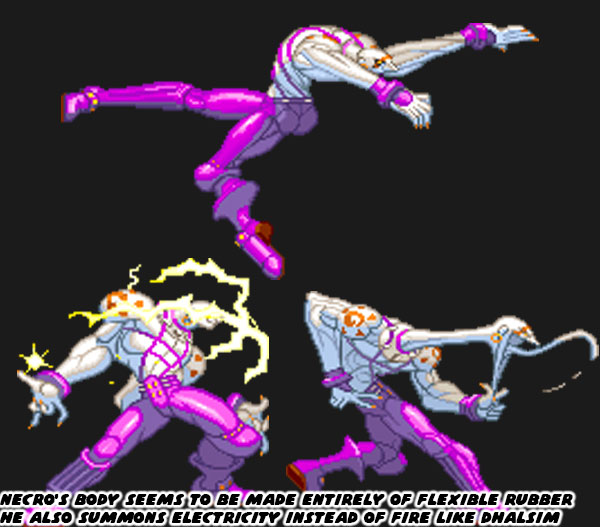
The other thing about Necro was that his skin, bones, muscles, and tissue were rubberized. He had been experimented on by Gill, and his Illuminati as part of the G-Project. They were trying to create the ultimate soldier, someone that was impossible to injure. Necro didn’t look quite human. His pupils were gone, his skin pigment was gone. The melanin was replaced instead by a light lavender. The fighter could stretch his face as if it was made of putty. He could twist his torso, arms, and legs past where they would normally break. He seemed impervious to any damage no matter how much he twisted himself up. Capcom shared the earliest designs for Necro in their arcade Secret Files. He was originally proposed to be an android.
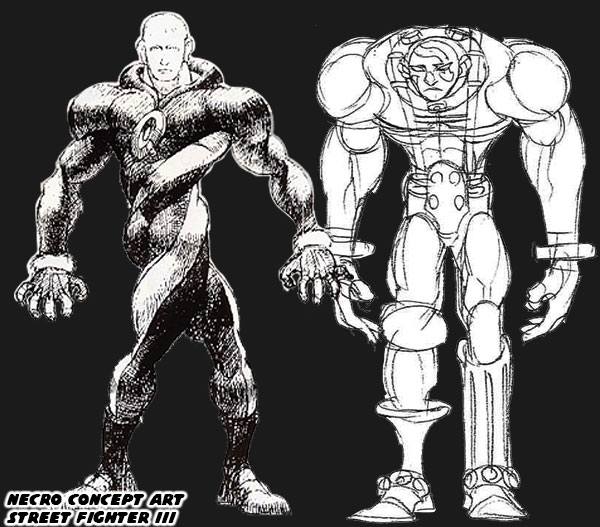
Other synthetic lifeforms were created following the Necro experiments, including the shape-shifting characters Eleven, and Twelve. It made sense for Necro to be more flexible than humanly possible given that had been genetically modified. All of that stretching, and flexibility worked in the context of his origins. I don’t think those things should have been applied to Dhalsim in SF6. But that was a minor gripe in an otherwise fantastic game. Thanks to Copy Fighter, Saou, Uou, and Rudra audiences could get practice fighting light versions of the SF masters while in the middle of the story mode. Speaking of which. All of the time spent traveling the globe, and Metro City meant that you were going to compete as an amateur in the Metro City Fighting Tournament. It would be a test of whether or not you had mastered everything that had happened up until that point. We will look at the next chapter of creating this experience in the next blog. I hope to see you back for the next entry. If you are a long time fan of Final Fight, or Street Fighter then I would like to hear your impressions of SF6. If you have never played any game previously then tell me your experiences in the comments section please. As always if you would like to sponsor me please visit my Patreon page and consider donating each month, even as little as $1 would help make better blogs and even podcasts!
follow the Street Writer on Patreon!

Monday, August 28, 2023

Street Fighter 6: A master class in game design, part 13

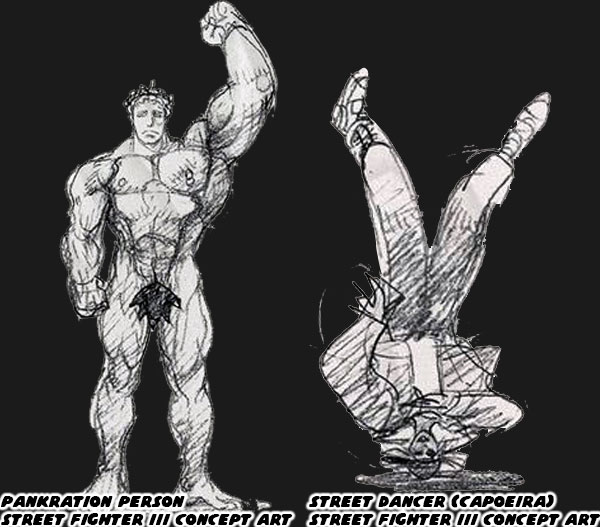
In the previous blog I talked about how Capcom learned how to create graffiti, and tattoo art for their games. In the ‘80s it was simply emulating the art style for the sake of pandering to the west. Years later it became an art form that they understood, and used to make their titles feel more authentic. I also talked about how important it was to have representation carry the elements of Hip Hop into the series. Kimberly was an amazing graffiti artist, and Jamie was an incredible b-boy. The studio had been trying to get a breakdance fighter into the series going back to the development of Street Fighter III, circa 1995-1996. In the earliest concept art this character literally stayed on their head the entire time. This dance type fighter would be dusted off, and revisited during the development of SFIV more than a decade later. It would be refined in some early designs for King Cobra. Then dropped for the sake of pursuing a funny fatty. It wouldn’t be brought up again until Jamie.

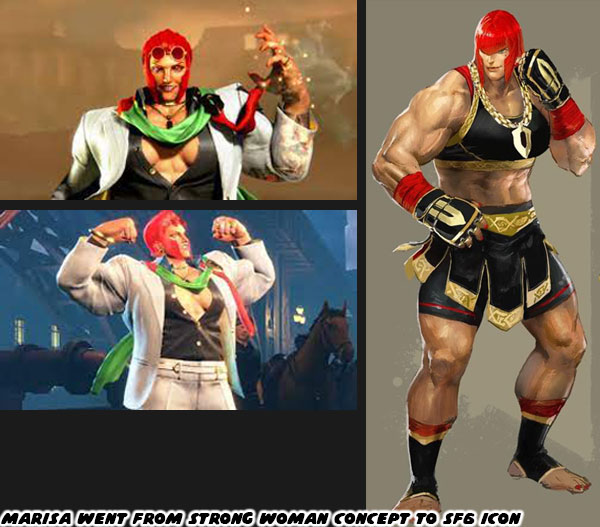
A breakdancer becoming an actual Street Fighter was an absurd idea, until it happened. It took a lot of time in development, and a team that understood the culture in order to make it fit within the context of the SF universe. There was another concept character in SFIII that seemed absurd at first, but again would require a team to figure out how this person would work. Moreover how this fighter would compliment the rest of the cast. The nude fighter was put on the back burner, but not the form of fighting. Pankration was among the oldest forms of mixed martial arts. The studio needed someone to bring the ancient art form into the modern world. That was essentially the role given to a strong woman. The team had just a rough idea for Marisa, make her a big, strong woman. Her form of fighting, her look, everything else would be filled in.

The studio had a solid template to work from when it came to big characters. Zangief was absolutely passionate about wrestling. It was something that Capcom could learn from, just as they took Chun-Li, and made an evil version out of her with Juri. Marisa was not evil, but would be equally passionate about pankration. She would give players a history lesson on the art in World Tour mode. She explained that fighters originally battled in the nude, and what a rush that must have felt like. She idolized everything about it to the point that she worshipped her ancestors, dressed like a modern gladiator, and wanted to share this passion with the world. Capcom was aware that to many players this type of ideation, and even character design seemed absurd. They countered it by making her absolutely sincere about her motivation.

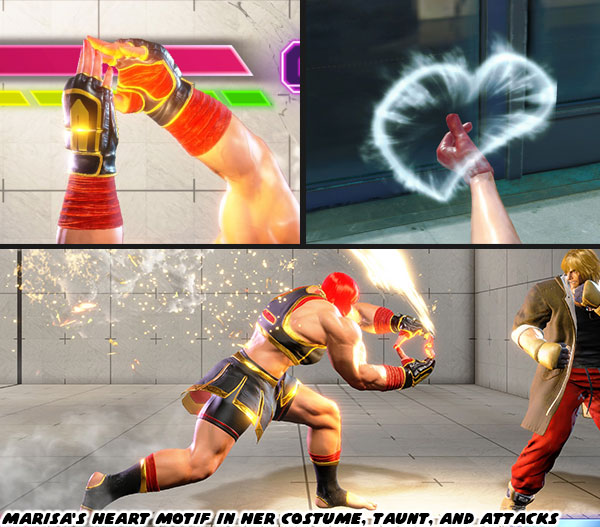
Despite her height, and muscular frame, she was still presented very feminine. She wore light makeup, along with a manicure, and pedicure into battle. She was even assigned a heart motif. Audiences that paid attention could see the heart symbol on the palms of her gloves, and also that when she did two-handed attacks she would make a heart symbol. Her taunt had her snapping her fingers, and making the popular South Korean finger heart gesture.. Marisa was also a sensual character, reveling in the power of her femininity. In the arcade story mode she was even looking for a romantic partner. She kissed her invitations to do battle before posting them in various cities.

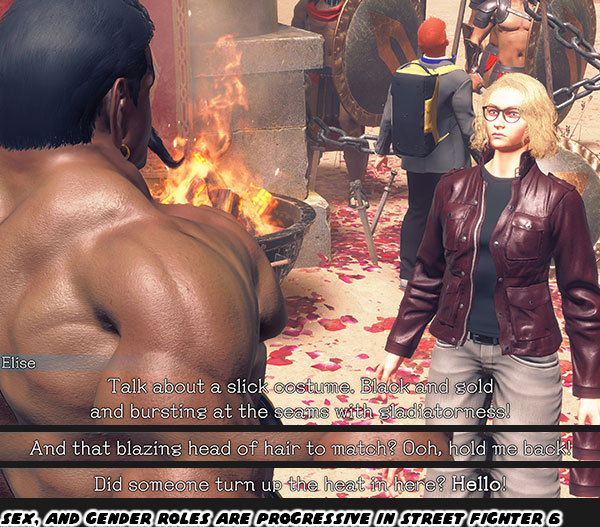
Capcom went all in on the progressive ideas in SF6. Marisa signaled in the game that she was bisexual. This was not done for the sake of a gag. She was not played up for laughs like Rufus, or Hakan. She signaled that the studio was joining the modern world. Old tropes, biases, and bigoted ideas would no longer be part of the SF universe. It was clearly spelled out in Marisa’s dialogue in the World Tour, and what NPCs said about her. Both men, and women were swooning over her, and she reveled in the affection. This attitude could be seen in the design of other characters like Eternity. It was also apparent in the costumes that you give to your avatar. There was no distinction between male, and female clothing. Avatars could wear anything. Men could wear dresses, and have makeup, and women could be muscular, or fat, wear construction uniforms, tattoos, and have chain wrapped gloves. Not only that you could make your character look like a teenager, or an elderly person. There were no limitations to how you wanted to present yourself. The world had evolved greatly in 35 years. It was apparent at every step of the game.

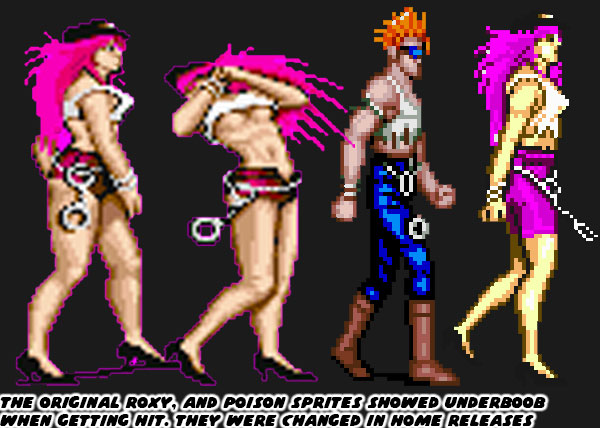
The SF6 developers were correcting past mistakes, and making their character designs more inclusive. A generation ago Poison Kiss was one of the most controversial characters in gaming. Her sexualized design of hot pants, high heels, and cropped tank top was deemed too risqué. It didn’t help that she showed underboob each time she was punched. This would be changed in home adaptations. First by replacing Poison with a punk named Sid, secondly by making her shirt, and shorts longer. The other thing that Capcom skirted the controversy was by saying that Poison was trans, he was a man, and therefore it was okay to punch a man. Capcom did this tongue in cheek because they saw how absurd USA censorship could be. Western studios seemed to love putting graphic violence in gaming, but drew the line at skin. It was sort of the opposite social approach in Japan where they were mostly okay with skimpy costumes, but didn’t want to depict blood, and guts violence. That attitude still persisted in Japanese society (and many other countries), however the SF6 development team was being more progressive with the story they wanted to tell.

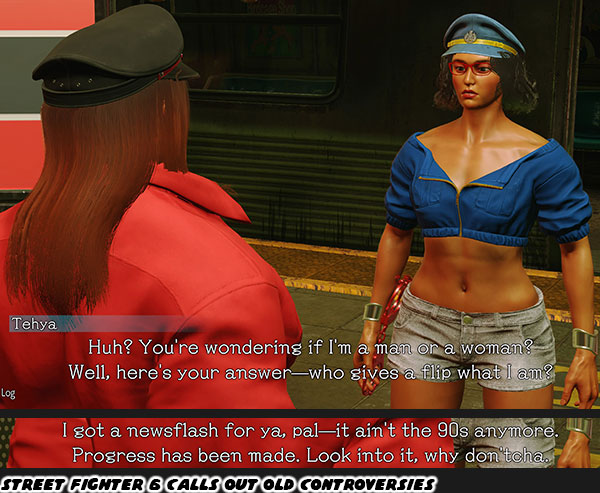
It was no more apparent that the new SF developers were turning the page on history with the dialogue from a Poison lookalike. The NPC Tehya said; “Huh? You’re wondering if I’m a man or a woman? Well, here’s your answer - who gives a flip what I am? I got a newsflash for ya, pal - it ain’t the 90s anymore. Progress has been made. Look into it, why don’tcha.” No notes, bravo writing from the localization team. The studio actually went above, and beyond in trying to correct past mistakes. We will look at how in the next blog. I hope to see you back for the next entry. If you are a long time fan of Final Fight, or Street Fighter then I would like to hear your impressions of SF6. If you have never played any game previously then tell me your experiences in the comments section please. As always if you would like to sponsor me please visit my Patreon page and consider donating each month, even as little as $1 would help make better blogs and even podcasts!
follow the Street Writer on Patreon!