Showing posts with label graffiti. Show all posts

Friday, March 27, 2026

The story of Our Lady of the Boombox...

As you may know I am a huge fan of fighting games. I rarely talk about Sega fighters, and I might do a deep dive on them someday. For now I wanted to focus on some of my favorite stage art of all time. There were many stage designs in the various fighting games that I loved. Exotic jungles, busy metropolitan intersections, racetracks, heavy metal mosh pits, and other amazing backgrounds sparked my imagination. Of the dozens, and dozens of fighting games that I had played in my life there was a detail that was burned into my brain. It influenced me so much that I had to redraw it, almost from memory some 15 years later.

You might remember that Sega was one of the first studios to go all in on 3D fighting games with Virtua Fighter back in 1993. As their technology improved they tried other ideas with their fighting engine. They released a lesser known title called Fighting Vipers. The title from November 1995 featured young characters in armor, as opposed to traditional martial arts masters. The stages were set mostly in city locations. One of which was in a concrete pit with walls covered in graffiti. One of the pieces on the wall really stood out to me because it made a religious icon instantly accessible to my generation. It was inspired by the Rest In Peace murals featuring the Virgin Mary. In this case it was a tribute to Honey, the character that the Bayside stage belonged to. As a Mexican-American I grew up in the Catholic Church. I was well familiar with the art, and iconography used by the church. Jesus, his apostles, the saints, Pope’s and various figures adorned not only the walls of the churches we visited, but also abuela’s house. The image of the Virgin Mary was one of the most important figures for the Latin community. Specifically it was Our Lady of Guadalupe. The short version of this visual was that it was adopted by the natives of Mexico in the 1500’s. It lead to many of the native Aztecs to convert to Catholicism. 

Many years passed, and I got a chance to play hundreds of games in the arcade, and at home. I would reflect on my favorites, and the things that made them unique. I would have long talks about it with my brothers, and friends. This was before I started writing things down on a blog. While talking about favorite stages in fighting games I mentioned the graffiti in Fighting Vipers. I lamented that my favorite piece wasn’t featured in the Sega Saturn version of the game. By that time most of the arcades we used to visit had closed down, and those that were around never had Fighting Vipers. The only proof that the art I loved had ever existed was from a tiny screenshot in one of my Japanese gaming magazines. I sketched it out one day as best as I could remember. Mind you this was almost 15 years after the arcade game had come out. The fact that it was a close approximation of the actual art showed how much I was moved by the graffiti. It really turned the iconic figure into something that 20th century kids could relate to. I’m sure that it stood out to the other Latinos that played the game.

I posted the sketch on 1UP, and talked about how I would like to redo it in color. Sure enough a few months later I had an illustrator version of it. Unfortunately looking back on my hard drive I couldn’t seem to find the original file. Thinking about it 2010-2011 was about the time that my older Mac computer crashed, and I lost a lot of data. If it weren’t for some CD backups that I made I would have lost years of files. It wouldn’t be hard for me to reproduce the piece. Chances are it would look a lot better if I did. I still loved the pose, and look of the original drawing. It wasn’t exactly how the Sega original appeared, but in my memory that was how it always was. To be honest it wasn’t be the first time I recreated the graffiti from a Sega game in Adobe Illustrator.

I was a huge fan of the Jet Set Radio games, and little by little managed to recreate all of the game icons, in Japanese, and English! As well as the small, medium, and large graffiti pieces. I was hopeful that someday I might be able to use them in some sort of modded game about graffiti. But for now that was my story on Our Lady of the Boombox. I hope you enjoyed the art. Did you ever recreate any of your favorite stage art, graffiti, or logos? Let me know about it in the comments section. As always if you enjoyed this blog, and would like to sponsor me please visit my Patreon page and consider donating each month, even as little as $1 would help make better blogs and even podcasts!

follow the Street Writer on Patreon!

Friday, May 31, 2024

Remix Culture, how Asian designers changed the game, part 6

In the previous entry of this series I talked about how context changed the way I thought about the artists following on the heels of Michael Lau, and his figure art. I argued that some creators were helping spread the art form. They understood the elements that made Lau’s work unique. They were creating highly-detailed 12” figures inspired by a certain subculture. Lau had street culture covered, Brothersfree highlighted industrial workers, Eric So, and CoolRain were working on high profile NBA licenses. Then there were creators that I thought were exploiting the trend. People like Jason Siu, and Pal Wong seemed to be poaching the style that Lau had established, and retreading street culture as well. So what was it that made Michael’s work stand out from his contemporaries? How was he able to put so much context in his work that it could be understood by people around the world? It actually had a lot to do with the insight he had across a number of genres.
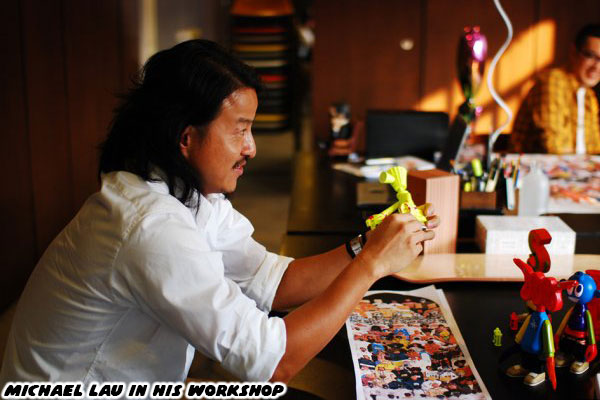
When I started this series I mentioned that Lau had grown up in a culture that celebrated the East, and the West. He read comics, and manhua, watched cartoons, films, and TV from all over the world. As a kid he played with handmade toys, bootleg kanji, action figures both the 12” and 3.75” sizes, and also Playmobil. These things stayed on the shelves of his work studio, continuing to inspire him as he cranked out figures, and comics for East Touch magazine. He also played sports; futbol / soccer specifically, and was good friends with a number of musicians. All of these things influenced his tastes, and by extension his style of art. 
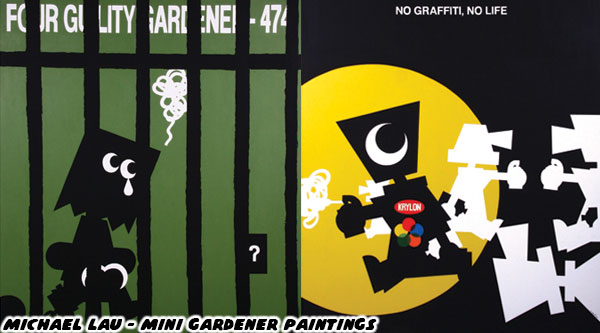
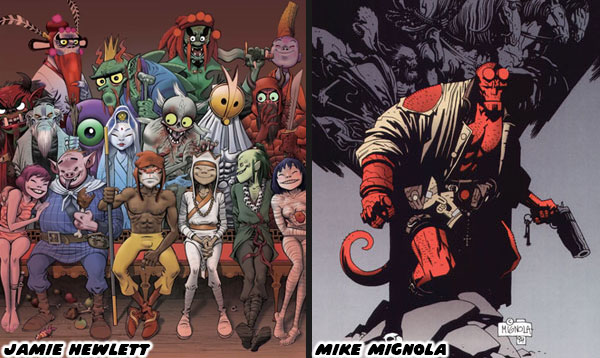
The creators that rubbed off on Lau, and his contemporaries were people like Matt Groening (the Simpsons), Jamie Hewlett (Tank Girl, Gorillaz), Simon Bisley (Lobo, Judge Dredd), and Mike Mignola (Hellboy). You could see their influence on Lau, his contemporaries, and even the modern crop of toy, and game designers. I would argue that Lau was a member of an entirely new wave of creators that came into their own in the 1990’s. Lau was a little kid when comic books started becoming stale. Publishers tried a lot of things in the late ‘70s / early ‘80s to grow their base. Including focusing on comics inspired by toy lines, such as G.I. Joe, Transformers, and even lesser know lines like US-1, and Team America. 
These changes happened when Generation-X was learning to appreciate the art form. The Gen-Xers going to grade school were told that in order to work at Marvel, or DC they had to follow the house style of the artists that came before. These included luminaries like George Perez, John Byrne, and John Romita Sr. The thing was that the style guides hadn’t evolved much since the ‘60s. According to the publishers it was hard to break into the market if your style didn’t conform. By the end of the ‘80s it was apparent that the opposite was true. The most popular books were drawn by artists who drew vastly different from the old guard. Even the leading characters were radically different than what came before. For example the anti-heros, like Deadpool rose to prominence.
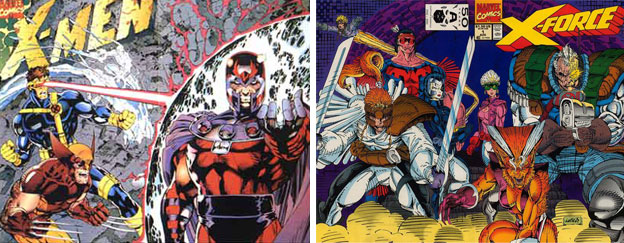
People like Jim Lee (X-Men), Rob Liefeld (X-Force / Deadpool), Whilce Portacio (X-Factor), Todd McFarlane (Spider-Man), and Dale Keown (the Incredible Hulk) not only threw the style guides out of the window, they also rewrote the rules of the industry. They broke away from Marvel, and founded Image comics. Along with Dark Horse comics there was a place to turn to if your style was not a fit at Marvel or DC. The big publishers had to push the envelope in order to keep up with the new school. Although their young stars had jumped ship, the publishers they left behind had to update their IP in order to remain relevant with readers. The artists that they picked up to replace McFarlane, Lee, or Keown had to mirror their style at the very least. The big publishers also added new artists that brought that same outsider spirit with them. Simon Bisley’s run on Lobo for DC, and Mark Texeira’s run on the Ghost Rider for Marvel were every bit as mature as what audiences wanted from the Image books. Their contributions to the industry were just as important as the best indy creators from the ‘90s.
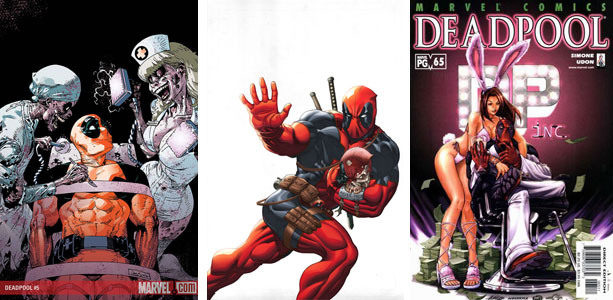
The Gen-X comics themselves were new takes on various genres. Violence, drugs, and sex had never been front, and center in the classic hero books. The new titles like Youngblood, Wild Cats, the Pitt, Spawn, Savage Dragon, and Wetworks could be adult, silly, serious, satirical, and everything in between. The books also evolved as the Gen-Xers got older. That wasn’t the most important thing this new batch of creators put forward. Minority characters finally got the spotlight in the ‘90s. People tend to forget that Spawn who was arguably the most popular of the new characters, was a Black mercenary before he died, and got his powers. Urban heroes, and villains, Asians, Latinos, Blacks, and Natives were more than token characters in the team comics. Every ethnic group started having more dimension, and gravity than in the previous decades. One of my favorite creators was Jason Pearson (Rest In Peace). His art was refreshing. He took aesthetic cues from manga, cartoonists, and most important video game artists. Contemporaries in a similar vein included Francisco Herrera, Joe Madureira, and Humbero Ramos.
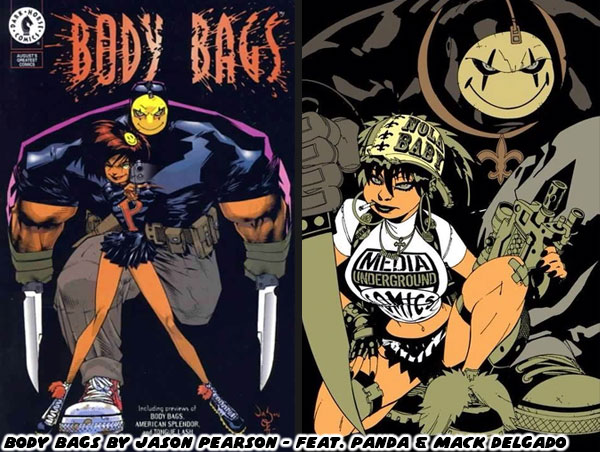
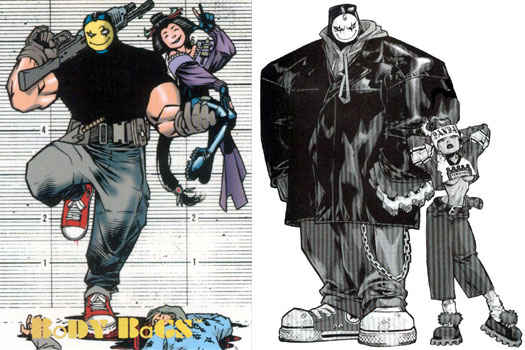
Many of the aforementioned artists demonstrated that pulling cues from overseas anime, and manga could be appealing to western audiences. Pearson’s breakthrough series was Body Bags. The series was first published by Gaijin Comics in 1996. It was arguably the most controversial title of the decade. It featured Latino anti-heroes Mac “Clownface” Delgado, and his daughter Panda. The style, fashion, and cultures that he featured in his dystopian world were a mashup of all things that Pearson enjoyed. His books were equal parts Punisher, Quentin Tarantino, and Cholo gang culture. This mentality of going “all-in” on your art was embraced by a lot of creatives in the ‘90s. They were remixing, and sharing the cultures that they loved to an entirely new fan base.
In Japan there were also phenomenal creators like Santa Inoue. His Tokyo Tribe manga series debuted in Boon magazine before it was serialized. Tokyo Tribe would eventually become animated, and even get a live action feature. Inoue used Hip Hop culture as the backdrop of the story revolving around Kai, his Saru gang, and their battles against rival gangs; Waru, Hands, and Wu-Ronz. He kept his stories grounded to the streets, and his heroes fought with their fists (and baseball bats) where other titles featured heroes that relied on magic, super powers, or psychic abilities. The heavy, and violent tone of his books captured the angst of a new generation of Japanese kids. They identified more with western Hip Hop, than with traditional Japanese culture. This poured into every element of pop culture in Japan, including fighting game character designs. 
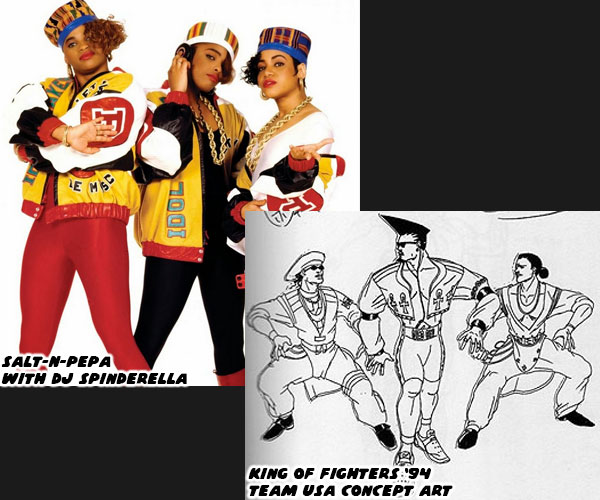
As entertaining as the Tokyo Tribe comics were, they also served as a primer to introduce adults into this world that was shaping street culture before their very eyes. Mr. Inoue had grown up listening to rap, and watching music videos from the west. He was well versed in the four pillars of Hip Hop, and his attention to detail, and remixing of cultural brands was extremely well done. Michael Lau ended up doing a crossover with Tokyo Tribe, and releasing some figures as well. Lau, and Inoue were prominent creators putting their passion for street culture front, and center. The Hong Kong toy community in the late ‘90s, and early 2000’s were as revolutionary as the Image crew was to the US in the early ‘90s.
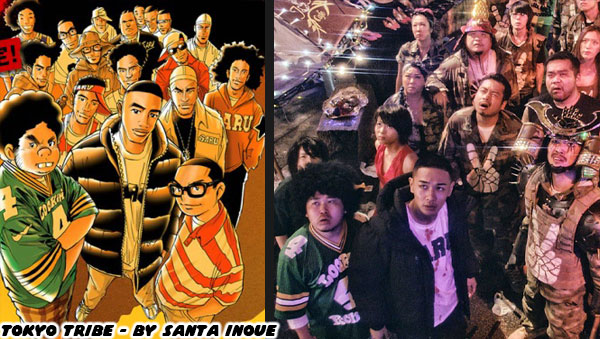
In the US it wasn’t a straight line to get urban art turned into collectable figures, but there was a change happening. Spawn creator Todd McFarlane would go on to build an epic toy empire. He could tell that the quality of action figures had been lacking in the US for some time. Fans of his comics were growing older, and they wanted to collect more than just books. So he formed his own company, and had steadily raised the bar by releasing highly detailed, quality figures over the decades. He also licensed movie, game, and pro sports franchises for his catalog to great success.
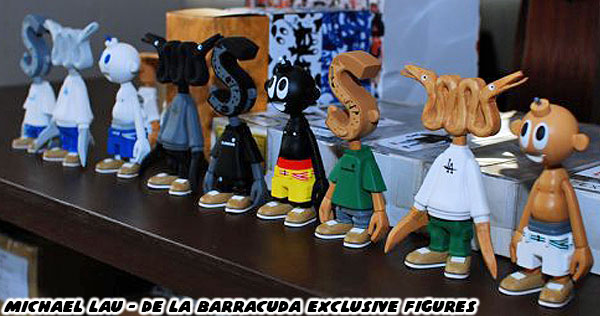
It was apparent that as they got older Gen-Xers were really into collecting toys, and figures more than any previous generation. This understanding was embraced by Lau, and his contemporaries. By turning the figures from his comic book run into art gallery presentations Mr. Lau was able to elevate the form in the eyes of the international community. This was not a fad, and this was not a hobby. Urban vinyl could be as legitimate as any print, painting, or sculpture from established artists.
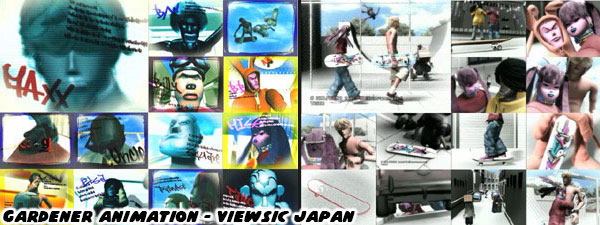
Of all of the figures that Lau created, and released, it was the athletes that got the strongest reaction from me. I’ll talk about it more in the next entry. For now I’d like to know if you were a fan of the comics, or toys from the ‘90s. Was there a particular culture that you identified with? I’d like to hear about it in the comments section. As always if you would like to sponsor me please visit my Patreon page and consider donating each month, even as little as $1 would help make better blogs and even podcasts!
follow the Street Writer on Patreon!

Wednesday, April 3, 2024

Jet Set Radio graffiti submissions - A 1UP classic from March 21, 2012

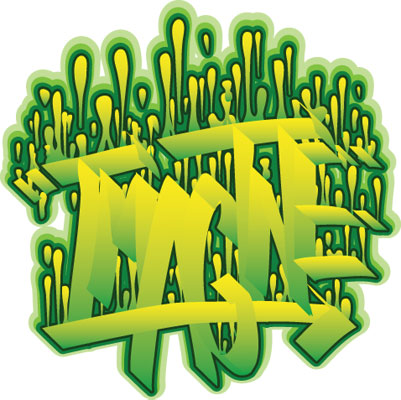
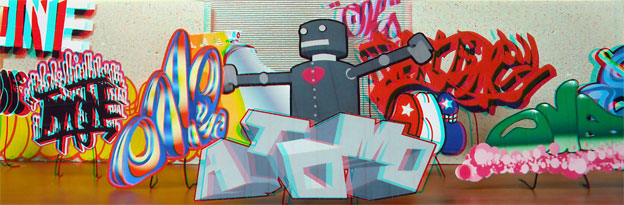
Heya friends, did you remember to submit your entries to the Jet Set Radio Graffiti Contest yesterday? I loved the game so much and the prize pack was so cool that I wanted something that might be different enough from traditional graffiti work to win. Unfortunately I was so busy at work, prepping for my gal's b-day, Wondercon and on other personal projects that I only managed to get two pieces produced. The first is the small piece. I wanted to make a simple piece that used colors familiar with the original Jet Set Radio. The green and yellow motif came up several times in the logo designs and map markers in game. I wanted to add a different twist to the graphics while keeping it in the theme of the original JSR.

I thought of punching up the greens and making them look more neon. I would be able to do that in Illustrator and add gradients to make them more unique. Also since the tech in JSR is slightly futuristic then so should the graffiti itself be. I thought that the piece should have drips that flow up instead of down. If only I had more time I would have done other neat visual tricks...

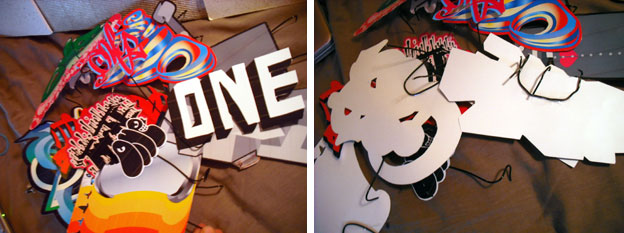
I did manage to put in something that I don’t think anyone had tried before. I printed up some of my classic graffiti pieces on glossy paper and spent a few days cutting them out.

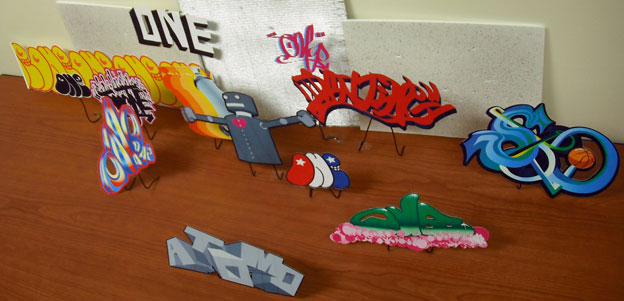
Then I taped those paper graffiti pieces onto a wire stand and arranged them in front of a “wall of fame.” The wall was actually a piece of foam that was painted with stone texture paint. The roll down steel door was actually a piece of cardboard spray painted silver.

I then organized the pieces on a table in the break room at work and began snapping pictures. This was done the morning that the entries were due, just a couple of hours before the deadline in fact! I took two of the best pictures and made an anaglyph 3D image in Photoshop.

If you have the red and blue 3D glasses then you’ll see that my piece actually has depth. I hope the people choosing pieces for JSR select my entries. I’d love to see the reaction of players when they paint "Atomo in 3D" in the game and then look at it through the red and blue lenses. 

Do you think my entries have a chance at winning? Did you submit any pieces to the contest?

As always if you would like to sponsor me please visit my Patreon page and consider donating each month, even as little as $1 would help make better blogs and even podcasts!
follow the Street Writer on Patreon!

Wednesday, September 13, 2023

Street Fighter 6: A master class in game design, part 20

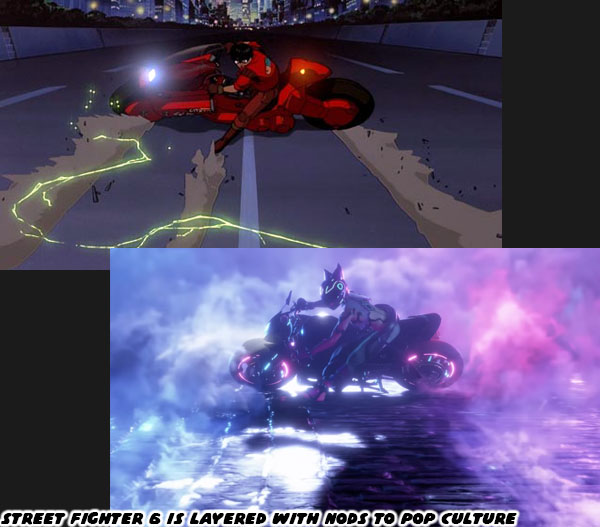
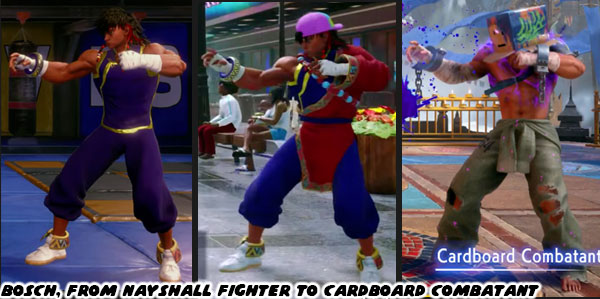
In the previous blog I had mentioned that Bosch had disappeared, and we weren’t sure if he would return. To be fair he didn’t’t disappear as much as he was kidnapped by Juri. After stealing money from Mad Gear to enter a secret underground tournament they had put a bounty on him. The tournament happening in Metro City was a preliminary event that was related to the secret competition. The various gangs were vying for entry into the finals, and its grand prize. That was the case for most of the gangs anyhow. There was a group from Nayshall, including Rewancha from the previous blog, that was trying to get to the finals for ulterior reasons. A clever nod to pop culture happened when Juri appeared to kidnap Bosch. Animation fans could spot the reference from a mile away.

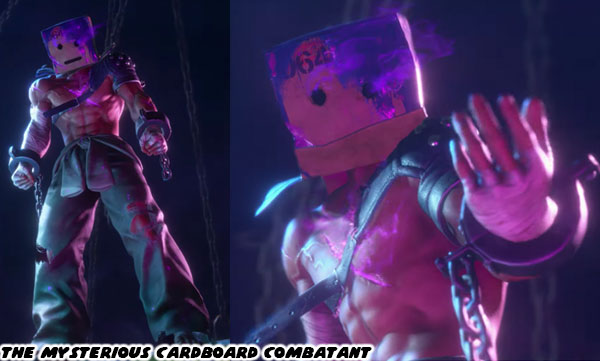
Shortly after Bosch disappeared a mysterious fighter showed up absolutely demolishing all the amateur entrants. The tournament in Metro City was called off due to bomb threats. This was roughly at the same time that the mystery fighter had appeared. He was covered in eerie purple glowing scars. He had broken shackles on his wrists. Long time fans of the SF series would swear that this person was filled with some version of Psycho Power. The same force that Vega / M. Bison / Dictator had been harassing to become more powerful. After the events of SFV it was assumed that Shadowlaw had been completely destroyed, and their technology along with it. This mystery fighter showed that there were still people that had access to that science. He would attack you, and warn you to drop out of the competition. He was known only as the Cardboard Combatant by the people that survived the fights with him.

If you were familiar with character turns in any form of media then you could probably guess who the Cardboard Combatant was. Or if you were obsessed with the details of fighting games you could have studied his size, and stance then you would recognize it was a variation of Yahriki, the martial arts form from native to Nayshall. Only three characters in the game used this particular style of fighting. Those were Bosch, Rewancha, and a character you might run across at the end of the journey named Fou-Lu. Many of us had guessed that this was Bosch well before he took off the box. But the how this happened, and why it happened to him became a mystery that you would have to unravel. In order to do this the World Tour would send you to the other side of the world. To a small town near the Himalayas known as Nayshall.

I would consider the second half of the game, the portion from Nayshall on, to be when Street Fighter 6 stopped being a great game, and became the game of the year. Think about all the praise I had heaped on Capcom over the past few weeks. Everything that they got right when it came to the balance, animation, character updates, new faces, animation, control, and features of Metro City. All of this praise was essentially doubled thanks to all the work the studio had put into Nayshall.

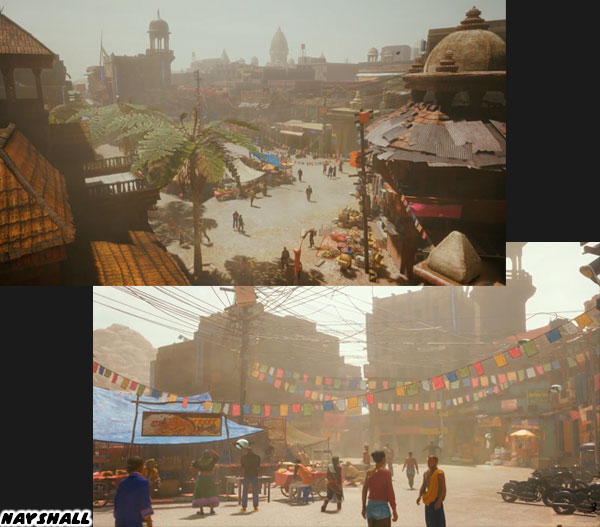
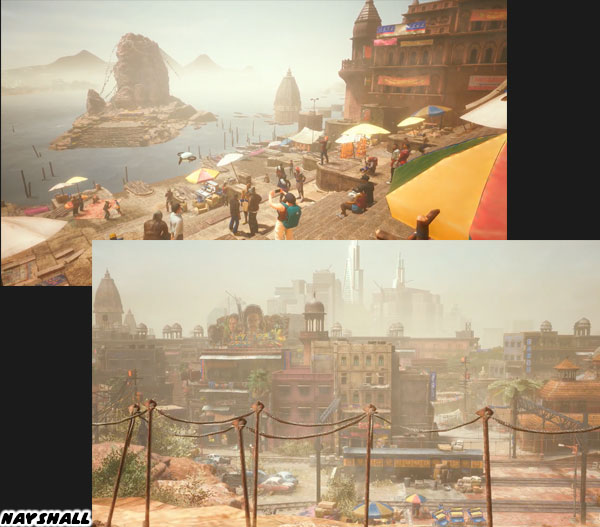
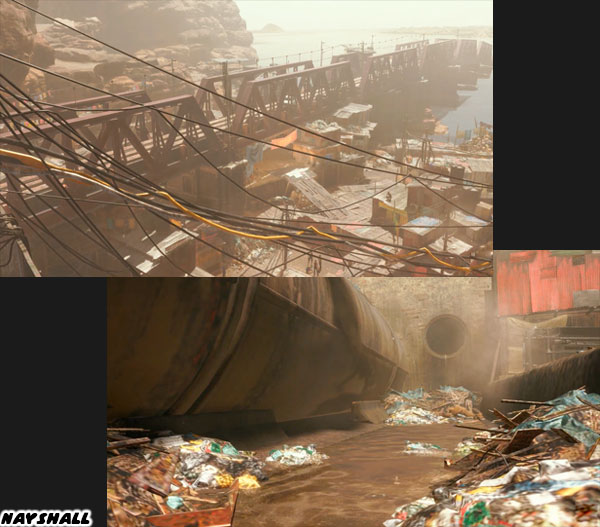
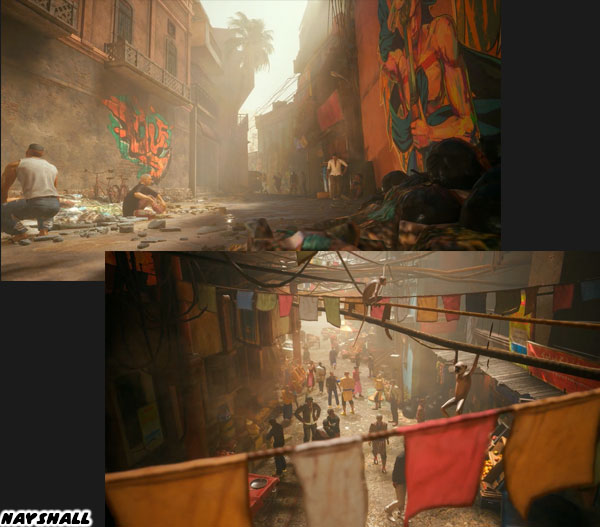
As I was taking screenshots for this series it never occurred to me where to even begin talking about this fictional country. It was easy to ease into Metro City starting at Beat Square, and then expand from there. There was so much to talk about in Nayshall that I felt like it would be easy to overlook something that made this stage feel real to me. So let’s just pause for a moment, and enjoy the first few screens the studio gave us of this country.

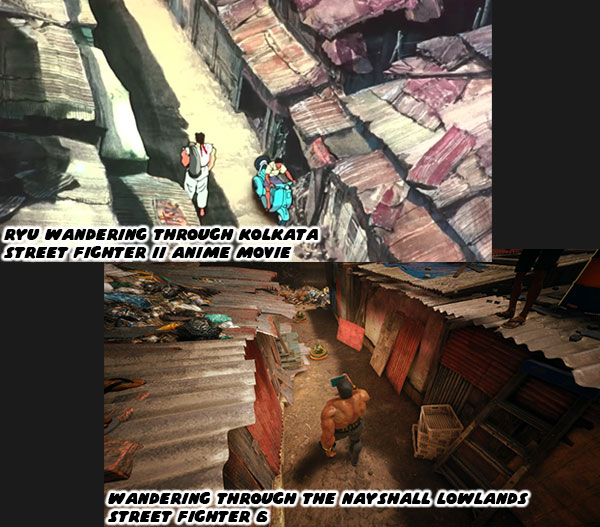
You could clearly see a market, a rail yard, a statue of some sort, and even Tibetan prayer flags strung up across the street. You could also see piles of trash, and people living in slums. There was a lot happening in the city, and many stories waiting to be heard. As I was wandering through the Lowlands I had an epiphany. It was the path of the warrior. The SF6 developers wanted you to feel like you were on a journey of self discovery. To have the same reactions, and reflections that someone like Ryu must have had as he traveled the globe.

The studio quite literally gave us bite-sized cinematic moments. No matter where we went, or who we battled, around every corner there was a new encounter, a new piece of the story. You were building the narrative for your avatar. In order to appreciate how the studio was able to accomplish this we need to travel back in time, to see how a movie shaped the destiny of the franchise. I hope to see you back for that. If you are a long time fan of Final Fight, or Street Fighter then I would like to hear your impressions of SF6. If you have never played any game previously then tell me your experiences in the comments section please. As always if you would like to sponsor me please visit my Patreon page and consider donating each month, even as little as $1 would help make better blogs and even podcasts!
follow the Street Writer on Patreon!

Wednesday, September 6, 2023

Street Fighter 6: A master class in game design, part 17

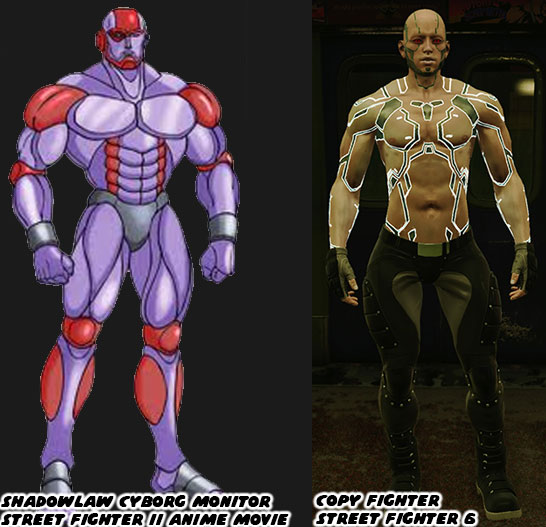
At the start of this series I talked about how the Street Fighter 6 developers were using the World Tour to ease a new generation of players into the many fighting game concepts. From random gang encounters, to part time jobs, to selective battles with pedestrians. Each of these things helped build muscle memory, teach range, reaction, counters, and using the Drive Meter. Each of these would make for better fighters, and a better SF experience. One of the more specific ways that the World Tour was prepping audiences for fights with the various masters was through the use of Copy Fighters. These were synthetic humans that popped up on occasion, similar to gangs. Yet unlike a gang member these androids were guaranteed to have many of the special attacks of an actual SF master. To be fair sometimes a random pedestrian or gang member would also have a move or two from a master, but the Copy Fighters had almost all their moves. They were nowhere near as strong as the actual master, like E. Honda, Ryu, or Guile for example, but they did know how to perform several of their combos, and special attack strings. Copy Fighters were sort of like random mini bosses to increase the challenge in the middle of the World Tour.

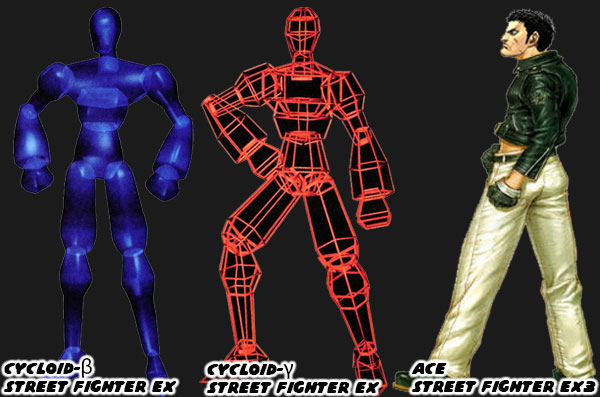
The idea of a cyborg that could copy the moves of the various fighters had been seen in other games, including Mortal Kombat. In the SF universe the first use of this was the Shadowlaw Cyborg Monitor. They were seen in the SFII anime movie, they were stealing the data, and copying the moves of the various masters. These cyborgs were actually playable on the Japanese Saturn, and Playstation consoles with Street Fighter II: The Interactive Movie. Audiences could take control of the cyborg after a prompt, and try to defeat Ryu in order to steal his moves. This sort of character would evolve in the Street Fighter EX series by ARIKA. There were two humanoid robots called Cycloids; Beta, and Gamma respectively. They each had special attacks from roughly half of the cast. Between the two they could perform all the special attacks from the masters. The evolved version of this character became ACE, and players could choose which moves he would be able to copy.

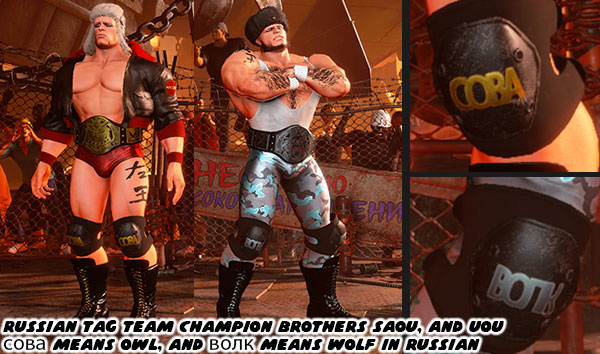
Copy Fighters, and Cycloids weren’t the only way to get a lighter version of a boss fight. Street Fighter 6 had understudies for several of the masters. They had the moves, range, and strategy of their masters. The only lacked the stamina, and more advanced combo attacks of the main SF roster. For example Zangief was established as a pro wrestler. Arguably he was the greatest pro wrestler in the entire SF universe. This didn’t mean he was the only one. The game introduced a pair of tag team wrestlers. They were Russian brothers named Saou, and Uou. One wore the championship belt with an owl mascot, and the other with a wolf. The two shared lessons from Zangief with the player. They could also be challenged for a match.

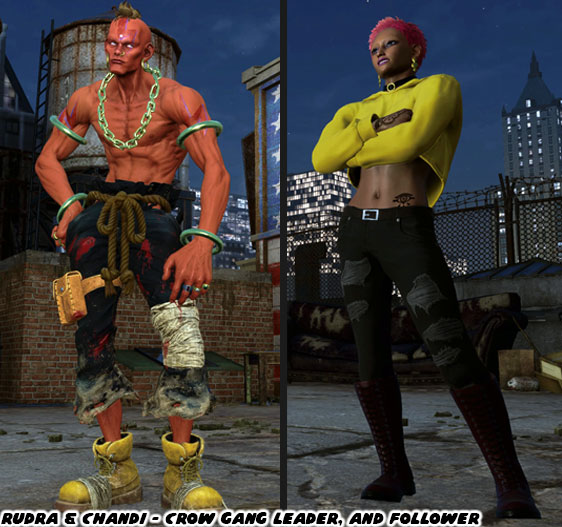
There were two other NPCs that were crucial to the story mode. Bosch, your friendly rival introduced in the story mode, had stolen money from the Mad Gear gang. In order to make amends you had to team up with Mad Gear, look for recruits, and fight against the Crows. The leader of the Crows was a punk named Rudra. It turned out that he was an understudy of Dhalsim, who had run away from the temple many years prior. He saw that kids were suffering, and being abandoned on the street. Instead of meditating about the problem he figured had a duty to act. So he would round them up, and teach them how to survive. Despite his punk looks he was a noble character in many regards. I think that was the reason why his abilities developed greatly with Dhalsim as his master. In typical SF6 design, nothing was put into the game by accident. The name Rudra actually had multiple meanings in Hindi, including he "who eradicates problems from their roots".

Rudra was joined at the hip by Chandi. The long-suffering Crows recruit that was doing everything in her power to get senpai to notice her. The writing, and personalities of the two characters came through clearly in the World Tour. Rudra was aloof, and disinterested in everything, but especially in society. Chandi was a sort of opposite. She had a bubbly personality, and earnestly believed in her leader. They easily had my favorite dynamic in the title. As with Rudra her name was important as well. Chandi or Chandika was a Hindu deity. She was a powerful form of Mahadevi (the supreme goddess) who manifested to destroy evil. Both of the characters may have been involved in gangs, but they had a noble purpose. This was opposed to the Mad Gear who just wanted to take back control of the streets, and the city.

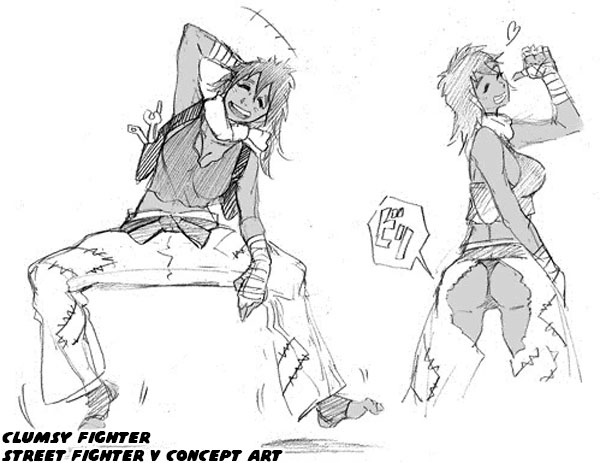
I believe that the roots for the characters had actually been planted many years earlier. During the planning stages of Street Fighter V one of the character concepts was called the Clumsy Fighter. She was a girl wearing torn clothing that managed to stumble her way through a fight. She carried a bag with wrenches, and other tools that she could use to her advantage. I could imagine the SF6 team, which also worked on SFV were going through their unused concepts, and being influenced by the tattered clothing, and carefree attitude of this girl. It was also possible that the idea of NPCs in SF6 throwing wrenches came from this concept character. Or it could have come from Pupa Salgueiro from the Rage of Dragons. That young lady also fought with a wrench in an earlier rival studio game.

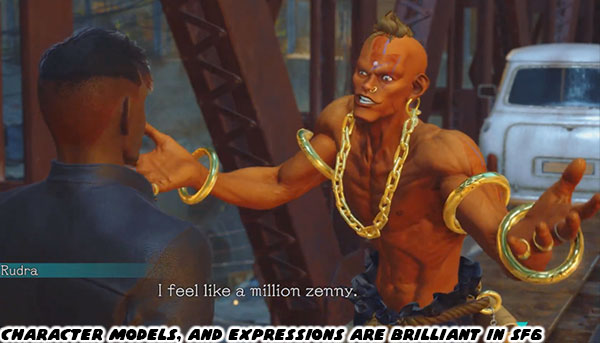
If you were to tell me a few years ago that there would be a new stretchy-limbed Indian in SF6 then I would have scoffed at the idea. If you would have told me that the character was better developed, and presented than Dhalsim then I would have said it was impossible. Yet in the end I absolutely loved the character. I would go so far as to say I enjoyed his design more than all the new SF characters. To be fair Kimberly, and Marisa had some amazing personalities that shone through their animations. There were so many fantastic elements layered over the punk that it wasn’t fair that he would be an NPC opponent. For example take a look at the little details like his mohawk, and the paint on his head. At first glance it looked like the red stripe on Dhalsim’s forehead. However it was painted in a lightning bolt shape, falling over his left eye. This conjured up images of Ziggy Stardust the stage character created by rock icon David Bowie. He also wore a lot of jewelry. His nose, and ears were pierced with gold rings, he sported a gold chain, and large gold bands on his upper arm, and wrists, plus gold rings on his fingers. There hadn’t been this much flash on a punk since Birdie in SFZero.

Dhalsim was much more subtle in design, and personality. His necklace was made of rope, and his bracelets were metal, I wouldn’t even say they were silver. He was much more humble by comparison. To be fair Rudra was literally cut from the same cloth. His clothes were tattered, and torn. Athletic tape was holding his pants, and boots together. These were the modern equivalent of the rags that Dhalsim wore when he was doing his Prāyaścitta or penance. I could easily imagine Dhalsim being retired, and having Rudra return to fill that role in future sequels. I would frankly welcome that.

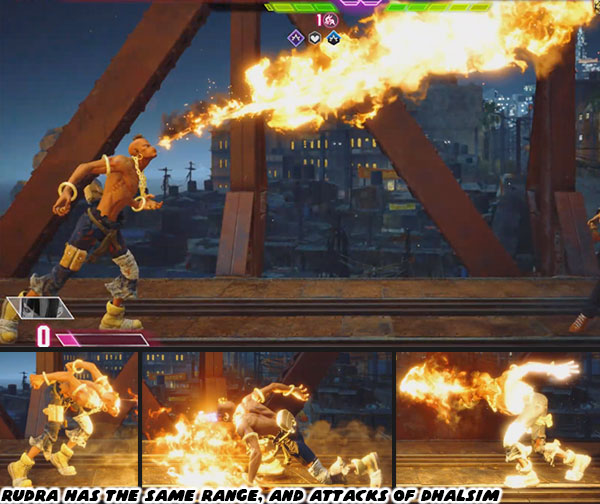
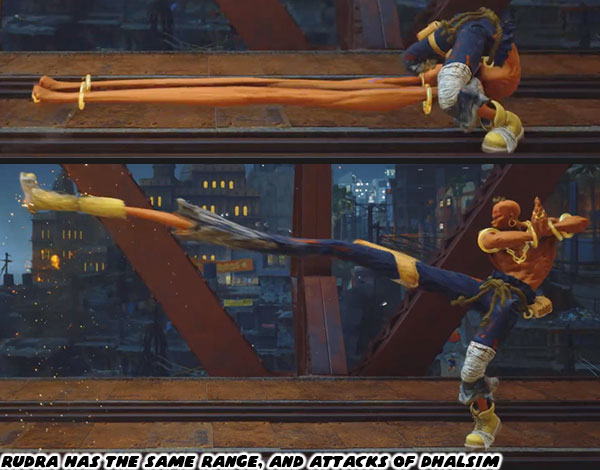
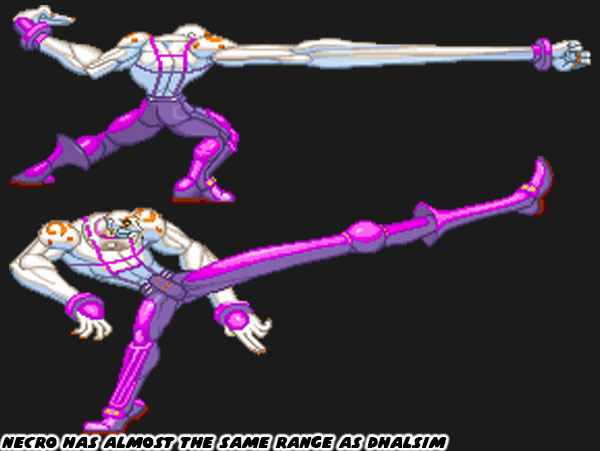
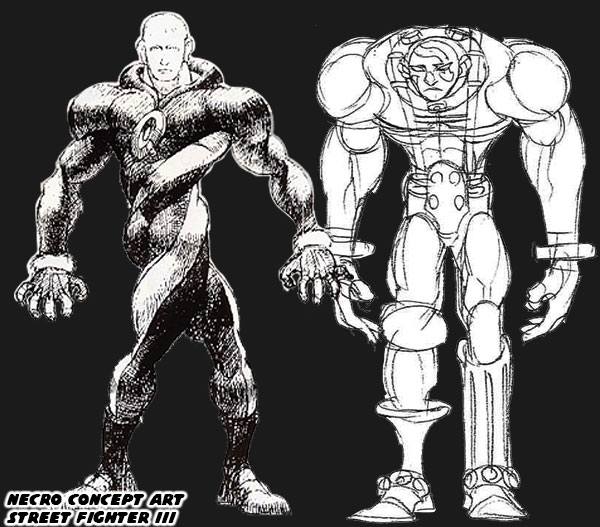
If I had one complaint about Dhalsim, or Rudra it would be with how their powers were represented. Previously it made sense that Dhalsim could only stretch his limbs on direct strikes. You could imagine that he could dislocate his joins, and throw a punch, or kick straight forward, and back. However in SFV, and SF6 he seems to be made completely out of rubber. He would contort himself in all sorts of positions, even while throwing simple attacks. There was no regard for his bone structure, muscles, or tendons. As if he were Plastic Man, or Mr. Fantastic from the comic books. The thing was that this type of character had already been done in SFIII. His name was Necro.

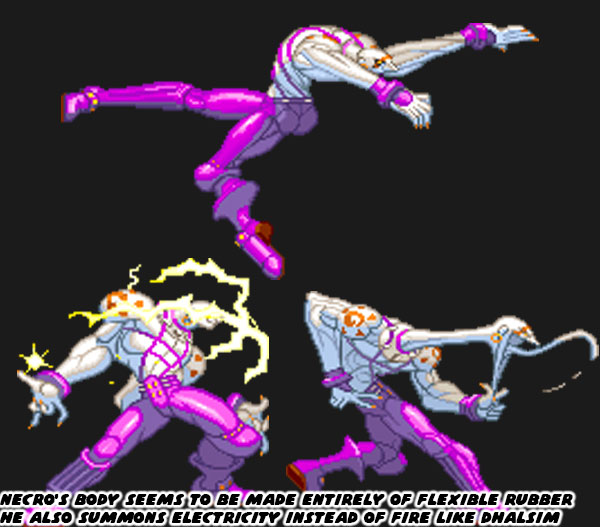
Street Fighter III Producer Tomoshi Sadamoto, and designers Yasuhiro Seto, Tomonori Ohmura, and Obata Shinichiro did their best to follow in the footsteps of the previous teams. Their goal was to create an entire new library of characters. They didn’t want to bring back any of the previous World Warriors, except for Ken, and Ryu. They wanted to explore new styles of fighting, and create new archetypes. Unfortunately for them people were looking for new characters that played exactly like old characters. They saw the stretchy Necro, and assumed he was the new Dhalsim. In a way he was. He had almost the same range, and his fire special attacks were replaced with electricity. But then if you dug deeper you realized this character did not employ the same strategies. His setups, his combos, and special attacks were uniquely his own.

The other thing about Necro was that his skin, bones, muscles, and tissue were rubberized. He had been experimented on by Gill, and his Illuminati as part of the G-Project. They were trying to create the ultimate soldier, someone that was impossible to injure. Necro didn’t look quite human. His pupils were gone, his skin pigment was gone. The melanin was replaced instead by a light lavender. The fighter could stretch his face as if it was made of putty. He could twist his torso, arms, and legs past where they would normally break. He seemed impervious to any damage no matter how much he twisted himself up. Capcom shared the earliest designs for Necro in their arcade Secret Files. He was originally proposed to be an android.

Other synthetic lifeforms were created following the Necro experiments, including the shape-shifting characters Eleven, and Twelve. It made sense for Necro to be more flexible than humanly possible given that had been genetically modified. All of that stretching, and flexibility worked in the context of his origins. I don’t think those things should have been applied to Dhalsim in SF6. But that was a minor gripe in an otherwise fantastic game. Thanks to Copy Fighter, Saou, Uou, and Rudra audiences could get practice fighting light versions of the SF masters while in the middle of the story mode. Speaking of which. All of the time spent traveling the globe, and Metro City meant that you were going to compete as an amateur in the Metro City Fighting Tournament. It would be a test of whether or not you had mastered everything that had happened up until that point. We will look at the next chapter of creating this experience in the next blog. I hope to see you back for the next entry. If you are a long time fan of Final Fight, or Street Fighter then I would like to hear your impressions of SF6. If you have never played any game previously then tell me your experiences in the comments section please. As always if you would like to sponsor me please visit my Patreon page and consider donating each month, even as little as $1 would help make better blogs and even podcasts!
follow the Street Writer on Patreon!

Monday, August 28, 2023

Street Fighter 6: A master class in game design, part 13

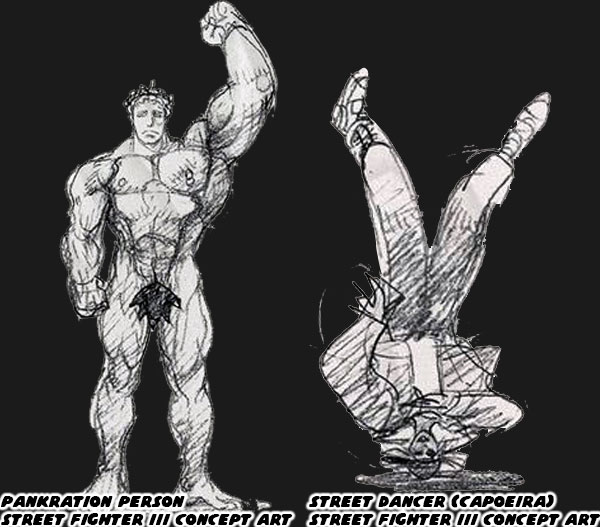
In the previous blog I talked about how Capcom learned how to create graffiti, and tattoo art for their games. In the ‘80s it was simply emulating the art style for the sake of pandering to the west. Years later it became an art form that they understood, and used to make their titles feel more authentic. I also talked about how important it was to have representation carry the elements of Hip Hop into the series. Kimberly was an amazing graffiti artist, and Jamie was an incredible b-boy. The studio had been trying to get a breakdance fighter into the series going back to the development of Street Fighter III, circa 1995-1996. In the earliest concept art this character literally stayed on their head the entire time. This dance type fighter would be dusted off, and revisited during the development of SFIV more than a decade later. It would be refined in some early designs for King Cobra. Then dropped for the sake of pursuing a funny fatty. It wouldn’t be brought up again until Jamie.

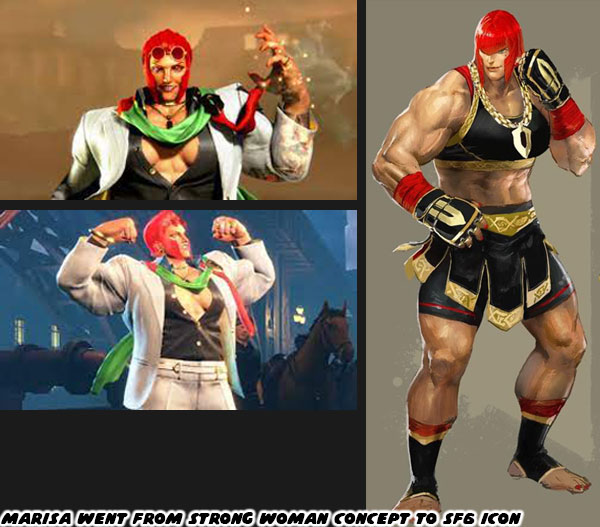
A breakdancer becoming an actual Street Fighter was an absurd idea, until it happened. It took a lot of time in development, and a team that understood the culture in order to make it fit within the context of the SF universe. There was another concept character in SFIII that seemed absurd at first, but again would require a team to figure out how this person would work. Moreover how this fighter would compliment the rest of the cast. The nude fighter was put on the back burner, but not the form of fighting. Pankration was among the oldest forms of mixed martial arts. The studio needed someone to bring the ancient art form into the modern world. That was essentially the role given to a strong woman. The team had just a rough idea for Marisa, make her a big, strong woman. Her form of fighting, her look, everything else would be filled in.

The studio had a solid template to work from when it came to big characters. Zangief was absolutely passionate about wrestling. It was something that Capcom could learn from, just as they took Chun-Li, and made an evil version out of her with Juri. Marisa was not evil, but would be equally passionate about pankration. She would give players a history lesson on the art in World Tour mode. She explained that fighters originally battled in the nude, and what a rush that must have felt like. She idolized everything about it to the point that she worshipped her ancestors, dressed like a modern gladiator, and wanted to share this passion with the world. Capcom was aware that to many players this type of ideation, and even character design seemed absurd. They countered it by making her absolutely sincere about her motivation.

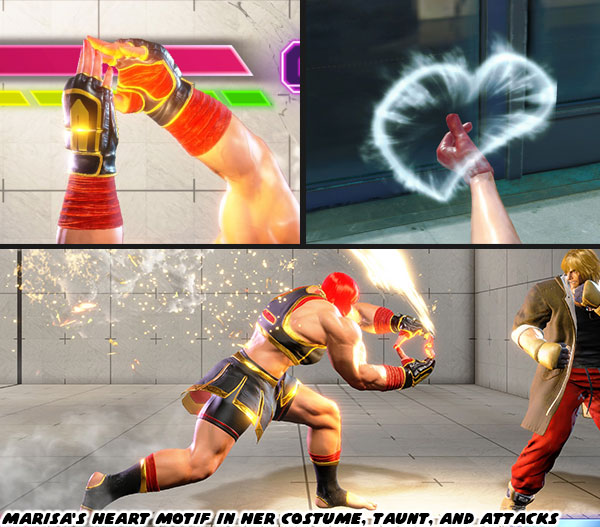
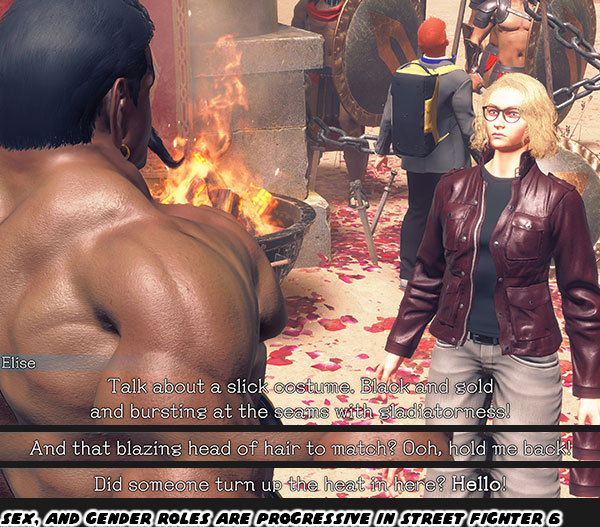
Despite her height, and muscular frame, she was still presented very feminine. She wore light makeup, along with a manicure, and pedicure into battle. She was even assigned a heart motif. Audiences that paid attention could see the heart symbol on the palms of her gloves, and also that when she did two-handed attacks she would make a heart symbol. Her taunt had her snapping her fingers, and making the popular South Korean finger heart gesture.. Marisa was also a sensual character, reveling in the power of her femininity. In the arcade story mode she was even looking for a romantic partner. She kissed her invitations to do battle before posting them in various cities.

Capcom went all in on the progressive ideas in SF6. Marisa signaled in the game that she was bisexual. This was not done for the sake of a gag. She was not played up for laughs like Rufus, or Hakan. She signaled that the studio was joining the modern world. Old tropes, biases, and bigoted ideas would no longer be part of the SF universe. It was clearly spelled out in Marisa’s dialogue in the World Tour, and what NPCs said about her. Both men, and women were swooning over her, and she reveled in the affection. This attitude could be seen in the design of other characters like Eternity. It was also apparent in the costumes that you give to your avatar. There was no distinction between male, and female clothing. Avatars could wear anything. Men could wear dresses, and have makeup, and women could be muscular, or fat, wear construction uniforms, tattoos, and have chain wrapped gloves. Not only that you could make your character look like a teenager, or an elderly person. There were no limitations to how you wanted to present yourself. The world had evolved greatly in 35 years. It was apparent at every step of the game.

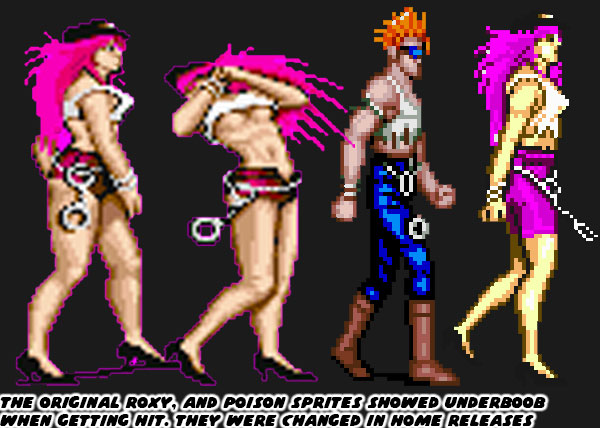
The SF6 developers were correcting past mistakes, and making their character designs more inclusive. A generation ago Poison Kiss was one of the most controversial characters in gaming. Her sexualized design of hot pants, high heels, and cropped tank top was deemed too risqué. It didn’t help that she showed underboob each time she was punched. This would be changed in home adaptations. First by replacing Poison with a punk named Sid, secondly by making her shirt, and shorts longer. The other thing that Capcom skirted the controversy was by saying that Poison was trans, he was a man, and therefore it was okay to punch a man. Capcom did this tongue in cheek because they saw how absurd USA censorship could be. Western studios seemed to love putting graphic violence in gaming, but drew the line at skin. It was sort of the opposite social approach in Japan where they were mostly okay with skimpy costumes, but didn’t want to depict blood, and guts violence. That attitude still persisted in Japanese society (and many other countries), however the SF6 development team was being more progressive with the story they wanted to tell.

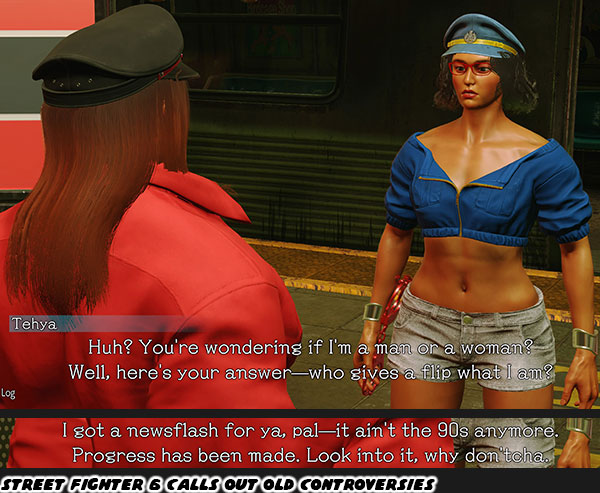
It was no more apparent that the new SF developers were turning the page on history with the dialogue from a Poison lookalike. The NPC Tehya said; “Huh? You’re wondering if I’m a man or a woman? Well, here’s your answer - who gives a flip what I am? I got a newsflash for ya, pal - it ain’t the 90s anymore. Progress has been made. Look into it, why don’tcha.” No notes, bravo writing from the localization team. The studio actually went above, and beyond in trying to correct past mistakes. We will look at how in the next blog. I hope to see you back for the next entry. If you are a long time fan of Final Fight, or Street Fighter then I would like to hear your impressions of SF6. If you have never played any game previously then tell me your experiences in the comments section please. As always if you would like to sponsor me please visit my Patreon page and consider donating each month, even as little as $1 would help make better blogs and even podcasts!
follow the Street Writer on Patreon!