Showing posts with label nike. Show all posts

Friday, August 9, 2024

Remix Culture, a bonus entry!


I hope you enjoyed the Remix Culture series from the past few Fridays. I had some material for a bonus entry this week. Previously I shared with you my love of basketball, and how I fell into urban vinyl art. I revealed that some of my favorite toys combined both basketball, and vinyl figures. The Super-X figures by Dragon Models, All Star Vinyl figures by Upper Deck, and most recently the Street Mask figures by JT Studios were the gems in my collection. They brought me tremendous joy. Those weren’t the only toys that I was happy with. I also had a great collection of Oswald figures, and plenty from Michael Lau, the Godfather of the urban vinyl movement.

One of the reasons I was able to build a great collection over my lifetime was because I was very selective about which 12” figures I bought. Those figures could be very expensive compared to the other toys in my library. For the price of a single 1/6 figure I could get a half dozen Oswald plush dolls. In order to maximize the return on my investment I had to be very picky. When I started collecting the high-end basketball figures I knew that I would have to give up on curating another line. I knew exactly what I would never be able to add to my shelves; space figures. Like many of you I’m a huge fan of space. Like a really, really, really big fan of space; astronauts, and science in general. Growing up I would check out books on space travel from the library. My parents, and brothers supported my fascination. They got me a really nice telescope when I was a kid, and today my wife, and I have a high-end telescope. The science behind space travel had always been part of my identity. 

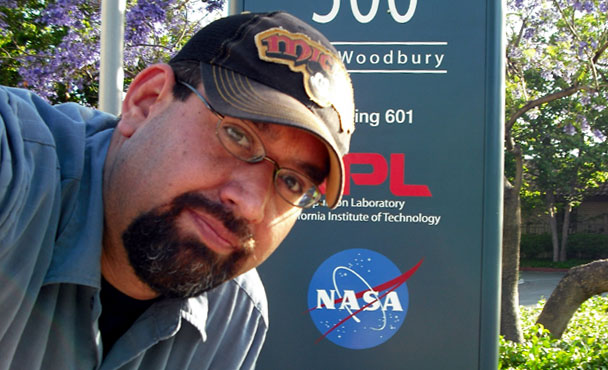
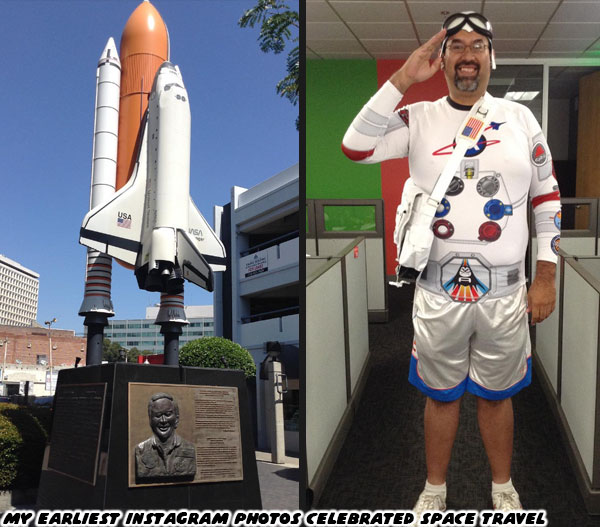
In grade school my friends knew that I was a big science nerd. They could often find me going over books on rockets, and space shuttles. At least that was whenever I wasn’t reading about monster trucks. On the blog I mentioned that Lunar Lander from 1979 was the first simulator-style arcade game that I could remember. I credited it with sparking my love of arcade games, and planting the seeds that would eventually see me land a job working mission support with JPL. When I joined Instagram one of my first photos was from the Challenger memorial in Little Tokyo. My family was there in Downtown Los Angeles in 2012 when the Endeavor got a flyby. It was definitely a highlight for me. When I left JPL for my current job I took that love of space with me. At that time our office had moved into a bigger building. Every holiday meant we were going all out. Catered tacos for Cinco de Mayo, hot dogs, and burgers for the 4th of July, big Christmas parties etc. We celebrated Halloween with everyone on the staff showing up in costume.

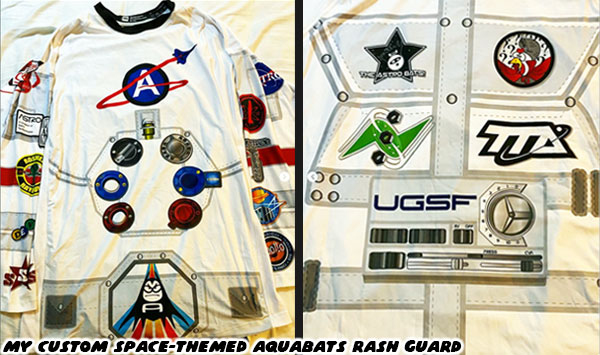
I had created a couple of custom rash guards for my kid, who was a huge fan of the Aquabats. We would go to their concerts when we could, and everyone loved her outfits. I would usually dress as a Sandflea, the arch-rivals of the Aquabats. After a few shows I decided to create a space-themed rash guard for myself. I created all the vector art for the outfit, including the graphics that looked like mission patches on the sleeves. The logos were a call out to other space themed bands, video games, actual missions, and even Disney attractions. The silver shorts were from AND1, a white anti-negativity helmet, goggles, and white Converse sneakers completed the outfit. I wore it to work, along with my NASA-themed laptop bag. My coworkers loved it as much as the fans at the concerts. Hopefully this proved how much of a fan I was of astronauts. When I said that it hurt giving up on collecting astronaut toys I meant it. Budgeting money for Michael Lau figures meant I would miss out on something equally cool.

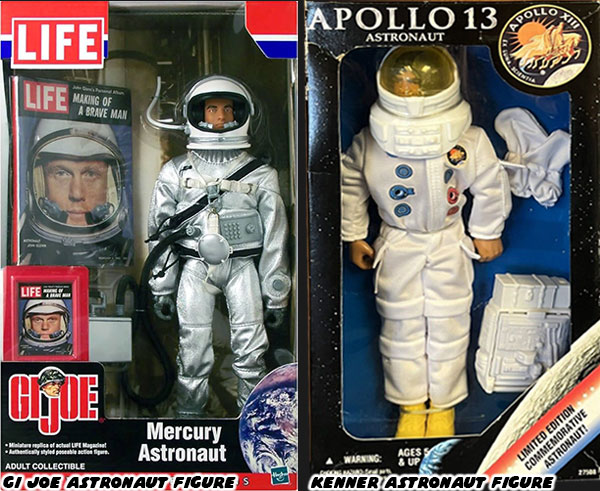
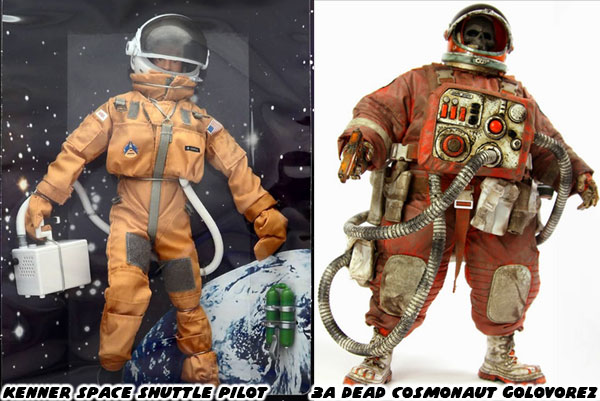
Science fiction toys, spacemen, and aliens had been in pop culture since the start of the 20th century. When I told fellow collectors that I wished I had more space toys I wasn’t talking about Star Wars, Star Trek, Battlestar Galactica or any other sci-fi lines. I meant actual astronaut figures, like the classic 12” G.I. Joe astronaut toy that debuted in 1966. There was a major shift in pop culture post WWII in America. Astronauts reached peak cultural relevance in the ‘60s thanks to the space race between the USA, and the Soviet Union. It would rise again in the ‘80s thanks to the Space Shuttle missions, and disasters. It was hard to imagine, but space travelers were treated like celebrities decades ago. There was a time when no singer, athlete, or movie star could even compare. Because of that popularity some of the best toys ever made, at least in my book, were inspired by astronauts. These figures looked amazing whether they were based on actual Kennedy-era NASA astronauts, Ronald Reagan-era Space Shuttle pilots, or even fictional space explorers.

Being on the cutting edge of what was possible had inspired me all my life. I had always enjoyed action figures based on anything other than soldiers. I talked about it previously that the Adventure People by Fisher Price meant more to me than the G.I. Joes by Hasbro. Regular people that had cool jobs inspired my creativity more than glamorized combat. There was no job cooler than that of astronaut. They were the ultimate explorers. In my mind they were the last people that were really pushing humanity into the future. There was something to the uniforms, hoses, patches, helmets, life support, and especially space ships that really sung to me. It was an aesthetic that was cutting edge in form, and function.

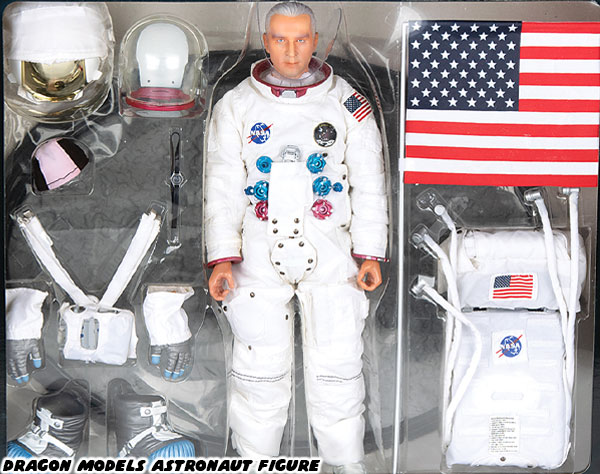
By the time I was an adult, and able to start collecting the astronaut figures were few, and far between. If I didn’t have a space toy that managed to survive childhood then I wouldn’t see anything new. The people at Dragon Models, the same people that made my Super-X figures, released an Apollo 11 figure in 2002. At around $300, this figure set the standard by which every following astronaut toy would be measured against. Unfortunately for me this was right when I was on the hunt for Michael Lau figures from Hong Kong. It was at that very moment that I knew I could never afford to collect 12” figures from the space line. I could get two, possibly three Lau figures, or the entire Super-X team for the same price. The choice would be easier in that context. That didn’t stop me from keeping tabs on other explorers. What I saw started making me reconsider the choices I made.

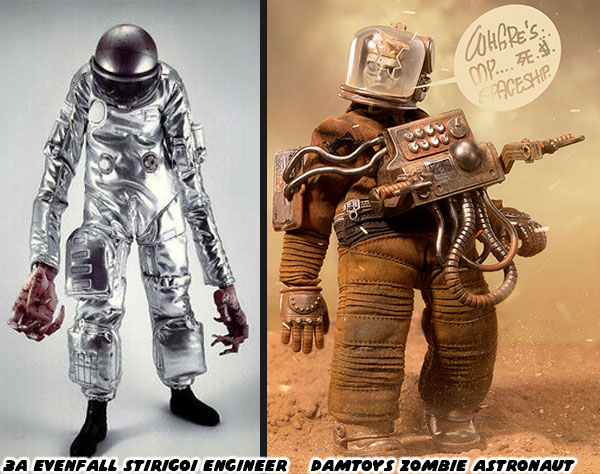
Artists in the 2000’s started going down some really creative paths when designing a new generation of toys. These creators saw the reaction to every new release was met with nothing but love from collectors. It didn’t matter if the artists were remixing kaiju characters, sculpting original cartoon animals, putting together robots, or celebrating everyday heroes like construction workers, cops, and chefs. There was a person out there that was a fan. Not only did they want to support every new release they were also eager to see creators push the envelope. They wanted to see horror elements get added to the art toy format. Monster toys were nothing new, but creature urban vinyl figures went extra hard. Sure astronauts were cool, but what if they were zombie astronauts instead? Or what if they were alien shapeshifters pretending to be astronauts? This was the kind of storytelling that made the movement really stand out from traditional toy lines.

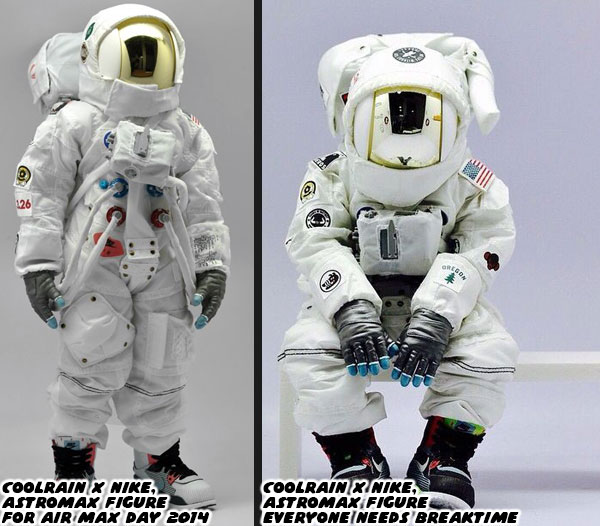
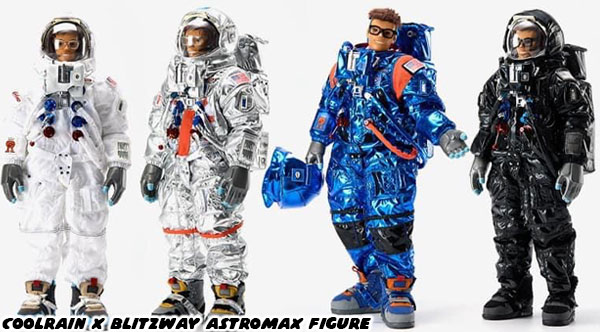
I was happy with the collection of vinyl toys I had built in the 2000’s. There was one figure that popped up in 2014 that hit me like a freight train. The South Korean artist CoolRain created a figure to celebrate Air Max Day on March 26. It was the 27th anniversary of the release of the Nike Air line of sneakers. Nike had all sorts of artists contribute pieces to their gallery, and CoolRain outdid them all. He created a custom astronaut figure, that at first glance looked similar to the Dragon Models figure mentioned above, but was even more detailed. Upon further inspection this handmade figure had modern uniform fittings, not the classic Apollo gear. The mission patches were a collection of Nike logos, and brands. The space boots were fictional sneakers dubbed Astromax. The figure got the same reaction from me that Michael Lau’s Maxx, and Jai Tseng’s King generated in me. They were works of art that completely blew my mind. They had that rare combination of elements of everything I loved, in this case astronauts, sneakers, and figure art.

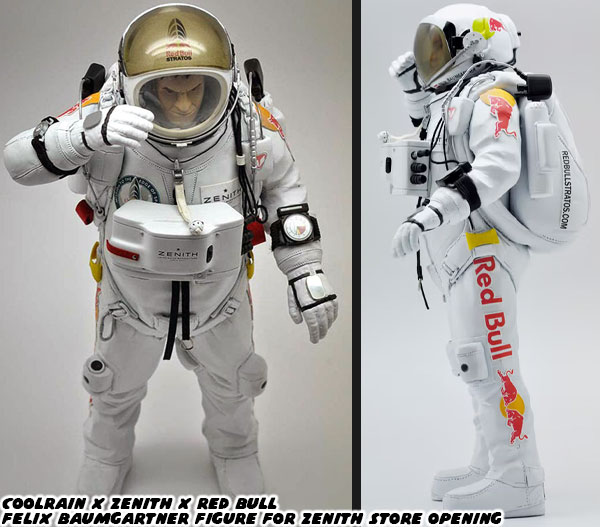
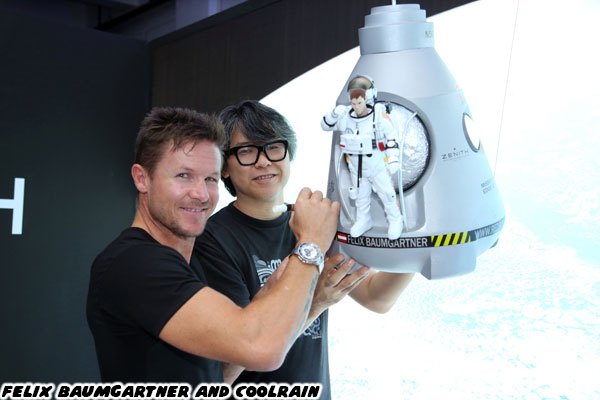
The pieces that CoolRain created for Nike were only used in the gallery shows. CoolRain had no intention of mass producing these works of art. His follow up in October of the same year was arguably just as cool. The Austrian daredevil Felix Baumgartner had set a record in 2012 for the highest skydive of all time. He rode a balloon to the very edge of space, almost 120,000 feet up. He jumped from a capsule in a pressurized suit. It was like an astronaut speed suit designed to survive his supersonic fall back to Earth. On the second anniversary of that record breaking jump Zenith had opened a store in Singapore. The high-end Swiss watchmaker had sponsored Felix’s jump, along with Red Bull. It was called project Stratos. They commissioned CoolRain to design a figure to celebrate the occasion. What he delivered was one of the best pieces he has ever designed.

The duo of Astromax, and Baumgartner figures not only made me insanely jealous, they also sparked my imagination. The only consolation that I had was that these figures were so complex that they would never be reproduced for collectors. So nobody except for CoolRain would ever be able to display them. At least that was what I thought. CoolRain developed a resin statue version called Astrocat. It was a variation of the sitting Astromax figure as part of his “Everyone needs break time” line. He collaborated with other artists to have their trademark figures sitting on a bench, taking a breather. When it was his turn he released a few of his figures in statue form also sitting on the bench. I was absolutely tempted by this figure, but didn’t like that it was a statue, or that it had cat ears on the helmet. It seemed out of place on an otherwise great collectable.

I kept an eye on what CoolRain, and the other figure artists had worked on over the years. Nothing ever inspired me to save my money except for the recent Street Mask line by JT Studio. This spring of 2024 I absolutely lost my mind. It was the 20th anniversary of CoolRain’s debut. He announced that his fans would finally be able to buy the figure they had long been clamoring for. CoolRain, and Blitzway would release four variations of the Astromax figure. The original white uniform would be joined by silver, blue, and black. Each one had all the same details as the original art toy. This news would have made me extremely happy at any other time. Unfortunately I had purchased the King, and Flash figures from JT Studio just a few days before the press release went out. The JT figures cost so much that I promised myself I wouldn’t buy any other high ticket item this year. I considered them my birthday, and Christmas presents from myself, and my family.

It was a cruel twist of fate that the only non-basketball 12” figure I would justify purchasing finally hit the market. I should have known something like that would happen. I’m not going to lie. I am saving every penny that I have in the hopes that the figures do not sell out before the end of the year. That I might be able to get one before the resellers scoop them up. Only time will tell if that’s possible. If I get one then you’ll find out about it on the blog. If I don’t then I’ll just remain salty about it until my dying day. Anyhow this wraps up the bonus entry for my remix series. I’d like to know if there were any toys you collected, or any expensive figures you had on your wishlist. Tell me about it in the comments section please. I’d like to hear your thoughts on the comments section. As always if you would like to sponsor me please visit my Patreon page and consider donating each month, even as little as $1 would help make better blogs and even podcasts!
follow the Street Writer on Patreon!

Friday, June 28, 2024

Remix Culture, how Asian designers changed the game, part 10

In the previous entry of the series I talked about getting my hands on some urban vinyl basketball players in the vein of Michael Lau. The Super-X figures by Dragon Models were not licensed by the players, nor did they have anything to do with the NBA. That was okay with me. Whenever a stylized, and official 12" figure showed up in the press it was often for a gallery exhibition. Michael Lau had collaborated with Nike on exhibits, and release events. Lau put his gardeners in the new Nike outfits for the show. Of course these figures would never be available to the public. The South Korean figure artist CoolRain also did a number of Nike, Adidas, and Vans exhibits as well. He would create stylized figures, such as the "Dream Team" featuring a trio of Nike sponsored athletes in their USA team uniforms, and casual wear. Sadly these were also only created for a show, and never meant for limited-release. Knowing that these figures would never be sold, even in small runs drove me crazy. 

Some of the best vinyl figures ever released came from Hong Kong, and they were rarely licensed by an individual, or organization. To skirt copyright law they often wouldn’t name a figure after an actual person, mascot, character, or athlete. One of the ways they would get away with it was by using keywords, phrases, slogans that might be associated with an existing person, but that couldn’t be trademarked. For example; let’s say a figure artist wanted to cater to Disney fans, they might release a vinyl figure of a stylized cartoon mouse wearing red shorts with white buttons, and yellow shoes. The artist would call this figure “Oh boy!” After one of the slogans used by Mickey Mouse. This was the same trick used on the "Three Kings" statues. Fools Paradise (FP) created some of the most desirable statues for the high-end collector market. If I were a huge NBA fan with tons of disposable income, and lots of room to display a collection then I’d buy their statues without a second thought. They looked authentic from a distance, and even up close if you realized that these weren’t licensed figures they still looked great.

The Three Kings looked amazing. The company called them kings, and not players, or athletes. If you knew anything about pro basketball then you would say the trio were Scottie Pippen, Michael Jordan, and Dennis Rodman. They were the key members of the dominant ‘90s-era Chicago Bulls. The statues looked like stylized reproductions of the actual athletes. Even the numbers on their jerseys were correct. Upon further inspection you’d notice that Fools Paradise used all of the tricks that a counterfeit fashion designer would use to get away with when assembling knockoffs. The sneakers looked just like classic Nike designs, but they changed just enough to skirt the law. The swoosh was different, as were the lines, and colors as to help avoid a cease-and-desist letter. Then there was the NBA brand on the uniforms. At least that’s what it looked like until you got closer, and realized the red, white, and blue symbol was actually the Fools Paradise logo. Then in the middle of the jersey were the words LEGENDS, instead of BULLS. They were able to charge almost $500 for an unlicensed figure based on Kobe Bryant, wearing what looked like his Lakers uniform. The logo on his chest was a similar font, but it said Legends, and the statues were referred to by one of his team numbers. Numbers couldn’t be trademarked after all.
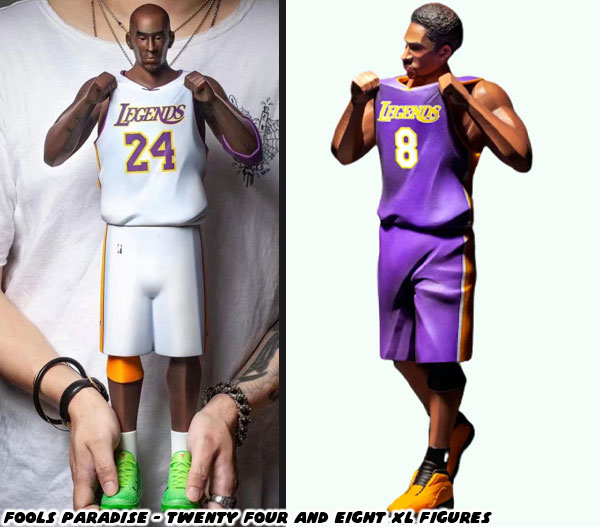
The FP statues was a master class in how to create a counterfeit art that could still demand top dollar. Audiences got an impressionist take on their basketball hero in a new format. It was fresh enough to command an absurd price. Even if Fools Paradise were contacted by the Lakers organization, or Kobe’s lawyers they had already built in their own indemnity clause. By going with small limited-edition runs they guaranteed this would fly under the radar. Similarly a small run of prints, or toys by an indy artist often go overlooked by corporate lawyers during fan conventions. Fools Paradise were not being malicious with the use of the NBA star likenesses, they were filling a demand that nobody else considered. Not only that, but they would sell out of everything they had, insuring there would be no collector bubble, or shelves stocked with products that nobody wanted. This was what I meant when I said that the best artists from China were remixing culture in real-time. Thankfully I never had enough space, or money to even consider buying those statues. I wondered what would happen if actual highly-stylized, reasonably priced, licensed figures ever came out.

It turned out that I wouldn’t have to wait very long. The trading card company Upper Deck wanted to get into the urban vinyl market in 2006. Their goal was to get Michael Jordan’s heir apparent, LeBron James, his own figure before the end of the year. It seemed impossible to me. Giant businesses usually had to plan a season or two in advance, especially since they needed to coordinate with the league, sponsors, and settle on a design to get to the manufacturers in China. Somebody working at the company must have had the ear of management, as they were moving a million times faster than any corporation ever could. I found out about their plans in Francine’s article about creating a Lebron James vinyl figure at Vinyl Pulse. I was certainly interested based on the concept art alone. The proportions were similar to Lau’s art, my own work, with a hint of Kadir Nelson as well.
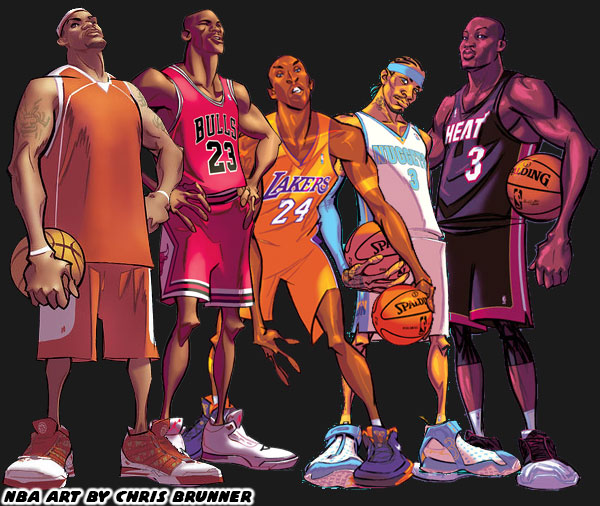
Chris Brunner was the lead designer on the All Star Vinyl line for Upper Deck, with art direction from Mark Irwin. For LeBron he was able to make a powerful, and intimidating design on the powerful, and intimidating star athlete. The amount of detail with the figure was astonishing. The thing that popped out to me were the accurate, but still cartoonish Nike sneakers. Funny enough Upper-Deck would switch the basketball while coming up with future designs. In 2006 the NBA announced a new microfiber composite basketball, which was met with the ire of the players. This basketball was used, and the classic basketball would appear in latter releases. The ways in which Upper Deck was able to get the figure to market with a short turnaround started making sense. They were doing double-duty with the release of LeBron. Mr. Brunner designed LeBron wearing a neutral red, and white jersey, and shorts. This was to avoid lengthy contract negotiations with the NBA, and the Cleveland Cavaliers, who LeBron was playing with at the time. The outfit was Nike performance wear, and the sneakers that he was wearing were the all new LeBron III’s. Nike was using this release as part of a bigger marketing campaign.
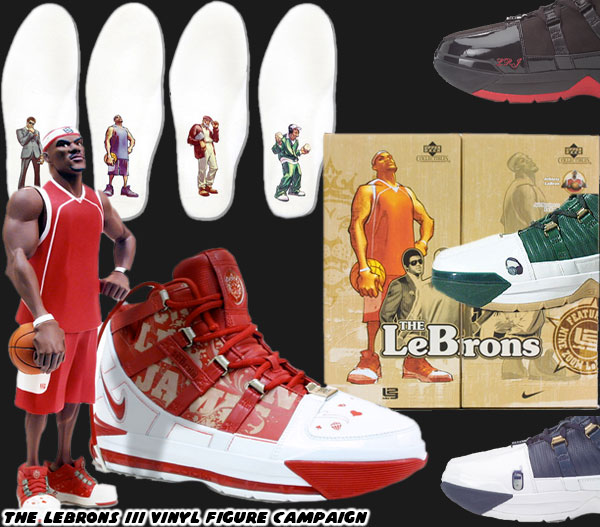
Upper Deck announced in short order that not only were they working on LeBron, but they were also creating sculpts out of the characters in his new ad campaign. This would coincide with the release of his new signature shoes, and the alternate colorways were a nod to his “family” which were essentially his alter egos. Athlete was the basketball player that most people were already familiar with. Business wore a suit, and represented his market savvy. Kid represented his youthful, playful side. LeBron had come right out of high school into the NBA, so his perspective was still young at heart. Wise was his basketball IQ. He was a young master of the game because of the insight he picked up from the legends that came before him. Ever the marketing geniuses LeBron, and Nike would also produce a series of cartoons featuring the family. Nike, LeBron, and Upper Deck were covering their bases. Fans of the trading cards, and collectables would have something new to pick up. Fans of the sneakers would love the exclusivity of this set. Urban vinyl fans eager to see how the art form would translate to licensed figures would be lining up to collect them as well.
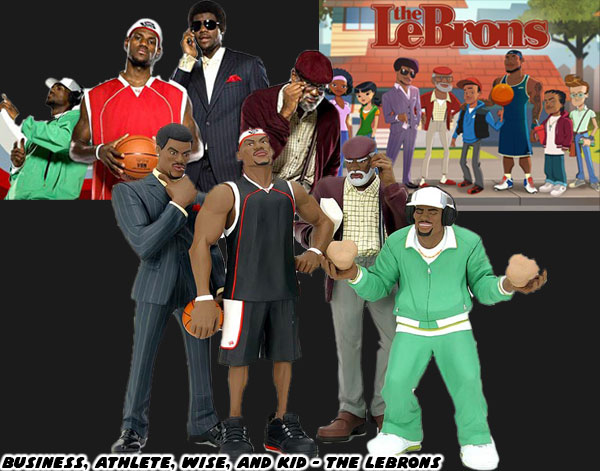
It seemed that the people working behind the scenes were keenly aware of how urban vinyl collectors worked. These releases wouldn’t be like printing millions of trading cards featuring star athletes, and bench players for the domestic market. They needed to focus only on the biggest stars, and their cultural relevance has as much of an impact as their scoring records. Upper Deck also needed to make sure to keep their numbers low, and also offer smaller runs of special colorways. This would appeal to die-hard collectors, and allow their manufacturers to get the All Star Vinyl line to market faster than any toy could hit the shelves.
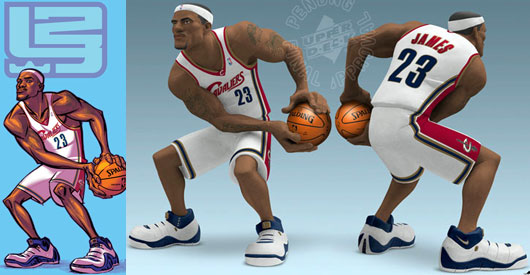
They made sure to give the urban vinyl community a heads-up by going directly to Vinyl Pulse with the exclusive interviews. Then they would clue in their regular distributors, and press outlets with articles on what the whole vinyl movement was about. Upper Deck knew that they were headed in the right direction based on the reception to the LeBron’s. The initial drop, and the special editions sold out the minute they hit the market. In fact it crashed their website, and countless people (myself included) were furious at how they failed the collectors. When they got things sorted it looked like bots, and resellers claimed most of the initial release. There were almost as many eBay entries as there were figures produced that same day.
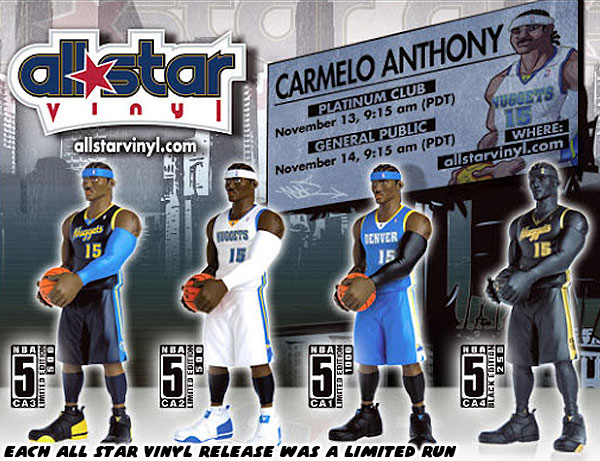
I wrote a very long email to their customer care department highlighting everything they got right, and wrong with the release. They were kind enough to contact me, and hold a set aside for me, and many of the other collectors that experienced issues on release day. I’m certain that they thought every release would be met with the same level of passion. Upper Deck began working with the NBA, and every major organization to bring other superstar athletes to the growing market. They designed, and released figures for the NFL, NHL, MLB, PGA, and even pro boxers. I promised myself that after the Super-X figures that I would stop buying urban vinyl figures to save some money, however I couldn’t resist.

I had no intention of buying the entire sets of any athlete, or the smaller alternate color runs. As a fan of Mr. Brunner’s art, and the other artists working on the line I was happy to get my hands on any of the basketball figures, but that was it. I didn't care about their boxer, hockey, baseball, or football lines. Despite having the best intentions Upper Deck failed to recognize that the success of the LeBron’s could not be duplicated with every release. Those figures hit because it brought together the fans of Lebron, Nike, sneakers, the NBA, collectables, and the urban vinyl community. It was essentially the perfect storm of different markets. If just a few of those people didn’t turn up with each release then the figures would end up languishing on their online store, and on the shelves of their retailers. That was exactly what happened, and one of the reasons why the line disappeared almost as quickly as it was created.

Another thing that hurt the line were the competing scales that the figures were produced in. The majority of the numbered collectable figures were roughly in the 1/7 scale, or about 9-10” on average. Each of the NBA figures was proportionally accurate. Shaquille O’Neil (7’ 1”) was the tallest of the lot, followed by Kevin Durant (6’ 11”), then Lebron James (6’ 9”), Kobe Bryant (6’ 6”), Vince Carter (6’ 6”), and Dwyane Wade (6’ 4”). The shortest of the figures was Allen Iverson (6’ even), and he was arguably the coolest figure in the lineup, just as Lightning Son from the Super-X line was the coolest figure of that lot. Unfortunately Upper Deck also released slightly smaller scale versions of Kobe, LeBron, and Kevin Garnett, roughly 1/8 - 1/9 scale. They were not proportionally consistent. The smaller figures were designed to be more affordable, as they were produced in greater numbers. I would guess that Upper Deck was hoping to catch the eye of potential collectors with less expensive, smaller, but still stylized figures. The thing was that they looked close to the same size as the more expensive releases. There was the potential that they mistakenly bought the two different sizes for their collection. They wouldn’t realize it made their shelves look inconsistent until the figures were side-by-side.

Sales of subsequent releases might have been lukewarm because of the highly stylized athletes. The thing that I absolutely loved about Chris Brunner’s art being turned into 3D models did not appeal to the general public. Not everyone understood the artistic intent behind the sculpts. Not everybody liked the aesthetic of three dimensional cartoonish characters. Online forums were going back, and forth with people arguing that the figures looked dumb, cartoony, and plain unrealistic. They stuck out like sore thumbs compared to their other statues, and toys. Fans of the line, myself included said they looked amazing. We wanted a bold new look for athletic collectables. We argued that if collectors wanted realistic NBA figures then they could always go to McFarlane toys, or later Enterbay. Not every collectable had to be a 1-to-1 copy of every eyelash, wrinkle, and fingerprint of the star player. Artists could capture the essence of the athlete in profound ways, just like the Fools Paradise statues that I mentioned above.

Another thing that affected the reception to the figures was that there wasn’t yet a market big enough to support them. People were not used to seeing figures with such a strong aesthetic. The proportions were jarring to people that had not been exposed to that kind of design. There was nothing similar to them in any toy store, or from any other trading card manufacturer. So people had not been conditioned to accept that these were not only collectable, but they were cool as well. Funny enough over the next decade just about every major franchise would shift to this style of character design. Movie franchises like Star Wars, and Pirates of the Caribbean, as well as cartoon mainstays from Disney, Ben 10, Spider-Man, G.I. Joe, Transformers, and Teenage Mutant Ninja Turtles would all get the highly stylized treatment as well.

In order to change the market, and gain acceptance with the general public one studio had to be first. Upper Deck was a pioneer among the big companies in the USA. They were willing to take the creative risk while every other publisher was going through the same old motions. The popularity of the initial LeBron release demonstrated that the market was there. Sadly they couldn’t get customers to keep showing up, and grow the industry like they wanted. Unfortunately the studio paid the price, and a potentially game-changing line was cut short. They should be admired for everything they were able to accomplish in a brief amount of time. Upper Deck had their finger on the pulse of sports, and they understood the influence that street culture had on the NBA. However there was something that came just before it that had an even bigger impact on the culture. I’ll talk about it on the next blog. Until then I’d like to hear your takes on Upper Deck’s All-Star Vinyl figures. Did you collect any? Do you think a line of designer sports figures was a good idea? Tell me about it in the comments section. As always if you would like to sponsor me please visit my Patreon page and consider donating each month, even as little as $1 would help make better blogs and even podcasts!
follow the Street Writer on Patreon!

Friday, April 5, 2024

It ain't easy being a sneaker freak...

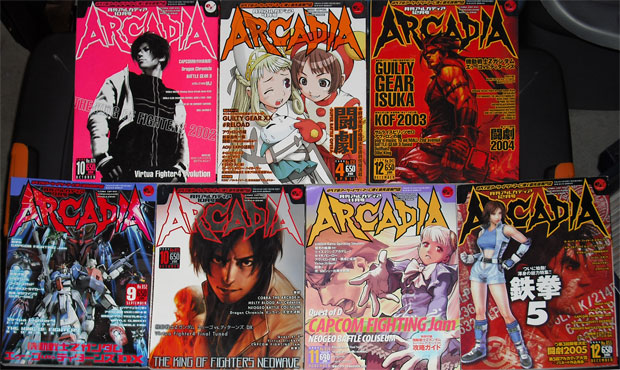
Hello friends, I hope 2024 was treating you well. I’ve been bitten by the writing bug, and have a few new things coming up on Fridays. I hope the 1UP classics on Mon., and Wed. weren’t too boring. The sorting, cleaning, organizing of my apartment, and garage had really been helping my mental health, and even a bit of my physical health. I stated in my first blog of 2024 that I had a health scare in the late summer of 2023. It gave me perspective on my family, friends, loved ones, and even you, the visitors on the blog. Finishing the Street Fighter 6 series, organizing my old game magazines, and books helped get me through the worst of it. I did a little more organizing through the fall, and winter as well. Just a couple of weeks ago I talked about bringing my Arcadia Mags out of the rain. What I discovered on my most recent trip to the garage was that the back quarter of the garage was sitting in a thin layer of water. Unfortunately we didn’t have flood insurance.

There was a good chance that anything that my family had in the back of the garage not in a plastic bin was going to be lost when we got a chance to move. The good thing is that the majority of everything we had was in plastic, and my comics, and such were elevated as well. Of course for peace of mind I’ve been steadily throwing things away, and sorting the garage. Trying to move things closer to the front, and replacing the cracked bins in the process. In doing so I’ve actually stumbled upon a literal treasure box. I hadn’t opened it, or written about it in almost 20 years. I decided that it would be a good time to talk about another of my many interests for this blog. This was something that my brothers, and friends already knew. I wrote about it ages ago on 1UP as well. In case you had no idea what I’m talking about; I am a sneakerhead. I love, love, love sneakers, however I don’t actually own too many pairs. I confessed to my friend that God remembered to keep me humble by making me love sneakers, but gave me feet too big to collect my favorites.

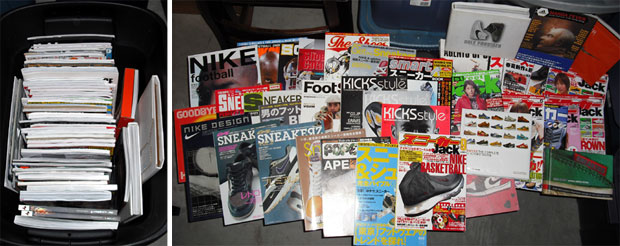
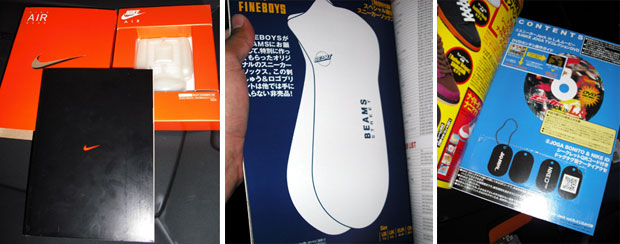
One of the bins in my garage was filled with books, and magazines on sneakers. As with my game magazines the majority of these sneaker books were from Japan. A few of these issues came with goodies. Whether they were CDs, laces, socks, or the actual “Air” capsule from the Nike Air sneakers, these were some of my prized items. I could spend hours, and hours pouring through these pages. As an illustrator I had many different influences. Early video game fliers, and marquee art greatly influenced my style, but it didn’t end there. Comic books, cartoons, anime, manga, and manhua were also influential. One of my unsung influences was the sneaker. The ability for designers to put together different materials, colors, patterns, and technology into these shoes year after year was nothing short of genius. That eye for design rubbed off a little bit on me.

I loved the hundreds of car books, and magazines that I also used for reference. Those were almost as valuable to me as my game books, and sneaker mags. For example if I was having problems figuring out a drawing, a color combination, or just lacked inspiration then I knew I could always go to my sneaker books first. If I spent a few minutes looking through the archives then I’d figure out what’s stumping me. I’d get ideas for new projects, even when they had nothing to do with athletics. A lot of my science fiction ideas actually started off as a spark based on some cool looking shoes. Sneakers meant a lot to me as an artist. My biggest influences, probably like yours, went all the way back to  childhood. If you had read this blog for a while you could guess that motorsports, and arcade games were my passion when I was a kid. I did a massive series dedicated to Ridge Racer, that was as long as my Street Fighter 6 posts. I’d written tons on monster trucks, and NASCAR as well. I don’t think I’ve ever talked about sneakers on this blog. If I had kept, and sold the sneakers that I wore through my childhood in the 1980’s in mint condition I bet that I could have bought a new car. Possibly enough to put a down payment on a small house.

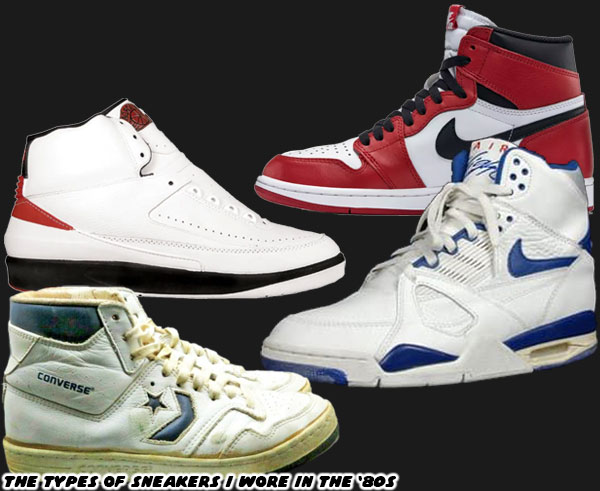
As a kid I literally wore every major basketball sneaker that you could imagine. This was not because my family was rich, or because I wanted to show off. My parents both worked hard for what my brothers, and I had. Before the start of each semester we would get new clothes, and shoes for the first day of school. Plenty of families did the same thing, maybe yours as well. What was different for me was that I was growing much faster than my brothers. I couldn't fit in hand-me-downs from my older brother. I am very tall now, 6’ 7 1/4”, or 2.01 meters for my overseas friends. From the time I was 7, until the age of 17 my mens shoe size kept pace with my age. This meant that I would get a new pair every year, sometimes two pairs a year. I remember when I realized this was unsustainable. I was in elementary school, and one of my teachers said that my shoe size was the same as hers. I thought that was normal, until my friends said that I was growing a little faster than they were. I had always been the tallest kid in my class, but sometimes by just an inch. The difference really took off in my senior year of jr. high school (middle school for some). I had hit 200 lbs. as a 13-year-old. My biggest growth spurt happened while I was in high school. I hit my maximum size by my senior year, just over 320 lbs. by the time I was 17. Thankfully my feet stopped growing then as well.

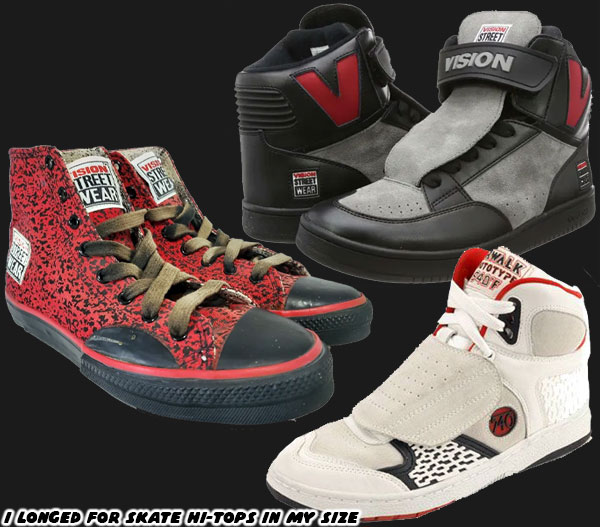
The thing about growing up quickly was that my choices in footwear were getting smaller with each passing season. In jr. high I had outgrown most canvas sneakers. Vans, Converse, Vision, and Airwalk were some of my favorite brands, but they often maxed out at size 12, maybe 13. I was, and always will be a fan of the skateboard hi-tops of the ‘80s. The ones that my big brother, and our friends wore made me jealous. I never owned a pair of skate sneakers. The problem for my parents was that the only shoes that were consistently available in my size were basketball sneakers. They looked great, but the leather, and hard rubber felt twice as heavy as canvas sneakers. When they got wet they felt like I was wearing ankle weights. When I would get home I would take off my shoes just so my feet could breathe. That feeling of never being able to wear the shoes I wanted, and having to settle with what was available made me feel like a freak at worse, or a burden to my parents. I remember driving between several cities with my mom, searching for sneakers when I hit 15, 16, and 17-years-old. The Foot Locker employees would call around to see what stock was available, and then send us to a different mall. I couldn’t pick the colors, or styles I wanted. In many cases my aunts would always make it a point to check the discount stores to see if any big shoes had come in, and bring them to us. This way my mom could set a few extra big sizes aside for my birthday, or Christmas.

Through jr. high, and high school, my sneakers were really cutting into the family budget. Looking back I realized how much my parents gave up just so I could have shoes that fit. When I started college I promised them that I would try to make my shoes last a little longer. That I would use my part-time job money working at the school computer lab to pay for my clothing. It was then that I found out about Eastbay (R.I.P), the distributor for Foot Locker, and Champs Sporting Goods. One of the Foot Locker employees was helping me track down some sneakers. He clued me in to their distributor, and said that I could request a free catalog, and check their web page for sales. If I ordered shoes from them they could deliver them to the Foot Locker to pick up for free. I would wait until the end of the year, and pounce on their overstock. Although I was still limited to basketball sneakers I suddenly had more choices, and could even order a few extra pair for the price of one new set. I remember sitting on three, maybe four pairs of shoes. For the first time in my life I felt like an actual sneakerhead. Of course the actual sneaker freaks had entire closets, and rooms dedicated to their collections. I was low key jealous of those people, but do you realize how much space a size 17 US shoe box took up? Six boxes were almost the same size as a twin mattress.

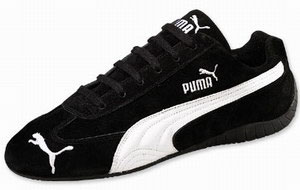
Every now, and then I would see a canvas sneaker, or something other than a basketball hi-top that was available in my size. I’d order it right away. Not long after I started using Eastbay online, another web store popped up. eBay started generating buzz as having shoes, and clothes for much less than retail. I added that to my rotation in the late ‘90s / early ‘00s. Once I got a pair of Puma driving shoes. It felt like I was wearing clouds. They made my feet so happy. I would literally be glowing from the sensation. My family was delighted, they knew that comfortable, and light shoes was one of the rare treats that I allowed myself. It also made me feel less like an aberration for being so big. It’s hard to describe the sensation if you’d never been in a similar situation. Big, and tall kids these days had infinitely more options than I did while growing up. I’m happy for them, and grateful that a lot of manufacturers made bigger shoe sizes for styles other than basketball. I’m also happy to see that several skate sneaker manufacturers were also offering bigger sizes, and even bringing back some classic designs. Airwalk still didn’t have anything in 17, but I’m hoping it might happen in my lifetime.

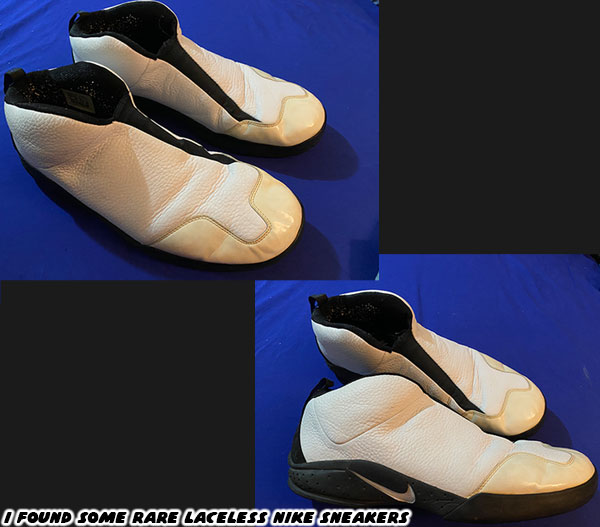
As I said at the start of this blog, I found a treasure chest recently that hadn’t been opened in almost 20 years. I had completely forgotten about a pair of extremely rare Nike laceless sneakers. I gave them a good cleaning even though they weren’t even dusty. I’ve been walking around in them for a few days, absolutely glowing once more. But they weren’t nearly the most important find in the box. I’ll save that story for another Friday. Until then I hope you rediscover the things you love too. Are you a fan of sneakers? Do you have a favorite pair? Were there any that you wish you had gotten? If so I’d like to hear about it in the comments. As always if you would like to sponsor me please visit my Patreon page and consider donating each month, even as little as $1 would help make better blogs and even podcasts!
follow the Street Writer on Patreon!

Monday, December 4, 2023

The Best There Ever Was, Part 3 - A 1UP classic from March 16, 2005

More like Wild Bill than Billy the Kid.

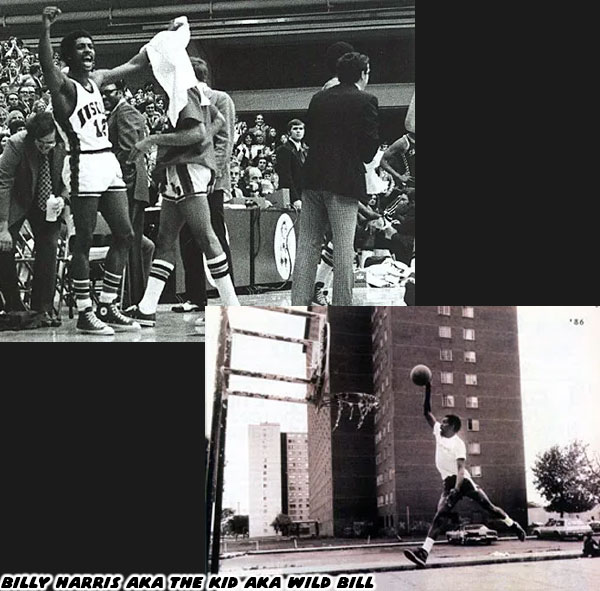
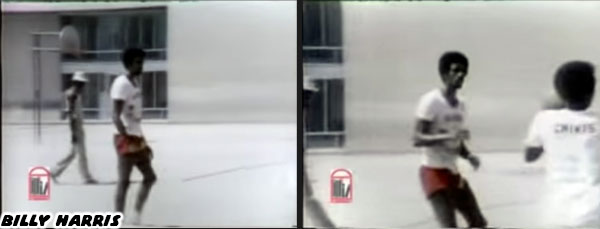
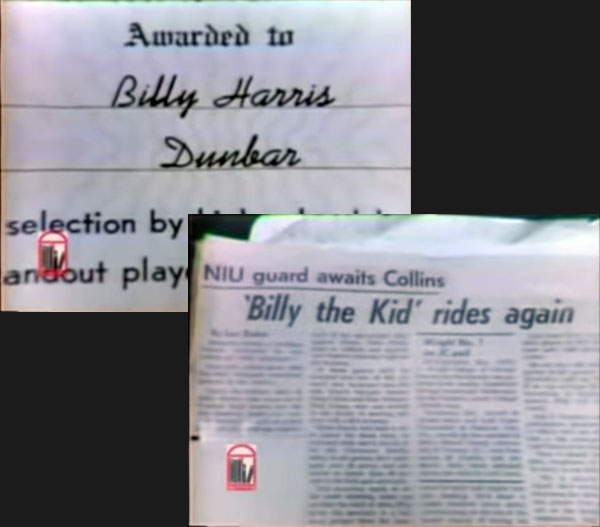
Billy Harris is "the one." Billy Harris is the final legend among Legends. Billy Harris is the greatest playground legend ever. Some would go so far as to say that he was the greatest basketball player, period.

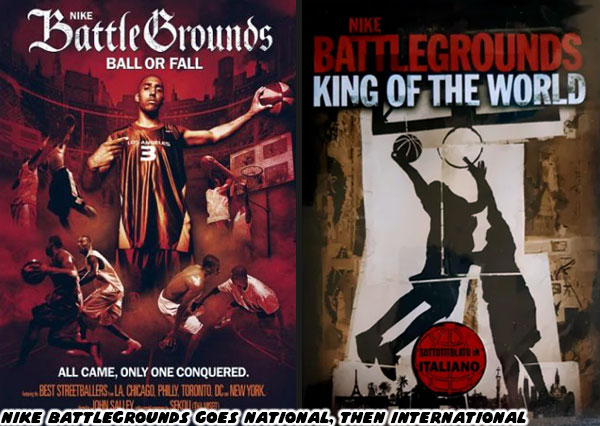
"They used to have jump ball. Muthafucka throw that shit up, I jumped up and grabbed that bitch and shoot it in. They stopped the fucking game! They don't know what the fuck to do! Is this shit legal or what? Y'all figure this shit out. When y'all get it figured out I'll finish whopping y'all ass."
- Billy Harris in Nike Battlegrounds.

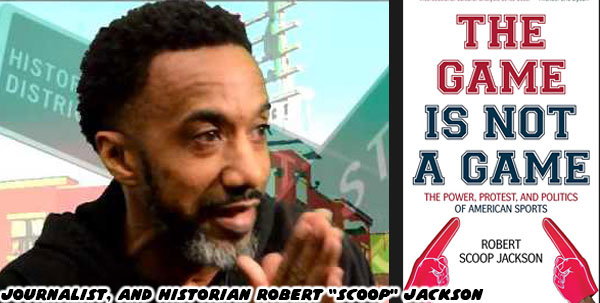
The best basketball journalist of our time, Scoop Jackson, did the homework so I didn't have to. Scoop separates fact from fiction in SLAM #30 with the help of Bhatie Demus, Courtney Goldwire and Chicago Sun-Times reporter Lacy Banks. Billy's life is so extraordinary that is really does tell that many writers working for the common goal. Breaking down Billy's life, understanding what happened and separating fact from fiction proved to be a hard undertaking.

I've added some text from the SLAM article as well as dialogue from the Battlegrounds DVD in which Billy shares some of his stories. The text is uncensored. Billy and Fly Williams were snuck in the early part of the DVD, introduced by the poet SEKOU (THA MISFIT), yeah I've never heard of him either and I'm sure Nike threw him in there to try and be hip and "urbane." That whole DVD would have worked better without the cages, hype, narrator and circus atmosphere, but I digress. This is the story of Billy Harris, not a two-minutes and bleeped-out like it was on the DVD, you have been warned...

Billy has seen every possible aspect of the playground to pro back to playground life that any legend has ever had. Scoop illustrated that wonderfully in SLAM. The life of Billy Harris was not an easy one. Billy had the most potential and carried more of the ghetto on his shoulders than any other playground legend mentioned in this article. Every game he played was a battle for more than himself. It was a battle for the hood; it was the one thing that kept his community going. Billy had become bigger than a legend. He was a god.

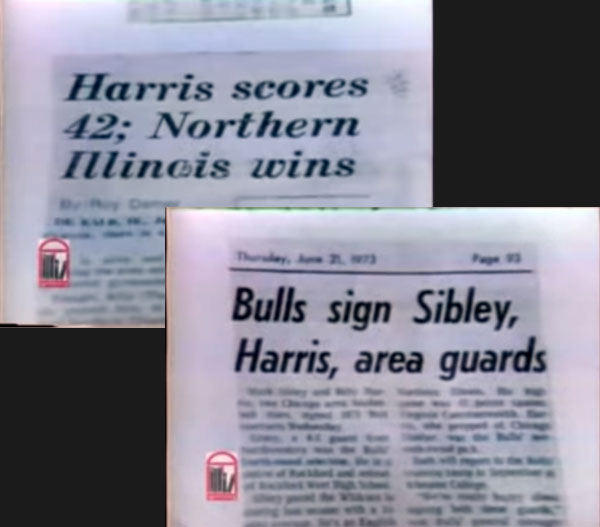
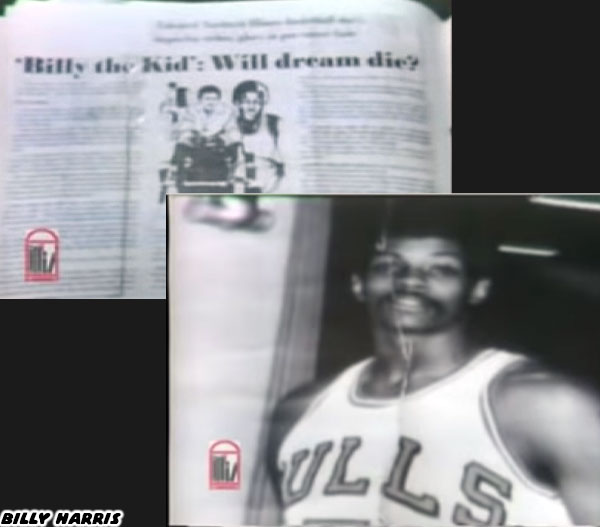
Accomplishments mean nothing compared to the life Billy had. This life included drugs, women, cash for favors, pimping and dependency. However Billy would redirect our attention to the game, he would say, "Check the books" and they would prove that he was right. Billy had nothing to hide. His ability to play the game so incredible that it scared coaches and opponents alike. He was too much for one team, too much for one city to contain. Billy was drafted and then cut by the Chicago Bulls. Although he was the best draftee on the team (and apparent that he was the best player period) he was still cut.

"The fact that Billy didn't make it had nothing to do with talent. Politics and many other aspects made it impossible for him to make it. If they had a three-pointer when he was playing, he'd average 60 or 70 points. Easy. Because most of his points came right as he came across half-court. He had character, but was outspoken. Like Muhammad Ali said, 'It's not bragging if you can back it up.' Billy always did. Honestly, I don't think the league was ready for him."- Sonny Parker, NBA and playground legend as told to Scoop Jackson.

Billy could foretell his fate and knew that he was not cut out for professional basketball. His game proved to be too much for a league not ready for change. It was enough that the ABA was radical enough for the NBA to incorporate. Billy's all-around ability would have pushed the league into the 22nd century.
 
Sadly very few people realize or acknowledge the sacrifices that Billy, and many legends like Fly Williams and Earl Manigault made in order to bring the playground game up to the prominence it is now. A lot of cats today assume that the street game has always been big and that the money that is out now has always been around. Get it straight. It was people like Billy that brought the game up and more people should praise the names that came before like Chicago University coach, Marquette University and NBA star Bo Ellis, "If I leave here without saying what I have to say, I will feel awfully bad. I want to say thank you to this man sitting on my right, Billy Harris. Bill Harris is by far the best basketball player I've ever been associated with. I don't consider this man a playground legend, though. Because when we were coming up, playground legends were young men that didn't really go to high school, didn't graduate, didn't go to college. This man has a degree. He played in the ABA. He worked downtown in suits. So I don't consider him a playground legend, because he's accomplished things. But I do consider him one of the coldest players I've ever seen coming out of Chicago-on the court and mentally. Because without his direction and guidance, [a lot of things] would have been non-existent to me. The reason I've had a lot of success in my life is because of people like Billy Harris." (Jackson 114)

I will begin to put down the numbers. Each statistic gets more unbelievable than the previous. These are not myths or fables, there is proof for all of the claims and the four journalists that brought Billy's story to SLAM will testify that this is the truth the whole truth and nothing but the truth.

Billy was an amazing scorer, averaging no less than 30 points per game in high school in college. He never played a team game for less than 30 points, period. His shooting was deadly accurate, somewhere in the 65-70% range from anywhere on the court. However Billy was more than a shooter. He could drive, he could dish and he could dunk. He could defend the basket and more than any other legend he could read his opponents. Billy's athleticism matched every mental aspect of his game and vice versa. Billy understood how to score and how to utterly destroy his opponents.

"You know it's a curse. People think it's a good thing to be able to read other people, being able to smell bullshit. But it's not. Because what happens when you sense that bullshit inside your family? When it's right next to you every day? What do you do then? (Jackson 110).

This is all hyperbole without telling you who gave Billy Harris competition. In the mid 60's every playground, college and high school legend in Chicago and the surrounding cities was gunning for Billy.

This is not myth but fact: Billy never lost a game of 1-on-1 in his life. For the 14 years he was in his prime. From the age of 16 to 30 he never lost a game of 1-on-1. Period. At his peak Billy would handicap himself. He would play a game to 24 and give his opponents 22 points. "West side" rules so possessions would alternate after every basket. If they made one basket from the three-point line then the game was over... Billy never lost. Billy would even give opponents a half point if they could touch the backboard with their shot. Hit the backboard four times and the opponent would win? Even with those odds Billy never lost.

"Nobody knows these stories. Nobody. You wanna know why? Cause I ain't told them."
- Billy in Nike Battlegrounds.

Scoop tested Billy, asking him if he would give Dr. J, Jordan, Magic and Bird those same odds. Defiantly Billy answered, "I'd give them 22 and the game's 24. They would never beat me? Ain't no motherfucka alive, walking around, that can say that they beat Billy Harris one-one-one. You can put it on the radio, TV, whatever. Ain't nobody ever going to step up and say that they beat me. They are not going to win. You don't understand-I played against n*ggas that would rather kill you than let you beat them. And I figured out a way to destroy those n*ggas."

In team games no one ever put any number of points on Billy. Billy says it with conviction. He never played a bad game in his life. Each and every game he played was nothing but his best. "I played basketball like it meant life or death. Pressure? Where the fuck does pressure come from? The pressure is on me. I'm playing against me! I'm searching for the perfect game. That's what I did." (Jackson 112)

It sounds too good to be true. A player this good could never have existed. Scoop went searching for proof of the claims. Billy's friends, coaches and family all backed up the stories. More incredible were the enemies that also supported Billy's claims. People that hated Billy could not bring themselves to lie against his game.
 
Still Scoop went on a hunt for just one bad game, the missed shot for all the money, the crack in the armor. Ed Curry, fellow Chicago playground tournament champion and spokesperson told Scoop, "You won't find it. That son of a bitch never had a bad game, and he didn't lose. I can say that I've seen every great ballplayer that's ever played in this city-played against most of them-and there was no one like Billy. There's no one in the pros today like Billy. He was one of a kind, and he didn't care. He didn't care about the other four players that played with him, and he didn't care about the five guys that used to try to guard him. People think Michael Jordan is one of a kind? No. Billy Harris was one of a kind." (Jackson 110)

Every playground legend is grounded in reality. Up until now every playground legend had a rival, a peer. The playground legend was never perfect. There was always that one bad game, the shot missed with money on the line. This made every legend real. Scoop could not find it in the case of Billy Harris. The further Scoop dug, the more witnesses and record books would back up the claim.

"I go play now and I get a little tired now, but I'm real slick, ya dig? Play a little bit. Chill. Fuck you up a little bit. Chill. You understand what I'm saying? Because I know how to orchestrate this. My shit's that tight." Billy in Nike Battlegrounds.

I am not going to talk about why or how Billy was blacklisted from professional basketball. Lacy Banks, a reporter at the Chicago Sun-Times lost his job (and went to court to get it back) for writing an article about Billy and posting the conspiracy subject that contradicted the Chicago Bulls reasons were for cutting Billy after drafting him in 1973. Scoop writes that the conspiracy was to keep him out of the NBA because Billy would not conform.
 
"What these people don't understand is the very things that if they do now they can sign a 80-million dollar deal. That's bullshit! They got n*ggas crossed out. I'm the n*gga that took that shit to Division 1 and made it work! You understand me? All this shit, crossover, behind the back when I'm going on a muthafucka, one hand jumper coming with the spinnin' fuck. [gestures as if he's doing basketball tricks] All of that. I did all that shit dude? I pick up a paper, here's a bunch of muthafuckas talking about they're street legends. Man, fuck you, you ain't shit, and if somebody believes that shit, so be it."
- Billy in Nike Battlegrounds.

30-years later a new generation of streetball players and "legends" (some with only a few years experience) get shine on TV, shoe contracts, national tours and earn street cred for the NBA all because some fat rappers, businessmen and promoters can cash in on the talent. That is phony. Billy Harris is real.

Billy deserves respect for everything he has ever done for the game. Billy deserves recognition as the greatest playground legend ever. Just because there aren't mix tapes featuring people like Fly and Billy doesn't mean they weren't real or their games weren't as good if not far better than the best we have today. In the NBA they said that nobody would ever be able to create better highlights than Bob Cousy backindadaze. Eventually Pistol Pete came around... Years later the legacy of greats came and evolved the game, Dr. J, David Thompson, Magic Johnson, Michael Jordan and (injuries notwithstanding) LeBron James. Many, many more have come and gone in the playground. But it doesn't matter much. NBA or playground Billy would have balled them all up. Believe it.

Addendum: Months after writing this series Lang Whitaker wrote of another ballplayer named Jesse Dunn in the second issue of Streetball by SLAM magazine. If reports are to be believed (Lang has never lied before) then we may have discovered the Angel to Billy's Devil. But that story is for another day...

Were there any street legends that you heard of in any discipline that were better than the pros? Let me know in the comments section please. As always if you would like to sponsor me please visit my Patreon page and consider donating each month, even as little as $1 would help make better blogs and even podcasts!
follow the Street Writer on Patreon!

Friday, December 1, 2023

The Best There Ever Was, Part 2 - A 1UP classic from March 15, 2005

Skip to My Lou, a Professor and a Bone Collector.

Rafer "Skip to My Lou" needs no introduction. He was 12, barely 13 when he began competing at the Rucker. He was the first real street phenom in a long time. With skills so blessed it would only be a matter of time before the tapes his coach and family recorded found their way to the offices of upstart company AND 1. The rest as they say is history.

Skip did it all, playground, high school, college, pro... There are so many self-proclaimed legends that don't have a fraction of the experience and reputation that Skip has (remember that when I mention a certain Bone Collector a little later). Below are some of his many thoughts taken from the first Season of ESPN Streetball:
"Volume one was just a guy just trying to show who he belongs out there playing with the bigger guys, and before you know it everybody's anticipating every game I had to play.
When I walk on court on the playground, they view me as the best one out there. If I'm going into and NBA arena I'm just an ordinary player. I'm just another guy in an NBA uniform.

Bone Collector said that the only person he really wants to play against is Skip. He wants to throw between my legs; I'm going to let him throw between my legs so he can get his ooh and ahh. Cause after that I don't see nothing else spectacular he's going to do.
Reporter: How about he try and stop you?
Skip: Impossible. [Laughs]

Streetball, everyone is still sold on this one-on-one ability. Headache, Main, they have a lot of ability, these guys can play ball. I play those guys over here. They think it's simple. They don't understand how hard it is to be the last man on the bench in the NBA.
In fact everybody's trying to get it, everyone wants it, most people come out their try to take it from somebody that already has it. You know, people tend to come out there, thinking you're supposed to automatically give them respect just because they're out there playing with you. But they're not, they have to earn it.

As I'm getting older, you know, sooner or later you're going to have to walk away from the playground game and just, you know, let it go. When do you walk away? I found myself taking a back seat most every summer now just to let those guys get more shine. Because I'm being seen during the winter and I'm being seen during the summer. So I'd rather let them shine as much as they could during the summer because that's their thing.

On the other hand I watch these guys every summer and I don't think they grasp what's going on. You know. You think it's all about them. They're supposed to be there. AND 1 is supposed to do this. They're supposed to take 'em in you know. And I'm trying to tell them that there's guys out there better than them. Every last one of us on that AND 1 Mix Tape Tour. There's a guy that's better than Skip to My Lou, there's a guy better than Hot Sauce, there's a guy better than Dribblin' Shane and Sik Wit It and AO. Every open run that I've been to and every place that I've gone. I've seen guys better than us. AND 1 can take those guys, come up with a new game. And that's what I'm trying to tell them that. You know, enjoy this moment. Enjoy this time. And enjoy what AND 1 is doing for us and what we're doing for AND 1.

These guys never asked me about the proper way they should take. They never asked me the things they should do. The more they just let those questions stay in the air, I can't really help them with that, you know. They think it's simple, they think I got there, just someone placing a call. What they do is look at me and just say 'you made it through streetball, why can't we?'
 
Playground legend is a person that holds his own summer after summer after summer. And he's consistently just destroying everybody that they put in front of him. A streetball player, he's more of a guy that has a lot more flair, a lot more tricks. You know, he's like a person that's going to put on a show all by himself.

Reporter: Which one is going to the NBA?

Skip: None of them made it. None of them made it."

For everything Skip's done for the game and AND 1 he was rewarded with his very own signature shoe during the 2002 And 1 Mix Tape Tour. It was the first signature shoe for a playground legend and a testament for all his hard work and years of sacrifice. However some of that shine would disappear two years later. In 2004 AND 1 would release a special color-way version of the Ballistix Mid for the Professor.

The Professor played exactly one summer with the AND 1 crew, won the sponsorship contest and was added to the team. Now he has his very own signature shoe! Note that none of the other mix tape players (that have been touring around the country for years and years) have had a signature shoe. It was almost as if all the hard work that Skip and the other players had endured for years and years adds up to one lucky [white] boy named the Professor. A kid that never made any type of college or high school name for himself was now some sort of playground hero? What is the world coming to?

As long as I'm riding this wave of controversy it's time to do some comparisons between Skip and the Bone Collector. Those that think I'm hating need to relax. I'll admit that BC is a talented player, great handle and court presence and a very clever entertainer on the playground. But real, solid, all-around basketball skills? That still hasn't been established.
 
Larry "Bone Collector" Williams was born in Texas but raised in part in Pasadena California. He says that his life growing up was very hard. He had a lot of obstacles to overcome, what exactly he had to face growing up is unknown.

His rise in the playground circuit has been very quick. Seemingly overnight. BC started playing high school basketball as a freshman in Pasadena but stopped because he and his father determined that the coaches were going to hurt his chance to get college attention.

He did play some with Chaffey College in Rancho Cucamonga, California. Then moved to the Globe Institute of Technology in Lower Manhattan. His grades being his biggest weakness in college. Big schools like Providence and Florida A&M have shown interest in him, however his grades still needed improvement before they could offer him a scholarship.

On the court he was okay for Globe, averaging 9.5 points and 2.5 assists per game. Not quite the stellar numbers that you would expect for a "legend?" His then coach didn't have much praise for him, calling him the "Turnover Collector" for the number of times BC would lose the ball in games.

Eventually BC got a better hold on that handle and became an overnight sensation at the Rucker and EBC tournaments, winning the 2002 MVP in the process. His ego seemingly grew as quickly as his name, often times saying things like "I'd like to think that right now I'm the best player in this whole league." The whole league including NBA, college, high school, streetball and even playground legends.
 
His self-glorification doesn't end there. "I'm the 50 of this shit right now, plus Eminem and Hova. All on the same label."
 
BC on AO from mix tape fame: "All I got to tell this dude is that you are a pussy. I played you in Philly. AO is from Philly and he quit. First half. Nigga had three fouls, got mad at the ref and threw the ball at him. I was averaging 40 out there. He knows, ask AO how much I had. That is the only reason he knows me."

Now BC has announced that he is ready to go pro. He hired the SBA sports management group to help him prepare and they are taking him on a European trip with the SBA All-Stars and helping him get to play in the USBL so he can have scouts judge his game and rank him for the draft.
 
In a world where then 16-year-old man-child LeBron James was already anointed as the "Chosen One" before his high school junior prom, it should make you wonder how far BC will go in the league. At 24-years-old BC could have been aided in his development if he had gotten into a Division 1 college, and would have graduated by now. Instead he is competing in the draft with high school phenoms, NCAA champions and international players of all shapes and sizes. It is almost enough to make you wonder if BC should have stayed on the playground.

More realistically streetball fans, wanna-be legends and streetball players should at least have chastised all the people that hyped his game while not helping him look at the bigger picture. Those selling tapes and DVD's, those using him in commercials. They throw some money his way and convince him he's as good as he thinks he is. A couple of good summers at the Rucker? A DVD appearance? A television commercial? Where are the Bone Collectors real credentials? Does he qualify to be a playground legend?

The real legends held down the Rucker for a decade, they scored 40 in a half on Dr. J, they stacked nickels on the tops of backboards to show their vertical. Skip began his reign at the Rucker when he was 12 and 13. Even Rory "Disaster" Grace from the Notic and AND 1 open-runs or the "Computer Chip" from the AND 1 open-runs didn't really get into streetball until recent, and even then both would have gotten steamrolled by the competition at the Rucker. Skip didn't just entertain, he produced points along with his assists. He had a jumper and could lay-up with both hands from all sides. Skip and many of the other legends did well in high school and college. Some got a chance to shine in the pro ranks. None thought that they could simply make themselves eligible for the draft because they had a couple of good summers at the Rucker, called out a pro player and talked shit the entire time.

Yeah BC will still become rich and famous. Maybe he'll release a hit-single as a rapper and "retire" from the game. But it should make you wonder how it got to this point. Where does a streetball player get all this money? How many unknown ballers had to come before BC? How many ballers had to get used by the system and not see anything in return? How many kids are being sold the game instead of told the game? In the universe of playground legends Bone Collector is still a child. I don't know if he will ever grow up and be ranked among the men that came before and the men that will come after.
If you want to read more about the Bone Collector check out these links:

BC Link 1
BC Link 1
BC Link 1

So if it isn't Skip 2 My Lou or the Bone Collector then who was the best ever? That remains to be seen! If you think you know who the greatest streeball legend was then let me know in the comments section please. As always if you would like to sponsor me please visit my Patreon page and consider donating each month, even as little as $1 would help make better blogs and even podcasts!
follow the Street Writer on Patreon!