Showing posts with label hot sauce. Show all posts

Wednesday, November 13, 2024

Freeze frame, my poster collection, part 7…

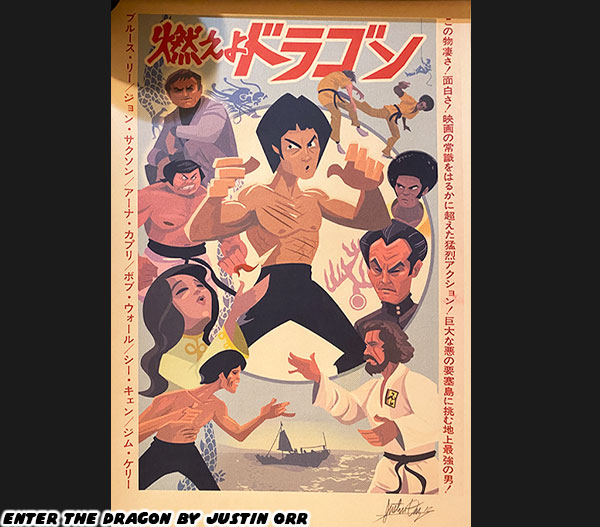
The posters featured today are a cross sampling of my interests, and shows, and events that I enjoyed in the past. It should go without saying that I’m a big fan of Bruce Lee, and his films. One of the prints that I absolutely fell in love with was by artist Justin Orr. I had to support the artist at the Wondercon in Anaheim.

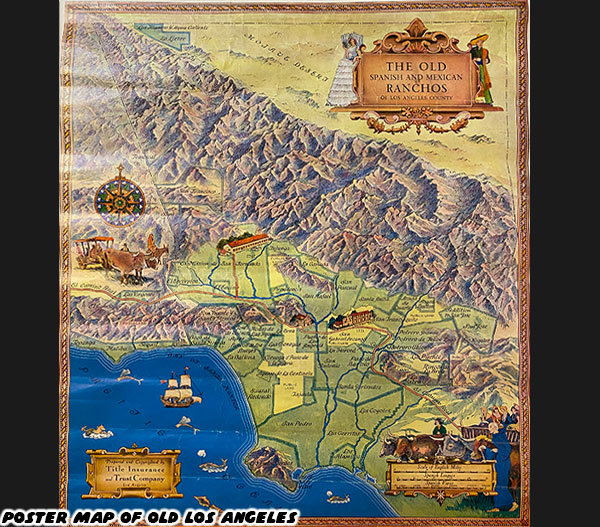
Some of the prints in my collection I just picked up somewhere along the way. This old map of Los Angeles is a great reference. I should straighten out the folds, and get it framed.

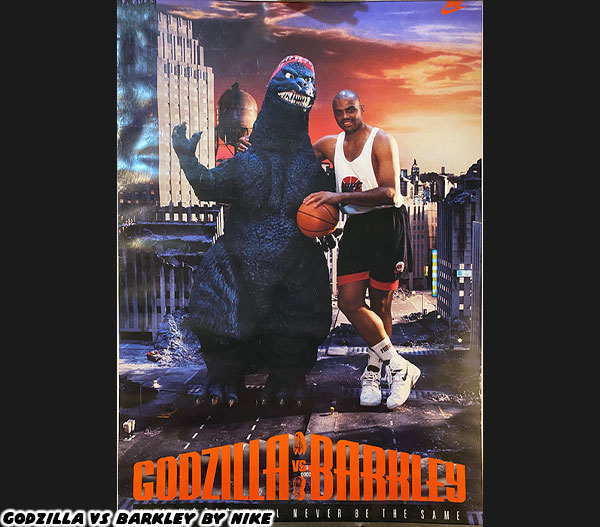
One of the oddest posters in my collection actually belongs to my little brother. A lifetime ago there was a hilarious Nike ad featuring Godzilla battling against Charles Barkley. Trust me anything seemed to go with the old Nike commercials. We were at the mall one day and found a poster celebrating the collaboration. So my little brother got it, and I’ve been keeping it safe ever since.

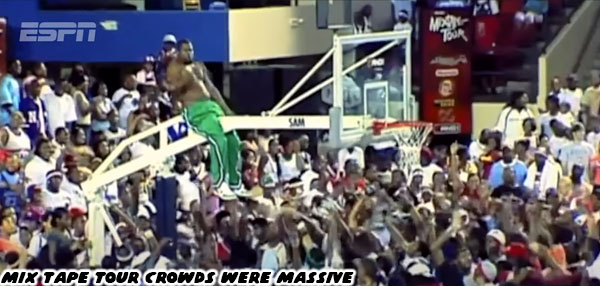
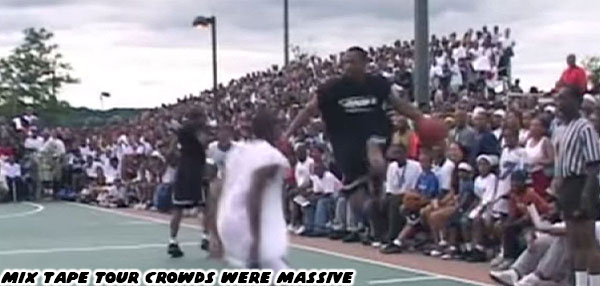
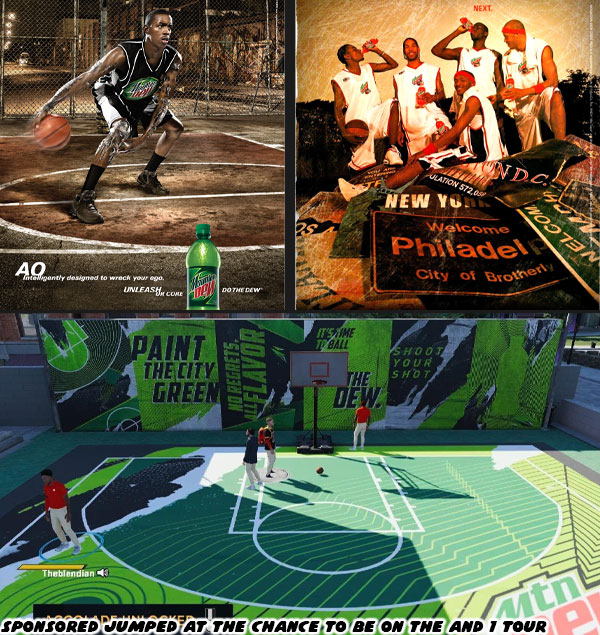
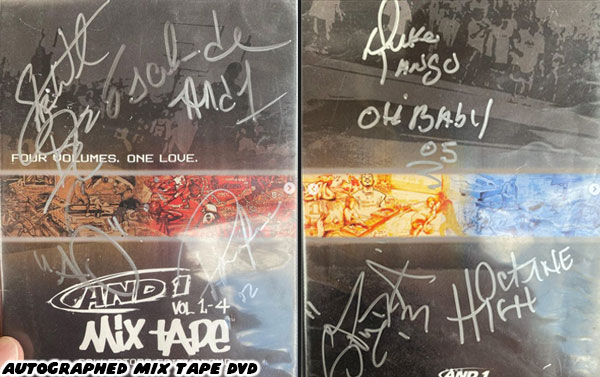
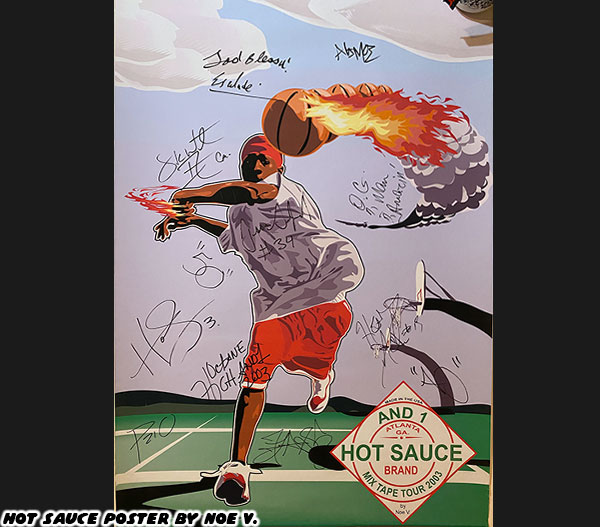
The Hot Sauce poster was one that I created, and my friend that used to work at Kinkos got printed for me. I took it to a Mix Tape Tour game, and got the players to autograph it. Hot Sauce loved it, and asked to use my art on a couple of his own tours.

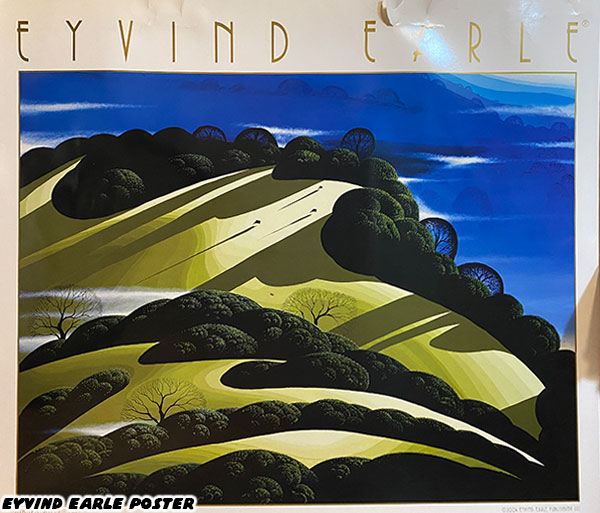
I should throw out the Eyvind Earle poster but I’m holding onto it because it reminds me of a trip that my family took to a special gallery event.

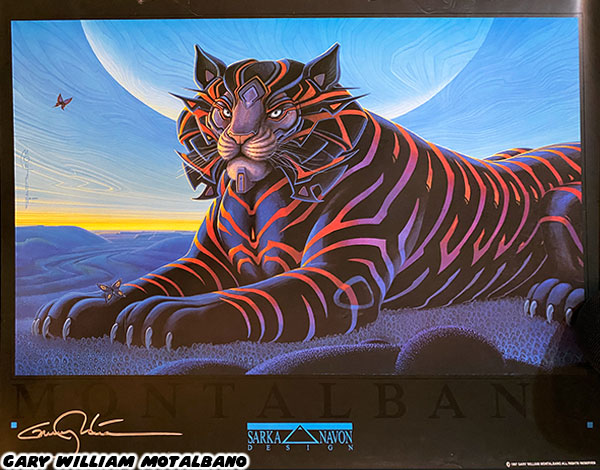
I believe that if you have the means you should support artists of all types. The art of Gary Montalbano really vibes with me. I had the pleasure of getting a poster autographed by the man at a San Diego Comic Con many years ago.

The giant robot project MORAV was one of those that had so much potential. It was going to be a live action series featuring animatronic robots. One of the designers / actors for the show was Grant Imahara of Mythbusters / Battlebots fame. Sadly Grant passed away suddenly, leaving us with memories of something that could have been truly exceptional.

Were there any gallery events, or independent artists that you really enjoy? I’d like to read about it in the comments section. As always if you would like to sponsor me please visit my Patreon page and consider donating each month, even as little as $1 would help make better blogs and even podcasts!
follow the Street Writer on Patreon!

Monday, December 4, 2023

The Best There Ever Was, Part 3 - A 1UP classic from March 16, 2005

More like Wild Bill than Billy the Kid.

Billy Harris is "the one." Billy Harris is the final legend among Legends. Billy Harris is the greatest playground legend ever. Some would go so far as to say that he was the greatest basketball player, period.

"They used to have jump ball. Muthafucka throw that shit up, I jumped up and grabbed that bitch and shoot it in. They stopped the fucking game! They don't know what the fuck to do! Is this shit legal or what? Y'all figure this shit out. When y'all get it figured out I'll finish whopping y'all ass."
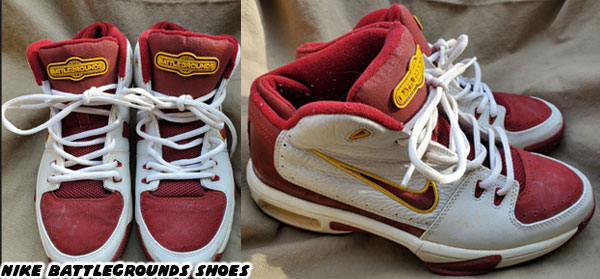
- Billy Harris in Nike Battlegrounds.
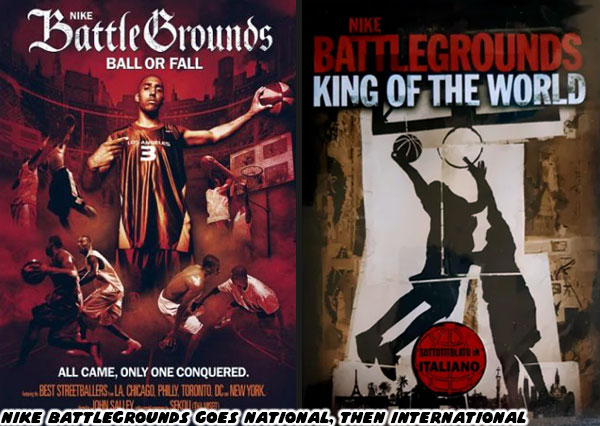
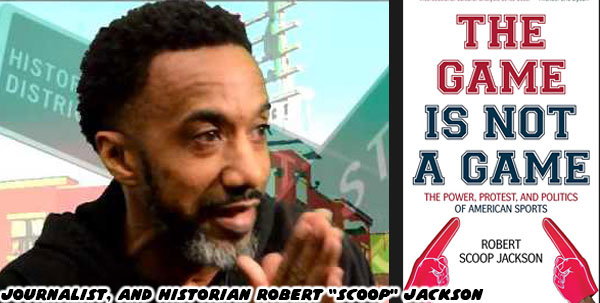
The best basketball journalist of our time, Scoop Jackson, did the homework so I didn't have to. Scoop separates fact from fiction in SLAM #30 with the help of Bhatie Demus, Courtney Goldwire and Chicago Sun-Times reporter Lacy Banks. Billy's life is so extraordinary that is really does tell that many writers working for the common goal. Breaking down Billy's life, understanding what happened and separating fact from fiction proved to be a hard undertaking.

I've added some text from the SLAM article as well as dialogue from the Battlegrounds DVD in which Billy shares some of his stories. The text is uncensored. Billy and Fly Williams were snuck in the early part of the DVD, introduced by the poet SEKOU (THA MISFIT), yeah I've never heard of him either and I'm sure Nike threw him in there to try and be hip and "urbane." That whole DVD would have worked better without the cages, hype, narrator and circus atmosphere, but I digress. This is the story of Billy Harris, not a two-minutes and bleeped-out like it was on the DVD, you have been warned...
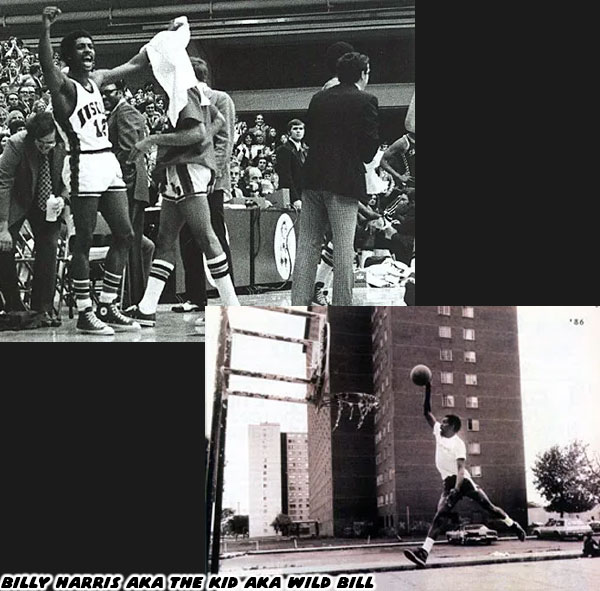
Billy has seen every possible aspect of the playground to pro back to playground life that any legend has ever had. Scoop illustrated that wonderfully in SLAM. The life of Billy Harris was not an easy one. Billy had the most potential and carried more of the ghetto on his shoulders than any other playground legend mentioned in this article. Every game he played was a battle for more than himself. It was a battle for the hood; it was the one thing that kept his community going. Billy had become bigger than a legend. He was a god.

Accomplishments mean nothing compared to the life Billy had. This life included drugs, women, cash for favors, pimping and dependency. However Billy would redirect our attention to the game, he would say, "Check the books" and they would prove that he was right. Billy had nothing to hide. His ability to play the game so incredible that it scared coaches and opponents alike. He was too much for one team, too much for one city to contain. Billy was drafted and then cut by the Chicago Bulls. Although he was the best draftee on the team (and apparent that he was the best player period) he was still cut.

"The fact that Billy didn't make it had nothing to do with talent. Politics and many other aspects made it impossible for him to make it. If they had a three-pointer when he was playing, he'd average 60 or 70 points. Easy. Because most of his points came right as he came across half-court. He had character, but was outspoken. Like Muhammad Ali said, 'It's not bragging if you can back it up.' Billy always did. Honestly, I don't think the league was ready for him."- Sonny Parker, NBA and playground legend as told to Scoop Jackson.
Billy could foretell his fate and knew that he was not cut out for professional basketball. His game proved to be too much for a league not ready for change. It was enough that the ABA was radical enough for the NBA to incorporate. Billy's all-around ability would have pushed the league into the 22nd century.
 
Sadly very few people realize or acknowledge the sacrifices that Billy, and many legends like Fly Williams and Earl Manigault made in order to bring the playground game up to the prominence it is now. A lot of cats today assume that the street game has always been big and that the money that is out now has always been around. Get it straight. It was people like Billy that brought the game up and more people should praise the names that came before like Chicago University coach, Marquette University and NBA star Bo Ellis, "If I leave here without saying what I have to say, I will feel awfully bad. I want to say thank you to this man sitting on my right, Billy Harris. Bill Harris is by far the best basketball player I've ever been associated with. I don't consider this man a playground legend, though. Because when we were coming up, playground legends were young men that didn't really go to high school, didn't graduate, didn't go to college. This man has a degree. He played in the ABA. He worked downtown in suits. So I don't consider him a playground legend, because he's accomplished things. But I do consider him one of the coldest players I've ever seen coming out of Chicago-on the court and mentally. Because without his direction and guidance, [a lot of things] would have been non-existent to me. The reason I've had a lot of success in my life is because of people like Billy Harris." (Jackson 114)
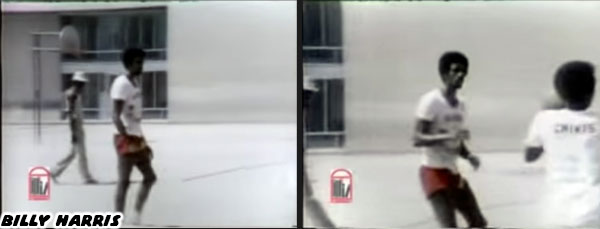
I will begin to put down the numbers. Each statistic gets more unbelievable than the previous. These are not myths or fables, there is proof for all of the claims and the four journalists that brought Billy's story to SLAM will testify that this is the truth the whole truth and nothing but the truth.

Billy was an amazing scorer, averaging no less than 30 points per game in high school in college. He never played a team game for less than 30 points, period. His shooting was deadly accurate, somewhere in the 65-70% range from anywhere on the court. However Billy was more than a shooter. He could drive, he could dish and he could dunk. He could defend the basket and more than any other legend he could read his opponents. Billy's athleticism matched every mental aspect of his game and vice versa. Billy understood how to score and how to utterly destroy his opponents.

"You know it's a curse. People think it's a good thing to be able to read other people, being able to smell bullshit. But it's not. Because what happens when you sense that bullshit inside your family? When it's right next to you every day? What do you do then? (Jackson 110).

This is all hyperbole without telling you who gave Billy Harris competition. In the mid 60's every playground, college and high school legend in Chicago and the surrounding cities was gunning for Billy.
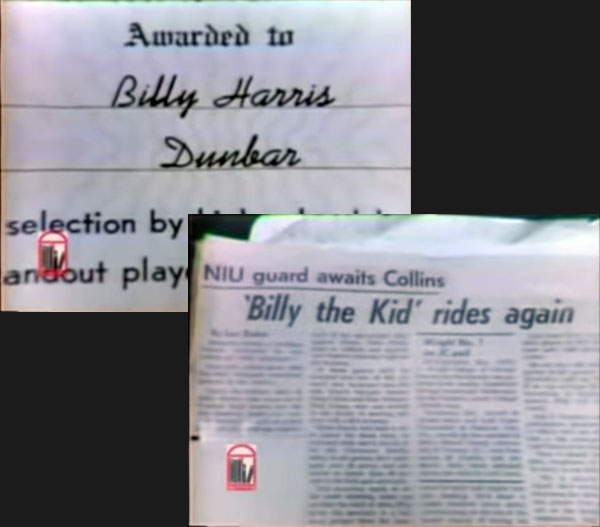
This is not myth but fact: Billy never lost a game of 1-on-1 in his life. For the 14 years he was in his prime. From the age of 16 to 30 he never lost a game of 1-on-1. Period. At his peak Billy would handicap himself. He would play a game to 24 and give his opponents 22 points. "West side" rules so possessions would alternate after every basket. If they made one basket from the three-point line then the game was over... Billy never lost. Billy would even give opponents a half point if they could touch the backboard with their shot. Hit the backboard four times and the opponent would win? Even with those odds Billy never lost.

"Nobody knows these stories. Nobody. You wanna know why? Cause I ain't told them."
- Billy in Nike Battlegrounds.

Scoop tested Billy, asking him if he would give Dr. J, Jordan, Magic and Bird those same odds. Defiantly Billy answered, "I'd give them 22 and the game's 24. They would never beat me? Ain't no motherfucka alive, walking around, that can say that they beat Billy Harris one-one-one. You can put it on the radio, TV, whatever. Ain't nobody ever going to step up and say that they beat me. They are not going to win. You don't understand-I played against n*ggas that would rather kill you than let you beat them. And I figured out a way to destroy those n*ggas."

In team games no one ever put any number of points on Billy. Billy says it with conviction. He never played a bad game in his life. Each and every game he played was nothing but his best. "I played basketball like it meant life or death. Pressure? Where the fuck does pressure come from? The pressure is on me. I'm playing against me! I'm searching for the perfect game. That's what I did." (Jackson 112)

It sounds too good to be true. A player this good could never have existed. Scoop went searching for proof of the claims. Billy's friends, coaches and family all backed up the stories. More incredible were the enemies that also supported Billy's claims. People that hated Billy could not bring themselves to lie against his game.
 
Still Scoop went on a hunt for just one bad game, the missed shot for all the money, the crack in the armor. Ed Curry, fellow Chicago playground tournament champion and spokesperson told Scoop, "You won't find it. That son of a bitch never had a bad game, and he didn't lose. I can say that I've seen every great ballplayer that's ever played in this city-played against most of them-and there was no one like Billy. There's no one in the pros today like Billy. He was one of a kind, and he didn't care. He didn't care about the other four players that played with him, and he didn't care about the five guys that used to try to guard him. People think Michael Jordan is one of a kind? No. Billy Harris was one of a kind." (Jackson 110)
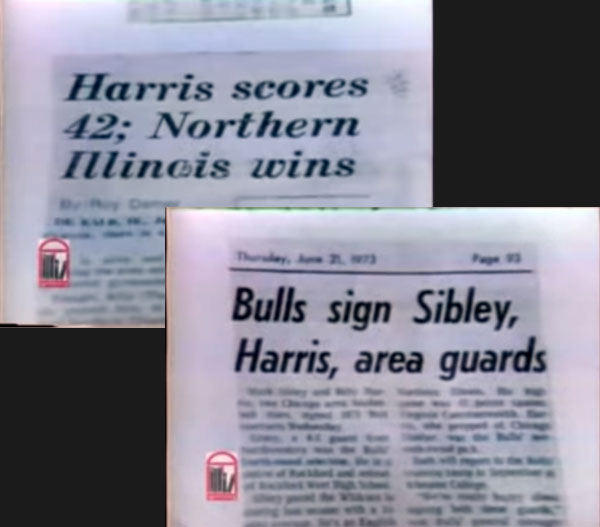
Every playground legend is grounded in reality. Up until now every playground legend had a rival, a peer. The playground legend was never perfect. There was always that one bad game, the shot missed with money on the line. This made every legend real. Scoop could not find it in the case of Billy Harris. The further Scoop dug, the more witnesses and record books would back up the claim.

"I go play now and I get a little tired now, but I'm real slick, ya dig? Play a little bit. Chill. Fuck you up a little bit. Chill. You understand what I'm saying? Because I know how to orchestrate this. My shit's that tight." Billy in Nike Battlegrounds.

I am not going to talk about why or how Billy was blacklisted from professional basketball. Lacy Banks, a reporter at the Chicago Sun-Times lost his job (and went to court to get it back) for writing an article about Billy and posting the conspiracy subject that contradicted the Chicago Bulls reasons were for cutting Billy after drafting him in 1973. Scoop writes that the conspiracy was to keep him out of the NBA because Billy would not conform.
 
"What these people don't understand is the very things that if they do now they can sign a 80-million dollar deal. That's bullshit! They got n*ggas crossed out. I'm the n*gga that took that shit to Division 1 and made it work! You understand me? All this shit, crossover, behind the back when I'm going on a muthafucka, one hand jumper coming with the spinnin' fuck. [gestures as if he's doing basketball tricks] All of that. I did all that shit dude? I pick up a paper, here's a bunch of muthafuckas talking about they're street legends. Man, fuck you, you ain't shit, and if somebody believes that shit, so be it."
- Billy in Nike Battlegrounds.
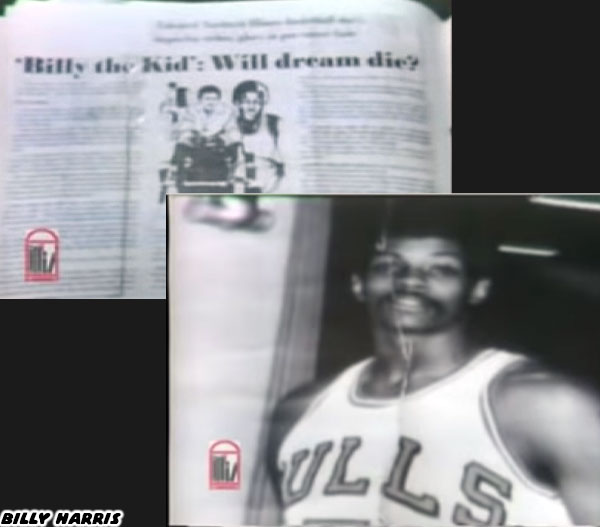
30-years later a new generation of streetball players and "legends" (some with only a few years experience) get shine on TV, shoe contracts, national tours and earn street cred for the NBA all because some fat rappers, businessmen and promoters can cash in on the talent. That is phony. Billy Harris is real.

Billy deserves respect for everything he has ever done for the game. Billy deserves recognition as the greatest playground legend ever. Just because there aren't mix tapes featuring people like Fly and Billy doesn't mean they weren't real or their games weren't as good if not far better than the best we have today. In the NBA they said that nobody would ever be able to create better highlights than Bob Cousy backindadaze. Eventually Pistol Pete came around... Years later the legacy of greats came and evolved the game, Dr. J, David Thompson, Magic Johnson, Michael Jordan and (injuries notwithstanding) LeBron James. Many, many more have come and gone in the playground. But it doesn't matter much. NBA or playground Billy would have balled them all up. Believe it.

Addendum: Months after writing this series Lang Whitaker wrote of another ballplayer named Jesse Dunn in the second issue of Streetball by SLAM magazine. If reports are to be believed (Lang has never lied before) then we may have discovered the Angel to Billy's Devil. But that story is for another day...

Were there any street legends that you heard of in any discipline that were better than the pros? Let me know in the comments section please. As always if you would like to sponsor me please visit my Patreon page and consider donating each month, even as little as $1 would help make better blogs and even podcasts!
follow the Street Writer on Patreon!

Friday, December 1, 2023

The Best There Ever Was, Part 2 - A 1UP classic from March 15, 2005

Skip to My Lou, a Professor and a Bone Collector.

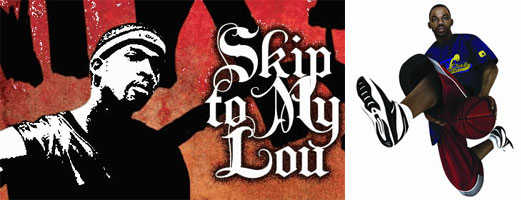
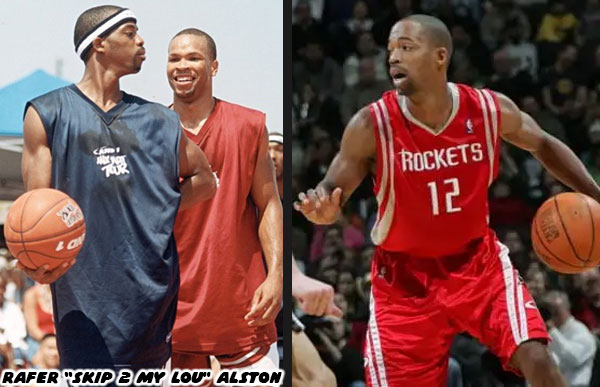
Rafer "Skip to My Lou" needs no introduction. He was 12, barely 13 when he began competing at the Rucker. He was the first real street phenom in a long time. With skills so blessed it would only be a matter of time before the tapes his coach and family recorded found their way to the offices of upstart company AND 1. The rest as they say is history.

Skip did it all, playground, high school, college, pro... There are so many self-proclaimed legends that don't have a fraction of the experience and reputation that Skip has (remember that when I mention a certain Bone Collector a little later). Below are some of his many thoughts taken from the first Season of ESPN Streetball:
"Volume one was just a guy just trying to show who he belongs out there playing with the bigger guys, and before you know it everybody's anticipating every game I had to play.
When I walk on court on the playground, they view me as the best one out there. If I'm going into and NBA arena I'm just an ordinary player. I'm just another guy in an NBA uniform.

Bone Collector said that the only person he really wants to play against is Skip. He wants to throw between my legs; I'm going to let him throw between my legs so he can get his ooh and ahh. Cause after that I don't see nothing else spectacular he's going to do.
Reporter: How about he try and stop you?
Skip: Impossible. [Laughs]

Streetball, everyone is still sold on this one-on-one ability. Headache, Main, they have a lot of ability, these guys can play ball. I play those guys over here. They think it's simple. They don't understand how hard it is to be the last man on the bench in the NBA.
In fact everybody's trying to get it, everyone wants it, most people come out their try to take it from somebody that already has it. You know, people tend to come out there, thinking you're supposed to automatically give them respect just because they're out there playing with you. But they're not, they have to earn it.

As I'm getting older, you know, sooner or later you're going to have to walk away from the playground game and just, you know, let it go. When do you walk away? I found myself taking a back seat most every summer now just to let those guys get more shine. Because I'm being seen during the winter and I'm being seen during the summer. So I'd rather let them shine as much as they could during the summer because that's their thing.

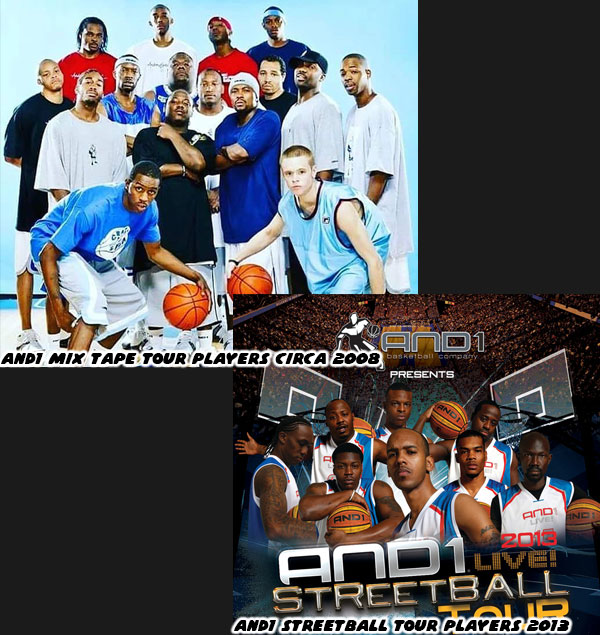
On the other hand I watch these guys every summer and I don't think they grasp what's going on. You know. You think it's all about them. They're supposed to be there. AND 1 is supposed to do this. They're supposed to take 'em in you know. And I'm trying to tell them that there's guys out there better than them. Every last one of us on that AND 1 Mix Tape Tour. There's a guy that's better than Skip to My Lou, there's a guy better than Hot Sauce, there's a guy better than Dribblin' Shane and Sik Wit It and AO. Every open run that I've been to and every place that I've gone. I've seen guys better than us. AND 1 can take those guys, come up with a new game. And that's what I'm trying to tell them that. You know, enjoy this moment. Enjoy this time. And enjoy what AND 1 is doing for us and what we're doing for AND 1.

These guys never asked me about the proper way they should take. They never asked me the things they should do. The more they just let those questions stay in the air, I can't really help them with that, you know. They think it's simple, they think I got there, just someone placing a call. What they do is look at me and just say 'you made it through streetball, why can't we?'
 
Playground legend is a person that holds his own summer after summer after summer. And he's consistently just destroying everybody that they put in front of him. A streetball player, he's more of a guy that has a lot more flair, a lot more tricks. You know, he's like a person that's going to put on a show all by himself.

Reporter: Which one is going to the NBA?

Skip: None of them made it. None of them made it."

For everything Skip's done for the game and AND 1 he was rewarded with his very own signature shoe during the 2002 And 1 Mix Tape Tour. It was the first signature shoe for a playground legend and a testament for all his hard work and years of sacrifice. However some of that shine would disappear two years later. In 2004 AND 1 would release a special color-way version of the Ballistix Mid for the Professor.

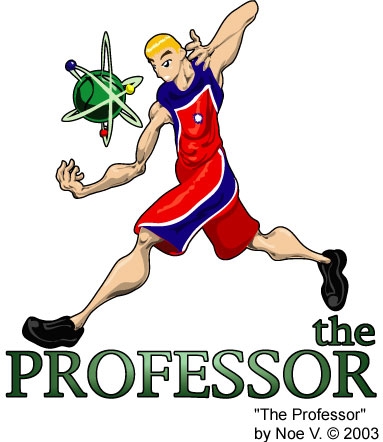
The Professor played exactly one summer with the AND 1 crew, won the sponsorship contest and was added to the team. Now he has his very own signature shoe! Note that none of the other mix tape players (that have been touring around the country for years and years) have had a signature shoe. It was almost as if all the hard work that Skip and the other players had endured for years and years adds up to one lucky [white] boy named the Professor. A kid that never made any type of college or high school name for himself was now some sort of playground hero? What is the world coming to?

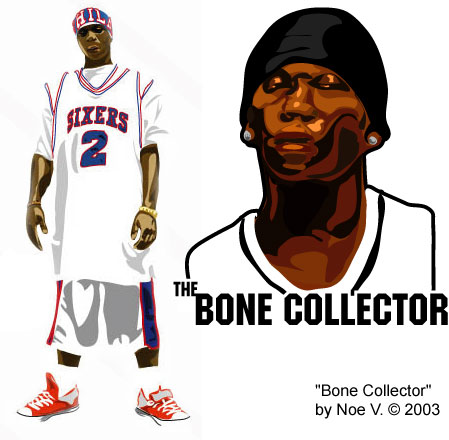
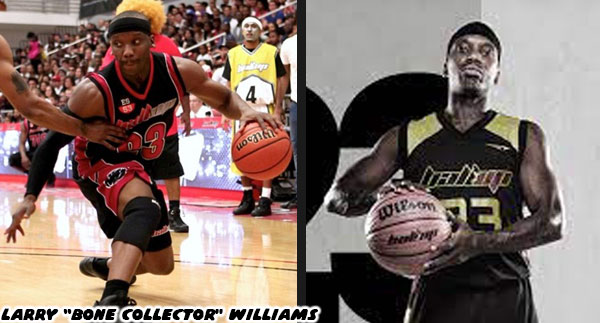
As long as I'm riding this wave of controversy it's time to do some comparisons between Skip and the Bone Collector. Those that think I'm hating need to relax. I'll admit that BC is a talented player, great handle and court presence and a very clever entertainer on the playground. But real, solid, all-around basketball skills? That still hasn't been established.
 
Larry "Bone Collector" Williams was born in Texas but raised in part in Pasadena California. He says that his life growing up was very hard. He had a lot of obstacles to overcome, what exactly he had to face growing up is unknown.

His rise in the playground circuit has been very quick. Seemingly overnight. BC started playing high school basketball as a freshman in Pasadena but stopped because he and his father determined that the coaches were going to hurt his chance to get college attention.

He did play some with Chaffey College in Rancho Cucamonga, California. Then moved to the Globe Institute of Technology in Lower Manhattan. His grades being his biggest weakness in college. Big schools like Providence and Florida A&M have shown interest in him, however his grades still needed improvement before they could offer him a scholarship.

On the court he was okay for Globe, averaging 9.5 points and 2.5 assists per game. Not quite the stellar numbers that you would expect for a "legend?" His then coach didn't have much praise for him, calling him the "Turnover Collector" for the number of times BC would lose the ball in games.

Eventually BC got a better hold on that handle and became an overnight sensation at the Rucker and EBC tournaments, winning the 2002 MVP in the process. His ego seemingly grew as quickly as his name, often times saying things like "I'd like to think that right now I'm the best player in this whole league." The whole league including NBA, college, high school, streetball and even playground legends.
 
His self-glorification doesn't end there. "I'm the 50 of this shit right now, plus Eminem and Hova. All on the same label."
 
BC on AO from mix tape fame: "All I got to tell this dude is that you are a pussy. I played you in Philly. AO is from Philly and he quit. First half. Nigga had three fouls, got mad at the ref and threw the ball at him. I was averaging 40 out there. He knows, ask AO how much I had. That is the only reason he knows me."

Now BC has announced that he is ready to go pro. He hired the SBA sports management group to help him prepare and they are taking him on a European trip with the SBA All-Stars and helping him get to play in the USBL so he can have scouts judge his game and rank him for the draft.
 
In a world where then 16-year-old man-child LeBron James was already anointed as the "Chosen One" before his high school junior prom, it should make you wonder how far BC will go in the league. At 24-years-old BC could have been aided in his development if he had gotten into a Division 1 college, and would have graduated by now. Instead he is competing in the draft with high school phenoms, NCAA champions and international players of all shapes and sizes. It is almost enough to make you wonder if BC should have stayed on the playground.

More realistically streetball fans, wanna-be legends and streetball players should at least have chastised all the people that hyped his game while not helping him look at the bigger picture. Those selling tapes and DVD's, those using him in commercials. They throw some money his way and convince him he's as good as he thinks he is. A couple of good summers at the Rucker? A DVD appearance? A television commercial? Where are the Bone Collectors real credentials? Does he qualify to be a playground legend?

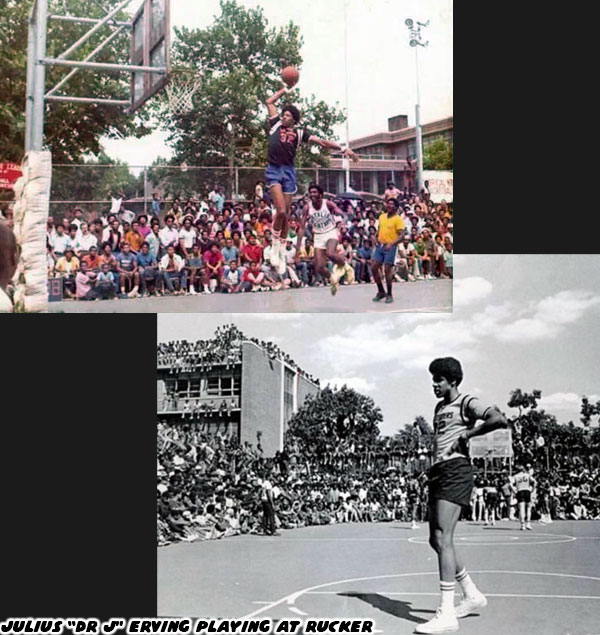
The real legends held down the Rucker for a decade, they scored 40 in a half on Dr. J, they stacked nickels on the tops of backboards to show their vertical. Skip began his reign at the Rucker when he was 12 and 13. Even Rory "Disaster" Grace from the Notic and AND 1 open-runs or the "Computer Chip" from the AND 1 open-runs didn't really get into streetball until recent, and even then both would have gotten steamrolled by the competition at the Rucker. Skip didn't just entertain, he produced points along with his assists. He had a jumper and could lay-up with both hands from all sides. Skip and many of the other legends did well in high school and college. Some got a chance to shine in the pro ranks. None thought that they could simply make themselves eligible for the draft because they had a couple of good summers at the Rucker, called out a pro player and talked shit the entire time.

Yeah BC will still become rich and famous. Maybe he'll release a hit-single as a rapper and "retire" from the game. But it should make you wonder how it got to this point. Where does a streetball player get all this money? How many unknown ballers had to come before BC? How many ballers had to get used by the system and not see anything in return? How many kids are being sold the game instead of told the game? In the universe of playground legends Bone Collector is still a child. I don't know if he will ever grow up and be ranked among the men that came before and the men that will come after.
If you want to read more about the Bone Collector check out these links:

BC Link 1
BC Link 1
BC Link 1

So if it isn't Skip 2 My Lou or the Bone Collector then who was the best ever? That remains to be seen! If you think you know who the greatest streeball legend was then let me know in the comments section please. As always if you would like to sponsor me please visit my Patreon page and consider donating each month, even as little as $1 would help make better blogs and even podcasts!
follow the Street Writer on Patreon!

Wednesday, November 29, 2023

The Best There Ever Was, Part 1 - A 1UP classic from March 10, 2005

The story of Fly and the Black Widow.

"Current streetball players, they owe their whole livelihood to the cats that played the game before. You know, just as we owe our existence to our mothers and fathers. You know these cats playing ball on the streets owe the checks that they getting, the shine that they getting, the exposure that they getting to these cats."
- Scoop Jackson in Nike Battlegrounds.

I'm going to try and keep my editorials to a minimum this time around. I apologize in advance for the gratuitous use of the "N" word in later parts, these are the players speaking and not me. I didn't censor anything because I figured that sometimes the truth doesn't sound as harsh as it should. For the most part I'll try to let the legends tell their stories and warnings in their own words. I hope you enjoy.

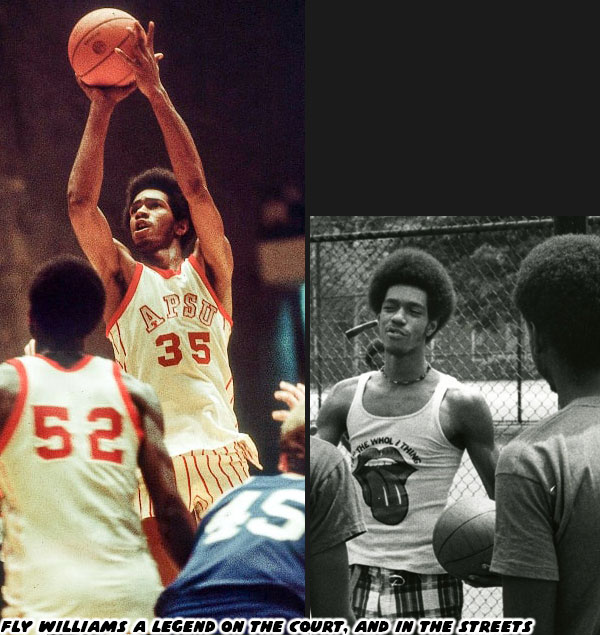
James "Fly" Williams: Get this straight, that until he said his real name, people assumed that Fly was James' real name. His game was so incredible that people assumed that his parents had labeled him Fly from birth. James was Fly before Curtis Mayfield had even filmed "Super Fly."
On the blacktops Fly was always good, very good. But in his teen years Fly shot up some six inches seemingly overnight. The next thing people knew was that Fly was 6' 4" and had the speed and handles of people a foot shorter. Some of Fly's life is accounted in the book Heaven is a Playground.
"You can go from east to west, north to south, borough to borough. I'm the only one dropped 50 in a half, regularly. You know, like a kid with diarrhea. You know I was tough man, played two or three different games. You know what I'm saying? 60 here, 45 here, 55 there. I used to add them up in the course of the day. I scored about 200 and change, you know."
- Fly in Nike Battlegrounds.

Fly was flamboyant, in the way he played, the way he dressed and the way he presented himself. On the court he was cutthroat and playful at the same time. Often times making the audience laugh at his antics and making his opponents steaming mad. Fly had exceptional dribbling skills and made players fall with his mad handles. Sometimes he would dribble the ball out of bounds just to get a drink of water and then return to the game and finish off his opponent. He could do all of this to regular players and could hold his own against the best NBA and playground legends like World B. Free, Earl "the Pearl AKA Black Jesus" Monroe and Earl "the Goat" Manigault.

"I was born too early, with the money they givin' out now. They should have thought about me 25 years ago. I'm gonna tell it like it is. I'm gonna keep it real, you know. If anybody come to me, I'm gonna keep it real, anything I tell ya it's not no myth bro."
- Fly in Nike Battlegrounds.

Fly dominated in college at Austin Peay State University and won several scoring titles as a freshman and sophomore, twice scoring 51 points in a season. He was drafted into the ABA and maintained his sense of humor and flamboyant game. In the ABA he was pitted against Dr. J and David Thompson, both sky walking prodigies whose game paralleled Fly's.

When the ABA folded many players were drafted into the NBA but Fly remained on the outside. In the case of Fly there is no blacklist, no conspiracy. Fly understands that his game was too advanced for the rules; he knew that his attitude was also bad and wouldn't allow him to get along with any coach.
The downward spiral of Fly began in the late 70's and by the mid 80's Fly had been reduced to a drug-dependant shadow of his formal self. His basketball skills drained by a hard life on the streets, Fly got through by hustling. After being shot and left for dead in a botched robbery Fly was brought back to life in the ER. Knowing that it was as close as any man could come to getting a second chance Fly swore of drugs and crime.

Fly became a motivational speaker and today spends his time with kids and people on the street. Trying to turn them around by sharing the darkest moments in his life. He knows that people might not be ready to hear about how hard life can be, but Fly's lessons are as important as the lessons any other playground legend has ever lived. The only difference is that Fly is not too ashamed to hide the truth from those willing to listen and learn. The current crop of street players has Fly wondering, have they earned a name or are they simply being labeled street players for someone else's gain?

"The street legends today is guys they give a name to. I mean we earned it man, you know, year after year. I mean a guy plays now for two years and he's 'Kid Dynamite'. "
- Fly in Nike Battlegrounds.

To read a detailed account of the life of Fly visit this SLAM Reprint Article.

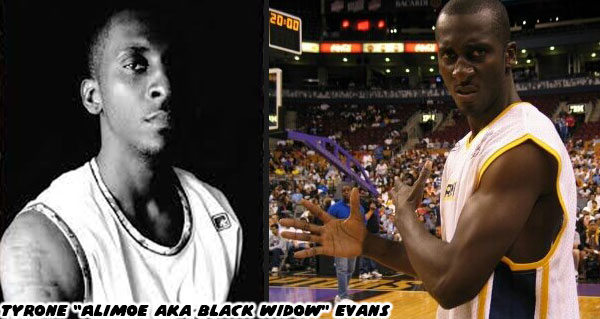
Some 20-odd years later in New York (on Fly's turf), a 19-year-old Tyrone "Alimoe AKA Black Widow" Evans was one of the hottest players at the Rucker. The son of Jerry Tarkanian, the coach at Fresno State in California, spotted Alimoe, Rafer "Skip to My Lou" Alston and Chris Parker and offered them tickets to fly to Fresno.

"At the time we were like the hottest dudes in the tournament. Get you guys supposed to go to Fresno City and then Fresno State. But at that time I was caught up in the street life. So what I do, Tarkanian sends me a plane ticket; I take the plane ticket and try to cash it in. I go upstate to Sullivan Community College, which is an hour and a half away. Therefore I can still come back to the hood. See if I had gone out to Cali I'm thinking at 19 'He gonna make me run, make me play D.' I like New York; cause New York let me get away with everything. They like me for what I am. I don't gotta work, I was lazy at the time.

I had a guy that was paying me. I can't say his name. He would just hit me and my boys off just for playing with him in the summer. Its wintertime, ain't no games, he's still hittin' us off. So you know how that is. Got a new chain, I'm in all the parties, all the rappers know me.
 
I just messed most my life up listening to everybody tell me 'You better than Jordan. You nice.' So I don't gotta go to school, I'm nice. I'm gonna do this forever. But when you get to 24 it ain't funny no more. You know what I'm saying? Cause guys asking me 'Al you were supposed to make the league since you were 17. What's up' Now it ain't funny no more. See what I'm saying?

If you ain't strong yourself it's a lost cause. I take my hat off to Skip for that, he's seeing the bigger picture. Me, I'm standing around there, hanging around, drinking all day, smoking weed, whatever. Rafer goes to Fresno State. Rafer is on ESPN getting double-doubles. From there Rafer gets drafted by the Milwaukee Bucks.
 
I called Tarkanian for a recommendation. I can't get in contact with him. That's karma kicking you in your ass right there; you understand what I'm saying? No matter how good they telling me I am, no matter how much I work, I don't have no resume. And it came from that choice that I made. You know what I'm saying?

A lot of guys say AND 1 raping you, they making 400 million, yeah, yeah, yeah, yeah. That's all I got right now is AND 1.

Guys just think AND 1 is just for highlights. They take that too far and think we really don't know how to play. And they wrong. It's up to us to change their perception on how they think of us. It's up to us.
[On the fans of streetball and the players] That's like saying 'forget the NBA, this is good for me.' Know what I'm saying? NBA ain't for everybody."
- Alimoe from Season 1 of ESPN's Street Ball.

Fly, and Alimoe were two brilliant players, but were they the best from the street? Let's dig in a little deeper in the next blog. If you know the stories of any street legends that could have been then let me know in the comments section please. As always if you would like to sponsor me please visit my Patreon page and consider donating each month, even as little as $1 would help make better blogs and even podcasts!
follow the Street Writer on Patreon!

Friday, November 24, 2023

Streetball: The Big Picture, Part 4 - A 1UP classic from May 30, 2005

Let's talk about the future. EDIT: Well I guess this is talking about today instead of the future since the post was written 17-years-ago. Did my predictions come to pass? Let's find out... 

This is the last part in the series. I hope to have gotten you thinking about the bigger picture of streetball. It's bigger than one company, one player or one mix tape. It's a global phenomenon, but still all about one game. So what does the future of streetball look like? What can we expect to see and what surprises are around the corner? Let's try and figure out what the future is by making some logical observations.

1. Streetball will gain more exposure on television and in the media.
ESPN will very likely invest more time and money in the Streetball series. EDIT: The Mix Tape Tour turned out to be one of the most popular shows for ESPN. What wasn't known was that according to Tim "Headache" Gittens the players were not compensated by ESPN for the reruns that ran through early 2000's, despite it being one of their most popular shows.

The EBC has started to broadcast famed Rucker games on MTV with the show Harlem Hoops. MTV and Magic Johnson have already produced the reality show "Who Got Game?" They will most likely follow it up and pursue other streetball broadcasts, like the Nike Battlegrounds 2005 World Tournament. EDIT: This came, and went as fast as it was announced.
 
Producers from various TV studios will explore streetball as a sports entertainment. Perhaps by mixing the WWE and shows like Slam Ball someone will be able to sell a form of streetball unlike anything we see, complete with actors, stories and plots (and convince the audience that it's "genuine" streetball). EDIT: Thank goodness this didn't come to pass.

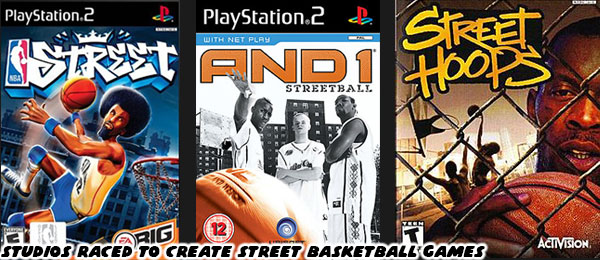
Expect to see more streetball video games and video games with streetball elements. The NBA Street series has already finished 3 solid games, with plenty of celebrity hidden characters like the Beastie Boys and even game legends like Mario, Luigi and Princess Peach. Maybe the people at EA will introduce real legends in the next game instead of fictional ones?

Street Hoops 2 seems to be put on the backburner at Activision. No word on an NBA Ballers 2 by Midway. Still the original Ballers sent a very subversive message to streetballers "you ain't made it as a baller until you beat NBA talent and cash in as fast as you can." UbiSoft is developing AND1 Streetball for the holiday 2005 season.

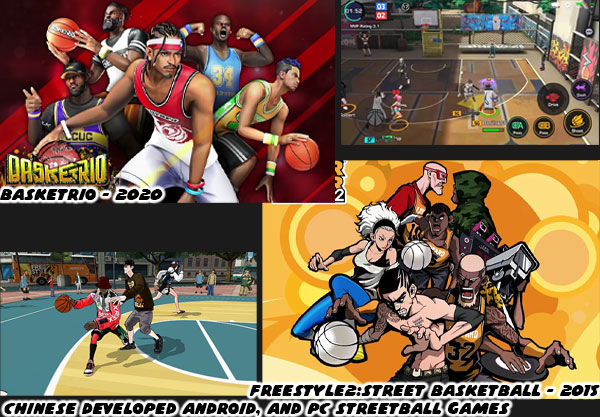
EDIT: It turns out that a lot of streetball games would come out in the 2000's. Below is the full list.

NBA Street, EA Sports BIG, 2001.

Street Hoops, Black Ops Entertainment, Activision, 2002.

NBA Street Vol. 2, EA Sports BIG, 2003.

NBA Ballers, Midway, 2004.

NBA Street V3, EA Sports BIG, 2005.

NBA Ballers Phenom, Midway 2006.

AND1 Streetball, Black Ops Entertainment , Ubisoft 2006. 

NBA Street Homecourt, EA Sports BIG, 2007.

NBA Ballers: The Chosen One, 2008.

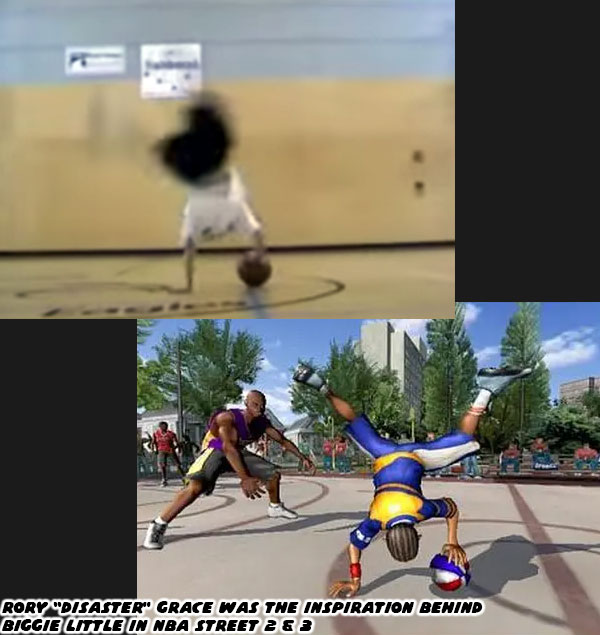
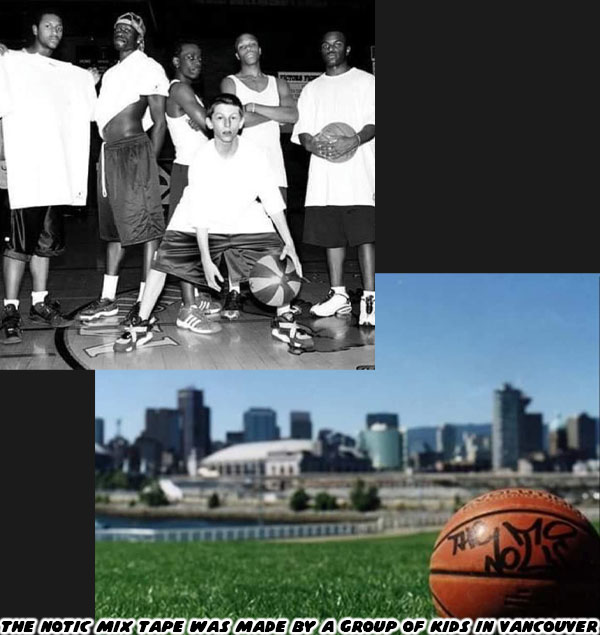
The thing that I discovered many years ago when I was in contact with the Notic crew was that several of the teenage players were recruited by EA in Canada to do motion capture for the game. A number of the trademark moves would appear in NBA Street Vol. 2, and beyond. I doubt that any of those kids was fairly compensated for their work. Worse yet one of the new characters added to the game "Biggie Little" was clearly based on the youngest member of the Notic; Rory "disaster" Grace. Although the kid was made into a Black character. I guess exploitation is sometimes the name of the game.

2. Companies are going to hesitate about doing a streetball tour this year. Rather sponsors will organize events and invite teams to compete, similar to the X-Games set up.

It seems that 2005 is the beginning of the end for streetball companies and leagues. The problem is that each tour features its own legends and version of the game. Each company has also started up in the hopes of succeeding in the business and getting paid. The only problem; whom are people supposed to believe as having any one real legend or tour? EDIT: Streetball died in popularity in the mainstream, the writing was on the wall as early as 2003 when Dave Chappelle made fun of the mix tape phenomenon on the first season of his wildly popular TV show. 

The Street Basketball Association already has it's own league and tour. They have a few recognizable names from mix tape and EBC tournament fame. Where their tour goes and how many others will join in their crusade remains a mystery. EDIT: This came, and went as fast as it was announced.

The National Freestyle Basketball Association had also been formed and closed within a year. With only one franchise, the LA Hooptainers, it was not hard to see why they disappeared. 

Roc-A-Fella Records sponsored "the Rock" streetball brand of entertainment which was founded by Anaconda Sports. Like the NFBA before them they came and went within a year. 
 
Sadly it looks like the Adidas streetball challenge happened once in Spain in 1999 and never again. Too bad.
 
Nike has not officially announced a 2005 Battlegrounds tournament. Sadly Asia was not invited to compete against North America and Europe last year. If Asian countries are not invited to compete expect to see Nike host Team Battleground competitions in Asia instead of individual contests.

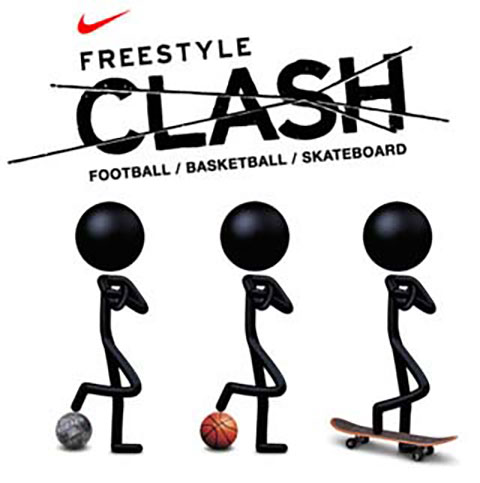
Nike will most likely tour the world with a new Freestyle campaign. Try clicking on a different language to see how unique each Freestyle promo is. Such as the Freestyle Clash in Japan, pitting battles for the Freestyle King in Basketball, Football (Soccer) and Skateboarding. Note, this link and the movies on the pages have been removed. Sadly Nike considers street skating as freestyle, and not real freestyle skateboarding. EDIT: There were no other Battlegrounds tournaments. However Nike did popularize local tournaments instead.

The EBC which once called the AND 1 tour and videos fake and phony launched their own tour in 2004. We are still waiting to see if they will announce a new tour this summer. EDIT: This came, and went as fast as it was announced.
 
Team Suave and Smooth has been formed by some of the people associated with the long-defunct Dunk Nation site S&S featuring a collection of some of the greatest dunkers ever. A mix tape, clothing line and tour is planned as well... rather has been in the works for a few years now. The only claim to fame for these adults is beating the high school players from the Notic. EDIT: This came, and went as fast as it was announced.
 
The Killer Crossover Tour is now a few years in. Hot Sauce is the headliner for this tour. Previously Sauce's tour ran before and after the Mix Tape Tour, this year he and some of his AND 1 teammates will try and compete directly against AND 1. Will the talent pool be spread thin over too many tours and players? We'll have to wait and see. EDIT: This came, and went as fast as it was announced.

3. Miscellaneous streetball crews will begin doing more entertainment shows. Plus websites about streetball will pop up from all over the world.

Here are some synchronized shows put on by the French kids troop The Magic Freestyle Crew Or a French site dedicated to dunking.And of course there is Slam Nation a collection of the best dunkers around.
 
In English or in Spanish, Streetball Style is trying to expose the Spain side of streetball.

4. There are plenty of talented ballers that may not be getting as much exposure as they deserve. Here's a short list on some talent to keep an eye on:

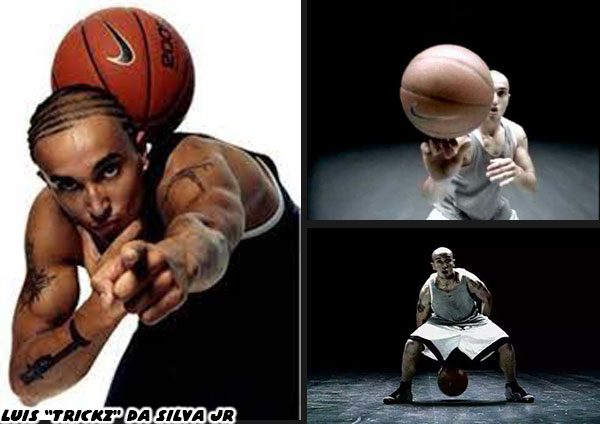
- Luis "Trikz" De Silva sadly what could be argued as the best freestyle basketball player in the world does not have his own web page or mix tapes. So finding his appearances in anything other than the Nike commercials is going to be tough. His teammates in the Nike Campaigns, Arnold "A-Train" Maurice Bernard and Christian "Hands" Scott Franklin are talented, but Trickz is on another level. He is a genius in the handle department and has contributed a lot to streetball. Keep an eye out for the influence his routines have all over the world. EDIT: Luis became an actor, and appeared in dozens of hits including Fast and the Furious: Fast Five.
- The Notic crew, King Handles, Goosebumps, J-Slice, Dazzle, Disaster, et all... For as long as fans keep on waiting, eagerly for the mix tapes, and the fame of the players spreads all over North America, we will continue to see these players grow and mature. Hopefully the team can stay together should the industry try to throw money their way. EDIT: The team dissolved, and in 2022 reunited for a documentary movie.
- Demetrius "Hook" Mitchell. At 5' 9" nobody believed he could out-ball anyone he faced. But he was a God to people like Gary Payton and Jason Kidd. Hook threw it all away for drugs but his legend never died. Check his movie and never forget that these playground legends are all real people, and capable of making the same mistakes as anyone else.
- Hot Sauce has let his contract with AND 1 expire. He doesn't have a website, nor do his reps at Urban Visionaries, they have been promising that for a few years now. Sauce is one of the few mix tape players to own his own name. With shrewd business sense and a name that flows his Killer Crossover Tour and other business ventures will eventually take off, with or without the help of AND 1. EDIT: He joined the Street Ball All Starz team, and made a few appearances in TV. Sadly the popularity for stadium tours never rematerialized.
- Headache should also serve as a cautionary tale to other streetball players that think the business is easy. Tim "Headache" Gittens was one of the founding players on the Mix Tape video and tour. However his constant accusations against AND 1 on national TV proved too much to keep him on board. He was soon removed from the tour and company. Despite all his skills Headache no longer has the support and exposure that the mix tape tour once offered. This will find getting a shot in the NBA that much harder. EDIT: Headache became a pro trainer, and will be detailing his experience with the AND1 Mix Tape Tour, and the inconsistencies with the documentary in an upcoming book.

- Rafer "Skip to My Lou" Alston and Stephon "The Handler aka Starbury" Marbury. Both point guards in the NBA have solid street credentials and are the first street-bread players since Dr. J and Wilt Chamberlain to show the NBA that they are more than just flashy entertainers, but in reality basketball elite. Both players making it into the Eastern Conference Finals in 2004 have solidified that status. Only a championship ring now can seal the deal. EDIT: Both retired, had some controversial moments both on, and off the court, but they also elevated the status of playground legends being NBA stars.
- Ken "Cyclone" Rodriguez is an incredible freestyle performer with the Harlem Wizards. He joins other streetball legends, turned tour players James "Speedy" Williams and Alvin "Anti-Gravity" Pierce. Be sure to give their promo video a look.
- The best that the Bay Area of California has to offer will continue to gain momentum on YPA a second DVD is almost out. Popular player Roberto "Exile" Young aka "the Young One" was featured in Season 1 and Season 2 of the Streetball television series. Apparently someone impersonated Exile online and the AND 1 players took offense to that accusations that their tour really was phony. Exile was booted from the tour bus and the real Exile tried to defend himself. With the loss of Hot Sauce and the credibility of the Mix Tape tour in jeopardy could a YPA tour be in the works? EDIT: This came, and went as fast as it was announced.
- Garo Salibian is doing a hell of a job by trying to keep track of every basketball web site in the world. He should be getting paid for his efforts and you should stop by and see what he's got.
- The Japanese freestyler Bullet. Voted the King of Freestyle in Japan 2004. Bullet had a very good assortment of tricks and flavor. He was able to switch things up when running against the champ from Osaka, RHYTHM. The Chinese Freestyle finalists simply could not match the quality of Japan's talent. Why? Possibly because there is not as much access to technology in China as there is in Japan. Chinese finalists were pulling copies of "Trikz" De Silva routines from two years ago whereas Japan finalists like Bullet, RHYTHM and MIX were doing more of their own thing.
- MIX. She is not the first young woman to compete in the Freestyle tournaments but she was the first to place in a major competition. She lost to Bullet in the live freestyle final however won the web votes over Bullet in online polling. Expect to see more of MIX, Bullet and RHYTHM in advertising and promotions (at least in Japan). And if some Nike person is reading this please give me her e-mail addy, she's cute and talented!
 
- Billy Harris. He is that old guy talking a lot of sh-t in the Battlegrounds DVD. Who is he and why is he getting away with all that talk? If you don't know you'd better learn. Billy "the Kid" could have very well been the best basketball (street, pro or otherwise) player ever.

- Mr. Woo. Without a doubt Mr. Woo is the world's greatest freestyle football (soccer) player. So why his he listed here with the streetball players? Simple, his skills are legitimate and a lot of his moves are now getting picked up by freestyle basketball performers around the world. MIX used some of his tricks in Japan to great success. So if you ever feel like you are hitting the limit of freestyle moves in basketball, just take a look at what he does without using his hands and you should be inspired.
- Abbas Farid is another great football freestyler that should be studied by all freestyle ballers.

5. The bubble will burst! EDIT: this happened a few years after the blog was posted. Here is an example; Streetball fights to stay relevant, an article from 2011

That's right. I said what everyone in the industry is fearing to predict. The streetball bubble will burst sooner rather than later. The market is saturated with too many companies, players, mix tapes and tours. Each of them trying to send a different message as to what streetball is about I.E. they are the "real deal" and nobody else is. Each of them trying to cash in on the craze as fast as they can.

Right now a lot of players assume that the ride will last forever. The money is here. The fame and girls are all here... for now. Sadly a lot of street talent get caught up in the hype and don't have a clear sense of the bigger picture. It is only our culture selling them short on their potential. Everyone hypes these players up and assumes that they will also always be at the top of their game. Ballers want to be rappers, rappers want to be producers and producers want to sponsor some ballers so they can make more money. It's a vicious cycle and it won't end until the reality of streetball comes crashing down.

Fame has a price. Once you become the hot thing in mainstream America the only place to go is down. The mainstream audience is always after the "next" big thing. I see streetball as being the new thing over "extreme" sports like skateboarding. Kids are trading in their skateboard and helmet for a basketball and swingman jersey. For another summer or two the kids will be all about streetball. Then the next big thing will come along and that basketball will find its way in the closet, along with the Pokemon cards, razor scooters, skateboards, Yu-gi-oh cards and whatever other pastime the industry sold the kids on.

Those that are about the culture and community will still keep doing it. Real skateboarders will still keep skating even if it's hated on. Real ballers will keep going to the playground even when ESPN and MTV stop airing games. Those that hung on for the ride will just go jump on whatever other bandwagon is passing by. EDIT:In 2014 some of the biggest Streetball tournaments were happening in Europe.

It may sound like I'm being a pessimist but it's more like a realist. Remember when I wrote that streetball is about the entertainment now? By tying directly into the Hip Hop path then I can predict what will happen. Thousands of ballers will step on each other to prove that they are the best and should be getting bought for their credit. After all, doesn't the Bone Collector call himself the "50 Cent and Eminem" of streetball in one interview and then in another bragged about his game:
"InsideHoops.com: Who are your favorite NBA players to watch?
Bone Collector: Tracy McGrady, A.I. (Allen Iverson)... I like everybody. Everybody exciting. Not as exciting as me, but they're exciting...
InsideHoops.com: And around here, who are the best players?
Bone Collector: Skip to my Lou and these guys. They were here before me, so you know, I come out here, I took over here now, though. It's me now.
InsideHoops.com: How much have you watched the mixtapes?
Bone Collector: I didn't really watch them that much, naw.
InsideHoops.com: Not even the very first one when Skip was like 12 years old?
Bone Collector: No, I didn't watch that at all. I wasn't really into it like that. But I knew I was better than them so I had no reason to watch it."

Arrogant? Is this not like how rappers "get over" in Hip Hop by stepping on the hard work of the MCs before them, and now ballers "getting over" in streetball by stepping on the ballers that came before them? I'll let you decide. To read the full article visit InsideHoops. EDIT: Many years later he was still dreaming of reaching superstardom. Bone Collector tried to get into the NBA at the age of 37

All of the players and all of the companies each fighting for a slice of the pie... it doesn't have to be this way though. If all the best streetball players and teams united there would be, without a doubt, enough talent to form a universal professional streetball league.

Of course for many years they wouldn't be making money, or breaking even at all. But in the long run, a united front could make it easier for the next generation, and next generation of street ballers to be able to conduct a serious business. For once, streetballers united could be able to do far more for the collective than just whatever moneys the apparel or entertainment companies are throwing their way. I'm talking streetball lawyers, agents, endorsements, programs, businesses, collective bargaining units, investment strategies, health care, retirement plans and insurance. Right now most touring streetballers don't have very solid business sense, health care or plans for the future. For them it's just about balling over the summer and making as much as they can. But if they worked hard enough for it eventually some sort of universal streetball league it would be a viable option for a player. Can you imagine if a really talented player had a choice other than the NBA for which to highlight his (or her) game?

Sounds like a pipe dream right? Well, they always said the same thing about "professional skateboarding." ESPN and the other networks assumed that the skateboarders would always be unorganized and easy prey for the entertainment industry. Within the past few years many of the pro skateboarders unionized and actually have walked out on several major, televised, events until their demands were met. Before they unionized, companies like ESPN would not pay the skateboarders on any set scale, nor would they give them residuals for video sales or movies shot for the IMAX. Now skateboarders united have a voice. They can argue for health care and their fair share of video sales and promotions. Skaters will determine their own fates whenever a large company decides that they want to exploit them to try and capture the "youth market." Wouldn't it be great if streetballers had that sort of support to turn to whenever they might get exploited?

Skateboarding doesn't have rules or seasons of play. Skateboarders just do what they want and somehow were clever enough to organize. You would think that the ballers would grow up and stop playing the selfish game? After all, if a bunch of skaters from all over the world could do it, there's no reason that streetball players couldn't. Time to stop playing the greed game, streetball is going to be finished in pop culture before it even gets established.

To those that took the time to read these articles I say thank you. Try and spread the word to those that haven't. Tell them to get educated about the game and do their part for the culture and community. Take a look at the bigger picture. Streetball isn't just about one mix tape player or one country. The game that became famous on the streets of New York now belongs to the world. It is up to us to keep it alive and make sure that it is treated right.
Peace,
Noe V.

Did you ever play basketball? Or any basketball video games? Were you a fan of the Mix Tape Tour, or freestyle basketball? Or is this the first time you're hearing about it? Let me know in the comments section please. As always if you would like to sponsor me please visit my Patreon page and consider donating each month, even as little as $1 would help make better blogs and even podcasts!
follow the Street Writer on Patreon!

Monday, November 20, 2023

Streetball: The Big Picture, Part 3 - A 1UP classic from May 29, 2005

What the Industry is doing right, what the industry is doing wrong. I will not try to vilify the sneaker industry. I will not try and single out one particular company in this article. I will simply try to get my observations out and try and make sense of streetball and the industry contribution to the game.

As I mentioned previously Nike has a history of running grassroots campaigns. Nike sponsors basketball teams of various levels, from high school and college, to summer leagues in major cities and rural communities all over the world. These sponsorships range from new clothes and shoes to donations to help rebuild a gym or open up a league. Each sponsorship could be seen as part of the grassroots campaign.

Other grassroots campaigns could be special advertising seen only in one area or tours and promotional events limited to certain countries. These small-scale campaigns helped make communities feel privileged to be part of something exclusive and also showed them that Nike was aware of their contribution to the sport. Those that participated in sponsored high school teams and summer leagues would remember the presence of Nike. A pro athlete endorsing a product might not have the same purchasing power when compared to a grassroots campaign. These grassroots campaigns that started up as ways to give back to the community also turn into powerful marketing tools.

So all of the companies I will bring up have one thing in common: they are all profit-based. Each is in the business to make money. That is the bottom line. The ways in which they help the street game, the players and neighborhoods varies from company to company. It's impossible to say Nike is bad and AND1 is good based on one or two things, instead we have to look at the bigger picture and see what each company is contributing to the streetball culture.

For example, during 2004 Nike put on a Freestyle Clash campaign in Japan where the best skateboarders, freestyle ballers and freestyle football (soccer) players were invited to do battle and prove they were the best. Nike spent a tremendous amount of money in Osaka and Tokyo doing the promotion. A lot of people attended the events to watch the best in each category go head to hear in a Gong-show format, until one was ultimately crowned the Freestyle King of Japan.

Those that attended also had a chance to buy limited-edition Freestyle products from the Nike store set up at the event. Chances are that Nike didn't even dent the cost of the tournament with proceeds from the store. However in the long run, those that attended the event will be more likely to associate Nike with all things sport, including sub-culture sports like skateboarding and streetball.

It is difficult to really endorse one brand over another just because they do more or less for the street game. There are simply too many things at stake to do that. Instead it is up to each person reading to decide if they can support a product or company based on their history with the game of basketball.

Nike has a long history celebrating both the pro basketball player and the street baller. AND1 as a relative newcomer to the industry has shown some love to the pro and a tremendous amount of love to the street players. Whether the mix tapes were part of a clever grassroots marketing campaign or just dumb luck is still hotly debated. The original mix tapes were given away at select stores for trying or purchasing AND1 shoes. These tapes were released in limited numbers and only those people that kept up on the scene knew anything about them. By word of mouth (and files ending up online and on Kazaa) those tapes exploded.

Very quickly the tapes became part of basketball culture and street culture. The music and fashion of street culture influences pop culture. It would only be a matter of time before everyone in the mainstream US was clued in on the mix tape phenomenon. AND1 ended up creating a demand for something they used to give away for free. AND1 was now in the position to begin selling the tapes in order to meet the demand.

The explosion in mix tape interest caused Nike to reevaluate their grassroots strategy. The Battlegrounds and Freestyle campaigns were two ways for them to try and win back the audience that was buying into the AND1 idea. Nike was not the only company to take notice of the mix tape craze. Reebok moved very quickly to try and establish themselves with street presence.

Instead of signing up streetball legends Reebok began by signing Hip Hop artists. Jay-Z and 50 Cent teamed up with Reebok to create exclusive shoes like the S. Carter Collection by RBK. Reebok then moved into the streetball scene by partnering up with the Entertainers Basketball Classic (EBC) and releasing a DVD promoting the game and "real" basketball. Reebok then followed up the EBC campaign with the "Who Dunit" interactive ads, featuring NBA players in a street setting. The ads hosted clues and a contest that people need a computer and internet connection in order to play. Through these events Reebok showed that they were also interested in streetball as a business venture and culture, by marketing to the different streetball fans, the NBA fan, mix tape fan and even internet clip fan.

The only company that has yet to jump, full-force, on the streetball bandwagon is Adidas. Their basketball shoes and products are very subdued as are their ad campaigns. Recently they signed Tim Duncan (away from Nike) and Kevin Garnett (away from AND 1). Along with Tracy McGrady the other two players are very high-profile and Adidas is possibly banking that when (notice I said when, not if) the mix tape craze dies that they will still be sitting on top of championship-caliber talent.

I hope you aren't waiting for me to give you advice on what products to buy or which company to support because there simply is no easy answer. The world is not black and white, right or wrong, there are infinite shades of gray. There is a fine line between celebrating the history of streetball and exploiting the culture. What was once underground is now mainstream. Who do we have to thank or blame for this?

One of the times I personally take exception with any company is when they try to sell the culture. After all if you wear the right clothes, listen to the right music, buy the latest gadgets and play the hottest games then you are cool, right? It doesn't matter if you know who wrote the music, made the clothes, gadgets and games so long as you buy them. That's the culture we are living in, we know when we've made it based on how many material possessions we own. It doesn't matter if you can ball as long as you dress like a baller. It doesn't matter if you gave yourself a nickname as long as you have one. People are getting sold the culture, and it is the culture that should be fighting to be legitimate. If you can't ball then you shouldn't call yourself a baller. It doesn't matter what you wear, I've seen people in rags and 20-year-old Chuck Taylor All Stars ball better than those with LeBron James gear, and $200 Jordan kicks. If you are about basketball, if that is your passion, then represent the culture. Not buy buying just ball-merchandise, but by playing and becoming more involved with everything basketball related.

I am a very materialistic person. I'm not going to lie and say that I've given up my worldly possessions and is a monk living up in the hills. I am not giving up my computer and internet connection or videogame systems just because some kid in Thailand made the sneakers that I'm wearing for pennies a day. I won't be a hypocrite and tell you to give up something that I haven't. I can tell you that I make my purchases with a lot of things in mind and I try to be an "informed consumer." I try to figure out who is doing the selling and why.

Streetball, true, unhindered streetball is free. It's free of color, brand affiliation and product placement. You can go to any park and play for free. Chances are you can sign up for most summer leagues for free or for a very low cost. You could tie a milk crate to a telephone pole and use it as a basket and roll up some old jeans to use as a basketball. The street game has always been free. It should always be free. So don't pay premium for a free service. Unless you just want to be a fashion statement and not really care about playing.

No one company can claim that they represent streetball to the fullest. The game is older than they are, the legends and courts are older than the companies. Yes, there are some old apparel companies out there that have been around since the start of the NBA, but no company can claim that they were representing the street when the street game started. Those players were seen as the outcasts. The NBA players were supposed to be the elite and best.

Those street legends played regardless. They were heroes in the streets because of what they did on the court. And it used to be cool because only small towns knew the names of these people. Guys that were so great than anyone that saw him play could say "Aww, he could have f-cked up Jordan any day of the week" and not be lying. By word of mouth these names and legends were kept alive. That legacy was celebrated in the community and that history was never lost.

When basketball apparel companies began springing up, especially most recent, and started promoting streetball it should have made you wonder. Where were these companies around when the game was first being played in the parks and playgrounds? These companies that have only been around a summer started promoting the history and tradition of streetball. There is a fine line between celebrating the culture and exploiting it. When companies are getting into the business it's for a profit. They can say whatever they want about history and tradition, but let's be serious. They are all after the same thing, money.

The more the apparel and media companies can exploit the game, the bigger their profit margin. By convincing us that the game is about entertainment now then they make it easier to package and market it. A lot of people watching the game have no time to learn about the roots and history of streetball when they're too busy watching Hot Sauce hypnotize the defense or the Bone Collector drop it between someone's legs. That is the major problem with the mainstream audience. They want to be entertained, they want to be part of something cool or hip, but they don't want to go to the trouble of doing their homework. It's easier to pay for a pair of kicks and a shooting shirt than it is to play a game in the park. By doing that the mainstream audience is losing a connection with the game and what made it so great to begin with. By the same token it's really hard to get mad at companies like AND 1 and Nike.

That sounds crazy right? Not to say that Nike and AND 1 are exploiting streetball? Hear me out though. For everything they are doing now, they still exposed a lot of real ballers and gave kids all over the world new heroes. Without the mix tapes we would have never seen Skip to My Lou and the worldwide mix tape craze would never have happened. Rafer Alston's name would not carry as much weight as it does now if it weren't for the mix tape exposure. A lot of the players for that matter would still only be local legends and not global legends if it weren't for the mix tapes.

Many years from now if you have kids and they get into basketball and ask about who you looked up to what you would say? Who are the legends that made you jump out of your seat and do a double take? What crazy trick or amazing dunk were people talking about days, or years, later? Can you imagine telling these stories to your kid and having them not believe you?

"When you were young you saw some guy named Skip to My Lou bounce it off a defenders head and then cross him over then pass it between another defenders legs to a guy named Main Event for a 360 windmill dunk? Yeah right! Whatever!"

Chances are kids would never believe the things you've seen. But now you have proof. You have the mix tapes to reference, you have DVD's and computer clips to show and prove. The evidence is now here and forever that the players you grew up with were beyond amazing. They were living legends.

For those mix tapes we should be grateful for AND 1, the EBC and Nike. But we always have to remember who the founders were. If Skip, Hot Sauce and the other players are the best of our time, how good were the players in the 80's, 70's and 60's? How good were the ones that went toe-to-toe with Dr. J and Wilt Chamberlain? We have some pics and know some names, the sad part is that we don't have films, video or mix tapes on those players. Nobody ever recorded Earl "the Goat" Manigault Double Dunk. Nobody recorded the battles of Fly Williams or Pee Wee Kirkland. In their days those legends were the Main Events, Skip and Bone Collectors. Today it's hard for us to believe the things they did, just as many years from now people won't believe how great the early mix tape players were.

If you are real about streetball then you have to learn to respect the game and the players. You don't have to like the players, but you should at least respect them. Those that are being used today by the various entertainment industries should be cautioned. There are many big-name streetball players today making a fortune because of the hard work of their forefathers. Many of the old legends ended up penniless, drug addicts living on the street. They should never be forgotten. At least they have earned that.

Did you ever play basketball? Or any basketball video games? Were you a fan of the Mix Tape Tour, or freestyle basketball? Or is this the first time you're hearing about it? Let me know in the comments section please. As always if you would like to sponsor me please visit my Patreon page and consider donating each month, even as little as $1 would help make better blogs and even podcasts!
follow the Street Writer on Patreon!

Friday, November 17, 2023

Streetball: The Big Picture, Part 2 - A 1UP classic from May 27, 2005

The streetball game is sending out mixed messages. The saying is power corrupts, absolute power corrupts absolutely. I believe that money corrupts as well, and it has corrupted the street game. But where does the money come from and what exactly is becoming corrupt? The short answer is the "industry" is changing the game. That industry is bigger than just the shoe or apparel manufacturers. Everyone from food sellers to the videogame industry now have stakes in streetball. The problem with so many people investing in streetball is that we (the audience) are now getting mixed messages as to what the definition of streetball is.

In recent years it has been the entertainment industry that has sent the most mixed messages. When we turn on the TV or go to a movie we are now more likely to see streetball than ever before. From inline skate-wearing streetball (who came up with that crap?) players doing a McDonalds spot to an MTV reality series. We are being sold streetball as the new form of entertainment and pop culture.

Before streetball became a part of mainstream culture it was celebrated as a subculture. Those that keep tabs on the industry know that Nike or all people had a hand in both the pro and street players. They ran underground, grassroots campaigns, in select markets like a particular town in New York. Local legends, old-school playground legends, they would get some shine in an ad campaign, never to be show to the reset of the world. For all their subtleties Nike had as much invested in the street game as they has in the more popular NBA game.

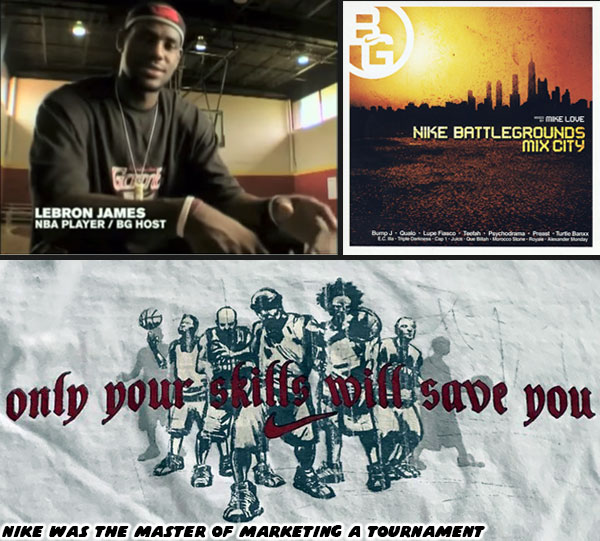
One of the very first campaigns that a young Lebron James was signed up for was the host of the Battlegrounds Tournament. He had yet to set any sort of scoring records, and was many years from winning a championship. Nike wanted to make sure that they kept the phenom in the eyes of the public. So some of his earliest media training was breaking down the street game to audiences in a weekly televised tournament. 

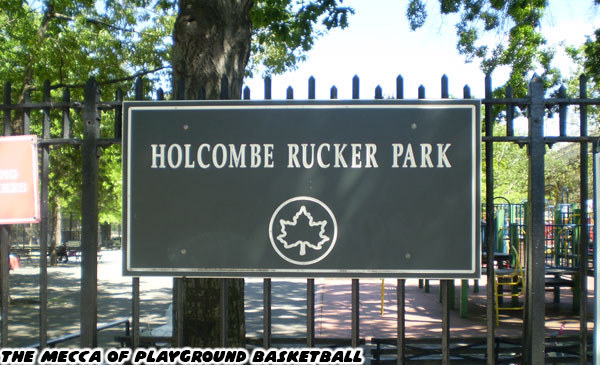
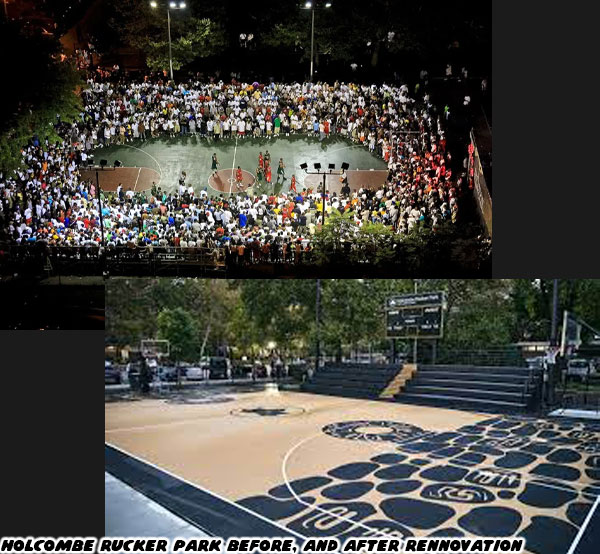
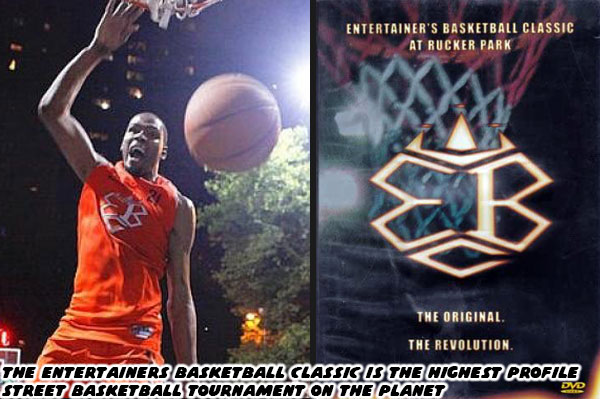
Nike wasn't the only one that noticed an explosion in the popularity in streetball. In an attempt to catch a slice of the pie Reebok and the NBA partnered up to sponsor the Entertainers Basketball Classic (EBC) games at the Holcombe Rucker park in New York. The EBC tournaments had been going on for decades. They were a way for celebrities, musicians, pro, and am basketball players to get together. Big name artists bankrolled the best players to come in from all over to form mega teams. Heated rivalries from the various burroughs grew more intense as some rappers did everything they could to secure pro talent. The addition of shoe sponsorships, and the NBA only raised their status. This partnership saw games broadcast from the Mecca of street tournaments and a series of tapes produced marketed at people that were into the AND1 mix tapes.

The EBC tapes were entertaining, but also very selective in the message. Many players and organizers in the EBC called the AND1 tours and players fake and choreographed. Going as far as to compare them to clowns. By branding themselves with the EBC and the local legends like Alimoe and the Bone Collector, Reebok hoped to gain some street credit.

This partnership seemed short-lived because many other mix tapes had begun popping up everywhere. In effect watering down the work of AND1 and Reebok. Alimoe was quickly added to the AND1 mix tape tour and the Bone Collector was picked up in the second generation of the Nike Freestyle campaign. Fans of streetball were now getting mixed messages, was the AND1 tour phony? If so why would a well respected player like Alimoe, who was proclaimed to be "Better than Jordan" sign up for it? If Nike is supposed to be too "Madison Avenue" how did they end up with the Bone Collector?

AND1 was leading the media blitz by taking their tour around the country and having the stops filmed by ESPN for a new reality series titled Streetball. In effect it began giving fans what they wanted in big venues, and televising them for those that couldn't make the live stops. The first season of Streetball was so successful that ESPN and AND1 decided to follow-up in 2004. The mix tapes had now become a television phenomenon.

As I mentioned before it took many years for AND1 to build a niche and the mix tape following took a slice of the basketball pie from Nike. Fans of streetball tried to support the company that supported street players. Nike decided to move their marketing strategies from grassroots to global in regards to streetball. Wanting to show how much "cooler" they were at the game Nike spent millions advertising a Freestyle campaign featuring a collaboration of street legends, choreographers and musicians.

A must-read for basketball fans is Sole Provider. The book is a Nike basketball history written by Scoop Jackson. Rarely seen grassroots and more mainstream campaigns are highlighted in the book.

The Freestyle commercial was very entertaining, won several awards and introduced the country to a freestyle genius named Luis "Trikz" De Silva, more on him and the other players in the future posts. What you probably didn't see was the Hip Hoop campaign that toured Asia and the Freestyle campaign that toured Europe following the original Freestyle ad in early 2001-2002. During the campaign many of the freestylers featured in the commercials toured the countries and promoted Nike and the freestyle movement. There were freestyle face-off events, contests and prizes for players with the best handle at the events. NOTE: Basketball fans that think they have seen every great freestyler, routine and footage absolutely have to get their hands on the rare promotional items that went with these international tours.

Right on the heels of the Freestyle campaign Nike came out with the Battlegrounds series. Proving that Nike had a hold on both the entertainment aspect as well as real-street aspect of basketball. Both campaigns were much larger and farther reaching than any of the grassroots campaigning that they had done. This was the series that featured a young Lebron James fresh from his prep school right into the NBA.

The original Battlegrounds tournament in 2002 was a series of contests on the west and east coast. The game was played in a half-court, chain link cage with a 10-second shot clock and 12 minute games. Winners advanced and losers went home. Through this system each coast crowned a king of the court. This king was awarded a crown made of chain-link fence, a platinum and diamond dog tag, a platinum collection Nike shorts, shirt and limited edition shoes. All this plus a one-year contract with Nike, $5000 in prize money and a billboard overlooking their court.

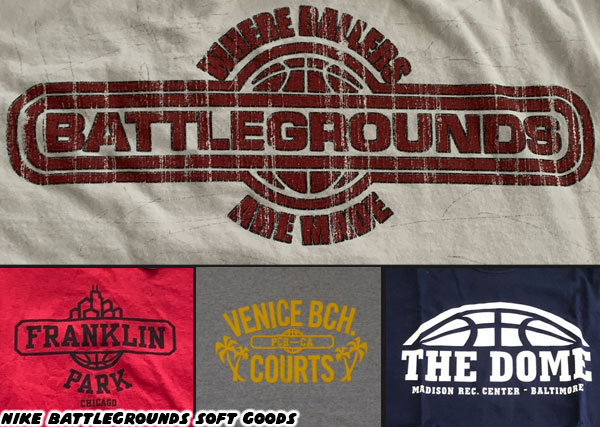
These two bold actions by Nike made the other shoe and apparel manufacturers take notice. Perhaps they too had been sleeping on the streetball game for too long. Unfortunately for fans of the mix tapes and streetball, Nike did not release a tape of the tournament or any details aside from the news in a few magazines. Nike seemed to be trying to expose the street scene and keep it under wraps at the same time. They were shrewd in their soft goods releases. Nike wanted to associate legendary basketball courts with the brand. These courts had existed before the swoosh, and were witness to some of the greatest games ever played. Nike could sell tons of merchandise, and possibly pay a small fee to a city, while claiming they had always supported the playground game. This made more sense than designing a campaign around individual personalities, like AND1 did with the Mix Tape.

The east and west coast champs never did battle to determine the best in the US, Fans and critics alike chided Nike for the decision. However in 2003 Nike decided to increase the stakes by hosting the Battlegrounds tournament in several major cities and then having the winners in those cities, plus the kings from the year before, battle to see who was the undisputed "king of the courts."

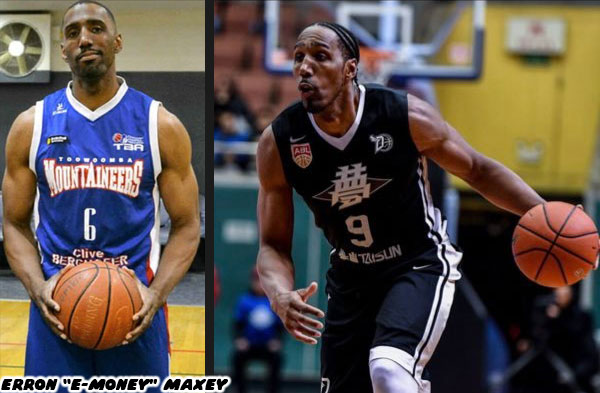
The winner both years turned out to be Erron Maxey of Los Angeles. His prize in 2003 doubled in cash value from a year before, plus he was crowned the King of Kings. Also unlike the year before the games and outcome were televised on MTV as a special program. Now Nike joined the EBC and AND1 on the streetball broadcast bandwagon. In 2004 Maxey was dethroned by a Frenchman under suspicious circumstances, so reported Scoop Jackson. Now the global push was on to unify the streetball fans. In this way apparel manufacturers could create an entirely new market. People that weren't necessarily following pro basketball, but wanted to be seen as down with the street game wanted their own shoes, shirts, and other soft goods.

One question remained. How was the country, not just the streetball fan, thinking about all of this exposure? Bean counters, focus groups and test marketers aside, the dollar does all the talking! Tapes from Reebok, AND1 and Nike eventually made their way to retail outlets like Best Buy, Target, and Walmart. They they sold better than most movies over the next few years.

Now kids everywhere in the country, or up north in Canada or down south in Mexico had exposure to this cultural movement. People nowhere near a major city, began mimicking their newfound streetball heroes. Dressing like them, talking like them, practicing their handles and even giving themselves nicknames. Underground mix tapes began popping up on the internet. Those that understood the game, grew up with the original mix tapes and stories from the streets produced some of the best tapes, like those from the Notic in Canada. The impact on the young players from Vancouver can never be understated, especially in internet circles. Kids like King Handles, Johnny Blaze, Goosebumps, and Disaster grew up on the Mix Tapes, and created their own following thanks to YouTube. Fans of the game never forgot, and that was why the Notic crew reunited in 2021, and there is even a documentary on them becoming famous, and disappearing. 

Sadly not every independent basketball video series was as good as those from Vancouver. Others, many-many others following the Notic were so poor in quality, and talent that they shall remain nameless. Because of the success of the tapes, tournaments, and online exposure streetball and Hip Hop became the same thing in the eyes of many followers. This in turn affected the way that players all over the world wanted to represent them. For instance in China there is a strong streetball following. They watch many of the same mix tapes that people in the US do. They listen to some of the same music, wear the same clothes and even try to incorporate slang into their vocabulary. 

The presence of streetball has only grown since this blog was written in 2005. There was a young man that became hooked on the early tapes, and tour, Wu You aka MoreFree is the Chinese legend that helped spread the gospel overseas. He would challenge visiting NBA players to 1-on-1 battles, and dazzle them with his skills. As audiences learned to differentiate streetball from traditional basketball then local courts started building reputations, just as they had done in New York, Chicago, and LA. Dongdan Court in China is considered the Holy Land. When the summers heat up you can find the best players competing  at Dongdan.

A Westerner might call the Chinese "biters" or just laugh at their attempts to incorporate Black fashion, and language into their lexicon. But then again where did they get the idea that streetball is about fashion and tricks? It has a lot to do with how the west presents themselves in the mix tapes and of course in the entertainment industry. Asia is quickly getting sold on the idea that streetball is about entertainment and not basketball. The big shoe companies learned that there is no one approach that can appeal to all audiences. They have to be sensitive to differences in culture, language, art, music, and presentation. Nike couldn't simply release Battlegrounds merch in mainland China featuring the name of Holocombe Rucker Park in Harlem. The Chinese have no point of reference to NYC. Dongdan Court on the other hand would make more sense. That was why they began creating custom streetball campaigns in their biggest markets. The Beijing 99 campaign by Nike incorporated many symbolic characters from classic tradition, and had the best street players from around the country compete.

Today the legacy of street players earning their names and respect on the blacktop is virtually gone. Courts that used to be the stuff of legend are now on cable, and satellite. Games are broadcast online every summer all over the world. With thousands of games, places, and players to choose from then why would the Rucker stay relevant? Or does the saturation of summer tournaments the world over make the EBC more important now? What is important now changes depending on whom you talk to.

The biggest legends in the history of the game are not even spoken of in most parts of the world. There are a lot of ignorant people in the US as well that don't know why names like "Pee Wee" Kirkland or "Fly" Williams are revered in certain streetball circles. Don't blame China if they have no concept of the ghetto, or hood mentality. They dress and act the part because they are trying to be part of a scene. That's the scene they see in music videos and mix tapes. Whether that scene is real and that message is correct is entirely up to them. In some way those Chinese streetballers cannot identify with their own culture. It doesn't reflect the freedom, creativity, and self-expression celebrated in global street culture.

The love, and support that Chinese developers have with the playground game can be seen in the mobile, and PC games they developed. The Freestyle: Street Basketball games, and Basketrio titles keep the genre alive whereas similar titles from the US came, and went in the mid 2000s. They also began designing toys, and vinyl figures inspired by basketball legends.

Every nation observes the culture of streetball a little bit differently. In Italy one of the popular crews is known as Da Move. It seems that the Nike Freestyle campaign went right to the heads of these players "Aig $cream (ice cream?), Da Helicopta, Downtown, Flashback, Jack Da Rippa and K-lean." The interpretation of streetball is unique for these players, to the best of my knowledge they were the first to take the freestyle concept to the clubs. That's right, dance clubs! They'll show up and do some freestyle basketball and everything seems to be cool with other people at the club and even the club owners.

Da Move sets are well rehearsed and akin to a show that Nike would put on with their freestyle team. They have even begun performing as basketball halftime acts. It is unknown if something like that would ever fly in the US however. Again there is nobody to blame about the way Italian street crews are interpreting streetball other than the media (internet included) from the US and more recently Canada. They will mimic and try to incorporate into their own culture the things that they are shown and taught.

Nike for its part in trying to preserve and share the game may be sending out the biggest mixed signals. Their global Freestyle tours and campaigns are fresh and entertaining, however they immediately follow up the venue with a Battlegrounds tour. So now countries like Asia and Europe are being sent the message "Freestyle, because style isn't free." The very next day they roll through town and send an opposite message "There is a difference between a playground entertainer and a playground legend. Entertainers entertain, legends ball. And that status must be earned on the streets."

Are players supposed to assume that streetball is either one or the other? Can they be both a freestyler and streetball player? Are there penalties for being a freestyler and not a person that plays basketball? Is earning a name more important than naming yourself? Who cares what these players do? If you are reading this then you should care what other players and countries are doing with the streetball game. Moreover we should not get so hung up on what the players do but look at what the industry is doing to perpetuate these confusing messages. Every action has a consequence, even if it is small in and of itself, the bigger picture is made up and dictated by all of these individual actions. If some kid in China has braided hair and is wearing a do' rag while downloading Jay-Z MP3's and Hot Sauce clips, then the big picture of streetball is going to be changed. The actions taken by the industry make even bigger impacts to streetball. We'll explore these in the next part.

Did you ever play basketball? Or any basketball video games? Were you a fan of the Mix Tape Tour, or freestyle basketball? Or is this the first time you're hearing about it? Let me know in the comments section please. As always if you would like to sponsor me please visit my Patreon page and consider donating each month, even as little as $1 would help make better blogs and even podcasts!
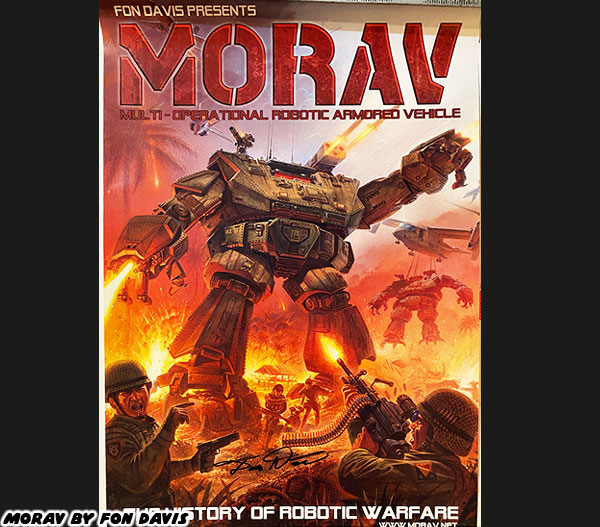
follow the Street Writer on Patreon!