In the previous entry of the series I talked about getting my hands on some urban vinyl basketball players in the vein of Michael Lau. The Super-X figures by Dragon Models were not licensed by the players, nor did they have anything to do with the NBA. That was okay with me. Whenever a stylized, and official 12" figure showed up in the press it was often for a gallery exhibition. Michael Lau had collaborated with Nike on exhibits, and release events. Lau put his gardeners in the new Nike outfits for the show. Of course these figures would never be available to the public. The South Korean figure artist CoolRain also did a number of Nike, Adidas, and Vans exhibits as well. He would create stylized figures, such as the "Dream Team" featuring a trio of Nike sponsored athletes in their USA team uniforms, and casual wear. Sadly these were also only created for a show, and never meant for limited-release. Knowing that these figures would never be sold, even in small runs drove me crazy.

Some of the best vinyl figures ever released came from Hong Kong, and they were rarely licensed by an individual, or organization. To skirt copyright law they often wouldn’t name a figure after an actual person, mascot, character, or athlete. One of the ways they would get away with it was by using keywords, phrases, slogans that might be associated with an existing person, but that couldn’t be trademarked. For example; let’s say a figure artist wanted to cater to Disney fans, they might release a vinyl figure of a stylized cartoon mouse wearing red shorts with white buttons, and yellow shoes. The artist would call this figure “Oh boy!” After one of the slogans used by Mickey Mouse. This was the same trick used on the "Three Kings" statues.
Fools Paradise (FP) created some of the most desirable statues for the high-end collector market. If I were a huge NBA fan with tons of disposable income, and lots of room to display a collection then I’d buy their statues without a second thought. They looked authentic from a distance, and even up close if you realized that these weren’t licensed figures they still looked great.

The Three Kings looked amazing. The company called them kings, and not players, or athletes. If you knew anything about pro basketball then you would say the trio were Scottie Pippen, Michael Jordan, and Dennis Rodman. They were the key members of the dominant ‘90s-era Chicago Bulls. The statues looked like stylized reproductions of the actual athletes. Even the numbers on their jerseys were correct. Upon further inspection you’d notice that Fools Paradise used all of the tricks that a counterfeit fashion designer would use to get away with when assembling knockoffs. The sneakers looked just like classic Nike designs, but they changed just enough to skirt the law. The swoosh was different, as were the lines, and colors as to help avoid a cease-and-desist letter. Then there was the NBA brand on the uniforms. At least that’s what it looked like until you got closer, and realized the red, white, and blue symbol was actually the Fools Paradise logo. Then in the middle of the jersey were the words LEGENDS, instead of BULLS. They were able to charge
almost $500 for an unlicensed figure based on Kobe Bryant, wearing what looked like his Lakers uniform. The logo on his chest was a similar font, but it said Legends, and the statues were referred to by one of his team numbers. Numbers couldn’t be trademarked after all.
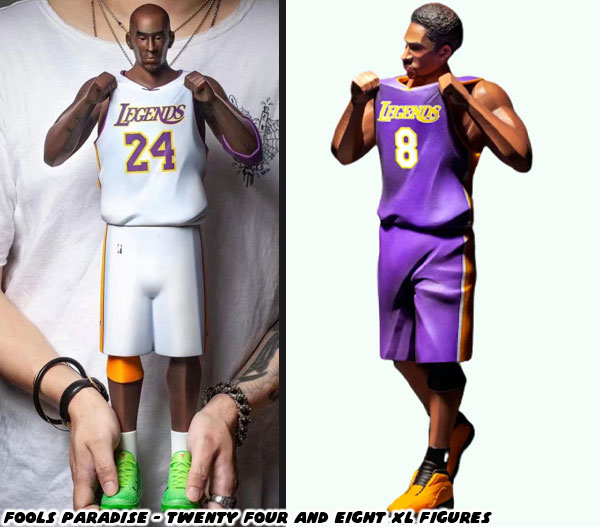
The FP statues was a master class in how to create a counterfeit art that could still demand top dollar. Audiences got an impressionist take on their basketball hero in a new format. It was fresh enough to command an absurd price. Even if Fools Paradise were contacted by the Lakers organization, or Kobe’s lawyers they had already built in their own indemnity clause. By going with small limited-edition runs they guaranteed this would fly under the radar. Similarly a small run of prints, or toys by an indy artist often go overlooked by corporate lawyers during fan conventions. Fools Paradise were not being malicious with the use of the NBA star likenesses, they were filling a demand that nobody else considered. Not only that, but they would sell out of everything they had, insuring there would be no collector bubble, or shelves stocked with products that nobody wanted. This was what I meant when I said that the best artists from China were remixing culture in real-time. Thankfully I never had enough space, or money to even consider buying those statues. I wondered what would happen if actual highly-stylized, reasonably priced, licensed figures ever came out.

It turned out that I wouldn’t have to wait very long. The trading card company Upper Deck wanted to get into the urban vinyl market in 2006. Their goal was to get Michael Jordan’s heir apparent, LeBron James, his own figure before the end of the year. It seemed impossible to me. Giant businesses usually had to plan a season or two in advance, especially since they needed to coordinate with the league, sponsors, and settle on a design to get to the manufacturers in China. Somebody working at the company must have had the ear of management, as they were moving a million times faster than any corporation ever could. I found out about their plans in
Francine’s article about creating a Lebron James vinyl figure at Vinyl Pulse. I was certainly interested based on the concept art alone. The proportions were similar to Lau’s art, my own work, with a hint of Kadir Nelson as well.
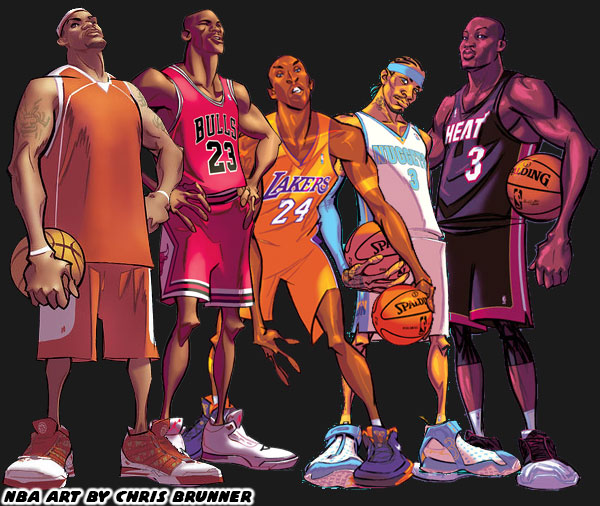
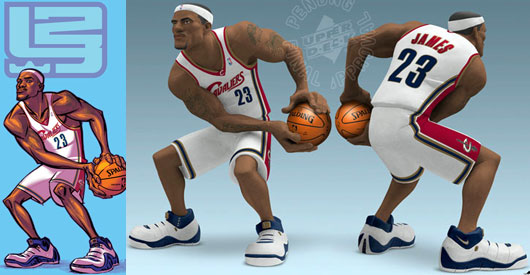
Chris Brunner was the lead designer on the All Star Vinyl line for Upper Deck, with art direction from Mark Irwin. For LeBron he was able to make a powerful, and intimidating design on the powerful, and intimidating star athlete. The amount of detail with the figure was astonishing. The thing that popped out to me were the accurate, but still cartoonish Nike sneakers. Funny enough Upper-Deck would switch the basketball while coming up with future designs.
In 2006 the NBA announced a new microfiber composite basketball, which was met with the ire of the players. This basketball was used, and the classic basketball would appear in latter releases. The ways in which Upper Deck was able to get the figure to market with a short turnaround started making sense. They were doing double-duty with the release of LeBron. Mr. Brunner designed LeBron wearing a neutral red, and white jersey, and shorts. This was to avoid lengthy contract negotiations with the NBA, and the Cleveland Cavaliers, who LeBron was playing with at the time. The outfit was Nike performance wear, and the sneakers that he was wearing were the all new LeBron III’s. Nike was using this release as part of a bigger marketing campaign.
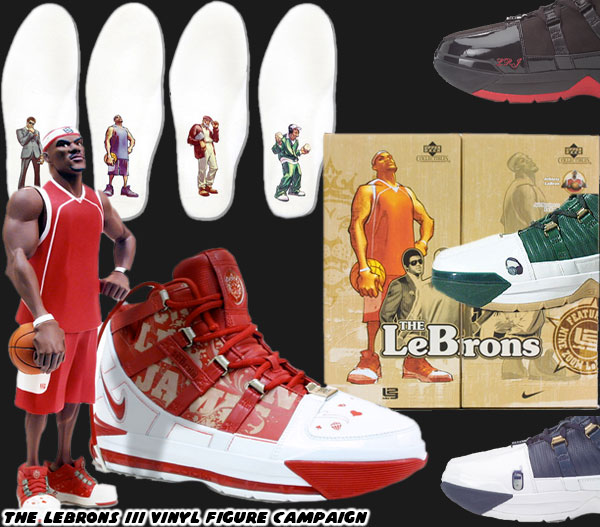
Upper Deck announced in short order that not only were they working on LeBron, but they were also creating sculpts out of the characters in his new ad campaign. This would coincide with the release of his new signature shoes, and the alternate colorways were a nod to his “family” which were essentially his alter egos. Athlete was the basketball player that most people were already familiar with. Business wore a suit, and represented his market savvy. Kid represented his youthful, playful side. LeBron had come right out of high school into the NBA, so his perspective was still young at heart. Wise was his basketball IQ. He was a young master of the game because of the insight he picked up from the legends that came before him. Ever the marketing geniuses LeBron, and Nike would also produce a series of cartoons featuring the family. Nike, LeBron, and Upper Deck were covering their bases. Fans of the trading cards, and collectables would have something new to pick up. Fans of the sneakers would love the exclusivity of this set. Urban vinyl fans eager to see how the art form would translate to licensed figures would be lining up to collect them as well.
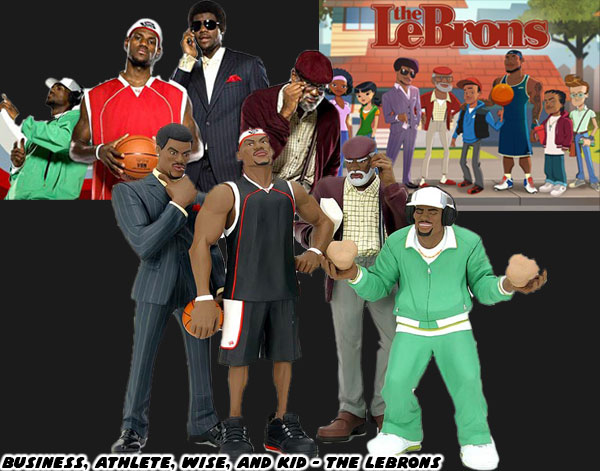
It seemed that the people working behind the scenes were keenly aware of how urban vinyl collectors worked. These releases wouldn’t be like printing millions of trading cards featuring star athletes, and bench players for the domestic market. They needed to focus only on the biggest stars, and their cultural relevance has as much of an impact as their scoring records. Upper Deck also needed to make sure to keep their numbers low, and also offer smaller runs of special colorways. This would appeal to die-hard collectors, and allow their manufacturers to get the All Star Vinyl line to market faster than any toy could hit the shelves.
They made sure to give the urban vinyl community a heads-up by going directly to Vinyl Pulse with the exclusive interviews. Then they would clue in their regular distributors, and press outlets with articles on what the whole vinyl movement was about. Upper Deck knew that they were headed in the right direction based on the reception to the LeBron’s. The initial drop, and the special editions sold out the minute they hit the market. In fact it crashed their website, and countless people (myself included) were furious at how they failed the collectors. When they got things sorted it looked like bots, and resellers claimed most of the initial release. There were almost as many eBay entries as there were figures produced that same day.
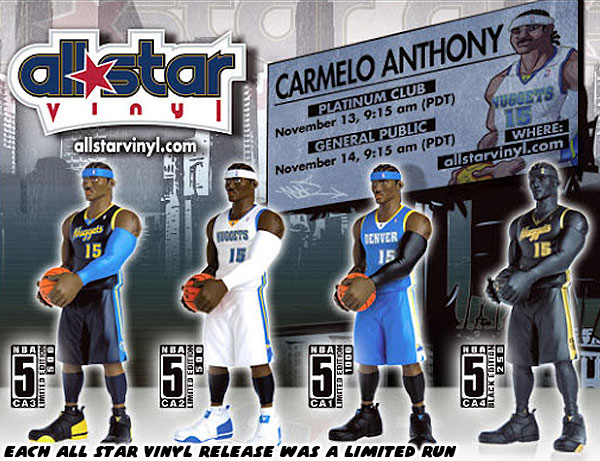
I wrote a very long email to their customer care department highlighting everything they got right, and wrong with the release. They were kind enough to contact me, and hold a set aside for me, and many of the other collectors that experienced issues on release day. I’m certain that they thought every release would be met with the same level of passion. Upper Deck began working with the NBA, and every major organization to bring other superstar athletes to the growing market. They designed, and released figures for the NFL, NHL, MLB, PGA, and even pro boxers. I promised myself that after the Super-X figures that I would stop buying urban vinyl figures to save some money, however I couldn’t resist.

I had no intention of buying the entire sets of any athlete, or the smaller alternate color runs. As a fan of Mr. Brunner’s art, and the other artists working on the line I was happy to get my hands on any of the basketball figures, but that was it. I didn't care about their boxer, hockey, baseball, or football lines. Despite having the best intentions Upper Deck failed to recognize that the success of the LeBron’s could not be duplicated with every release. Those figures hit because it brought together the fans of Lebron, Nike, sneakers, the NBA, collectables, and the urban vinyl community. It was essentially the perfect storm of different markets. If just a few of those people didn’t turn up with each release then the figures would end up languishing on their online store, and on the shelves of their retailers. That was exactly what happened, and one of the reasons why the line disappeared almost as quickly as it was created.

Another thing that hurt the line were the competing scales that the figures were produced in. The majority of the numbered collectable figures were roughly in the 1/7 scale, or about 9-10” on average. Each of the NBA figures was proportionally accurate. Shaquille O’Neil (7’ 1”) was the tallest of the lot, followed by Kevin Durant (6’ 11”), then Lebron James (6’ 9”), Kobe Bryant (6’ 6”), Vince Carter (6’ 6”), and Dwyane Wade (6’ 4”). The shortest of the figures was Allen Iverson (6’ even), and he was arguably the coolest figure in the lineup, just as Lightning Son from the Super-X line was the coolest figure of that lot. Unfortunately Upper Deck also released slightly smaller scale versions of Kobe, LeBron, and Kevin Garnett, roughly 1/8 - 1/9 scale. They were not proportionally consistent. The smaller figures were designed to be more affordable, as they were produced in greater numbers. I would guess that Upper Deck was hoping to catch the eye of potential collectors with less expensive, smaller, but still stylized figures. The thing was that they looked close to the same size as the more expensive releases. There was the potential that they mistakenly bought the two different sizes for their collection. They wouldn’t realize it made their shelves look inconsistent until the figures were side-by-side.

Sales of subsequent releases might have been lukewarm because of the highly stylized athletes. The thing that I absolutely loved about Chris Brunner’s art being turned into 3D models did not appeal to the general public. Not everyone understood the artistic intent behind the sculpts. Not everybody liked the aesthetic of three dimensional cartoonish characters. Online forums were going back, and forth with people arguing that the figures looked dumb, cartoony, and plain unrealistic. They stuck out like sore thumbs compared to their other statues, and toys. Fans of the line, myself included said they looked amazing. We wanted a bold new look for athletic collectables. We argued that if collectors wanted realistic NBA figures then they could always go to McFarlane toys, or later Enterbay. Not every collectable had to be a 1-to-1 copy of every eyelash, wrinkle, and fingerprint of the star player. Artists could capture the essence of the athlete in profound ways, just like the Fools Paradise statues that I mentioned above.

Another thing that affected the reception to the figures was that there wasn’t yet a market big enough to support them. People were not used to seeing figures with such a strong aesthetic. The proportions were jarring to people that had not been exposed to that kind of design. There was nothing similar to them in any toy store, or from any other trading card manufacturer. So people had not been conditioned to accept that these were not only collectable, but they were cool as well. Funny enough over the next decade just about every major franchise would shift to this style of character design. Movie franchises like Star Wars, and Pirates of the Caribbean, as well as cartoon mainstays from Disney, Ben 10, Spider-Man, G.I. Joe, Transformers, and Teenage Mutant Ninja Turtles would all get the highly stylized treatment as well.

In order to change the market, and gain acceptance with the general public one studio had to be first. Upper Deck was a pioneer among the big companies in the USA. They were willing to take the creative risk while every other publisher was going through the same old motions. The popularity of the initial LeBron release demonstrated that the market was there. Sadly they couldn’t get customers to keep showing up, and grow the industry like they wanted. Unfortunately the studio paid the price, and a potentially game-changing line was cut short. They should be admired for everything they were able to accomplish in a brief amount of time. Upper Deck had their finger on the pulse of sports, and they understood the influence that street culture had on the NBA. However there was something that came just before it that had an even bigger impact on the culture. I’ll talk about it on the next blog. Until then I’d like to hear your takes on Upper Deck’s All-Star Vinyl figures. Did you collect any? Do you think a line of designer sports figures was a good idea? Tell me about it in the comments section. As always if you would like to sponsor me
please visit my Patreon page and consider donating each month, even as little as $1 would help make better blogs and even podcasts!