Showing posts with label coolrain. Show all posts

Friday, August 9, 2024

Remix Culture, a bonus entry!


I hope you enjoyed the Remix Culture series from the past few Fridays. I had some material for a bonus entry this week. Previously I shared with you my love of basketball, and how I fell into urban vinyl art. I revealed that some of my favorite toys combined both basketball, and vinyl figures. The Super-X figures by Dragon Models, All Star Vinyl figures by Upper Deck, and most recently the Street Mask figures by JT Studios were the gems in my collection. They brought me tremendous joy. Those weren’t the only toys that I was happy with. I also had a great collection of Oswald figures, and plenty from Michael Lau, the Godfather of the urban vinyl movement.

One of the reasons I was able to build a great collection over my lifetime was because I was very selective about which 12” figures I bought. Those figures could be very expensive compared to the other toys in my library. For the price of a single 1/6 figure I could get a half dozen Oswald plush dolls. In order to maximize the return on my investment I had to be very picky. When I started collecting the high-end basketball figures I knew that I would have to give up on curating another line. I knew exactly what I would never be able to add to my shelves; space figures. Like many of you I’m a huge fan of space. Like a really, really, really big fan of space; astronauts, and science in general. Growing up I would check out books on space travel from the library. My parents, and brothers supported my fascination. They got me a really nice telescope when I was a kid, and today my wife, and I have a high-end telescope. The science behind space travel had always been part of my identity. 

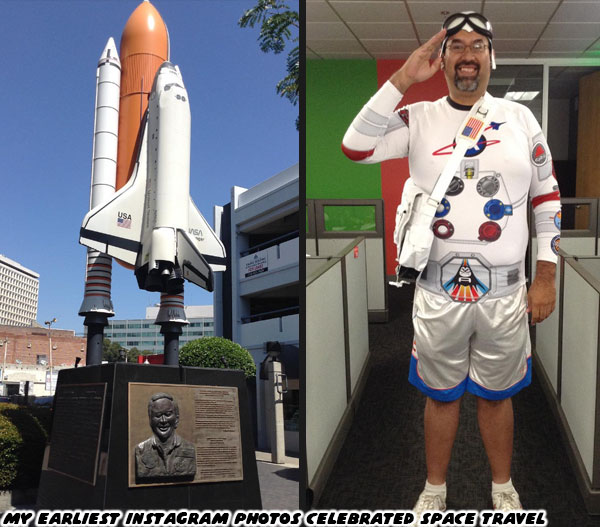
In grade school my friends knew that I was a big science nerd. They could often find me going over books on rockets, and space shuttles. At least that was whenever I wasn’t reading about monster trucks. On the blog I mentioned that Lunar Lander from 1979 was the first simulator-style arcade game that I could remember. I credited it with sparking my love of arcade games, and planting the seeds that would eventually see me land a job working mission support with JPL. When I joined Instagram one of my first photos was from the Challenger memorial in Little Tokyo. My family was there in Downtown Los Angeles in 2012 when the Endeavor got a flyby. It was definitely a highlight for me. When I left JPL for my current job I took that love of space with me. At that time our office had moved into a bigger building. Every holiday meant we were going all out. Catered tacos for Cinco de Mayo, hot dogs, and burgers for the 4th of July, big Christmas parties etc. We celebrated Halloween with everyone on the staff showing up in costume.

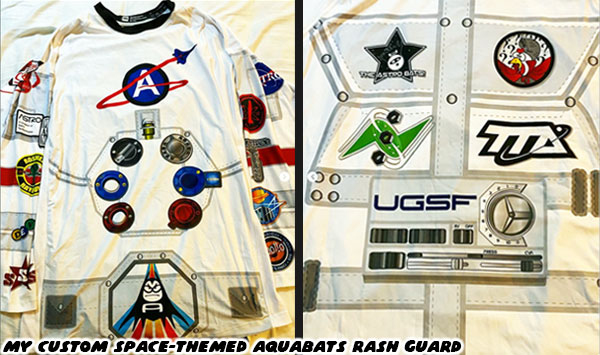
I had created a couple of custom rash guards for my kid, who was a huge fan of the Aquabats. We would go to their concerts when we could, and everyone loved her outfits. I would usually dress as a Sandflea, the arch-rivals of the Aquabats. After a few shows I decided to create a space-themed rash guard for myself. I created all the vector art for the outfit, including the graphics that looked like mission patches on the sleeves. The logos were a call out to other space themed bands, video games, actual missions, and even Disney attractions. The silver shorts were from AND1, a white anti-negativity helmet, goggles, and white Converse sneakers completed the outfit. I wore it to work, along with my NASA-themed laptop bag. My coworkers loved it as much as the fans at the concerts. Hopefully this proved how much of a fan I was of astronauts. When I said that it hurt giving up on collecting astronaut toys I meant it. Budgeting money for Michael Lau figures meant I would miss out on something equally cool.

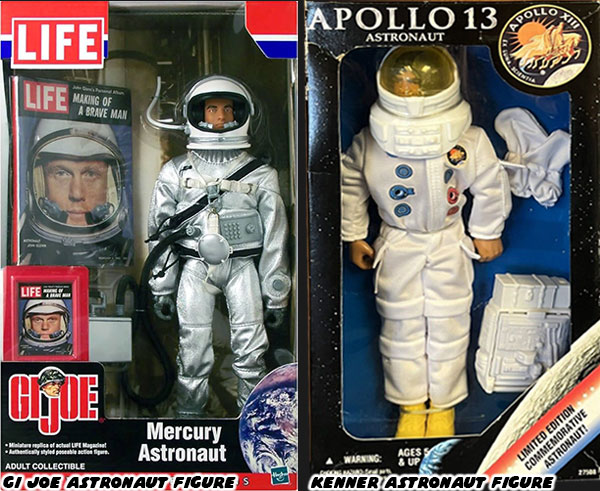
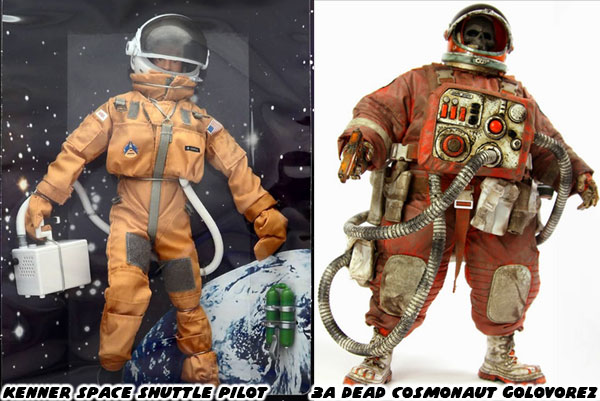
Science fiction toys, spacemen, and aliens had been in pop culture since the start of the 20th century. When I told fellow collectors that I wished I had more space toys I wasn’t talking about Star Wars, Star Trek, Battlestar Galactica or any other sci-fi lines. I meant actual astronaut figures, like the classic 12” G.I. Joe astronaut toy that debuted in 1966. There was a major shift in pop culture post WWII in America. Astronauts reached peak cultural relevance in the ‘60s thanks to the space race between the USA, and the Soviet Union. It would rise again in the ‘80s thanks to the Space Shuttle missions, and disasters. It was hard to imagine, but space travelers were treated like celebrities decades ago. There was a time when no singer, athlete, or movie star could even compare. Because of that popularity some of the best toys ever made, at least in my book, were inspired by astronauts. These figures looked amazing whether they were based on actual Kennedy-era NASA astronauts, Ronald Reagan-era Space Shuttle pilots, or even fictional space explorers.

Being on the cutting edge of what was possible had inspired me all my life. I had always enjoyed action figures based on anything other than soldiers. I talked about it previously that the Adventure People by Fisher Price meant more to me than the G.I. Joes by Hasbro. Regular people that had cool jobs inspired my creativity more than glamorized combat. There was no job cooler than that of astronaut. They were the ultimate explorers. In my mind they were the last people that were really pushing humanity into the future. There was something to the uniforms, hoses, patches, helmets, life support, and especially space ships that really sung to me. It was an aesthetic that was cutting edge in form, and function.

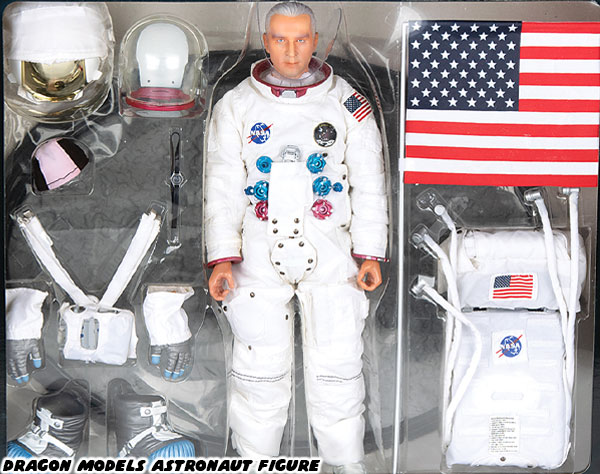
By the time I was an adult, and able to start collecting the astronaut figures were few, and far between. If I didn’t have a space toy that managed to survive childhood then I wouldn’t see anything new. The people at Dragon Models, the same people that made my Super-X figures, released an Apollo 11 figure in 2002. At around $300, this figure set the standard by which every following astronaut toy would be measured against. Unfortunately for me this was right when I was on the hunt for Michael Lau figures from Hong Kong. It was at that very moment that I knew I could never afford to collect 12” figures from the space line. I could get two, possibly three Lau figures, or the entire Super-X team for the same price. The choice would be easier in that context. That didn’t stop me from keeping tabs on other explorers. What I saw started making me reconsider the choices I made.

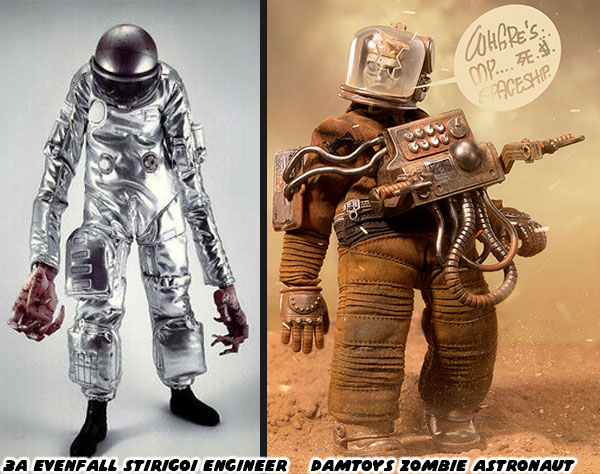
Artists in the 2000’s started going down some really creative paths when designing a new generation of toys. These creators saw the reaction to every new release was met with nothing but love from collectors. It didn’t matter if the artists were remixing kaiju characters, sculpting original cartoon animals, putting together robots, or celebrating everyday heroes like construction workers, cops, and chefs. There was a person out there that was a fan. Not only did they want to support every new release they were also eager to see creators push the envelope. They wanted to see horror elements get added to the art toy format. Monster toys were nothing new, but creature urban vinyl figures went extra hard. Sure astronauts were cool, but what if they were zombie astronauts instead? Or what if they were alien shapeshifters pretending to be astronauts? This was the kind of storytelling that made the movement really stand out from traditional toy lines.

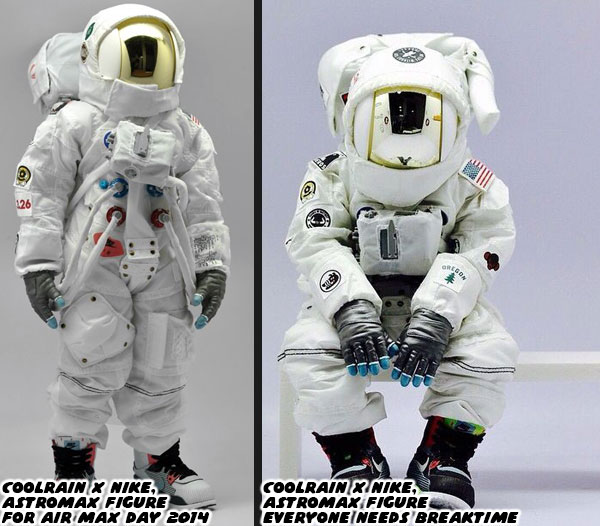
I was happy with the collection of vinyl toys I had built in the 2000’s. There was one figure that popped up in 2014 that hit me like a freight train. The South Korean artist CoolRain created a figure to celebrate Air Max Day on March 26. It was the 27th anniversary of the release of the Nike Air line of sneakers. Nike had all sorts of artists contribute pieces to their gallery, and CoolRain outdid them all. He created a custom astronaut figure, that at first glance looked similar to the Dragon Models figure mentioned above, but was even more detailed. Upon further inspection this handmade figure had modern uniform fittings, not the classic Apollo gear. The mission patches were a collection of Nike logos, and brands. The space boots were fictional sneakers dubbed Astromax. The figure got the same reaction from me that Michael Lau’s Maxx, and Jai Tseng’s King generated in me. They were works of art that completely blew my mind. They had that rare combination of elements of everything I loved, in this case astronauts, sneakers, and figure art.

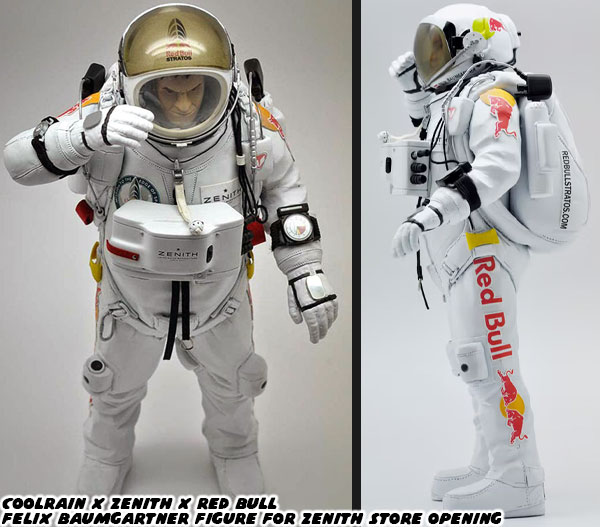
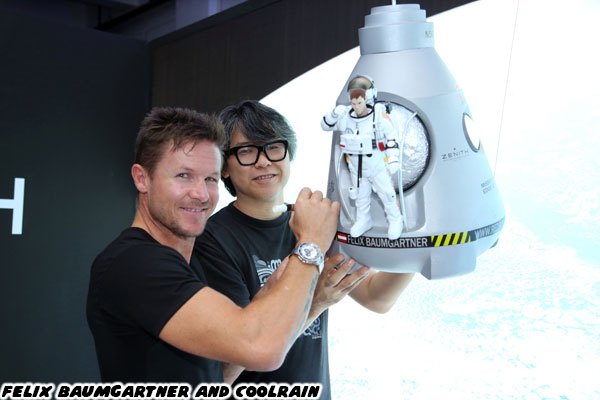
The pieces that CoolRain created for Nike were only used in the gallery shows. CoolRain had no intention of mass producing these works of art. His follow up in October of the same year was arguably just as cool. The Austrian daredevil Felix Baumgartner had set a record in 2012 for the highest skydive of all time. He rode a balloon to the very edge of space, almost 120,000 feet up. He jumped from a capsule in a pressurized suit. It was like an astronaut speed suit designed to survive his supersonic fall back to Earth. On the second anniversary of that record breaking jump Zenith had opened a store in Singapore. The high-end Swiss watchmaker had sponsored Felix’s jump, along with Red Bull. It was called project Stratos. They commissioned CoolRain to design a figure to celebrate the occasion. What he delivered was one of the best pieces he has ever designed.

The duo of Astromax, and Baumgartner figures not only made me insanely jealous, they also sparked my imagination. The only consolation that I had was that these figures were so complex that they would never be reproduced for collectors. So nobody except for CoolRain would ever be able to display them. At least that was what I thought. CoolRain developed a resin statue version called Astrocat. It was a variation of the sitting Astromax figure as part of his “Everyone needs break time” line. He collaborated with other artists to have their trademark figures sitting on a bench, taking a breather. When it was his turn he released a few of his figures in statue form also sitting on the bench. I was absolutely tempted by this figure, but didn’t like that it was a statue, or that it had cat ears on the helmet. It seemed out of place on an otherwise great collectable.

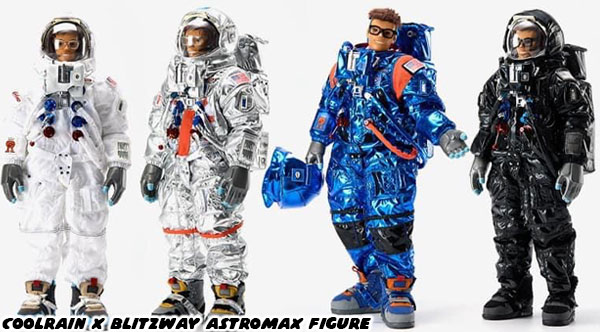
I kept an eye on what CoolRain, and the other figure artists had worked on over the years. Nothing ever inspired me to save my money except for the recent Street Mask line by JT Studio. This spring of 2024 I absolutely lost my mind. It was the 20th anniversary of CoolRain’s debut. He announced that his fans would finally be able to buy the figure they had long been clamoring for. CoolRain, and Blitzway would release four variations of the Astromax figure. The original white uniform would be joined by silver, blue, and black. Each one had all the same details as the original art toy. This news would have made me extremely happy at any other time. Unfortunately I had purchased the King, and Flash figures from JT Studio just a few days before the press release went out. The JT figures cost so much that I promised myself I wouldn’t buy any other high ticket item this year. I considered them my birthday, and Christmas presents from myself, and my family.

It was a cruel twist of fate that the only non-basketball 12” figure I would justify purchasing finally hit the market. I should have known something like that would happen. I’m not going to lie. I am saving every penny that I have in the hopes that the figures do not sell out before the end of the year. That I might be able to get one before the resellers scoop them up. Only time will tell if that’s possible. If I get one then you’ll find out about it on the blog. If I don’t then I’ll just remain salty about it until my dying day. Anyhow this wraps up the bonus entry for my remix series. I’d like to know if there were any toys you collected, or any expensive figures you had on your wishlist. Tell me about it in the comments section please. I’d like to hear your thoughts on the comments section. As always if you would like to sponsor me please visit my Patreon page and consider donating each month, even as little as $1 would help make better blogs and even podcasts!
follow the Street Writer on Patreon!

Friday, July 5, 2024

Remix Culture, how Asian designers changed the game, part 11

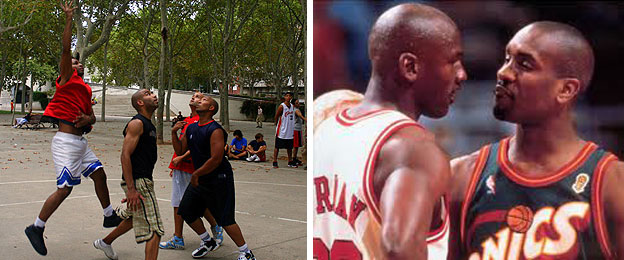
The indication that the US was ready to elevate the status of street fashion, Hip Hop music, and Black culture in general happened in the late ‘90s, and early 2000’s. The rise of athletes like Allen “The Answer” Iverson, Stephon “Starbury” Marbury, Gary “The Glove” Payton, and Rafer “Slip 2 My Lou” Alston were unlike the previous generation of pro athletes. They were gifted with skills, and had built their reputations in college, but more important to many in the streets during the summertime. The NBA, like many professional leagues guarded their image. They made sure that coaches, and players dressed in suits while doing interviews, or sitting in the sidelines while injured. They would fine players for breaking any codes of conduct in games, and in public as well.
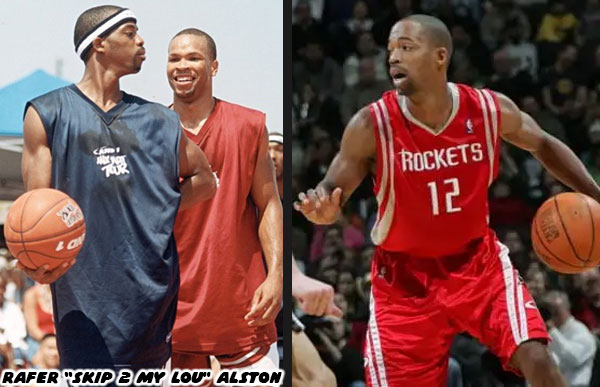
To many the polished images that the league presented was bland, and predictable. Seeing clean-cut college prospects move into the pro ranks was becoming stale. Suddenly there was a rise in rash, tattooed, outspoken, and genre-changing athletes. Young players that had the audacity to not only talk back to Michael Jordan, but also to cross him up, and humiliate him on court. The NBA couldn’t get them to conform to the old ways. When the organizers realized that the players with street roots represented a large population of their audience they changed course, and started using them for marketing. They started highlighting rappers sitting court-side on television, they started inviting Hip Hop acts to perform at the All Star Game, and even loosened their rules on visible tattoos.
Electronic Arts developed a number of pro sports video games, but they too felt that it was high time to incorporate more street culture into their library. So they had a sister developer called EA Big start creating action sports titles, like the iconic SSX Tricky snowboard game. But more important they released NBA Street in 2001. On the cover was a fictional player named Stretch Monroe. He was sort of avatar of the classic NBA stars from the ’70s. He was somehow still actively holding down the game in the streets against players more than half his age. The world would never be the same following its release. The studio would also add NFL Street, and FIFA Street into their catalog. They were essentially smaller groups of the top players, and teams, playing a looser version of the sport on the playground. Rather than be more like a simulation game, the focus was more on capturing the arcade experience. NBA Street was essentially a call back to the classic NBA Jam arcade hit from a decade earlier. I called NBA Street one of my favorite games of All-Time. The game had smooth controls, and an easy to learn combo system, which allowed you to crossover opponents for bonus points. It was as if EA Big figured out how to incorporate the combo mechanics of the Tony Hawk’s Pro Skater series, but put it into a sports game.
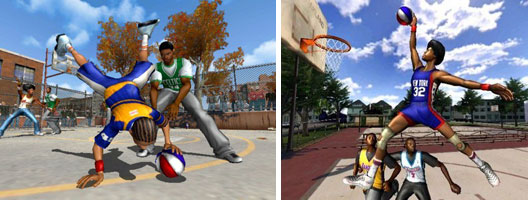
NBA Street was a breath of fresh air. I was never a fan of the traditional sports games. I didn’t care about building franchises, trading players, or grinding through seasons. The more realistic those titles were the less interesting they became to me. Giving slightly exaggerated abilities to a handful of star athletes made them feel more like super heroes, and less like mortals in the game world. Suddenly the game play had much more potential to me. The same could be argued of Hawk, and his fellow pro skaters. They could survive impossible drops, perform back-to-back tricks mid air, and grind rails without losing momentum. There was still a lot of realism in the games, but reality was not the goal. It was more on the fantastic spectrum of what was humanly possible. In addition to the brilliant game play were the visuals. The aesthetic of the players in the franchise was more animated. The proportions employed by EA Big was the predecessor to the All Star Vinyl figures by Upper Deck.
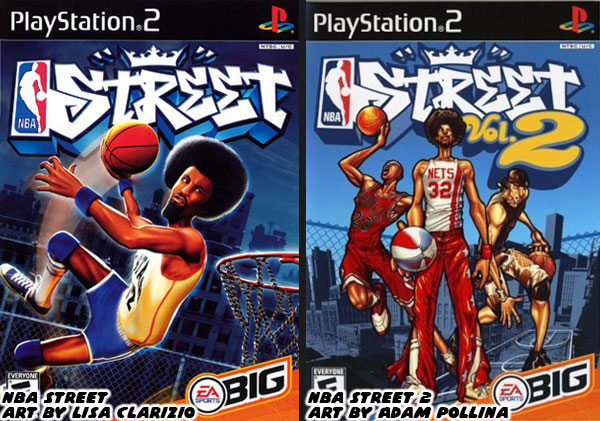
You could imagine how much I loved the look of the players in this game. They were the kinds of basketball players that I would draw, but finally animated. The impact of the Street series on me, and on basketball fans in general could not be understated. If you don’t believe me GQ called NBA Street 2 the greatest basketball game ever made. It would be hard for me to counter that argument. The game was an instant hit, and spawned a number of sequels. Yet like the Hawk franchise, the greedy publisher forced the developers to crank out sequels with diminished quality over the following years. I predicted that the market would be flooded with streetball games in 2005. The team at EA Big in Canada didn’t have time to innovate, they didn’t have time to look for newer or better game play options. They substituted evolution by adding all sorts of over-the-top gimmicks. Eventually the series would burn out. However the template they created would be picked up by indy developers.
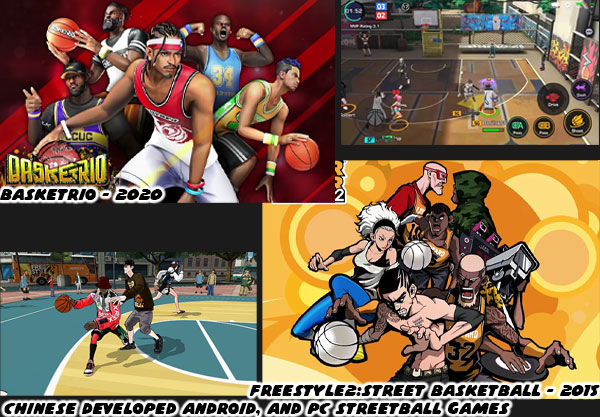
JoyCity the South Korean company was founded in 1994 as Chung Media and was later renamed to JC Entertainment in 2000. They released a an MMO PC game called FreeStyle Street Basketball in 2004. The game did well over the years, as did many other MMOs coming out of South Korea. Freestyle2 Street Basketball came out in 2015. The game did even better, and expanded the universe of playground basketball characters that JC Entertainment had established. Their cross platform successor 3on3 Freestyle Basketball originally came out for PC / Steam on Dec. 2016, and Xbox Aug. 2018. Other studios were eager to cash in on the trend. Beijing Halcyon Network Technology Co., LDT released Dunk Nation 3x3 in 2017. The Asian collective All9Fun which developed games for Hong Kong, Taiwan, and Macao released Basketrio: Allstar Streetball in 2020.
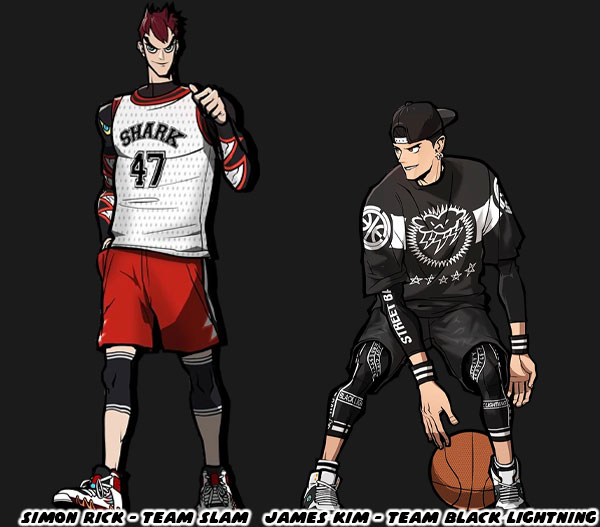
As a fan of the Michael Lau, and by extension urban vinyl school of design I could tell that his work in the early 2000’s had certainly rubbed off on the character designers working in South Korea, Beijing, Hong Kong, and Taiwan. The style of the characters, the proportions, the attention to outfits, and presentation was unmistakable. Lau was not the only influence, Eric So, CoolRain, Brothersfree, and Jason Siu also colored the aesthetic that went into toy, game, and collectable art for the next two decades. Looking at the designs featured in the games by JC Entertainment, Halcyon, and All9Fun was a master class in bridging the aesthetic, culture, and shifting role of online gaming.
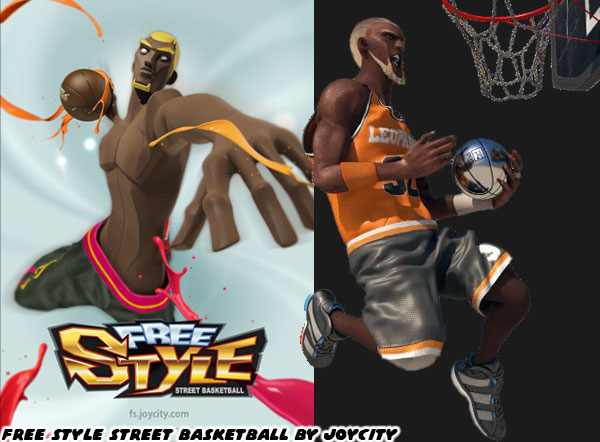
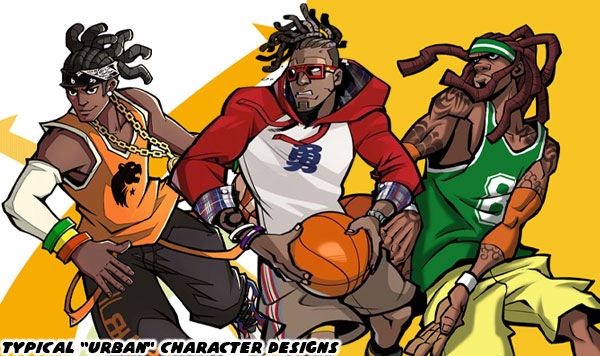
Let’s start with the stylized characters featured in all of the above mentioned streetball games. What really stood out to me were the styles of the designs. When the studios created basketball players, they were very much in the vein of Michael Lau, Kadir Nelson, and Chris Brunner. I would even put my name as a contributor of that style even if I only impacted 0.01% of the artists out there. The trio created some lanky, stylized, forms that worked great for basketball. They even made sure that sneakers these cartoonish character wore were large, and reflected the style of the time. It didn’t matter if their kicks were licensed or not. They made sure that players could read the fashion of each athlete which gave them additional layers of personality. The type of physical build they put forward didn’t work with all sports, but on the fast paced game of basketball it was perfect. These designs worked amazingly well in animation. The long arms, and legs, the oversized hands, the flat, expressive faces were the ultimate athletic canvas.
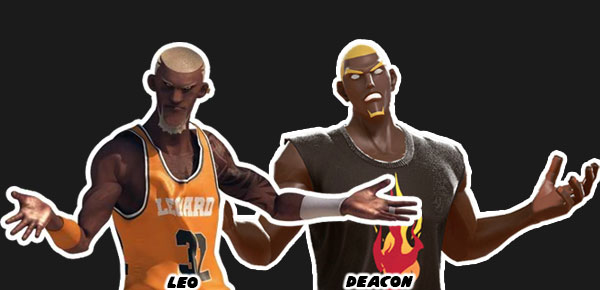
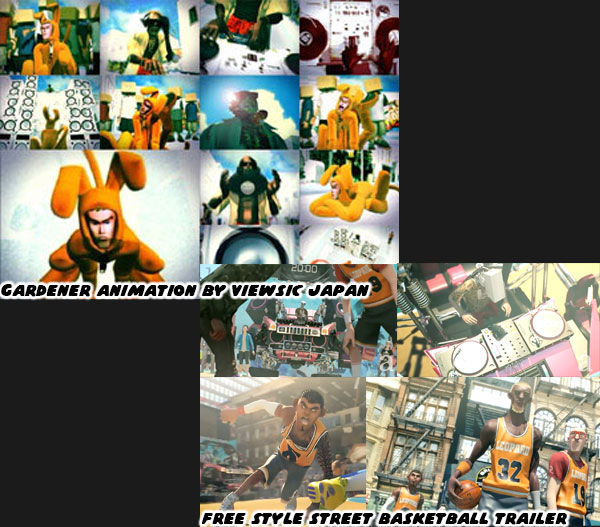
I noticed that the Asian studios were quick to use street culture, to use Hip Hop as the backdrop of many of their titles. The graffiti, the fashion, the music, the overall visual language. The oldest trailers for Freestyle Street Basketball had a graffiti artist using spray paint to bring the characters to life. A deejay was scratching beats on a turntable while a black basketball player without pupils was putting together a freestyle routine. This character would eventually be named Deacon, and featured prominently over the years. Many years later when Freestyle2 was announced a new Black character with gold hair named Leo debuted. He was essentially a new take on Deacon. Almost every studio was quick to feature Black characters in their opening animations, and online marketing as well. This was a form of signaling to the community that the streetball was authentic, however the staring roles didn’t go always go to Black characters. At least not in the early days of the streetball MMOs.
The star characters of each of the JC Entertainment games fit a similar model. The oldest star character the studio created was Saru, in some of the oldest advertising, and trailers his jersey actually read Sabu. The character wore red, and black, the classic Chicago Bulls colors. Had a tribal tattoo sleeve. He was essentially the prototypical cool streetball player. His design influences were a cross sample of elements that the Asian market would identify, even if they weren’t familiar with the stars in the NBA, or US playgrounds.
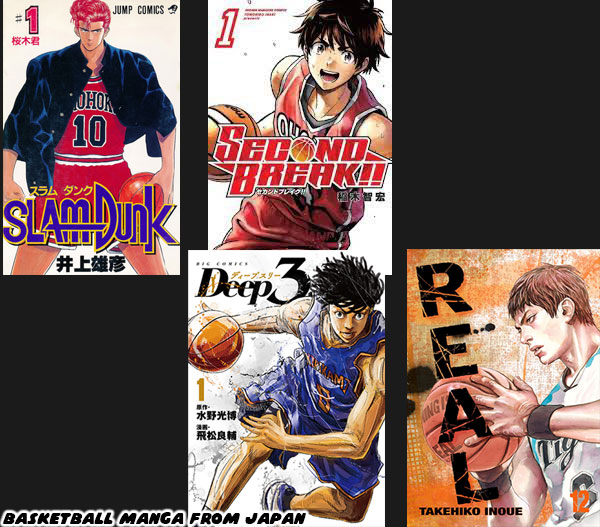
The character’s name, and his jersey was more than a nod to the ‘90s era Bulls which were known the world over. The outfit was based on the protagonist Saru gang from the highly influential Tokyo Tribe manga / anime, which was first published in 1993, and was serialized in Boon magazine between 1997-2005. This was often the first exposure that many fans in Asia had to Hip Hop culture. Even if they had not known anything about Tokyo Tribe the young basketball hero in a red jersey was also seen in Slam Dunk. The manga was first published in 1990, and went on to get translated into multiple languages as well. It was a primer for many fans to basketball culture. Saru’s design would be easily identifiable as the hero to the Asian market, just as Stretch was recognized as the star of the NBA Street series in the west.
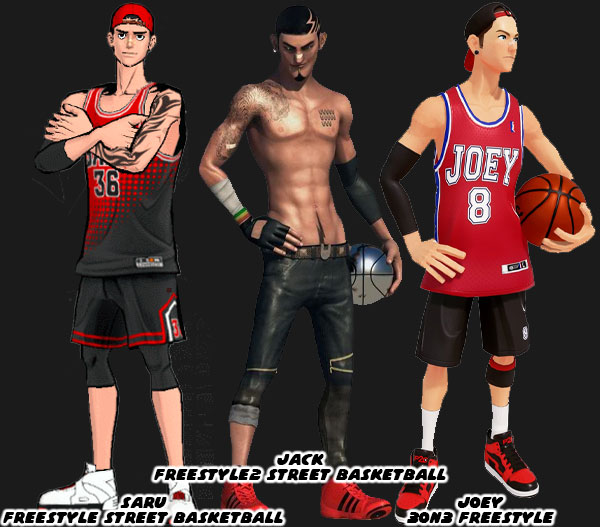
The next hero of the Freestyle series was Jack. By the time the sequel was released in 2015 the urban vinyl school of design had already changed the looks of characters in games, and animation. The reception to lanky heroes was welcome in several genres, especially basketball. The cool culture was street culture, Hip Hop was everywhere, and style was more important than substance. The athletic uniform was out the window, as Jack played shirtless, in leather pants, and sneakers. It was an absurd outfit for playing, but the cool factor was unarguable. At the same time JC Entertainment still featured characters in traditional outfits, but was letting players create custom characters that wore all sorts of costumes, and accessories. The studio had essentially placed Freestyle2 in a universe similar to Lau’s gardeners. People walked around with boxes on their heads. Or there were animal people, or cyborgs inhabiting this world where everything was settled through basketball tournaments.
The thing that always bothered me about the street basketball games coming out on Steam, mobile, and consoles from overseas was that Black characters always seemed to be relegated to supporting characters at best, or villains at worst. Well, actually there could be subtext in the designs that was even worse than evil, and that was outright racist. Dark skinned characters were sometimes portrayed as aggressive, tough, and sometimes ape-like, if not outright apes. I wish I could say that this was a trope that was abandoned generations ago, but it would still rear its ugly head from time to time. The light-skinned champion against these apes, or savages in a Black setting was a tradition that had always bothered me in all media.
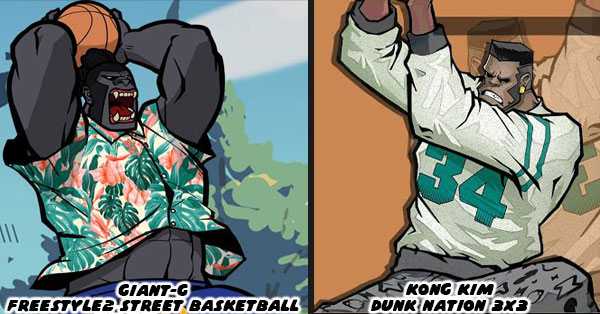
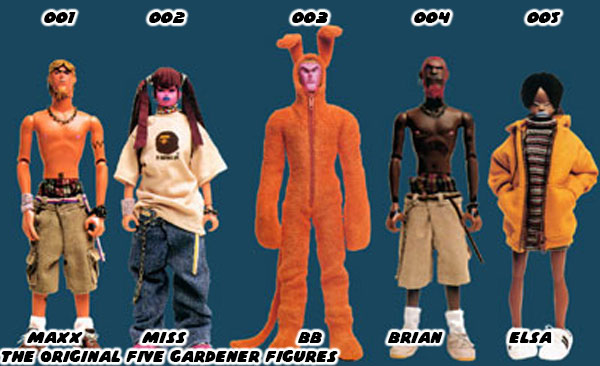
It went back to the days of Tarzan of the Apes, the adventure books from 1912 featured the white champion as not only being the strongest, and bravest warrior in all of Africa, but he could also talk to the animals. In essence he was superior to every Black man on the continent. This type of white savior story had spread around the world for decades, coloring other cultures perception of dark-skinned characters. As a Mexican-American I was sensitive to how minorities were portrayed in media. I could never imagine how a Black kid would even react when faced with the same tropes. Even Michael Lau was not immune from centering the gardener universe around the light skinned Maxx. His best friend, and rival Brian was Black. They went back-and-forth against each other in skate contests in the pages of East Touch magazine. 
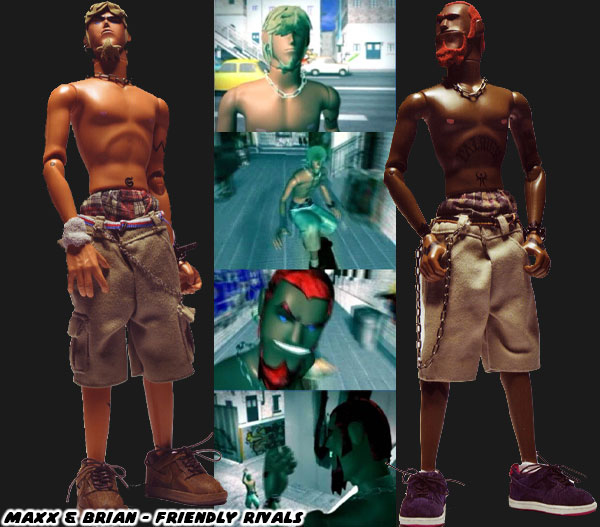
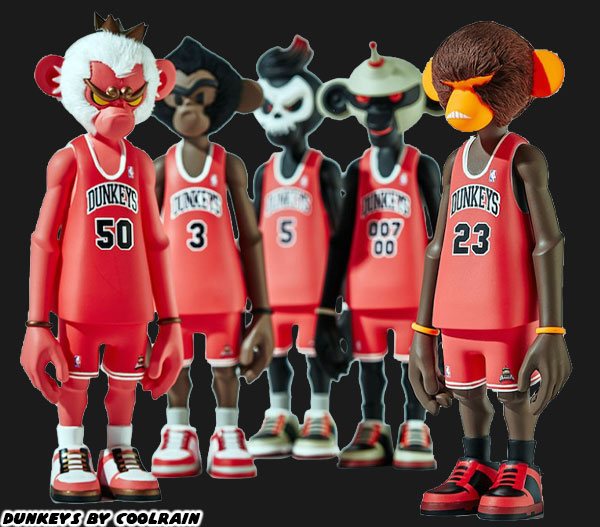
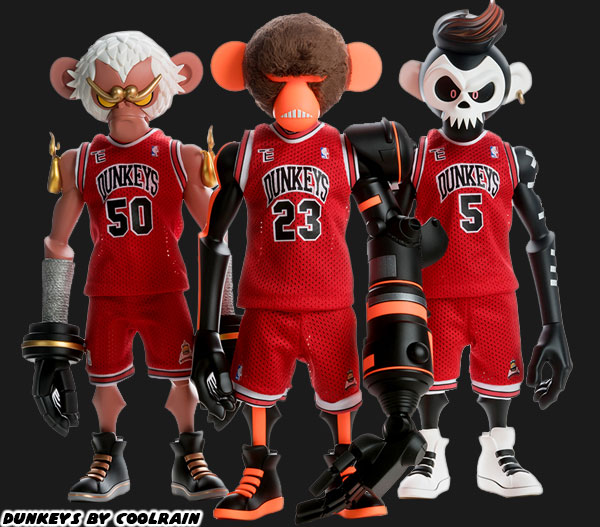
Having the pair as skaters, and not the more stereotypical basketball players was a refreshing change of pace. Brian, and his girlfriend Elsa not only added much needed color to the lineup, they were symmetrical balances to Maxx, and Miss. The Black characters also demonstrated that no matter how cool Maxx was, the Black kids in the neighborhood were just as cool. The show of diversity certainly lent more street cred to the gardeners, but throwing anthropomorphic animals into the world of figure art could also be seen as exploitative out of context. Say for example Coolrain releasing a series of vinyl figures called the Dunkeys, as in Slam Dunk Monkeys. Of all the animals he could have gone with maybe monkey basketball players was not the wisest of choices. I know that falling back on ugly stereotypes, or insensitive racial jabs wasn’t Lau, or Coolrain’s intent, as it wasn’t for most of the character creators at the time. This wasn’t a fast, and hard rule.
Black heroes would get some moments to shine in Western culture. The comic book character T’Challa the Black Panther was created in 1966 by Stan Lee, and Jack Kirby. Luke Cage created by Archie Goodwin, George Tuska, Roy Thomas, and John Romita Sr. debuted in 1972. The most recent Marvel breakout star, the biracial Miles Morales created by Brian Michael Bendis, and Sara Pichelli debuted in 2011. These were all examples of white creators putting Black heroes into pop culture. There were other Black stars in the Marvel, and DC books after the creation of the Black Panther, but new comics rarely presented Black characters as the focal point. This fact was even more pronounced in Asian countries. Of course this had a lot to do with the ethnic makeup of the nations. This didn’t stop the creators from using Black supporting characters to ground their work.
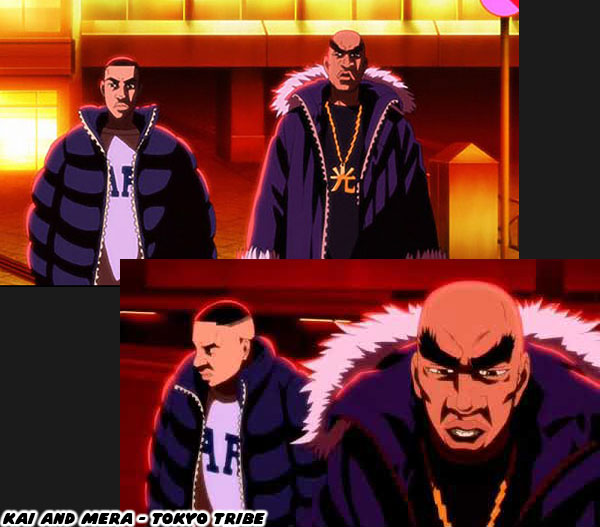
In Slam Dunk for example the main character followed the pattern of manga heroes. Sakuragi Hanamichi was the typical high school Japanese kid, that happened to be a loser with the girls. He would become a better person, get a girlfriend, and shine as a star athlete in the end. The respected team captain was the Black center Akagi Takenori. Akagi was the more physically imposing of the two, and wiser by far, but it would be absurd to think that a Black character would be the lead character in early '90s Japanese stories. The manga Tokyo Tribe, and its sister series Tokyo Graffiti borrowed Hip Hop culture, and fashion wholesale. The main character was the deejay Kai Deguchi who had a fresh line-up, listened to rap, and went clubbing with his crew. His rival was Mera, the dark skinned, big-lipped heavy in a fur coat. If you didn't know better you could swear these heavily were biracial characters, if not heavily coded Black characters.
By focusing on somebody that looked like them the books helped Japanese kids understand Hip Hop culture, or appreciate the sport of basketball. Yet there was something much deeper in understanding the layers of Hip Hop, and streetball that didn't necessarily come through in the manga, whether or not the star was Asian, or Black. This was something that I had referred to on a much earlier blog about the rise, and fall of streetball. I'm going to paste something from that exact series right here regarding the influence that streetball had on China. There was a young man that became hooked on the early AND1 mix tapes, and tour, Wu You aka MoreFree is the Chinese legend that helped spread the gospel overseas. He would challenge visiting NBA players to 1-on-1 battles, and dazzle them with his skills. As audiences learned to differentiate streetball from traditional basketball then local courts started building reputations, just as they had done in New York, Chicago, and LA. Dongdan Court in China is considered the Holy Land. When the summers heat up you could find the best players competing  at Dongdan.
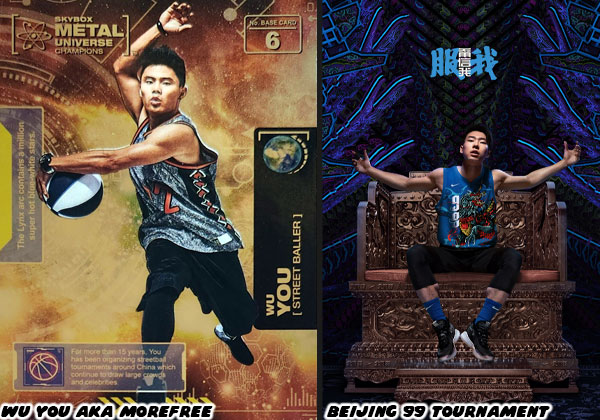
A Westerner might call the Chinese "biters" or just laugh at their attempts to incorporate Black fashion, and language into their lexicon. But then again where did they get the idea that streetball is about fashion and tricks? It had a lot to do with how the west presented themselves in the mix tapes and of course in the entertainment industry. Asia was quickly getting sold on the idea that streetball was about entertainment, and not basketball. The big shoe companies learned that there was no one approach that could appeal to all audiences. They had to be sensitive to differences in culture, language, art, music, and presentation. Nike couldn't simply release USA Battlegrounds merch in mainland China featuring the name of Holocombe Rucker Park in Harlem, or the Venice Beach Courts. The Chinese had no point of reference to NYC, or LA's street roots. Dongdan Court on the other hand would make more sense. That was why they began creating custom streetball campaigns in their biggest markets. The Beijing 99 campaign by Nike incorporated many symbolic characters from classic tradition, and had the best street players from around the country compete. This was the type of world that influenced creators like Michael Lau, Santa Inoue, and their contemporaries.
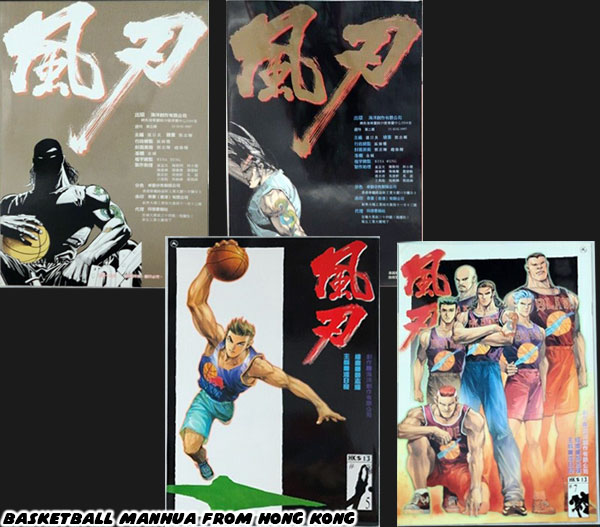
At this point the basketball player, and even streetball legend was a cultural standard in Asia. This was thanks to the exposure of AND1, and the Mixtape Tour at the end of the '90s/early '00s. While Japan was known for its various basketball manga, including the title "REAL" which focused on wheelchair basketball, the creators in Hong Kong had already released streeball manhua.  In every instance, whether it was a comic, anime, or video game the light-skinned hero would remain the star of most of the popular basketball titles. Would this change in the future? I couldn’t tell you. I could however say that the approach that most of the streetball games from overseas did push the genre in some fresh ways. I will look at this in the next entry of the series. Were you a fan of any of the EA Big Street games? Did you ever identify with a minority character in any game or comic more than the main character? I’d like to hear about it in the comments section. As always if you would like to sponsor me please visit my Patreon page and consider donating each month, even as little as $1 would help make better blogs and even podcasts!
follow the Street Writer on Patreon!

Friday, May 17, 2024

Remix Culture, how Asian designers changed the game, part 4

The previous Friday I talked about how Michael Lau set the stage for the urban vinyl movement. Specifically his gallery shows from 1999, and 2001 featuring his 12” figures in Hong Kong, and Japan respectively. While he was exposing the world to a new type of art his friends, and contemporaries were following closely behind, and releasing their own 12” figures to collectors. At best groups like Brothersfree understood the art movement. They weren’t poaching the community that Lau was representing, I’m talking about street culture specifically. Instead the Brothersfree group were trying to carve out their own niche, to tell their own story by turning industrial workers into the heroes of their Brothersworker line. Or Wendy, and Kelvin Mak telling the stories of Hong Kong tradespeople with their 2da6 line. I felt that other artists like Eric So, Jason Siu, and Pal Wong were biting a little too hard on what Lau had established previously.

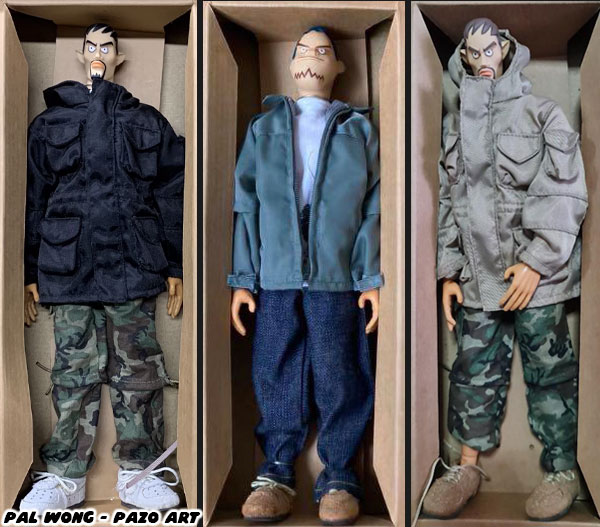
The Pazo Art figures from Mr. Wong for example went through all the same motions as Mr. So, and Mr. Siu. They were highly detailed, quality sculpts, with realistic fashion. They often came with a change of clothes, accessories, stickers, and all of the trim that one would expect from $200-$300 figures. They also went right after the street fashion look. What got under my skin was that Pal was sculpting faces that were eerily similar to what the gardeners looked like. Michael Lau created a gardener called Future, he was essentially a caricature of established graffiti icon Futura 2000. When that character was unveiled it was a breath of fresh air. Knowing that he was a part of the gardener community connected their story to the culture. Then seeing Pal going down the same path with his figures felt redundant, and even slightly disrespectful. The smaller figures that he released showed to me that he didn’t understand what the movement was about.

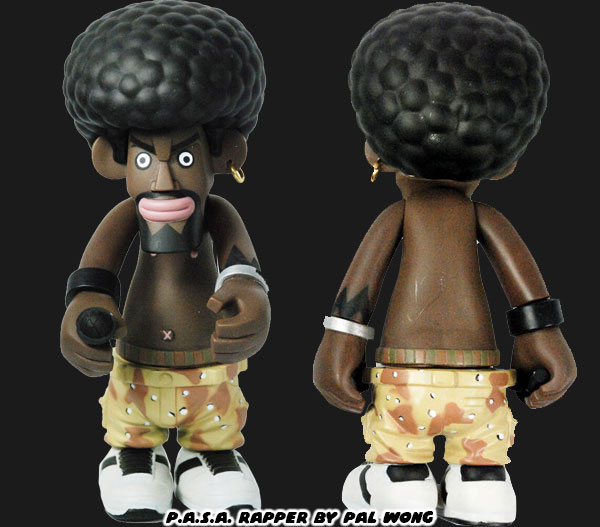
The P.A.S.A. Rapper by Pal Wong was an obvious attempt at capitalizing on the 6” gardener trend. To the casual observer the scale, proportions, details, and accessories were all spot on. He could have been one of the gardeners except for a few things. The sculpt, and paint was an amalgamation of Maxx, and Brian from the earlier gardener line. He was missing a chain for his wallet, and there was no felt wristband, instead it was sculpted, and painted to his wrist. These were all shortcuts to bring a cheaper figure to market, and pass it off to the masses. To make the character slightly different from the gardeners he had an afro, large eyes, and some really thick lips. These things didn’t really capture the spirit of the gardeners, and felt a little bit heavy-handed, if not outright racist. But I don’t want to sweep what Lau did under the rug either. We need to talk about culture, representation, and appropriation with context to this new art form.

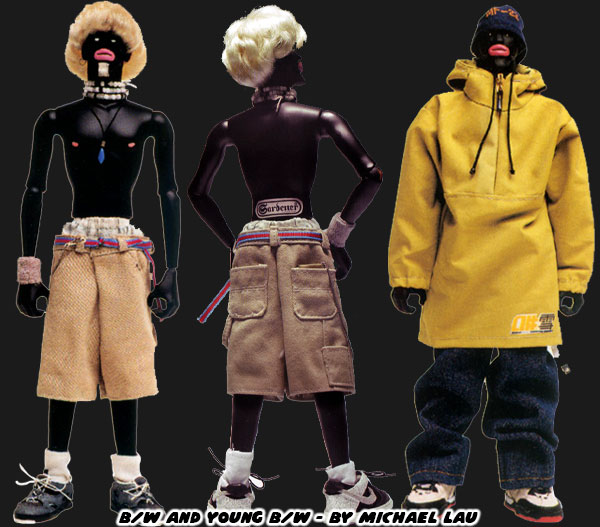
Michael Lau had also released a figure with dark skin, and big lips as well. This character was called B/W. He was an African born in Hong Kong. His friends liked him, but he could be long tongued, aka he could be very chatty. He stuck out for several reasons, the most obvious was his jet-black skin, and large pink lips. B/W was the ninth figure of the original 10 gardeners, and was the only one that had skin that dark, and large cartoonish lips. Brian, Elsa, and Uncle were Black characters in the original 10 lineup that looked more like regular people. There would also be a group of basketball characters added to the lineup that had various shades of Black skin, but none as dark as B/W. I would argue that Michael did not intend to use a racist caricature. All of his gardeners had exaggerated cartoonish, facial features. It was bad form to push the envelope that far with B/W. His representation on the rest of the cast was more or less well done.

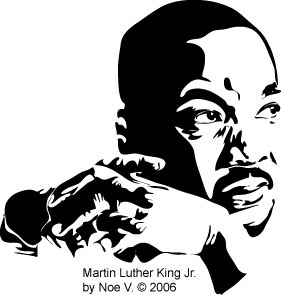
Why did Pal Wong, and Michael Lau feel that it was okay to present a Black character like this? For Mr. Wong I feel that he was just trying to cash in on the popularity of Lau. He poached his art style, and created a knock-off figure without understanding the culture that Lau was trying to recreate. For Lau I would say it was his lack of awareness he had regarding Blackface. The importance of representation was something that I had written about previously, especially when it came to fighting games. One of the things that I want to remind you of is that the Civil Rights movement that the US went through in the ‘60s only happened in the USA. Martin Luther King Jr, Malcom X, John Lewis, James Farmer, and the other Black leaders of that era shaped the culture in the US.

There were no civil rights movements similar to what we had in other countries. While schools overseas might talk about it, culturally the UK, Japan, or China did not have anything like what the America went through. There was a good chance that Lau, and his contemporaries did not realize that the big lips character was offensive. This was partly due to cultural relativism, they got the trope directly from the US. That presentation had been a part of US cultural exports to the rest of the world since the late 1800’s. It was seen in advertising, in toy design, and popular music of the era. By the 1940’s Blackface fell out of favor as a form of entertainment in the states. Culturally the new enemy were the Japanese, and Black Americans were signing up to fight in WWII. It was disrespectful for them to return home and see that ugly face waiting for them. So little by little it started getting taken down in marketing. The change got a lot of pushback in many states, not unlike the removal of Confederate statues did as recently as the 2020’s. 

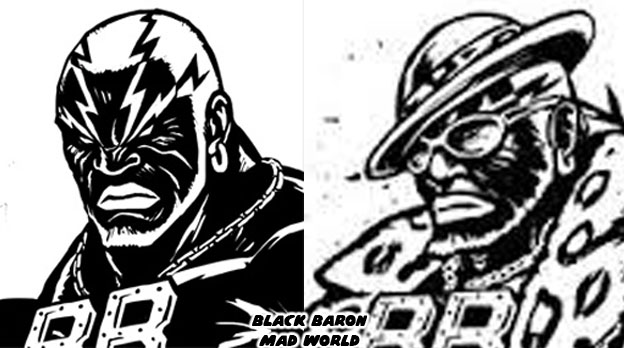
The thing was while this trope was fazed out in the USA, it didn't entirely disappear overseas. The big lipped characters in pop culture could still be seen through Mr. Popo from Dragon Ball in 1988 (R.I.P. Akira Toriyama), Chocolove McDonnell from Shaman King in 1998, and as recently as 2012 with the release of Anarchy Reigns, the follow-up to Mad World by PlatinumGames. This is why I want to talk about context of the gardeners, including B/W. Lau intended on creating figures based on the street culture that his friends, and he had grown up in. He didn’t go in trying to specifically hurt any ethnic group specifically. Of course that doesn’t prevent people from being insulted. 

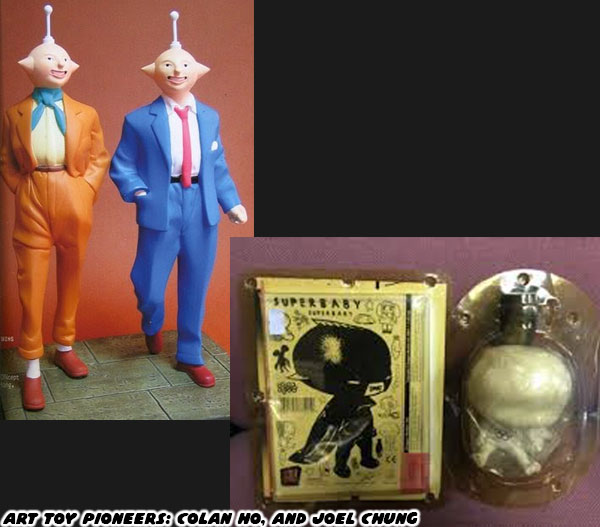
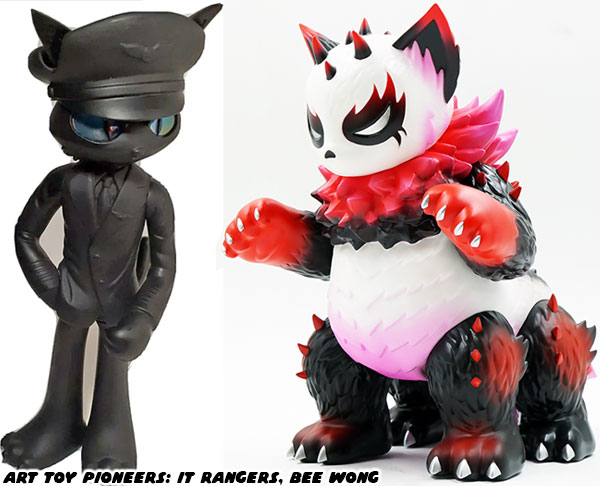
As for all of the artists from Hong Kong, and Japan that came out right on the heels of his work, they also had to be put in context. Were they releasing figures because they were going for a cash grab? Were they doing this as an homage to Mr. Lau? Could it be both, or neither? Again, it depends on the way we look at it. Designers like Colan Ho, and Joel Chung were releasing pieces very much out of left field. Their figures weren't workers, skaters, breakdancers, or anything else like that. They had their own signature style, but could also work with a license if they had to. It was an interesting time for collectors that wanted unique, high quality pieces. The urban vinyl craze spread like wildfire throughout Asia. Some artists were turning sketchbook creations into 3D representations, some were remixing kaiju monsters with cute, and cuddly toys. This approach was evident in some of the early pioneers like IT Rangers, and Bee Wong. 

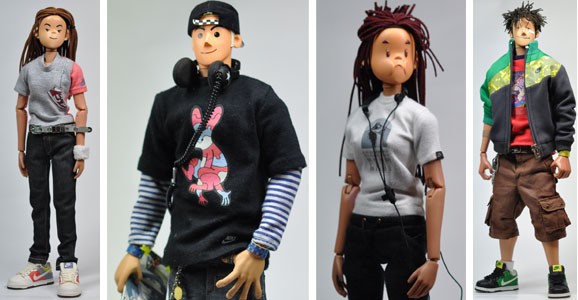
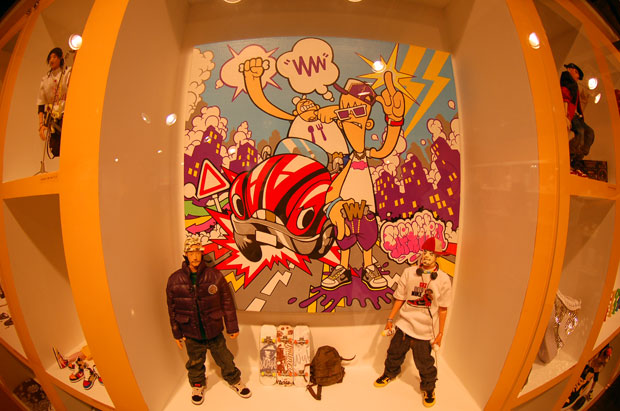
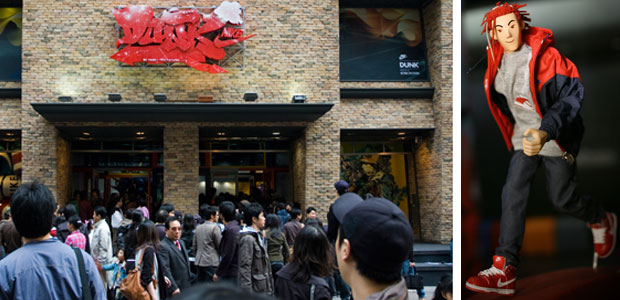
In 2008 South Korean figure artist CoolRain made his debut. He was heavily influenced by Lau, and managed to secure some high profile clients in a relatively short span of time, including Nike, Adidas, Vans, and the NBA. Although he designed a number of smaller 6” mini gardener-type figures for the NBA, he rarely produced a 12” figure that wasn’t a prop for a commercial, or gallery show. Very few people were able to get their hands on his original 1/6 figures, and these tended to be rappers, and star athletes. CoolRain was kind enough to do an interview with me. He gave all the credit to Lau for inspiring him. He definitely approached figure art as an art form, and not a way to make a quick buck.

Lau had also collaborated with Nike, and Sony, but he was notoriously hard to pin down by any company. When in doubt it seemed that the corporations could go to CoolRain if they wanted to use the aesthetic, rather than wait on Lau. Was this an example of an artist holding onto his integrity, or being selective about clients? Was CoolRain selling out the culture? It all depends on the context. He understood the line was blurring between art, toy, and collectable. He taught classes, and presented workshops to the new generation of creatives in South Korea. He was very mindful of the communities he was asked to recreate, whether they were skaters, basketball players, or even professional futbol / soccer players. He was just one of many voices helping spread the word about “urban vinyl” and the larger art movement.

The respect I had for CoolRain remained consistent over the past 20 years. It made me reconsider what I thought about other artists appearing in the early 2000’s as more than just poaching the work of Michael Lau. I’ll talk more about it in a future blog. For now I’d like to hear your thoughts. Could art be controversial, or accidentally racist? Would context be important in exploring, or explaining the relationships between ethnicity, stereotype, and culture? Tell me about it in the comments section. As always if you would like to sponsor me please visit my Patreon page and consider donating each month, even as little as $1 would help make better blogs and even podcasts!
follow the Street Writer on Patreon!

Sunday, January 8, 2017

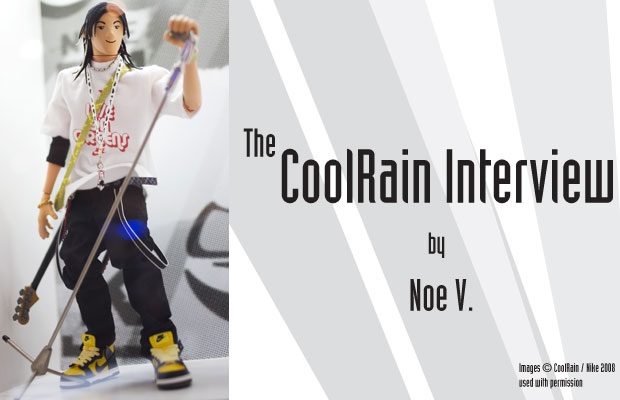
The CoolRain Interview

This is a reprint of an interview I did in 2008, the reason that I am posting this again is because the artist will be showing at the LA Art Show during the second week of January 2017.

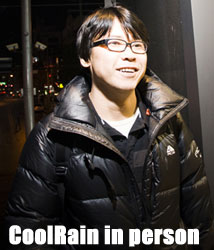
Lee Chan Woo is a South Korean figure artist better known as CoolRain. I first learned of him via Victor aka Crazytoyz 0709's web page and forum. When I first saw Coolrain's art I was reminded of Michael Lau, yet also saw some elements that made him unique. Like Lau his inspiration is part street culture and part reality. If Michael has his pulse on global street culture then CoolRain's figures are closer to home and more intimate.

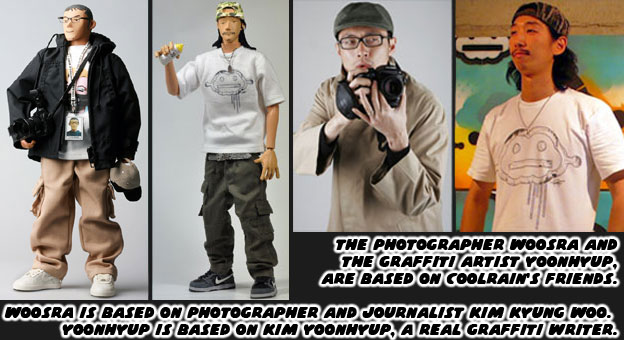
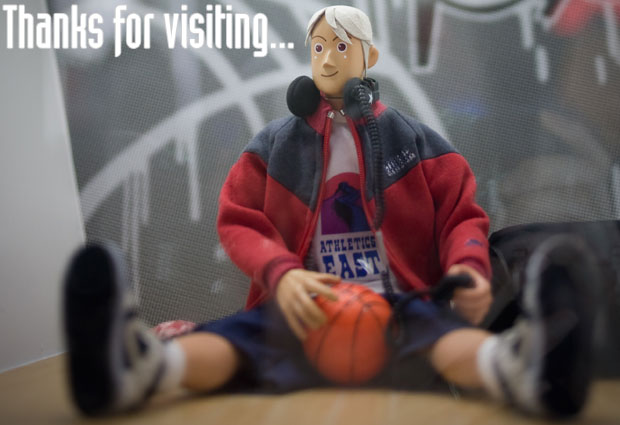
For example photographer and journalist Kim Kyung Woo is the inspiration for the figure Woosra. His other friends are b-boys and as such are also inspirations for these stylized figures. CoolRain has been active in the community since 2003. He cut his teeth recreating Lau's classic Gardeners before finding his own look. Now after building a following and client list that includes several large companies and having several gallery shows it is my honor to present his first English interview. 

Noe V.: Hello Coolrain, welcome to my 1UP blog. Before we get to questions about your figure art I think we should get to know a little more about you. Please tell us little bit about yourself. What are your hobbies? 

CoolRain: I like collecting figure and artbooks. Also fan of SF movie and animation.

NV: What were your favorite toys as a kid?


CR: I was fascinated with super-heroes such as superman, batman and so on.

NV: Were you into cartoons, comics or animation as a kid?

CR: Genres didn't matter. I liked cartoons, comics or animation all.

NV: Did you play sports?

CR: Yes, I liked to play Basketball. And there are many basketball players I loved. 

NV: Did you have any other hobbies like playing music or collecting things?

CR: I collect art book, illustration and movie book.

NV: Who were your favorite characters or which were your favorite shows?

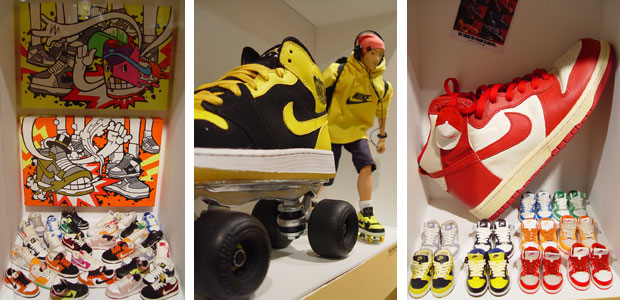
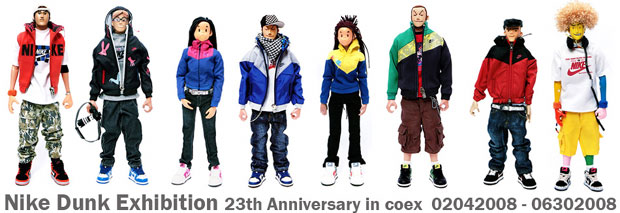
CR: I like my 1st design figure series "Monsterz Crew". I love Dunk. Of course my favorite shows are all related with sneakers, especially Nike dunk exhibitions.

NV: Are you also into computer or console videogames?

CR: I don't play videogame. But I make game. This is irony. But I like game images and animation.

NV: Which were your favorite games and why?

CR: I love Final Fantasy. I liked characters and images in it. 

NV: I understand that you are an artist and animator, which schools did you go to or are you self-taught?

CR: I have been self-taught. No teachers, only my curiosity was my teacher. At beginning, I couldn't find enough books, so I used to study watching Videos and books in English. Mostly I gathered a lot of information through movie-related books(creature art book).

NV: Can you say which company you work for or which projects you have worked on?

CR: Nike, KTF (Korean major mobile phone company), Motorola, Adidas, SAKUN (Korean street brand), Delitoys, etc. And some projects with making original character building (Figure style) and also works of CG in CF clips.

NV: You've been building a name in the figure art community for the past few years. Can you tell us how you got started in that?

CR: I started as 3d animator. My dream is still producing animation. That explains why I like main characters in animations. First I made characters with CG, that led me to think "I want to make them by hand." That's how I got started making figures. 

NV: Who were your influences within the figure art world as well as from outside the community?

CR: Before I made figures, I started to collect them. Those were design figures of Michael Lau, Eric So and lovely ones of Nightmare before Christmas of Tim Burton. Basically I like their works and colors. Besides that, I love the works of Otomo Katsuhiro, who is genius comic animator and also illustrator.

NV: Was it hard or easy to make the transition from 2D to figure art?

CR: In fact, 3d modeling and 2d sculpting are similar in some ways. So I didn't have much trouble to transite from 2d to 3d. Only difference is finishing part. Like the project with Park, Ji-sung(Manchester United Korean Player), modeling 3d real object was first experience. But it was not such a burden because I had some experiences with 3d works.

NV: What things did you have to learn along the way? Were there any parts that you took for granted or found difficult to do?

CR: To be a good figure artist, 2d and 3d is just a matter of technique or methods. But I found out that most important work for figure-making involves meeting with people, talk with them, understanding the world of their minds. It needs human- relation skills and manners too. You have to respect them and love them. Easy to say, but not simple works. If I understand them better and know their minds, the result came out much better always. 

NV: Did you ever consider creating traditional super hero figures, action figures, soldiers or space men or was street culture more natural to you?

CR: I am crazy for the super heroes, space suites for astronauts. Someday, I am going to make them someday. Space suites are my works in my dream all the time. 

NV: Some of your figures, the "Monsterz Crew" is based on a b-boy group. Do you or your friends breakdance?

CR: Of course, the models of Monster crew are the top-notch B-boys. Some of my friends are rappers, B-boys, and graffiti artists.

NV: I understand one of your friends, Kim Yoonhyup, is a graffiti artist, have you ever experimented with graffiti art?

CR: I like and admire their works and themselves. I try hard to experience them and see them work on their projects.

NV: Critics would say that you are copying from Michael Lau, with the use of Hip Hop themes and street clothes in your figures. Which isn't fair to say because other artists like Tim Tsui, Jason Siu, Pal Wong and Eric So have also followed similar trends. Have you ever had to defend your work from critics?

CR: Thanks for comparing my works with Michael Lau. ~ I respect Lau a lot. My work experience is just beginning. Of course basic materials for my works are the similar ones (leather or suede hair and sneaker). Also sometimes my works centers on similar concepts(Hip-Hop themes). My work and I are in constant progress and evolution. All of my hand-made methods are time consuming and challenging physically. That's why I love this way of work. Whenever I see the results, I feel some sort of catharsis.  As a figure artist, I am just beginner. I have a lot of things to do in the future. I usually don't pay attention to all the critics much. I just want to follow my curiosity and work with the styles that I want. My next theme could be urban culture or maybe totally new ones. I just enjoy what I am doing right now. I don't know how long could I pursue my career as a figure artist. It could be years or tens of years. I just love to make figures and hand-made sneakers.

NV: Have you had to defend your format from people that think figure art is just a passing trend or not as credible as a sculpture or canvas painting?

CR: That's not the issue I care about. I do collaborate with sculpture artists and painters for the shows or some specific projects together. For every artist, the difference is just tools they choose to express their idea and thoughts. My canvas or tool is the figure. With figures, I can do my best to express my ideas.

NV: What do you think defines art?

CR: Definition for art depends on every people's mindset. If someone can express something with any means, it's art, I think.

NV: Is there a difference between toy, craft, art or collectable?

CR: It depends on anyone's thought. For someone, it could be toy, craft, art, or collectable. It's relativistic concept.

NV: Do you feel that working with Nike and Stussy on high-profile projects has validated your place in the figure community?

CR: I don't know. From my childhood, I like Nike. And I like graphics of Stussy & Supreme. I was happy when I got contact from NIKE. Of course, those working experiences with NIKE and Stussy gave me new horizon for my work career as a full-time figure artist. 

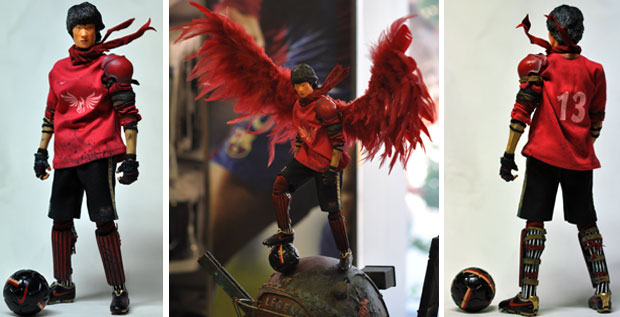
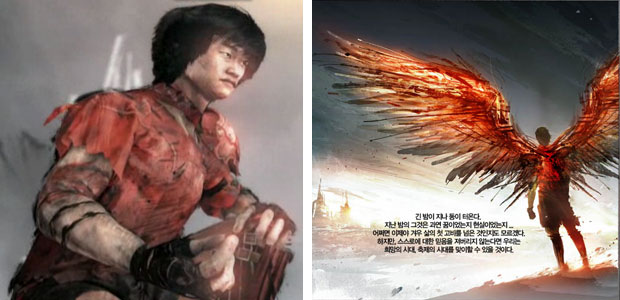
NV: The current Nike campaign in South Korea "Legend of the Phoenix" is built around footballer Ji-sung Park. Can you explain the importance of working on a campaign like that. Turning Ji-sung into a figure and even the symbolism behind the Phoenix?

CR: For the Legend of the Phoenix project, it was planned as congratulation for new release of Jisung Park product releases, the icon and captain of Korea National soccer team and also member of Manchester United team. Final products include 3D animation, graphic-noble and Figures. Each item has been made under the same theme added with each participating artist's own characteristics. It is the first of its kind total campaign in sports star marketing in Korea. Figure was made with only rough images of JS Park, the other forms of artworks are expressions of its kind for Warrior JS PARK. 

NV: How do you challenge yourself when creating art?

CR: To make 100% copy of something is one challenge. But the real challenge is how to put character's spirits in each figures. That's my challenge.

NV: What makes you stand out in the figure world?

CR: Stand out? I don't know well. From the start on, I just tried to express what I like. I like Figures and sneakers. I just like to make it perfect for me.

NV: Explain to us the process of making a figure. How does it begin? What are the stages?

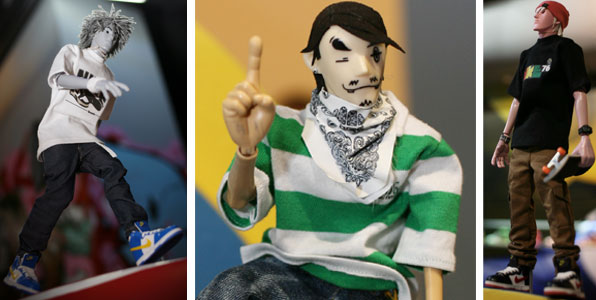
CR: Making figures is not cool at all like nickname.~It's continuity of hard work with many processes. I get ideas of character image from my friends around me. I just pick their main characteristics and from there, I start express them with the scale of 6/1. In details, too many thing to do. Make head and hair pattern with leather, dye them. Work for the graphics for the clothes with computer. Make patterns for shoes. Logos, metal parts, if necessary. Another matching dyeing processes to match the colors of shoes, etc. So many details to do finish just one character.

NV: How many hours or days does it take to make the clothes, shoes, heads, accessories or details like tattoos and logos?

CR: In fact, it depends. Differences with each character. But for the example of hair, if I have to implant every hair, it takes 2-3days just for the hair work. In sneakers with patterns already done, it would take 6-8 hours. But ones with many patterns, 2-3days (In case of air Jordan series, sneakers with too many different detailed patterns). 

NV: How many figures do you make for a particular release, like P-Nix and Che? How long does it take you to make these sets?

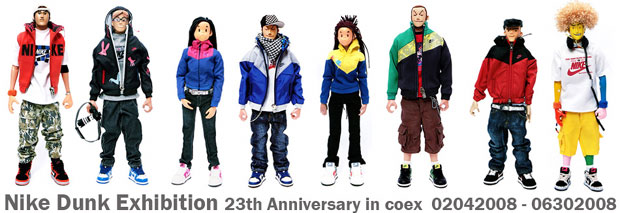
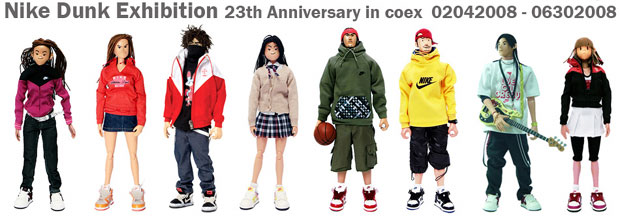
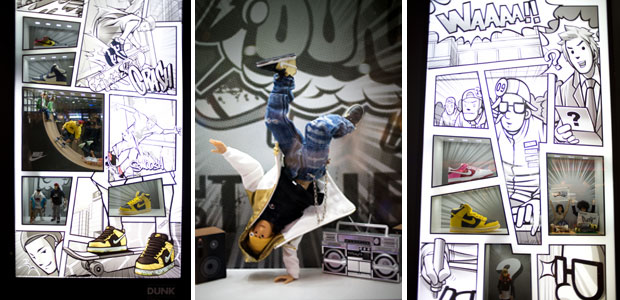
CR: For Monster crew, there are P-nix, Jutt, Che, Speedy finished right now. And next one to add will be Andy. Usually it would take 2- 3 months to finish one character, from idea to mailing to customers. It could take more if there are shows, Nike campaigns, or other extra activities at the same time. Early this year with the projects of Nike Dunk, I made 70 characters on display. For Dunk shoes, finished 100 pieces including the ones released in Korea for the S/S season. Total time for that, 6-7 months, long but worthwhile.

NV: The faces of your figures are very distinct and cartoonish. Are these influences from your work as an animator?

CR: Yes, that's correct. I like animation. That gave my figures a lot of influences. And for the comment, there are some simplified figure heads. They could be customized with simple drawings, like Bearbricks. 

NV: Have you thought about turning your figures into animations or have you already begun working on that?

CR: I love figures and also animations. I can make both of them together. (if I enough time). Actually through shows and exhibitions, I would like to introduce my figures to the people. When I have those shows, it would be a great chance to show animations with actual figure at the same time. I would give people more interests in figures and understanding, hopefully loves for my figures. I have plans in my mind; some of them are in progress little by little.

NV: Would you ever like to produce an animated show or even videogame featuring your characters? If so what types of games or adventures could you see your characters in?

CR: Of course that would be great. It's a work for character to give breath and reality. For Monster Crew, they are B-boyers. So I want them to be nice B-boy game. But before do into the animation processes, I would like to make figures that cover their life styles and progresses with them. I want to express not just fixed b-boying styles, but also their lives with b-boying.

NV: I understand that you are a family man. What do your kids think about your figures?

CR: How did you know... it's secret~ Even though I love figure, I am a daddy of a twin. They are cute babies. For them, figures are nothing but toys. They like playing with my figures and they are happy playing with them. I want to make figures that could be source for joy and smile for the people.

NV: What advice would you give artists that hope to transition from 2D to figure art? Are there any skills they should learn?

CR: Basically similar. So you don't have to hesitate or think it difficult. It's just small difference of methods. 2D or 3D, computer or hand-made is just difference of method. That's it. What's the most important factor is how much you try hard to give it full efforts to make it perfect to meet the standard you pursue for. Work, Work and Work hard. 


NV: Would you advise making friends in the community or finding a mentor to learn from?

CR: If I didn't find figure making, I couldn't make any relations with lots of people that I know until now, The common ground for us is "Love Figures." If you just follow your heart with ones that you like to do, then all the mentors and good friends come along automatically.

NV: How should an artist deal with criticism and how can they stay motivated when there are so many great artists in the world?

CR: The most important thing is to express what you like and what you want people to see. If you have interests in expressing anything as much as you like, you can accept any kinds of criticism with ease of minds. For any works that I do, I have to like and be satisfied with. Self-esteem is my standard for any kinds of my projects. I do work until I am fully satisfied with the results for myself.

NV: Are there any other words of wisdom you would like to leave the people of 1UP with?

CR: Love what you do right now, and just enjoy it. At present the most important thing to do is making figures. Just like that~~ enjoy your life!

NV: Thank you for your time and we look forward to seeing what you have in store for the rest of 2008 and beyond! If you'd like to see some more of CoolRain's work be sure to visit his blog. Please be sure and spread the word to your friends and editors about this artist. I have a feeling that the future is very bright for him! Thanks for visiting! 

As always if you enjoyed this blog and would like to sponsor me please visit my Patreon page and consider donating each month, even as little as $1 would help make better blogs and even podcasts!

follow the Street Writer on Patreon!