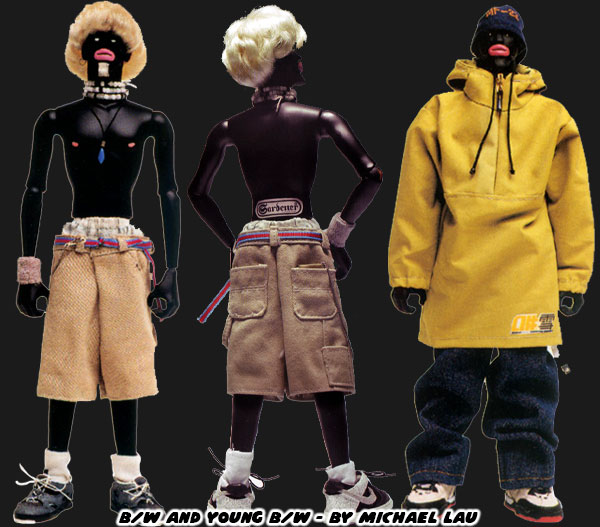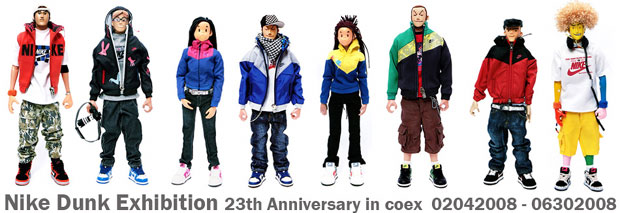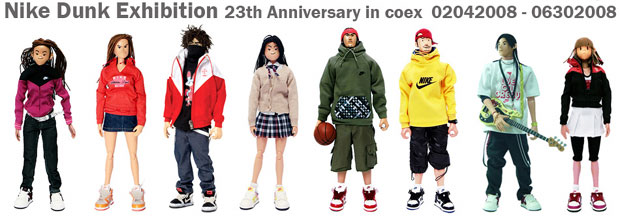
I don’t think people understand how revolutionary the art of Michael Lau was, especially to me. His 1999 exhibition in Hong Kong was like the first sonic boom, but his gallery exhibition in Japan during the summer of 2001 was like landing on the moon. I was 27-years-old at the time. I had read countless comics, and manga. Played hundreds of video games. Seen entire libraries of animated programs, and films from around the world. I didn’t think that anything could have absolutely grabbed me like the gardeners did. I could only imagine it was how Andy Warhol, Jean-Michel Basquiat, or Keith Haring connected with creatives in the ‘70s and ‘80s. They added entirely new chapters in the book of art. The figures of Michael Lau were a revelation, for the first time an artist not only synthesized a culture, he captured an entire generation using a new format. His three-dimensional figures did more for me than a photograph, sculpture, song, poem, documentary, or movie could have ever done.
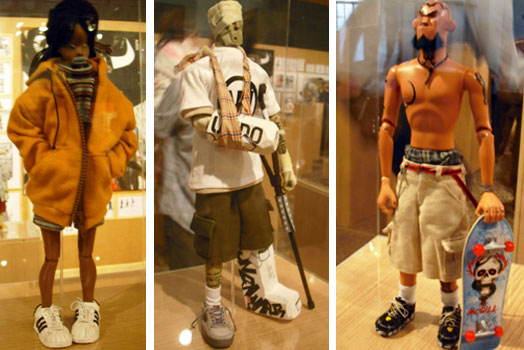
The thing was that I was not looking at the abstract. I didn’t have to interpret the shape, form, white space, color, or tone of the art. I was looking at physical representations of the people I knew, of the people I looked up to, of the culture itself. Each figure was like staring at the friends I hadn’t met yet. The people that inspired Michael also inspired the people of Hong Kong, Japan, the US, and the UK. Although these fans had never met they could all point to a gardener and say “I know that guy.” They dressed like regular people. They weren’t wearing high-end fashion lines, but they wore exactly what kids on the street would be wearing. This applied from top to bottom, from their haircuts to the brand of shoes they sported.
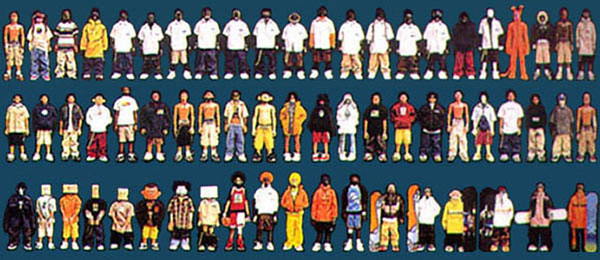
Although Michael lived a world away I could swear that he grew up in Southern California. He knew intimately the Hip Hop, and action sports cultures he was presenting. He knew what skateboards, and skate shoes would be authentic with skaters themselves. He knew what types of BMX bikes the kids would ride. He knew the snowboards, and bindings they would use. Surfboards, wakeboards, and generally all of the non-traditional activities that the US considered extreme. Even the traditional sport highlighted had major street influence. The basketball players wore the freshest sneakers. He didn’t just go to Toy’s R Us, and put a bunch of Barbie’s in tee shirts. Everything was handmade, and that’s what really blew my mind. It was an absurd level of detail poured into the 101 figures. Michael did the impossible, he bottled the essence of street culture.
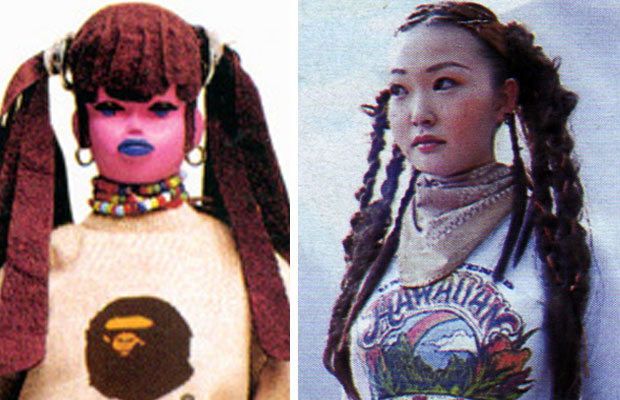
A good portion of the gardeners were based on the people he knew, including the LMF crew. Even the fantastic designs, people with heads of basketballs, boxes, or spray cans were inspired by the community. He didn’t have to travel to Los Angeles, Harajuku, or New York to meet the trendsetters because they all lived in his imagination. If gallery shows were the only thing Michael had contributed to the art world then he would still be a hero of mine. Yet once people got a taste of his art they would only want more.
Up until that time you could only buy a poster of his gardeners in his exhibitions. Since the figures took so much time to produce there was no chance that the patrons would be able to walk home with one, no matter how hard they fell in love with them. That was until the galleries convinced him to release smaller vinyl versions of his figures, similar to the ones he had worked on in Hong Kong circa 1999. The 6-inch mini gardener was born, and these would inspire the creation of vinyl toy movement. Including Dunny’s (2004), Vinylmation (2008), and the ubiquitous Funko Pop figures (2010).
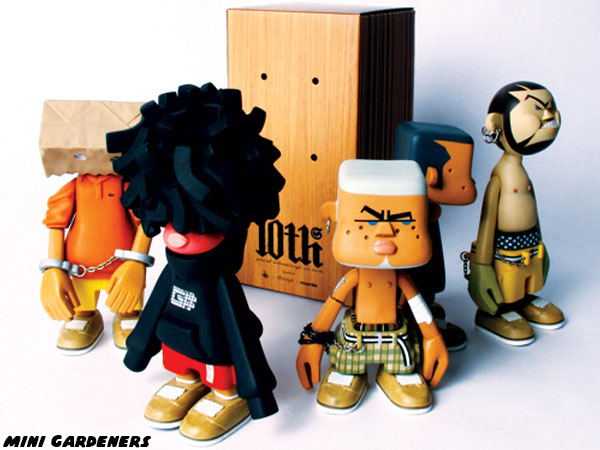
The mini gardeners were created in limited numbers, around 1000 if I remember correctly. Some sets would only get a run of 500, and the rarest would get a run of 100. Each 6-inch gardener captured all of the details from the 12” figures they were based on. I remember the first time that I got one. I saw an announcement of a book based on the exhibition. It included Maxx, and a CD. I went to the Japanese bookstore in downtown Los Angeles, and placed an order. They asked if I were sure I wanted it, as it would cost almost $300 once tax, and shipping were added. I couldn’t slap my credit card on the desk fast enough.
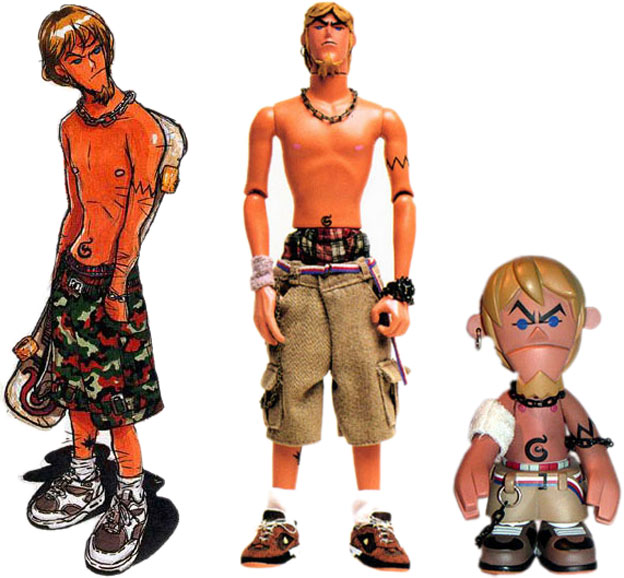
The bookstore manager literally phoned it in right in front of me, and read the details to their parent store overseas, as they hadn’t networked their computers at the time. Once they got a confirmation number for me I could go back home. A month later I picked up the box set, and had one of those feelings that words couldn’t really capture. I showed everyone at work the figure, they were astonished that Maxx had a metal earring, fabric wristband, and chain on his wallet just like the 12” figure he was based on. It was, and remains one of my favorite pieces.
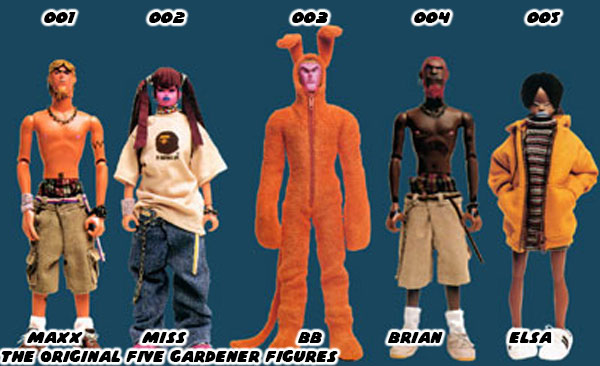
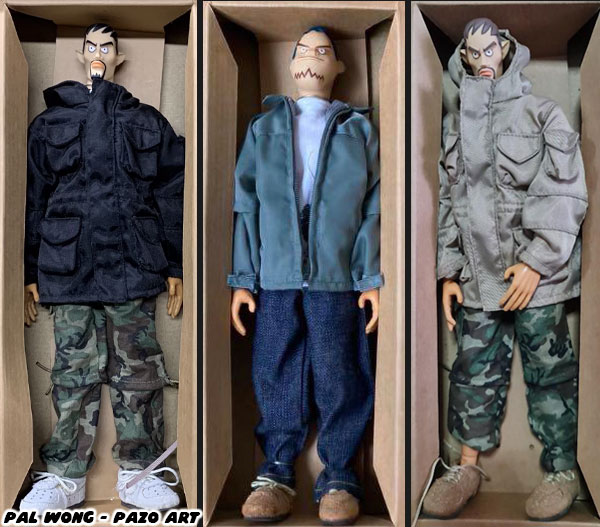
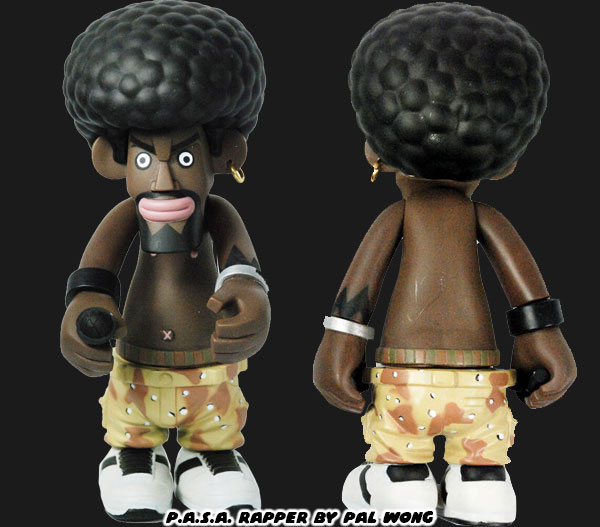
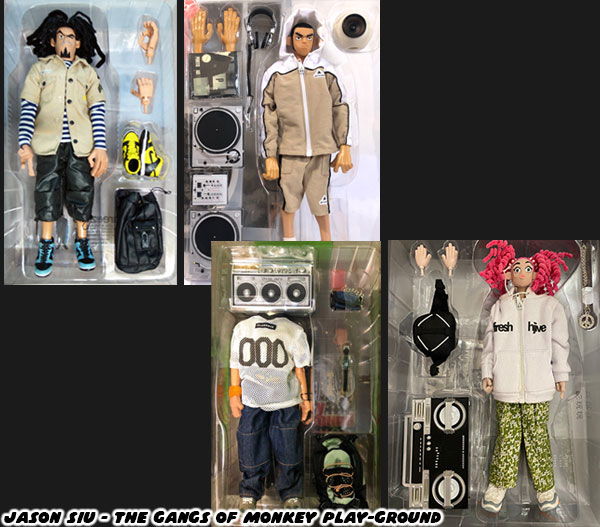
The thing was that the seeds that Michael Lau had planted in Hong Kong a few years prior were now sprouting. His friends, and contemporaries in Hong Kong, and Japan were now releasing figures themselves. They weren’t necessarily doing things for art galleries either, but instead for toy buyers, and collectors. The made sure to pay attention to everything that Lau had done with his original gardeners. The figures from Eric So, and later Jason Siu - The Gangs of Monkey Play-Ground were giving fans of a Lau a chance to walk home with a 12” figure instead of a mini gardener. They made sure that the characters wore the right fashion, that they came with the right accessories, multiple hands, stickers, changes of clothes, etc. They even had sculpted heads, and hands that were not unlike the work of Lau. For the people that had missed the boat when Michael sold a handful of his larger figures this was the next best thing.
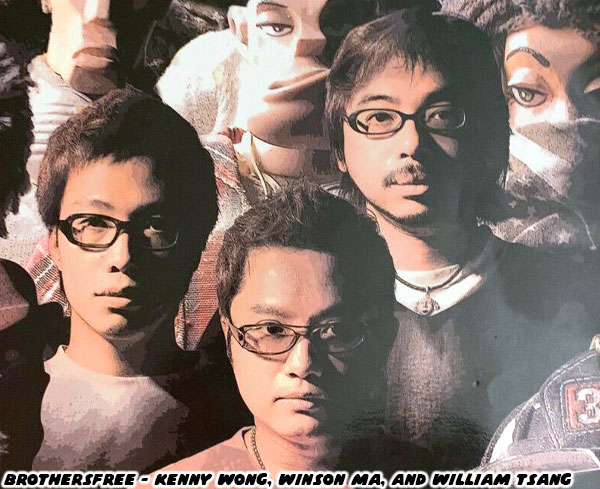
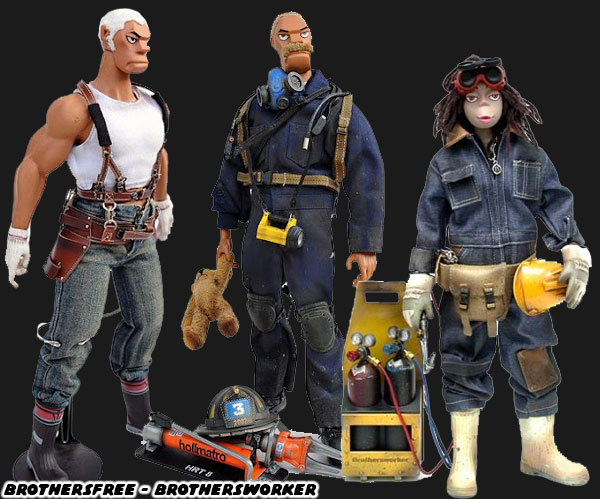
Although Lau’s cartoon style was heavily imitated in many figures there would still be unique fingerprints from So, Wong, or even the collective of Winson Ma, Kenny Wong and William Tsang known as Brothersfree. The group of artists had been working behind the scenes on all sorts of figures, robots, vehicles, and more for the 12” community. They understood the format probably better than any other artist working at the time. It wasn’t enough to make a cartoonish doll in street wear. They had to tell a story, they had to represent a part of the culture. Lau had already blown the doors off of street fashion, and extreme sports. Anyone that followed in his footsteps wouldn’t be able to top the master. Brothersfree had an appreciation for the fashion, and aesthetic of industrial workers. They released a line known as Brothersworker. The characters had unique sculpts, and frames. They had names like Popeye, Baby, Seven, and Storm. Each had a personality, and each told a story. As with Lau the devil was in the details.
All of the Brothersworker figures came with the appropriate outfit. Denim, leather, canvas, and other durable material, with zippers, rivets, and double stitching. More important they had accurate tools for their role. As Lau made sure that the gardeners had the right sneakers, chain wallets, and accessories, the Brothersworkers had hard hats, blowtorches, jackhammers, and tool boxes filled with 1/6 scale hammers, wrenches, screwdrivers, respirators, goggles, and more. If you were a fan of modern 1/6 figures these would be the only time many of the work items were produced. Making them highly desirable in collectors circles. It wouldn’t be the only unique contribution from the group. They also released a Brothersrobber figure who wore a menacing gas mask, carried several guns, had the tools for breaking into safes, and came with a duffel bag filled with stacks of cash. The group proposed a Brothersjoker series of 12” clowns. But only some of the 6-inch versions were ever made to the best of my knowledge.
I had mixed feelings about the sudden influx of artists, especially those from Hong Kong releasing their own collectable 12” figures. At best they were celebrating the birth of an entirely new form of art. I enjoyed the gardeners because they looked like my friends. Growing up there were never any dolls or action figures that I could relate to. I had just about forgotten about that chapter of my childhood until I saw the gardeners. Finally I saw characters that I could identify with. They had different skin tones, different types of hair, some had zits, pot bellies, and acne scars. Some were tall, some short, but all unique. Despite reminding people of Barbie the gardeners weren’t the same dolls in different clothes. None were created with an unattainable beauty standard.
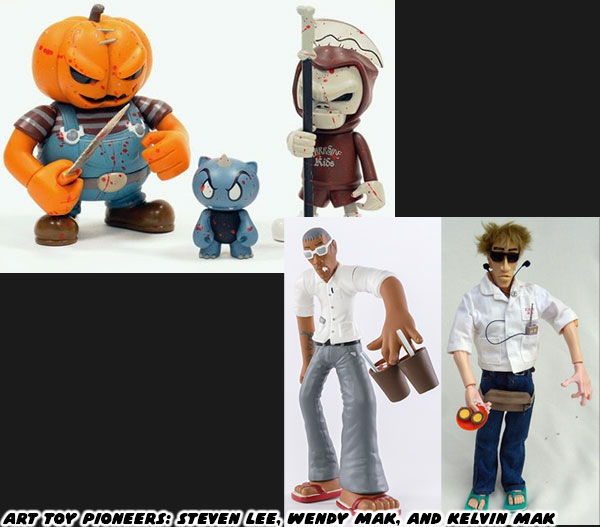
Many of the figures coming out from other independent artists were unique for example the wonderful work of Steven Lee, who could create scary, whimisical, and fun figures all at the same time. What some of the other toy lines did however was lack the cross representation of ethnicities that Lau highlighted. Wendy Mak, and Kelvin Mak for example were there in the early days too.
The sister, and brother team founded Maksco. They released a series of figures called 2da6, which were snapshots of everyday people in Hong Kong. Whether they were construction workers, monks, or the local cafe owner serving drinks. They told a story that people living in the city could identify with, but none of them were Black, brown, or otherwise non-Asian characters. The other reason the gardeners hit with me was because they were filling in a part of the market that had been overlooked for decades.
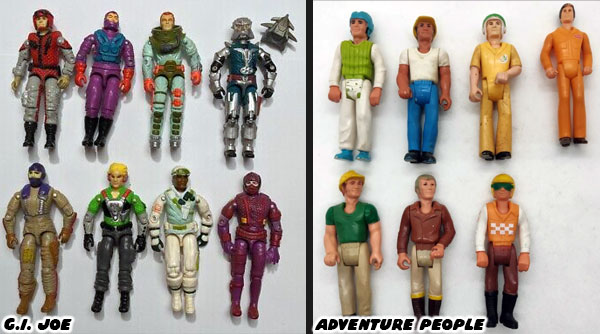
One of the toys that I really enjoyed as a kid were called Adventure People. The figures by Fisher Price were roughly the same scale as the G.I. Joe action figures from Hasbro. What appealed to me was that the Adventure People weren’t about selling a brand, label, or ideology. As much fun as I had with the Joe’s it was always the same type of play; good guys vs bad guys. Playing with the Joe’s, Transformers, He-Man, or Ninja Turtles was just repeating the same things I saw in cartoons. Of course those shows were essentially toy commercials to begin with. They programmed my young, impressionable mind with a message, and type of play. Knowing was half the battle…
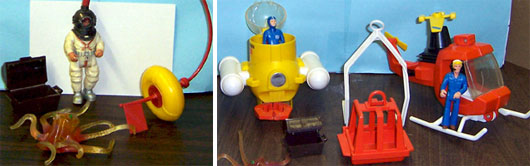
By comparison the Adventure People represented all sorts of professions; news broadcaster, scuba diver, stuntman, pilot, motocross racer, astronaut, camper, and tons more. I could really let my imagination fly with those figures. The goal was actual play instead of conflict. By the same token there was no agenda when I looked at the gardeners. They were chill figures, but they also had unlimited play potential. They weren’t ads for a massive company. These were the things that made the 1/6 scale figures memorable. Not everything was great with this trend. There were a few things that annoyed me with the rise of urban vinyl. I’ll talk about them in the next blog. Did you collect any 12” figures? What about smaller vinyl collectables? Tell me about it in the comment section please. As always if you would like to sponsor me
please visit my Patreon page and consider donating each month, even as little as $1 would help make better blogs and even podcasts!