Showing posts with label jt studio. Show all posts

Saturday, December 21, 2024

Remix Culture - the 2024 Series


Earlier this year I explored the roots of urban vinyl toy design, and my love of basketball. I talked about how China, street culture, and pro sports changed the aesthetic of both toy designs, and video games. Below are all the entries in the series. If you love toys, and rambling posts that go nowhere then please check it out.


As always if you would like to sponsor me please visit my Patreon page and consider donating each month, even as little as $1 would help make better blogs and even podcasts!
follow the Street Writer on Patreon!

Friday, August 2, 2024

Remix Culture, how Asian designers changed the game, final part


In the previous entry of this series I talked about how great the Freestyle Street Basketball, 3on3 Freestyle, Dunk Nation 3x3, and Basketrio designs were. The different game studios from South Korea, Taiwan, and China were pulling cues from street culture, actual NBA stars, and creating characters with the styling of urban vinyl figures. I mentioned that these were the types of toys that I wanted to see more in real life. The game studios had lots of inspiration to pull from. Michael Lau, Eric So, Brothersfree, Neco Lo, IT Rangers, Bee Wong, Colan Ho, Jason Siu, Joel Chung, Steven Lee, Wendy and Kelvin Mak, Pal Wong, Ken Leung, and Hyperchild were there at the start of a movement. They helped push toys, art, fashion, and even video game designs into the future. They deserved all the respect, and appreciation that I could give them. 

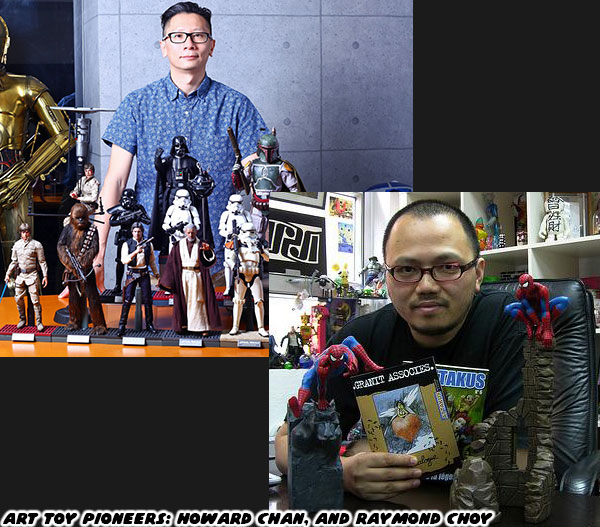
Figures that had great detail such as those created by Hot Toys founder Howard Chan, or as imaginative as the ones by Raymond Choy, the founder of Toy2R did more to contemporary collectables than we could ever know. Decades ago I had collected the Super-X figures from Dragon Models, and I wished that there might be something new in that vein. My wish eventually came true thanks to the brilliant artist Jei Tseng of JT Studio. Mr. Tseng was arguably the best 12” figure designer of the past few years. His characters were inspired by superheroes like the Justice League, and Teenage Mutant Ninja Turtles, video games including Mega Man, traditional literature like Journey to the West, anime such as Astro Boy, and even classic movie heroes like Charlie Chaplin, and Felix the Cat. The thing was that none of the JT Studio releases were necessarily licensed. They were simply inspired by pop culture. It was his eye for detail, his ability to capture the essence of the culture that made his figures works of art. 

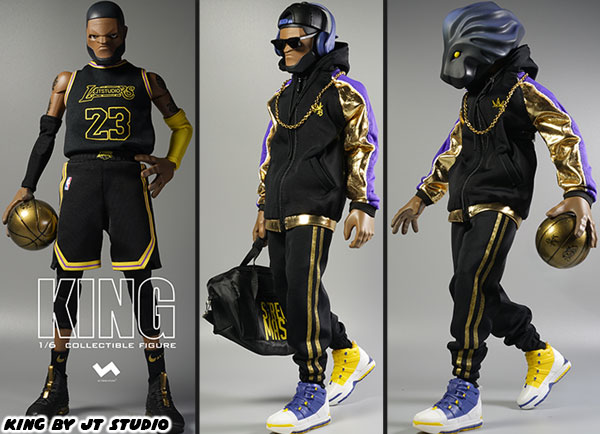
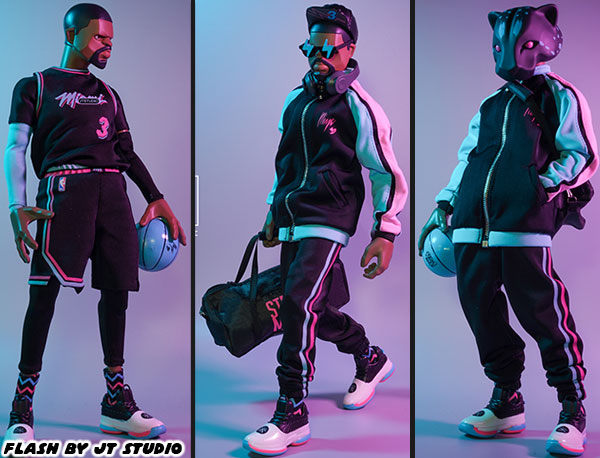
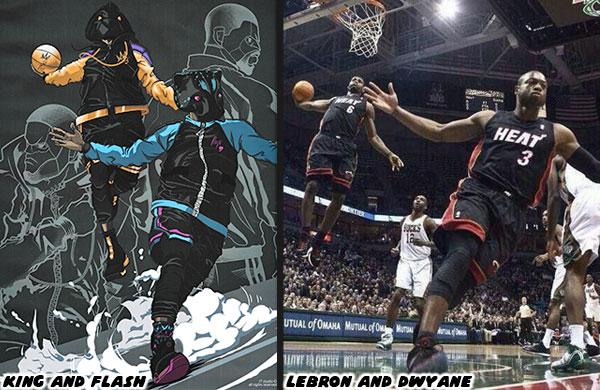
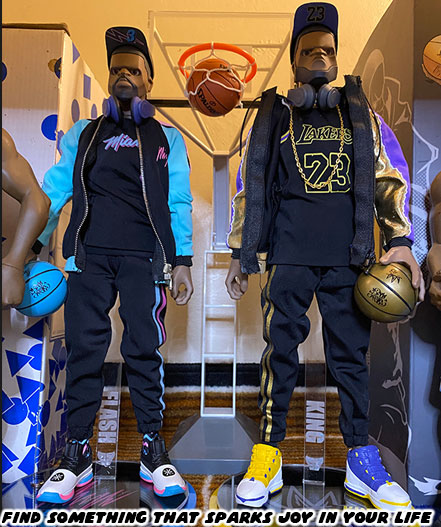
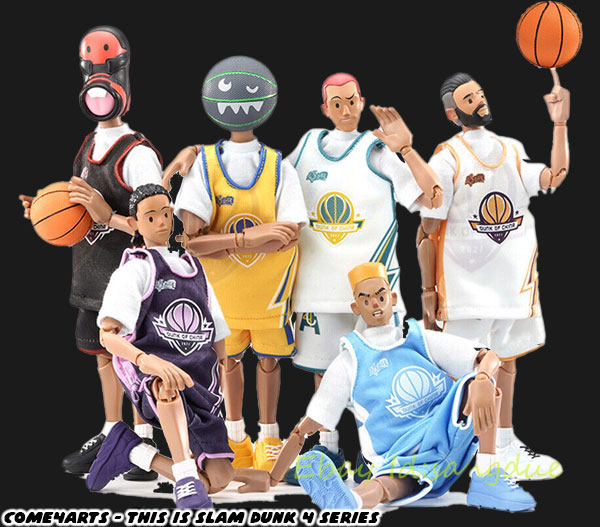
He was very much a creator as Michael Lau, Eric So, or CoolRain were. Jei designed two basketball figures. The King (based on LeBron James) and Flash (based on Dwyane Wade)Released in 2020 they were part of JT’s Street Mask series. The masks were symbolic of the characters they were portraying. An extra layer of understanding was being added to his already masterful depictions. The use of supporting details, and storytelling elements was a tradition that started with Lau's gardeners in the late '90s. Michael Lau invented the gardener universe where his characters came to life. The Street Mask universe was just as imaginative. According to JT Studio there were two clans fighting for control of the streets, the "Crazy D" which were fighting for their dreams, and the "Night M" wanted to destroy all the dreamers. It was the battle of light, and darkness. In addition to athletes the Street Mask world was also populated with skaters, and b-boys. 

The lion was the king of the jungle, a fierce predator, and hence it was the mask worn by a fictional streetball player that called himself King. LeBron of course had often been referred to as “King James” as well. According to canon the only player to ever give the King a run for his money was known as Flash. This happened to be the same nickname given to Dwyane Wade by Shaq of all people. This character had a different temperament than the aggressive King. He was granted a mask of a panther, because he was more stealthy, and speedy with his plays. He used his quickness to fly past defenders, as opposed to the King who would plow through them.

The King, and Flash would become friendly rivals. They had heated one-on-one battles on the street courts. Neither built a winning record as they literally went back, and forth with victories. They were currently tied at 25 wins each. They represented the eternal rivalry between strength, and speed, rather than good, and evil. Despite the hard fought battles they still respected each other. This was the type of storytelling that I lived for. It pulled the personalities LeBron, and Dwayne off of the court, and away from a specific time, or season. The figures came with casual, and game uniforms, plus a change of hands, and various accessories. As the kids might say they had the “hardest drip” of any toys ever released. They elevated what designer streetball figures could be, and were essentially the basketball collectables that I had been waiting all my life for. I just didn’t think that I would have to wait for decades to pass for them to turn up.

To put in context what I liked about the Flash, and King, versus an Enterbay figure of LeBron, or Dwyane; I would say that it was hard to pick a specific moment that best represented them. A figure of LeBron from his first championship with the Miami Heat, his third championship with the Cleveland Cavaliers, and his fourth with the Los Angeles Lakers would each look different. A fresh faced college Dwyane from his rookie year, and a bearded veteran Dwyane also told a different story. Choosing one, or even two seasons for the athletes felt limiting. Those were the types of nuances that some collectors would gladly pay top dollar for. I could appreciate the work that went into the sculpts, painting, and costumes on those figures. That was absolutely what I loved about the collection of 12" figures that my brother had. His Marvel, DC, and various science fiction figures were definitely some of the greatest toys I had ever seen. 

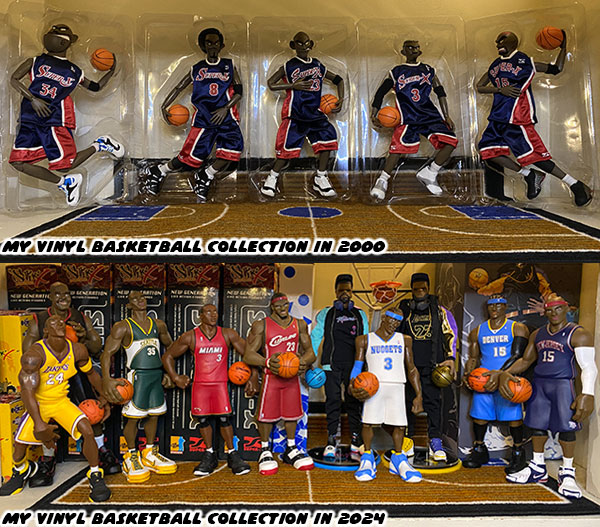
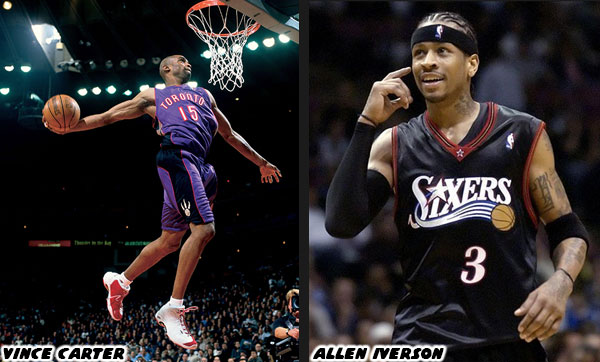
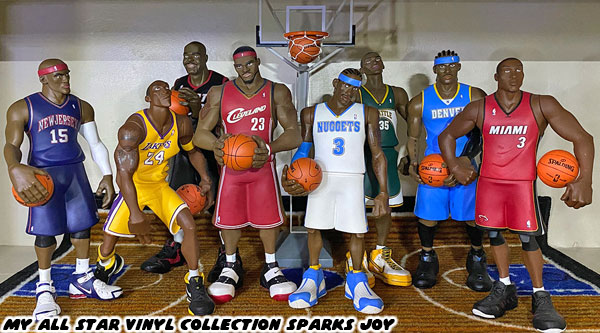
The high-end NBA figures by Enterbay, Hot Toys, and other licensed studios looked amazing. They were literally mini statues that could proudly be displayed next to any painting, or photograph. These models were accurate down to the color of the eyes, hairstyles, sneakers, and tattoos sported on the various players. By the same token they focused too much on one moment. They were basically higher priced versions of the million other seasonal toys, and collectables out there. To me that diminished their impact. With that in mind I still loved the All Star Vinyl figures, however several of the players in the lineup were at the end of their careers, and not when they were at their peak physically, or culturally. I would rather have had Vince Carter in a Toronto Raptors uniform, or Allen Iverson in a Philadelphia 76ers jersey than the respective New Jersey Nets, and Denver Nuggets colors. These looks meant much more to fans of the players than whatever team they were with at that moment.

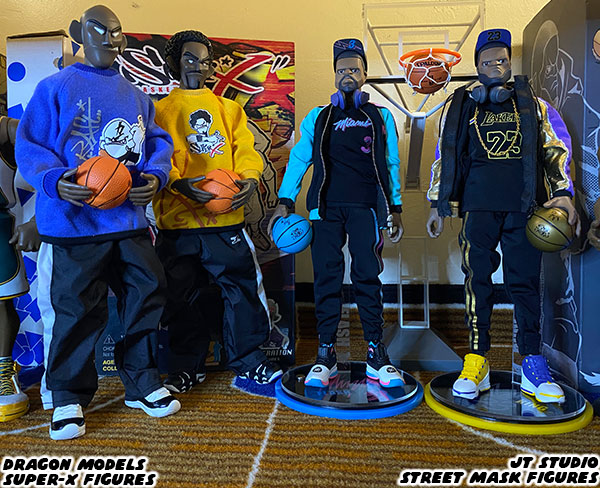
The toy companies, or in this case trading card companies of the 2000's were limited by license deals. They were aware of the new crop of Hong Kong designers, but didn't completely understand how they were remixing culture. They had not been paying attention to the rise of domestic indy creators, and artists from the '90s. They weren't able to win back the fans that they lost to McFarlane Toys, or Image comics in that decade. I wanted something more unique, a toy that wasn't locked into one specific moment in time. More important I wanted a figure that represented the game, and captured the culture. That snapshot of an era was what I saw in the Street Mask line. It was the same feeling that the gardeners created for me more than 20 years ago. I saved up for months, and finally added the King and Flash to my lineup in the spring of 2024. I was amazed when I opened up the boxes, and took in the level of craftsmanship from JT Studio. They complimented my Super-X, and All Star Vinyl figures better than I could have ever hoped for. 

The evolution in design, and manufacturing from JT Studio was noticeable. The older Super-X figures had doll-like uniforms, and street clothes. The fashion looked good, but hung loosely on their 12" frames. They couldn't hold poses too well, and their sneakers would slide off their feet easily. By comparison the Street Mask figures had fitted outfits, and tons of extra hands, that were sculpted to fit them perfectly. In addition they weighed more, and felt much more solidly built than the Super-X figures. I never could justify spending the amount of money collecting the Marvel, Star Wars, or other licensed figures my brother had, however I would be lying if I said my 1/6 scale collection was to end here. If JT Studio decided to make another streetball figure then I'd be the first in line to order it. I wanted badly to see what a center, international player, or old-school icon might turn out in Mr. Tseng's trademark style. Just the thought of it inspired me to start illustrating again. It also made me want to create an emergency toy fund... just in case. I prayed that it wouldn't take 20+ years to see another figure that spoke to my interests. 

No matter what the future held I knew that the next great thing would come from Asia. I was certain that the new creators from Hong Kong, Taiwan, China, South Korea, and Japan would become masters of remix culture, just as the previous generation had. 

I hoped that you enjoyed this look at my favorite designs, and designers. Organizing my collection made me revisit many favorites, and discover voices that I had overlooked. More important they made me rethink the way I thought about counterfeits, clones, tributes, and homages. Were there any figures, or toys that you spent top dollar on? Were there any you wish you had gotten? I’d like to hear your thoughts on the comments section. As always if you would like to sponsor me please visit my Patreon page and consider donating each month, even as little as $1 would help make better blogs, podcasts, or buy a future streetball figure!
follow the Street Writer on Patreon!

Friday, July 26, 2024

Remix Culture, how Asian designers changed the game, part 14


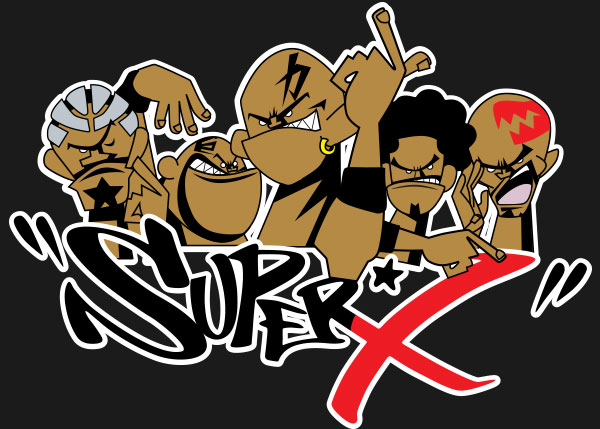
This series started with me declaring how much I loved basketball. I was never any good at playing it, or any sport really, but I liked writing about it, and I really loved drawing fictional streetball characters. I’m still a huge fan of the game, and still get inspired when I see basketball art from various illustrators. I also talked about how Michael Lau came along at the end of the '90s, and turned me into a fan of urban vinyl art. I collected many of Lau's mini gardener figures before the trend took off. Many of my other favorite toys were streetball vinyl players. The Super-X line of fictional players inspired by actual NBA legends meant a lot to me. That collection from Dragon Models out of Hong Kong, and the Upper Deck All Star vinyl figures from the US were among my prized non-Lau figures.
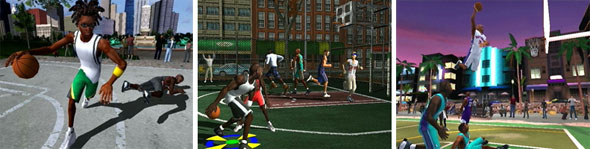
NBA Street debuted in 2001, not long after the urban vinyl trend was started. Developed by EA BIG it brought together stylized character designs, streetball which had looser rules than pro basketball, and arcade game play. There hadn't been anything that had captured the frenetic pace of the game since NBA Jam from a decade earlier. There were several reasons why NBA Street really stood out to me. Of all the sports it was the one the closest to the playground experience. It was created on a farm in Springfield, Massachusetts, in 1891, but in less than 50 years it would become the most important game of the inner-city. It would be embraced by black, and brown kids faster than any other sport had ever done in the history of the US. Even though the NBA didn't integrate Black players until 1950, it was nonetheless following on the heels of Major League Baseball which started integrating in 1947.
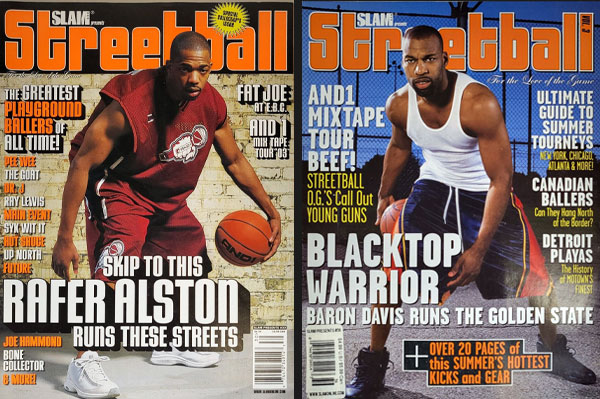
There were many Black pioneers in the ‘50s, but it wouldn’t be until the late ‘60s, and ‘70s that Black culture really started showing up with the players. The Civil Rights era turned athletes into cultural touchstones. This meant that the music, the language, the fashion, and even the hairstyles of the street also became part of basketball culture. This made it easy to identify with the sport while growing up in the city. Unlike baseball, or football, the game of basketball didn’t really need a huge field, just a basketball, and a hoop could do the trick. It didn’t matter if it was a hoop on a garage, or a milk crate tied to a telephone pole. The game was easy to pick up, and impossible to master. Every time you played you could learn something new. The athletes that played the game, the culture lent itself easily to urban vinyl art. The best figures in my opinion reflected the world. They weren’t trying to sell a name, or brand.
While growing up the toy companies told my brothers, and I season, after season what we were going to play with. The cartoon shows they produced were nothing more than extended television commercials. By Christmas time their goal seemed to get us to dump all our old toys, and beg our parents for some new ones. These manufacturers reminded us that there weren’t any alternates, they controlled the toys, they controlled the games. Even Legos which were the standard for letting kids use their imagination soon started licensing movies, and comic book franchises. Countless generations were stuck following the same trends. All of that changed when urban vinyl figures made their debut at the end of the ‘90s. These toys were not selling any product, or label necessarily. They were instead a celebration of us. There were men, women, boys, and girls that looked like us, our family, our friends, and heroes. They highlighted our culture, our music, and fashion. More than that these figures just looked cool. This understanding started changing the way that characters would be designed for video games.
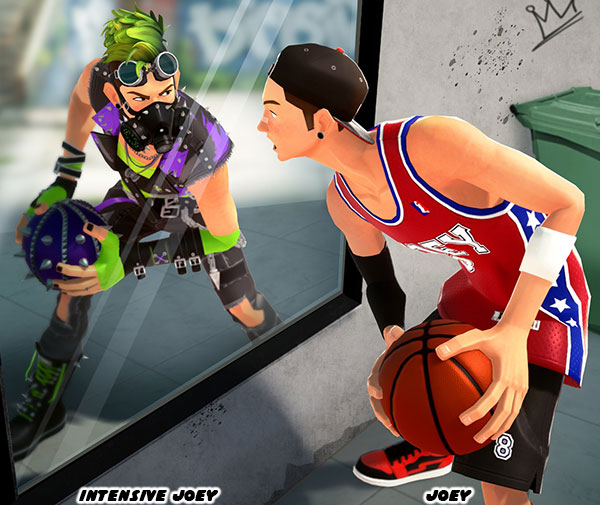
JC Entertainment out of South Korea started creating streetball games in 2004, and continued pushing the genre forward over the next 20 years. In the earliest days they presented traditional street-styled basketball players, with jerseys, shorts, and sneakers. Over time their ball players would become more stylized, and dress in all sorts of outfits. They played in business suits, track pants, surf gear, astronaut helmets, pajamas, and much more. By the time they released 3on3 Freestyle in 2016 the studio had fully embraced vinyl character design. I enjoyed the look of many of the characters that went into their franchise. Joey was the star player, and had received a radical makeover called “Intensive Joey” for a special update. Of course it was absurd that anyone would try playing in boots, neon purple, and green punk rave gear. It nonetheless was a hard look. The fact that he was pictured with a black spiked basketball brought the entire fit together. It made me wish that JC Ent. made collectable figures, and not just virtual characters. It also got me thinking of what was it that I really enjoyed in those designs, in basketball, and vinyl figures.
I talked a little about it previously on this blog series. As much as I liked the game of basketball, and as much as I admired the superstars, I just wasn’t invested in getting highly detailed 12” figures of those players for my collection. The more stylized they were, like the All Star Vinyl line from Upper Deck, the more likely I was to collect them. But there was a different motivation to which figures I sought out. I liked characters that represented an era, a genre, and entire league even more than an individual player. In my opinion the greatest gardener figure designed by Michael Lau was Jordon. He was more than just a clone of Michael Jordan.
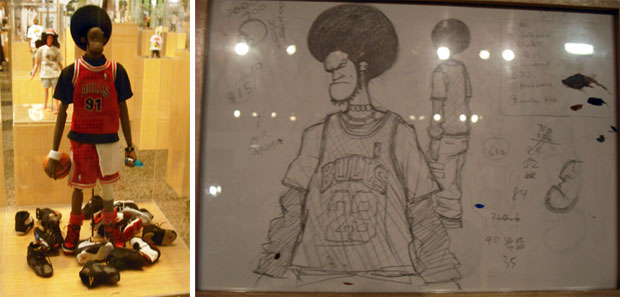
For starters he didn’t look anything like Mike. He was much taller, with a large afro, earring, and eyebrow piercing. He represented the entire game of basketball. He was a snapshot of the late ‘80s / ‘90s era of the professional league. This would be during the formative years of Michael Lau, when the street influence was inescapable. We're talking a period of time when all the classic Nike commercials from "Just Do It," and "Be Like Mike," all the way to "It's gotta be the shoes" directed by Spike Lee (as Mars Blackmon) had taken place. This marked a time when Hip Hop, and pro basketball started going hand-in-hand. 
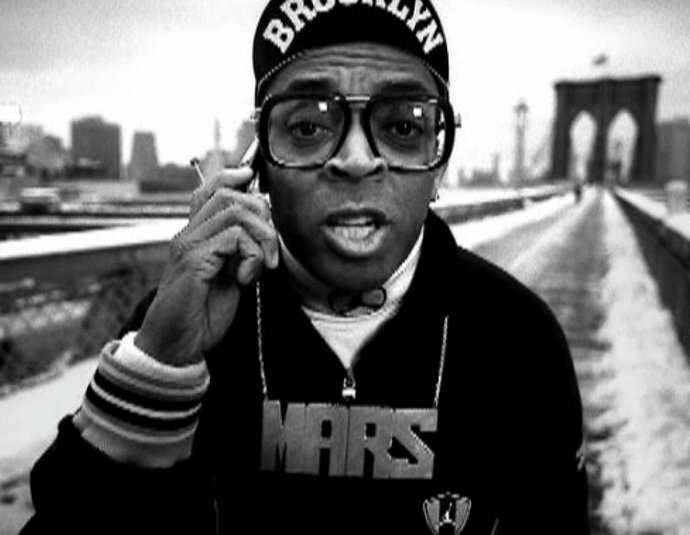
These street-centric campaigns were an affront to the loud protests of the team owners. They wanted basketball players to be seen as clean-cut college kids gone pro, and not street kids hitting it big. By the late '90s, and early 2000's Hong Kong was the only place on Earth that understood how to tie all of those cultural touchstones together into a new 3D format. They had a culture that was quick to spot trends, remix them by pulling elements from music, fashion, and street culture while creating their stylized vinyl figures. Their ability to remix culture at an absurdly rapid pace would end up changing the way studios the world over would approach their own character art. This sort of stylized representation was what I thought made Stretch Monroe from the NBA Street franchise so important. Although he was modeled on the ‘70s era Dr. J, he represented much more than that. 
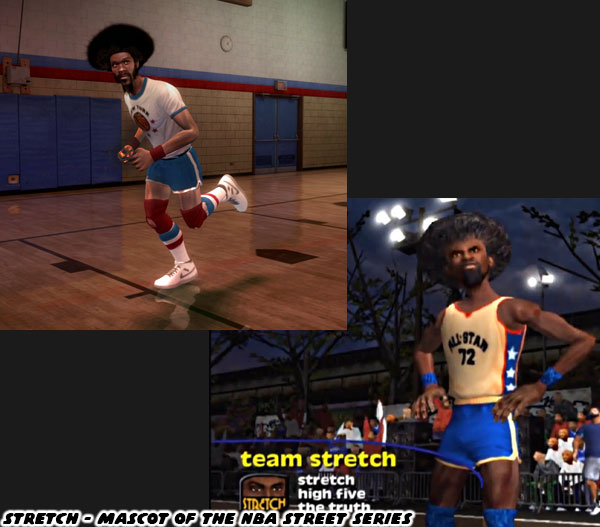
Stretch was a fictional legend from the same post-Civil Rights era. He was like many of the pioneers of the rival ABA that were pushed out of the league when the NBA captured the market. He just couldn’t fit in because he was too ahead of his time. Stretch never got a chance to compete in the pro ranks. This didn’t stop him from destroying all challengers on the playground over the following 30 years. When NBA Street 2 came out, and EA Big started putting retro characters in the game, like a young Julius Erving then it made the inclusion of Stretch feel redundant. The fictional spirit of basketball was the aesthetic that I loved more than anything. I wondered if there was anything that a new generation of creators could do to make me rethink my approach to collectables, and specifically their basketball character designs. Could I ever love a design for a real world player as much as I loved the fictional Stretch? What about his fictional contemporaries? All9Fun had the answer for me when they released Basketrio.
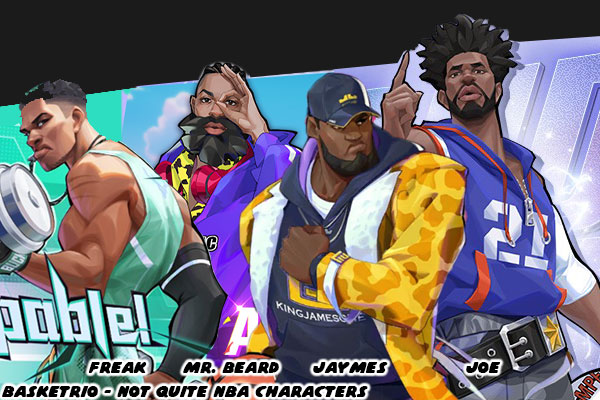
In case you weren’t familiar with the current generation of pros, the ones featured in the picture above were based respectively on Giannis “The Greek Freak” Antetokounmpo, James “Fear the Beard” Harden, LeBron “King” James, and Joel “The Process” Embiid. All9Fun allowed you to create your own avatar, build stats, earn prizes, and unlock pro players. These were things that gamers had already seen for years. However the pro players, or rather look-alike pros were not licensed from actual NBA, FIBA, or other leagues. Despite being eerily similar to real people the studio changed just enough features on them to skirt IP laws. The case of public opinion was something else entirely. It was similar to how they released players based on Street Fighter designs. I highlighted them in the previous blog. The team at All9Fun were building virtual characters using all the same tricks that Fools Paradise did when creating the Three Kings, and TwentyFour statues I had also talked about. The thing was that the statues from Fools Paradise, and the virtual characters from Basketrio were extremely desirable to fans. They managed to capture the personality of some of the greatest players to have ever existed, but in a highly-stylized fashion. 
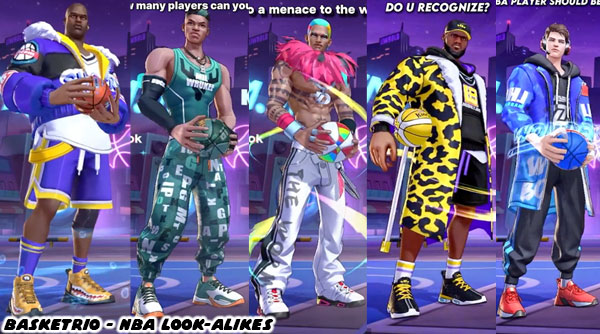
As a fan of the vinyl aesthetic there was no doubt that the design worked in video games. Basketrio featured a version of the NBA elites in a format that I had always wanted to see. It was as if the studio was able to pull equal parts of the animated look of the Upper Deck All Star Vinyl figures, the street fashion sense of Michael Lau’s gardeners, and the Hong Kong style of the Super-X athletes. The remix of the various elements was sublime character design. The knockoff pros featured in Basketrio were a master class in storytelling, and streetball design. First off the team understood the scale of the individual players. The largest of which was “Shark” who was based on Shaquille O’Neal who in real life was over seven-feet tall. The smallest of which was “The Answer” who was based on Allen Iverson, who was barely six-feet tall. 
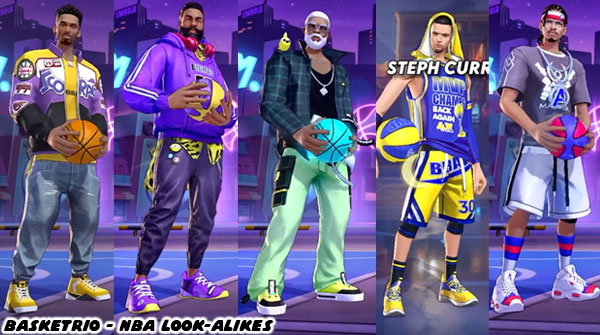
Everyone in between had a cartoonish scale applied to them. Their frames, muscles, shoulders, torsos, hands, and feet were just a bit exaggerated. This helped the characters stand out from the rest of the cast. As with fighting game characters, the bigger hands, and feet were easier to read when moving across the screen. They allowed animators more leeway when creating movements for crossovers, backing down opponents, and of course flashy slam dunks. These proportions also made it easier to read dribbles, or passes, making defending against them more balanced for gamers. From head to toe their costumes were absolute works of art. There was more to the fit than would be typically seen on a streetball player. They were all essentially wearing high fashion streetwear, however the choice of colors, logos, patterns, also reinforced the personalities they were portraying. NBA fans could identify who these characters were based on just by looking at their faces, however the studio could get away with it because they never named one of the characters after an actual person.
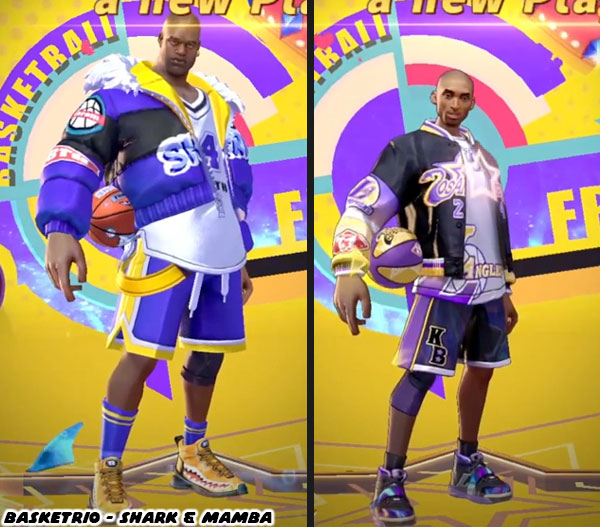
All9Fun skirted the line without ever crossing it. For example Shaq was called Shark, Kobe Bryant was called Mamba, after his nickname the Black Mamba. The outfits they wore had similar colors to their actual team uniforms, of course nobody could copyright a color combination, nor could they copyright the name of a city, initials, nicknames, or even numbers. Even if each of these things happened to be pulled from actual players, and teams. This allowed the staff at All9Fun to dress the characters appropriately, without getting in legal hot water. The outfits of each, and every player was more than really fashionable street wear. They were the streetball equivalent of superhero uniforms. Fans of every sport tended to make icons out of their favorite athletes. Even race car drivers, and their autos enjoyed a certain level of hero worship. Fans of NASCAR could tell you how important the colors of their favorite cars were. Just as red, and blue were matched to Superman, or red, and yellow were matched to the Flash every character in Basketrio got similar nods. 
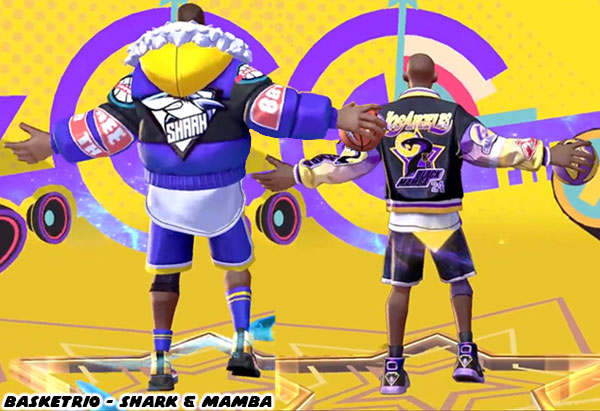
The Lakers royal purple, and gold were matched to Kobe, and Lebron’s outfits, without either of them wearing anything remotely alike. The Milwaukee Bucks forest green, and white dressed on Giannis. The Maverick’s navy blue, silver, and black were placed on Luka Dončić. Even if you had no idea which teams, or players they were based on, each of the outfits was inspired. The standout was Dennis Rodman, the long-retired former Bulls player had multicolored hair, was shirtless with a feather boa, and dressed in white pants with the words THE WORM printed on the leg. A nod to his over-the-top personality, and outspoken fashion sense. While I could never justify spending hundreds on realistic NBA figures, if any studio were to ever release 12” collectables in the vein of the Basketrio characters then I wouldn’t hesitate to get them all. 
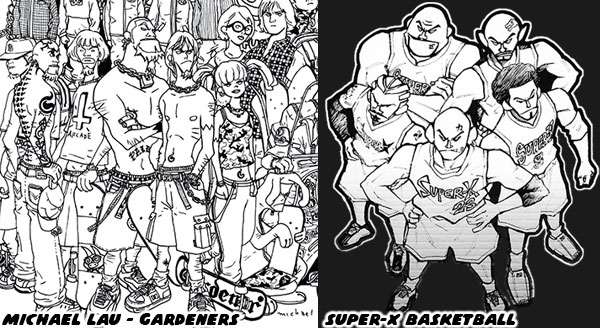
I was extremely happy with my Super-X team, and the Vinyl All Stars. They sung to all of my interests in a way that no other creator except for Michael Lau was able to reach. I never thought that anything better would come along. All of that changed fairly recently. A figure designer learned the tricks that the artists working on the FreeStyle Street Basketball series were using. Not only that his work predated the look of the Basketrio icons. I will talk about this designer in the next, and final blog in this series. What do you think of video games using the likenesses of real people, or teams without licensing them? Would you be willing to look the other way if they spoke to your interests? Do you think there is a difference behind art, and IP theft? Where do you draw the line? I’d like to hear your thoughts on the comments section. As always if you would like to sponsor me please visit my Patreon page and consider donating each month, even as little as $1 would help make better blogs, podcasts, or buy a future streetball figure!
follow the Street Writer on Patreon!

Friday, July 19, 2024

Remix Culture, how Asian designers changed the game, part 13

Earlier in this series I talked about changing the conversation. Most of us in the west would always associate China with counterfeit products, even though they also produced most of the authentic goods the world consumed. It was a heck of a thing to have praise for the product, but disdain for the country producing it. Michael Lau was raised in Hong Kong, a nation with one foot in the East, and West. Because of this distinction he absorbed, and remixed western culture in a new, and exciting format; the vinyl figure. When his contemporaries followed suit I didn’t have much respect for what they were doing because they were retreading the same idea. But I took a step back, and acknowledged that they were not all cash grabs, many of these creators were also celebrating the new art form.

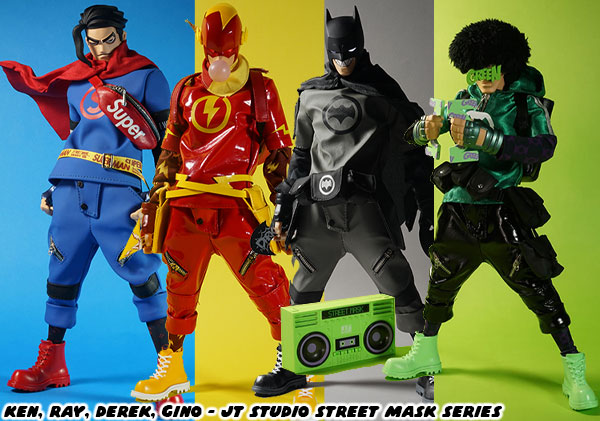
In the early days artists followed along with what Lau was doing, essentially making street fashion character toys, whether they were stylized 12-inch figures or squat 6-inch collectables. They were almost all universally variations on a skater kid, or a Hip Hop kid. Then other studios like Brothersfree demonstrated that figures could be made out of industrial workers, robbers, or even clowns. The doors had been blown open. The best designers like Jei Tseng Studio were able to remix cartoon stars, video game characters, mythological heroes, basketball players, and even superheroes into something new, and unique. Comic book fans would be able to identify right away who some of the Street Mask series figures were just by looking at them. The four characters Ken, Ray, Derek, and Gino were inspired by the DC Justice League characters Superman, Flash, Batman, and the Green Lantern respectively. 

Yet these figures weren’t licensed from DC, nor were any of their fashion accessories licensed from similar manufacturers. The red crossbody bag on Ken was based on the SUPREME bag, but the matching font said SUPER instead. The studio was able to create something unique by layering multiple levels of detail, and meaning on their figures. This was whether they were using genuine branding, or a remixed logo. JT Studio understood the assignment. This trend had been happening for generations, not just in figure art, but all of the creative arts. In the 20th century millions of musicians jumped on the rock, punk, new wave, and Hip Hop sound after they first heard the music. We wouldn’t have had the Bauhaus, Modern Classical, Art Nouveau, or Art Deco movements unless it the form had also been embraced by millions of creators. Yes there were some derivative artists, but there were many fresh voices that helped propel the various formats forward.

The creators from Hong Kong, and China were remixing culture in real time. They were mashing together fashion, movies, music, cartoons, comics, and toys. Taking the elements that worked from different formats, and seeing how it would look in a figure, or game, or model. It was something that they had been accelerating at all through the ‘90s. In fact they were remixing, a remix before it even got a chance to catch on. This allowed the designs of urban vinyl figures to influence game character designs, and vice versa. I had talked about many of the biggest streetball MMO’s in previous entries of the series. JC Entertainment released FreeStyle Street Basketball, Freestyle2 Street Basketball, and 3on3 Freestyle Basketball. Beijing Halcyon Network Technology Co., LDT released Dunk Nation 3x3. All9Fun released Basketrio: Allstar Streetball. 

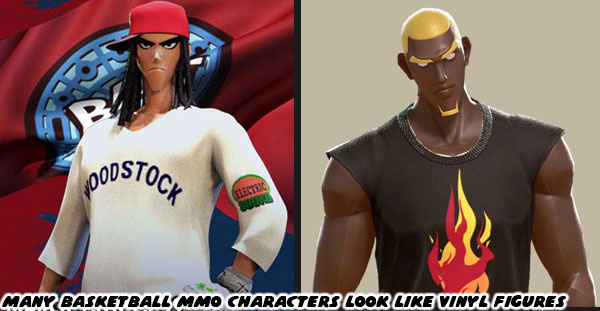
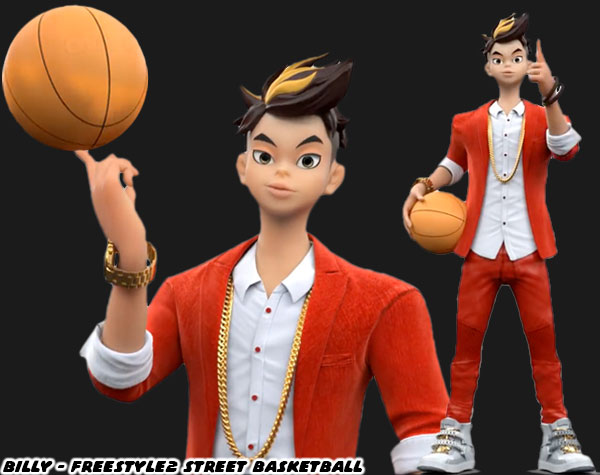
The designs in each basketball MMO were fairly well done. They pulled heavily from the stylized proportions of urban vinyl figures. Billy for example, the character pictured above looked like a vinyl figure I would have collected. The proportions of the 3D model, the style of his hair, gold jewelry, and designer sneakers certainly told a story. Streetball players in the real world all had their own distinct personalities. Some were flashy, some were powerful, some were tricksters. Their look, and their style of play reflected those personalities. The games from JC Ent. made sure that the library of characters they created represented a broad cross section of society. It was something that JC did better than a lot of other studios.

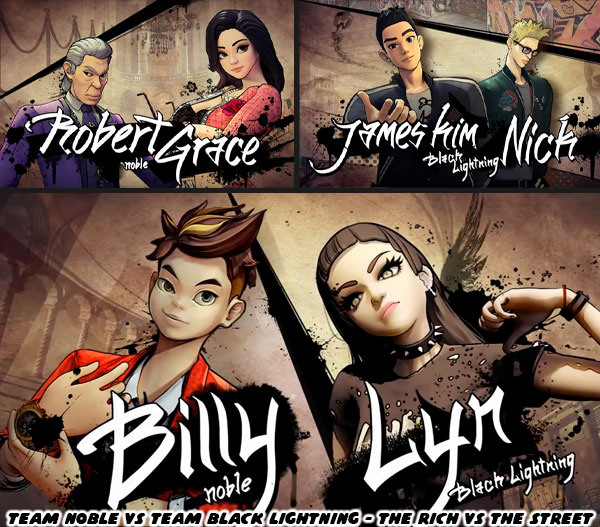
The games they had been developing since 2004 did feature a number of traditional looking male, and female basketball players. We’re talking about matching jerseys, knee gaskets, sneakers, etc. However they also had characters wearing regular street clothes, and people from all walks of life. Working professionals, inventors, mechanics, gang members, robots, and the wealthy elite. This with the case of Billy, and his rich mentors Robert, and Grace. Just because they came from wealth didn’t mean they knew nothing about the game of basketball. They were every bit as dangerous on the court as they were on the boardroom.

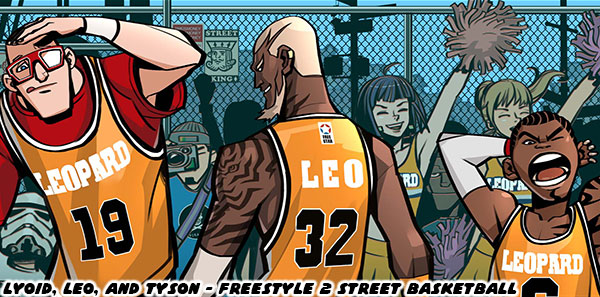
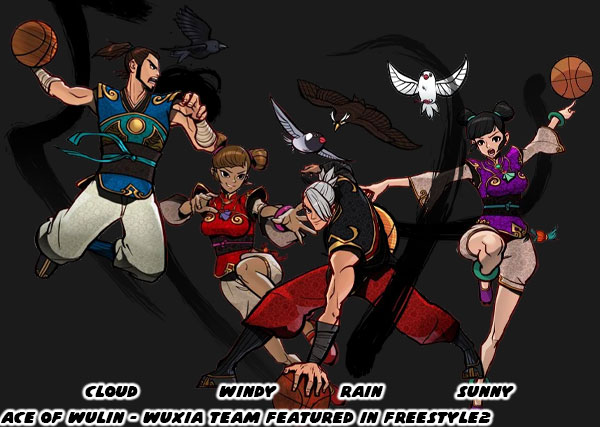
There was a tremendous amount of storytelling in Freestyle2, 3on3 Freestyle Basketball, and the other games. This came through in seasonal events, and even through the designs of the characters. When Billy made his debut so too did Team Black Lightning. The street kids were ready to take the game right to the one-percenters, and you were free to choose a side. While audiences became familiar with Saru, Jack, and Joey over the years there were technically no heroes, or villains in the universe, just different clashing personalities. The majority of the cast represented a particular subculture. Over time new teams would pop out of the woodwork. If there was something cool out there in the universe it would eventually end up in the game. For example people on both sides of the Pacific thought wuxia heroes were cool. What if there was a modern team that pulled elements from the ancient kung-fu masters? That was essentially the inspiration behind the Ace of Wulin team. 

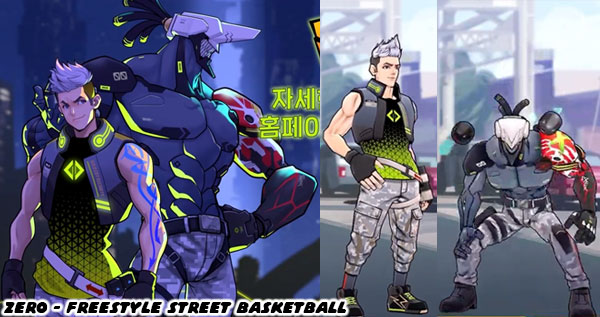
The Wulin team's special moves on offense, and defense were inspired by their martial training. The name wulin was derived from “martial forest;” the secret society of wuxia heroes from fiction. Rich people, goths, and kung-fu masters, were just some of the teams that broke up the classic pro, or even Hip Hop designs going back to NBA Street from 2001. The studios weren’t afraid of coming up with designs that might work in a stand-alone science fiction adventure. Some characters like the cyberpunk mascot named Zero could transform into his armored alter ego with boosted stats. This sci-fi monster had no connection to basketball. I’d be lying if I said that the design didn’t go hard, and wasn’t someone that fans were eager to try.

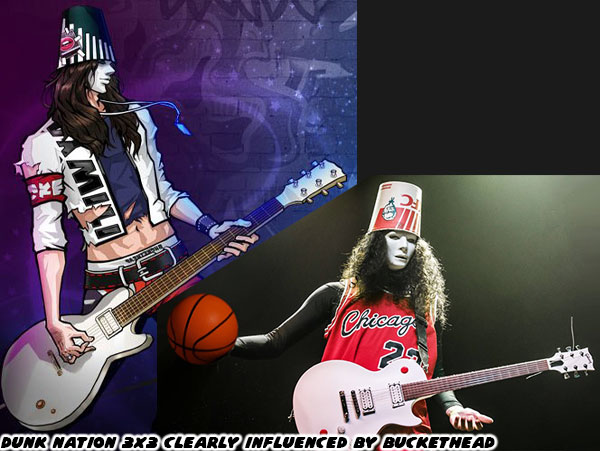
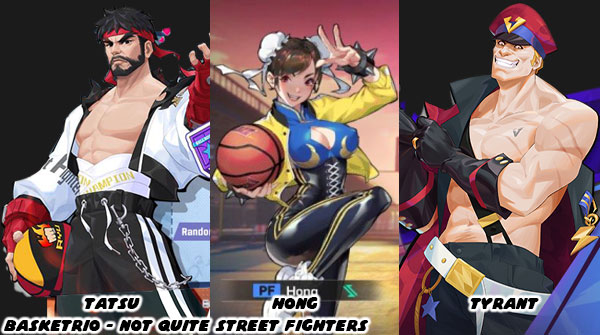
Not every entry had some level of forethought. Sometimes the studios would just fit pop culture characters, or celeb look-alikes into the game. Not that it made sense to just give the Jared Leto version of the Joker from the Zack Snyder DC universe movies a basketball. Or say give the enigmatic guitarist Buckethead a basketball. Yet those characters, or rather ballers inspired by those characters ended up in Dunk Nation 3x3. Fans of pop culture that understood the reference appreciated these weird designs getting inserted into their favorite game. It was certainly an easy way to fill out a roster of recognizable faces without paying for a license. Speaking of putting in non-traditional, high-profile characters in a streetball game… what if the developers put fighting game icons into their titles? The designers at All9Fun placed several characters that were heavily inspired by Capcom, and SNK’s biggest stars in Basketrio. Of course they got away with it by changing the names, and details just enough so they wouldn’t get a cease and desist letter.

These were examples of the remix culture that I was talking about. After adding all sorts of traditional basketball, and streetball archetypes, the studios then started populating their worlds with unique figures. When they couldn’t think up new designs they instead starting asking “what if?” and found ways to incorporate musicians, actors, comic book characters, sci-fi, or fantasy heroes. The designers at all of the studios didn’t bother to ask for permission to use a character, or likeness in their game. They just went ahead and did it. Like the old saying goes “It’s easier to ask for forgiveness, than to ask for permission.” I didn’t think it was a good look to poach the designs of Street Fighter, or King of Fighters characters. I appreciated the hustle, but at least JC Entertainment bothered to create an original wuxia team without just copying from a Japanese developer.

Of all the remix figures that I enjoyed, at least for this genre, were the ones based on actual basketball players. After all they made more sense than comic book superheroes in a streetball game. The way these icons were remixed was what amazed me as an artist. I’d like to explore it a little bit more in the next blog. Until then I’d like to know if there was a character in an MMO that you thought looked cool enough to be featured in a stand alone game. Or if you knew of a character that was such a blatant rip off that you couldn’t believe the publisher wasn’t sued. As always if you would like to sponsor me please visit my Patreon page and consider donating each month, even as little as $1 would help make better blogs and even podcasts!
follow the Street Writer on Patreon!