Showing posts with label maxx. Show all posts

Friday, July 5, 2024

Remix Culture, how Asian designers changed the game, part 11

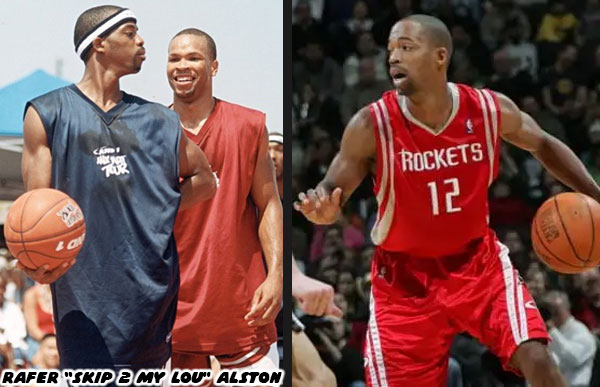
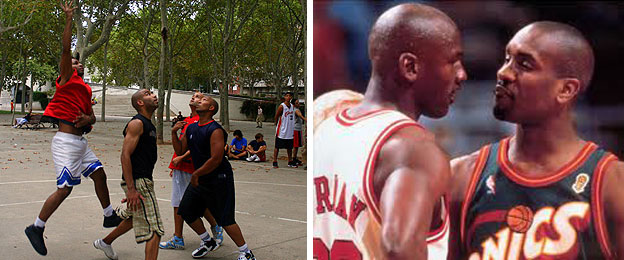
The indication that the US was ready to elevate the status of street fashion, Hip Hop music, and Black culture in general happened in the late ‘90s, and early 2000’s. The rise of athletes like Allen “The Answer” Iverson, Stephon “Starbury” Marbury, Gary “The Glove” Payton, and Rafer “Slip 2 My Lou” Alston were unlike the previous generation of pro athletes. They were gifted with skills, and had built their reputations in college, but more important to many in the streets during the summertime. The NBA, like many professional leagues guarded their image. They made sure that coaches, and players dressed in suits while doing interviews, or sitting in the sidelines while injured. They would fine players for breaking any codes of conduct in games, and in public as well.
To many the polished images that the league presented was bland, and predictable. Seeing clean-cut college prospects move into the pro ranks was becoming stale. Suddenly there was a rise in rash, tattooed, outspoken, and genre-changing athletes. Young players that had the audacity to not only talk back to Michael Jordan, but also to cross him up, and humiliate him on court. The NBA couldn’t get them to conform to the old ways. When the organizers realized that the players with street roots represented a large population of their audience they changed course, and started using them for marketing. They started highlighting rappers sitting court-side on television, they started inviting Hip Hop acts to perform at the All Star Game, and even loosened their rules on visible tattoos.
Electronic Arts developed a number of pro sports video games, but they too felt that it was high time to incorporate more street culture into their library. So they had a sister developer called EA Big start creating action sports titles, like the iconic SSX Tricky snowboard game. But more important they released NBA Street in 2001. On the cover was a fictional player named Stretch Monroe. He was sort of avatar of the classic NBA stars from the ’70s. He was somehow still actively holding down the game in the streets against players more than half his age. The world would never be the same following its release. The studio would also add NFL Street, and FIFA Street into their catalog. They were essentially smaller groups of the top players, and teams, playing a looser version of the sport on the playground. Rather than be more like a simulation game, the focus was more on capturing the arcade experience. NBA Street was essentially a call back to the classic NBA Jam arcade hit from a decade earlier. I called NBA Street one of my favorite games of All-Time. The game had smooth controls, and an easy to learn combo system, which allowed you to crossover opponents for bonus points. It was as if EA Big figured out how to incorporate the combo mechanics of the Tony Hawk’s Pro Skater series, but put it into a sports game.
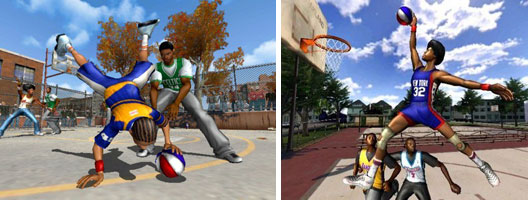
NBA Street was a breath of fresh air. I was never a fan of the traditional sports games. I didn’t care about building franchises, trading players, or grinding through seasons. The more realistic those titles were the less interesting they became to me. Giving slightly exaggerated abilities to a handful of star athletes made them feel more like super heroes, and less like mortals in the game world. Suddenly the game play had much more potential to me. The same could be argued of Hawk, and his fellow pro skaters. They could survive impossible drops, perform back-to-back tricks mid air, and grind rails without losing momentum. There was still a lot of realism in the games, but reality was not the goal. It was more on the fantastic spectrum of what was humanly possible. In addition to the brilliant game play were the visuals. The aesthetic of the players in the franchise was more animated. The proportions employed by EA Big was the predecessor to the All Star Vinyl figures by Upper Deck.
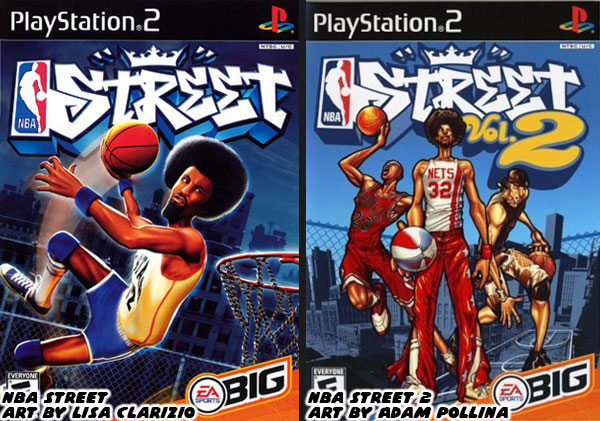
You could imagine how much I loved the look of the players in this game. They were the kinds of basketball players that I would draw, but finally animated. The impact of the Street series on me, and on basketball fans in general could not be understated. If you don’t believe me GQ called NBA Street 2 the greatest basketball game ever made. It would be hard for me to counter that argument. The game was an instant hit, and spawned a number of sequels. Yet like the Hawk franchise, the greedy publisher forced the developers to crank out sequels with diminished quality over the following years. I predicted that the market would be flooded with streetball games in 2005. The team at EA Big in Canada didn’t have time to innovate, they didn’t have time to look for newer or better game play options. They substituted evolution by adding all sorts of over-the-top gimmicks. Eventually the series would burn out. However the template they created would be picked up by indy developers.
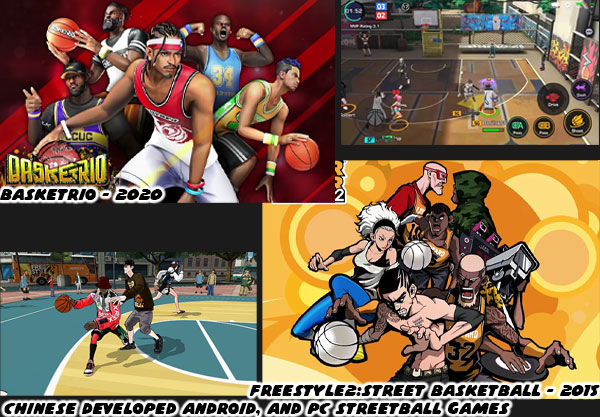
JoyCity the South Korean company was founded in 1994 as Chung Media and was later renamed to JC Entertainment in 2000. They released a an MMO PC game called FreeStyle Street Basketball in 2004. The game did well over the years, as did many other MMOs coming out of South Korea. Freestyle2 Street Basketball came out in 2015. The game did even better, and expanded the universe of playground basketball characters that JC Entertainment had established. Their cross platform successor 3on3 Freestyle Basketball originally came out for PC / Steam on Dec. 2016, and Xbox Aug. 2018. Other studios were eager to cash in on the trend. Beijing Halcyon Network Technology Co., LDT released Dunk Nation 3x3 in 2017. The Asian collective All9Fun which developed games for Hong Kong, Taiwan, and Macao released Basketrio: Allstar Streetball in 2020.
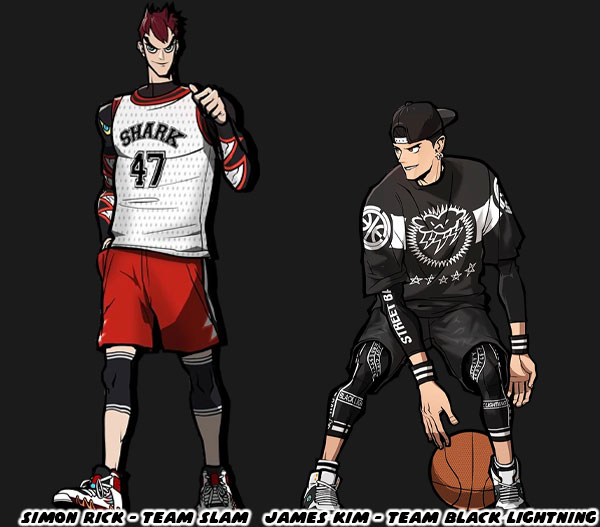
As a fan of the Michael Lau, and by extension urban vinyl school of design I could tell that his work in the early 2000’s had certainly rubbed off on the character designers working in South Korea, Beijing, Hong Kong, and Taiwan. The style of the characters, the proportions, the attention to outfits, and presentation was unmistakable. Lau was not the only influence, Eric So, CoolRain, Brothersfree, and Jason Siu also colored the aesthetic that went into toy, game, and collectable art for the next two decades. Looking at the designs featured in the games by JC Entertainment, Halcyon, and All9Fun was a master class in bridging the aesthetic, culture, and shifting role of online gaming.
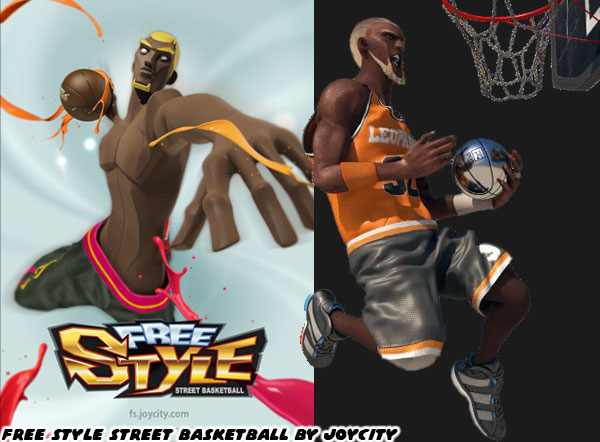
Let’s start with the stylized characters featured in all of the above mentioned streetball games. What really stood out to me were the styles of the designs. When the studios created basketball players, they were very much in the vein of Michael Lau, Kadir Nelson, and Chris Brunner. I would even put my name as a contributor of that style even if I only impacted 0.01% of the artists out there. The trio created some lanky, stylized, forms that worked great for basketball. They even made sure that sneakers these cartoonish character wore were large, and reflected the style of the time. It didn’t matter if their kicks were licensed or not. They made sure that players could read the fashion of each athlete which gave them additional layers of personality. The type of physical build they put forward didn’t work with all sports, but on the fast paced game of basketball it was perfect. These designs worked amazingly well in animation. The long arms, and legs, the oversized hands, the flat, expressive faces were the ultimate athletic canvas.
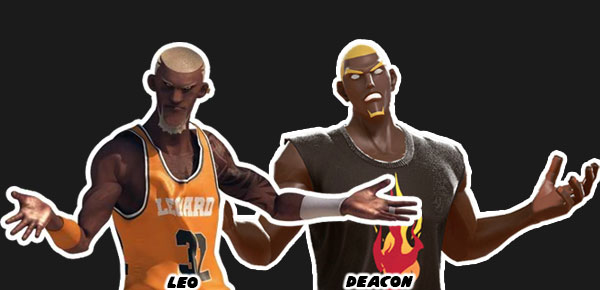
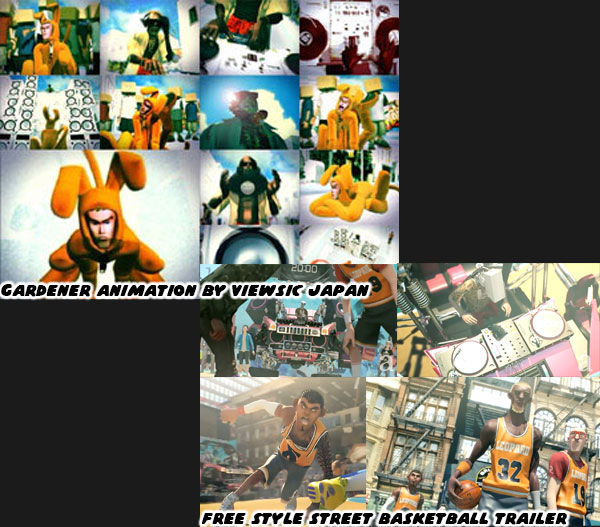
I noticed that the Asian studios were quick to use street culture, to use Hip Hop as the backdrop of many of their titles. The graffiti, the fashion, the music, the overall visual language. The oldest trailers for Freestyle Street Basketball had a graffiti artist using spray paint to bring the characters to life. A deejay was scratching beats on a turntable while a black basketball player without pupils was putting together a freestyle routine. This character would eventually be named Deacon, and featured prominently over the years. Many years later when Freestyle2 was announced a new Black character with gold hair named Leo debuted. He was essentially a new take on Deacon. Almost every studio was quick to feature Black characters in their opening animations, and online marketing as well. This was a form of signaling to the community that the streetball was authentic, however the staring roles didn’t go always go to Black characters. At least not in the early days of the streetball MMOs.
The star characters of each of the JC Entertainment games fit a similar model. The oldest star character the studio created was Saru, in some of the oldest advertising, and trailers his jersey actually read Sabu. The character wore red, and black, the classic Chicago Bulls colors. Had a tribal tattoo sleeve. He was essentially the prototypical cool streetball player. His design influences were a cross sample of elements that the Asian market would identify, even if they weren’t familiar with the stars in the NBA, or US playgrounds.
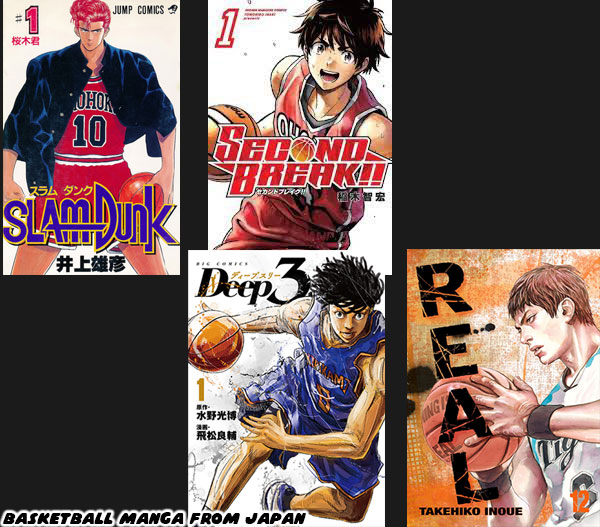
The character’s name, and his jersey was more than a nod to the ‘90s era Bulls which were known the world over. The outfit was based on the protagonist Saru gang from the highly influential Tokyo Tribe manga / anime, which was first published in 1993, and was serialized in Boon magazine between 1997-2005. This was often the first exposure that many fans in Asia had to Hip Hop culture. Even if they had not known anything about Tokyo Tribe the young basketball hero in a red jersey was also seen in Slam Dunk. The manga was first published in 1990, and went on to get translated into multiple languages as well. It was a primer for many fans to basketball culture. Saru’s design would be easily identifiable as the hero to the Asian market, just as Stretch was recognized as the star of the NBA Street series in the west.
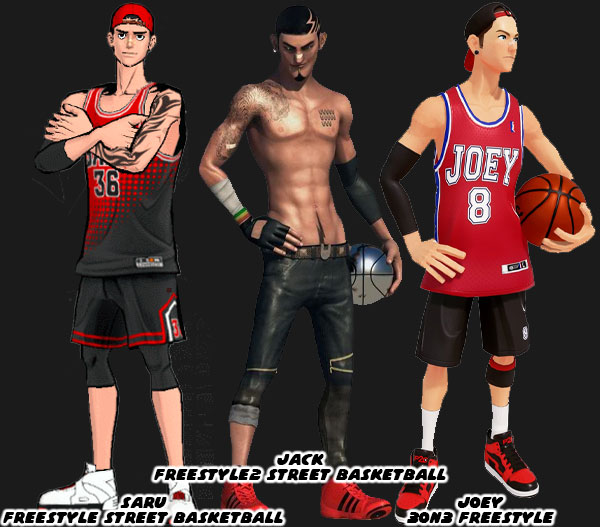
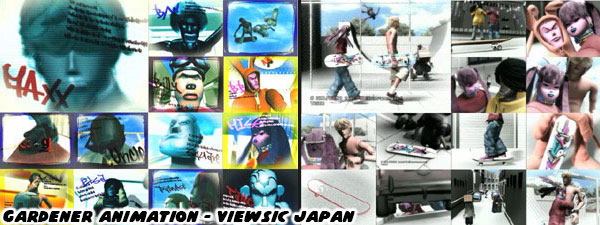
The next hero of the Freestyle series was Jack. By the time the sequel was released in 2015 the urban vinyl school of design had already changed the looks of characters in games, and animation. The reception to lanky heroes was welcome in several genres, especially basketball. The cool culture was street culture, Hip Hop was everywhere, and style was more important than substance. The athletic uniform was out the window, as Jack played shirtless, in leather pants, and sneakers. It was an absurd outfit for playing, but the cool factor was unarguable. At the same time JC Entertainment still featured characters in traditional outfits, but was letting players create custom characters that wore all sorts of costumes, and accessories. The studio had essentially placed Freestyle2 in a universe similar to Lau’s gardeners. People walked around with boxes on their heads. Or there were animal people, or cyborgs inhabiting this world where everything was settled through basketball tournaments.
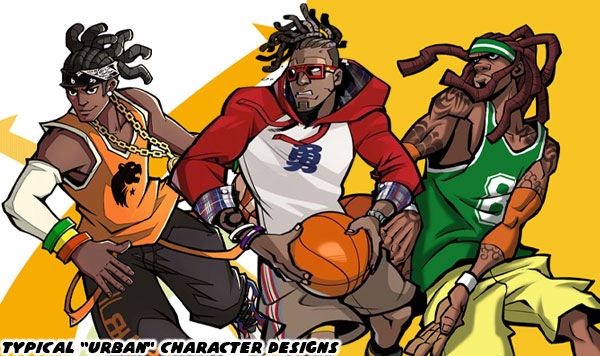
The thing that always bothered me about the street basketball games coming out on Steam, mobile, and consoles from overseas was that Black characters always seemed to be relegated to supporting characters at best, or villains at worst. Well, actually there could be subtext in the designs that was even worse than evil, and that was outright racist. Dark skinned characters were sometimes portrayed as aggressive, tough, and sometimes ape-like, if not outright apes. I wish I could say that this was a trope that was abandoned generations ago, but it would still rear its ugly head from time to time. The light-skinned champion against these apes, or savages in a Black setting was a tradition that had always bothered me in all media.
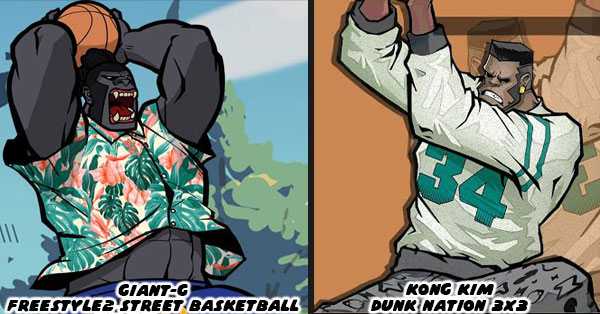
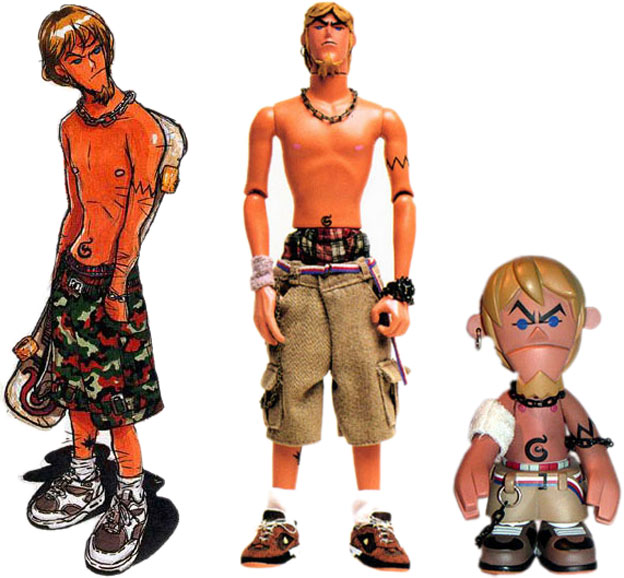
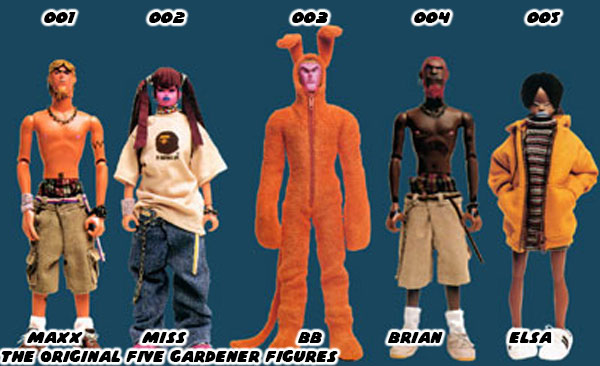
It went back to the days of Tarzan of the Apes, the adventure books from 1912 featured the white champion as not only being the strongest, and bravest warrior in all of Africa, but he could also talk to the animals. In essence he was superior to every Black man on the continent. This type of white savior story had spread around the world for decades, coloring other cultures perception of dark-skinned characters. As a Mexican-American I was sensitive to how minorities were portrayed in media. I could never imagine how a Black kid would even react when faced with the same tropes. Even Michael Lau was not immune from centering the gardener universe around the light skinned Maxx. His best friend, and rival Brian was Black. They went back-and-forth against each other in skate contests in the pages of East Touch magazine. 
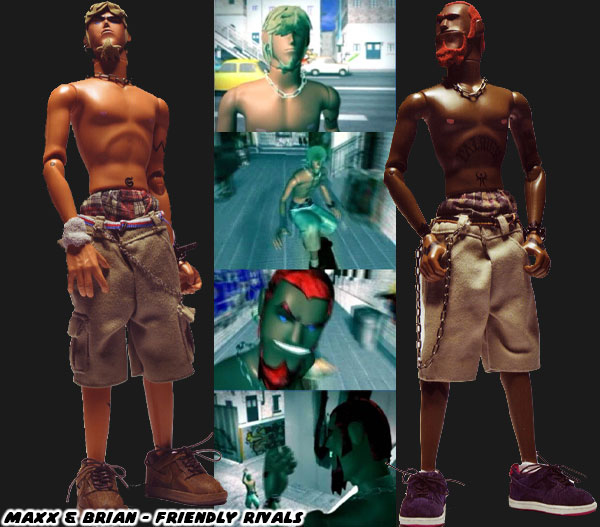
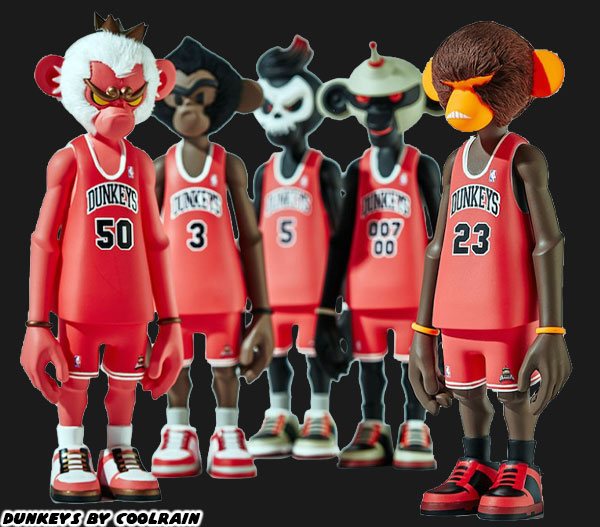
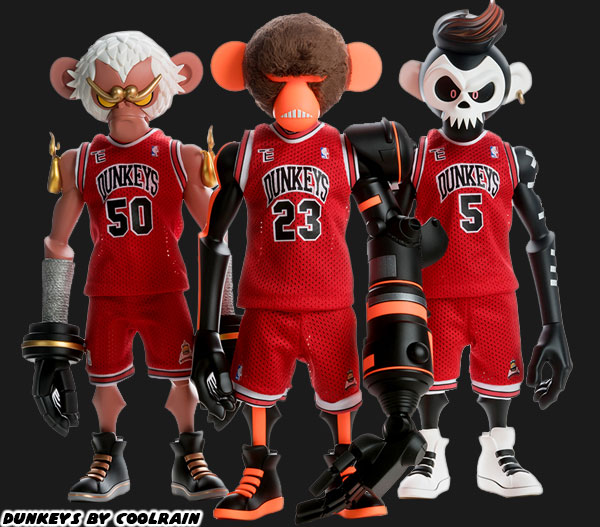
Having the pair as skaters, and not the more stereotypical basketball players was a refreshing change of pace. Brian, and his girlfriend Elsa not only added much needed color to the lineup, they were symmetrical balances to Maxx, and Miss. The Black characters also demonstrated that no matter how cool Maxx was, the Black kids in the neighborhood were just as cool. The show of diversity certainly lent more street cred to the gardeners, but throwing anthropomorphic animals into the world of figure art could also be seen as exploitative out of context. Say for example Coolrain releasing a series of vinyl figures called the Dunkeys, as in Slam Dunk Monkeys. Of all the animals he could have gone with maybe monkey basketball players was not the wisest of choices. I know that falling back on ugly stereotypes, or insensitive racial jabs wasn’t Lau, or Coolrain’s intent, as it wasn’t for most of the character creators at the time. This wasn’t a fast, and hard rule.
Black heroes would get some moments to shine in Western culture. The comic book character T’Challa the Black Panther was created in 1966 by Stan Lee, and Jack Kirby. Luke Cage created by Archie Goodwin, George Tuska, Roy Thomas, and John Romita Sr. debuted in 1972. The most recent Marvel breakout star, the biracial Miles Morales created by Brian Michael Bendis, and Sara Pichelli debuted in 2011. These were all examples of white creators putting Black heroes into pop culture. There were other Black stars in the Marvel, and DC books after the creation of the Black Panther, but new comics rarely presented Black characters as the focal point. This fact was even more pronounced in Asian countries. Of course this had a lot to do with the ethnic makeup of the nations. This didn’t stop the creators from using Black supporting characters to ground their work.
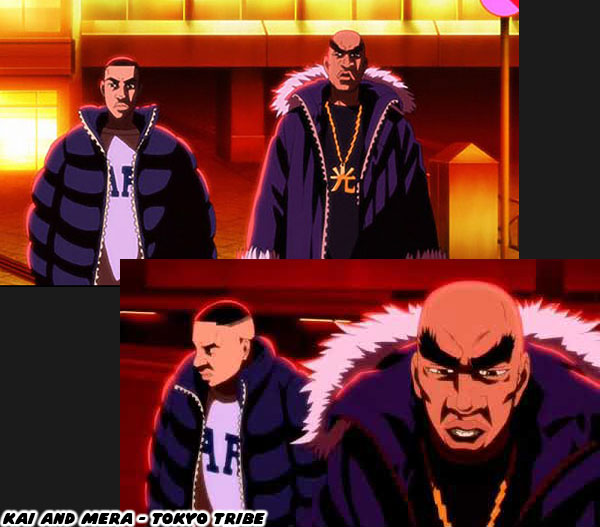
In Slam Dunk for example the main character followed the pattern of manga heroes. Sakuragi Hanamichi was the typical high school Japanese kid, that happened to be a loser with the girls. He would become a better person, get a girlfriend, and shine as a star athlete in the end. The respected team captain was the Black center Akagi Takenori. Akagi was the more physically imposing of the two, and wiser by far, but it would be absurd to think that a Black character would be the lead character in early '90s Japanese stories. The manga Tokyo Tribe, and its sister series Tokyo Graffiti borrowed Hip Hop culture, and fashion wholesale. The main character was the deejay Kai Deguchi who had a fresh line-up, listened to rap, and went clubbing with his crew. His rival was Mera, the dark skinned, big-lipped heavy in a fur coat. If you didn't know better you could swear these heavily were biracial characters, if not heavily coded Black characters.
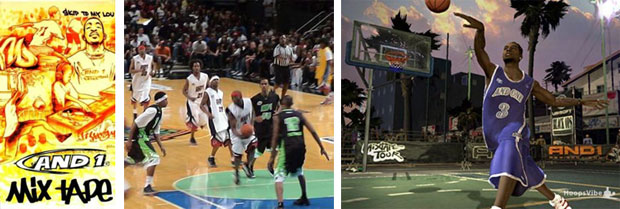
By focusing on somebody that looked like them the books helped Japanese kids understand Hip Hop culture, or appreciate the sport of basketball. Yet there was something much deeper in understanding the layers of Hip Hop, and streetball that didn't necessarily come through in the manga, whether or not the star was Asian, or Black. This was something that I had referred to on a much earlier blog about the rise, and fall of streetball. I'm going to paste something from that exact series right here regarding the influence that streetball had on China. There was a young man that became hooked on the early AND1 mix tapes, and tour, Wu You aka MoreFree is the Chinese legend that helped spread the gospel overseas. He would challenge visiting NBA players to 1-on-1 battles, and dazzle them with his skills. As audiences learned to differentiate streetball from traditional basketball then local courts started building reputations, just as they had done in New York, Chicago, and LA. Dongdan Court in China is considered the Holy Land. When the summers heat up you could find the best players competing  at Dongdan.
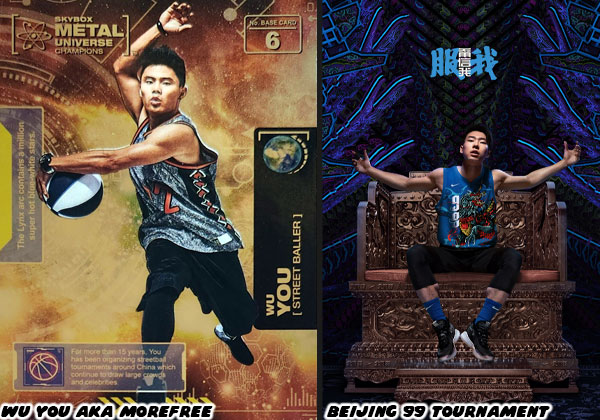
A Westerner might call the Chinese "biters" or just laugh at their attempts to incorporate Black fashion, and language into their lexicon. But then again where did they get the idea that streetball is about fashion and tricks? It had a lot to do with how the west presented themselves in the mix tapes and of course in the entertainment industry. Asia was quickly getting sold on the idea that streetball was about entertainment, and not basketball. The big shoe companies learned that there was no one approach that could appeal to all audiences. They had to be sensitive to differences in culture, language, art, music, and presentation. Nike couldn't simply release USA Battlegrounds merch in mainland China featuring the name of Holocombe Rucker Park in Harlem, or the Venice Beach Courts. The Chinese had no point of reference to NYC, or LA's street roots. Dongdan Court on the other hand would make more sense. That was why they began creating custom streetball campaigns in their biggest markets. The Beijing 99 campaign by Nike incorporated many symbolic characters from classic tradition, and had the best street players from around the country compete. This was the type of world that influenced creators like Michael Lau, Santa Inoue, and their contemporaries.
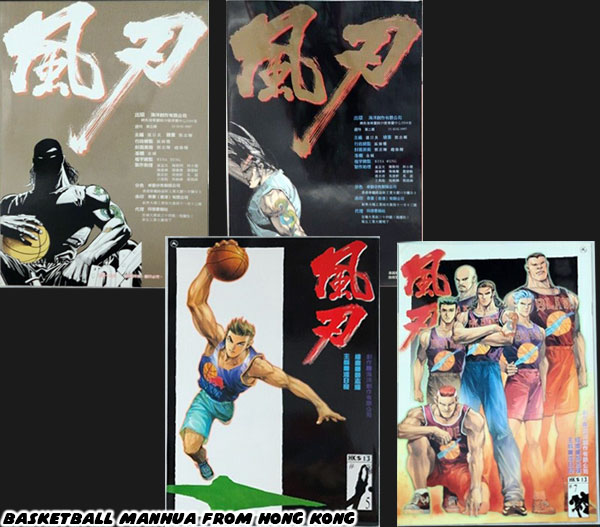
At this point the basketball player, and even streetball legend was a cultural standard in Asia. This was thanks to the exposure of AND1, and the Mixtape Tour at the end of the '90s/early '00s. While Japan was known for its various basketball manga, including the title "REAL" which focused on wheelchair basketball, the creators in Hong Kong had already released streeball manhua.  In every instance, whether it was a comic, anime, or video game the light-skinned hero would remain the star of most of the popular basketball titles. Would this change in the future? I couldn’t tell you. I could however say that the approach that most of the streetball games from overseas did push the genre in some fresh ways. I will look at this in the next entry of the series. Were you a fan of any of the EA Big Street games? Did you ever identify with a minority character in any game or comic more than the main character? I’d like to hear about it in the comments section. As always if you would like to sponsor me please visit my Patreon page and consider donating each month, even as little as $1 would help make better blogs and even podcasts!
follow the Street Writer on Patreon!

Friday, May 10, 2024

Remix Culture, how Asian designers changed the game, part 3

I don’t think people understand how revolutionary the art of Michael Lau was, especially to me. His 1999 exhibition in Hong Kong was like the first sonic boom, but his gallery exhibition in Japan during the summer of 2001 was like landing on the moon. I was 27-years-old at the time. I had read countless comics, and manga. Played hundreds of video games. Seen entire libraries of animated programs, and films from around the world. I didn’t think that anything could have absolutely grabbed me like the gardeners did. I could only imagine it was how Andy Warhol, Jean-Michel Basquiat, or Keith Haring connected with creatives in the ‘70s and ‘80s. They added entirely new chapters in the book of art. The figures of Michael Lau were a revelation, for the first time an artist not only synthesized a culture, he captured an entire generation using a new format. His three-dimensional figures did more for me than a photograph, sculpture, song, poem, documentary, or movie could have ever done.

The thing was that I was not looking at the abstract. I didn’t have to interpret the shape, form, white space, color, or tone of the art. I was looking at physical representations of the people I knew, of the people I looked up to, of the culture itself. Each figure was like staring at the friends I hadn’t met yet. The people that inspired Michael also inspired the people of Hong Kong, Japan, the US, and the UK. Although these fans had never met they could all point to a gardener and say “I know that guy.” They dressed like regular people. They weren’t wearing high-end fashion lines, but they wore exactly what kids on the street would be wearing. This applied from top to bottom, from their haircuts to the brand of shoes they sported.

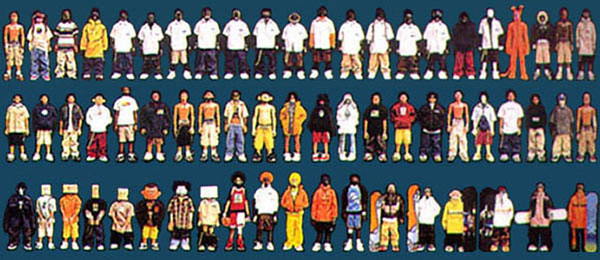
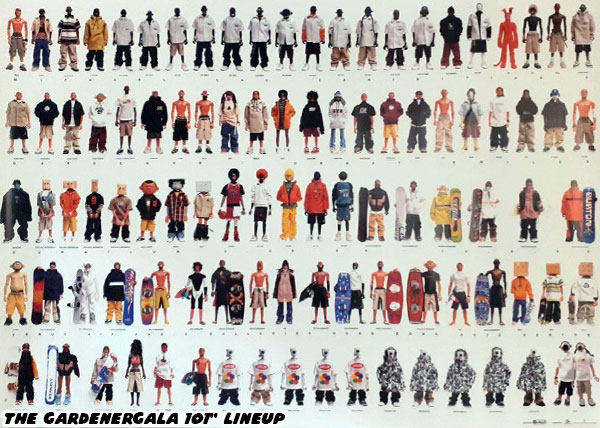
Although Michael lived a world away I could swear that he grew up in Southern California. He knew intimately the Hip Hop, and action sports cultures he was presenting. He knew what skateboards, and skate shoes would be authentic with skaters themselves. He knew what types of BMX bikes the kids would ride. He knew the snowboards, and bindings they would use. Surfboards, wakeboards, and generally all of the non-traditional activities that the US considered extreme. Even the traditional sport highlighted had major street influence. The basketball players wore the freshest sneakers. He didn’t just go to Toy’s R Us, and put a bunch of Barbie’s in tee shirts. Everything was handmade, and that’s what really blew my mind. It was an absurd level of detail poured into the 101 figures. Michael did the impossible, he bottled the essence of street culture.

A good portion of the gardeners were based on the people he knew, including the LMF crew. Even the fantastic designs, people with heads of basketballs, boxes, or spray cans were inspired by the community. He didn’t have to travel to Los Angeles, Harajuku, or New York to meet the trendsetters because they all lived in his imagination. If gallery shows were the only thing Michael had contributed to the art world then he would still be a hero of mine. Yet once people got a taste of his art they would only want more.

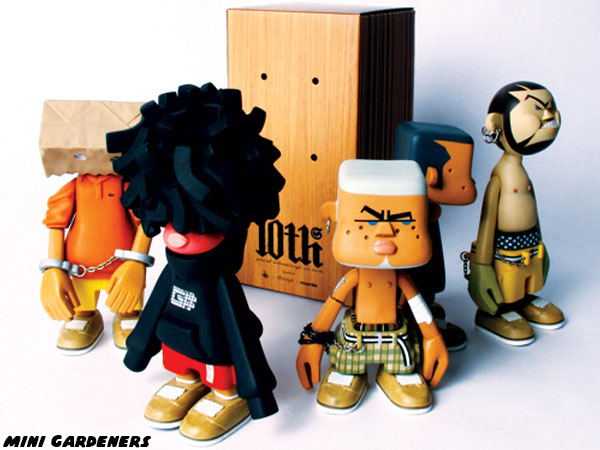
Up until that time you could only buy a poster of his gardeners in his exhibitions. Since the figures took so much time to produce there was no chance that the patrons would be able to walk home with one, no matter how hard they fell in love with them. That was until the galleries convinced him to release smaller vinyl versions of his figures, similar to the ones he had worked on in Hong Kong circa 1999. The 6-inch mini gardener was born, and these would inspire the creation of vinyl toy movement. Including Dunny’s (2004), Vinylmation (2008), and the ubiquitous Funko Pop figures (2010).

The mini gardeners were created in limited numbers, around 1000 if I remember correctly. Some sets would only get a run of 500, and the rarest would get a run of 100. Each 6-inch gardener captured all of the details from the 12” figures they were based on. I remember the first time that I got one. I saw an announcement of a book based on the exhibition. It included Maxx, and a CD. I went to the Japanese bookstore in downtown Los Angeles, and placed an order. They asked if I were sure I wanted it, as it would cost almost $300 once tax, and shipping were added. I couldn’t slap my credit card on the desk fast enough.

The bookstore manager literally phoned it in right in front of me, and read the details to their parent store overseas, as they hadn’t networked their computers at the time. Once they got a confirmation number for me I could go back home. A month later I picked up the box set, and had one of those feelings that words couldn’t really capture. I showed everyone at work the figure, they were astonished that Maxx had a metal earring, fabric wristband, and chain on his wallet just like the 12” figure he was based on. It was, and remains one of my favorite pieces.

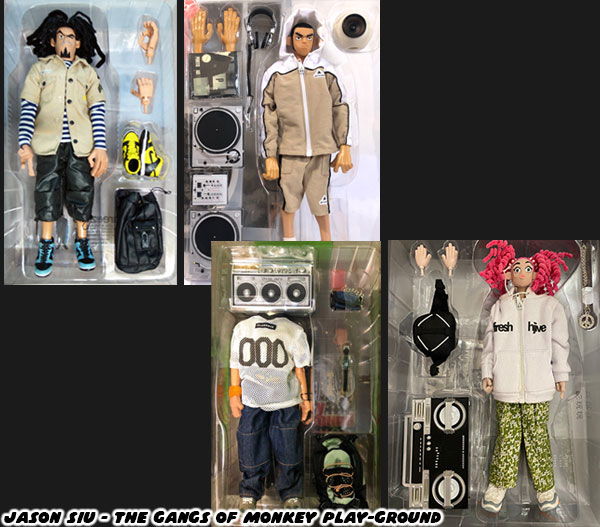
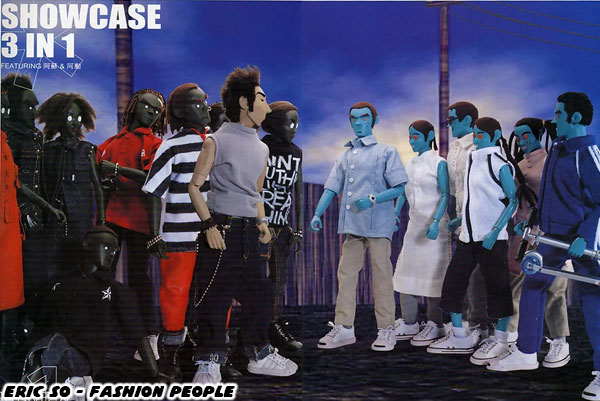
The thing was that the seeds that Michael Lau had planted in Hong Kong a few years prior were now sprouting. His friends, and contemporaries in Hong Kong, and Japan were now releasing figures themselves. They weren’t necessarily doing things for art galleries either, but instead for toy buyers, and collectors. The made sure to pay attention to everything that Lau had done with his original gardeners. The figures from Eric So, and later Jason Siu - The Gangs of Monkey Play-Ground were giving fans of a Lau a chance to walk home with a 12” figure instead of a mini gardener. They made sure that the characters wore the right fashion, that they came with the right accessories, multiple hands, stickers, changes of clothes, etc. They even had sculpted heads, and hands that were not unlike the work of Lau. For the people that had missed the boat when Michael sold a handful of his larger figures this was the next best thing.

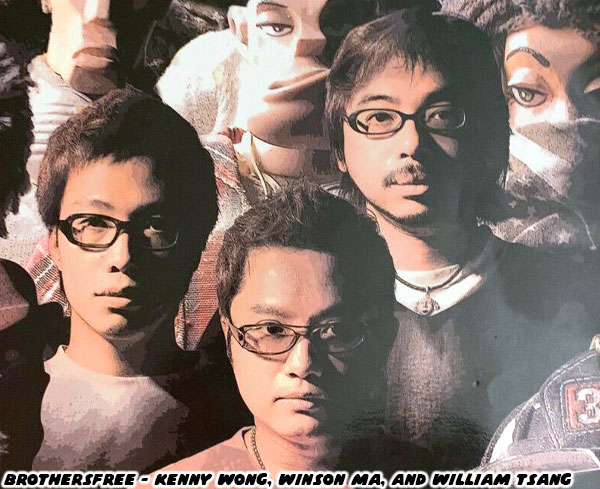
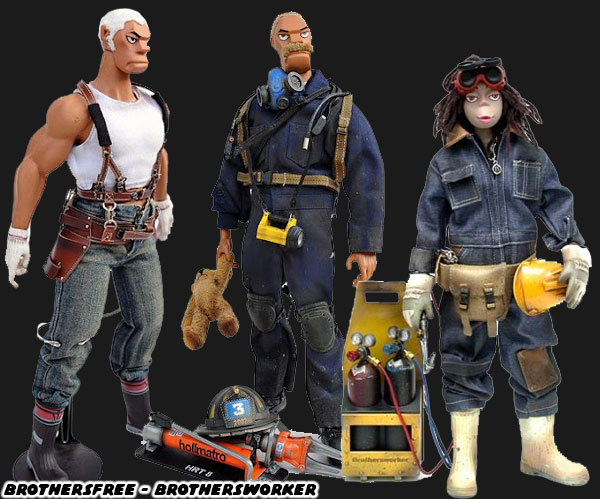
Although Lau’s cartoon style was heavily imitated in many figures there would still be unique fingerprints from So, Wong, or even the collective of Winson Ma, Kenny Wong and William Tsang known as Brothersfree. The group of artists had been working behind the scenes on all sorts of figures, robots, vehicles, and more for the 12” community. They understood the format probably better than any other artist working at the time. It wasn’t enough to make a cartoonish doll in street wear. They had to tell a story, they had to represent a part of the culture. Lau had already blown the doors off of street fashion, and extreme sports. Anyone that followed in his footsteps wouldn’t be able to top the master. Brothersfree had an appreciation for the fashion, and aesthetic of industrial workers. They released a line known as Brothersworker. The characters had unique sculpts, and frames. They had names like Popeye, Baby, Seven, and Storm. Each had a personality, and each told a story. As with Lau the devil was in the details.

All of the Brothersworker figures came with the appropriate outfit. Denim, leather, canvas, and other durable material, with zippers, rivets, and double stitching. More important they had accurate tools for their role. As Lau made sure that the gardeners had the right sneakers, chain wallets, and accessories, the Brothersworkers had hard hats, blowtorches, jackhammers, and tool boxes filled with 1/6 scale hammers, wrenches, screwdrivers, respirators, goggles, and more. If you were a fan of modern 1/6 figures these would be the only time many of the work items were produced. Making them highly desirable in collectors circles. It wouldn’t be the only unique contribution from the group. They also released a Brothersrobber figure who wore a menacing gas mask, carried several guns, had the tools for breaking into safes, and came with a duffel bag filled with stacks of cash. The group proposed a Brothersjoker series of 12” clowns. But only some of the 6-inch versions were ever made to the best of my knowledge.

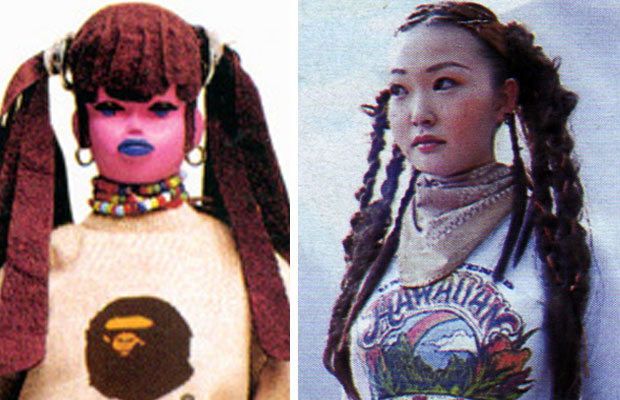
I had mixed feelings about the sudden influx of artists, especially those from Hong Kong releasing their own collectable 12” figures. At best they were celebrating the birth of an entirely new form of art. I enjoyed the gardeners because they looked like my friends. Growing up there were never any dolls or action figures that I could relate to. I had just about forgotten about that chapter of my childhood until I saw the gardeners. Finally I saw characters that I could identify with. They had different skin tones, different types of hair, some had zits, pot bellies, and acne scars. Some were tall, some short, but all unique. Despite reminding people of Barbie the gardeners weren’t the same dolls in different clothes. None were created with an unattainable beauty standard.

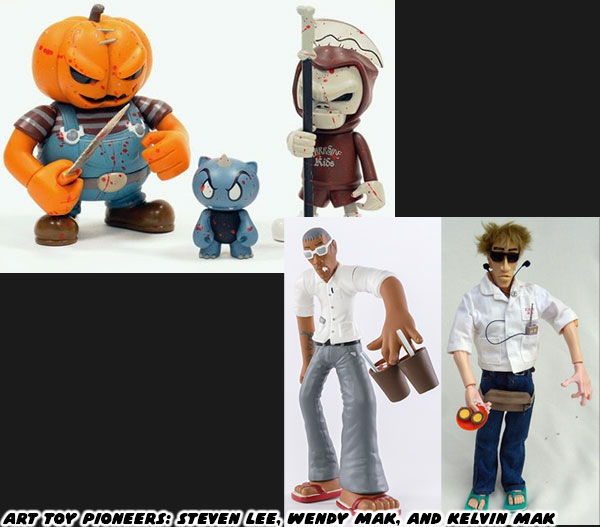
Many of the figures coming out from other independent artists were unique for example the wonderful work of Steven Lee, who could create scary, whimisical, and fun figures all at the same time. What some of the other toy lines did however was lack the cross representation of ethnicities that Lau highlighted. Wendy Mak, and Kelvin Mak for example were there in the early days too. The sister, and brother team founded Maksco. They released a series of figures called 2da6, which were snapshots of everyday people in Hong Kong. Whether they were construction workers, monks, or the local cafe owner serving drinks. They told a story that people living in the city could identify with, but none of them were Black, brown, or otherwise non-Asian characters. The other reason the gardeners hit with me was because they were filling in a part of the market that had been overlooked for decades.

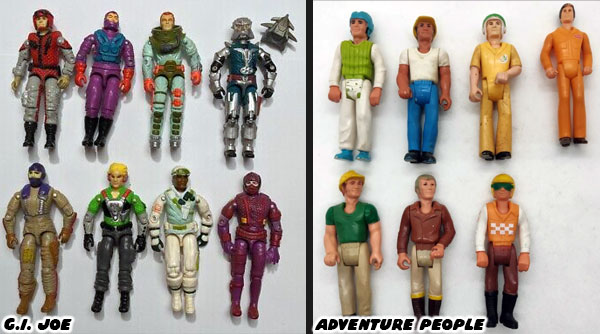
One of the toys that I really enjoyed as a kid were called Adventure People. The figures by Fisher Price were roughly the same scale as the G.I. Joe action figures from Hasbro. What appealed to me was that the Adventure People weren’t about selling a brand, label, or ideology. As much fun as I had with the Joe’s it was always the same type of play; good guys vs bad guys. Playing with the Joe’s, Transformers, He-Man, or Ninja Turtles was just repeating the same things I saw in cartoons. Of course those shows were essentially toy commercials to begin with. They programmed my young, impressionable mind with a message, and type of play. Knowing was half the battle…

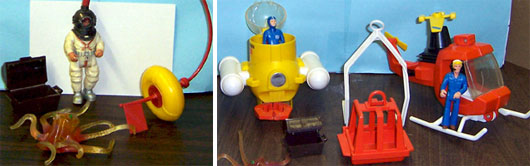
By comparison the Adventure People represented all sorts of professions; news broadcaster, scuba diver, stuntman, pilot, motocross racer, astronaut, camper, and tons more. I could really let my imagination fly with those figures. The goal was actual play instead of conflict. By the same token there was no agenda when I looked at the gardeners. They were chill figures, but they also had unlimited play potential. They weren’t ads for a massive company. These were the things that made the 1/6 scale figures memorable. Not everything was great with this trend. There were a few things that annoyed me with the rise of urban vinyl. I’ll talk about them in the next blog. Did you collect any 12” figures? What about smaller vinyl collectables? Tell me about it in the comment section please. As always if you would like to sponsor me please visit my Patreon page and consider donating each month, even as little as $1 would help make better blogs and even podcasts!
follow the Street Writer on Patreon!

Friday, May 3, 2024

Remix Culture, how Asian designers changed the game, part 2

In a previous blog I mentioned that I hadn’t drawn in my sketchbook in years. When I did I would often create something basketball related. I absolutely loved the sport. Drawing basketball players helped me learn anatomy, perspective, color, and action poses. I learned how to color my work with Adobe Illustrator while turning those sketches into finished renders. In that blog I also mentioned that I had turned down working with shoe, and apparel manufacturer AND 1. The company wanted to buy the rights to my current, and future basketball characters for a flat rate.

I would be getting no residuals on potential millions worth of revenue that the parent company would. In the early 2000’s there was no hotter place to work for. As an artist just getting started it was a dream opportunity, but I decided to hold onto my IP, and scruples instead. I learned that it was okay to turn down some clients after reading an interview with Michael Lau, one of my favorite artists. Mr. Lau helped start a movement. If you want to get the complete history of his early years please visit the Michael Lau fan site which I recently restored. I mentioned a few of Michael’s contemporaries on my fan site, however I want to try to connect the dots, and explain how art, culture, and the toy market came together.

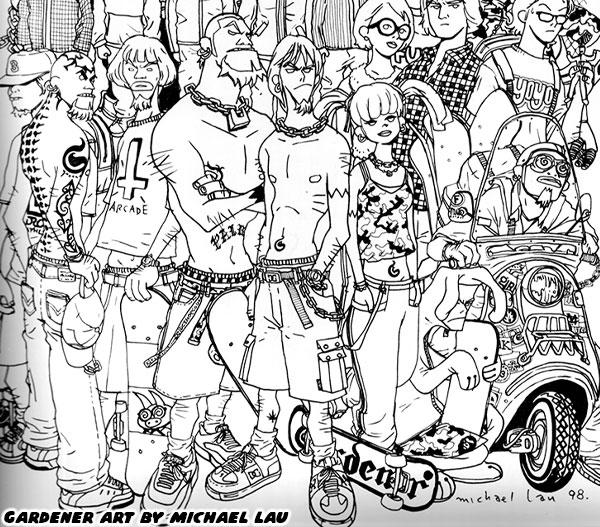
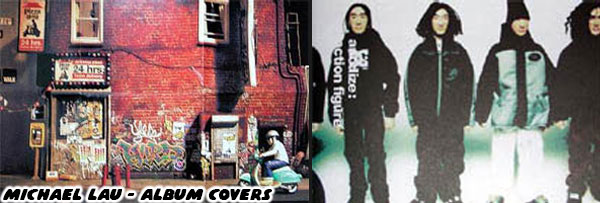
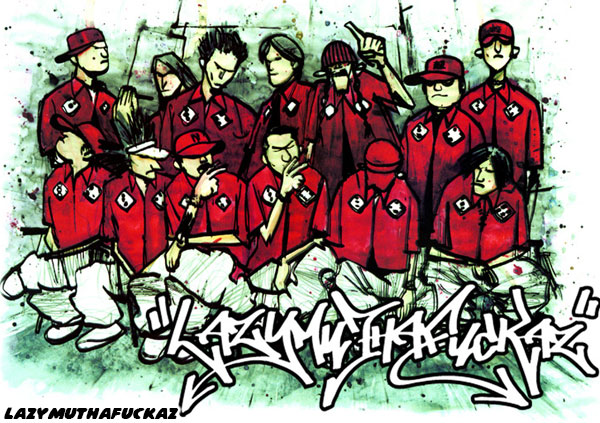
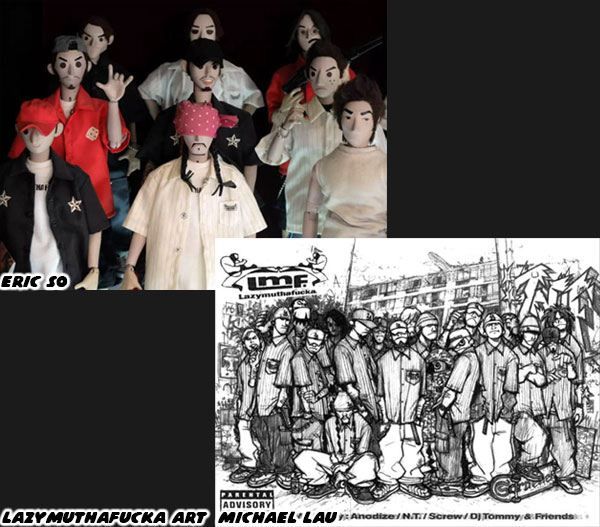
The art movement started in the early ’90s. Michael was from Hong Kong. He graduated from the Design First Institute, and went into ad art, and display design in the port city. In his free time he would make models, and toys. He sketched out a world of street kids that he called the “gardeners” the lowercase “g” was on purpose. In the mid-90’s he would create album covers for his friends in the Hip Hop, and rock groups Anodize (Jimmy Man, Gary Cheng, K.K. Wong, Was, and Davy Chan), Jan Lam, and the Lazymuthafucka (MC Yan, DJ Tommy, Kit, Wah, Kee, Gary, Davy, Jimmy, Sam, Phat, Prodip, and Kevin) crews.

These album covers were very playful. They featured handmade figures in street, or city scenes. The Japanese group SMAP loved his work, and also commissioned him to create some album covers for them a few years later. Now I want you to remember that during this era the internet was still in its infancy as far as access went. Art, music, news, and culture spread much slower than today. Magazines were the only way for most people to see what the trends were.With that said it was still the street kids that were aware of what was happening around the world.

Whether in China, Japan, the UK, or the US pop music was, and would always be the catchy songs that were featured on the radio, tv, and movie screens. The rugged “urban” sound of rap would always be seen as the Black music from the USA, and not be as heavily promoted in most nations. This didn’t stop generations of kids from getting into Hip Hop culture. The kids in the favelas of Brazil, the kids in densely packed cities in Japan, and also the displaced Eastern European kids spread all over the world could hear that it was an entirely new movement, and they embraced it. They learned that Hip Hop was a culture made of multiple components.

The four pillars were known as the deejay (the music/band), the emcee (the singer), graffiti (the art), and b-boy (the dance). Individually they were great creative outlets, but together they formed an entirely new culture. The fifth pillar of Hip Hop was called “Overstanding” instead of understanding by Afrika Bambaataa, one of the architects of the movement. Mr. Bambaataa was a former gang leader, in the ‘70s he saw that the various tribes, or gangs in NYC were tearing each other apart. The police, and local governments were sewing division among the various ethnic groups, and he wanted to end the violence. 

He knew that parties, music, and culture could bring them together. The boroughs of New York were forming a new sound. It wasn’t rock, it wasn’t soul, funk, or blues, but it pulled influences from each. With Black, Afro-Caribbean, and Latino roots it spoke to millions of people that didn’t hear themselves on the radio. They called the movement Hip Hop, reclaiming it from the insult that people would use to describe the music. The culture would tie together the different sounds, and stories of the city. More important, it was up to every person to share the story, and spread the culture. The movement borrowed a phrase from the days of American slavery “each one teach one.” In Hong Kong, Japan, and elsewhere around the world the music, and art started taking off by the mid, and late ‘80s. Members were building their own crews, learning the dance, graffiti, rap, and turntable. They were telling the stories in their own native languages.

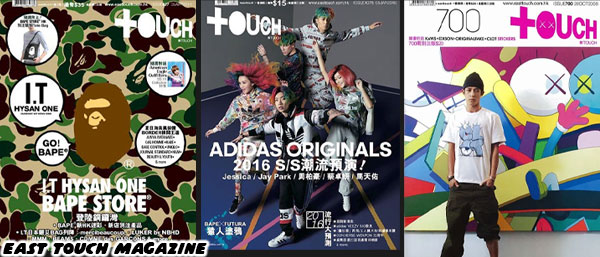
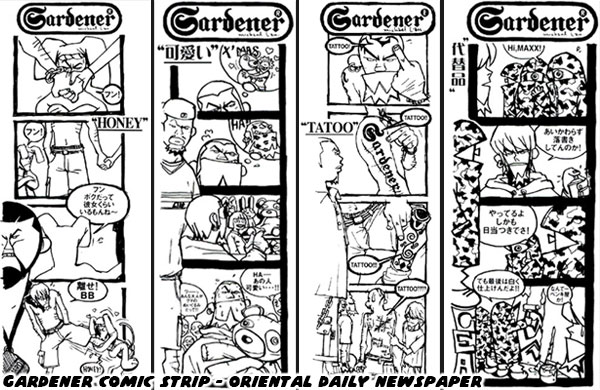
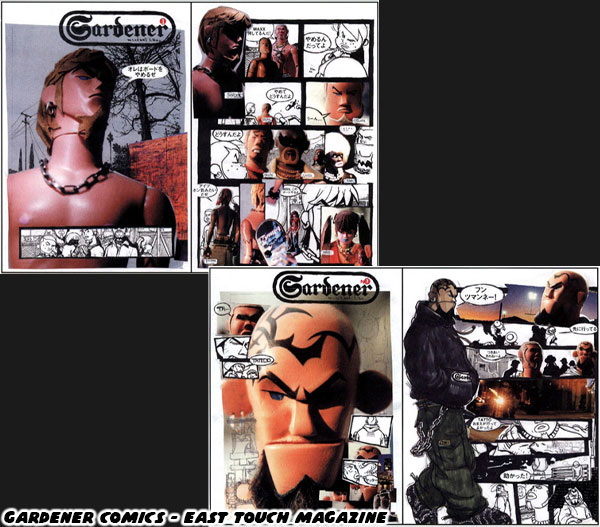
Michael Lau, his friends, and contemporaries were in the right place, at the right time. More important Michael was telling the story of the culture in his comics. He introduced the world to the gardeners in short panel comics in the Oriental Daily Newspaper, and larger color pieces in the pages of East Touch magazine. These comics mixed his illustrations, with his models. Each character had their own story, they lived in a world that young readers could relate to. He imagined they were growing up together, building families, moving on with their lives just as his friends were doing through the ‘90s.

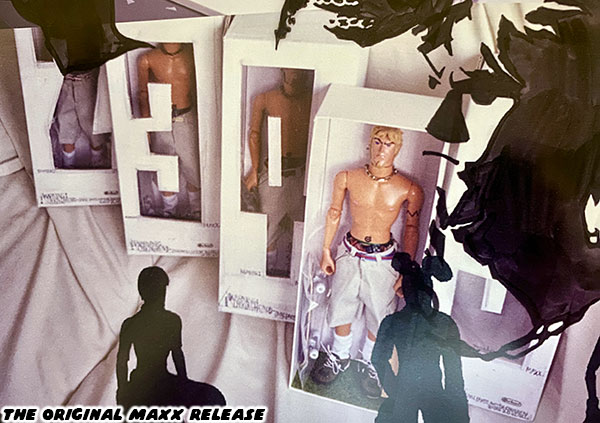
His friends convinced him to create a run of the figures for an upcoming indy art toy show. It all started with the hero of his comics, the young skater named Maxx. Sculpting, painting, and making the outfits was tedious work. Michael went to the trouble of making a custom box for the original toy show release. Green felt simulated grass was on the floor of the box. The boxes even featured hand-drawn labels, and a plastic numbered window. The figure included a skateboard, and a bag (for a change of clothes). Most figures even came with a sticker sheet or comic strip.  

When Michael sold his Gardeners at toy shows and boutiques there were about 10 copies per character (Maxx, Miss, Brian, Tatto and Uncle) each in a numbered box. Every copy had a unique element, such as different clothes or shoes. He sold each figure for around $350 US, which would be a steal by today's custom figure rates. A few years ago one of the original figures popped up for sale at a gallery auction. It went for around $35,000. The figures went to close friends, and private collectors. The number on the boxes were also a play on "selling out" the Gardener figures. Michael had no intention of ever mass producing anything he worked on. As an artist he wanted to control his name, and the quality of his artwork. A poster print could be run in limited quantities, but it would be easily counterfeited. The figures were something much harder to recreate. Needless to say his toys were a hit. They were the talk of the toy fair. They sparked a fire that would see his friends, and contemporaries also try their hand at the art form. One of the earliest that wasn’t credited enough, even by me was Eric So.

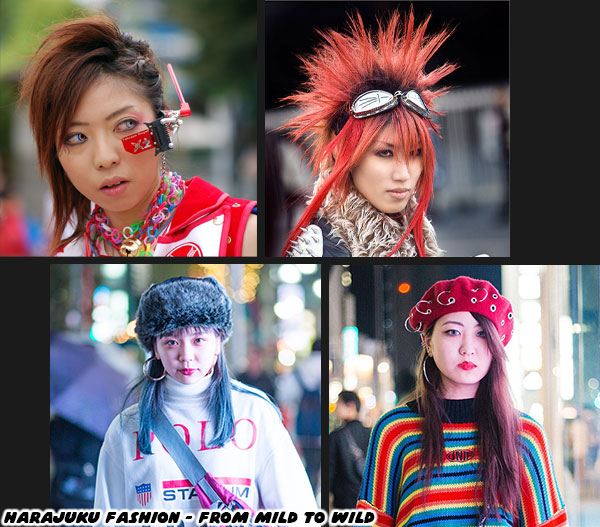
Mr. So ran in the same circle as Michael, he was friends with the LMF crew. He was also very familiar with Hip Hop culture. As an aside there were plenty of people in the USA that still conflated rap, and Hip Hop as the same thing. As the emcee KRS-One said “Rap is something you do, Hip-Hop is something you live. You are not doing Hip-Hop, you are living Hip-Hop.” This perception wasn’t limited to the USA. To the marginalized Gen-Xers in Japan, China, and Hong Kong rap, and rock was the music that spoke more to them than pop. They assimilated the culture, and made something entirely new out of it. I don’t think there could have been any other place that could have used Hip Hop culture, and start a figure movement with it. Think about the location for a moment. Fashion trends started in the major cities. Paris, London, New York, Los Angeles, Tokyo, etc. When a person thinks of the most avant-garde fashion in the world they might point to a place like Harajuku in Japan. The kids there took their tribal cultures seriously, and worked hard to create their niche.

I would argue that the kids of Hong Kong in the ‘90s were some of the most underrepresented innovators in art, and fashion as well. Hong Kong as a nation was unique in that it had its finger on the pulse of global culture. They were colonized by the British, but situated in China. More than any other metropolis they imported, and exported the goods that the world demanded. They worked directly with the manufacturers of the biggest brands, often behind the scenes. These included high-end fashion labels.

The trend setters in Hong Kong knew where street culture was moving to months before the rest of society caught up. Again, remember they were doing this before the internet. They were seeing the culture shift first hand, and making it their own. Michael Lau, Eric So, and their friends had a foot in the East, and the West at the same time. When they produced something it could be universally understood. They were laying the foundation for something brilliant. The world just didn’t know it yet. I would say that all of that changed when Michael went to Japan for his Neatnik exhibition in 1998. Japanese musicians were now eager to work with him on album art. He was now an artist getting international exposure.

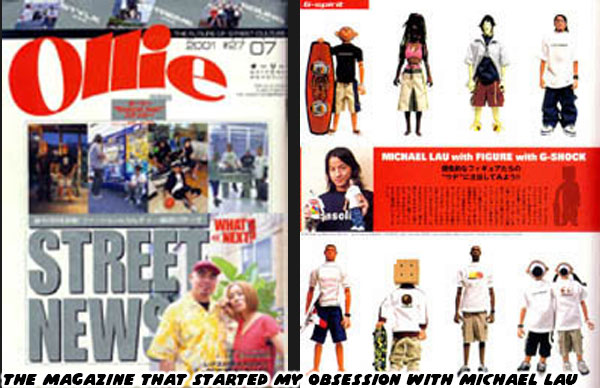
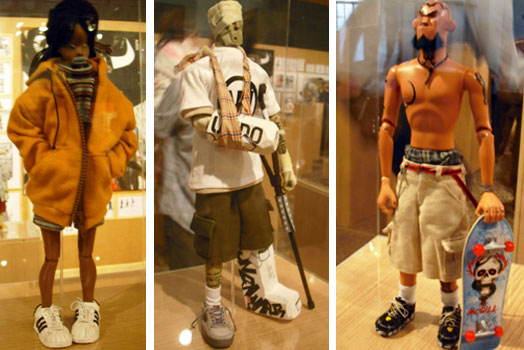
The following year there was the Michael Lau Exhibition III-crazysmiles at the Hong Kong-art center. This was the first show that featured all 101 of his original gardener figures. Fans of his comics could see all of the characters in person. Each figure was standing in a resin case, and you could walk around each of them, and absorb the countless details. In 2001 he took the exhibit to Japan, and that was essentially when the movement really took off. I remember that my mind was blown the very first time I saw a picture of the gardeners from that exhibition. It was entirely by accident, I was flipping through the pages of the Japanese skateboard magazine called Ollie. There was an insert from G-Shock watches by Casio. They were helping sponsor the gallery shows, and ran an ad on athletes, and artists to keep an eye on. Pictured were just a few of the gardeners but my mind was blown. I needed to find out everything I could about the characters, and the artist. I still have that magazine, and showed it to Lau a decade later.

When it came to the birth of Hip Hop DJ Steinsky (of Double Dee & Steinsky’s Lessons 1, 2 & 3 fame) once said “This is music that I’ve been waiting all my life to hear, and I didn’t even know it.” I got the same reaction when looking at the pictures of the gardeners. This was an art form that I’ve been waiting all my life to see, and I didn’t know it. Studying the work of Lau would shape me into a better artist, and connect me to the community in ways I could never have predicted. But I’ll talk about that more later. Were there ever works of art, or creators that completely changed the way you thought about art? Tell me about it in the comments section. As always if you would like to sponsor me please visit my Patreon page and consider donating each month, even as little as $1 would help make better blogs and even podcasts!
follow the Street Writer on Patreon!