Showing posts with label gi joe. Show all posts

Friday, August 9, 2024

Remix Culture, a bonus entry!


I hope you enjoyed the Remix Culture series from the past few Fridays. I had some material for a bonus entry this week. Previously I shared with you my love of basketball, and how I fell into urban vinyl art. I revealed that some of my favorite toys combined both basketball, and vinyl figures. The Super-X figures by Dragon Models, All Star Vinyl figures by Upper Deck, and most recently the Street Mask figures by JT Studios were the gems in my collection. They brought me tremendous joy. Those weren’t the only toys that I was happy with. I also had a great collection of Oswald figures, and plenty from Michael Lau, the Godfather of the urban vinyl movement.

One of the reasons I was able to build a great collection over my lifetime was because I was very selective about which 12” figures I bought. Those figures could be very expensive compared to the other toys in my library. For the price of a single 1/6 figure I could get a half dozen Oswald plush dolls. In order to maximize the return on my investment I had to be very picky. When I started collecting the high-end basketball figures I knew that I would have to give up on curating another line. I knew exactly what I would never be able to add to my shelves; space figures. Like many of you I’m a huge fan of space. Like a really, really, really big fan of space; astronauts, and science in general. Growing up I would check out books on space travel from the library. My parents, and brothers supported my fascination. They got me a really nice telescope when I was a kid, and today my wife, and I have a high-end telescope. The science behind space travel had always been part of my identity. 

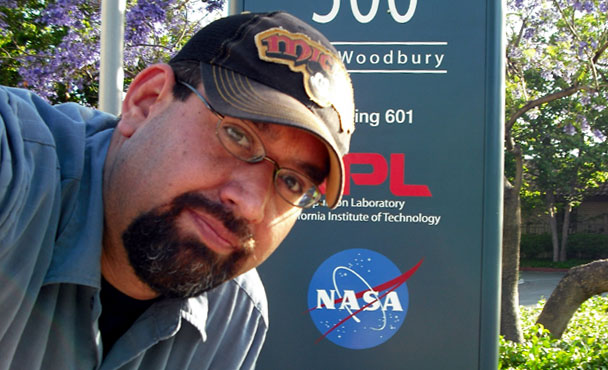
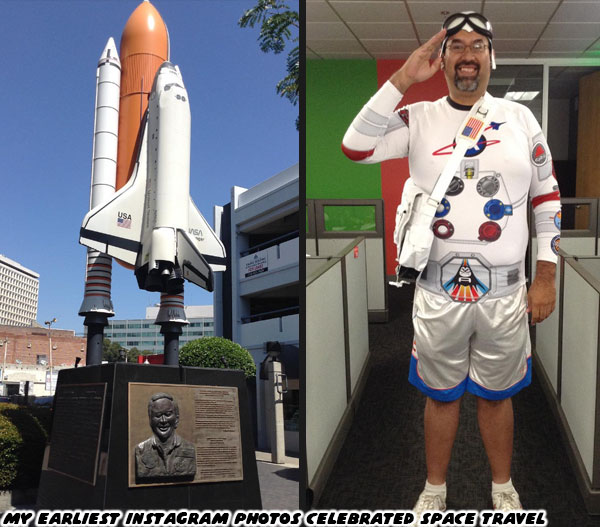
In grade school my friends knew that I was a big science nerd. They could often find me going over books on rockets, and space shuttles. At least that was whenever I wasn’t reading about monster trucks. On the blog I mentioned that Lunar Lander from 1979 was the first simulator-style arcade game that I could remember. I credited it with sparking my love of arcade games, and planting the seeds that would eventually see me land a job working mission support with JPL. When I joined Instagram one of my first photos was from the Challenger memorial in Little Tokyo. My family was there in Downtown Los Angeles in 2012 when the Endeavor got a flyby. It was definitely a highlight for me. When I left JPL for my current job I took that love of space with me. At that time our office had moved into a bigger building. Every holiday meant we were going all out. Catered tacos for Cinco de Mayo, hot dogs, and burgers for the 4th of July, big Christmas parties etc. We celebrated Halloween with everyone on the staff showing up in costume.

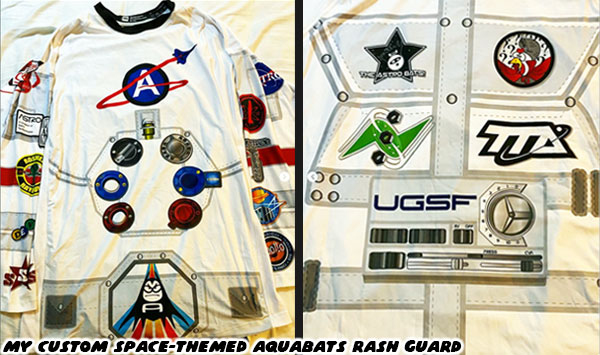
I had created a couple of custom rash guards for my kid, who was a huge fan of the Aquabats. We would go to their concerts when we could, and everyone loved her outfits. I would usually dress as a Sandflea, the arch-rivals of the Aquabats. After a few shows I decided to create a space-themed rash guard for myself. I created all the vector art for the outfit, including the graphics that looked like mission patches on the sleeves. The logos were a call out to other space themed bands, video games, actual missions, and even Disney attractions. The silver shorts were from AND1, a white anti-negativity helmet, goggles, and white Converse sneakers completed the outfit. I wore it to work, along with my NASA-themed laptop bag. My coworkers loved it as much as the fans at the concerts. Hopefully this proved how much of a fan I was of astronauts. When I said that it hurt giving up on collecting astronaut toys I meant it. Budgeting money for Michael Lau figures meant I would miss out on something equally cool.

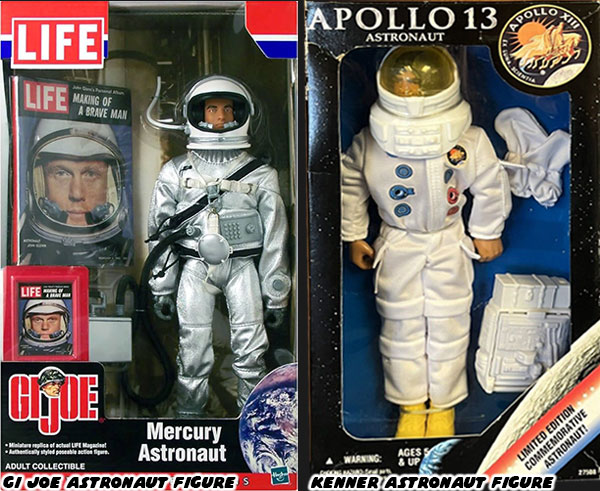
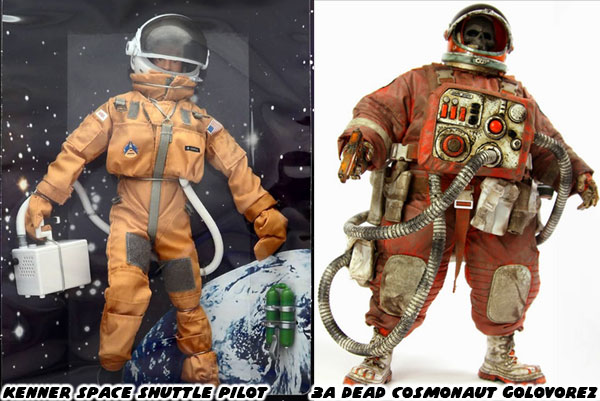
Science fiction toys, spacemen, and aliens had been in pop culture since the start of the 20th century. When I told fellow collectors that I wished I had more space toys I wasn’t talking about Star Wars, Star Trek, Battlestar Galactica or any other sci-fi lines. I meant actual astronaut figures, like the classic 12” G.I. Joe astronaut toy that debuted in 1966. There was a major shift in pop culture post WWII in America. Astronauts reached peak cultural relevance in the ‘60s thanks to the space race between the USA, and the Soviet Union. It would rise again in the ‘80s thanks to the Space Shuttle missions, and disasters. It was hard to imagine, but space travelers were treated like celebrities decades ago. There was a time when no singer, athlete, or movie star could even compare. Because of that popularity some of the best toys ever made, at least in my book, were inspired by astronauts. These figures looked amazing whether they were based on actual Kennedy-era NASA astronauts, Ronald Reagan-era Space Shuttle pilots, or even fictional space explorers.

Being on the cutting edge of what was possible had inspired me all my life. I had always enjoyed action figures based on anything other than soldiers. I talked about it previously that the Adventure People by Fisher Price meant more to me than the G.I. Joes by Hasbro. Regular people that had cool jobs inspired my creativity more than glamorized combat. There was no job cooler than that of astronaut. They were the ultimate explorers. In my mind they were the last people that were really pushing humanity into the future. There was something to the uniforms, hoses, patches, helmets, life support, and especially space ships that really sung to me. It was an aesthetic that was cutting edge in form, and function.

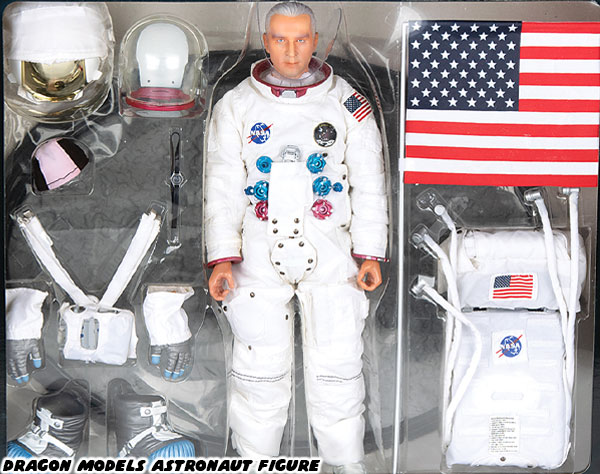
By the time I was an adult, and able to start collecting the astronaut figures were few, and far between. If I didn’t have a space toy that managed to survive childhood then I wouldn’t see anything new. The people at Dragon Models, the same people that made my Super-X figures, released an Apollo 11 figure in 2002. At around $300, this figure set the standard by which every following astronaut toy would be measured against. Unfortunately for me this was right when I was on the hunt for Michael Lau figures from Hong Kong. It was at that very moment that I knew I could never afford to collect 12” figures from the space line. I could get two, possibly three Lau figures, or the entire Super-X team for the same price. The choice would be easier in that context. That didn’t stop me from keeping tabs on other explorers. What I saw started making me reconsider the choices I made.

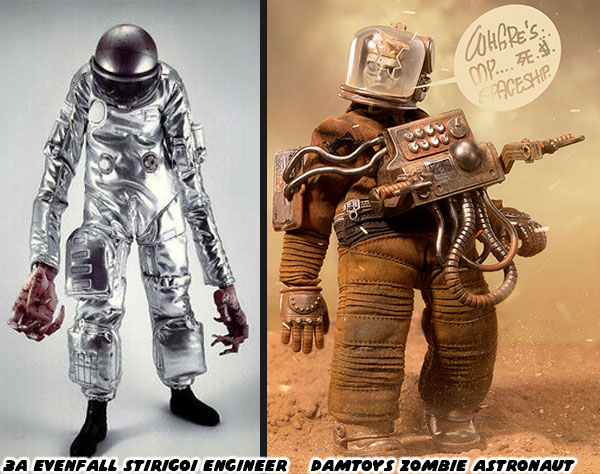
Artists in the 2000’s started going down some really creative paths when designing a new generation of toys. These creators saw the reaction to every new release was met with nothing but love from collectors. It didn’t matter if the artists were remixing kaiju characters, sculpting original cartoon animals, putting together robots, or celebrating everyday heroes like construction workers, cops, and chefs. There was a person out there that was a fan. Not only did they want to support every new release they were also eager to see creators push the envelope. They wanted to see horror elements get added to the art toy format. Monster toys were nothing new, but creature urban vinyl figures went extra hard. Sure astronauts were cool, but what if they were zombie astronauts instead? Or what if they were alien shapeshifters pretending to be astronauts? This was the kind of storytelling that made the movement really stand out from traditional toy lines.

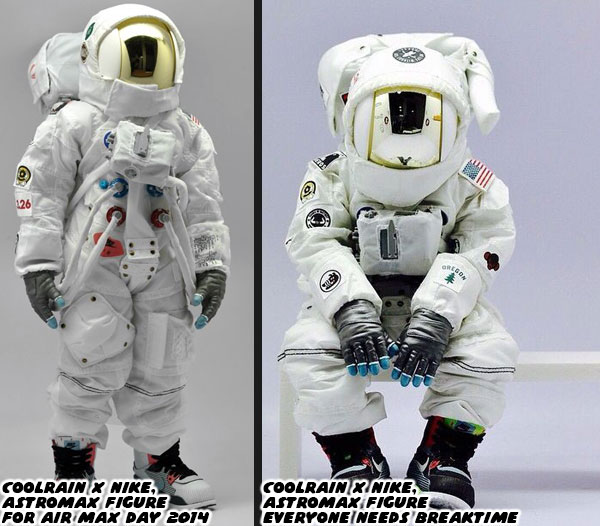
I was happy with the collection of vinyl toys I had built in the 2000’s. There was one figure that popped up in 2014 that hit me like a freight train. The South Korean artist CoolRain created a figure to celebrate Air Max Day on March 26. It was the 27th anniversary of the release of the Nike Air line of sneakers. Nike had all sorts of artists contribute pieces to their gallery, and CoolRain outdid them all. He created a custom astronaut figure, that at first glance looked similar to the Dragon Models figure mentioned above, but was even more detailed. Upon further inspection this handmade figure had modern uniform fittings, not the classic Apollo gear. The mission patches were a collection of Nike logos, and brands. The space boots were fictional sneakers dubbed Astromax. The figure got the same reaction from me that Michael Lau’s Maxx, and Jai Tseng’s King generated in me. They were works of art that completely blew my mind. They had that rare combination of elements of everything I loved, in this case astronauts, sneakers, and figure art.

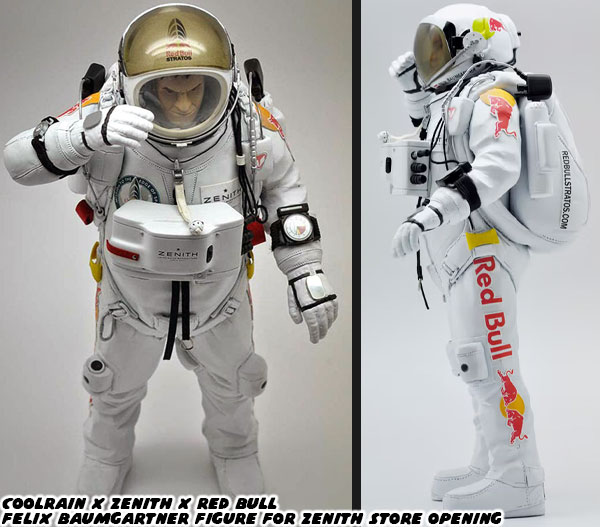
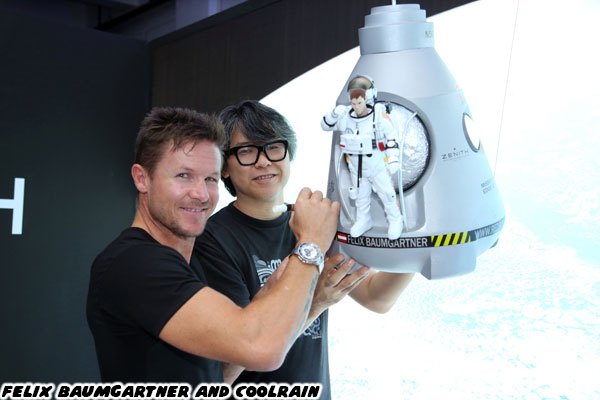
The pieces that CoolRain created for Nike were only used in the gallery shows. CoolRain had no intention of mass producing these works of art. His follow up in October of the same year was arguably just as cool. The Austrian daredevil Felix Baumgartner had set a record in 2012 for the highest skydive of all time. He rode a balloon to the very edge of space, almost 120,000 feet up. He jumped from a capsule in a pressurized suit. It was like an astronaut speed suit designed to survive his supersonic fall back to Earth. On the second anniversary of that record breaking jump Zenith had opened a store in Singapore. The high-end Swiss watchmaker had sponsored Felix’s jump, along with Red Bull. It was called project Stratos. They commissioned CoolRain to design a figure to celebrate the occasion. What he delivered was one of the best pieces he has ever designed.

The duo of Astromax, and Baumgartner figures not only made me insanely jealous, they also sparked my imagination. The only consolation that I had was that these figures were so complex that they would never be reproduced for collectors. So nobody except for CoolRain would ever be able to display them. At least that was what I thought. CoolRain developed a resin statue version called Astrocat. It was a variation of the sitting Astromax figure as part of his “Everyone needs break time” line. He collaborated with other artists to have their trademark figures sitting on a bench, taking a breather. When it was his turn he released a few of his figures in statue form also sitting on the bench. I was absolutely tempted by this figure, but didn’t like that it was a statue, or that it had cat ears on the helmet. It seemed out of place on an otherwise great collectable.

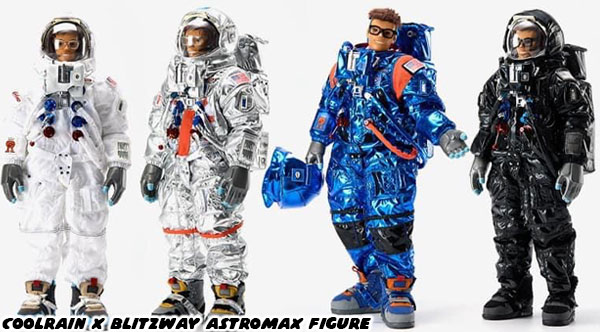
I kept an eye on what CoolRain, and the other figure artists had worked on over the years. Nothing ever inspired me to save my money except for the recent Street Mask line by JT Studio. This spring of 2024 I absolutely lost my mind. It was the 20th anniversary of CoolRain’s debut. He announced that his fans would finally be able to buy the figure they had long been clamoring for. CoolRain, and Blitzway would release four variations of the Astromax figure. The original white uniform would be joined by silver, blue, and black. Each one had all the same details as the original art toy. This news would have made me extremely happy at any other time. Unfortunately I had purchased the King, and Flash figures from JT Studio just a few days before the press release went out. The JT figures cost so much that I promised myself I wouldn’t buy any other high ticket item this year. I considered them my birthday, and Christmas presents from myself, and my family.

It was a cruel twist of fate that the only non-basketball 12” figure I would justify purchasing finally hit the market. I should have known something like that would happen. I’m not going to lie. I am saving every penny that I have in the hopes that the figures do not sell out before the end of the year. That I might be able to get one before the resellers scoop them up. Only time will tell if that’s possible. If I get one then you’ll find out about it on the blog. If I don’t then I’ll just remain salty about it until my dying day. Anyhow this wraps up the bonus entry for my remix series. I’d like to know if there were any toys you collected, or any expensive figures you had on your wishlist. Tell me about it in the comments section please. I’d like to hear your thoughts on the comments section. As always if you would like to sponsor me please visit my Patreon page and consider donating each month, even as little as $1 would help make better blogs and even podcasts!
follow the Street Writer on Patreon!

Friday, May 10, 2024

Remix Culture, how Asian designers changed the game, part 3

I don’t think people understand how revolutionary the art of Michael Lau was, especially to me. His 1999 exhibition in Hong Kong was like the first sonic boom, but his gallery exhibition in Japan during the summer of 2001 was like landing on the moon. I was 27-years-old at the time. I had read countless comics, and manga. Played hundreds of video games. Seen entire libraries of animated programs, and films from around the world. I didn’t think that anything could have absolutely grabbed me like the gardeners did. I could only imagine it was how Andy Warhol, Jean-Michel Basquiat, or Keith Haring connected with creatives in the ‘70s and ‘80s. They added entirely new chapters in the book of art. The figures of Michael Lau were a revelation, for the first time an artist not only synthesized a culture, he captured an entire generation using a new format. His three-dimensional figures did more for me than a photograph, sculpture, song, poem, documentary, or movie could have ever done.
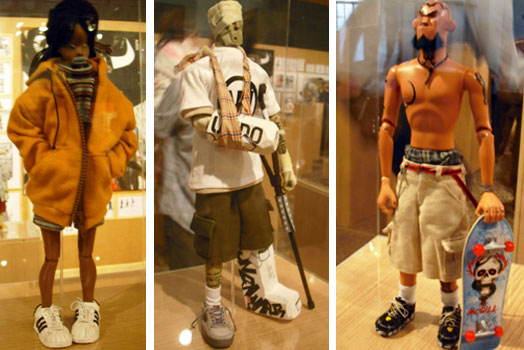
The thing was that I was not looking at the abstract. I didn’t have to interpret the shape, form, white space, color, or tone of the art. I was looking at physical representations of the people I knew, of the people I looked up to, of the culture itself. Each figure was like staring at the friends I hadn’t met yet. The people that inspired Michael also inspired the people of Hong Kong, Japan, the US, and the UK. Although these fans had never met they could all point to a gardener and say “I know that guy.” They dressed like regular people. They weren’t wearing high-end fashion lines, but they wore exactly what kids on the street would be wearing. This applied from top to bottom, from their haircuts to the brand of shoes they sported.
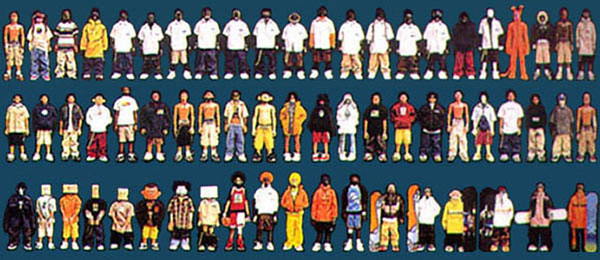
Although Michael lived a world away I could swear that he grew up in Southern California. He knew intimately the Hip Hop, and action sports cultures he was presenting. He knew what skateboards, and skate shoes would be authentic with skaters themselves. He knew what types of BMX bikes the kids would ride. He knew the snowboards, and bindings they would use. Surfboards, wakeboards, and generally all of the non-traditional activities that the US considered extreme. Even the traditional sport highlighted had major street influence. The basketball players wore the freshest sneakers. He didn’t just go to Toy’s R Us, and put a bunch of Barbie’s in tee shirts. Everything was handmade, and that’s what really blew my mind. It was an absurd level of detail poured into the 101 figures. Michael did the impossible, he bottled the essence of street culture.
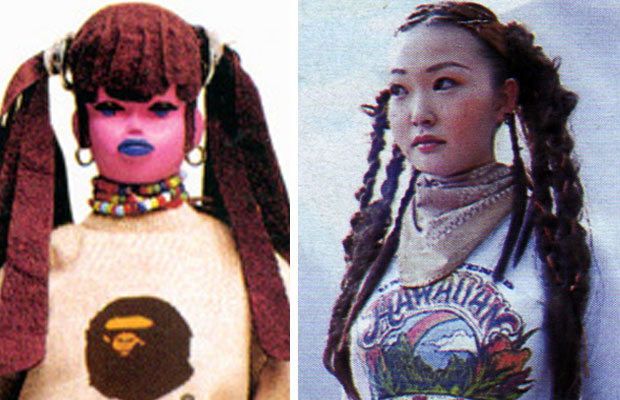
A good portion of the gardeners were based on the people he knew, including the LMF crew. Even the fantastic designs, people with heads of basketballs, boxes, or spray cans were inspired by the community. He didn’t have to travel to Los Angeles, Harajuku, or New York to meet the trendsetters because they all lived in his imagination. If gallery shows were the only thing Michael had contributed to the art world then he would still be a hero of mine. Yet once people got a taste of his art they would only want more.
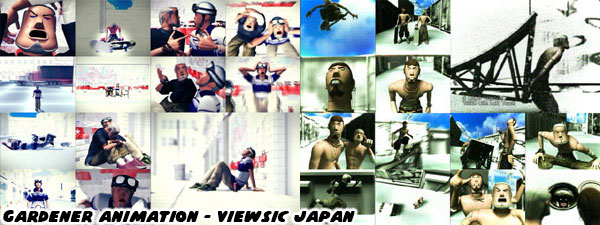
Up until that time you could only buy a poster of his gardeners in his exhibitions. Since the figures took so much time to produce there was no chance that the patrons would be able to walk home with one, no matter how hard they fell in love with them. That was until the galleries convinced him to release smaller vinyl versions of his figures, similar to the ones he had worked on in Hong Kong circa 1999. The 6-inch mini gardener was born, and these would inspire the creation of vinyl toy movement. Including Dunny’s (2004), Vinylmation (2008), and the ubiquitous Funko Pop figures (2010).
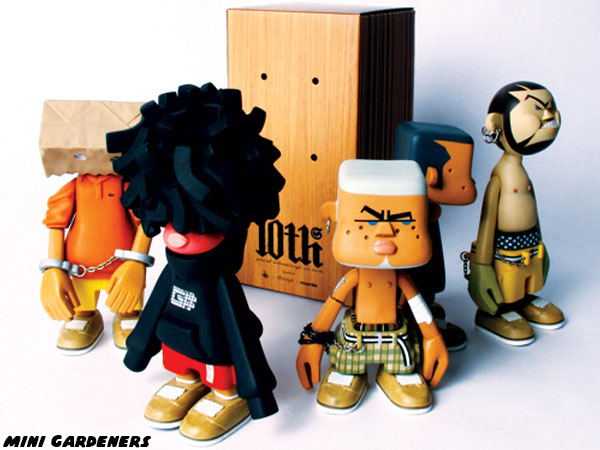
The mini gardeners were created in limited numbers, around 1000 if I remember correctly. Some sets would only get a run of 500, and the rarest would get a run of 100. Each 6-inch gardener captured all of the details from the 12” figures they were based on. I remember the first time that I got one. I saw an announcement of a book based on the exhibition. It included Maxx, and a CD. I went to the Japanese bookstore in downtown Los Angeles, and placed an order. They asked if I were sure I wanted it, as it would cost almost $300 once tax, and shipping were added. I couldn’t slap my credit card on the desk fast enough.
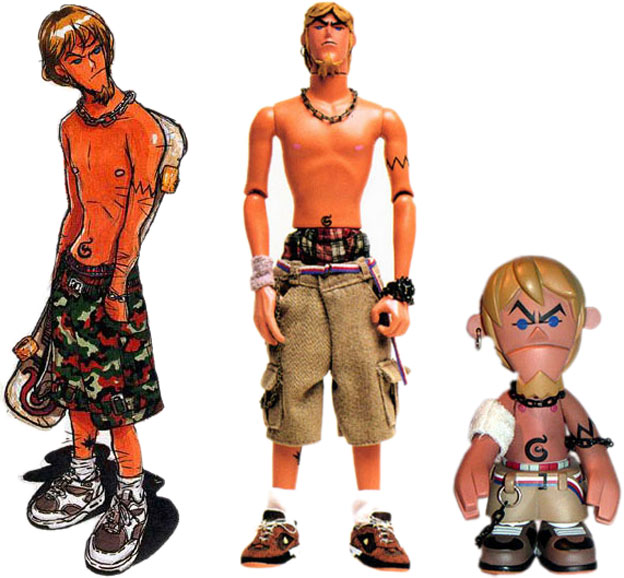
The bookstore manager literally phoned it in right in front of me, and read the details to their parent store overseas, as they hadn’t networked their computers at the time. Once they got a confirmation number for me I could go back home. A month later I picked up the box set, and had one of those feelings that words couldn’t really capture. I showed everyone at work the figure, they were astonished that Maxx had a metal earring, fabric wristband, and chain on his wallet just like the 12” figure he was based on. It was, and remains one of my favorite pieces.
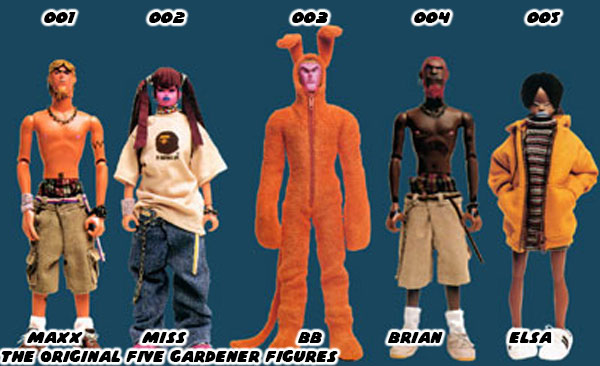
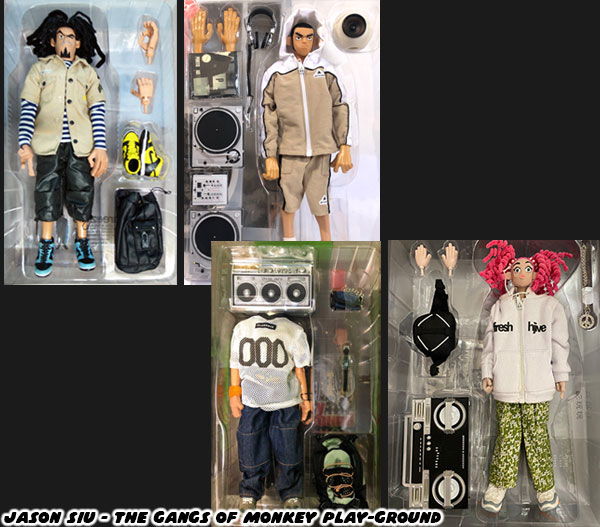
The thing was that the seeds that Michael Lau had planted in Hong Kong a few years prior were now sprouting. His friends, and contemporaries in Hong Kong, and Japan were now releasing figures themselves. They weren’t necessarily doing things for art galleries either, but instead for toy buyers, and collectors. The made sure to pay attention to everything that Lau had done with his original gardeners. The figures from Eric So, and later Jason Siu - The Gangs of Monkey Play-Ground were giving fans of a Lau a chance to walk home with a 12” figure instead of a mini gardener. They made sure that the characters wore the right fashion, that they came with the right accessories, multiple hands, stickers, changes of clothes, etc. They even had sculpted heads, and hands that were not unlike the work of Lau. For the people that had missed the boat when Michael sold a handful of his larger figures this was the next best thing.
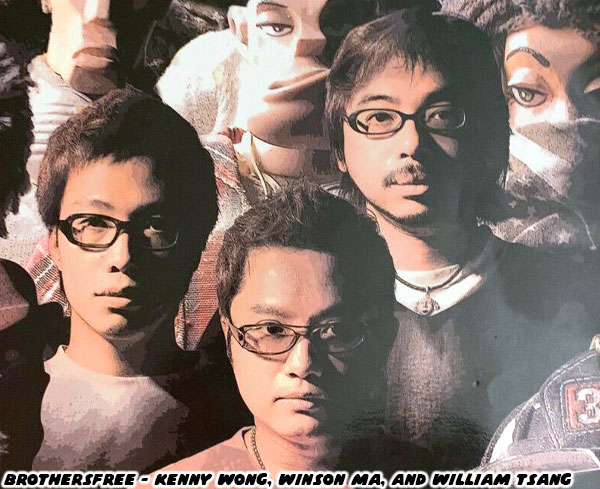
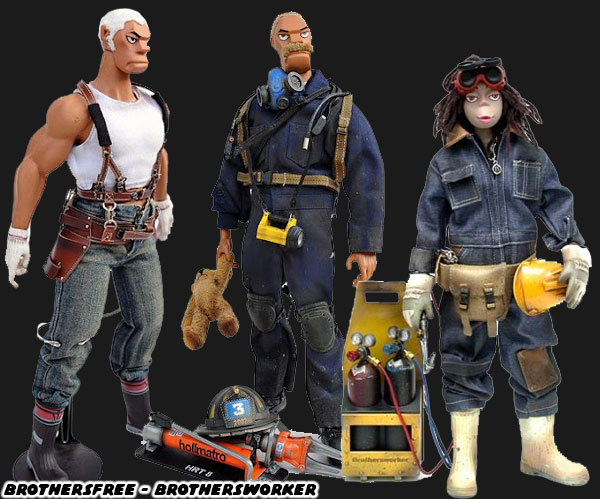
Although Lau’s cartoon style was heavily imitated in many figures there would still be unique fingerprints from So, Wong, or even the collective of Winson Ma, Kenny Wong and William Tsang known as Brothersfree. The group of artists had been working behind the scenes on all sorts of figures, robots, vehicles, and more for the 12” community. They understood the format probably better than any other artist working at the time. It wasn’t enough to make a cartoonish doll in street wear. They had to tell a story, they had to represent a part of the culture. Lau had already blown the doors off of street fashion, and extreme sports. Anyone that followed in his footsteps wouldn’t be able to top the master. Brothersfree had an appreciation for the fashion, and aesthetic of industrial workers. They released a line known as Brothersworker. The characters had unique sculpts, and frames. They had names like Popeye, Baby, Seven, and Storm. Each had a personality, and each told a story. As with Lau the devil was in the details.
All of the Brothersworker figures came with the appropriate outfit. Denim, leather, canvas, and other durable material, with zippers, rivets, and double stitching. More important they had accurate tools for their role. As Lau made sure that the gardeners had the right sneakers, chain wallets, and accessories, the Brothersworkers had hard hats, blowtorches, jackhammers, and tool boxes filled with 1/6 scale hammers, wrenches, screwdrivers, respirators, goggles, and more. If you were a fan of modern 1/6 figures these would be the only time many of the work items were produced. Making them highly desirable in collectors circles. It wouldn’t be the only unique contribution from the group. They also released a Brothersrobber figure who wore a menacing gas mask, carried several guns, had the tools for breaking into safes, and came with a duffel bag filled with stacks of cash. The group proposed a Brothersjoker series of 12” clowns. But only some of the 6-inch versions were ever made to the best of my knowledge.
I had mixed feelings about the sudden influx of artists, especially those from Hong Kong releasing their own collectable 12” figures. At best they were celebrating the birth of an entirely new form of art. I enjoyed the gardeners because they looked like my friends. Growing up there were never any dolls or action figures that I could relate to. I had just about forgotten about that chapter of my childhood until I saw the gardeners. Finally I saw characters that I could identify with. They had different skin tones, different types of hair, some had zits, pot bellies, and acne scars. Some were tall, some short, but all unique. Despite reminding people of Barbie the gardeners weren’t the same dolls in different clothes. None were created with an unattainable beauty standard.
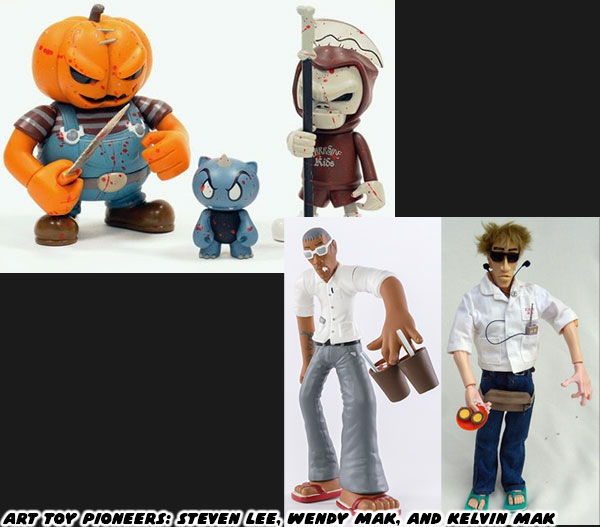
Many of the figures coming out from other independent artists were unique for example the wonderful work of Steven Lee, who could create scary, whimisical, and fun figures all at the same time. What some of the other toy lines did however was lack the cross representation of ethnicities that Lau highlighted. Wendy Mak, and Kelvin Mak for example were there in the early days too. The sister, and brother team founded Maksco. They released a series of figures called 2da6, which were snapshots of everyday people in Hong Kong. Whether they were construction workers, monks, or the local cafe owner serving drinks. They told a story that people living in the city could identify with, but none of them were Black, brown, or otherwise non-Asian characters. The other reason the gardeners hit with me was because they were filling in a part of the market that had been overlooked for decades.
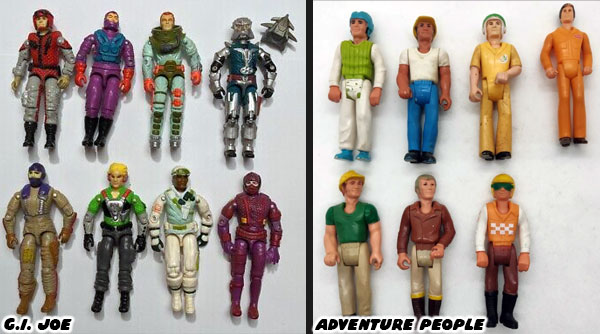
One of the toys that I really enjoyed as a kid were called Adventure People. The figures by Fisher Price were roughly the same scale as the G.I. Joe action figures from Hasbro. What appealed to me was that the Adventure People weren’t about selling a brand, label, or ideology. As much fun as I had with the Joe’s it was always the same type of play; good guys vs bad guys. Playing with the Joe’s, Transformers, He-Man, or Ninja Turtles was just repeating the same things I saw in cartoons. Of course those shows were essentially toy commercials to begin with. They programmed my young, impressionable mind with a message, and type of play. Knowing was half the battle…
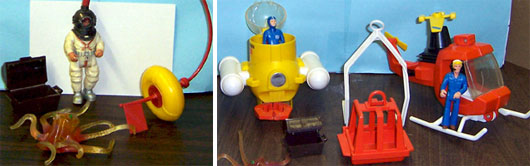
By comparison the Adventure People represented all sorts of professions; news broadcaster, scuba diver, stuntman, pilot, motocross racer, astronaut, camper, and tons more. I could really let my imagination fly with those figures. The goal was actual play instead of conflict. By the same token there was no agenda when I looked at the gardeners. They were chill figures, but they also had unlimited play potential. They weren’t ads for a massive company. These were the things that made the 1/6 scale figures memorable. Not everything was great with this trend. There were a few things that annoyed me with the rise of urban vinyl. I’ll talk about them in the next blog. Did you collect any 12” figures? What about smaller vinyl collectables? Tell me about it in the comment section please. As always if you would like to sponsor me please visit my Patreon page and consider donating each month, even as little as $1 would help make better blogs and even podcasts!
follow the Street Writer on Patreon!