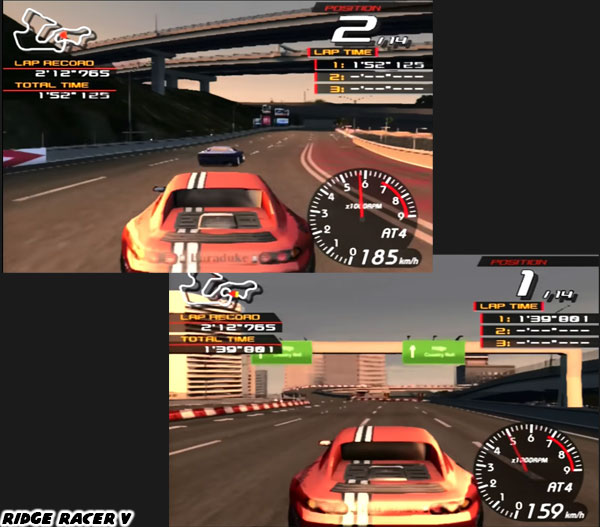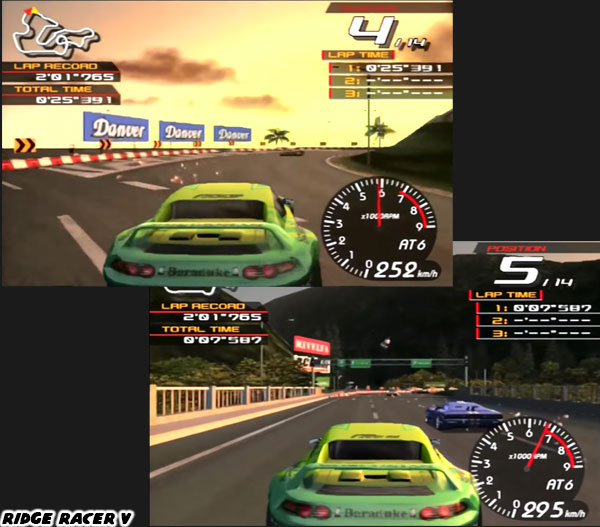
Showing posts sorted by relevance for query ridge racer. Sort by date Show all posts

Wednesday, March 25, 2026

Bookmark This Page; The Ridge Racer Legacy

The Ridge Racer series was a result of an intense rivalry with Sega. If you want to find out all about Namco’s flagship racing series then Bookmark This Page.

The Ridge Racer Legacy, part 1...

The Ridge Racer Legacy, part 2…

The Ridge Racer Legacy, part 3…

The Ridge Racer Legacy, part 4…

The Ridge Racer Legacy, part 5…

The Ridge Racer Legacy, part 6…

The Ridge Racer Legacy, part 7…

The Ridge Racer Legacy, part 8…

The Ridge Racer Legacy, part 9…

The Ridge Racer Legacy, part 10…

The Ridge Racer Legacy, part 11...

The Ridge Racer Legacy, part 12…

The Ridge Racer Legacy, part 13…

The Ridge Racer Legacy, part 14…

The Ridge Racer Legacy, part 15…

The Ridge Racer Legacy, part 16…

The Ridge Racer Legacy, part 17…

The Ridge Racer Legacy, part 18…

The Ridge Racer Legacy, part 19…

The Ridge Racer Legacy, part 20…

The Ridge Racer Legacy, part 21...

The Ridge Racer Legacy, part 22…

The Ridge Racer Legacy, part 23…

The Ridge Racer Legacy, part 24…

The Ridge Racer Legacy, part 25…

The Ridge Racer Legacy, part 26…

The Ridge Racer Legacy, part 27…

The Ridge Racer Legacy, part 28…

The Ridge Racer Legacy, part 29…

The Ridge Racer Legacy, part 30… 

Have you played Ridge Racer in the arcade or the consoles? Let me know about it in the comments section. As always if you enjoyed this blog, and would like to sponsor me please visit my Patreon page and consider donating each month, even as little as $1 would help make better blogs and even podcasts!

follow the Street Writer on Patreon!

Thursday, August 14, 2014

The Ridge Racer Legacy, part 29...

Ridge Racer, like other long running Namco titles had been steadily improving over the years. The developers were keenly aware that the canon of the series was sacred to the company. Every location, every manufacturer and every track had to be better than the last. Ridge City and the other sites were constantly growing and changing. They were very much like real world cities in that regard. The studio wanted audiences to recognize that the virtual world was living and breathing and would look slightly bigger and better each time they visited it. What audiences never expected to see was how well those locations would translate onto the handheld consoles.


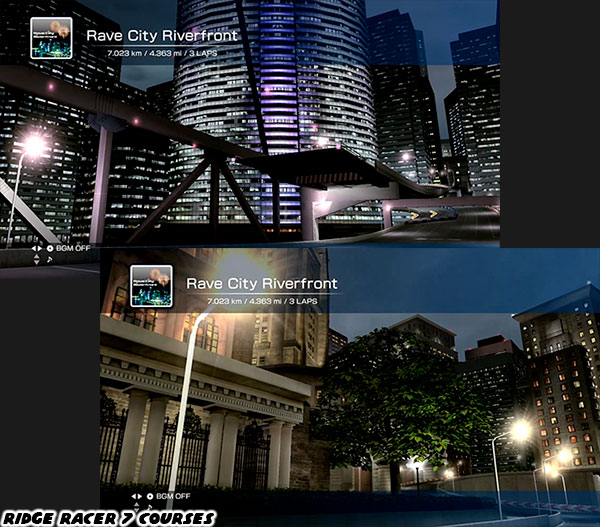
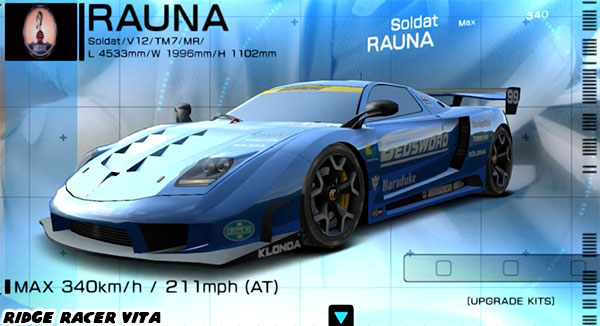
The publisher kept true to canon and made sure that the sights and sounds continued to improve in every release. Even with the limited processing power and storage capacity of the handhelds Namco was still able to deliver some memorable experiences. Ports that had a container ship, a crane and a few warehouses in Ridge Racer Type 4 had become much busier and far more packed with details when it was visited on the Playstation Vita. Of course the Vita was also a much more powerful system than either the Playstation or Playstation 2. It's high definition display was capable of presenting graphics which were light years ahead of where they were in 1999. It had grown out of the lessons learned from those consoles, the Playstation 3 as well as the PSP and PSP Go.

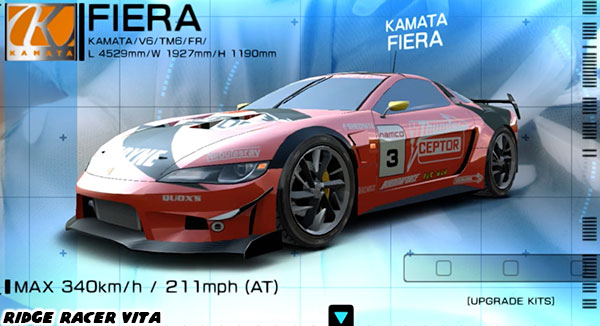
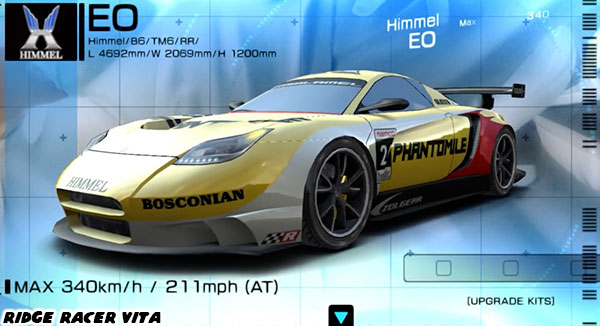
The most important lesson that Namco would learn from the title was how quickly the company could anger their fan base. Ridge Racer for the Vita was released in 2012 with three tracks and five cars. Additional cars and tracks were available by purchasing downloadable content packs (DLC). The company had charged full price for a game that was essentially an empty shell. A year later the company released Ridge Racer Unbounded and further distanced themselves from the things that made the original series so much fun. Visually the Vita game was a stunner. The tracks and cars had never looked better and the control was quite good but the lack of content severely hurt the review scores from critics and word of mouth from fans. It was considered one of the worst games of 2012, not for how it controlled or how it looked graphically but for how lacking the content was. Needless to say the Metacritic reviews were not kind.

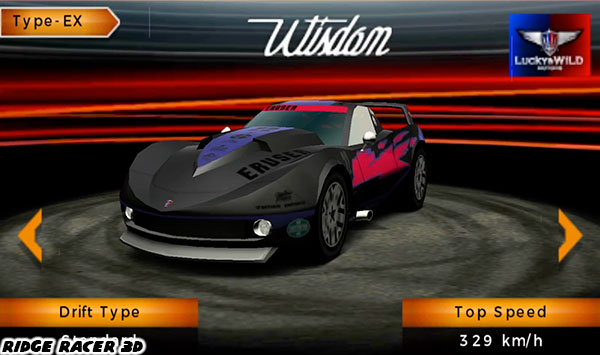
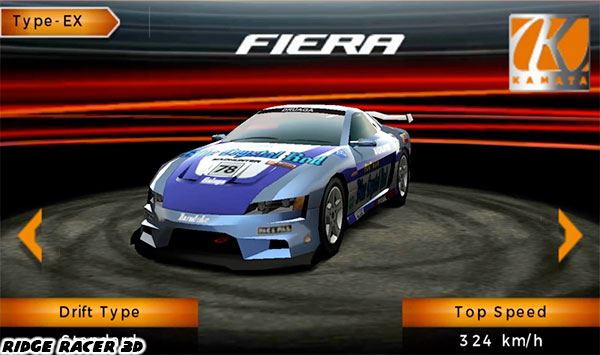
The game was a slap in the face to those that enjoyed the Ridge Racer 6 and 7 experience from six years prior. Fans were shocked that during those six years did not see a quantum leap in the progression of the handheld games. Before that the portable games were very well done. Ridge Racer Accelerated HD, a 2011 release for the iOS was a decent attempt at making a racing game for the iPhone. Ridge Racer 3D for the Nintendo 3DS came out in 2011 as well. It predicted the use of DLC micro-transactions from Namco. Audiences overlooked that because the game had included plenty of tracks and cars for players to unlock without having to pay for them. The 3D effects on the Nintendo handheld took some getting used to but were well done otherwise. The game was actually picking up on the desert environments that were featured in Ridge Racer 64 from the Nintendo 64 from a decade earlier. At least some of the developers working at Namco still cared about the legacy they had created.


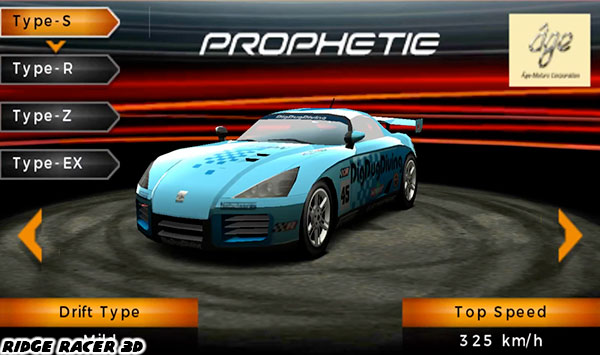
The other games in the handheld library were well done experiences but they were few and far between. Ridge Racer 2 for the PSP was released in 2006, it was the one that Sony President Ken Kutaragi got overly excited about during the E3 press conference. The original Ridge Racer for the PSP debuted in 2004, that was the same year that Gina Cavalli took over cover girl duties on Ridge Racer DS for the Nintendo DS. Not every handheld game ported over the cars or tracks featured on the consoles. Several new courses including Redstone Thunder Road and radical cars like the Lucky & Wild Evolver were first introduced on portable screens. Not every outside developer working with the franchise had turned their back on the classic elements, as Bugbear Entertainment had. There was actually a fantastic blend of the mobile experience and the best portions of Ridge Racer 7 for an inexpensive price.

Ridge Racer Slipstream debuted in 2013 for the iOS platform. The developers at Invictus had released a portable version of the franchise that was worth more than the $4.99 they were asking for. Namco was hoping to earn a little bit of revenue from micro-transactions. Audiences could spend anywhere from 99 cents all the way up to $49.99 to purchase credits that they could use to unlock additional tracks and cars. Unlike Ridge Racer Vita however Slipstream allowed players to "grind" through the races and earn the credits to unlock everything. It took a lot of patience and determination to unlock all of the content but the game was actually highly enjoyable and worth the number of replays that it took to get those credits. To keep things interesting the developer would send three daily tasks to complete where they would earn additional experience points or credits. For a mobile game the graphics on Slipstream were well done. It looked just a hair toned down from the Ridge Racer 6 and 7 experience from the pinnacle of the series. The game even included multiple music tracks from the previous games so that not only did it look and play like a classic Ridge Racer game, it also sounded like one.


Alex Adjaj, the Director of global strategy for mobile at Namco was a huge fan of the Ridge Racer series. He had been playing the game since it was on the Playstation and was not a fan of what the company had done with the Vita debut. He called the lack of content on the Vita and the charges that the company wanted to get out of players ridiculous. In an interview with Digital Spy he sided with fans. "If you look at all the Ridge Racer games that have been brought to portable consoles, in particular in the past few years PS Vita and PSP, and you look at the Metacritic score, you see that people complain a lot about the value they got when they spent £40 for the game/ And it's Ridge Racer - it's not like Ridge Racer Driftopia. We're not breaking cars. It's the real Ridge Racer with drifting and everything." He then added "Here we're bringing a game with 12 different cars, over 300 different modifications, 12 tracks - and if you reverse, 24 - 100 races in the career mode, then there'll be multiplayer in January [2014]."

I didn't download Slipstream when it came out last holiday season. I understand that the first few months were filled with random crashes and numerous bugs. I started playing it in February 2014. It was patched a few times since then, adding much more reliability to the experience. It was definitely the game that helped me get through jury duty! I have to admit that it was head and shoulders above the competition on the iOS arena and better than most handheld racing games out today. People reading this most definitely should check out the title for the iPhone, iPod Touch and iPad.

After reading the interview with Mr. Adjaj it was hard for this arcade veteran to accept that Namco might never return the series back to their roots. The division inside the company had stifled creativity. It was a trend over the past decade that had seen the best talent come and go in Sega, Capcom, Square-Enix and numerous other Japanese studios. The long-term fans would never forget the golden era and would long for a return to a classic arcade experiences. What the studios had failed to realize was that the experience could be captured on the home consoles and even portable systems. When I say arcade experience I did not mean having to pay 25¢ for every play through. That would now be considered a micro-transaction these days. Audiences wanted the robust AAA experience that Namco used to give them on the Playstation consoles. With cars worth racing, a team worth racing for and a resolution that would be etched in their memory. No strings attached, no additional content to download.


Today however was a different world. Arcade players had to come to terms with how much had changed in 20 years. Sega had once dominated Namco at every turn. The Hornet, car 41 from Daytona USA was featured DLC for Ridge Racer - Vita in Japan. The most iconic car from Sega, that wasn't a red Ferrari Testarossa, was a welcome addition to the Ridge Racer family. It was only a matter of time really. Sega had introduced the exaggerated drifting physics in Daytona USA that made Ridge Racer so popular in later years. The senior developers at Namco believed in their racing series enough to keep it going. There may have been some internal conflicts as to the direction of the series and how to handle future updates and content but the core the series remained the same. Sega had lost their way and had turned their back on their biggest racing and adventure titles. They then relied on outside developers to keep their most popular IP going.

Players that had grown up during the most formative years of the arcade racing movement could still rely on Namco, now Bandai Namco, to enjoy the best of both worlds. The over-the-top racing from the arcade but on lightweight portable devices. It was not known when the next full-fledged Ridge Racer would hit the consoles. The Playstation 4 and XboxOne had debuted at the end of 2013 and a new Ridge Racer game had yet to be announced for either system. The success of Ridge Racer Slipstream and the PC title Ridge Racer Driftopia helped keep the title on the public consciousness. Most recently the publisher wised up and began offering audiences in the west something that had been missing for more than a decade. The next blog will highlight the best part of the experience that had nothing to do with racing. If you would like to sponsor me please visit my Patreon page and consider donating each month, even as little as $1 would help make better blogs and even podcasts!
follow the Street Writer on Patreon!

Thursday, September 4, 2014

The Namco Chronicles, part 14...

At the start of this series I mentioned that Pole Position was one of the biggest hits from Namco. It was one of the best selling games of the '80s and had been ported to just about very console, handheld and computer system ever created. Very few games could claim to have reached as many as many people through the years and even less racing games could match the success of Pole Position. It did very well financially but more importantly it helped the image of the company. When it came to racing games few studios could say their legacy was as important. When it came to puzzle games none could claim the longevity of Pac Man. When it came to space shooters none could match Galaga. Namco had built a reputation based on fantastic experiences and managed to keep those memories growing over 30+ years. The racing genre was the one that they had their biggest successes and failures with.
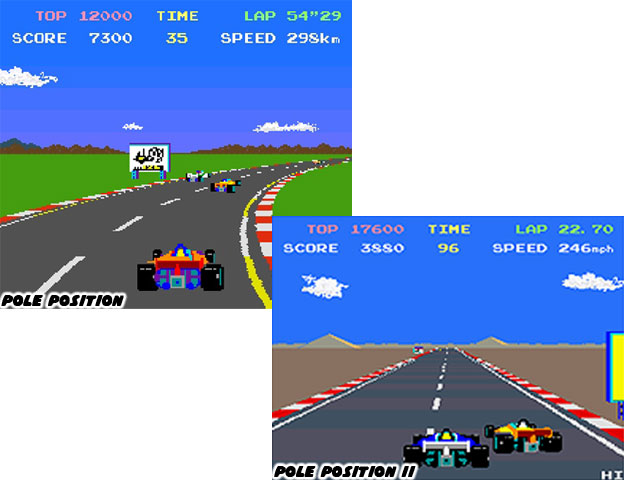
Pole Position put Namco on the racing map but other publishers were challenging them at every turn. The sequel to Pole Position did well but so were rival titles from Atari and Sega. The company lost momentum when they tried to re-imagine the open wheel racer with the Final Lap series. Even the introduction of 3D graphics in the Winning Run series did little to get Namco back on top. Ridge Racer was the first serious attempt at recapturing an entire genre. Of course Sega countered by stealing the talent that produced Ridge Racer. The remaining members of the company tried to make a better racing experience than Ridge Racer but they missed the mark from a gameplay and critical perspective.
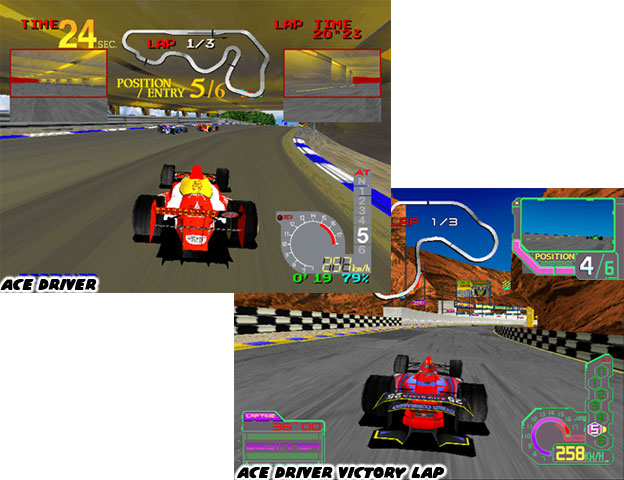
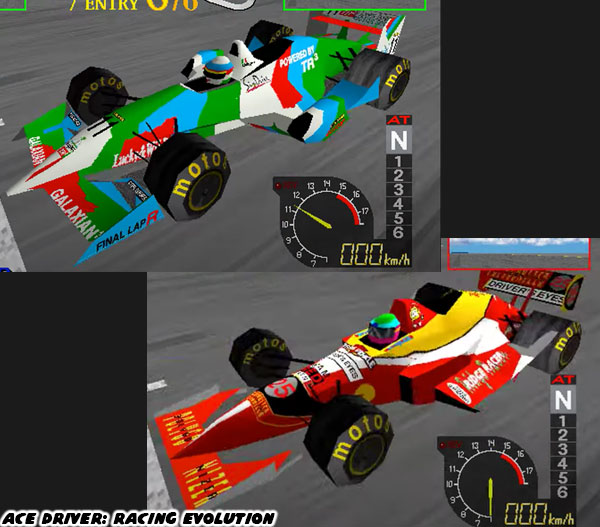
Namco returned to the open-wheeled racer in 1993. The Indy and Formula-1 inspired cars in Ace Driver: Racing Evolution were supposed to be leagues ahead of the best cars in Ridge Racer. In fact they were supposed to be ahead of Formula-1 cars, they were called Progressed Formula Racers in the game flyers. They couldn't call them Formula-Zero because that was already taken by Nintendo. Namco wanted to let audiences know that the rides in Ridge Racer were nice but the fastest race cars on the planet still resembled the machines from Pole Position. These cars were the pinnacle of race engineering and unlike the cars in Ridge Racer they were not street legal. Unless you were a professional driver the cars in the Ace Driver series were unattainable. Of course it was a sense of attainability that made Ridge Racer popular to begin with. The cars were tuned for peak performance on real roads and not sterile race tracks. The Ace Driver cars may have been faster but they were limited by their focus. Namco went back to the drawing board and tried to salvage what they had started. If the remaining staff had failed to live up to the standard set by the original Ridge Racer then at the very least they could begin a new franchise that was a spiritual successor to Pole Position.
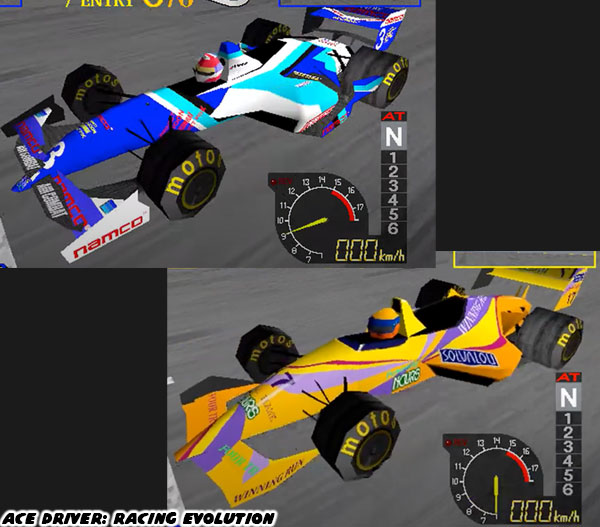
The majority of the remaining team members had worked in other genres and were busy on various arcade and console titles as well. They wanted to do something with the racing franchise that was much more forward thinking. Rather than trying to recreate the world of contemporary open-wheel race cars they decided to push the technology a few years if not decades down the line. The studio looked at the other games they had published with a similar futuristic element like the UGSF hit like Cyber Sled and tied those games in through advertising and sponsorships. Ads for Cyber Commando, Rave Racer and newer hits were plastered all over Ace Driver: Victory Lap, the 1994 sequel to Racing Evolution.
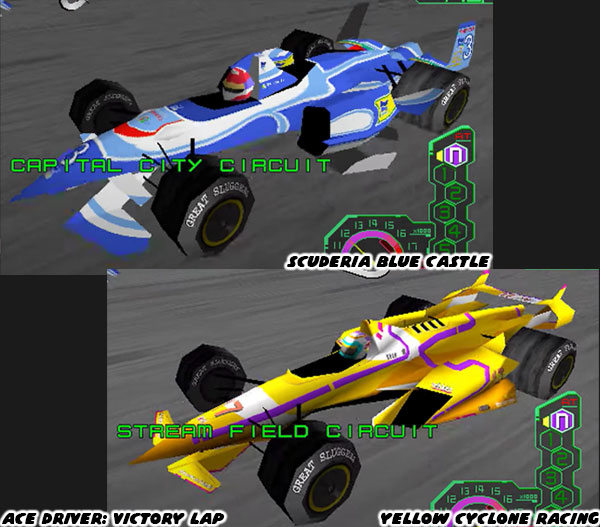
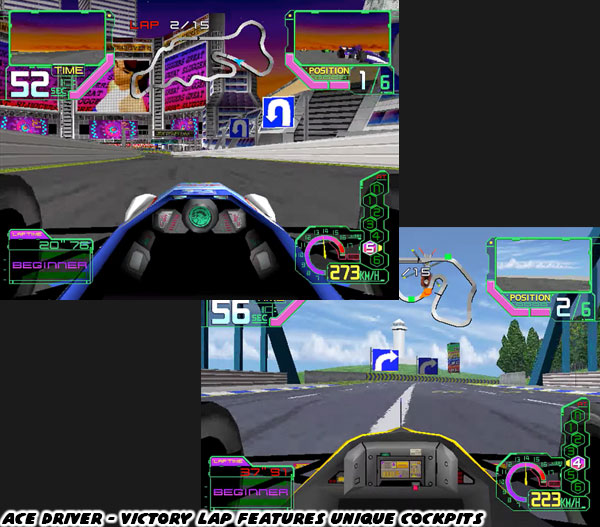
At first glance the cars looked like traditional Formula-1 autos. They were bright and colorful, wrapped in the livery of a specific team and covered with bold stickers. When players drove the cars and raced through the environments they began to see visual cues that made the world seem far more futuristic than other games. Enormous glass and steel stadiums were constructed around the tracks, many with three-dimensional holograms playing advertisements high above the race course. Some of the tracks were set in the countryside but even those had grandstands and box seats that looked like they were designed by science fiction architects. The tracks in the city were surrounded by enormous skyscrapers, hotels and office buildings that looked far more fantastic than most modern metropolises.
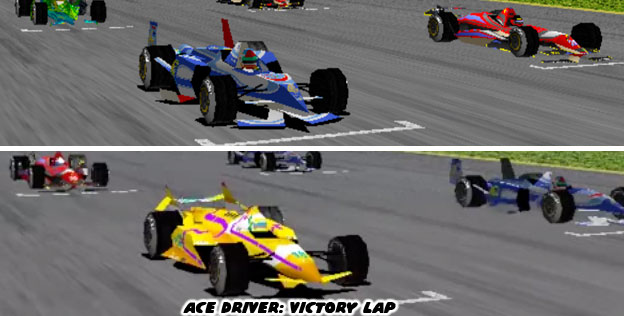
The cars in the Ace Driver sequel were amazing pieces of art. There were only four basic models featured in the series, compared to the dozens in any Ridge Racer title. Each of those four however had its own strengths and weaknesses. Most arcade racing fans could name off these things, the fastest car in the game was also the most difficult to control. The easiest to control had the slowest top speed and the cars in the middle either handled well or accelerated well. Audiences also got to choose whether or not their car would be a manual or automatic transmission. The four basic cars, and their color schemes were formally given names in Victory Lap. There were Team Red Lightning, Scuderia Blue Castle, Yellow Cyclone Racing, and Green Island Motorsport.
In order to post the fastest times players had to go with manual transmission and hope that they could learn the best speed and angles for every turn or risk a miserable wipeout. The game was unforgiving and had a steep learning curve. Of all the racing games I ever played this was one title that was in the middle of the pack. There were some very strong elements that worked in its favor. The car designs were awesome, the track layouts memorable and the music selection was great. It had trace elements of great Ridge Racer and UGSF soundtracks, possibly because the same people that worked on those games also worked on both Ace Driver soundtracks. Despite the good elements it still lacked solid gameplay. It made the decision to stick with the Ridge Racer series much easier for Namco.
Namco was looking for new sources of revenue and adapting to the changing market at the start of the new millennium. The relationship that the studio had with Sony was still very solid but they also had to flexible and now include mobile-friendly titles into their portfolio. The company had to look at developing games for markets that were rapidly expanding. More than a decade after the last Ace Driver was released a new arcade-only title turned up. Published in 2008 the game was released in China, Taiwan and Hong Kong only.
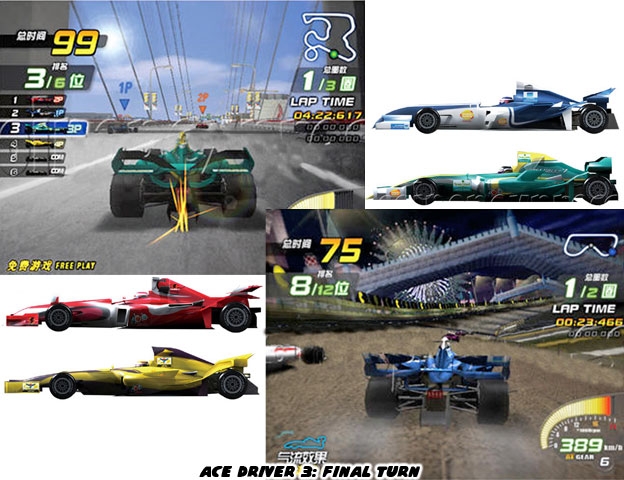
The Chinese middle class had exploded in prosperity in a few generations. They were looking to buy into, and invest into every possible source of entertainment. The ban on video games, specifically arcade games had been lifted in the mainland and the population was starved for new titles. Ace Driver 3: Final Turn was built on an advanced version of the Ridge Racer 7 engine. Graphically speaking it looked slightly better than the last console release of Ridge Racer. Perhaps this new engine was the prototype build for Ridge Racer 8, or even for Ridge Racer Vita. Whatever the case was this new version of Ace Driver had controls that were much more intuitive for fans of the Ridge Racer series and even beginning drivers. This meant that drifting in an open-wheeled car was now an option rather than a mistake.
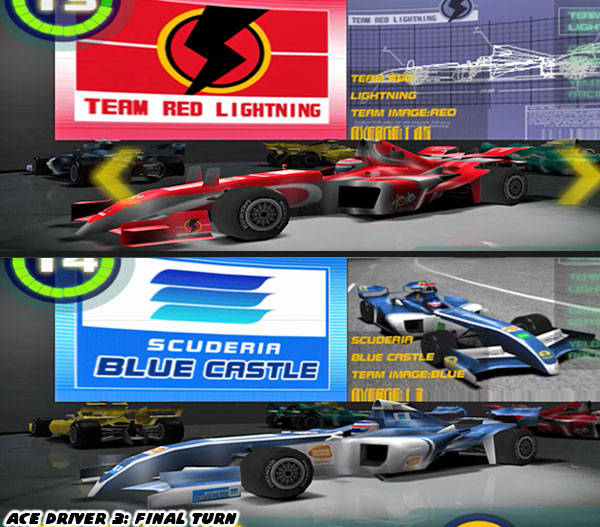
Ace Driver 3 maintained the tradition of the four car types from the previous games. Each one held onto the same futuristic designs and were presented with much greater fidelity than any other car in the series, Ridge Racer included. The game did take another element from Ridge Racer as well. The track layouts became more fantastic in nature. They looked less like a Formula-1 courses surrounded by brilliant architecture and instead incorporated storytelling elements, including racing through a futuristic metropolis and even through an amusement park. These details would have made Sega green with envy. One of the new tracks actually had roots in Rave City from the Ridge Racer series.
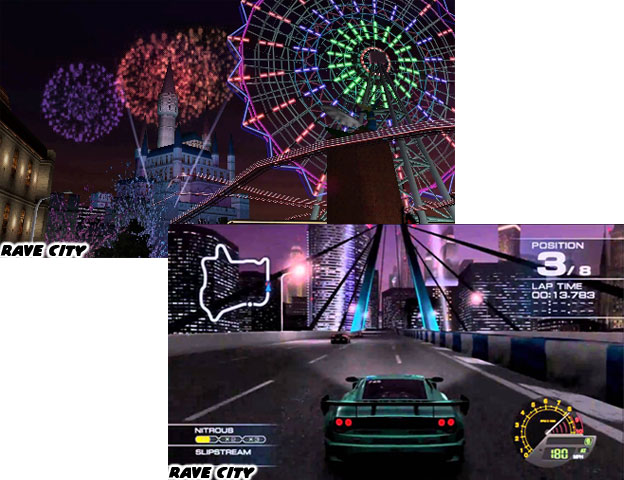
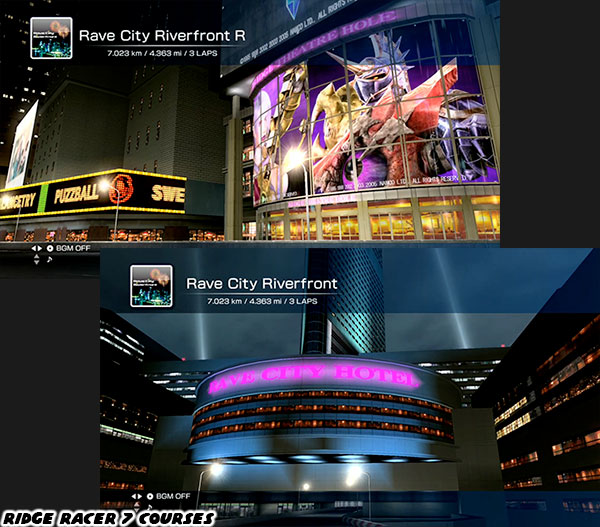
Audiences had been racing by the amusement park in Rave City for some time, they had seen it from a distance and got a bird's-eye view of the park when the occasional new machine was delivered. Now thanks to the Ace Driver series players could get up close and personal to the track. They could see that the designers at Namco never stopped working on the courses between releases. If you stuck with the series long enough then eventually you too would get a chance to drive through the roads seen in the distance. The only question now was what type of cars would Namco allow audiences to pilot in the future? The next blog in this series will take a guess at that and also be the final entry in the series. I hope to see you back for that. As always if you would like to sponsor me please visit my Patreon page and consider donating each month, even as little as $1 would help make better blogs and even podcasts!
follow the Street Writer on Patreon!

Friday, August 15, 2014

The Ridge Racer Legacy, part 30...

The music in the Ridge Racer series had always been well done. I was not a big fan of electronica, techno or house music. With that said I would be lying if some of my favorite tunes were not from those genres thanks to Ridge Racer. The various composers working at Namco had managed to make me a believer in the format. It only took 20 years of steady evolution to reach that point. To be fair however the early songs from the Ridge Racer series could hold up to many of the new songs. The composers had managed to create remixes from songs featured in every generation of the series and kept them fresh when placed next to the newer songs. It stood to reason that the music featured in the franchise would last forever. The Namco Sound Team had composed many classic themes over the past 30 years. What game player does not remember at least a few jingles featured in Pac Man, Galaga or Pole Position?


The Japanese audiences often had the fortune of being able to purchase albums based on their favorite games. Just about every arcade and console game had an album associated with it. The Ridge Racer series had one of the best collections of electronic music ever assembled. The senior in-house composer Shinji Hosoe had worked scoring Ridge Racer but also several other titles including Galaxian 3 Project Dragoon and Attack Of The Zolgear, Starblade, Cyber Sled and Cyber Cycles. I had talked about some of the games he had worked on much earlier in this series. Mr. Hosoe was better known in the gaming community by his nickname MEGATEN, or SamplingMasters MEGA. Some of his standout compositions included Rotterdamn Nation, Over the Highway and Rare Hero. His college Kohta Takahashi started composing at Namco with Ridge Racer Type 4. He also created the soundtrack for Klonoa, Ridge Racer V and Ace Combat 2.

Mr. Takahashi was joined on R4 by Hiroshi Okubo who also composed the music in Ace Combat 2. Mr. Okubo was known for his catchy songs including Quiet Curves, Chasing All My Dreams and Transparency. He also did an amazing remix of the Pac Man theme called Eat 'em Up in Ridge Racer V. The collection of artists had a few decades of experience between them yet only represented a portion of the Namco Sound Team. I would dare say that the collective work of Shinji Hosoe, Ayako Saso and Nobuyoshi Sano (SANODG) on certain soundtracks was predictive of future trends. The electronic music they created had a certain synthesizer meets dance beat to it that predicted the rise of artists like Daft Punk. The music that they created for the Galaxian 3 titles for example sounded like the framework that Daft Punk used in the Tron Legacy film soundtrack almost 16 years later.

Their music was so influential that the composers were invited again and again to contribute to the live broadcast of the Playsation Vita in Japan. SANODG went into crazy mode, joking with the audiences and interrupting his mixes during his set. Mr. Okubo on the other hand had a fantastic set which he didn't interrupt at all. Playing his role like a serious club DJ.

Every game in the Namco universe had a specific sound. Some were pop in nature, some were rock oriented. The Ridge Racer series had always had an electronic tilt to it. Many audiences in Japan and the US were first exposed to the heavy beats thanks to the arcade releases. People in Europe were already familiar to the club sound and were undoubtedly glad that it became globally accepted. By the time Rave Racer was released the company had firmly planted themselves in the genre. Some of the songs featured manic beats and heavy drum and bass lines that would have gone over amazingly well at a rave. Young Japanese composers had grown up on this style of music and began applying to Namco as well. Taku Inoue a composer featured on Ridge Racer 7, Pac Man Championship DX and the Tekken series grew up playing the classics on the Playstation thanks to the Namco Collection. As a teenager he would challenge himself to emulate the stylings of classic games like Dig Dug, Pole Position and Pac Man on his home computer. His ability to compose and remix was a perfect fit for the company.


Many freelance composers working in the genre had also lent a hand to the songs in Ridge Racer 6, 7 and the PSP and Vita releases. The majority of the songs were so well done that many were featured for the soundtrack of Ridge Racer Unbounded and Ridge Racer Slipstream. Bugbear Entertainment and Invictus could never hope to live up to the legacy of the Namco Sound Team or their network of musicians. The lineup featured in the mobile game Slipstream read like a who's-who of the best composers and their songs. Akitaka Tohyama - Turn Me On and Freak Out, ESTI - Supercruiser and Kalidescope, Samplingmaster Mega - Combustion and Listen up!, Samplingmaster Aya - Nitro Witch and Shut Up Baby, Hiroshi Okubo - Orbital Rock, M.T.T.B. and Transparency, Rio Hamamoto - Beat Assassinator and Skidmarks, Ryuichi Takada - Down To Earth and Saturation, Tetsukazu Nakanishi - Awakening, Sanodg - Hard Drive and Onyx, NBGI - Eat The World, U - Electro Madness. When Slipstream hit the iTunes Store it joined a series of classic Namco arcade titles and remakes for mobile devices. What was most obviously lacking was a collection of soundtracks from the various Ridge Racer games that the Slipstream songs were culled from.

It took almost 20 years for Namco to realize that there was a demand for the Ridge Racer soundtracks in the west. So they made several of those, along with other popular scores from Tekken and Ace Combat, available for download. The album prices were $9.99 like most full releases. They were well worth it, especially for audiences that longed for a rip of the songs from the games. Fans could now support Namco and show them that there was still a strong interest in the classic Ridge Racer experience. For two bucks audiences could also get amazing 40 minute mixes of several recent Ridge Racer soundtracks. I finally found a reason to use all the iTunes gift cards I had been accumulating over the years.


At the dawn of the arcade industry Namco was much more forward thinking. Only in recent years had they decided to follow the trends rather than lead. For a period of time they went toe-to-toe with Sega in the arcade. Both studios pushed their development teams as far as they could. In the process they created entirely new experiences. Their rivalry had forever changed the industry. Sega may have been considered the better of the publishers when it came to arcade racing games but Namco had outlived their rivals on the consoles. Believe it or not there was one genre in the arcade that Namco had surpassed Sega and every other company. The next portion of this series will look at the greatest decades in Namco history. If you would like to sponsor me please visit my Patreon page and consider donating each month, even as little as $1 would help make better blogs and even podcasts!
follow the Street Writer on Patreon!

Tuesday, July 22, 2014

The Ridge Racer Legacy, part 15...

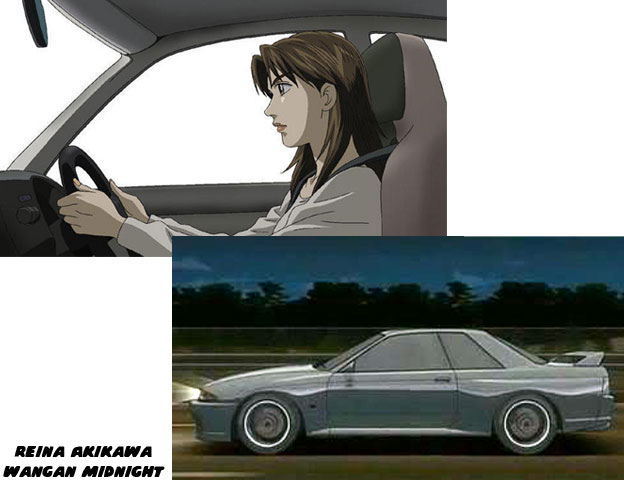
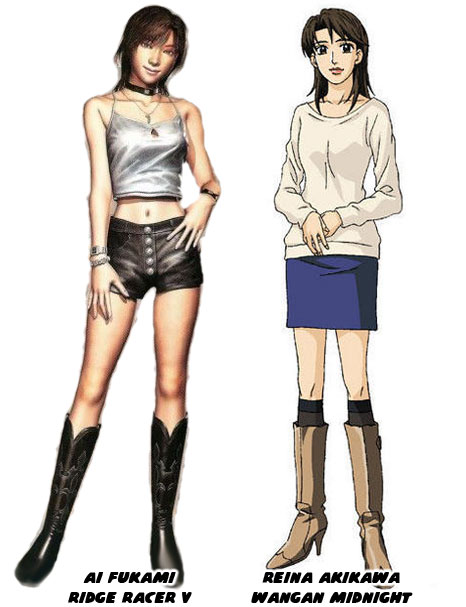
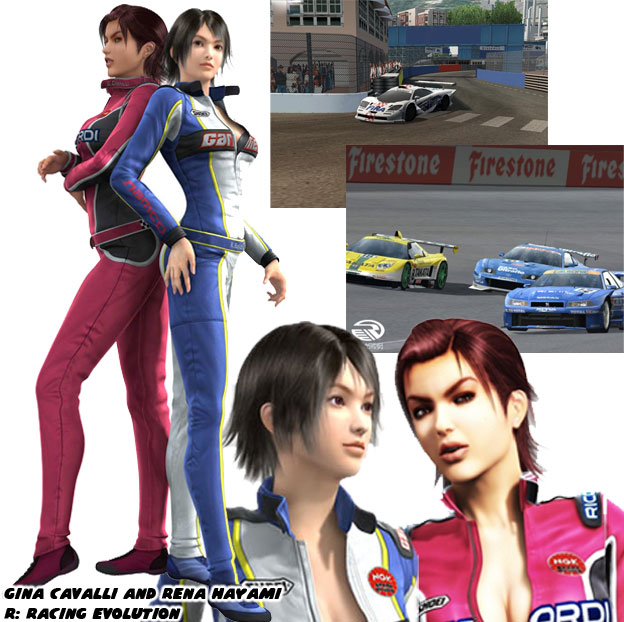
Women had been a part of the Ridge Racer universe since its inception in 1993. In a previous blog I had mentioned that the Wangan Midnight manga series from the '80s had influenced the development of Ridge Racer. Wangan translated to Bayshore, the site of the longest, straightest road in the Japanese toll road expressway system. Bayshore was also a location featured prominently in Tekken as the site of the G Corporation headquarters. Akio Asakura and his Devil Z car from Wangan Midnight inspired the Devil 13 in Ridge Racer. The lead female in the series and rival driver, Reina Akikawa, was actually a model and TV personality. She had a hidden passion for street racing and drove a souped-up Nissan Skyline GT-R despite the objections of her manager. She was sociable and had lots of acquaintances but real boyfriend. She was an unattainable idol to her fans. Undoubtedly she was the basis for Rena Hayami in R: Racing Evolution as well as the other women that would be associated with the Ridge Racer series.

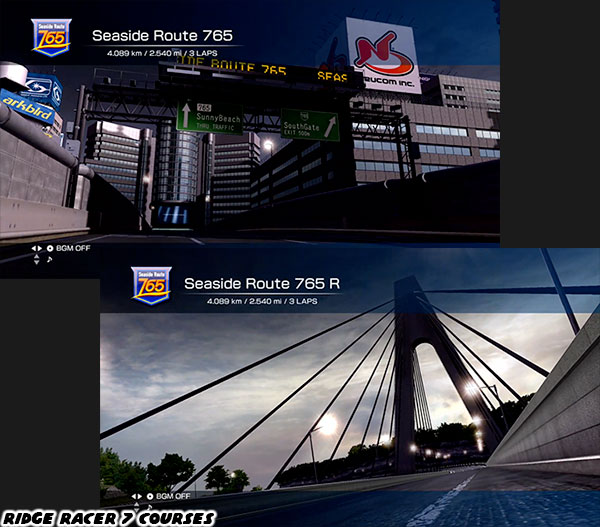
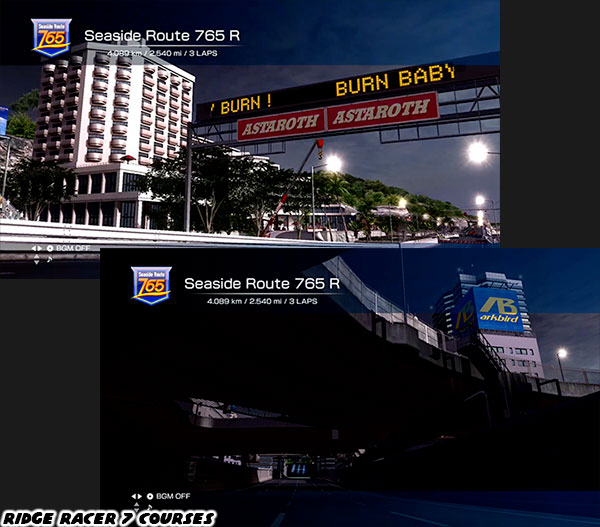
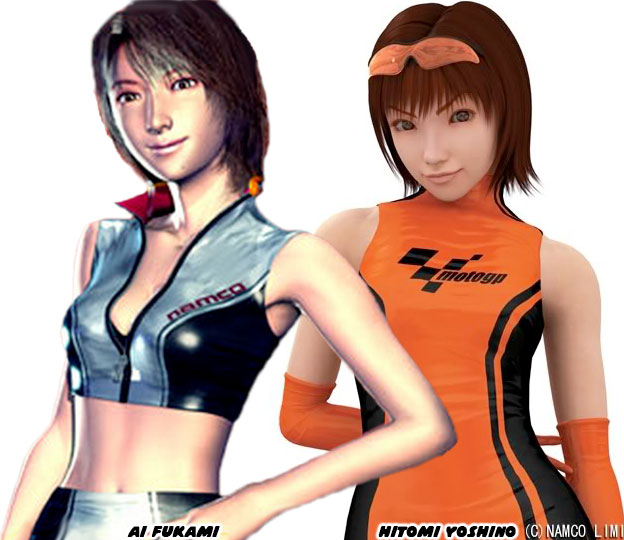
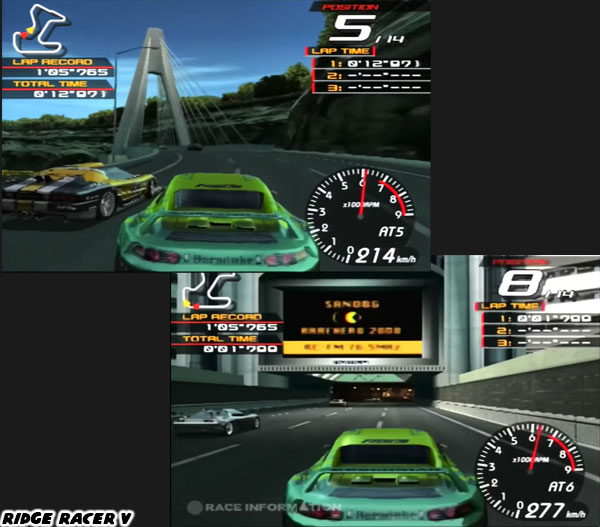
Reina dressed moderately and was never show with any overtly sexual overtones. The women in the Namco games, especially Soul Calibur were not as conservative. Before R: Racing Evolution Namco had actually tried to create a racing personality that players could associate with the Ridge Racer series. In Ridge Racer V that person was named Ai Fukami. The model and "race queen" looked closest in concept to Reina. Ai could be seen in the opening cinema of Ridge Racer V walking down the middle of the Harbor Line 765 raceway flirting with danger as two race cars flew by her at top speed. Ai was a dead ringer for Reina. Both had long legs, sported boots and even the same haircut. The only difference was that one was always a two-dimensional character and the other was a CGI model. Well, also that Ai had a tiny mole on her chin. The "imperfection" gave her tremendous personality, not unlike the beauty mark on model Cindy Crawford.

Ai appeared on promotional material for Ridge Racer V as well as on the box cover itself. Namco wanted to make their racing series even more appealing to their male demographic by playing up the sex appeal of fast cars and hot women. Other games by Namco already had memorable female characters but Ridge Racer was a rare hit that did not feature any human leads. There were no drivers to play as or avatars to identity with. With the introduction of the Playstation 2 and the realization that their audience was becoming older and more mature Namco decided to begin marketing their sport titles with virtual idols. Ai was the one that would welcome fans into Ridge City. There was something sexy about her presentation without going into the realm of pandering like Gina Cavalli. Ai was designed to be featured on other projects if audiences responded favorably to her.

Namco had actually been working on multiple sports titles before the release of Ridge Racer V. The publisher wanted to have a character that they could use to advertise all of the other sports games so they developed a additional virtual idol to cover those titles. Hitomi Yoshino would be the proxy featured in the Moto GP motorcycle racing games, World Court tennis games and World Stadium baseball games. Her costume consisted of a bright top and short dress with the logo of a particular sport. She might carry a baseball bat or tennis racket depending on the promotion that Namco was running with her. Hitomi had even appeared in some promotional videos for the E3 and Tokyo Game show advertising the Ridge Racer series when Ai was absent.

The creation and use of virtual idols was almost exclusively a Namco trademark. No other studio, especially perennial rival Sega had ever considering developing characters for the sole purpose of advertising. The stars of most games were usually enough to win over audiences but what if there were no human characters in the title? Racing games had always advertised themselves with graphics of fast cars on the arcade cabinets as well as on the console box art. Namco tried a different approach. They developed a team of idols to make their arcade and console games stand out. It was not a cheap decision by any stretch of the imagination. Even when companies like Namco were doing well financially there were still questions on budget and turnaround. Spending extra time developing a CGI model and creating a cinema for a character that was not even in the game seemed superfluous. Yet the studio committed to having a model become the representative for the series.

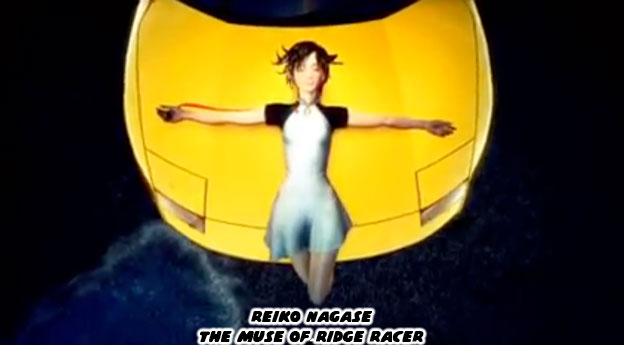
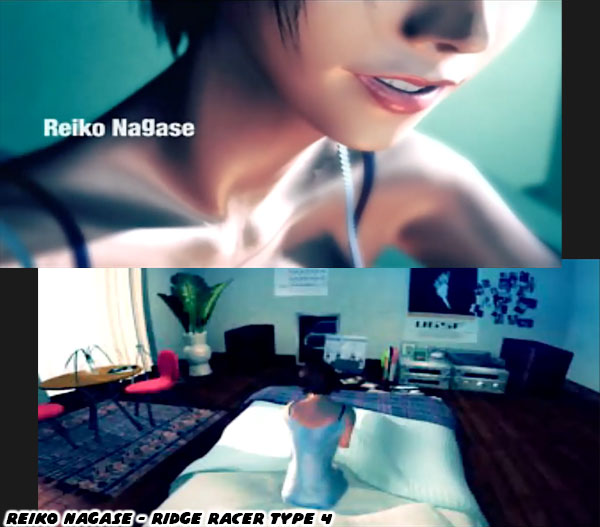
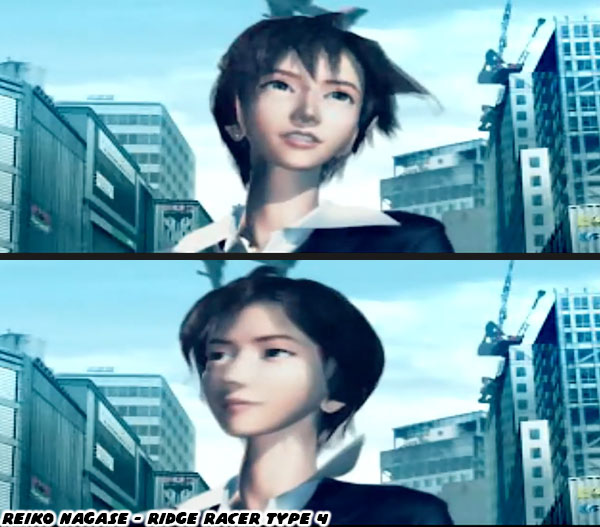
Long time gamers could tell you that neither Ai, Hitomi or even Rena would ever become synonymous with the Ridge Racer series. There was a short-haired model that won the hearts of fans years earlier. Reiko Nagase (the first virtual idol inspired by Reina Akikawa) had been a part of the series since the very first game. She was even given top billing in the opening cinema of Ridge Racer Type 4. Reiko had been associated with the arcade games before Namco lost the original Ridge Racer team. She was also associated with the early Playstation console releases. Namco wanted to develop a new idol once they made the transition to the Playstation 2. It turned out to be a mistake. The muse of the series had always been Reiko, the studio didn't realize it them.

When she returned to the series in 2004, a year after R: Raving Evolution had failed to capture the hearts (and wallets) of gamers the studio went back to what worked. There was no mistake that Reiko was posed on the hood of her sports car like the Kamata Angel 0 icon in the Ridge Racers (for the Playstation PSP) opening cinema. She did seem to have an etherial quality about her. That version of the game would actually become a meme when Sony President and CEO Kaz Hirai over-enthusiastically delivered the line it's Riiiidge Racer to a crowd of not-impressed attendees at the Sony E3 press conference.

Reiko did not appear fully developed from the mind of the art team. She had to change and evolve with the times just as the series did. There was a learning curve with the Namco designers as to her character development. They had to figure out how to best incorporate her into the games and give her a memorable personality. The next blog will look at the origins of the character. I hope to see you back for that. As always if you would like to sponsor me please visit my Patreon page and consider donating each month, even as little as $1 would help make better blogs and even podcasts!
follow the Street Writer on Patreon!

Wednesday, July 23, 2014

The Ridge Racer Legacy, part 16...

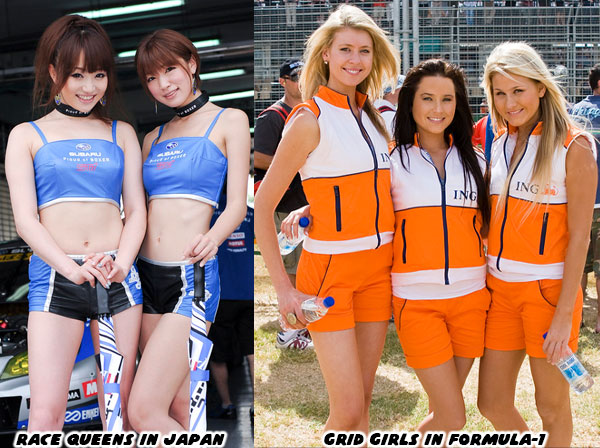
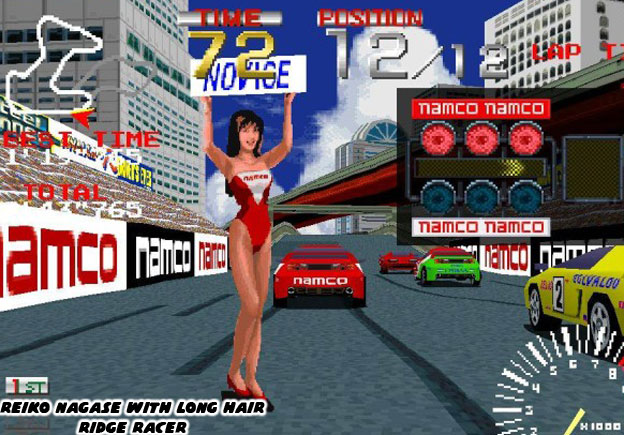
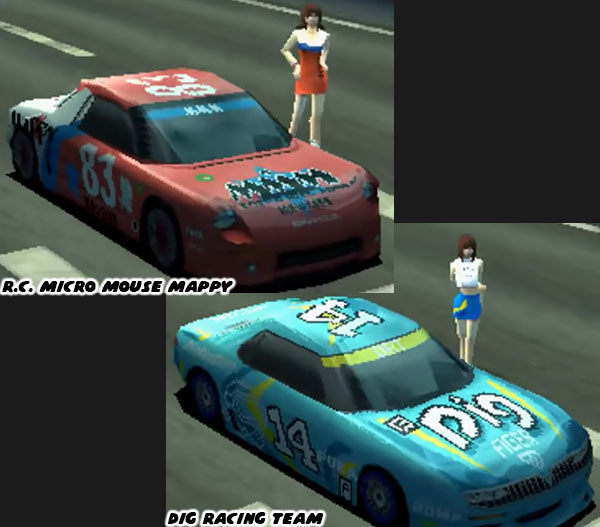
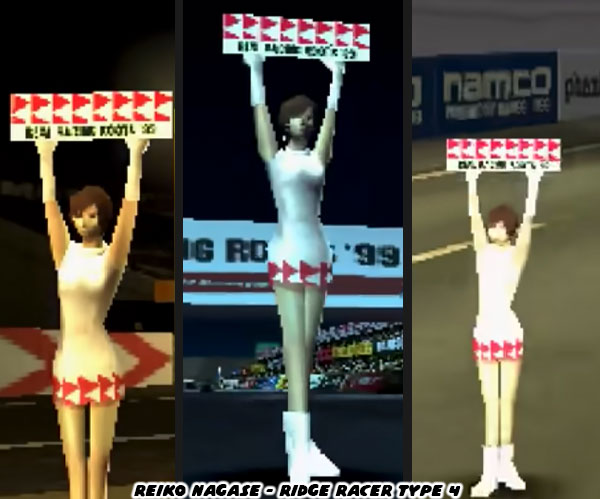
Arcade fans noticed the leggy grid girl Reiko Nagase in the original Ridge Racer. She was the only sprite-based character in the otherwise all-polygon graphics engine. Reiko was designed as "cheesecake" for the male audiences. She wasn't the first character designed for that purpose but most certainly became the longest-lived. In fact when she was put into the game she didn't have a name. By no stretch of the imagination did Namco make up her role. In many professional racing circuits models wearing team livery were used to pose next to the race cars and motorcycles and sometimes accompany drivers to the pit. The term paddock girl became synonymous with the skimpy costumed models.

In Japan they were referred to as race queens and dressed sightly more modestly. They often wore pantyhose and one-piece swimsuits in order to minimize the skin show. Reiko had long hair originally and was presented with more class than the typical paddock girls. There was something interesting however about her and her fellow race queens when compared to the women that had appeared as eye candy in early titles.

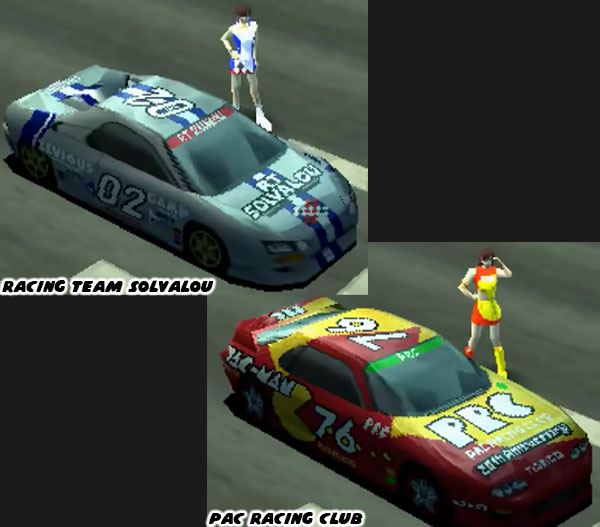
The race queens in Ridge Racer would keep the long hair and bright costumes for several more appearances. Namco had retconned the other grid girls holding up the title cards as Ai Fukami and Hitomi Yoshino. The developers saw potential in having a race queen become a mascot for the series but it would take a radical internal shift to pursue that idea. When Namco lost the original Ridge Racer team to Sega they began trying to reframe the game and save what they hoped would become a franchise that would rival the earlier Pole Position smash hit. Ridge Racer 2 from 1994 was very much a "safe" sequel from the new developers. It improved the framerate, physics, tracks and car selection but was otherwise a plain experience. It was the subsequent game that really began to push a new direction and establish the elements that would indeed turn it into a franchise.

In 1995 arcade visitors had no idea what type of dramatic shift that Namco had planned. The third game was an experiment. Dubbed a Ridge Racer Project the re-titled Rave Racer had a frenetic soundtrack and wild graphics that made the game play more like a music video and less like a simulator. Even the attract screen was directed like a music video. In the '80s arcade games would just go through a loop of gameplay footage and feature a title screen. As technology improved so did the ability to present graphics and audio with greater fidelity and more channels of sound and color. Developers would sometimes create original music and animations that would play on loop when no one was on the game. These features were designed solely for the sake of attracting players to the cabinet. They did not have to rely on actual game footage to sell the experience. Hence they earned the name Attract Screens. Rave Racer had a short but memorable attract screen, it stood out among its contemporaries because it was not pre-rendered game footage.

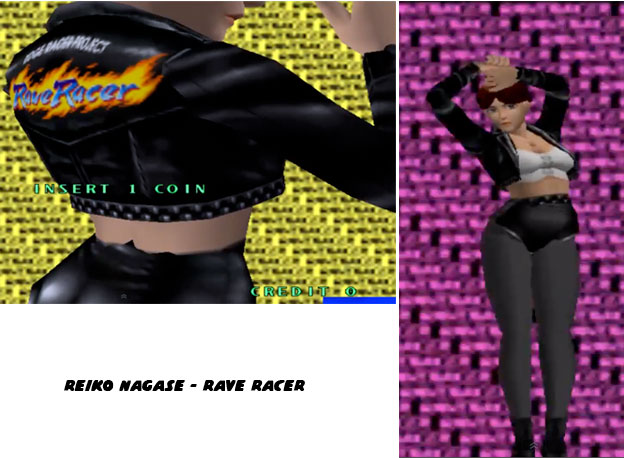
When Rave Racer was sitting idle it would start blasting its soundtrack and try to get the attention of arcade visitors. When they would look there would be a polygonal female model posing for fans. Her turnaround animation was inter-cut with images of race cars sliding around corners. It was one of the more innovative attract screens seen in that era. The star wasn't a typical race queen, not by any stretch of the imagination. With a new short haircut and sporting a leather jacket, shorts and a bare midriff this model was the archetypal "hot girlfriend." She certainly looked more approachable than the models wearing corporate logos featured in the previous games. She had actually predated the look used for Ai Fukami by a decade. This model did not have an official name but Namco would hint later on that it was Reiko from the original game. Her makeover was a hit with audiences. The new Ridge Racer team would continue to build an entire mythology of Ridge City around this character.

The studio had begun developing and adapting titles for the fledgling Playstation console in the mid '90s. This lead to Reiko becoming a more refined character. In 1997 Rage Racer introduced an entirely new side to Ridge City. It was as bold an experiment as Rave Racer was. The electronica soundtrack was still part of the experience but visually it was a bit more grounded in European architecture and gritty realism. It still allowed for the over-the-top car physics to sell the action. The short-haired race queen had returned and was given an official name. For the first time in Ridge Racer history audiences got a chance to see this character grow right alongside the driver.

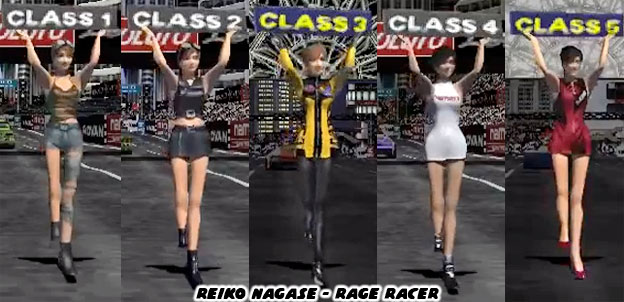
The model had started from humble origins, just like the player, and had to work her way up through the different classes. Rage Racer started off with slightly modified production cars, something that an enthusiast could do his or herself over the weekend without any sort of sponsorship. In those races Reiko was dressed in street fashion. She wore torn jeans and a tank top. The corporate sponsors has not yet discovered this "talent." As the player improved in the rankings and was able to afford faster machines and compete against bigger teams they would run across Reiko again and again. Each time her costumes had improved and her presence had grown within the community. She went from fantasy girlfriend material to supermodel status in the course of the game. Her modeling career had taken off in canon but was for a game not often recalled by the game players.

Kei Yoshimizu was the director of both Rave Racer and Rage Racer. He had been establishing Reiko's new look through the '90s. He had created her original models and animation and would continue to update the character over the next two decades. When he started he realized that the flat pixel models from the original Ridge Racer would have to be redone. He started modeling new characters in 3D but felt the crunch of a deadline fast approaching. Namco wanted to get some promotional material out with their new mascot. Kei didn't have a long-haired model to use for reference so he did the fastest thing he could. He shaved his face and took some pictures of himself to work from.

He scanned in the photos to create the original textures for the character. He retouched them to give him, or rather her, flawless skin, new lips and changed the jawline a little. The short, tomboyish hair was done out of necessity. Hair had been a stumbling block for many developers and animators. Kei didn't have time to figure out how to recreate the original flowing race queen hair in 3D. He thought it would be better to keep her hair short and a trend was established. Reiko could still be very feminine and even "girly" while promoting race culture.

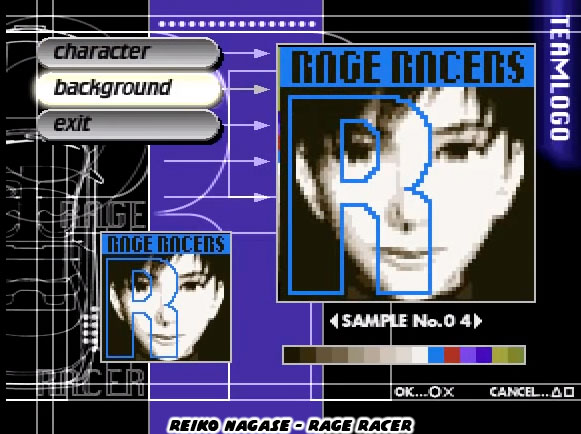
The revelation that Kei was the basis for Reiko shattered the dreams of some fans. They were hoping to find out that Reiko was inspired a real person but not necessarily a real man. This bit of trivia was not widely known to the arcade community let alone the greater gaming community. Undoubtedly many young men would have been heartbroken to find out. As such Namco was really finding that the virtual idol made for a great mascot. Her likeness was used for some of the pre-designed graphics that players could use as stickers on their cars in Rage Racer. The company would beginning putting the face of Ridge Racer out on ads in Japan as well as the US.

Despite the newfound popularity of the character Namco was not certain if she had staying power. The developer made sure to give Reiko a very strong push in Ridge Racer Type 4. They featured her on all the assets and promotional materials sent out to reviewers. Many of the media outlets in Japan and the US made sure to use a version of the character for their articles and even on the covers of their magazines. Yet no sooner did the studio do that than they dropped her altogether. Instead of casting Reiko in R: Racing Evolution they created a new idol that looked very similar to her named Rena Hayami.

In the intro for Ridge Racer V with Ai Fukami was retracing the steps featured in the attract screen of Rave Racer. The muse had disappeared almost overnight. It could be argued that the Ridge Racer series had its most turbulent showing during her absence. Was Reiko the glue that held the series together? The next blog will highlight the importance than one character could have on a series and an entire universe. As always if you would like to sponsor me please visit my Patreon page and consider donating each month, even as little as $1 would help make better blogs and even podcasts!
follow the Street Writer on Patreon!