Showing posts with label reiko nagase. Show all posts

Wednesday, March 25, 2026

Bookmark This Page; The Ridge Racer Legacy

The Ridge Racer series was a result of an intense rivalry with Sega. If you want to find out all about Namco’s flagship racing series then Bookmark This Page.

The Ridge Racer Legacy, part 1...

The Ridge Racer Legacy, part 2…

The Ridge Racer Legacy, part 3…

The Ridge Racer Legacy, part 4…

The Ridge Racer Legacy, part 5…

The Ridge Racer Legacy, part 6…

The Ridge Racer Legacy, part 7…

The Ridge Racer Legacy, part 8…

The Ridge Racer Legacy, part 9…

The Ridge Racer Legacy, part 10…

The Ridge Racer Legacy, part 11...

The Ridge Racer Legacy, part 12…

The Ridge Racer Legacy, part 13…

The Ridge Racer Legacy, part 14…

The Ridge Racer Legacy, part 15…

The Ridge Racer Legacy, part 16…

The Ridge Racer Legacy, part 17…

The Ridge Racer Legacy, part 18…

The Ridge Racer Legacy, part 19…

The Ridge Racer Legacy, part 20…

The Ridge Racer Legacy, part 21...

The Ridge Racer Legacy, part 22…

The Ridge Racer Legacy, part 23…

The Ridge Racer Legacy, part 24…

The Ridge Racer Legacy, part 25…

The Ridge Racer Legacy, part 26…

The Ridge Racer Legacy, part 27…

The Ridge Racer Legacy, part 28…

The Ridge Racer Legacy, part 29…

The Ridge Racer Legacy, part 30… 

Have you played Ridge Racer in the arcade or the consoles? Let me know about it in the comments section. As always if you enjoyed this blog, and would like to sponsor me please visit my Patreon page and consider donating each month, even as little as $1 would help make better blogs and even podcasts!

follow the Street Writer on Patreon!

Tuesday, September 2, 2014

The Namco Chronicles, part 12...

The developers at Namco had done an amazing job at creating fully-realized worlds. The problem was that the games they created barely scratched the surface of what the studio had in mind. Audiences had no idea what the scope of each game was. The only way players could appreciate the commitment of the company was by taking a step back and looking at the series as a whole rather than each game individually. Whether the game was Tekken, Ridge Racer or one of the Ace Combat titles, there was something that could only be appreciated by seeing how far each game had progressed over the past 20+ years.

I don’t mean necessarily with regards to graphics or control but as a whole. How did the gameplay evolve, how did the characters and plot develop? How did the relationships change over the course of the series? Every one of those titles grew substantially. The company had allowed their developers tremendous leeway. They experimented with new formats, new control schemes and varying timelines. Yet the core of each game remained the same. They were all fun experiences and left players longing for more. Players would race on the courses featured in Ridge Racer and see that there was much more to the world beyond the race barriers. As far as they could see in every location there was substance. Whether it was people throwing confetti from the stands or even the dancing characters on an electronic billboard, the world of Ridge Racer felt alive.

The same thing applied to the Tekken series. Whenever an impromptu fight broke out in the middle of a mall, which seemed to be fairly often, players could see the smallest details in shops, from fully dressed mannequins to tile work on fountains. Audiences could also appreciate the scale presented in these locations such as when they were fighting within an enormous sports arena filled with thousands of spectators. The only downside in the eyes of many gamers was that Namco never let down the barriers. They never turned any of these locations into a sandbox environment. Players could not drive freely down the streets of Ridge City. Fighters could not hop the fence and see what lay beyond in Tekken. Instead the developers wanted audiences to appreciate the type of game they had created in the exact format it was meant to be played.

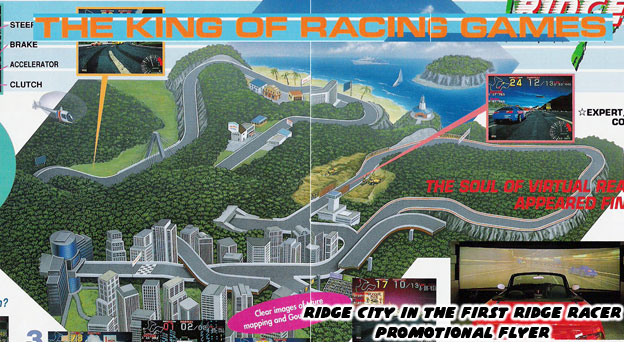
Namco knew that players would return so long as they continued to grow each franchise. In order to do this the development teams had to be constantly vigilant in adding to the canon of each game as much as they were focused on content. The prime example of what the studio did over the past two decades was seen in Ridge Racer. The developers wanted audiences to know that they were not polishing a static city. This was a living, breathing universe that they were shaping. Roads and freeways were interconnected, they all lead somewhere far beyond the borders of the track. In fact the language of Ridge Racer would change to reflect that realization. Over the '90s Ridge City gave way to Ridge County and Ridge County eventually gave way to Ridge State. In the new millennium Namco had finally created enough tracks and locations as to call the continuity the Ridge Universe.

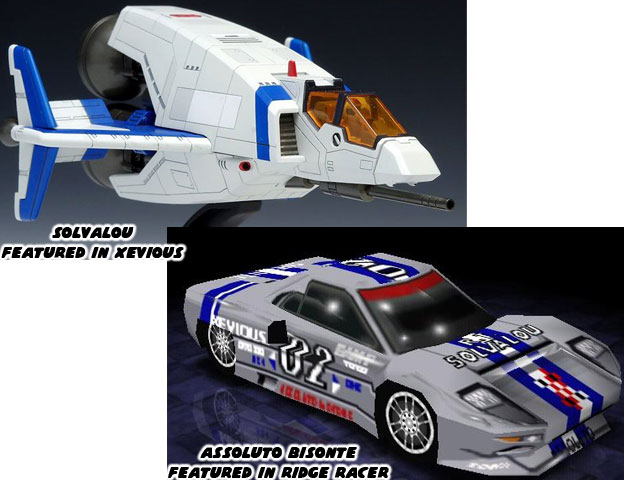
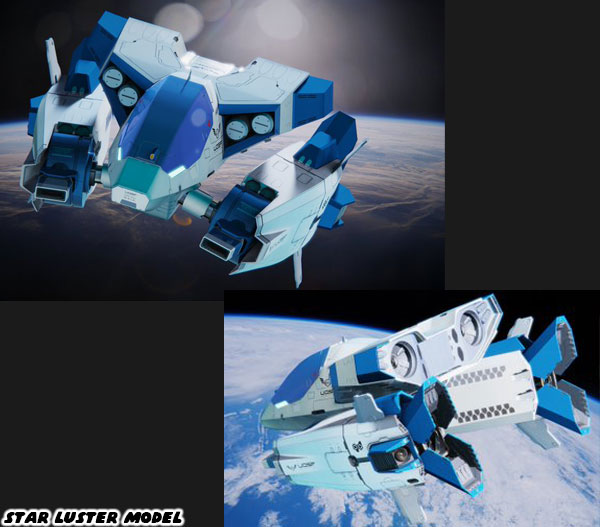
A racing game had met the requirements to join the continuity of the UGSF. It was for all intents and purposes the foundation for the Ace Combat series and future space shooter titles. It was more than a simple coincidence when the cars in Ridge Racer began assuming the sponsor logos of other games within Namco canon. For the fathers of a series it was essential that the Ridge Universe was headed somewhere too. The destiny of the racers was written in the stars. The tradition had been there since the first arcade game but really became a focus in Ridge Racer Type 4. Racing Team Solvalou was an Italian team lead by Eniki Gilbert. The name of the team was rooted in the spaceship Solvalou, which was also the name of the 3D sequel to Xevious. To most long term arcade fans this was a nudge and a wink from the developers of classic titles. What it became was a challenge to bring the Ridge Universe into the fold of the UGSF canon.

The biggest tragedy that had happened to Namco would become the biggest asset in the company history. When Sega stole their best racing game developers in 1993 the outlook seemed bleak. The newly formed AM3, which was made up of former Ridge Racer Project developers went on to create Sega Rally Championship and Crazy Taxi. Those were easily two of the greatest driving experiences ever put in arcades. By every right those hits should have belonged to Namco. The studio went into rebuild mode and relied on the expertise of the remaining artists, developers and programmers to keep their racing division up and running. The remaining employees had plenty of experience in space shooters, fighters and puzzle games. They had to get caught up on driving games really quickly. Thankfully they had the notes from the original team to fall back on. They knew more or less that Ridge City would be expanded upon and new tracks built out of the framework of the surrounding areas. Once the notes from the original project members dried up the remaining employees decided to play up their strengths.

The people left at Namco came from a world that was more fantastic, a world where technology knew no boundaries and where mankind was destined for greatness. These developers needed to change the focus of Ridge Racer from street racing with contemporary cars to racing the finest autos that had ever been produced, including cars yet to be invented. In order not to upset audiences, or the established gameplay, the company introduced radical new rides sparingly over the next 20 years. These “duel” class monsters were accepted as prototypes from the mad thinkers working at each manufacturer. To add an additional layer of plausibility many of the sponsors of the series were the same corporations that built the jets in the Ace Combat series. The connection between Ridge Racer and Ace Combat however went much deeper than a sponsor sticker on the high profile vehicles.

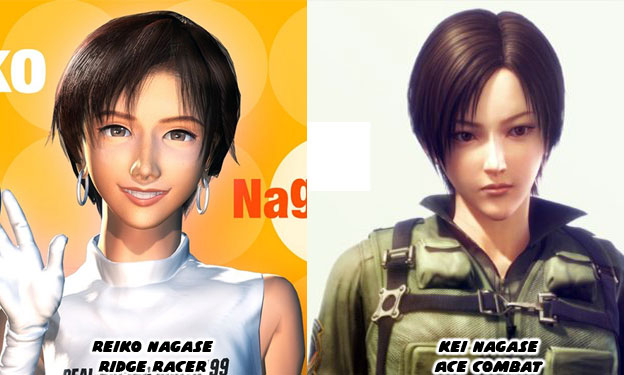
Kei Nagase was the younger sister of Ridge Racer covergirl Reiko Nagase. Whereas Reiko was a model and a racecar driver her sister was a fighter pilot nicknamed Edge. The two seemed to enjoy fast vehicles and thrilling lifestyles. Kei was featured in Ace Combat 2. She would have several cameos throughout the series, jumping forwards and backwards through time along with each release. She appeared in Ace Combat 5 as a trainee, in Ace Combat 4 as a passenger aboard Air Axiom flight 701 during an escort mission but most important in Ace Combat 3: Electroshpere as a senior officer during a news report. The sisters were part of the transitional period that saw humanity focus less on territorial disputes and more towards colonizing the stars.

The companies backing each girl would make sure that civilization would reach that point. Before space jets became commonplace and before the Falken and Delphinus ruled the sky the proving ground for all the new technology in the Namco universe would be featured on the race track. The next entry goes back to the original theme of this series. I hope to see you here for that. As always if you would like to sponsor me please visit my Patreon page and consider donating each month, even as little as $1 would help make better blogs and even podcasts!
follow the Street Writer on Patreon!

Thursday, July 24, 2014

The Ridge Racer Legacy, part 17...

When Kei Yoshimizu redesigned Reiko Nagase and turned the character from a race queen to a mascot for Ridge Racer he had lofty goals for her. The CGI artist and animator was trying to convince the world that a female lead in a male dominated sport was long overdue. He had to break the perceptions from his fellow Japanese developers as well as those from the US. A woman could meet the Western ideals of femininity while also becoming a symbol for power and grace in the process. In order to do that she had to go against the grain. Her short haircut was not only fashion forward, it was something that would never have been expected of a female lead in any Japanese game, manga or animé. It would take more than a decade and a half before audiences became aware of the perspective that Kei and his RR Project members were going for.

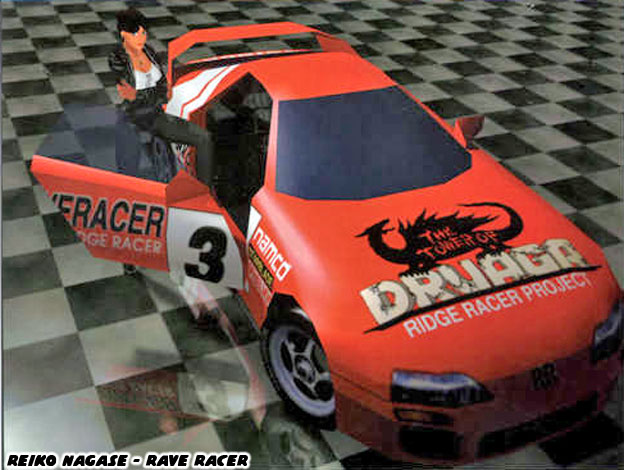
In the early Rave Racer flyers and promotional material Reiko was posed next to a race car. Yet she wasn't used exactly like a model would have been at an auto show or magazine spread. She wasn't laying in front of the car in a bikini, nor was she holding up a grid card. With arms crossed and a foot in the door Reiko stood defiant. Since it was a Japanese car Reiko was actually standing on the driver's side.

She was not posing next to A car, she was posing next to HER car. The pants and leather jacket were not part of some scantily corporate uniform. This was the real Reiko and this was her ride. Audiences seemed oblivious to this statement. All they had known for years and years was that the drivers were men because racing was a man's game. If a woman was in the title then she was just eye candy, a paddock girl and nothing more. Mr. Yoshimizu was very progressive when he changed the look and purpose of Reiko. If Namco was serious about developing a mascot for their racing franchise then she could not be a throw away character. Reiko had to have as much of a backbone as any action hero. From this point on Reiko would have to perform the double duty as a model and driver.

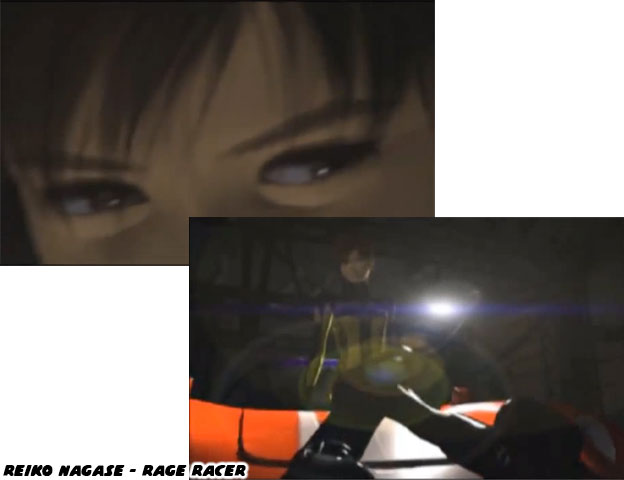
In the opening cinematic (attract screens had gone out of fashion for console games in the mid '80s) Reiko was actually shown sitting on the hood of the cover car in Rage Racer. The all red with white stripes Assoluto Fatalia was one of the most desirable fictional race cars in the series. She was wearing boots and a yellow uniform. Eagle-eyed players saw it was one of the dresses she would wear after she became a sponsored model. The dress looked like a blend of leather and Nomex, a fireproof material. The sharp yellow and black pattern could easilyhave doubled as her racing uniform. The pairing of Reiko with one of the fastest cars in the game was definitive of the series. It was a blend of style and substance that kept people coming back.

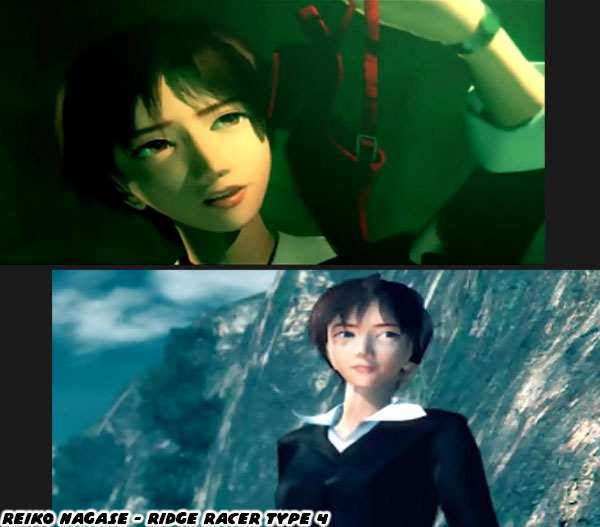
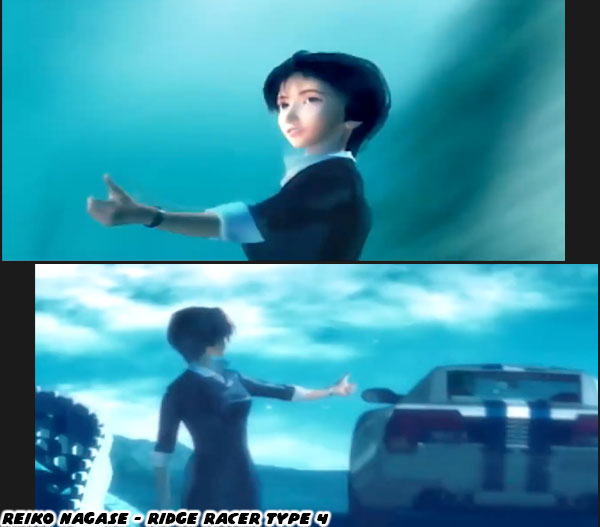
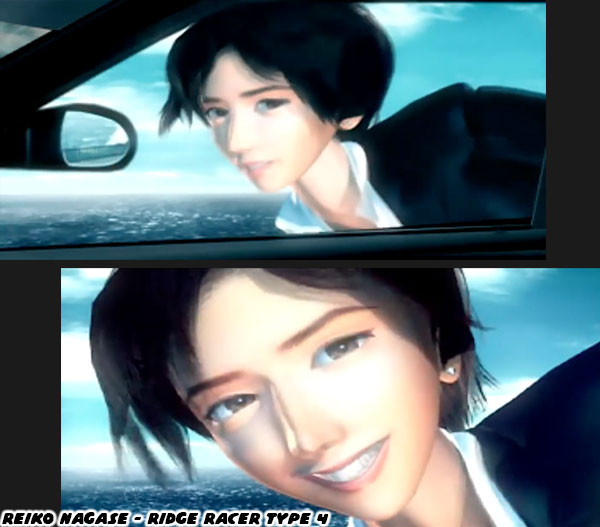
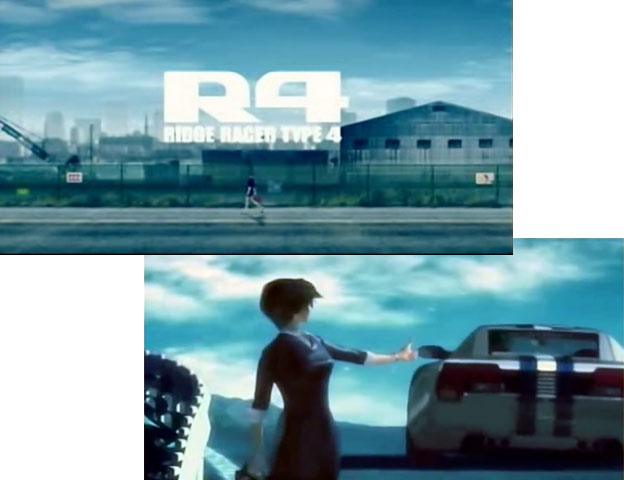
In future revisions of the series Namco did not want to make Reiko appear as a one-dimensional racing character. One that was never seen outside of her racing uniform, like Gina Cavalli or Rena Hayama from R: Racing Evolution. Reiko would be above all else a very feminine character. Mr. Yoshimizu would direct her in multiple openings for the series. Reiko's most memorable of course was her 1999 feature debut in Ridge Racer Type 4. However there was a gap where she wasn't seen for the next few games. In fact Gina appeared as the mascot on the Nintendo DS version of Ridge Racer in 2004 instead of Reiko.

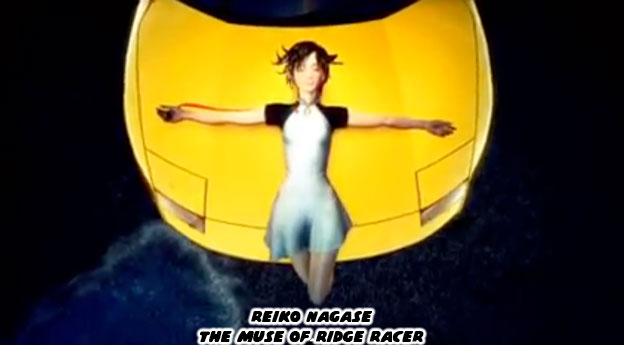
When Reiko returned in Ridge Racers for the PSP later that year it was as if she had never left. The model was timing a Soldat Raggio with a stopwatch while she was lying on top of a yellow Assoluto Fatalia. Without saying a word the character stepped down from her car barefoot. This was a nod to the heel she broke in the R4 opening. The character appeared absolutely charming as she met the Soldat on the road. A year later the game made it's debut on the Xbox 360. In the intro to Ridge Racer 6 Reiko was seen lounging in her apartment and dreaming about racing. That build of the game got even more polish and was released on the Playstation 3 in 2006 as Ridge Racer 7. In the new intro Reiko was seen modeling in front of a projector screen, pretending to take a leisurely drive.

The same year that the Playstation 3 had their new Ridge Racer title Namco had released the PSP version of Ridge Racers 2. Sony was reaping the rewards of a long partnership with the company.
Reiko had returned with stopwatch in hand to time another race. The model would appear on projector screens on several courses within the game. The most famous celebrity in Ridge City had become synonymous with the tournament. The personality of Reiko was fleshed out with every new video released by Namco. The one thing that had been lacking through most of the new millennium was a connection to her actual racing passion. The studio had forgotten that as playful and sexy as they wanted to present Reiko, she was still a driver at heart.

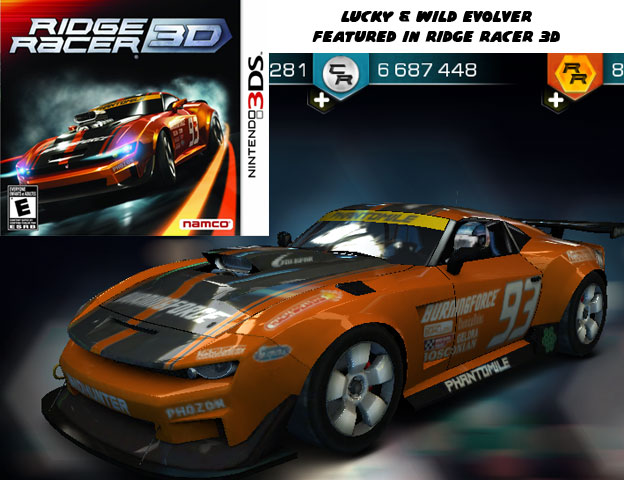
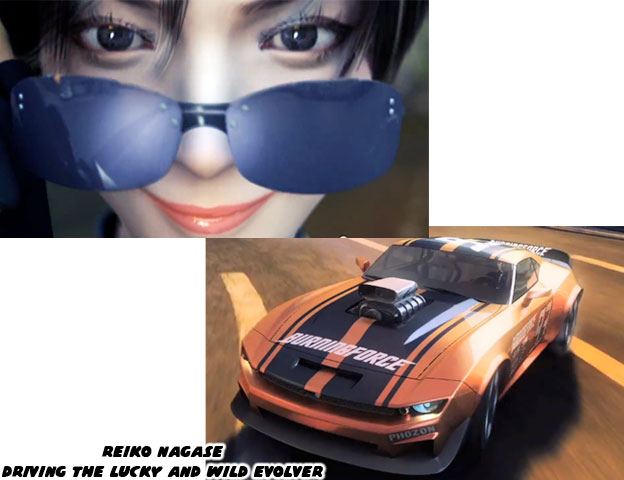
That finally came through in 2011 when the series made its debut on the Nintendo 3DS. Reiko finally left her heels behind and put on a pair of sharp racing boots in Ridge Racer 3D. Every build of the series tended to highlight a particular manufacturer. Although they were all fictional it was still a sign of respect that the Japanese developers had shown the rest of the world. The European companies had gotten a lot of love over the past 20+ years and the USA was finally due for some attention. Reiko was driving the car featured on the box, the Lucky and Wild Evolver. In fact she was performing double duty on the track. She was also driving the final rival car in the game, the Lucky and Wild Marauder.

When Reiko had returned to the series Namco had found its second wind. The studio decided to go back to its roots and try to rebuild. Their goal was to define the Ridge Racer experience for the consoles. The Playstation 2, despite its advanced features had been dismal for the series. They had a lot of catching up to do when other racing games appeared out of nowhere to dominate the market. The definitive Ridge Racer title would take a decade to materialize. The development process would add entirely new chapters to the history of racing games. Some things worked and some did not. Some things would be copied by rival studios and some would better be left forgotten. The next part of the series will explore what happened to the genre while Namco was shifting their operations to focus on consoles rather than the arcade. As always if you would like to sponsor me please visit my Patreon page and consider donating each month, even as little as $1 would help make better blogs and even podcasts!
follow the Street Writer on Patreon!

Wednesday, July 23, 2014

The Ridge Racer Legacy, part 16...

Arcade fans noticed the leggy grid girl Reiko Nagase in the original Ridge Racer. She was the only sprite-based character in the otherwise all-polygon graphics engine. Reiko was designed as "cheesecake" for the male audiences. She wasn't the first character designed for that purpose but most certainly became the longest-lived. In fact when she was put into the game she didn't have a name. By no stretch of the imagination did Namco make up her role. In many professional racing circuits models wearing team livery were used to pose next to the race cars and motorcycles and sometimes accompany drivers to the pit. The term paddock girl became synonymous with the skimpy costumed models.
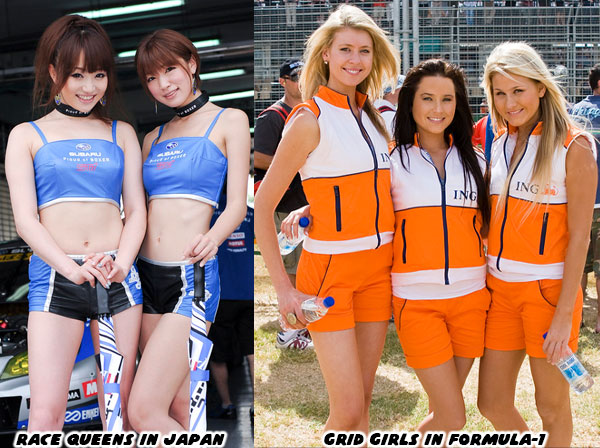
In Japan they were referred to as race queens and dressed sightly more modestly. They often wore pantyhose and one-piece swimsuits in order to minimize the skin show. Reiko had long hair originally and was presented with more class than the typical paddock girls. There was something interesting however about her and her fellow race queens when compared to the women that had appeared as eye candy in early titles.
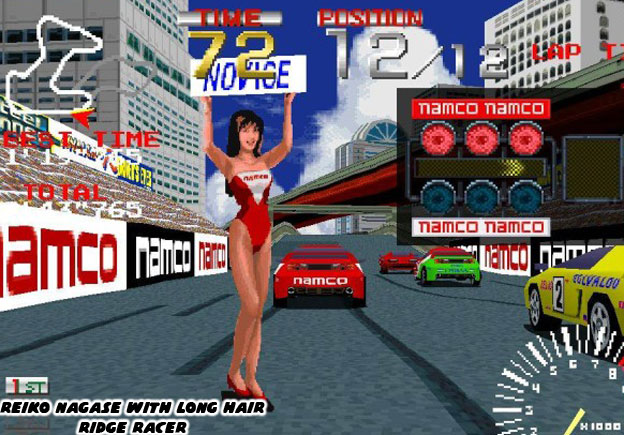
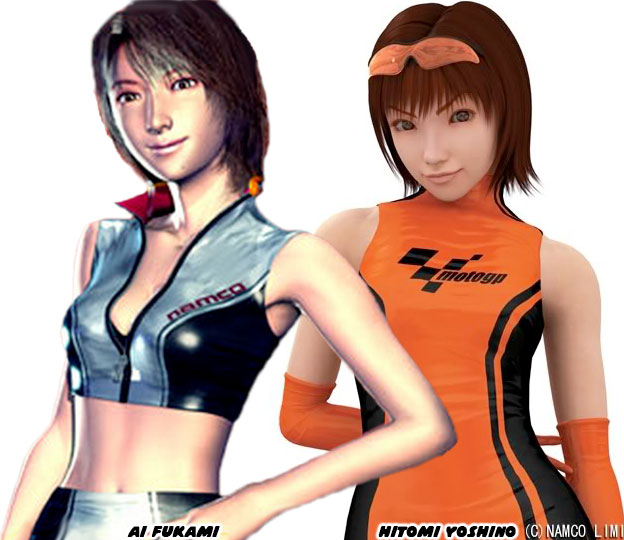
The race queens in Ridge Racer would keep the long hair and bright costumes for several more appearances. Namco had retconned the other grid girls holding up the title cards as Ai Fukami and Hitomi Yoshino. The developers saw potential in having a race queen become a mascot for the series but it would take a radical internal shift to pursue that idea. When Namco lost the original Ridge Racer team to Sega they began trying to reframe the game and save what they hoped would become a franchise that would rival the earlier Pole Position smash hit. Ridge Racer 2 from 1994 was very much a "safe" sequel from the new developers. It improved the framerate, physics, tracks and car selection but was otherwise a plain experience. It was the subsequent game that really began to push a new direction and establish the elements that would indeed turn it into a franchise.
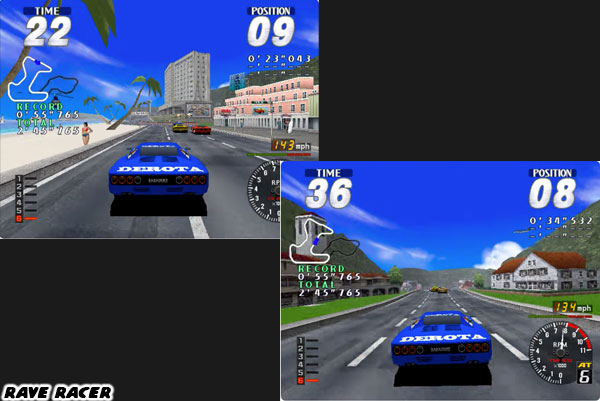
In 1995 arcade visitors had no idea what type of dramatic shift that Namco had planned. The third game was an experiment. Dubbed a Ridge Racer Project the re-titled Rave Racer had a frenetic soundtrack and wild graphics that made the game play more like a music video and less like a simulator. Even the attract screen was directed like a music video. In the '80s arcade games would just go through a loop of gameplay footage and feature a title screen. As technology improved so did the ability to present graphics and audio with greater fidelity and more channels of sound and color. Developers would sometimes create original music and animations that would play on loop when no one was on the game. These features were designed solely for the sake of attracting players to the cabinet. They did not have to rely on actual game footage to sell the experience. Hence they earned the name Attract Screens. Rave Racer had a short but memorable attract screen, it stood out among its contemporaries because it was not pre-rendered game footage.
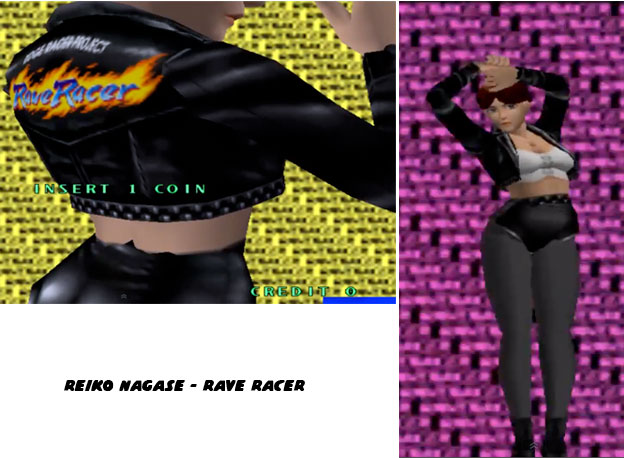
When Rave Racer was sitting idle it would start blasting its soundtrack and try to get the attention of arcade visitors. When they would look there would be a polygonal female model posing for fans. Her turnaround animation was inter-cut with images of race cars sliding around corners. It was one of the more innovative attract screens seen in that era. The star wasn't a typical race queen, not by any stretch of the imagination. With a new short haircut and sporting a leather jacket, shorts and a bare midriff this model was the archetypal "hot girlfriend." She certainly looked more approachable than the models wearing corporate logos featured in the previous games. She had actually predated the look used for Ai Fukami by a decade. This model did not have an official name but Namco would hint later on that it was Reiko from the original game. Her makeover was a hit with audiences. The new Ridge Racer team would continue to build an entire mythology of Ridge City around this character.
The studio had begun developing and adapting titles for the fledgling Playstation console in the mid '90s. This lead to Reiko becoming a more refined character. In 1997 Rage Racer introduced an entirely new side to Ridge City. It was as bold an experiment as Rave Racer was. The electronica soundtrack was still part of the experience but visually it was a bit more grounded in European architecture and gritty realism. It still allowed for the over-the-top car physics to sell the action. The short-haired race queen had returned and was given an official name. For the first time in Ridge Racer history audiences got a chance to see this character grow right alongside the driver.
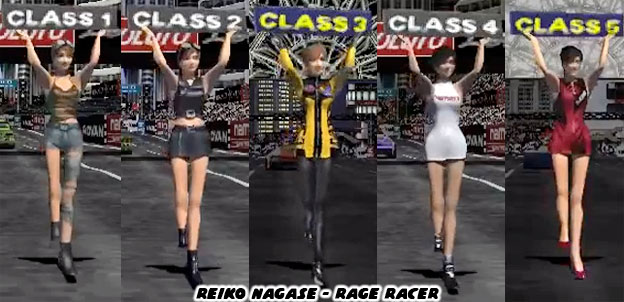
The model had started from humble origins, just like the player, and had to work her way up through the different classes. Rage Racer started off with slightly modified production cars, something that an enthusiast could do his or herself over the weekend without any sort of sponsorship. In those races Reiko was dressed in street fashion. She wore torn jeans and a tank top. The corporate sponsors has not yet discovered this "talent." As the player improved in the rankings and was able to afford faster machines and compete against bigger teams they would run across Reiko again and again. Each time her costumes had improved and her presence had grown within the community. She went from fantasy girlfriend material to supermodel status in the course of the game. Her modeling career had taken off in canon but was for a game not often recalled by the game players.
Kei Yoshimizu was the director of both Rave Racer and Rage Racer. He had been establishing Reiko's new look through the '90s. He had created her original models and animation and would continue to update the character over the next two decades. When he started he realized that the flat pixel models from the original Ridge Racer would have to be redone. He started modeling new characters in 3D but felt the crunch of a deadline fast approaching. Namco wanted to get some promotional material out with their new mascot. Kei didn't have a long-haired model to use for reference so he did the fastest thing he could. He shaved his face and took some pictures of himself to work from.
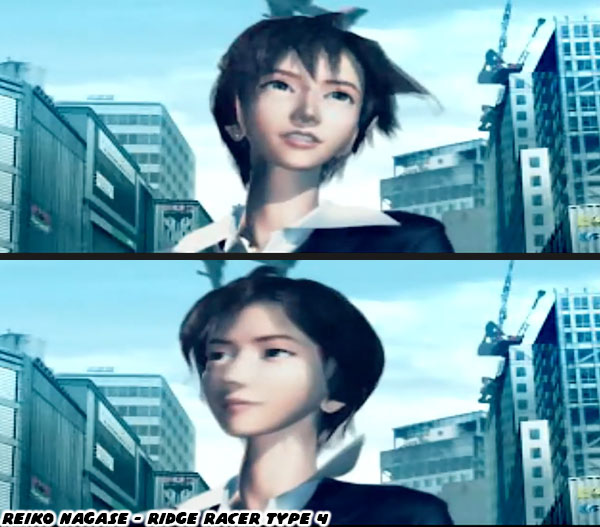
He scanned in the photos to create the original textures for the character. He retouched them to give him, or rather her, flawless skin, new lips and changed the jawline a little. The short, tomboyish hair was done out of necessity. Hair had been a stumbling block for many developers and animators. Kei didn't have time to figure out how to recreate the original flowing race queen hair in 3D. He thought it would be better to keep her hair short and a trend was established. Reiko could still be very feminine and even "girly" while promoting race culture.
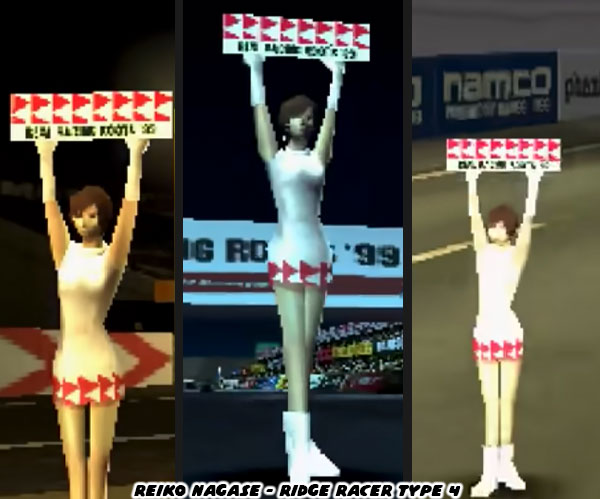
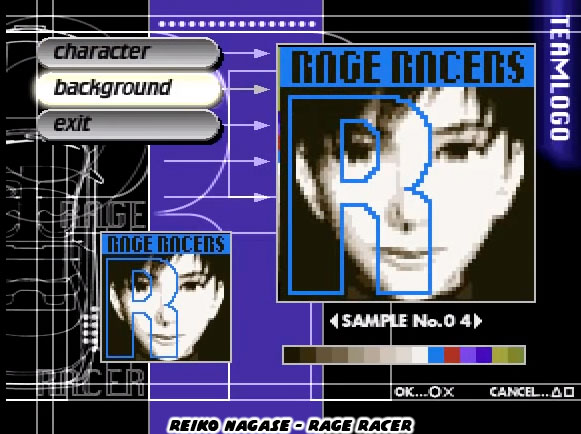
The revelation that Kei was the basis for Reiko shattered the dreams of some fans. They were hoping to find out that Reiko was inspired a real person but not necessarily a real man. This bit of trivia was not widely known to the arcade community let alone the greater gaming community. Undoubtedly many young men would have been heartbroken to find out. As such Namco was really finding that the virtual idol made for a great mascot. Her likeness was used for some of the pre-designed graphics that players could use as stickers on their cars in Rage Racer. The company would beginning putting the face of Ridge Racer out on ads in Japan as well as the US.
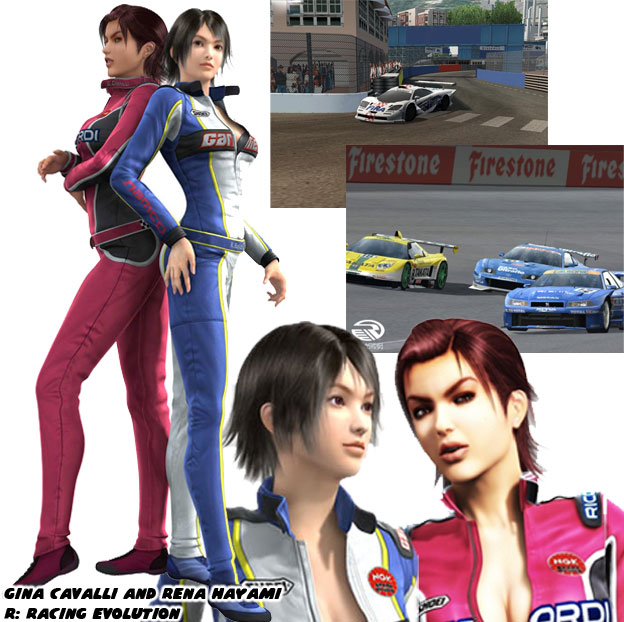
Despite the newfound popularity of the character Namco was not certain if she had staying power. The developer made sure to give Reiko a very strong push in Ridge Racer Type 4. They featured her on all the assets and promotional materials sent out to reviewers. Many of the media outlets in Japan and the US made sure to use a version of the character for their articles and even on the covers of their magazines. Yet no sooner did the studio do that than they dropped her altogether. Instead of casting Reiko in R: Racing Evolution they created a new idol that looked very similar to her named Rena Hayami.
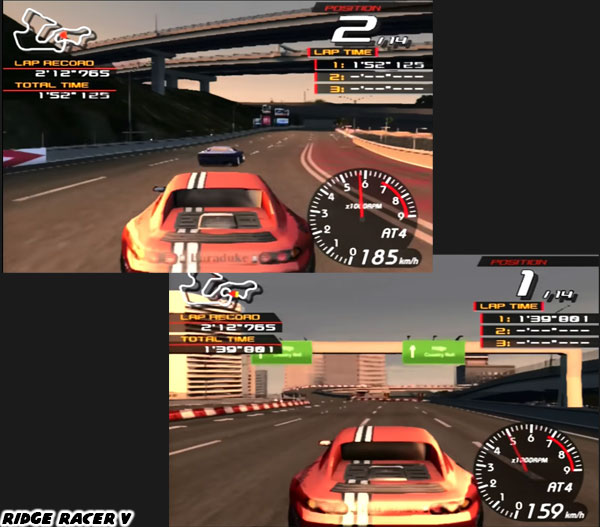
In the intro for Ridge Racer V with Ai Fukami was retracing the steps featured in the attract screen of Rave Racer. The muse had disappeared almost overnight. It could be argued that the Ridge Racer series had its most turbulent showing during her absence. Was Reiko the glue that held the series together? The next blog will highlight the importance than one character could have on a series and an entire universe. As always if you would like to sponsor me please visit my Patreon page and consider donating each month, even as little as $1 would help make better blogs and even podcasts!
follow the Street Writer on Patreon!

Tuesday, July 22, 2014

The Ridge Racer Legacy, part 15...

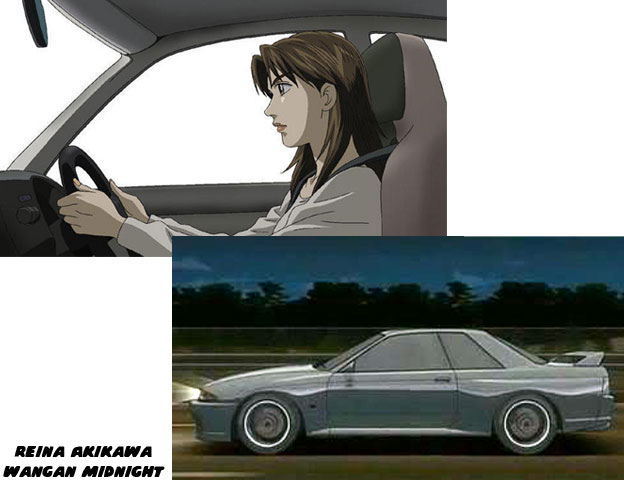
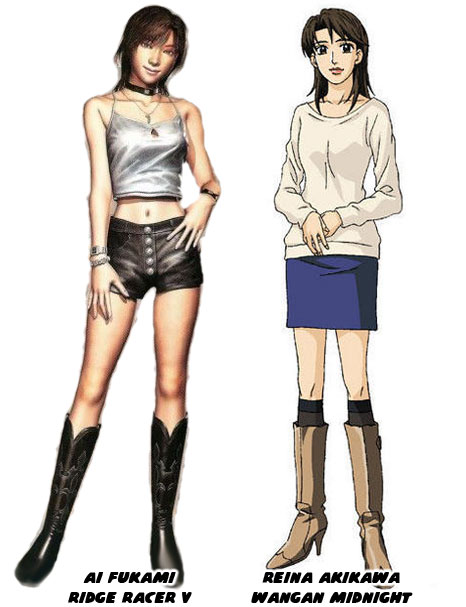
Women had been a part of the Ridge Racer universe since its inception in 1993. In a previous blog I had mentioned that the Wangan Midnight manga series from the '80s had influenced the development of Ridge Racer. Wangan translated to Bayshore, the site of the longest, straightest road in the Japanese toll road expressway system. Bayshore was also a location featured prominently in Tekken as the site of the G Corporation headquarters. Akio Asakura and his Devil Z car from Wangan Midnight inspired the Devil 13 in Ridge Racer. The lead female in the series and rival driver, Reina Akikawa, was actually a model and TV personality. She had a hidden passion for street racing and drove a souped-up Nissan Skyline GT-R despite the objections of her manager. She was sociable and had lots of acquaintances but real boyfriend. She was an unattainable idol to her fans. Undoubtedly she was the basis for Rena Hayami in R: Racing Evolution as well as the other women that would be associated with the Ridge Racer series.

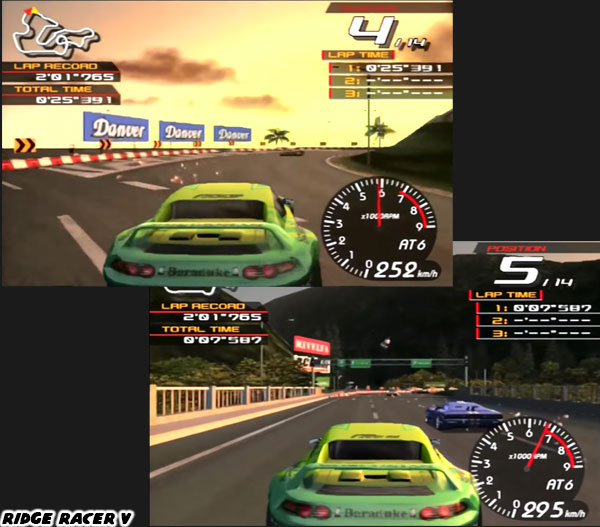
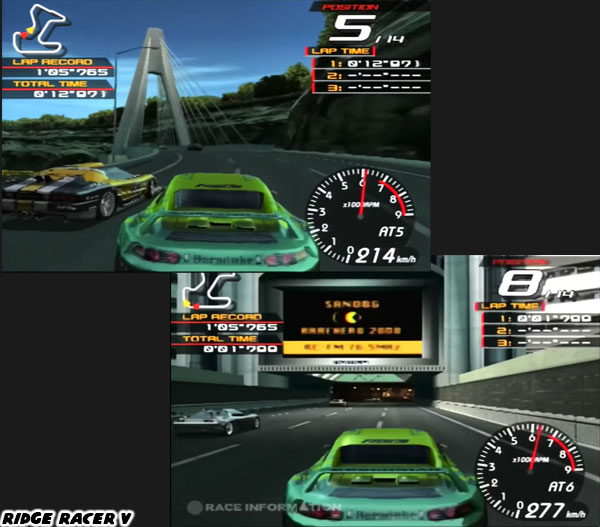
Reina dressed moderately and was never show with any overtly sexual overtones. The women in the Namco games, especially Soul Calibur were not as conservative. Before R: Racing Evolution Namco had actually tried to create a racing personality that players could associate with the Ridge Racer series. In Ridge Racer V that person was named Ai Fukami. The model and "race queen" looked closest in concept to Reina. Ai could be seen in the opening cinema of Ridge Racer V walking down the middle of the Harbor Line 765 raceway flirting with danger as two race cars flew by her at top speed. Ai was a dead ringer for Reina. Both had long legs, sported boots and even the same haircut. The only difference was that one was always a two-dimensional character and the other was a CGI model. Well, also that Ai had a tiny mole on her chin. The "imperfection" gave her tremendous personality, not unlike the beauty mark on model Cindy Crawford.

Ai appeared on promotional material for Ridge Racer V as well as on the box cover itself. Namco wanted to make their racing series even more appealing to their male demographic by playing up the sex appeal of fast cars and hot women. Other games by Namco already had memorable female characters but Ridge Racer was a rare hit that did not feature any human leads. There were no drivers to play as or avatars to identity with. With the introduction of the Playstation 2 and the realization that their audience was becoming older and more mature Namco decided to begin marketing their sport titles with virtual idols. Ai was the one that would welcome fans into Ridge City. There was something sexy about her presentation without going into the realm of pandering like Gina Cavalli. Ai was designed to be featured on other projects if audiences responded favorably to her.

Namco had actually been working on multiple sports titles before the release of Ridge Racer V. The publisher wanted to have a character that they could use to advertise all of the other sports games so they developed a additional virtual idol to cover those titles. Hitomi Yoshino would be the proxy featured in the Moto GP motorcycle racing games, World Court tennis games and World Stadium baseball games. Her costume consisted of a bright top and short dress with the logo of a particular sport. She might carry a baseball bat or tennis racket depending on the promotion that Namco was running with her. Hitomi had even appeared in some promotional videos for the E3 and Tokyo Game show advertising the Ridge Racer series when Ai was absent.

The creation and use of virtual idols was almost exclusively a Namco trademark. No other studio, especially perennial rival Sega had ever considering developing characters for the sole purpose of advertising. The stars of most games were usually enough to win over audiences but what if there were no human characters in the title? Racing games had always advertised themselves with graphics of fast cars on the arcade cabinets as well as on the console box art. Namco tried a different approach. They developed a team of idols to make their arcade and console games stand out. It was not a cheap decision by any stretch of the imagination. Even when companies like Namco were doing well financially there were still questions on budget and turnaround. Spending extra time developing a CGI model and creating a cinema for a character that was not even in the game seemed superfluous. Yet the studio committed to having a model become the representative for the series.

Long time gamers could tell you that neither Ai, Hitomi or even Rena would ever become synonymous with the Ridge Racer series. There was a short-haired model that won the hearts of fans years earlier. Reiko Nagase (the first virtual idol inspired by Reina Akikawa) had been a part of the series since the very first game. She was even given top billing in the opening cinema of Ridge Racer Type 4. Reiko had been associated with the arcade games before Namco lost the original Ridge Racer team. She was also associated with the early Playstation console releases. Namco wanted to develop a new idol once they made the transition to the Playstation 2. It turned out to be a mistake. The muse of the series had always been Reiko, the studio didn't realize it them.

When she returned to the series in 2004, a year after R: Raving Evolution had failed to capture the hearts (and wallets) of gamers the studio went back to what worked. There was no mistake that Reiko was posed on the hood of her sports car like the Kamata Angel 0 icon in the Ridge Racers (for the Playstation PSP) opening cinema. She did seem to have an etherial quality about her. That version of the game would actually become a meme when Sony President and CEO Kaz Hirai over-enthusiastically delivered the line it's Riiiidge Racer to a crowd of not-impressed attendees at the Sony E3 press conference.

Reiko did not appear fully developed from the mind of the art team. She had to change and evolve with the times just as the series did. There was a learning curve with the Namco designers as to her character development. They had to figure out how to best incorporate her into the games and give her a memorable personality. The next blog will look at the origins of the character. I hope to see you back for that. As always if you would like to sponsor me please visit my Patreon page and consider donating each month, even as little as $1 would help make better blogs and even podcasts!
follow the Street Writer on Patreon!

Thursday, July 10, 2014

The Ridge Racer Legacy, part 7...

The Ridge Racer Team had become very confident with the franchise and wanted to give audiences an entirely new perspective on the series. They began by rewriting the game from the ground up. The hardware they were working with was beginning to show its age and Sony had already shipped development kits for the upcoming Playstation 2. R4 would be the swan song for the original Playstation console. As such the team at Namco wanted to make sure that the game went out on top. To keep players engaged it would not be enough to simply have a great racing game to play through, audiences wanted to be engaged on multiple levels, they wanted more immersion.

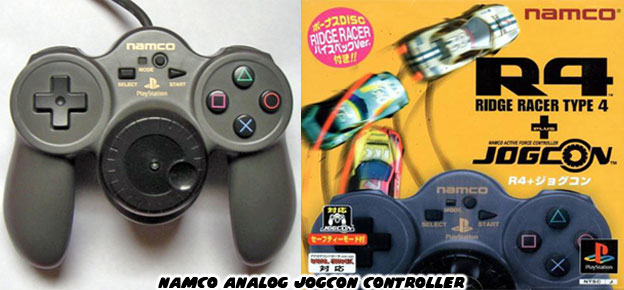
It would be difficult for Namco to sell players on $4000 deluxe sit down arcade cabinets for just one game. They needed to do something to recreate the arcade feel while providing all of the benefits of home gaming. The studio developed an analog controller called the Jogcon. It was an updated version of the classic Playstation controller only this version had a steering wheel situated in the center. Players could drive with their left hand or even with their thumbs.

The Jogcon was sold with special editions of the game. It was by far less expensive than purchasing a dedicated gaming steering wheel while still giving a greater sense of control over the digital directional pad. The dual analog joysticks would not appear on a console until the Playstation 2 a year later. How the gamer played the title was one thing, how they were expected to perceive it was something else entirely.

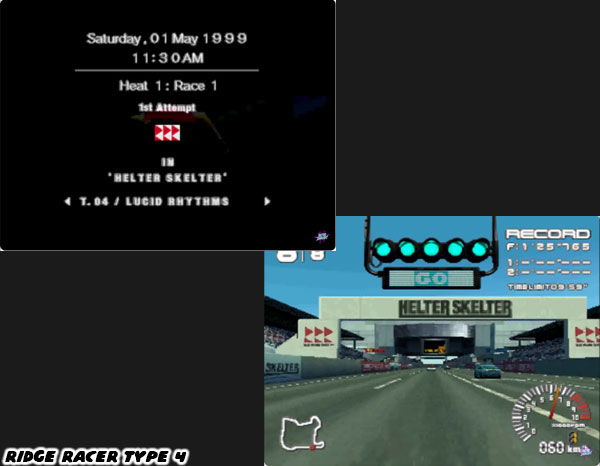
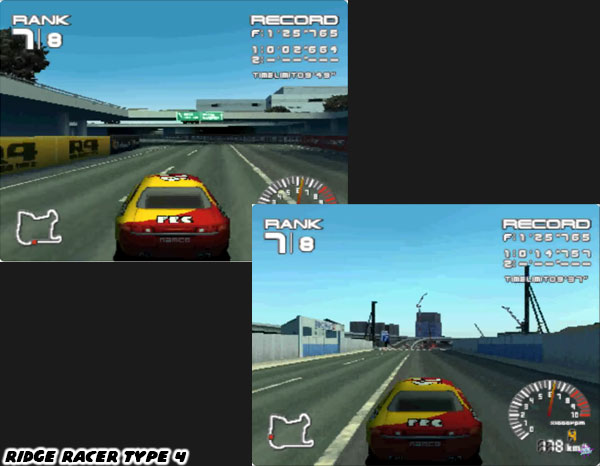
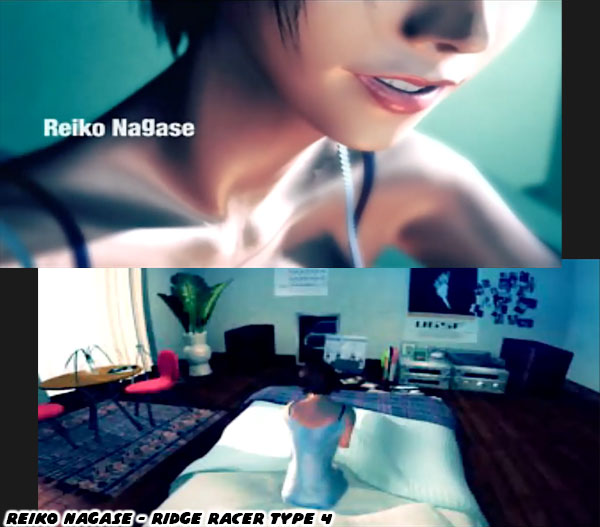
Namco had a very ambitious goal for the franchise. They wanted audiences to take the game in earnest, or at least as seriously as the biggest AAA titles from other studios. They wanted players to believe that they would be competing in a living, breathing environment. A place that would only grow and become better as the years went on. From this point on the studio would present a more complete picture of the world that the developers had imagined but could never commit to the game. Instead of an attract screen that flashed random gameplay elements or an opening film that played like a disjointed music video the studio went for a full blown movie experience. It was apparent in the cinematic Ridge Racer Type 4 opening. The "race queen" model Reiko Nagase was formally introduced to audiences. She had appeared in every iteration of the game up until that point but hadn't been a named main character until then. The team managers that players would drive for; Robert Chrisman, Shinji Yazaki, Eniki Gilbert and Sophie Chevalier got top billing.

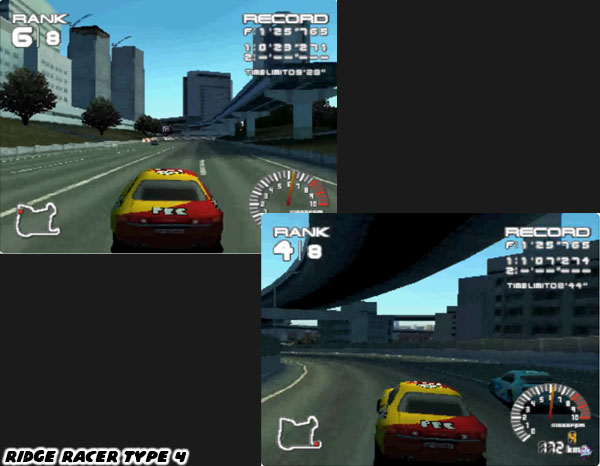
The game didn't actually feature any longer cinematic sequences than the introduction.The story portions covered during the Grand Prix mode were presented as 2D frames with text. The memory was limited to the storage capacity of a CD-ROM after all. That did not stop the studio from trying to immerse players into the experience. The game had eight courses double the amount of courses in Rage Racer and more than any previous title, not including mirrored or reverse courses. It also had over 20 music tracks, again double of what the team was able to put into Rage Racer. They had clearly learned how to optimize every ounce of storage and processing power available to them. The biggest surprise was yet to come for audiences.

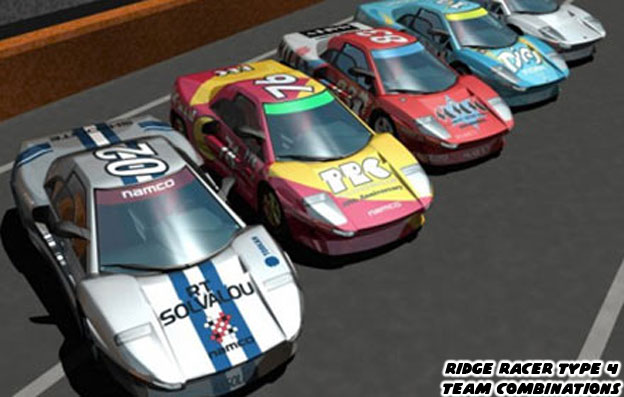
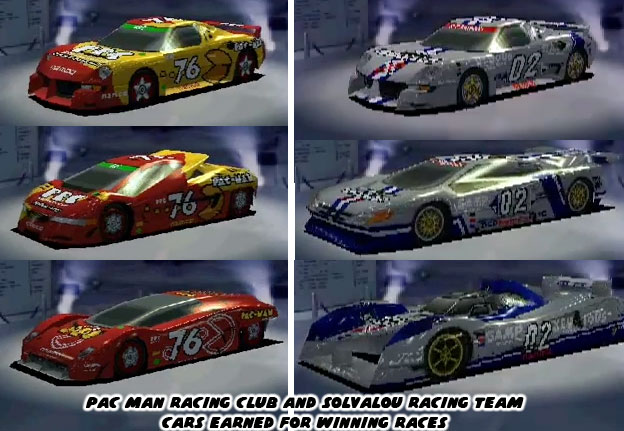
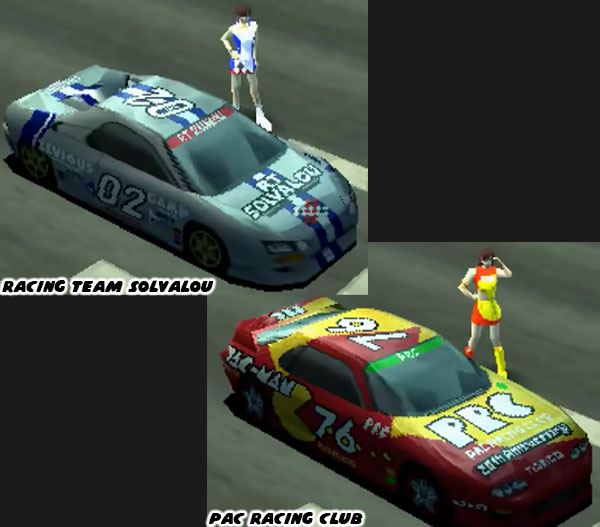
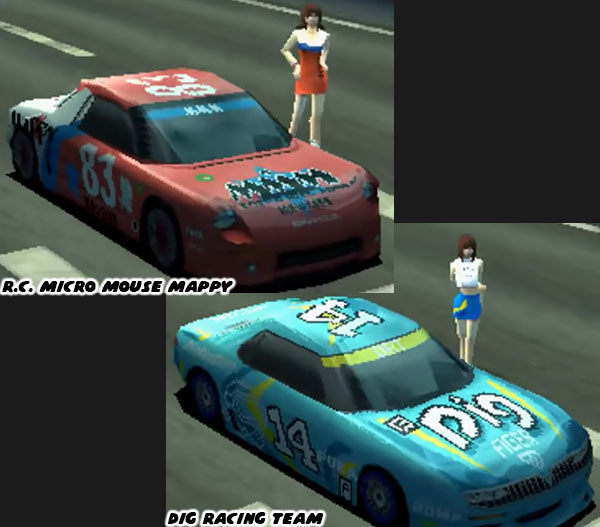
Players learned that they would be competing for the prestigious Real Racing Roots '99 trophy. The game put them in the role of a hot freelance driver that had caught the attention of four notable teams. Each team featured cars that handled and performed differently, breaking from the school of design that had players choose between a beginner, intermediate and expert cars. The teams represented the legacy of the designers at Namco. There was the Dig Racing Team, which featured Dig Dug livery. The Pac Racing Club, which as you can imagine was themed on Pac Man. Racing Team Solvalou had the colors of the space shooter Xevious and finally R.C. Micro Mouse Mappy which had the colorful cars themed on the puzzle game Mappy. Each of the clubs had different owners and team managers with diverse priorities. The garages that served as the backdrop between levels would be set by the team that players joined. They could tell during the selection process which teams had huge budgets and which were modest.

Players learned that not only could they choose from the four teams but they could also choose from four auto manufacturers. The livery for each team would be wrapped on whichever starting car the player selected. As the game progressed players would earn new cars from their sponsors. Players could not buy cars with race winnings, as they did in Rage Racer. Instead it was a one-season run with no repeats and no cash payouts. New cars were earned based on how well gamers placed in each race. It was the economics of real world racing being introduced to the series. Sponsors rewarded victory generously and tightened their purse strings during a losing season.

Between the four teams, four manufacturers, eight tracks and multiple finishing positions it was possible for players to unlock 320 cars. Granted many of these were the same car but with different team colors on them but the high end cars for getting first place were unique for each team and manufacturer combination. As soon as racing fans found out the sheer number of cars they could earn they went crazy over the title. Namco had given players a title that would keep them busy well until the Playstation 2 had rolled out. What kept the players engaged was far more than just a great gaming experience. The immersion that Namco was going for would reveal itself little by little as the game progressed. The next blog will take a closer look at how the studio accomplished that. As always if you would like to sponsor me please visit my Patreon page and consider donating each month, even as little as $1 would help make better blogs and even podcasts!
follow the Street Writer on Patreon!