Showing posts with label ridge racer. Show all posts

Wednesday, March 25, 2026

Bookmark This Page; The Ridge Racer Legacy

The Ridge Racer series was a result of an intense rivalry with Sega. If you want to find out all about Namco’s flagship racing series then Bookmark This Page.

The Ridge Racer Legacy, part 1...

The Ridge Racer Legacy, part 2…

The Ridge Racer Legacy, part 3…

The Ridge Racer Legacy, part 4…

The Ridge Racer Legacy, part 5…

The Ridge Racer Legacy, part 6…

The Ridge Racer Legacy, part 7…

The Ridge Racer Legacy, part 8…

The Ridge Racer Legacy, part 9…

The Ridge Racer Legacy, part 10…

The Ridge Racer Legacy, part 11...

The Ridge Racer Legacy, part 12…

The Ridge Racer Legacy, part 13…

The Ridge Racer Legacy, part 14…

The Ridge Racer Legacy, part 15…

The Ridge Racer Legacy, part 16…

The Ridge Racer Legacy, part 17…

The Ridge Racer Legacy, part 18…

The Ridge Racer Legacy, part 19…

The Ridge Racer Legacy, part 20…

The Ridge Racer Legacy, part 21...

The Ridge Racer Legacy, part 22…

The Ridge Racer Legacy, part 23…

The Ridge Racer Legacy, part 24…

The Ridge Racer Legacy, part 25…

The Ridge Racer Legacy, part 26…

The Ridge Racer Legacy, part 27…

The Ridge Racer Legacy, part 28…

The Ridge Racer Legacy, part 29…

The Ridge Racer Legacy, part 30… 

Have you played Ridge Racer in the arcade or the consoles? Let me know about it in the comments section. As always if you enjoyed this blog, and would like to sponsor me please visit my Patreon page and consider donating each month, even as little as $1 would help make better blogs and even podcasts!

follow the Street Writer on Patreon!

Friday, October 31, 2014

Ridge Racer Slipstream, v 2.2.0 is a racing fan's dream!

Hello friends, I just wanted to make sure that those of you that are into racing games and have a mobile device know that Ridge Racer Slipstream is still one of the best purchases you could ever get. The developers at Invictus released this gem for Namco-Bandai last year and have been pushing patches and updates for it every few months. The most recent update, version 2.2.0 from a few months back was a superb expansion.


Players were rewarded with two new tracks, the Surfside Resort and Seacrest District. The addition of these tracks gave players a total of 12 unique courses on which to race on. These tracks could be raced in the reverse direction as well making it a possible 24 different tracks to compete on.


The two tracks originally debuted in Ridge Racer 6 for the Xbox 360. The new courses complimented the library of previous locations very well. They provided audiences with unique visuals that gave players a sense that they were indeed competing around the world.


Invictus has been working feverishly to make an already beautiful racing series truly shine on smart phones and other mobile devices. The textures are rich, lighting realistic and attention to detail astonishing. At no point does Ridge Racer Slipstream ever feel like a "watered down" version of the iconic racing series. Signs, stickers, sponsor logos and ads that only the most die-hard Namco fans could get were sprinkled liberally throughout the game. But it was far more than two courses that made version 2.2.0 stand out to audiences. The update included four of the most popular cars from franchise history.


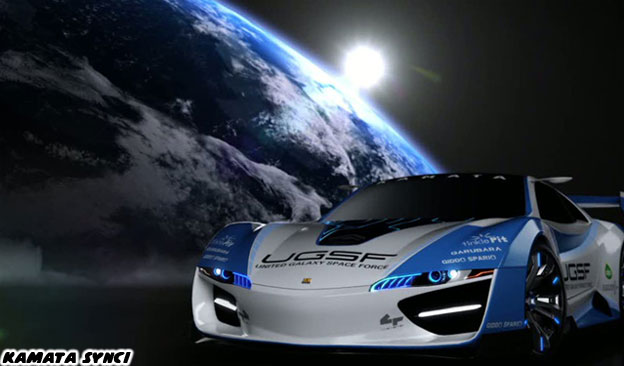
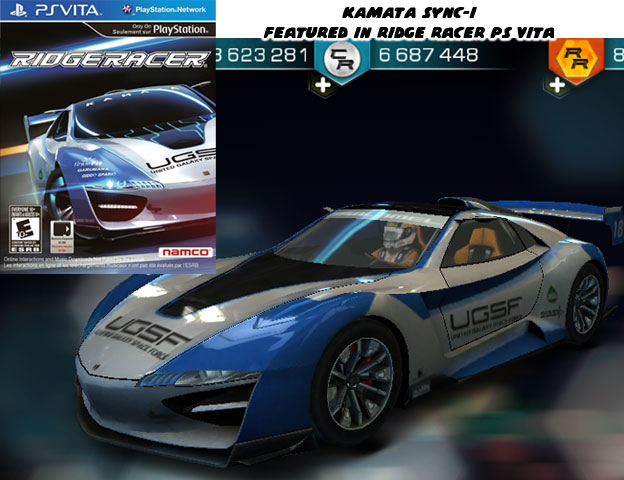
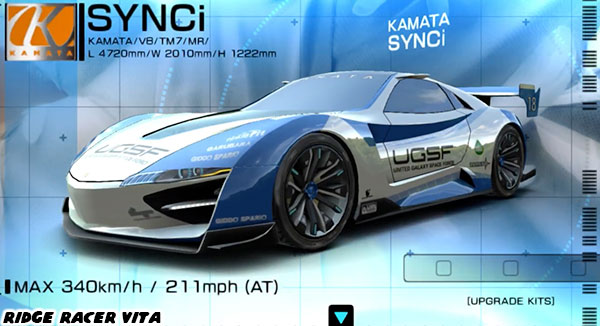
Each car that was selected to appear in the latest build of Slipstream meant something to long-time fans. These were not random cars from the franchise but were actually based on the title cars from the most popular releases. The Kamata SYNCI for example debuted in Ridge Racer for the PSVita. This car was one of the best designed rides in the series, at least by my standards. It was a very futuristic-looking racing car with just enough details to ground it in reality. The technology behind the car was part of the canon that Namco would fold into the Ace Combat and UGSF titles. The PSVita version of Ridge Racer stirred controversy among the community because it only came with a few tracks and cars and the rest had to be purchased as downloadable content. Paying nothing extra for the SYNCI in Slipstream was a reward for the most patient fans.


Kamata actually had a second car featured in the update. The RC410 could be considered one of the best drift-type cars in the franchise. It was the cover car for Ridge Racer 7, the Playstation 3 release of the game. The amount of work that went into recreating all of the cars for smart devices could not be overstated. The developers at Invictus did a superb job at recreating the look, but even more important, the handling of the RC410. The car would just slide around corners effortlessly. Each of the cars played distinctly. Like the full-blown console versions of the game this offered fans of either grip or drift type racing to find the machine that worked best for them.


The bright orange muscle car, the Lucky & Wild Evolver was the featured ride on Ridge Racer 3D. This was the Nintendo 3DS exclusive version of the game. Lucky & Wild was representative of USA muscle car manufacturers like Dodge and Chevrolet. The Evolver was a fantastic beast, reminiscent of the Ford Mustang and Chevrolet Camaro. It was possibly the coolest muscle car in the series. That was of course with the exception of the Lucky & Wild Wisdom. I could only hope that Invictus was not finished inserting the cream of the crop into the game. Thankfully I had the SYNCI and Evolver, two of my personal favorites, to carry me through the game.


The fourth car introduced in Slipstream v 2.2.0 was the Soldat Rauna. This European supercar was featured in Ridge Racer 2 on the Sony PSP. It was a perfect balance of drift and acceleration that few cars could match. It would become the most powerful of the four new "Extreme" class cars.

Sony and Namco had worked hand-in-hand on arcade to console adaptations during the rise of the original Playstation. The company would have a version of Ridge Racer available at the launch of each new system, including the PSP. As the handheld Playstation evolved so too did the Ridge Racer series. The sequel for the PSP was one of the better efforts from the publisher. Sadly Namco scaled back production and had no new Ridge Racer announced for the release of the Playstation 4. Thankfully Slipstream remained and managed to capture the magic of the series onto a portable format. With an installed / downloaded base of over 300K units it was also one of Namco's most successful mobile titles. Hopefully Invictus would continue to release expansions for the game well into 2015. If you would like to sponsor me please visit my Patreon page and consider donating each month, even as little as $1 would help make better blogs and even podcasts!
follow the Street Writer on Patreon!

Friday, September 5, 2014

The Ridge Racer Legacy, the Namco Chronicles, final part...

When the original Ridge Racer developers left Namco they broke the trust from their teammates in the process. The camaraderie that they shared with those they left behind had been shattered. It didn't seem to matter how much they had grown personally or professionally on all the titles they had worked with. In the eyes of the publisher only those that stayed behind were truly loyal employees and worthy of carrying forward the Ridge Racer name. Unfortunately those that remained were casual fans of racing. They had not poured their heart and soul into Ridge Racer. They did not grasp the level of insight and passion that the original team had brought to the project until it was too late.

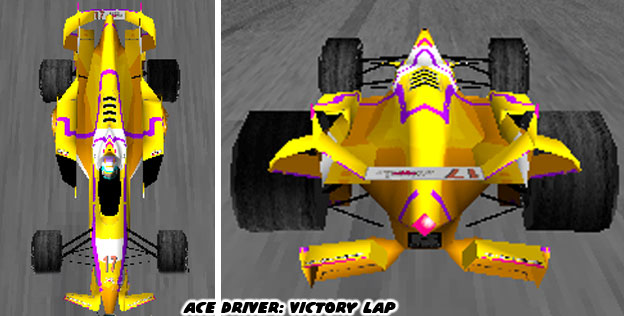
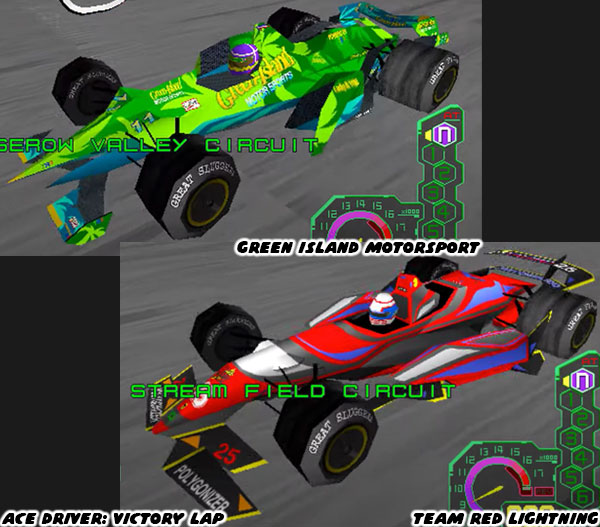
What the remaining members had was experience in multiple genres and in 3D programming. They could guarantee that the very next racing game from the company would at least look good as their rivals, and be playable. It might not be the greatest racing experience but it would be enough to keep the company moving forward. The designers that stayed behind had cut their teeth on the brilliant UGSF arcade shooters. They had a certain aesthetic in mind and wanted to redefine the genre. The rides featured in Ridge Racer were very nice but they weren't revolutionary. So the new project members challenged themselves to create a whole new breed of race car. Each car would look like a traditional open-wheel racer but upon further inspection they would begin to resemble space ships.

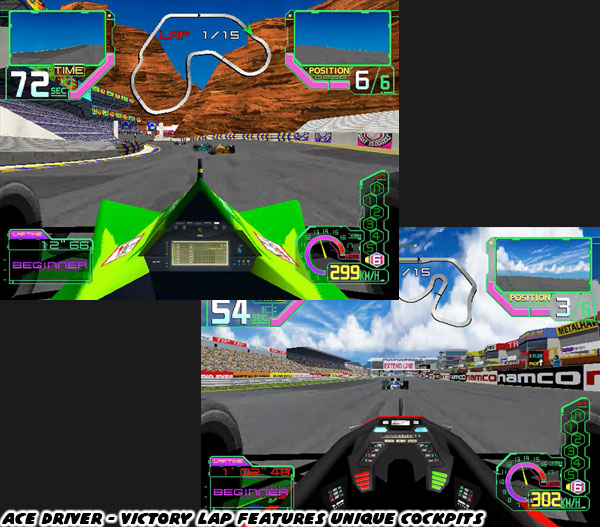
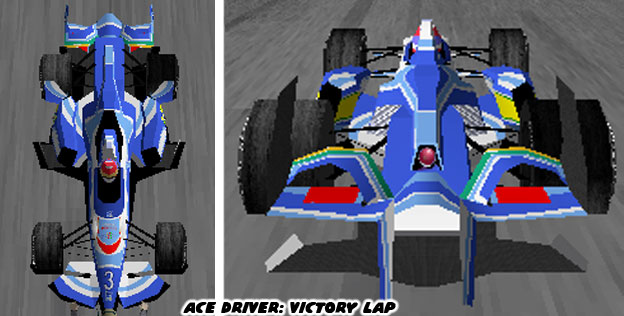
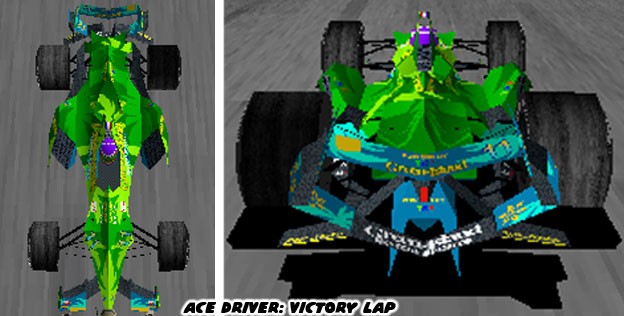
The designers envisioned the Ace Driver: Victory Lap cars as being the peak of race technology. They would be the race cars that were being driven around the time of Cyber Sled and Cyber Commando. They would be in a class above every category in Ridge Racer. Each of these new rides featured power plants, transmissions and aerodynamics superior to those on all of the Ridge Racer production cars. This would become the distinction made between actual GT-class cars and Formula-1 racers. While both racing leagues featured millions of dollars worth of R&D in the cars only one type of car was specifically designed for racing. The GT cars by comparison were rooted in production autos.

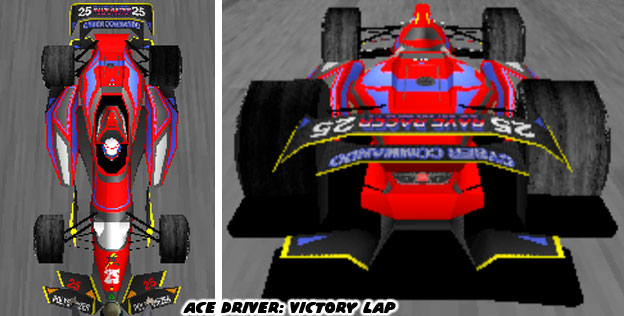
With the exception of the prototype class most GT cars had been sports cars that were converted for racing duty. The multi-wing technology that Namco featured on the Ace Driver cars was not a new concept for Formula-1 or INDY racing. It was the layout and position of the wings, air splitters, spoilers and bodies that were radically different than those in real-life open wheel racers. In many instances the game from 1994 would predict the trends that the actual Formula-1 racing cars would use almost 20 years later.

The cars in Victory Lap took on the characteristics of the UGSF space ships. There was a hint of Galaga, Nebulas Ray, Solvalou and even Starblade in each car. It made sense that the Ridge Racer and Ace Combat games were connected. The manufactures sponsoring the Ridge Racer tournament were using the cars as test beds for new technologies. Many of these advances were meant for mass production. This was a reflection of the real world. The big auto manufacturers would enter rolling tests beds into endurance races. They were great for advertising but were also used so that engineers could gain a lot of insight by pushing new technology to the breaking point. What about the companies that had a very specific goal in mind? Perhaps the ones that wanted to manufacture parts for a smaller market, like airplanes and space ships. These manufacturers needed a way to advertise their presence and test out the reliability of their equipment as well. Should they be prohibited from creating race cars? Of course not!

There was an evolutionary gap between the vehicles featured in Ridge Racer and the planes from Ace Combat. The majority of the rides in Ridge Racer looked like those that could be bought at a local dealership. The radical designs of a pure racing machine was lacking in the series. The open wheel cars in Ace Driver filled that gap. They were as close as Namco had ever come to creating land-based fighter jets. The cars had modern suspensions to shift the balance between turns and even wings that were flexible and helped steer the cars around the most brutal turns. Wings in actual Formula-1 cars were fixed and engineers were not allowed to adjust them in the middle of a race. These cars honestly looked like the wheeled cousins of the ADF-01 Falken. They looked like the ancestors of the GeoSword and Dragoon. Although there were only four of these cars created for the series each one had a tremendous presence. The most "conservative" of the racers was still far bolder than the most recent F-1 car. It would be a shame if audiences around the world never got another chance to pilot these cars. Especially on the consoles!

With the numbered Ridge Racer series on an indefinite hiatus I could only speculate what Namco was working on. They had learned a tremendous amount over the past 20 years, the most important being that they could outlive Sega so long as they believed in their own titles. The best games they created during that era had withstood the test of time. The classic hits were still referenced as examples of greatness across multiple genres. Perhaps the company was trying to figure out how to present a new generation of Ridge Racer to audiences. One that would connect the dots between Ace Driver, Ace Combat and the UGSF continuity. Whatever the case was I would be eternally grateful to the company for every experience they provided my brothers and I in the arcade. For every great console moment and for every carpal-tunnel inducing mobile game I would also say thanks.


This has been the Ridge Racer Legacy, my blog chronicling the contributions of Namco (now Namco Bandai Games) to a generation. I hope you enjoyed the series. If you have any questions or comments please feel free to leave them. Thank you for following along and I wish you all the best. As always if you would like to sponsor me please visit my Patreon page and consider donating each month, even as little as $1 would help make better blogs and even podcasts!
follow the Street Writer on Patreon!

Wednesday, September 3, 2014

The Namco Chronicles, part 13...

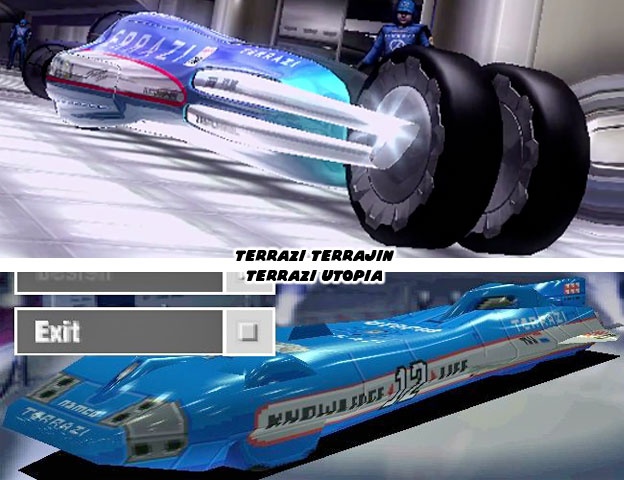
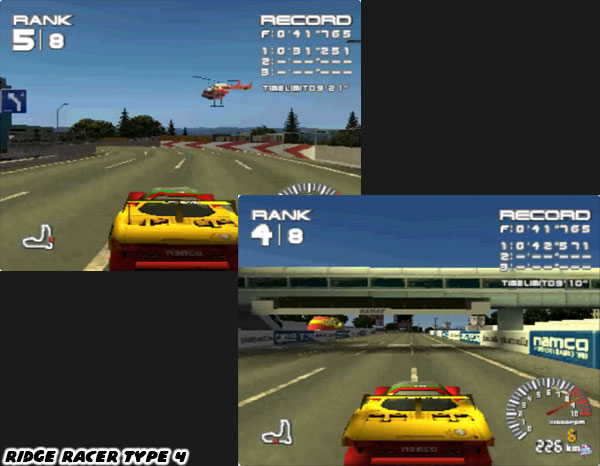
I had mentioned in previous entries of this blog that the Ridge Racer cars reflected the best elements of vehicle designs from the past century. The cars in the game were inspired by production and concept automobiles. In many cases they were designed from the ground up by the people working at Namco. Since many of the early developers on the series had experience designing space fighters it stood to reason that a few of the concept cars featured in the game would be rooted in science fiction. One of the manufactures featured in the title was a Japanese company called Terrazi. Of every manufacturer featured in the game none had cars as dynamic as those from Terrazi. Two of the boldest designs looked less like cars and more like missiles. The Terrazi Terrajin, from Ridge Racer 7 and the Terrazi Utopia from Ridge Racer Type 4 knew no peer. Suffice to say that even the Angel 0 and Devil 13 looked almost plain by comparison. To be fair there were some other "cars" that floated above the ground including the Assoluto Vulcano and Assoluto Pronzione but for right now I want to highlight the ones that bridged racing technology with flight technology.

Rocket cars were not a new idea. Mankind has always wanted to push the limits of speed. Early hot rodders strapped whatever they could to the engine to make them faster. Superchargers, turbochargers helped greatly and different fuel mixtures including alcohol, methanol and nitrous oxide pushed the barriers of performance and safety. When aerodynamics became a limiting factor on traditional car shapes then speed enthusiasts began creating their own frames. They hammered out bullet shaped bodies from aircraft aluminum to squeeze every little bit of speed out of an engine that they could. These enthusiasts, sometimes called speed junkies, would look for the longest, flattest places on Earth to test out their creations. None became more famous than the salt flats at Bonneville in Utah. Every year people would come in from all over the world to try and set a land speed record. Some of those pioneers were injured in the process and a few even died from their pursuits. The Terrajin and Utopia were a nod to the rocket sleds that ignited the imagination of car enthusiasts everywhere.

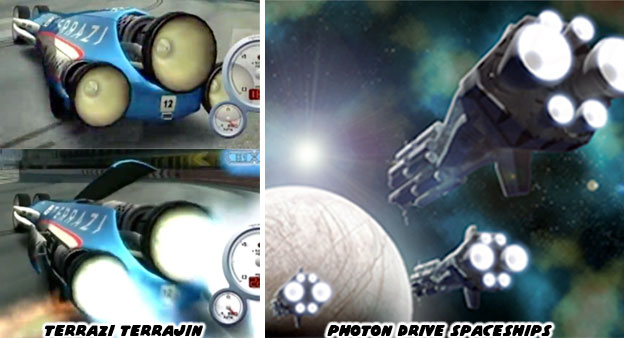
What made the land missiles in the Ridge Racer series unique was that they weren't exactly focused on land speed records. Despite their size and shape they were actually capable of turning on a dime. The excess horsepower each ride possessed was so that they could destroy the competition on the straightaway and use their momentum to slide around turns without losing hardly any speed. The power plants inside of the vehicles were experimental. Only the engineers at Terrazi knew their full specs and they were not always at liberty to say what they were. Most gamers could gather that the Utopia was a jet-powered car based on the exhaust vent at the rear. The Terrajin was something else entirely. The car seemed to have some sort of hybrid motor system. The exhaust cones at the rear of the car would only ignite while under full nitro boost. In fact additional ports would open up on the sides of the car and the roof to allow additional exhaust to escape. These cones did not give off fire or smoke. Whatever fuel system the car employed was not a traditional fossil, rocket or even jet fuel.

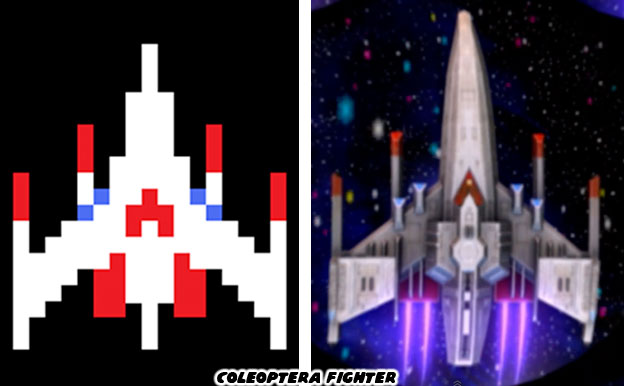
The engineers at Terrazi had introduced the first fully functional space propulsion system and wanted the world to take notice. The name Terrajin actually had symbolism behind it. Terra was Latin for Earth but Jin had multiple meanings in Japanese, the two most common being God or Person. The Terrajin was a God among terrestrial cars. The designers shoehorned the "Photon Drive" technology into a headline grabbing ride. Featuring a Photon Engine in a Ridge Racer duel class car was not an accident. The Terrajin was a prototype, built on a smaller scale than the space ships that would eventually take humanity across the stars. In UGSF canon Photon Drives were in the testing phases on actual space ships by the year 2050. This was 10 years after the events in Ace Combat 3, the series that was connected to Ridge Racer. The high-tech engines were used as primary propulsion systems for drilling vessels sent to far off planets between the years 2100 to 2200. Namco fans were getting the first glimpse of the technology that would eventually launch Coleoptera Fighters in Galaga a few centuries later.

This was not the only revolutionary technology that the series would introduce into Namco canon. A rival Japanese company to Terrazi was Kamata. In Ridge Racer Vita the company unveiled the Kamata SYNCi. This car was the bridge to an entirely new form of racing. The SYNCi was a super car that featured a hybrid engine on top of other cutting-edge technologies. It was designed to be the flagship for all new Kamata models. They chose the name SYNCi to take a shot right at Terrazi. The nickname of the SYNCi translated to “a god container” in Japanese. Not in the sense that it was a car that could trap the Terrajin, but rather that it was a vessel for the soul or spirit. The biggest feature of the car was an electronic brain or “SYNC-I system” that monitored the driver's stress and synchronized with their emotions. The car was not predicting a stroke or heart attack but rather engineered to take care of its driver. With man and machine synchronized it could help find the perfect line through a turn with minimal input.

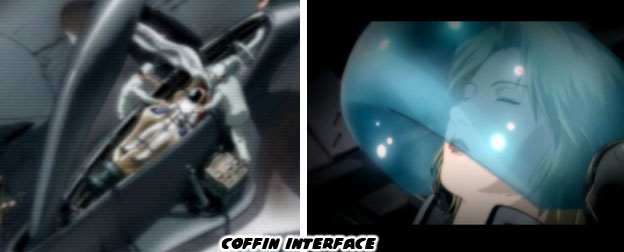
Perhaps the SYNC-I technology was the explanation for why the other Ridge Racer cars had become so easy to drift with. They were almost impossible to run into a wall when sliding. The computer-assisted driving technology was first proposed in a 1991 animé series called Cyber Formula. In that series artificial intelligence "Cyber Systems" helped turn racers into better drivers and also help reduce accidents by handling the more complex mechanics of aerodynamics and engine power a million times a second. Some corporations sought to exploit the technology into military applications. There was no doubt that the designers at Namco had pulled the influences from Cyber Formula into their own series. The SYNC-I system would become the predecessor of the Electro-Neuron-Synapse-Interface (ENSI). This system of connecting a neural interface with a vehicle was the basis for the COFFIN system used on the fighter jets in Ace Combat. The technology was being applied to aircraft at about the time the Kamata SYNCi debuted.

The developers at Namco made it known that from this point on the Ridge Racer universe would also have a hand in establishing UGSF canon. They featured the Kamata SYNCi in the cover art and promotional material for the game. It was a glorious looking car but became unmistakable because of the livery that the car was wrapped in. The UGSF banner was worn prominently on the ride. Previously only the companies that created aircraft for Ace Combat series were featured as sponsor stickers. The UGSF was formed during the events leading up to Ace Combat 3. By sponsoring a race car the organization was trying to earn the trust of the mainstream.

No other production car in Ridge Racer canon had merged technology and performance so closely together. No other car reflected the goals of the UGSF so well. The SYNCi was the poster child for the game and highlighted a new direction of the franchise. Audiences could not argue with what they saw but could argue with Namco for charging them to pay for DLC tracks and cars. To help push the intergalactic angle Namco introduced "The Planetary League" in Ridge Racer Vita. Players were put into one of four teams and sent daily "missions" by Namco. By completing missions and winning races players earned points to help the ranking of their respective teams. Gamers the world over would all be participating and helping out their teammates 24 hours a day. It was the type of racing challenge that a veteran gamer like myself could endorse.

The Namco employees that worked on the golden era of arcade space shooters had put enough pieces in motion so that they could enjoy a self fulfilling prophecy. Well, at least canonically the UGSF would come to pass and the next 7000+ years of humanity would be written in the stars. For the records however there was still one piece of the puzzle that was missing. Ridge Racer laid the groundwork for the space jockeys but neither the Terrajin nor the SYNCi were the pinnacle race cars in the universe. Neither were the Kamata Angelus or Soldat Crinale for that matter! The company had already created the next evolutionary step in technology. These vehicles would connect Ridge Racer to Ace Combat and eventually the stars. I hope to see you back for the penultimate blog in my series. As always if you would like to sponsor me please visit my Patreon page and consider donating each month, even as little as $1 would help make better blogs and even podcasts!
follow the Street Writer on Patreon!

Tuesday, September 2, 2014

The Namco Chronicles, part 12...

The developers at Namco had done an amazing job at creating fully-realized worlds. The problem was that the games they created barely scratched the surface of what the studio had in mind. Audiences had no idea what the scope of each game was. The only way players could appreciate the commitment of the company was by taking a step back and looking at the series as a whole rather than each game individually. Whether the game was Tekken, Ridge Racer or one of the Ace Combat titles, there was something that could only be appreciated by seeing how far each game had progressed over the past 20+ years.
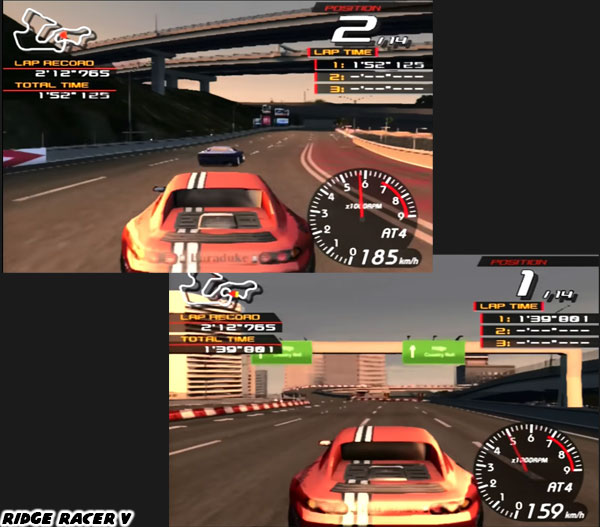
I don’t mean necessarily with regards to graphics or control but as a whole. How did the gameplay evolve, how did the characters and plot develop? How did the relationships change over the course of the series? Every one of those titles grew substantially. The company had allowed their developers tremendous leeway. They experimented with new formats, new control schemes and varying timelines. Yet the core of each game remained the same. They were all fun experiences and left players longing for more. Players would race on the courses featured in Ridge Racer and see that there was much more to the world beyond the race barriers. As far as they could see in every location there was substance. Whether it was people throwing confetti from the stands or even the dancing characters on an electronic billboard, the world of Ridge Racer felt alive.
The same thing applied to the Tekken series. Whenever an impromptu fight broke out in the middle of a mall, which seemed to be fairly often, players could see the smallest details in shops, from fully dressed mannequins to tile work on fountains. Audiences could also appreciate the scale presented in these locations such as when they were fighting within an enormous sports arena filled with thousands of spectators. The only downside in the eyes of many gamers was that Namco never let down the barriers. They never turned any of these locations into a sandbox environment. Players could not drive freely down the streets of Ridge City. Fighters could not hop the fence and see what lay beyond in Tekken. Instead the developers wanted audiences to appreciate the type of game they had created in the exact format it was meant to be played.

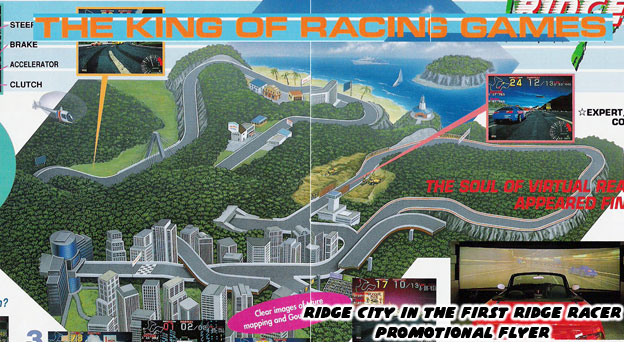
Namco knew that players would return so long as they continued to grow each franchise. In order to do this the development teams had to be constantly vigilant in adding to the canon of each game as much as they were focused on content. The prime example of what the studio did over the past two decades was seen in Ridge Racer. The developers wanted audiences to know that they were not polishing a static city. This was a living, breathing universe that they were shaping. Roads and freeways were interconnected, they all lead somewhere far beyond the borders of the track. In fact the language of Ridge Racer would change to reflect that realization. Over the '90s Ridge City gave way to Ridge County and Ridge County eventually gave way to Ridge State. In the new millennium Namco had finally created enough tracks and locations as to call the continuity the Ridge Universe.
A racing game had met the requirements to join the continuity of the UGSF. It was for all intents and purposes the foundation for the Ace Combat series and future space shooter titles. It was more than a simple coincidence when the cars in Ridge Racer began assuming the sponsor logos of other games within Namco canon. For the fathers of a series it was essential that the Ridge Universe was headed somewhere too. The destiny of the racers was written in the stars. The tradition had been there since the first arcade game but really became a focus in Ridge Racer Type 4. Racing Team Solvalou was an Italian team lead by Eniki Gilbert. The name of the team was rooted in the spaceship Solvalou, which was also the name of the 3D sequel to Xevious. To most long term arcade fans this was a nudge and a wink from the developers of classic titles. What it became was a challenge to bring the Ridge Universe into the fold of the UGSF canon.
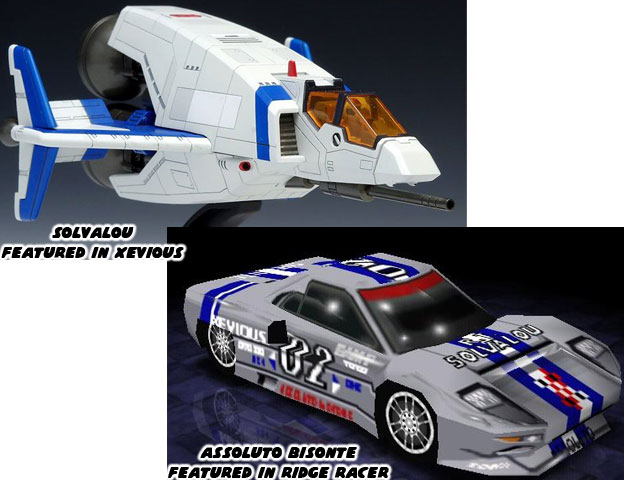
The biggest tragedy that had happened to Namco would become the biggest asset in the company history. When Sega stole their best racing game developers in 1993 the outlook seemed bleak. The newly formed AM3, which was made up of former Ridge Racer Project developers went on to create Sega Rally Championship and Crazy Taxi. Those were easily two of the greatest driving experiences ever put in arcades. By every right those hits should have belonged to Namco. The studio went into rebuild mode and relied on the expertise of the remaining artists, developers and programmers to keep their racing division up and running. The remaining employees had plenty of experience in space shooters, fighters and puzzle games. They had to get caught up on driving games really quickly. Thankfully they had the notes from the original team to fall back on. They knew more or less that Ridge City would be expanded upon and new tracks built out of the framework of the surrounding areas. Once the notes from the original project members dried up the remaining employees decided to play up their strengths.
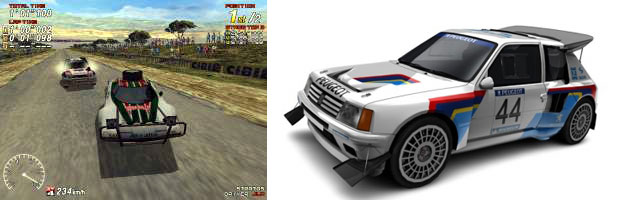
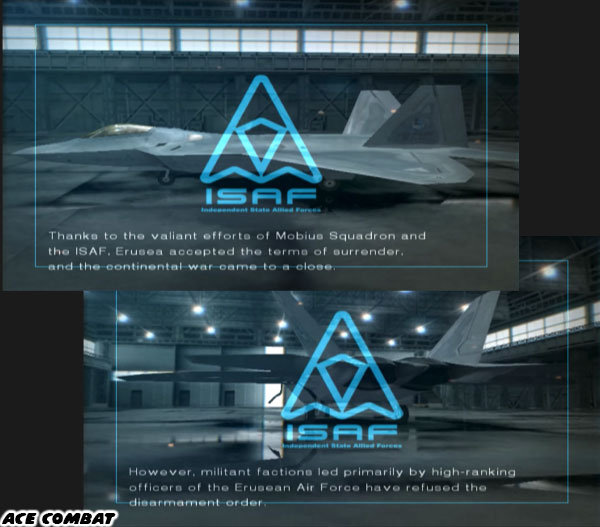
The people left at Namco came from a world that was more fantastic, a world where technology knew no boundaries and where mankind was destined for greatness. These developers needed to change the focus of Ridge Racer from street racing with contemporary cars to racing the finest autos that had ever been produced, including cars yet to be invented. In order not to upset audiences, or the established gameplay, the company introduced radical new rides sparingly over the next 20 years. These “duel” class monsters were accepted as prototypes from the mad thinkers working at each manufacturer. To add an additional layer of plausibility many of the sponsors of the series were the same corporations that built the jets in the Ace Combat series. The connection between Ridge Racer and Ace Combat however went much deeper than a sponsor sticker on the high profile vehicles.
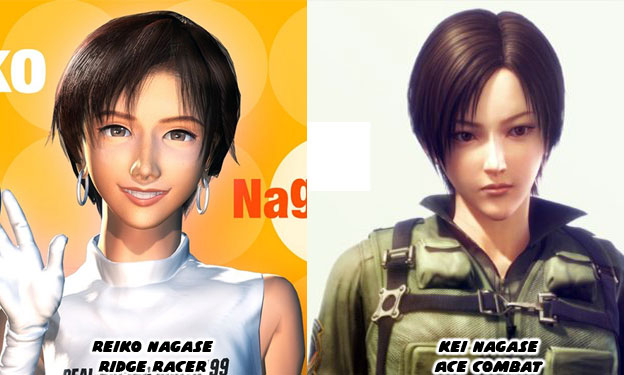
Kei Nagase was the younger sister of Ridge Racer covergirl Reiko Nagase. Whereas Reiko was a model and a racecar driver her sister was a fighter pilot nicknamed Edge. The two seemed to enjoy fast vehicles and thrilling lifestyles. Kei was featured in Ace Combat 2. She would have several cameos throughout the series, jumping forwards and backwards through time along with each release. She appeared in Ace Combat 5 as a trainee, in Ace Combat 4 as a passenger aboard Air Axiom flight 701 during an escort mission but most important in Ace Combat 3: Electroshpere as a senior officer during a news report. The sisters were part of the transitional period that saw humanity focus less on territorial disputes and more towards colonizing the stars.
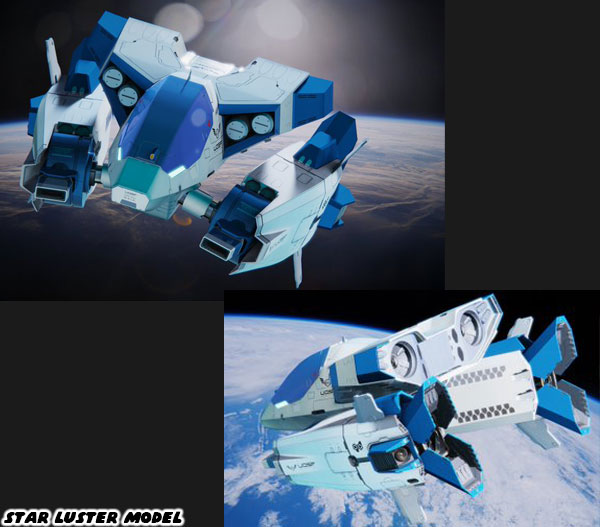
The companies backing each girl would make sure that civilization would reach that point. Before space jets became commonplace and before the Falken and Delphinus ruled the sky the proving ground for all the new technology in the Namco universe would be featured on the race track. The next entry goes back to the original theme of this series. I hope to see you here for that. As always if you would like to sponsor me please visit my Patreon page and consider donating each month, even as little as $1 would help make better blogs and even podcasts!
follow the Street Writer on Patreon!

Wednesday, August 13, 2014

The Ridge Racer Legacy, part 28...

Great design is timeless. Great design changes the way that people look at the world. From a well designed set of silverware to a well designed office building. Great design is hard to ignore. It influences language, art, music and culture itself. I'm sure that the reader wishes that many of the weapons and vehicles they saw in movies were real. After all, who would not wish to own a Lightsaber from Star Wars, or a Light Cycle from Tron? The same rule applied to great design from video games.

Early on in this series I mentioned how influential artists like Scott Robertson and Daniel Simon were to films and gaming. Even cartoonists Dave "big" Deal, Ed "Newt" Newton and Japanese illustrator Yasuhiro Nakamura had a profound affect on the way vehicles were presented. The artists, animators and modelers that had worked at Namco were almost as influential, especially over the past 20 years. Many cars that they developed for the series were gorgeous. If I were a lottery winner there's no doubt that I would commission a speed shop to recreate a few cars for my collection. In Japan one company did live out the dream. The Yamasa featured as a Special Class car in Ridge Racer 2 for the PSP was a high performance version of the Soldat Raggio. It had the distinction of being the only Ridge Racer car to be produced in real life. The platform it was built from was actually an Acura NSX. It debuted to rave reviews at the 2006 Tokyo Auto Salon. The Auto Salon was an after market parts expo and showcase, not unlike the trade show event organized by SEMA in the US.


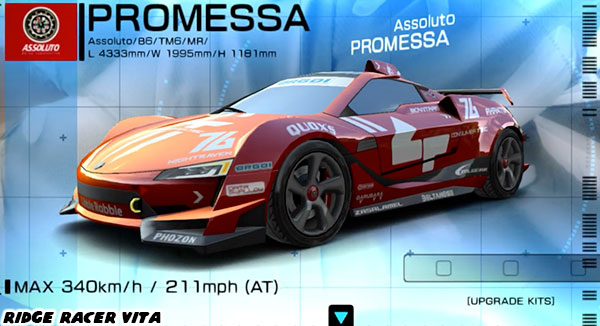
Pachislot manufacturer Yamasa picked up the bill for the recreation. They actually toured it around the country and raced it on occasion. The car actually performed better than the Acura it was built from. It gave credibility to the designs that Namco had been introducing to the genre. The cars did more than look good, they had functionality. They were well balanced, not just in the sense of symmetry but also for weight distribution which could help in the performance on a race track. The best designs in the series were not solely for the sake of eye candy. The artists updating the legacy cars in the series were dedicated gear heads. They wanted to introduce cars into the game that were aesthetically pleasing and could convince gamers that they would be real world screamers. Some of the designs were reminiscent of the best concept cars developed by the industry. In fact some of the designs predated the concept cars themselves. Such was the case for the Assoluto Promessa. The third generation Promessa debuted in Ridge Racer for the Vita in 2011. It predicted the radical "slingshot" design of the Toyota FT-1 Concept by two years.

Both cars were seamless with a minimal if nonexistent body and roof line. The cars also had curves and intakes that mimicked Formula-1 aerodynamics. Both cars were presented with highly tuned small engines. They could have great horsepower without being excessive on fuel consumption. Both cars also had radical ideas on feeding information to the driver. The FT-1 had its side view mirrors suspended from the doors via aerodynamic wings and had a heads-up display, like a fighter pilot, in front of the steering wheel. The Promessa had roof-mounted side view cameras shaped like tiny ailerons which fed the position information to a display, also in front of the driver.


When the Ft-1 was designed Toyota sent the specs and computer data to Polyphony Studios in Japan. The team that created the Gran Turismo series had created a game engine that was eerily good at predicting the performance of real and concept cars. Toyota would be able to put the FT-1 through the "shakedown" phase without risking a crash. A little known fact was that the engine in the FT-1 concept car that was shown at the car shows was a mock-up. There was a small electric motor from a golf cart that was used to move it around. Polyphony would be able to put in a real engine and see what the car was capable of with different gears and transmissions. While car fans may never see either concept car in person they could at the very least drive them in a favorite game. The FT-1 was made available as a free download in Gran Turismo 6 at the start of 2014. The Assoluto Promessa was featured in Ridge Racer 2 as well as in Ridge Racer Vita some years prior.

The designers at Namco never took the selection of cars in Ridge Racer too seriously. The enormous but agile cars from Danver mentioned in the previous blog were a testament to that. The designers wanted to remind audiences that just about anything was possible in their world. When it came to cars you could never judge performance by looks alone. The Angel 0 and Devil 13 cars represented the pinnacle of race engineering yet they sometimes had tiny dopplegangers in the series as well. The diminutive Scootacar from England was the inspiration for the Ecureuil in Ridge Racer Type 4. The petit car weighed next to nothing and had only one gear. Yet the setting of that gear was GO. It accelerated like the Angel and took corners like the Devil. The ability to keep audiences guessing as to what the next car would look like was something that the designers seemed to revel in. When players unlocked the Ecureuil I'm certain that many thought there must have been some sort of mistake. Surely nothing that small could stand a chance on the road. Once they tried it out there was no way they would doubt the creative capacity of the Ridge Racer team.


Namco learned early on that they would have to keep the series fresh by introducing it to mobile platforms. Sony always worked closely with the company to insure that the Playstation would always get at least one exclusive release. When the studio announced the PSP handheld and later Vita systems then audiences could guess that Ridge Racer was not far behind. Some of the most innovative periods of the series took place on handheld systems. The next blog will highlight these entries. If you would like to sponsor me please visit my Patreon page and consider donating each month, even as little as $1 would help make better blogs and even podcasts!

follow the Street Writer on Patreon!

Monday, August 11, 2014

The Ridge Racer Legacy, part 26...

Since its inception in 1993 all the way to the most recent release at the end of 2013 Ridge Racer had become the longest-running arcade racing series ever created. Despite the lack of actual manufacturers it was nonetheless a celebration of car culture. The Japanese designers were very much aware of the trends as well as the history of the automotive history. When they had a chance to present idealized, and equally outlandish Western-themed cars they did. Very early on in the series I mentioned that post WWII the USA auto industry grew at an exponential rate. The soldiers returning from war found suburban life much to their liking. These Baby Boomers were looking to buy their first new cars. They had to have more style and performance abilities than the previous generation. Many auto manufacturers looked to the "jet age" school of design. They added fins and sharp angles to the lines of the car. Many of these design elements were ornamental rather than functional but it didn't matter. The cars looked cool and nothing at all like the rounded bodies and bulky frames from earlier models. Just because many of the post-war family cars were big did not mean they were slow either. People from the US demanded more power and they got it on every ride.


Namco created a fictional western manufacturer that represented the excesses of size and power. They named the company Danver and used it as a launch pad for some radical designs. Many of which were a nod to the cars that defined classic Americana. The Spectra for example looked like a chopped and stretched "hot rod" version of a classic Cadillac. It was absolutely massive. Much bigger than most of the cars in the Ridge Racer series the Spectra was expected to perform like a slug on the track. Of course looks could be deceiving. The Spectra was actually an elite level car. At top speed with nitro boost it was able to hang with the much stealthier Devil 13 or lightweight Angel 0.

Fans of the series learned early on that realistic physics went out the window when Ridge Racer was concerned. It was the lack of realistic physics that originally made me a skeptic of the series. The game was actually designed to be experienced from two different gameplay perspectives. The "Grip" type cars were expected to be driven like those in traditional simulation racing games. Drivers would have to find the optimal places to brake and accelerate through turns. Drifting a little would kill their momentum and hurt their lap times. Then there were the "Drift" type cars which could enter turns going much faster, slide around corners and exit while maintaining their momentum. The various releases of Ridge Racer both in the arcade and at home experimented with the Grip and Drift type cars. The more recent games allowed audiences to swap out engines, change body kits, and find the balance that worked best for their own particular style of driving. Of course the game was balanced heavily in favor of drift type cars.

It was up to the developers to create the most memorable drift machines ever featured in a racing series. Some of those rides, like the Spectra were absurd but also extremely fun to drive in. The Japanese designers were aware at how much people in the USA lived in excess. It was much more than their impression based on the media or even from the occasional visit overseas. People in the USA just seemed to be bigger in every regard. They were taller and fatter than those from other nations. They ate big meals, watched TV on gigantic screens and celebrated the size of their homestead. The most important thing that Namco developers picked up on was how much the West loved big cars. Near everyone on the road seemed to have an SUV if not a truck. This realization was reflected with the Danver Bass Cruiser.


The Bass Cruiser could hold its own against the svelte European race cars and it could also hold six passengers in the process. The car was equipped with three television sets and an enormous sound system. The speakers were probably some sort of secret propulsion source. It would be the only thing that could explain how a car so large and bulky could have moved so quickly. The Danver company had a truck that was equally massive called the Hijack. When the two bruisers were on the road together there was little chance for the smaller cars to get around them. The only thing that stood a chance against them was a secretive sedan that was made by an unknown manufacturer.

The Monstrous was inspired by the car featured in the Men in Black film. Its bulky frame, about the size of a presidential limo, was a facade for some secret technology. Like the Spectra before it the car was capable of some amazing feats. It was also difficult to control and provided a suitable challenge for the most dedicated racing fans to master.


The Japanese developers were pandering to the Western audience and it was fine by us. Where their designs really shined however were not with the bulky land yachts. The muscle car era may have died in the '70s but in the Ridge Racer series it was very much alive and well. The next blog will show how much the Japanese designers could teach us about an era the US let go. If you would like to sponsor me please visit my Patreon page and consider donating each month, even as little as $1 would help make better blogs and even podcasts!
follow the Street Writer on Patreon!